Smoked St. Louis Style Ribs
Apple Cider Mop Sauce
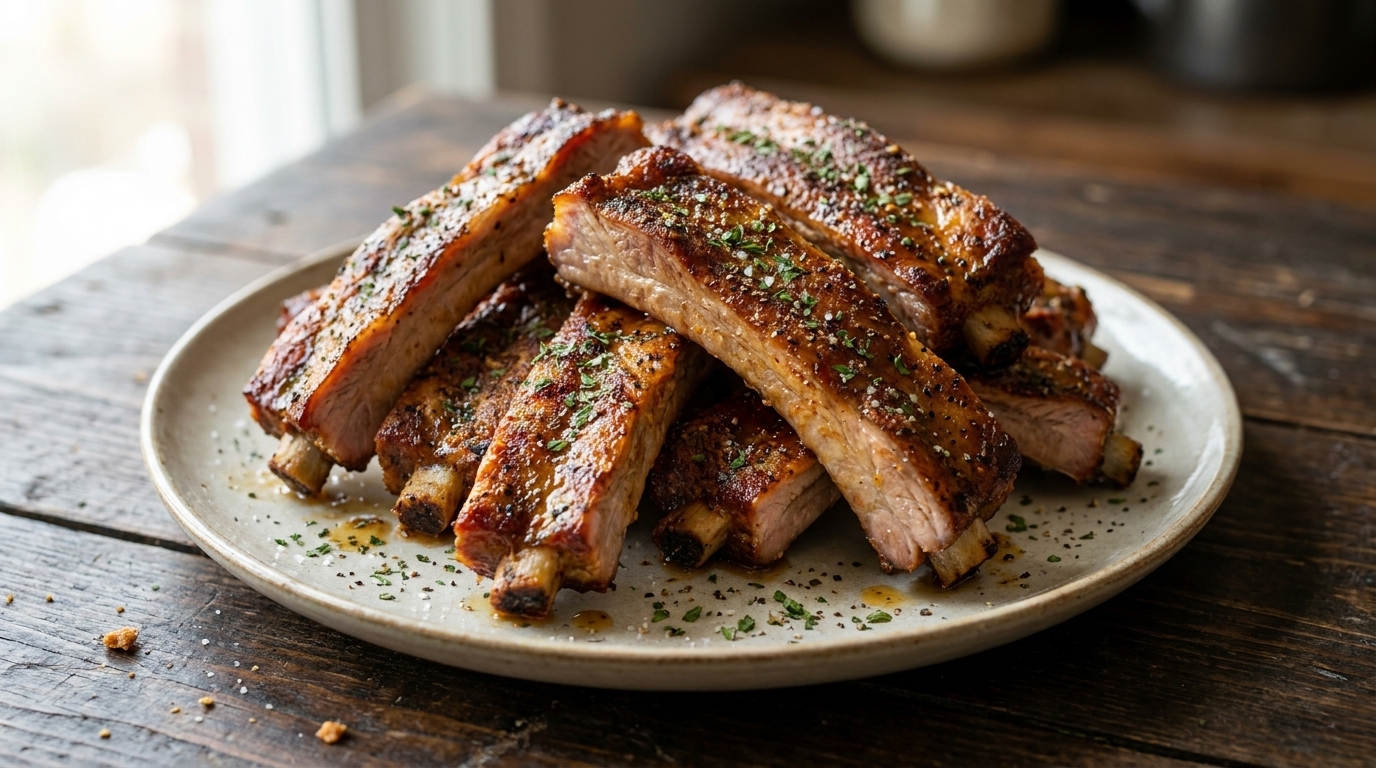
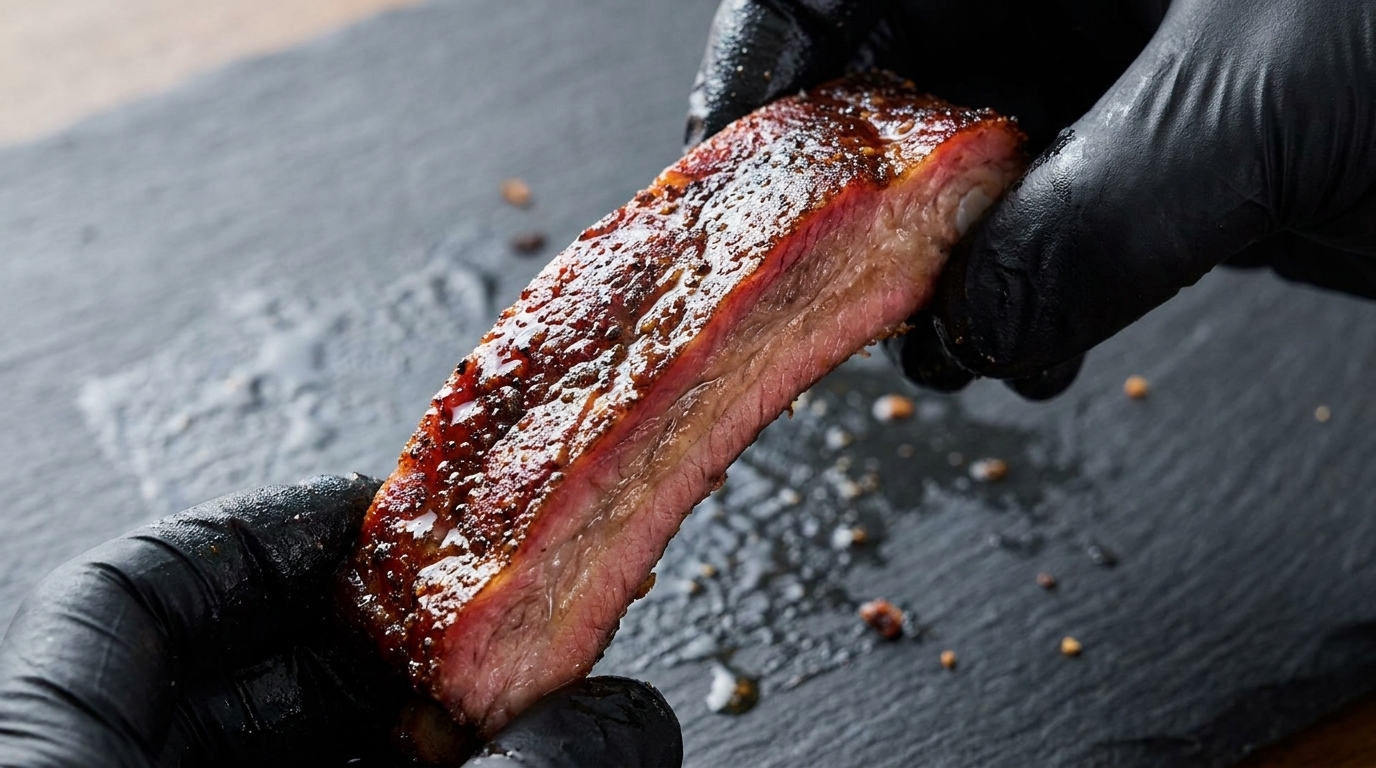
Master the art of Central Texas-style BBQ with these St. Louis cut ribs, smoked over post oak and basted in a tangy apple cider vinegar mop sauce.
These ribs are prized for their uniform rectangular shape which allows for even cooking and a consistent bark. This recipe uses a traditional mop technique which is a thin vinegar based sauce applied throughout the smoke to keep the meat tender while building layers of complex flavor. Smoking over post oak provides that signature mild nutty smoke profile characteristic of authentic Texas barbecue.
Ingredients
- 2 racks St. Louis style pork ribs
- 2 tbsp coarse salt
- 2 tbsp coarse black pepper
- 1 tbsp garlic powder
- 2 cups apple cider vinegar
- 12 cup brown sugar
- 12 cup ketchup
- as needed post oak wood splits
Instructions
- 1Season the rib racks
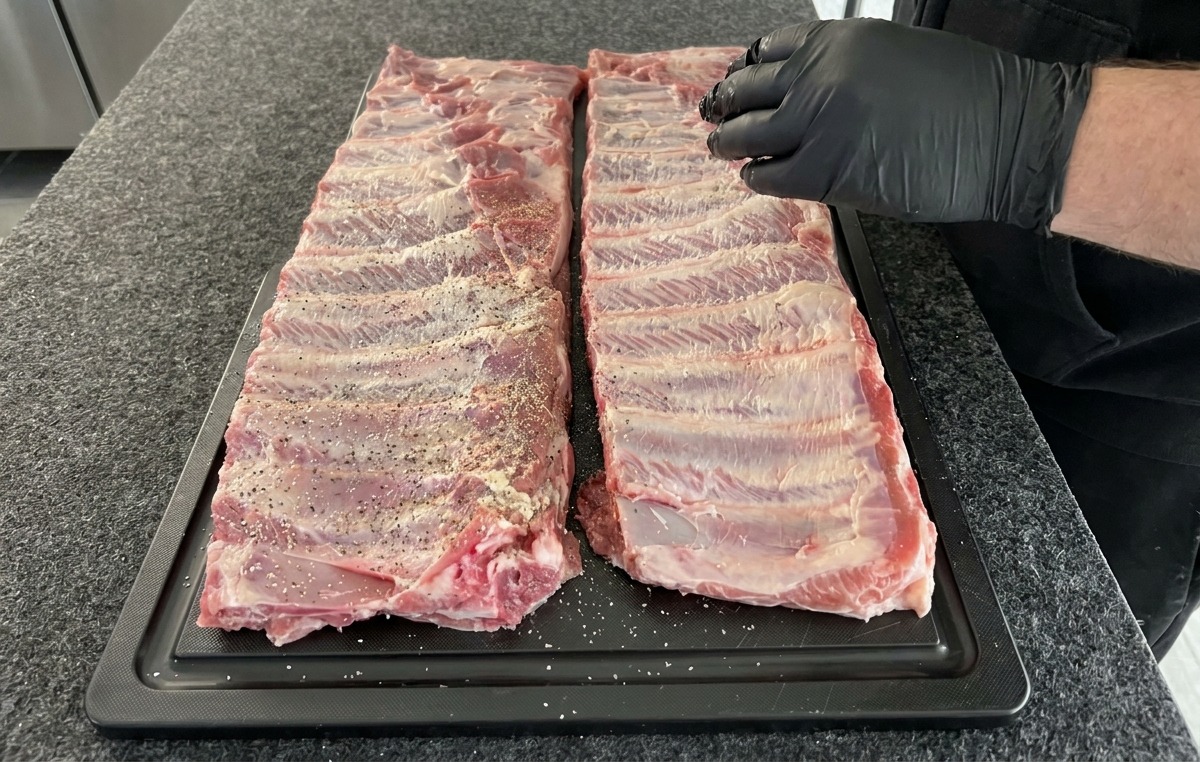
Apply a generous and even layer of dry rub to the surface of the raw St. Louis style ribs. Use a simple blend of salt coarse black pepper and garlic powder to enhance the natural flavor of the meat. Seasoning from a slight height helps ensure the rub is distributed uniformly across the entire rack.
Tip: Pat the ribs dry with a paper towel before seasoning; this helps the spices stick better and promotes a superior crust during smoking. - 2Light the smoker
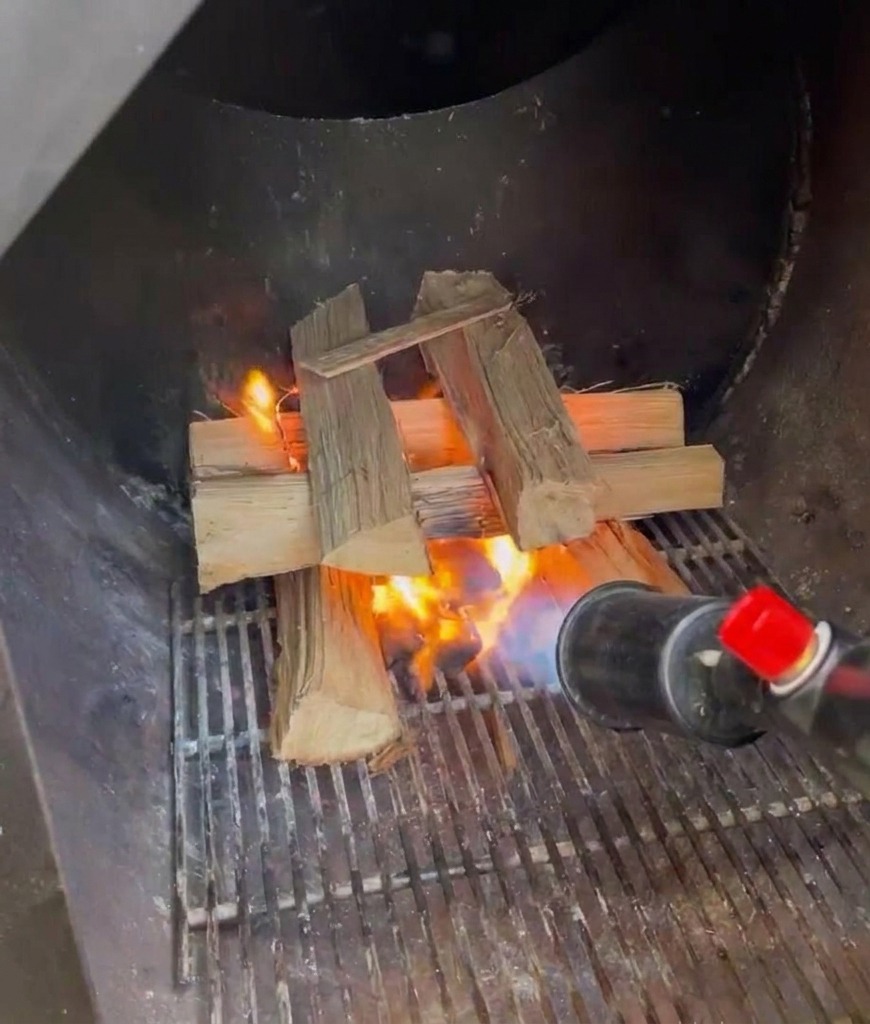
Ignite the post oak logs in the firebox of the smoker using a propane torch. This method provides a concentrated heat source to get the wood burning quickly. Post oak is the preferred wood for Central Texas style barbecue because it burns steadily and provides a mild smoky depth.
Tip: Make sure your wood is well seasoned and dry. Wet wood will create bitter thick white smoke instead of the clean blue smoke needed for great BBQ. - 3Load the smoker
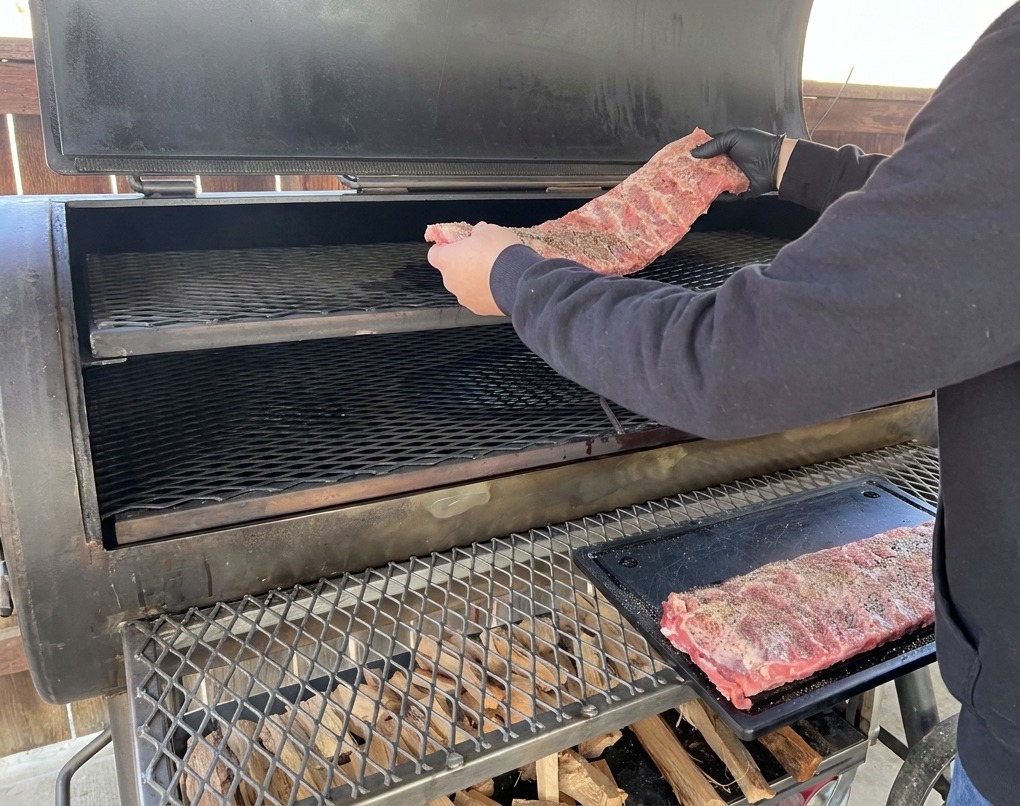
Once your offset smoker has stabilized at a temperature of 275°F using post oak wood, carefully place the seasoned rib racks onto the grates. Ensure there is adequate space between the racks to allow smoke and heat to circulate evenly around the meat for a consistent cook.
Tip: Work quickly when loading the meat to minimize the time the smoker lid is open, which helps maintain a steady internal temperature. - 4Flip for an even cook
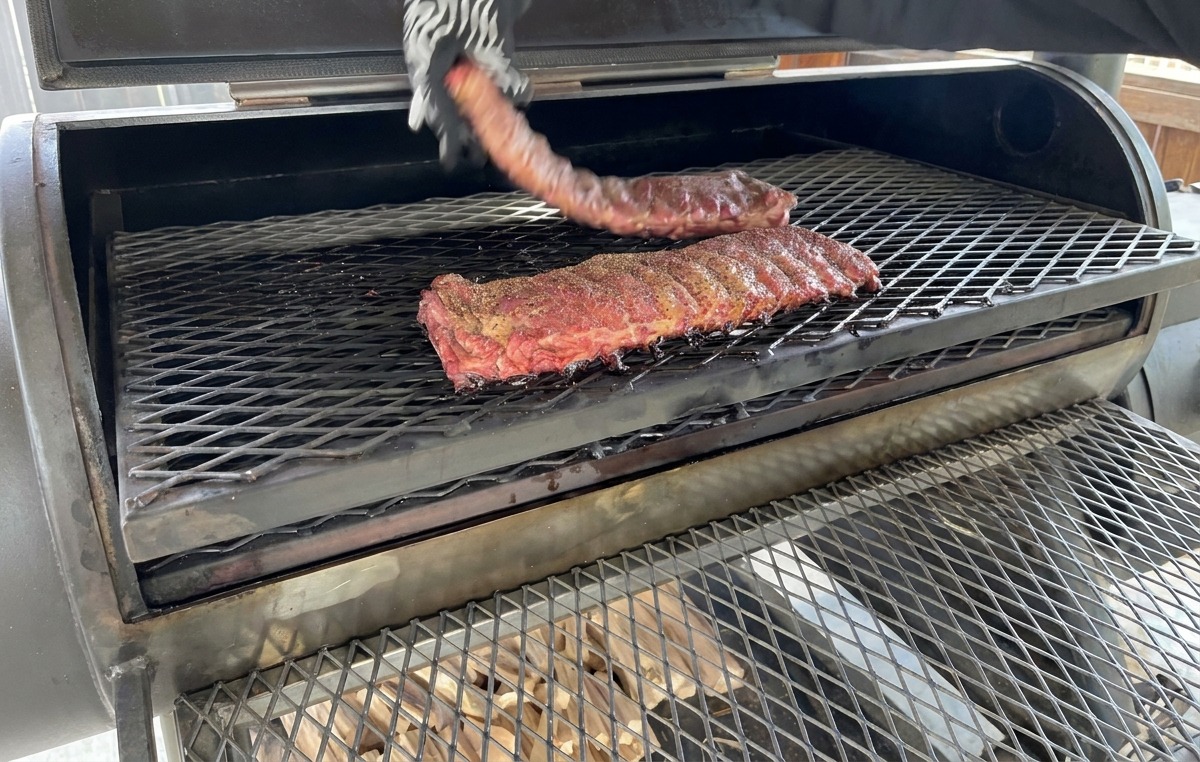
After about three hours of smoking, the ribs should have developed a nice bark and color. Use a heat-resistant glove to carefully flip the racks over. This ensures that both sides of the ribs are exposed to the heat and smoke flow uniformly, preventing any hot spots from overcooking specific areas.
Tip: Using a heat-resistant glove instead of tongs provides better control and prevents the tongs from accidentally scraping off the developing spice bark. - 5Start the mop sauce base
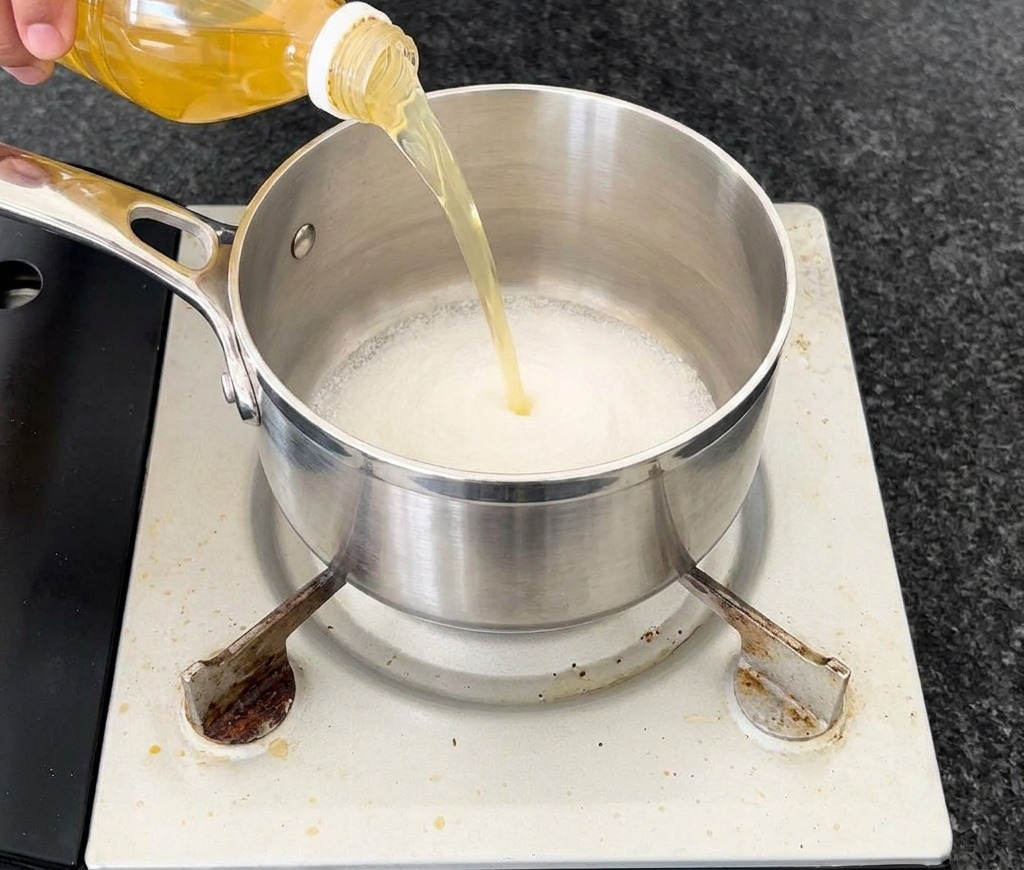
Place a small stainless steel pot on a portable burner and pour in the apple cider vinegar. This acidic base is crucial for breaking down the tough connective tissues in the ribs and providing a tangy counterpoint to the rich, smoky meat.
Tip: Starting with the vinegar and sugar allows the sugar to begin dissolving immediately as you add the other wet ingredients. - 6Sweeten the sauce
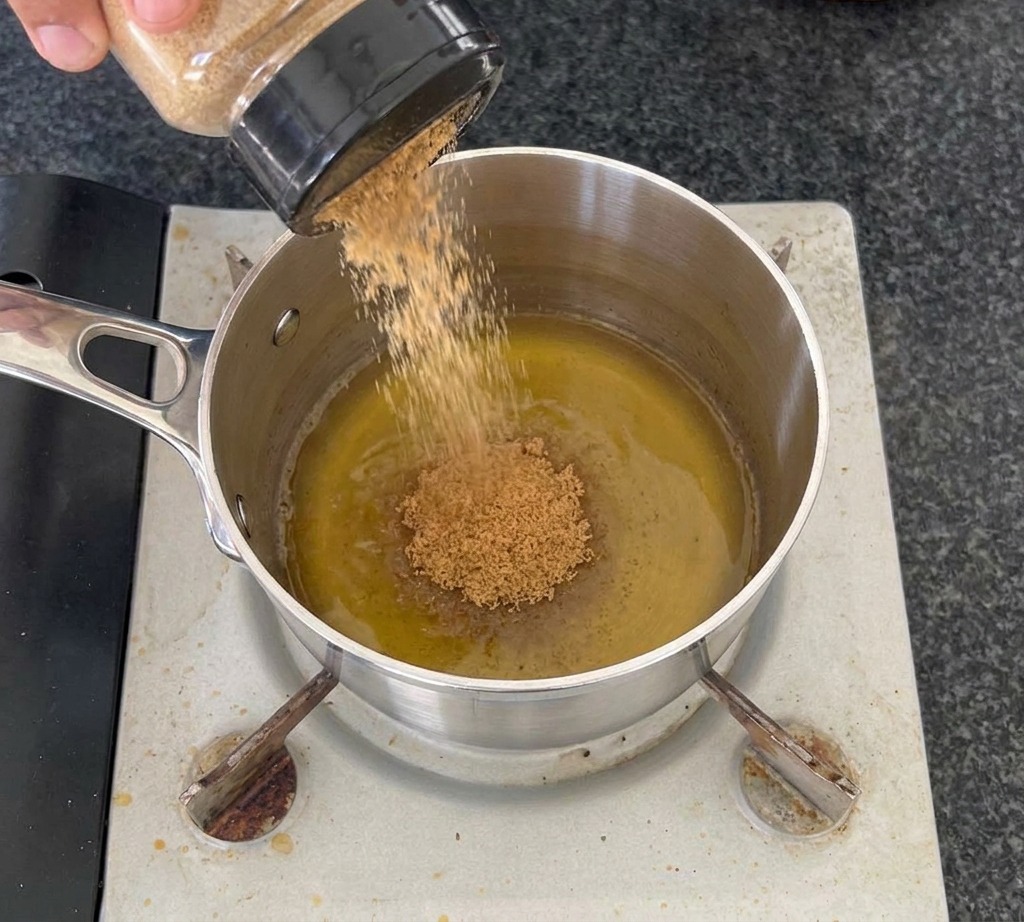
Add a generous scoop of brown sugar to the vinegar. The molasses in the brown sugar adds a deep caramel note and helps the sauce thicken as it simmers, ensuring it clings to the ribs during the mopping process.
Tip: If the brown sugar has clumped, press it against the side of the pot with a spoon to ensure it dissolves completely into the vinegar. - 7Add ketchup for body

Squeeze ketchup into the pot with the vinegar and sugar. The ketchup adds thickness, a vibrant red color, and a concentrated tomato flavor that helps the mop sauce adhere to the surface of the ribs.
Tip: Keep the heat on low while adding the ketchup to ensure you can stir it in smoothly without the mixture splashing. - 8Combine and simmer the sauce
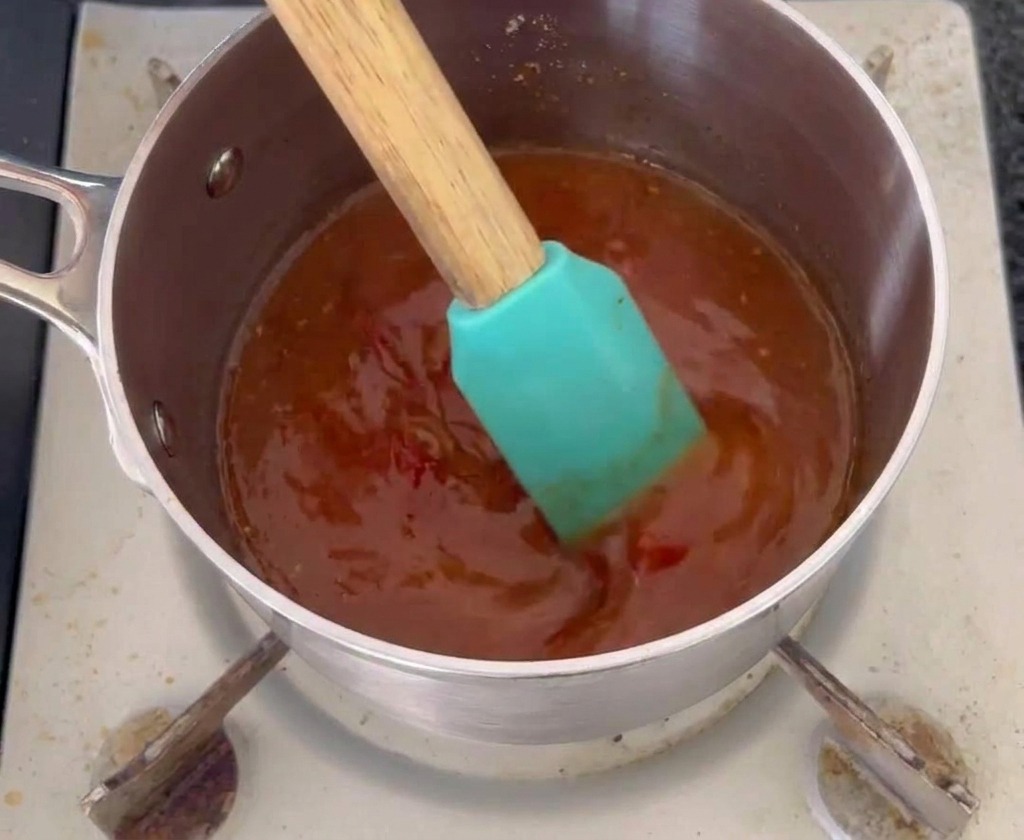
Use a silicone spatula to stir the vinegar, sugar, and ketchup together until the mixture is uniform. Allow the sauce to simmer for about 10 minutes, which helps the flavors meld together and ensures the sugar is completely dissolved.
Tip: Keep the sauce at a bare simmer; boiling too vigorously can cause the vinegar to evaporate too quickly, making the sauce overly thick. - 9Mop the ribs regularly
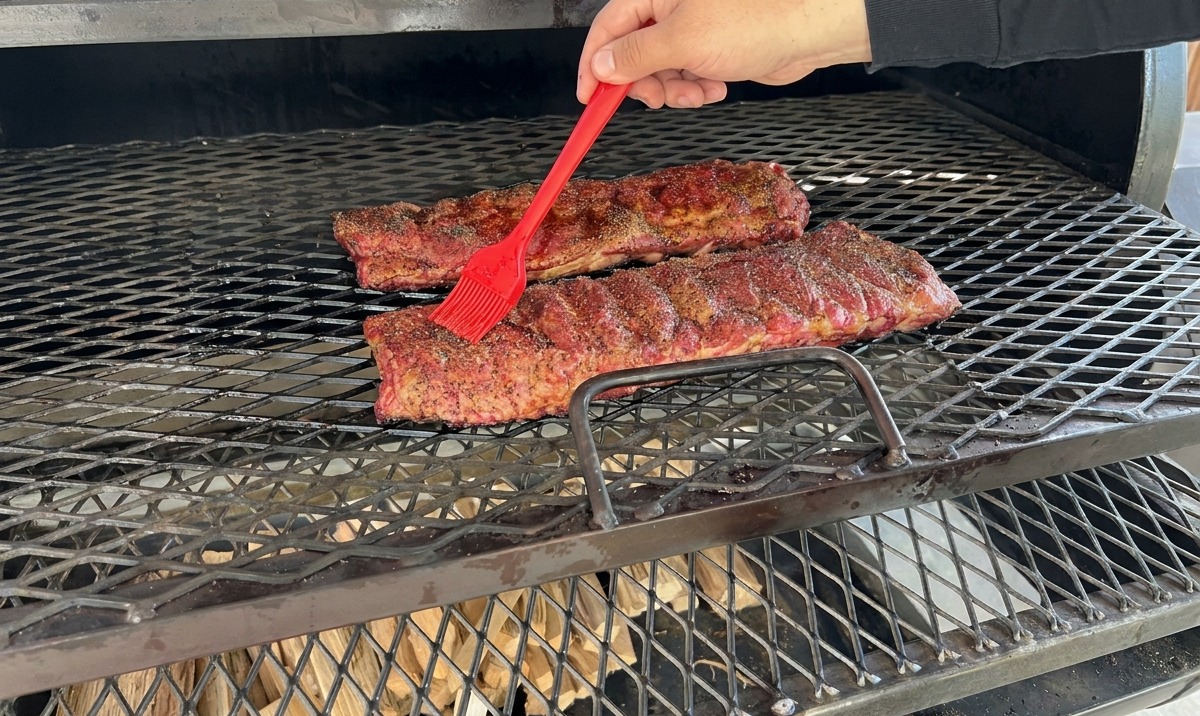
Once the ribs have been smoking for a few hours, begin brushing them with the mop sauce every 30 minutes. This frequent basting keeps the meat moist and builds up a flavorful, tacky glaze known as the bark.
Tip: Work quickly when opening the smoker to mop the meat so that you do not lose too much heat and smoke. - 10Slice and serve
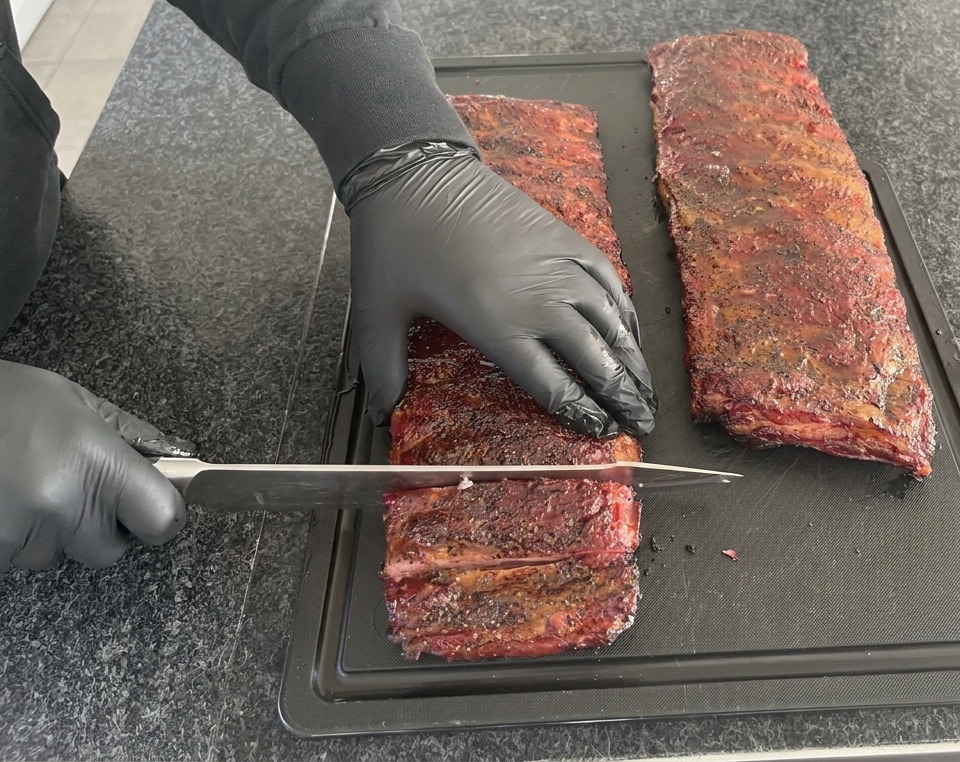
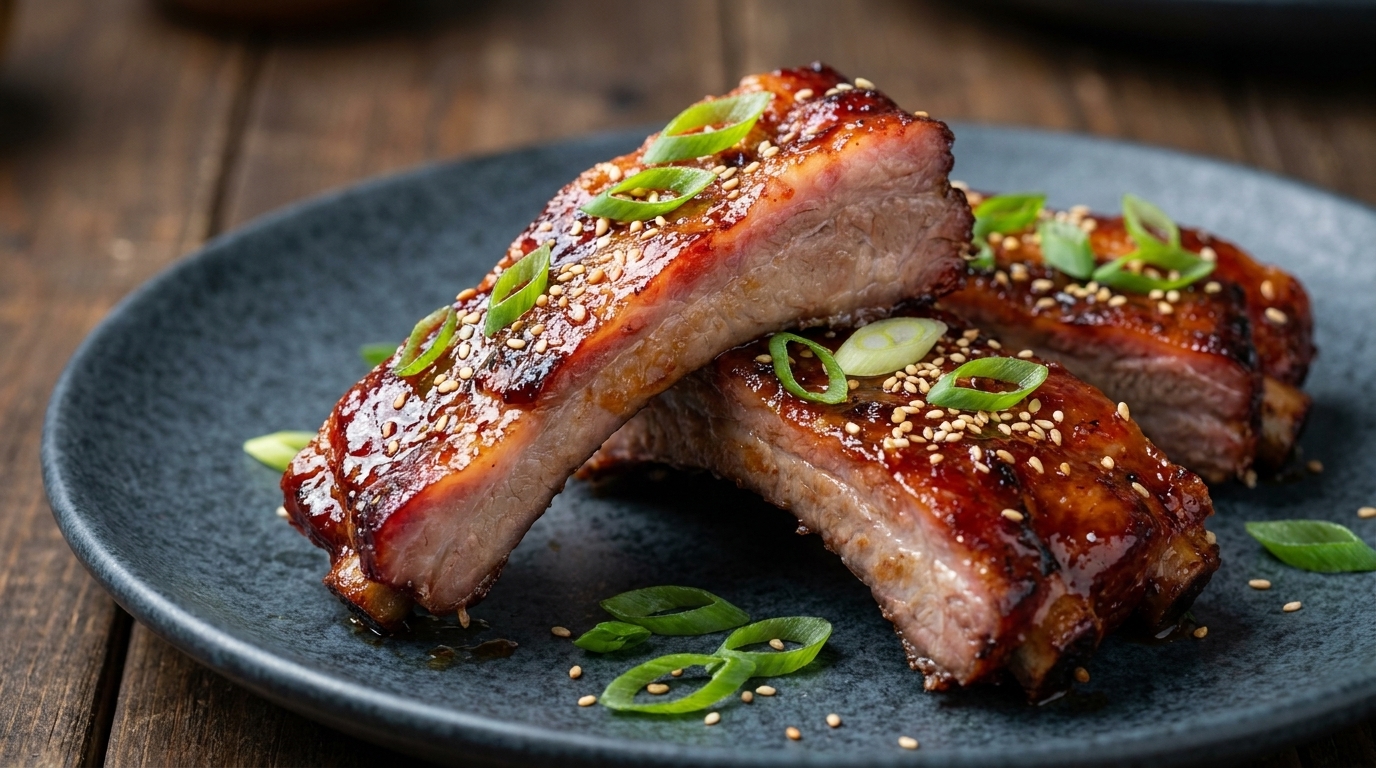
Once the ribs have reached an internal temperature of 203 degrees Fahrenheit and have rested use a sharp chef knife to slice between the bones. This creates clean individual servings that showcase the dark mahogany bark and the tender smoke infused meat.
Tip: Always slice with a smooth single-stroke motion to avoid tearing the tender meat or the bark.