Authentic Ragù alla Bolognese
Tagliatelle
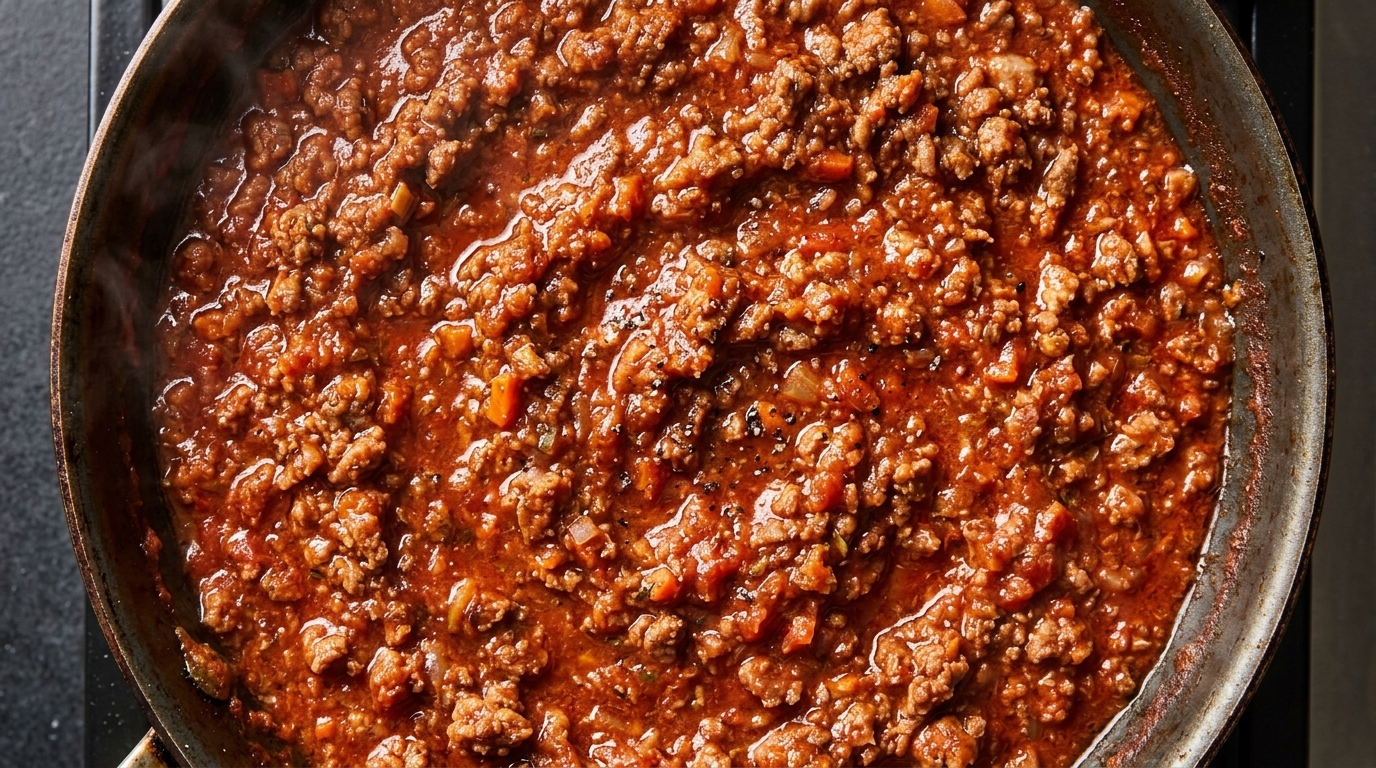
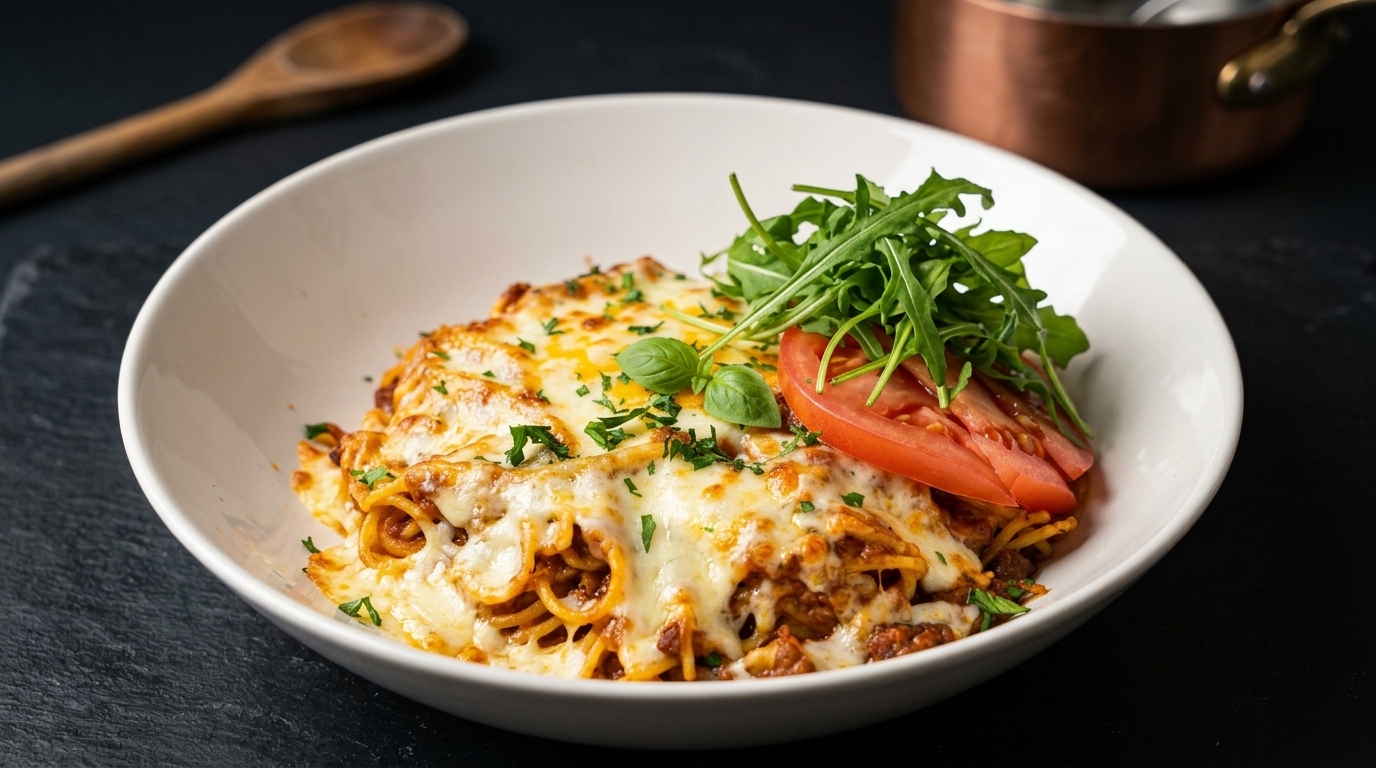
The definitive meat sauce from Bologna—a rich, velvety ragu slow-simmered for two hours with a classic soffritto, Italian pancetta, red wine, and a splash of whole milk.
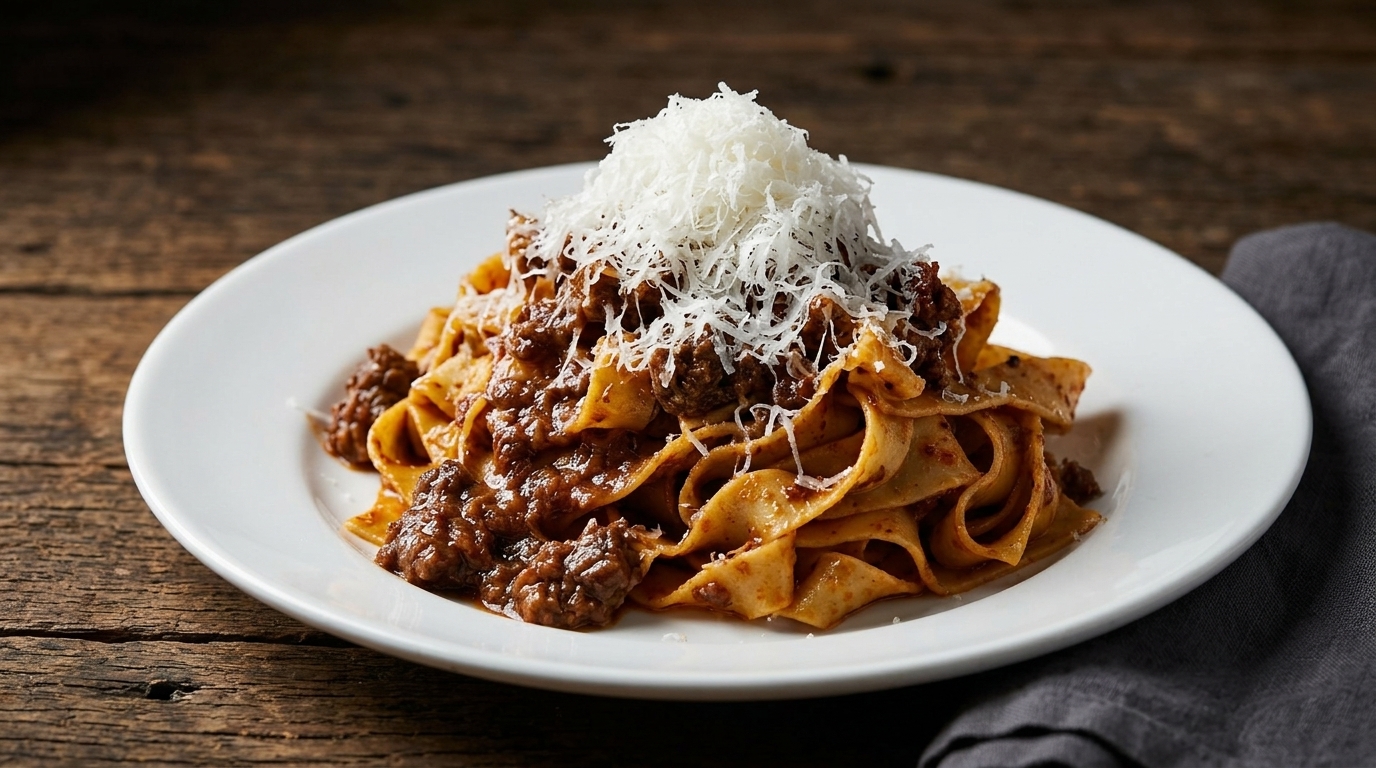
Ragù alla Bolognese is a masterpiece of Italian culinary heritage, officially certified by the Italian Academy of Cuisine. Unlike the tomato-heavy versions found elsewhere, a true Bolognese is meat-centric, creamy, and deeply savory. It is traditionally paired with wide egg pasta like tagliatelle, which provides the perfect canvas for this dense, luxurious sauce.
Ingredients
- 500 g ground beef
- 250 g Italian pancetta
- 250 g onion, celery, and carrot mixture
- 2 cubes butter
- 2 tbsp tomato paste
- 150 ml red wine
- 400 g canned crushed tomatoes
- 200 ml whole milk
- 500 g tagliatelle or pappardelle pasta
- to taste sea salt
- to taste black pepper
- optional Parmesan cheese
Instructions
- 1Measure the ground beef
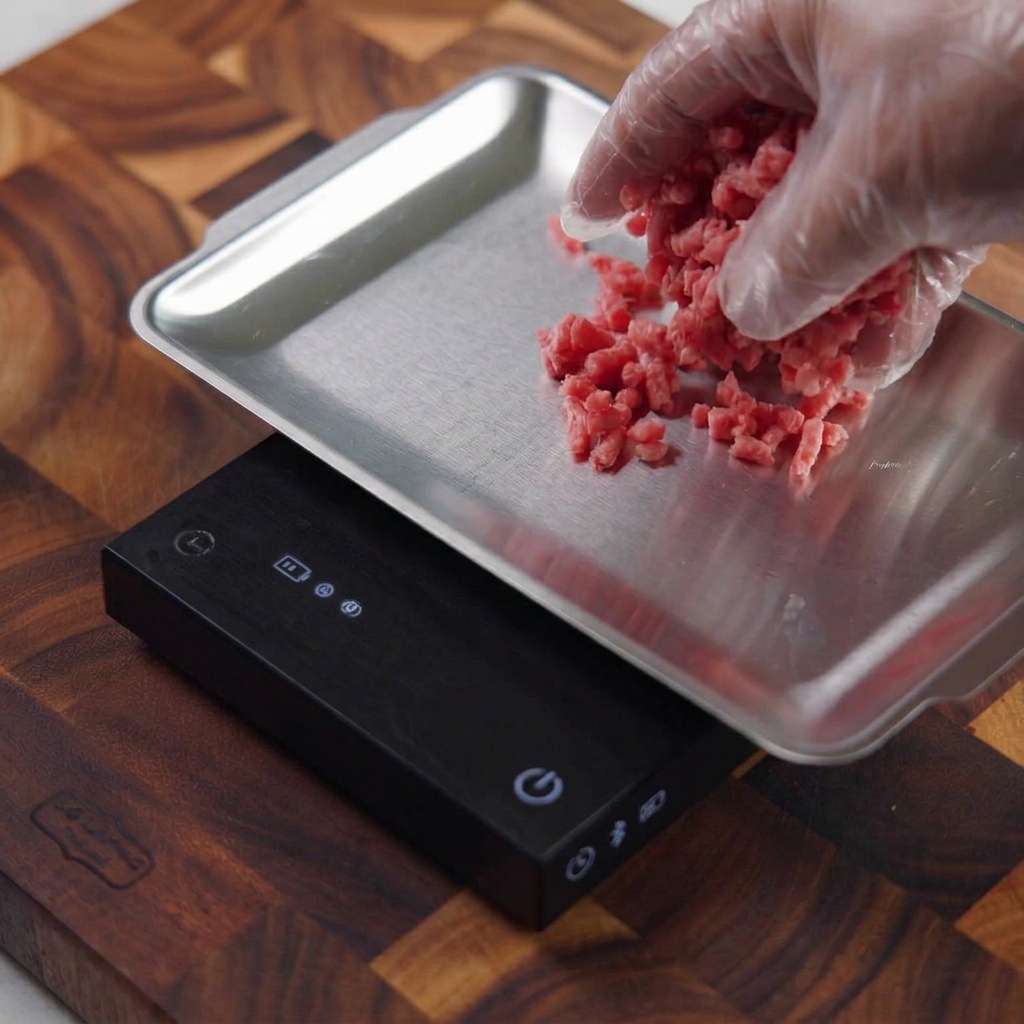
Begin by weighing out your raw ground beef using a digital kitchen scale. For an authentic Ragù alla Bolognese, follow the certified ratio of 2 parts beef to 1 part pancetta and 1 part vegetables to ensure the perfect balance of flavors and textures.
Tip: Using a scale is the most accurate way to maintain the specific ratios required for this classic Italian recipe. - 2Prepare the pancetta
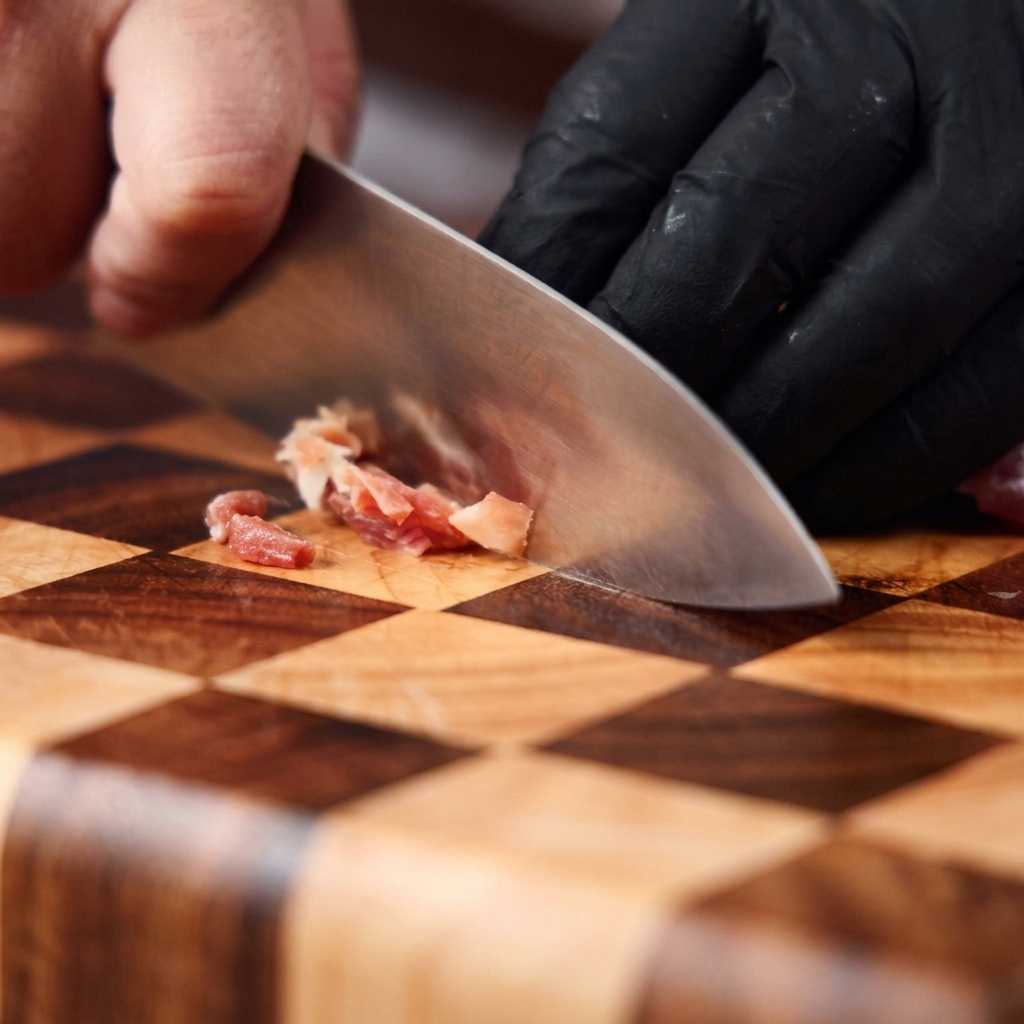
Carefully slice the Italian pancetta into small, uniform cubes on a stable cutting board. This cured meat is essential for rendering the initial fat that will provide a savory, salty foundation for the entire meat sauce.
Tip: If the pancetta is too soft to slice cleanly, place it in the freezer for 10-15 minutes to firm up first. - 3Dice the onion
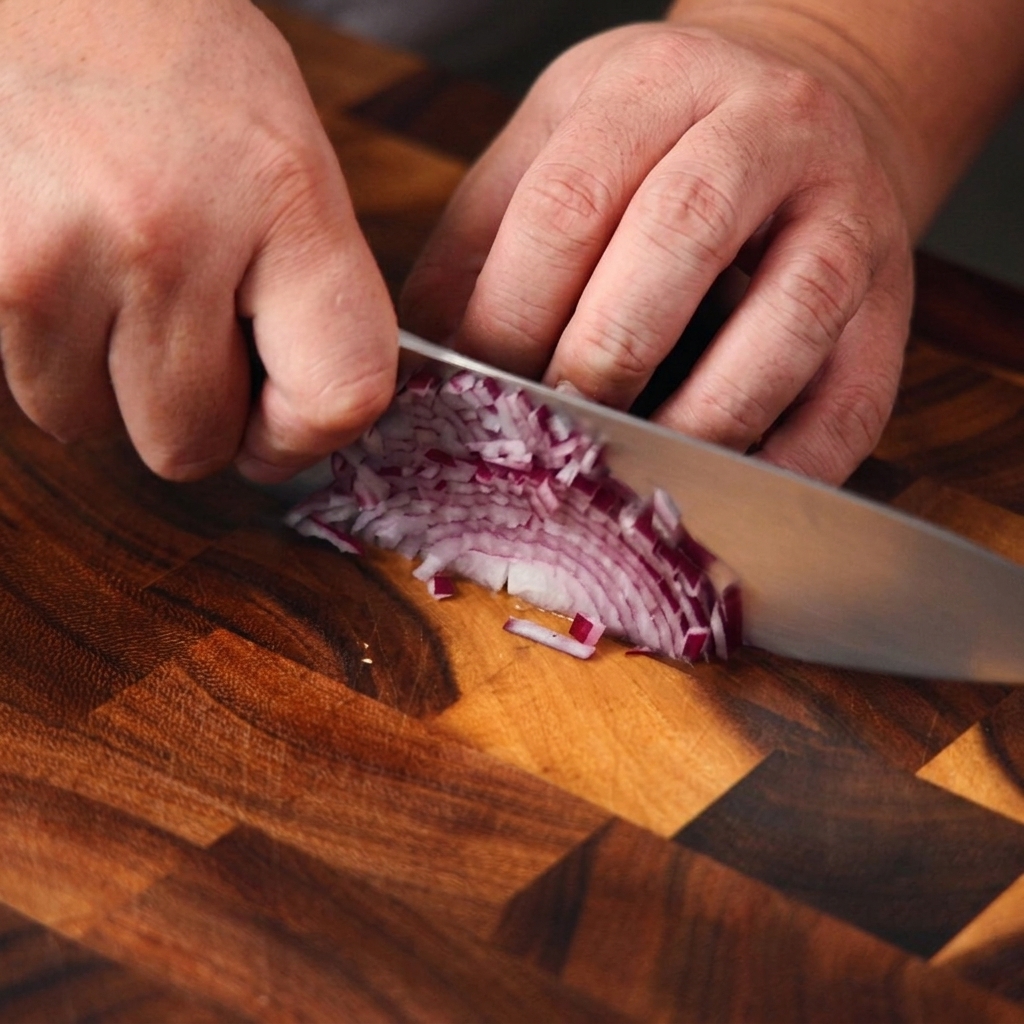
Prepare the first part of the vegetable trio by dicing a red or purple onion into very fine pieces. Consistent sizing is important so the vegetables cook evenly and melt into the sauce during the long simmering process.
Tip: Keep the root end of the onion intact while dicing to hold the layers together and make the process safer and faster. - 4Grate or shred the carrots
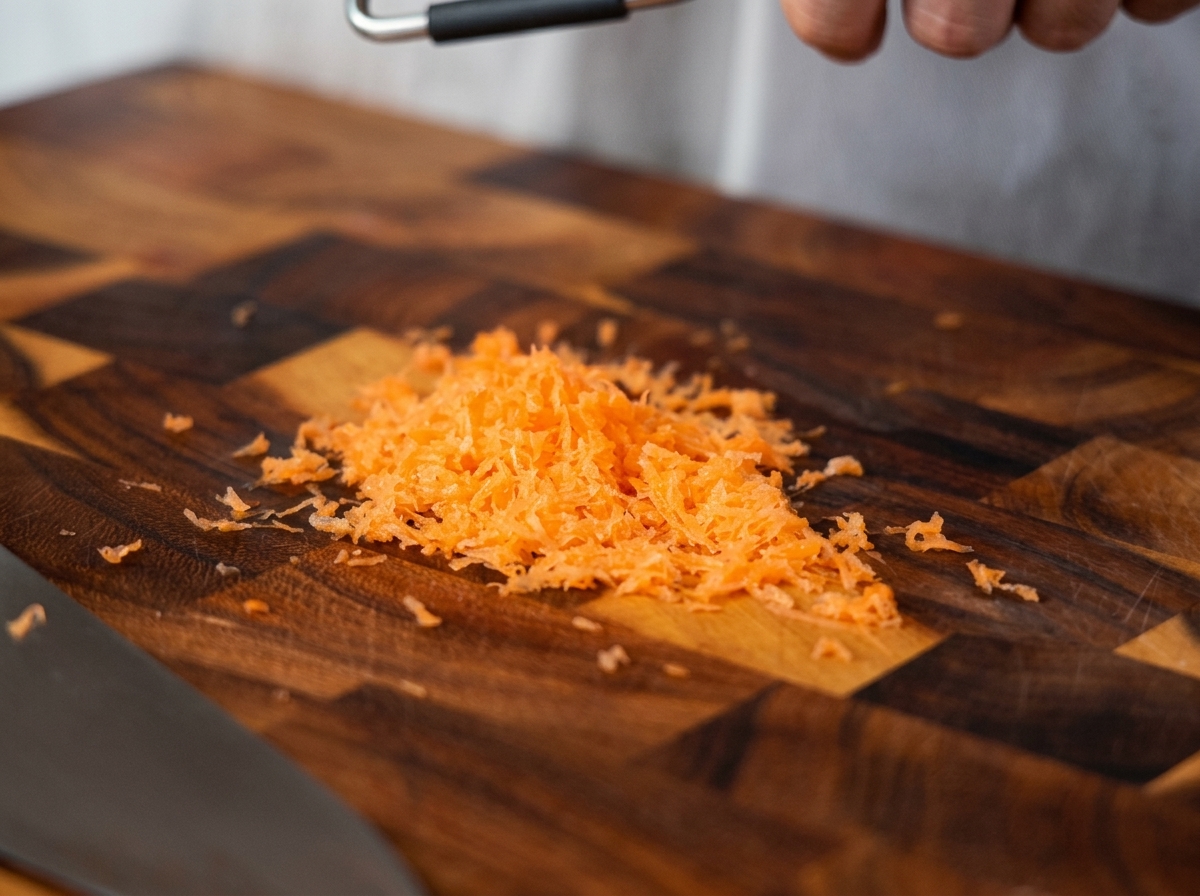
Finely shred or grate the carrots until you have a small pile of thin ribbons. Carrots add a natural sweetness to the Bolognese that helps balance the richness of the meats and the acidity of the tomatoes later on.
Tip: Shredding the carrots rather than dicing them allows them to break down more quickly into the soffritto. - 5Dice the celery
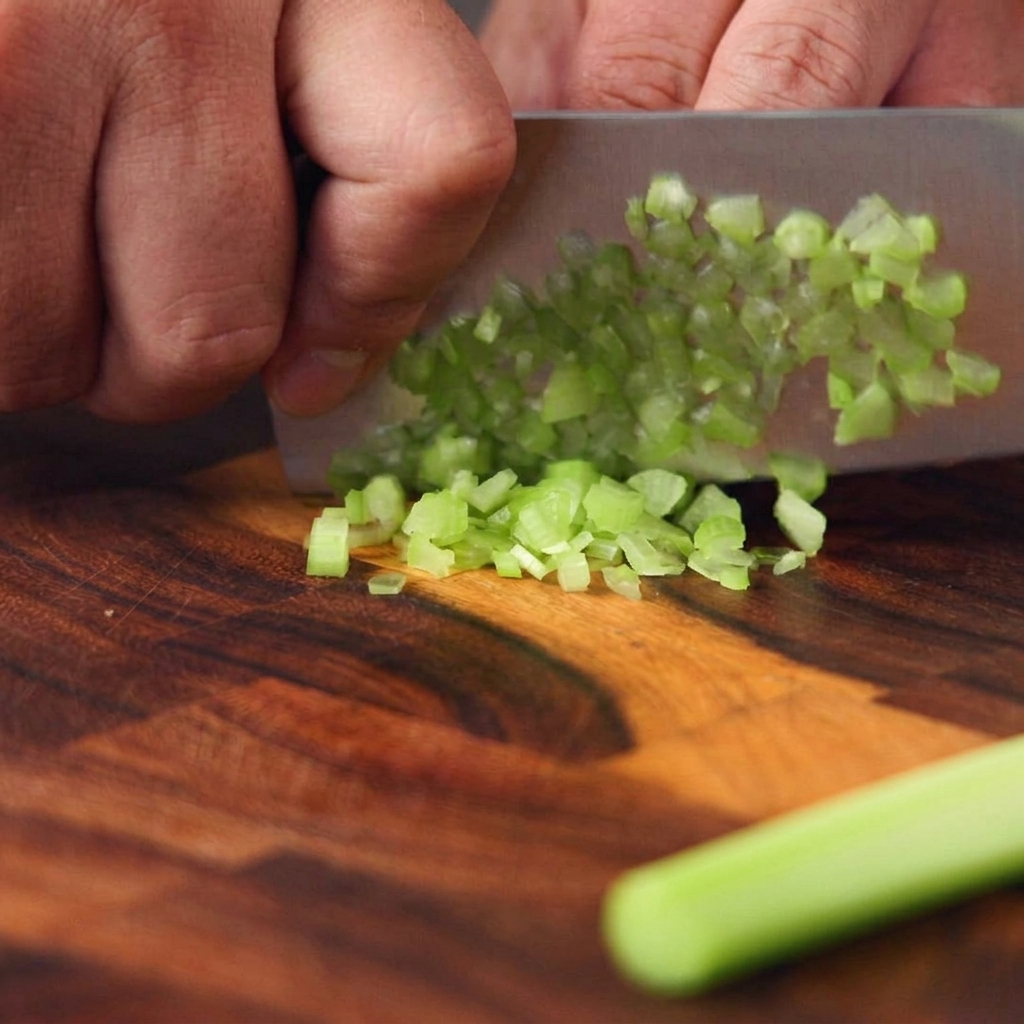
Complete the vegetable trio by dicing the celery. Before cutting, ensure you have removed the tough outer fibers. Chop the stalks into small, uniform cubes that match the size of your diced onions.
Tip: Removing the stringy outer fibers of the celery ensures a smoother texture in the final sauce. - 6Render the pancetta fat
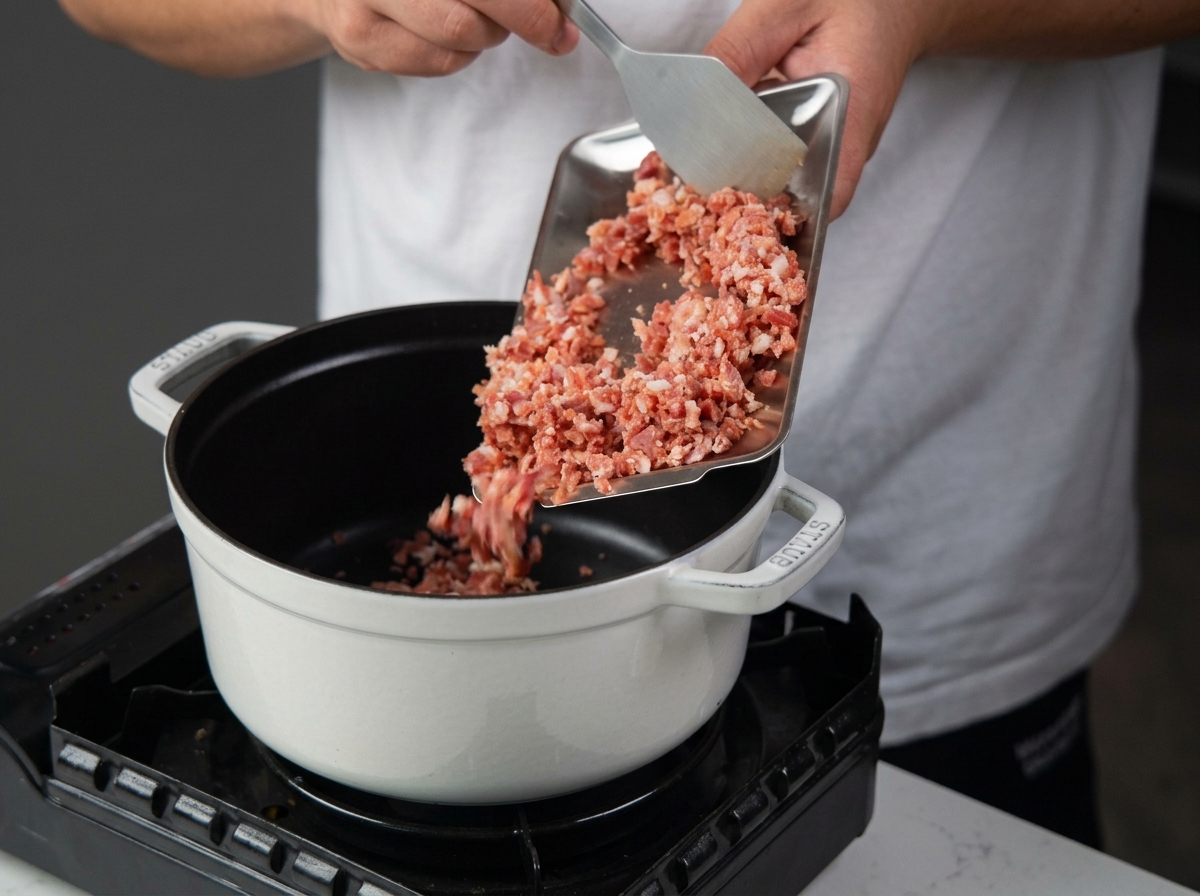
Place the diced pancetta into a large, cold cast-iron pot or Dutch oven. Gradually heat the pot to render the fat out of the meat; this liquid gold will be used to sauté the vegetables and brown the beef.
Tip: Start the pancetta in a cold pot rather than a hot one to encourage the fat to melt away before the meat browns too much. - 7Add butter to the pancetta
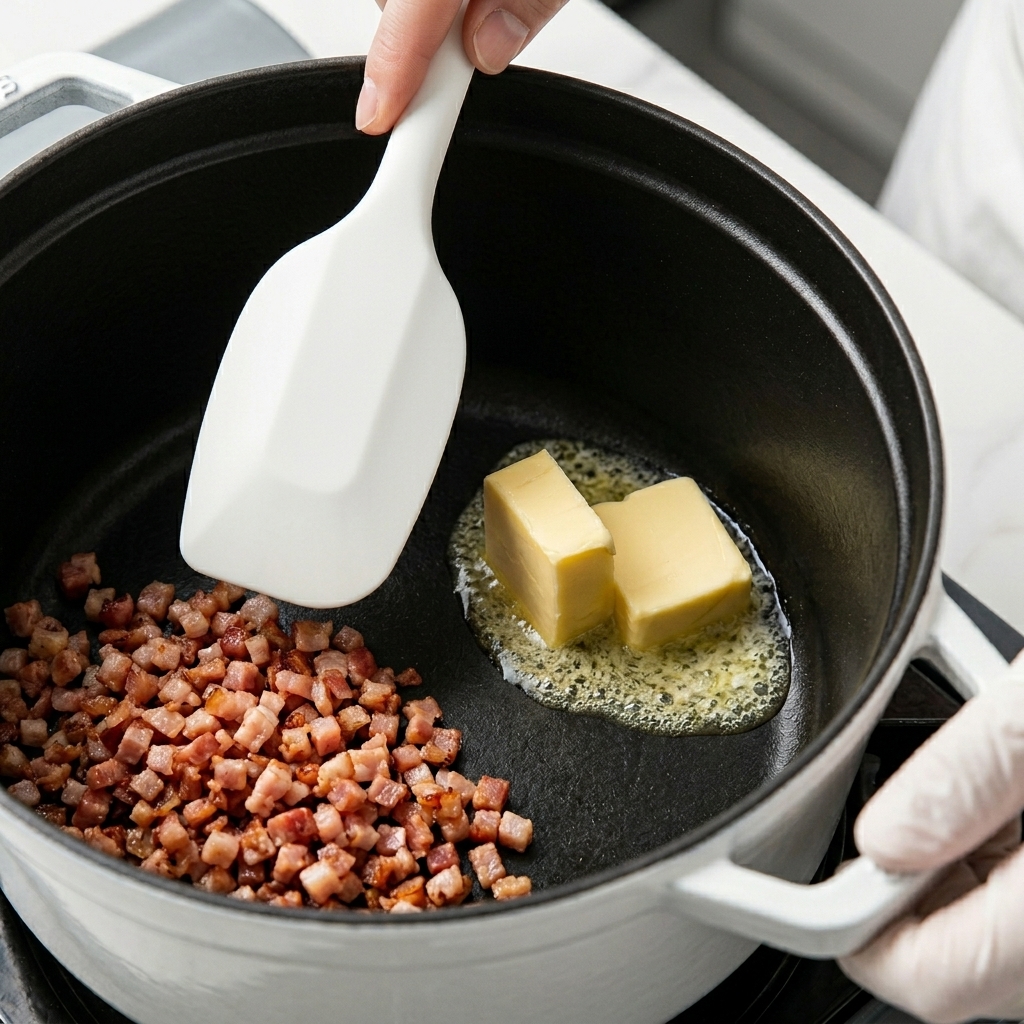
Once the fat has been rendered from the pancetta, add two cubes of yellow butter to the pot. Allow the butter to melt completely over medium heat, combining with the rendered pork fat to create a rich base for sautéing the vegetables.
Tip: Using a combination of pancetta fat and butter provides a more complex, authentic Italian flavor profile than oil alone. - 8Sauté the vegetable trio
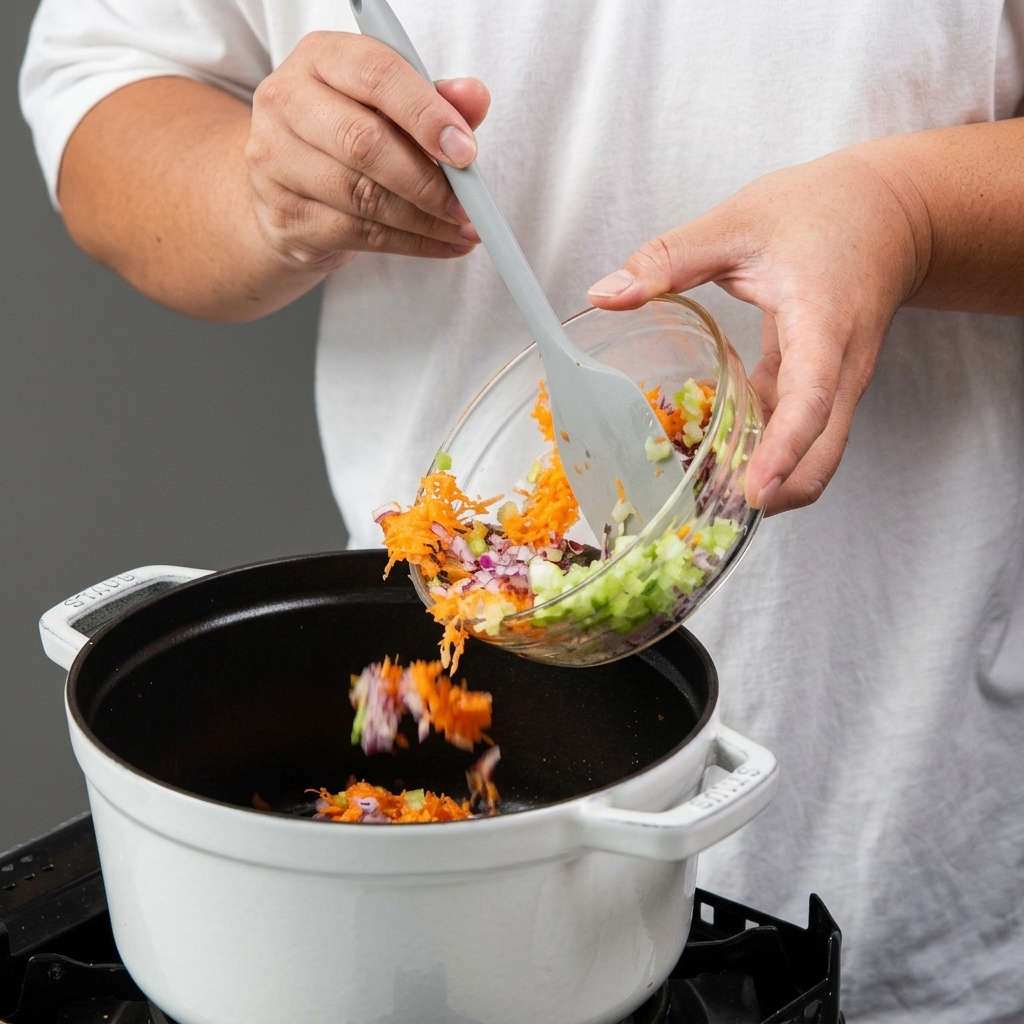
Add the finely chopped carrots, onions, and celery to the pot. Stir-fry the vegetables constantly in the melted butter and fat to release their moisture and develop a soft, aromatic base known as a soffritto.
Tip: Make sure to remove the tough outer fibers from the celery before chopping to ensure a consistent texture in the sauce. - 9Incorporate the ground beef
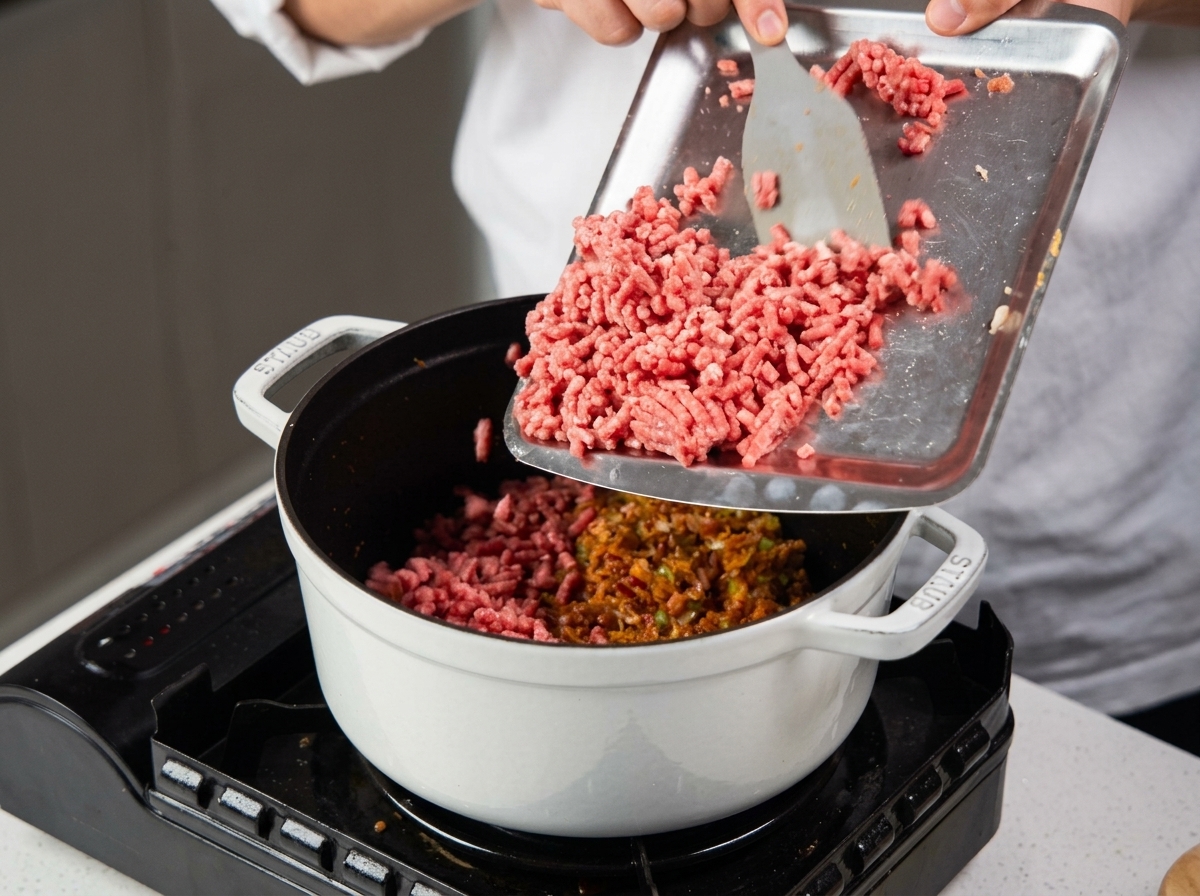
Add the ground beef to the pot with the sautéed vegetables. Break the meat apart with your spatula and continue to stir-fry over medium-high heat until the beef is fully browned and well combined with the aromatic vegetable base.
Tip: Keep the heat high enough to brown the meat rather than just steaming it, which helps develop deep savory flavors. - 10Stir in tomato paste
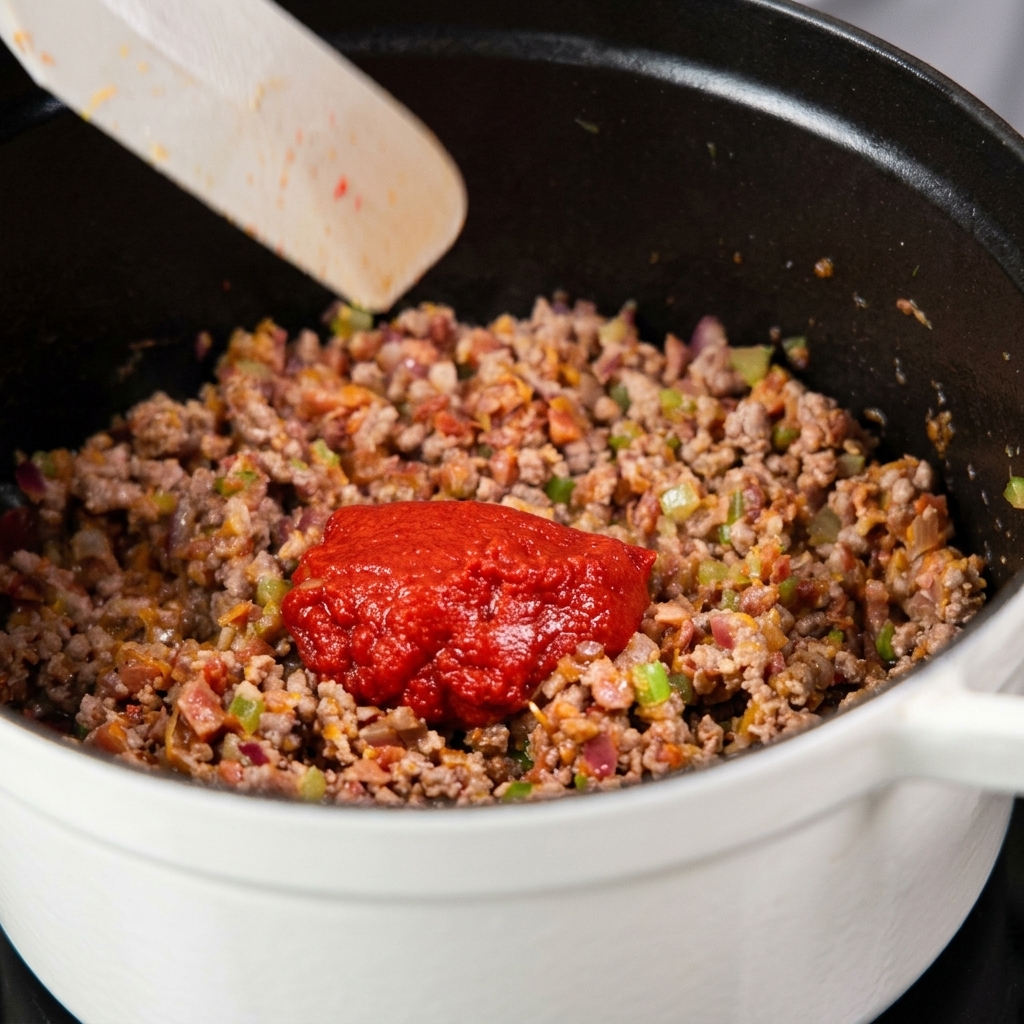
Once the beef is browned, add a generous scoop of thick tomato paste to the mixture. Stir it in thoroughly and cook for a few minutes to toast the paste, which enhances its aroma and deepens the final color of the Ragù.
Tip: Cooking the tomato paste directly on the bottom of the pot for a minute before mixing it in helps caramelize it for better flavor. - 11Deglaze with red wine
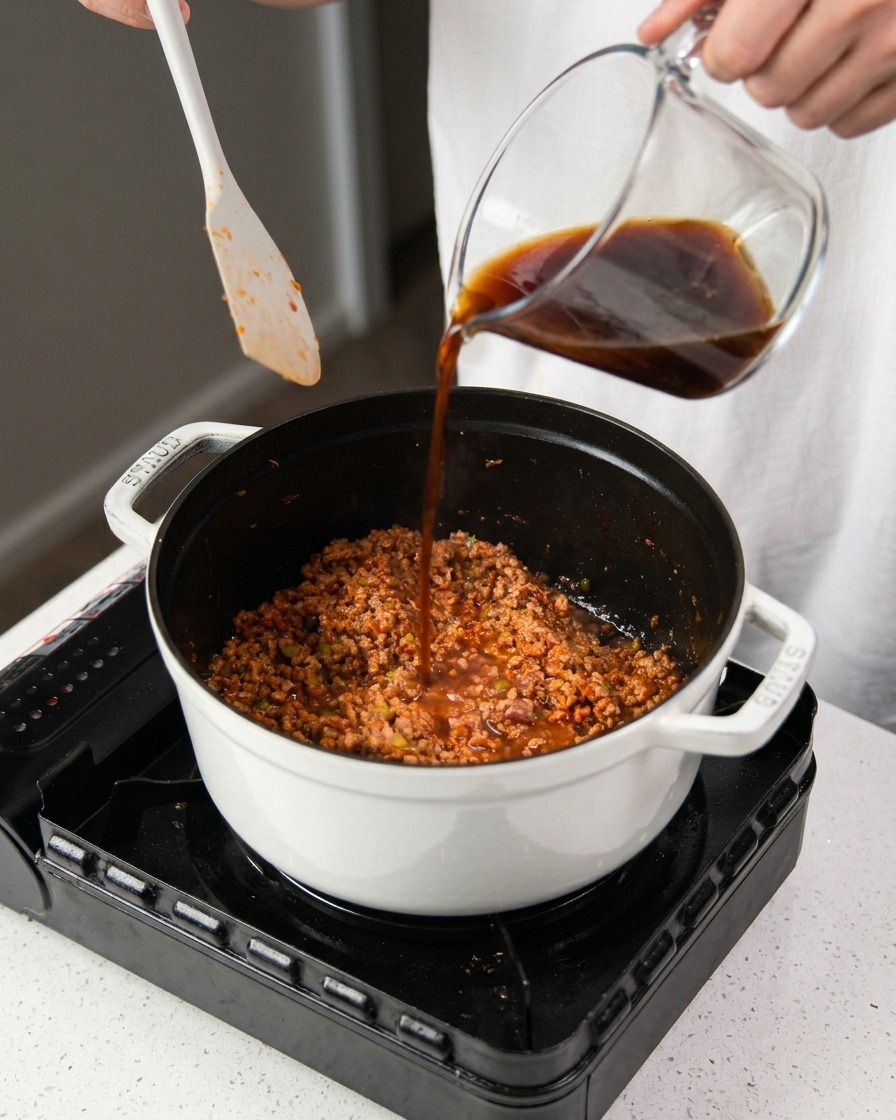
Pour the red wine into the pot in small batches. Allow the liquid to bubble and the alcohol to evaporate completely. This process deglazes the pan, lifting all the flavorful browned bits from the bottom into the sauce.
Tip: Use a dry red wine that you would enjoy drinking, as the flavor will concentrate during the long simmering process. - 12Add the canned tomatoes
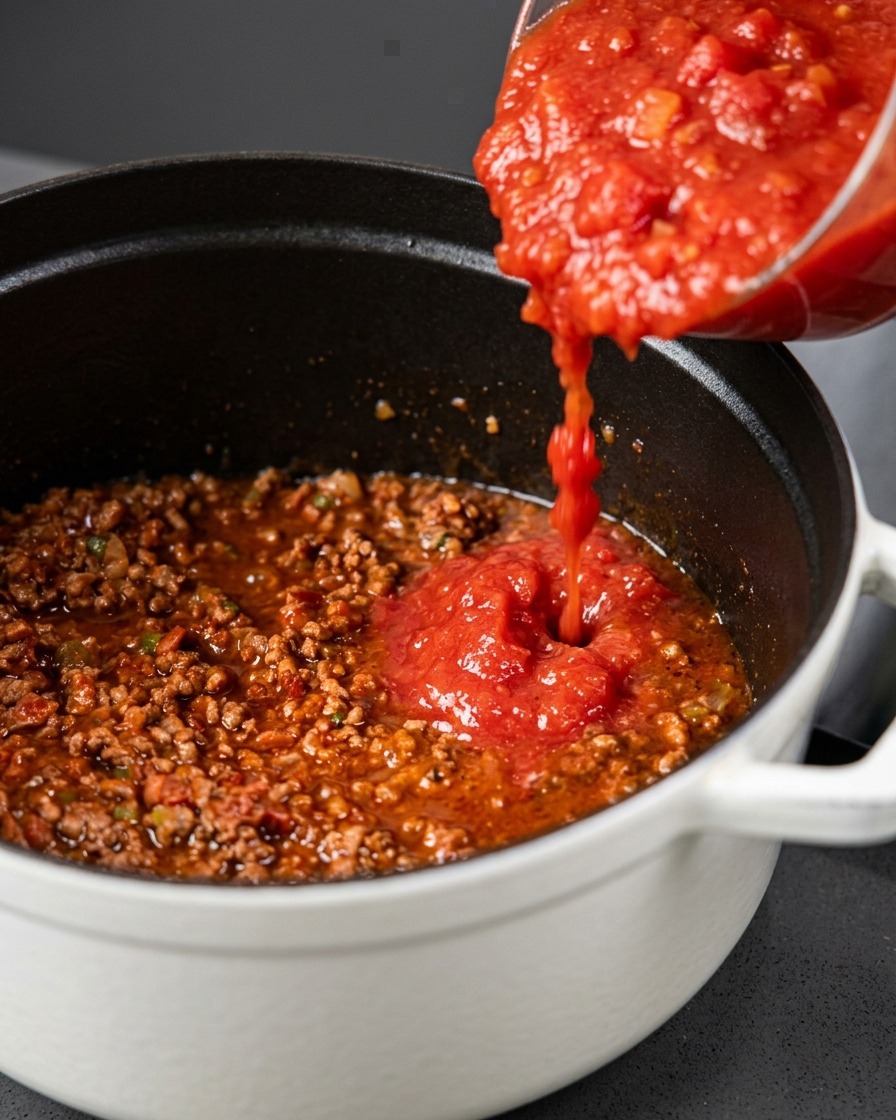
After the wine has evaporated, pour in the crushed canned tomatoes. Mix everything well to ensure the meat and vegetables are fully submerged. This provides the liquid base for the long, slow simmer that follows.
Tip: After adding the tomatoes, reduce the heat to low and cover the pot to begin the 90-minute simmering phase. - 13Simmer the sauce
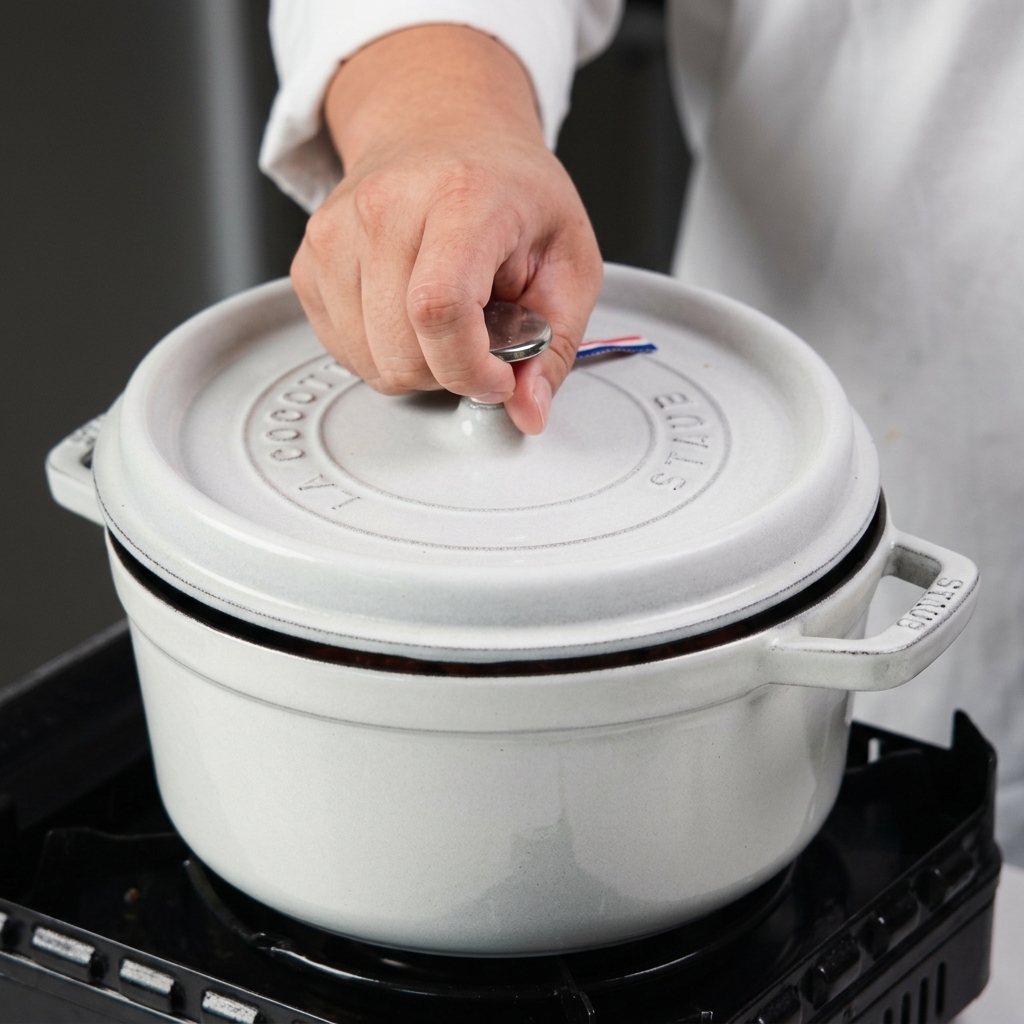
After incorporating the tomatoes and red wine, cover the pot with a tight-fitting lid. Reduce the heat to low and allow the ragù to simmer gently for 90 minutes. This long, slow cooking process is essential for breaking down the meat fibers and developing a deep, complex flavor profile.
Tip: Check the pot occasionally and give it a quick stir to ensure nothing is sticking to the bottom, but keep the lid on as much as possible to retain moisture. - 14Incorporate the milk
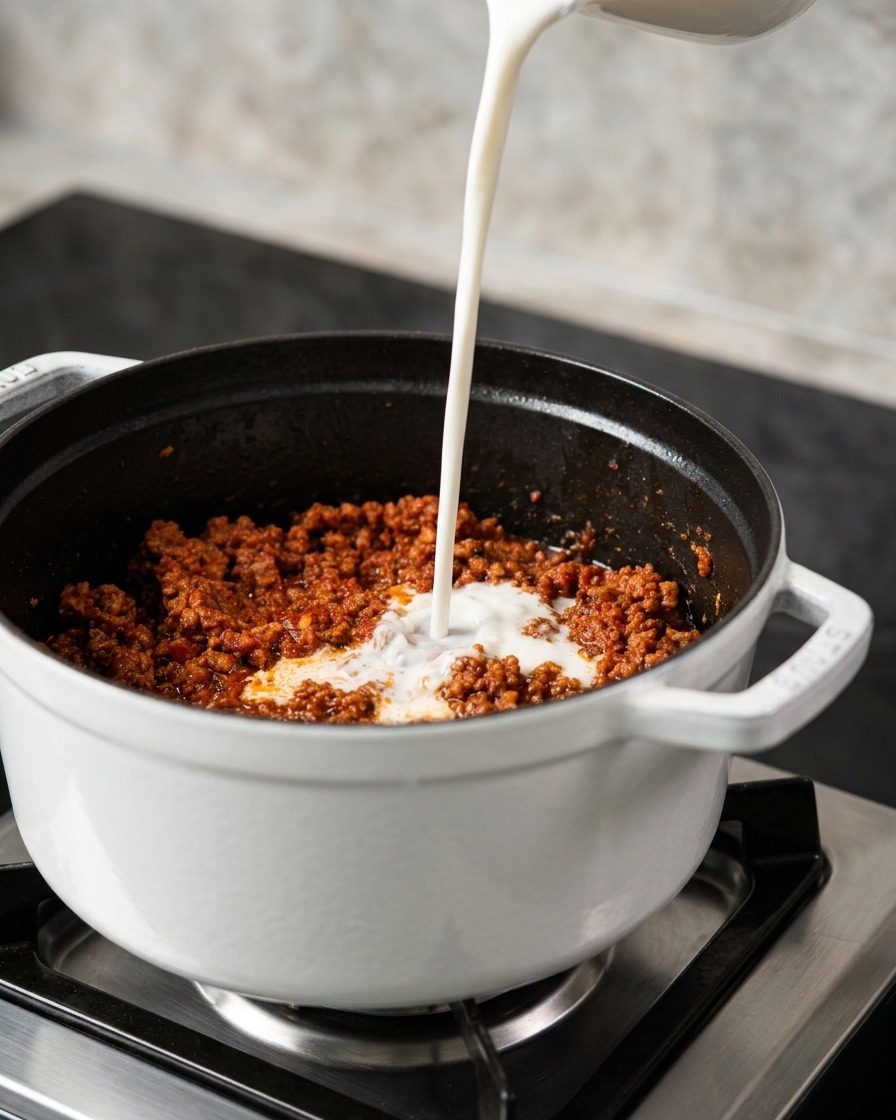
Once the initial 90-minute simmer is complete, pour in the whole milk in small batches. Stir the sauce as you add it to ensure the milk is fully integrated. The addition of milk is a traditional technique that softens the meat and perfectly balances the acidity of the tomatoes and wine.
Tip: Use whole milk rather than skim or low-fat for the best texture and a truly velvety finish. - 15Season the ragù
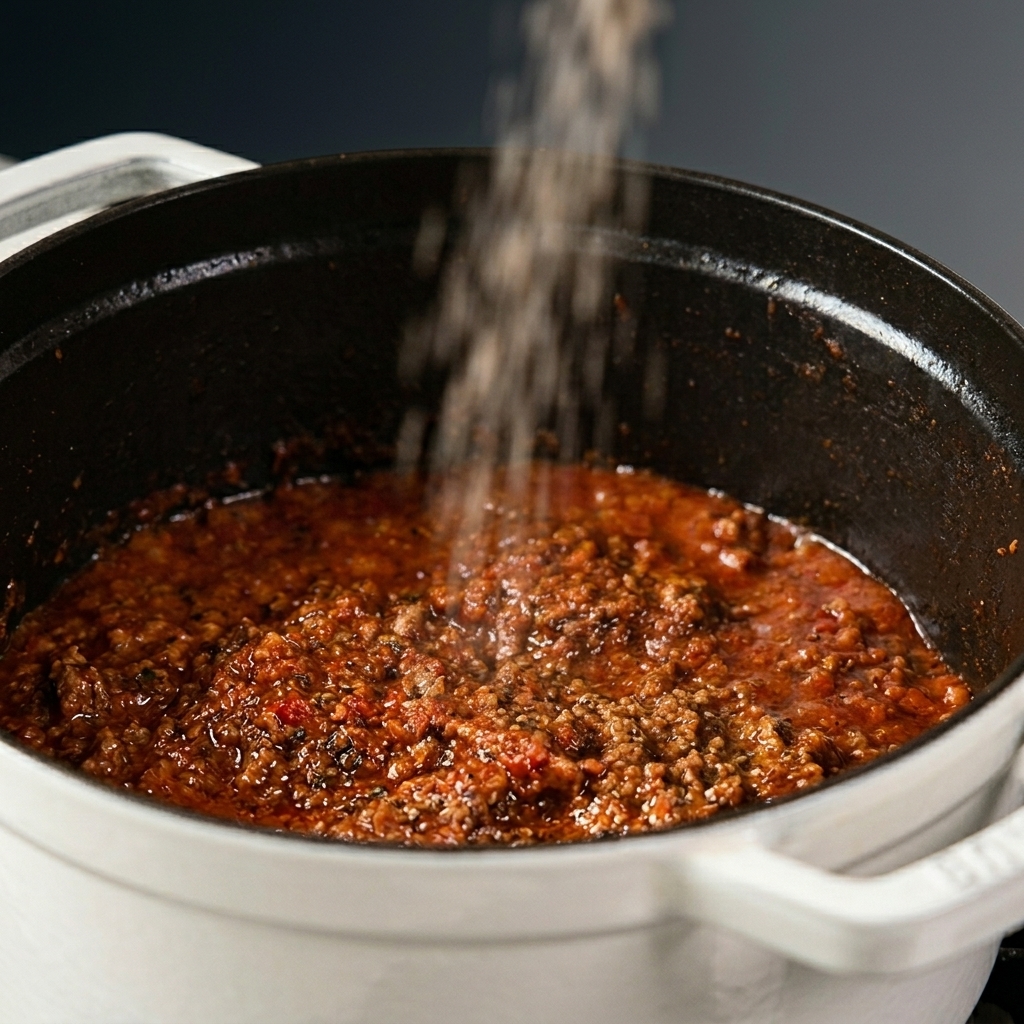
After the sauce has simmered with the milk for an additional 30 minutes, its time for the final seasoning. Sprinkle in sea salt and freshly ground black pepper to taste. Adjusting the seasoning at the very end ensures the flavors are perfectly balanced after the sauce has fully reduced.
Tip: Always taste your sauce before adding salt, as the pancetta and tomato paste already contribute a fair amount of sodium. - 16Combine sauce and pasta
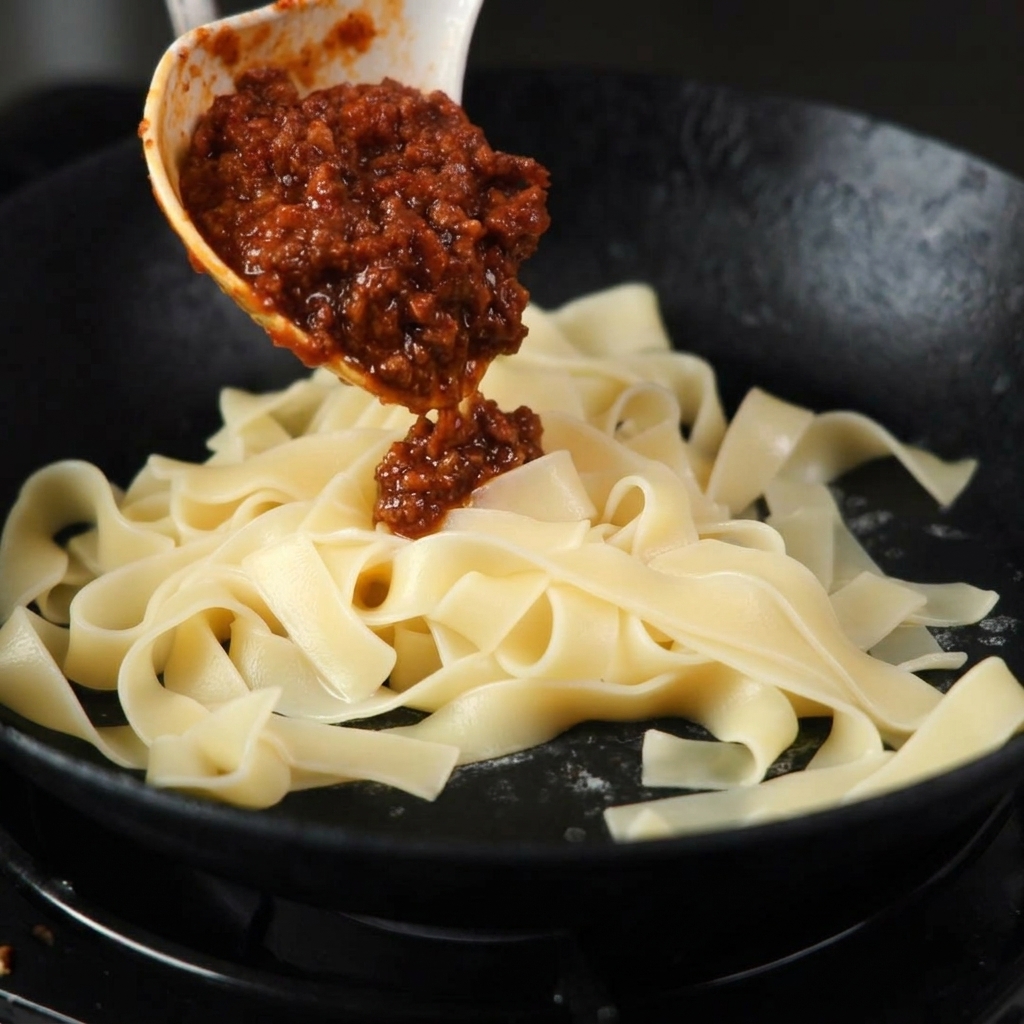
Transfer your cooked wide pasta ribbons, such as tagliatelle or pappardelle, into a pan. Use a ladle to spoon the rich, finished Bolognese sauce directly over the pasta. Toss gently to ensure every ribbon is thoroughly coated in the meat sauce before serving.
Tip: Wider pasta shapes are ideal for Bolognese because their large surface area helps hold onto the heavy, chunky meat sauce.