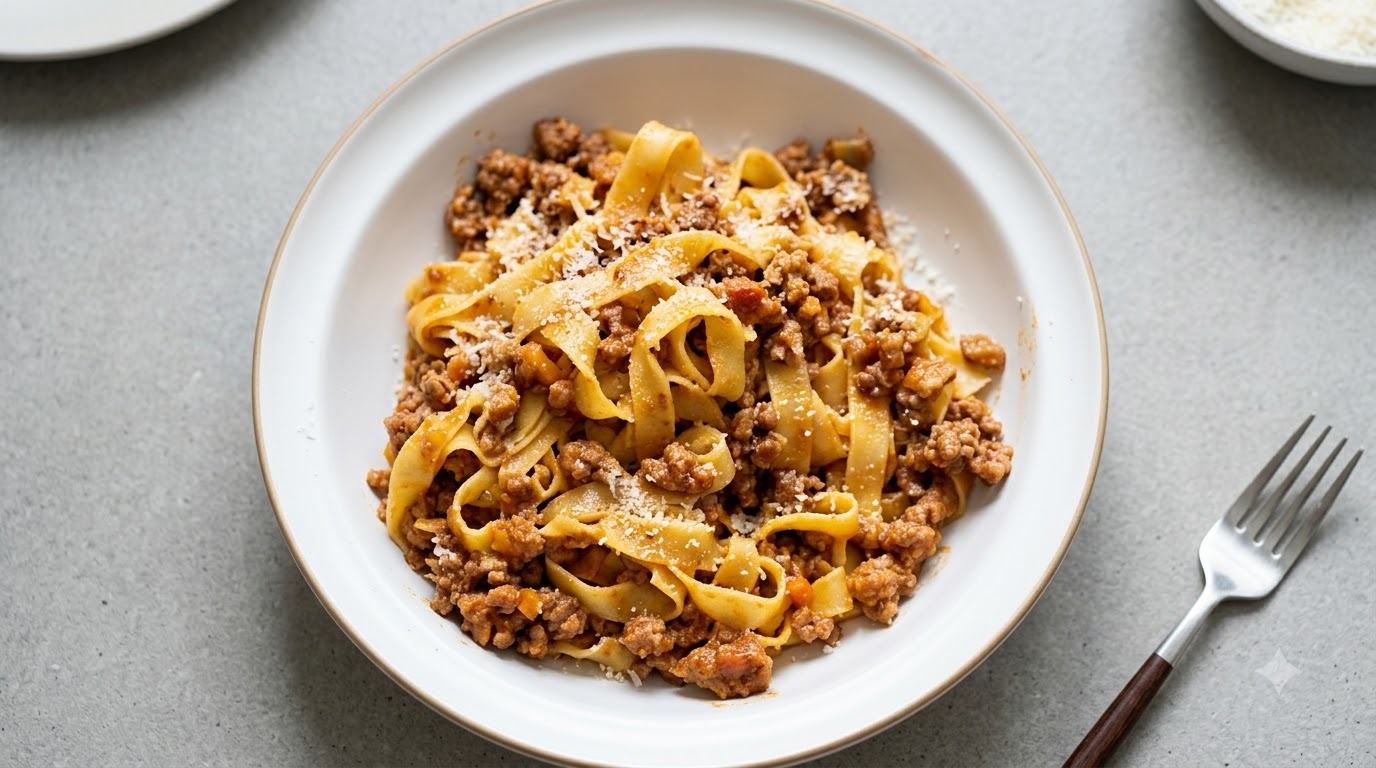
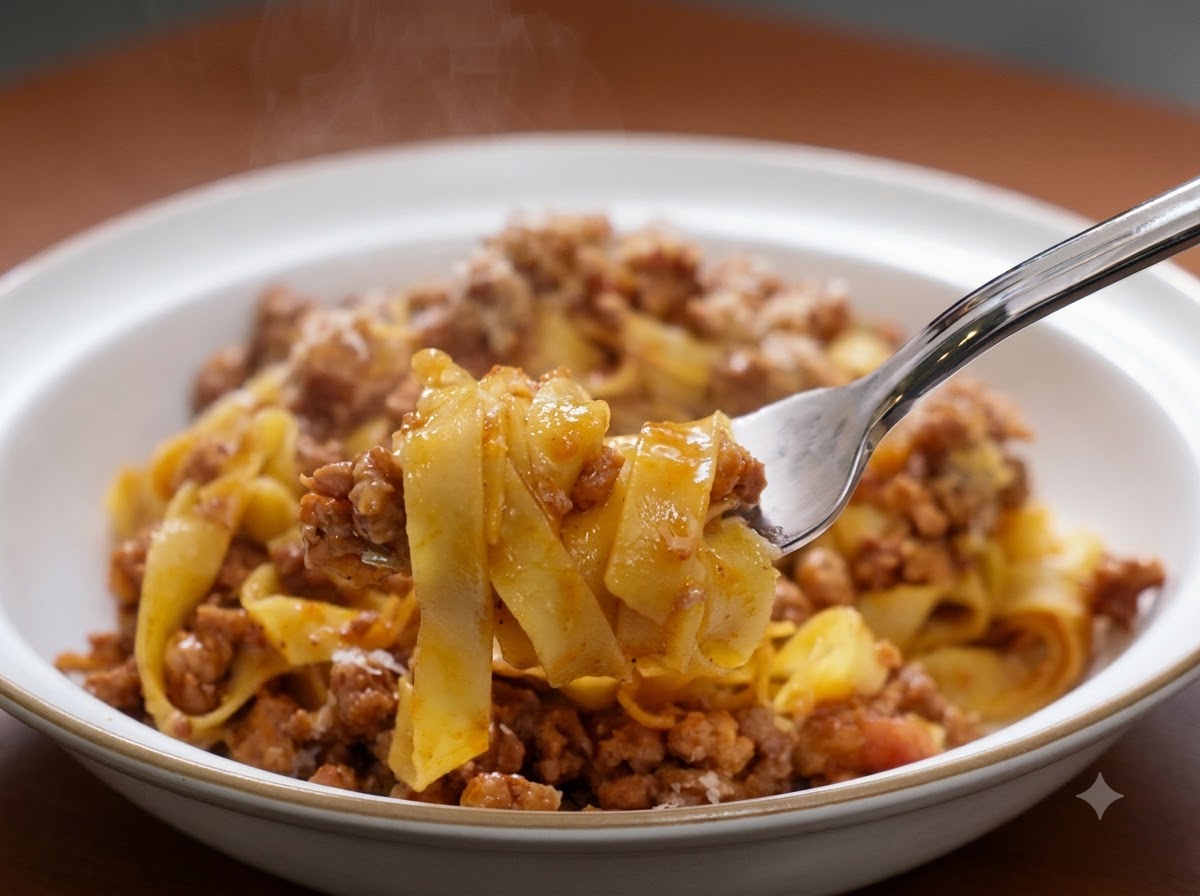
Classic Tagliatelle al Ragù
The authentic taste of Emilia-Romagna — rich slow-simmered beef and pork ragù tossed with silky egg tagliatelle and finished with freshly grated Parmesan.
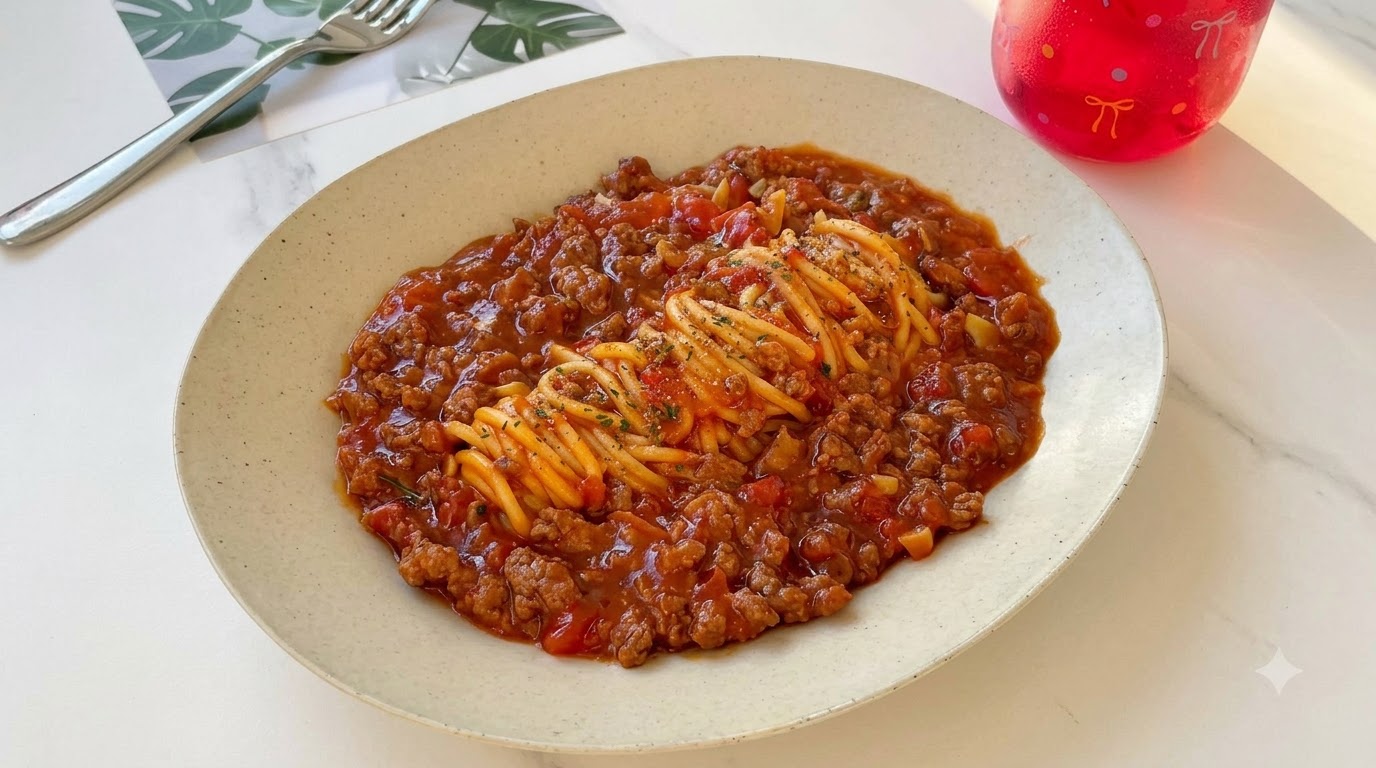
While often mistakenly called Spaghetti Bolognese abroad, true Bolognese ragù belongs exclusively on flat egg pasta like tagliatelle. Originating near Bologna and Imola, this comforting meat sauce relies on a slow simmer of minced meats, aromatic vegetables, and wine to develop its deeply savory flavor.
Ingredients
- 100 g tagliatelle noodles
- 300 g ground beef
- 300 g ground pork
- 4 slices bacon
- 1 stalk celery
- 1 onion
- 1 carrots
- 150 ml red wine
- 300 ml stock
- 4 tbsp tomato paste
- to taste Parmesan cheese
- 2 bay leaves
- 2 sprigs thyme
- 2 tbsp olive oil
- to taste black pepper
- to taste salt
Instructions
- 1Dice the carrots

Take half a carrot and carefully slice it lengthwise, then crosswise into small, uniform cubes on a wooden cutting board to ensure even cooking.
Tip: Keep your fingers curled inward (the claw grip) while chopping to protect them from the knife blade. - 2Dice the celery
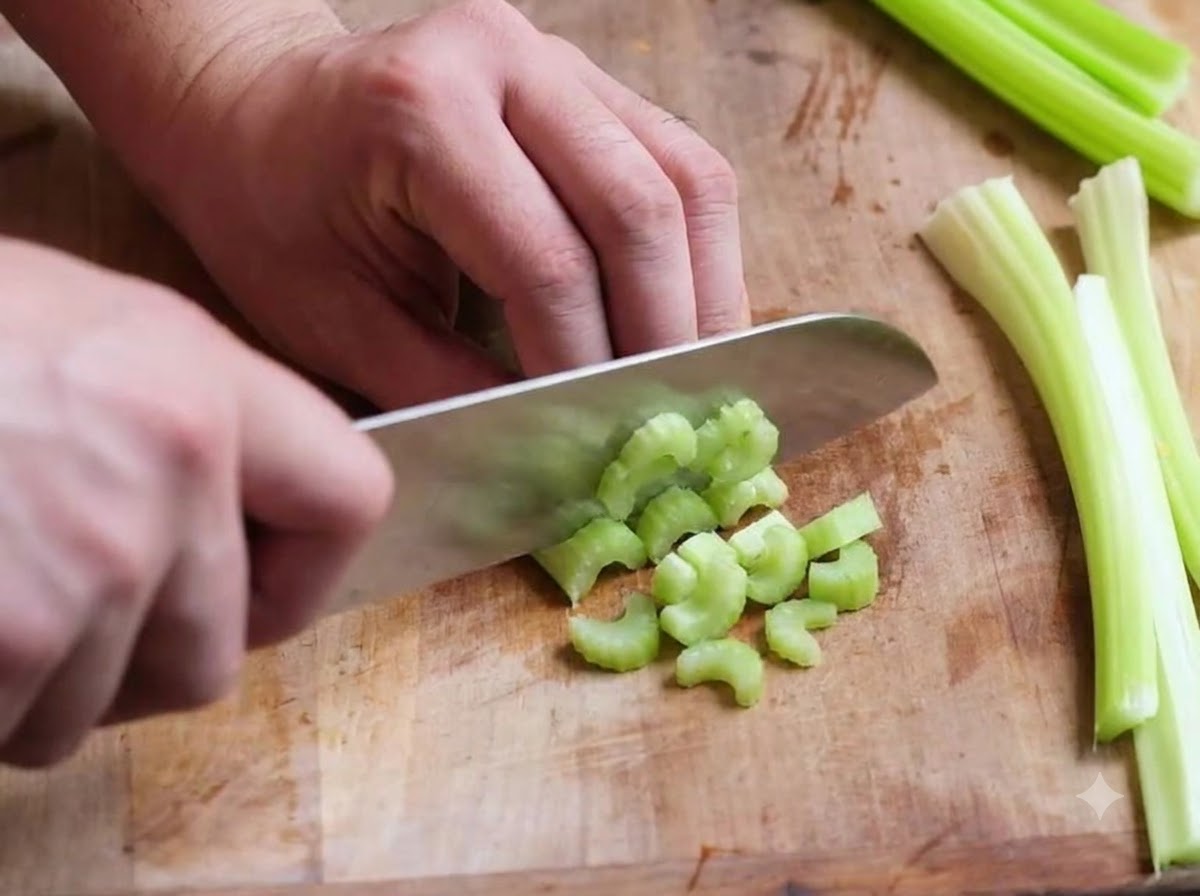
Take fresh celery stalks and slice them into small, bite-sized cubes on the wooden cutting board alongside the other mirepoix vegetables.
Tip: Trim the tough ends of the celery before dicing for a cleaner texture in the sauce. - 3Dice the onion
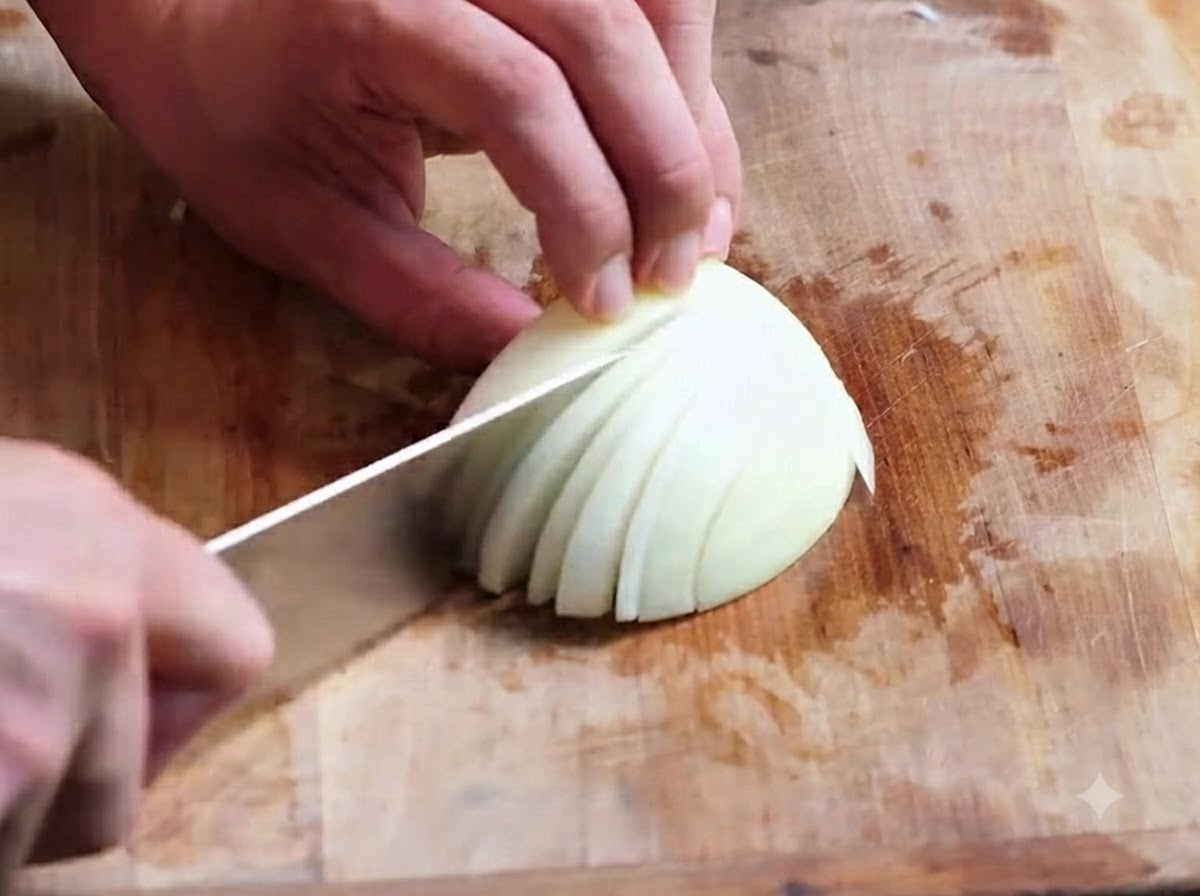
Place a quarter of an onion on the cutting board and make parallel vertical and horizontal cuts to prepare small, finely diced onion pieces.
Tip: Leaving the root intact while making preliminary cuts helps keep the onion layers together while dicing. - 4Mince the beef
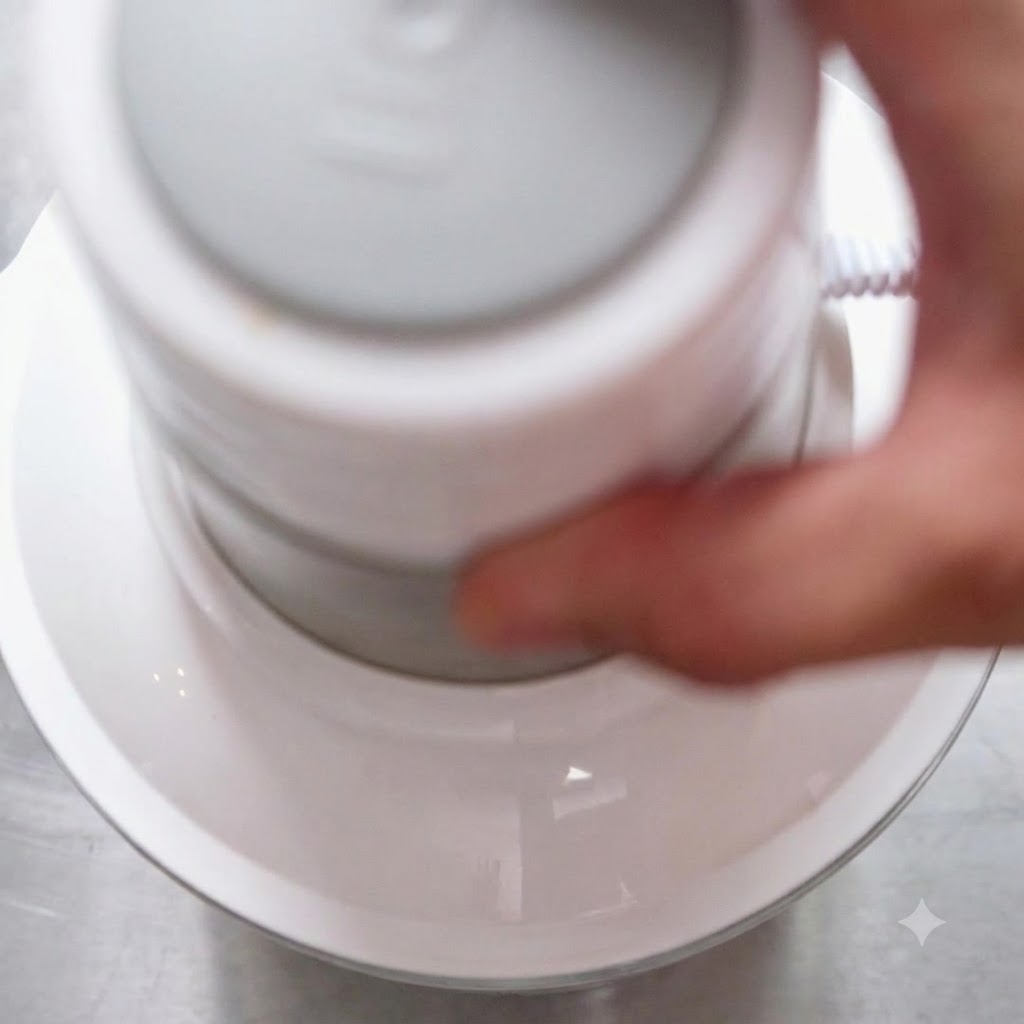
Place beef pieces into a food processor and pulse until finely ground and evenly textured, ready for browning.
Tip: Avoid over-processing the meat into a paste; pulse gently to maintain a proper minced texture. - 5Sauté the bacon
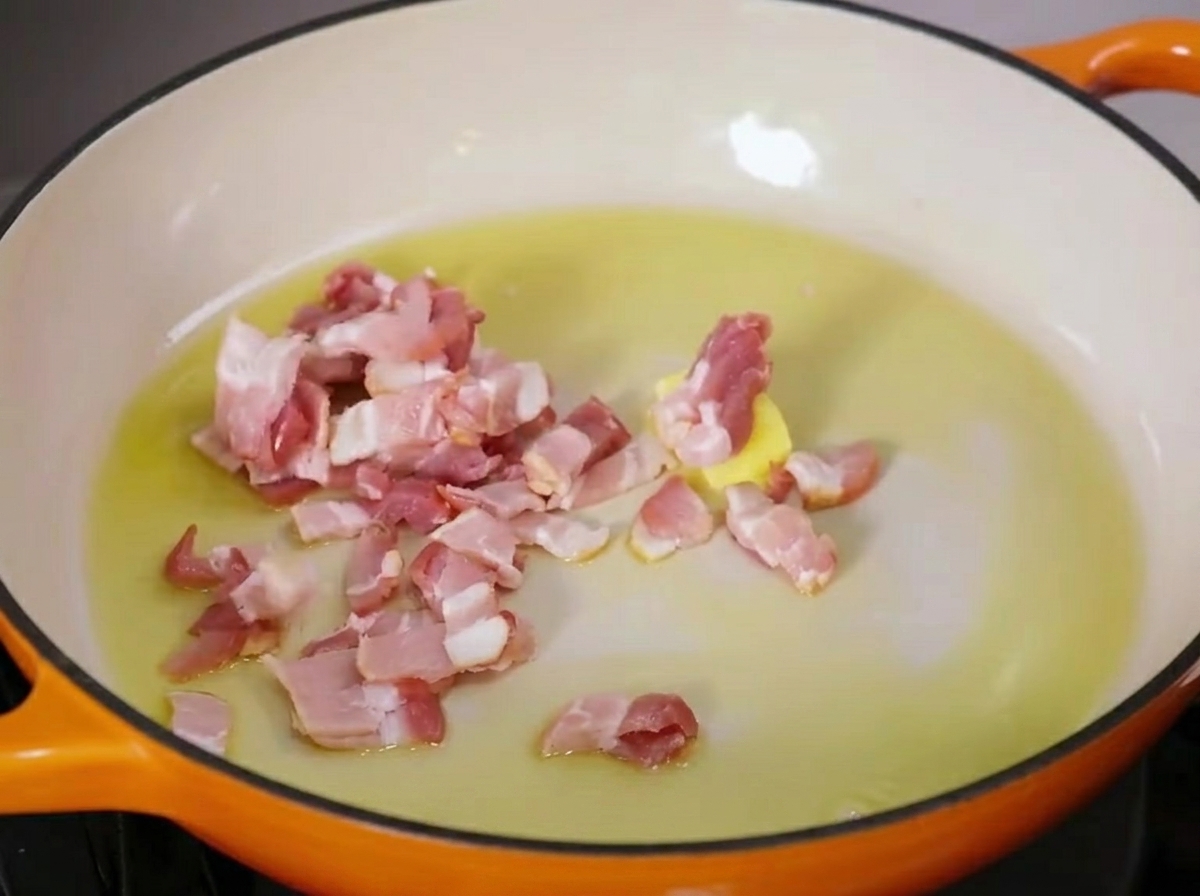
Heat olive oil and a small knob of butter in a large pan, then add small pieces of bacon to render their fat and build the flavor base.
Tip: Start on medium heat so the butter does not burn while the bacon slowly renders its fats. - 6Sauté the vegetables and bacon
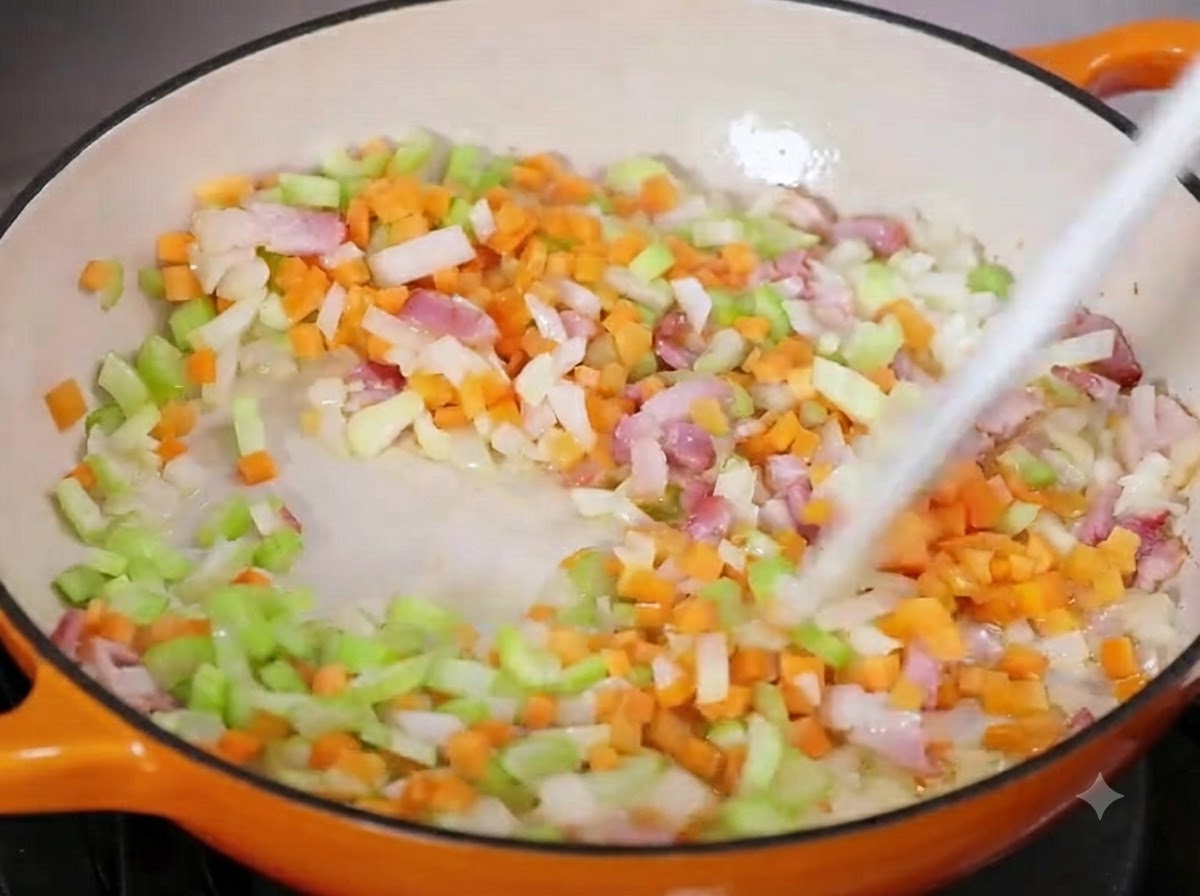
Add the diced carrots, celery, and onions into the pan with the bacon, stirring continuously until the vegetables become translucent and tender.
Tip: Stir frequently to ensure the mirepoix cooks evenly without browning too quickly. - 7Add ground pork and beef
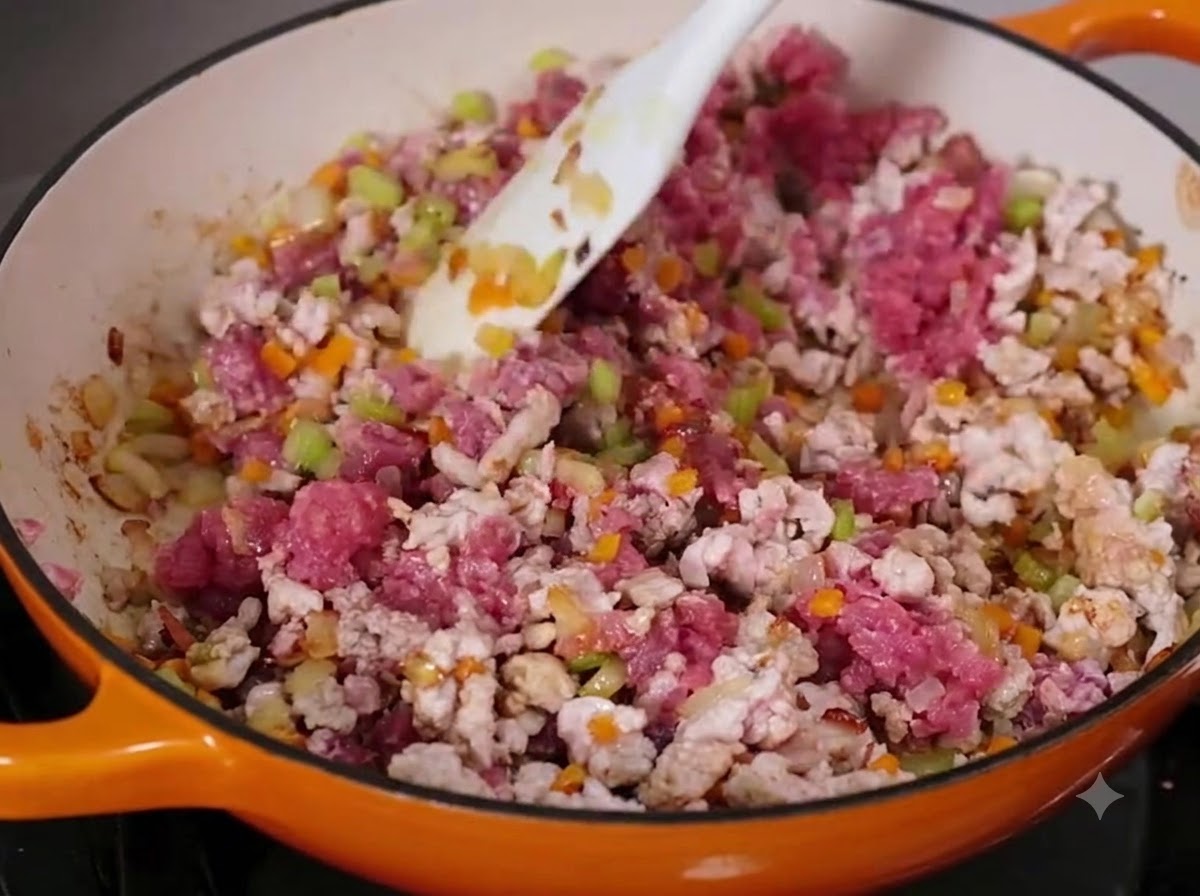
Add the ground pork and ground beef into the pan with the sautéed vegetables. Stir continuously, breaking up the meat chunks, until the meat is thoroughly browned and the moisture from the meat completely evaporates.
Tip: Make sure to cook out all the moisture from the meat until it starts to dry up slightly before moving to the next step. - 8Stir in tomato paste
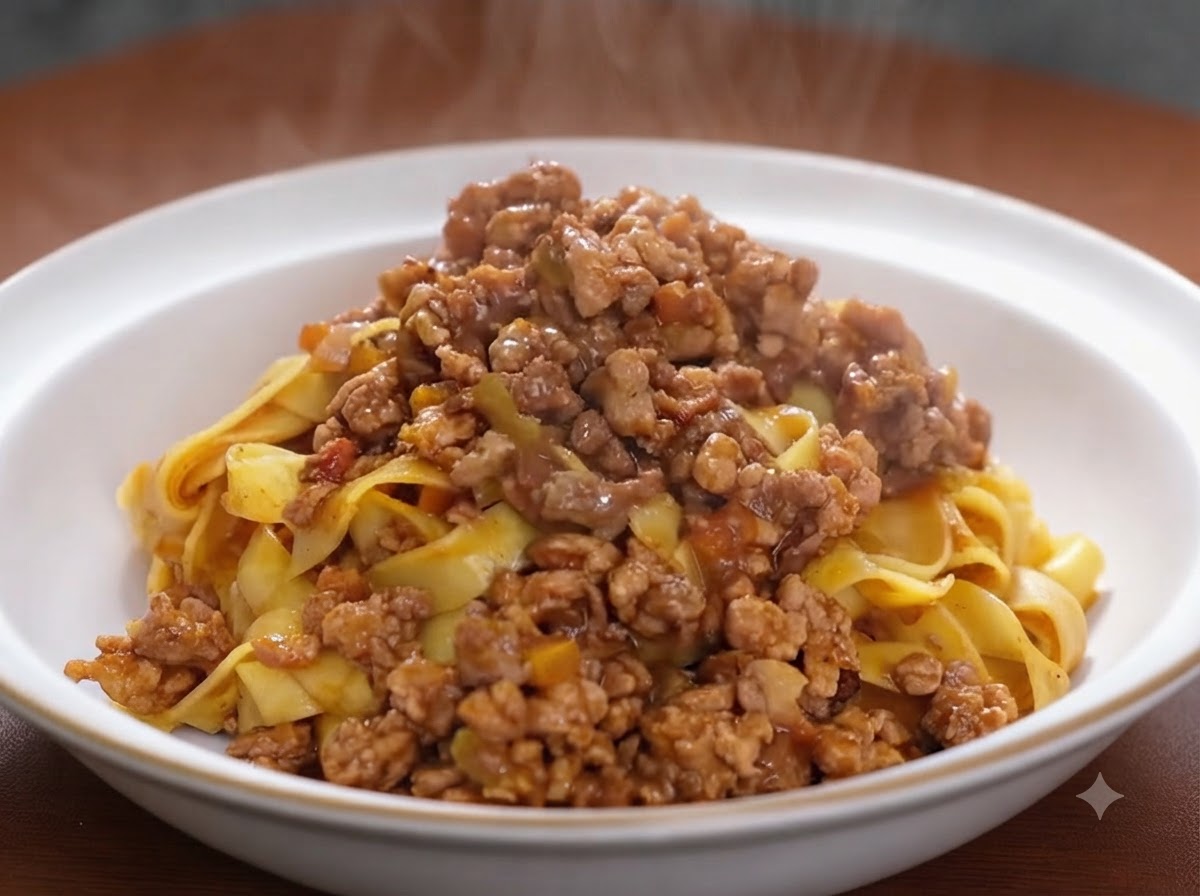
Add the concentrated tomato paste into the browned meat mixture. Stir well to ensure the tomato paste is evenly distributed and coats all the meat and vegetables.
Tip: Allow the tomato paste to fry lightly with the meat for a minute to reduce its acidity and deepen the flavor. - 9Pour in stock
Pour the liquid stock into the pan containing the meat and vegetable mixture. Combine everything thoroughly before covering the pan to simmer.
Tip: Use warm stock so it doesnt lower the temperature of the pan too drastically when added.