Spicy Korean Teppanyaki Squid
Pork Belly (Osam Bulgogi)
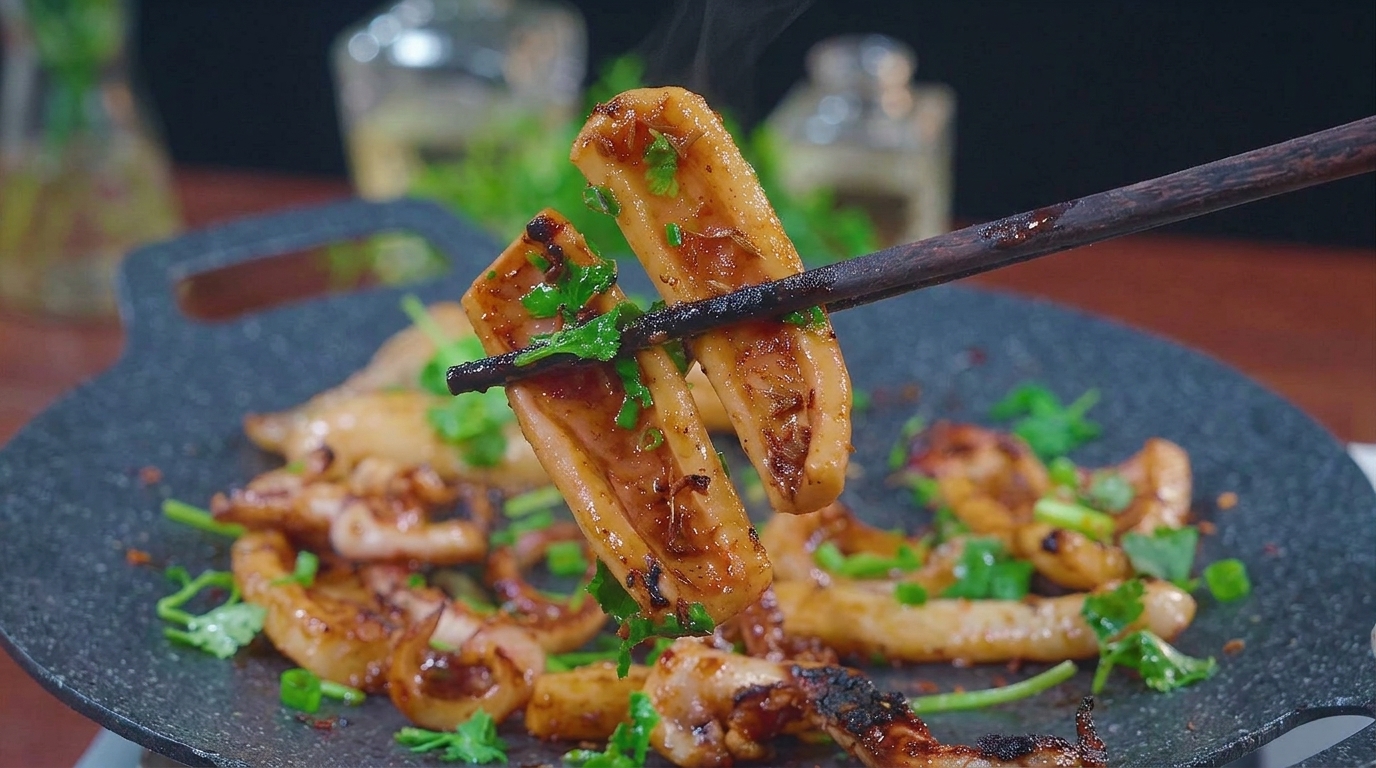
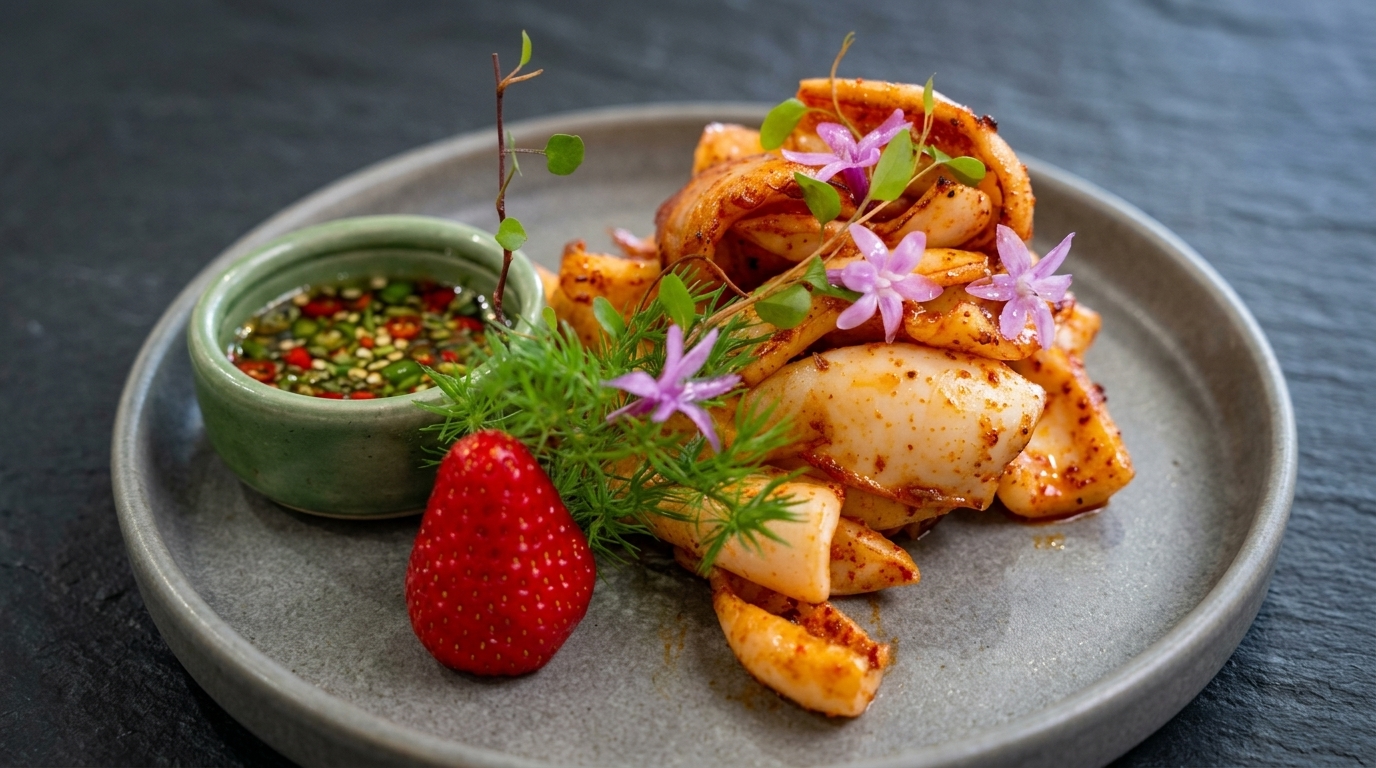
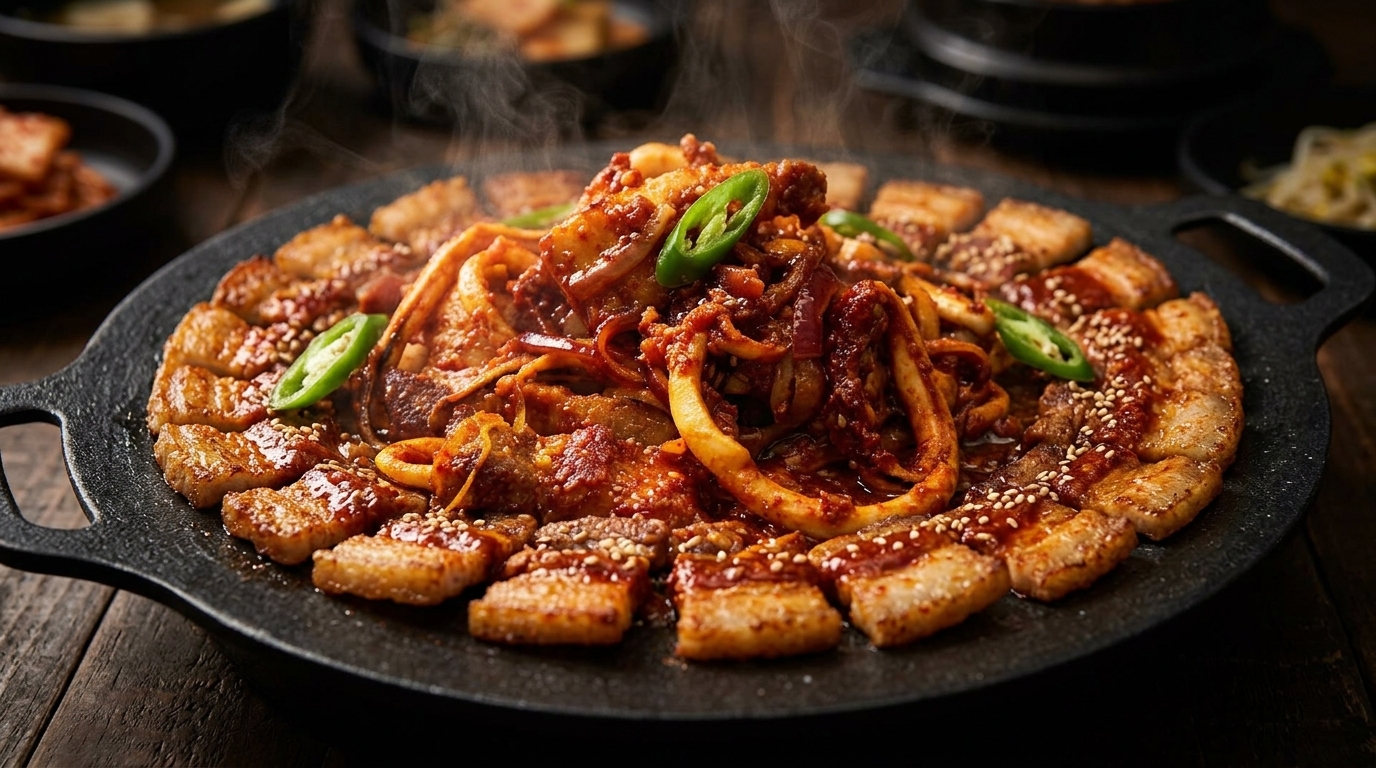
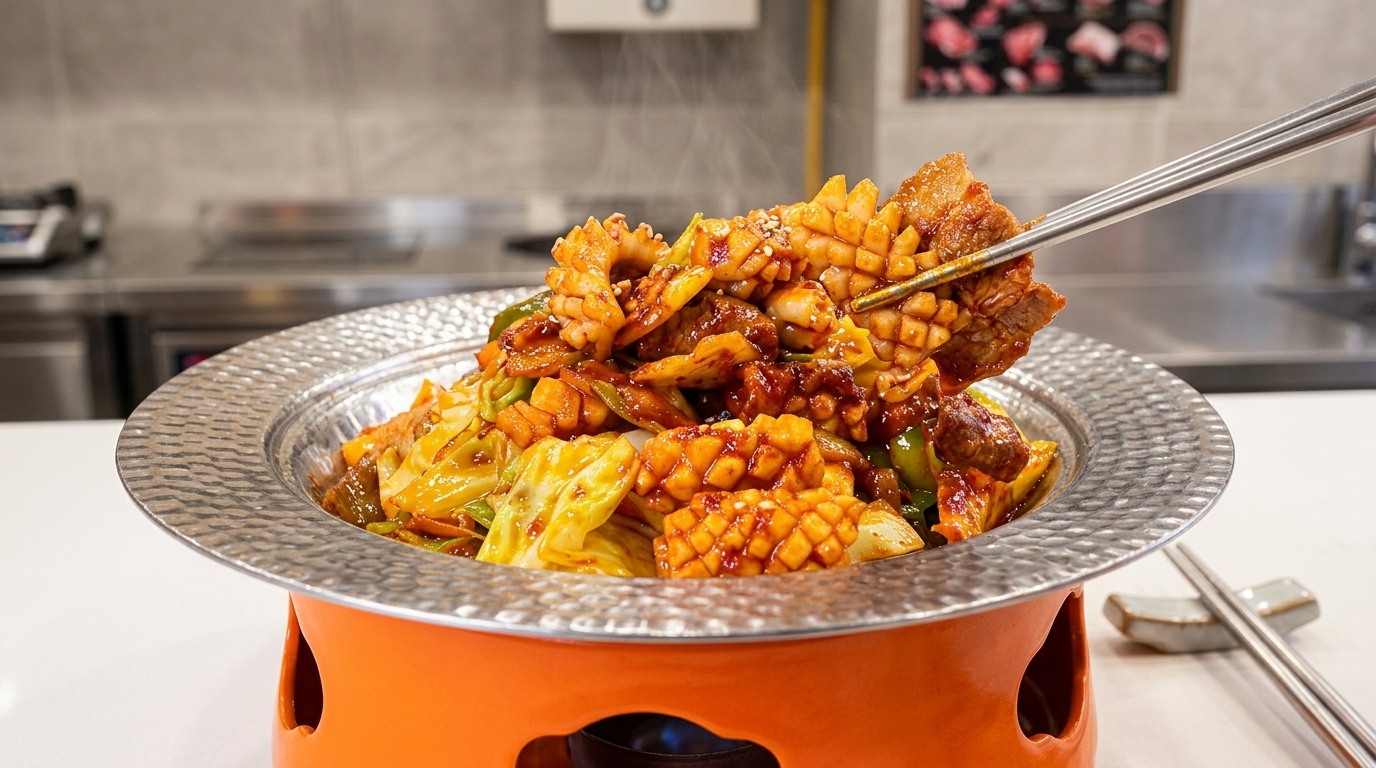
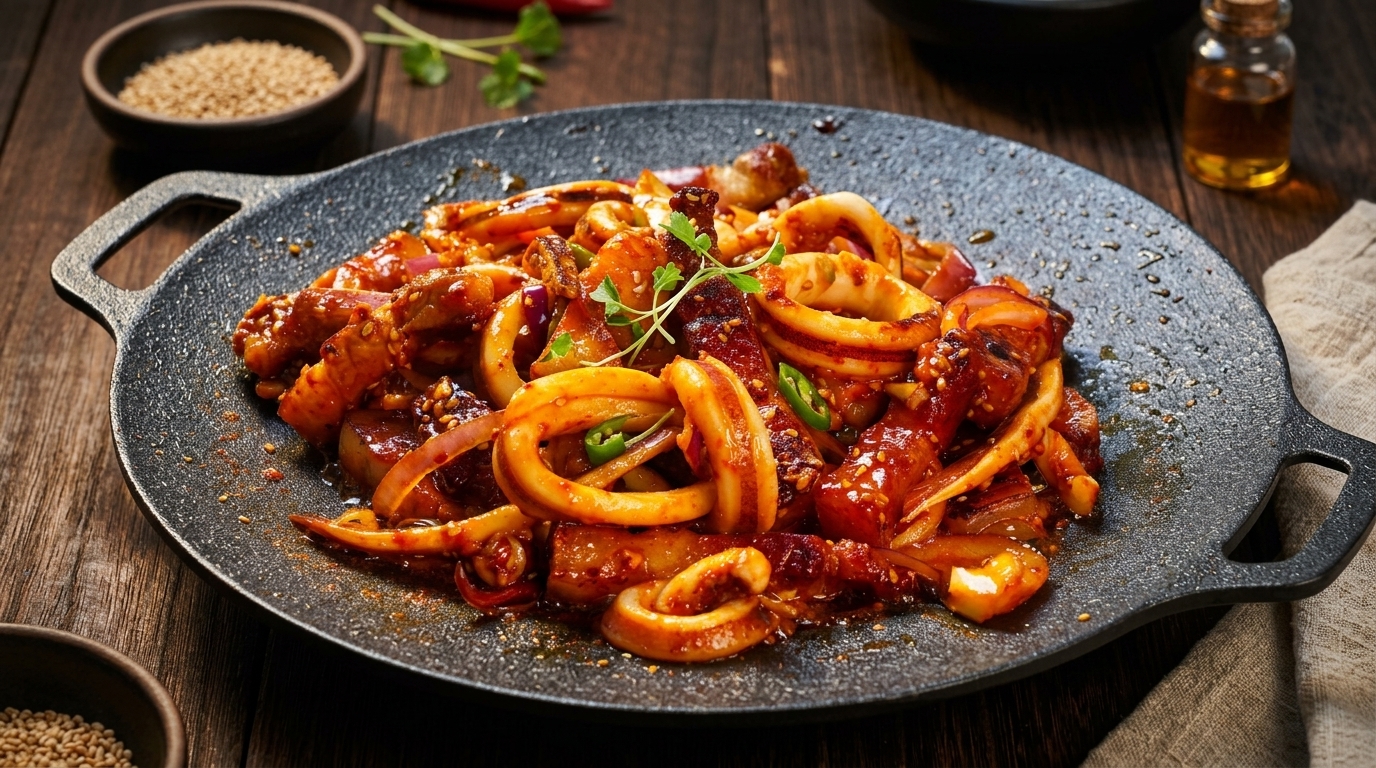
A classic Korean drama favorite featuring thick-cut pork belly and tender squid rings tossed on a sizzling griddle in a rich, spicy gochujang sauce.
Often known as Osam Bulgogi in Korea, this classic pairing of land and sea brings together rich pork belly and chewy squid. Sizzling on a teppanyaki griddle, the combination of rendered pork fat and savory, sweet-spicy gochujang paste creates an intensely aromatic dish. It is a comforting staple frequently featured in Korean dramas, celebrated for its vibrant flavors and interactive cooking style.
Ingredients
- 400 g squid tubes
- 300 g pork belly slices
- 1 medium purple red onion
- 3 stalks green scallions
- 2 green chili peppers
- 2 tbsp minced garlic
- 3 tbsp Korean chili paste (gochujang)
- 2 tbsp Korean chili powder (gochugaru)
- 1 tbsp sugar
- 12 tsp salt
- 1 tbsp toasted sesame oil
- to taste white sesame seeds
Instructions
- 1Slice the squid into rings
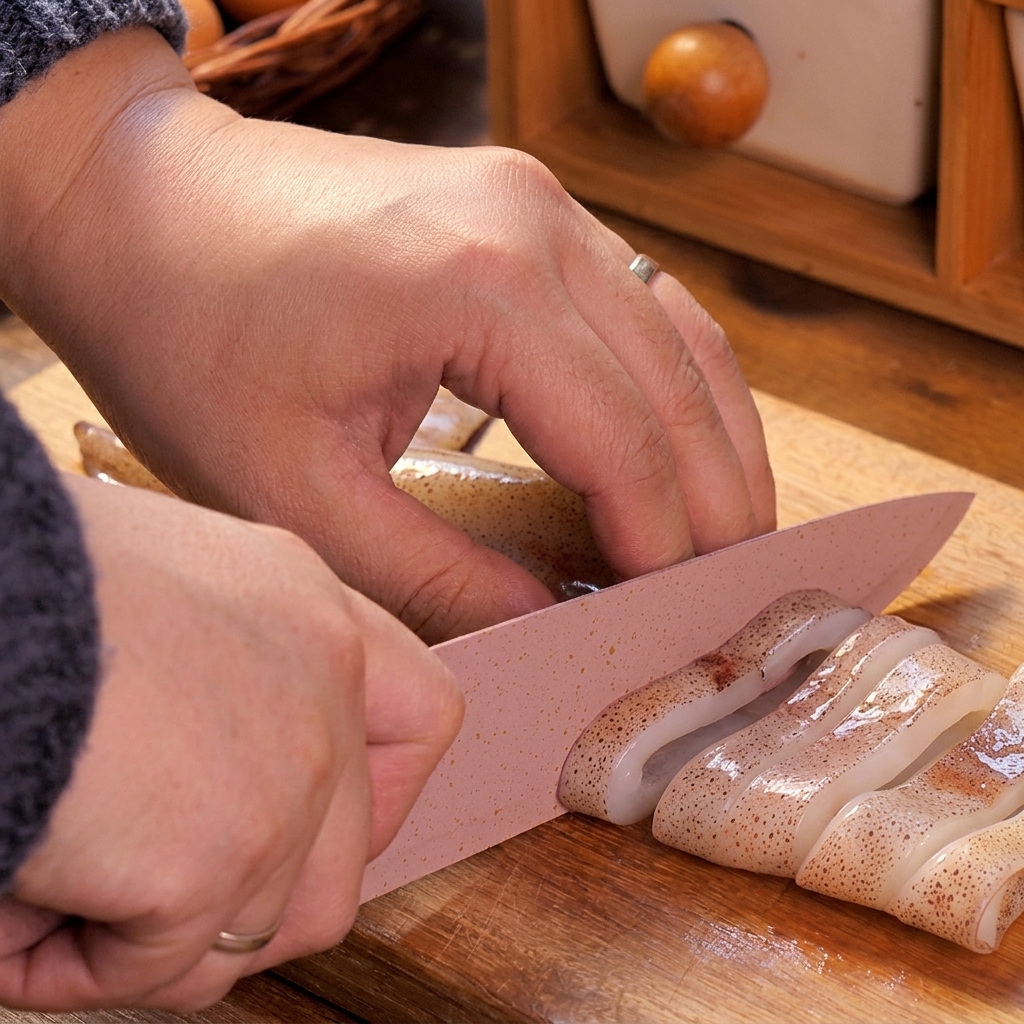
Thoroughly clean the fresh raw squid tubes and pat them dry with a paper towel. Place them flat on a wooden cutting board and use a sharp knife to carefully slice them into uniform rings, roughly half an inch thick.
Tip: Slicing the squid into even pieces ensures they will cook uniformly during the blanching stage. - 2Blanch the squid rings
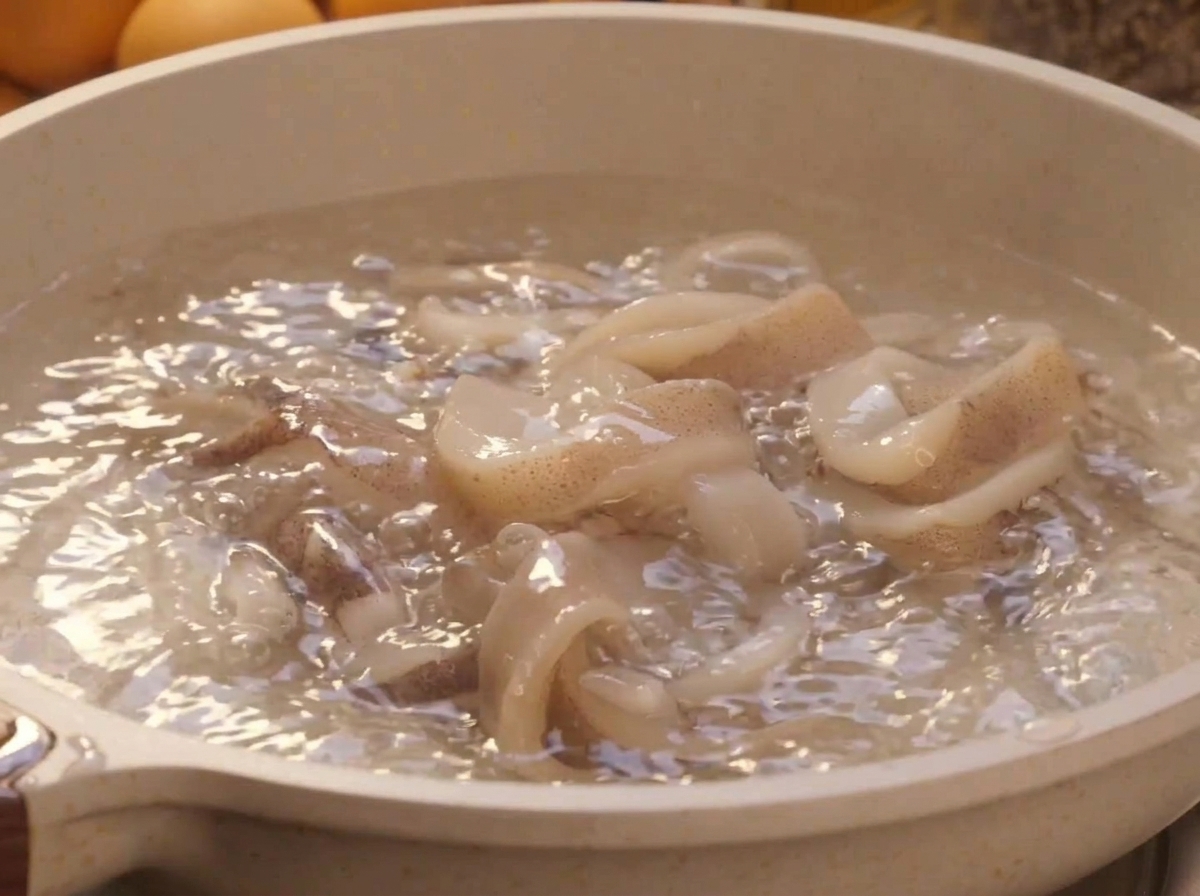
Bring a pot of water to a rolling boil, then add the freshly cut squid rings. Blanch them briefly in the boiling water to firm up their texture and remove any residual fishy odors, ensuring they stay tender for the final dish.
Tip: Keep the blanching time short—around 20 to 30 seconds—so the squid doesnt become rubbery, as it will undergo further cooking later. - 3Drain the squid rings
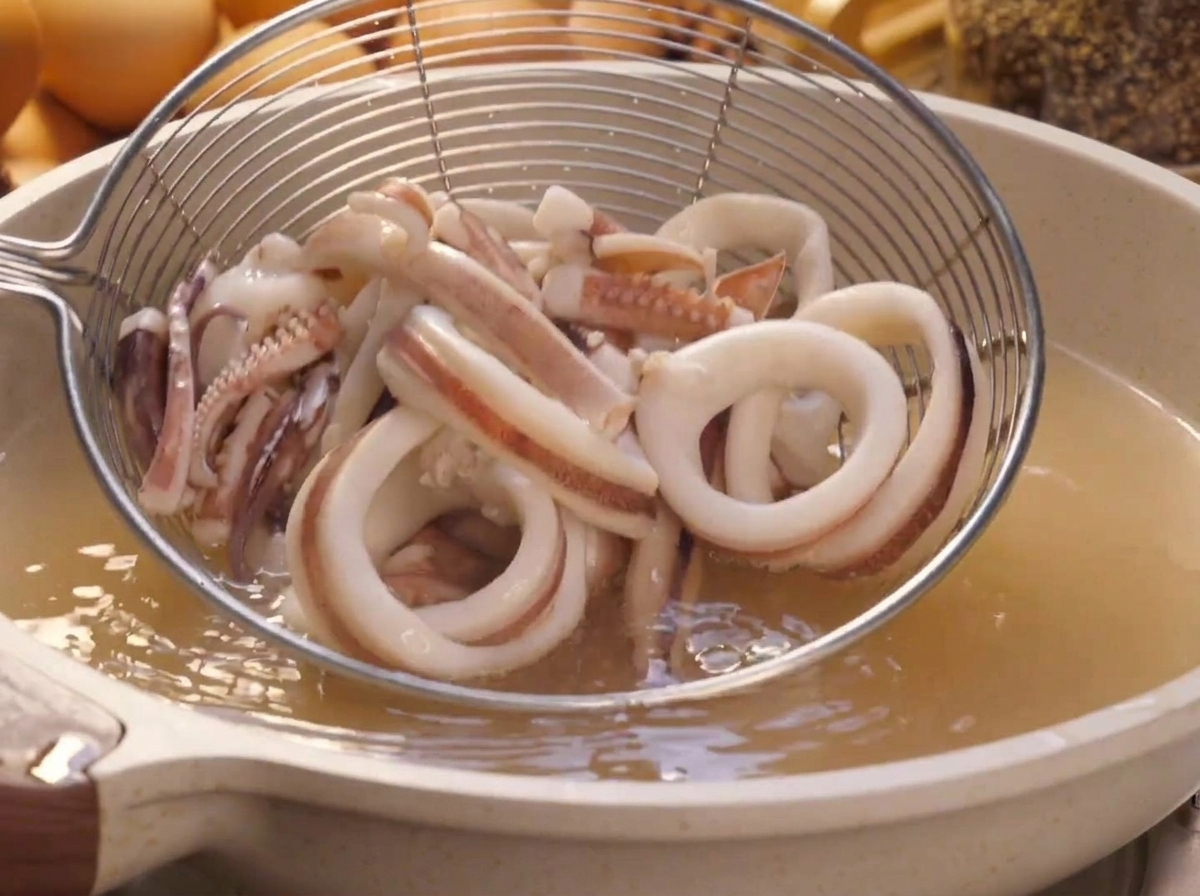
Place the cleaned squid rings into a pot of boiling water to blanch them briefly. As soon as they turn opaque, use a wire mesh strainer to scoop them out and drain, ensuring they remain tender.
Tip: Blanch the squid for only 10 to 15 seconds; overcooking at this stage will make the texture rubbery. - 4Season the blanched squid
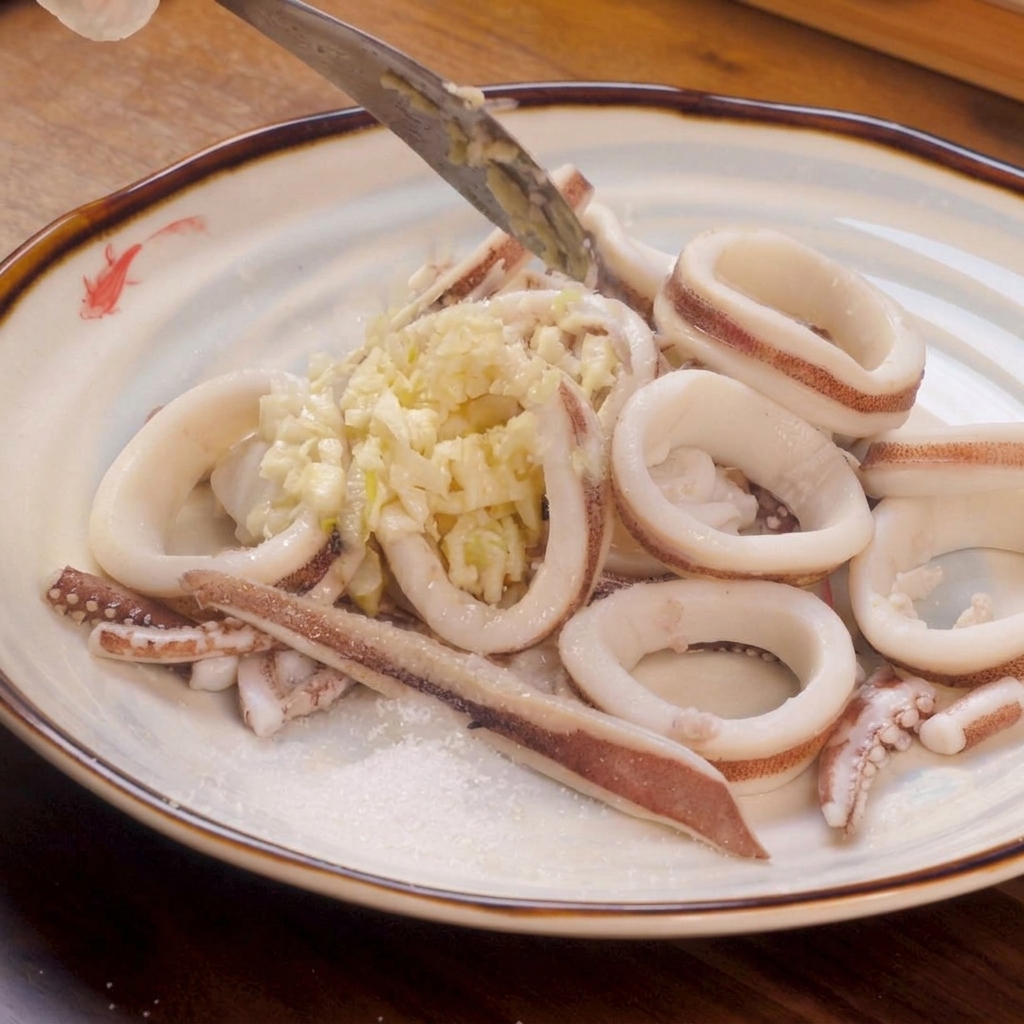
Transfer the freshly blanched squid rings to a clean plate. Add a generous portion of finely minced garlic, along with sugar and salt, directly over the warm squid rings to create the flavor base.
Tip: Adding these base seasonings while the squid is still warm helps the salt and sugar dissolve more readily and enhances aromatic infusion. - 5Add aromatics and chili powder
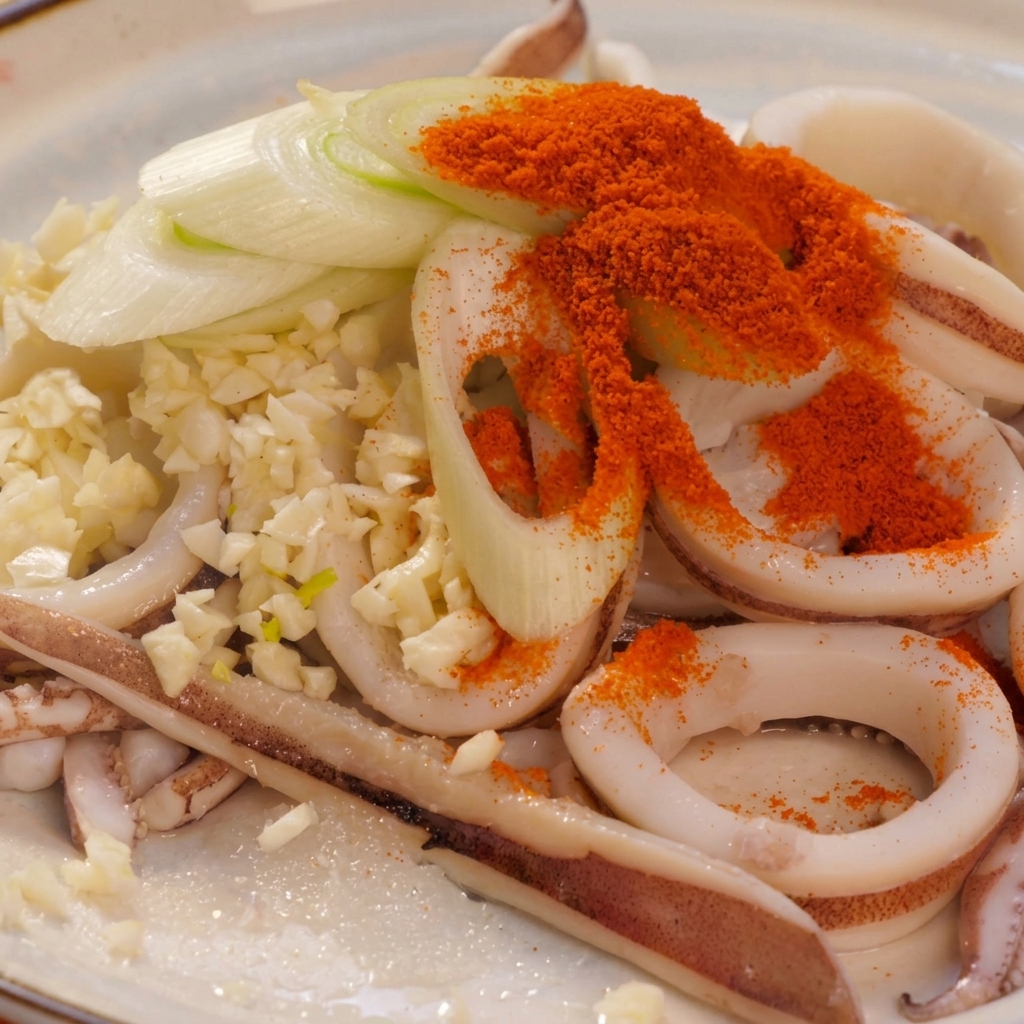
Transfer the blanched squid rings to a plate. Add a generous amount of finely minced garlic, sliced green scallions, and a vibrant layer of red chili powder on top to build the spicy flavor profile.
Tip: You can adjust the amount of chili powder to suit your heat preference, but a generous layer creates the authentic, rich look characteristic of this dish. - 6Add the Korean chili paste
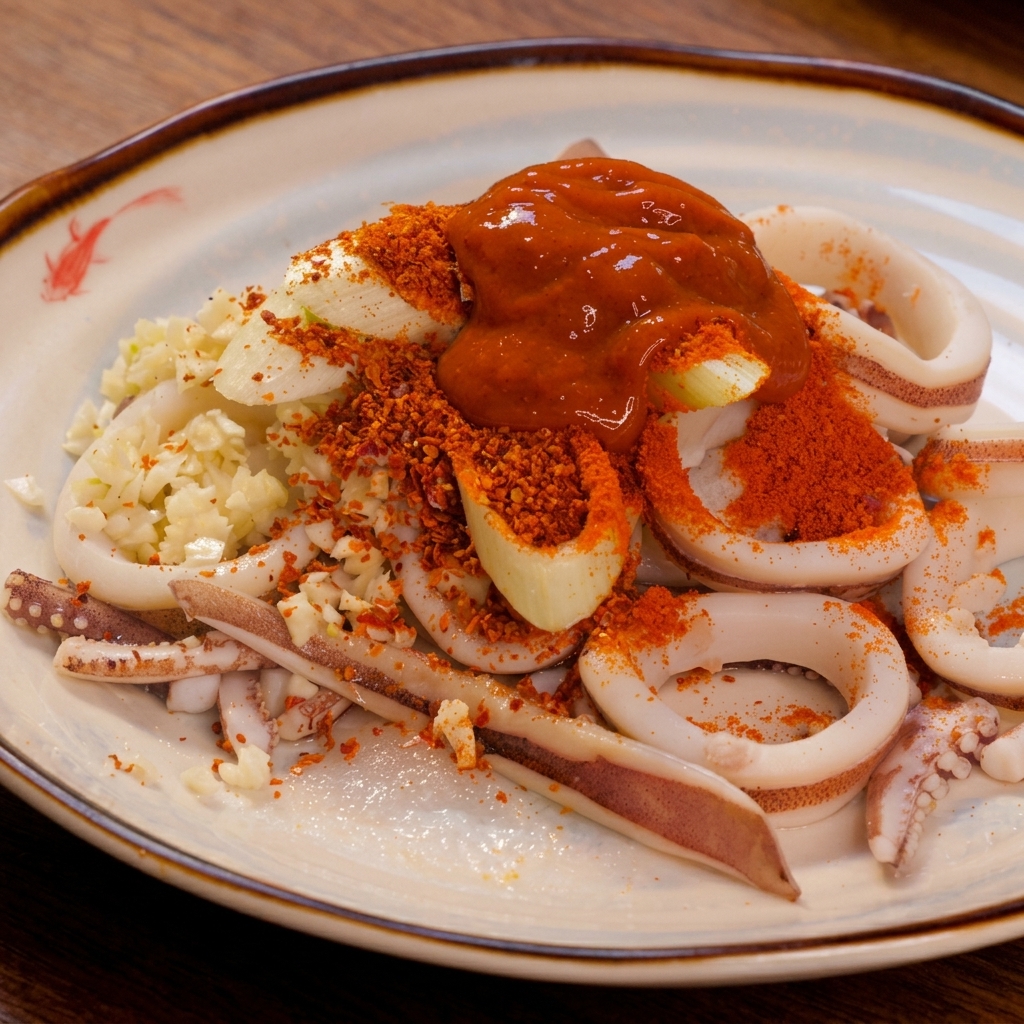
Squeeze a thick dollop of traditional Korean chili paste (gochujang) directly over the seasoned squid rings, scallions, and chili powder. This thick paste provides the essential sweet-spicy depth central to the dish.
Tip: Gochujang adds significant body and stickiness to the marinade, helping the spices adhere beautifully to the squid. - 7Layer with sliced red onions
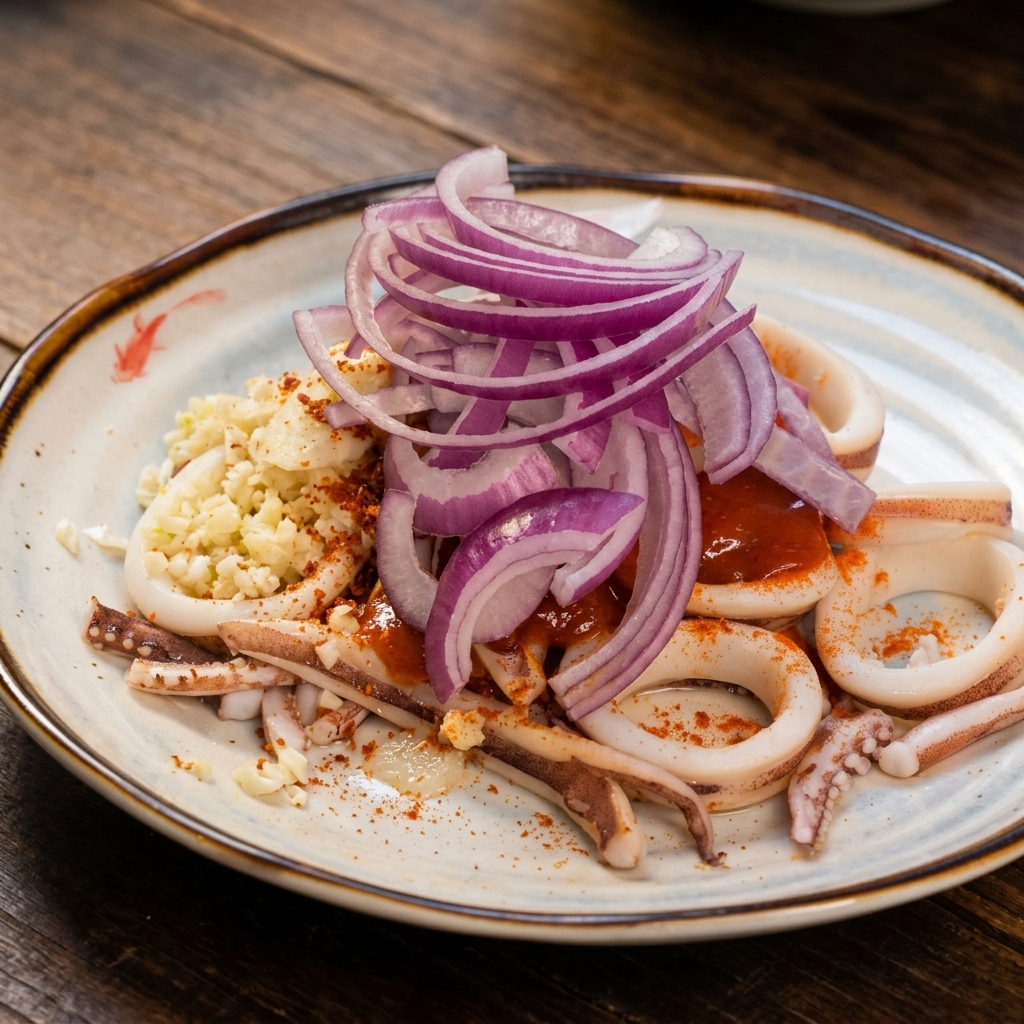
Add a thick layer of thinly sliced purple red onions directly over the squid and chili paste mixture. The red onions bring a crisp texture and a mild sweetness that beautifully balances the intense heat.
- 8Drizzle with sesame oil
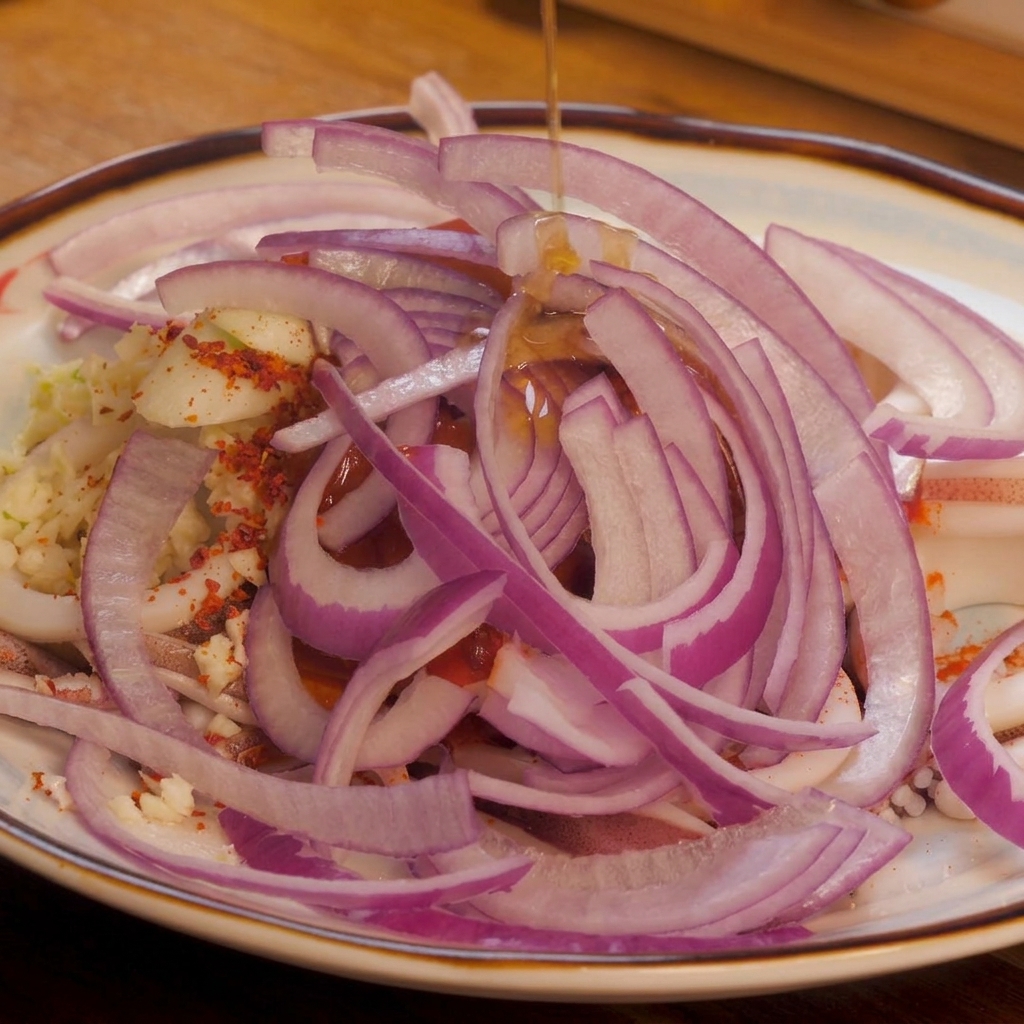
Drizzle a rich amount of toasted sesame oil over the red onions and underlying ingredients. This introduces a deep, nutty aroma and gives the entire mixture a glossy, appetizing sheen.
Tip: Using high-quality toasted sesame oil makes a significant difference in achieving the authentic, mouth-watering fragrance of Korean-style stir-fries. - 9Thoroughly mix the ingredients
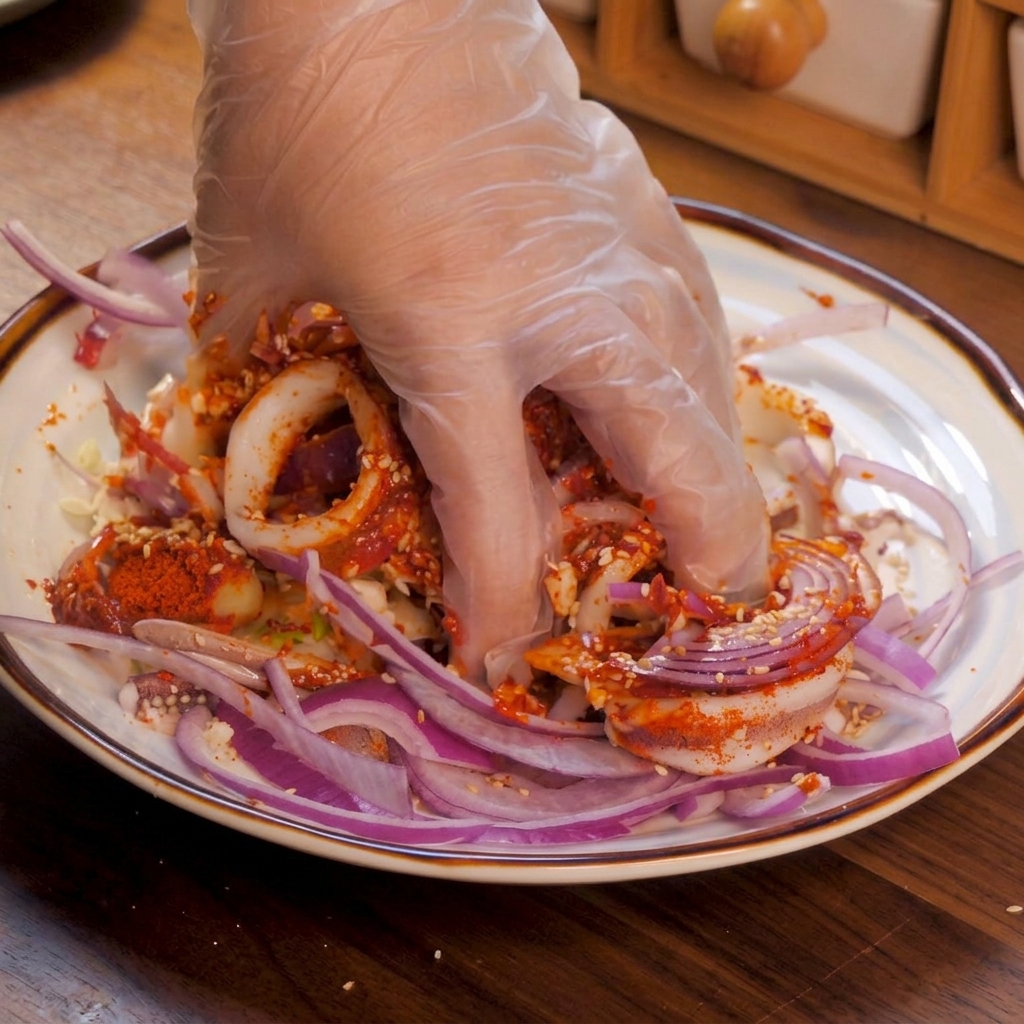
Using a gloved hand, thoroughly toss and combine all the squid rings, fresh vegetables, and seasonings together on the plate. Ensure that every piece of squid is completely and evenly coated in the rich, red savory sauce.
Tip: Mixing by hand allows you to gently press the seasonings into the squid rings and onions, ensuring maximum flavor absorption without bruising the ingredients. - 10Sear the pork belly
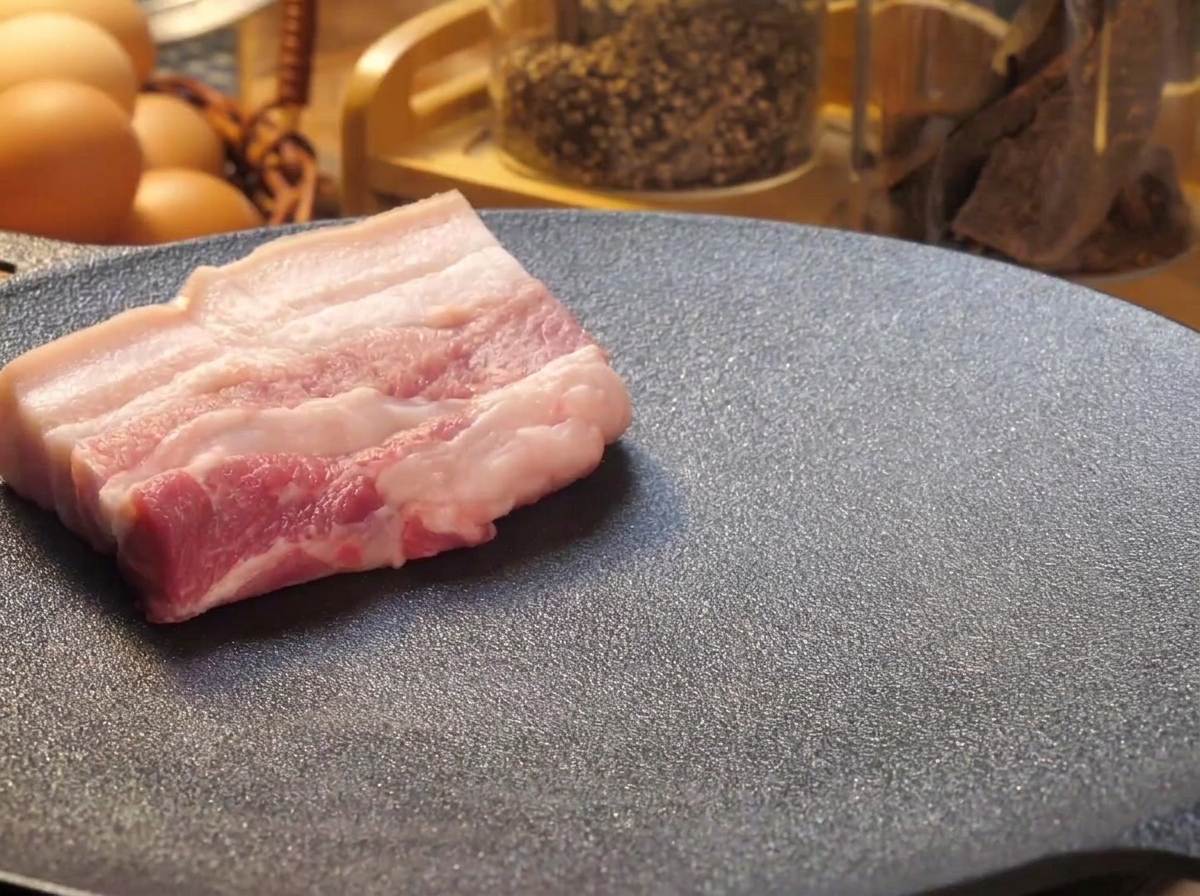
Lay the thick slices of raw pork belly onto a hot, dry griddle pan. Let them sear over medium-high heat to render out the flavorful fat and begin developing a crispy texture.
Tip: There is no need to add extra oil to the pan, as the pork belly will release plenty of its own fat as it cooks. - 11Sear and flip the pork belly
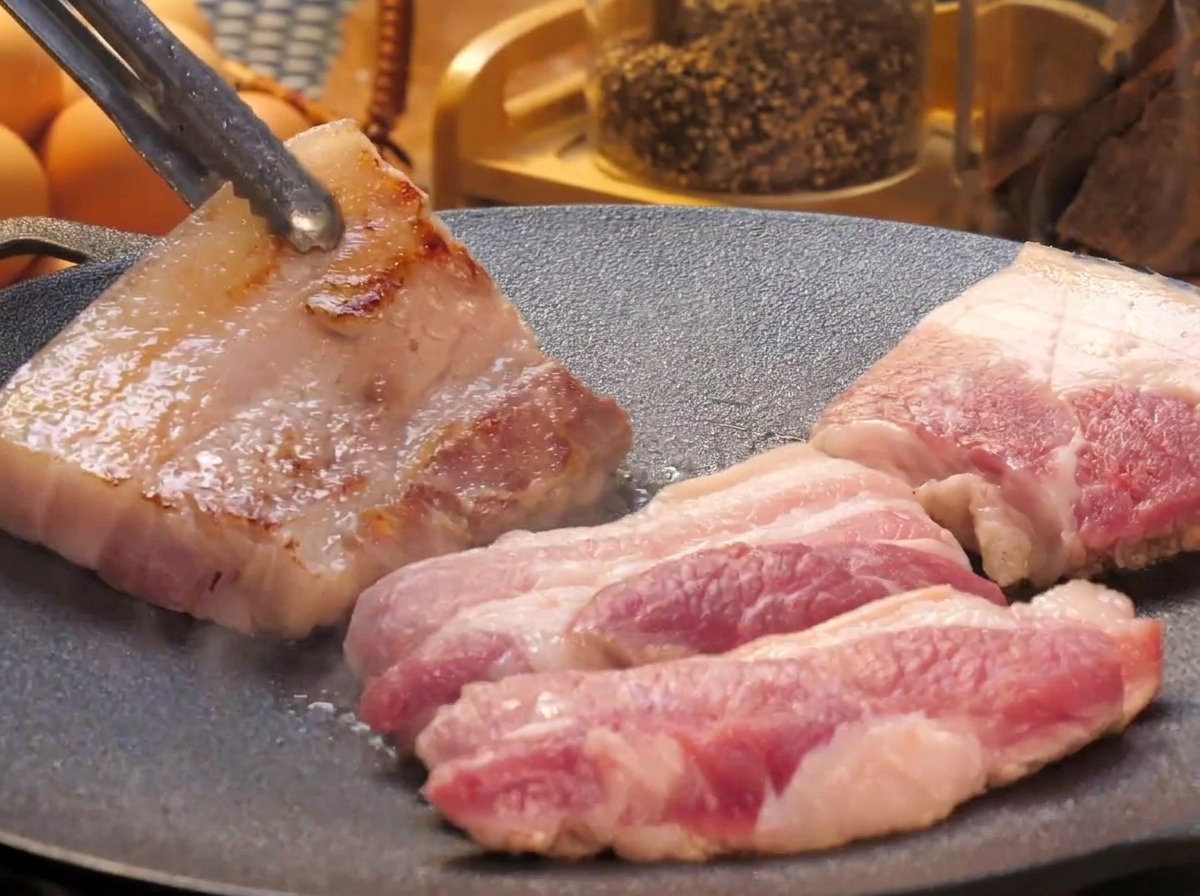
Place the thick pork belly slices onto the preheated teppanyaki griddle pan. Sear until the underside develops a rich, golden-brown crust, then use metal tongs to flip each slice over to cook the other side evenly and render out the fat.
Tip: Let the pork belly sear undisturbed for the first few minutes to achieve a perfectly crispy texture without tearing the meat. - 12Cut the pork belly into bite-sized strips
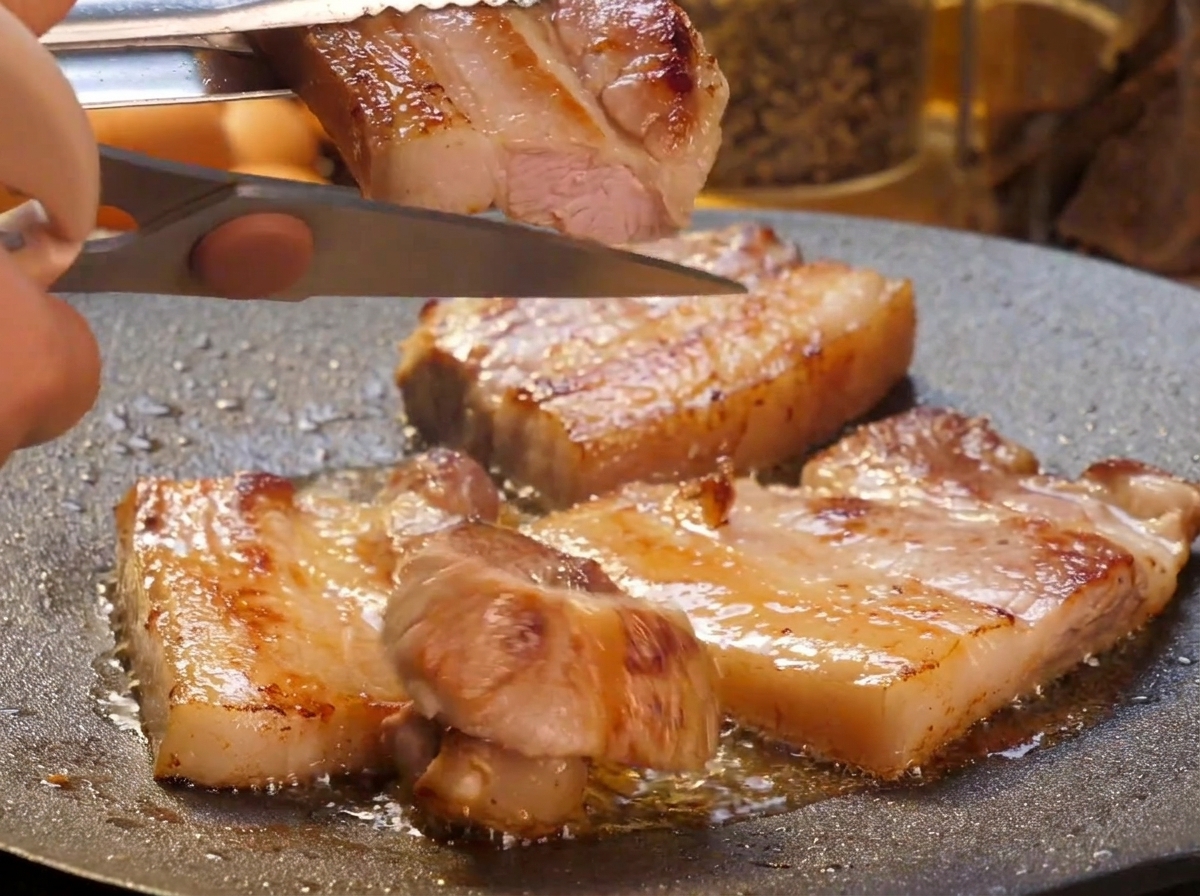
Use kitchen scissors to cut the thick, seared pork belly slices into smaller, bite-sized strips directly over the hot griddle. This method allows the meat to cook evenly and ensures that every edge gets beautifully browned and crispy while rendering out the flavorful fat.
Tip: Using kitchen scissors instead of a knife and cutting board is a classic Korean BBQ technique that keeps the savory juices directly on the cooking surface and minimizes cleanup. - 13Add the marinated squid and onions
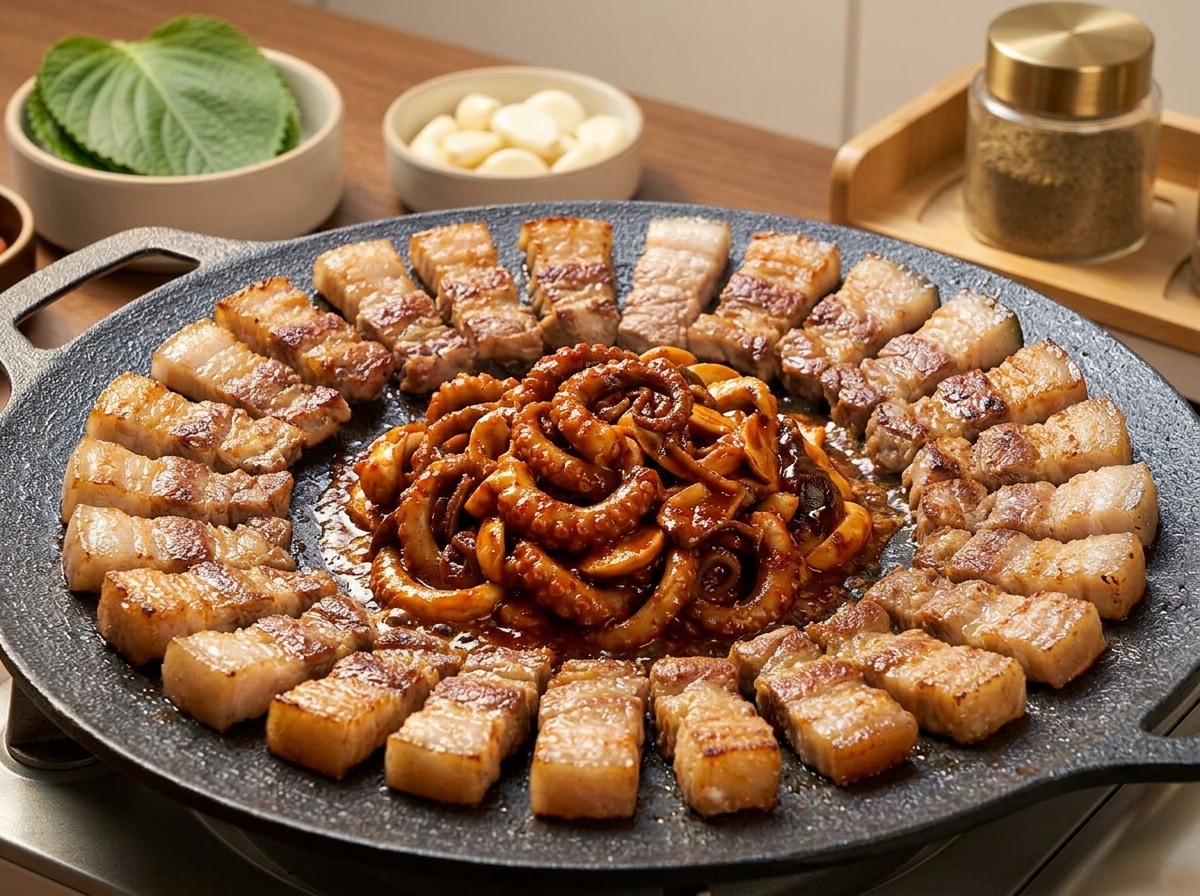
Arrange the crisped pork belly strips into a neat, decorative ring along the outer edge of the griddle pan. Once the border is set, place the spicy marinated squid and onion mixture directly into the empty center of the pan. This layout allows the squid to cook quickly in the high-heat center without overcooking the pork.
Tip: Keeping the pork belly on the outer ring keeps it warm and crispy while allowing the squid tentacles to sear perfectly in the direct heat at the center. - 14Stir-fry the squid and pork belly
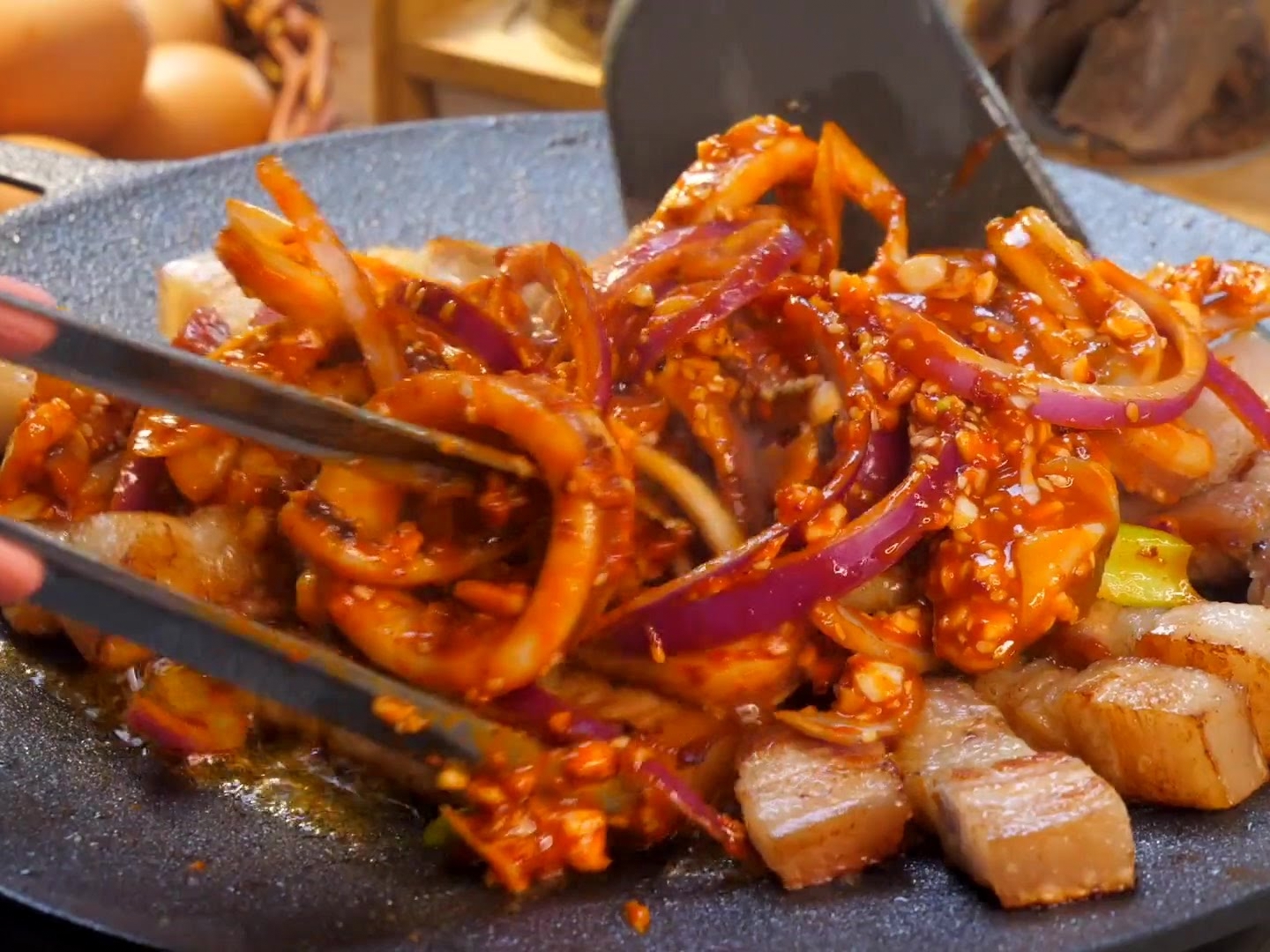
Add the marinated squid and onion mixture to the griddle with the pork belly. Use a spatula and tongs to stir-fry everything together over high heat, blending the rich, spicy sauce with the rendered pork fat.
Tip: Stir-fry quickly over high heat to sear the squid and caramelize the onions without making them soggy. - 15Garnish with fresh green chilies
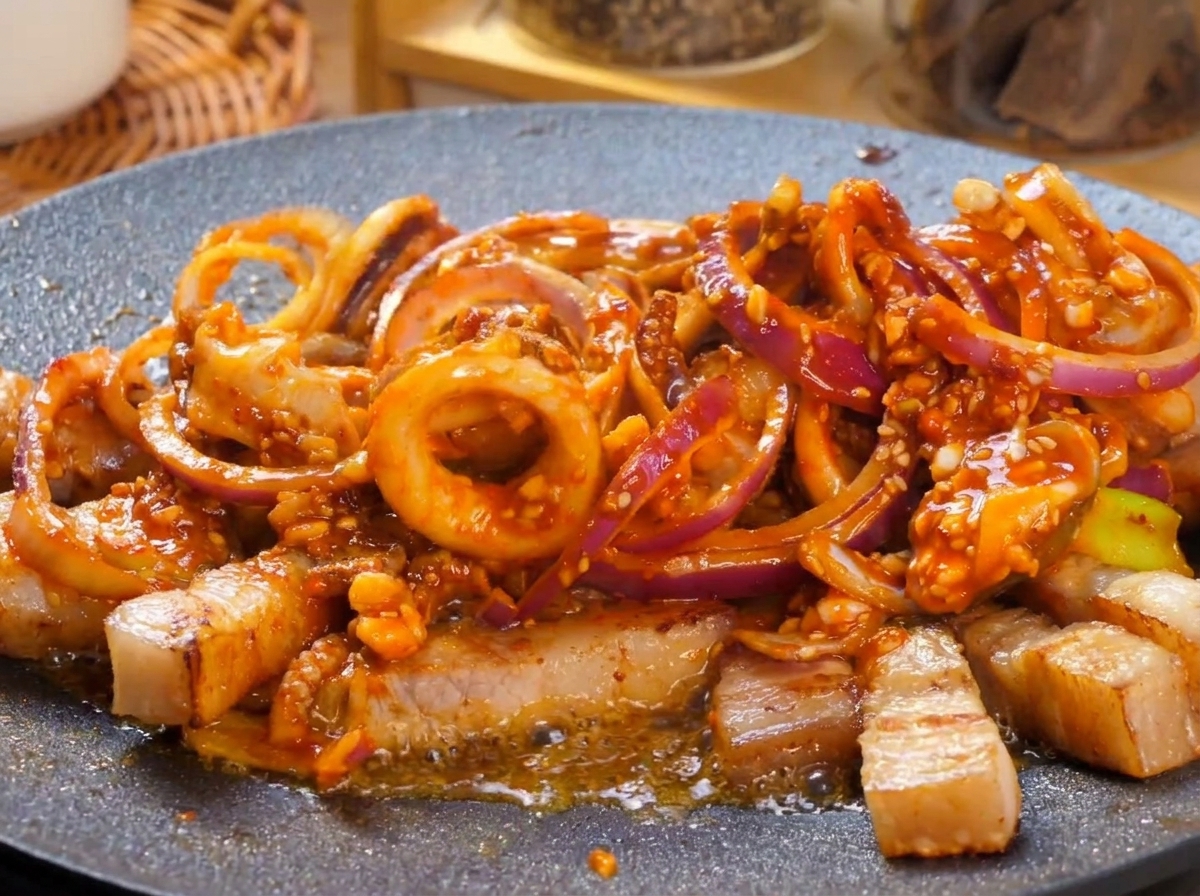
Scatter the fresh slices of green chili peppers over the sizzling squid and pork belly mixture right on the griddle. The intense heat will activate the oils in the chilies, adding a sharp, vibrant aroma and a fresh layer of spice to the rich sauce.
Tip: Keep the griddle on low heat while serving to maintain the signature sizzle and keep the savory sauce bubbling hot.