10-Minute Basil Pine Nut Pesto Pasta
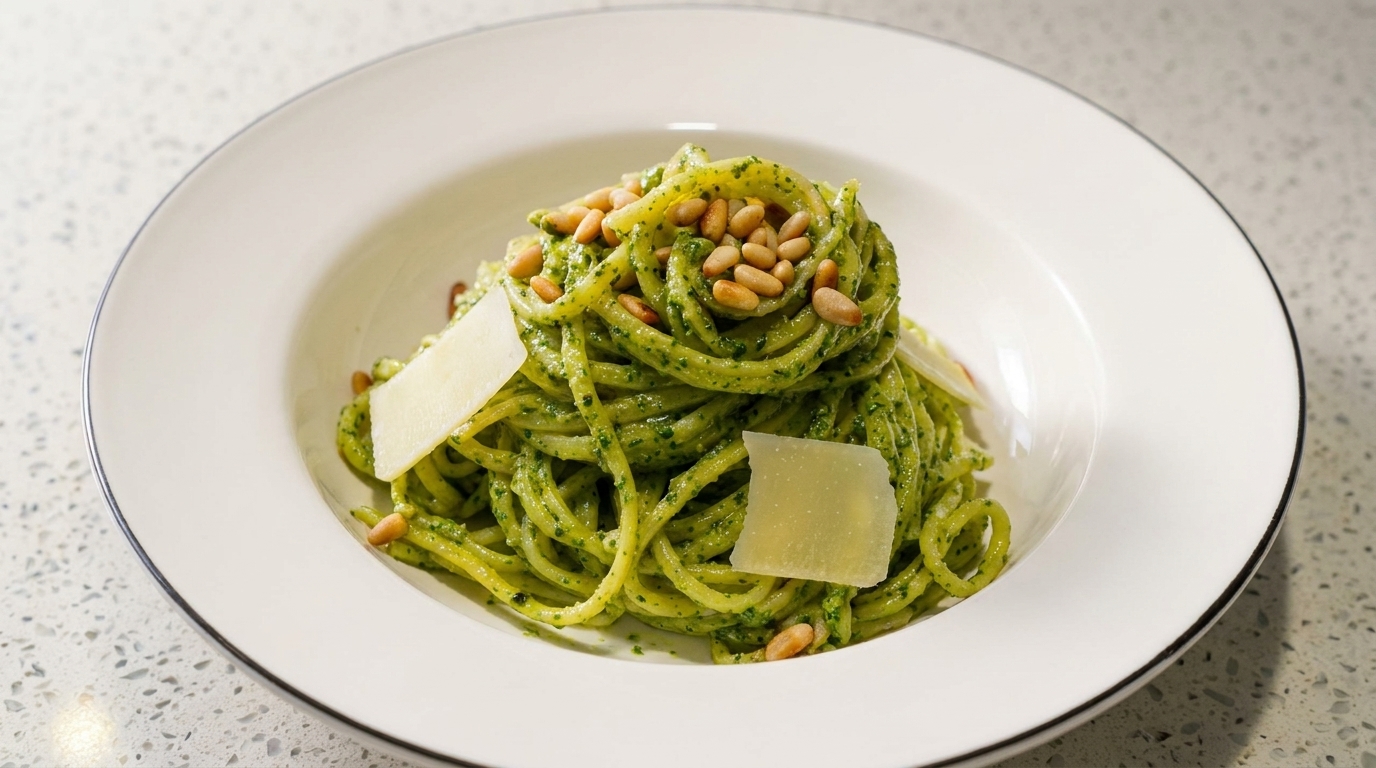
Whip up a vibrant basil pine nut pesto pasta in just 10 minutes. Featuring a rich, mortar-crushed sauce tossed with hot spaghetti and fresh Parmesan.
While pesto can easily be made in a food processor, crushing fresh basil, garlic, and toasted pine nuts in a mortar and pestle releases essential oils that a blade simply cannot replicate. This traditional technique results in a deeply aromatic, intensely vibrant sauce. Adding a touch of cheese-flavored yogurt right at the end brings an unexpected but delightful creaminess to the dish, elevating a simple weeknight meal into a high-end culinary experience.
Ingredients
- 400 g spaghetti or preferred pasta
- 2 cups fresh basil leaves
- 12 cup raw pine nuts
- 3 cloves garlic
- 12 cup Parmesan cheese
- 12 cup extra virgin olive oil
- 2 tbsp cheese-flavored yogurt
- to taste salt
- to taste black pepper
Instructions
- 1Toast the pine nuts
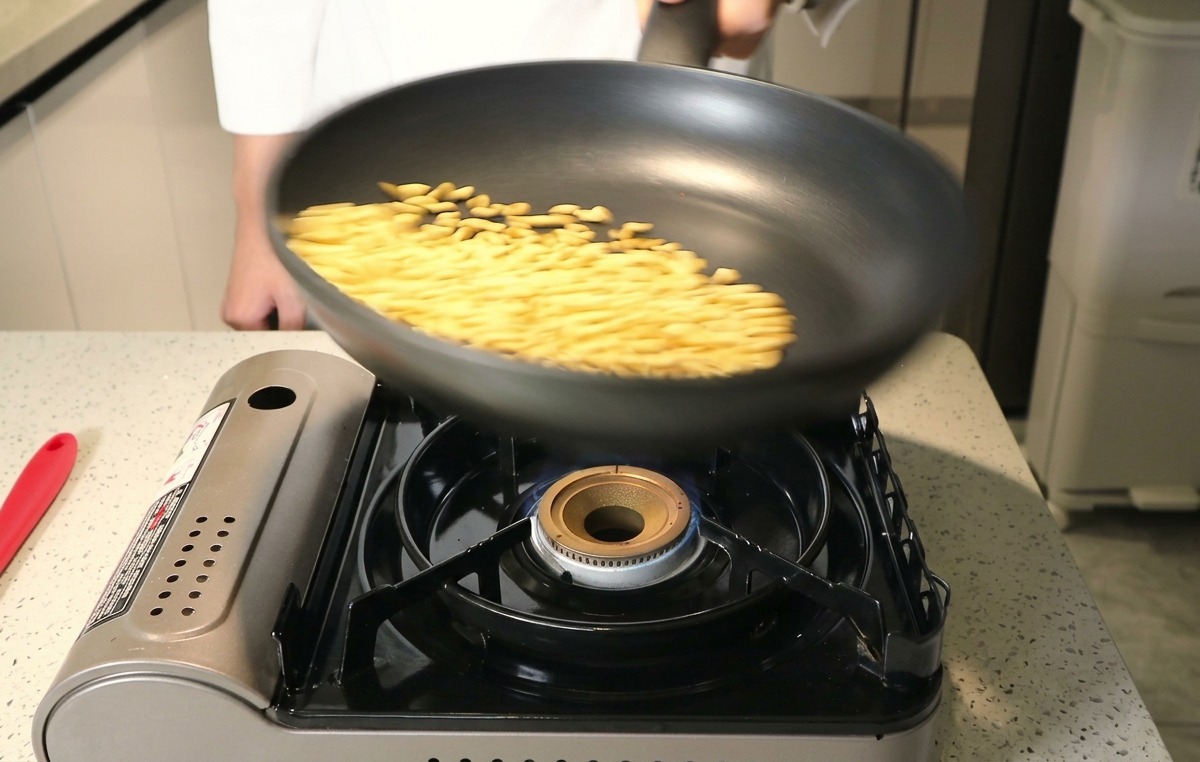
Place the raw pine nuts into a dry, non-stick frying pan over medium heat. Continuously toss or stir the nuts to ensure they toast evenly until they become fragrant and golden brown. This releases their essential oils and deepens their flavor.
Tip: Keep a close eye on the pine nuts as they toast, as their high oil content causes them to burn very quickly. - 2Chop the aromatics
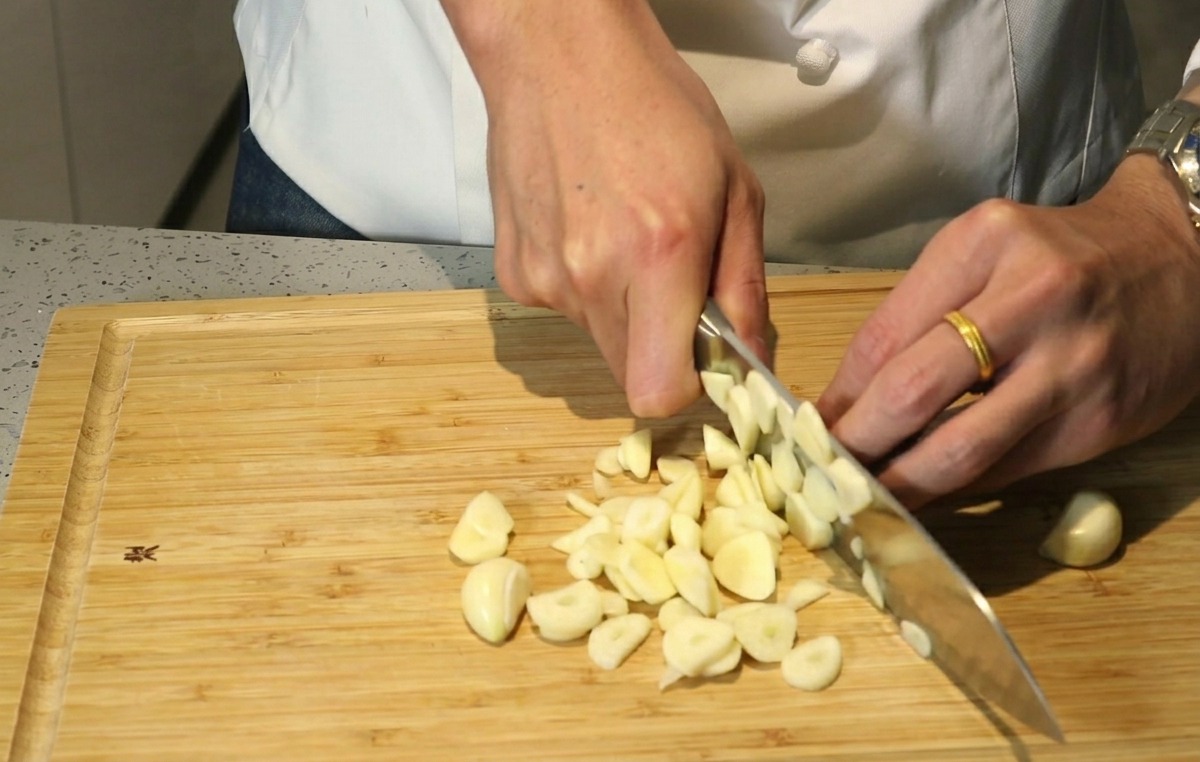
Begin preparing your aromatics by roughly chopping the garlic cloves on a wooden cutting board. You will also need to roughly chop your fresh green basil leaves, getting all the solid ingredients ready for the blending process.
Tip: Roughly chopping the garlic and basil beforehand makes it much easier to break them down into a paste, especially when using a mortar and pestle. - 3Grate the Parmesan cheese
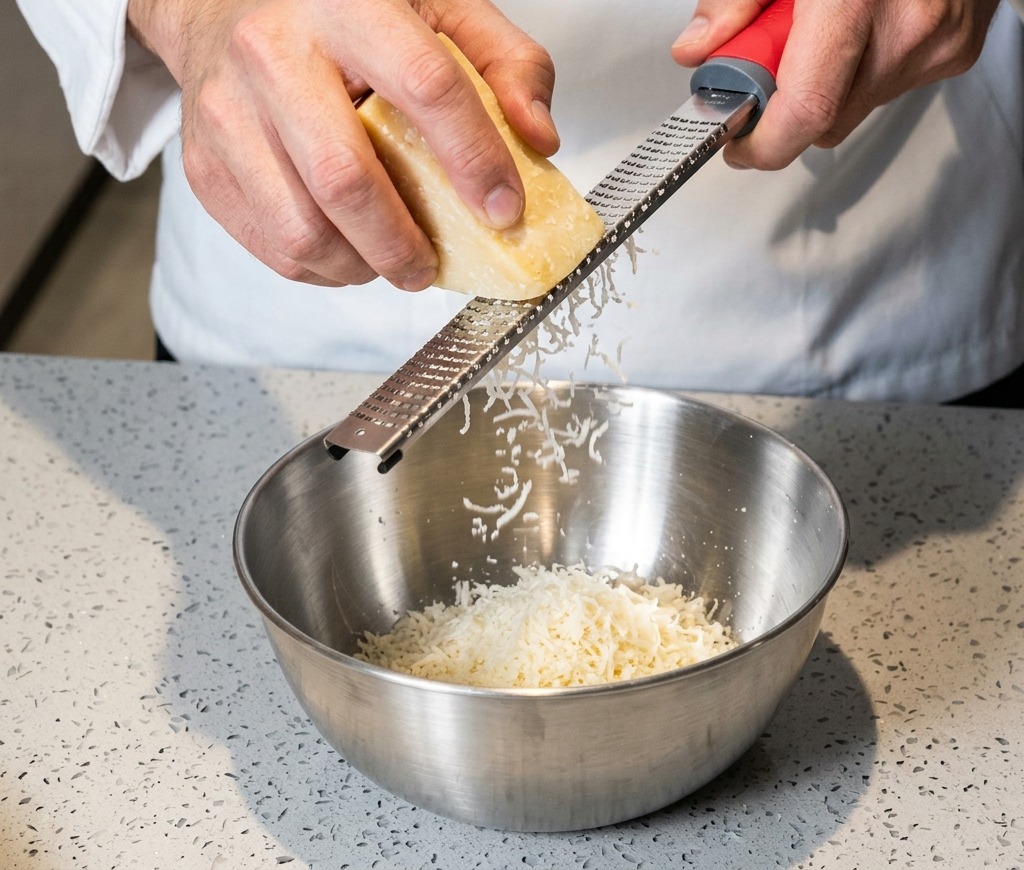
Take a block of hard Parmesan cheese and use a fine grater to shred it into a mixing bowl. Freshly grating your own cheese ensures a smoother texture and a richer, more authentic flavor in your pesto sauce.
Tip: Use a microplane or the fine side of a box grater to get fluffy, fine shreds that will dissolve seamlessly into the pesto mixture. - 4Combine ingredients in a mortar
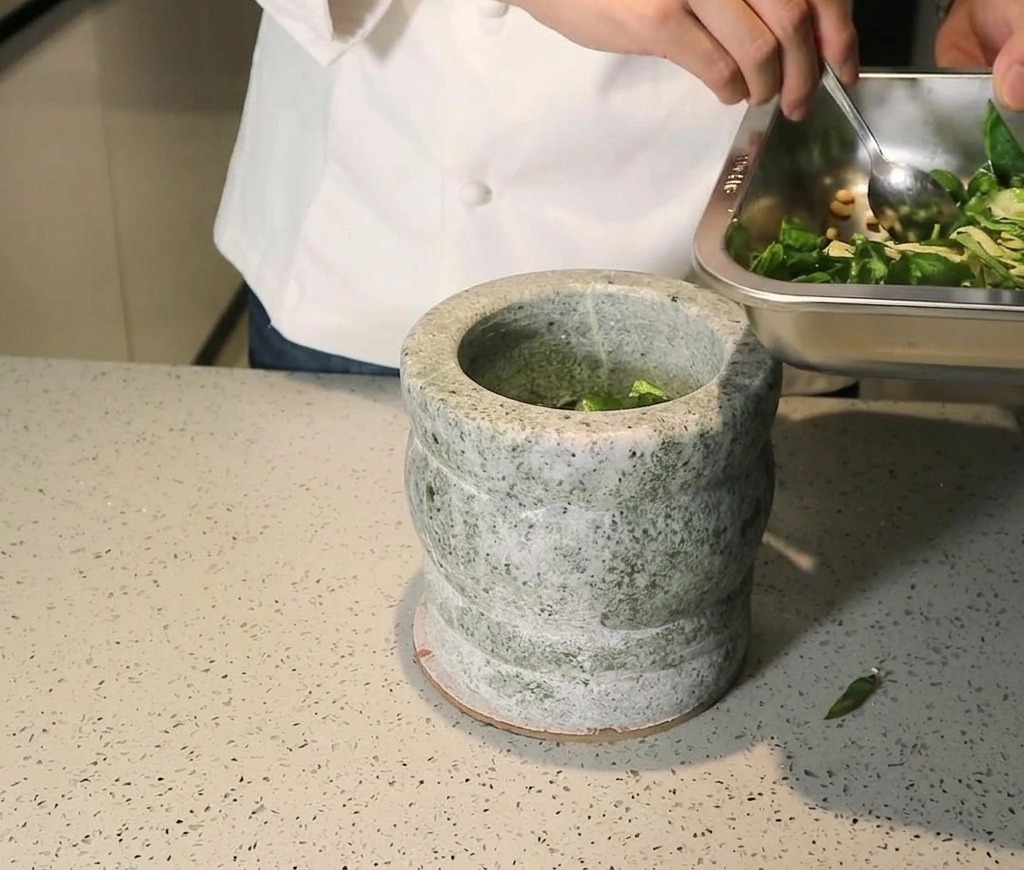
Transfer the chopped basil, garlic, toasted pine nuts, and grated Parmesan cheese into a stone mortar. If you do not have a mortar and pestle, you can easily use a food processor or blender to achieve the same result.
Tip: Adding the solid ingredients in smaller batches can make the manual grinding process much easier to manage. - 5Add the olive oil
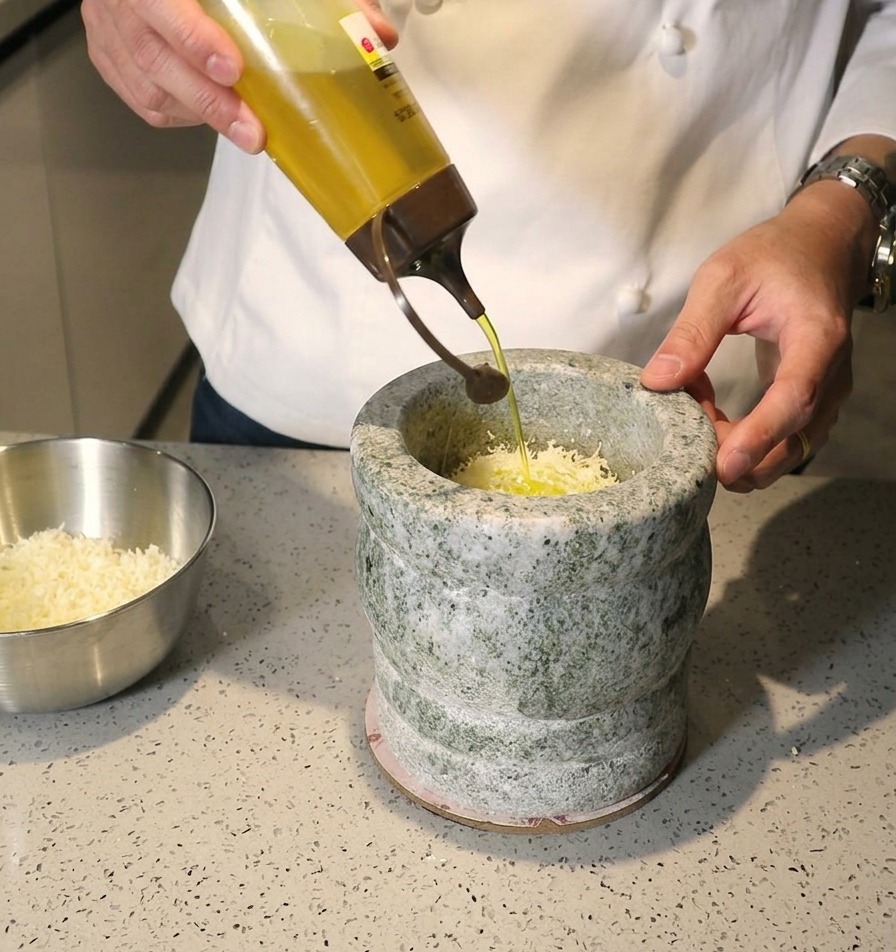
Drizzle olive oil over the ingredients in the mortar. The oil provides necessary moisture, helps bind the dry ingredients together, and gives the pesto its signature rich and smooth consistency.
Tip: Use a high-quality extra virgin olive oil, as its flavor profile will form the base of your pesto sauce. - 6Add the black pepper
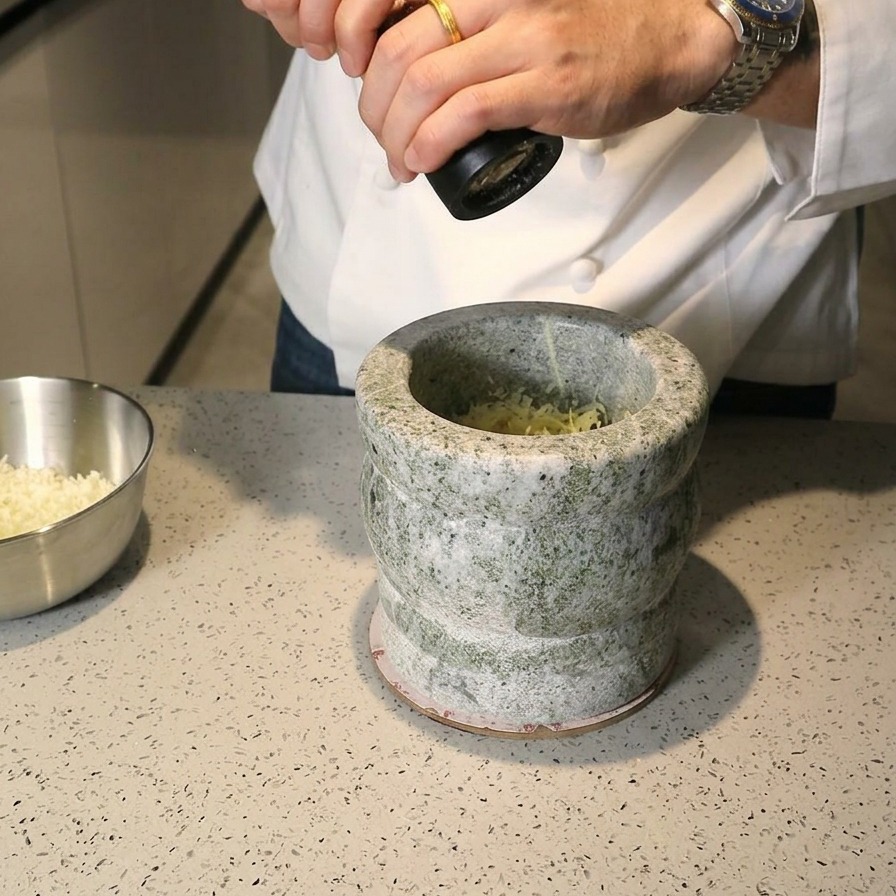
Season the mortar contents by grinding in fresh black pepper. This adds a subtle, earthy heat that complements the fresh herbs and rich cheese in the pesto.
Tip: Freshly cracked black pepper provides significantly more aroma and flavor than pre-ground pepper. - 7Crush the ingredients
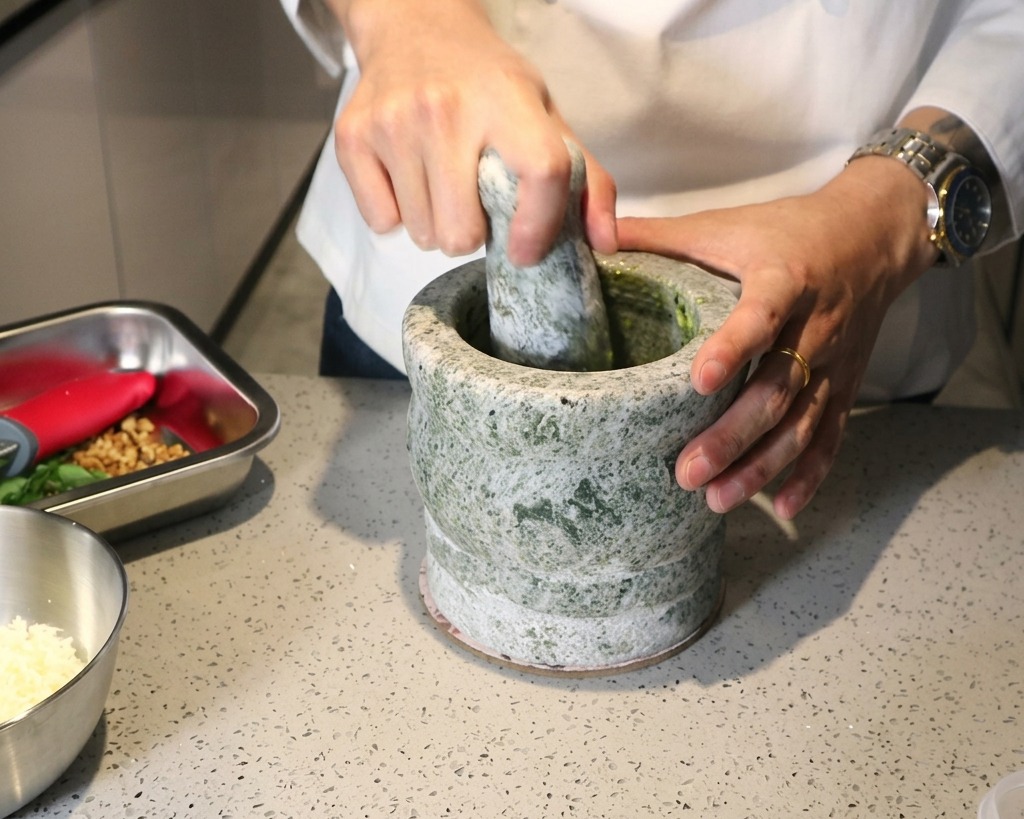
Slowly crush and grind all the ingredients together in the mortar using a stone pestle. Use a firm, circular motion to break down the basil leaves, pine nuts, and garlic until they form a coarse, vibrant green paste.
Tip: Using a mortar and pestle rather than a food processor bruises the basil leaves, releasing more essential oils for a superior flavor. - 8Add the pesto to the pasta
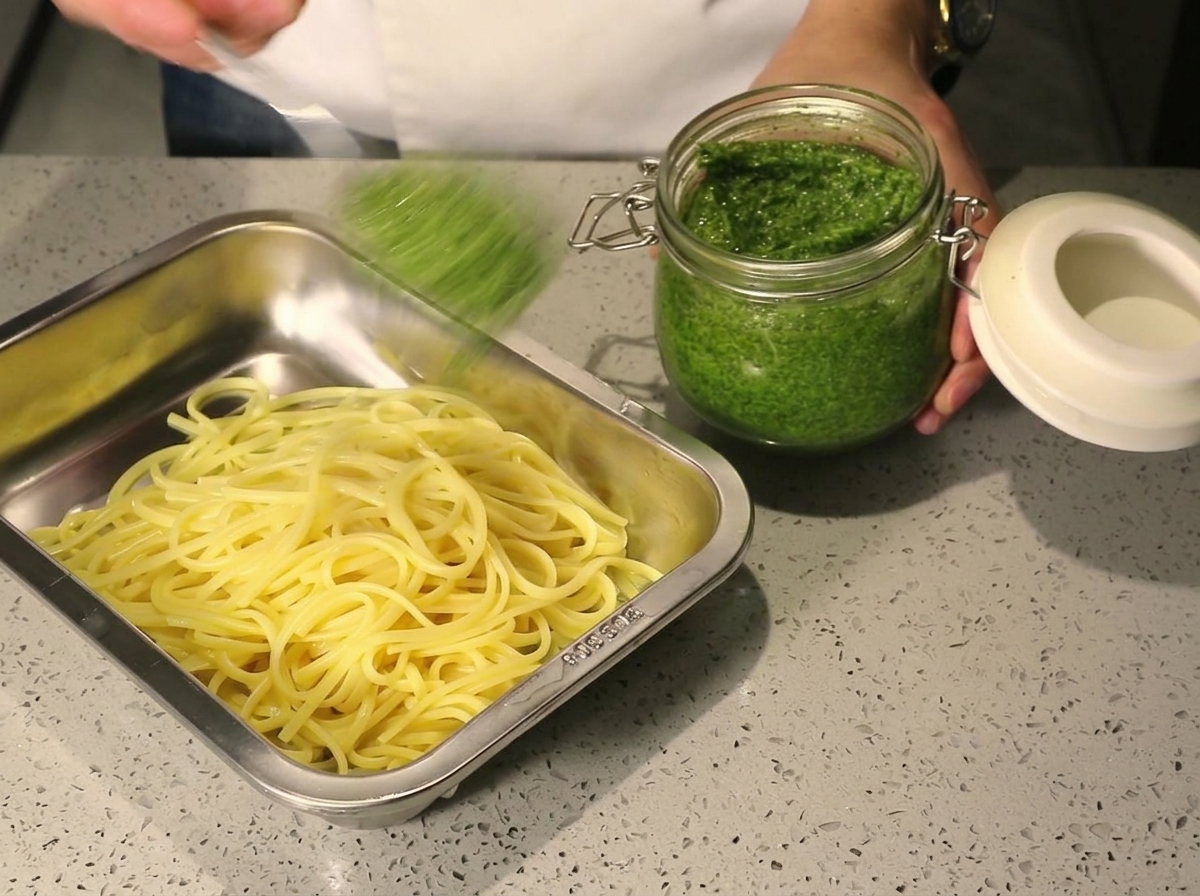
While the cooked spaghetti is still hot, transfer it to a mixing tray or bowl. Add two to three large spoonfuls of the freshly prepared pesto sauce directly onto the warm pasta. The residual heat will gently warm the pesto and help release the vibrant aromas of the fresh basil and garlic.
Tip: Always mix the pesto into the pasta off the direct heat to prevent the basil from turning dark and losing its fresh flavor. - 9Add the cheese yogurt
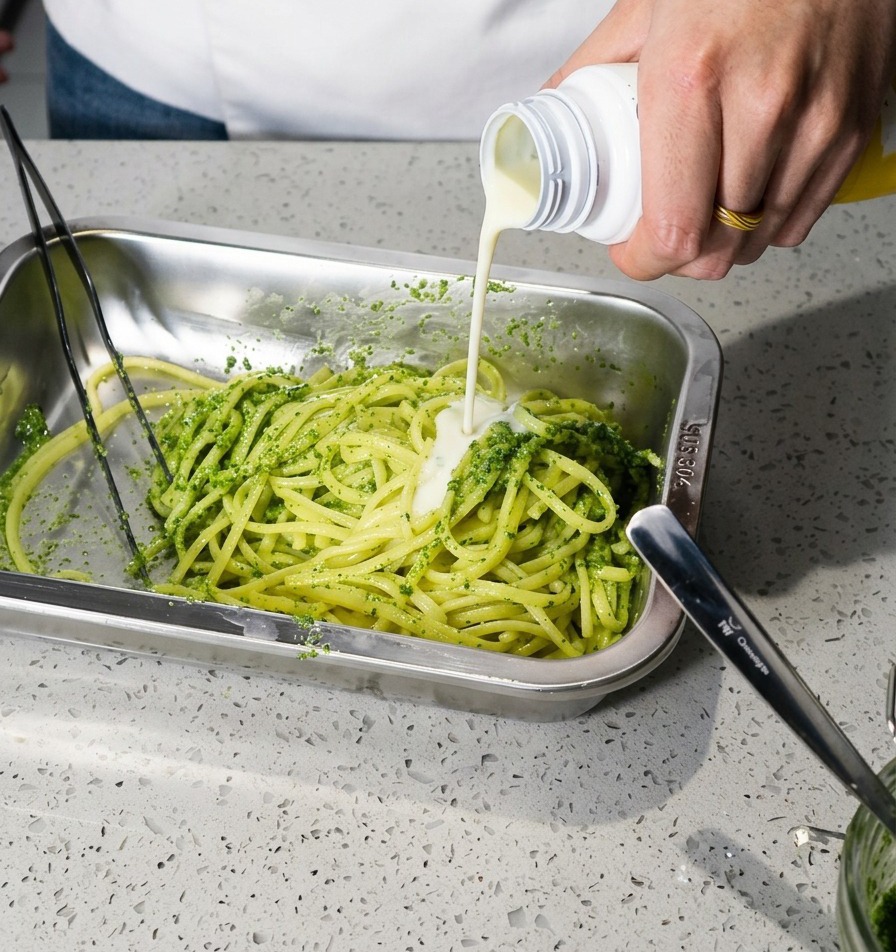
While the pasta is still hot, pour in a little cheese-flavored yogurt. This unusual but effective addition brings a creamy texture and a subtle tanginess that elevates the overall dish.
Tip: Make sure to add the yogurt while the pasta is hot so it blends smoothly with the pesto and coats the noodles evenly. - 10Toss to Combine
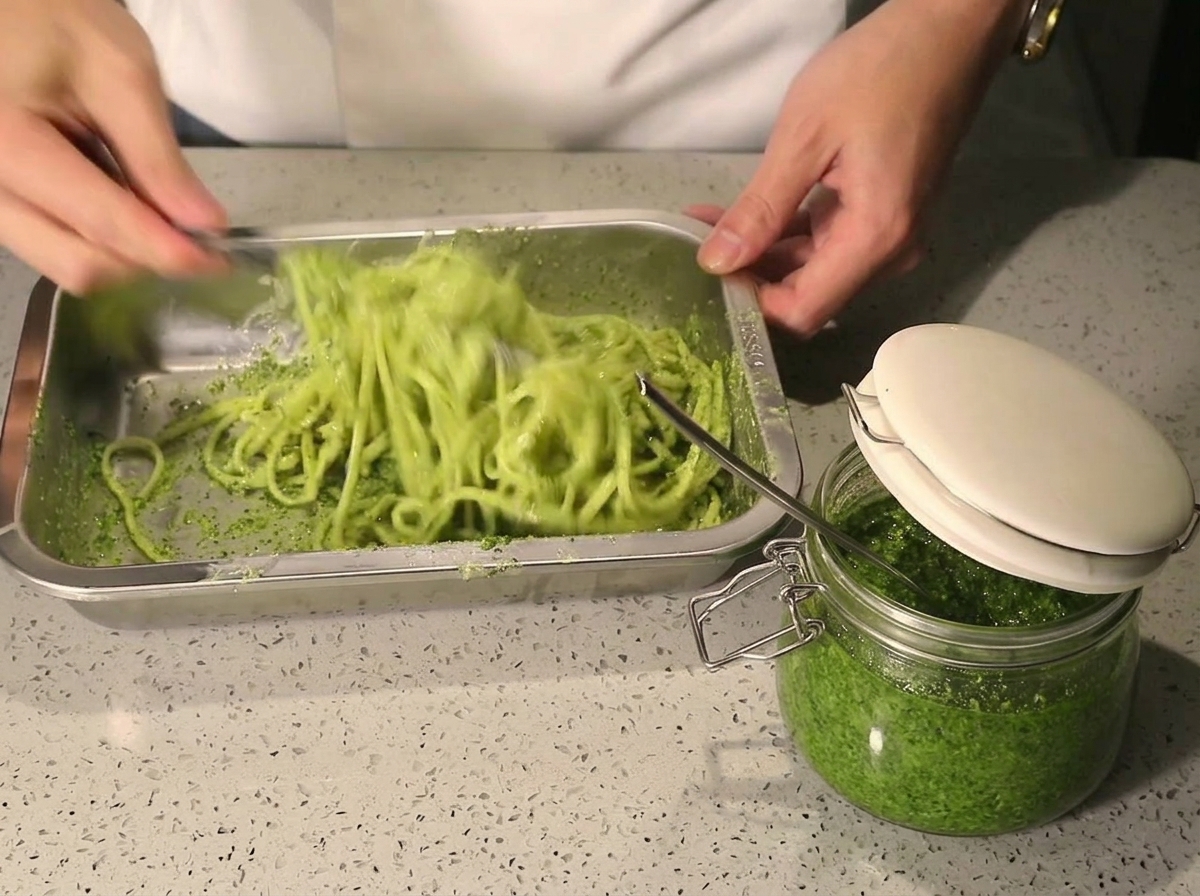
Using tongs or a fork and spoon, vigorously toss the hot spaghetti with the pesto sauce and yogurt. Ensure every strand is thoroughly coated in the vibrant green mixture.
Tip: If the pasta seems a bit dry while mixing, add a tiny splash of reserved pasta water to help emulsify the sauce. - 11Garnish with Pine Nuts
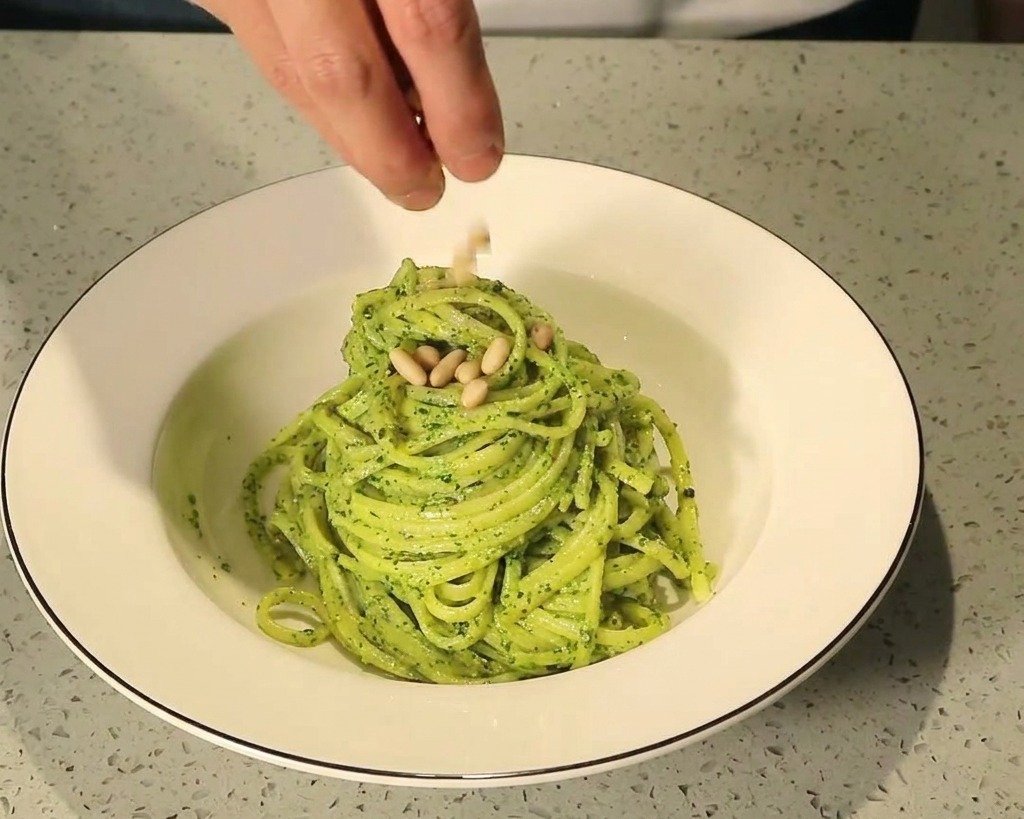
Plate the dressed pasta in a serving bowl and garnish by sprinkling the remaining toasted pine nuts over the top. This adds a delightful crunch and a nutty aroma that contrasts perfectly with the soft, rich noodles.
Tip: Reserve a few uncrushed toasted pine nuts from the beginning of the recipe specifically for this final garnish. - 12Finish with Parmesan
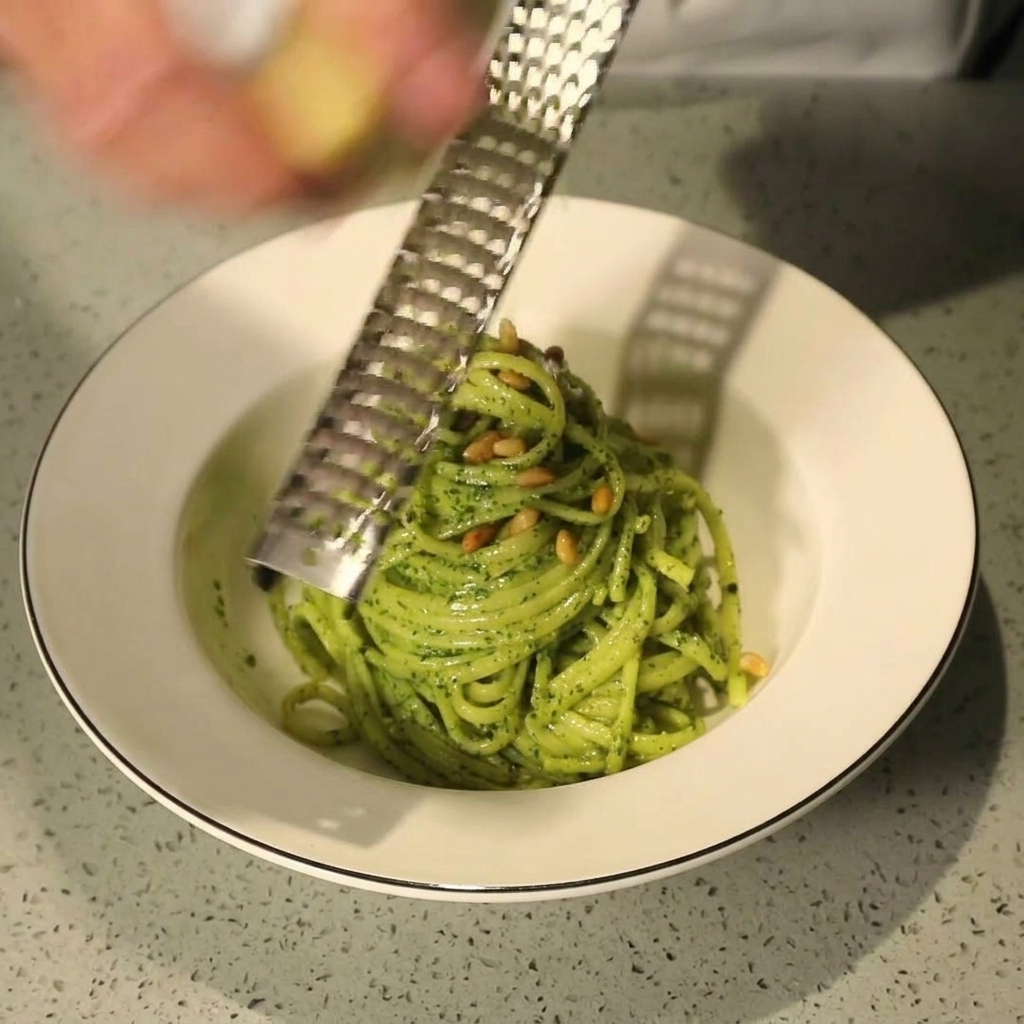
Twirl the dressed pasta into a serving bowl. Finally, use a grater to shave a generous amount of fresh Parmesan cheese directly over the warm pasta before serving.
Tip: Freshly grated Parmesan is highly recommended as it melts better and provides a sharper, more complex flavor than pre-grated varieties.