Shrimp & Sausage Gumbo
Fat-Washed Bourbon
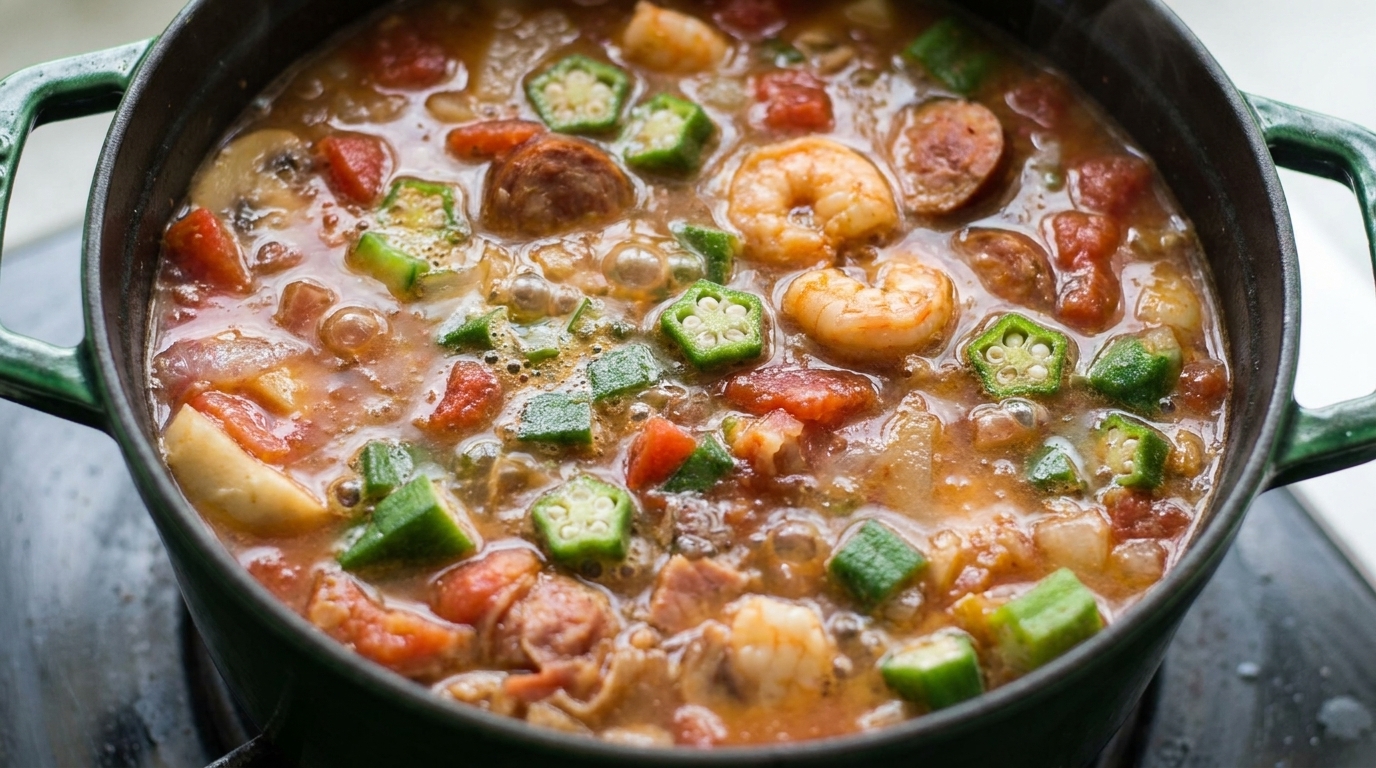
Experience the soul of Louisiana with this rich shrimp, sausage, and okra gumbo, paired uniquely with a smoky, pancetta-infused fat-washed bourbon.
Gumbo is a deeply comforting Louisiana staple that builds complex flavor through careful layering of meats, vegetables, and Cajun spices. In this recipe, we pair a hearty shrimp and sausage gumbo—thickened traditionally with fresh okra—with a sophisticated fat-washed bourbon. By infusing the whiskey with rendered pancetta fat and toasted pine nuts, you create a smoky, savory companion that perfectly complements the robust stew.
Ingredients
- 50 g smoked pancetta, diced
- 1 handful pine nuts
- 200 ml bourbon
- 12 black tiger shrimp, peeled and deveined
- 1 tbsp butter
- 3 cloves garlic, minced
- 1 onion, chopped
- 1 potato, chopped
- 1 red bell pepper, chopped
- 1 cup mushrooms, sliced
- 1 smoked sausage (such as Andouille), sliced
- 50 g bacon, diced
- 2 tomatoes, diced
- 1 tbsp Cajun spice mix
- 500 ml chicken broth
- 1 cup fresh okra, sliced
- to taste salt and pepper
- as needed purified water
Instructions
- 1Render the fat
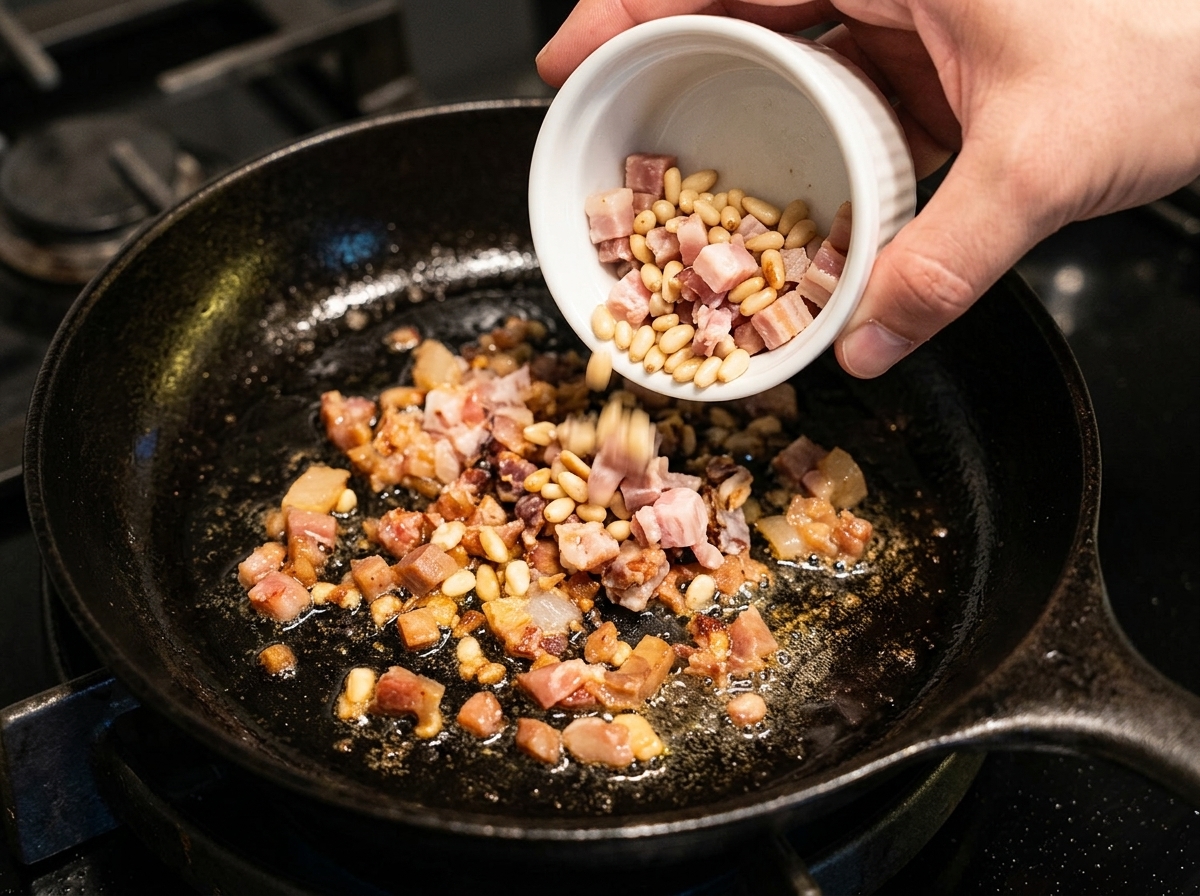
Place the diced smoked pancetta and pine nuts into a black skillet. Cook over low heat for about five minutes, allowing the fat from the pancetta to slowly render out while the pine nuts toast gently in the flavorful oils.
Tip: Keep the heat low to ensure the fat renders fully without burning the delicate pine nuts or the meat. - 2Pour the bourbon
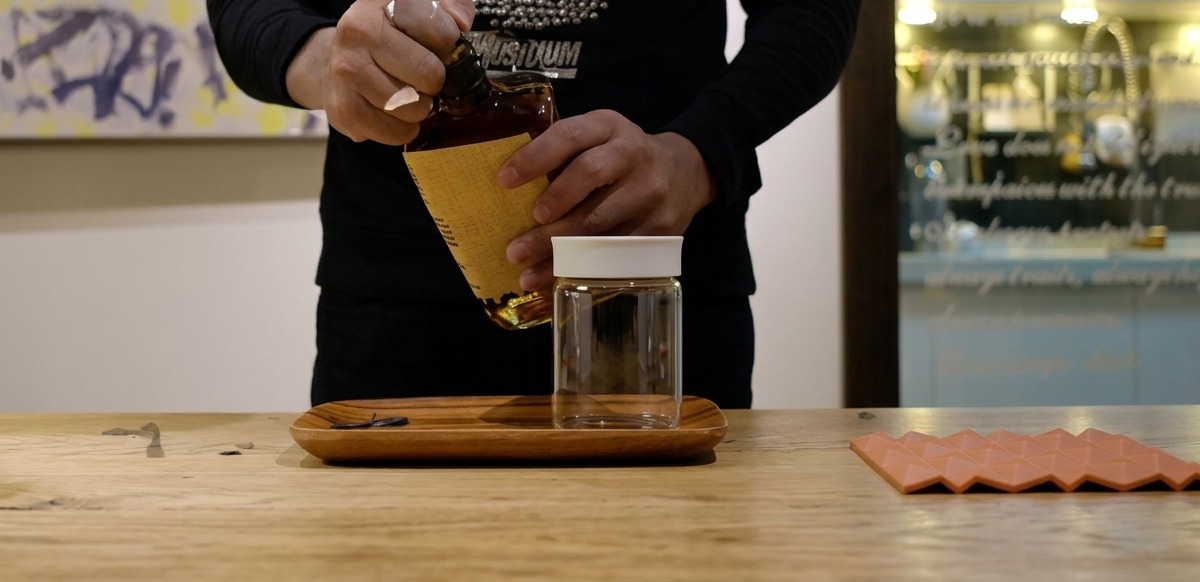
Pour two hundred milliliters of bourbon into a clean glass jar. This will serve as the base for the fat-washed infusion, acting as a canvas to absorb the rich, smoky flavors from the rendered pancetta and pine nuts.
Tip: A glass jar with a wide mouth and a tight-sealing lid is ideal, as it allows for easy mixing and storing in the refrigerator without spills. - 3Fat-wash the bourbon
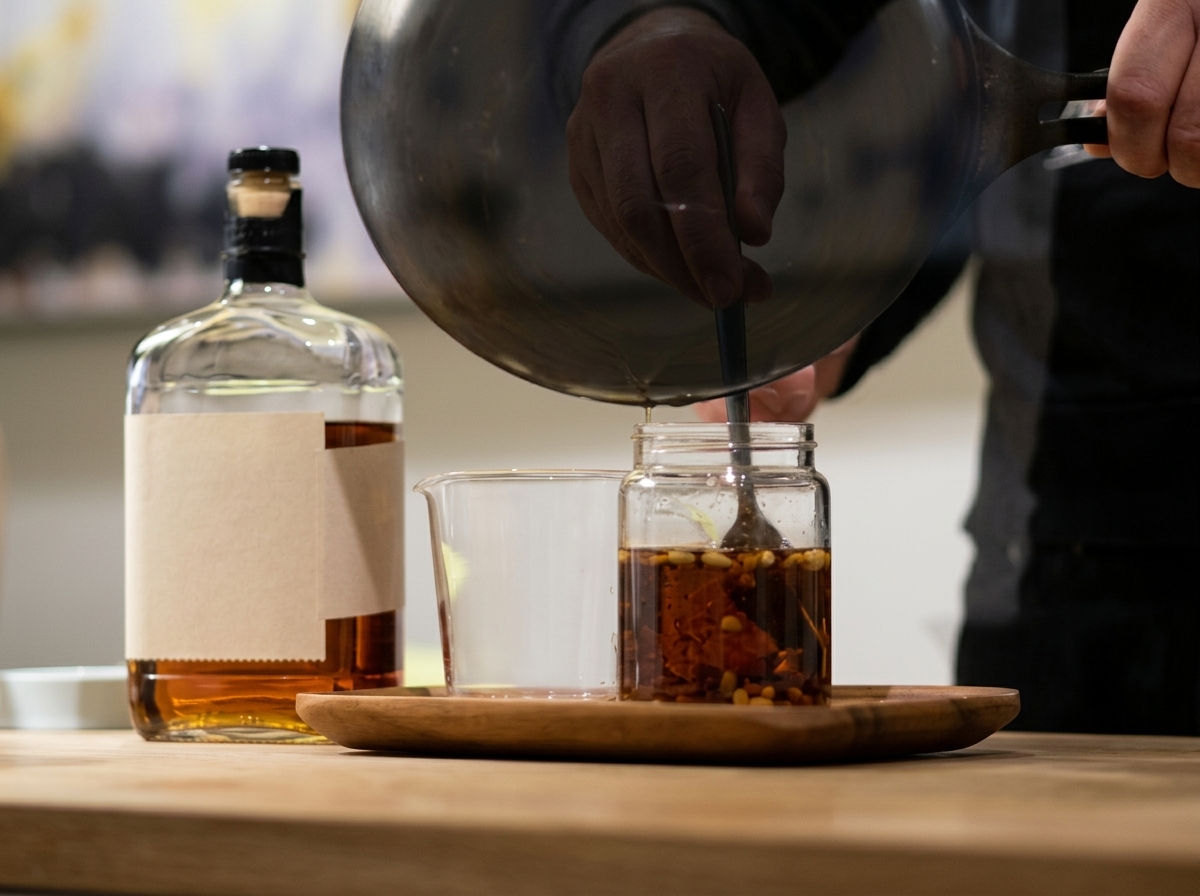
Carefully transfer the hot, rendered pancetta fat along with the crispy pancetta pieces and toasted pine nuts directly into the jar of bourbon. Stir the mixture well to ensure the flavors meld, then cover and transfer the jar to the refrigerator to allow the fat to infuse and solidify.
Tip: Make sure your glass jar is heat-proof before adding the hot fat to prevent the sudden temperature change from shattering the glass. - 4Prepare the shrimp
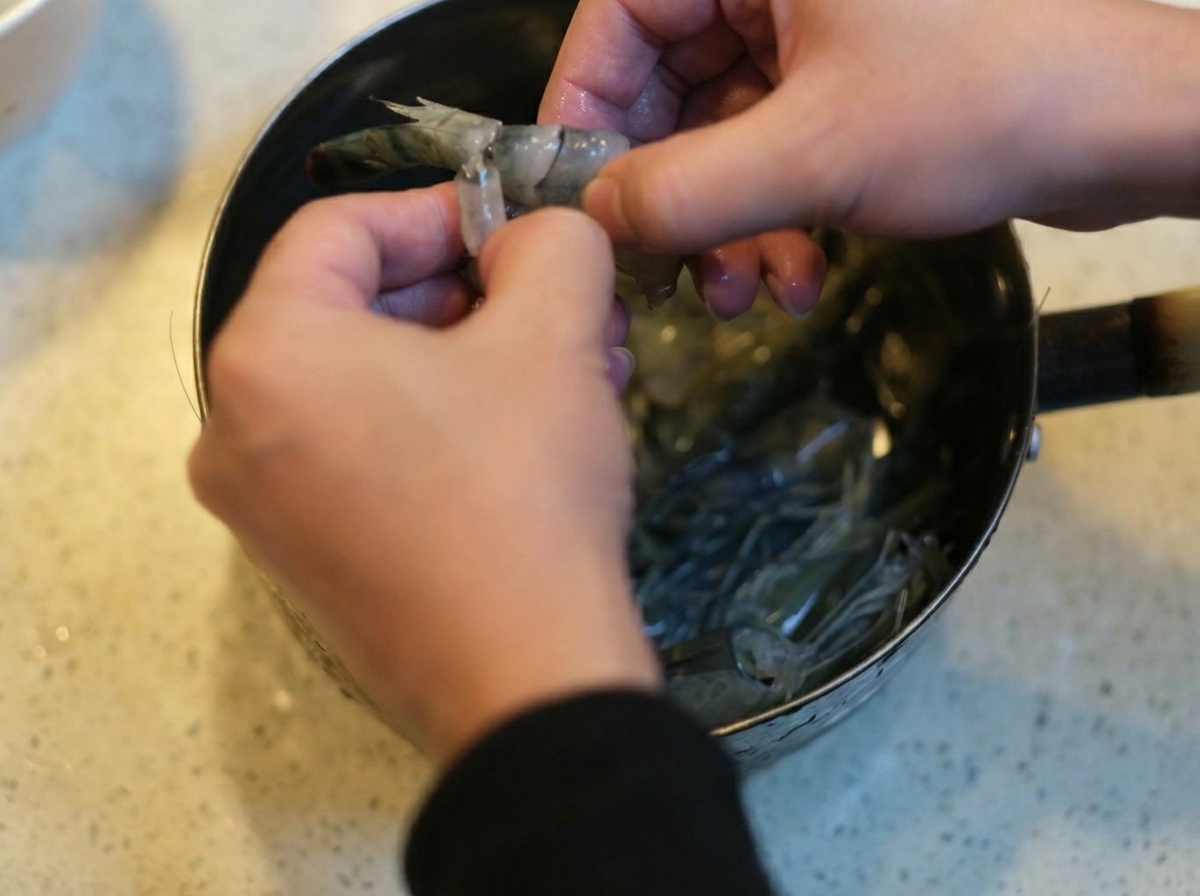
Clean the black tiger shrimp by carefully removing their heads, outer shells, and digestive veins. Do this over a bowl or pot to collect the discarded parts, then season the cleaned shrimp with a pinch of salt and pepper.
Tip: Save the removed shrimp heads and shells in the freezer; they make an excellent base for a rich, homemade seafood stock. - 5Sauté the aromatics
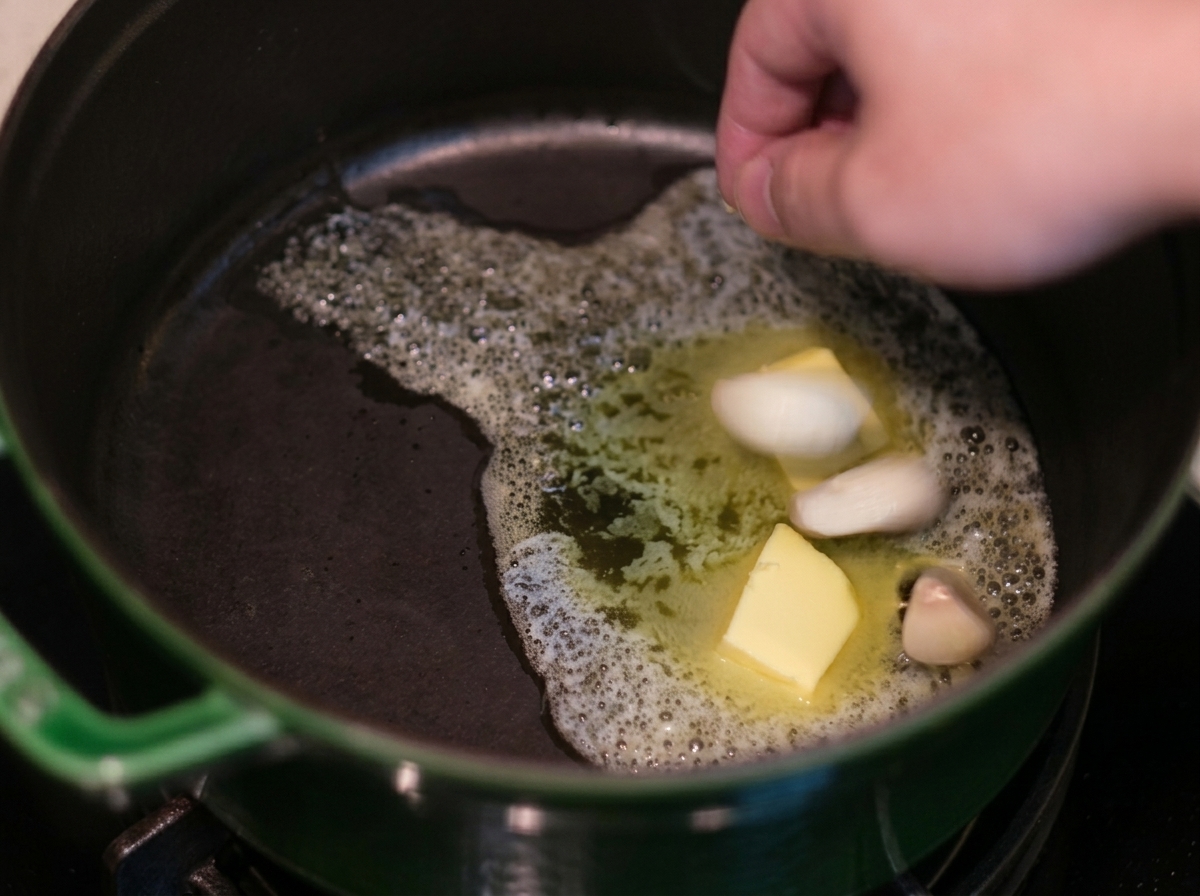
Melt a pat of butter in a green cast-iron pot over medium heat. Add the garlic cloves and fry until they become deeply fragrant. Once the garlic releases its aroma, stir in the chopped onions and a pinch of salt, cooking until the onions soften and absorb the seasoned butter.
Tip: Be careful not to brown the butter too quickly; keep the heat moderate so the garlic infuses gently without burning. - 6Add the vegetables
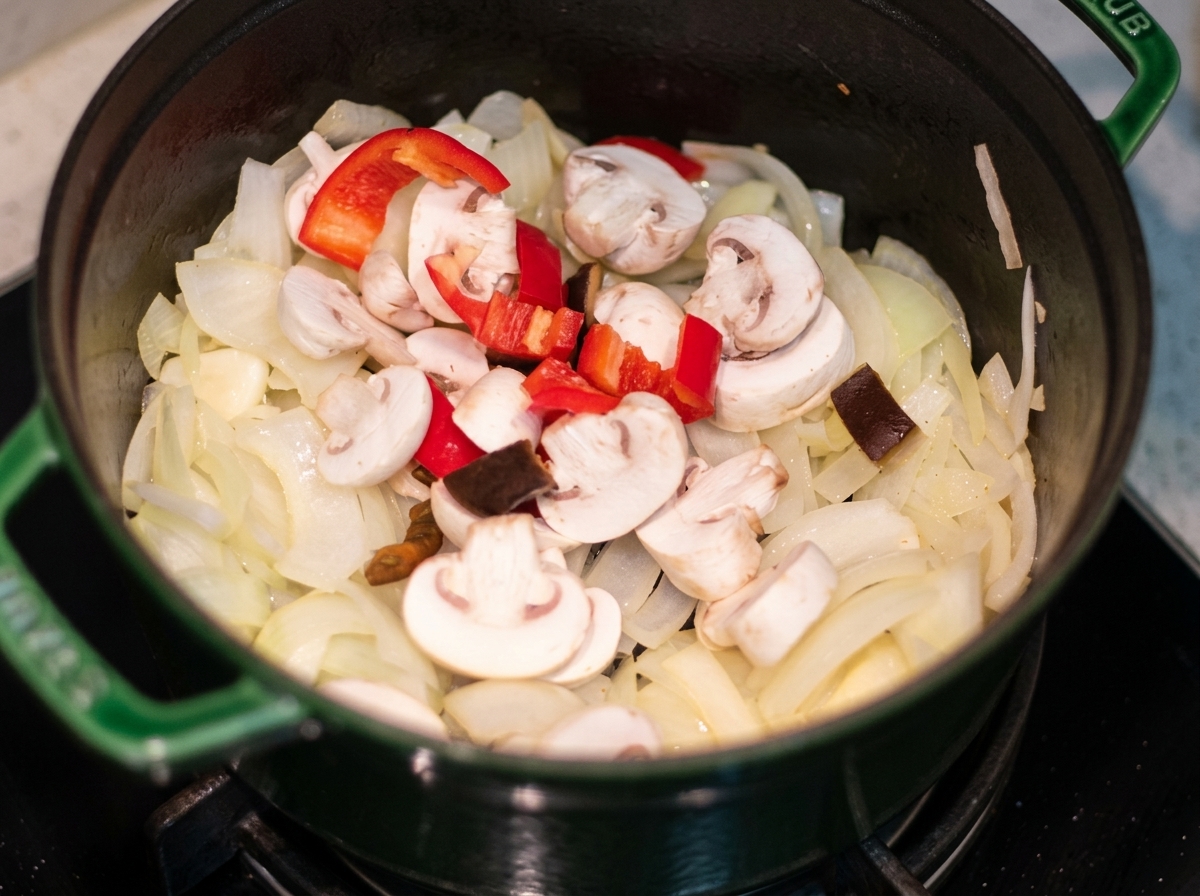
Into the pot with the softened onions and garlic, add the chopped potatoes, sliced mushrooms, and chunks of red bell pepper. Stir the vegetables continuously, allowing them to sweat down and soften as they mix with the buttery aromatics.
Tip: Cut the potatoes and bell peppers into uniform, bite-sized pieces so they cook evenly with the rest of the ingredients. - 7Sear the shrimp
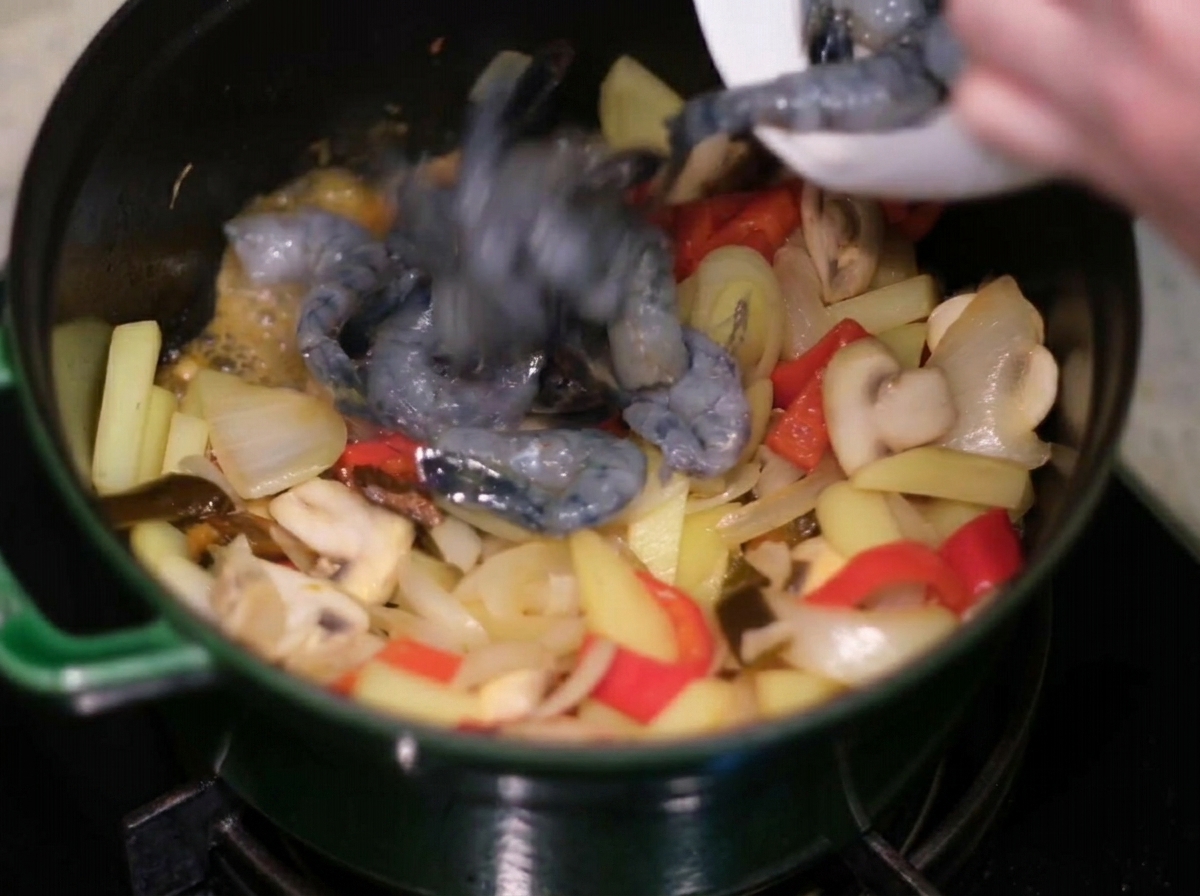
Push the softened vegetables to one side of the cast-iron pot to create an open space. Add the prepared raw black tiger shrimp to the empty section and let them sear briefly until they mostly change color.
Tip: Searing the shrimp in the same pot builds a flavorful fond on the bottom, which will deepen the overall taste of the gumbo broth. - 8Add the sausage and bacon
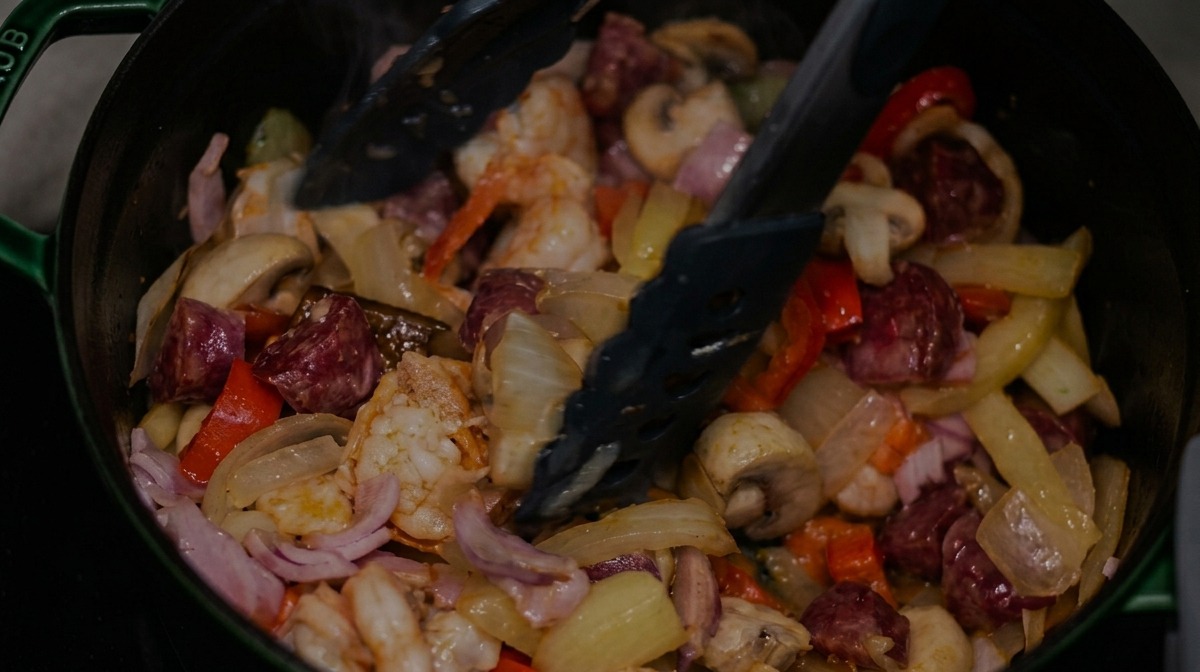
Once the shrimp have developed some color, add the sliced sausage and diced bacon into the pot. Give all the ingredients a rough stir with tongs or a spatula to thoroughly combine the meats with the vegetables.
Tip: Using a smoked sausage like Andouille will give your gumbo an authentic, deeply savory Louisiana flavor. - 9Season with tomatoes and spices
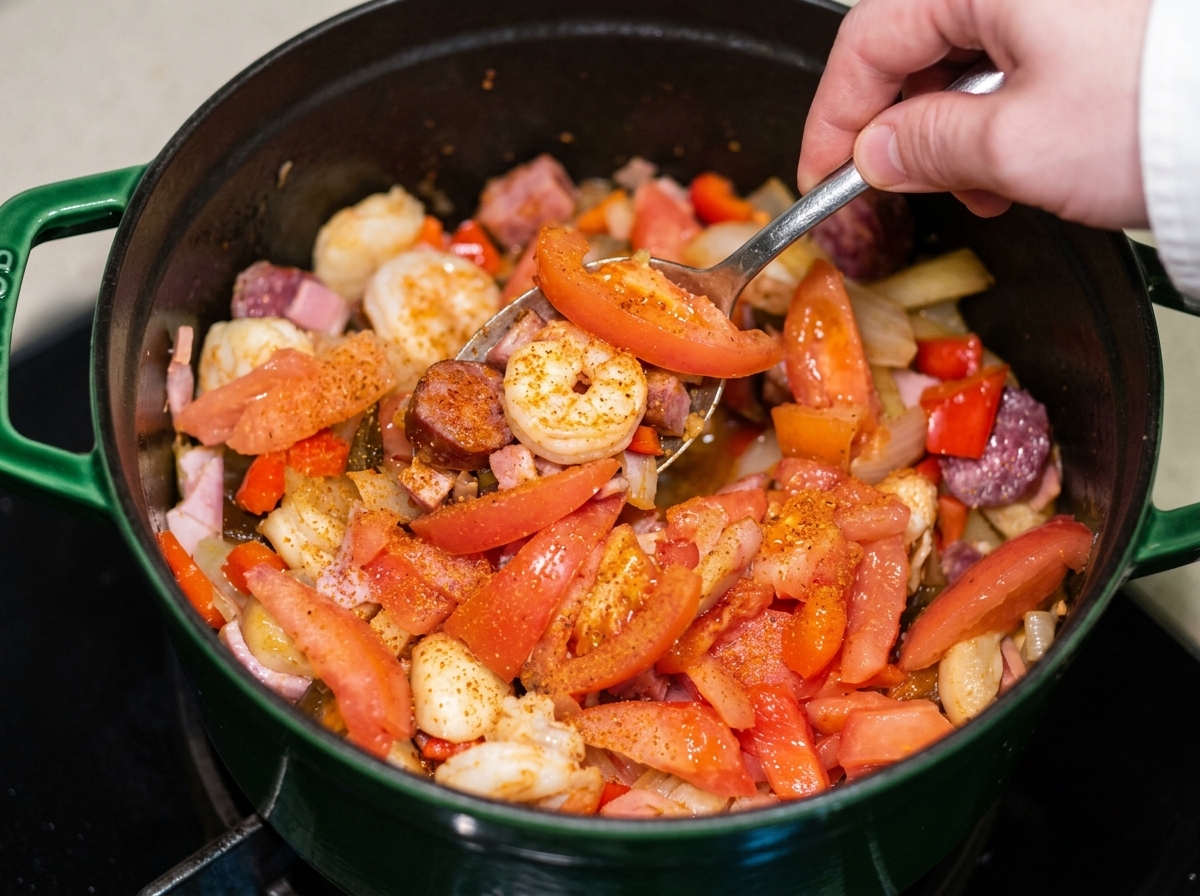
Mix the diced fresh tomatoes and Cajun spice mix into the pot. Stir thoroughly so the spices coat all the ingredients evenly and the tomatoes begin to break down, releasing their juices to form the base of the stew.
Tip: If you prefer a thicker gumbo, you can sprinkle a little flour over the vegetables before adding the liquids to create a quick roux. - 10Add the broth
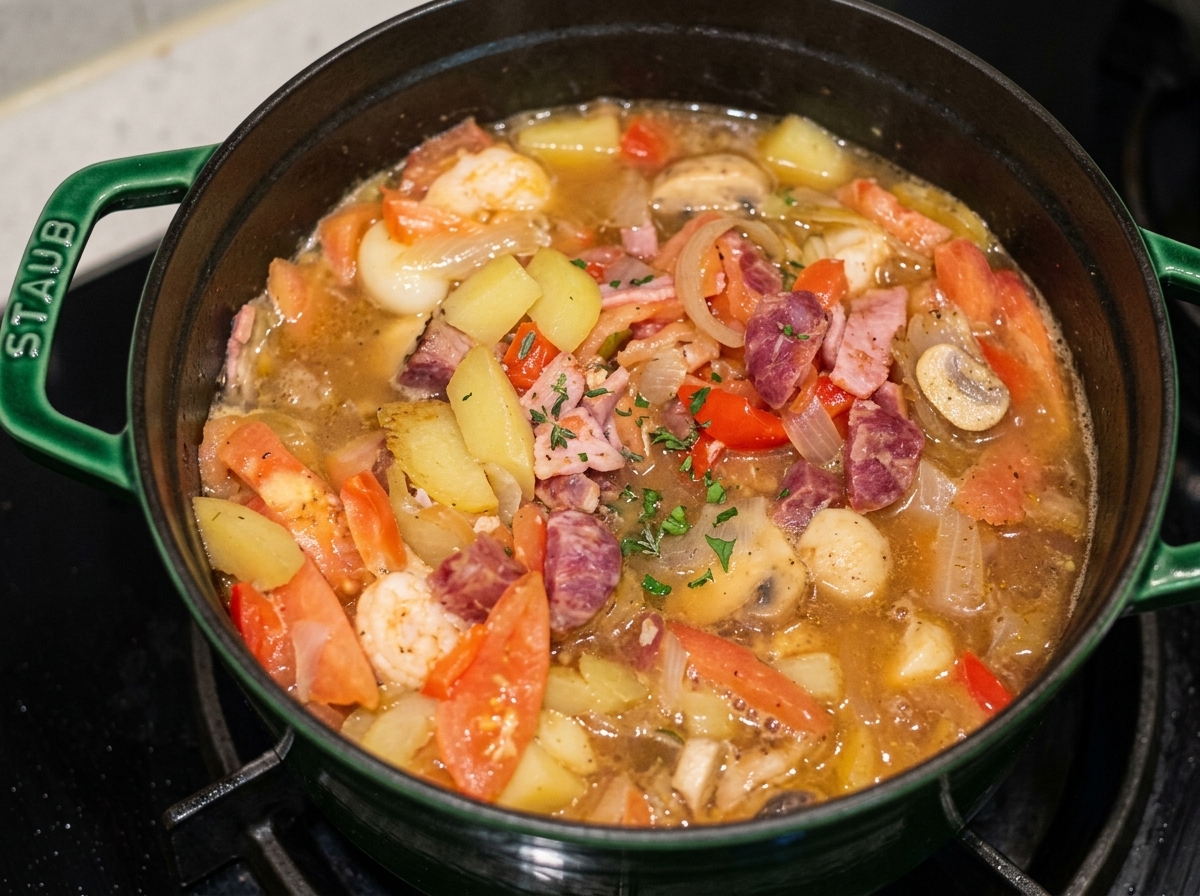
Pour the chicken broth into the cast-iron pot, followed by enough purified water to just cover the shrimp, vegetables, and meats. Gently stir the mixture to distribute the Cajun spices and bring the liquid to a boil.
Tip: Be careful not to add too much water. The liquid should just barely cover the ingredients to ensure the gumbo develops a rich, hearty consistency rather than becoming a watery soup. - 11Add the okra
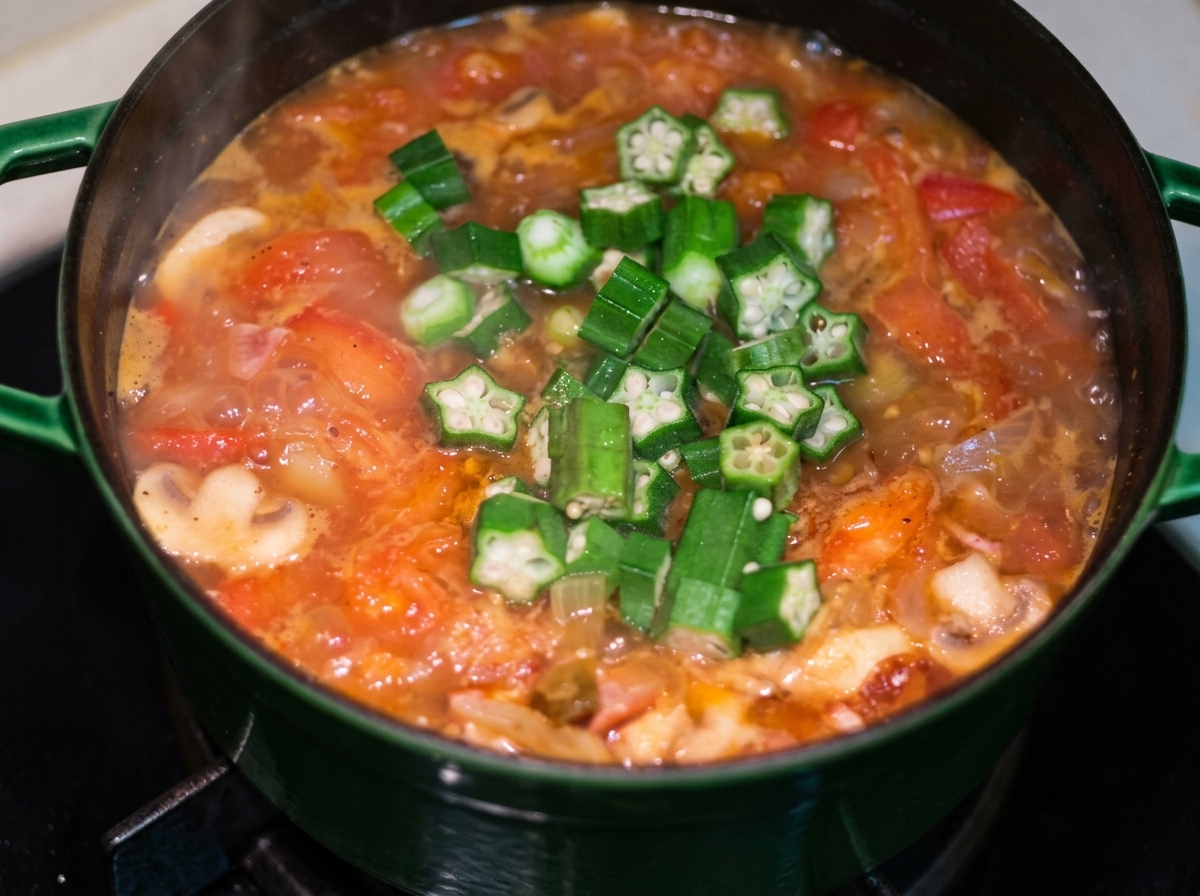
Once the broth and water have come to a steady boil, gently stir the freshly sliced okra into the pot. Okra is a traditional ingredient in gumbo, providing a subtle earthy flavor and releasing natural starches that help thicken the rich stew.
Tip: Slice the okra into even pieces so they cook at the same rate and distribute their thickening properties uniformly throughout the broth. - 12Cover and simmer
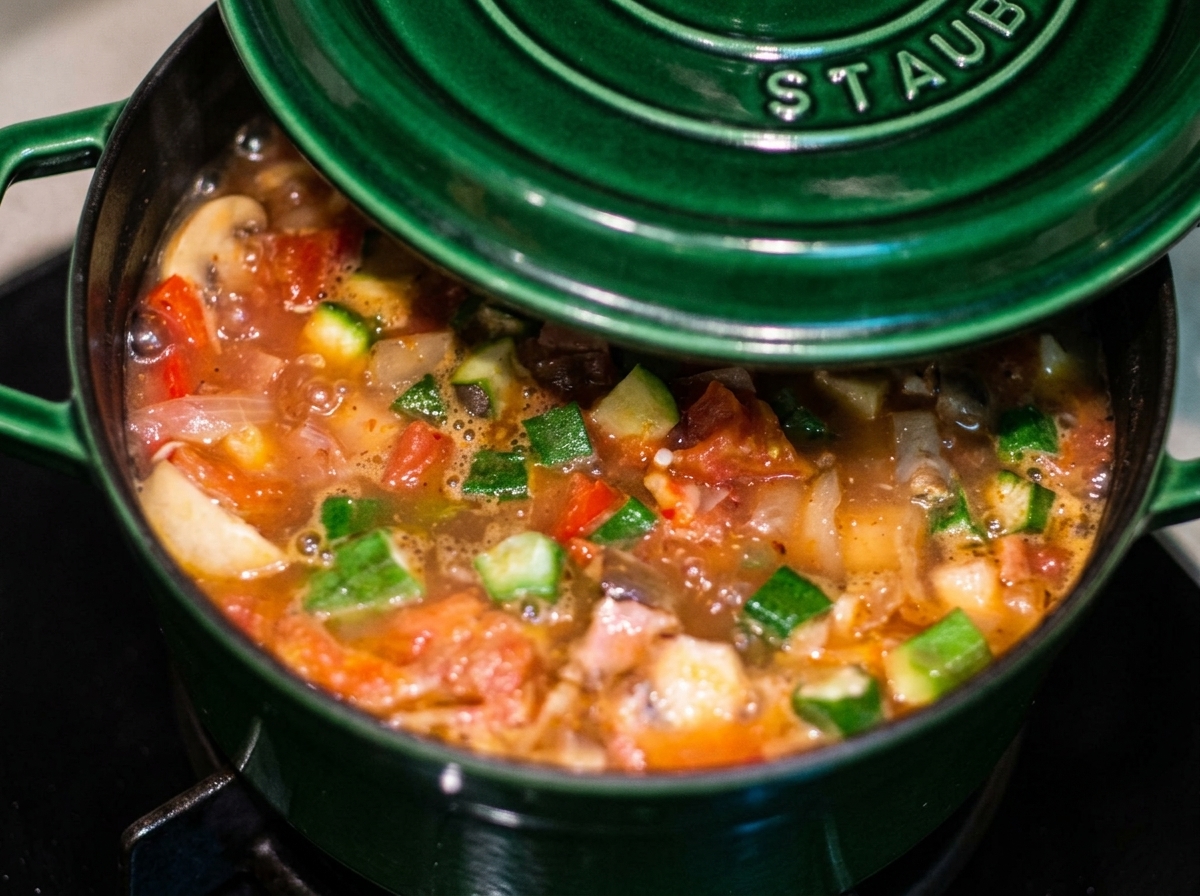
Place the lid onto the cast-iron pot, reduce the heat to low, and let the gumbo simmer gently for twenty minutes. This low and slow cooking process allows the meats to become tender while giving the complex Cajun spices time to fully develop and meld.
Tip: Avoid lifting the lid frequently during the simmer, as this releases precious heat and moisture, which can interrupt the even cooking of the ingredients.