Yanbian Korean Soybean Paste Stew (Doenjang-jjigae)
A comforting, umami-rich Yanbian soybean paste stew packed with tender pork belly, hearty potatoes, shiitake mushrooms, zucchini, and napa cabbage in a savory broth.
Korean soybean paste stew, or doenjang-jjigae, is a staple comfort dish beloved across Yanbian by generations. Combining earthy fermented soybean paste with savory pork belly, fresh vegetables, and a kick of spice, it delivers a deeply satisfying broth that cuts through greasiness and warms the soul.

Ingredients
- 2 tbsp soybean paste (doenjang)
- 200 g pork belly
- 2 potatoes
- 1 zucchini
- 4 shiitake mushrooms
- 200 g napa cabbage
- 1 block firm tofu
- 3 cloves garlic
- 2 Thai chili peppers
- 1 tsp seasoning powder (da-xi-da)
- 1 tbsp chili powder
- 1 tbsp chili flakes
- to taste water
Instructions
- 1Cut potatoes into small chunks
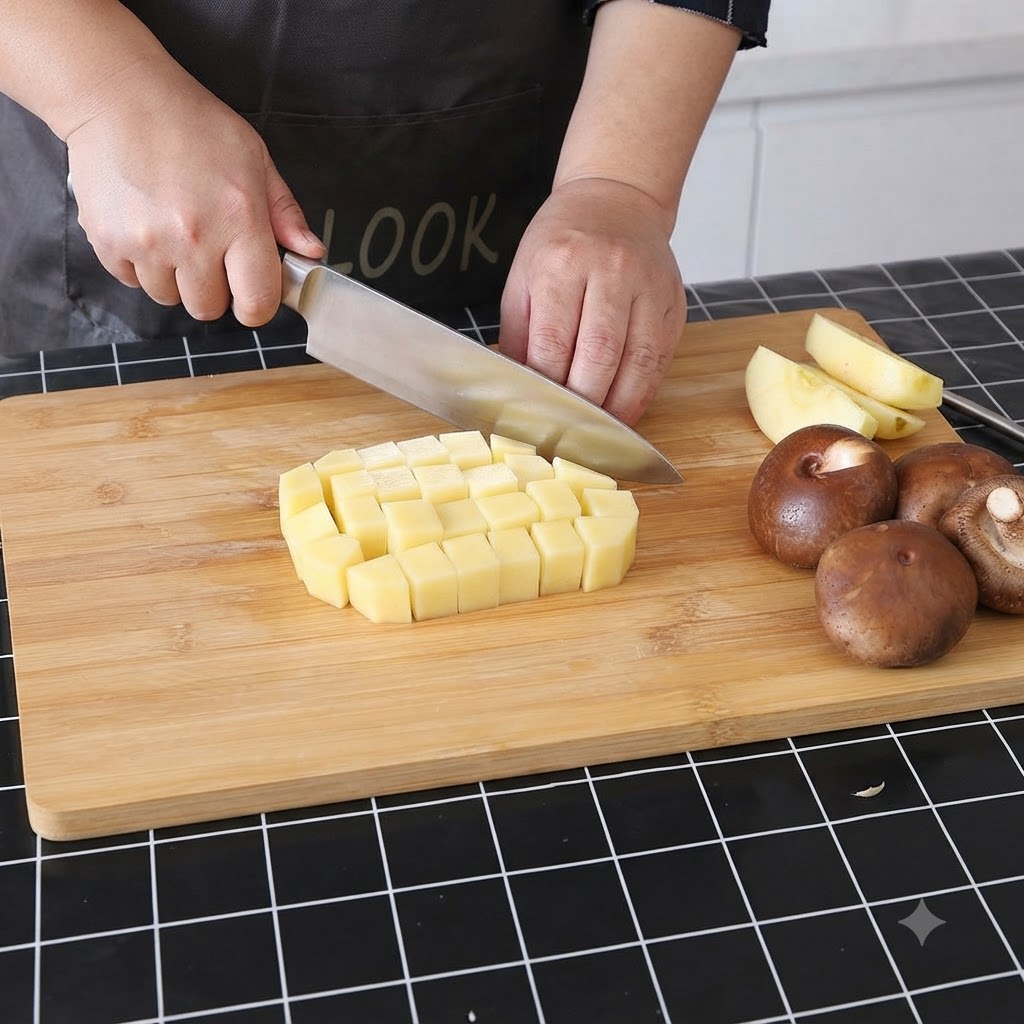
Place the peeled potatoes on a wooden cutting board and use a kitchen knife to cut them into uniform small chunks. Uniform sizing ensures they cook evenly in the soybean paste stew.
Tip: Cut the potatoes into even bite-sized pieces so they absorb the savory broth properly. - 2Slice shiitake mushrooms
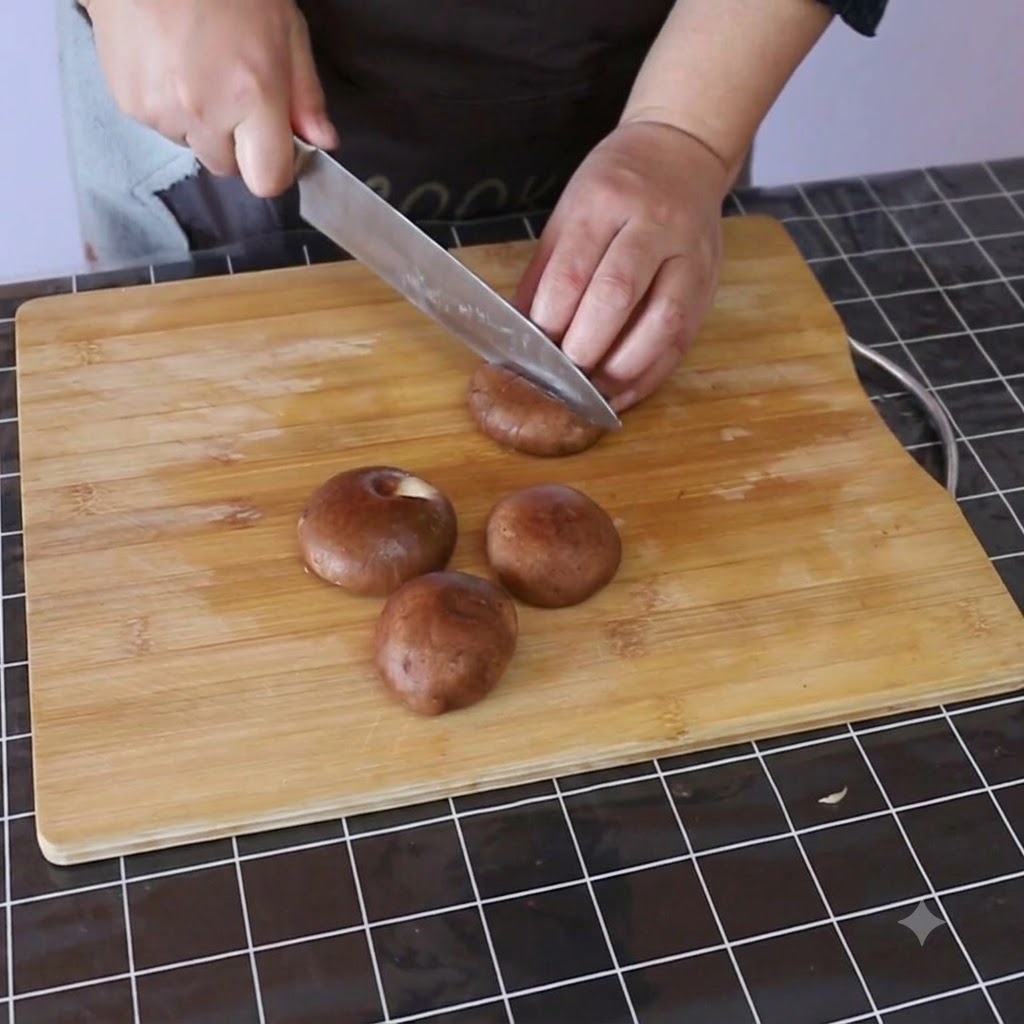
Arrange the shiitake mushrooms on the wooden cutting board and slice them into pieces with a kitchen knife. This adds an earthy flavor dimension to the bubbling broth.
Tip: Trim the stems off the shiitake mushrooms before slicing for a better texture. - 3Slice napa cabbage and firm tofu
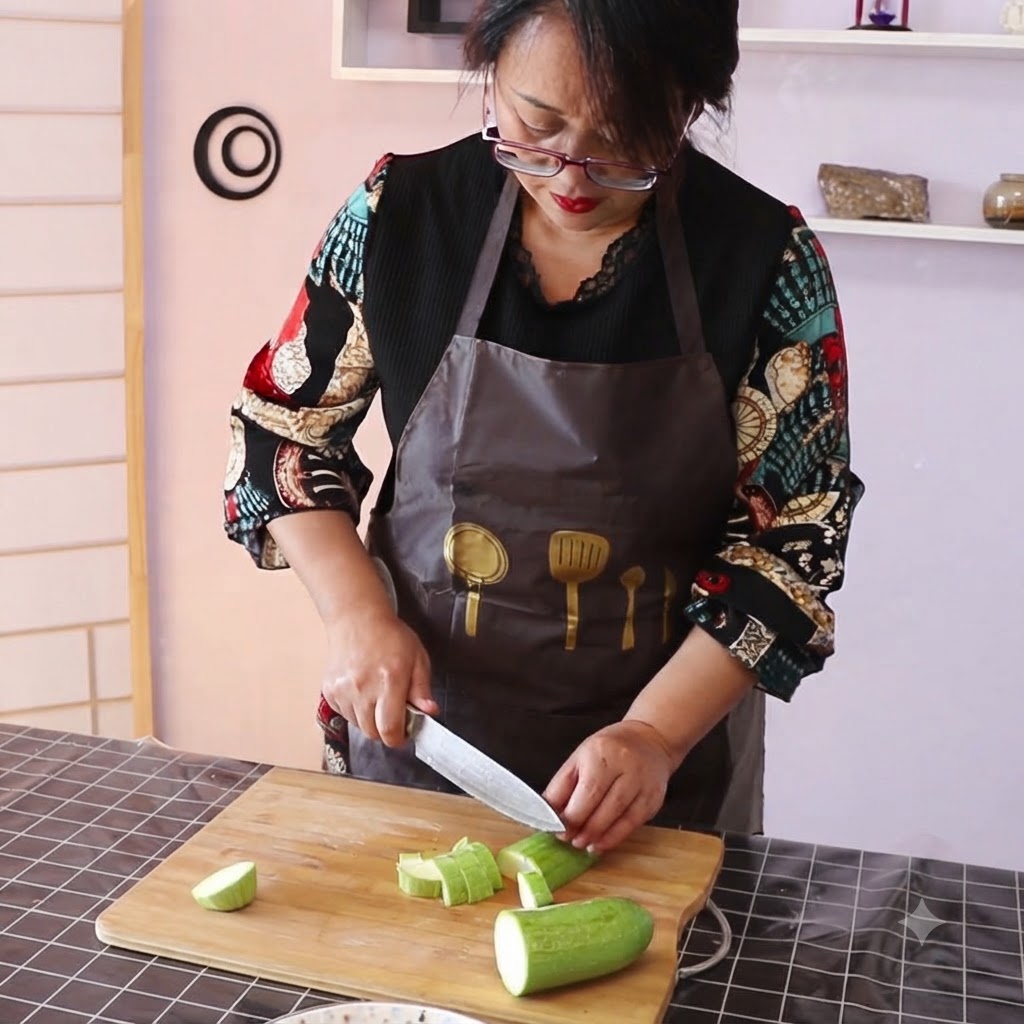
Slice the fresh napa cabbage and firm tofu into bite-sized pieces on the wooden cutting board. Using firm, lye-water tofu ensures it holds its shape perfectly in the bubbling stew.
Tip: Cut the tofu into uniform cubes so they heat evenly without breaking apart. - 4Mince garlic and slice chilies
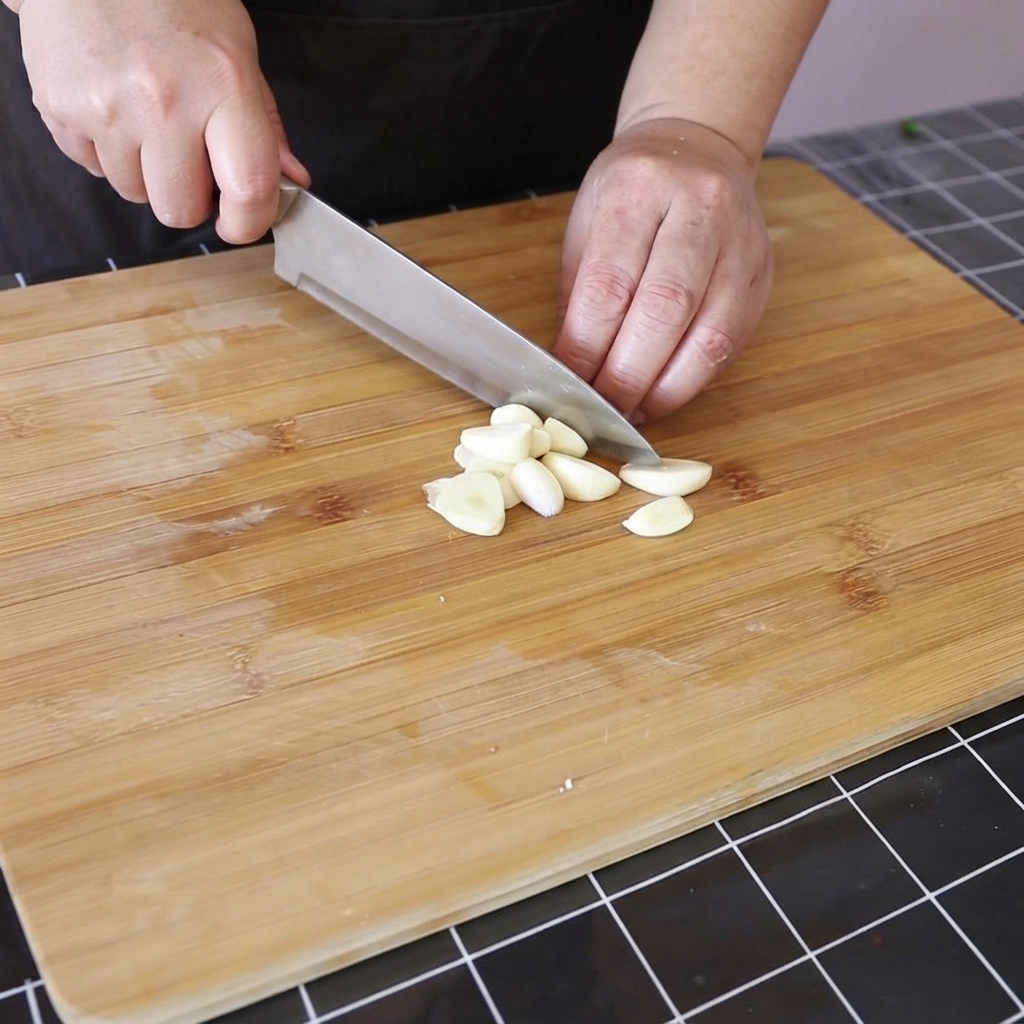
Gather the peeled garlic cloves and small red Thai chili peppers on the cutting board. Mince the garlic finely and slice the chilies into rings to build the aromatic and spicy foundation of the stew.
Tip: Adjust the number of Thai chili peppers based on your preferred spice level. - 5Pour water into the cooking pot
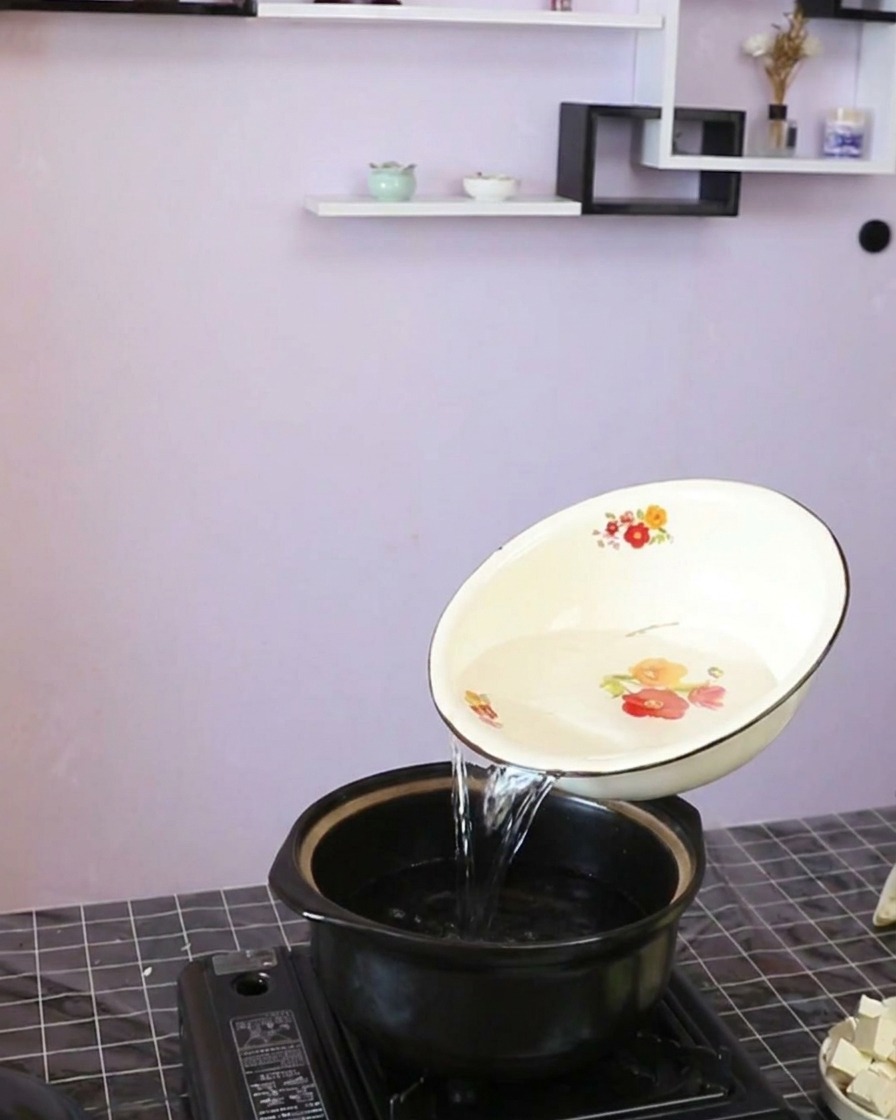
Pour clear water from a patterned ceramic bowl directly into a dark clay cooking pot set on the stove. This acts as the liquid base for the soybean paste stew.
Tip: Use adequate water to ensure all the vegetables and ingredients can submerge and simmer properly. - 6Add and dissolve soybean paste
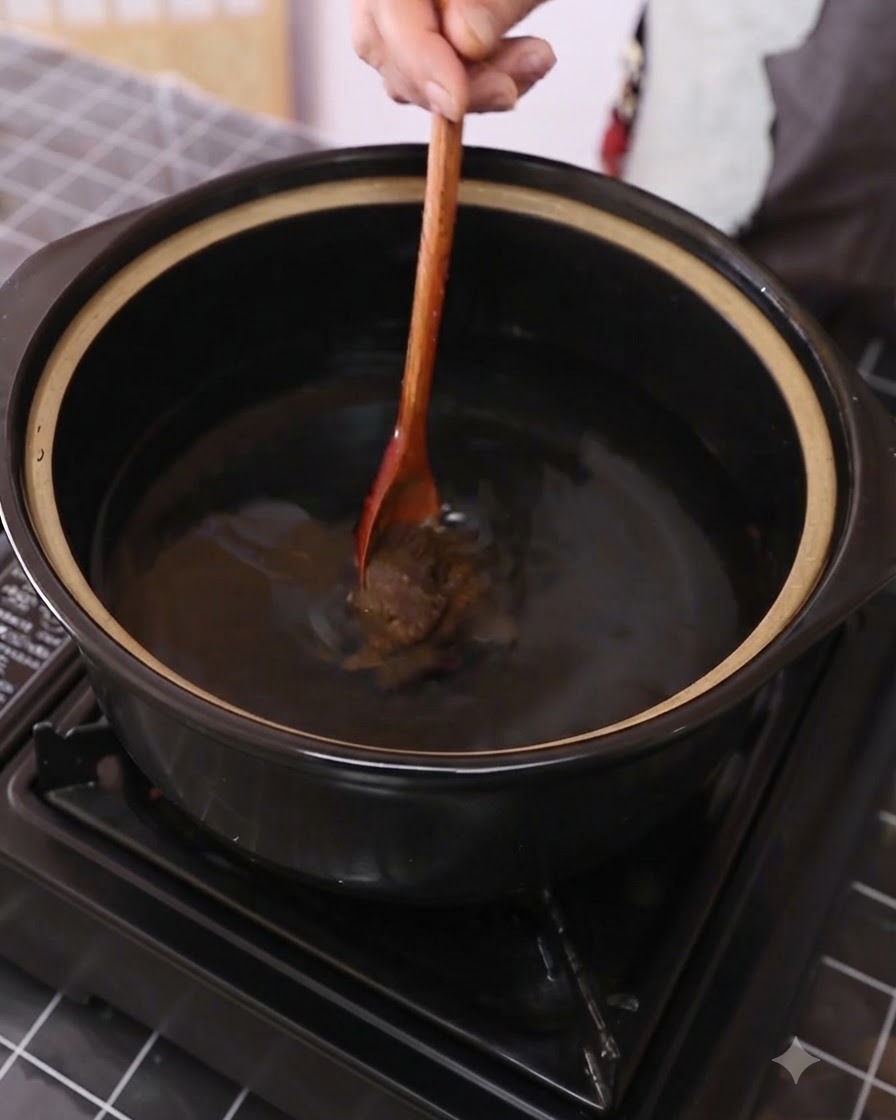
Scoop two spoonfuls of soybean paste into the pot of water and use a wooden spoon to stir and dissolve it completely. This forms the signature savory and umami broth base.
Tip: Stir the paste thoroughly until fully dissolved to prevent any clumps from forming in the soup base. - 7Add potatoes and pork belly
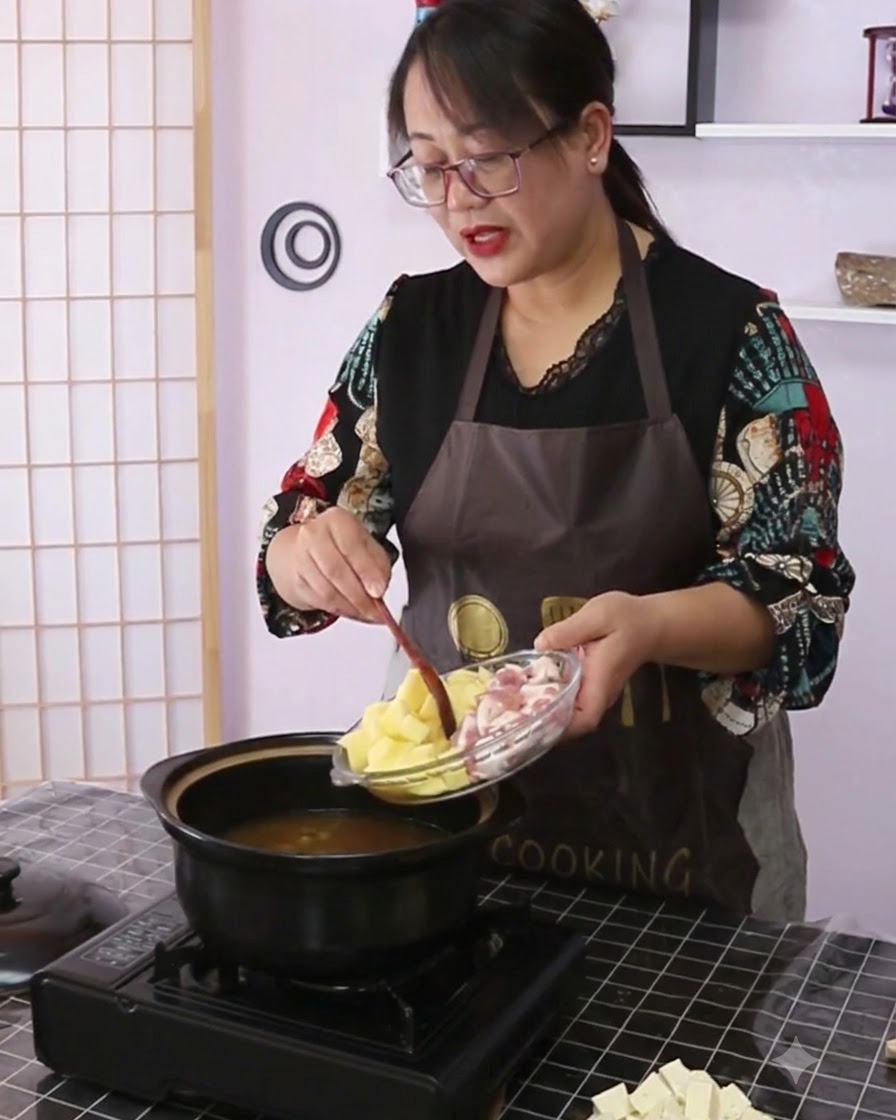
Add the heat-tolerant potato chunks and sliced pork belly directly into the pot with the seasoned broth. Cover the pot with a lid and bring it to a simmer so the flavors begin to meld.
Tip: Cut the potatoes evenly so they cook at the same rate as the pork belly. - 8Add zucchini, mushrooms, and tofu
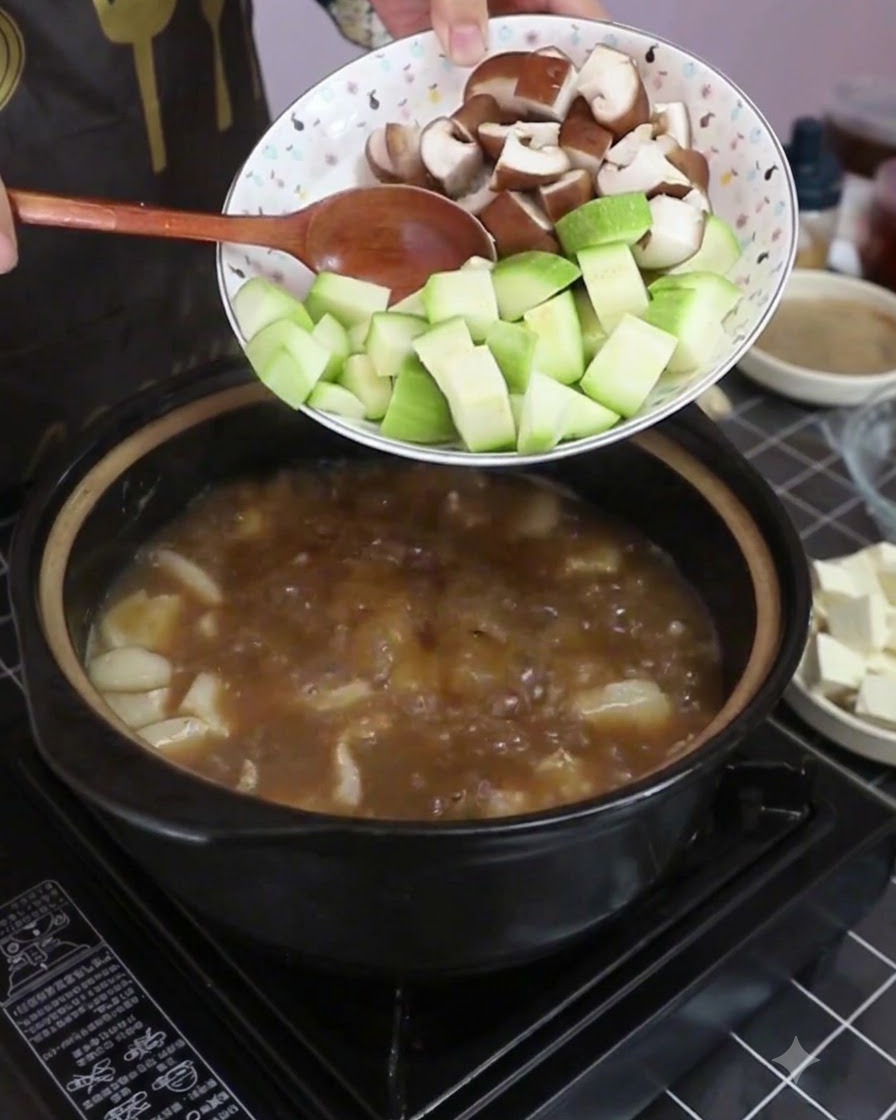
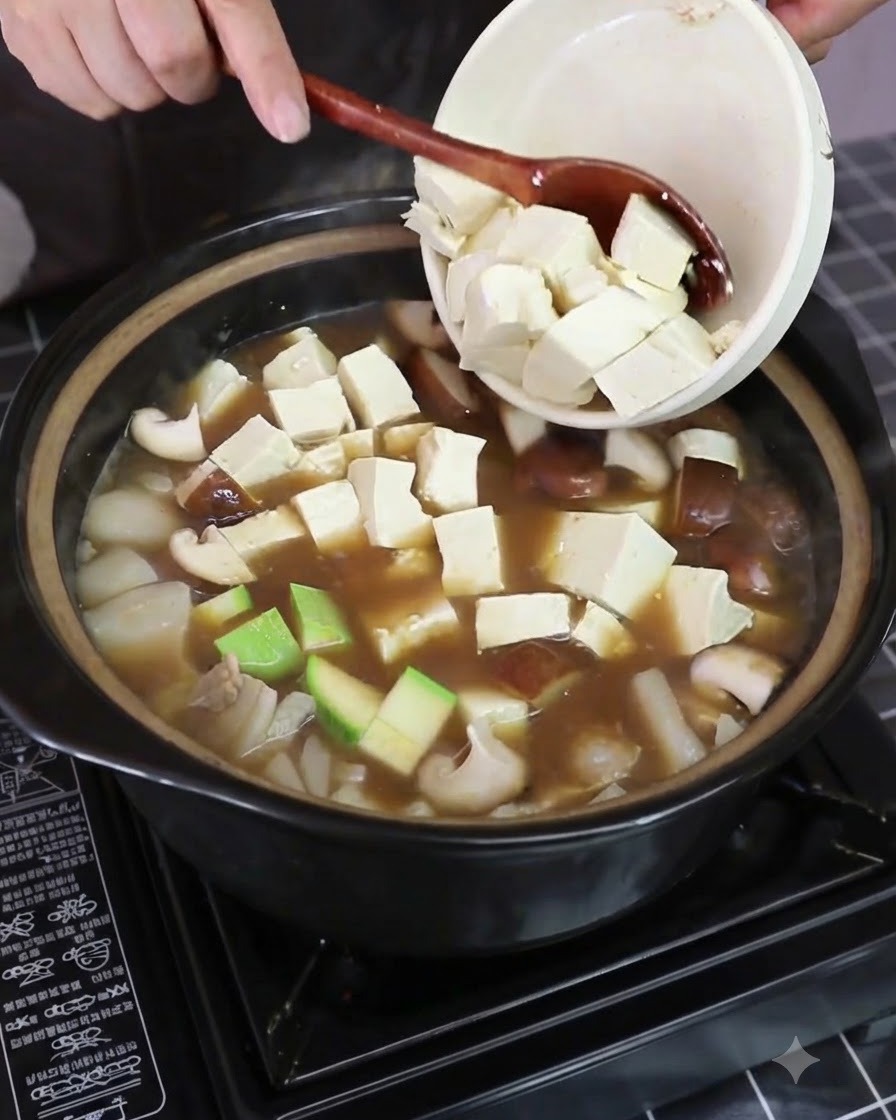
Add the prepared zucchini chunks, shiitake mushrooms, and cubed tofu into the simmering pot. Give everything a gentle stir to distribute the ingredients evenly into the broth.
Tip: Stir gently after adding the tofu to prevent it from breaking apart. - 9Add napa cabbage
Add the freshly cut napa cabbage into the pot along with the other ingredients. Cover the pot with the lid and wait until the liquid returns to a rolling boil.
Tip: Napa cabbage will shrink significantly as it cooks, so dont worry if the pot looks full. - 10Season the stew
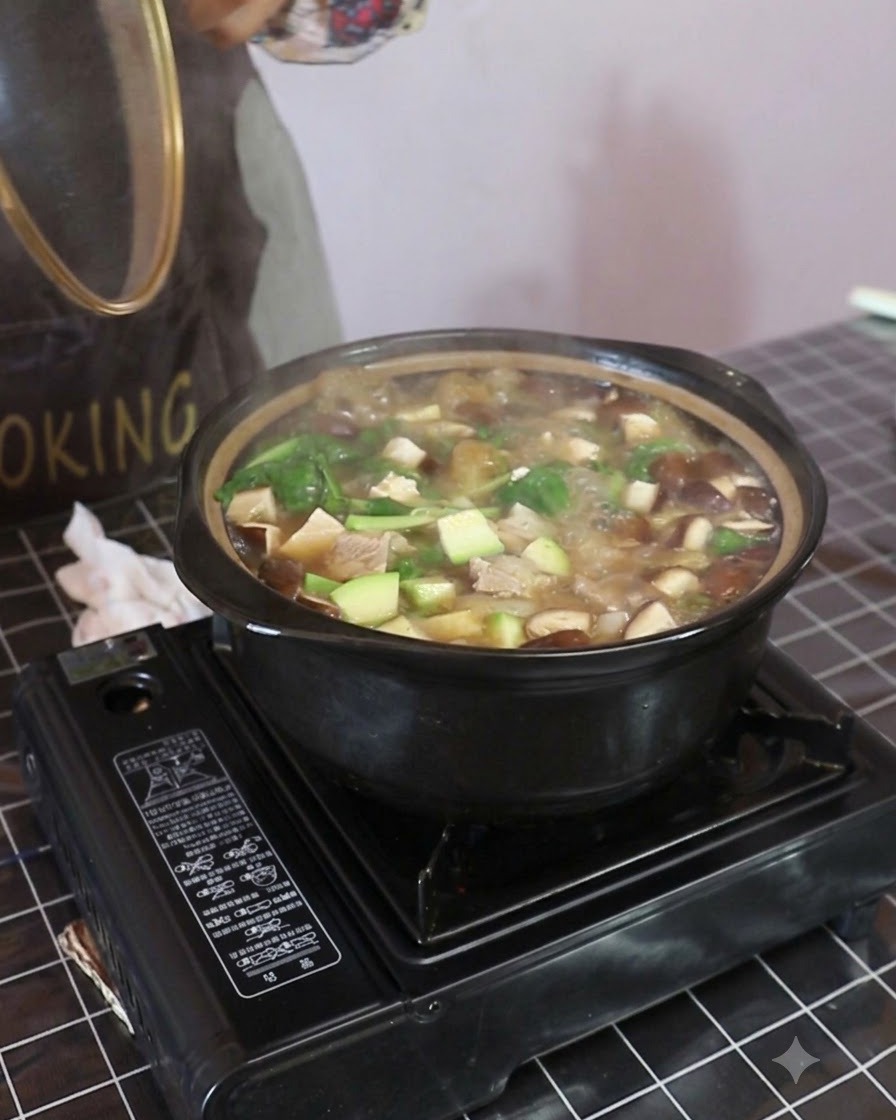
Once the water boils again, open the lid and season the stew. Be sure to add a spoonful of soulful MSG (da-xi-da) to build the characteristic savory depth of the dish.
Tip: Da-xi-da is key to achieving that authentic restaurant-style flavor in Korean soybean paste stews. - 11Add aromatics and chilies
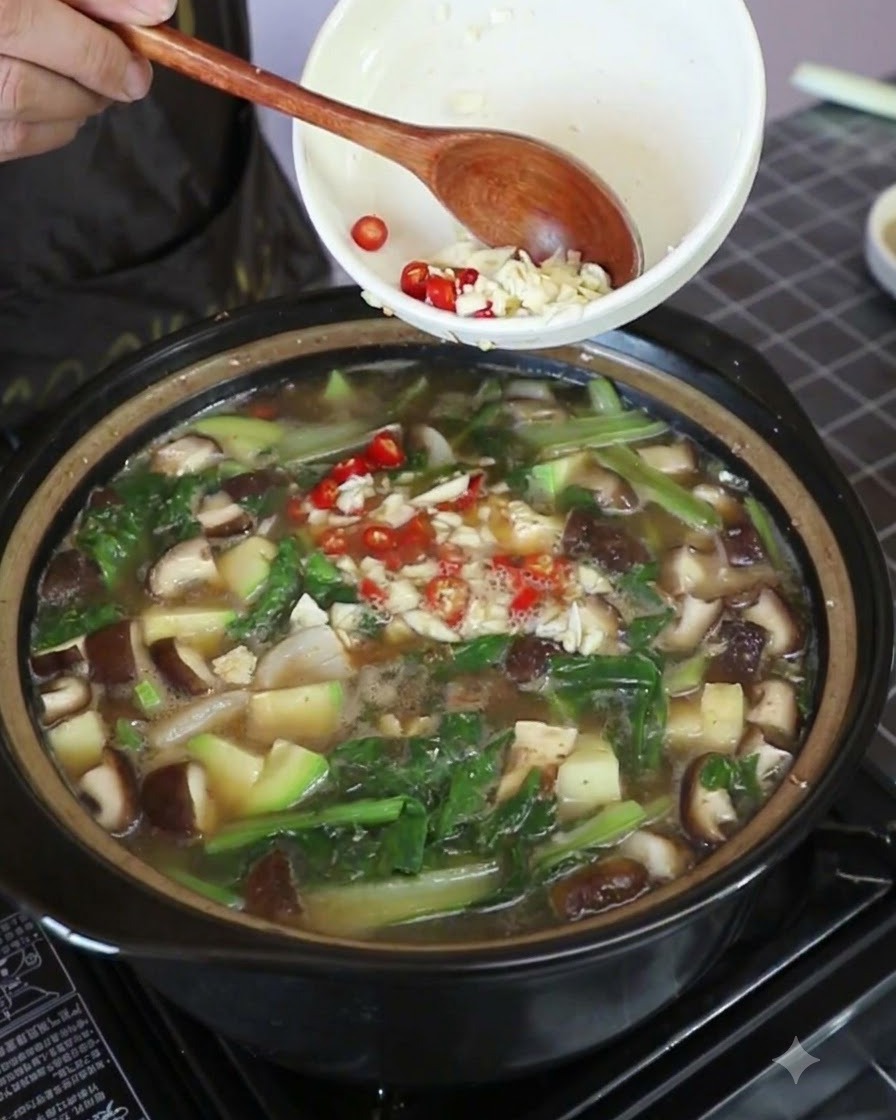
Add the minced garlic and chopped Thai chili peppers into the pot. If you prefer a spicy kick, you can also add chili powder and chili flakes at this stage, while those who avoid spicy food can omit them.
Tip: Adjust the amount of Thai chili peppers based on your personal heat tolerance. - 12Mix and finish simmering
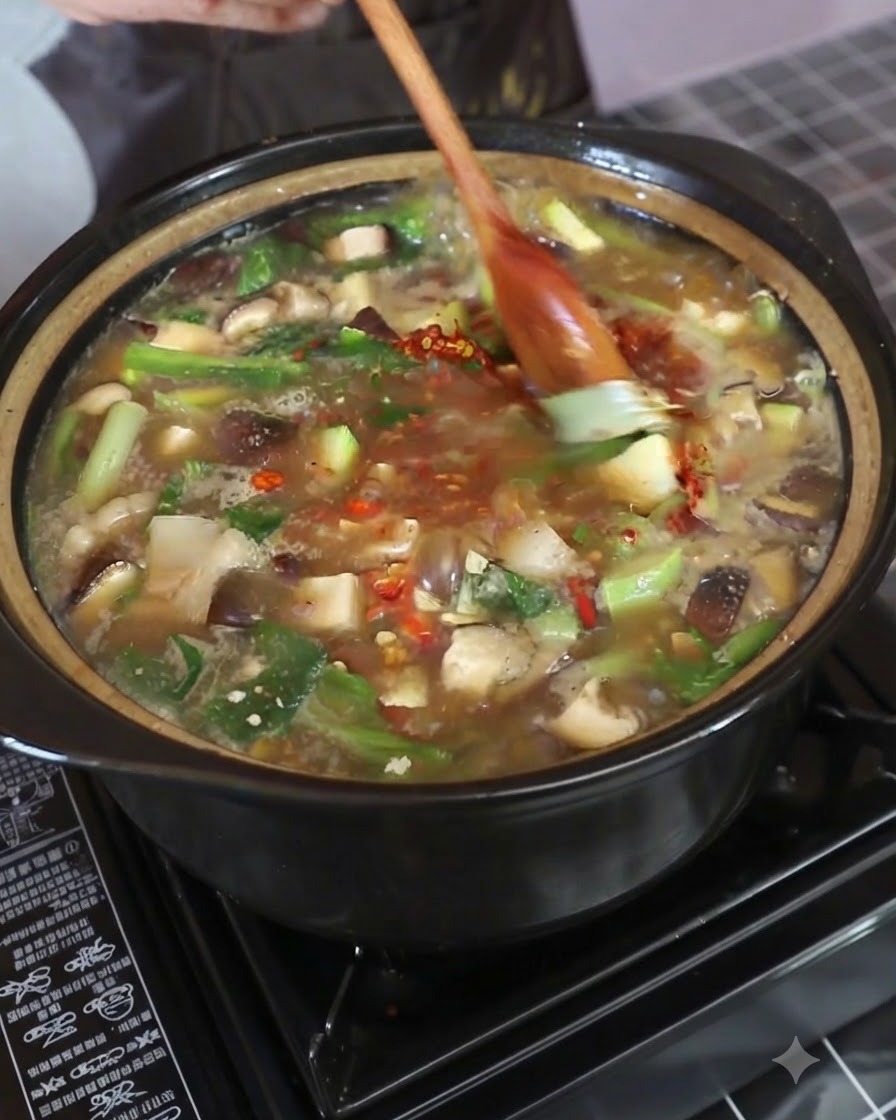
Add the chili powder and chili flakes into the bubbling stew, then mix everything thoroughly with a wooden spoon. Simmer for a short while until the pot is bubbling and foaming, indicating the dish is fully cooked.
Tip: Make sure to stir well so the chili powder dissolves evenly into the broth.


