Garlic Salt
Pepper Pork Ribs
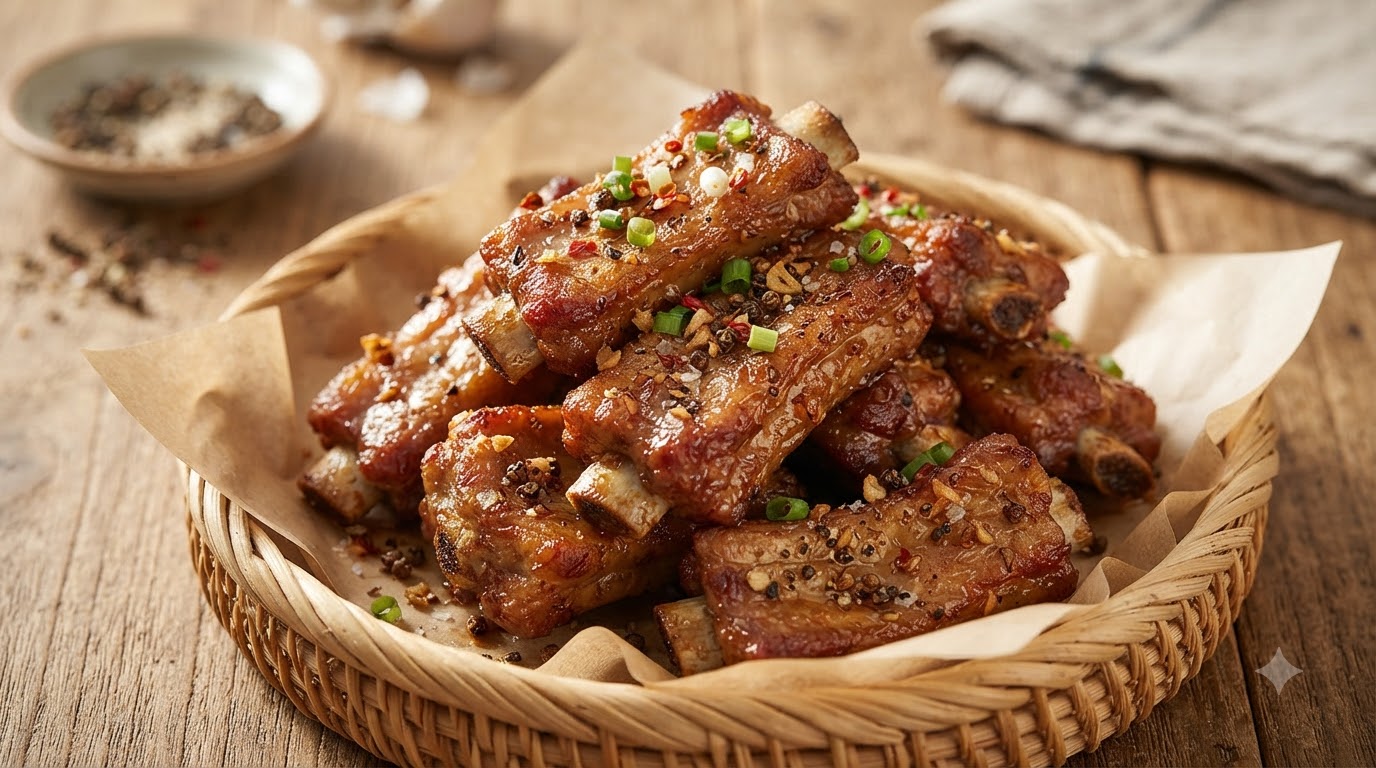
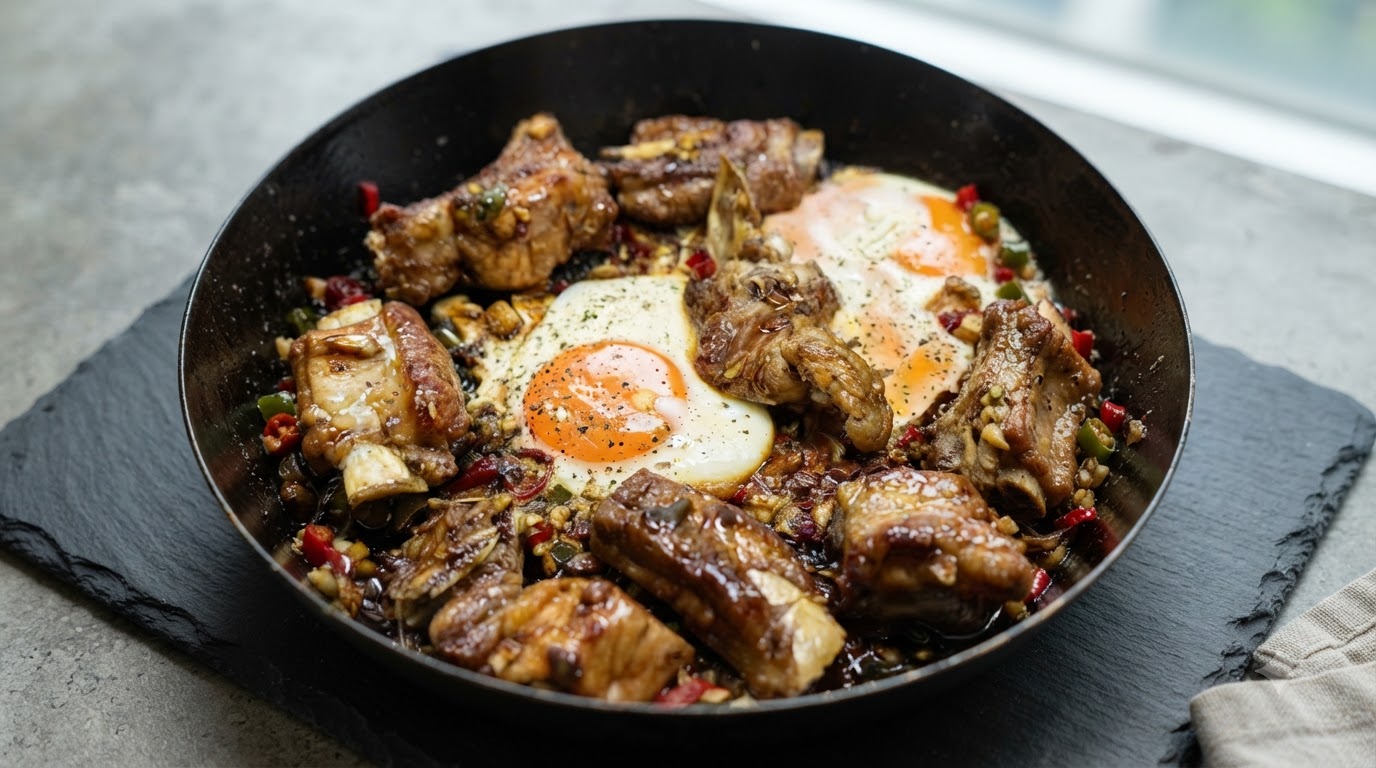
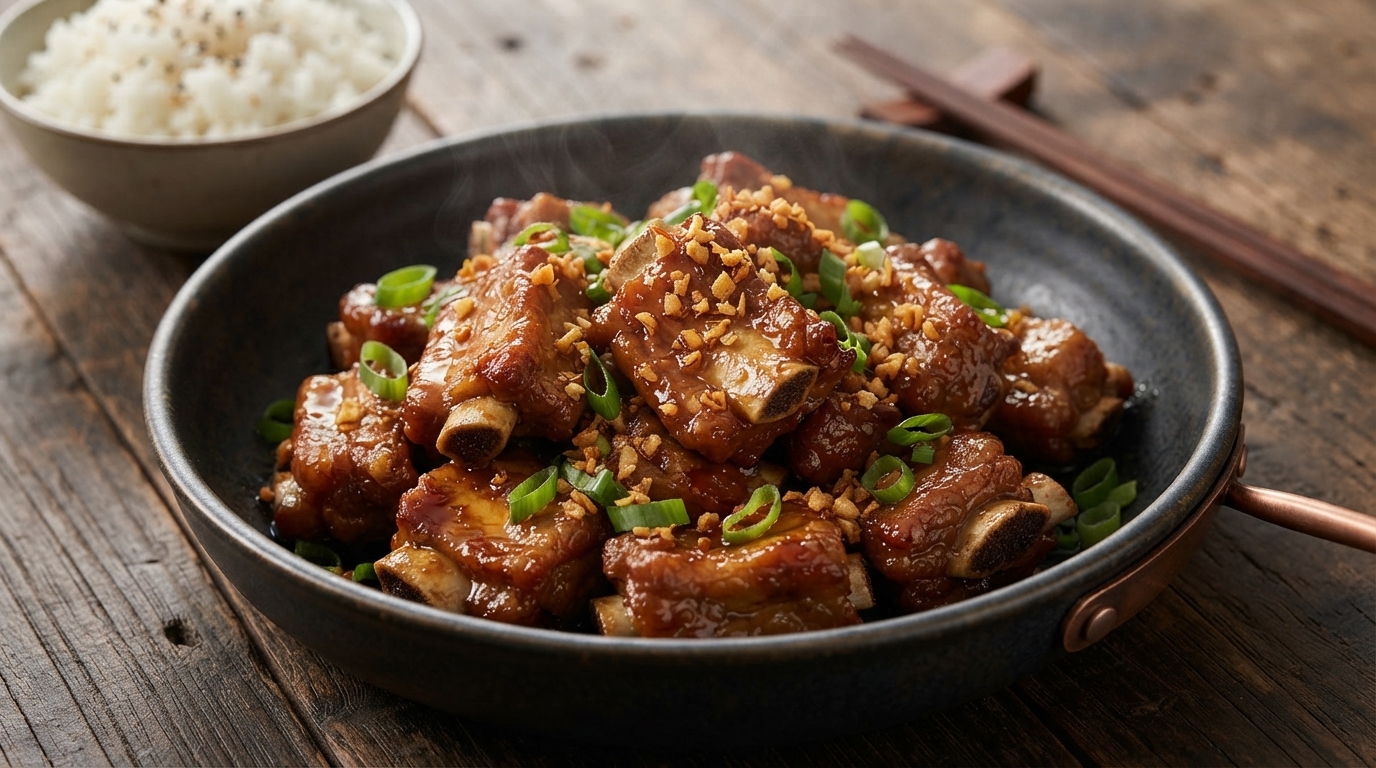
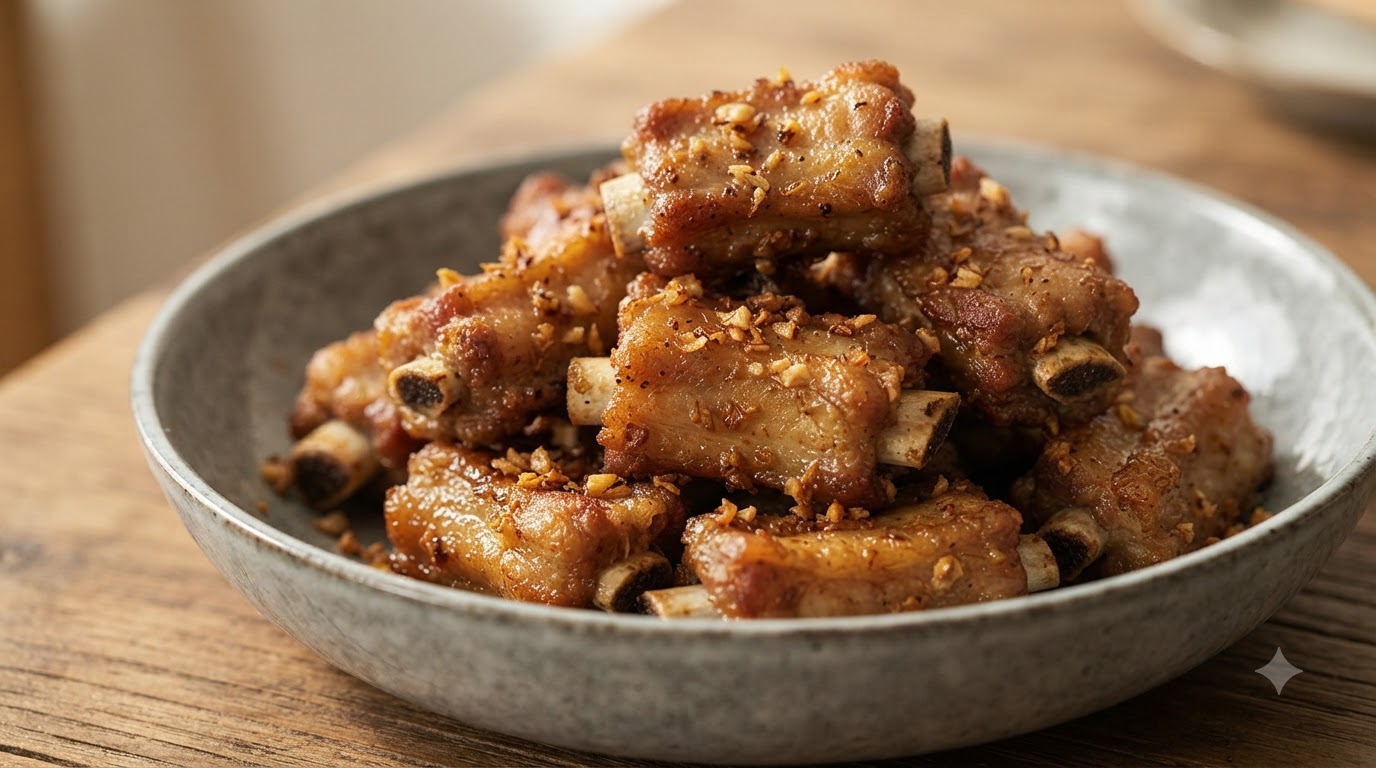
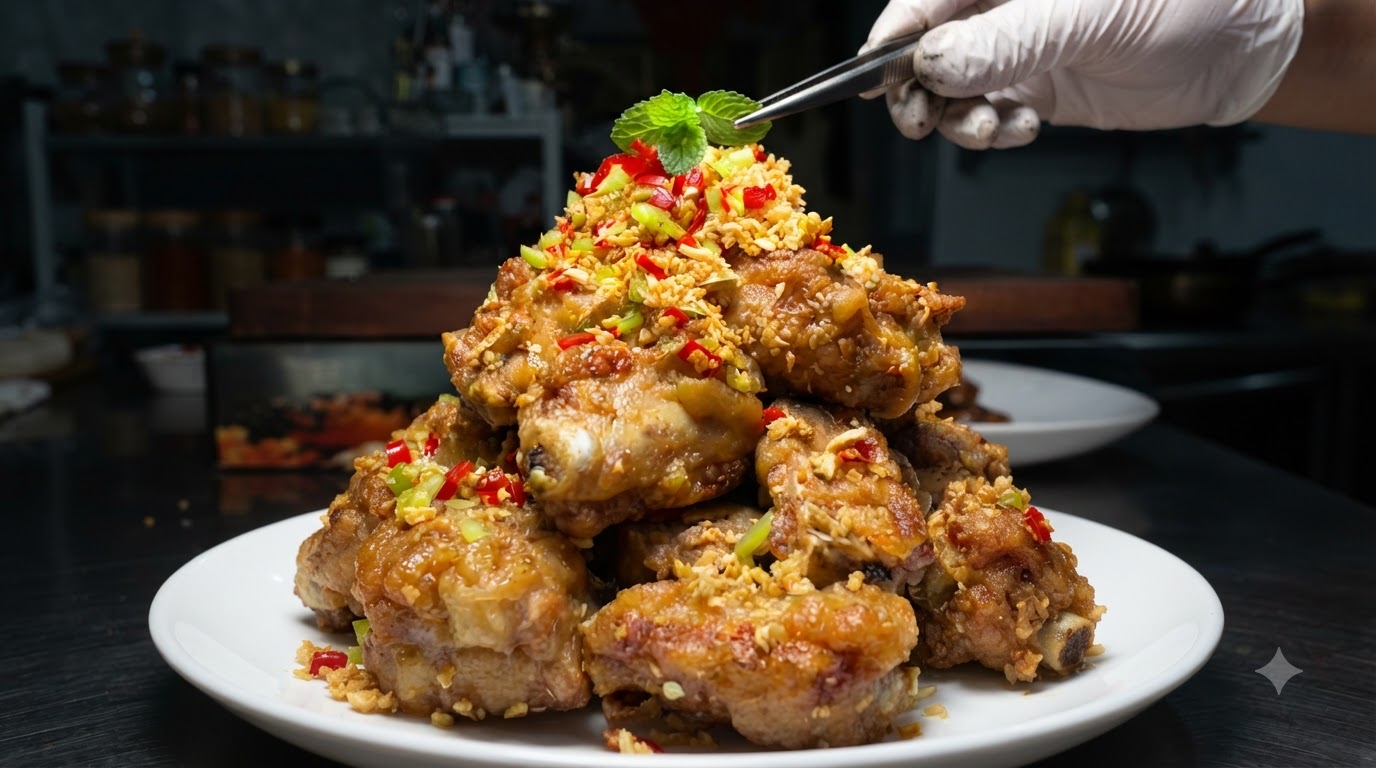
Crispy on the outside and tender on the inside, these restaurant-style garlic salt and pepper pork ribs feature a secret baking soda marinade and aromatic garlic juice.
Ever wondered why the garlic salt and pepper ribs at classic restaurants taste so exceptionally tender and fragrant? The secret lies in a simple acid-alkali neutralization technique using baking soda, combined with fresh garlic juice infusion and a double-frying method to lock in maximum flavor and crunch.
Ingredients
- 2 catties pork ribs
- 1 small spoon baking soda
- 4 heads garlic
- to taste pure water
- 2 slices ginger
- some shredded onion
- 2 spoons salt
- 1 spoon pepper powder
- a little oyster sauce
- a little fresh mushroom seasoning
- 1 large spoonful peanut butter
- 40 grams glutinous rice flour
- 40 grams cornstarch
- some diced red chilies
- some diced green chilies
- some salt and pepper seasoning
- for frying cooking oil
Instructions
- 1Prepare Raw Pork Ribs
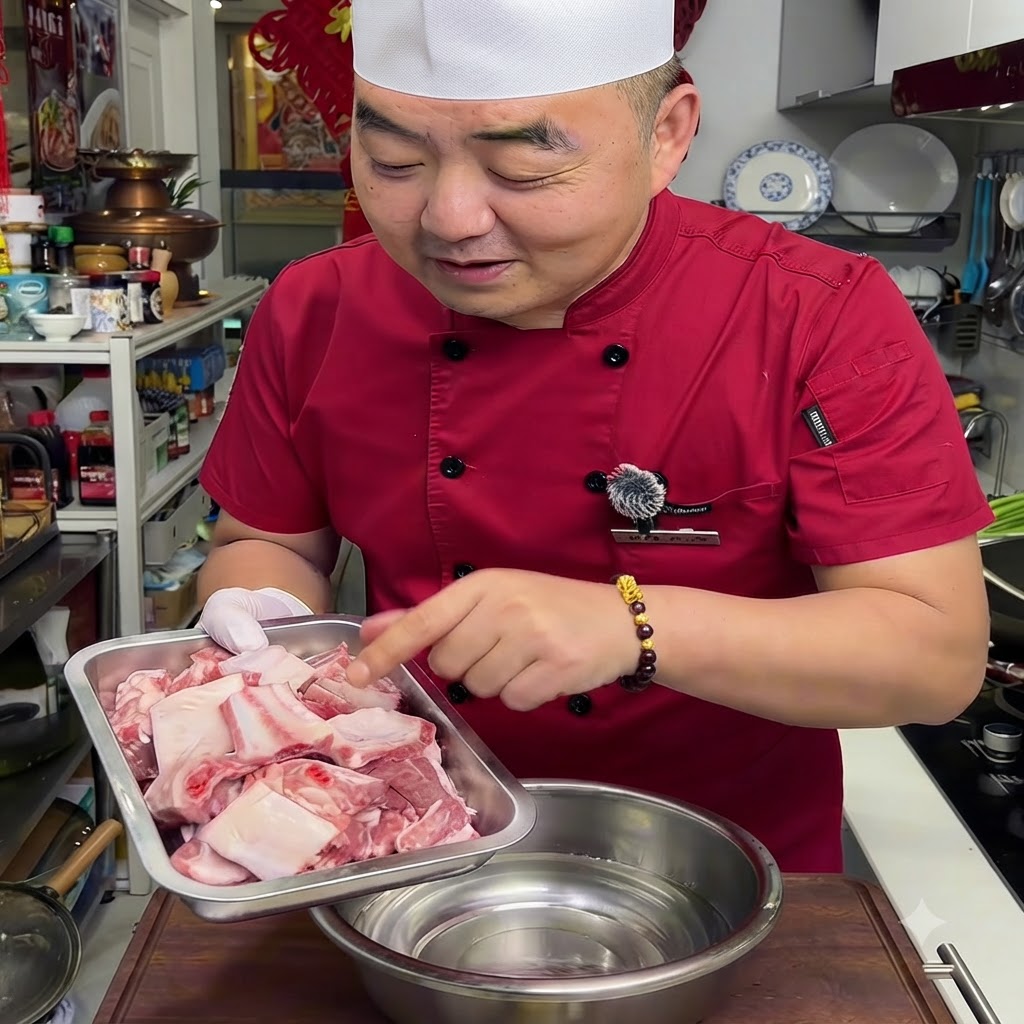
Have the meat stall owner chop two catties of pork ribs into inch-long pieces and place them into a clean metal tray.
Tip: Chop the ribs into uniform inch-long pieces to ensure even cooking. - 2Add baking soda
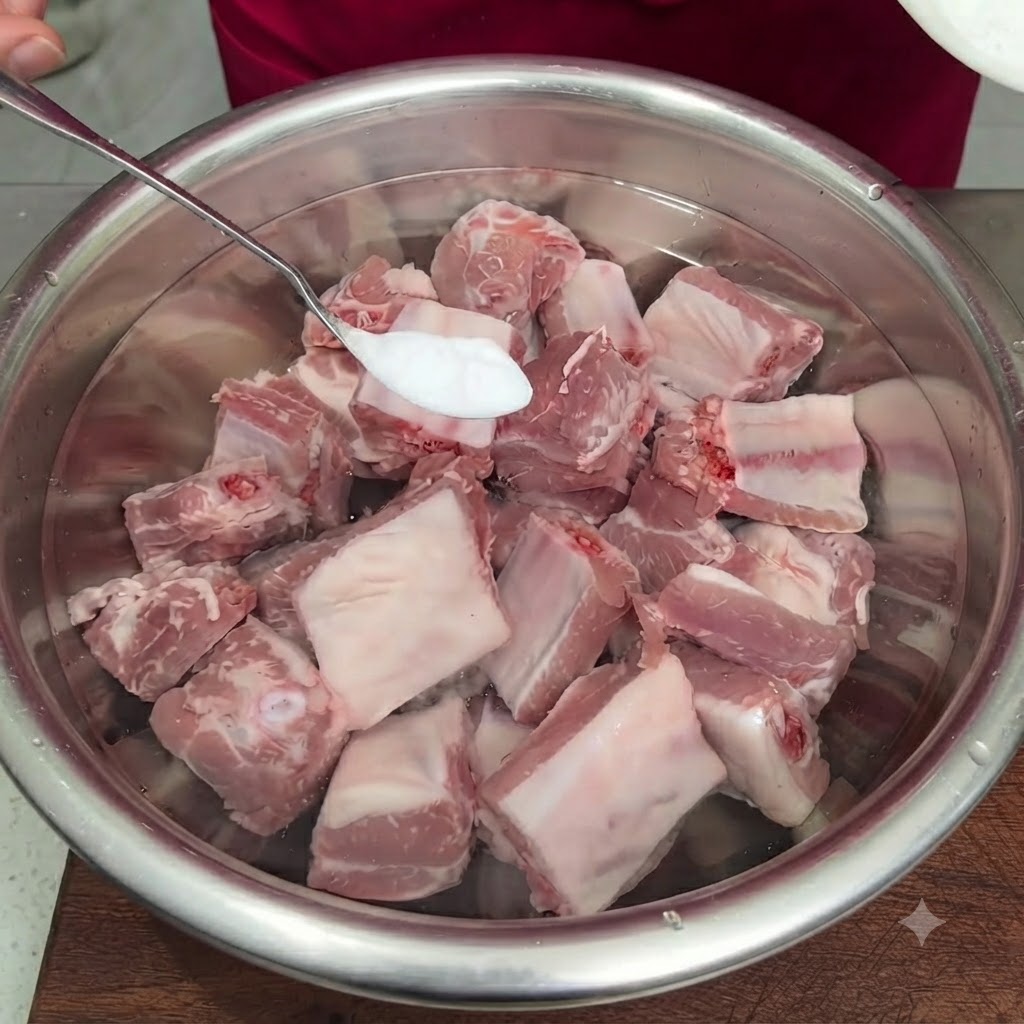
Place the chopped pork ribs into a bowl of clean water and add a small spoonful of baking soda. Because meat is naturally acidic and baking soda is alkaline, they neutralize each other, which is the secret to achieving incredibly tender ribs like those served in restaurants.
Tip: Baking soda is a common and safe ingredient used to tenderize meat effectively; just be sure to wash it off thoroughly afterward. - 3Mix and soak the ribs
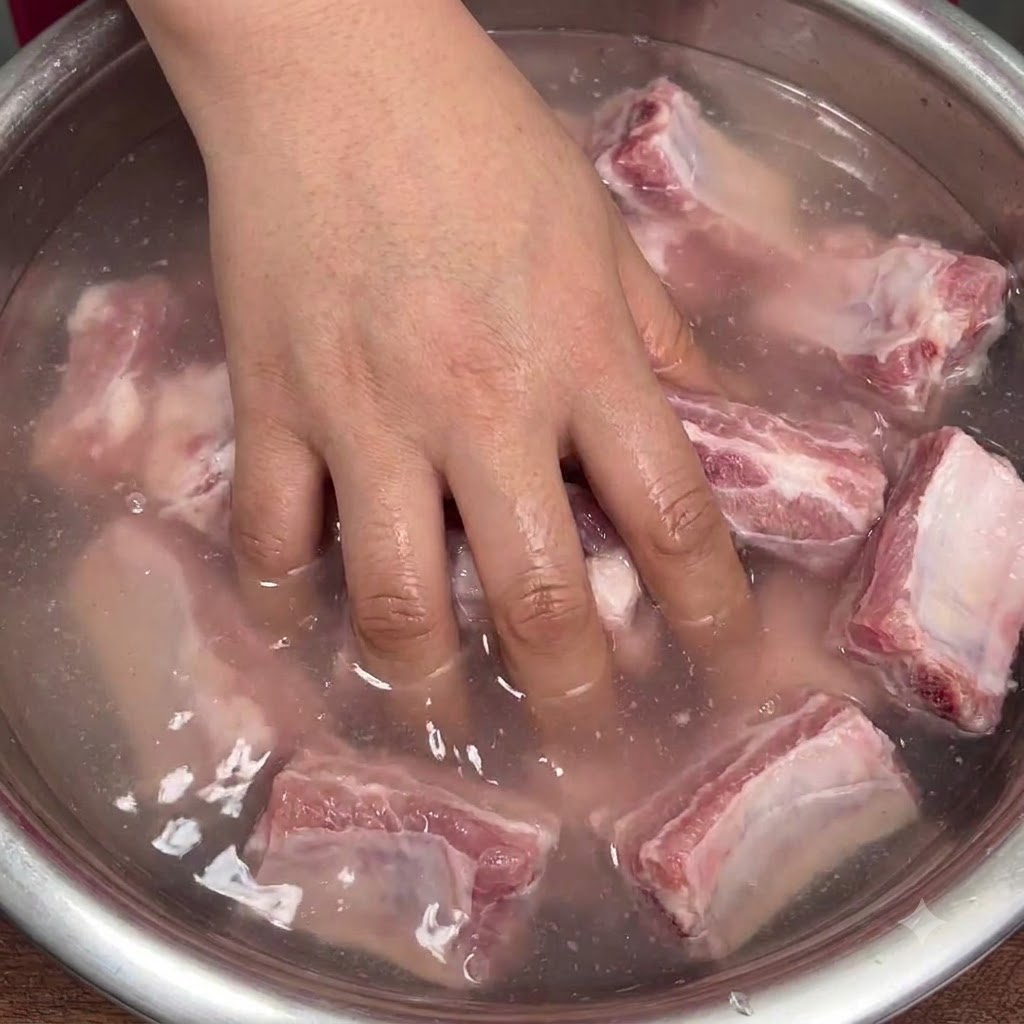
Use your hands to mix the ribs thoroughly, ensuring the baking soda is evenly distributed throughout the meat. Let the ribs soak in this mixture for 20 to 30 minutes to draw out the blood and impurities.
Tip: After soaking, change the water and wash the ribs a couple more times until the meat turns white. This ensures a cleaner color when fried. - 4Chopping Garlic
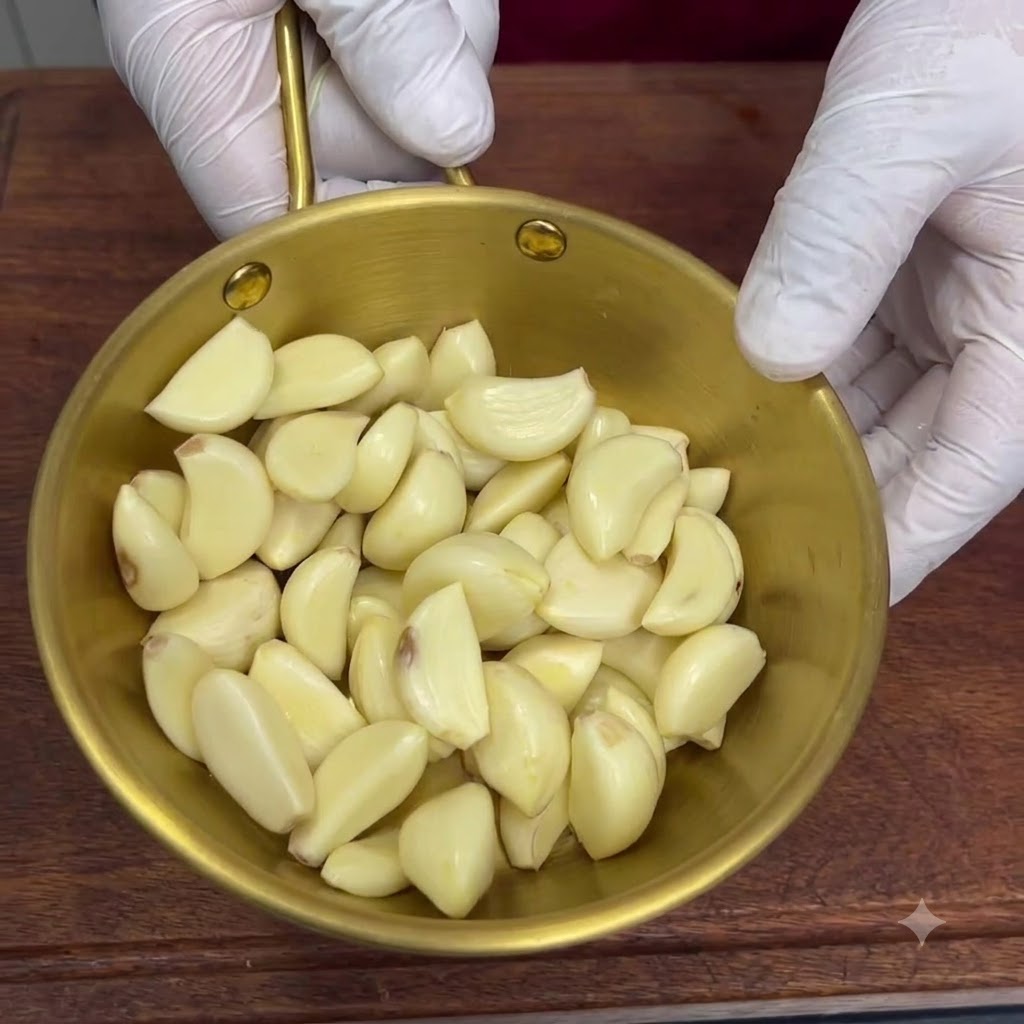
Prepare about 4 heads of peeled garlic, place them into a small food chopper along with some pure water, and blend them into garlic water and minced garlic.
Tip: Adding pure water helps blend the garlic smoothly into garlic juice. - 5Pulse into a puree
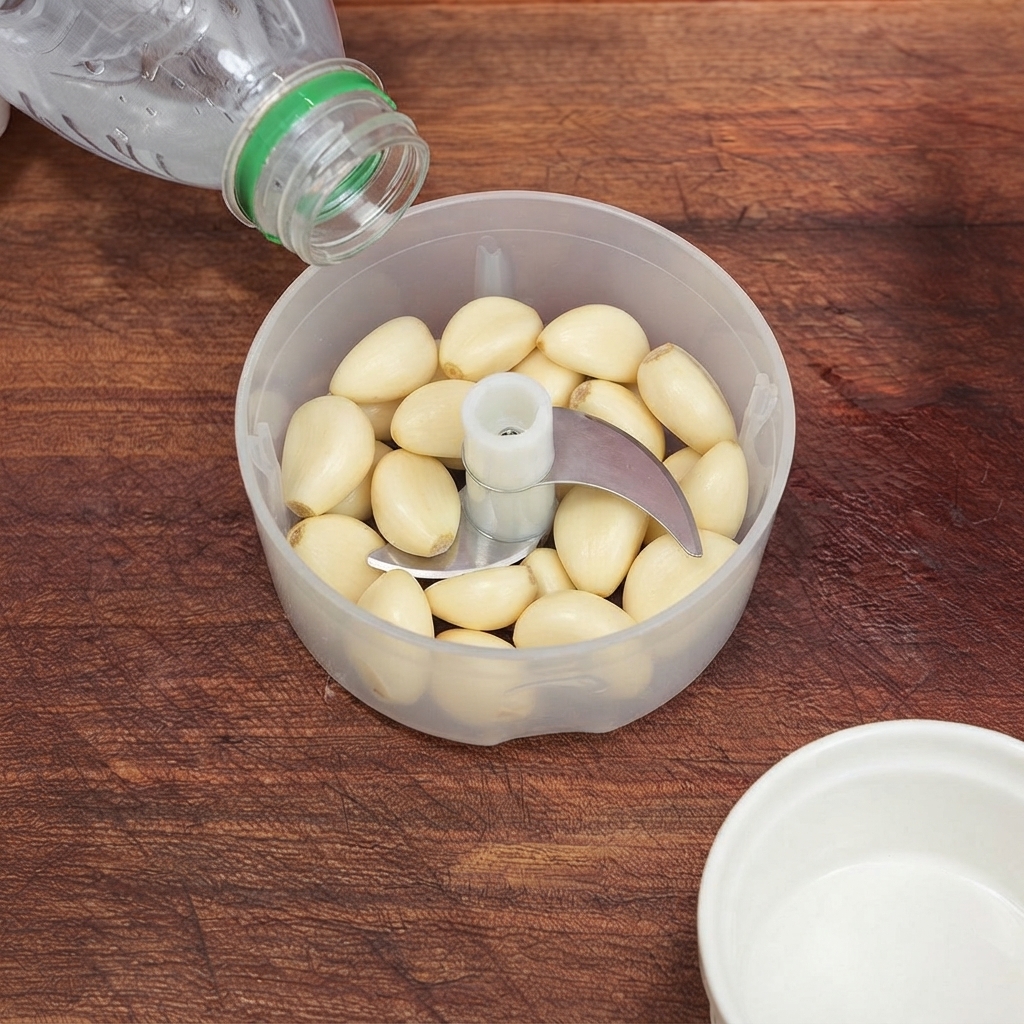
Activate the food chopper until the mixture becomes a smooth puree to release maximum flavor for the marinade.
Tip: Pulse in short bursts so the motor does not overheat while achieving a fine consistency. - 6Extract the garlic juice
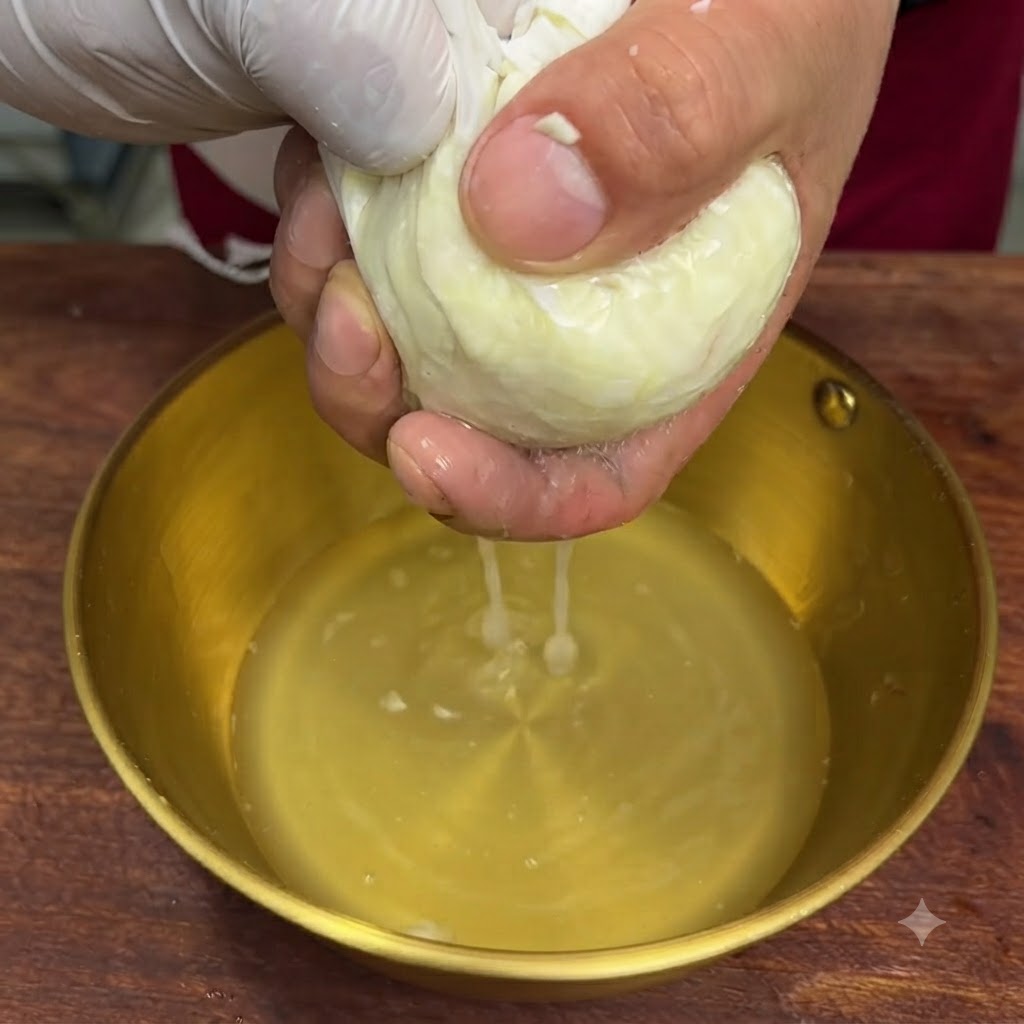
Pour the blended garlic mixture into a filter bag and squeeze it firmly over a bowl to extract the garlic juice. Save both the extracted garlic water and the leftover minced garlic, as this dish relies entirely on these components for its signature flavor.
Tip: The garlic water will be used immediately to marinate the ribs, while the remaining minced garlic can be fried later as a fragrant, crispy garnish. - 7Separate Garlic Juice and Minced Garlic
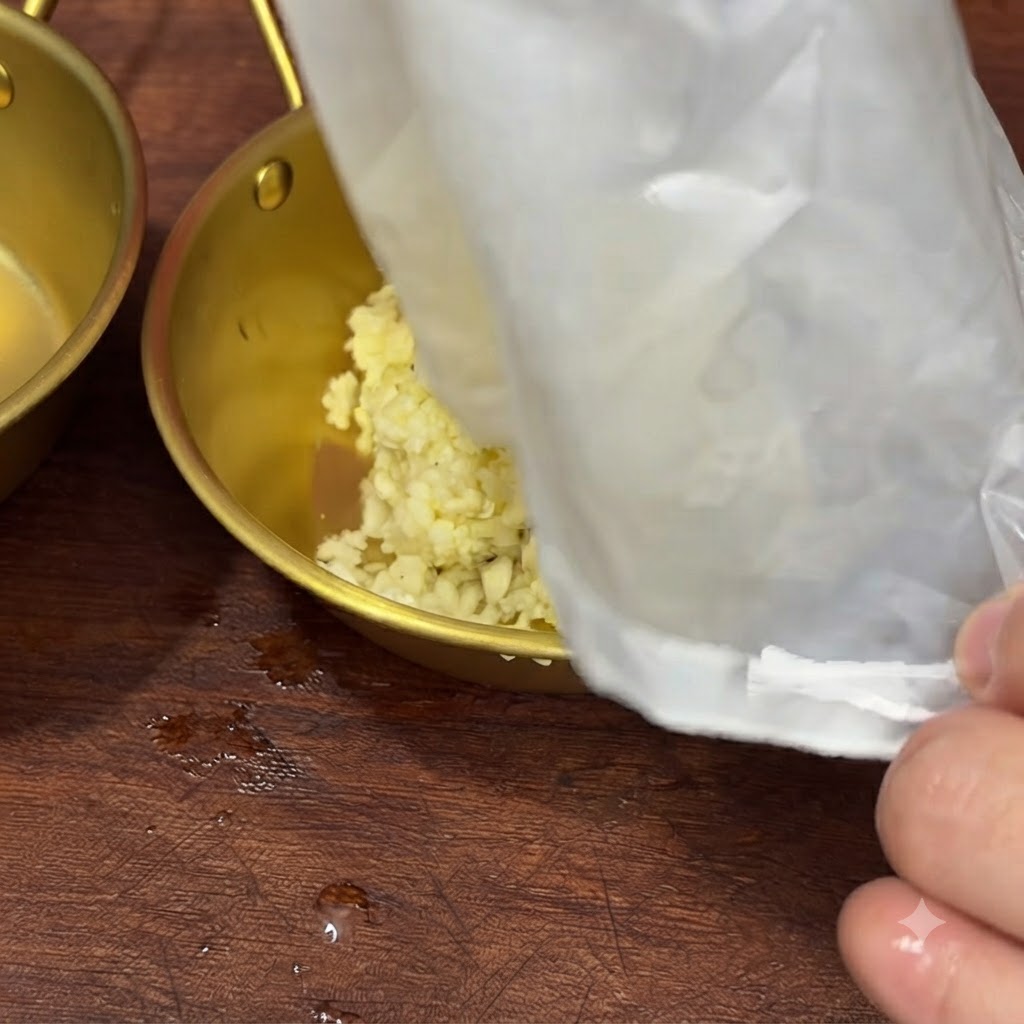
Empty the remaining minced garlic from the filter bag into a bowl after squeezing out the garlic juice, setting both aside for later use.
Tip: Keep the squeezed garlic water separate as the key flavoring agent for the dish. - 8Wash the Soaked Ribs
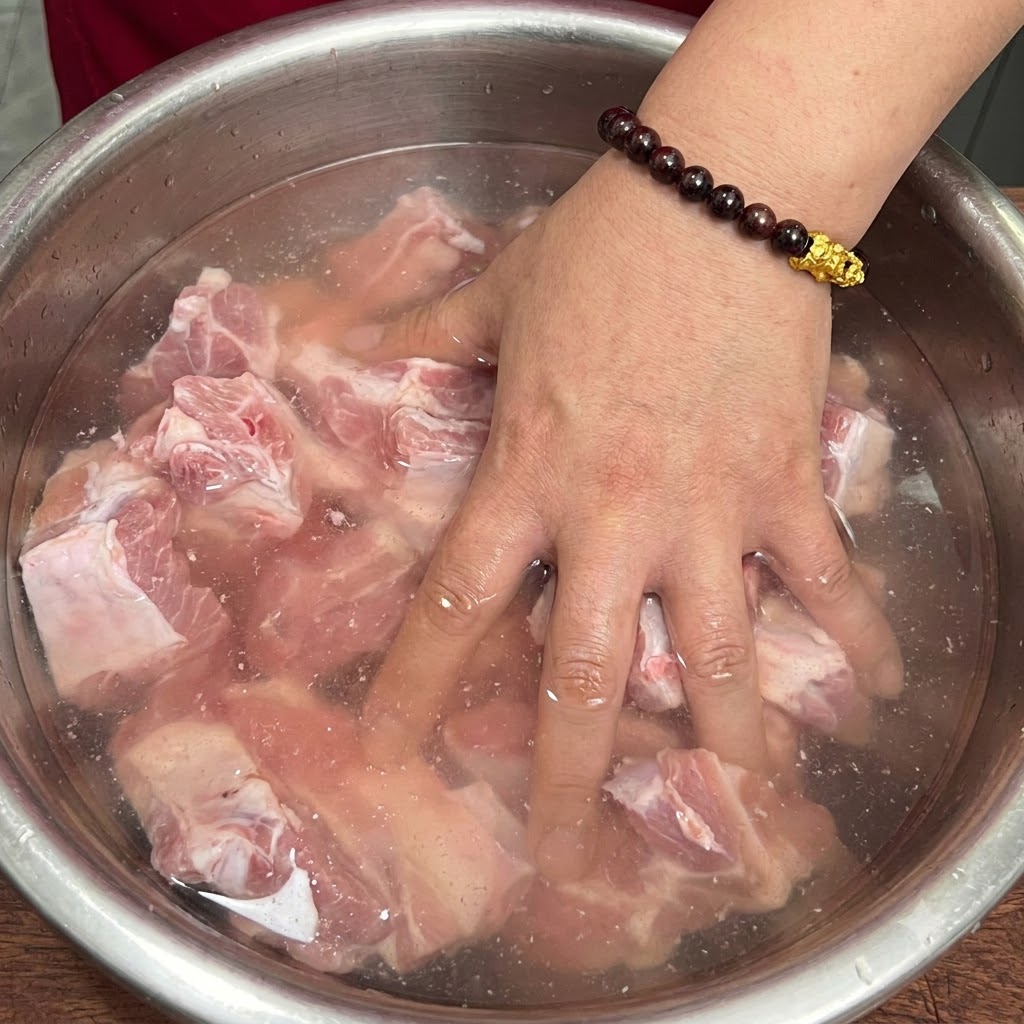
Change the water a few times and wash the soaked ribs twice more until the meat turns white to remove remaining blood and improve color.
Tip: Washing the meat until it turns white ensures a better visual appearance when fried. - 9Drain the Ribs
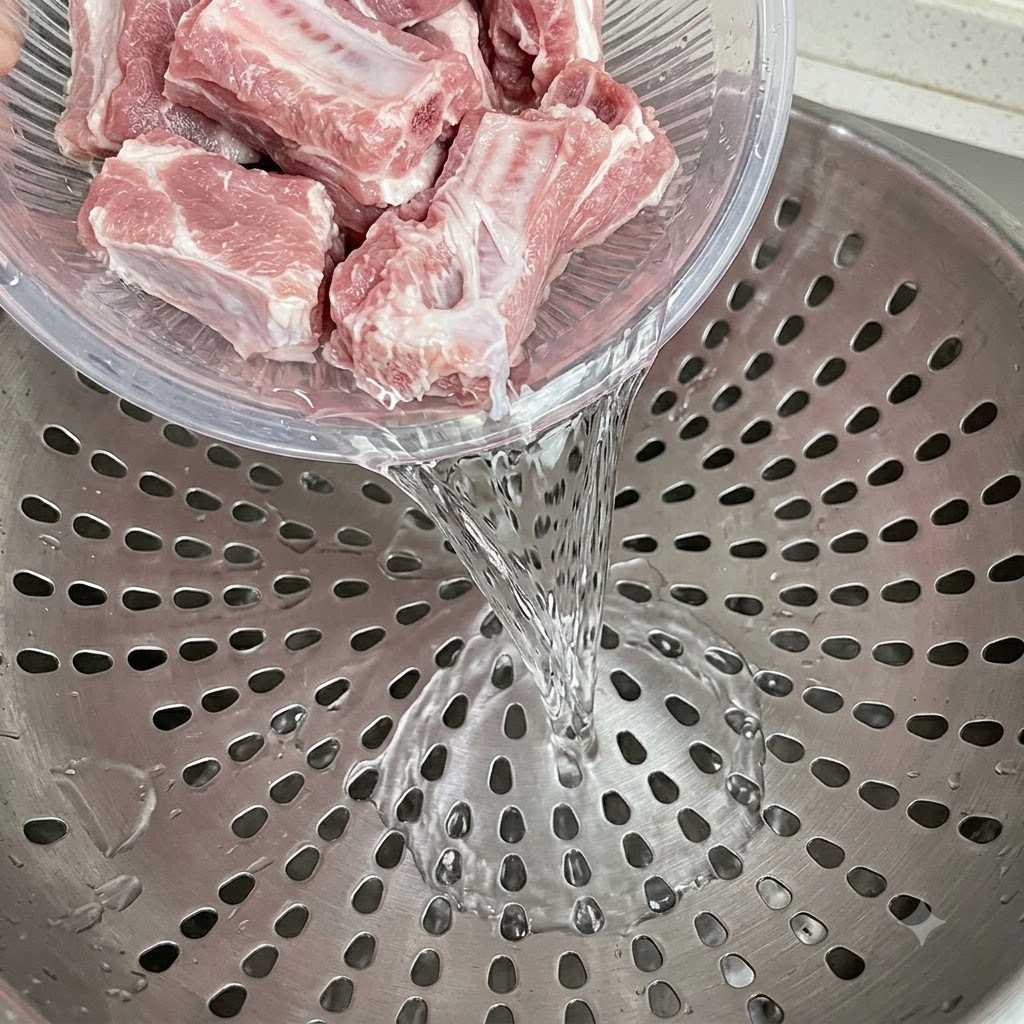
Place the washed, pale raw ribs into a colander to drain excess water before marinating.
Tip: Ensure the water is fully drained to prevent oil splattering during frying. - 10Marinate the Ribs
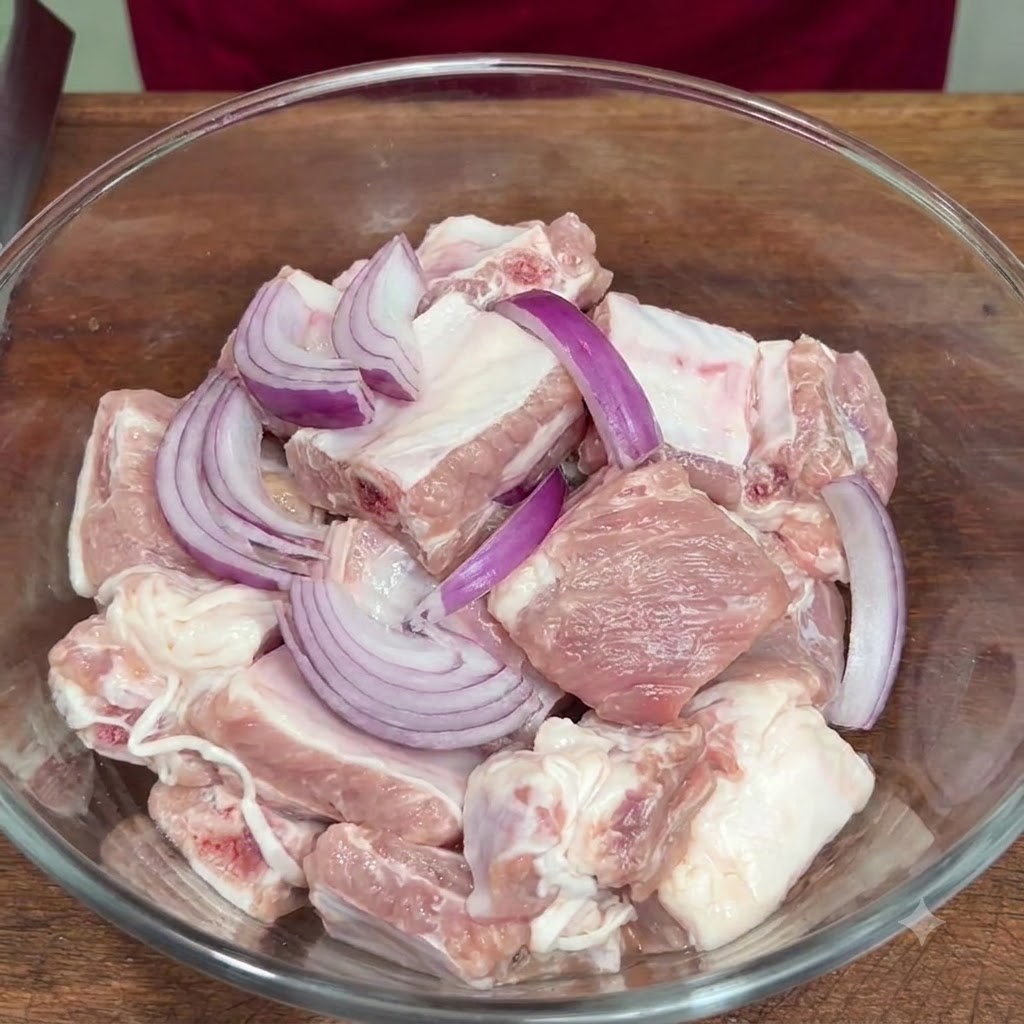
Add sliced red onion, ginger slices, salt, pepper powder, oyster sauce, fresh mushroom seasoning, a large spoonful of peanut butter, and the squeezed garlic water to the drained ribs in a glass bowl.
Tip: Peanut butter adds extra fragrance, but can be omitted if unavailable. - 11Add Ginger Slices
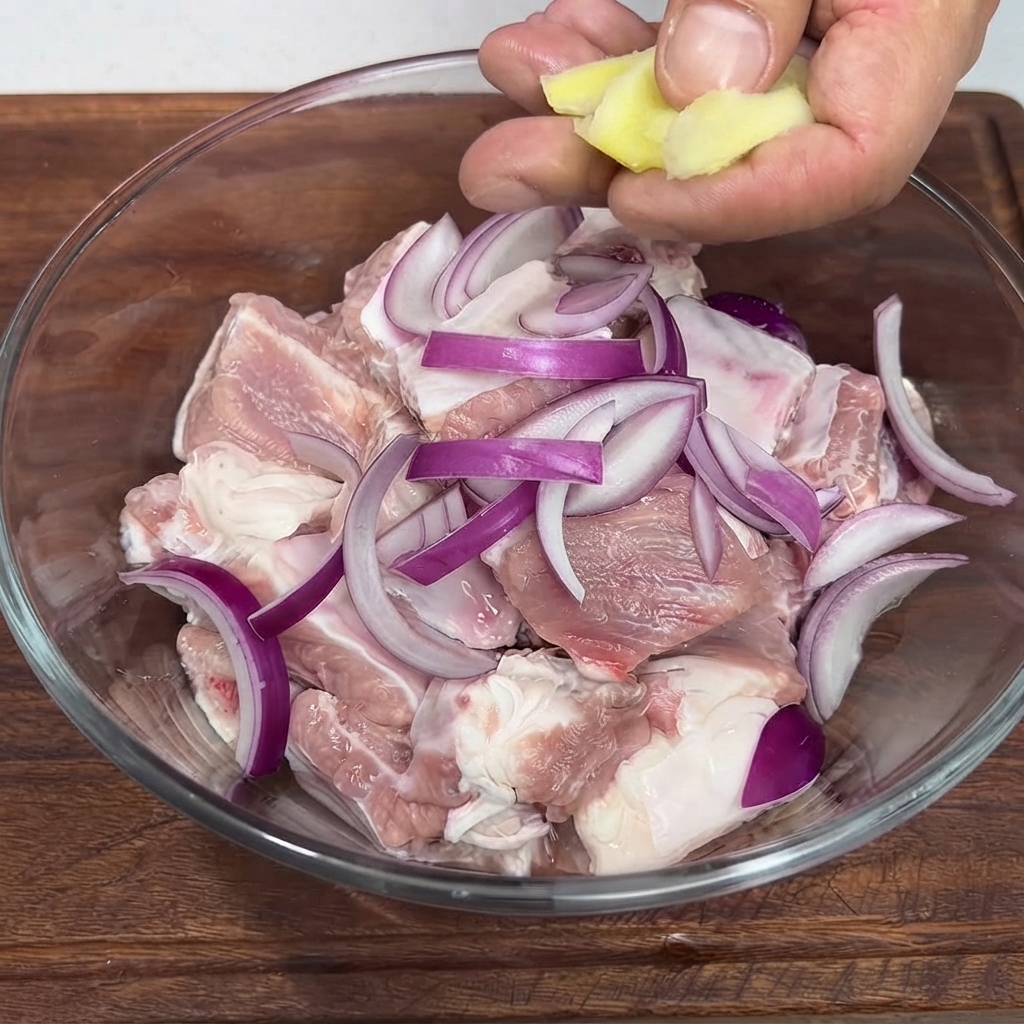
Add freshly sliced ginger into the bowl with the prepared ribs to help remove any gaminess and enhance aroma.
Tip: Make sure to slice the ginger thinly so the flavors release better during marination. - 12Season with Salt
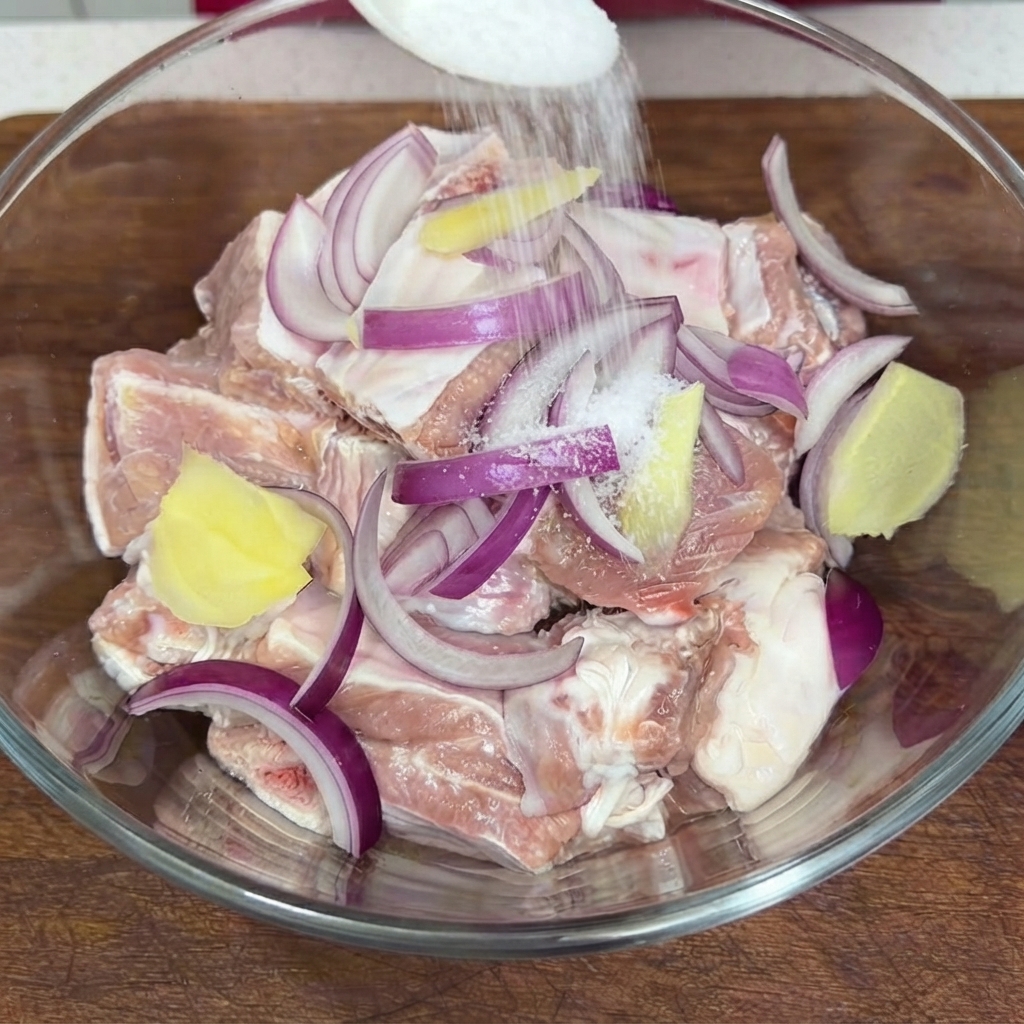
Sprinkle salt evenly over the ribs and other ingredients in the bowl to build the base seasoning profile.
Tip: Distribute the salt evenly across the surface for balanced flavor penetration. - 13Add Pepper Powder
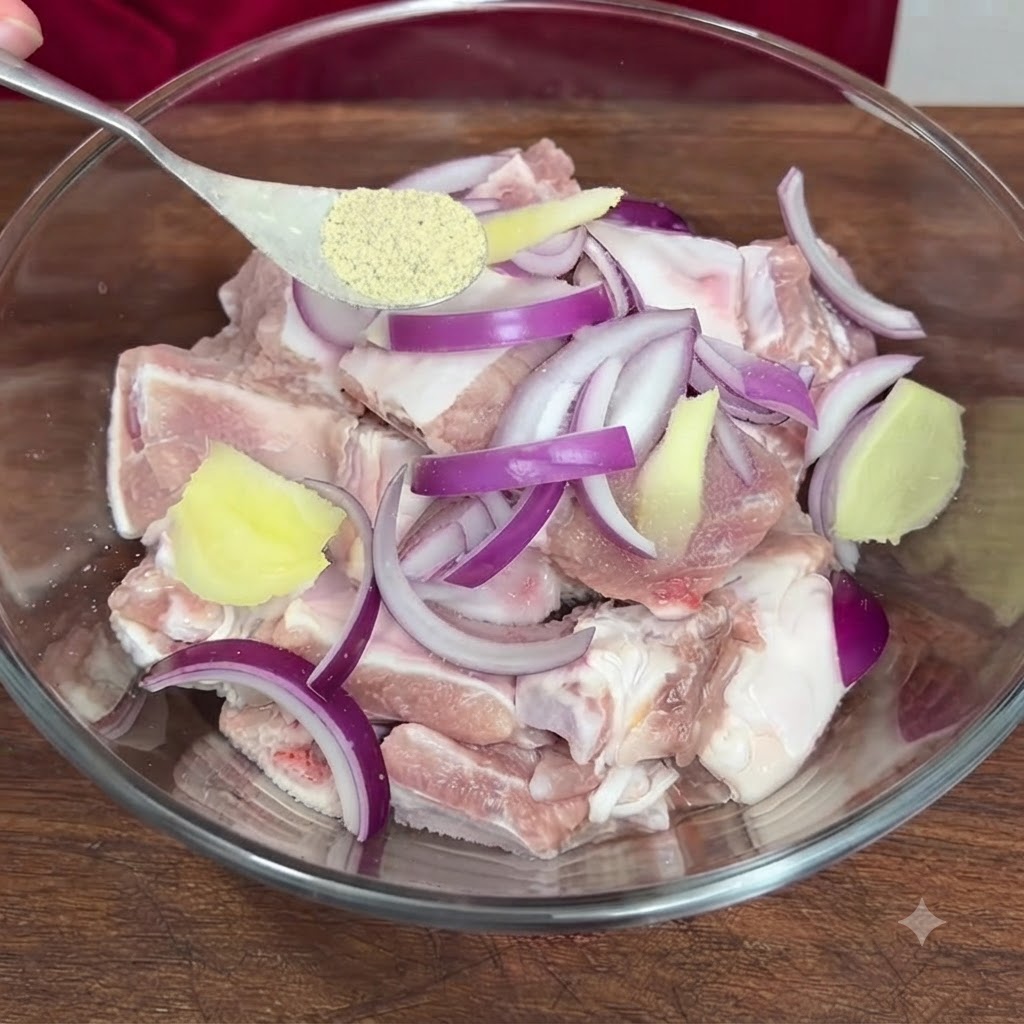
Add a spoonful of pepper powder to the bowl to eliminate odors and add a warm, savory flavor kick to the meat.
Tip: Freshly ground pepper works best for maximum aroma. - 14Incorporate Oyster Sauce
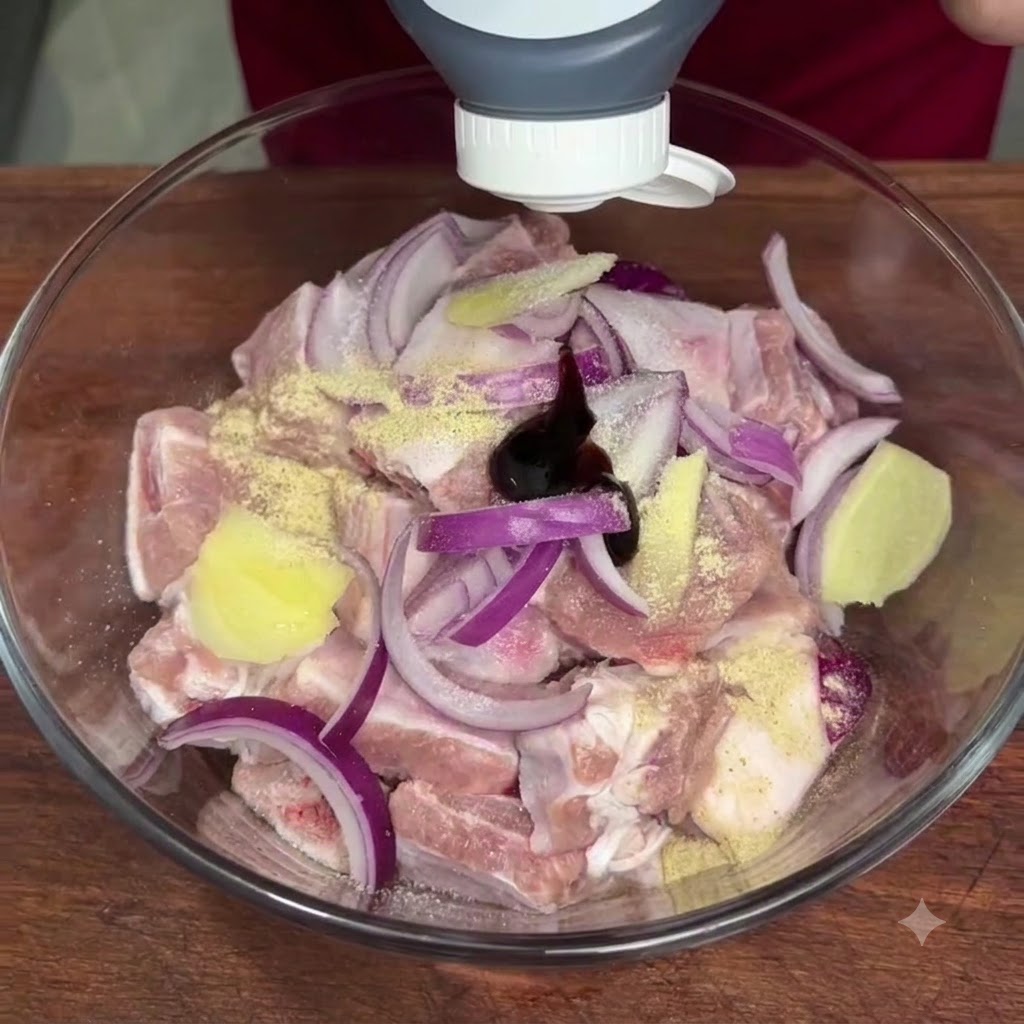
Squeeze a moderate amount of oyster sauce directly onto the ribs to add depth of flavor and rich color during cooking.
Tip: Squeeze evenly to avoid concentrated pockets of sauce. - 15Add Peanut Butter
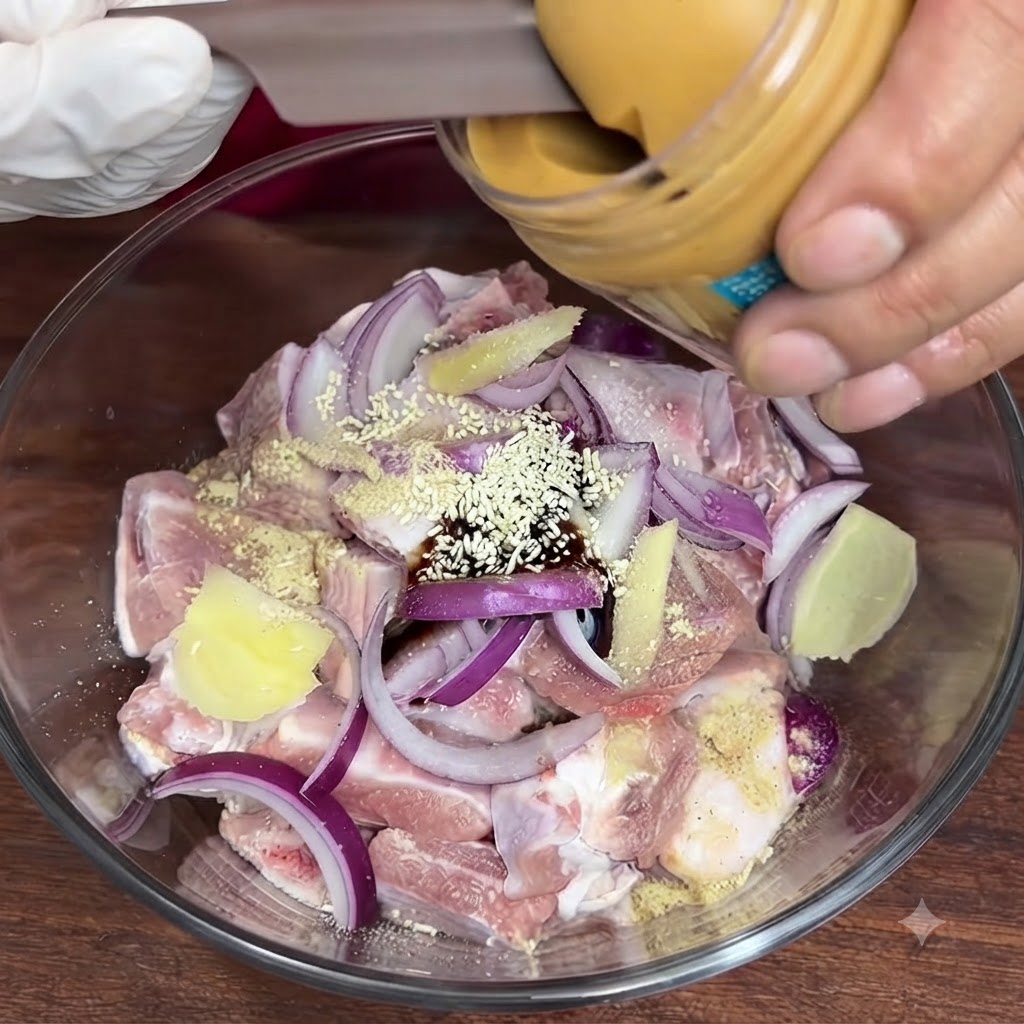
Add a large spoonful of peanut butter to the mixture; this secret ingredient enhances the overall fragrance when the ribs are fried.
Tip: If you have nut allergies or do not have peanut butter at home, you can easily omit this step. - 16Pour Garlic Juice
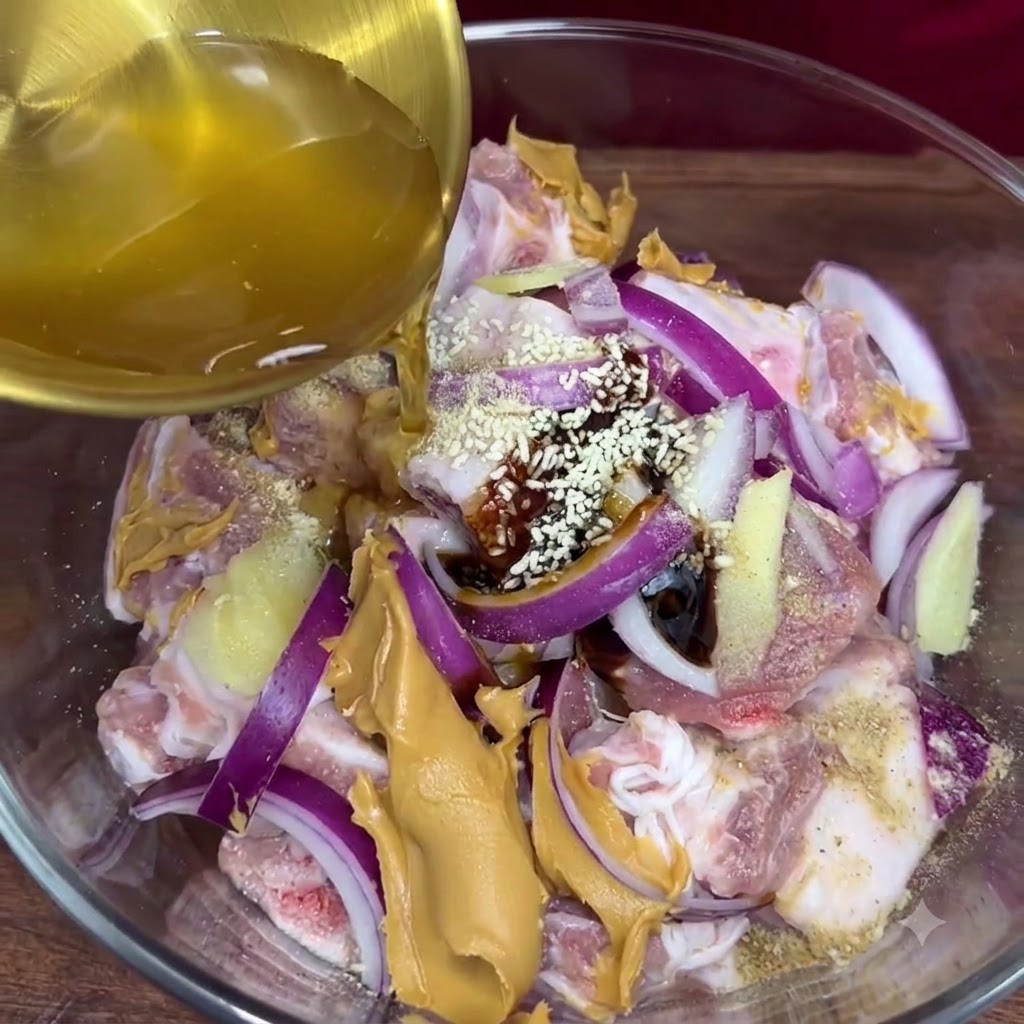
Pour the previously squeezed garlic juice over the seasoned ribs, ensuring every piece absorbs the rich garlic essence.
Tip: Do not throw away the garlic water, as this dish relies entirely on it for its signature flavor. - 17Mix the Ribs by Hand
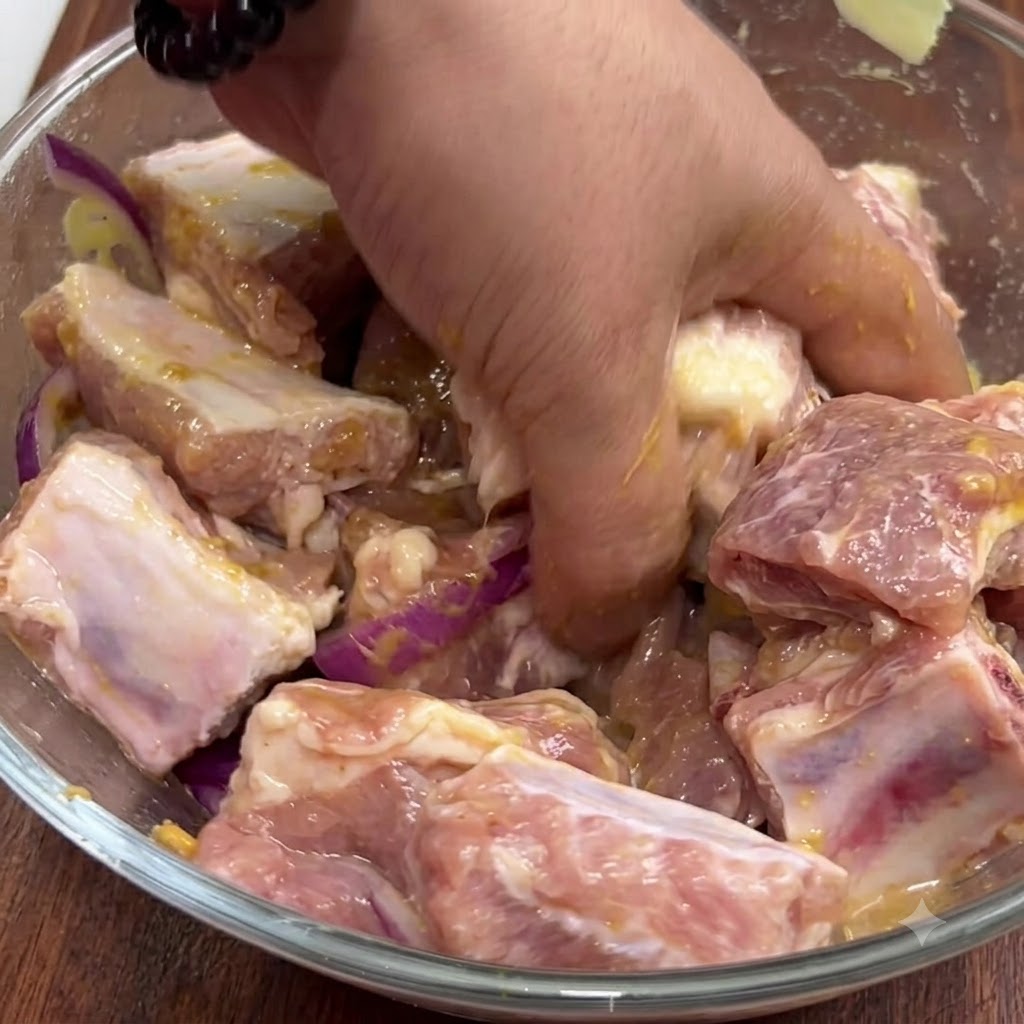
Thoroughly mix the raw ribs by hand with all the marinade ingredients to ensure the flavors and seasonings are evenly distributed across every piece.
Tip: Massage the ribs gently to help the marinade penetrate the meat effectively. - 18Add Glutinous Rice Flour
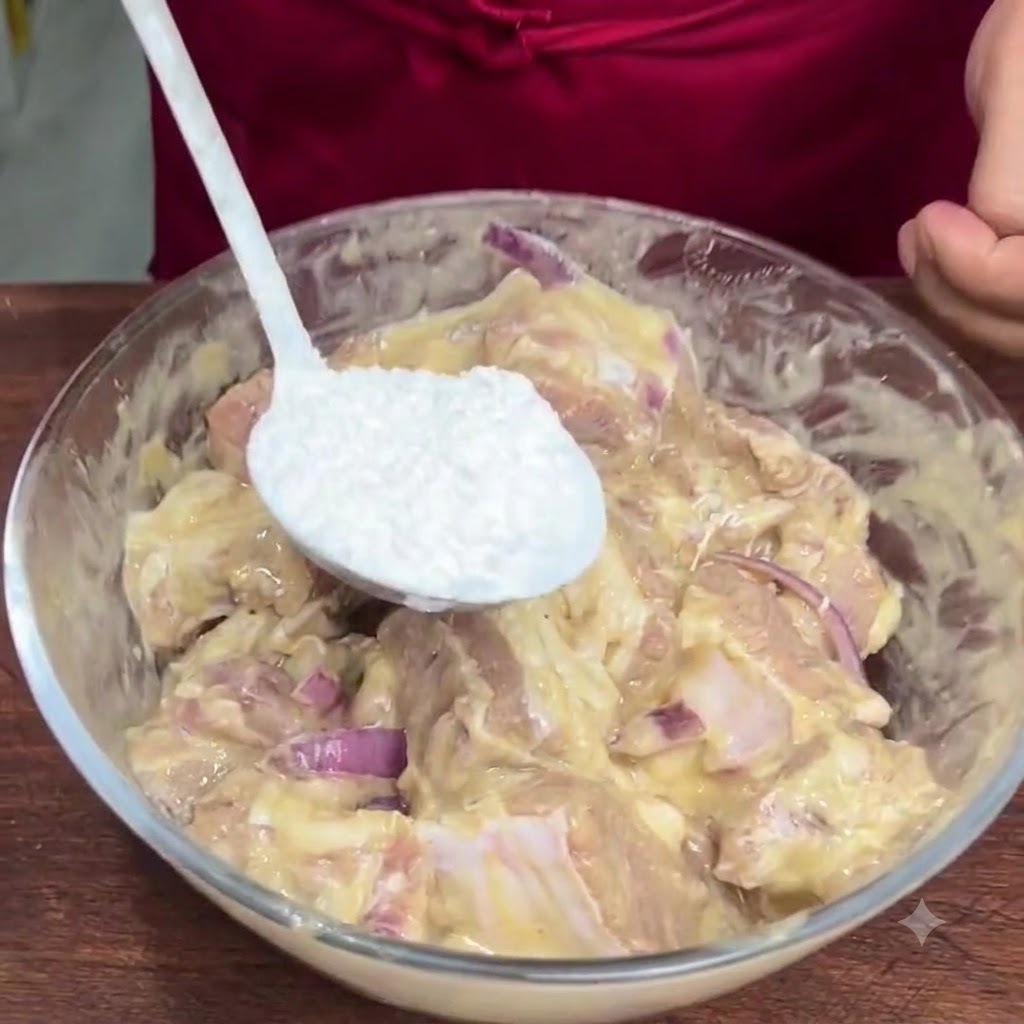
Add a measured amount of glutinous rice flour directly into the bowl of marinated ribs to build the crispy coating structure.
Tip: Glutinous rice flour helps create an exceptional crispy texture when fried. - 19Add Cornstarch
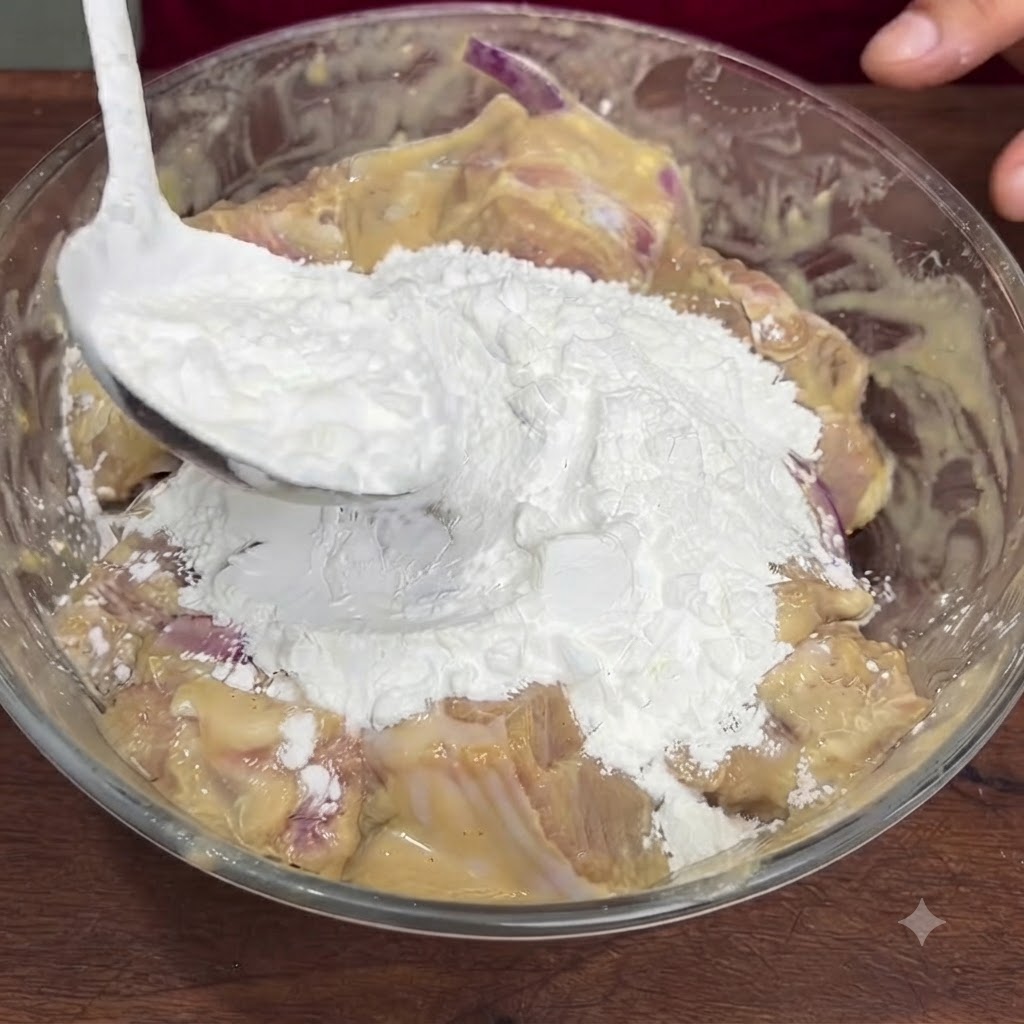
Add cornstarch into the bowl on top of the ribs and previous flour to complete the coating mixture.
Tip: Combining glutinous rice flour and cornstarch balances crunchiness and tenderness. - 20Coat the Ribs
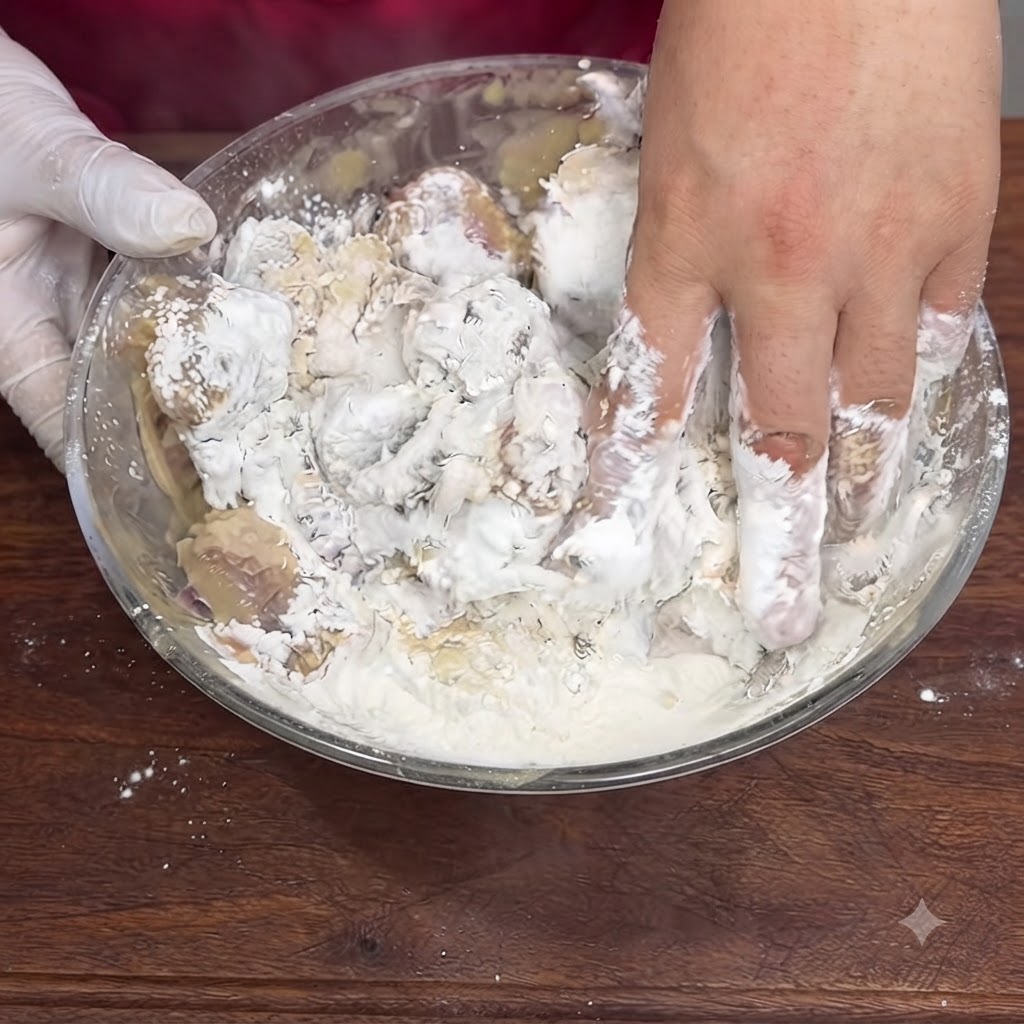
Mix the ribs vigorously by hand, working the flours and marinade into a thick, even batter coating that completely covers each rib piece.
Tip: Ensure every piece is fully coated so the juices are sealed inside during frying. - 21Begin frying
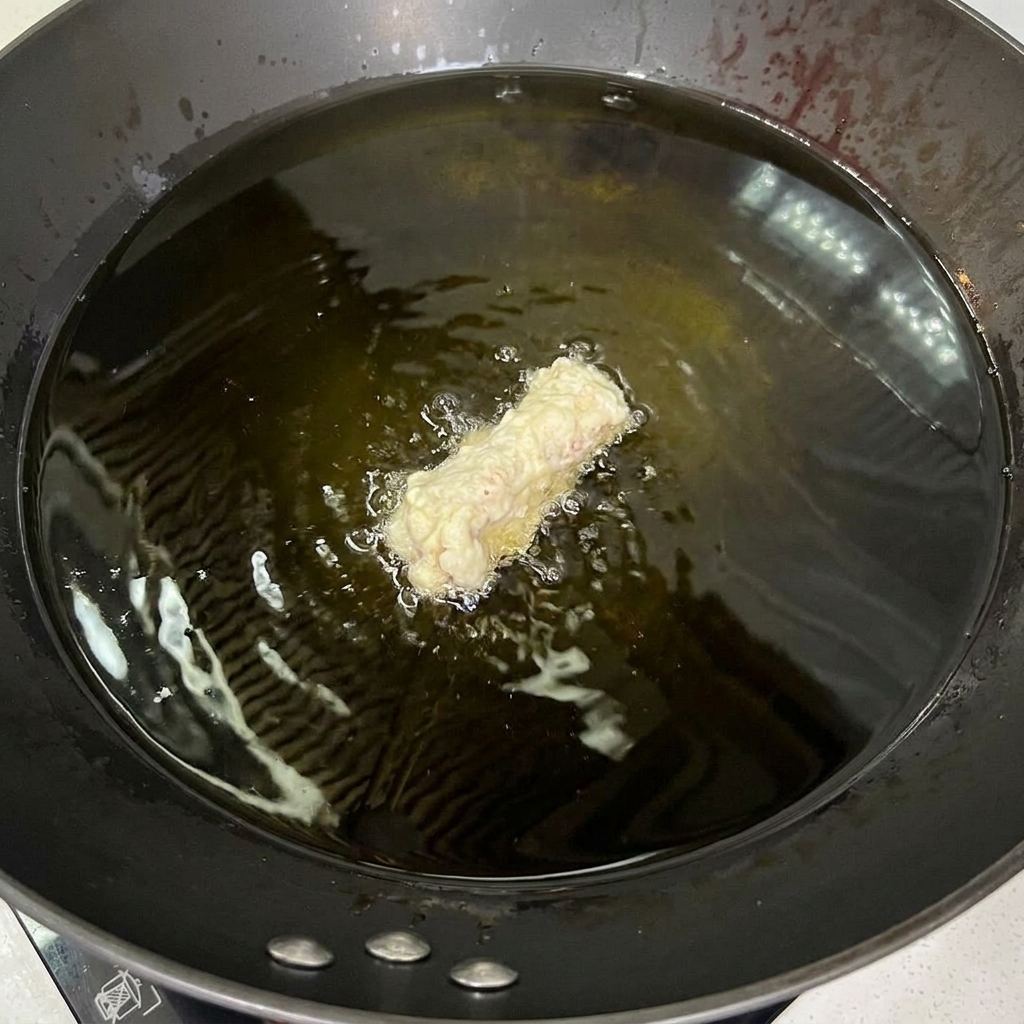
Heat a pot of oil until it is about 50% hot. Carefully slide the battered ribs into the oil, one by one, keeping them close to the edge of the wok to prevent the hot oil from splashing.
Tip: If you are not comfortable using your hands, use a pair of kitchen tongs to safely lower the ribs into the hot oil. - 22Deep-Fry the Ribs
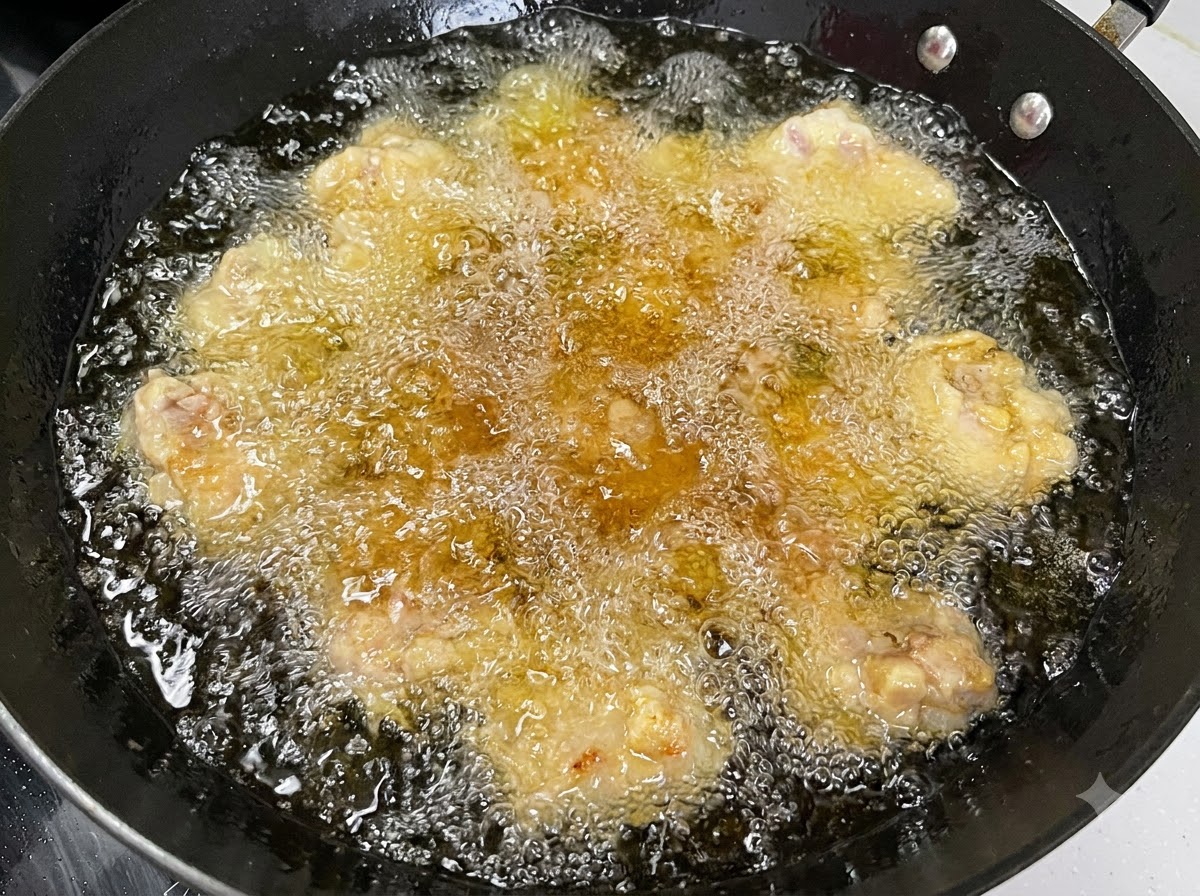
Carefully place the coated ribs into a pot of medium-hot oil and deep-fry them until they hold their shape and form a crust.
Tip: Do not move the ribs immediately after adding them to prevent the coating from falling off. - 23Scoop and Separate Ribs
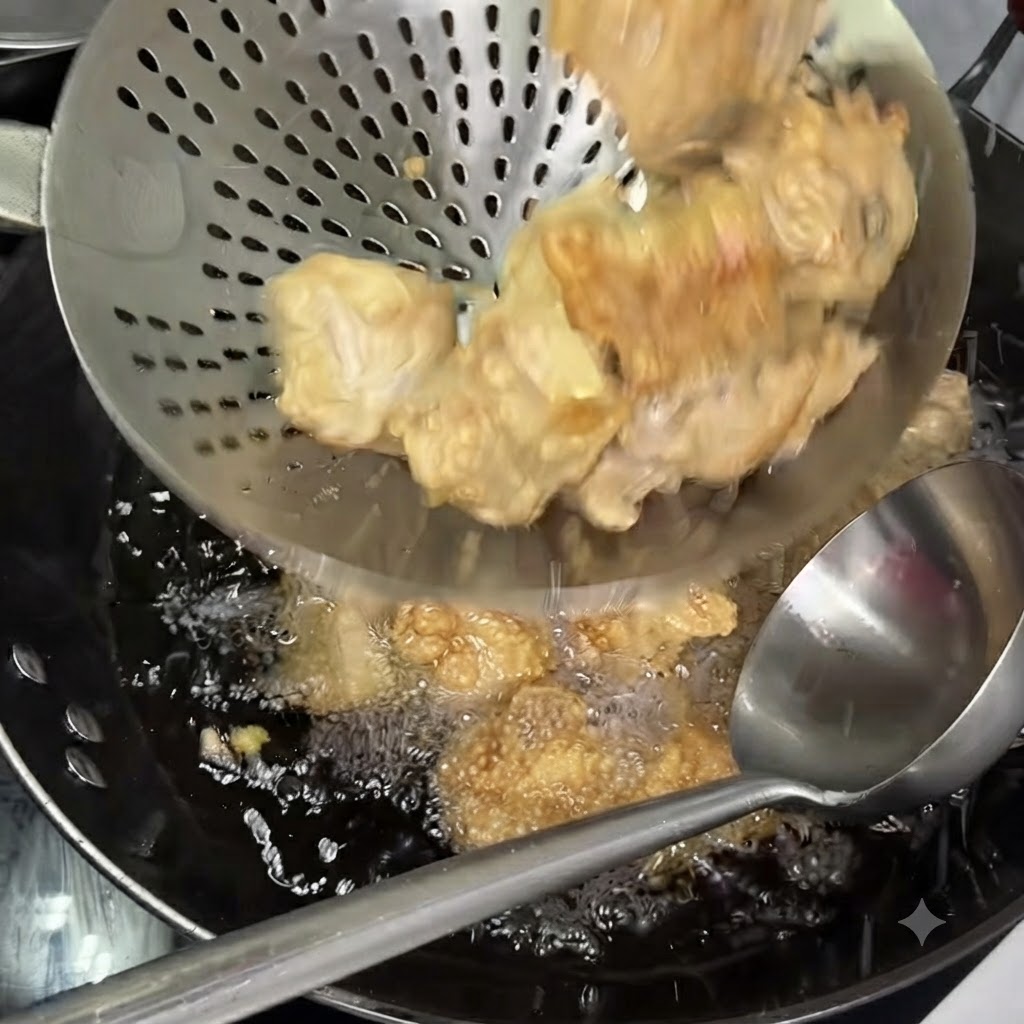
Use a slotted spoon to scoop up the partially fried ribs from the hot oil, separating any pieces that have stuck together.
Tip: Separating them at this stage ensures even cooking across all pieces. - 24Deep-fry the ribs
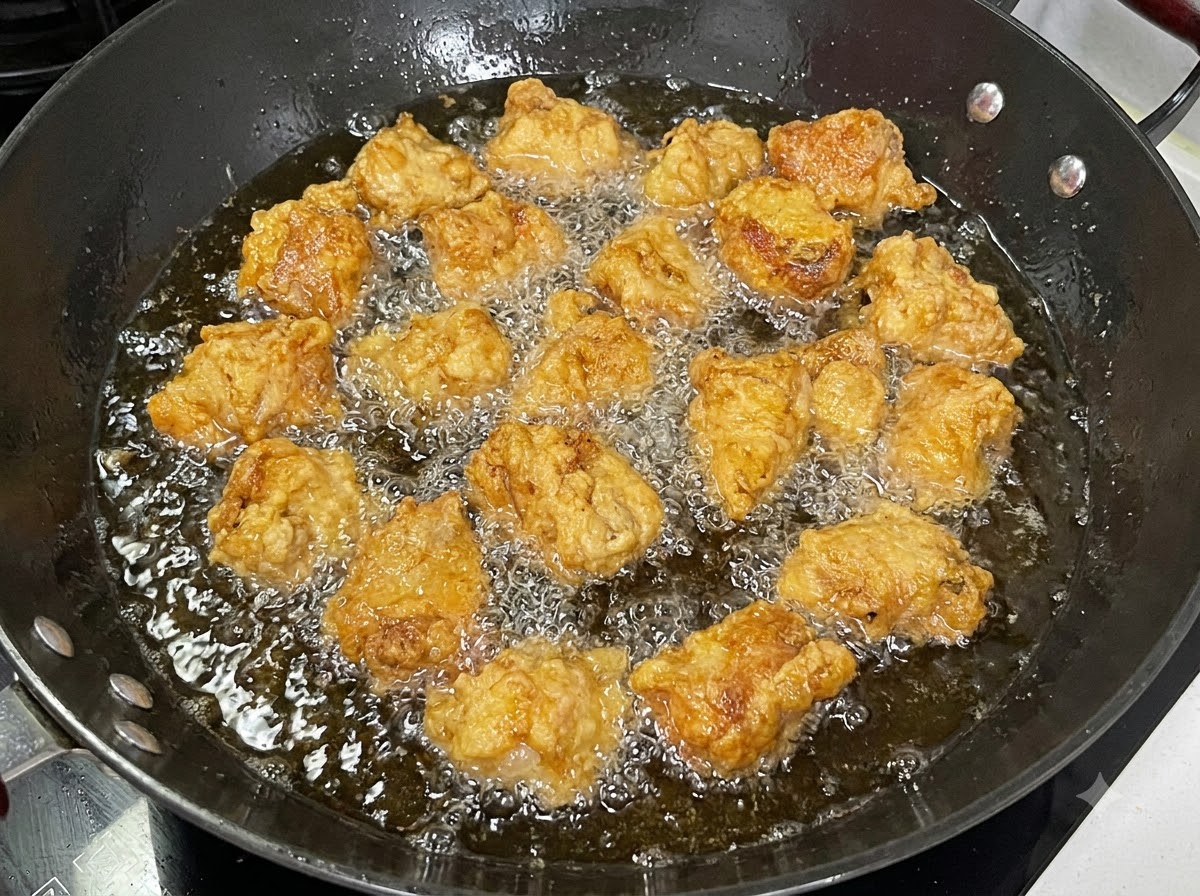
Maintain the oil temperature at 40% hot and slowly fry the coated ribs for about 8 to 10 minutes. Allow them to cook undisturbed at first so the coating sets properly. Continue frying until a hard, golden crust forms on the outside and the pork is fully cooked through on the inside.
Tip: If the pieces stick together when you first put them in, wait until the crust has set before using a slotted spoon to gently separate them. - 25Remove from the oil
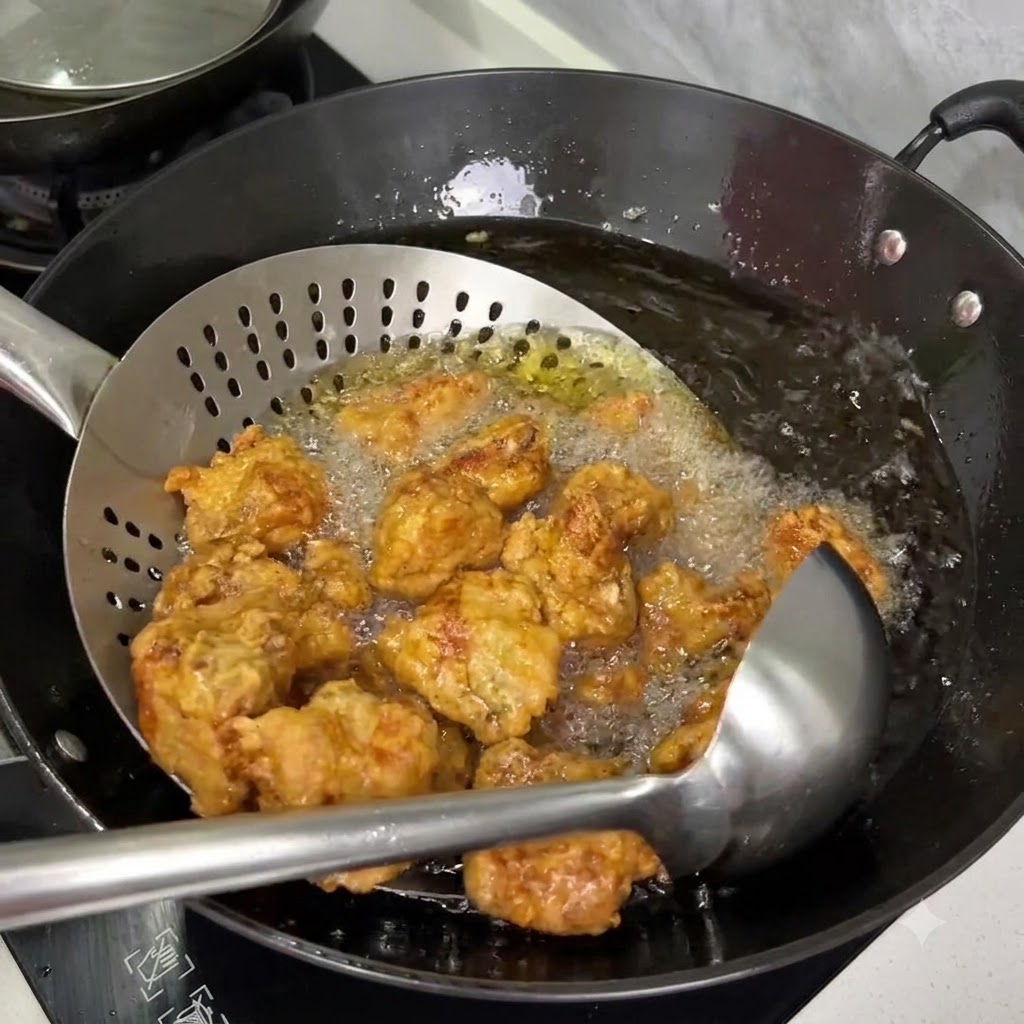
Once the ribs have developed a firm crust and are fully cooked, use a large slotted spoon to scoop them out of the hot oil. Drain the excess oil well and set the ribs aside briefly while you prepare for the second fry.
Tip: Letting the ribs rest briefly between frying sessions allows moisture to escape, guaranteeing a crispier final texture. - 26Flash-fry for crispiness
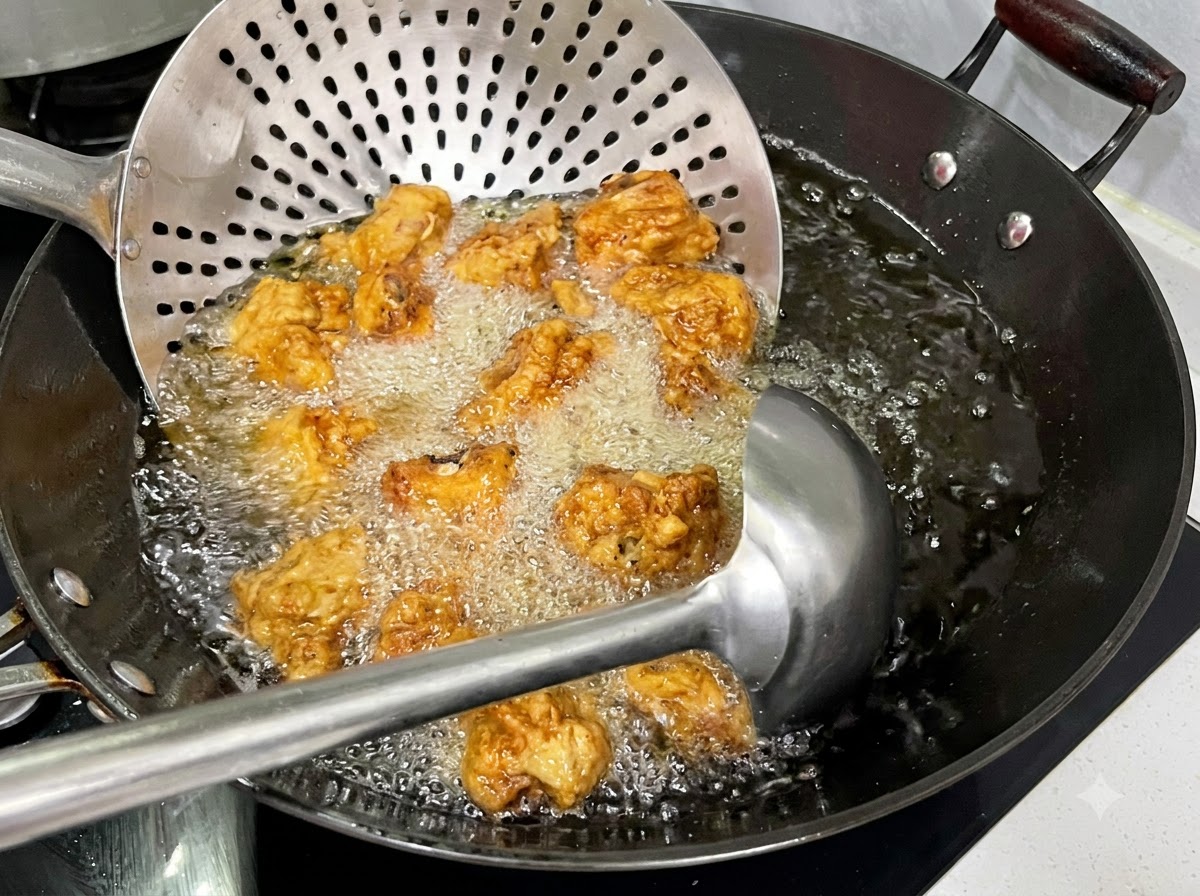
Increase the heat to bring the oil up to 60% hot. Carefully place the rested ribs back into the vigorously bubbling oil for a quick flash-fry. This crucial step makes the exterior extra crispy while keeping the inside perfectly tender.
Tip: Do not fry them for too long during this stage—about 20 seconds is all you need before removing them. - 27Scoop and drain
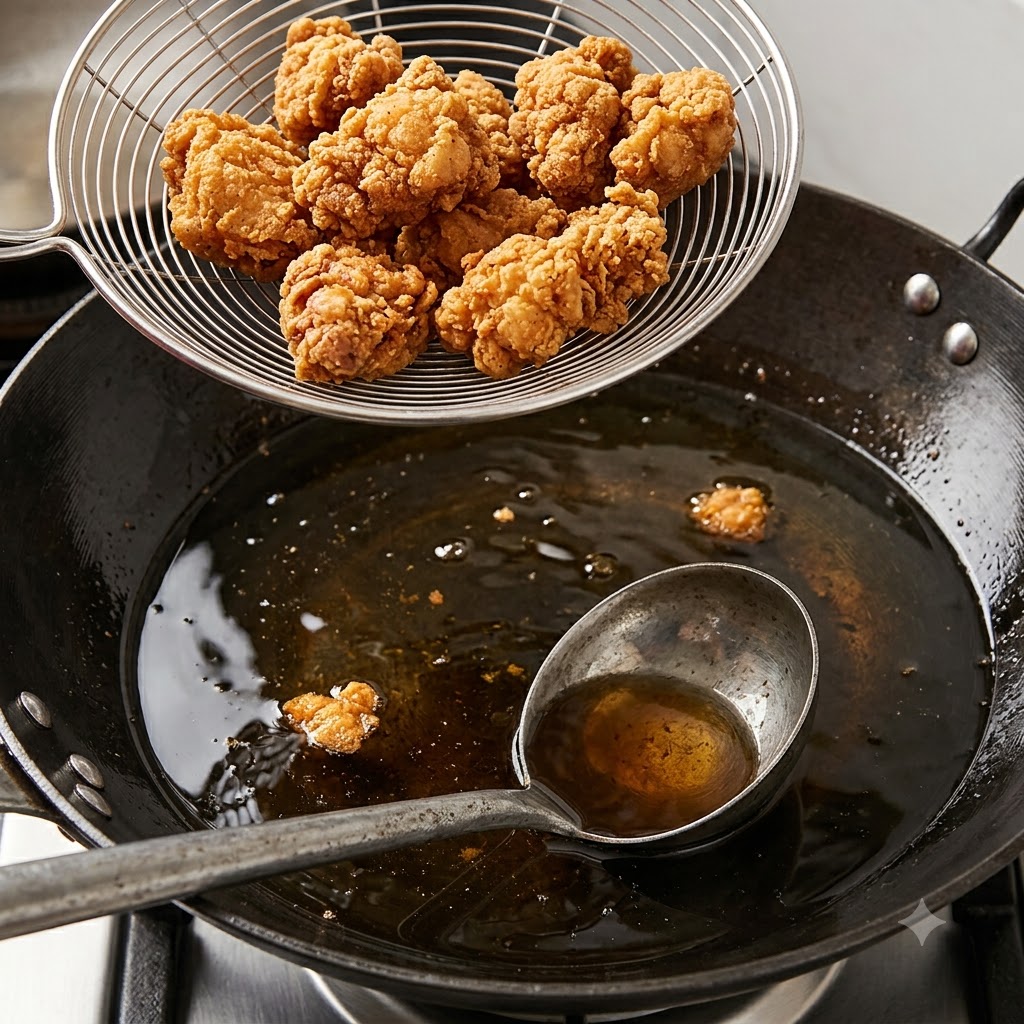
After the brief 20-second flash-fry, immediately scoop the extra-crispy, dark golden ribs out of the wok using a wire strainer. Shake off any excess oil and set the perfectly crispy ribs aside.
Tip: Working quickly prevents the ribs from absorbing too much oil and becoming greasy. - 28Fry the minced garlic
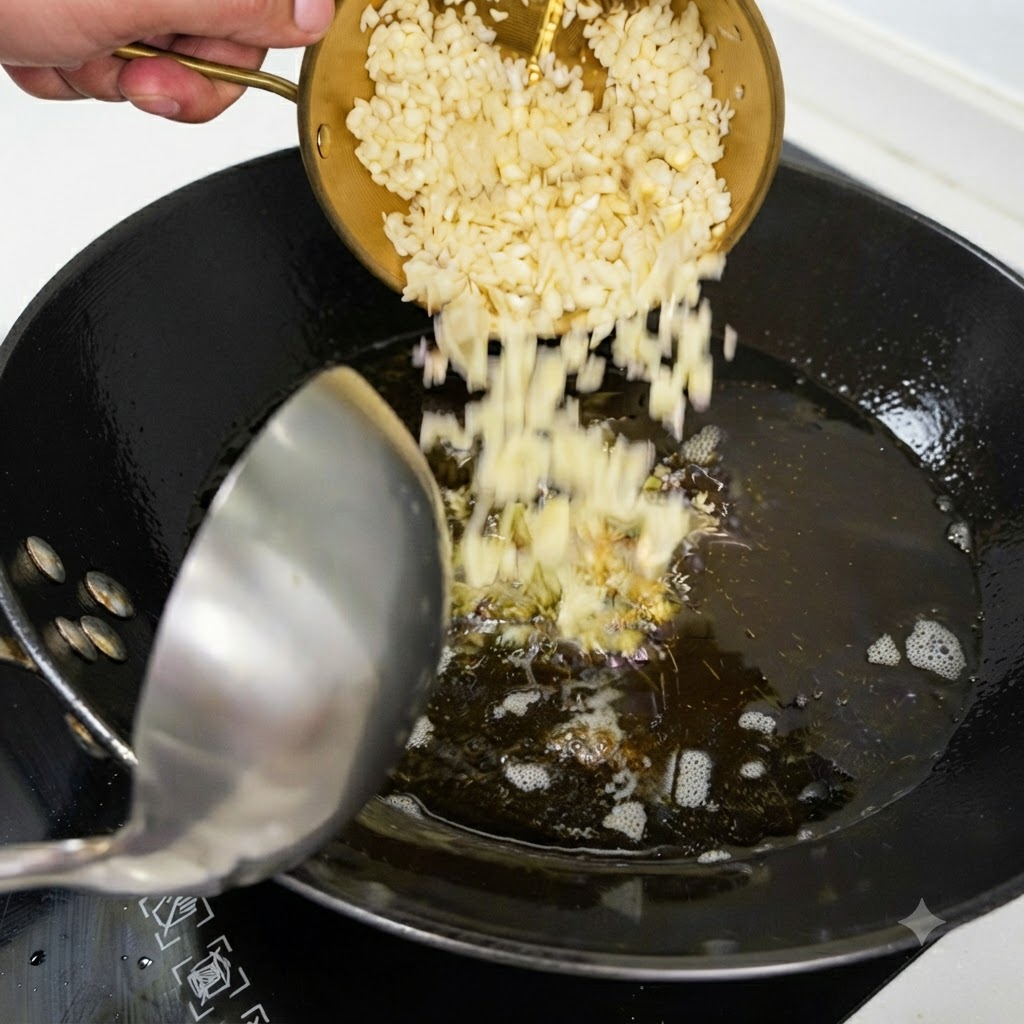
Using the same oil from frying the ribs, carefully pour the reserved minced garlic into the wok. Fry the garlic gently to extract its aromatic flavor and create a crispy texture that will coat the finished dish.
Tip: Keep the heat moderate to low; garlic burns very easily and will turn bitter if the oil is too hot. - 29Achieve a golden color
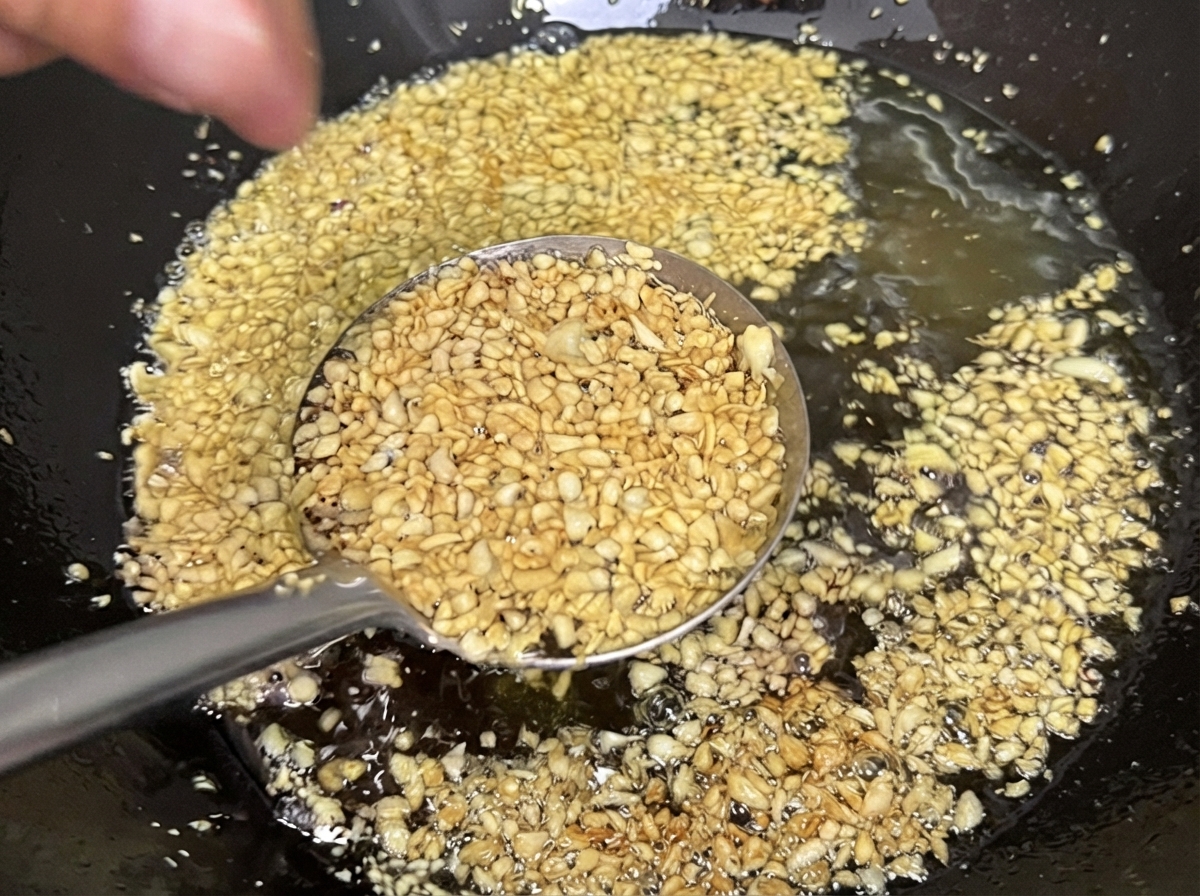
Continue to fry the minced garlic, stirring occasionally, until it turns a light golden yellow and becomes beautifully crispy. Once it reaches this perfect color, quickly scoop it out to prevent burning and set it aside.
Tip: The garlic will continue to cook slightly from its own residual heat after being removed, so take it out just before it looks perfectly done. - 30Scoop out fried garlic
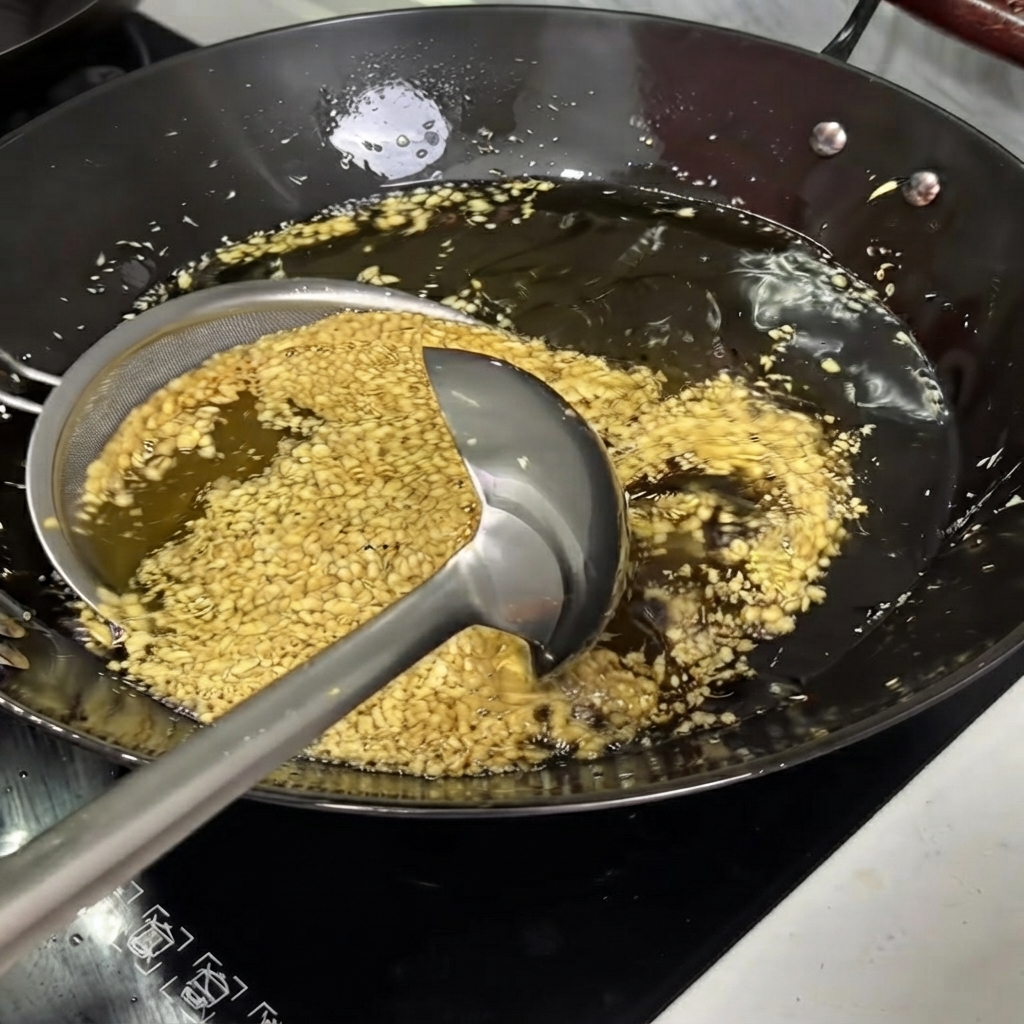
Use a fine mesh strainer to scoop the crispy fried garlic out of the oil before it burns, setting it aside for later.
Tip: Keep the heat low when frying garlic so it doesnt turn bitter. - 31Stir-fry diced chilies
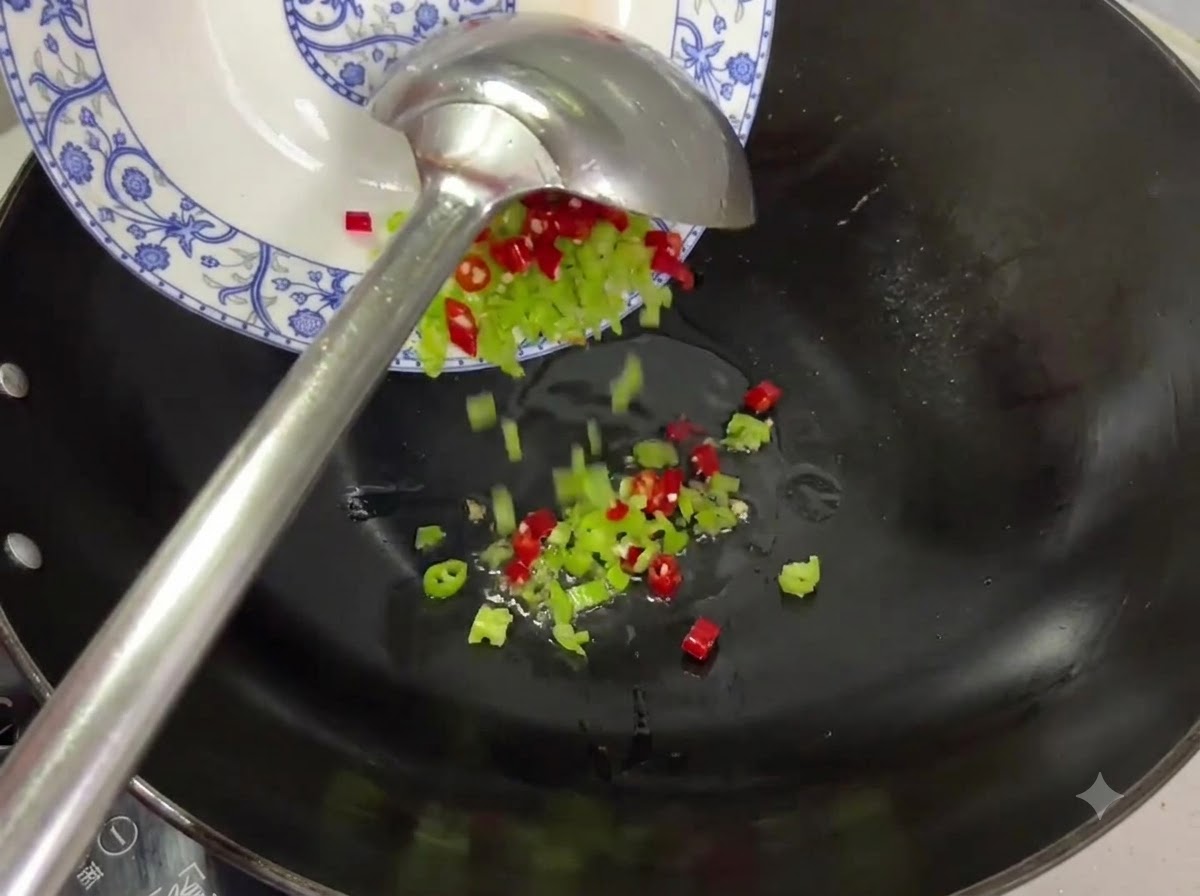
Leave a small amount of oil in the wok, then add the diced red and green chilies and stir-fry until fragrant.
Tip: Ensure the oil is not too hot to prevent scorching the chilies instantly. - 32Add fried ribs to wok
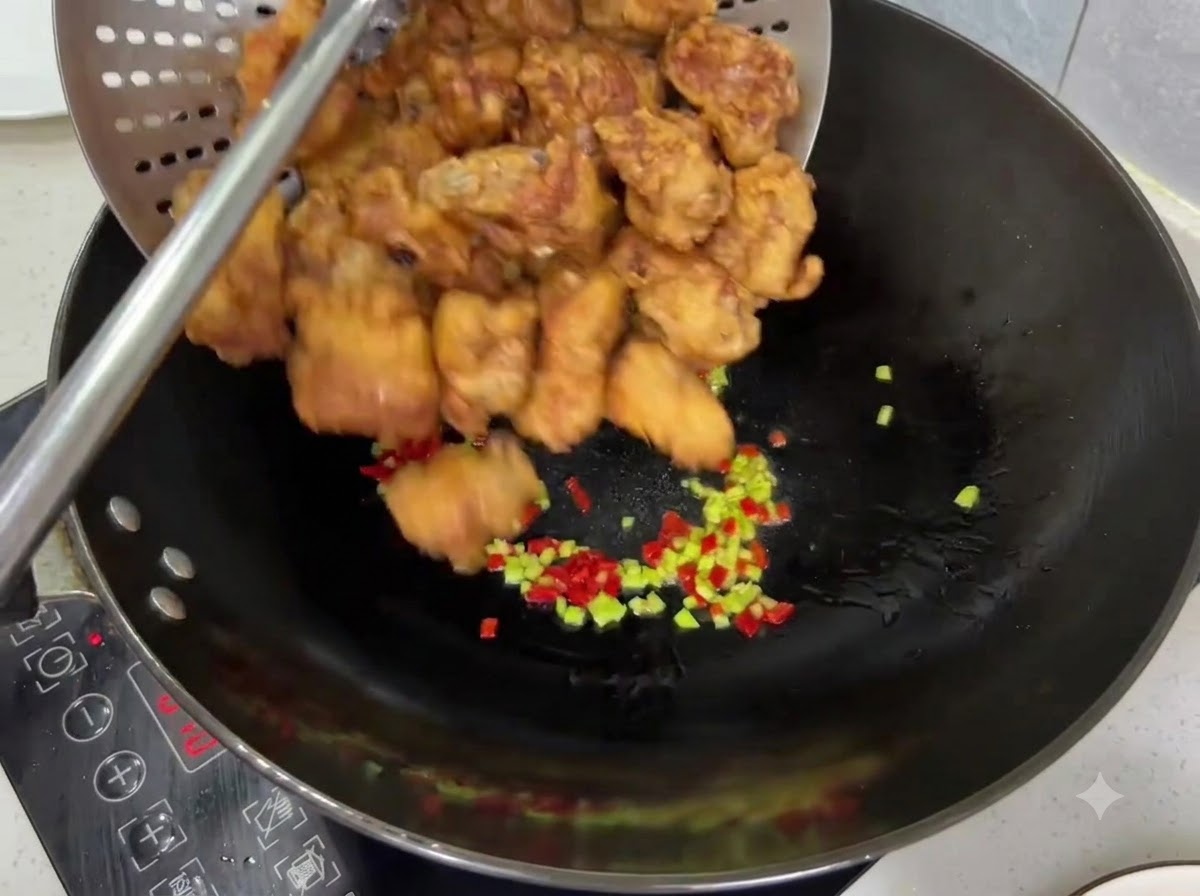
Transfer the double-fried crispy ribs back into the wok containing the stir-fried chilies.
Tip: Add the ribs right after the chilies become aromatic to combine the flavors quickly. - 33Sprinkle fried garlic
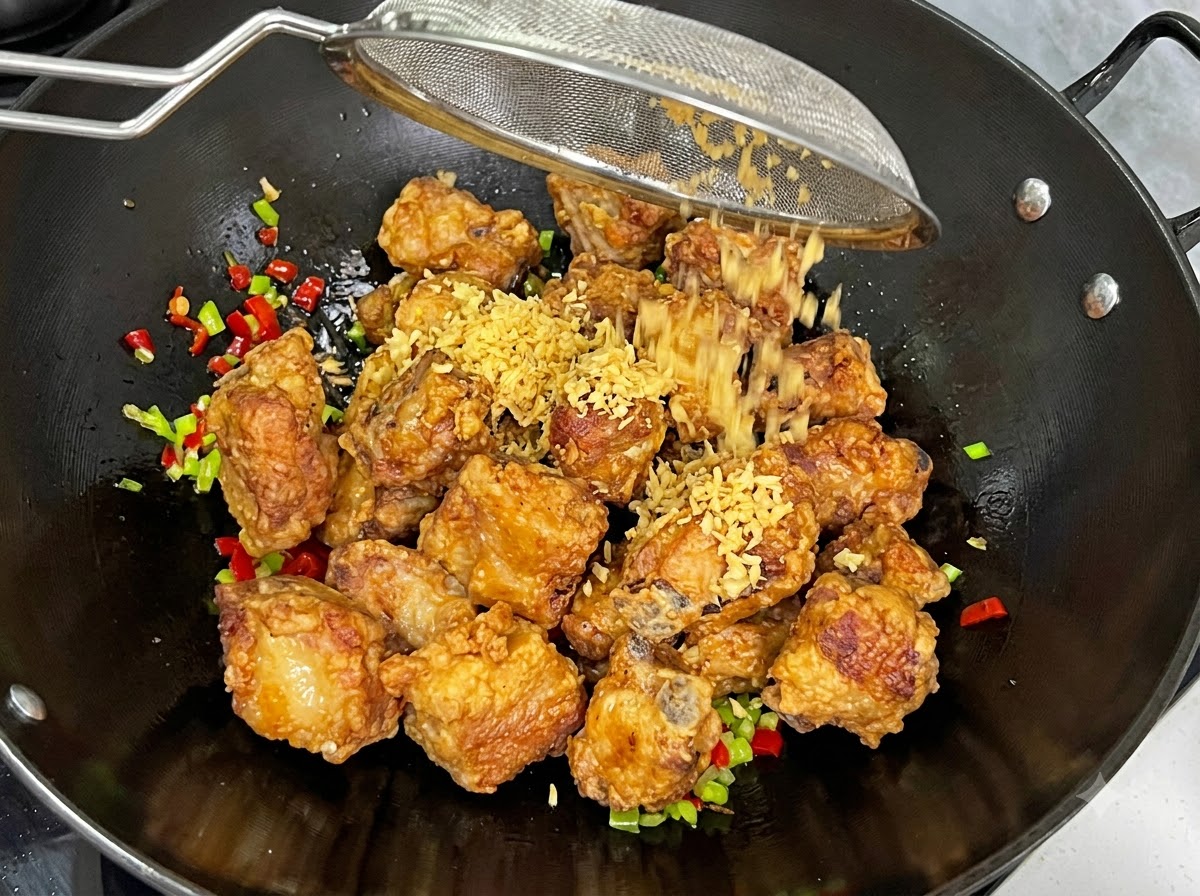
Add the previously fried minced garlic back into the wok over the top of the ribs.
Tip: Distribute the garlic evenly across the ribs to ensure every piece gets the rich garlic flavor. - 34Season with salt and pepper
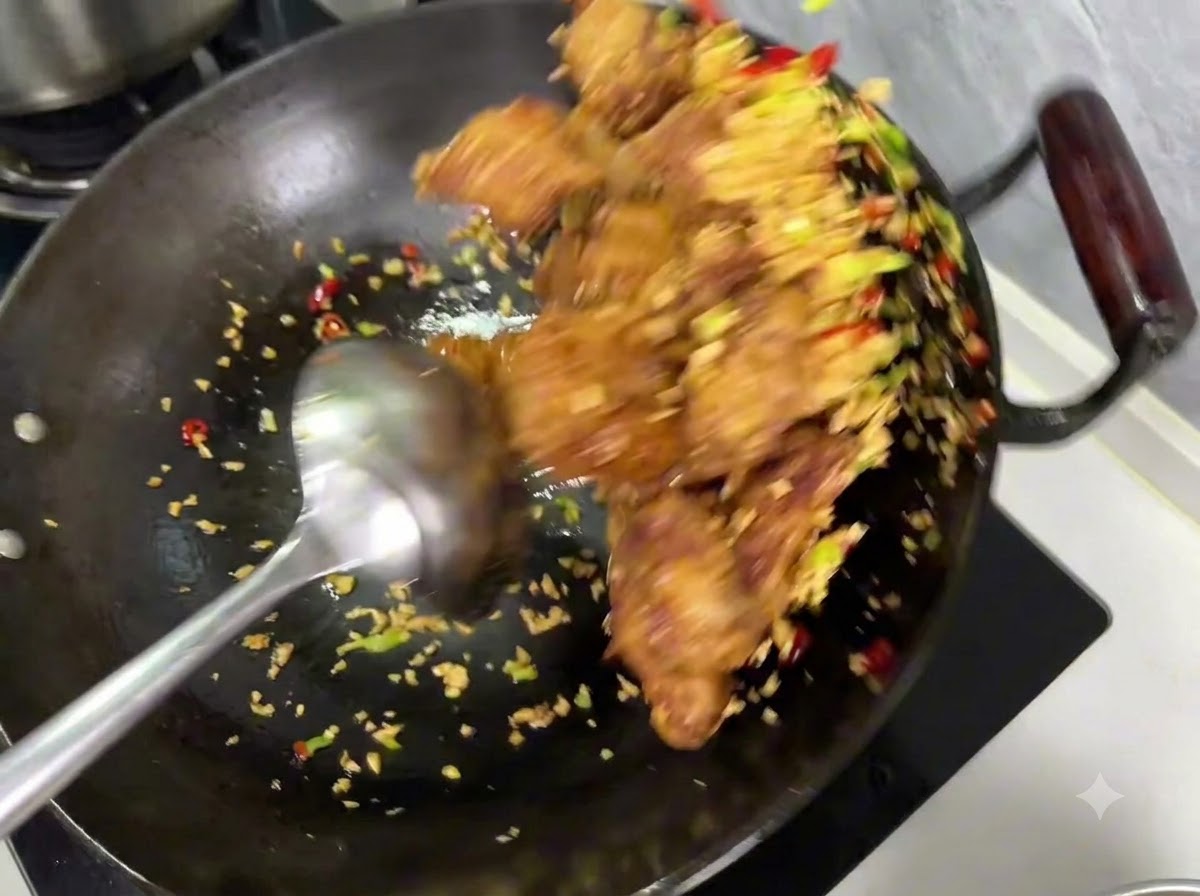
Sprinkle salt and pepper seasoning directly over the ribs, garlic, and chilies to enhance the overall flavor.
Tip: Toss or stir shortly after adding the seasoning for an even coating. - 35Toss and serve
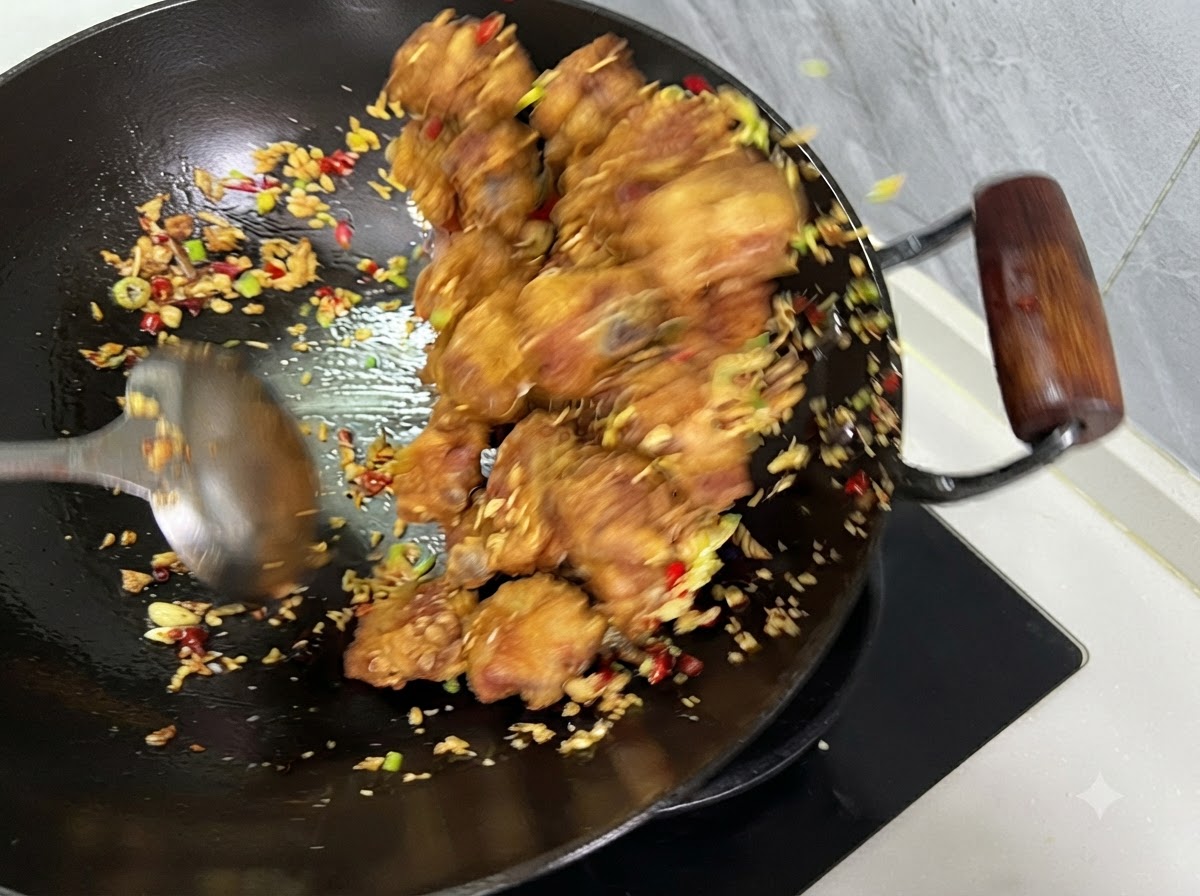
Toss all the ingredients evenly together in the wok until thoroughly combined, then plate the finished garlic salt and pepper ribs.
Tip: Ensure quick tossing over high heat so everything mixes well without losing the crispiness.