Healing Salmon Ochazuke (Japanese Green Tea Rice)
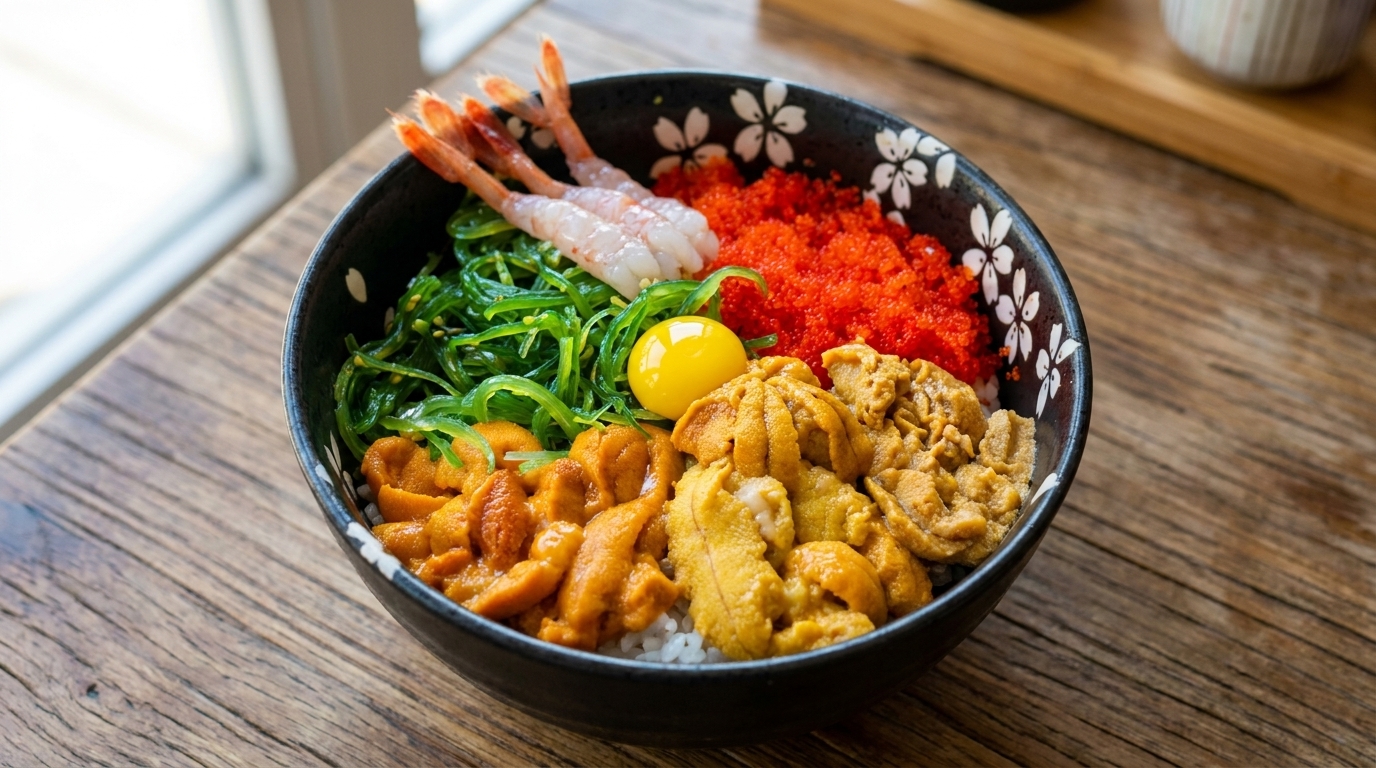
A comforting bowl of Salmon Ochazuke featuring tender pan-seared salmon served over perfectly cooked short-grain rice, steeped in a fragrant genmaicha tea broth.
Ochazuke is a quintessential Japanese comfort food, traditionally enjoyed as a quick meal or a soothing late-night snack. By pairing rich, pan-seared salmon with the toasted, nutty aroma of genmaicha (brown rice green tea), this modern take elevates a simple classic into a deeply healing and restorative bowl. It embodies the Japanese culinary philosophy of finding profound satisfaction in warm, simple ingredients.

Ingredients
- 200 g salmon fillet
- to taste sea salt
- to taste black pepper
- 1 dash olive oil
- 1 bag genmaicha tea
- 1 portion cooked short-grain white rice
- 1 handful dried bonito flakes
- to taste chopped nori seaweed
- to taste chopped green onions
- to taste black sesame seeds
- 1 tsp Japanese soy sauce
Instructions
- 1Season the salmon
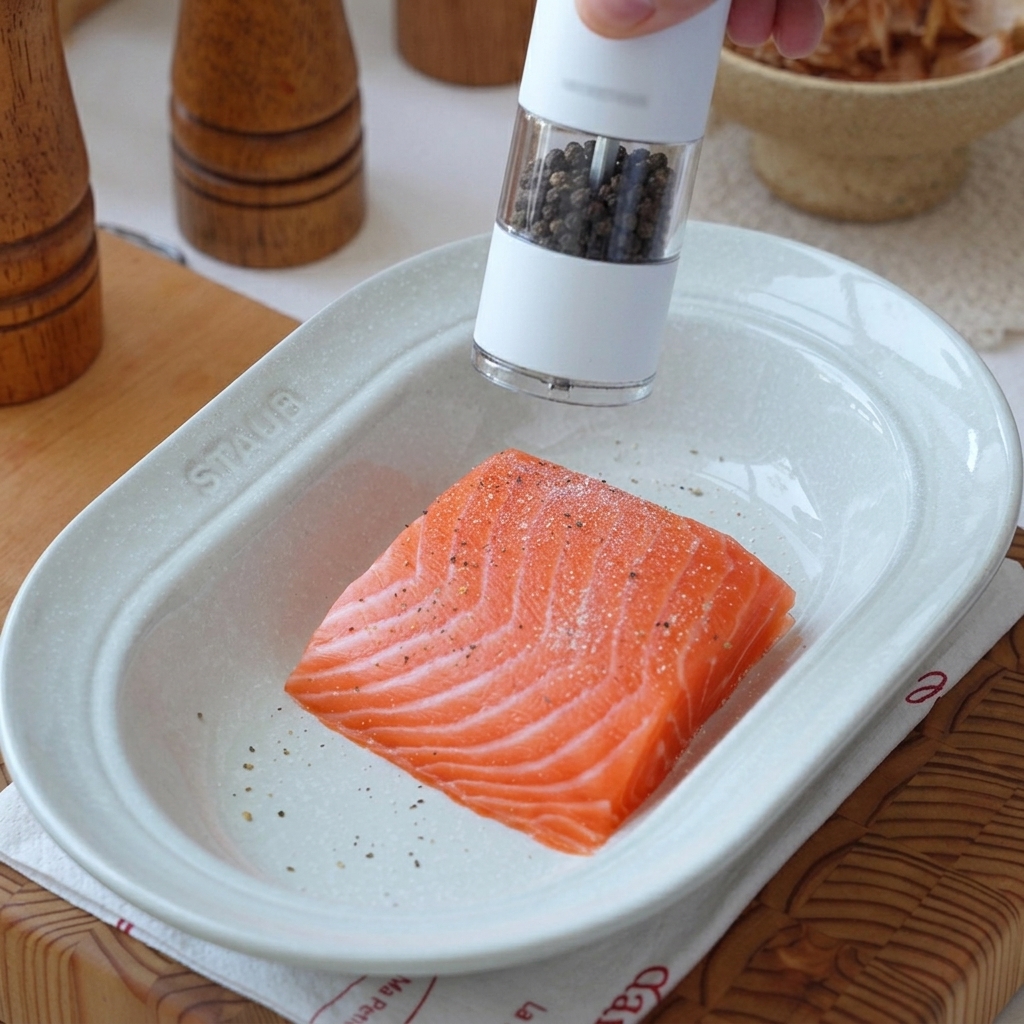
Place the 200g raw salmon fillet in a dish and season it generously with sea salt and black pepper using an electric grinder.
Tip: Freshly ground black pepper will give the salmon a much stronger and more robust aroma. - 2Rub and marinate
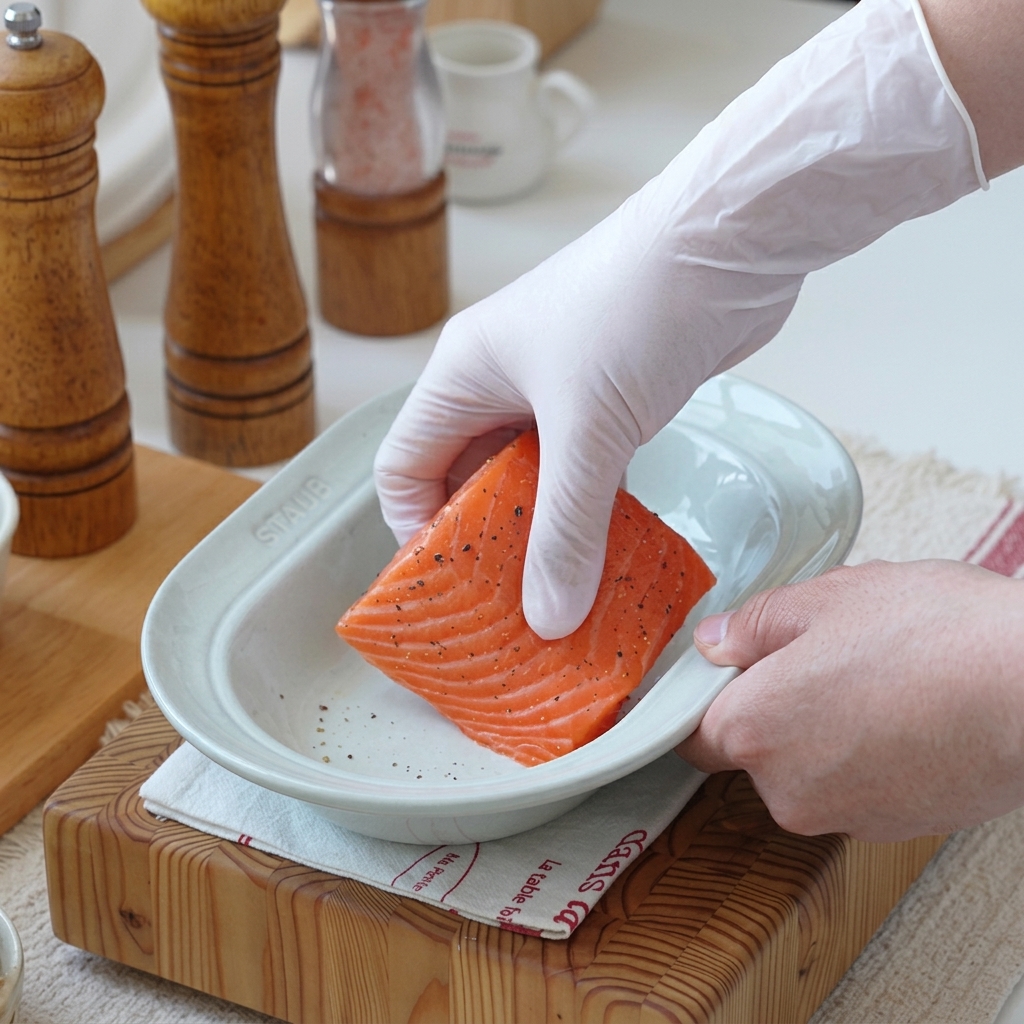
Using a gloved hand, gently rub the salt and pepper evenly over the surface of the salmon fillet. Let it sit and marinate for about 15 minutes.
Tip: Rubbing the seasoning directly into the flesh helps it adhere better and infuses the flavor deeply into the fish. - 3Steep the tea
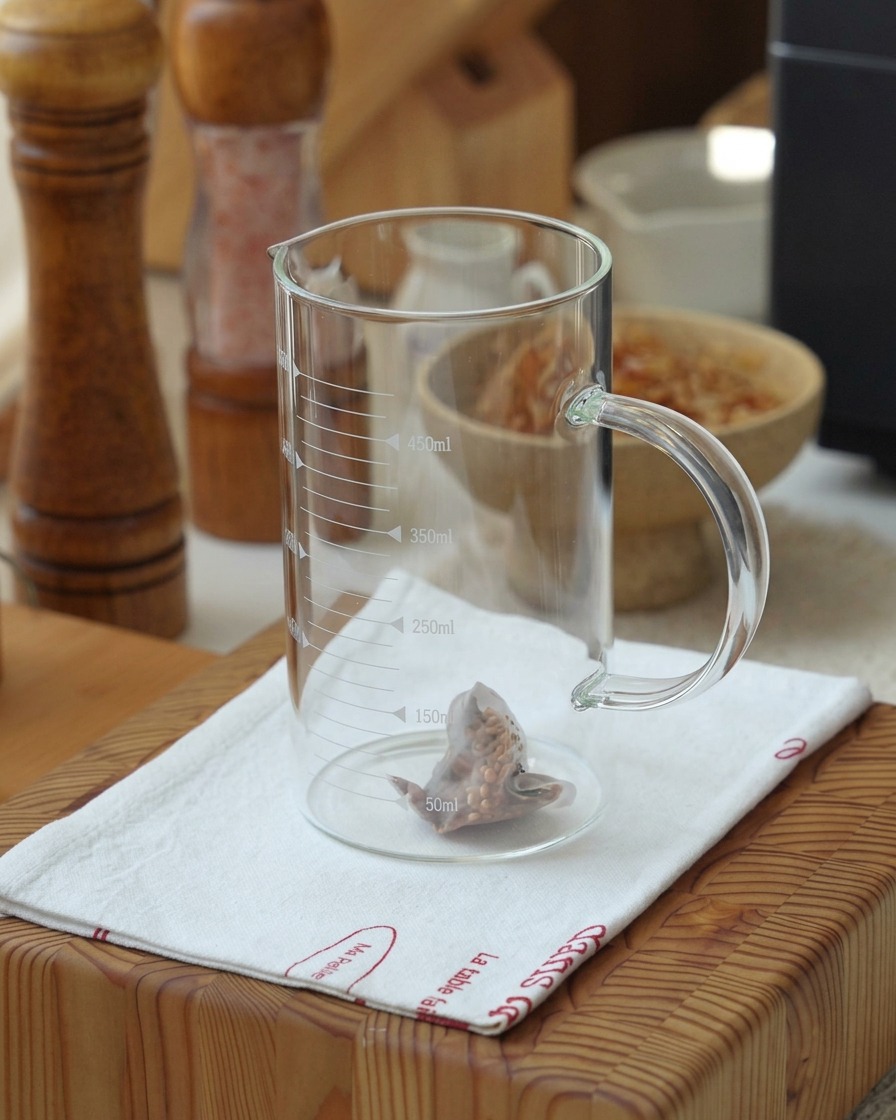
Place a genmaicha tea bag into a tall glass measuring cup and pour hot water over it. Let the tea steep for about 10 minutes to extract the strong, toasted rice aroma essential for this dish.
Tip: Genmaicha has a distinct roasted rice flavor that pairs perfectly with the salmon. Ensure the water is hot but not boiling to avoid bitterness. - 4Start pan-frying
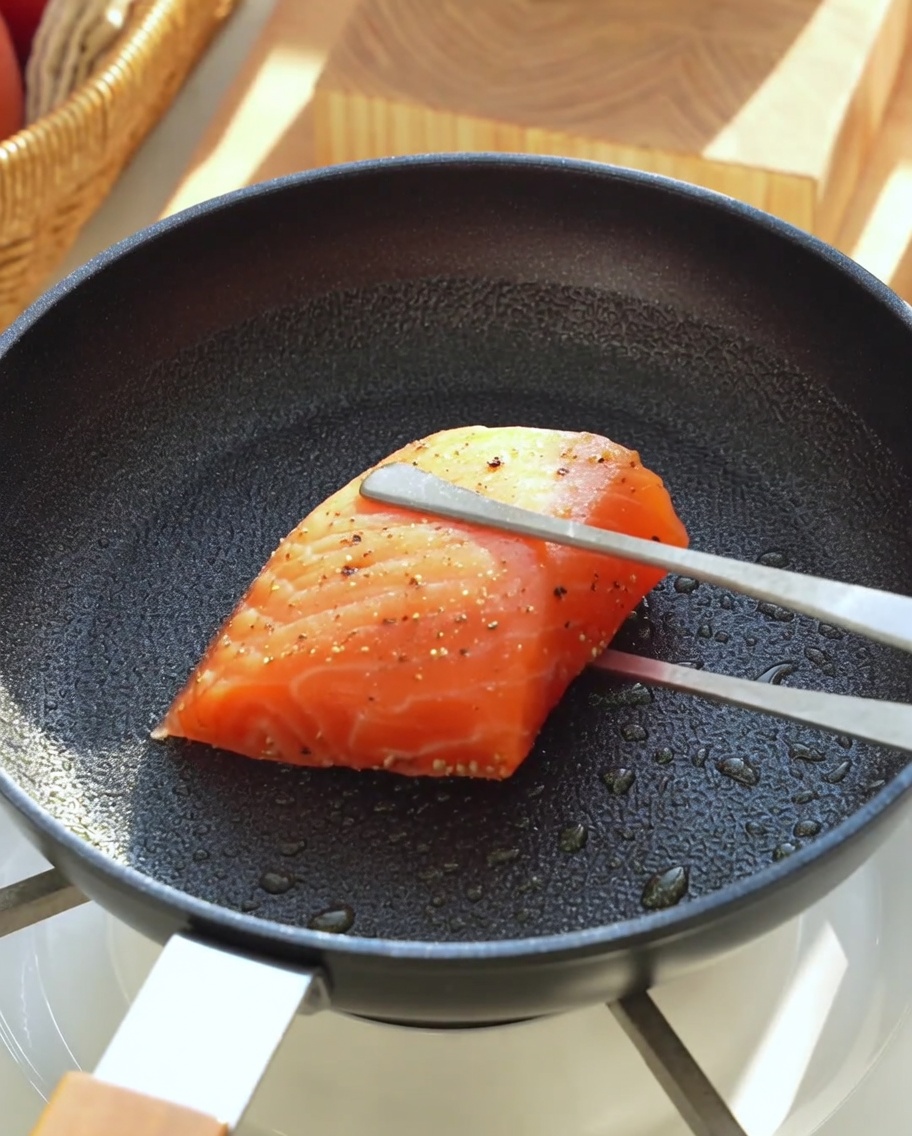
Spray a little olive oil into a heated black skillet, then carefully place the marinated salmon fillet into the pan.
Tip: Make sure the pan is sufficiently hot before adding the fish to prevent it from sticking and to ensure a good sear. - 5Flip the salmon
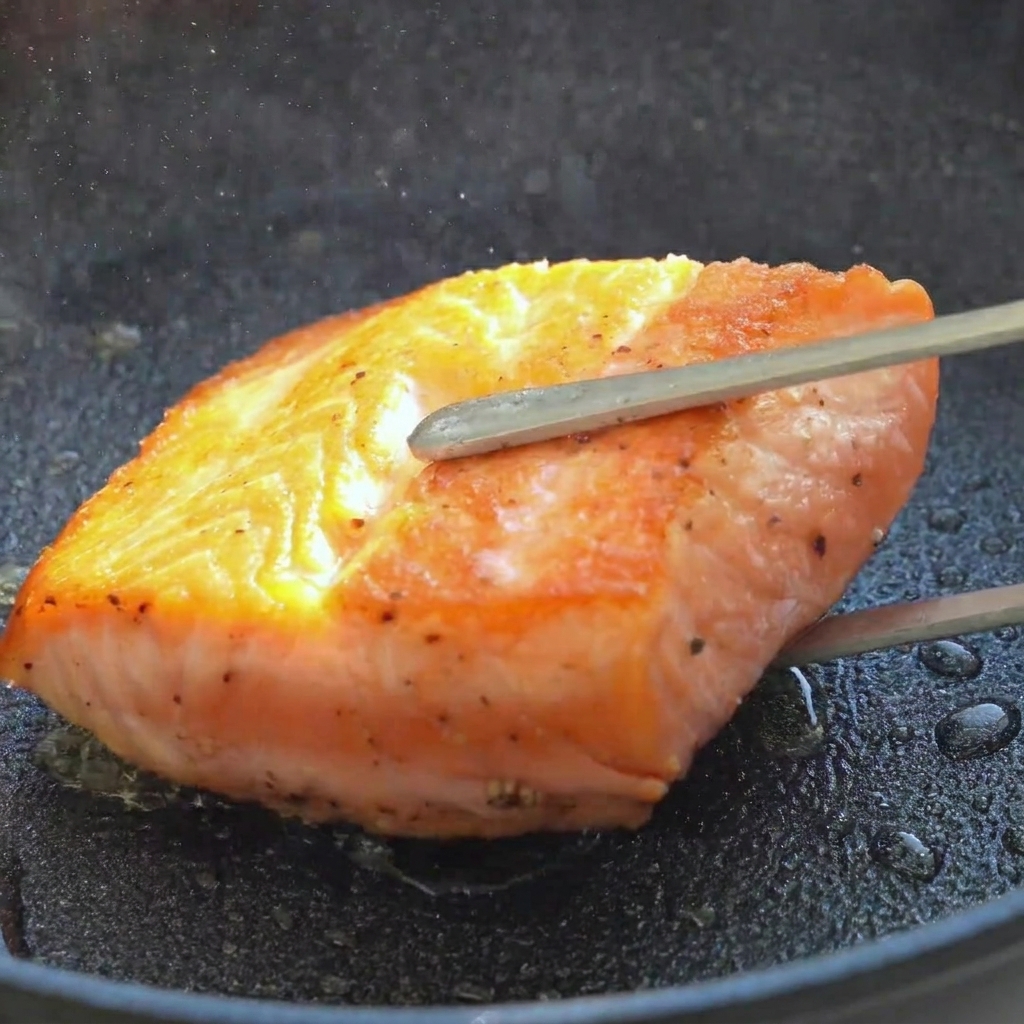
Pan-fry until the bottom is slightly browned and a crust forms, then use metal tongs to carefully flip the salmon fillet over to cook the other side.
Tip: Avoid flipping the fish too early; letting a proper crust form will keep the fillet intact and lock in the juices. - 6Sear the edges
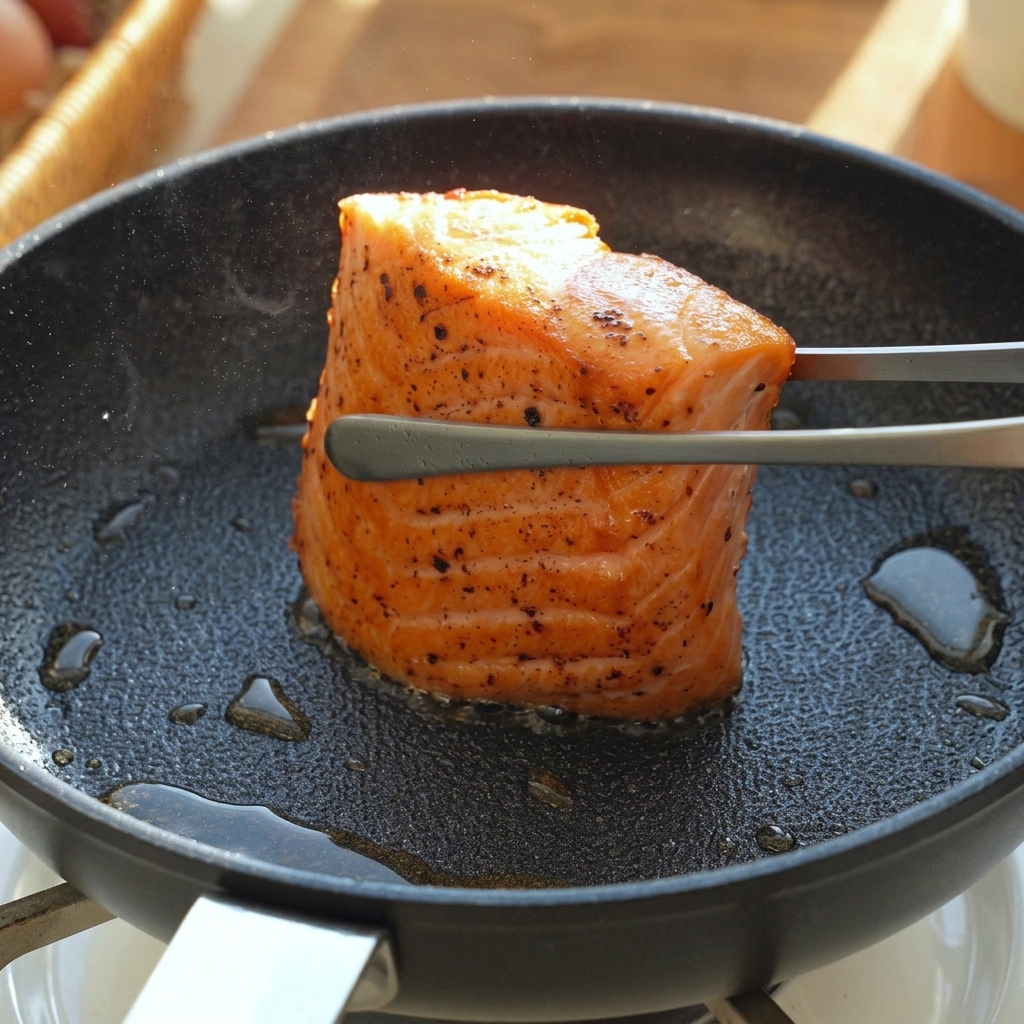
Use your tongs to hold the salmon fillet on its edges, pressing it gently against the pan to sear every side until fully browned.
Tip: Searing the edges ensures the fish is evenly cooked all the way through and helps render down any side fat. - 7Prepare the rice
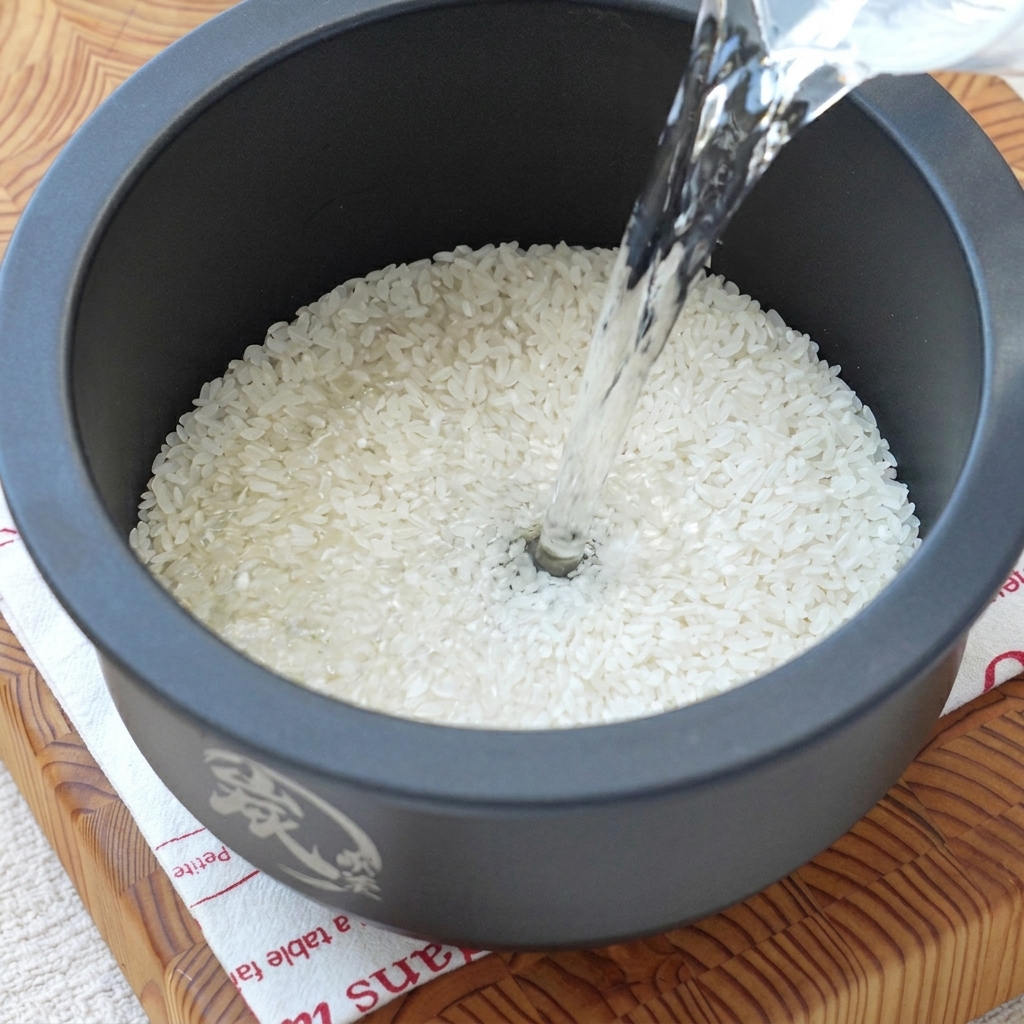
Measure the rice and place it into the inner pot of your rice cooker. Add an appropriate amount of water to the pot to prepare it for cooking.
Tip: Using a high-quality rice cooker ensures the texture is soft, chewy, and perfectly cooked, which is key for a delicious ochazuke. - 8Scoop the cooked rice
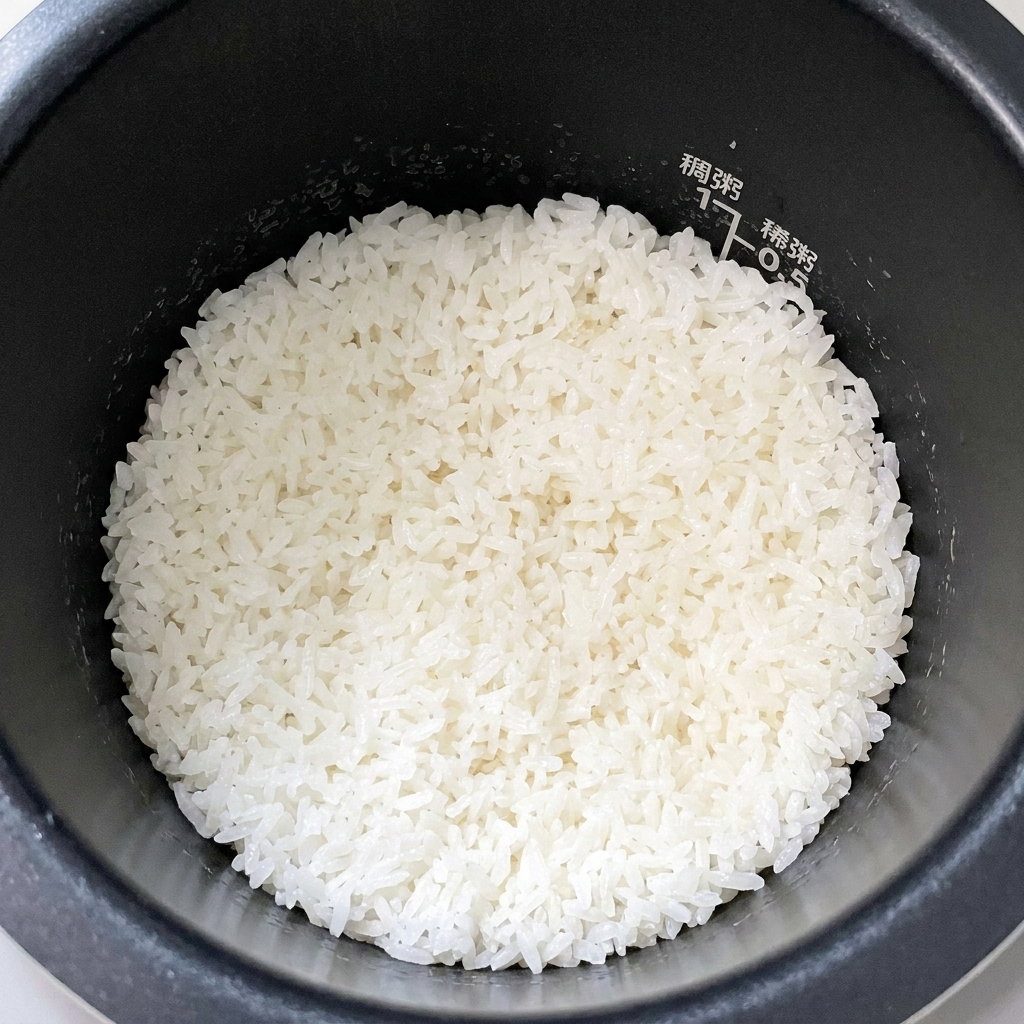
Once the rice is finished cooking, use a white rice paddle to scoop a generous portion of the fluffy, aromatic rice from the cooker.
Tip: Fluff the rice gently with the paddle before scooping to ensure it remains bouncy and light. - 9Mold the rice bowl
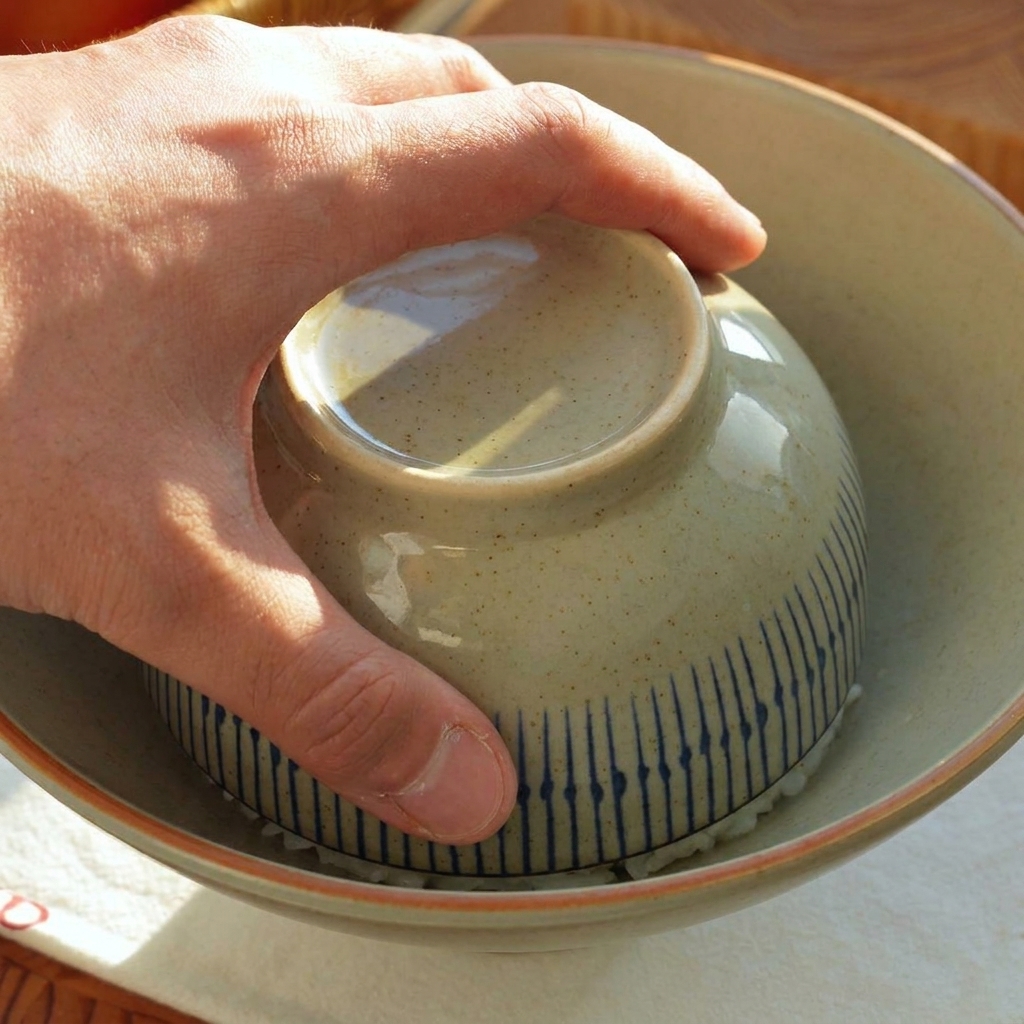
Take a small bowl, fill it with the cooked rice, and invert it quickly into a larger serving bowl to create a perfect, neat mound of rice.
Tip: Inverting the rice creates an appealing presentation that makes the dish look restaurant-quality. - 10Add bonito flakes
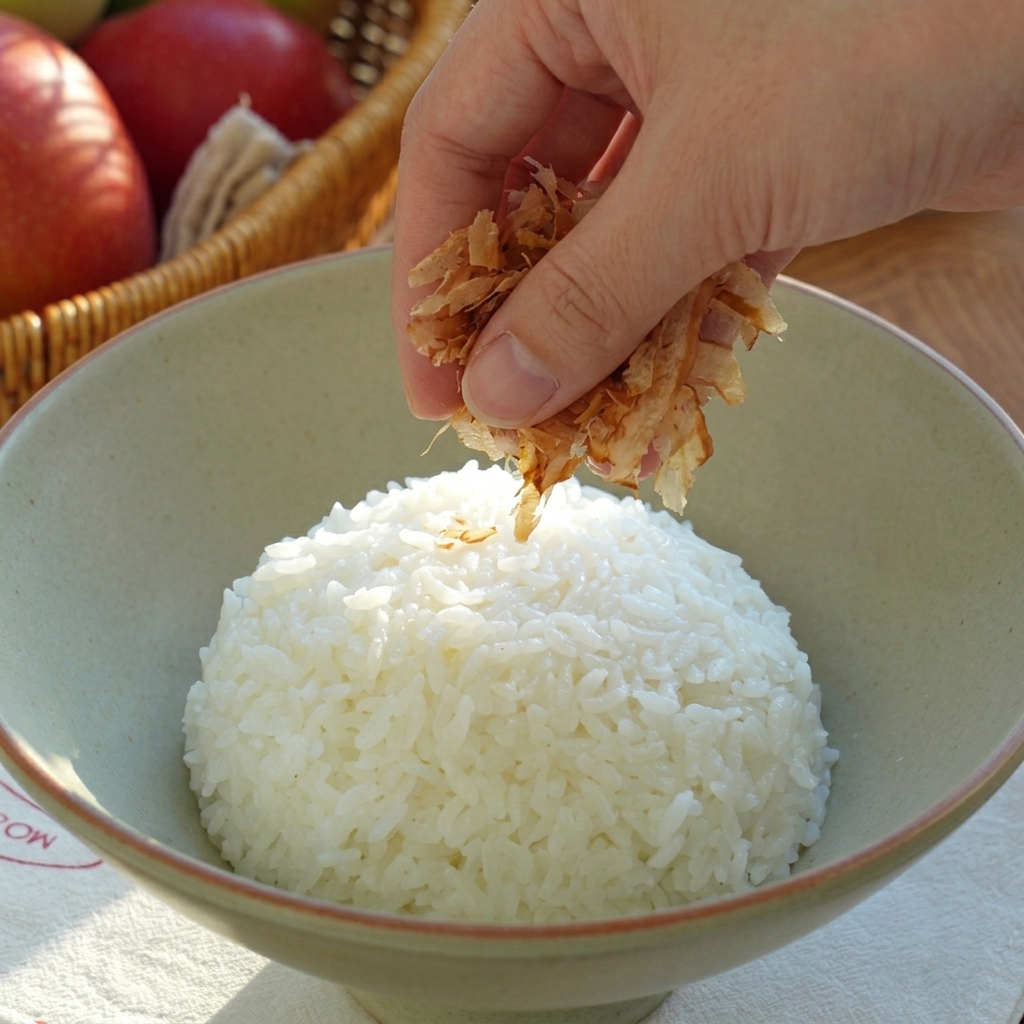
Take a handful of dried bonito flakes and sprinkle them evenly around the base of the rice mound in the serving bowl.
Tip: The bonito flakes add a subtle umami flavor that complements the tea broth and salmon beautifully. - 11Top with salmon
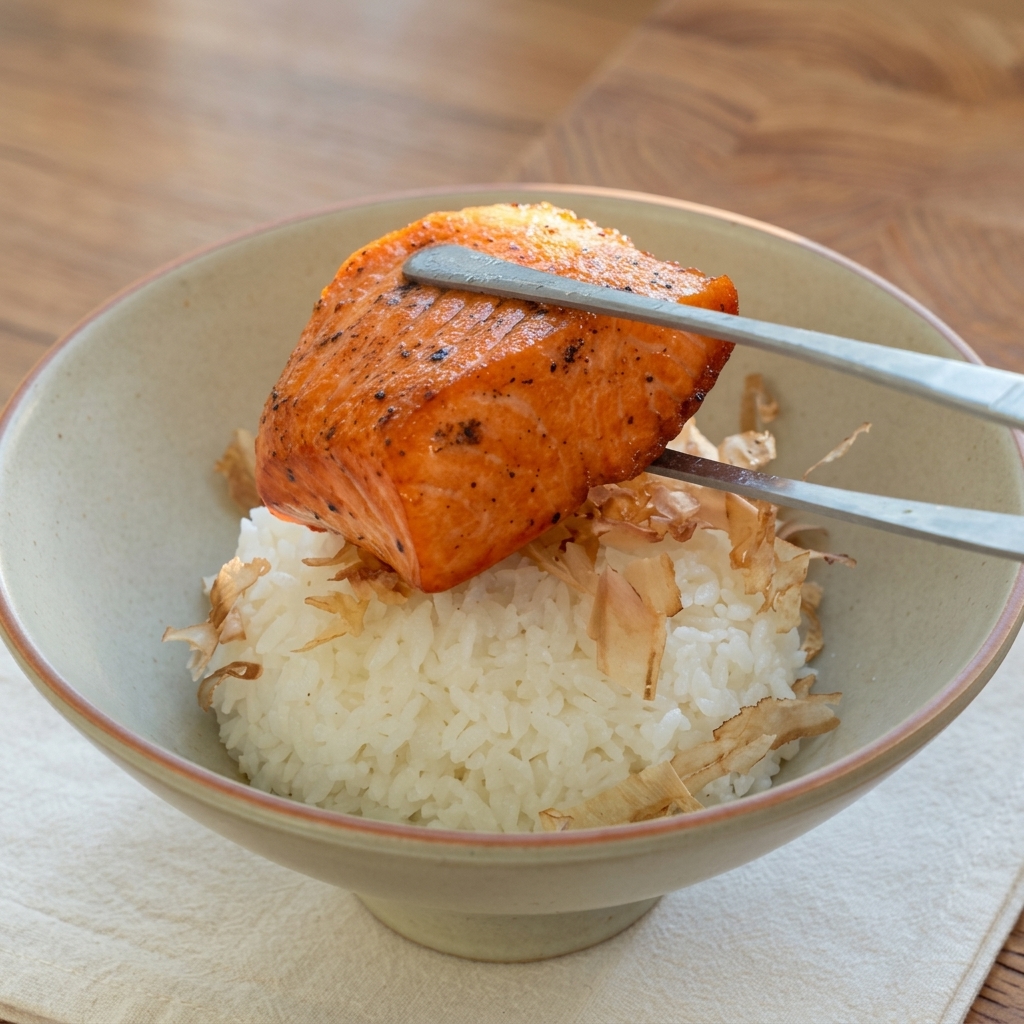
Using a pair of kitchen tongs, gently pick up the previously pan-seared salmon fillet and place it carefully onto the top of the molded rice mound.
Tip: Handle the salmon carefully to keep the fillet intact and ensure it sits securely atop the rice. - 12Garnish the salmon
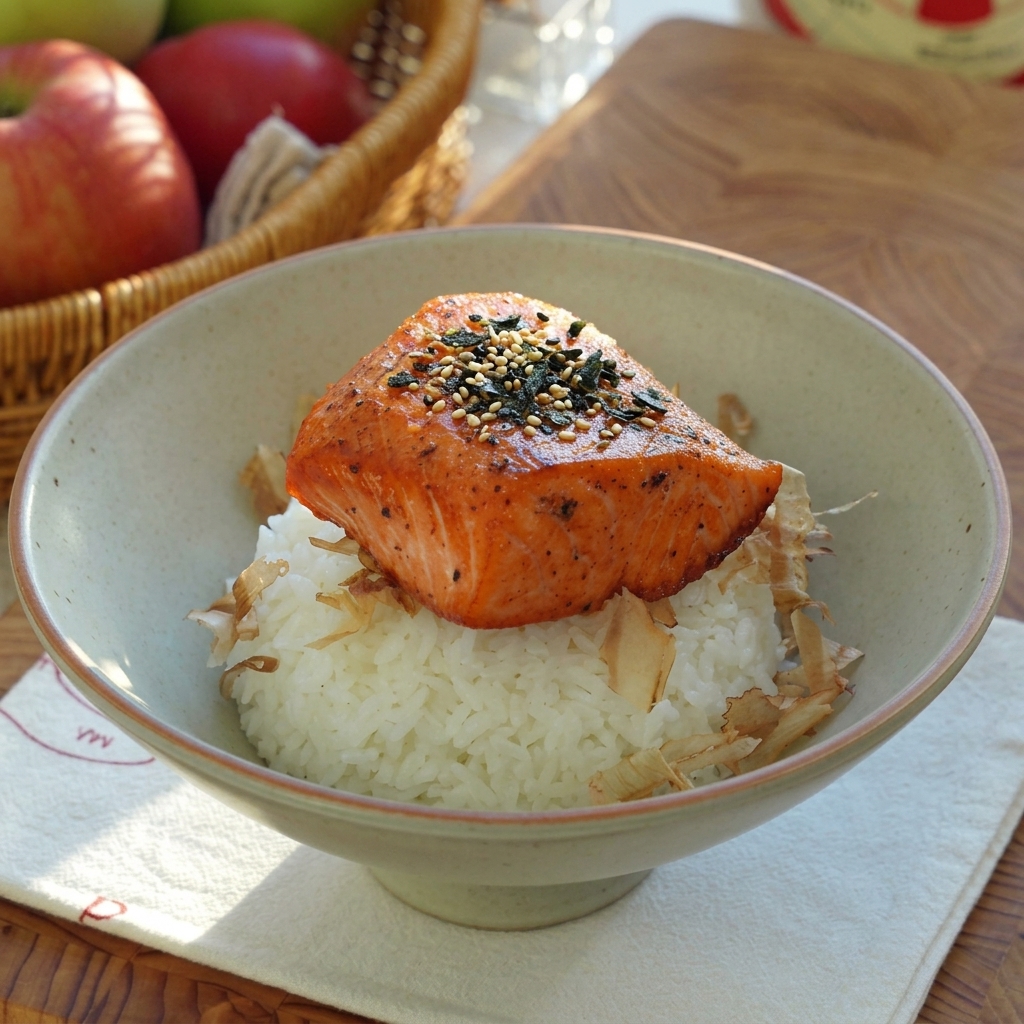
Sprinkle the chopped nori seaweed, fresh green onions, and black sesame seeds over the top of the pan-fried salmon fillet. This combination adds a wonderful balance of crispy texture, fresh aromatics, and a toasted nutty finish.
Tip: Apply the garnish just before pouring the hot tea to ensure the seaweed remains textured and the aromatics stay vibrant. - 13Pour the tea broth
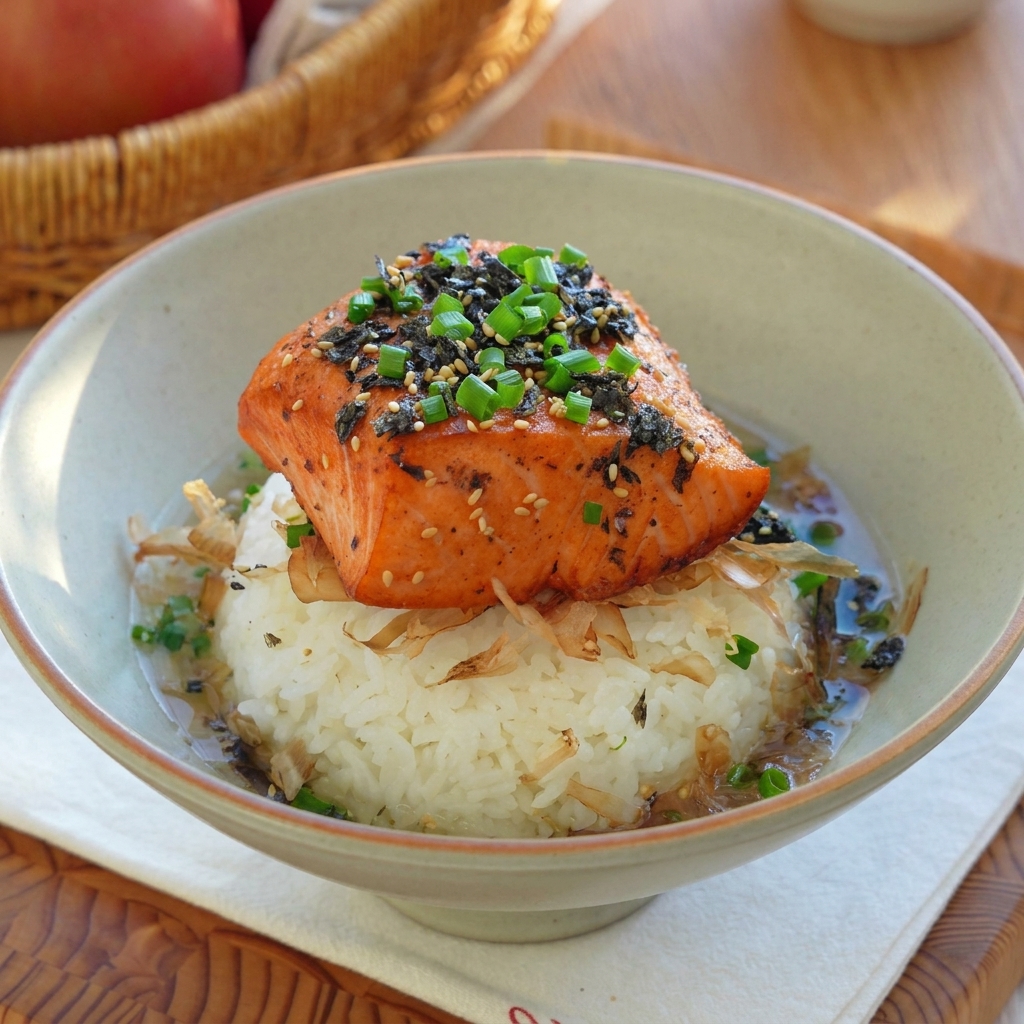
Carefully pour the freshly steeped, warm genmaicha tea broth along the edge of the bowl, allowing it to pool around the rice and salmon base. The tea will draw out the savory essence of the bonito flakes and combine with the flavors of the seared salmon.
Tip: Pour slowly to ensure the delicate plating of the garnishes remains intact. - 14Finish with soy sauce
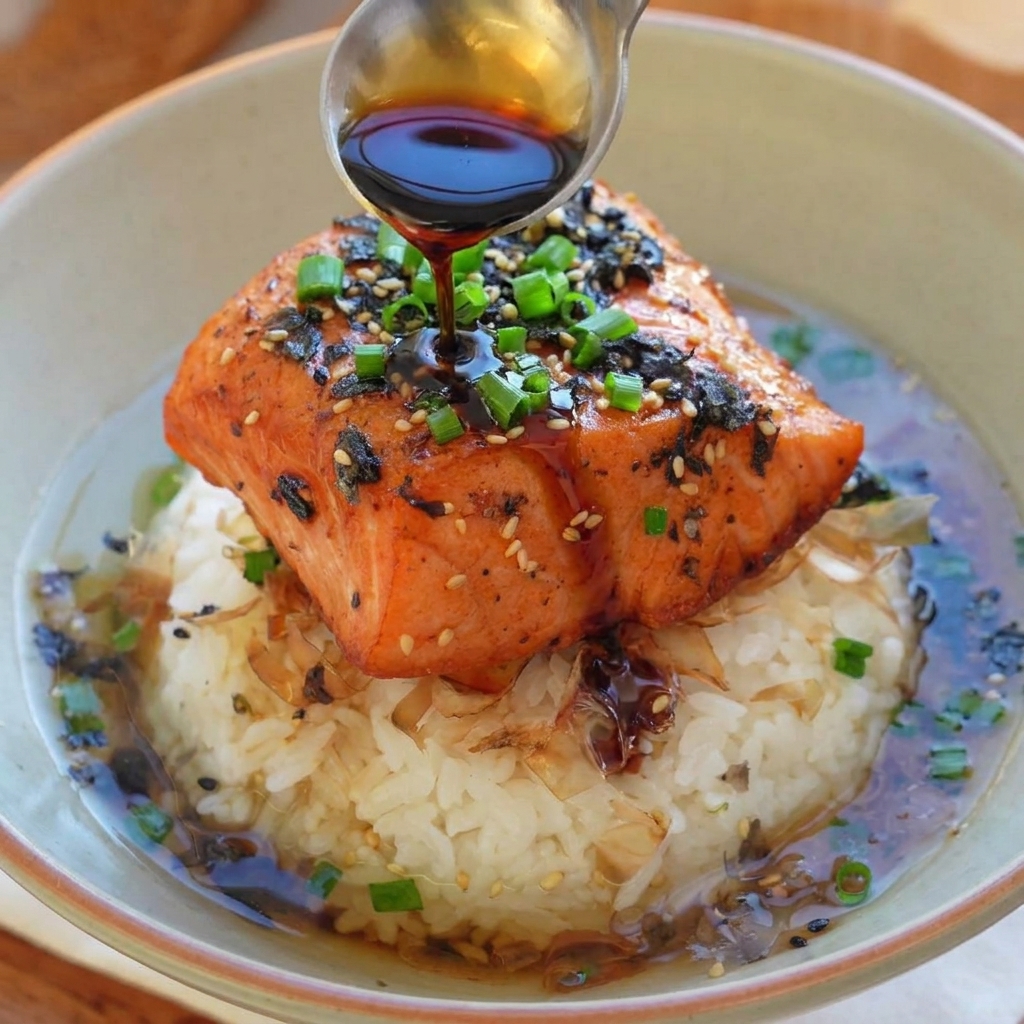
Complete the dish by drizzling a small spoonful of Japanese soy sauce directly over the seasoned and garnished salmon fillet. This final touch adds depth and a savory umami note that binds all the ingredients together.
Tip: Use a light hand with the soy sauce; a little goes a long way to balance the flavors of the tea and salmon.