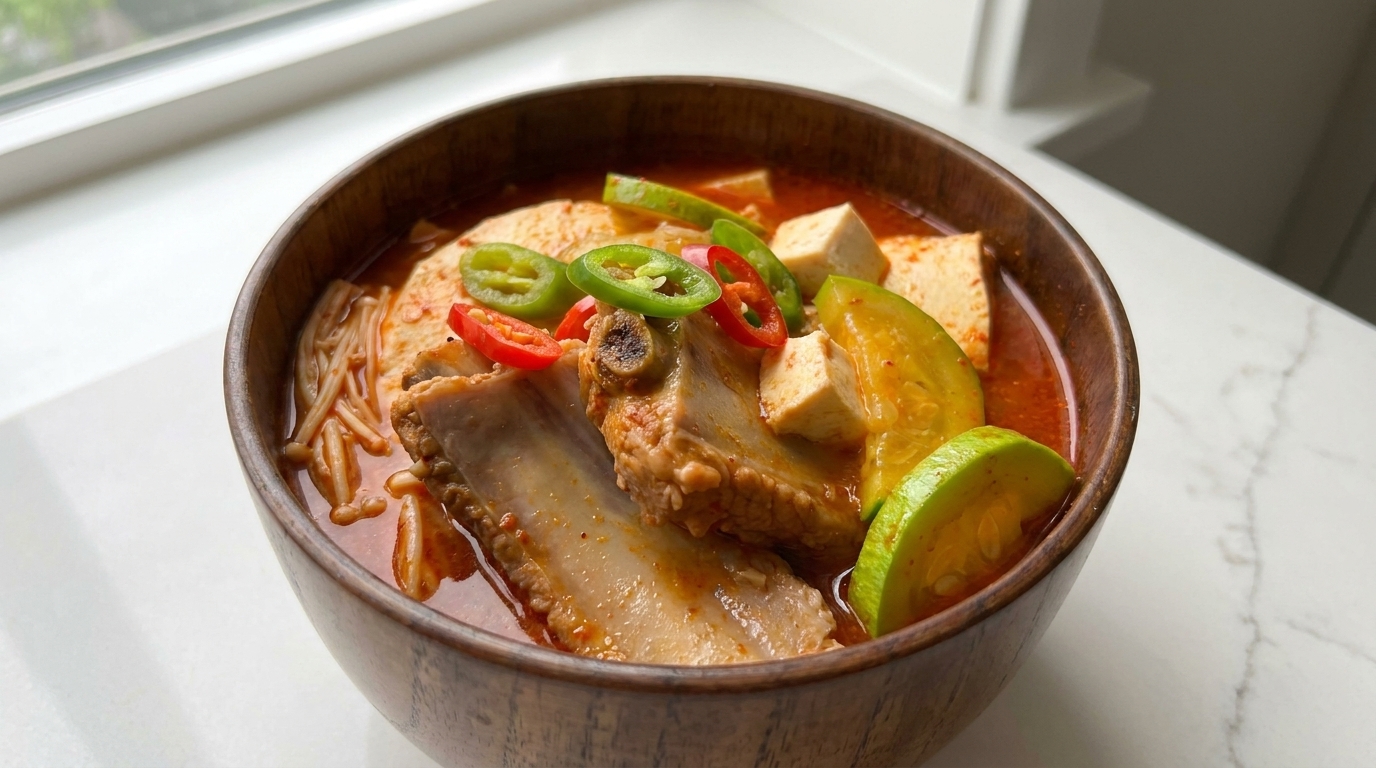
Spicy Korean Kimchi Pork Rib Soup
A soul-warming, vibrant Korean stew featuring tender pork ribs, tangy aged kimchi, and soft tofu, slow-simmered in a rich, spicy, and deeply savory broth.
Kimchi Jjigae with pork ribs is a staple of Korean home cooking, celebrated for its ability to balance intense, savory depth with a refreshing, sour tang. The secret lies in stir-frying the kimchi until it softens, allowing its juices to form the foundation of a broth that perfectly tenderizes the pork and infuses the tofu with spicy, aromatic flavor.
Ingredients
- 500g pork ribs
- 2 cups aged kimchi
- 1 block soft tofu
- 1 green zucchini
- 1 pack enoki mushrooms
- 1/2 red onion
- 3 cloves garlic
- 1 tbsp Korean chili paste
- 2 tbsp light soy sauce
- 1 tbsp fish sauce
- 1 tbsp honey
- 2 tbsp chili powder
- 1 splash cooking wine
- to taste green onion
- to taste green and red chili peppers
Instructions
- 1Blanch the pork ribs
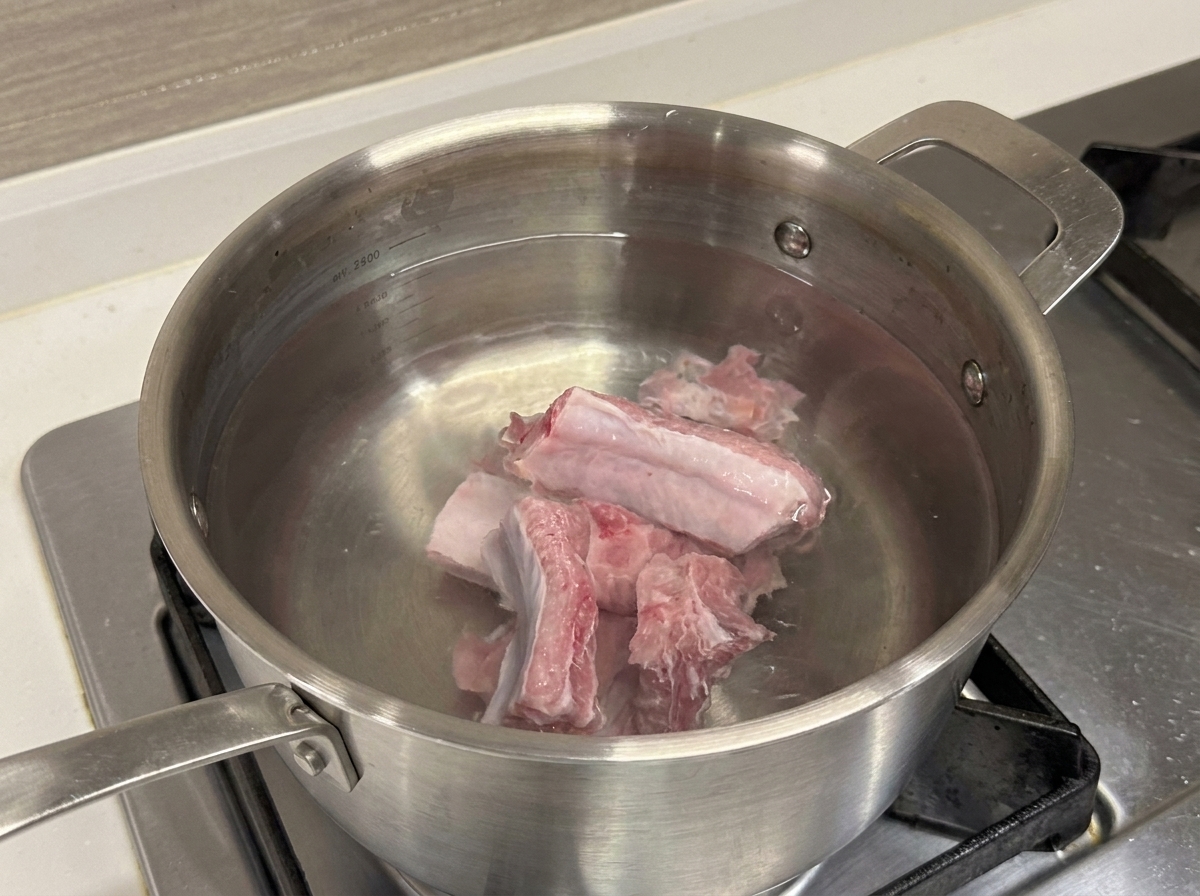
Place the raw pork ribs into a pot filled with cold water. Adding the ribs to cold water helps draw out impurities as the water slowly comes to a boil.
Tip: Be sure to start with cold water to ensure a cleaner broth. - 2Add aromatics and cooking wine
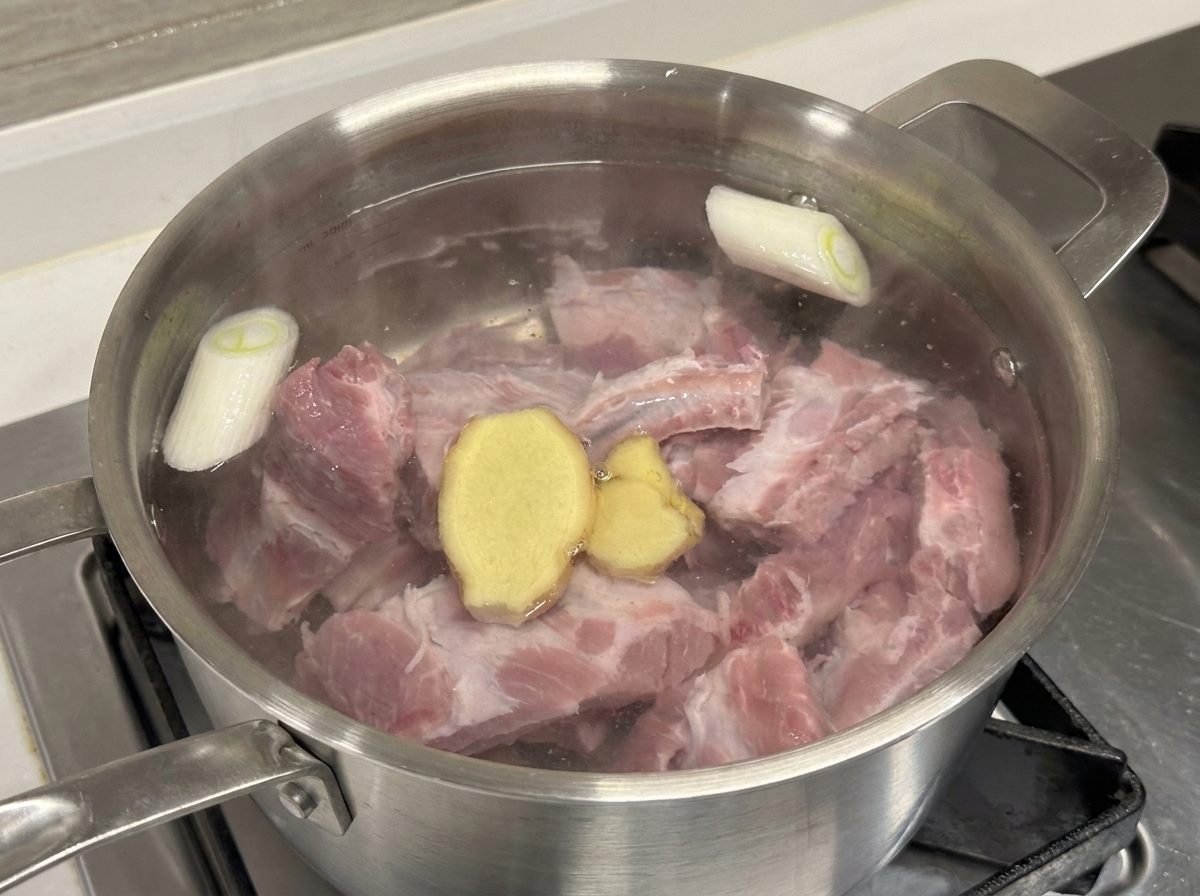
Add green onion segments, ginger slices, and a splash of cooking wine to the pot with the ribs. These aromatics help neutralize any gamy odors from the pork during the blanching process.
Tip: The ginger and green onion are essential for removing unwanted gamey flavors from the meat. - 3Remove blanched ribs
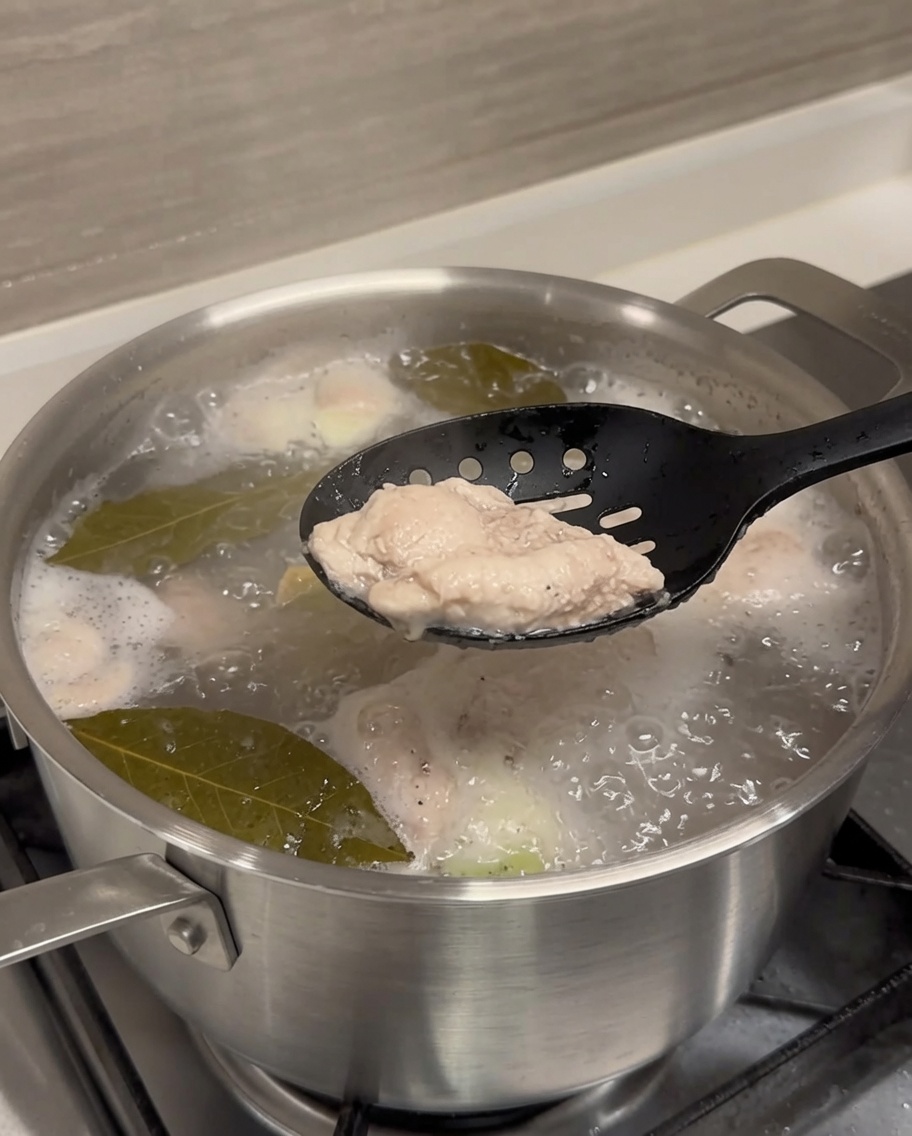
Once the water reaches a boil, skim off any foam that rises to the surface. Carefully remove the blanched pork ribs from the water and set them aside for the next step.
Tip: Skimming the foam thoroughly is key to achieving a clear and delicious soup. - 4Prepare the onions
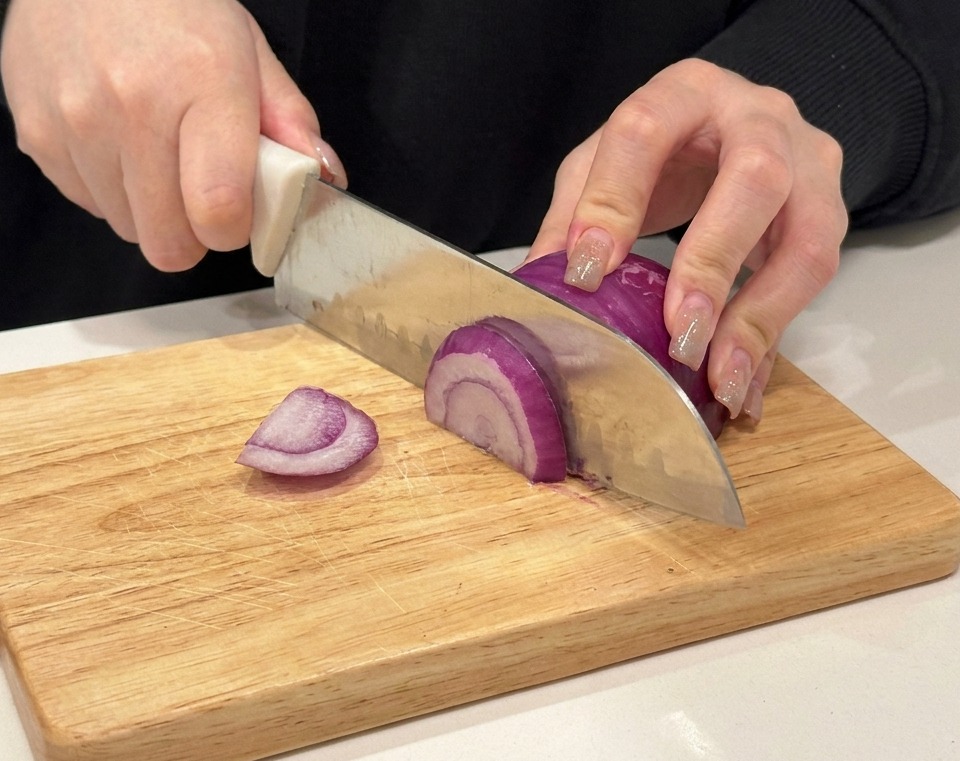
Slice half of a red onion on a cutting board. This onion will provide a sweet and savory base for the kimchi soup.
Tip: Thinly slicing the onion allows it to soften and incorporate more easily into the soup base. - 5Mince the garlic
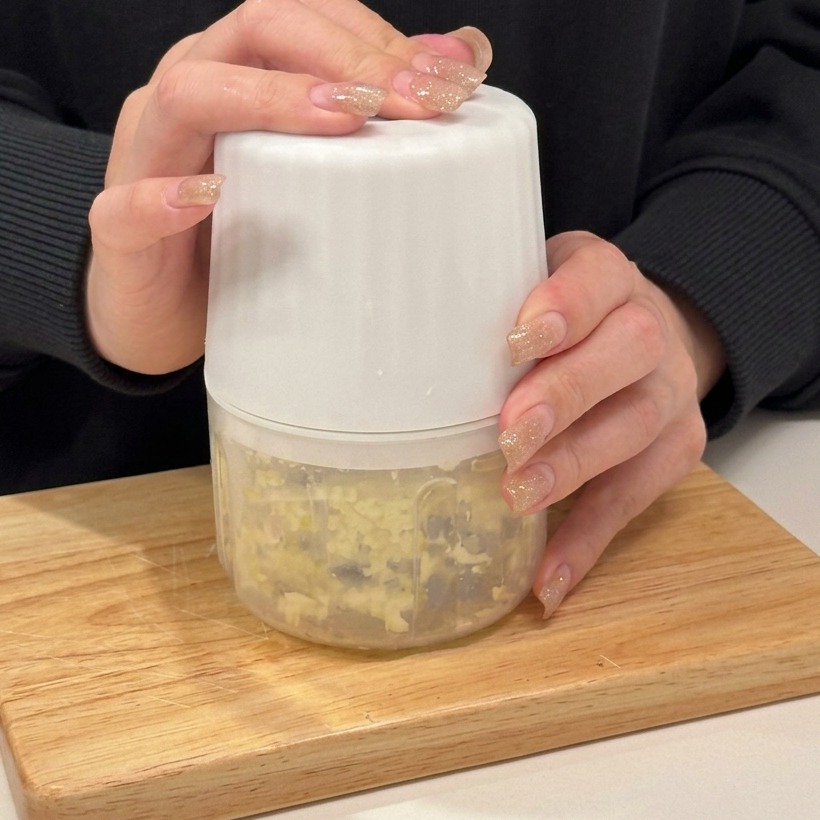
Mince the garlic cloves using a manual food processor or a knife until finely chopped. Freshly minced garlic is vital for the aromatic foundation of the dish.
Tip: Using a food processor saves time, but ensure not to over-process it into a paste. - 6Sauté the aromatics
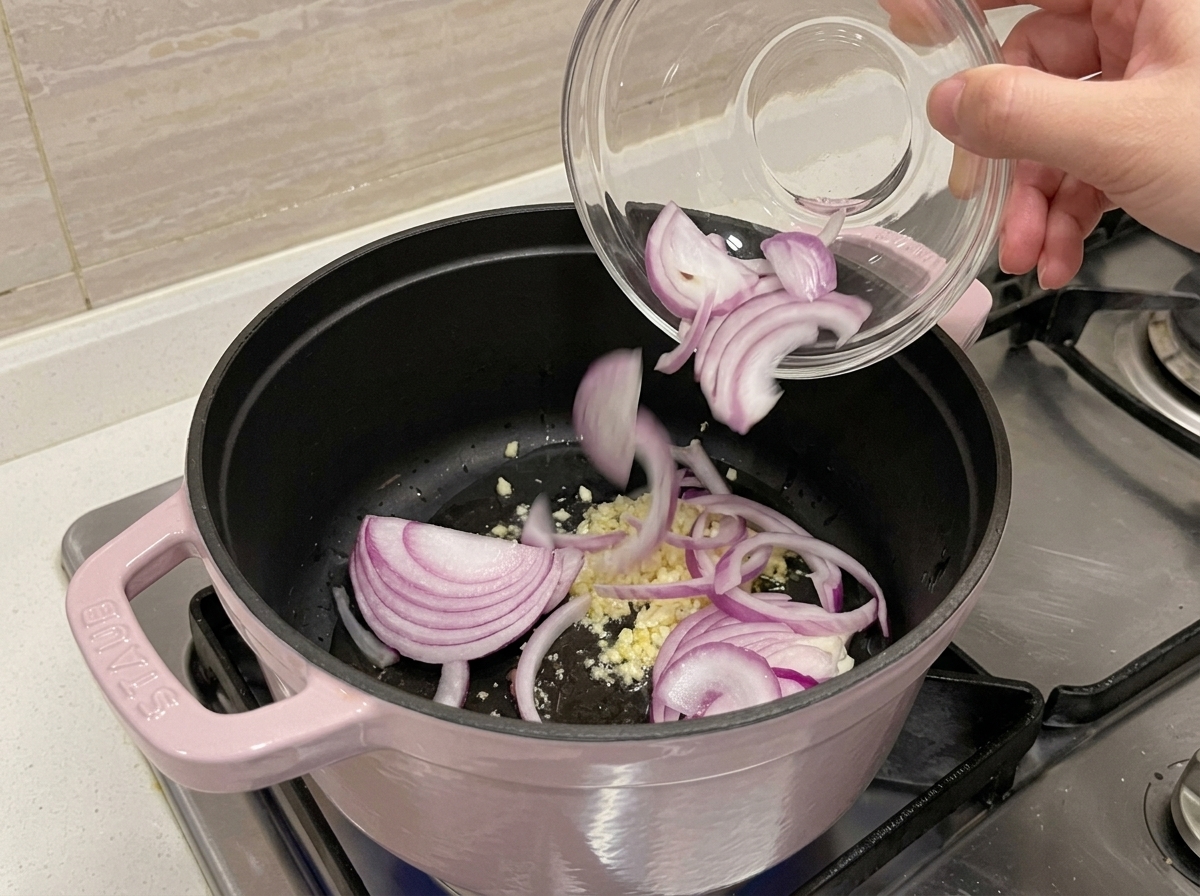
Pour a little oil into a clean pot and add the minced garlic and sliced red onion. Sauté over medium heat until they become fragrant and start to soften.
Tip: Watch the garlic closely to ensure it doesnt burn, which can make the soup base bitter. - 7Sauté the Kimchi and Aromatics
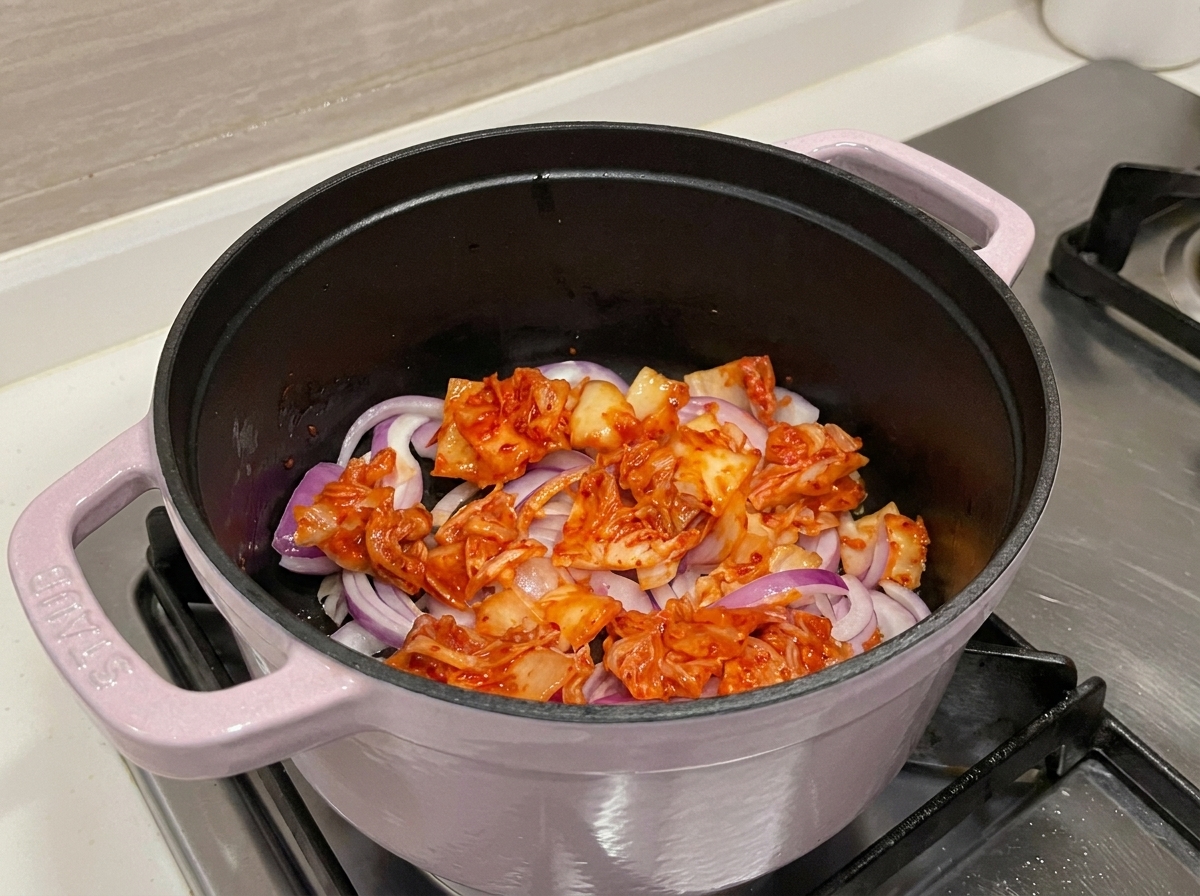
Add minced garlic and sliced red onion into the pot with hot oil, sautéing until they are fragrant. Next, add a generous portion of kimchi and continue to stir-fry until the kimchi releases its distinct, savory aroma.
Tip: Stir-frying the kimchi thoroughly is key to deepening the flavor of the entire soup base. - 8Season the Base
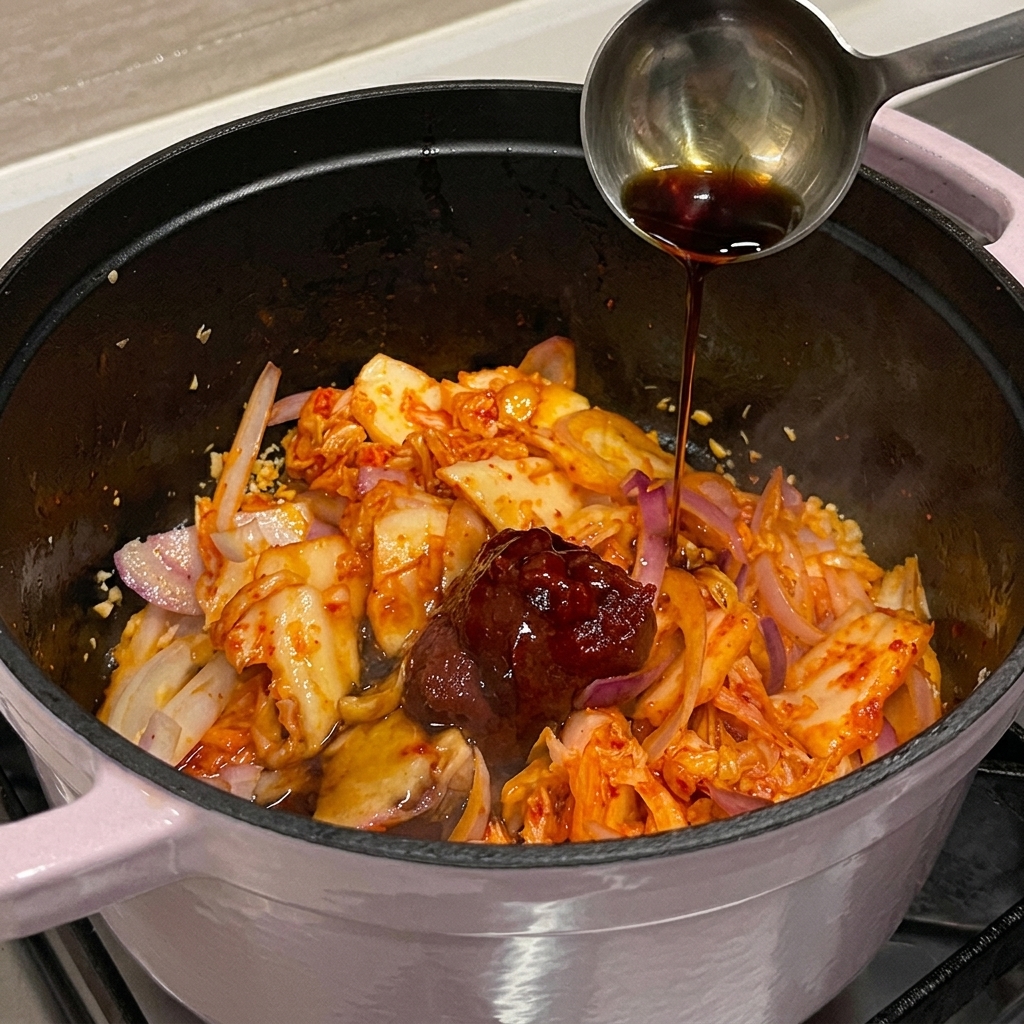
Add the seasonings to the pot to build the flavor profile: one spoonful of Korean chili paste, two spoonfuls of light soy sauce, one spoonful of fish sauce, one spoonful of honey, and two spoonfuls of chili powder. Stir well to incorporate the flavors with the sautéed kimchi.
Tip: Adjust the chili powder according to your preferred spice level, using both coarse and fine varieties for texture and heat. - 9Add the Pork Ribs
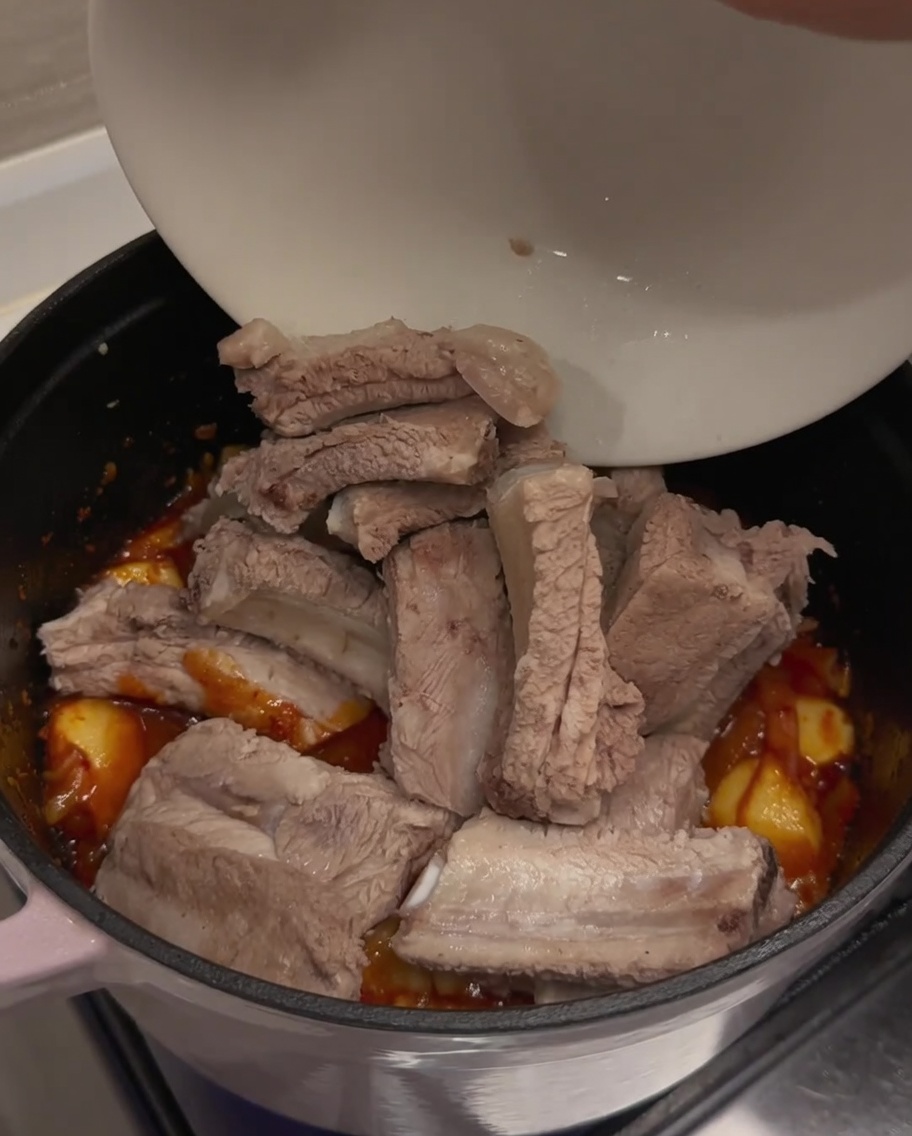
Carefully place the previously blanched pork ribs into the pot, nestling them into the seasoned kimchi base. Ensure they are well-positioned to soak up all the flavors as they simmer.
Tip: Blanching the ribs beforehand ensures the final broth remains clear and free of any foam or unwanted impurities. - 10Simmer the Ribs
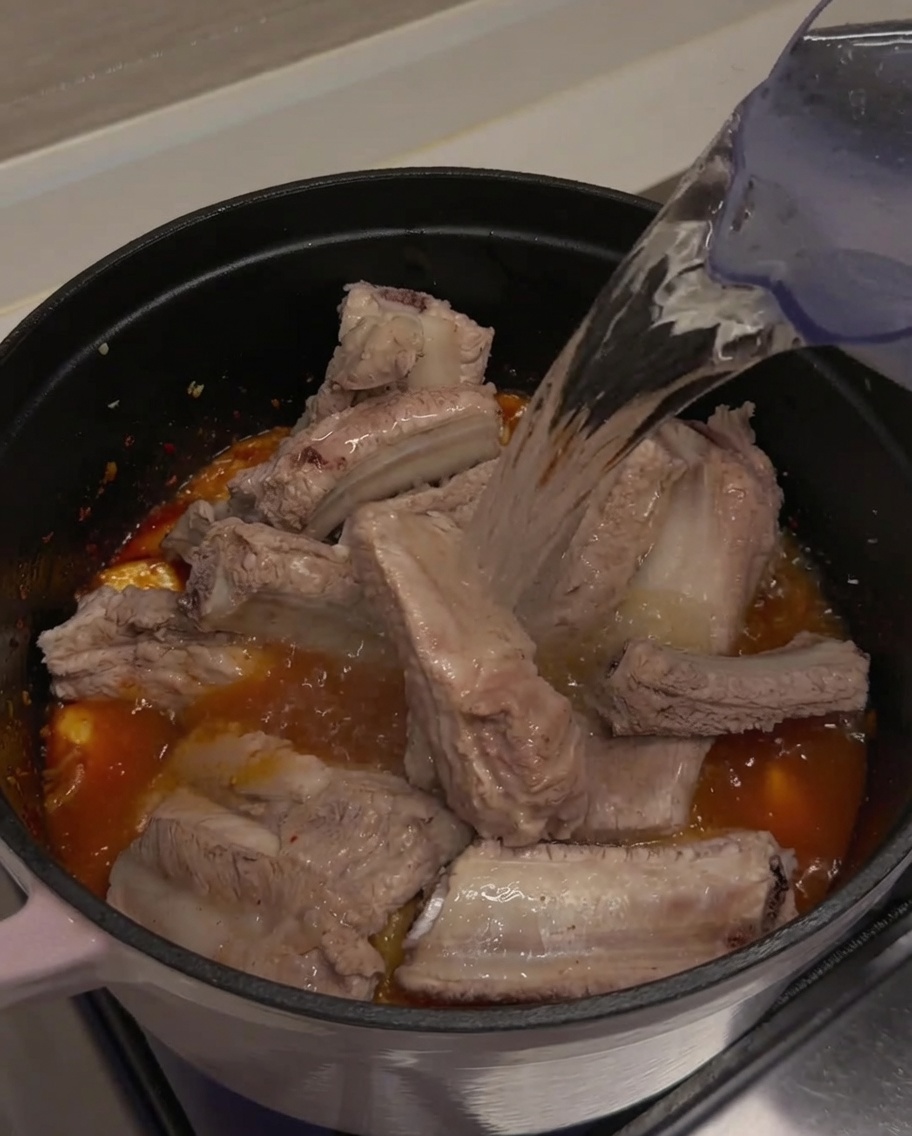
Pour clean water into the pot until the pork ribs and kimchi are fully submerged. Bring the mixture to a boil over high heat, then reduce to low heat, cover with a lid, and simmer for forty-five minutes to ensure the ribs become tender and flavorful.
Tip: Using a lid helps maintain a consistent simmer, allowing the pork ribs to cook evenly and thoroughly. - 11Cover and Simmer
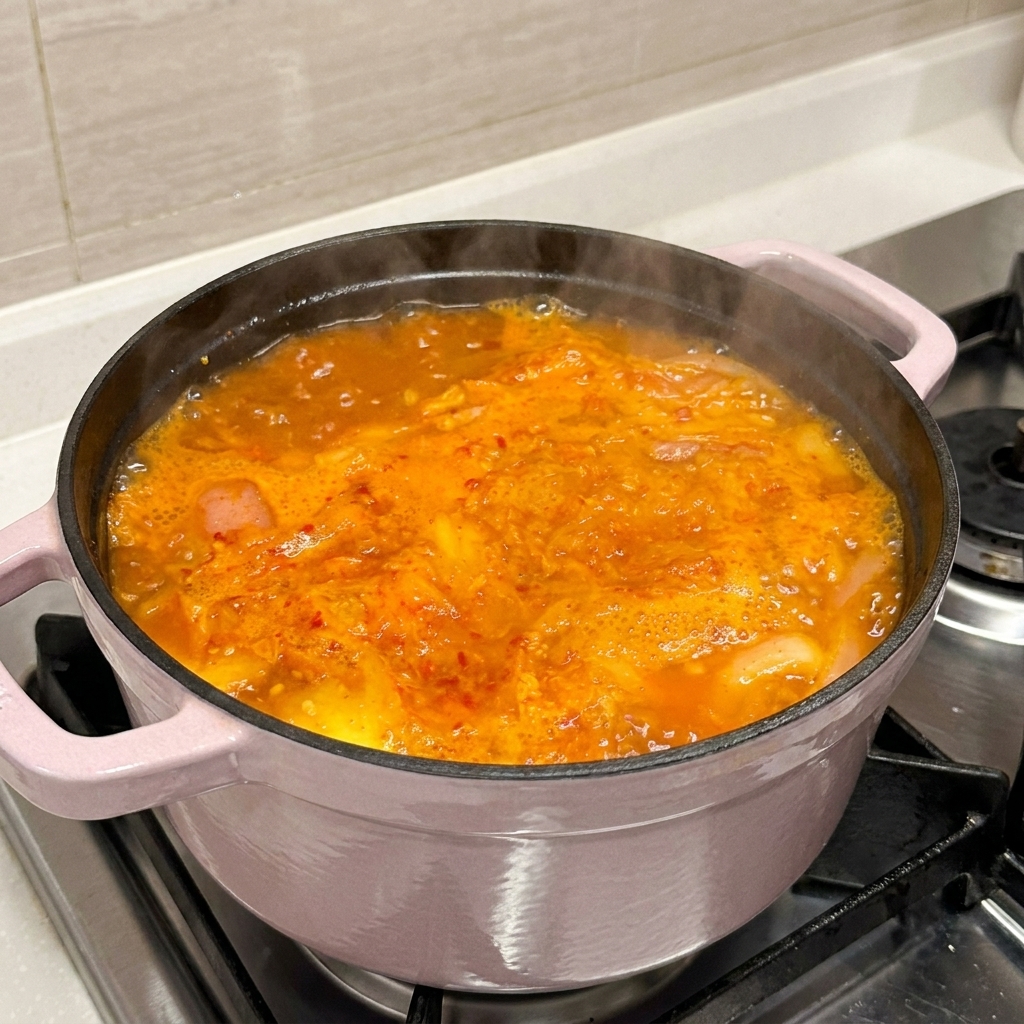
Once the water is added and the pot reaches a boil, cover the pot with its lid. Lower the heat and allow the soup to simmer gently for forty-five minutes, letting the flavors meld and the ribs tenderize.
Tip: Resist the urge to uncover the pot frequently to keep the heat constant and speed up the tenderizing process. - 12Prepare the Vegetables
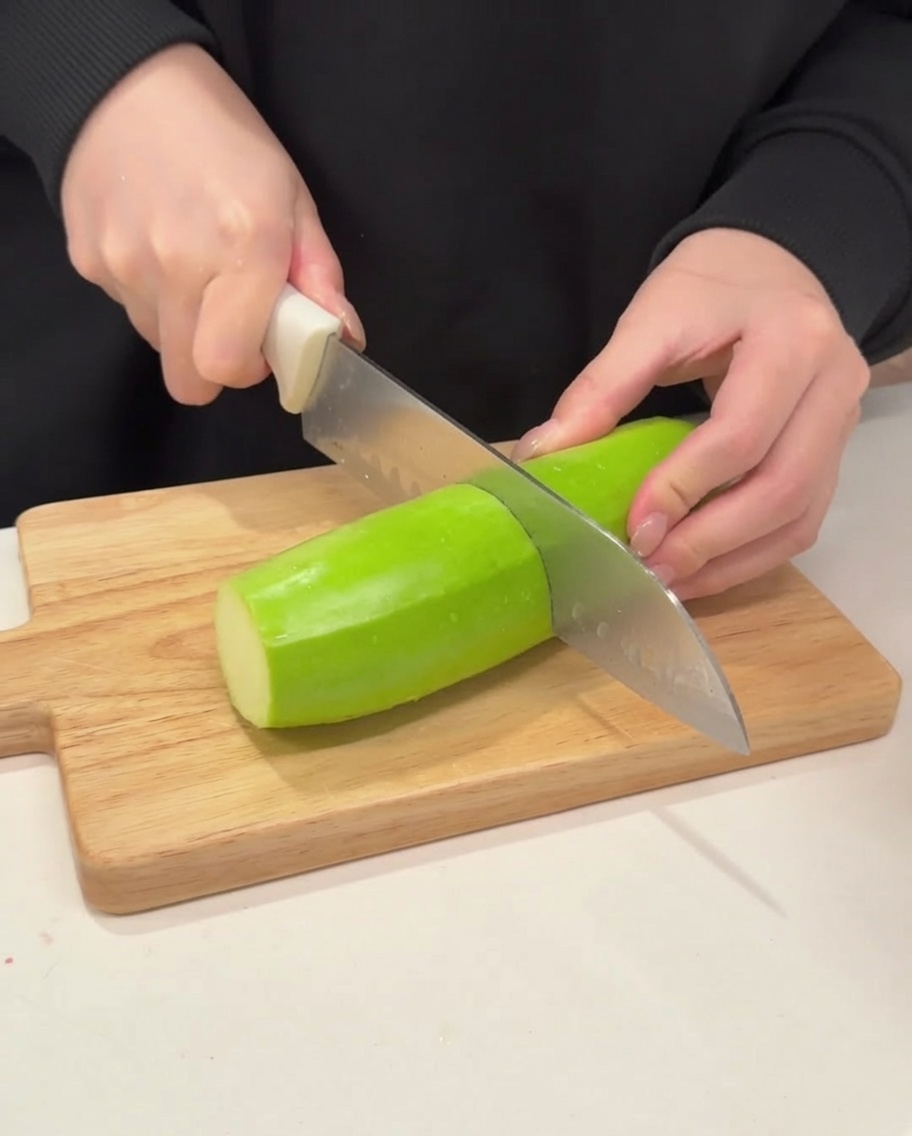
While the ribs are simmering, prepare your additional ingredients. Slice a fresh green zucchini into thick half-moon pieces, cube the tofu, and prepare the enoki mushrooms. Add these to the pot in the final ten minutes of cooking.
Tip: Adding the vegetables in the final stage ensures they retain their texture and do not overcook in the soup. - 13Prepare the tofu
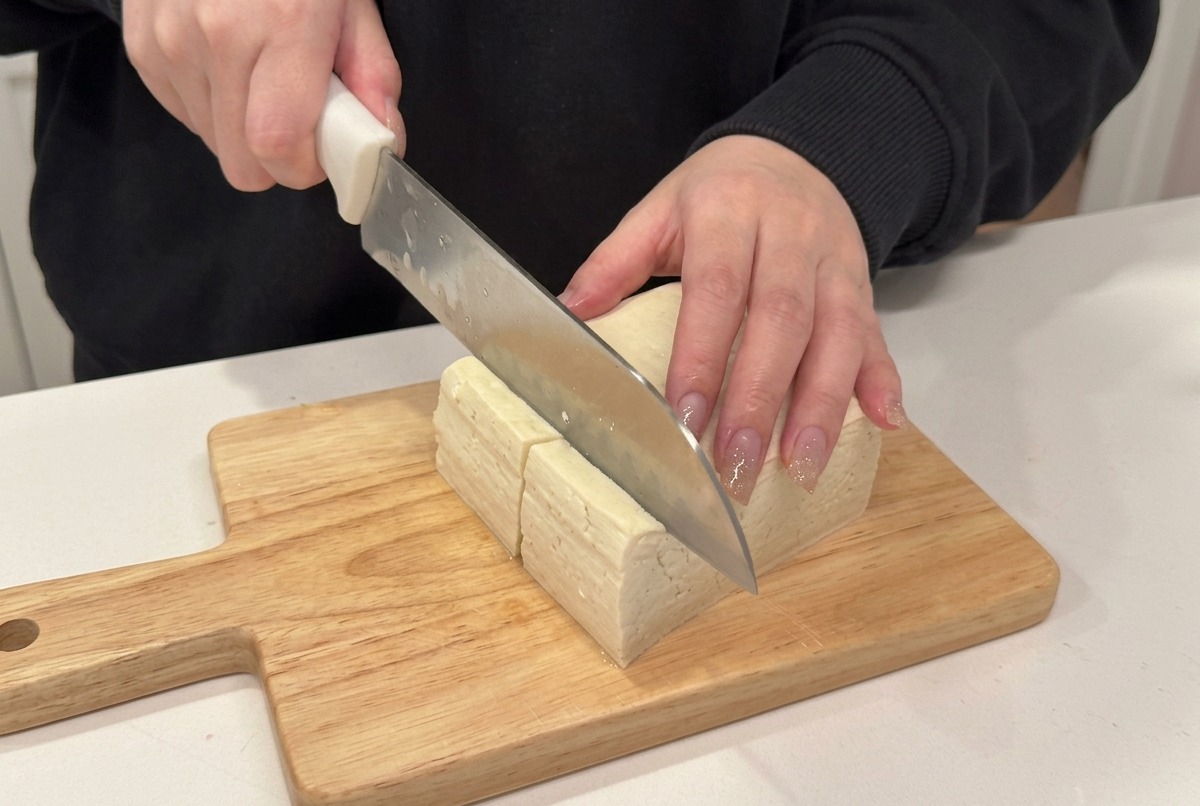
Take a block of soft white tofu and carefully cut it into uniform square cubes on a cutting board. These tofu cubes will absorb the flavors of the spicy kimchi broth during the final simmering stage.
Tip: Cut the tofu into bite-sized cubes for even cooking and easier serving. - 14Add vegetables and tofu
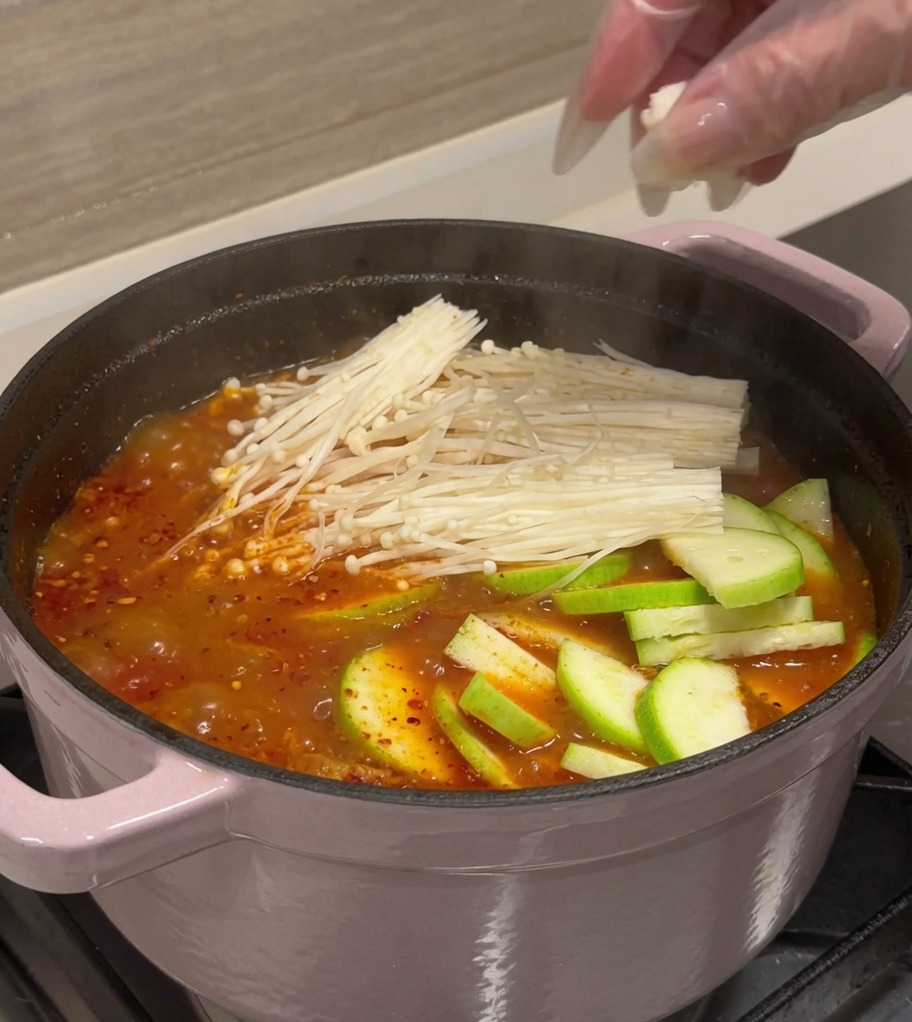
Carefully add the prepared sliced zucchini, cubed tofu, and enoki mushrooms into the pot of simmering spicy broth. Continue to cook everything together for another ten minutes until the vegetables are tender and the tofu is heated through.
Tip: Add the enoki mushrooms towards the end, as they cook very quickly. - 15Garnish and serve
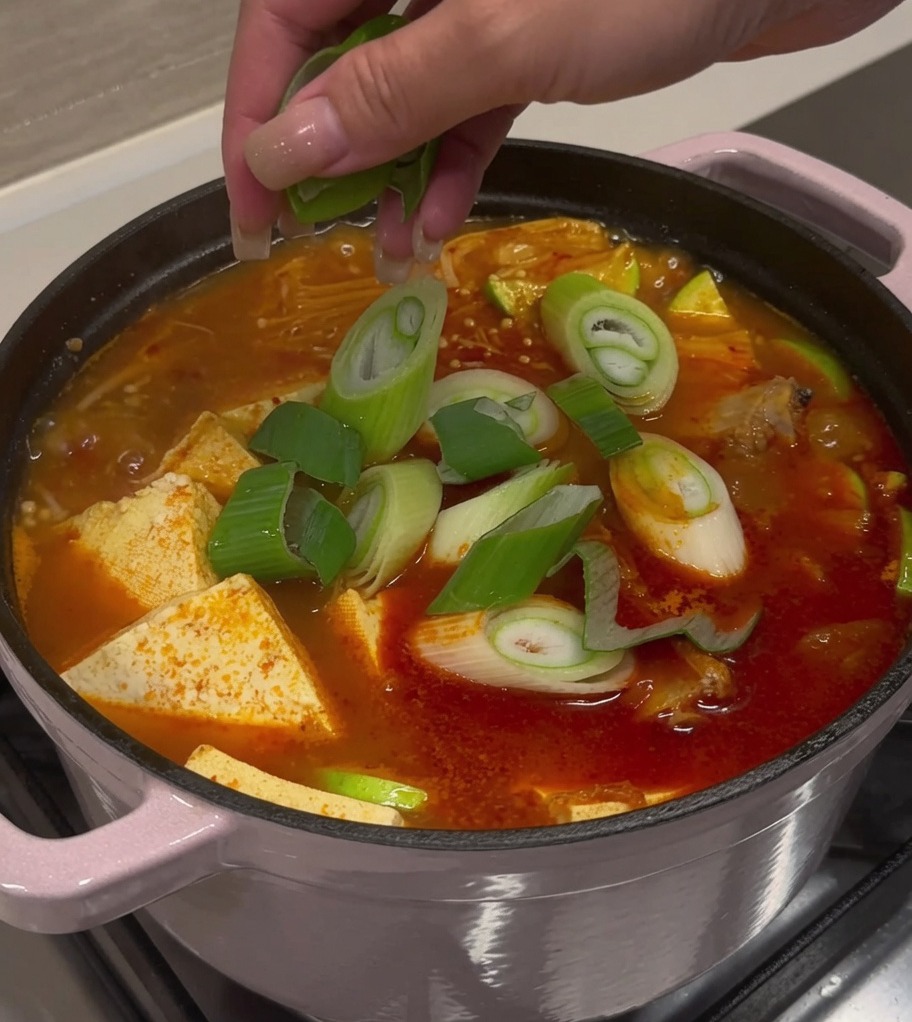
As a final touch, scatter the sliced green onions, red chili peppers, and green chili peppers over the boiling soup. These fresh aromatics add a vibrant color and a final kick of heat to the dish before serving.
Tip: Garnish just before serving to keep the aromatics fresh and crisp.