Homemade Fresh Basil Pesto Sauce
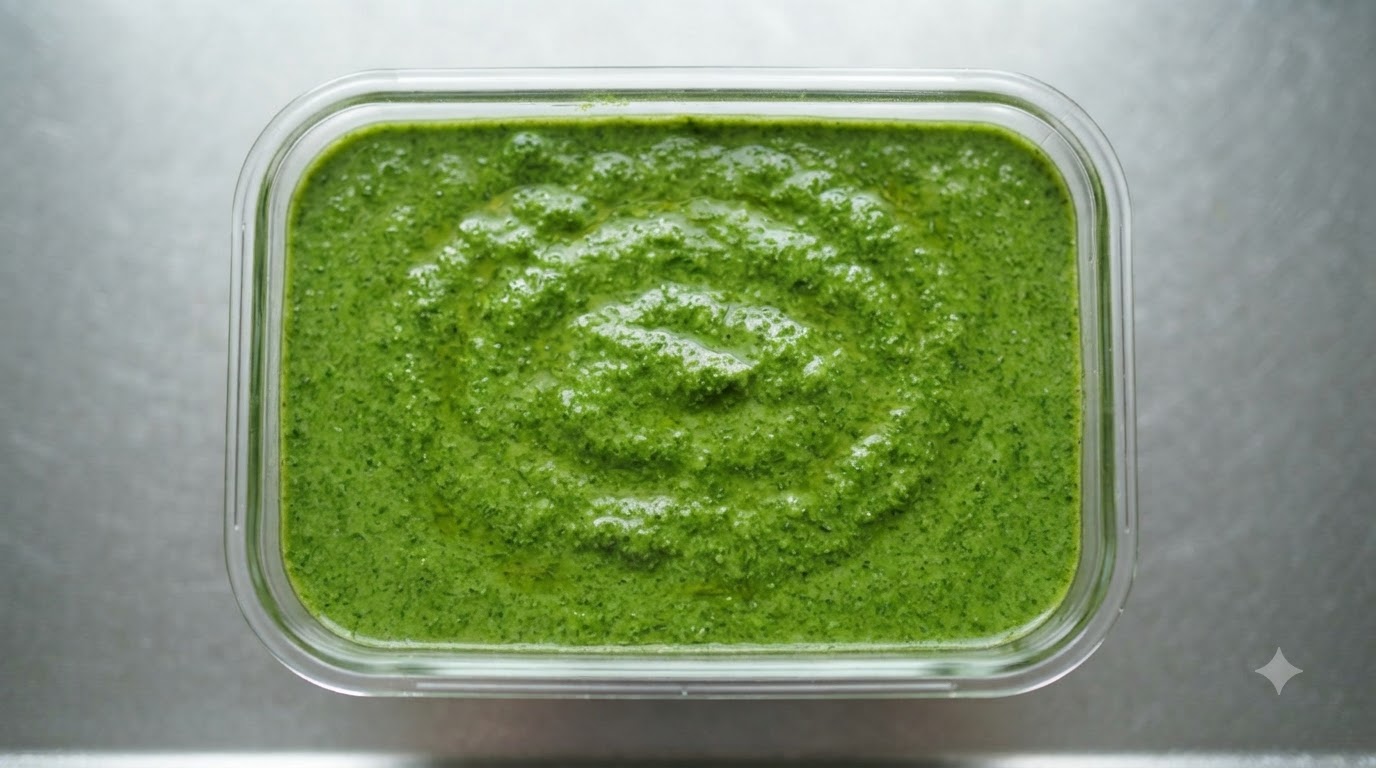
A vibrant, aromatic Italian basil pesto made with fresh basil leaves, rich pine nuts, grated hard cheese, and premium extra virgin olive oil.
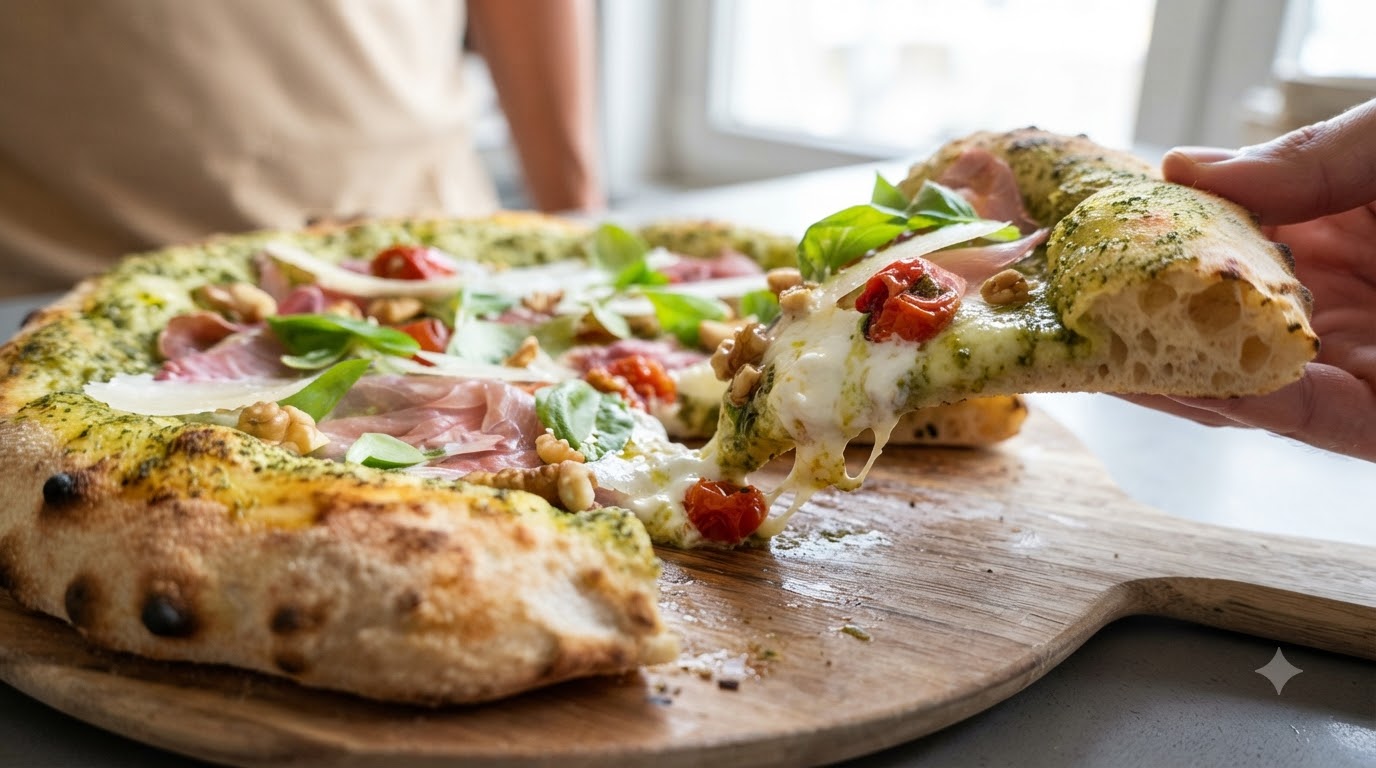
Basil pesto is a classic Italian sauce originating from Genoa, celebrated for its vibrant green color and fresh herbal aroma. Blanching the basil briefly before blending locks in its bright color and softens the raw edge, creating a perfectly balanced base for pizza, pasta, and spreads.
Ingredients
- 2 cups fresh basil leaves
- 100 g hard cheese
- 2 cloves garlic
- 30 g pine nuts
- 80 ml olive oil
- to taste salt
Instructions
- 1Wash and hold basil leaves
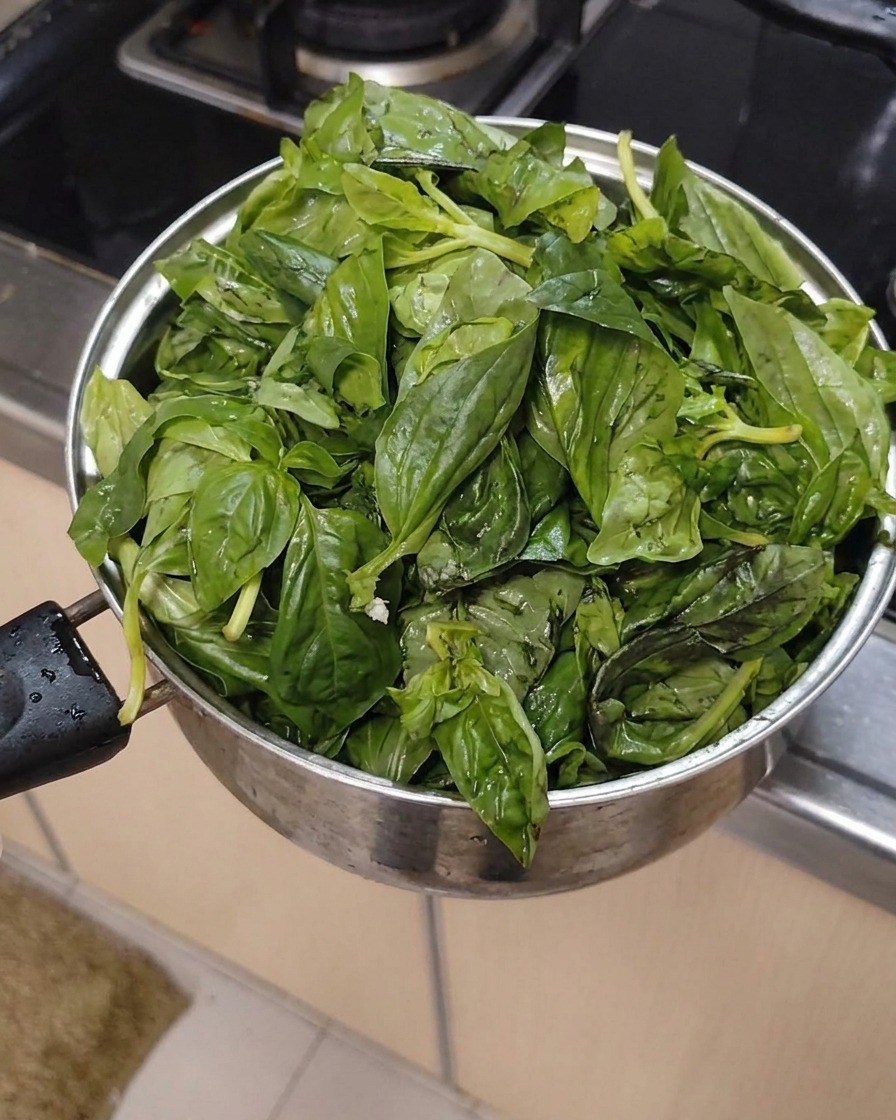
Wash the basil leaves thoroughly to remove any dirt or impurities, then hold them over a pot ready for the next preparation steps.
Tip: Ensure the basil leaves are completely clean and fresh before blanching. - 2Blanch the basil leaves
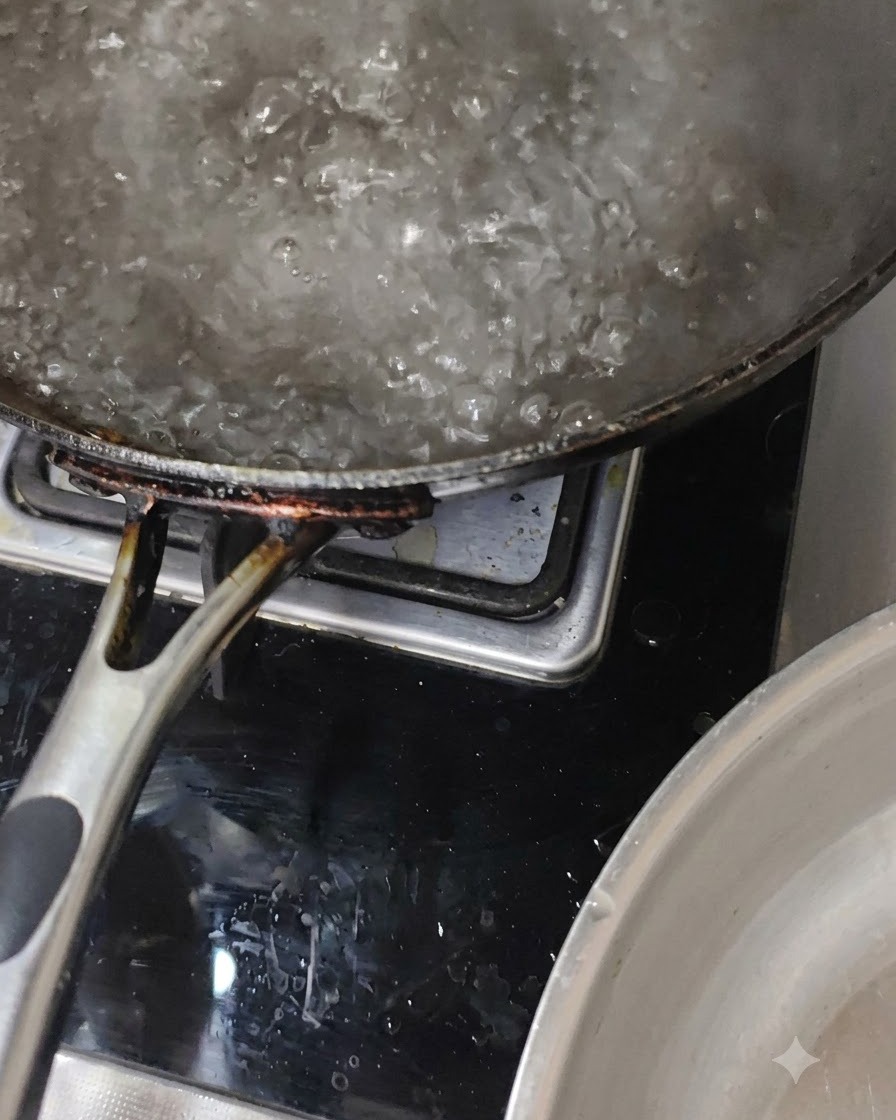
Place the cleaned basil leaves into a pot of boiling water for about ten seconds to lock in their vibrant green color.
Tip: Do not leave the basil in boiling water for too long, or it will lose its freshness and bright color. - 3Transfer to ice water
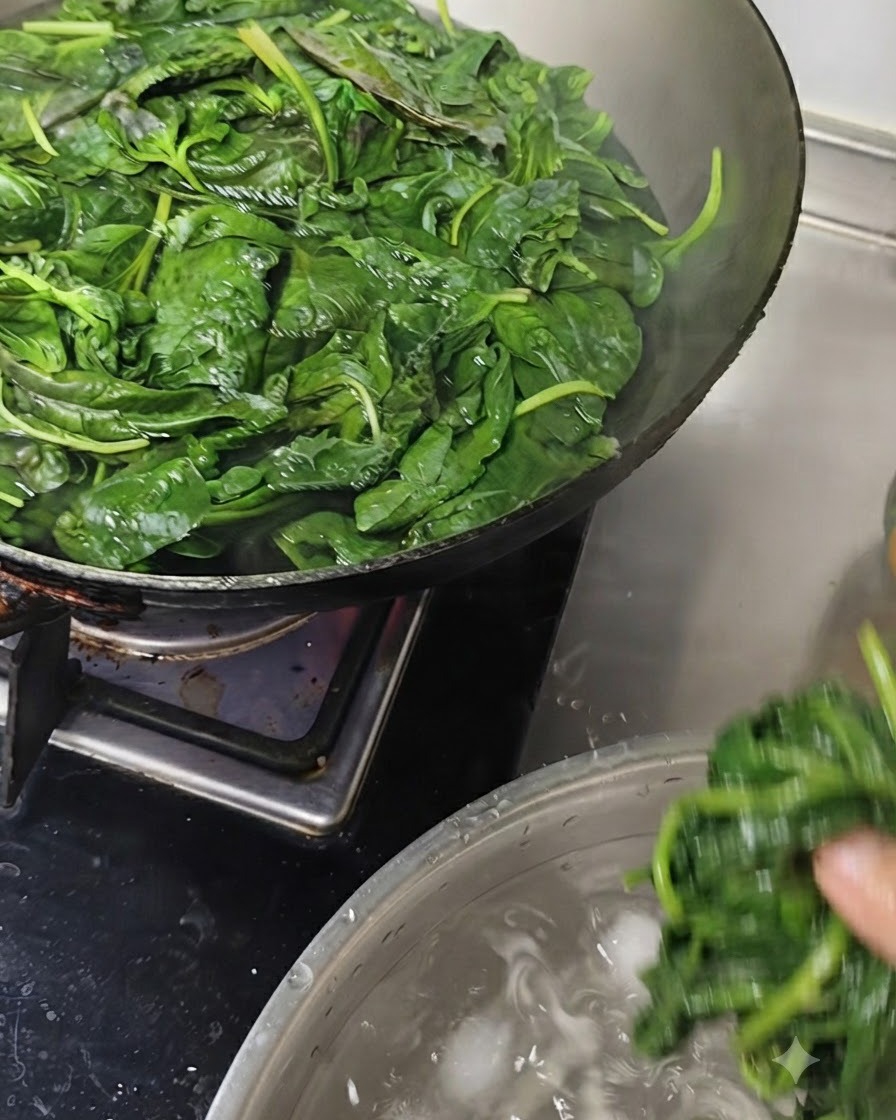
Quickly remove the blanched basil leaves from the boiling water and transfer them directly into a bowl of ice water to stop the cooking process and preserve the green color.
Tip: Ice water cooling is the key secret to keeping the pesto sauce brightly green. - 4Squeeze out excess water
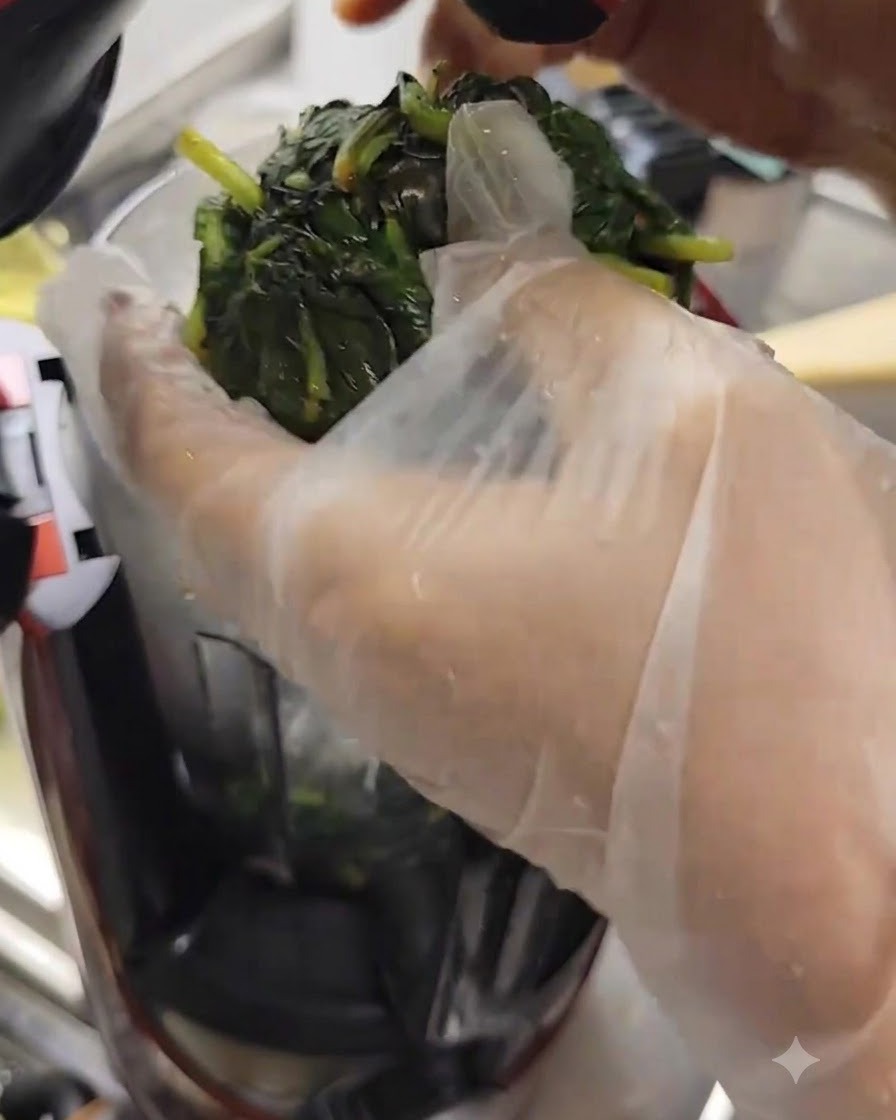
After chilling, take the basil leaves and gently squeeze them with gloved hands to remove as much excess water as possible.
Tip: Removing excess water prevents the pesto sauce from becoming watery and keeps the flavor concentrated. - 5Add cheese and basil to blender
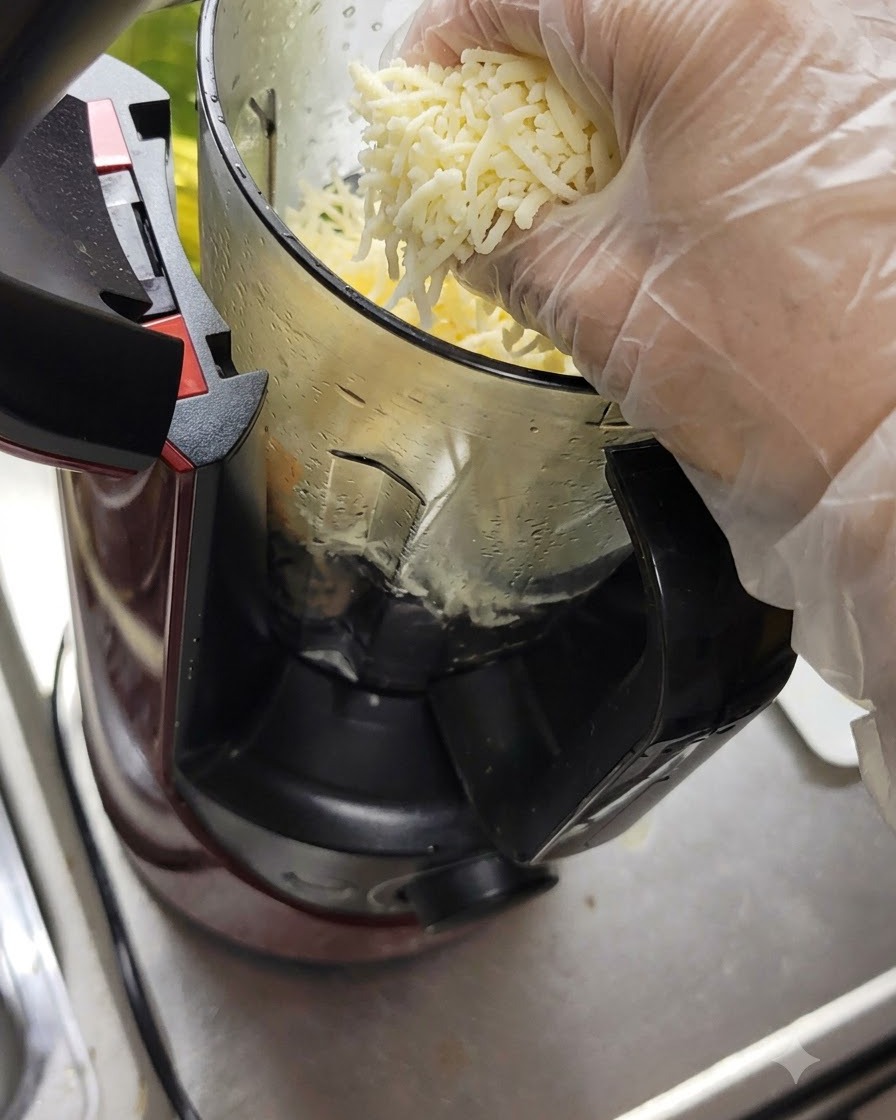
Grate 100g of hard cheese, then add the grated cheese along with the squeezed basil leaves into the blender jar.
Tip: Grate the hard cheese finely so it blends smoothly with the rest of the ingredients. - 6Add pine nuts
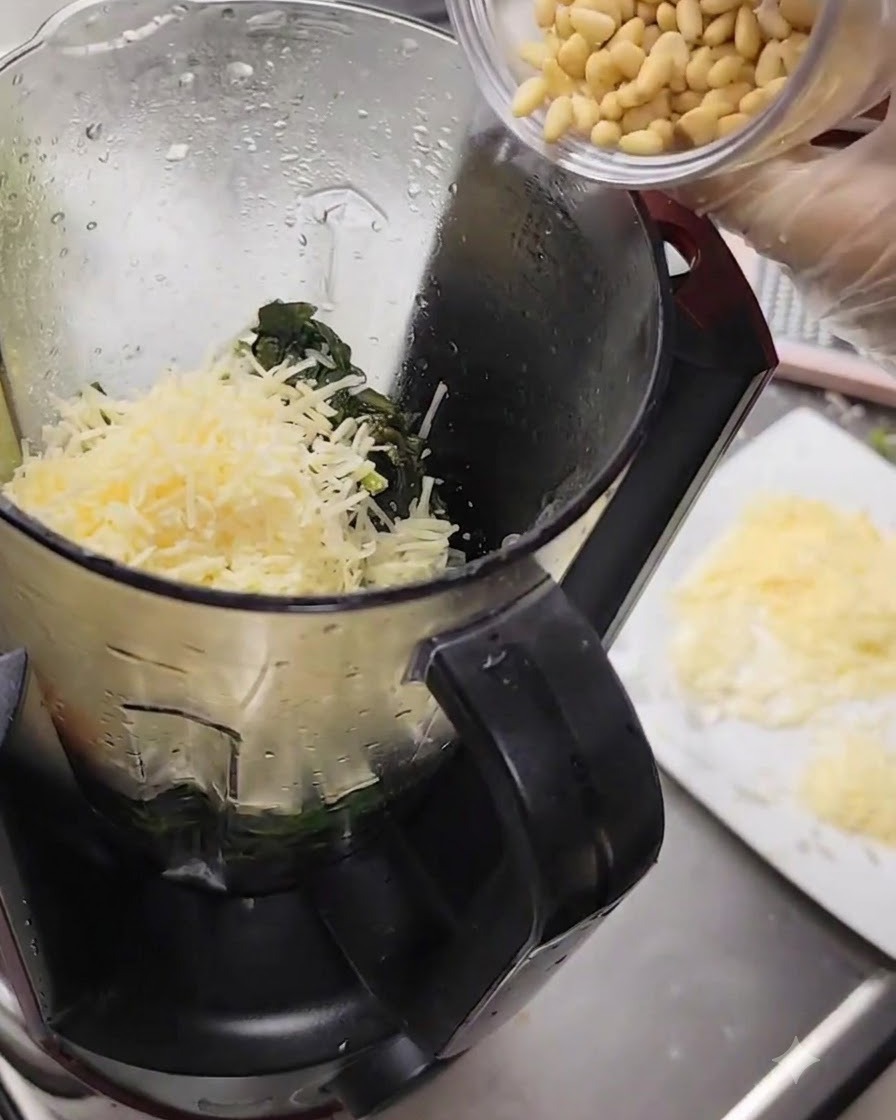
Pour a measured amount of pine nuts from a small container directly into the blender jar along with the basil and cheese.
Tip: Pine nuts give the pesto sauce its characteristic rich and nutty flavor profile. - 7Add olive oil
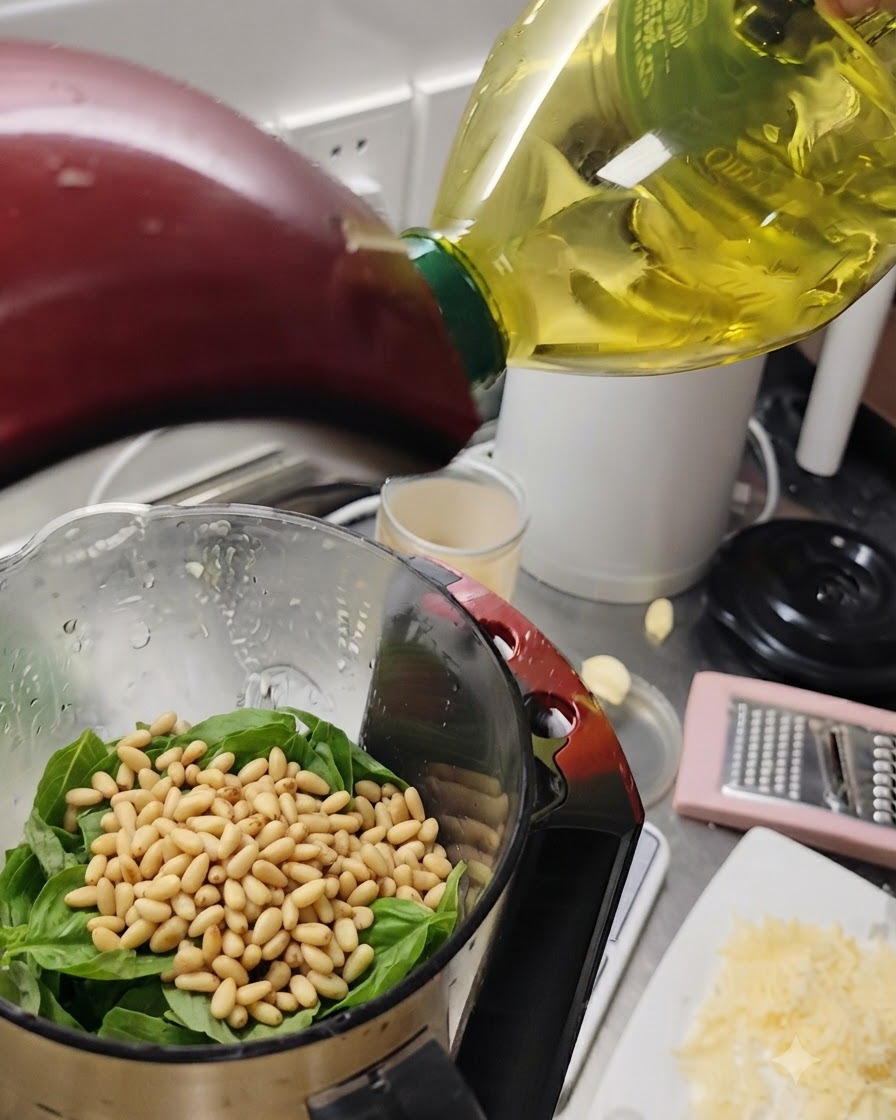
Pour olive oil directly into the blender jar over the layer of basil leaves and pine nuts to help bind the ingredients together during blending.
Tip: Use a good quality extra virgin olive oil for the best flavor profile. - 8Blend the ingredients
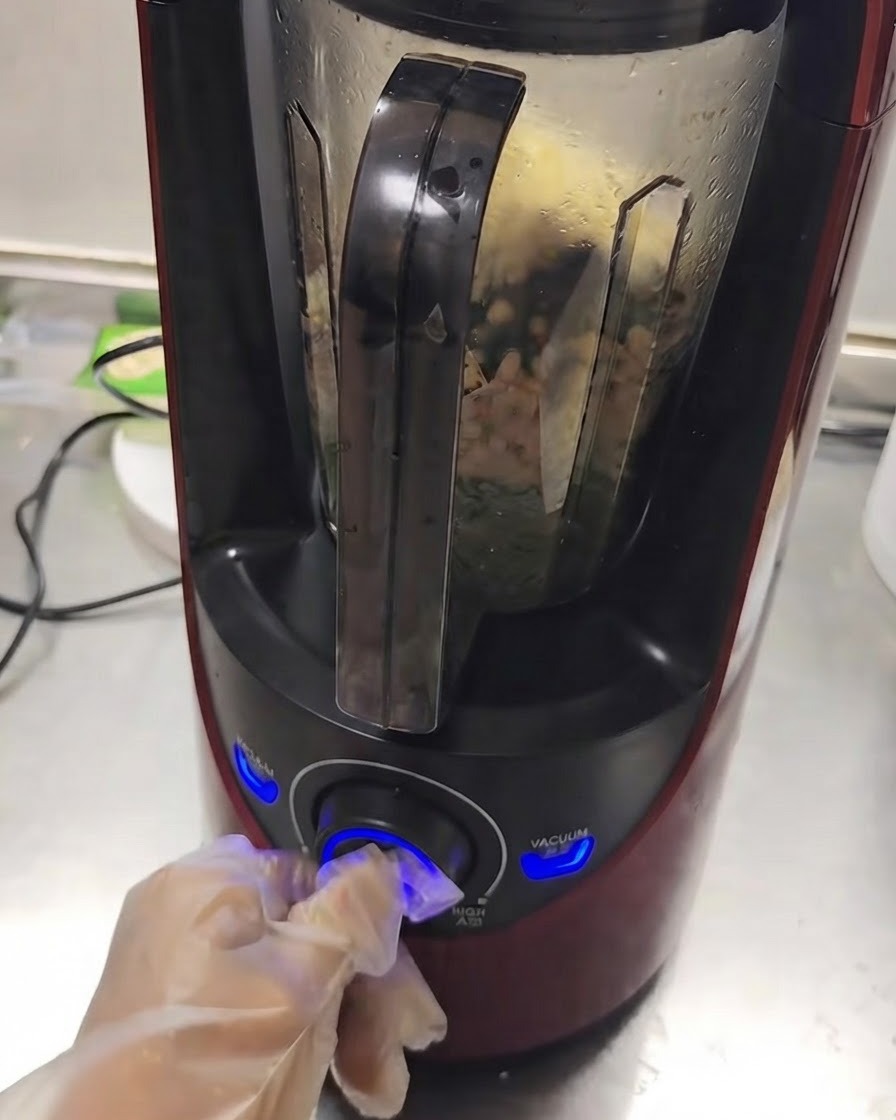
Secure the lid on the blender and process the ingredients on high for about half a minute until thoroughly combined and smooth.
Tip: Keep a close eye on the consistency so the pesto retains a slightly textured, vibrant green finish.