Classic Neapolitan Margherita Pizza
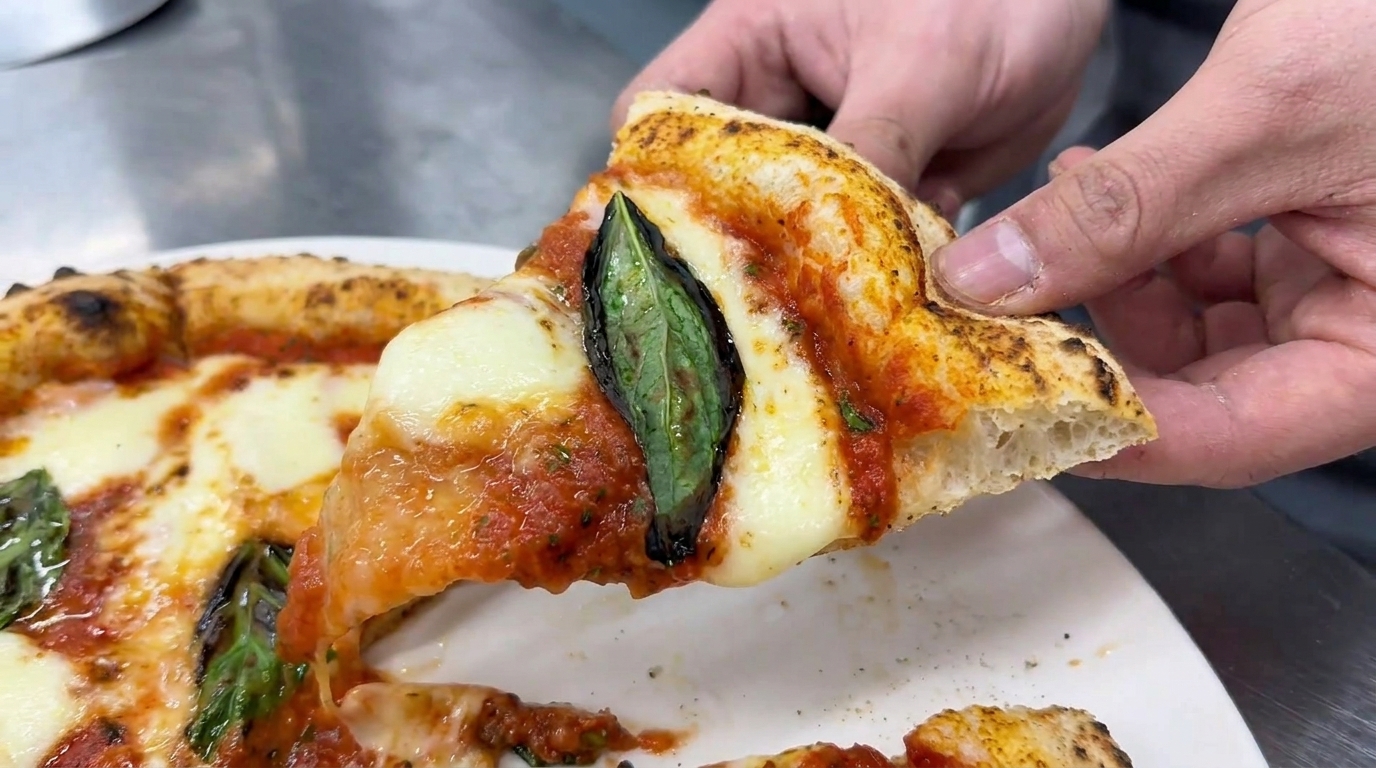
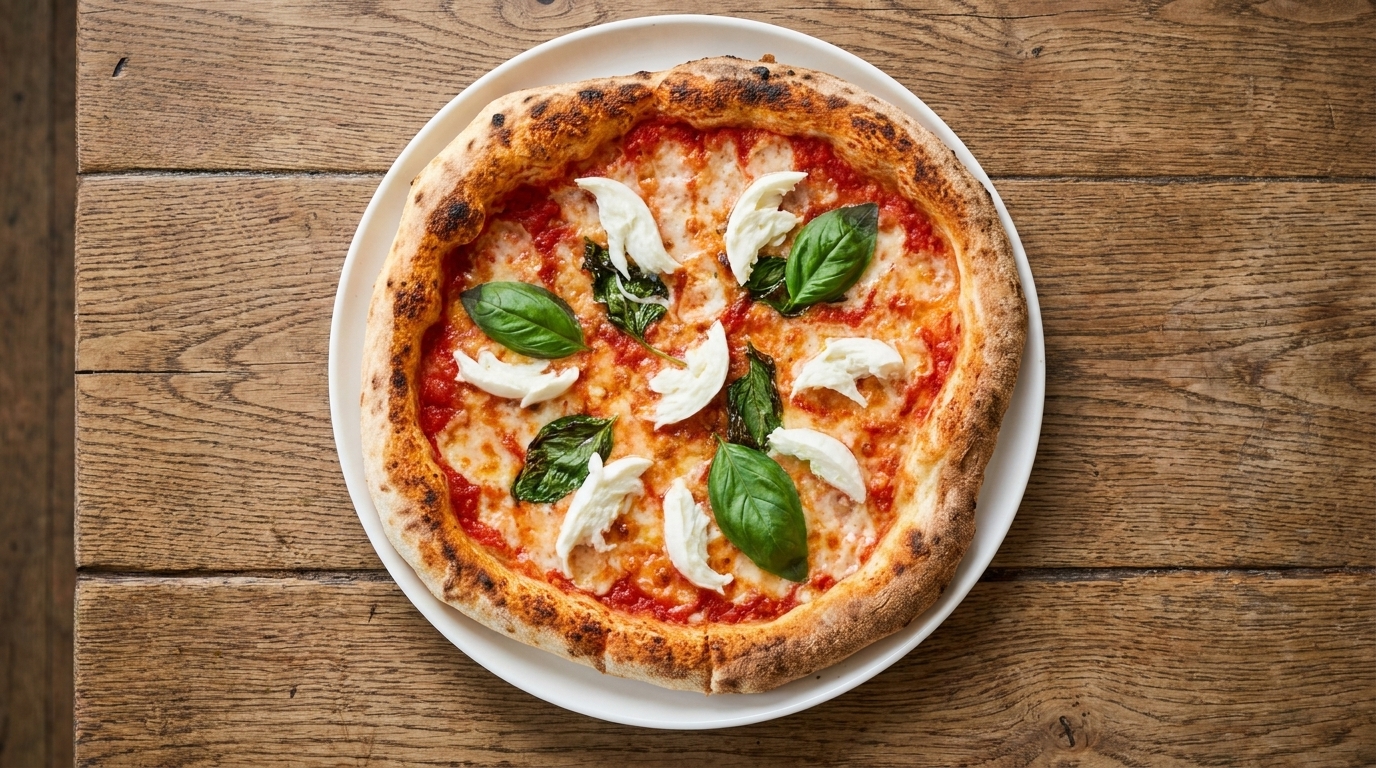
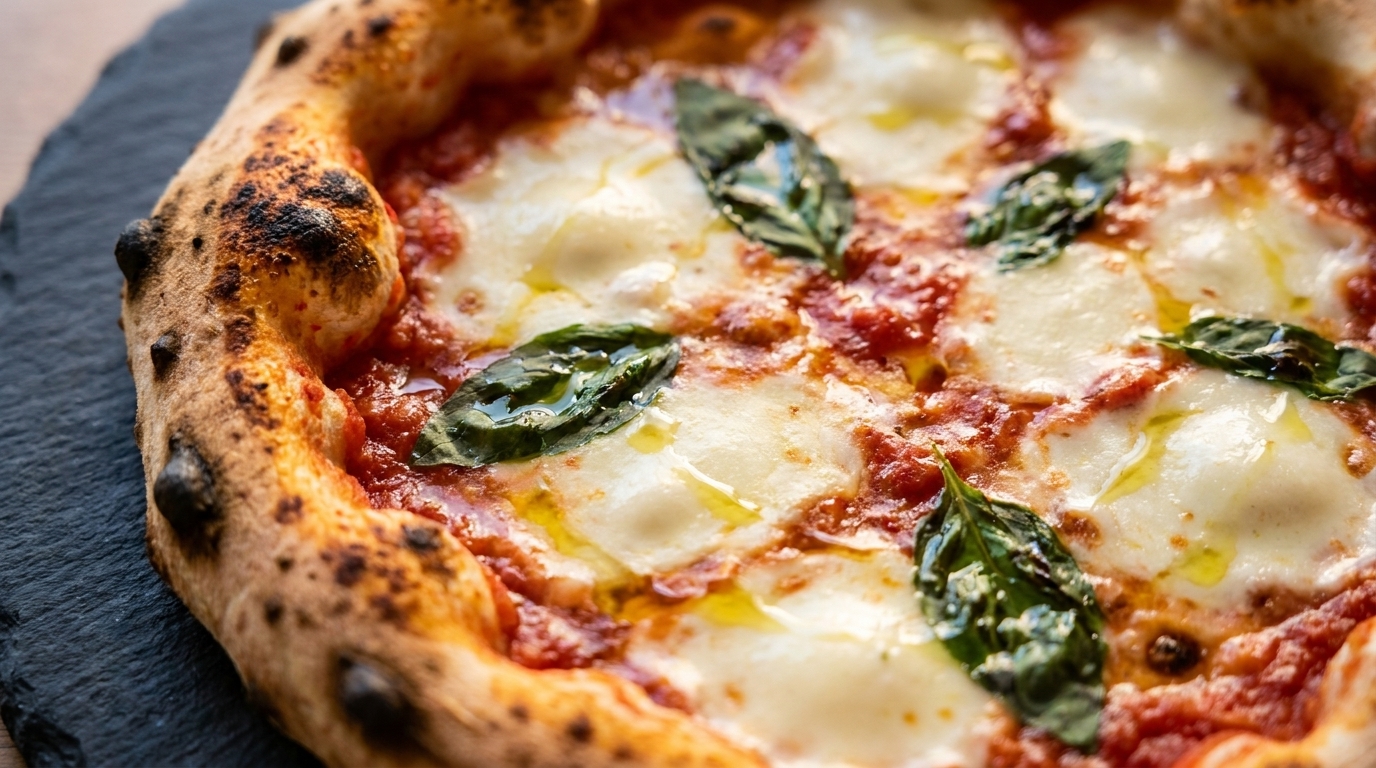
The quintessential Italian classic. A perfectly blistered, airy crust topped with vibrant tomato sauce, creamy buffalo mozzarella, and fresh basil, baked in under two minutes.
True Margherita pizza is a study in simplicity and technique. Originating in Naples, this dish relies on a slow-fermented, high-hydration dough using fine 00 flour to achieve its signature airy, charred crust. Balanced with the brightness of crushed tomatoes and rich buffalo mozzarella, it is a testament to how exceptional ingredients need very little manipulation to shine.
Ingredients
- 500 g cold water
- 3 g dry yeast
- 25 g sea salt
- 900 g Caputo 00 flour
- to taste semolina flour (for dusting)
- to taste tomato sauce
- to taste buffalo mozzarella
- to taste fresh basil leaves
- to taste extra virgin olive oil
Instructions
- 1Measure the cold water
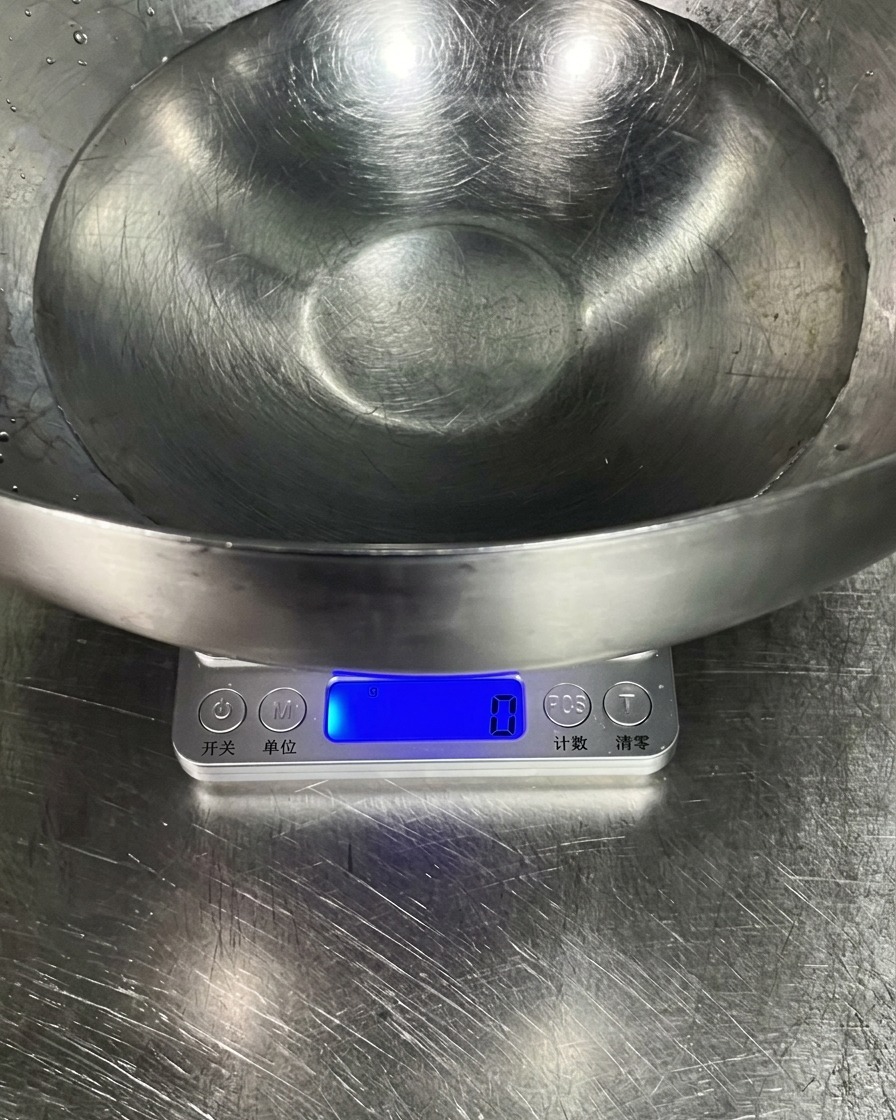
Place a large stainless steel bowl on your digital scale and tare it to zero. Carefully pour in exactly 500 grams of cold water.
Tip: Using cold water slows down the fermentation process of the dough, which allows for better flavor development. - 2Weigh the yeast
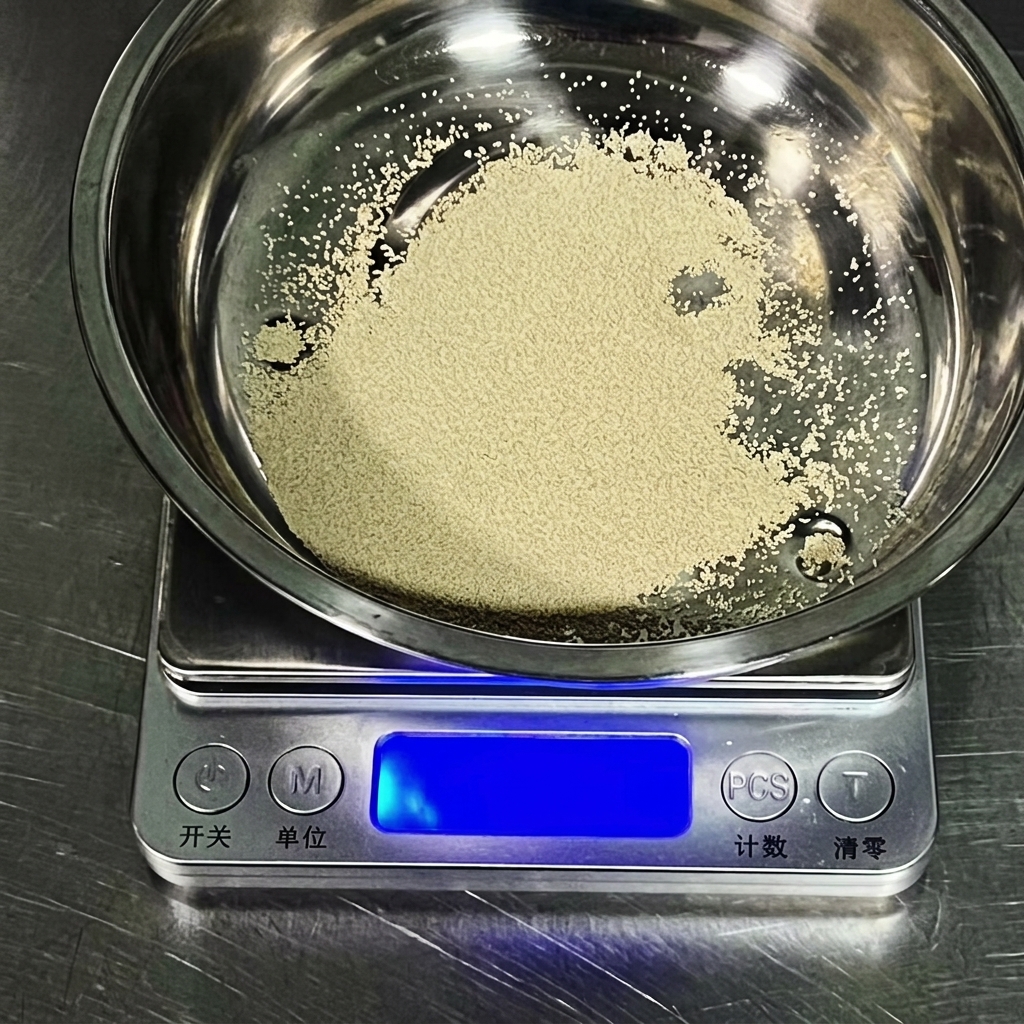
Place a small metal dish onto the kitchen scale, tare it to zero, and carefully weigh out exactly 3 grams of dry yeast.
Tip: Be precise with the yeast measurement; too much yeast can cause the dough to over-ferment and lose structure. - 3Measure the sea salt
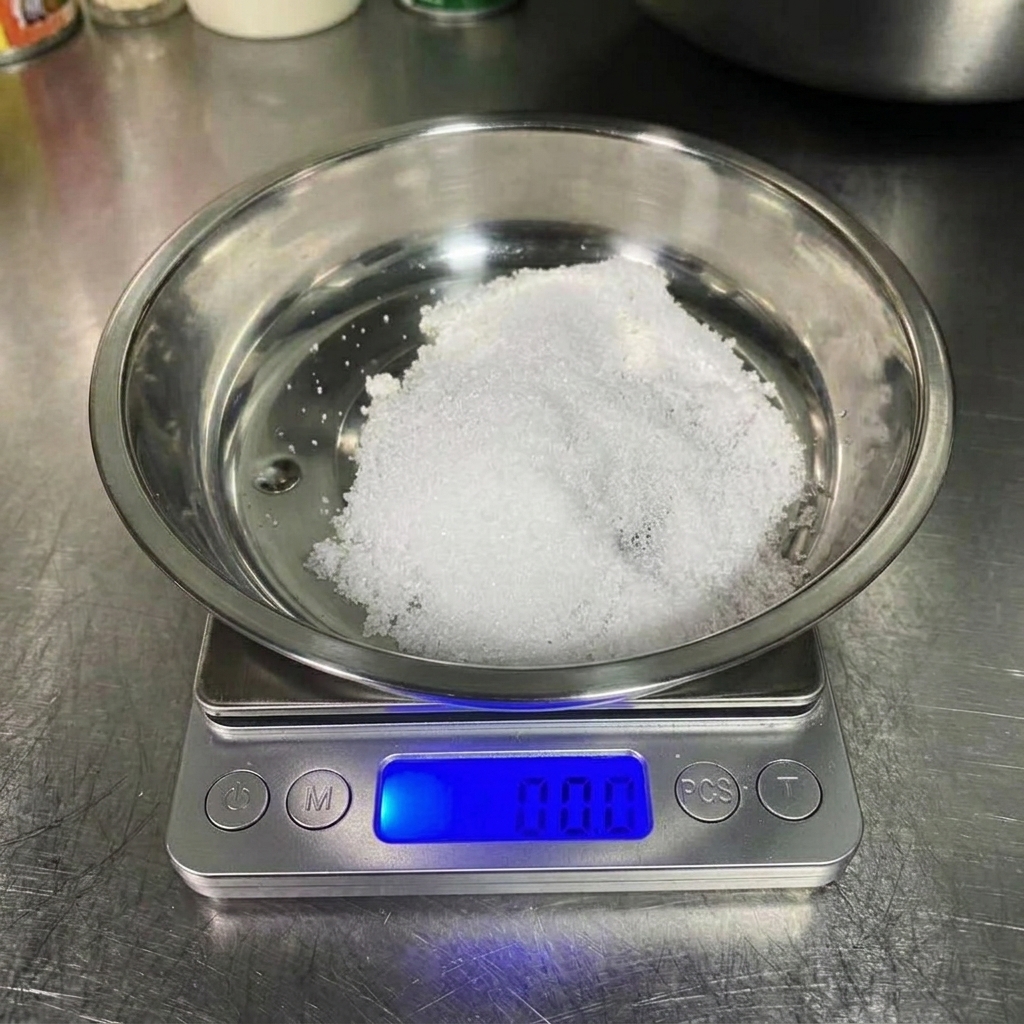
Using another small metal dish, place it on the scale and weigh out exactly 25 grams of sea salt.
Tip: Fine sea salt is recommended here because it dissolves much faster and more evenly into the water. - 4Dissolve the yeast and salt
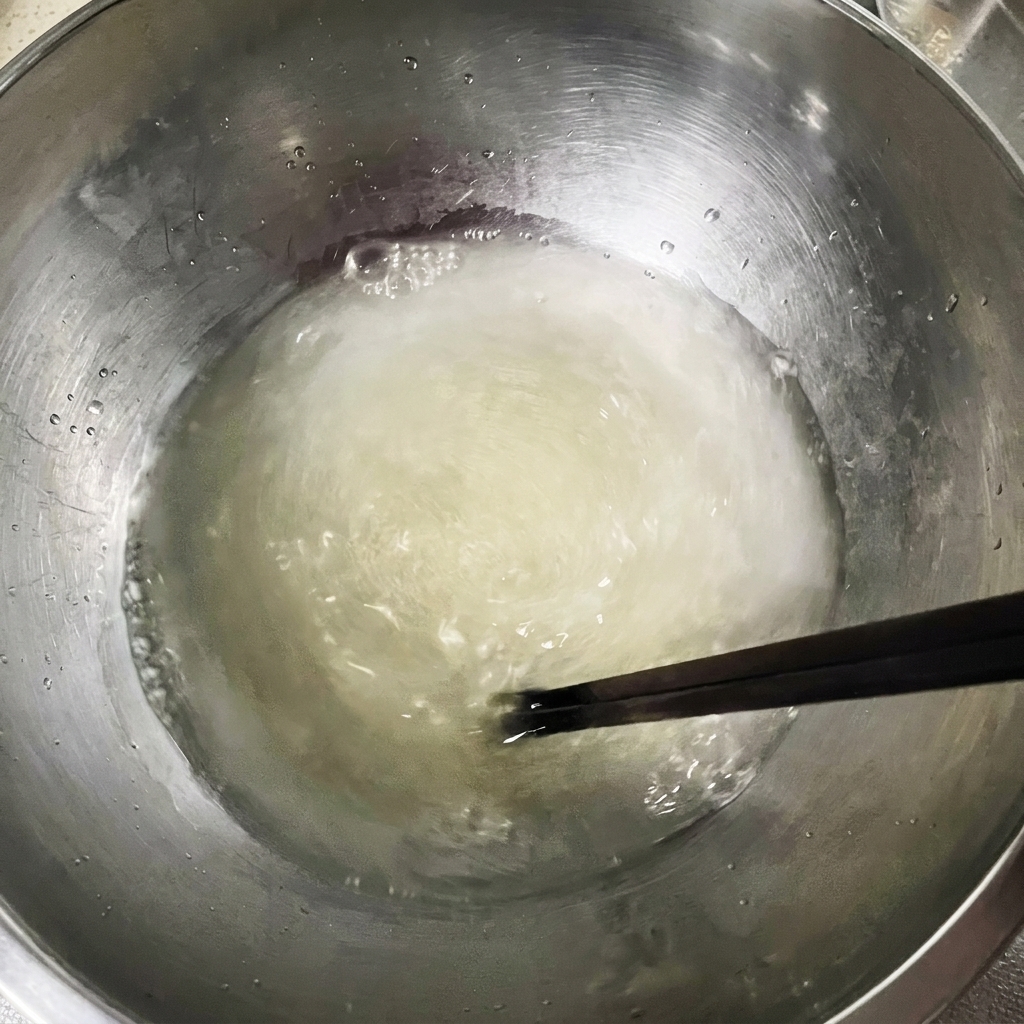
Pour both the measured dry yeast and the sea salt into the bowl of cold water. Use a pair of chopsticks to stir the mixture thoroughly until both ingredients are completely dissolved.
Tip: Dissolving the salt and yeast in the water first ensures they are evenly distributed throughout the dough, preventing uneven rising. - 5Weigh the 00 flour
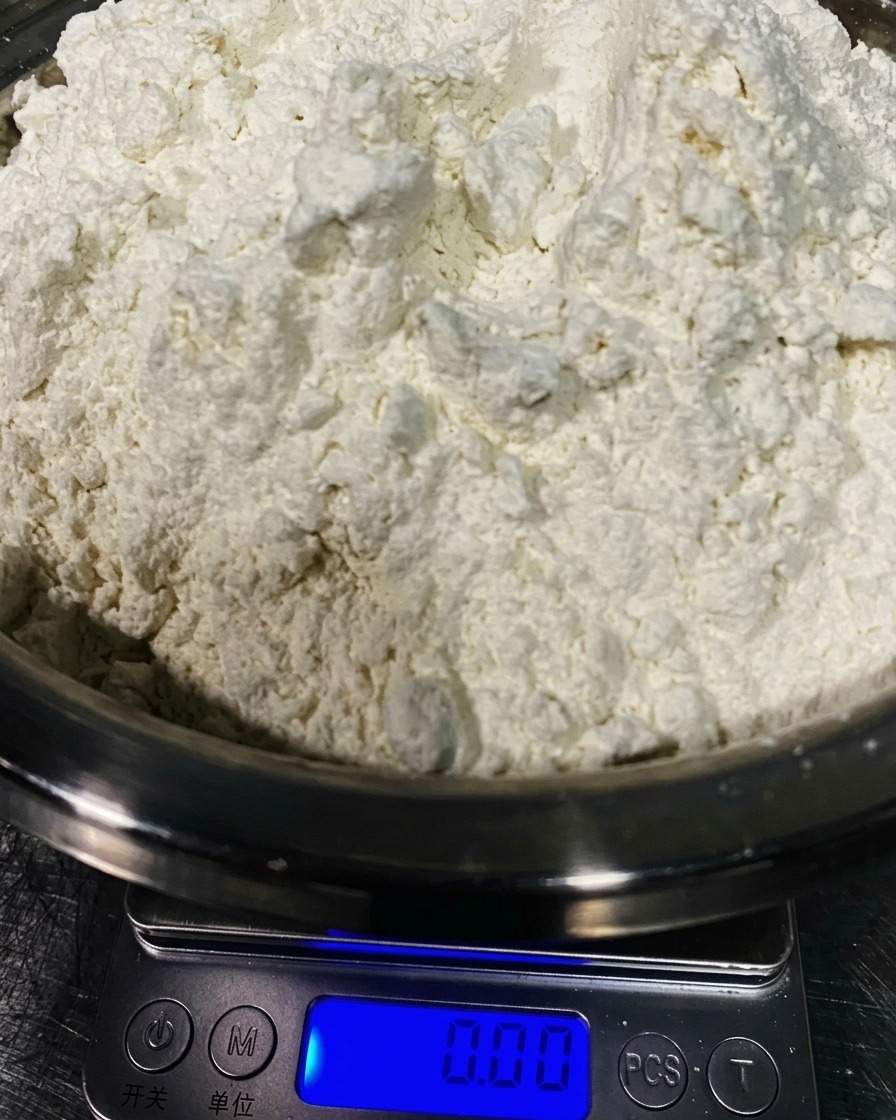
Place a large bowl onto the scale, tare it, and measure out exactly 900 grams of Caputo 00 flour.
Tip: Type 00 flour is extremely fine and has the ideal protein content for creating a classic, chewy, and tender Margherita pizza crust. - 6Form a shaggy dough
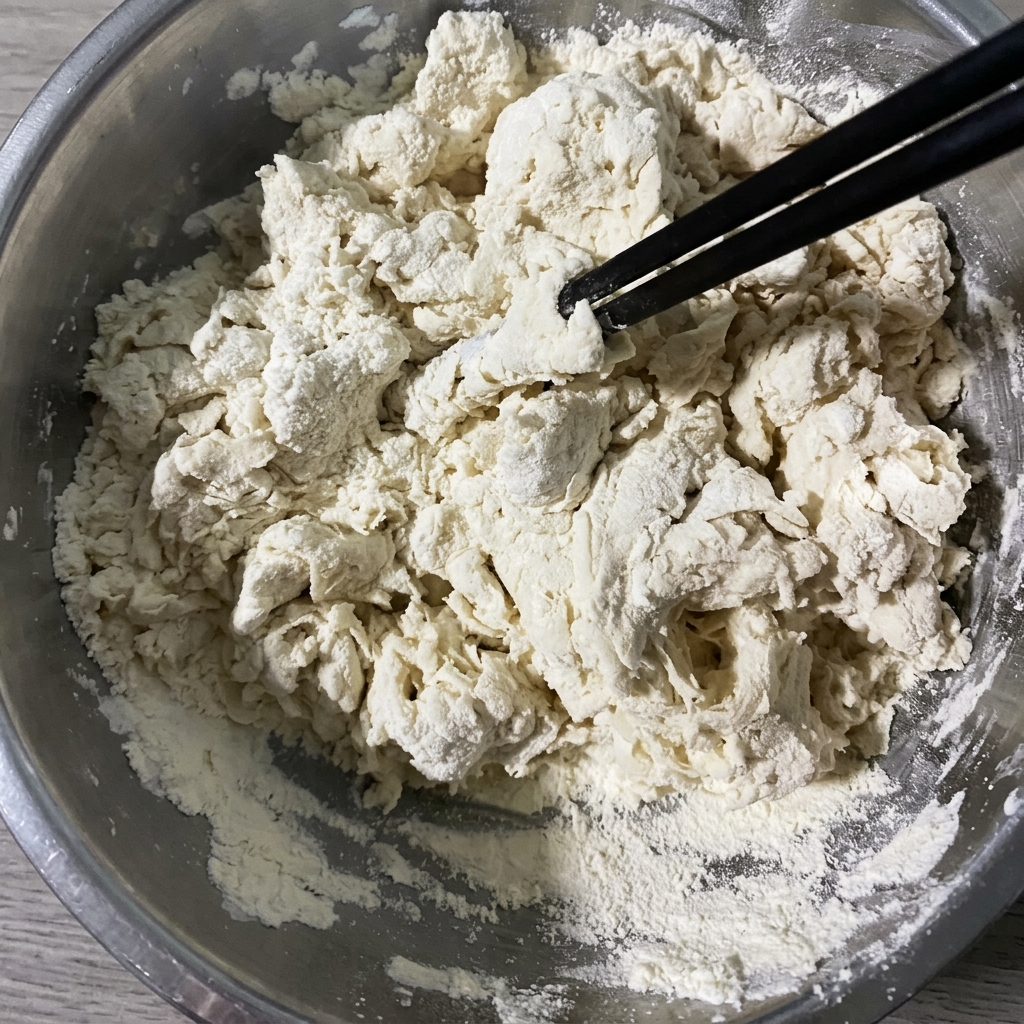
Gradually add the weighed flour into the bowl with the yeast and salt water mixture. Use your chopsticks to continuously stir and incorporate the dry flour into the liquid until it comes together into a rough, flaky, and shaggy texture.
Tip: At this stage, you only want to hydrate the flour completely. Dont worry if it looks very messy and unrefined; it will smooth out during the kneading process. - 7Knead the dough
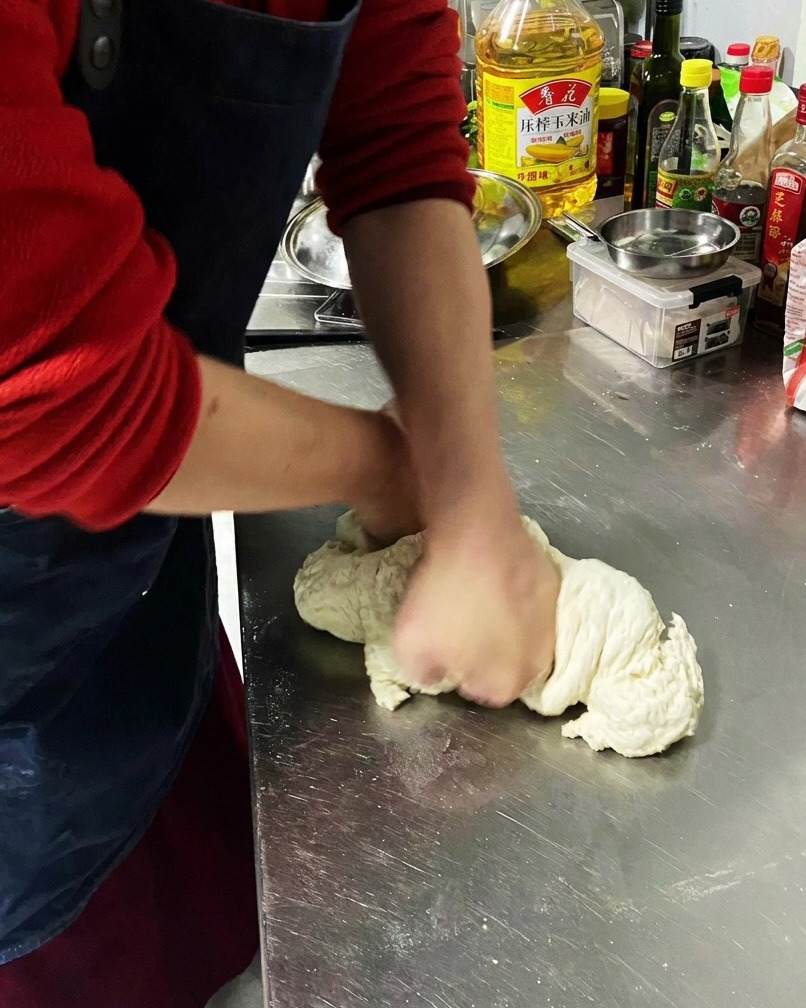
Place the dough on a clean work surface and knead it vigorously for 20 minutes. This process develops the gluten structure, which is essential for a light and airy pizza crust.
Tip: If the dough feels too sticky, you can dust your hands with a small amount of flour, but try to avoid adding too much as it can make the dough tough. - 8Shape the dough
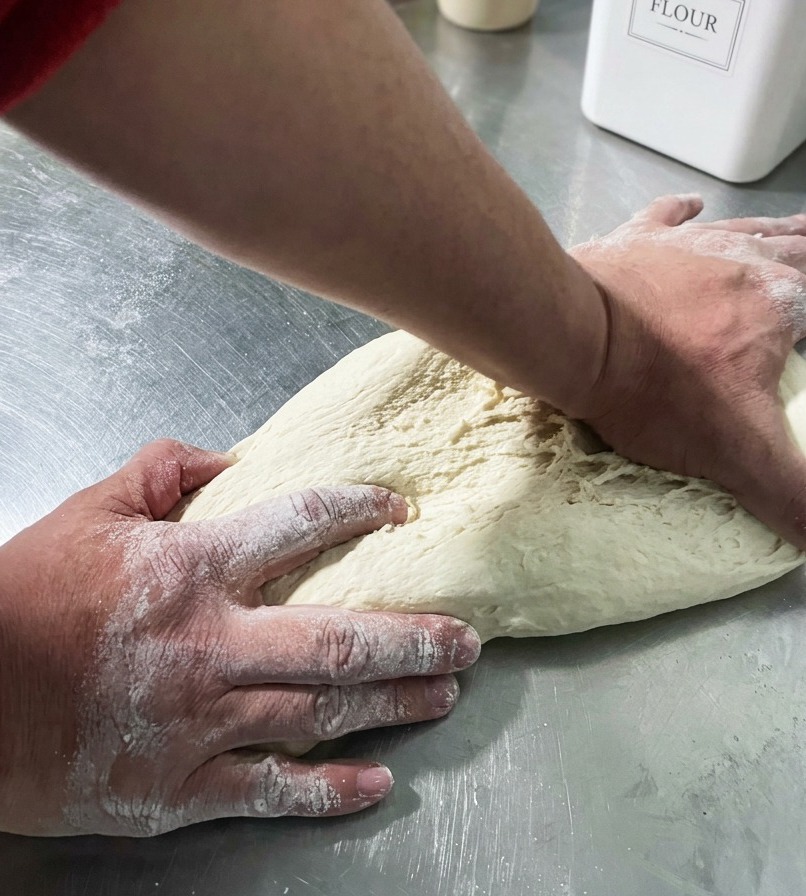
After kneading, shape the dough into a large, smooth, round ball. Use both hands to tuck the edges underneath, creating a tight surface tension on top.
Tip: A tight dough ball will hold its shape better during the fermentation process. - 9Stretch the dough
Once fermented, gently stretch the dough. You can use a tossing motion to carefully widen the base into a thin, circular shape.
Tip: Work gently to maintain the air bubbles created during fermentation, which will result in a beautifully charred, airy crust. - 10Flatten the base
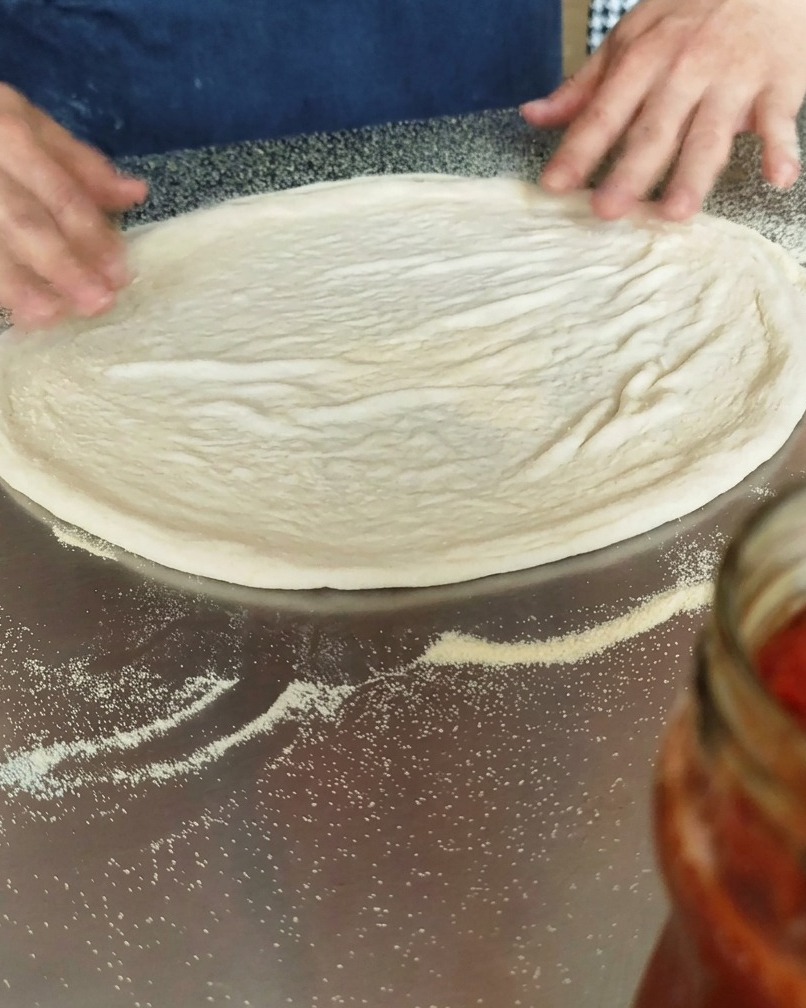
Place the stretched dough onto a work surface that has been lightly dusted with semolina flour. Gently press the dough flat to ensure an even thickness.
Tip: The semolina flour prevents the dough from sticking to the surface and adds a pleasant, slightly gritty texture to the crust. - 11Apply tomato sauce
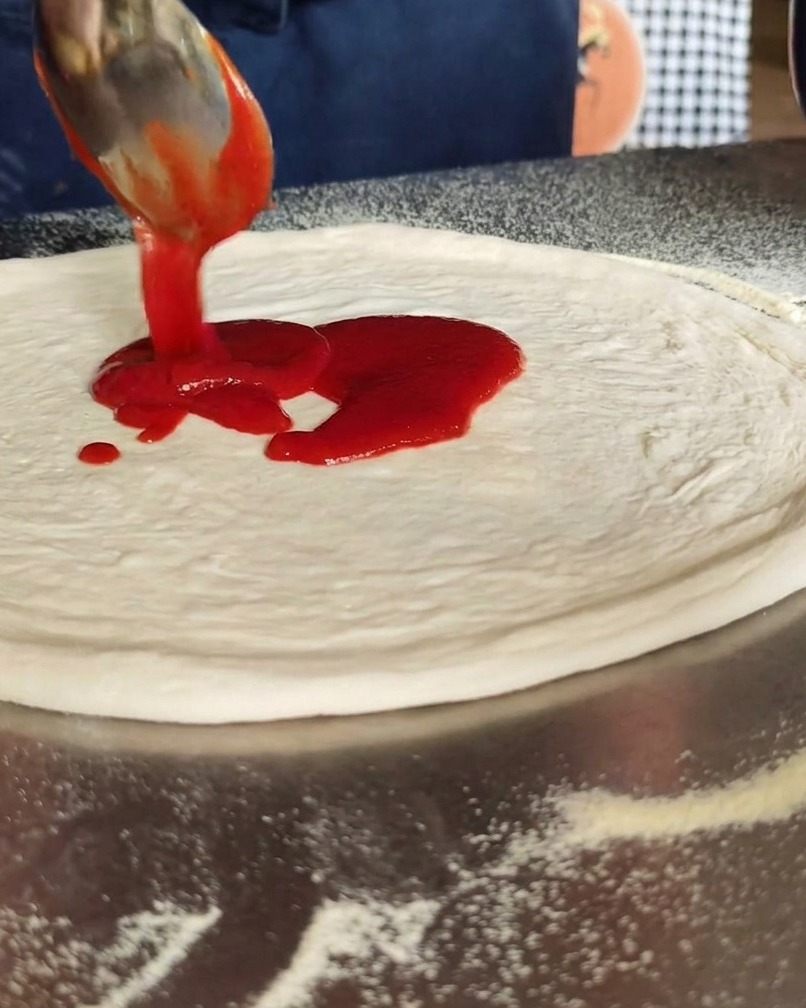
Spoon vibrant red tomato sauce onto the center of the dough. Using the back of the spoon, spread the sauce in a circular motion towards the edges, leaving a small border for the crust.
Tip: Do not over-sauce the pizza; a thin, even layer is all you need to keep the crust crisp. - 12Add toppings
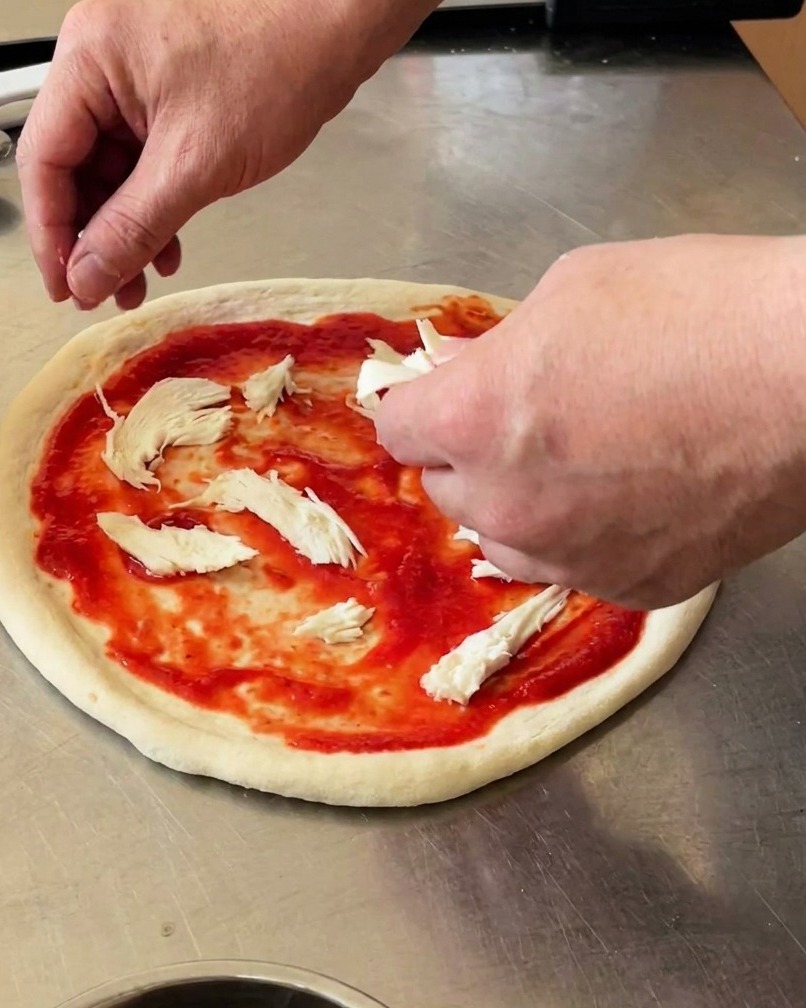
Distribute torn pieces of buffalo mozzarella cheese evenly over the tomato sauce. Add fresh basil leaves on top to provide a bright, herbal contrast.
Tip: Tearing the mozzarella by hand helps it melt more evenly and provides a better texture than pre-sliced cheese. - 13Drizzle with olive oil
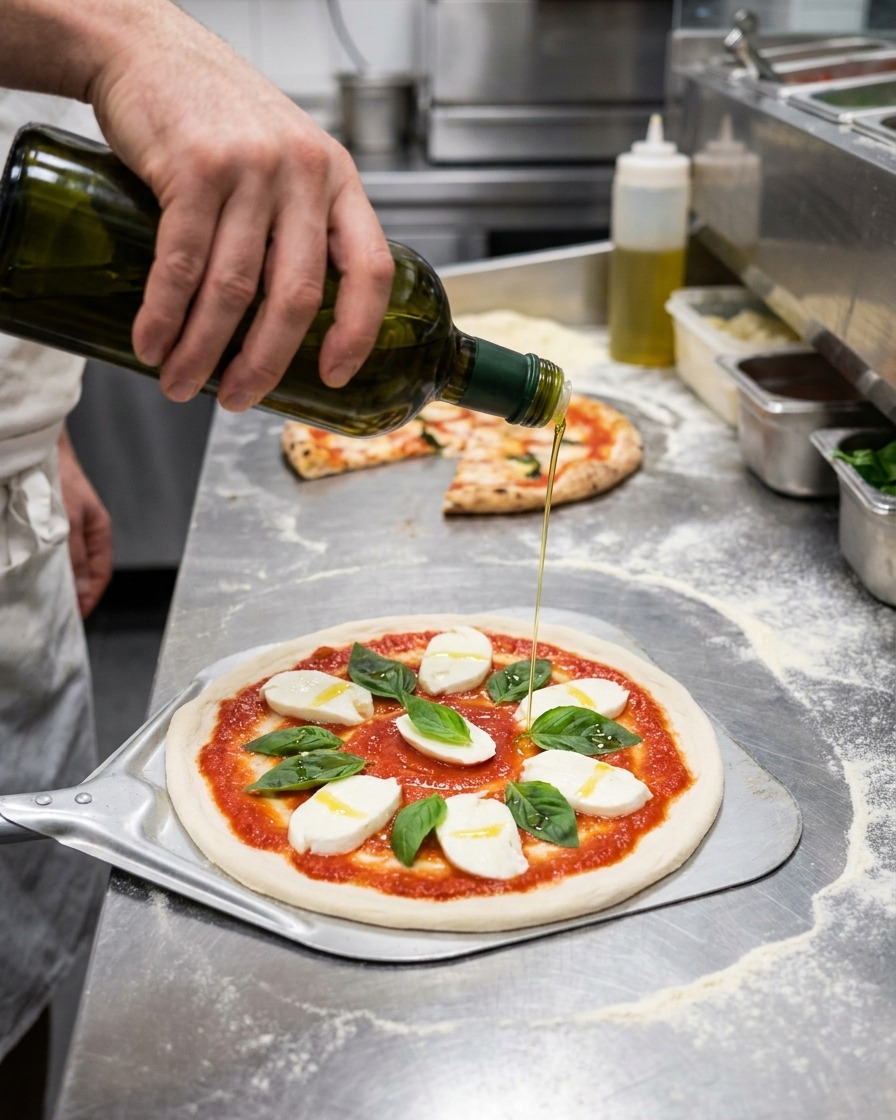
Before baking, take a small amount of extra virgin olive oil and drizzle it evenly over the top of the tomato sauce, buffalo mozzarella, and fresh basil leaves. This adds richness and helps the ingredients meld together during the high-heat bake.
Tip: A little goes a long way; use a steady hand to get a nice, thin stream of oil across the pizza. - 14Prepare to bake
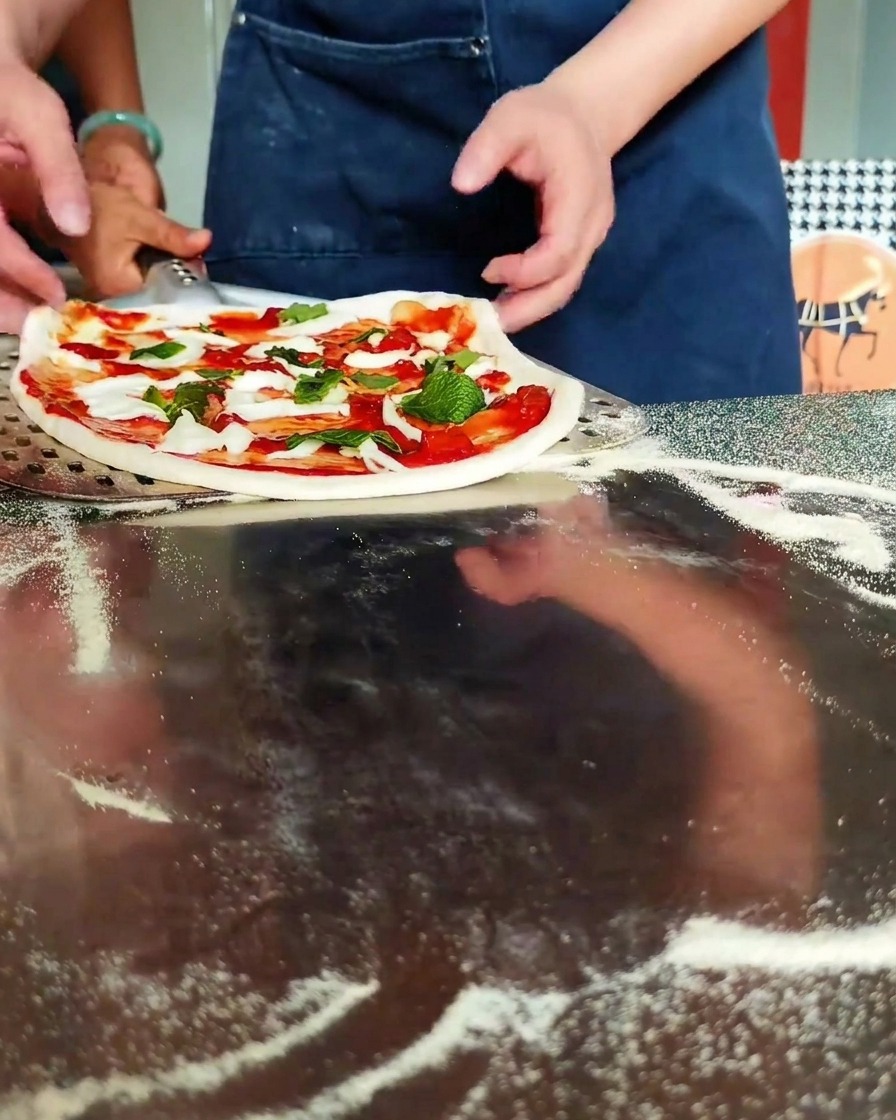
With the pizza fully assembled and topped, carefully slide the perforated metal pizza peel underneath the base. Ensure the dough is not sticking to your work surface by giving it a gentle shake before pulling it onto the peel.
Tip: If the dough feels like it is sticking, lift the edge and lightly dust a pinch of flour underneath before pulling it onto the peel. - 15Launch the pizza
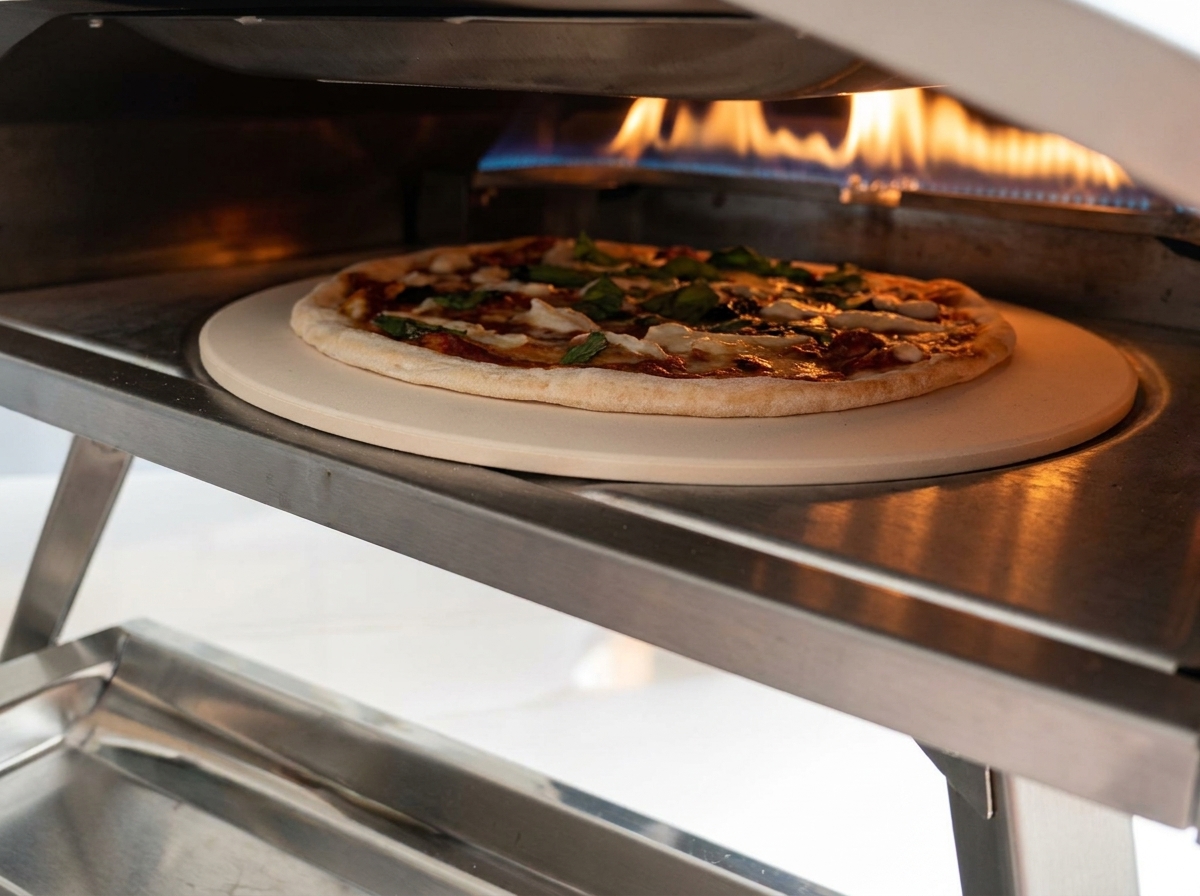
With the oven preheated to 400 degrees Celsius, confidently slide the pizza off the peel and onto the hot baking stone. Ensure it is positioned centrally to get an even bake from the surrounding heat and flames.
Tip: Work quickly to minimize heat loss from the oven while the door is open. - 16Rotate the pizza
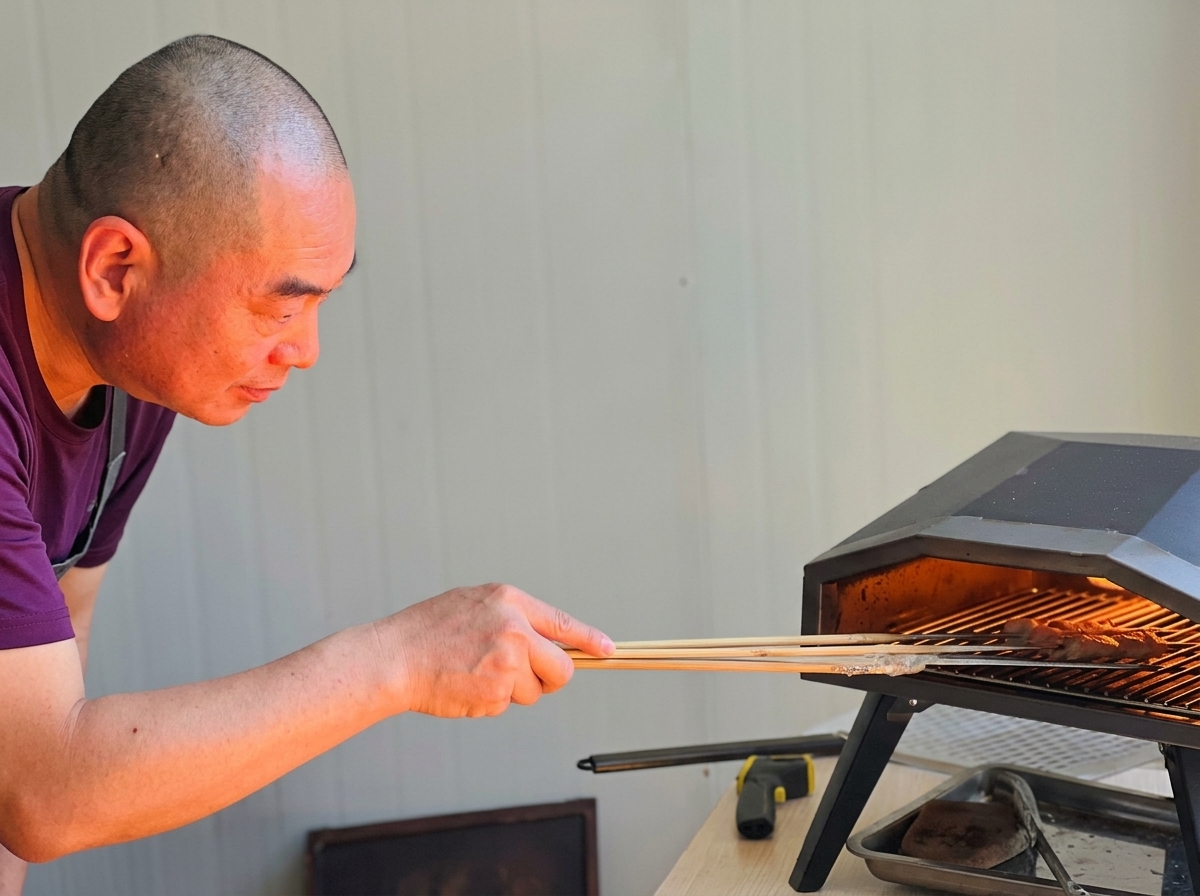
After about 30 seconds, use a small, round turning peel to rotate the pizza. This ensures the crust bakes evenly and the mozzarella melts perfectly across the surface as the heat hits it from different angles.
Tip: Rotate the pizza every 15-20 seconds for the most consistent leopard-spotted crust. - 17Remove and serve
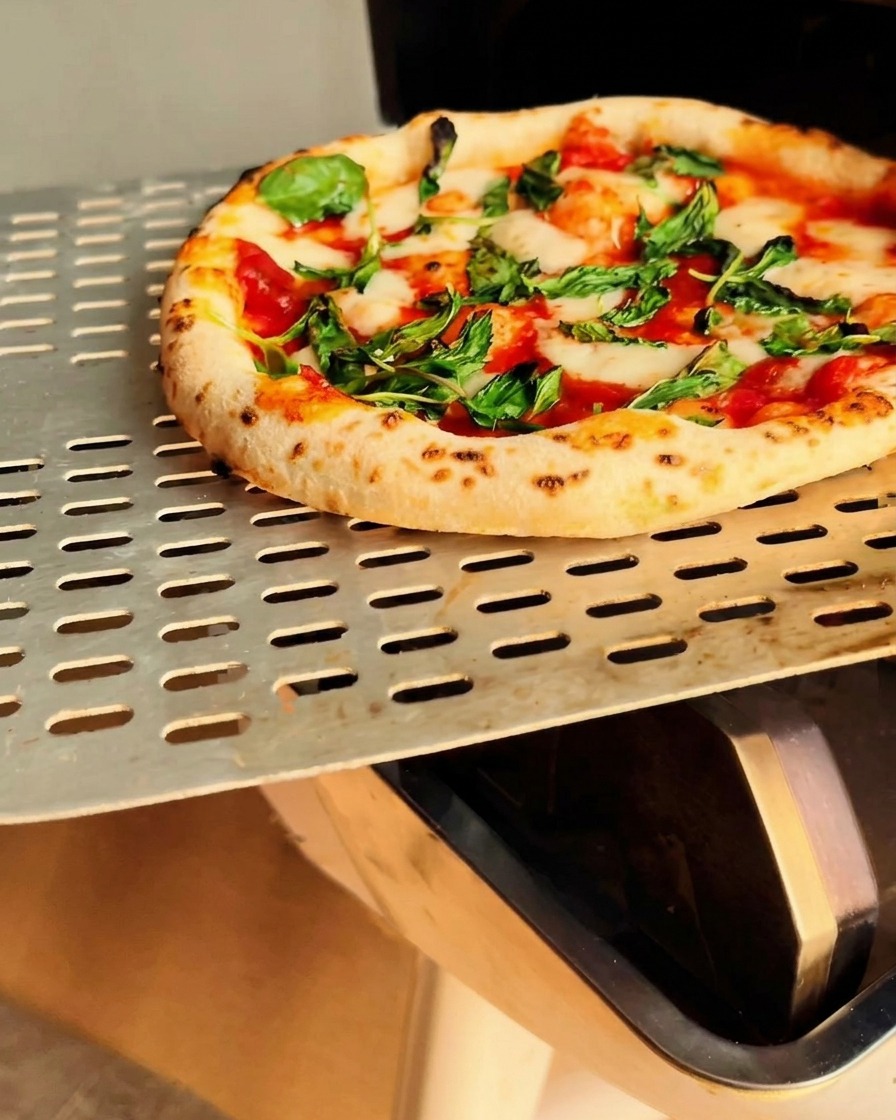
Once the crust is beautifully puffed and blistered and the mozzarella has melted, remove the pizza from the oven using your peel. The entire process takes just about one minute at this high temperature.
Tip: Transfer to a cutting board immediately to keep the base crispy while you slice it.