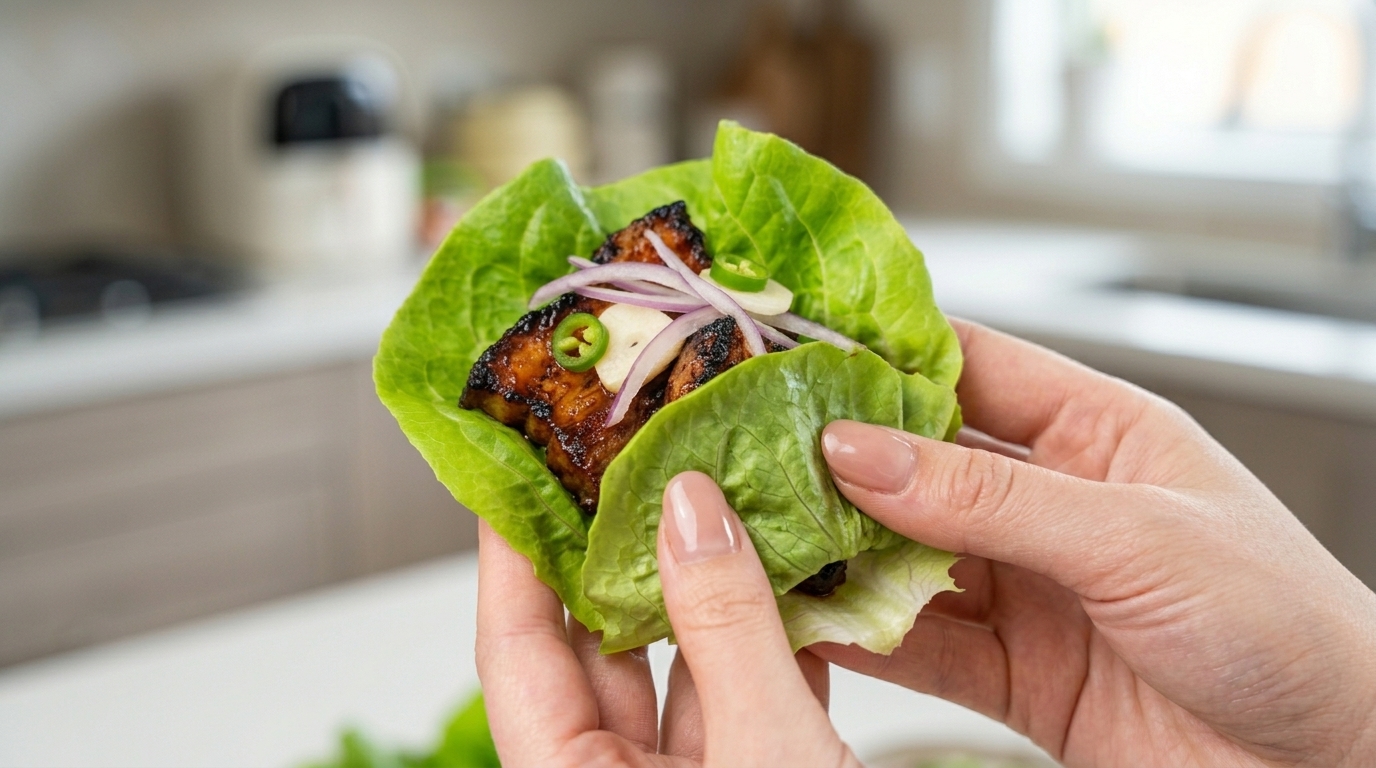
Spicy Korean Gochujang Pork Belly
Fresh Onion Salad
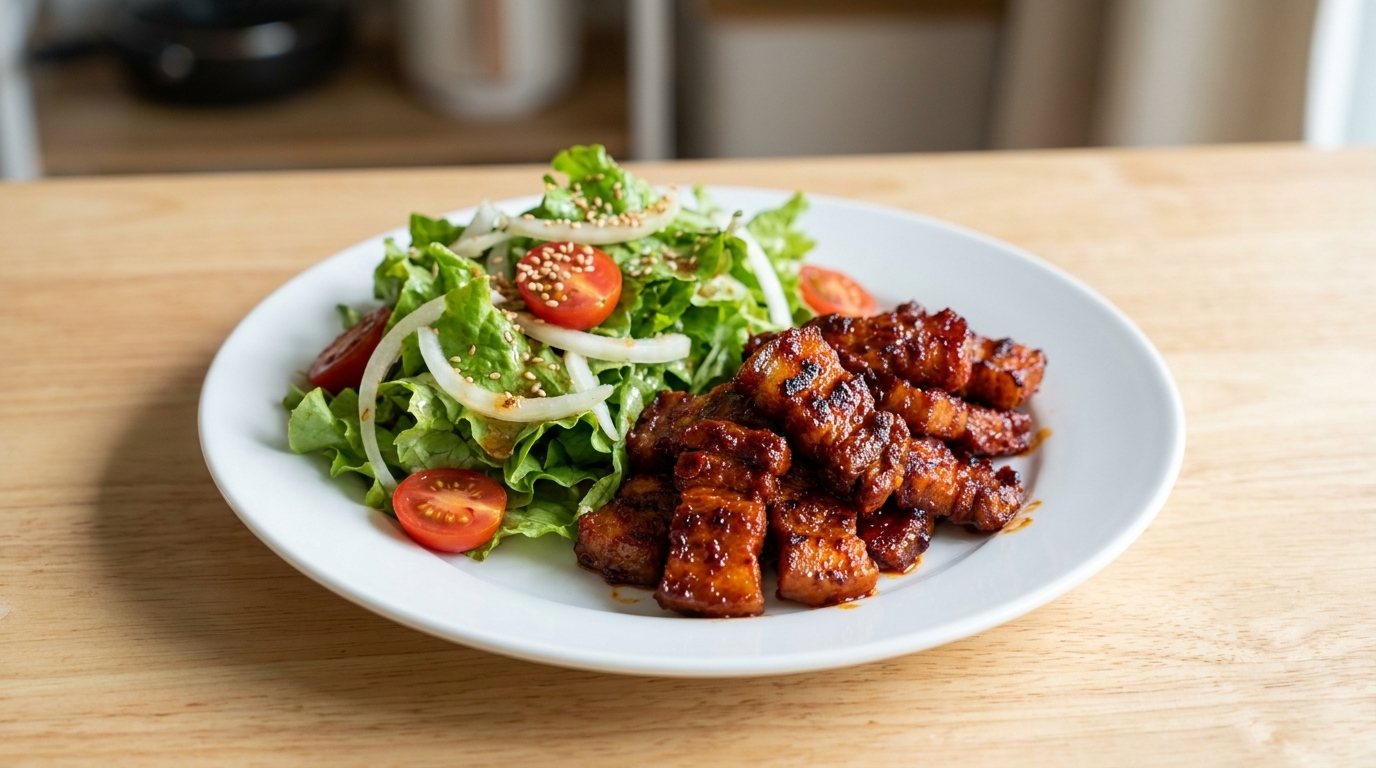
A perfect balance of heat and freshness, featuring tender pork belly caramelized in a spicy-sweet Gochujang glaze served alongside a crisp, zesty lettuce and onion salad.
Jeyuk Bokkeum, or spicy stir-fried pork, is a beloved staple of Korean home cooking. While many versions use thinner cuts, this recipe utilizes thick pork belly to ensure a succulent interior that stands up to the bold, fermented heat of Gochujang. Pairing the rich, glazed meat with a sharp sangchae (fresh salad) creates the essential flavor harmony found in authentic Korean BBQ.
Ingredients
- 500 g pork belly slices
- 2 tbsp minced garlic
- 2 tbsp chili powder
- 3 tbsp Gochujang (Korean chili paste)
- 3 tbsp corn syrup
- 4 tbsp light soy sauce
- 2 tbsp mirin
- 1 tbsp minced ginger
- 0.5 tbsp sesame oil
- 1 tbsp apple cider vinegar
- 1 tbsp sugar
- 1 bunch green lettuce
- 0.5 piece white onion
- 100 g cherry tomatoes
- to taste black pepper
- optional sesame seeds
Instructions
- 1Prepare the Aromatics
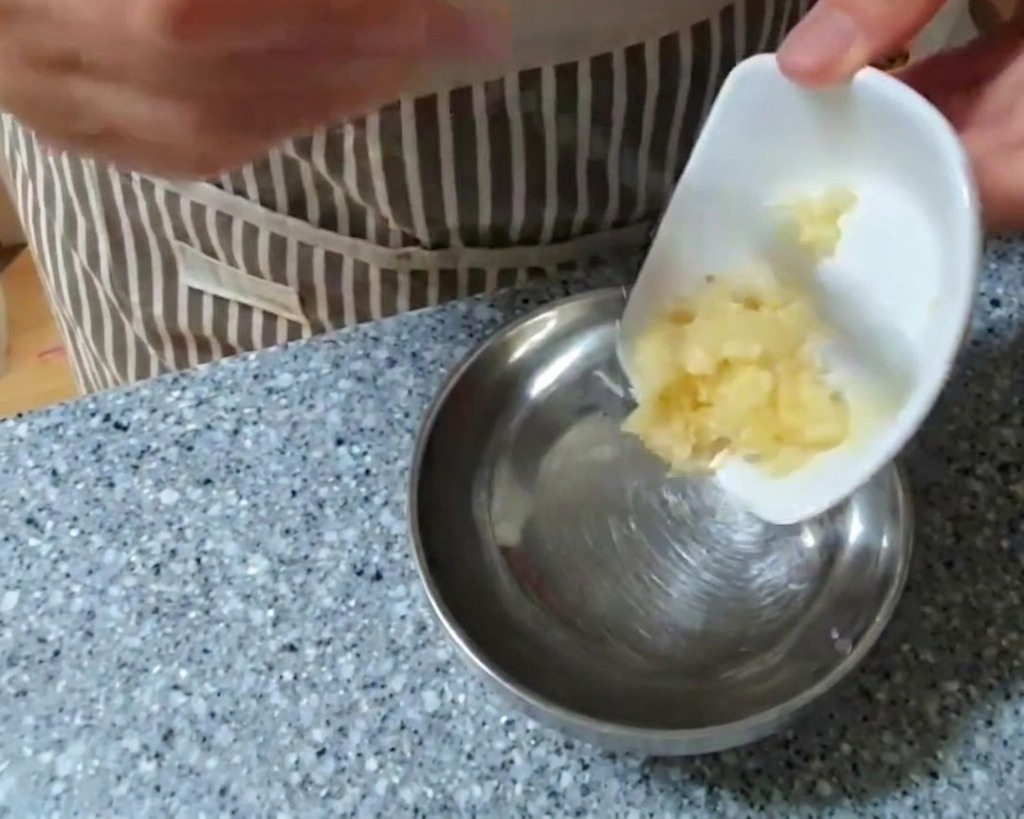
Start by adding two spoons of minced garlic into a bowl. Using fresh garlic provides a sharper, more authentic flavor profile than pre-jarred varieties.
Tip: If you have a garlic press, use it here to ensure the garlic is finely minced so it blends smoothly into the liquid components of the sauce. - 2Whisk the Glaze
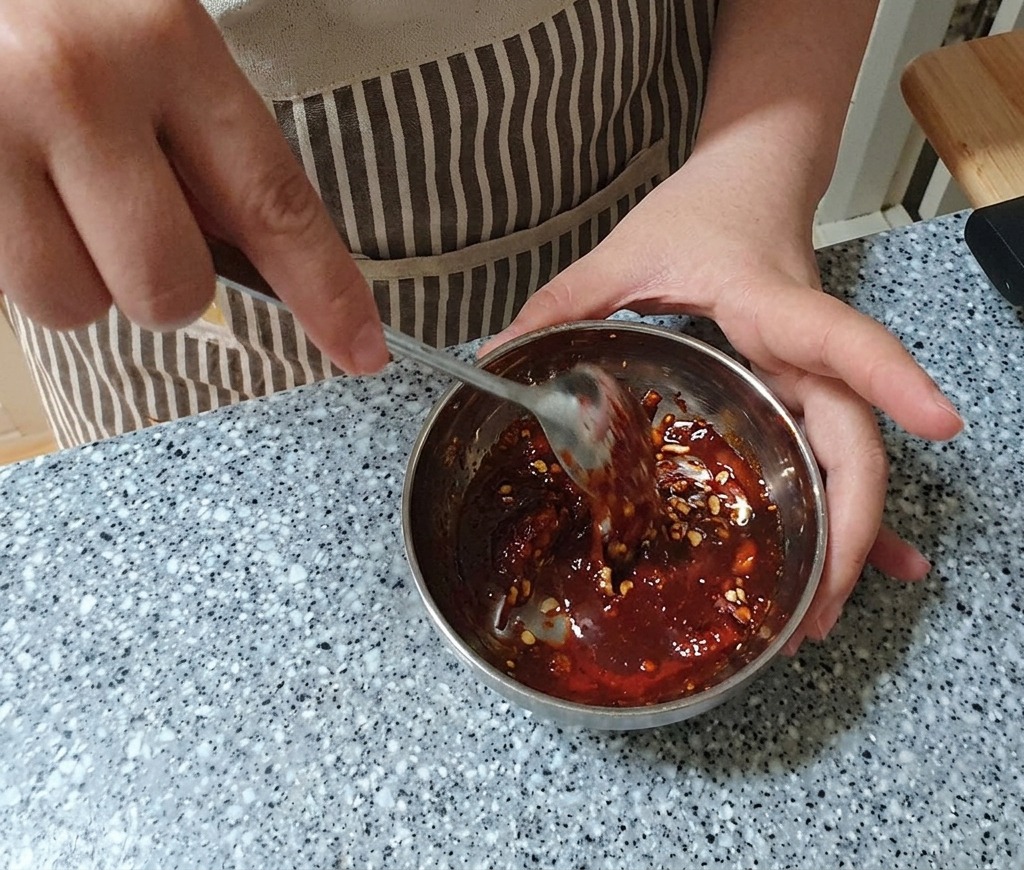
Combine the garlic with chili powder, Gochujang, corn syrup, soy sauce, mirin, ginger, sesame oil, and black pepper. Stir until the marinade is glossy, thick, and perfectly smooth.
Tip: Make sure to scrape the sides of the bowl to incorporate all the Gochujang, as it can be quite sticky and thick. - 3Marinate the pork belly
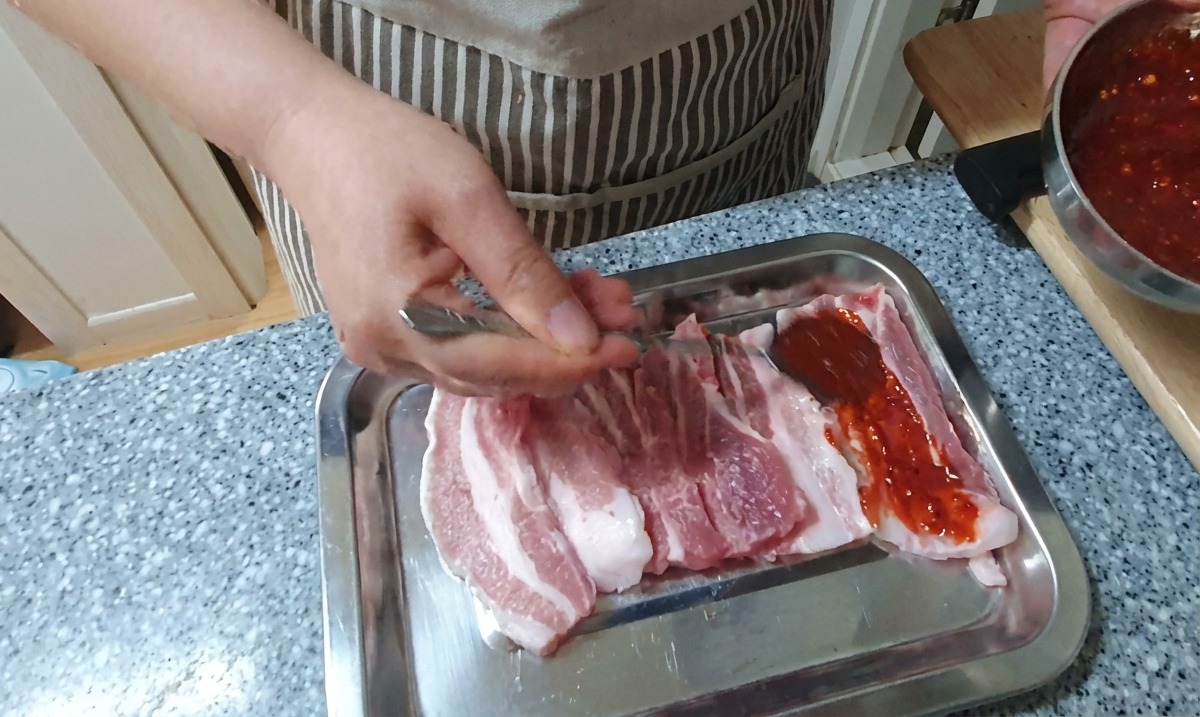
Lay the raw pork belly slices flat on a metal tray. Use a spoon to apply the prepared marinade, spreading it evenly over both sides of each slice. Allow the meat to marinate for 20 to 30 minutes so the flavors can fully penetrate the pork.
Tip: For even better flavor, you can massage the sauce into the meat with gloved hands to ensure every nook and cranny is coated. - 4Prepare the salad greens
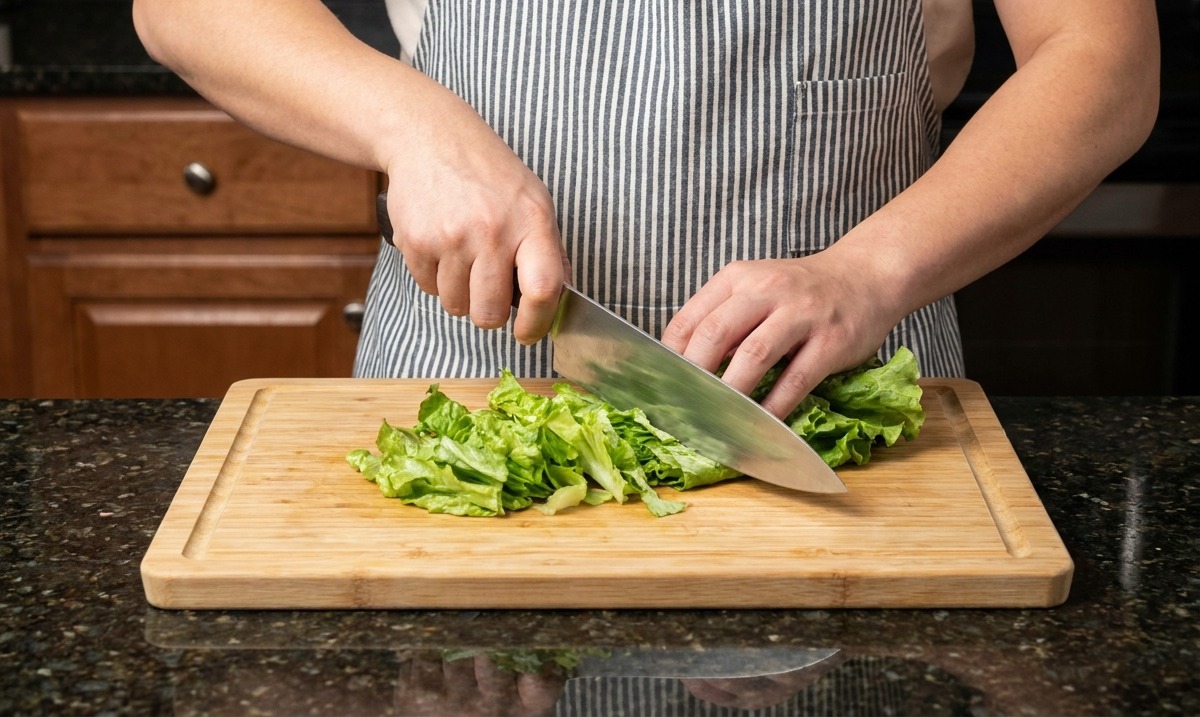
While the pork is marinating, prepare the accompanying fresh salad. Place a bunch of fresh green lettuce on a wooden cutting board and chop it into manageable, bite-sized pieces. This will provide a refreshing crunch to the meal.
Tip: Pat the lettuce dry with a paper towel after washing; excess water will prevent the dressing from adhering to the leaves later. - 5Slice the onions
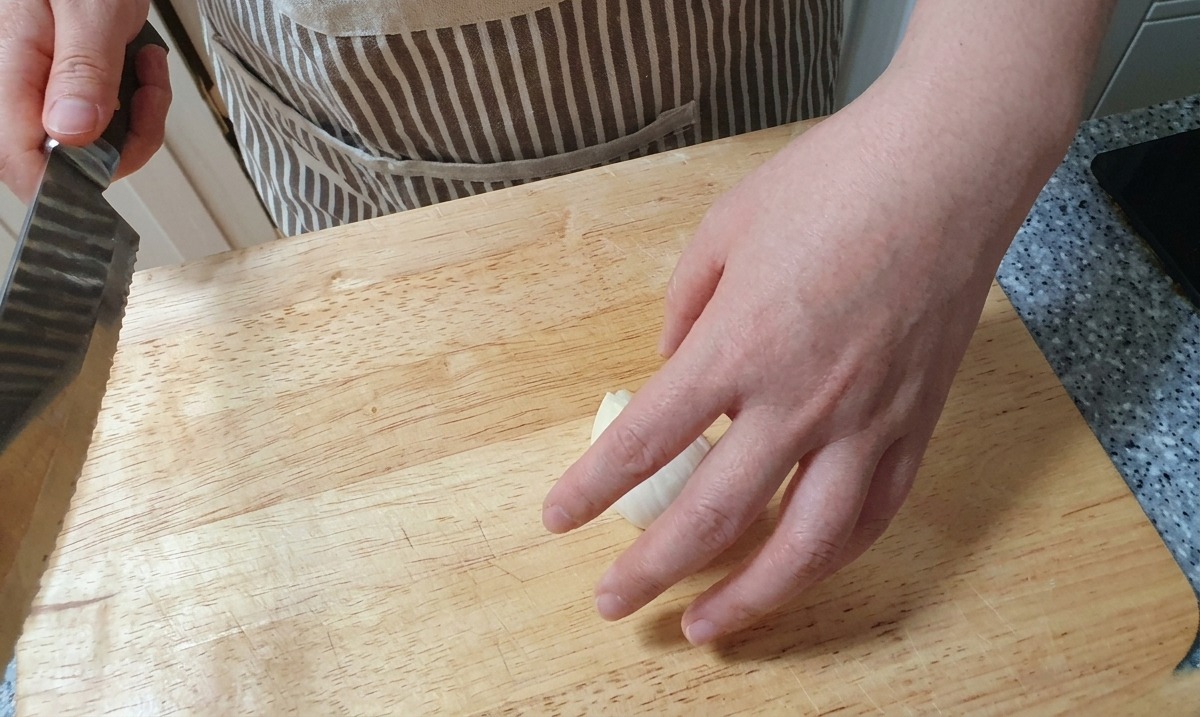
Take half of a white onion and slice it into very thin strips. These thin slices will blend well into the salad and provide a mild, sharp bite that complements the spicy pork belly perfectly.
Tip: If the onion flavor is too strong for you, soak the slices in cold water for a few minutes to mellow them out before tossing them in the salad. - 6Halve the cherry tomatoes
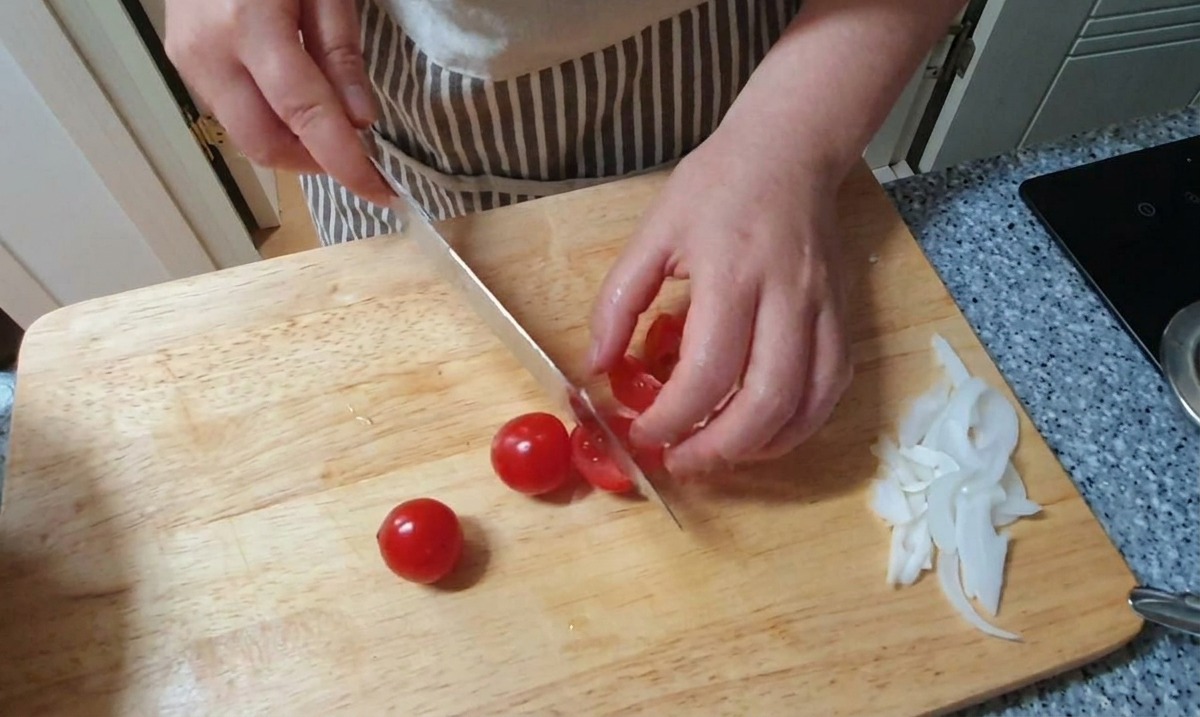
Finally, slice the cherry tomatoes in half. Their sweetness and acidity will balance the heat of the Gochujang. Add these to the bowl along with the prepared lettuce and onions for the salad base.
Tip: Use a serrated knife if your chefs knife isnt very sharp; it will grip the skin of the tomatoes more easily without squishing them. - 7Pan-Fry the Pork
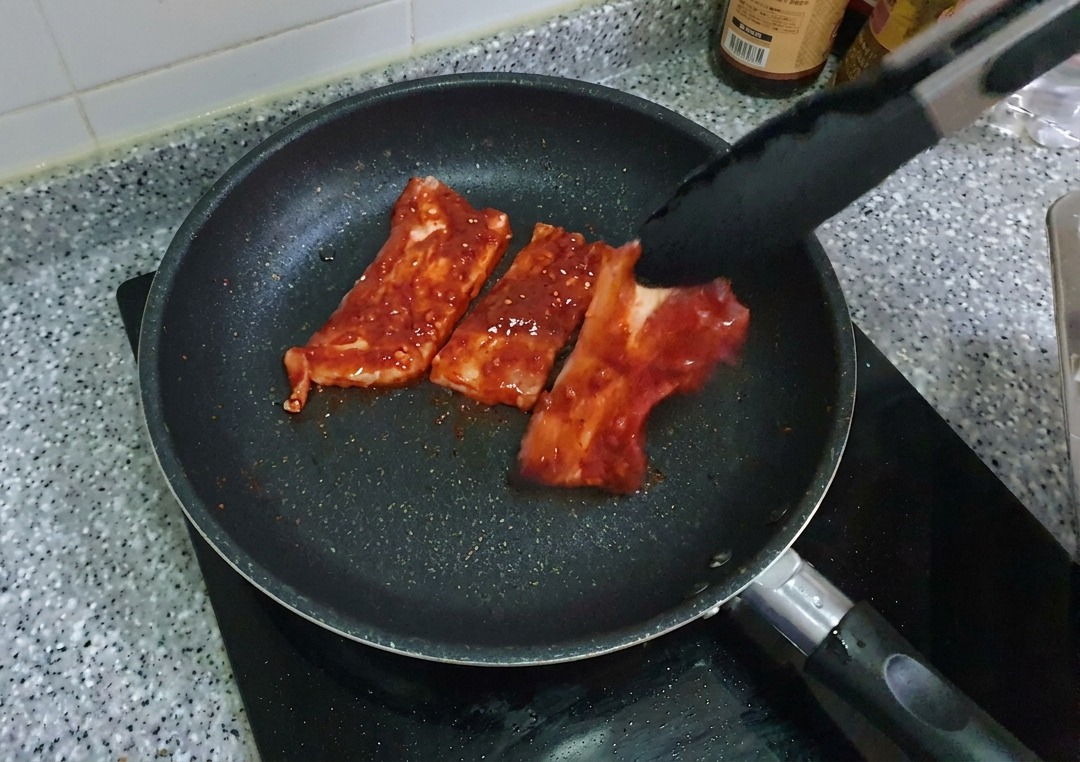
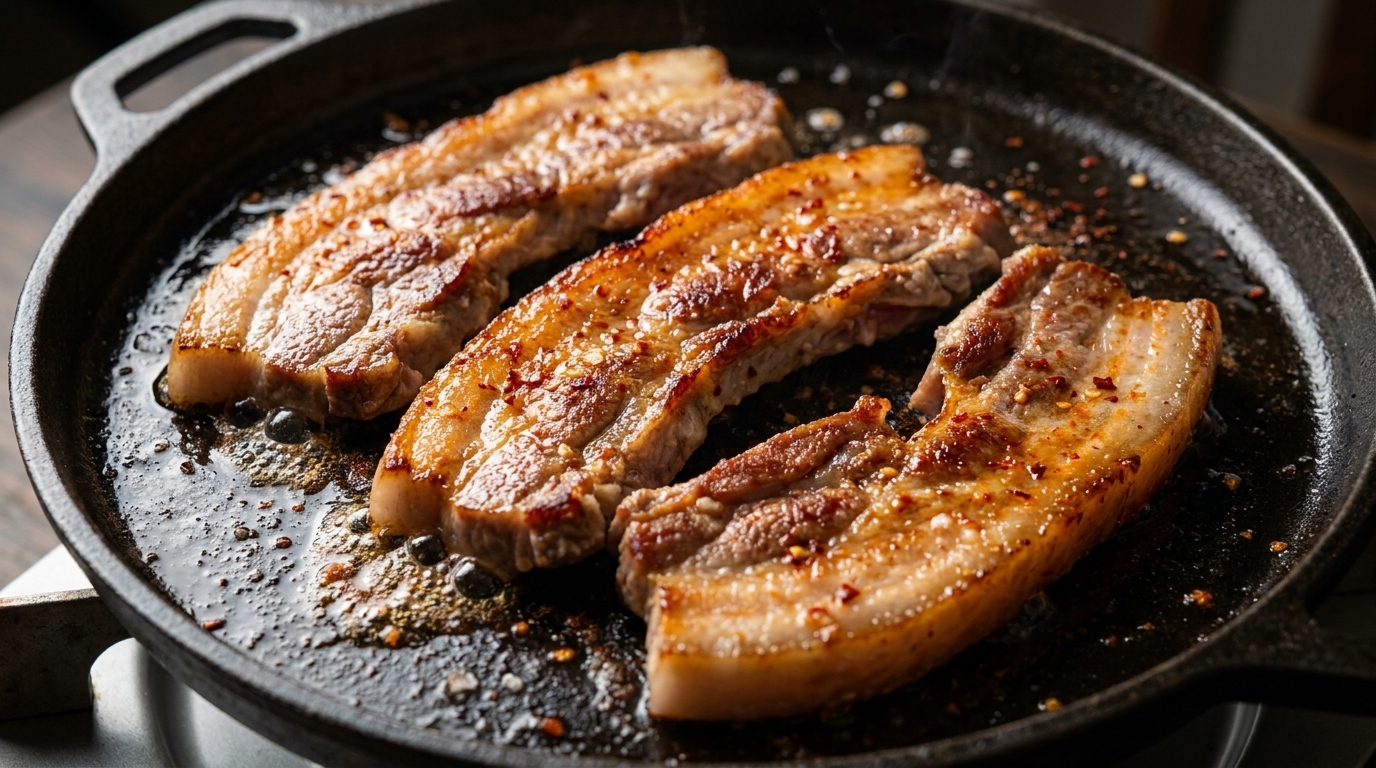
Place the marinated strips into a preheated pan in a single layer. Use low heat throughout the process to prevent the sugars in the Gochujang from burning before the pork renders its fat.
Tip: Starting with a slightly oiled pan can help prevent the sauce from sticking, though the pork belly will release its own fat as it cooks. - 8Add extra marinade
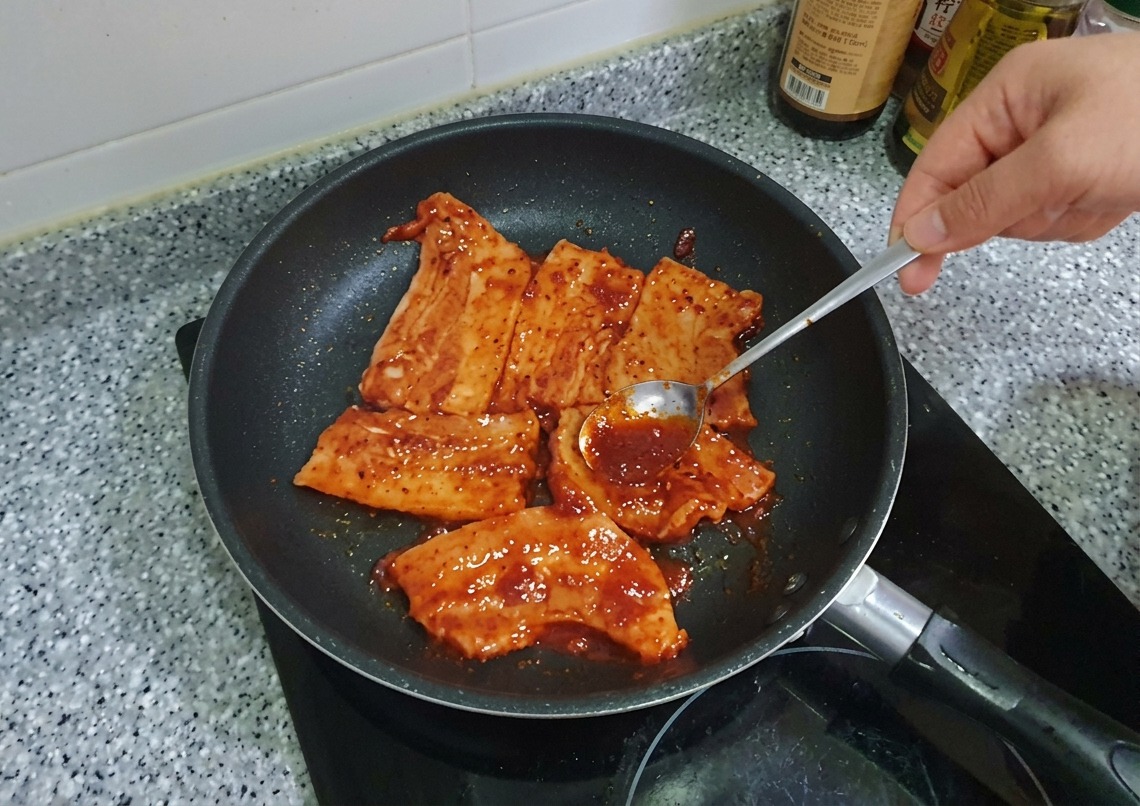
While the pork is searing, spoon some of the remaining marinade sauce onto the upward-facing side of the meat. This ensures the flavor is deeply infused and helps create a rich, glossy coating as the pork is flipped and cooked further.
Tip: Dont be afraid to use all the remaining sauce in the bowl to get that deep, spicy glaze. - 9Cut into Bite-Sized Pieces
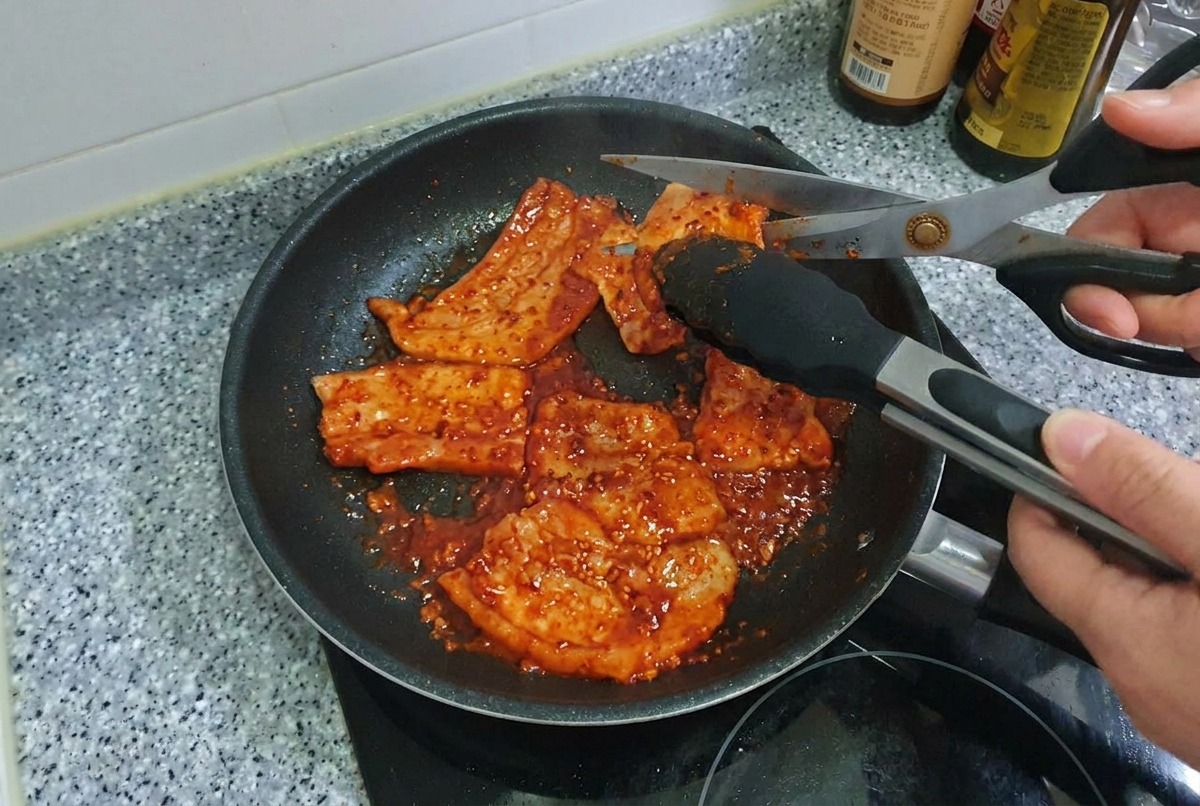
Once the pork has firmed up and partially cooked, use kitchen scissors to cut the strips into smaller rectangles. This increases the surface area, allowing the sauce to coat and caramelize every edge.
Tip: Using scissors is the most efficient way to cut meat in Korean-style BBQ as it avoids the need for a separate cutting board. - 10Caramelize the meat
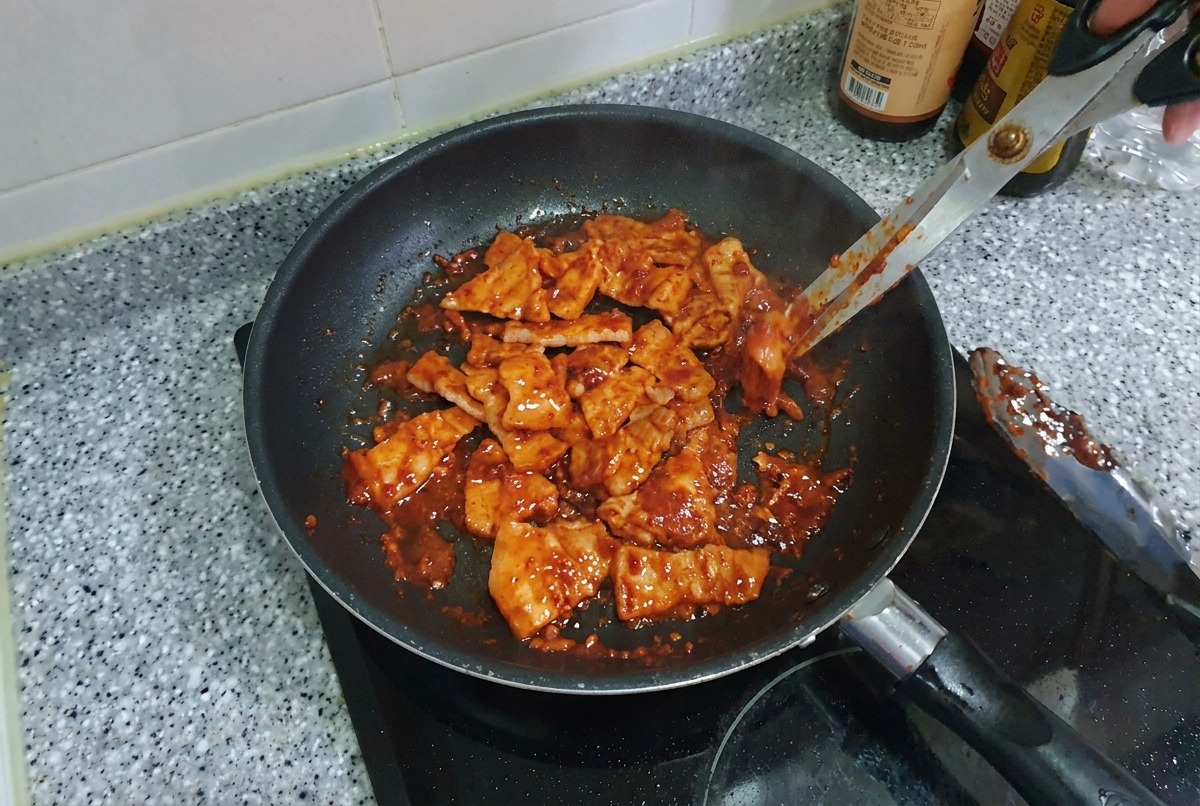
Continue to stir-fry and toss the pork pieces in the pan until they are fully cooked and beautifully caramelized. The sauce should thicken and cling to the meat, creating a dark, glistening finish with slightly charred edges for maximum flavor.
Tip: If the pan looks too dry or the sauce starts to smoke, add a tablespoon of water or mirin to deglaze and keep the sauce smooth. - 11Dress the fresh salad
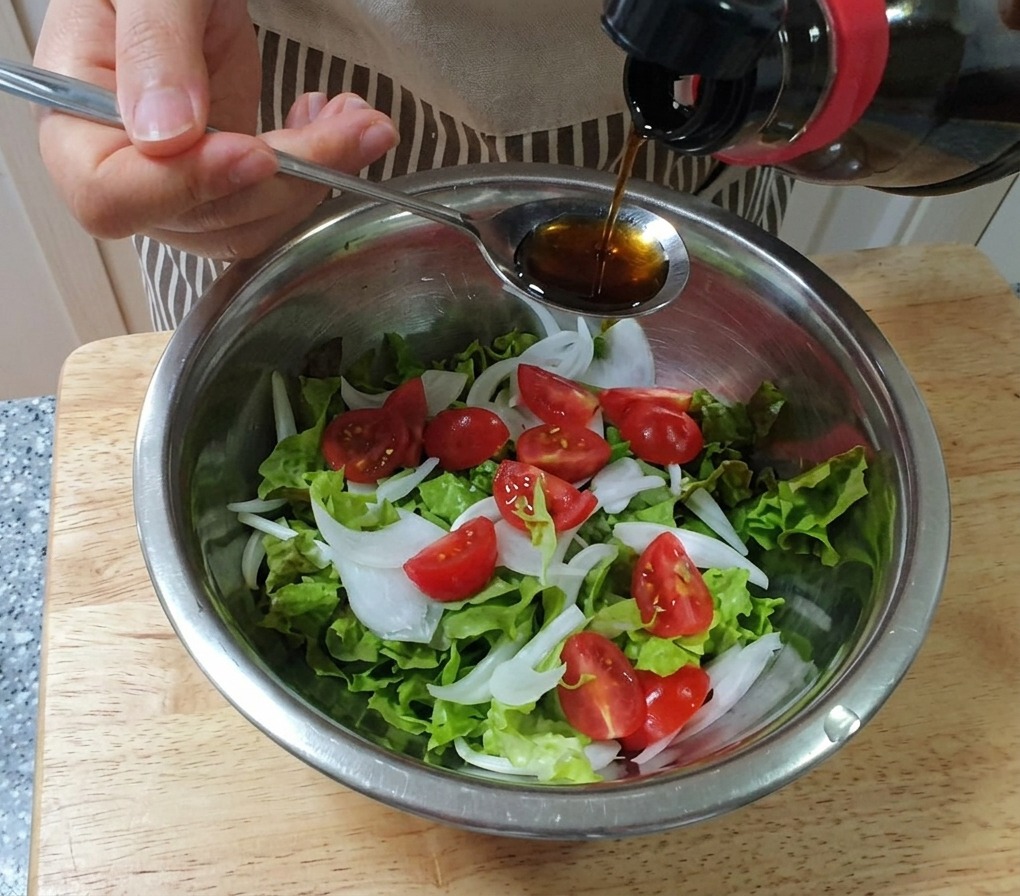
In a separate bowl, combine the chopped lettuce, sliced onions, and cherry tomatoes. Drizzle the prepared dressing—made with 2 spoons of light soy sauce, 1 spoon of apple cider vinegar, 1 spoon of sugar, and 1 spoon of chili powder—over the vegetables. The acidity of the salad provides a perfect balance to the rich pork.
Tip: Wait until just before serving to add the dressing so the lettuce remains crisp and doesnt wilt. - 12Toss and serve
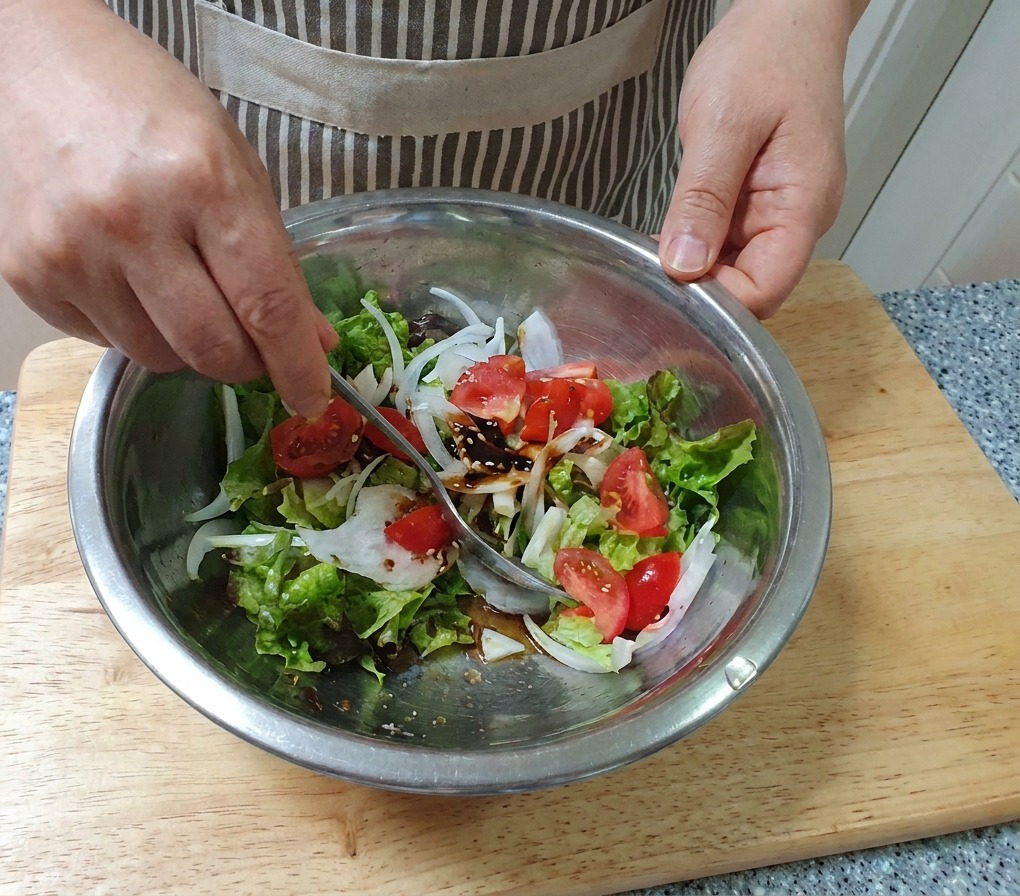
Gently toss the salad to ensure the dressing is evenly distributed across all the ingredients. You can use a spoon or salad tongs to mix everything together. Once tossed, serve the fresh salad immediately alongside the hot Gochujang pork belly.
Tip: Adding a sprinkle of toasted sesame seeds at this stage adds a nice nutty aroma and crunch.