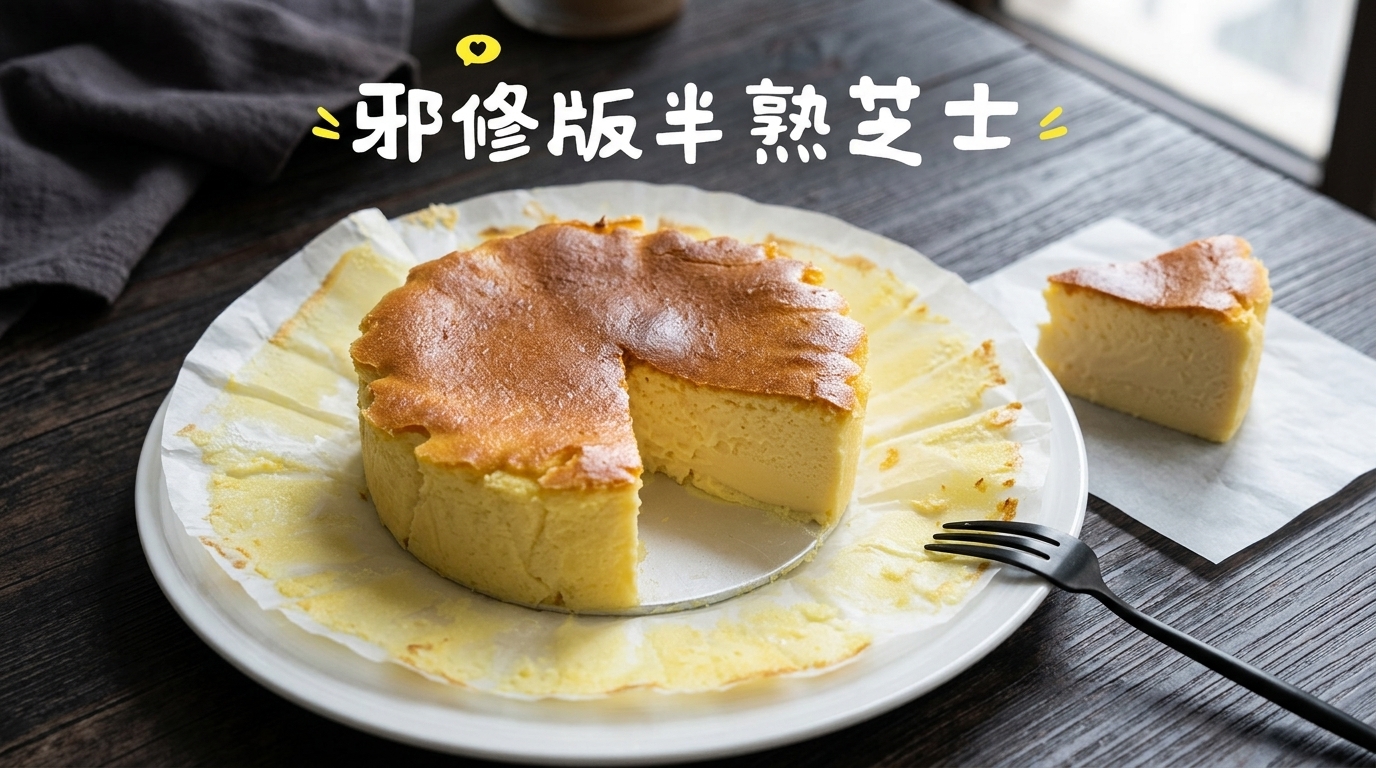
Light & Creamy Japanese Half-Baked Cheesecake
Experience the perfect balance of an airy soufflé and a rich cheesecake. This Japanese-style half-baked dessert melts in your mouth and is incredibly easy to prepare using a simple blender method.
Half-baked cheesecake, widely known as hanjuku cheese in Japan, is celebrated for its remarkably soft, melt-in-the-mouth texture. By combining a light egg white meringue with a rich cream cheese base and baking it gently in a water bath, you achieve a delicate dessert that beautifully bridges the gap between a fluffy soufflé and a dense New York-style cheesecake.
Ingredients
- 160 g cream cheese
- 60 g pure milk
- 40 g white granulated sugar
- 35 g butter
- 25 g low-gluten flour
- 3 eggs
Instructions
- 1Prepare the ingredients
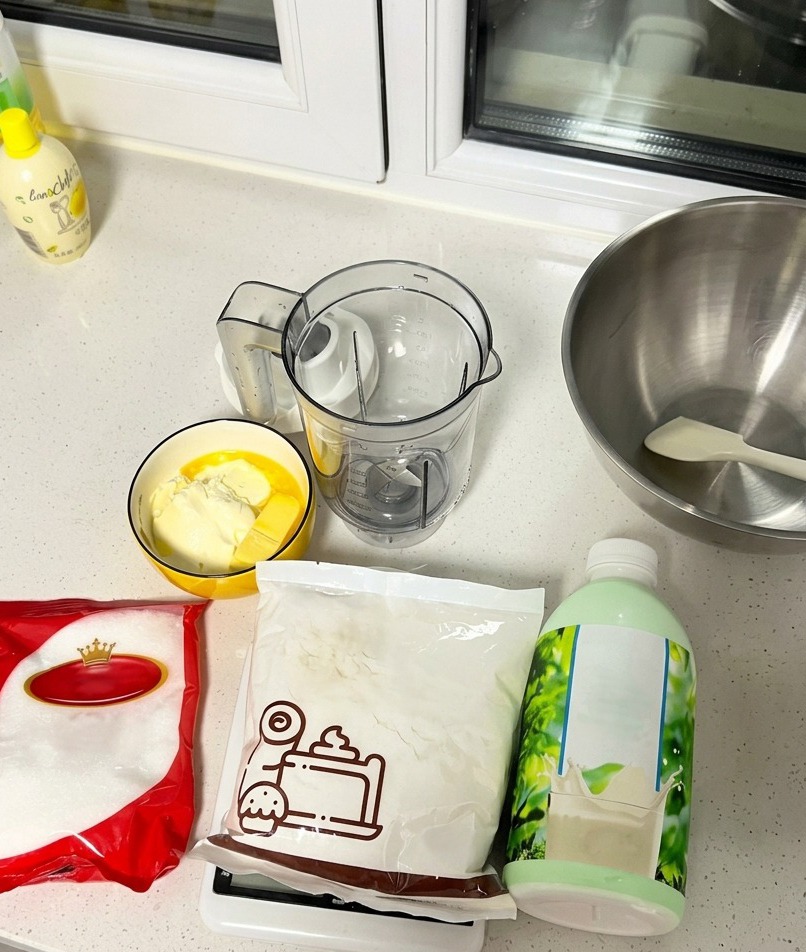
Gather all the necessary ingredients for the light cheesecake: cream cheese, butter, white granulated sugar, low-gluten flour, pure milk, and eggs. Having everything measured out and ready on the counter will make the mixing process much smoother.
Tip: Ensure the cream cheese and butter are softened at room temperature to prevent lumps when blending. - 2Separate the eggs
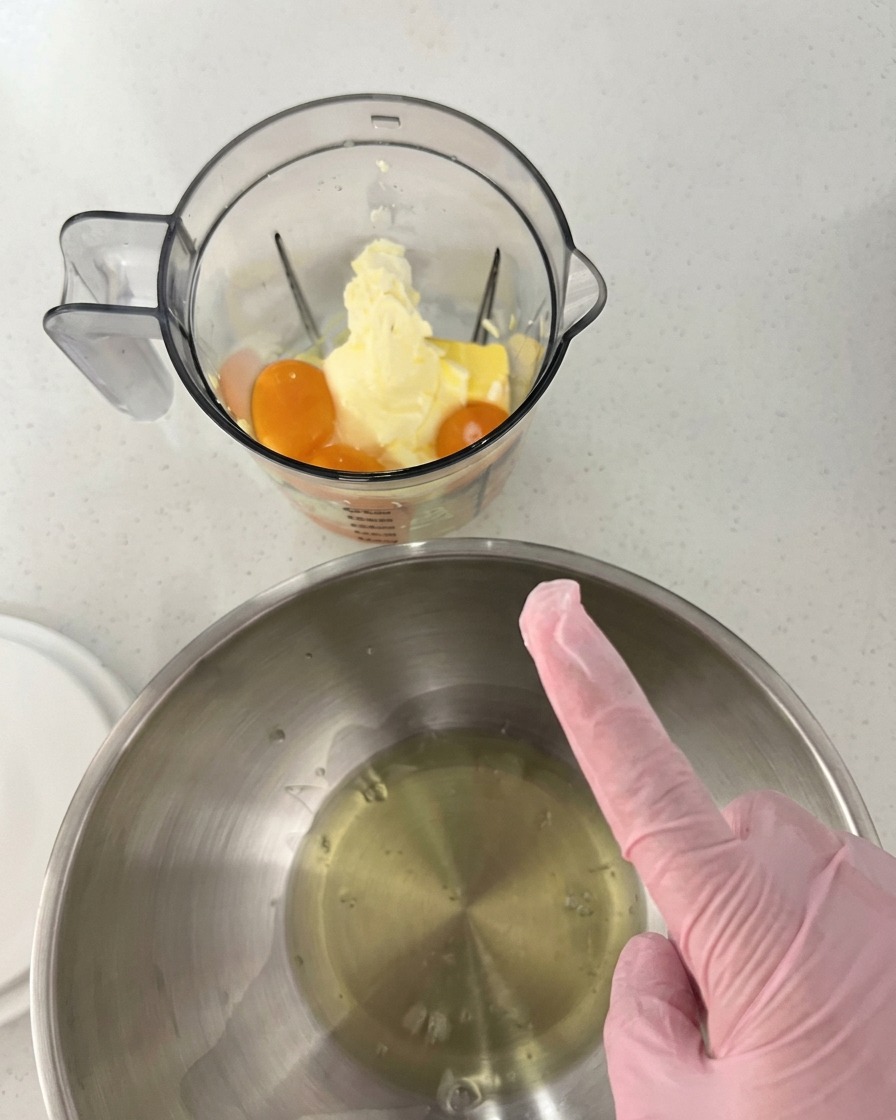
Carefully separate the egg whites from the yolks. Place the egg whites into a clean, dry stainless steel bowl and immediately set them in the refrigerator to chill. Drop the egg yolks directly into the blender cup along with the cream cheese and butter.
Tip: Make sure the bowl for the egg whites is completely free of any grease, water, or yolk, as this can prevent them from whipping up properly. - 3Combine ingredients in the blender
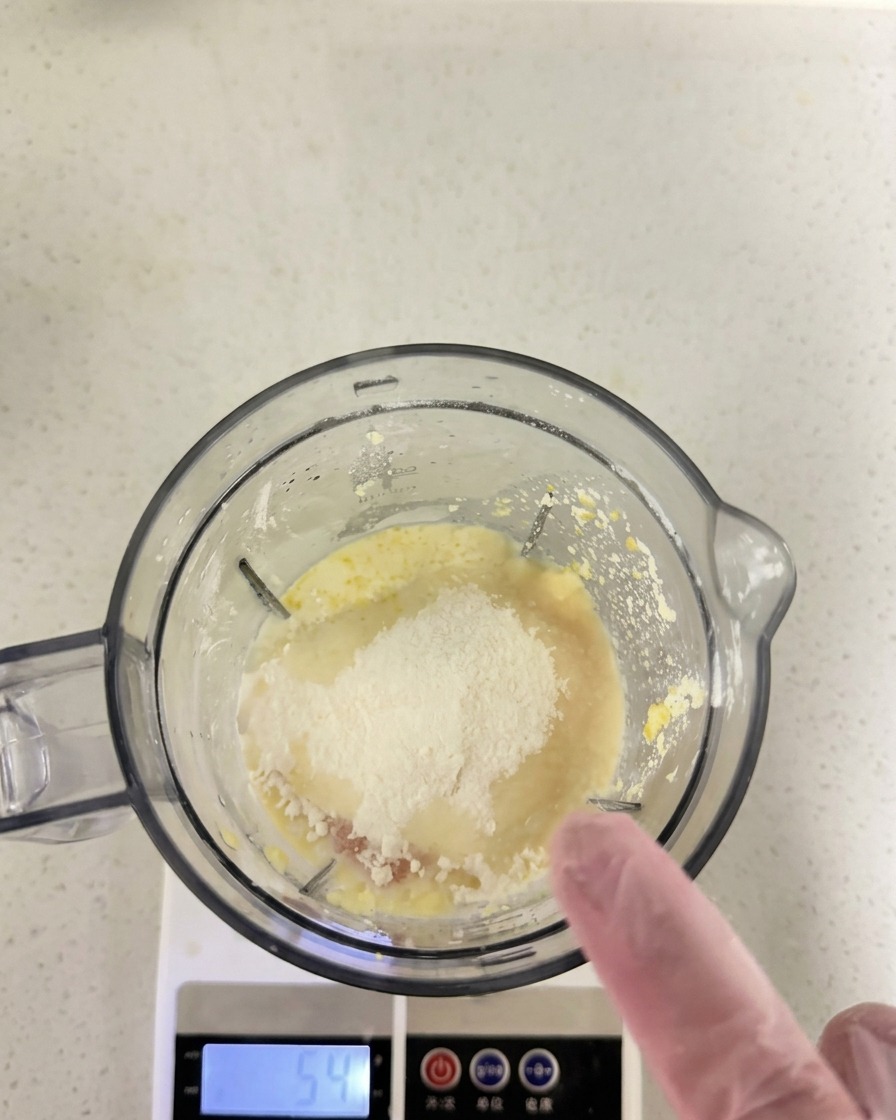
Add the white granulated sugar, low-gluten flour, and pure milk into the blender cup directly on top of the egg yolk, butter, and cream cheese mixture. Using a blender is a quick and convenient way to process all these base ingredients into a smooth liquid.
Tip: Sift the low-gluten flour before adding it to avoid any stubborn dry pockets in the batter. - 4Blend the batter
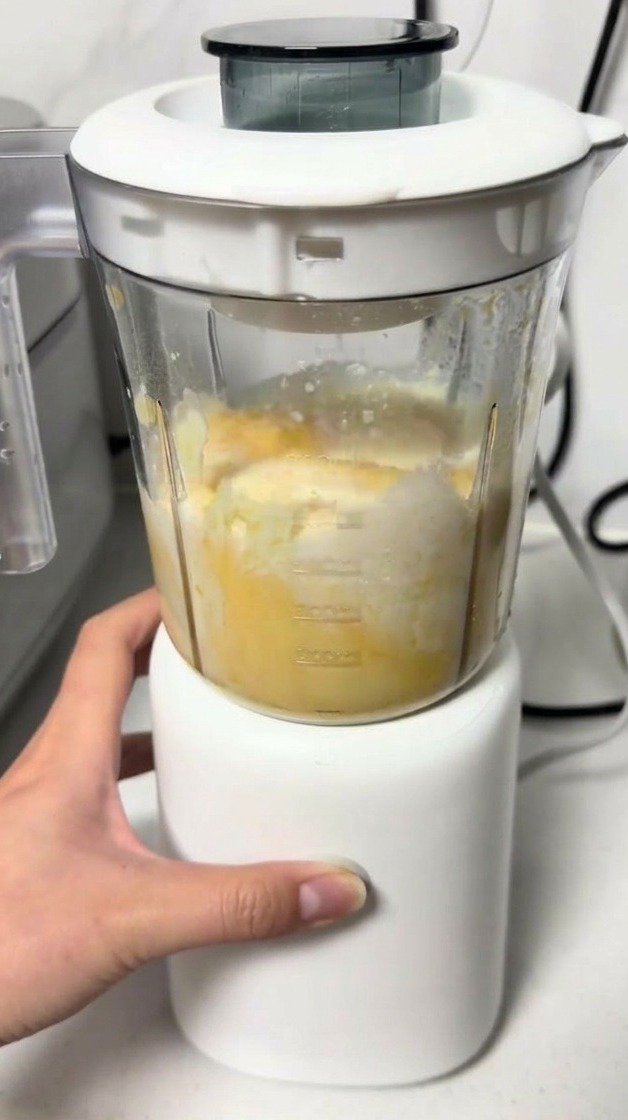
Turn on the blender and process everything together until completely combined. Blending ensures that the cream cheese, butter, and flour are thoroughly mixed into a remarkably fine and smooth batter without the need for manual whisking.
Tip: Pause and scrape down the sides of the blender cup halfway through to ensure no unmixed flour or cheese is left stuck to the walls. - 5Whip the egg whites
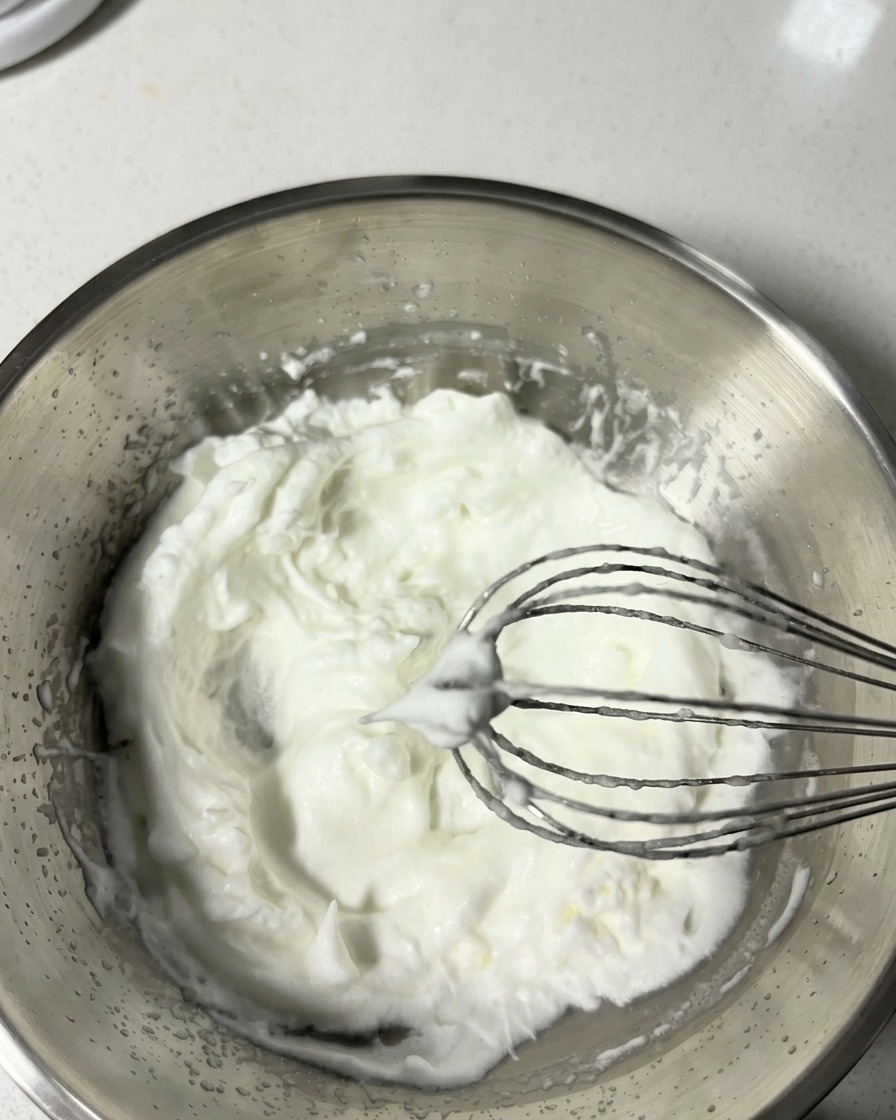
Take the chilled egg whites out of the refrigerator and beat them until they form noticeable small, soft peaks. When you lift the whisk, the peaks should hold their shape but still have a slight curl at the tip. This airy meringue is what gives the cheesecake its light texture.
Tip: Chilling the egg whites beforehand helps stabilize the foam, making it easier to whip into a firm structure without overbeating. - 6Combine the mixtures
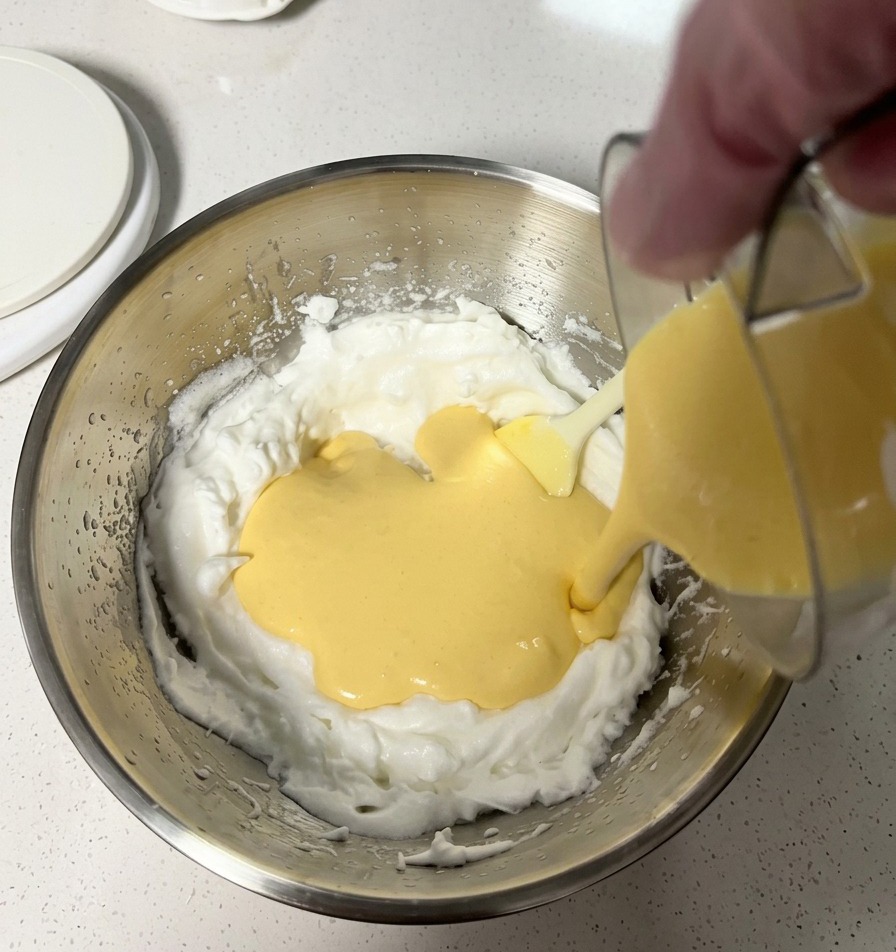
Gently pour the smooth, yellow cheese batter from the blender directly into the bowl of whipped egg whites in preparation for folding. Be careful not to pour too quickly to avoid deflating the delicate meringue.
Tip: To maintain maximum volume, you can fold one-third of the egg whites into the yellow batter first to lighten it, before folding everything back into the remaining egg whites. - 7Fold the batter
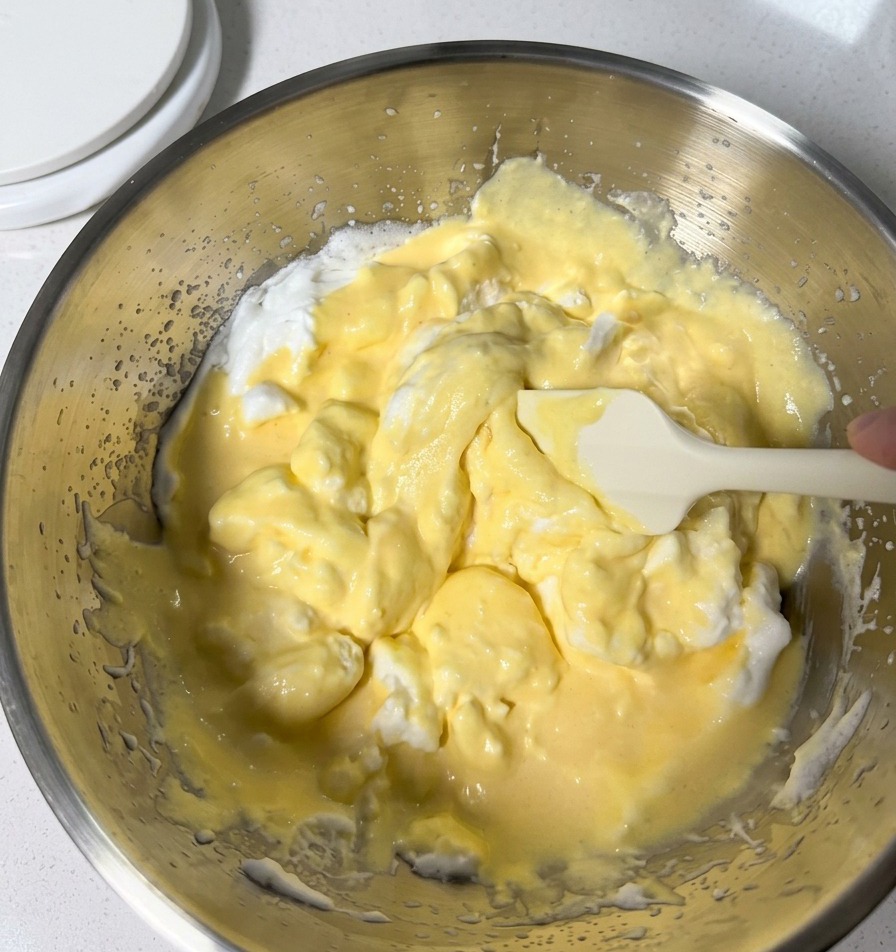
Carefully fold the chilled, beaten egg whites into the cream cheese and egg yolk mixture. Use a silicone spatula to gently fold from the bottom up in a figure-8 motion until the batter is exceptionally fine, well-combined, and smooth.
Tip: Avoid over-mixing or stirring in circles, as this will deflate the egg whites and result in a dense cake. - 8Pour into the mold
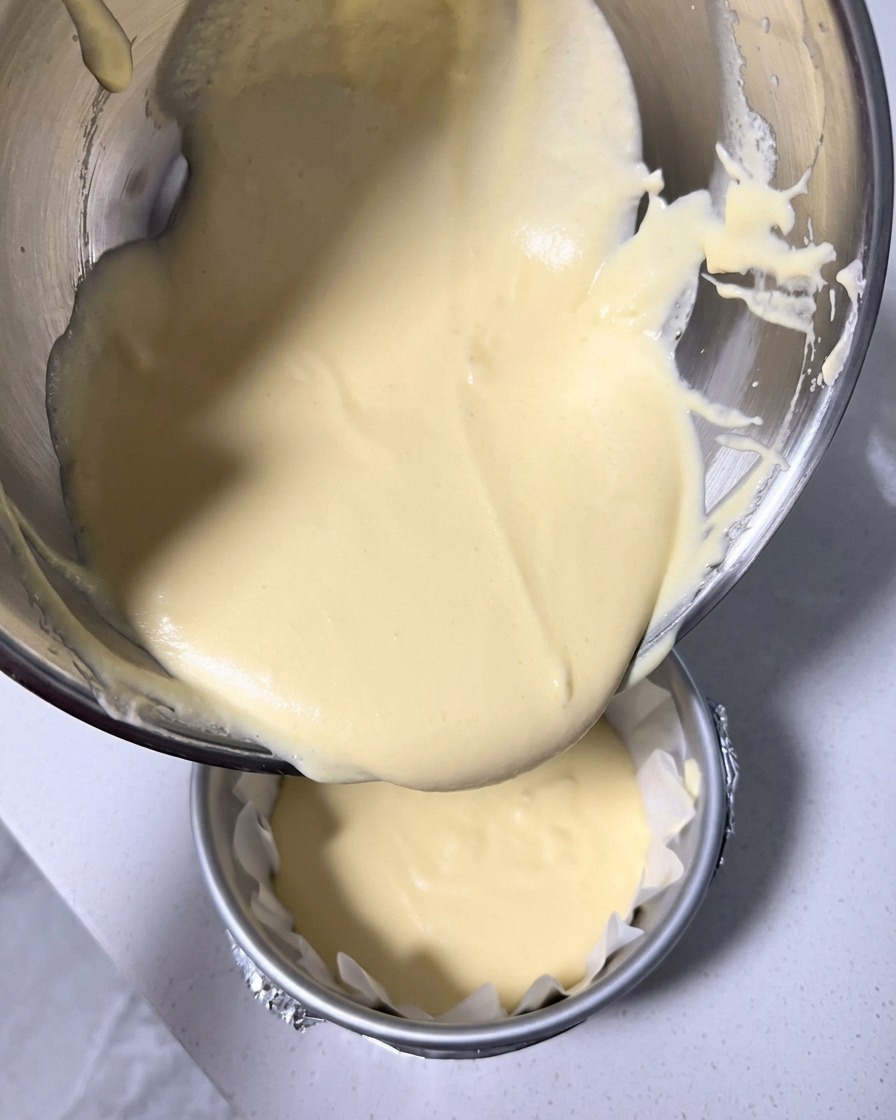
Pour the smoothly folded light cheesecake batter into a 6-inch round cake mold lined with baking paper. Ensure the mold is fully lined to prepare it for the water bath baking method.
Tip: If you dont have fitted parchment paper, regular baking paper can be used; just make sure to wrap the outside of the pan securely with aluminum foil. - 9Remove air bubbles
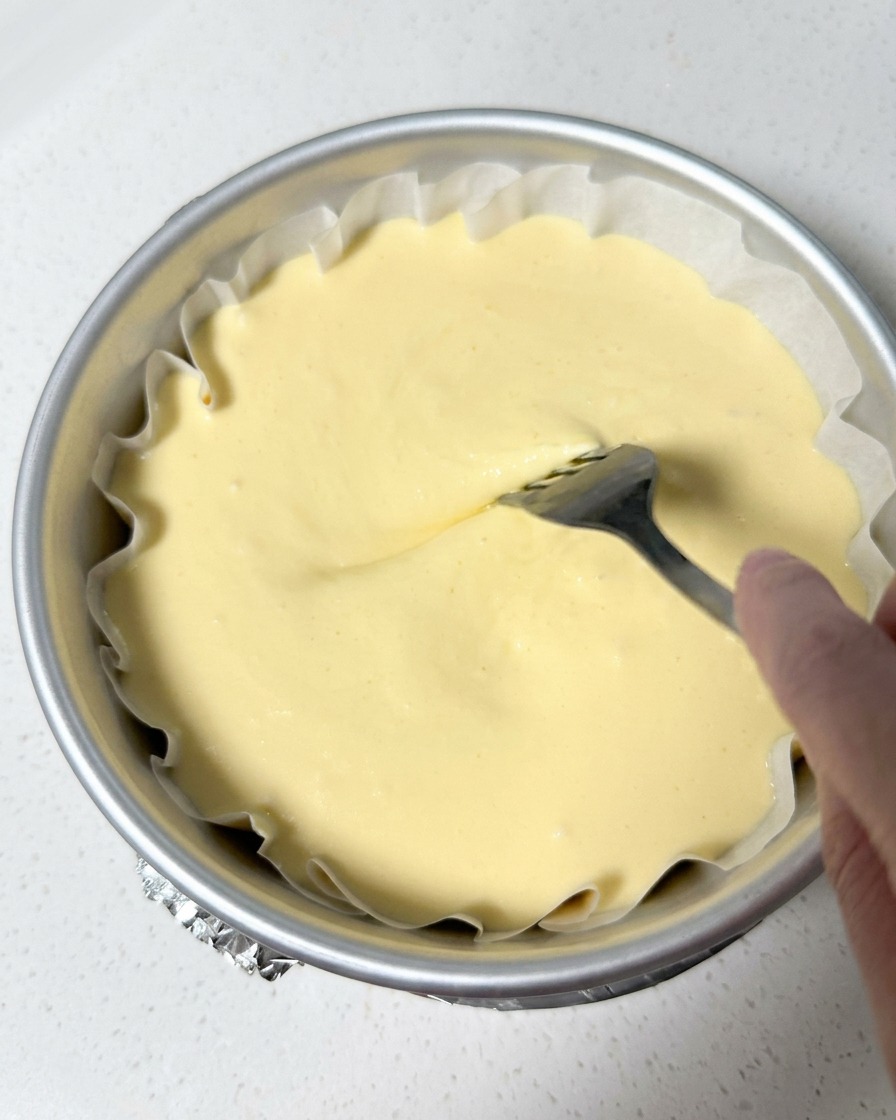
Gently tap the filled mold against the counter to release any large trapped air bubbles from the bottom. Then, use a fork to lightly score or swirl the surface of the batter to help pop any remaining bubbles on top.
Tip: Removing trapped air ensures a uniform, dense, and perfectly smooth crumb texture in the baked cheesecake without unsightly holes.