Authentic Kimchi Tofu Soup (Kimchi Jjigae)
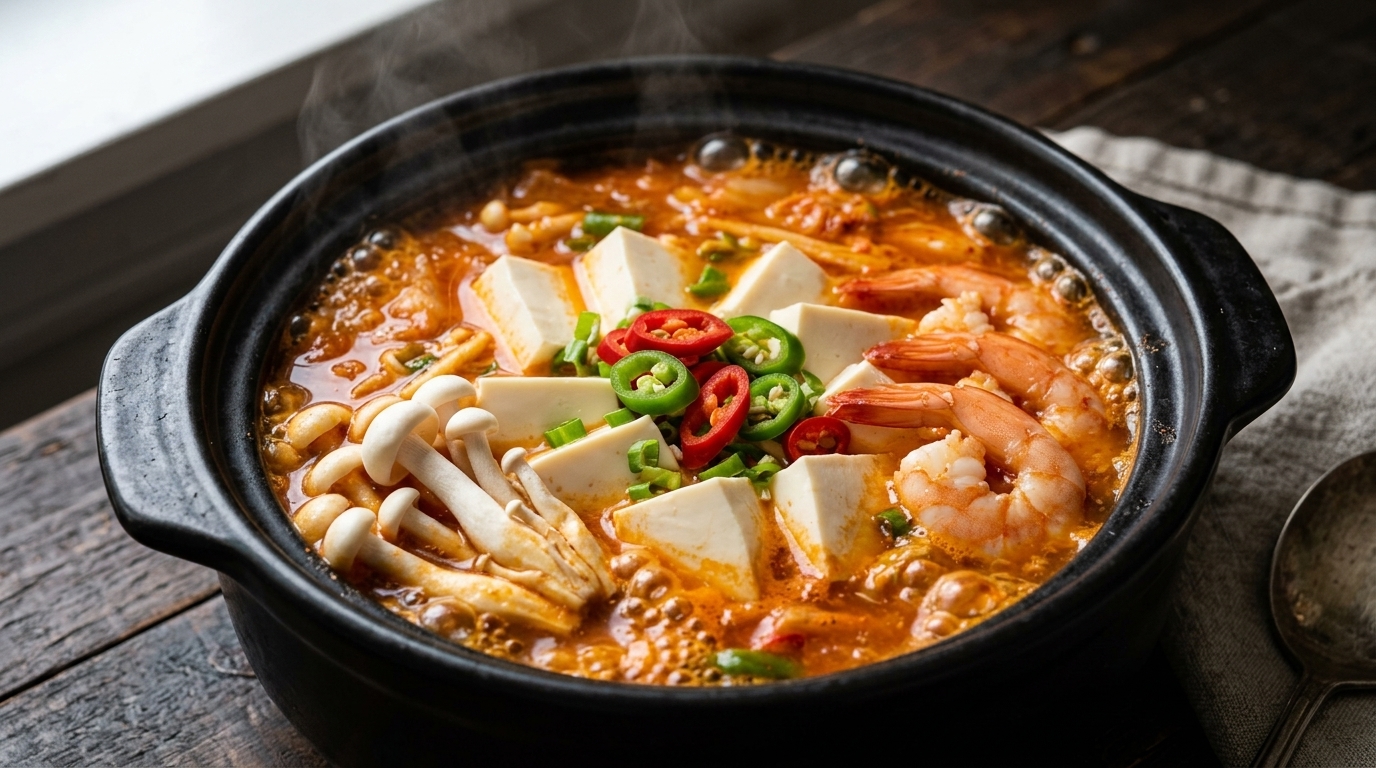
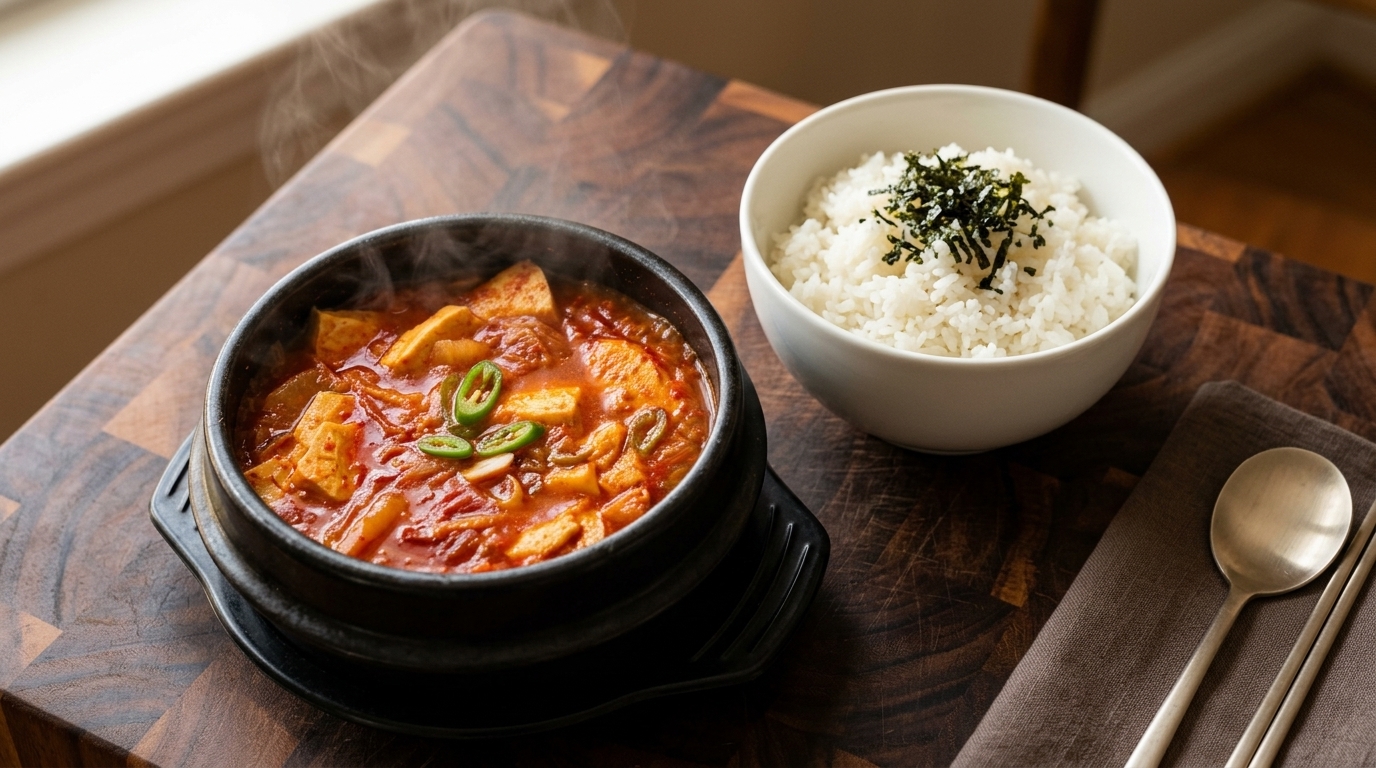
A comforting Korean classic featuring savory pork belly, tangy fermented kimchi, and silky tofu in a rich, fiery broth. The ultimate cozy comfort food.
Kimchi Jjigae is a cornerstone of Korean home cooking, celebrated for its bold, complex flavors that balance spicy, savory, and sour notes. Traditionally, it is made using well-fermented, sour kimchi, which provides a deeply flavorful base when simmered with rich pork belly. As the stew bubbles away, the ingredients meld together to create an intensely comforting dish that is best enjoyed alongside a steaming bowl of white rice.
Ingredients
- 200 g pork belly
- 250 g kimchi
- 1 block silken tofu
- 2 stalks scallions
- 1 small red onion
- 4 cloves garlic
- 2 green chili peppers
- 2 tbsp vegetable oil
- 1 tbsp sesame oil
- 1 tbsp coarse Korean chili powder
- 1 tbsp fine Korean chili powder
- 1 tbsp fish sauce
- 500 ml boiling water
- to taste seaweed flakes
- to taste cooked white rice
Instructions
- 1Slice the scallions
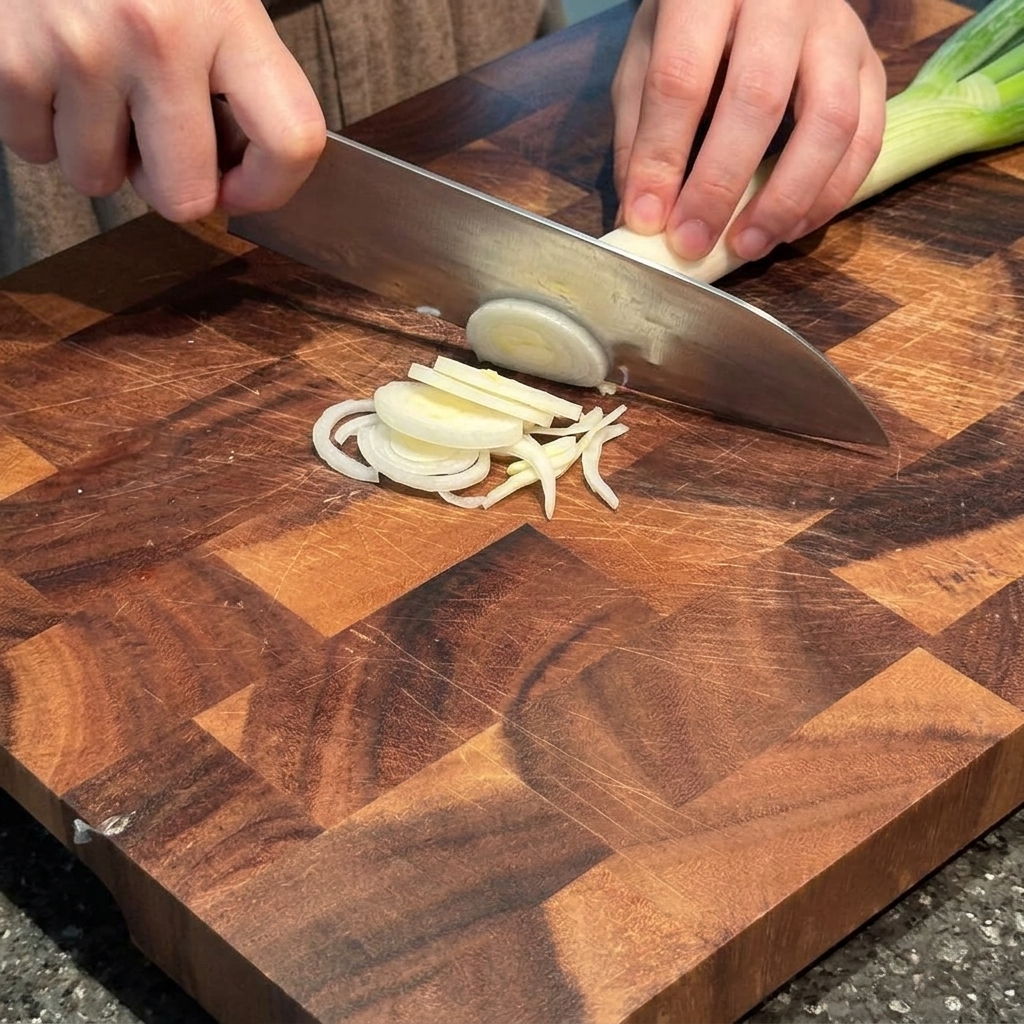
Using a sharp chefs knife, carefully slice the white parts of the scallions into long, thin shreds on a wooden cutting board. These will serve as an aromatic base to build flavor early in the cooking process.
Tip: Keep the green parts of the scallions reserved for garnishing the soup at the end. - 2Dice the red onion
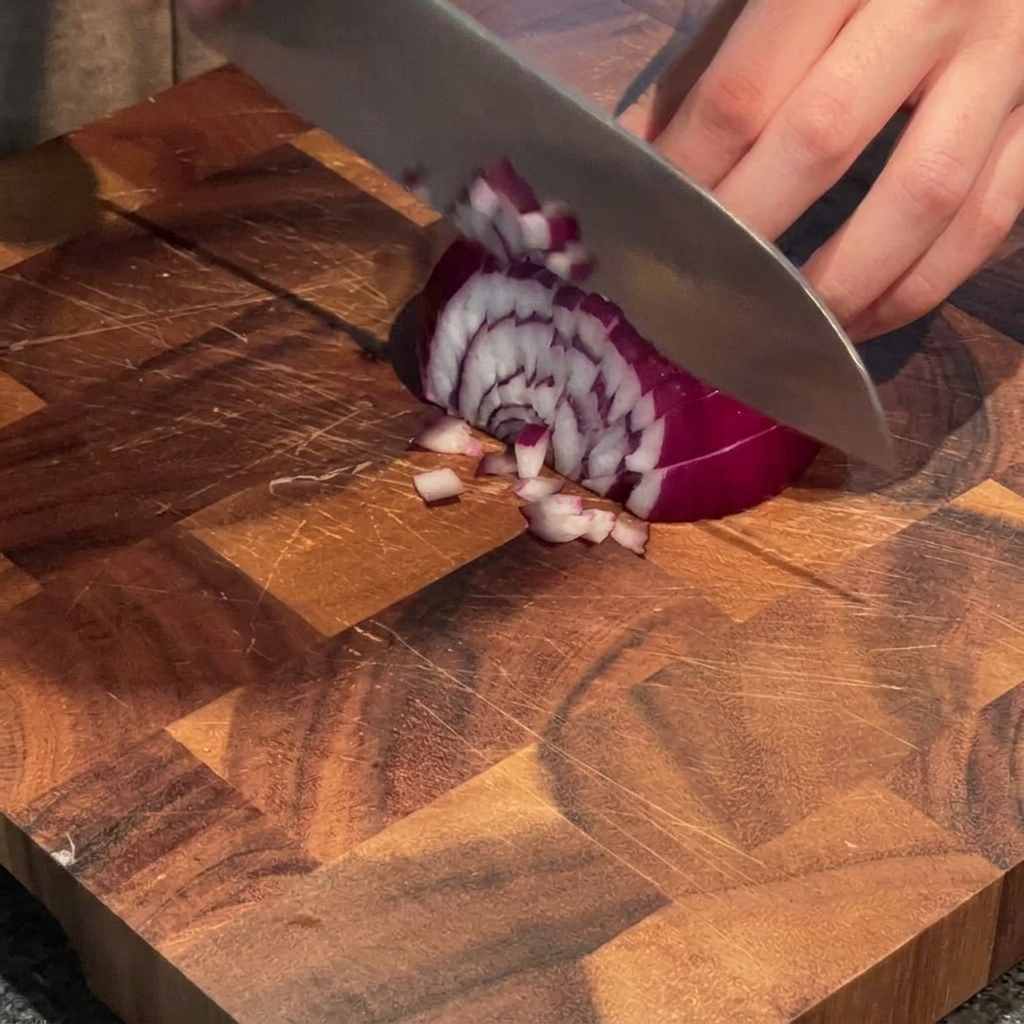
Using a sharp knife, carefully dice the red onion into small, uniform pieces on a wooden cutting board. These aromatics will be stir-fried early in the cooking process to build a deeply flavorful base for the soup.
Tip: Keep the root end of the onion intact while slicing to hold the layers together, making it much easier to dice safely. - 3Mince the garlic
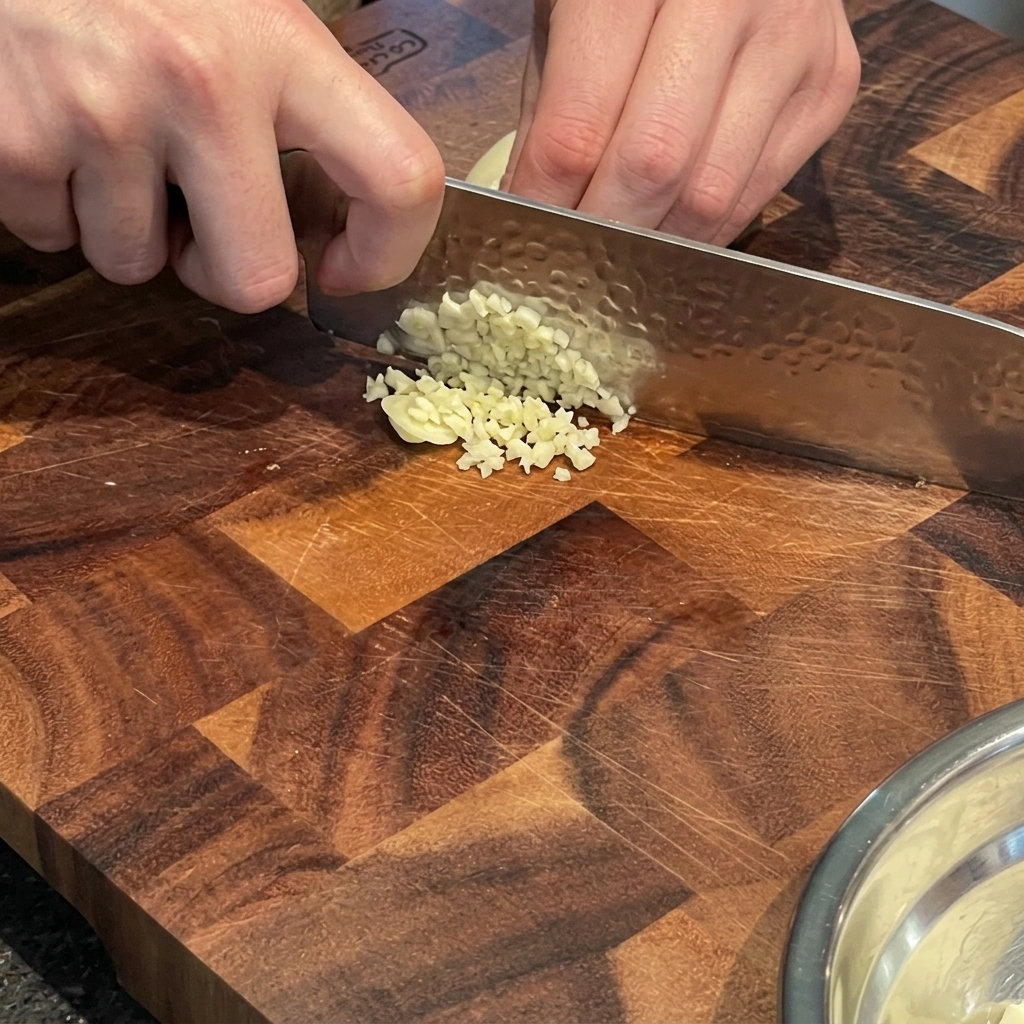
Take the fresh garlic cloves and finely mince them into tiny bits on the cutting board. Finely minced garlic releases more of its essential oils, ensuring a robust and savory foundation for the soup.
Tip: Smashing the garlic cloves slightly with the flat side of your knife before mincing makes the process faster and easier. - 4Slice the green chilies
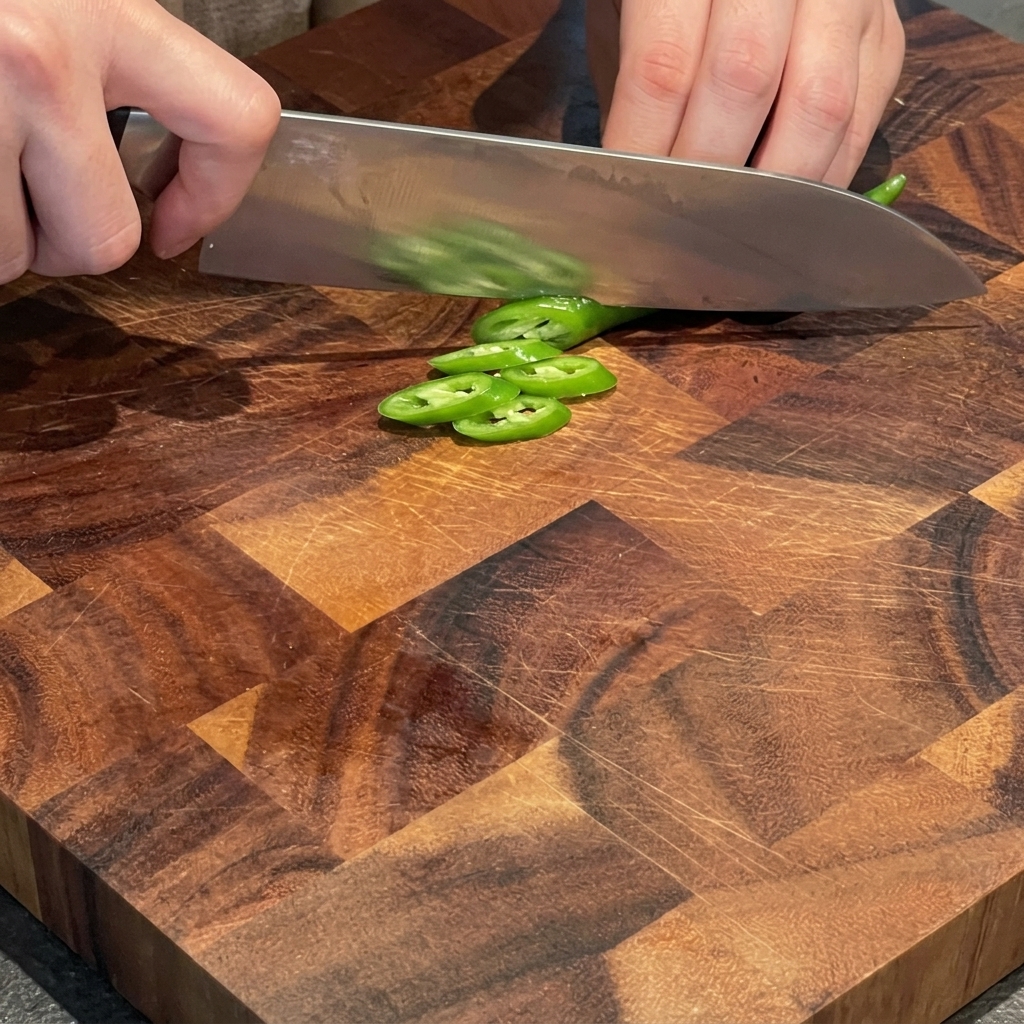
Slice the green chili peppers diagonally into thin pieces. This cut not only looks attractive but also exposes more surface area to infuse the broth with a vibrant, spicy kick.
Tip: If you prefer a milder soup, remove the seeds from the chilies before slicing them. - 5Slice the pork belly
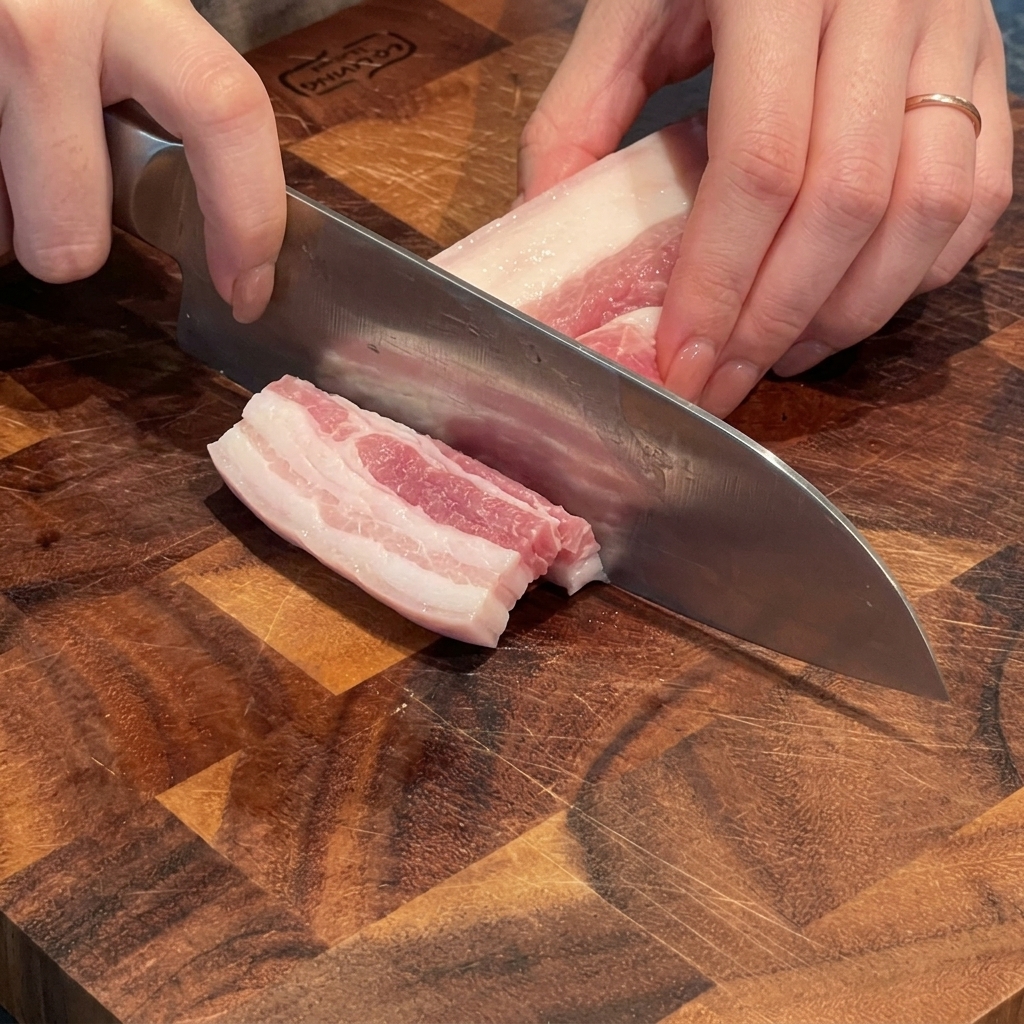
Take the raw slab of pork belly and slice it into thick, bite-sized pieces. The rich fat from the pork belly will render out during cooking, giving the Kimchi Jjigae its signature deep, savory flavor.
Tip: Partially freezing the pork belly for about 15 minutes before prep will make it much easier to slice cleanly. - 6Heat the cooking oils

Place a black stone pot on the stove and pour in two spoons of vegetable oil along with one spoon of sesame oil. Heating these together creates a fragrant base perfect for stir-frying the aromatics and meat.
Tip: Using a combination of vegetable and sesame oil prevents the sesame oil from burning while still providing its signature nutty flavor. - 7Sauté the aromatics
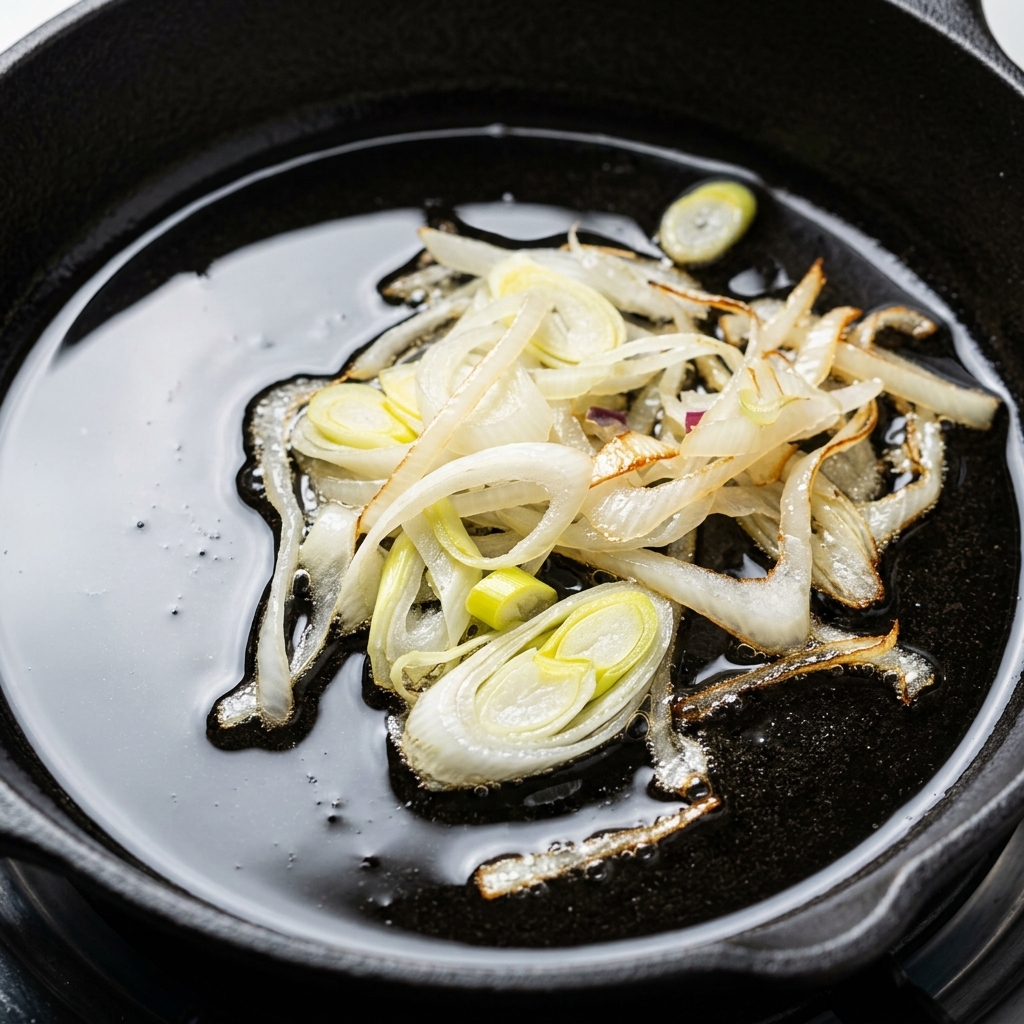
Add the shredded scallions and diced red onion directly into the heated oil mixture. Stir-fry them over medium heat until they become fragrant and translucent to build a savory flavor base for the soup.
Tip: Stir-frying the onions and scallions in sesame oil first releases their essential oils and sweetness, creating a deeper aromatic foundation. - 8Add the pork belly slices
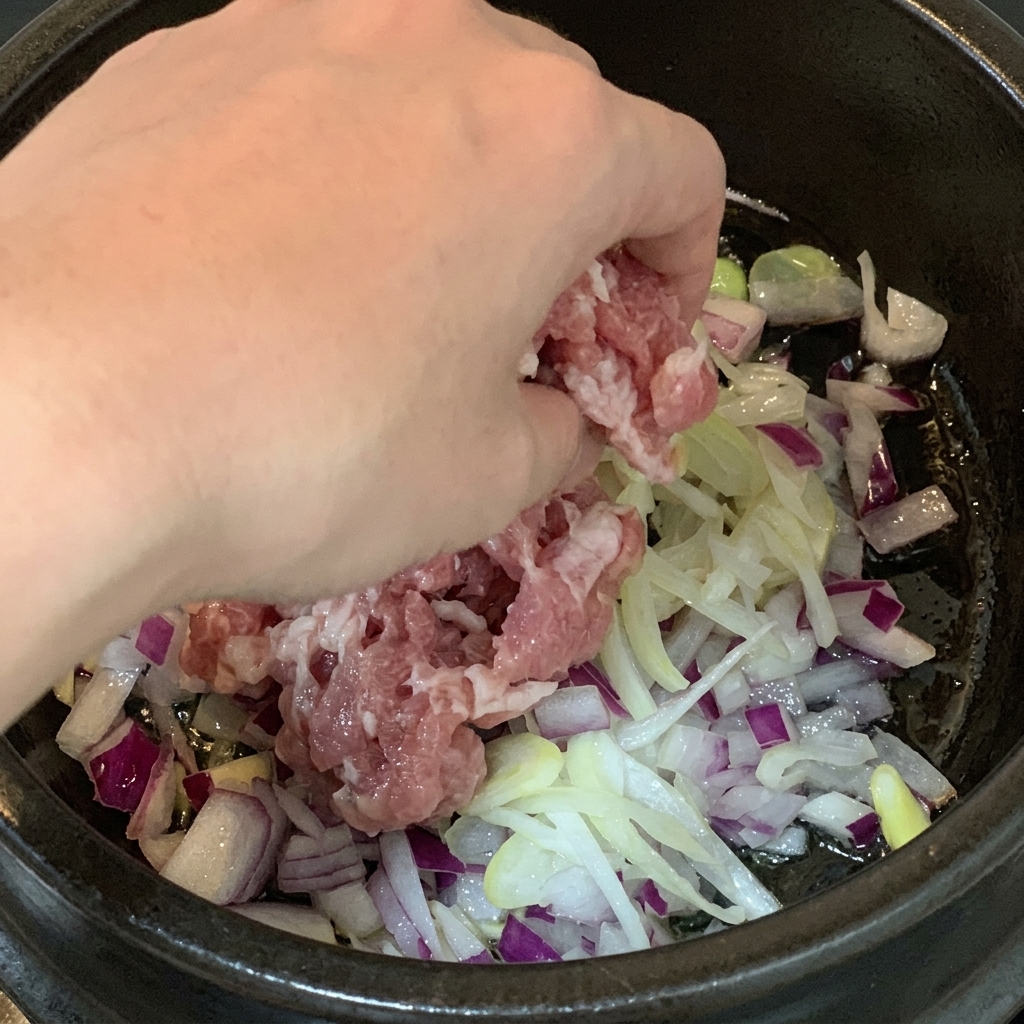
Add the bite-sized raw pork belly slices into the pot containing the stir-fried scallions and red onions. Sauté the pork meat over medium heat until it begins to change color and release its savory oils.
Tip: Sautéing the pork belly before adding liquids helps render the fat, creating a richer and more flavorful soup base. - 9Add the chopped kimchi
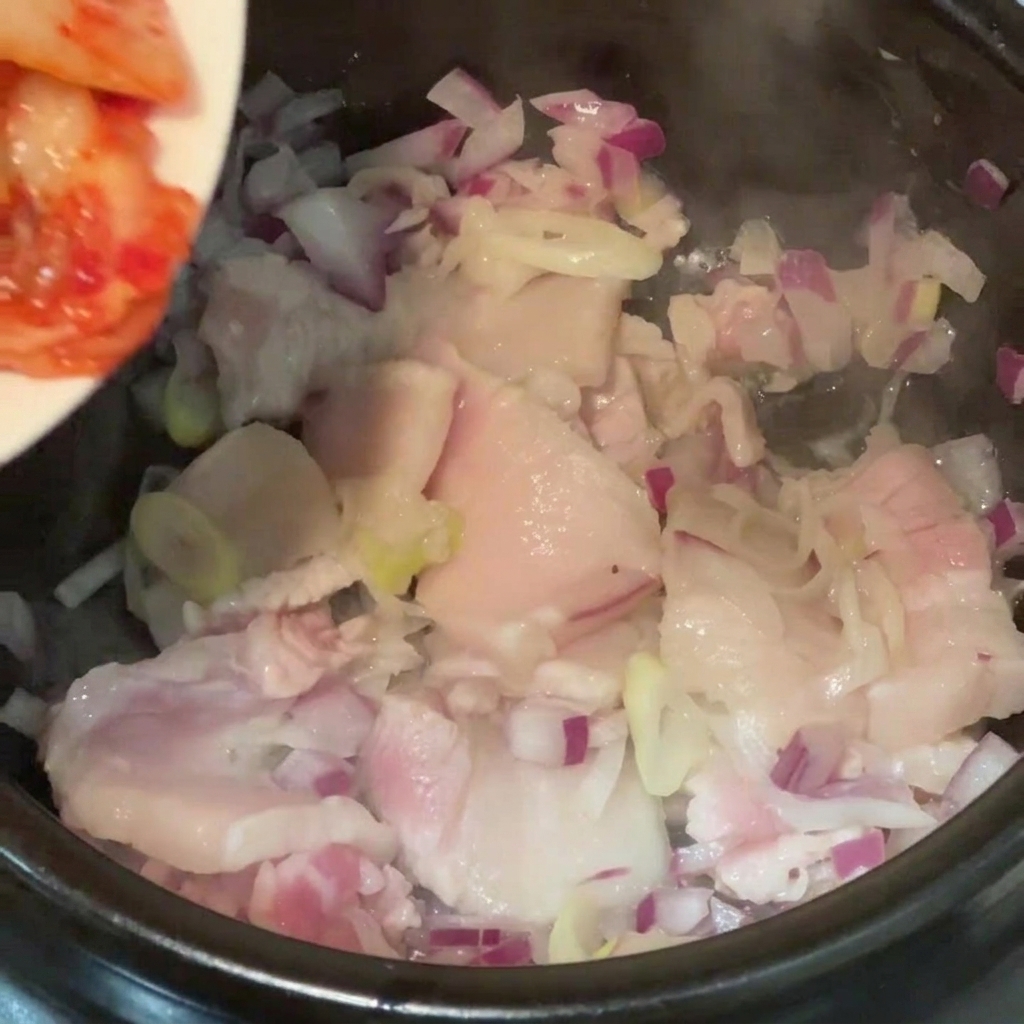
Add the vibrant, chopped kimchi cabbage into the pot with the sautéed pork belly and onions. Stir-fry everything together over medium heat until the kimchi begins to soften and absorb the savory oils.
Tip: Using well-fermented, sour kimchi is key here, as it provides the signature tangy depth required for an authentic Jjigae. - 10Season with chili powders
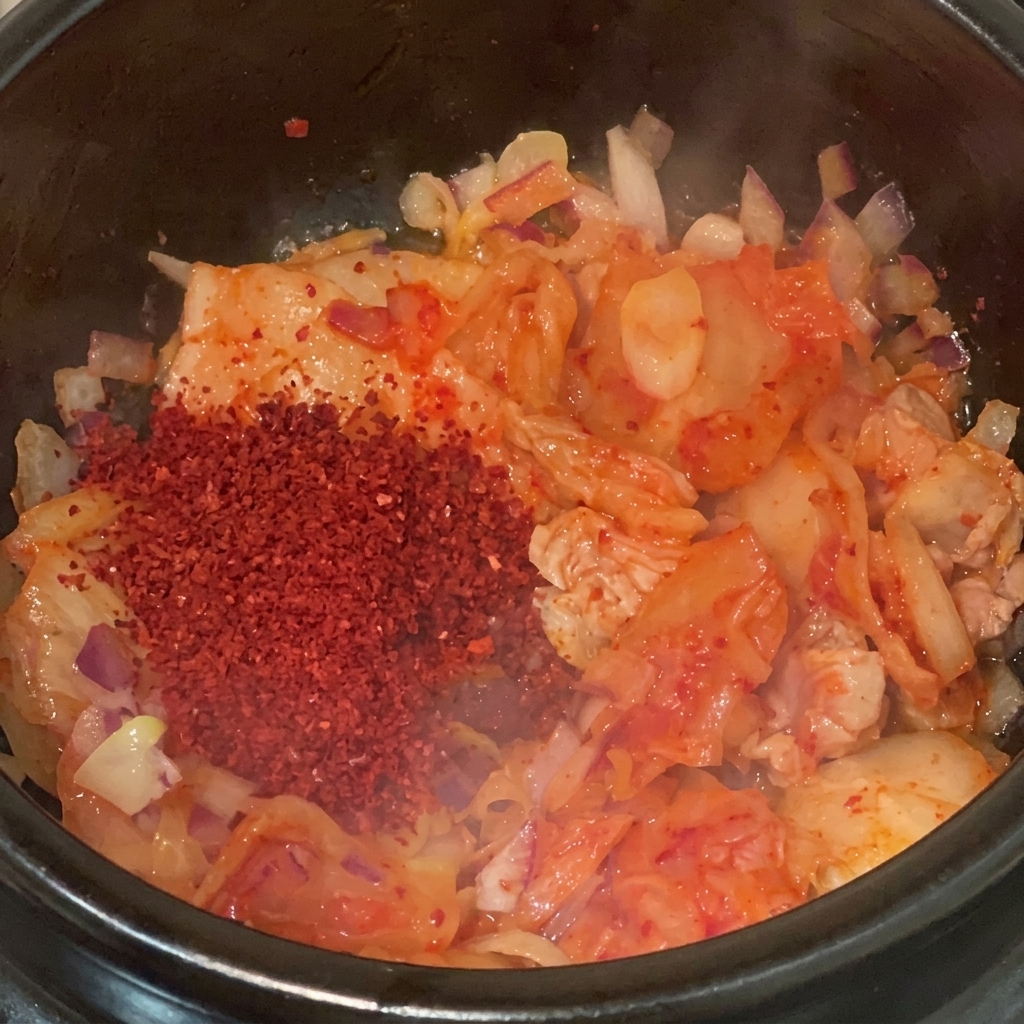
Add one spoon of coarse red chili powder and one spoon of fine red chili powder directly onto the pork belly and kimchi mixture. This combination builds the distinct fiery heat and iconic deep red color of the stew.
Tip: Using a blend of both coarse and fine chili powder provides an ideal balance of intense color and texture without making the broth grainy. - 11Stir-fry the seasoned mixture
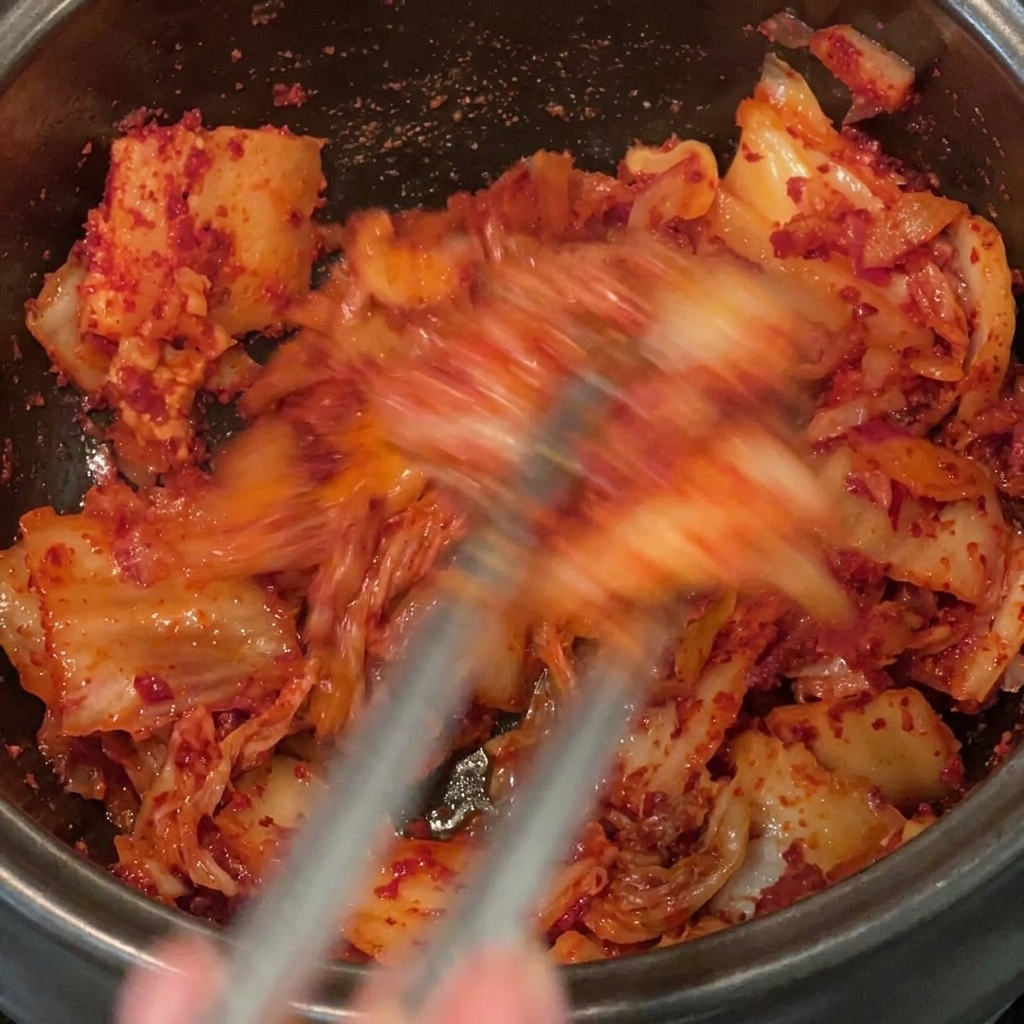
Thoroughly stir and combine the kimchi, pork belly, and red chili powders together in the pot. Stir-frying everything together briefly before adding liquids allows the spices to toast and the flavors to fully integrate.
Tip: Keep the mixture moving continuously to ensure the chili powder coats all ingredients evenly without burning at the bottom of the pot. - 12Add the fish sauce
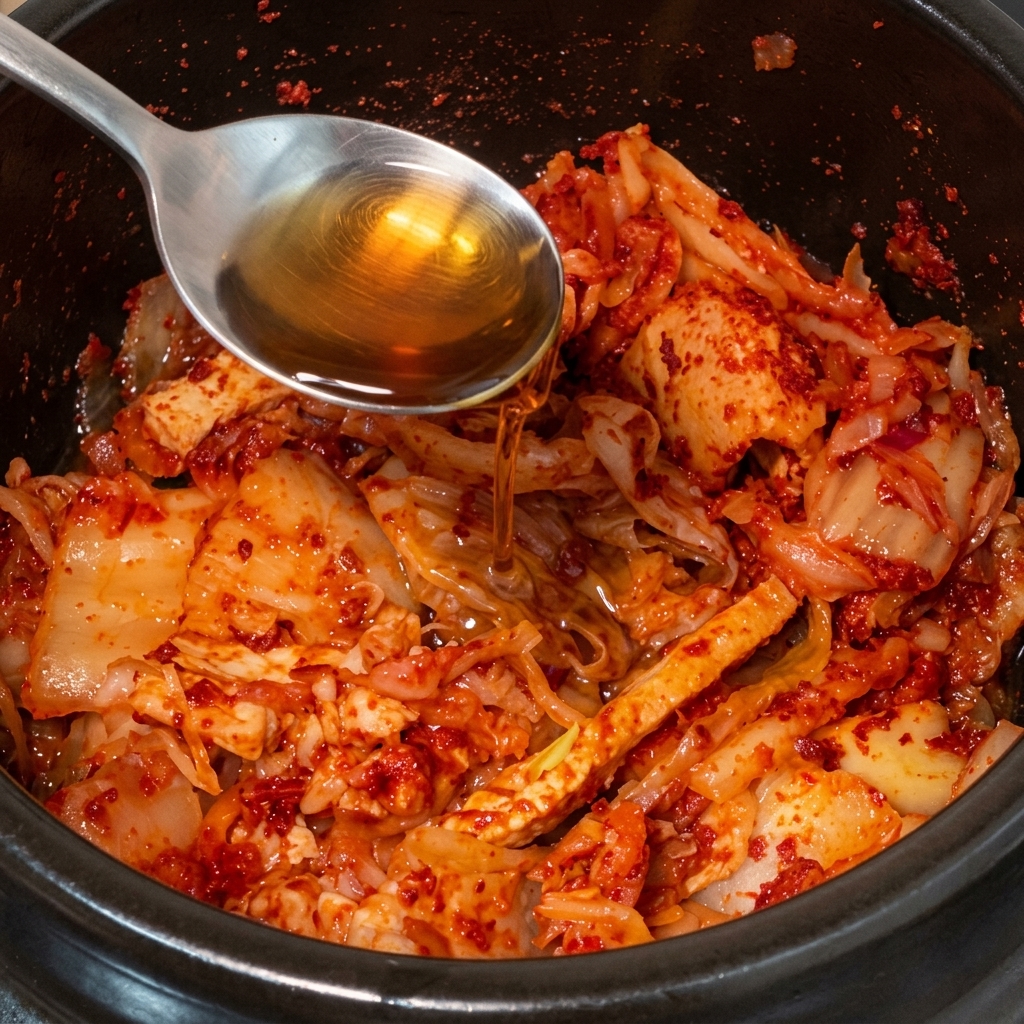
Pour a spoonful of amber-colored fish sauce into the pot with the seasoned kimchi and pork mixture. This infuses the base with a deep, savory umami flavor that perfectly balances the tangy and spicy elements of the kimchi.
Tip: Distribute the fish sauce evenly over the ingredients before stirring to ensure the flavor incorporates well into the mixture. - 13Pour in boiling water
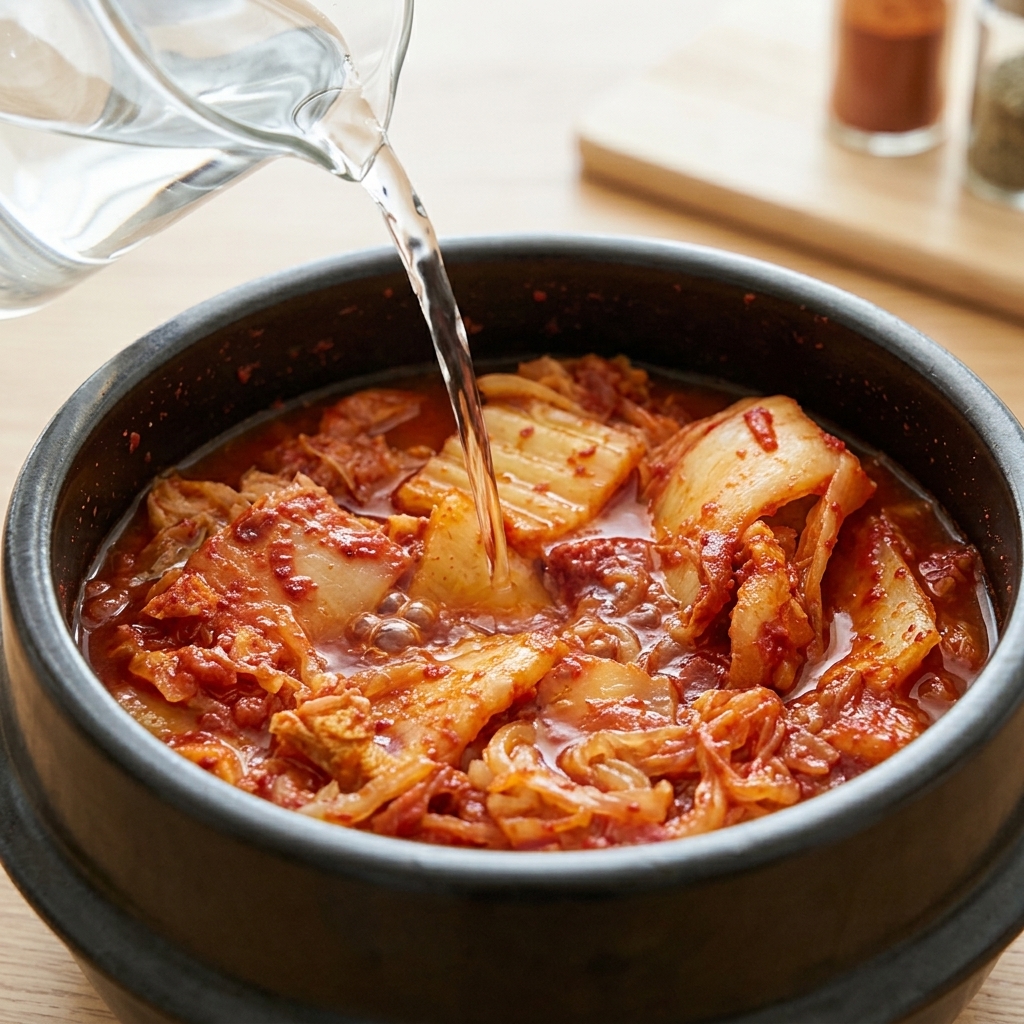
Carefully pour hot boiling water into the pot until all the kimchi stew ingredients are fully submerged. Bring the mixture to a boil, then reduce the heat to low and let it simmer to allow the flavors to meld beautifully.
Tip: Using boiling water instead of cold water keeps the cooking temperature consistent and prevents the pork belly from toughening. - 14Add the green chili peppers
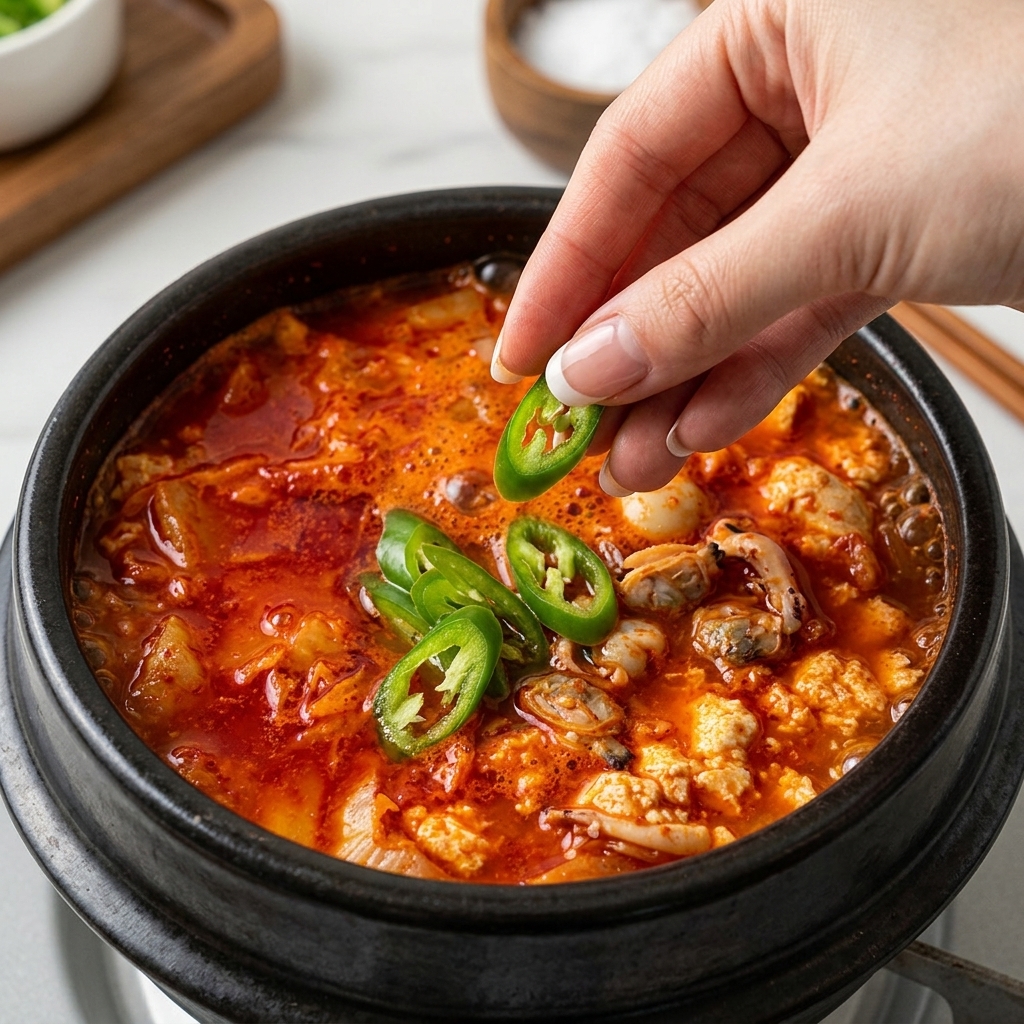
Gently add the diagonally sliced green chili peppers into the hot, bubbling stew. Stir them into the red broth to allow their sharp, fresh heat to infuse throughout the soup and balance the rich flavors of the kimchi and pork belly.
Tip: If you prefer a milder soup, you can scrape out the seeds from the chili slices before adding them to the pot. - 15Add the silken tofu
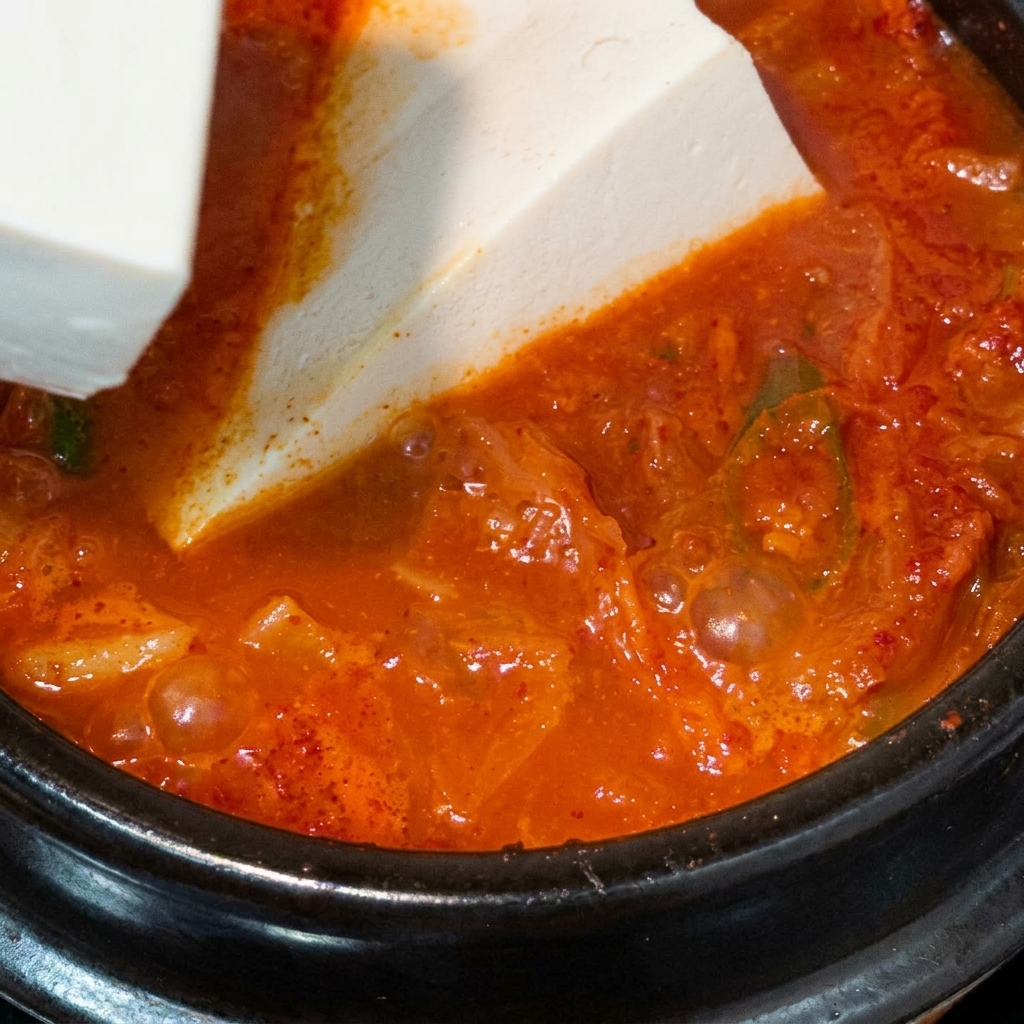
Gently slide a large block of white silken tofu into the bubbling, simmering red kimchi soup. Use chopsticks or a spoon to carefully break the tofu into large, rustic chunks, ensuring they absorb the rich, spicy broth.
Tip: Handle the silken tofu gently so it doesnt completely disintegrate into the soup; you want large, melt-in-your-mouth pieces. - 16Garnish and serve the stew
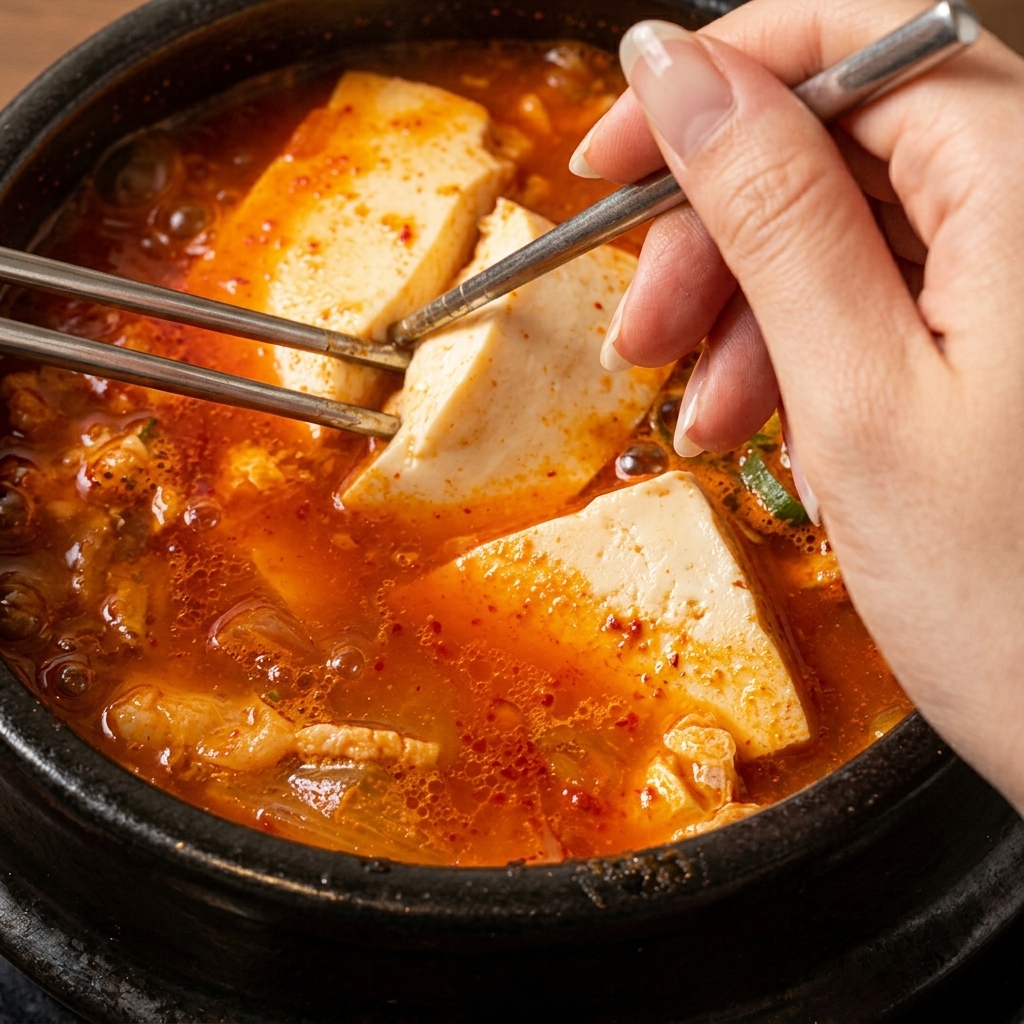
Scatter the reserved green parts of the scallions and seaweed flakes over the top of the bubbling soup just before removing it from the heat. Serve the hot stew immediately alongside a fresh bowl of white rice.
Tip: Serving the stew in a traditional clay pot helps retain heat so it stays piping hot throughout the entire meal.