Easy Korean Spicy Beef Soft Tofu Stew (Sundubu-Jjigae)
An easy 10-minute recipe for authentic Korean soft tofu stew featuring tender beef slices, crisp yellow bean sprouts, and silky tofu in a fiery red broth.
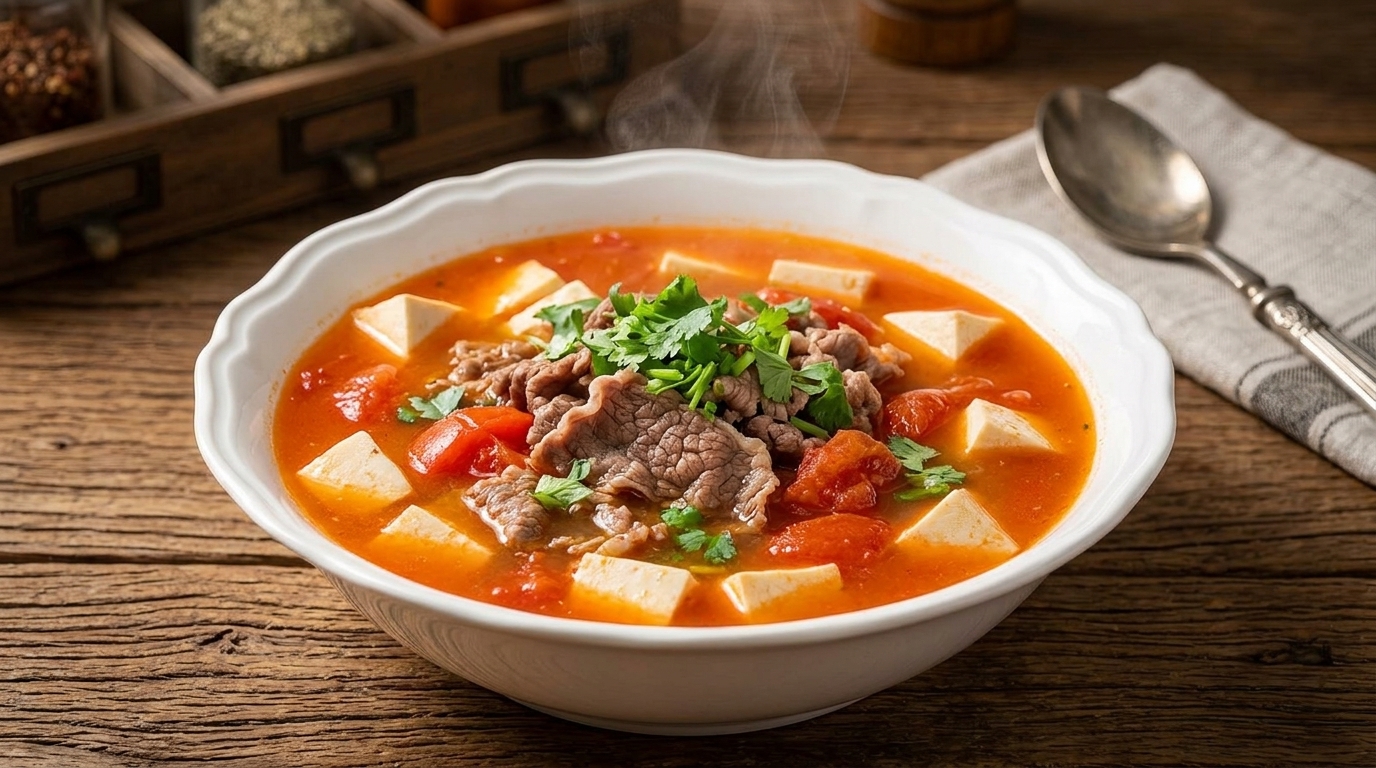
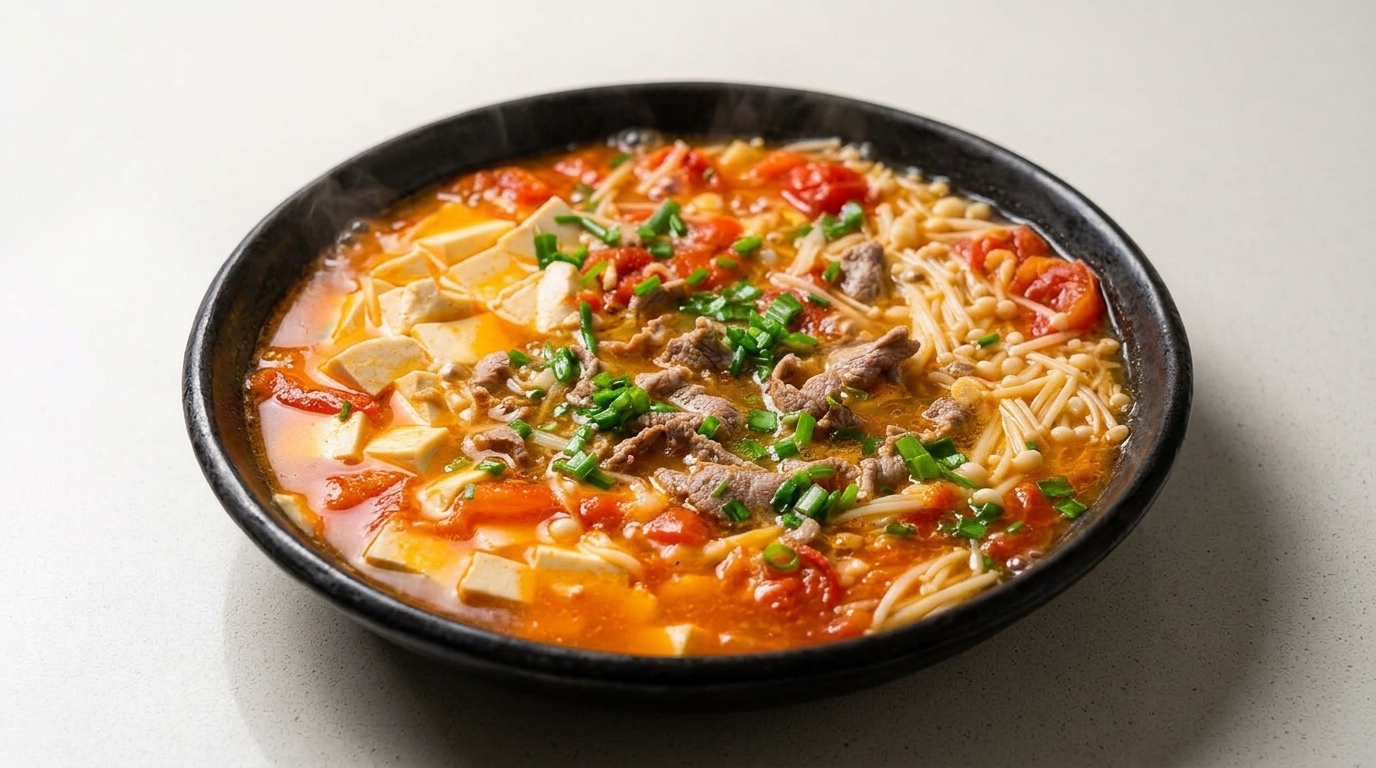
Sundubu-jjigae, or soft tofu stew, is a quintessential Korean comfort food loved for its deep crimson, intensely savory broth and cloud-like tofu textures. Traditionally served bubbling hot in a black earthenware pot called a ttukbaegi, this dish perfectly balances rich umami warmth with a clean, sharp spicy kick. This quick version incorporates tender beef and nutritious yellow bean sprouts, creating a high-protein, low-fat meal that instantly restores your energy after a demanding day.
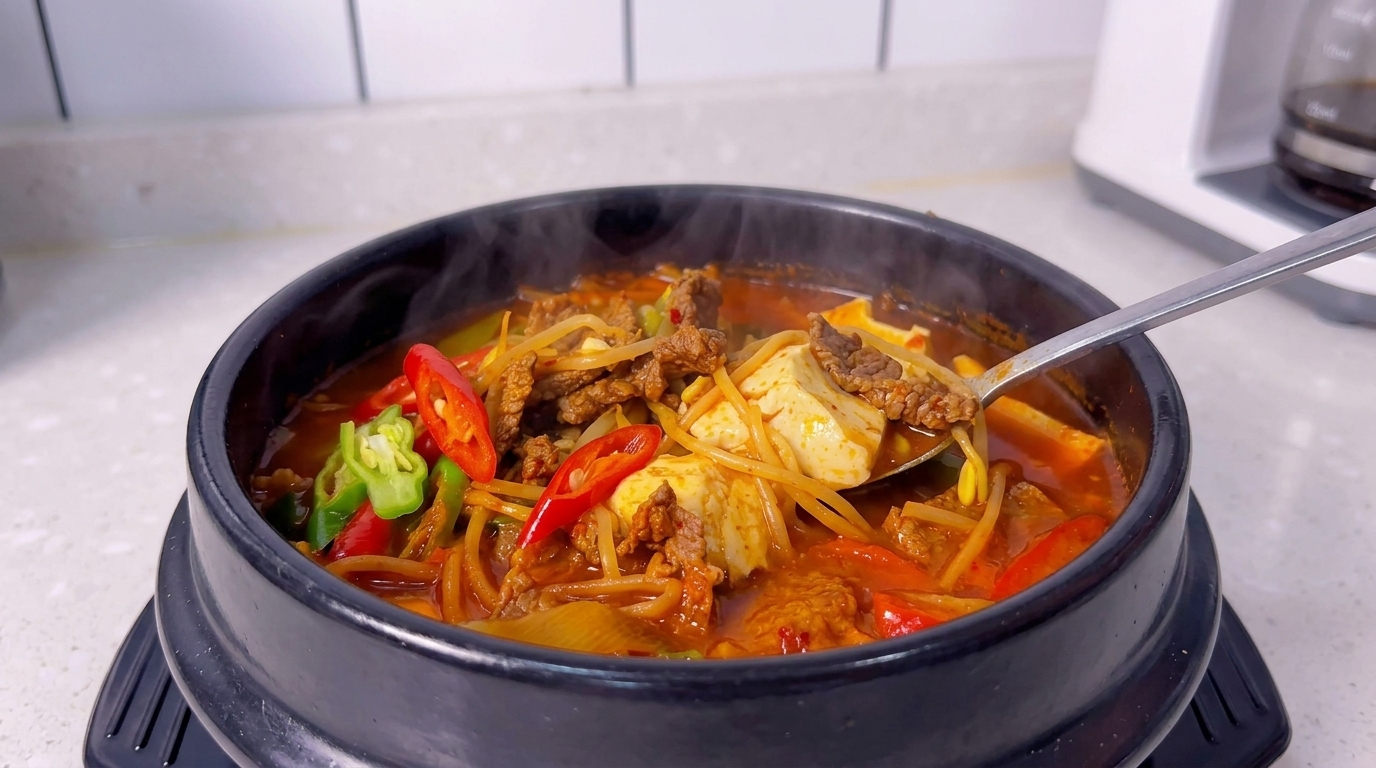
Ingredients
- 5 g camellia oil
- 150 g beef slices
- 1 stalk large green onion, sliced
- 1 tbsp coarse chili powder
- 1 tbsp fine chili powder
- 400 ml water
- 1 tbsp Korean chili paste (gochujang)
- 1 tbsp light soy sauce
- 1 tbsp minced garlic
- 1 tsp Dashida beef seasoning powder
- 100 g fresh yellow bean sprouts
- 0.5 block soft tofu
- to taste fresh green and red chili peppers, sliced
Instructions
- 1Heat the pot and add oil
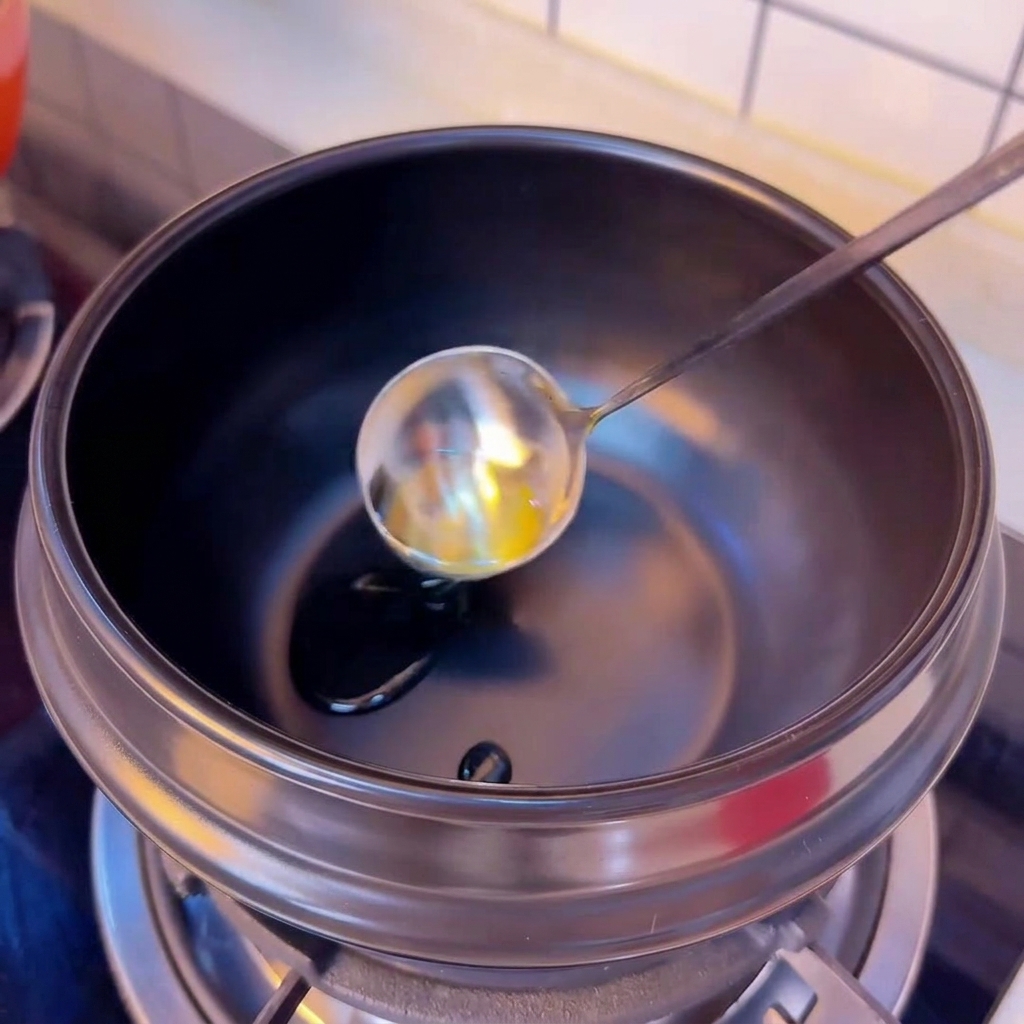
Preheat your black clay pot over medium heat. Once the pot is warm, carefully pour in five grams of camellia oil using a spoon. Heating the pot beforehand helps the oil coat the surface evenly and prevents ingredients from sticking.
Tip: Camellia oil has a high smoke point and a neutral flavor, making it excellent for healthy, low-fat cooking. - 2Add beef and green onions
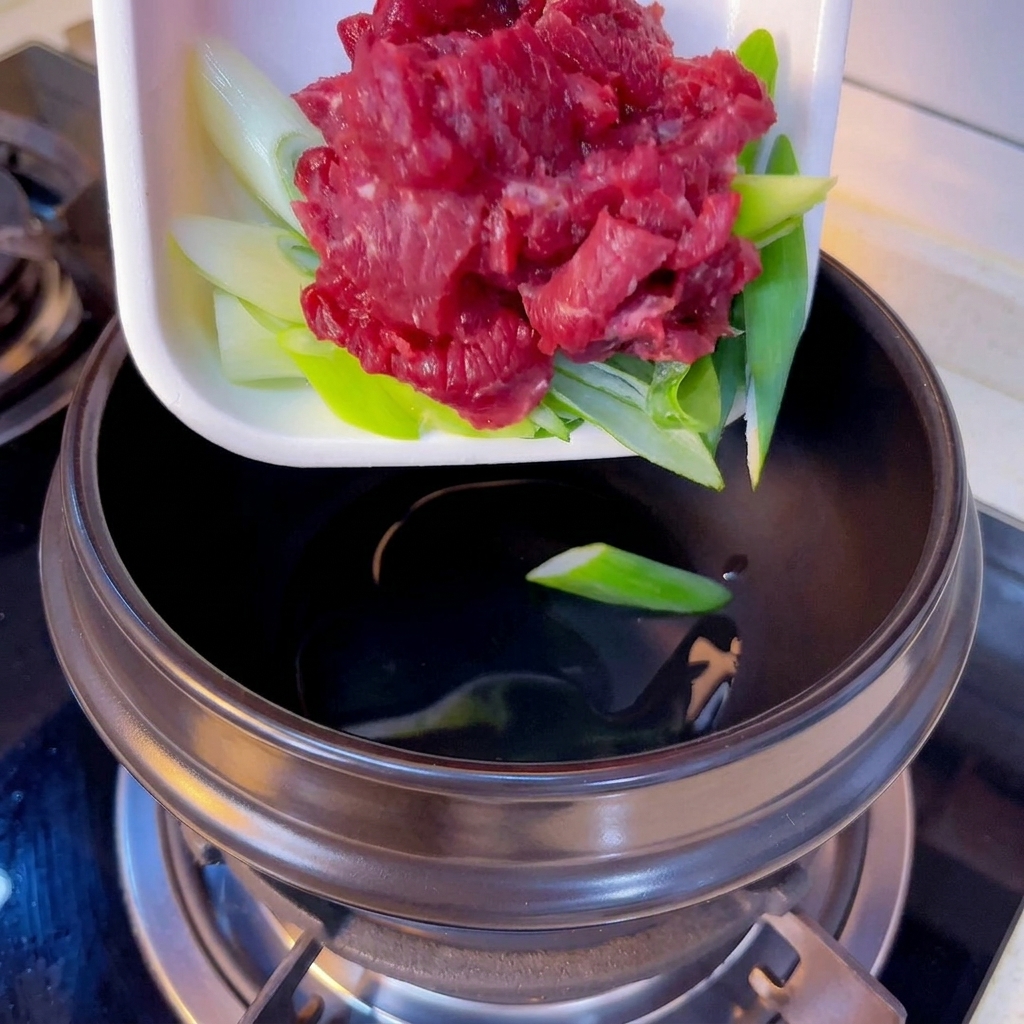
Slide the raw sliced beef and chopped large green onions directly into the heated pot from the preparation tray. Begin stir-frying immediately to distribute the ingredients and blend their flavors with the oil.
Tip: Searing the green onions alongside the beef releases their aromatic oils, creating a deeply flavorful foundation for the stew. - 3Add coarse chili powder
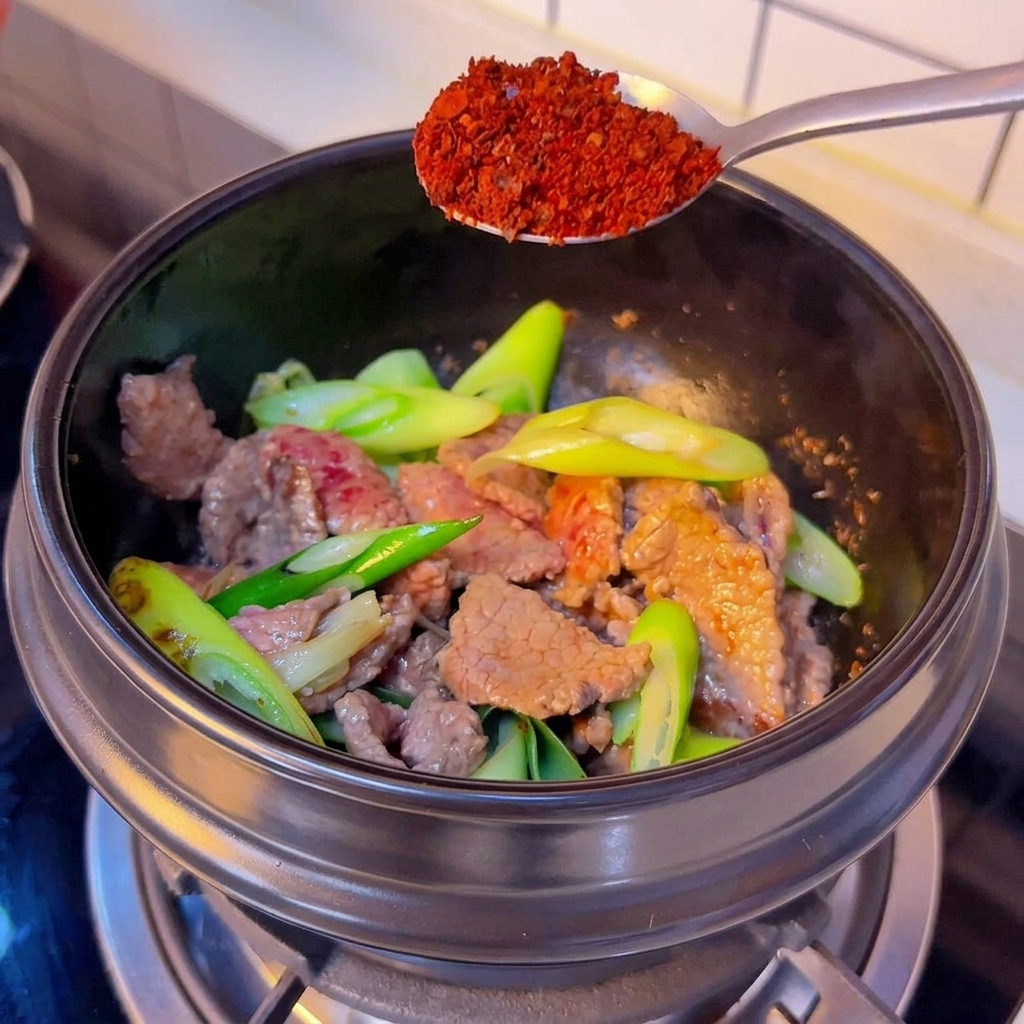
Measure out one spoonful of coarse chili powder and add it directly to the pot with the stir-fried beef and green onions. Stir well to coat the ingredients evenly and toast the chili powder slightly to release its smoky aroma.
Tip: Coarse chili powder provides a rustic texture and a deep, smoky undertone without overpowering the dish with immediate sharp heat. - 4Add fine chili powder
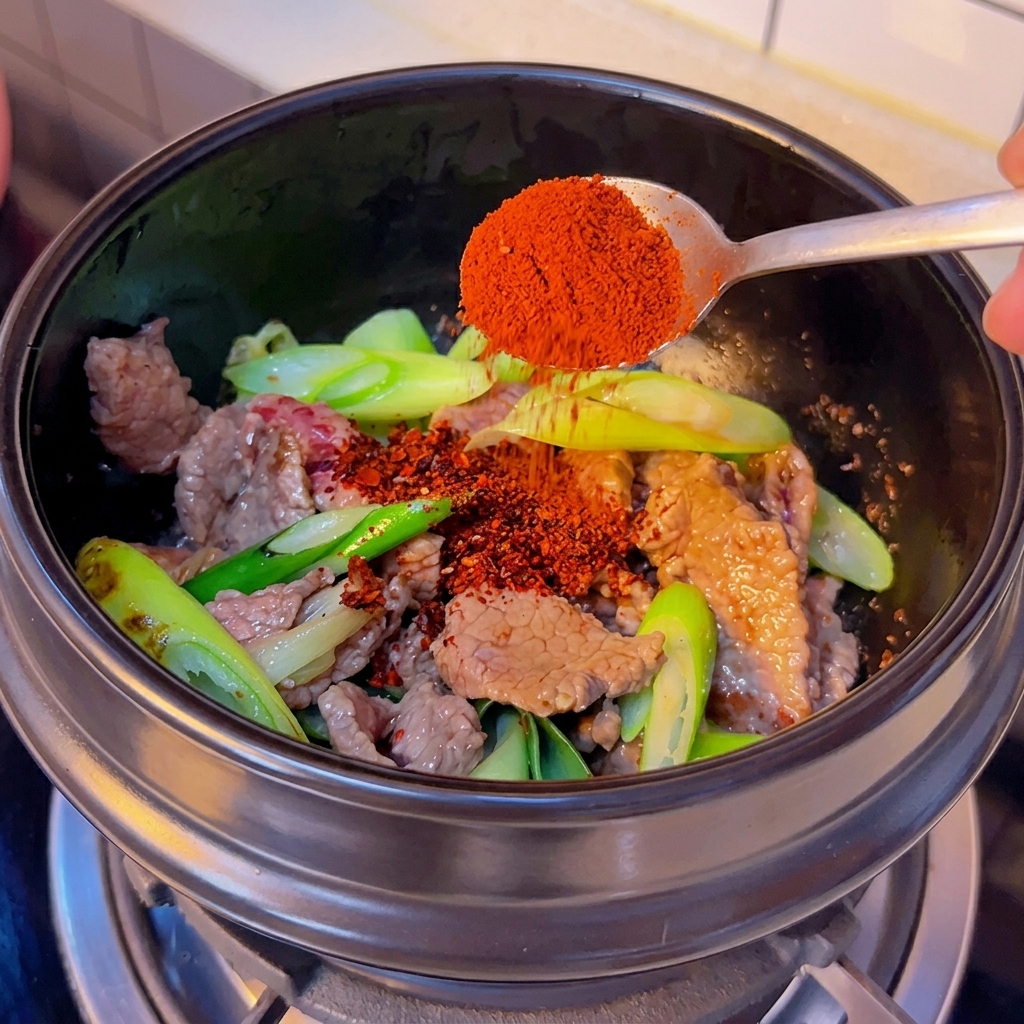
Add one spoonful of fine chili powder into the pot on top of the spiced beef mixture. Stir-fry quickly to combine both chili powders with the rendered fat, creating a vibrant red color base for the soup.
Tip: Fine chili powder dissolves quickly into the fat and liquid, providing a uniform, vibrant red color and a more immediate spicy kick. - 5Pour in water
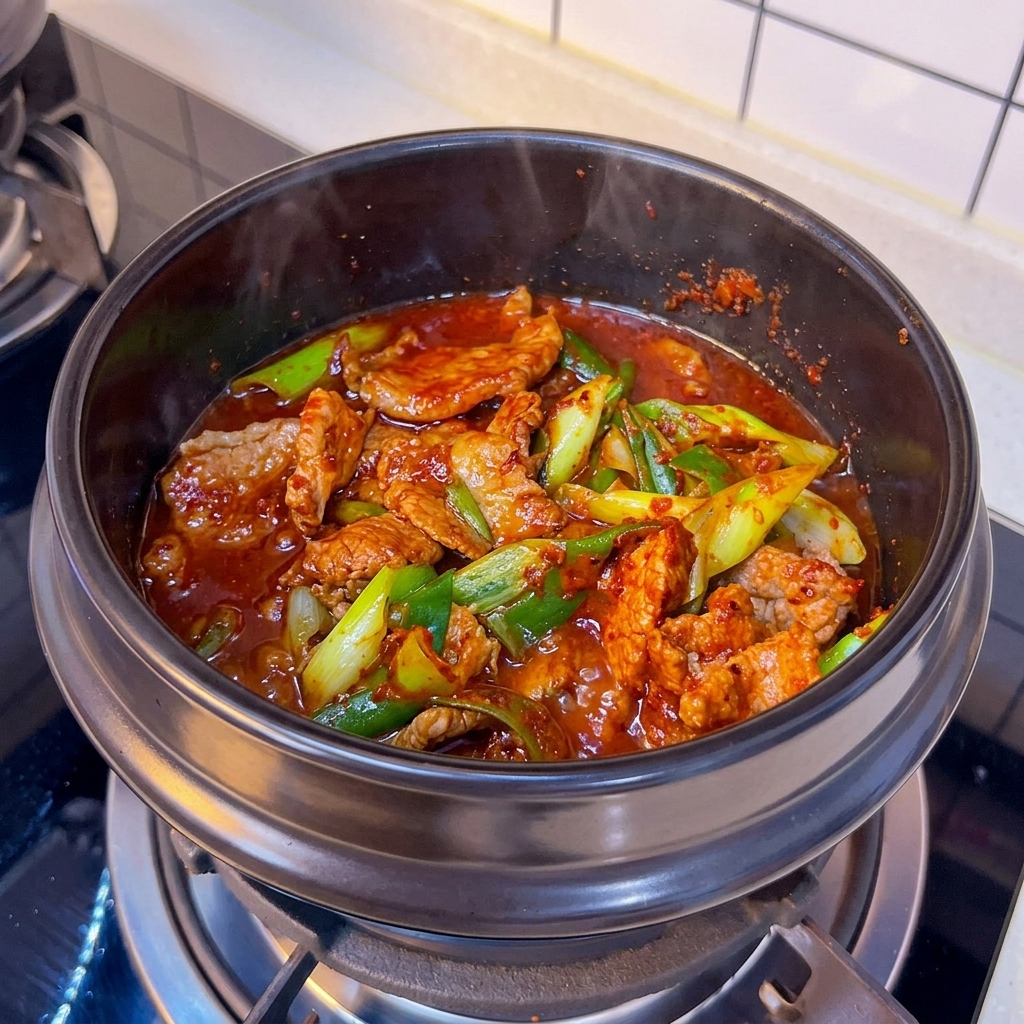
Pour water directly into the pot over the stir-fried beef and chili powder mixture. Bring the liquid to a simmer, allowing the rich flavors of the seared beef, aromatics, and toasted chilies to meld into a savory broth base.
Tip: Using room temperature or warm water helps maintain the cooking temperature of the pot so it returns to a simmer more quickly. - 6Mix in Korean chili paste
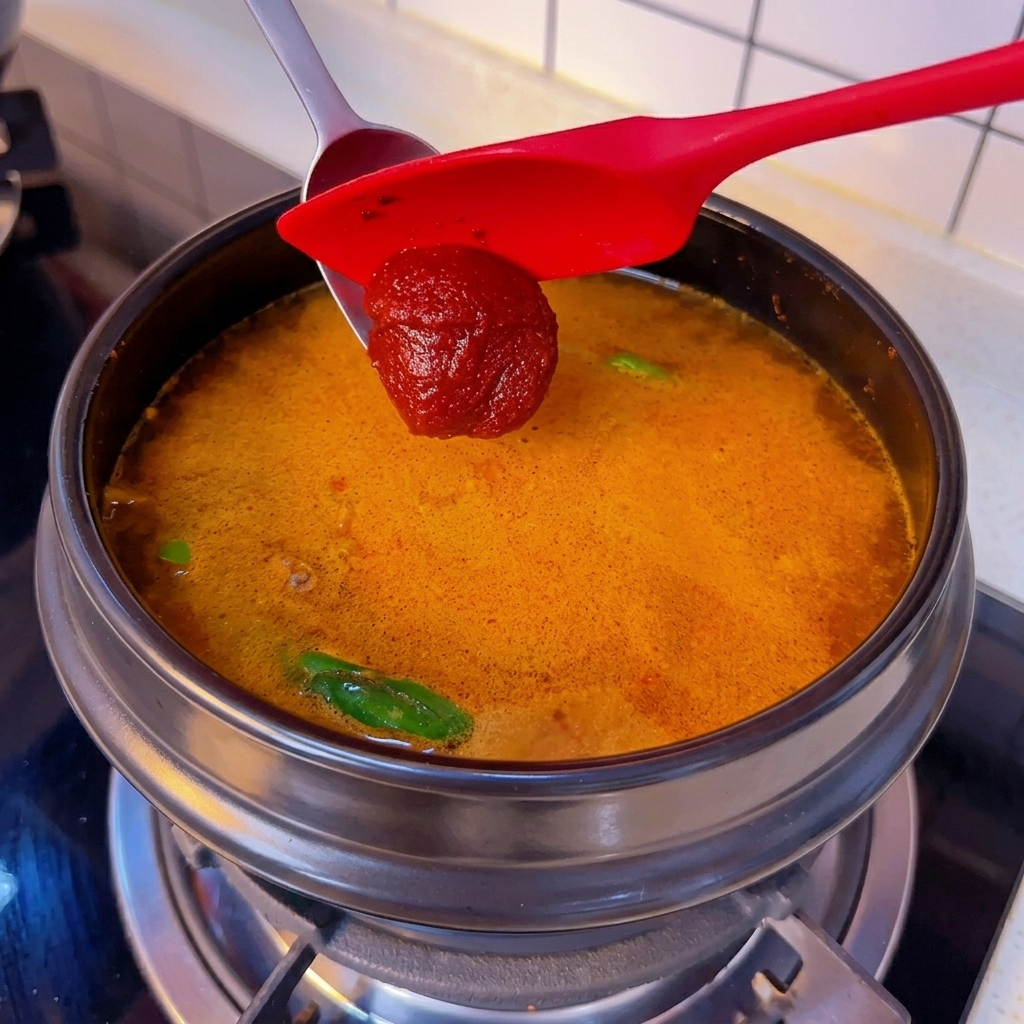
Add a spoonful of thick, dark red Korean chili paste (gochujang) into the simmering liquid base. Stir thoroughly using a spatula or spoon to ensure the paste fully dissolves, enriching the broth with sweetness, umami, and depth.
Tip: Gochujang adds body and thickness to the soup, balancing the sharp heat of the chili powders with its fermented depth. - 7Season with light soy sauce
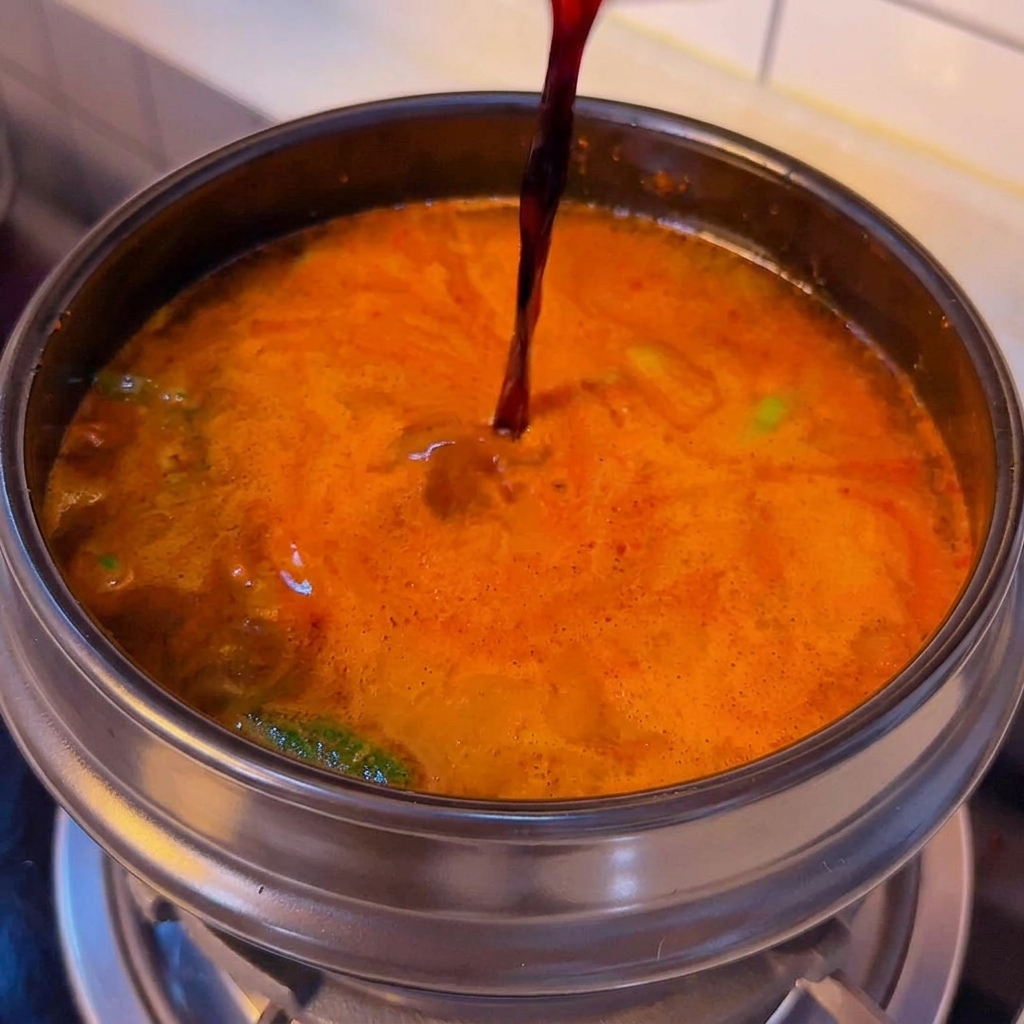
Pour one spoonful of light soy sauce directly into the bubbling soup base. This builds the savory, umami foundation required for an authentic Korean flavor profile.
Tip: Adjust the amount of soy sauce based on the saltiness of your chili paste and beef seasoning powder to keep the flavors balanced. - 8Add minced garlic
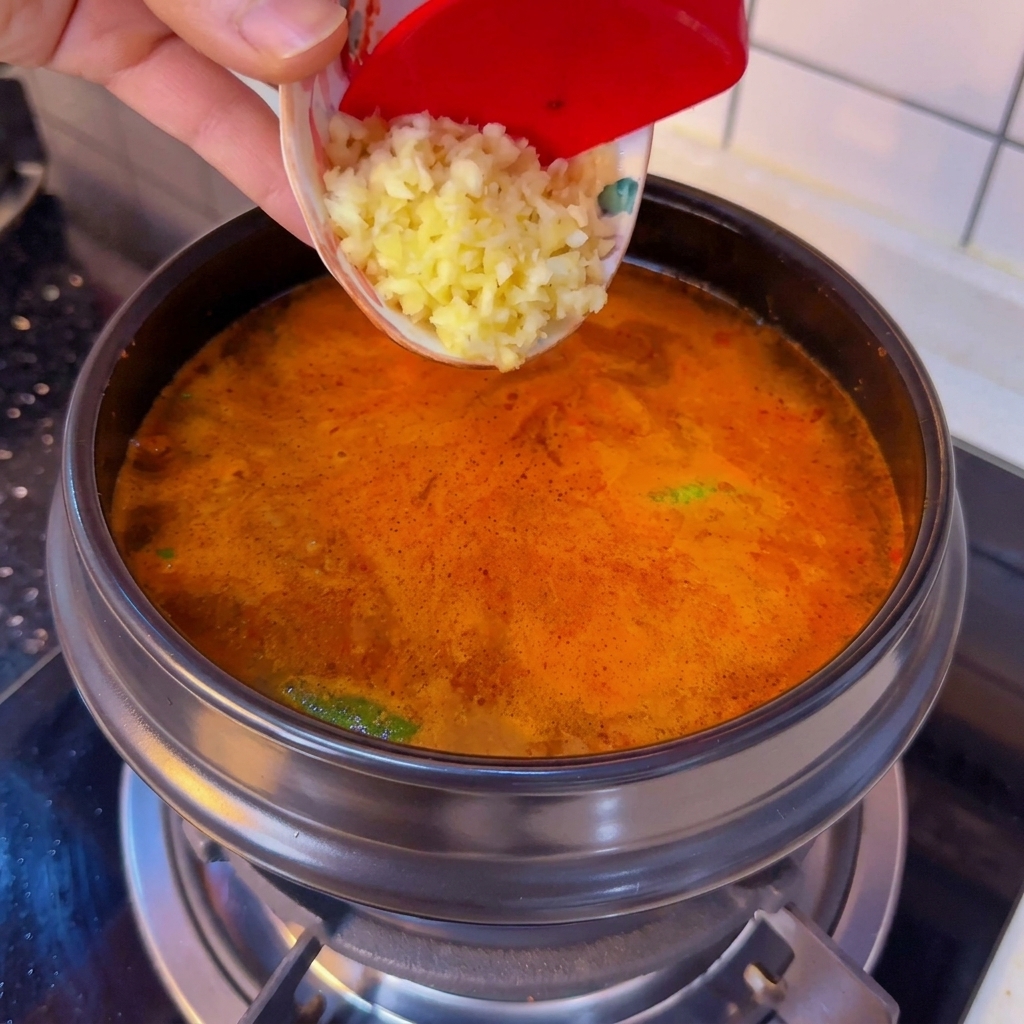
Add the minced garlic into the pot. Stir gently to allow the garlic to fully infuse into the spicy broth, enhancing its savory aroma.
Tip: Using freshly minced garlic provides a more vibrant and pungent flavor than pre-packaged minced garlic. - 9Season with beef powder
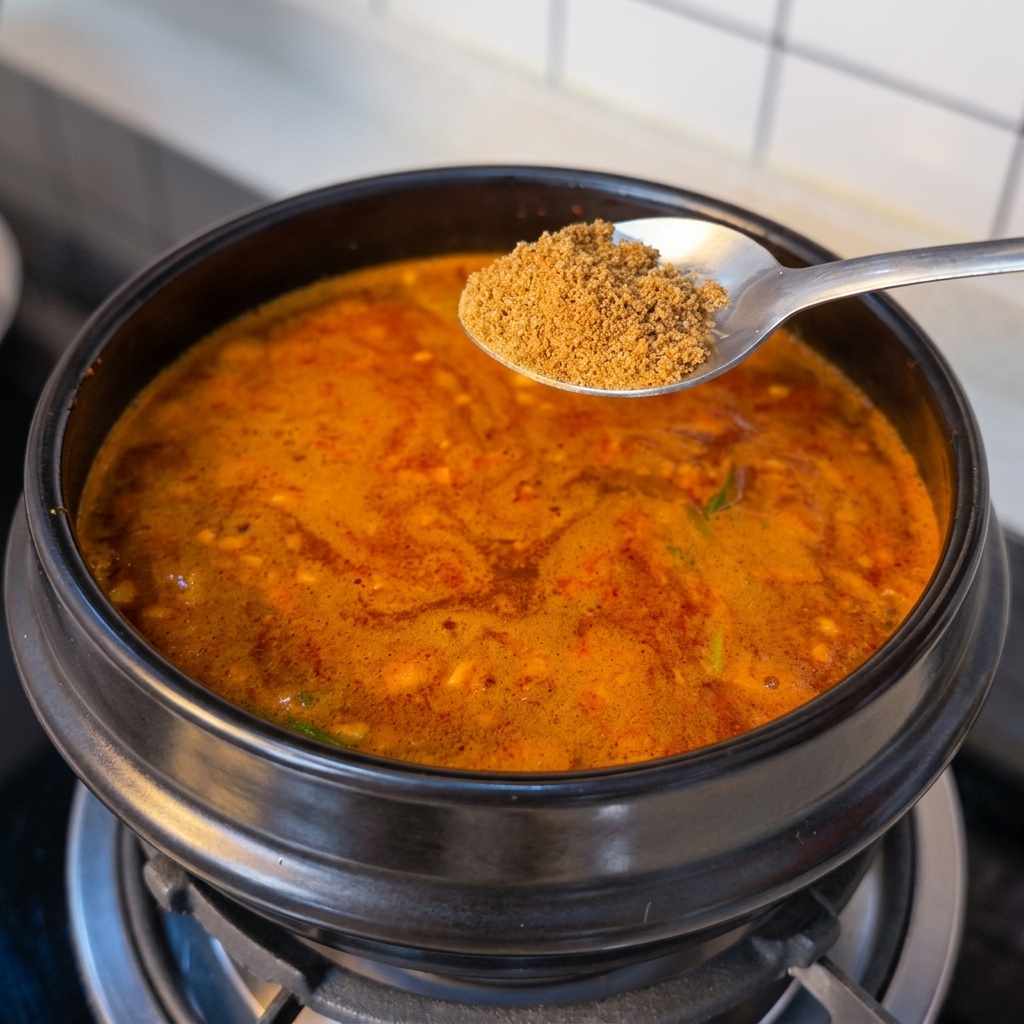
Measure out the Dashida beef seasoning powder with a spoon and add it directly to the soup. This creates a deep, authentic restaurant-style umami base.
Tip: Adjust the amount of seasoning powder according to your taste preferences, but a single spoonful is usually perfect for this portion size. - 10Add yellow bean sprouts
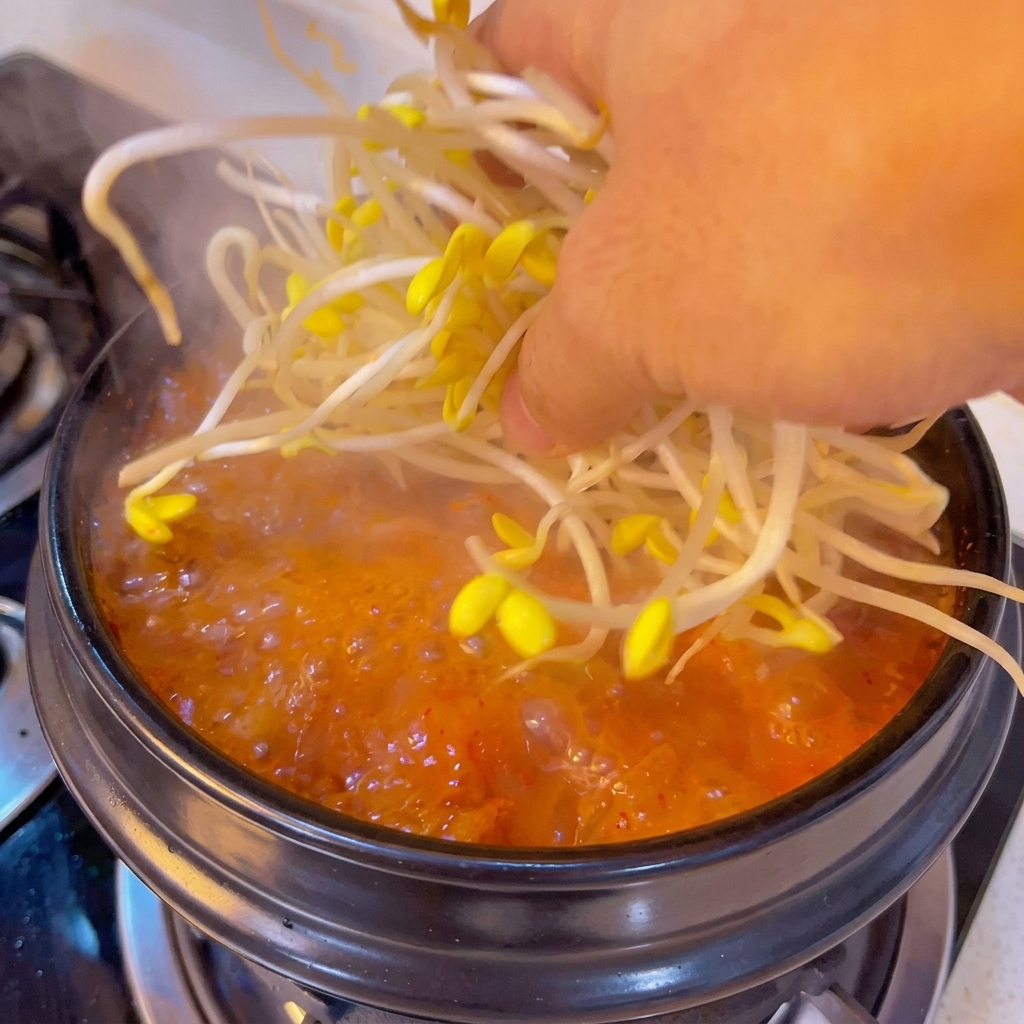
Add a generous handful of fresh yellow bean sprouts into the boiling stew. These will add a crisp texture and a natural sweetness to the broth.
Tip: Yellow bean sprouts take slightly longer to cook than mung bean sprouts, so make sure they simmer for a few minutes to tenderize properly. - 11Add the soft tofu
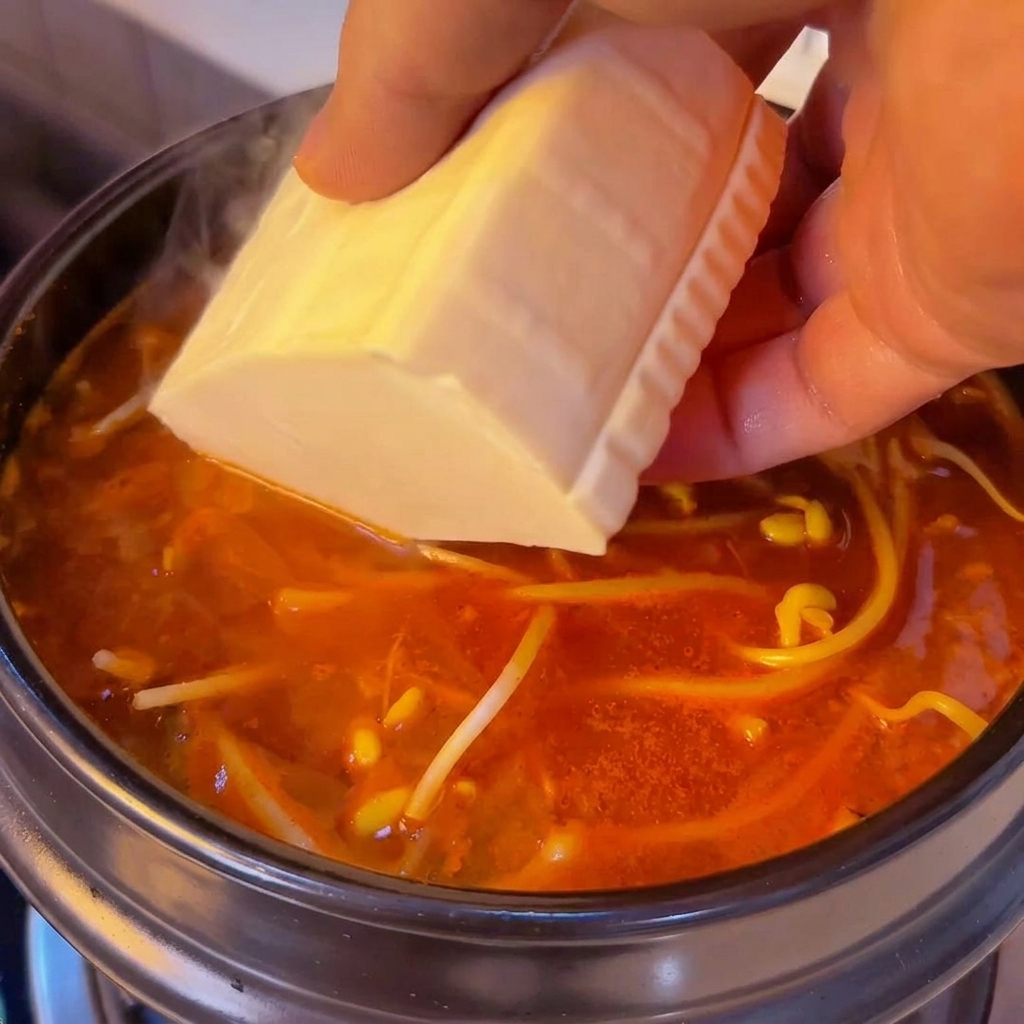
Carefully slide half a block of smooth, white soft tofu into the pot right over the yellow bean sprouts. Use a spoon to gently break the tofu into large, bite-sized pieces.
Tip: Handle the soft tofu very gently so it stays in chunky pieces rather than dissolving into the broth. - 12Break the soft tofu
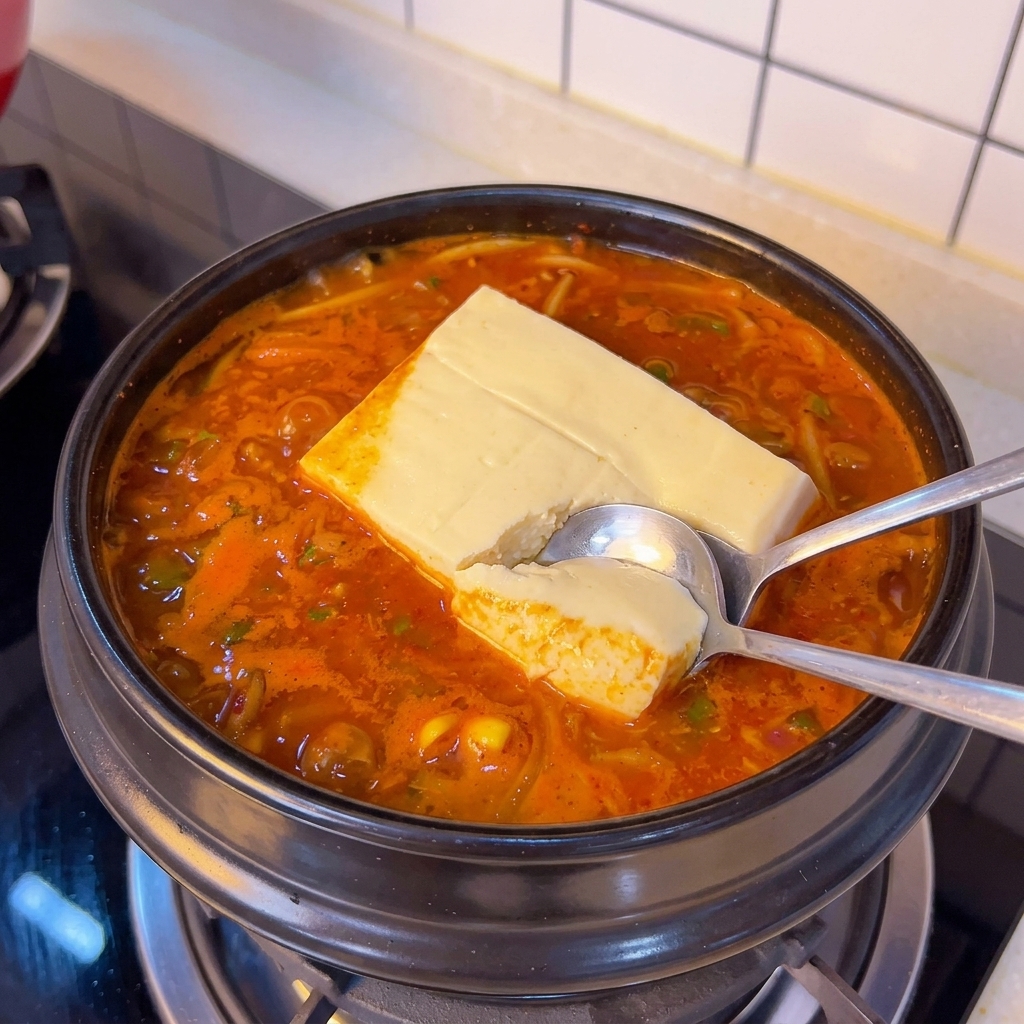
Place the soft tofu into the pot and use a spoon to gently break and divide it into smaller, bite-sized pieces so that it absorbs all the flavors of the soup.
Tip: Breaking tofu with a spoon creates rustic, uneven edges that hold onto the flavorful broth much better than smooth knife-cut surfaces. - 13Simmer the stew thoroughly
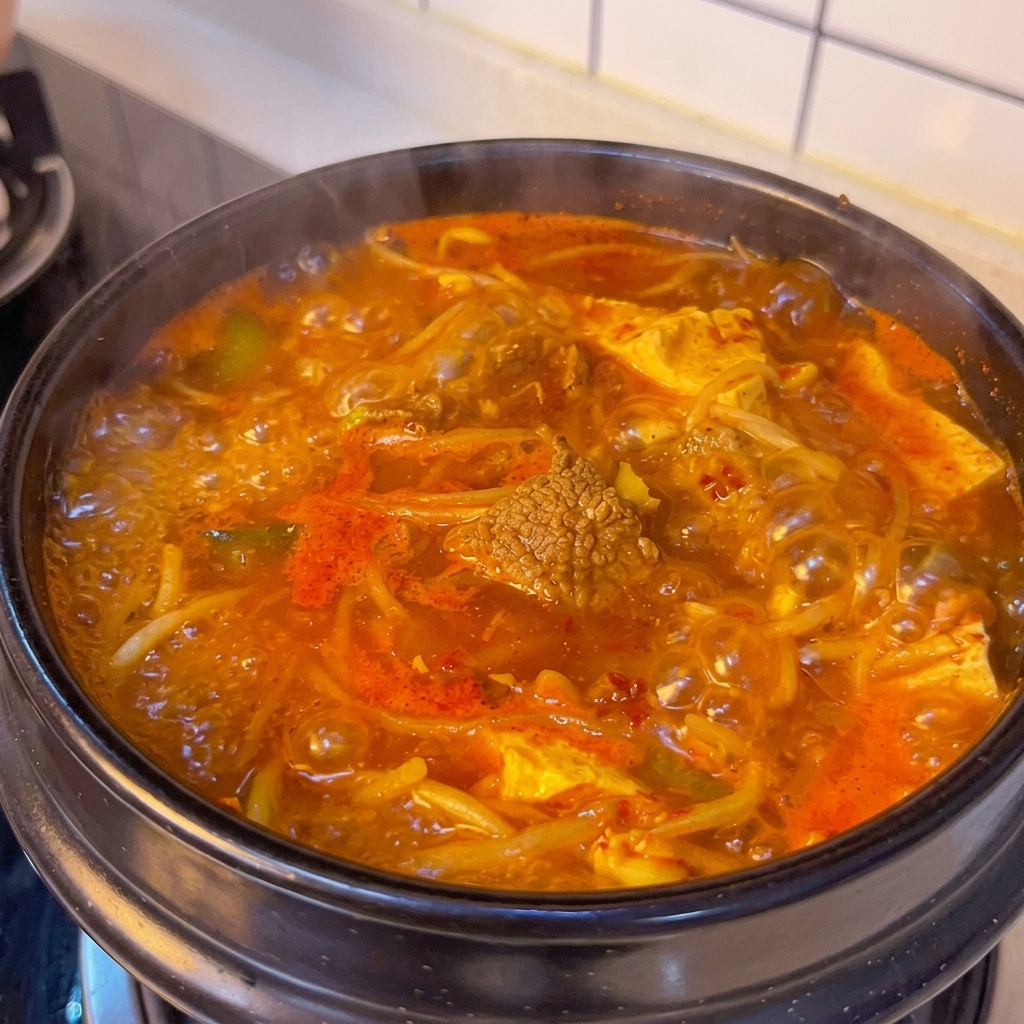
Allow the entire stew to simmer and bubble rapidly over high heat for three to five minutes. This ensures the yellow bean sprouts cook completely and the soft tofu thoroughly absorbs the rich, spicy beef broth.
Tip: Yellow bean sprouts take longer to cook than mung bean sprouts, so dont rush this simmering step to ensure their raw flavor is completely gone. - 14Garnish with fresh chilis
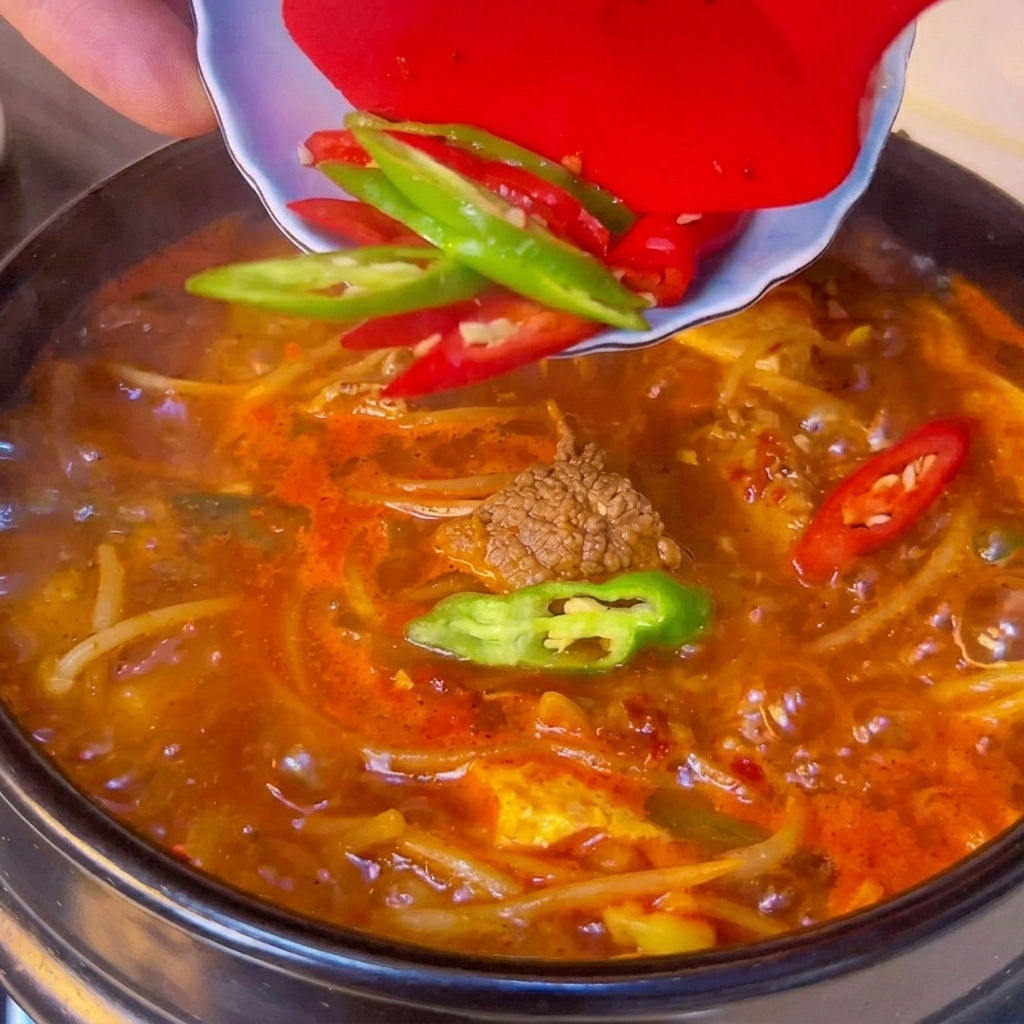
Slide the freshly sliced green and red chili peppers from a small dish onto the top of the simmering stew using a spatula. This final garnish adds a bright pop of color and a fresh kick of heat.
Tip: If you prefer a milder stew, you can deseed the chili peppers or reduce the amount used for the garnish.