Authentic Japanese Fish
Pork Bone Tsukemen
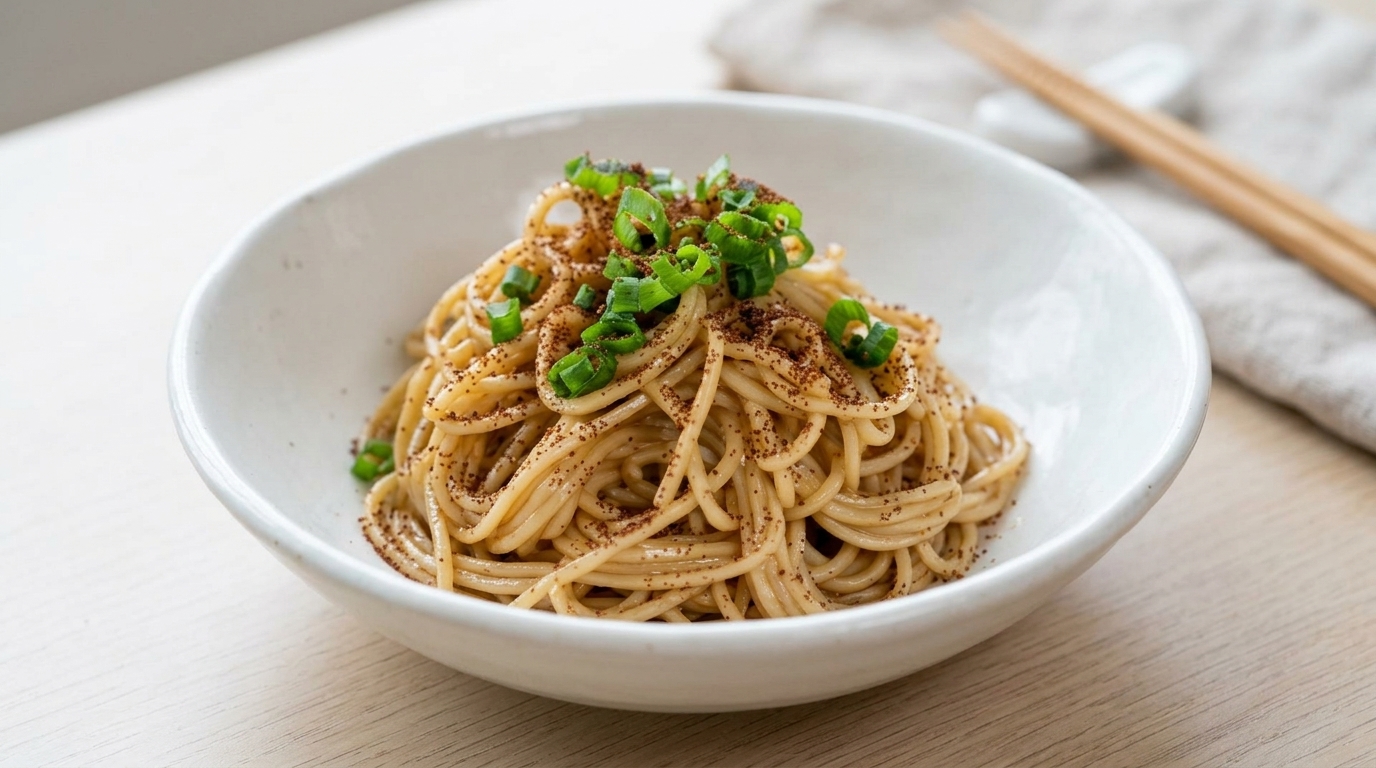
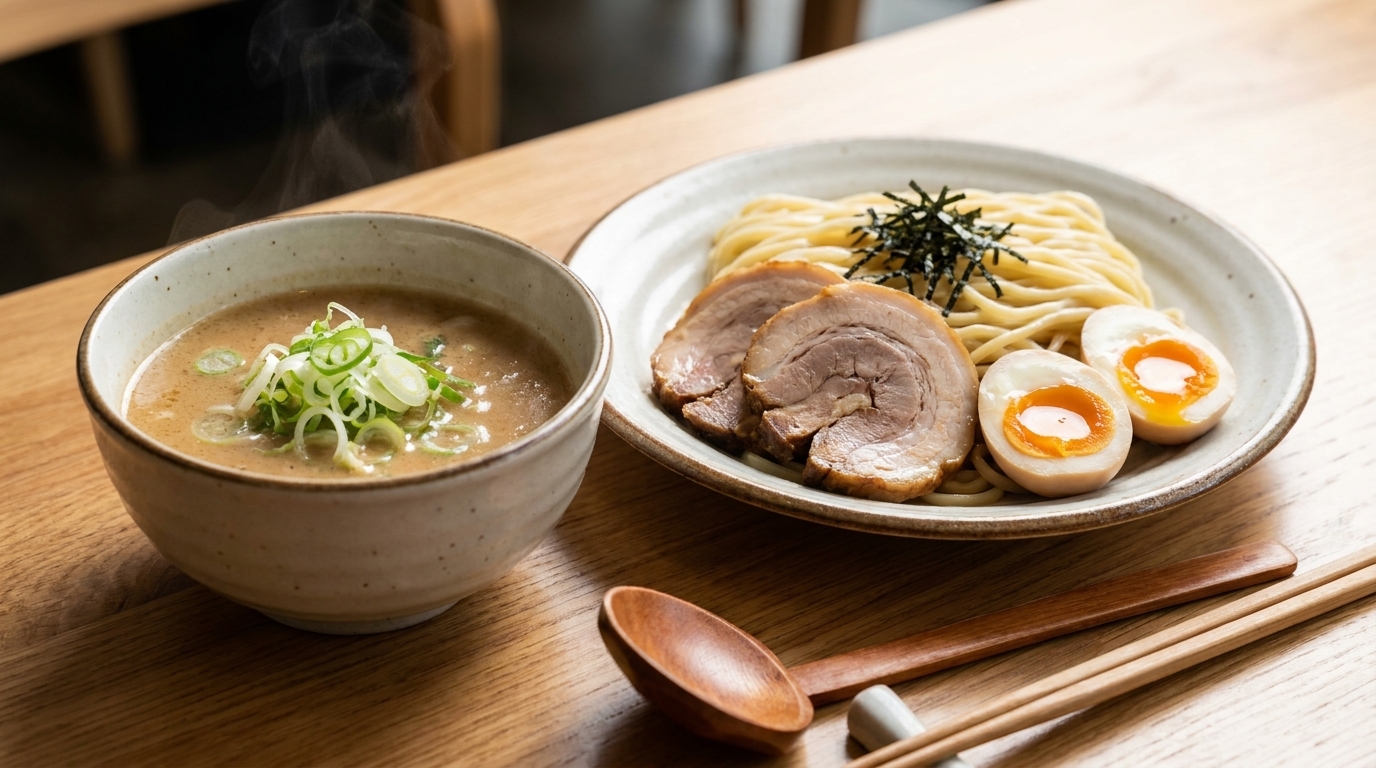
Master the art of Tsukemen at home with this rich, emulsified fish and pork bone dipping broth served with chewy ramen noodles and tender soy-marinated chashu.
Tsukemen is more than just a meal; it is a quintessential Japanese dining experience. This dipping noodle dish features concentrated, deeply savory broth designed to coat thick, cold noodles. By balancing long-simmered pork bones with aromatic dried fish, you can recreate that authentic, umami-rich flavor profile in your own kitchen.
Ingredients
- 1 kg pork spinal bones
- 500 g chicken carcass
- 500 g pig trotters
- 1 pork shoulder
- 100 ml dark soy sauce
- 50 ml cooking sake
- 50 ml mirin
- 50 g dried small fish
- 30 g dried fish flakes
- 20 g dried shiitake mushrooms
- 100 g cabbage
- 100 g carrot
- 1 onion
- 3 cloves garlic
- 20 g ginger
- to taste chopped green onions
Instructions
- 1Blanch the bones
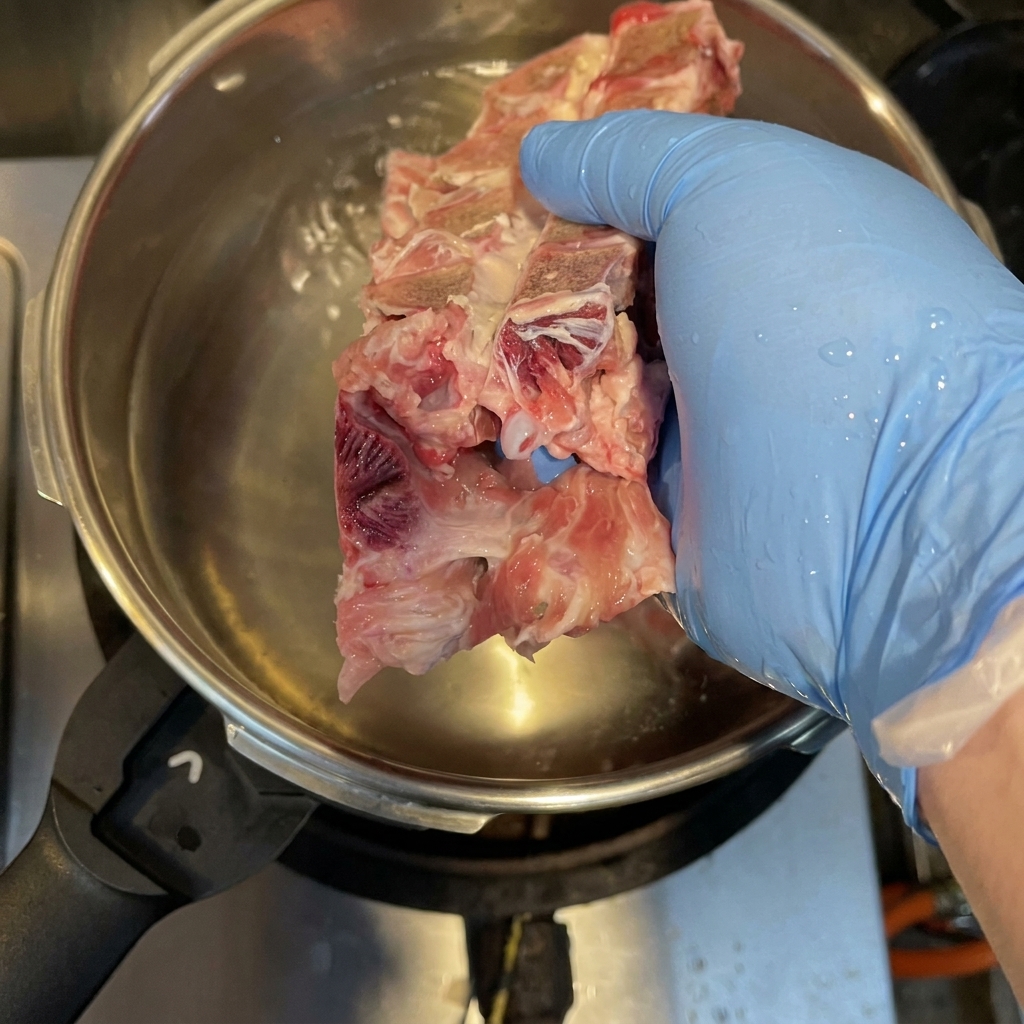
Place the raw pork spinal bones, chicken carcass, and pig trotters into a pressure cooker, cover with water, and bring to a boil to blanch. This process removes impurities and blood, which is crucial for achieving a clean, flavorful broth base.
Tip: Make sure to skim off any foam that rises to the surface during the boiling process. - 2Prepare the dipping sauce base
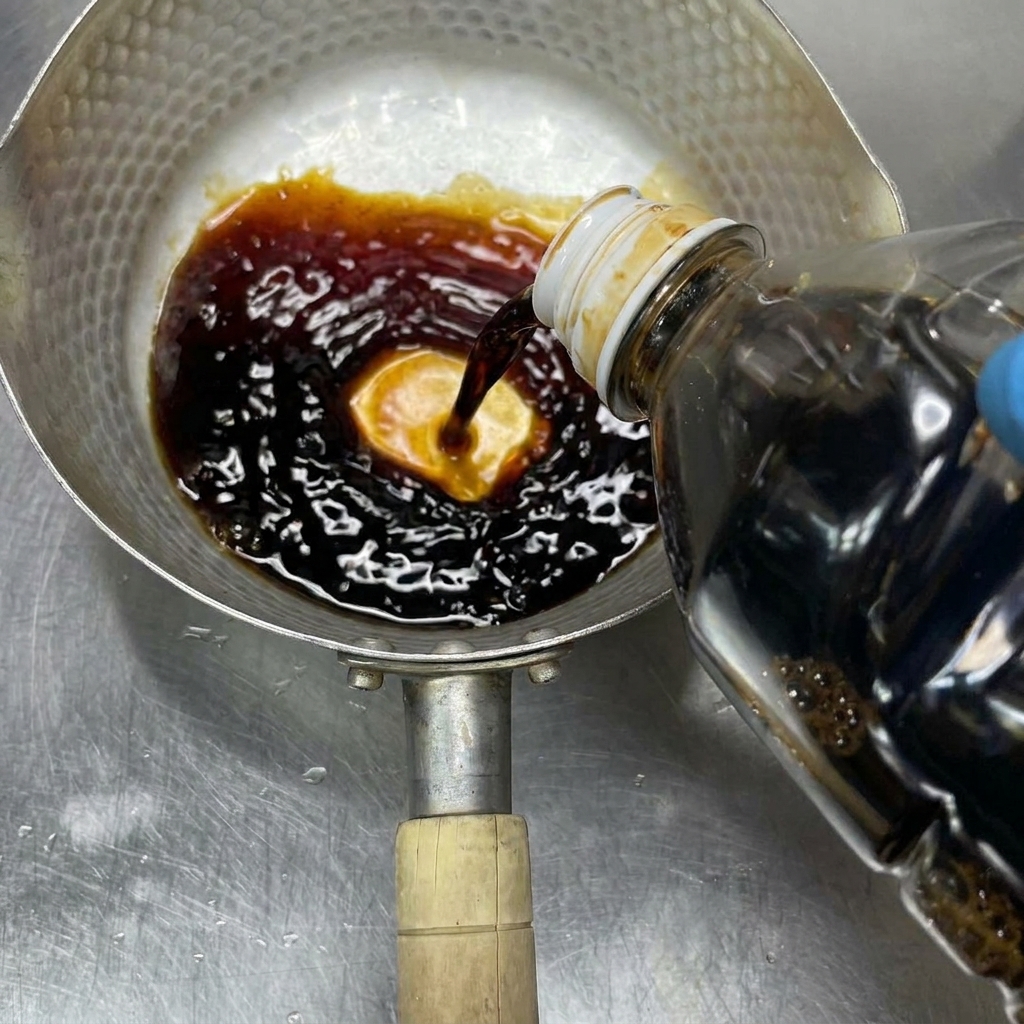
Combine dark soy sauce, cooking sake, and mirin in a small metal pot. Gently heat the mixture to blend the flavors, creating the savory, aromatic base for the dipping sauce.
Tip: Keep the heat low to ensure the mirin and sake reduce slightly without boiling over. - 3Grind the dried fish
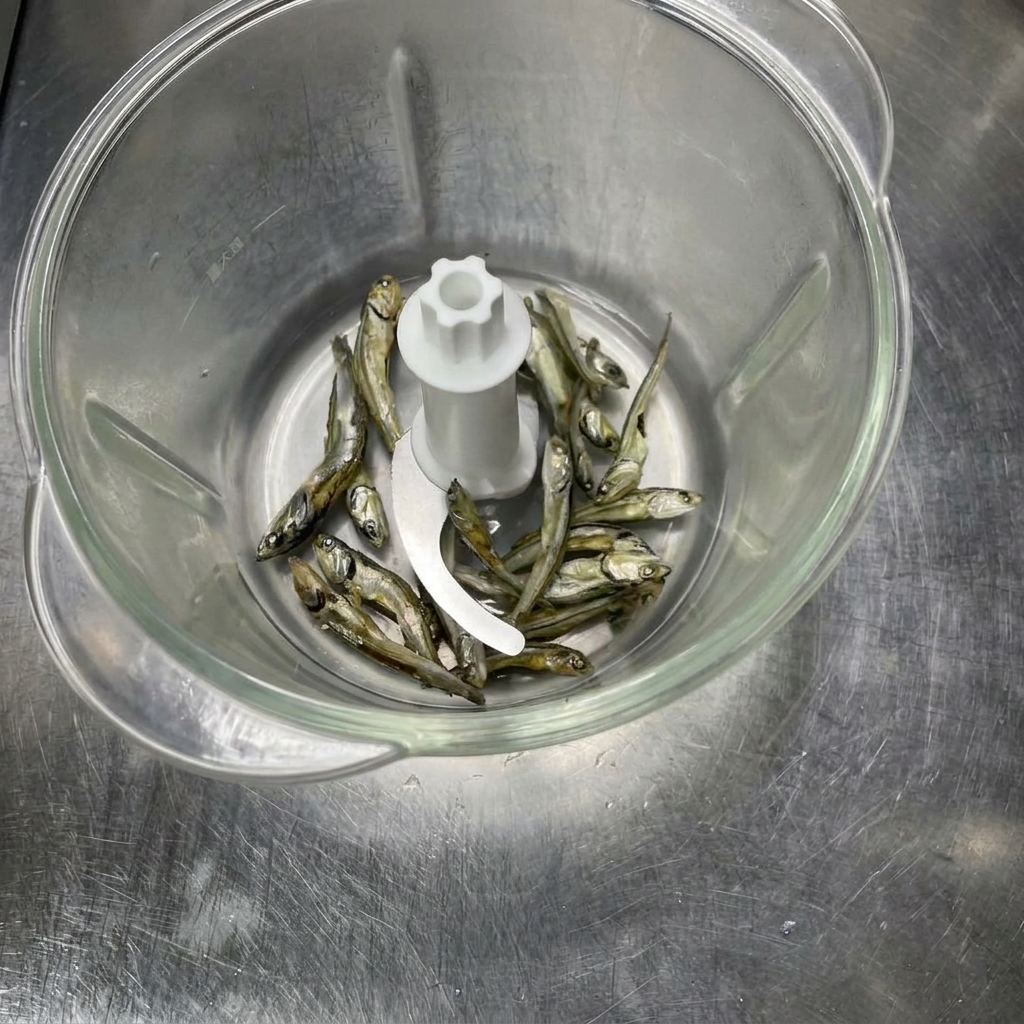
Place dried small fish and dried fish flakes into a food processor. Pulse or blend until they are reduced to a fine powder, which will add a deep umami flavor to the dipping sauce.
Tip: Ensure the fish are completely dry before grinding to achieve the finest possible powder. - 4Incorporate fish powder
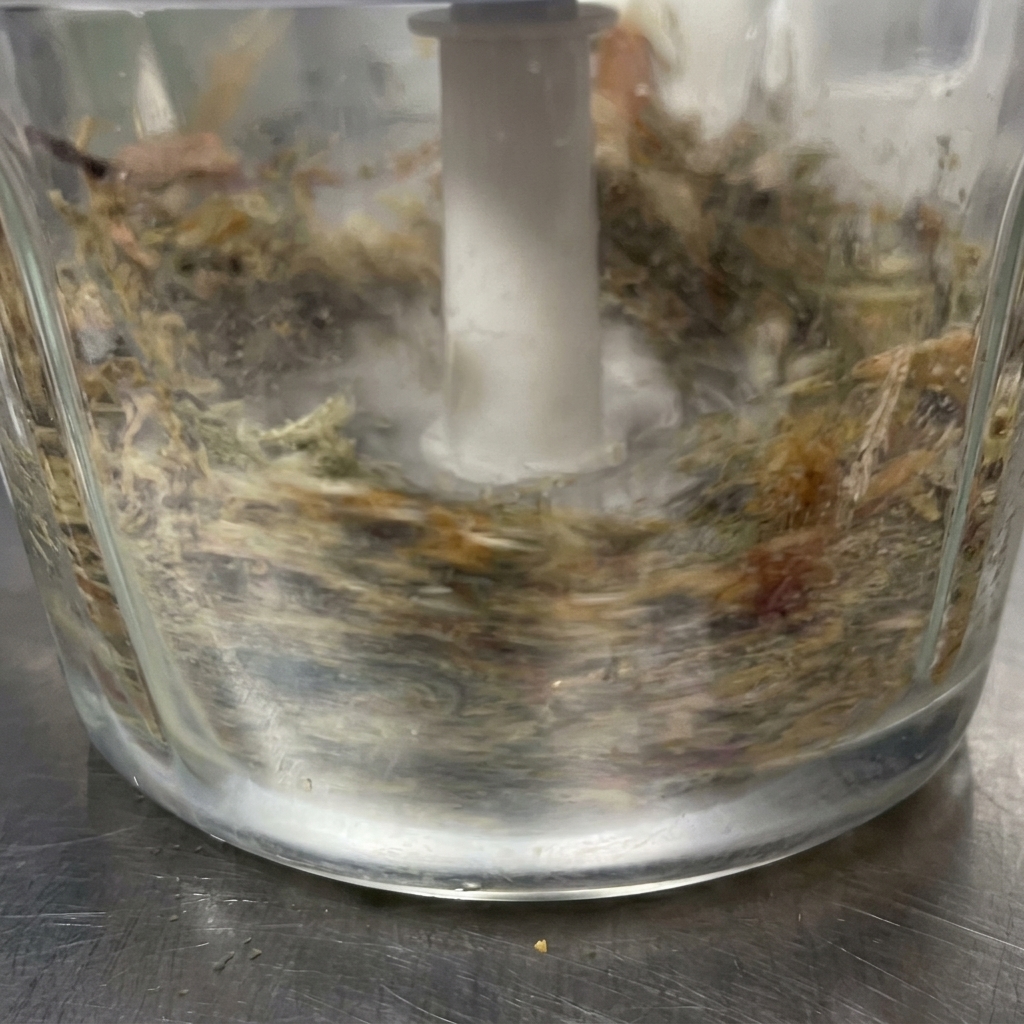
Carefully add the ground dried fish powder into the simmering soy sauce mixture. Stir well to integrate, allowing the fish essence to infuse into the sauce.
Tip: Stir continuously as you add the powder to prevent clumping. - 5Shape the pork shoulder
Tightly wrap and tie the raw pork shoulder with kitchen string. This helps the meat hold its shape during the cooking process and ensures even heat distribution for tender char siu.
Tip: Tie the knots firmly to maintain the cylindrical shape while the meat cooks. - 6Strain the dipping sauce
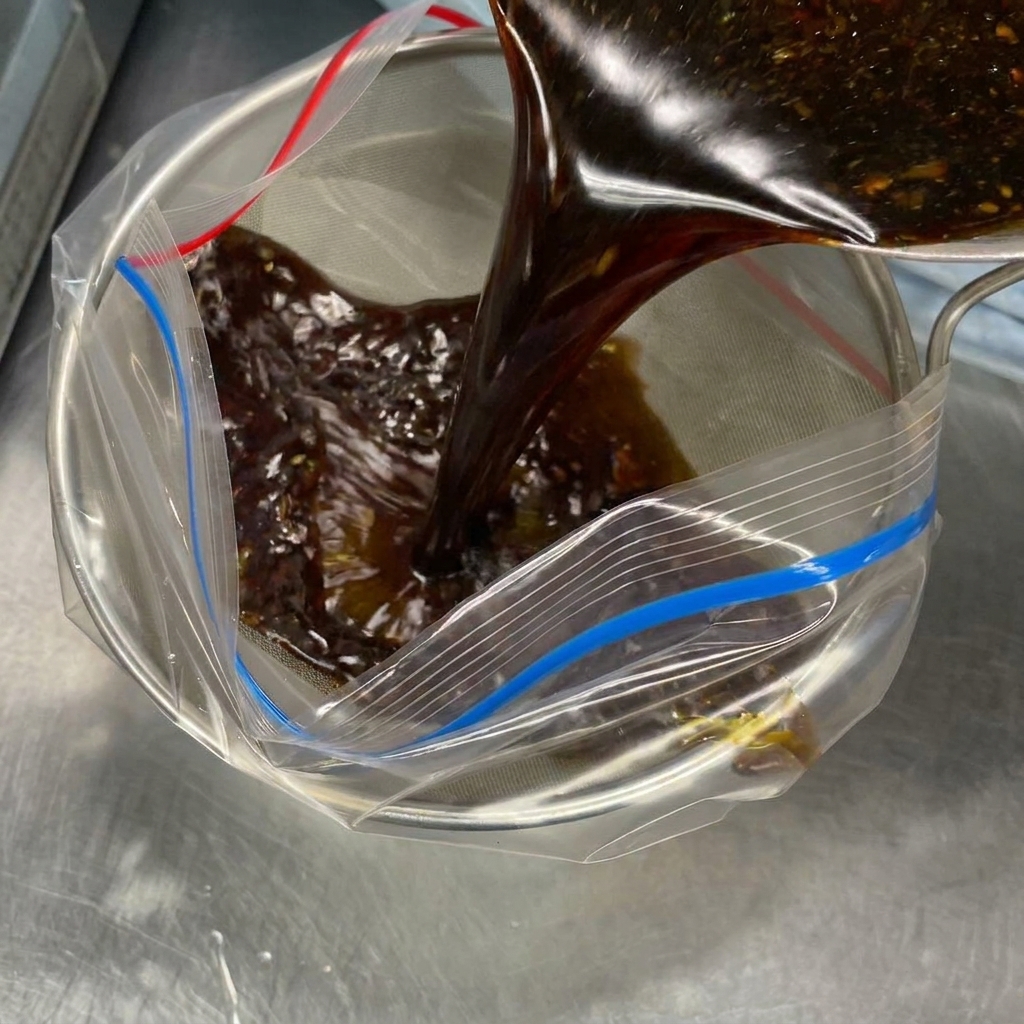
Pass the prepared soy sauce and fish mixture through a fine-mesh strainer to remove any solids or large particles. Collect the smooth, strained sauce into a plastic bag for later use.
Tip: Using a fine-mesh strainer is essential for achieving the silky texture characteristic of authentic dipping sauces. - 7Infuse the broth with aromatics
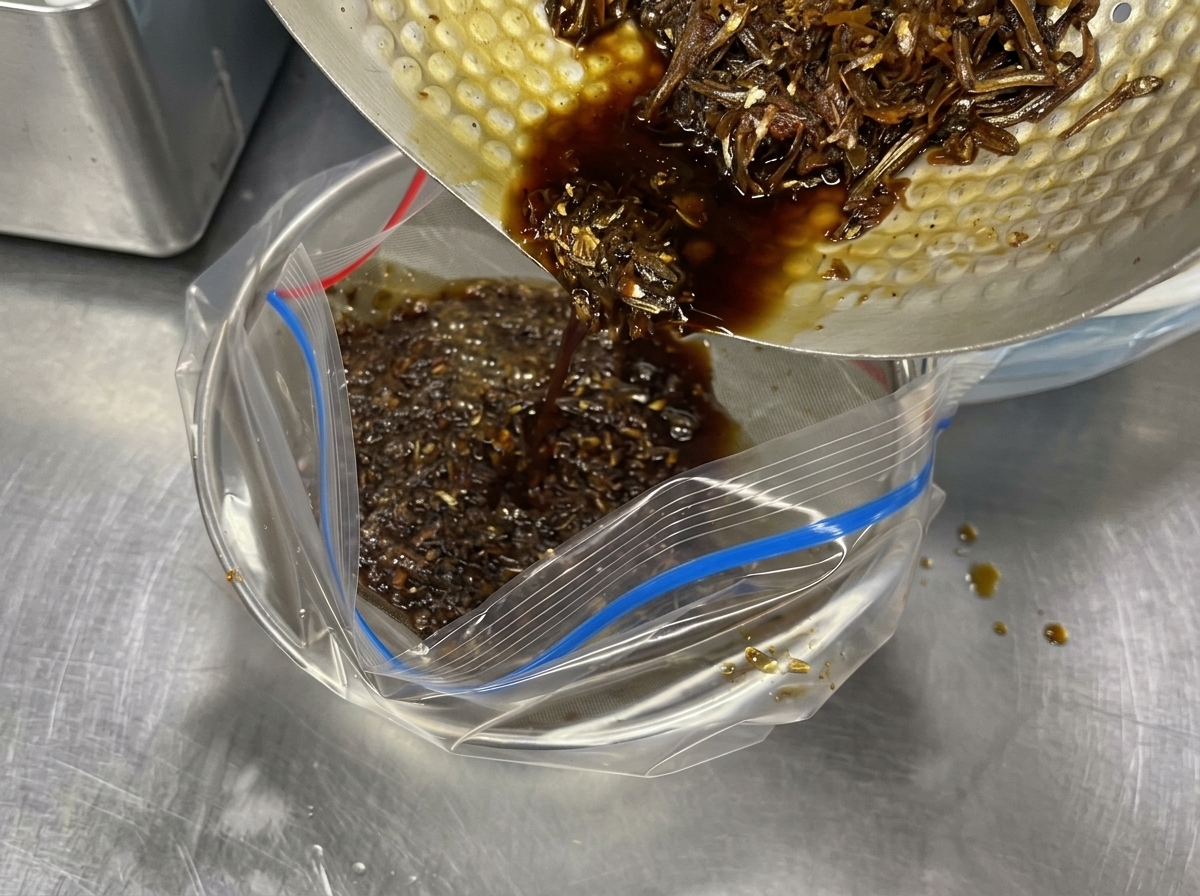
Add the prepared chunks of cabbage, carrot, onion, garlic, and ginger into the boiling bone broth. These vegetables will deepen the complexity of the stock, adding a natural sweetness and aromatic base essential for the rich dipping noodle soup.
Tip: Cut the vegetables into uniform chunks to ensure they cook evenly and release their flavors consistently into the broth. - 8Add the umami elements
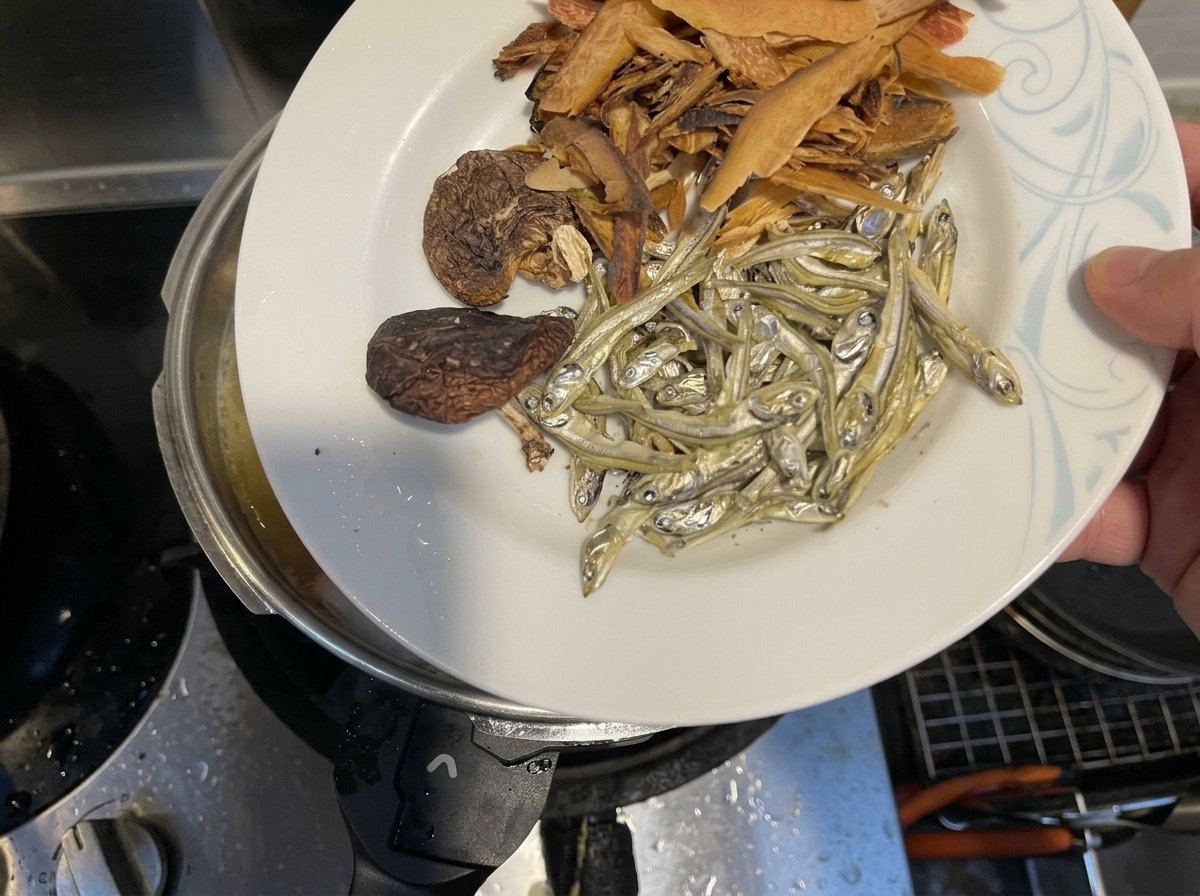
Incorporate the dried fish, mushrooms, and fish flakes into the simmering broth. These ingredients are key to achieving the authentic, intense seafood-forward flavor profile characteristic of traditional dipping noodle soups.
Tip: The dried fish and mushrooms will rehydrate in the hot liquid, infusing the broth with concentrated umami. - 9Add the pork shoulder
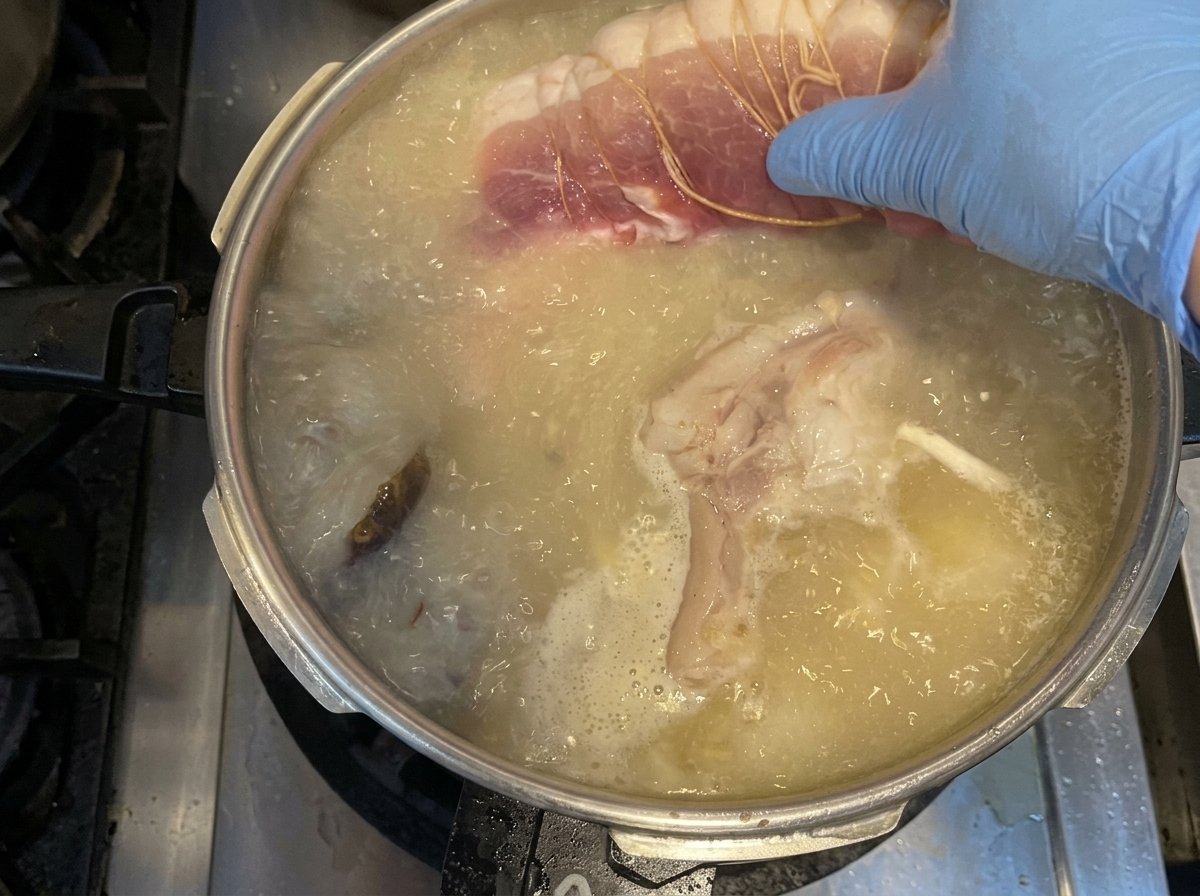
Carefully place the raw, tied pork shoulder into the boiling broth alongside the vegetables. Submerge the meat completely so it cooks evenly while absorbing the rich flavors of the soup base.
Tip: Tying the pork shoulder with butchers twine before boiling helps the meat hold its shape, ensuring neat and uniform slices later on. - 10Remove the cooked pork
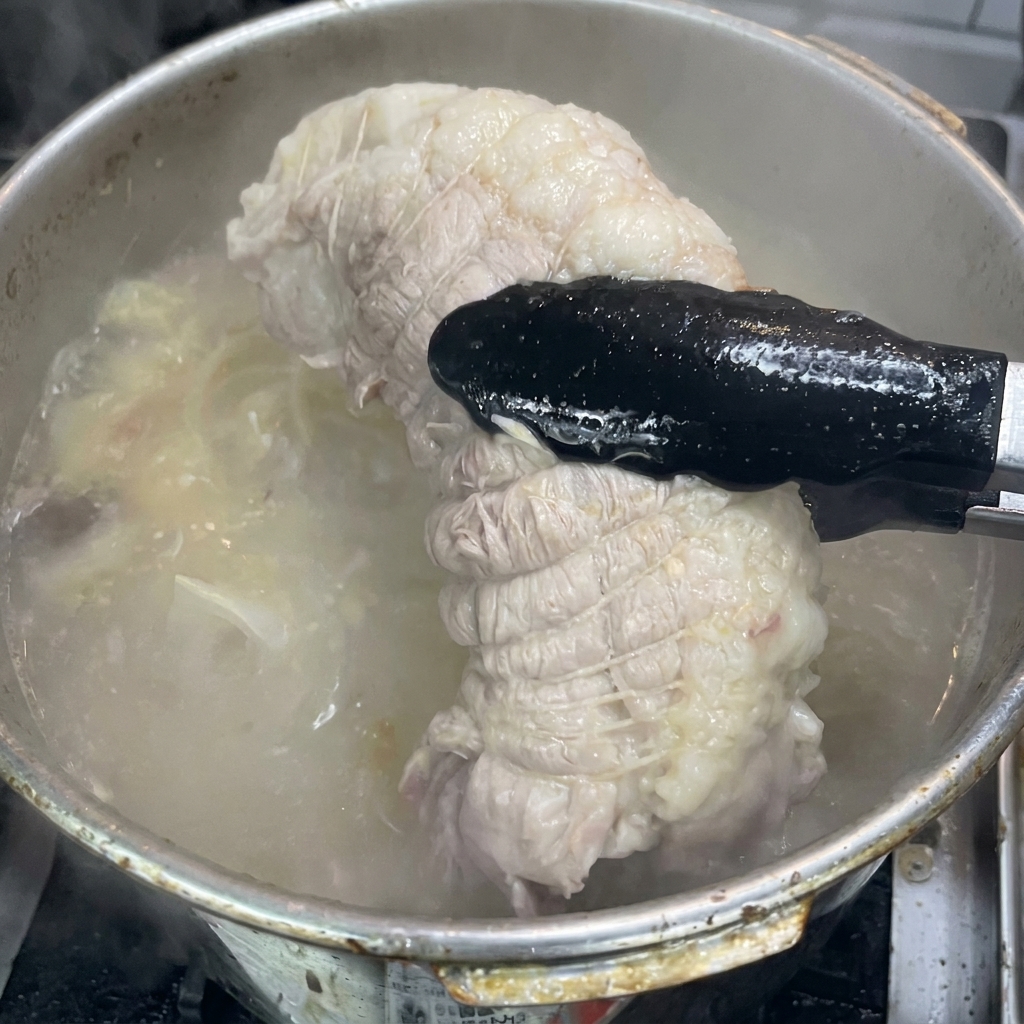
Once the pork shoulder has cooked through and become tender, use tongs to lift it out of the boiling broth. Transfer the hot meat immediately to your prepared soy sauce marinade to begin infusing it with deep, savory flavor.
Tip: Transferring the meat directly to the marinade while it is still steaming hot allows it to absorb the soy sauce mixture much more effectively. - 11Emulsify the broth
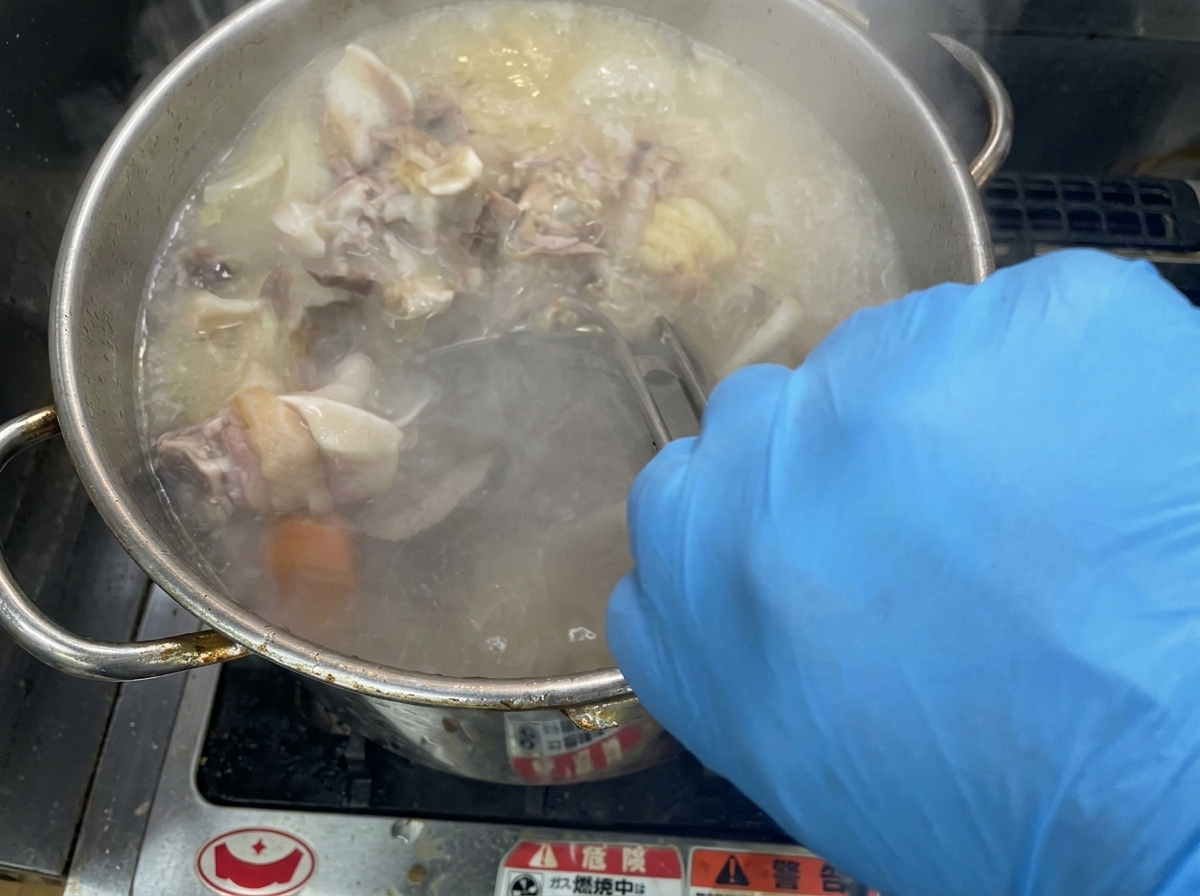
Using a ladle or whisk, stir the boiling broth vigorously. This mechanical action helps emulsify the fats and flavors from the bones and added ingredients, creating the signature creamy and rich consistency required for the dipping sauce.
Tip: Keep the heat steady while stirring to maintain the emulsion and achieve a smooth, velvet-like texture. - 12Cool the rich broth
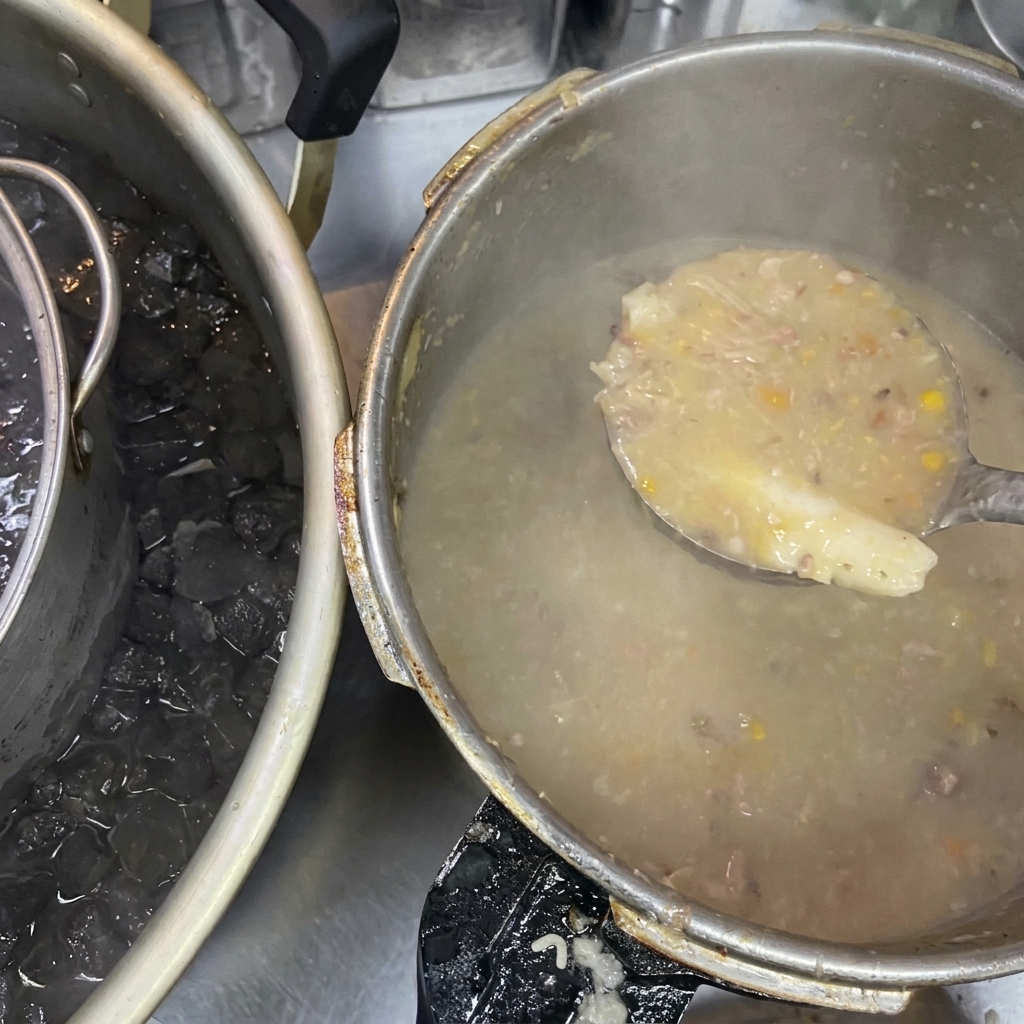
Transfer the thick, fully developed broth into a large metal container set in an ice bath. Rapidly cooling the soup immediately after cooking preserves its fresh taste and rich, emulsified texture.
Tip: Using an ice bath to quickly drop the temperature of your broth is crucial for food safety and flavor retention.