Authentic Amalfi-Style Lemon Pasta (Pasta al Limone)
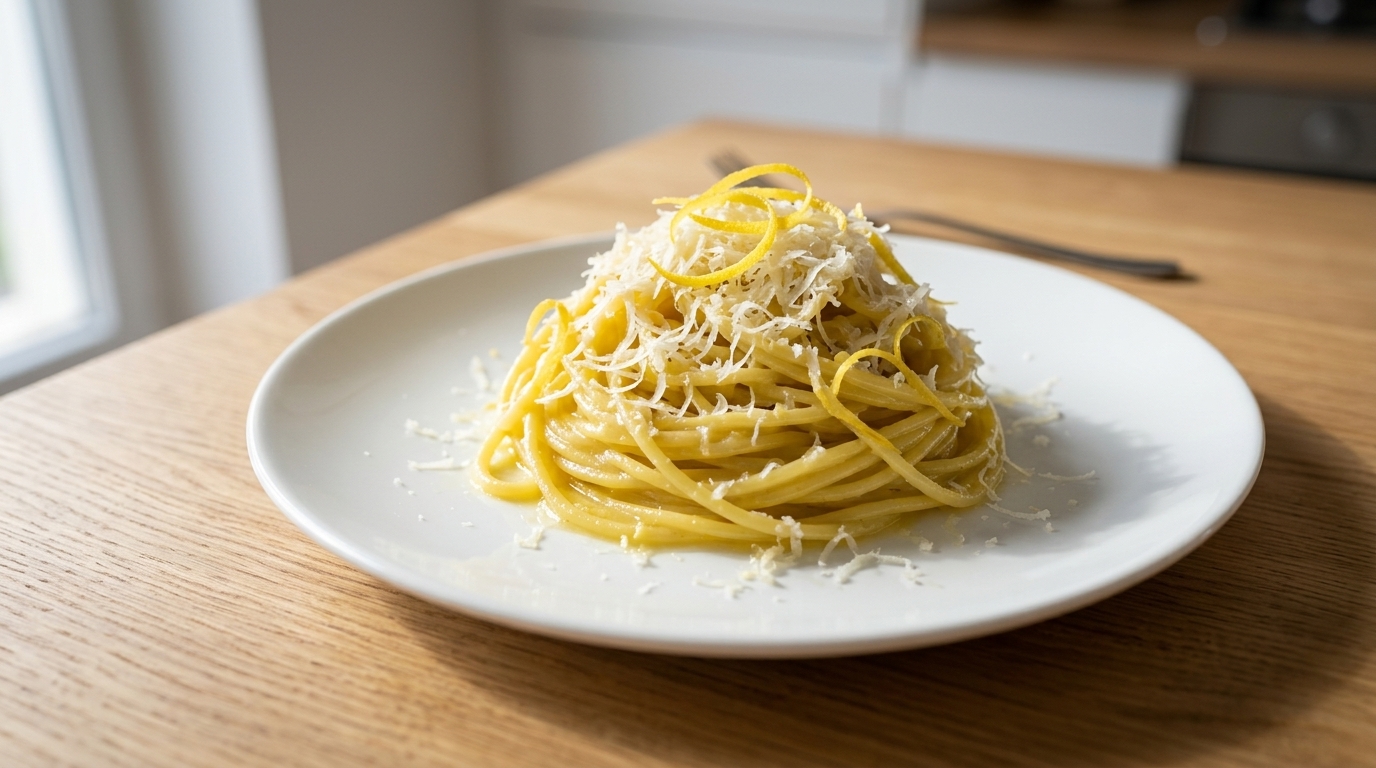
The definitive Amalfi-style lemon pasta—a silk, buttery sauce infused purely with lemon zest oils and finished with sharp Parmesan. No juice, just pure fragrance.
Pasta al Limone from the Amalfi Coast is a masterclass in aromatic simplicity. Unlike versions that rely on heavy cream or sour juice, this authentic technique extracts the fragrant essential oils from lemon zest through a gentle water infusion. The result is a vibrant, velvety dish that captures the essence of the Mediterranean sun in every buttery strand of pasta.
Ingredients
- 1 whole lemon (zested)
- 300 ml water
- 1 pat butter
- to taste olive oil
- 1 clove garlic
- 250 g fresh thin pasta noodles
- to taste Parmesan cheese
- to taste fresh basil leaves
- to taste black pepper
- a pinch salt
Instructions
- 1Zest the lemon
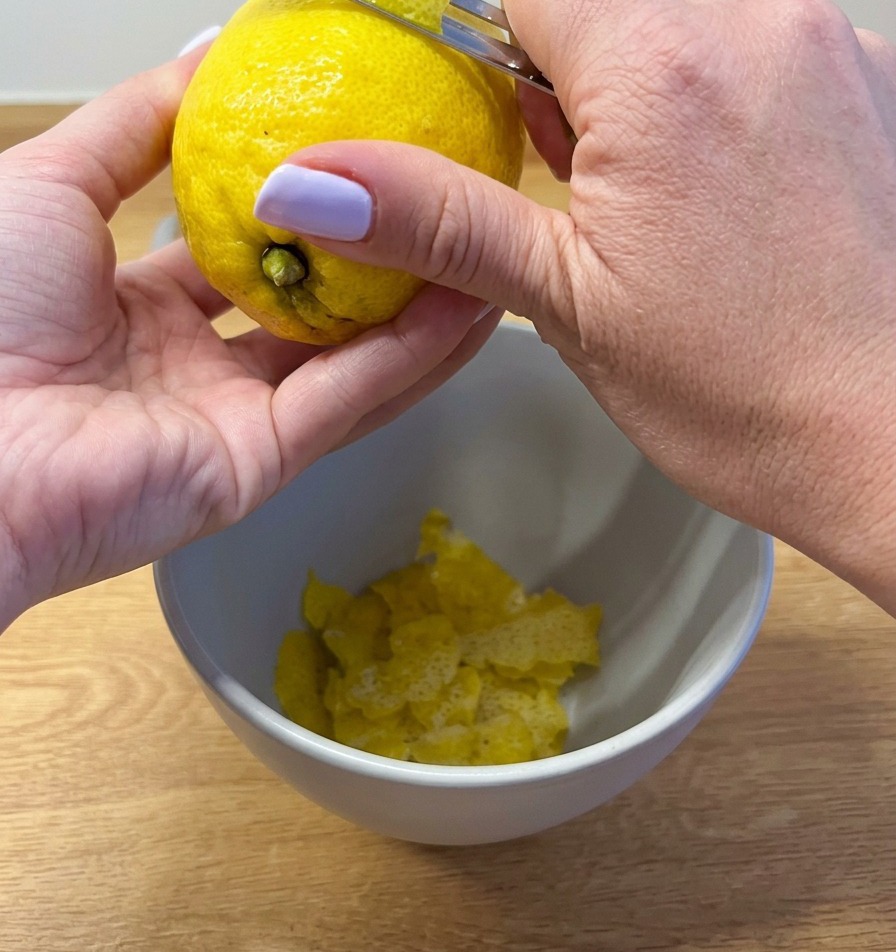
Use a vegetable peeler to remove the thin yellow zest from a fresh lemon. Be careful to only remove the yellow skin, avoiding the bitter white pith underneath. This zest will provide the essential oils and aroma for the pasta sauce without adding sourness.
Tip: Press lightly with the peeler to ensure you dont dig too deep into the pith, which can make the dish taste bitter. - 2Infuse the lemon zest
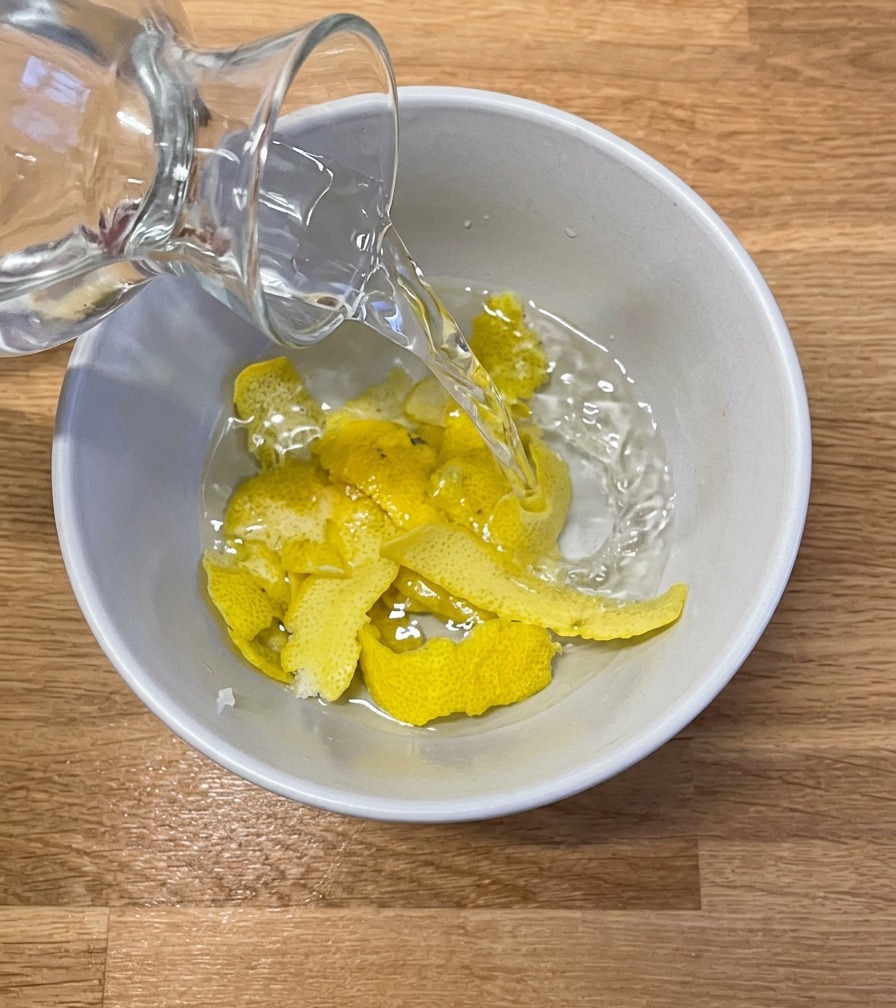
Place the fresh lemon peels into a bowl and pour 300ml of clear water over them. This creates a lemon infusion that serves as the base for the pasta sauce, extracting the fragrant oils from the skin into the water.
Tip: For the best results, let the peels soak in the water in the refrigerator overnight to maximize the aroma. - 3Heat the lemon water
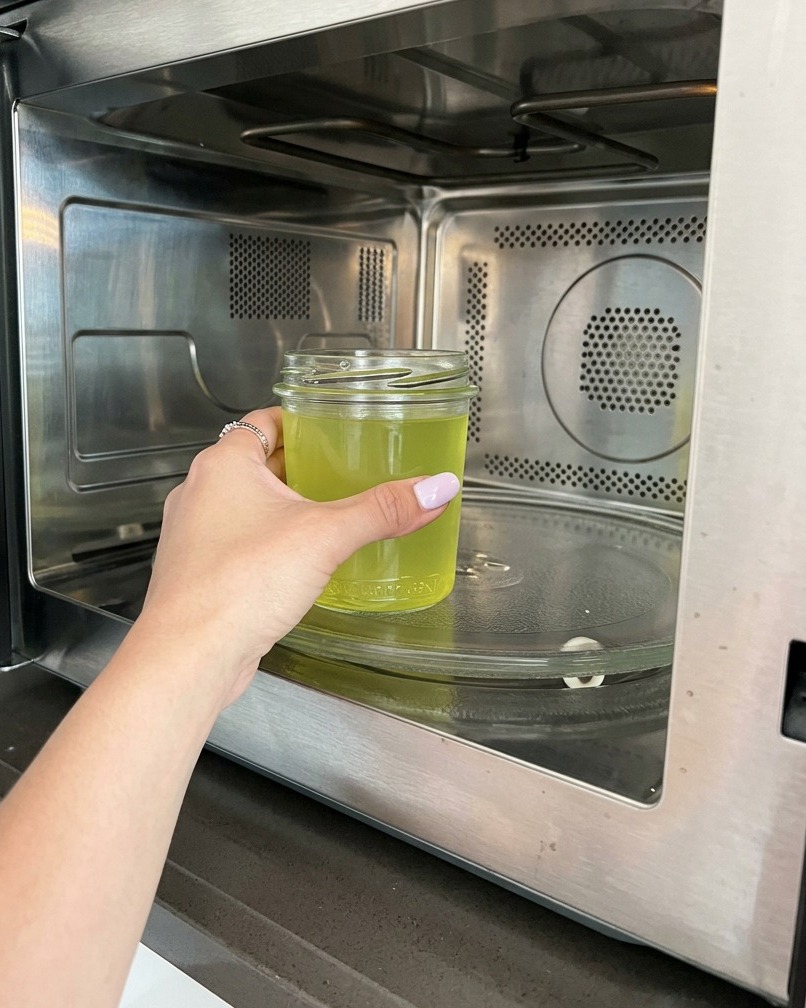
After removing the lemon peels from the infusion, transfer the liquid to a glass jar. Place it in the microwave and heat until warm. Using warm water helps maintain the pans temperature when you begin the cooking process.
Tip: Ensure the jar is microwave-safe and heat it just until warm to the touch, rather than boiling hot. - 4Combine butter and oil
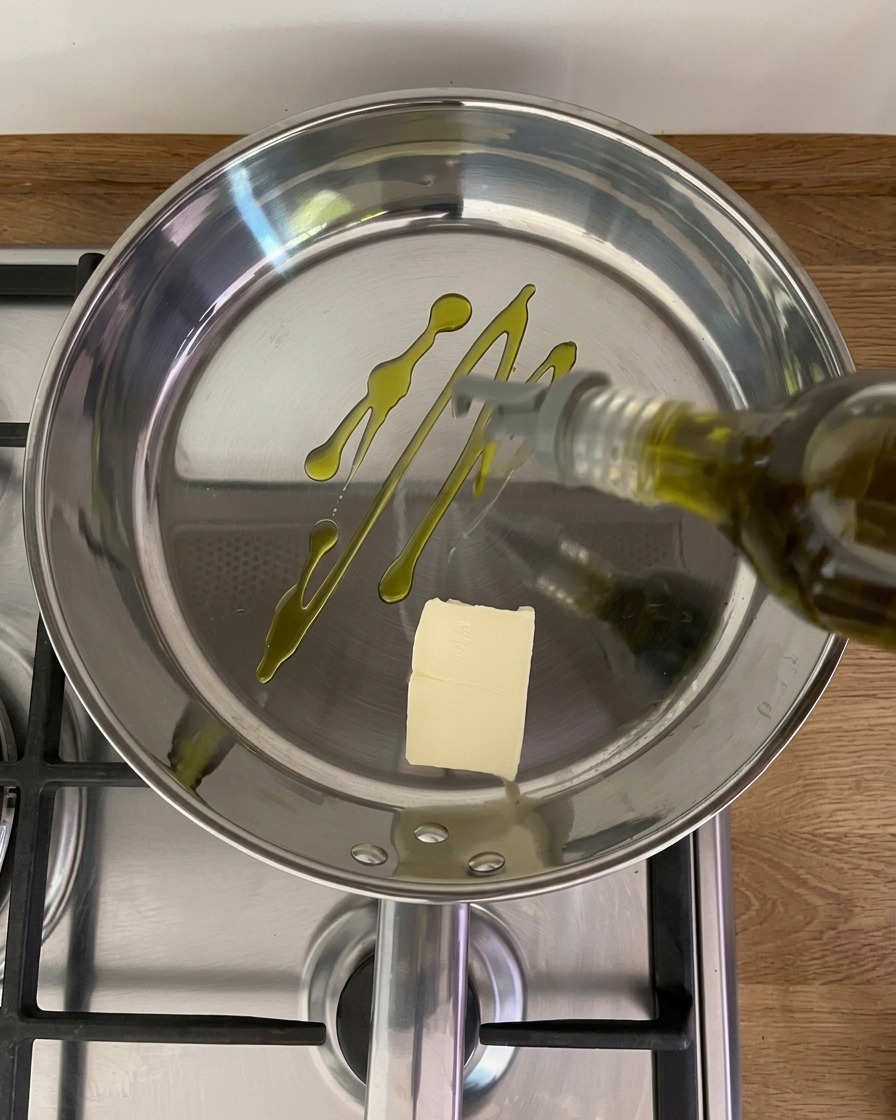
Place a small cube of butter in a stainless steel pan and drizzle in a bit of olive oil. Set the pan over medium heat. The oil helps prevent the butter from burning while adding a base layer of flavor for the aromatics.
Tip: Keep the heat at a steady medium to allow the butter to melt gently without browning too quickly. - 5Sauté the aromatics
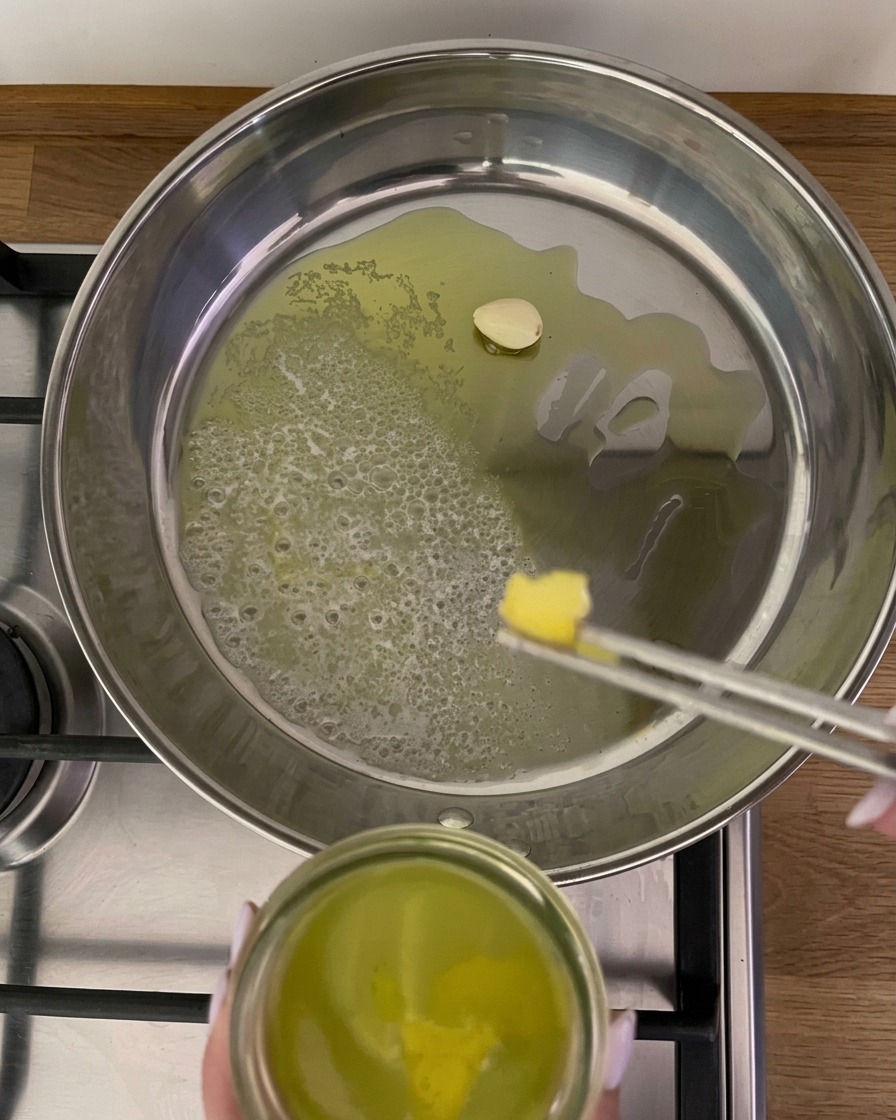
Add a whole clove of garlic and two strips of the soaked lemon peel to the melted butter and oil. Sauté them gently until they become fragrant. This step infuses the cooking fats with a delicate, savory citrus aroma.
Tip: Avoid browning the garlic; you want to gently poach it in the fat to release its flavor without it becoming bitter. - 6Deglaze with lemon water
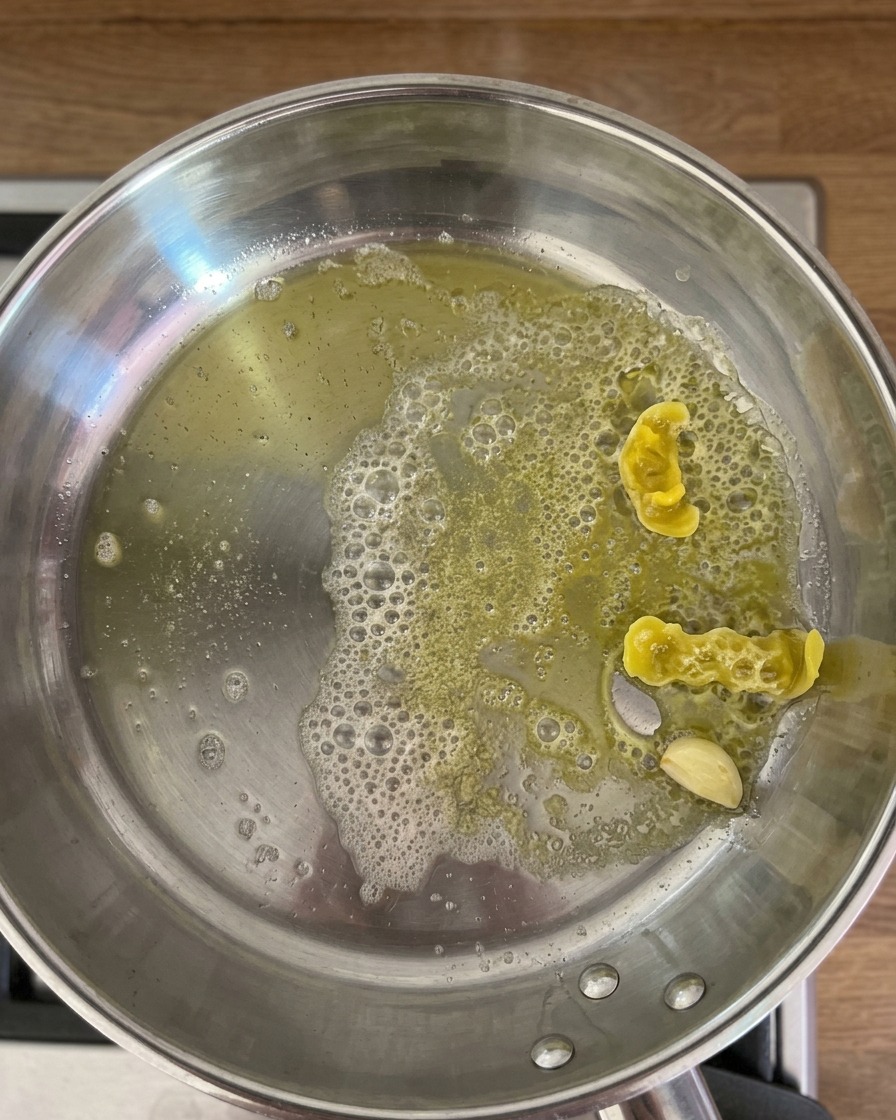
Once the garlic and lemon peel are fragrant, carefully pour the warm lemon-infused water into the pan. The liquid will begin to simmer and emulsify with the fats, creating the foundation for a silky, aromatic pasta sauce.
Tip: Pour the water in slowly to avoid splattering when the liquid hits the hot oil and butter. - 7Add the fresh pasta
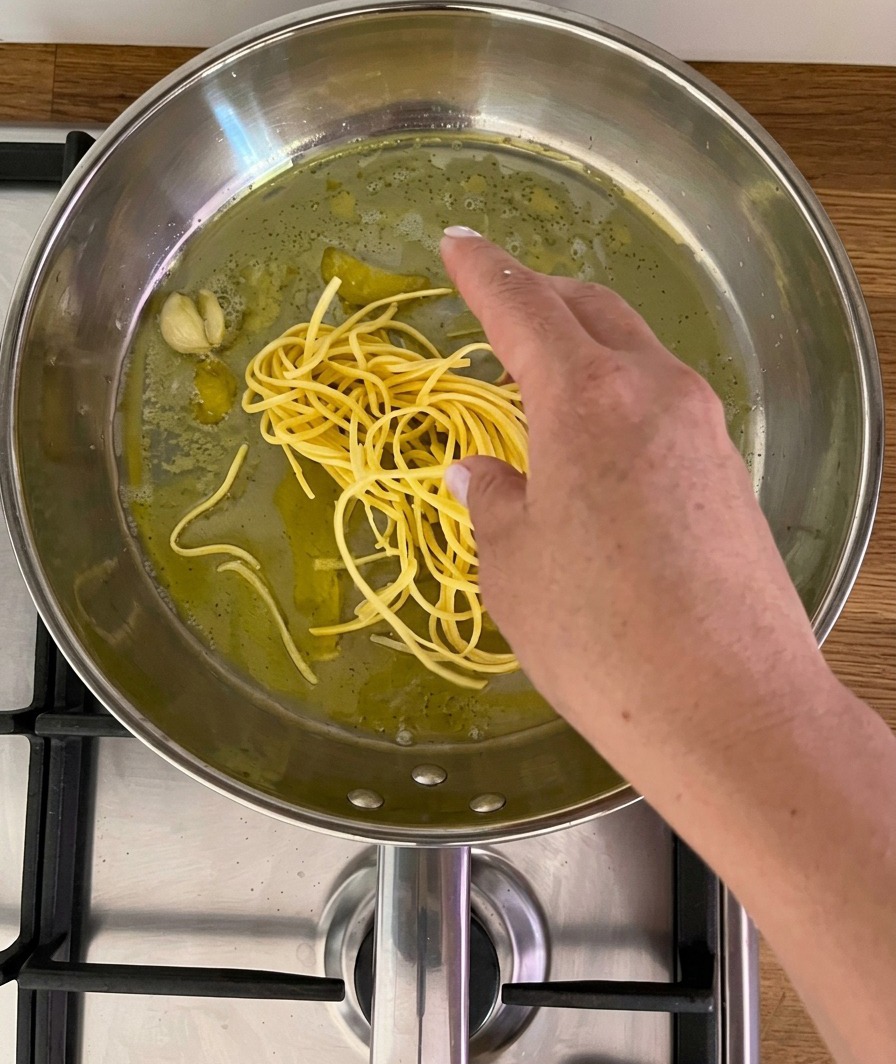
Place the fresh, thin noodles directly into the simmering lemon water emulsion. Using fresh pasta allows it to cook quickly—roughly four minutes—while absorbing the citrus-infused liquid and aromatic fats from the very start.
Tip: If you are using dry pasta instead of fresh, ensure you parboil it in salted water until just before al dente before adding it to the pan. - 8Emulsify with Parmesan
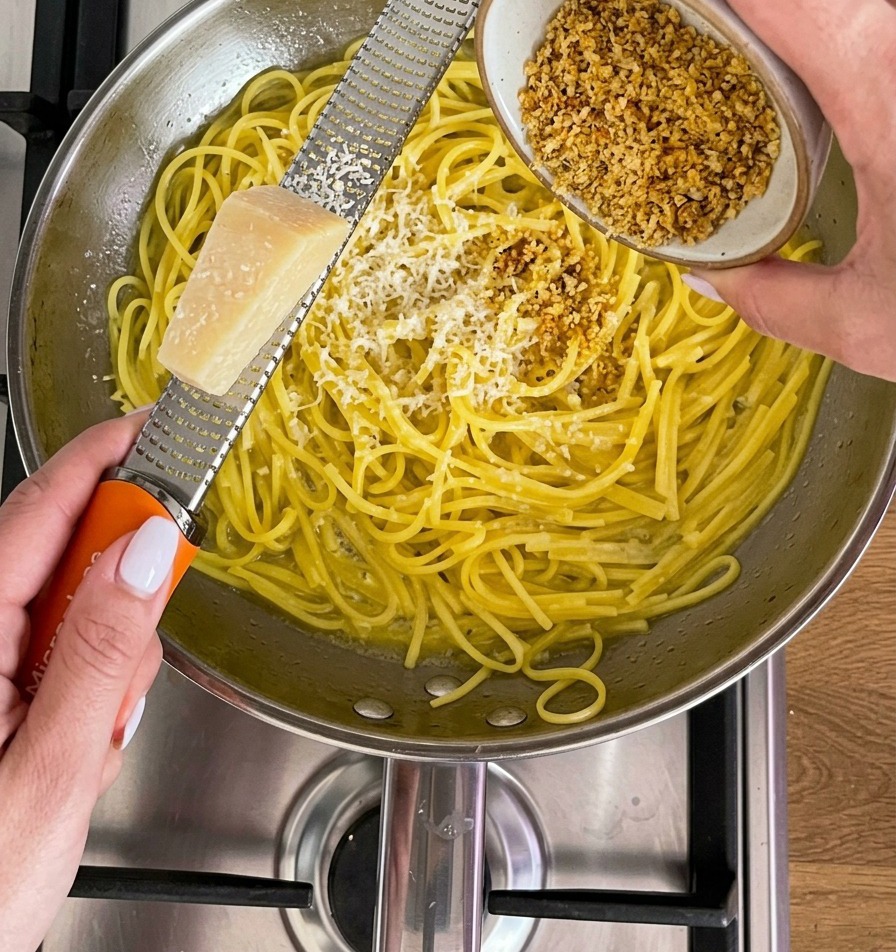
As the noodles cook and absorb the liquid, grate a generous amount of fresh Parmesan cheese directly over the pan. The combination of the cheeses fat and the starch from the pasta water creates the signature velvety sauce that coats each strand.
Tip: Always grate your cheese fresh from the block; pre-shredded cheeses often contain anti-caking agents that can prevent the sauce from becoming perfectly smooth. - 9Season with basil and pepper
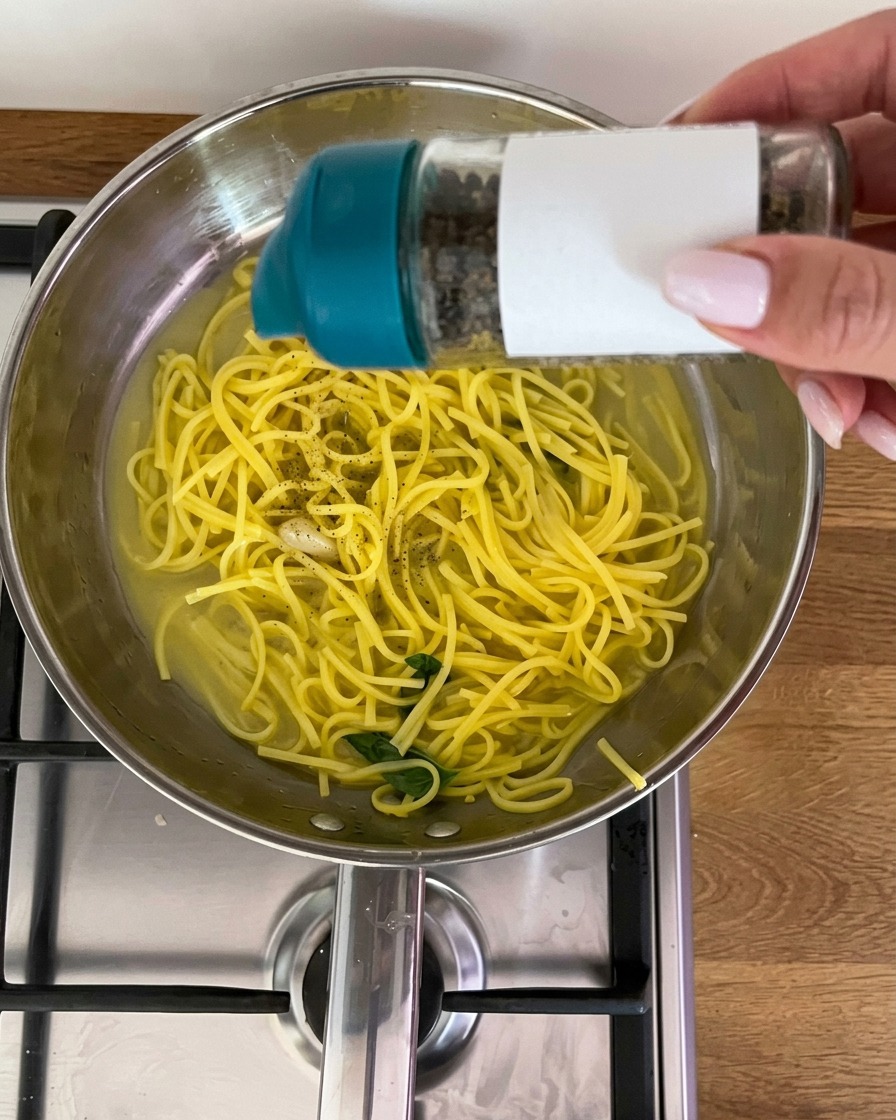
Add fresh green basil leaves to the pan and season with a few cracks of freshly ground black pepper. The residual heat will wilt the basil slightly, releasing its herbal aroma into the lemon sauce without losing its vibrant color.
Tip: Tear the basil leaves by hand rather than chopping them with a knife to prevent the edges from oxidizing and turning black. - 10Season the pasta
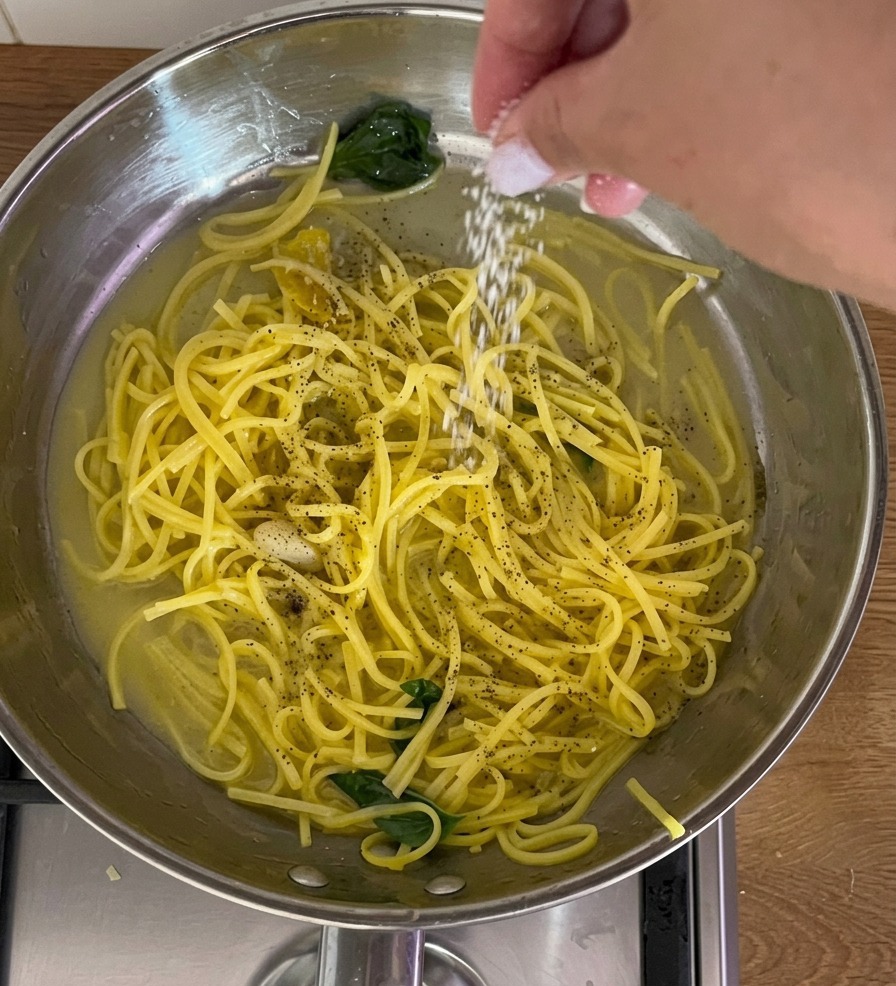
Sprinkle a pinch of salt over the noodles and the lemon-infused sauce. As you stir, the pasta starch combines with the lemon water and butter to create a rich, velvety coating on every strand. Ensure the basil and pepper are well distributed throughout the pan.
Tip: Be cautious with the salt; the Parmesan cheese added in the previous steps already contributes a significant amount of saltiness to the dish. - 11Remove the aromatics
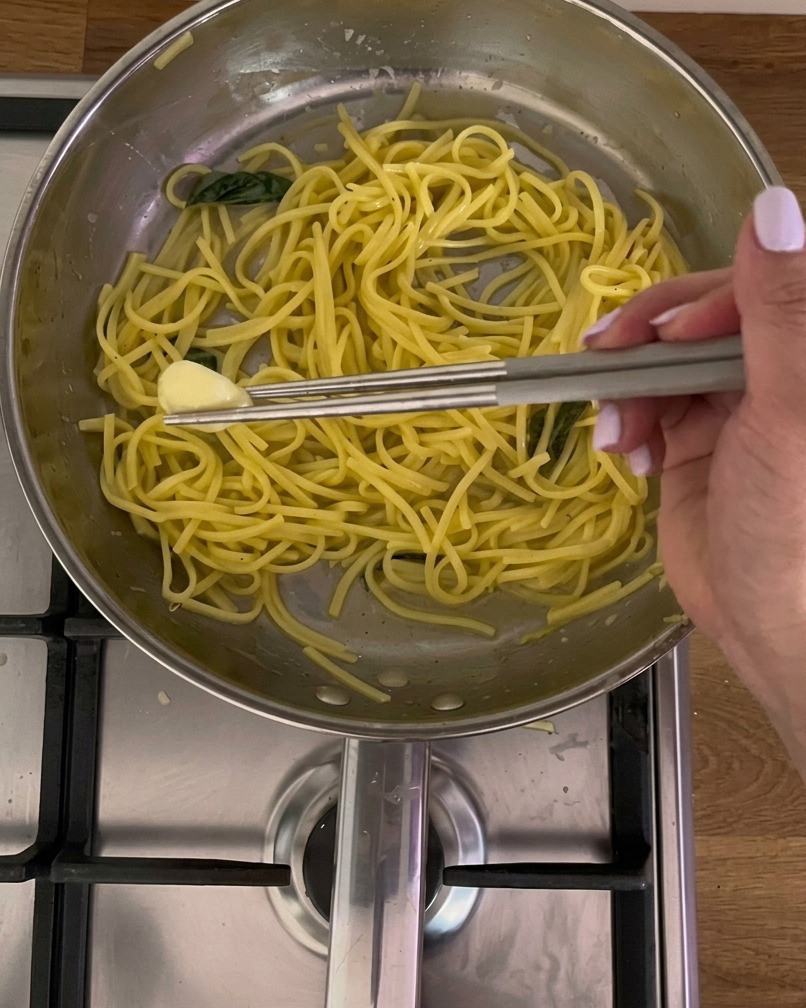
Once the pasta is fully cooked and the sauce has reached a creamy consistency, use chopsticks or tongs to pick out the garlic clove and the strips of lemon peel. Their essence has been fully extracted into the dish.
Tip: Removing these large aromatics before plating ensures the final dish has a refined texture and prevents anyone from accidentally biting into a whole clove of garlic.