Garlic Butter Seafood Aglio Olio
Shrimp
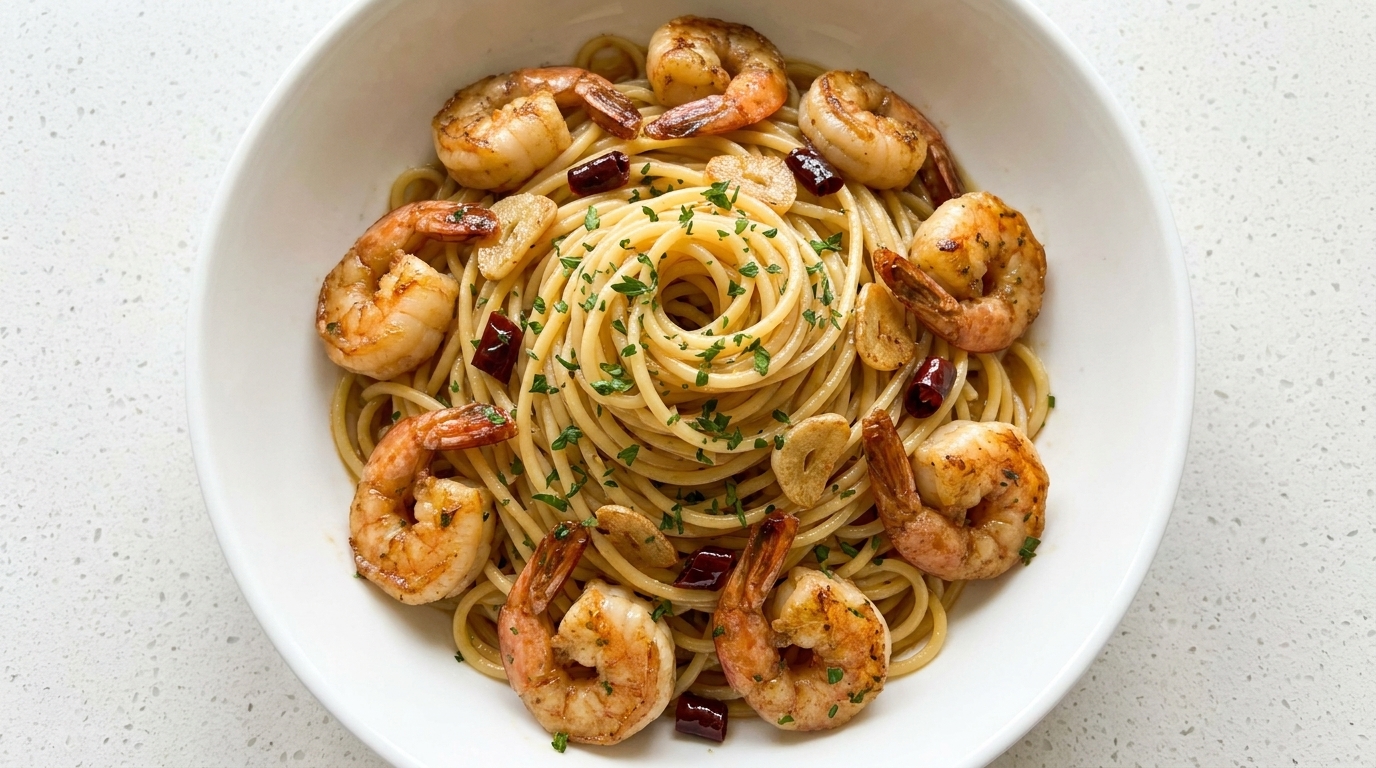
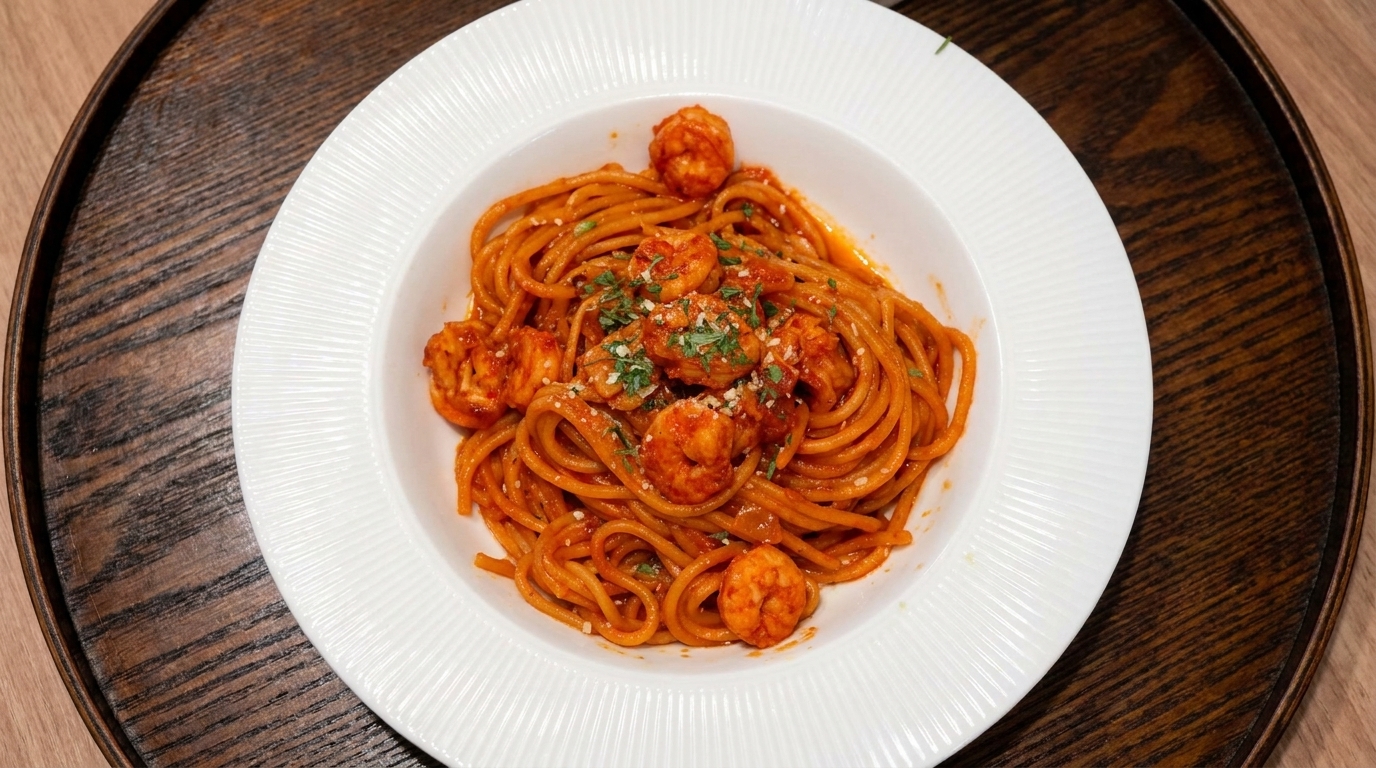
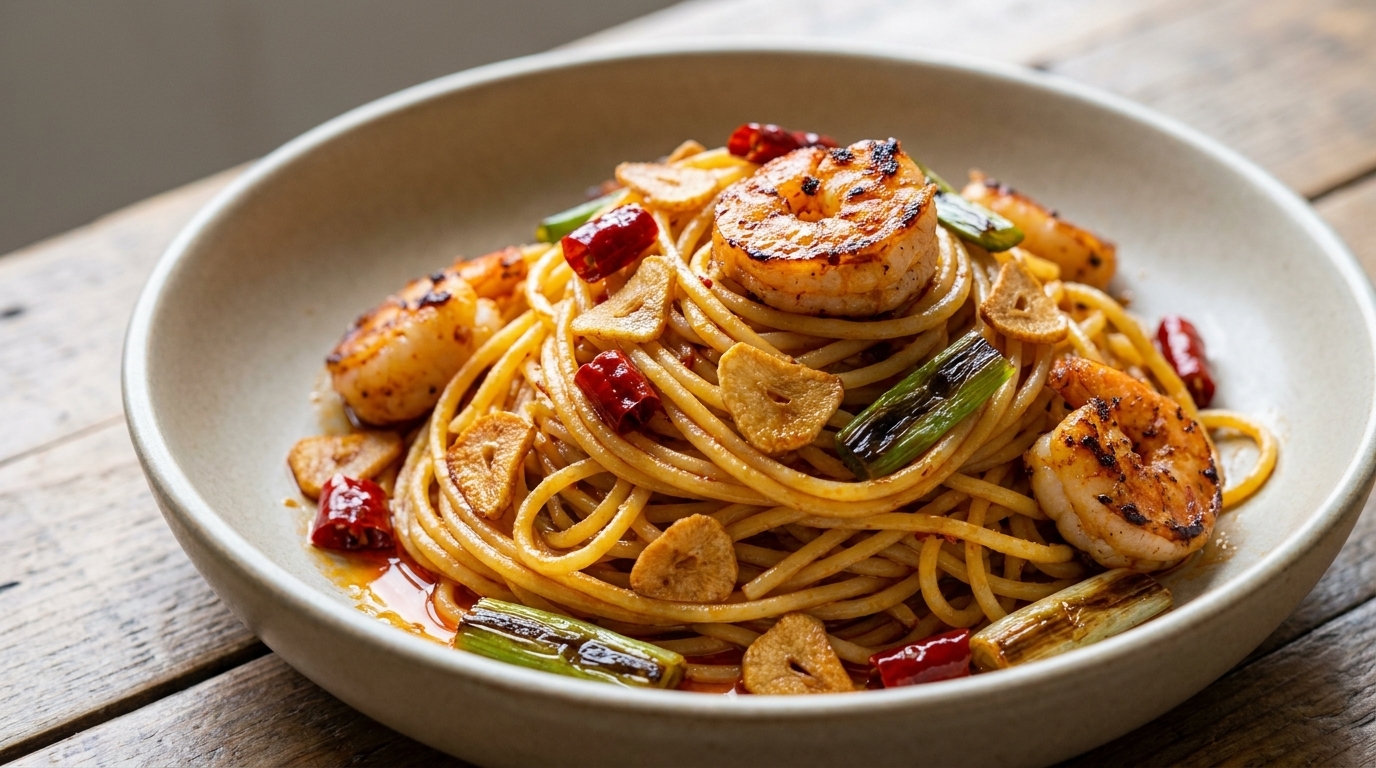
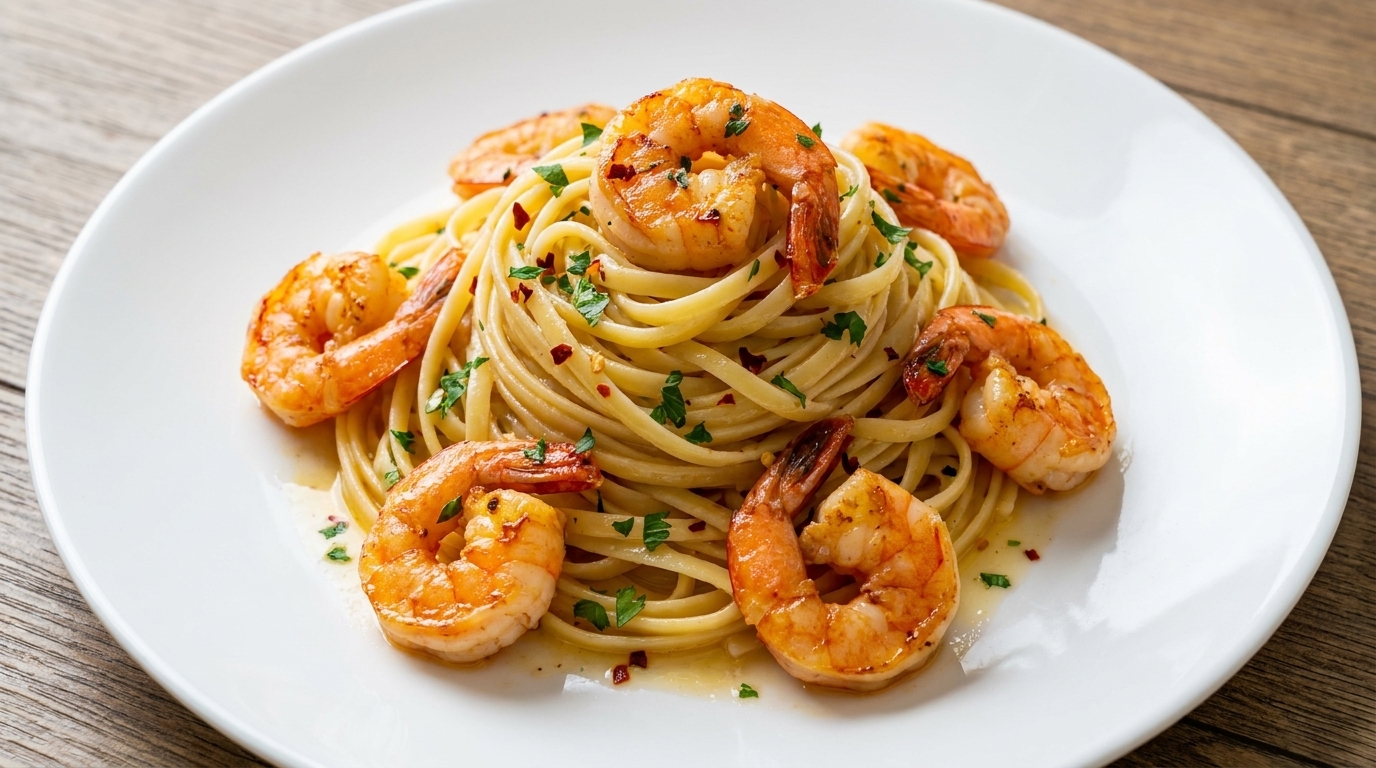
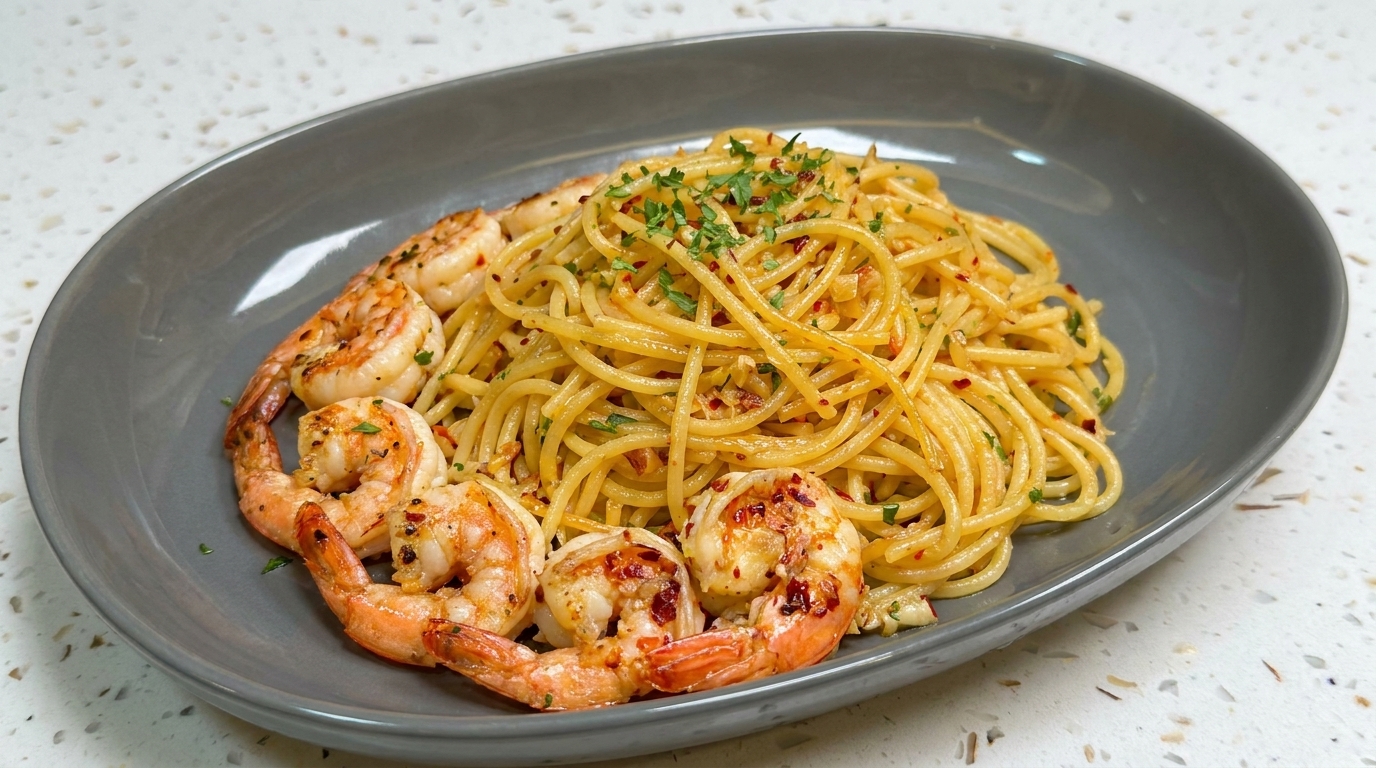
Master this quick and elegant Seafood Aglio Olio, featuring bouncy spaghetti, juicy pan-seared shrimp, and a vibrant garlic-butter sauce infused with chili flakes.
While traditional Italian Aglio e Olio relies strictly on olive oil and garlic, this variation incorporates rich butter and succulent shrimp for a more indulgent finish. The technique of shocking the pasta in cold water before tossing it in the warm, starchy sauce is a brilliant trick that ensures a perfectly bouncy, resilient noodle texture.
Ingredients
- 200 g dry spaghetti
- 250 g raw shrimp, peeled and deveined
- 1 tbsp olive oil
- 1 tbsp butter
- 4 cloves garlic, finely minced
- 1 tsp red chili flakes
- 1 tsp salt
- 1 tbsp fresh parsley, chopped
- 13 cup reserved pasta water
Instructions
- 1Clean and prepare the shrimp
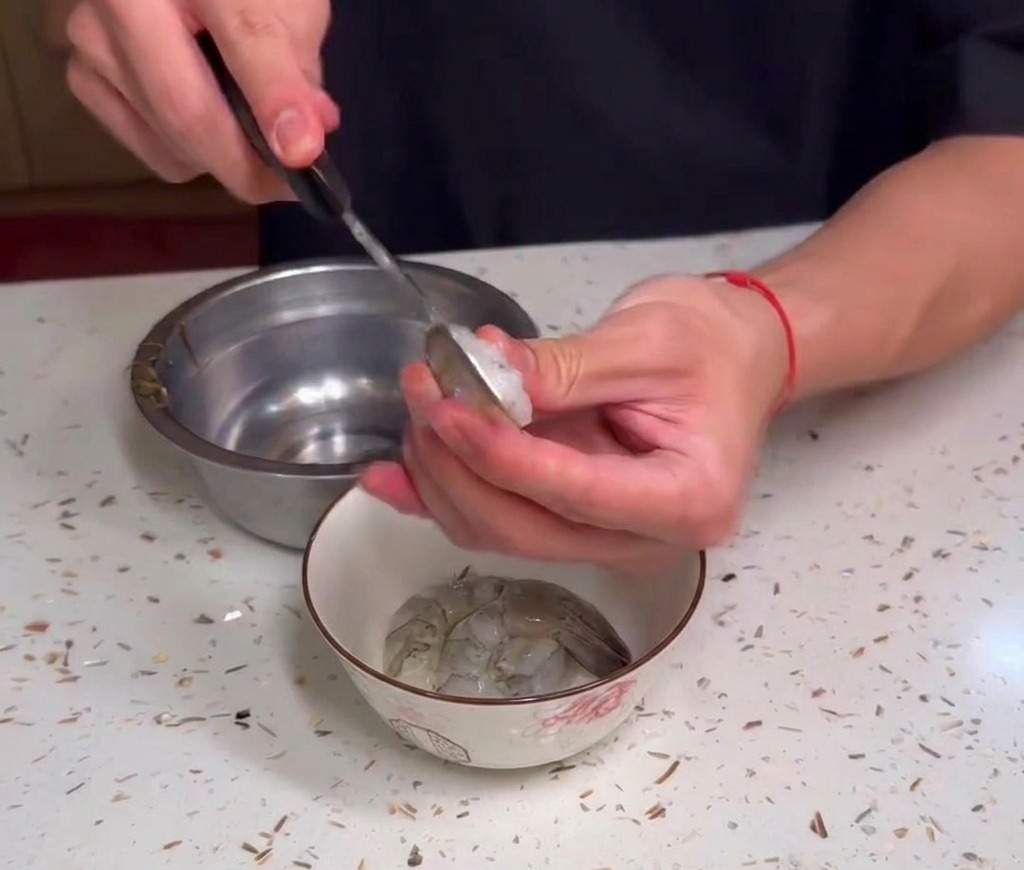
Carefully clean the raw shrimp by removing the shells and veins as needed. Place the prepared shrimp in a small bowl and set them aside for later use in the stir-fry.
Tip: Keep the cleaned shrimp refrigerated until you are ready to cook them to maintain their freshness and bouncy texture. - 2Boil the spaghetti
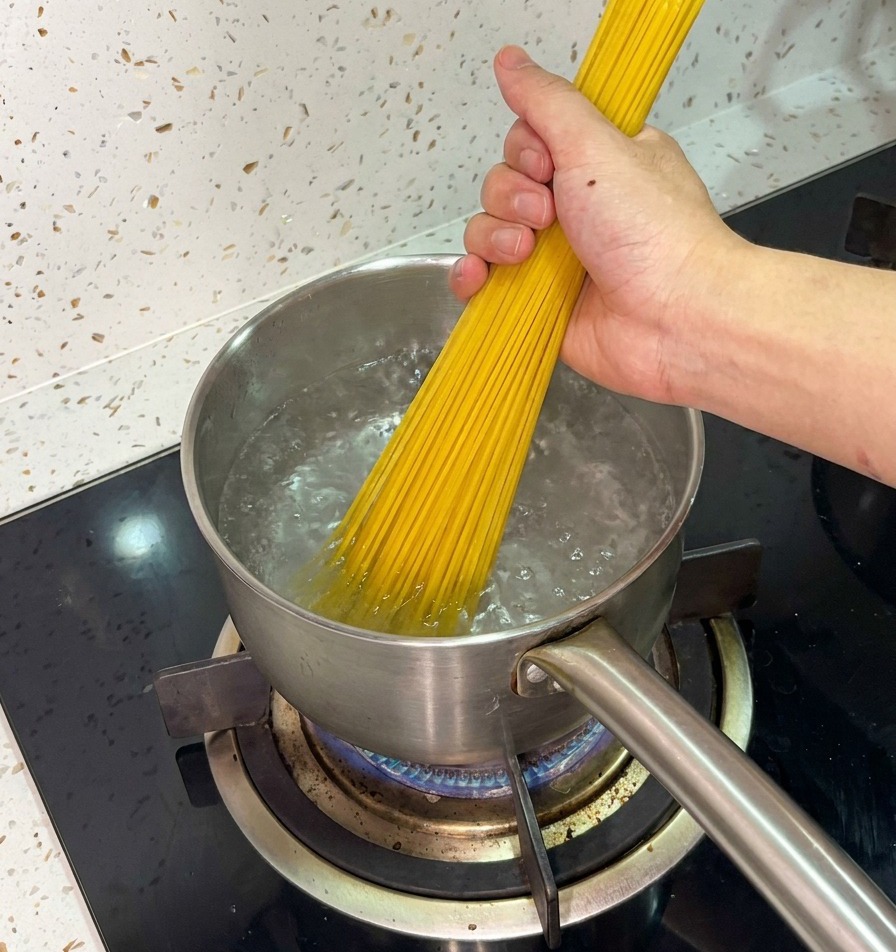
Bring a pot of water to a rolling boil over the stove. Once boiling rapidly, gently place the dry spaghetti vertically into the center of the pot, allowing it to fan out as it begins to submerge and soften.
Tip: Use a generous amount of water to ensure the spaghetti has enough room to move around and cook evenly without clumping. - 3Add olive oil to the pasta water
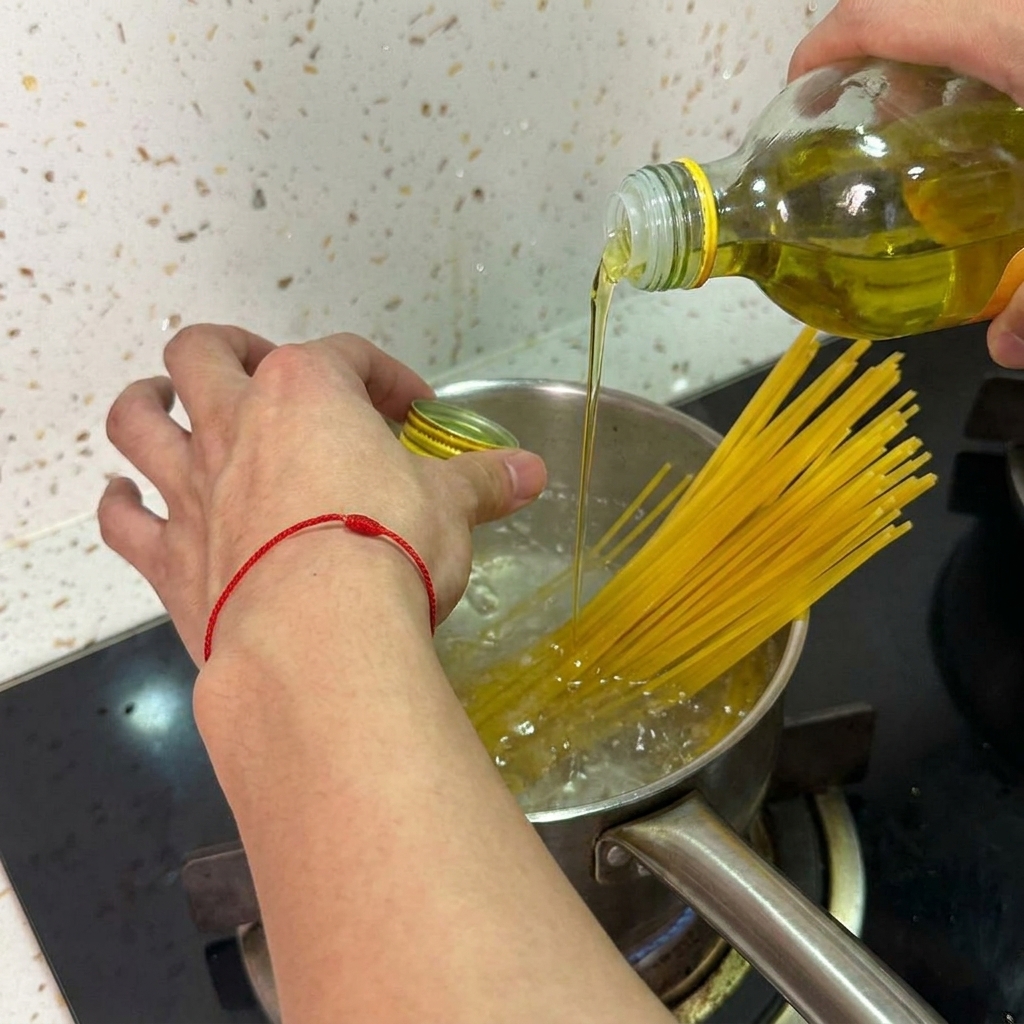
While the spaghetti is boiling, pour a light drizzle of olive oil directly into the pot from the bottle. This helps prevent the pasta strands from sticking together as they continue to soften.
Tip: You can also add a generous pinch of salt to the boiling water at this stage to flavor the pasta from within. - 4Chill the pasta
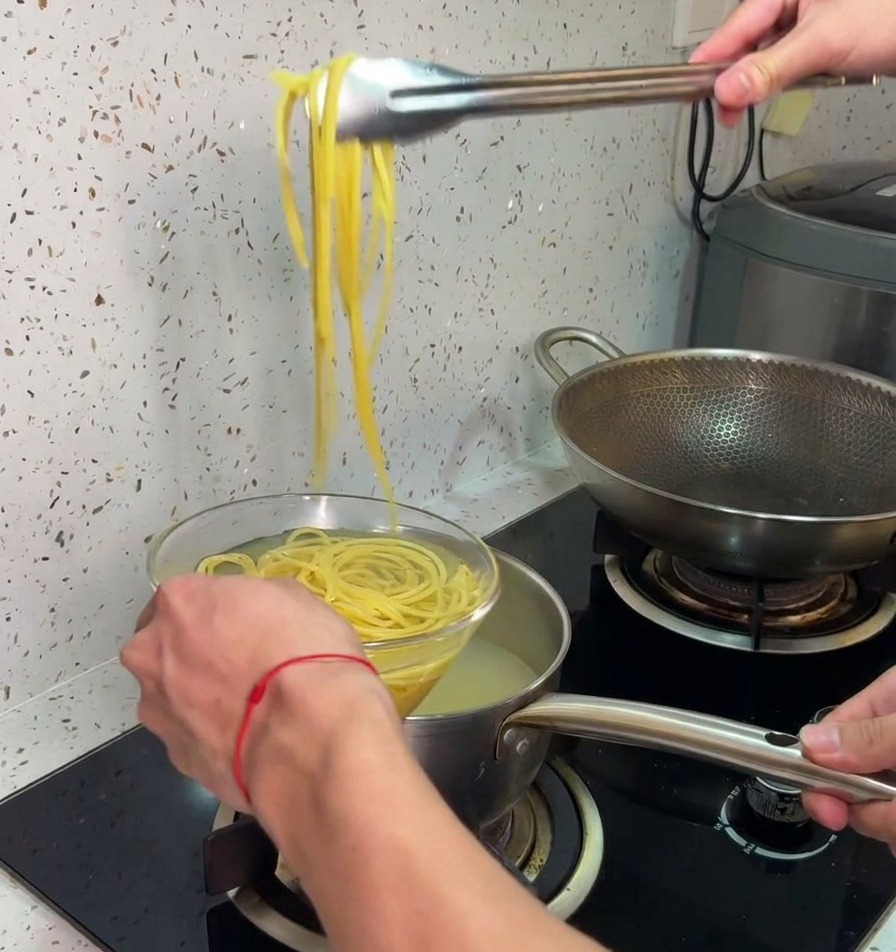
Once the pasta has softened but remains slightly al dente, use kitchen tongs to lift it straight out of the boiling water. Immediately plunge the hot spaghetti into a glass bowl filled with cold water to stop the cooking process and give the noodles a bouncy texture.
Tip: Dont throw away the pasta water! Remember to reserve at least a third of it in the pot to use later for creating the sauce. - 5Melt the butter
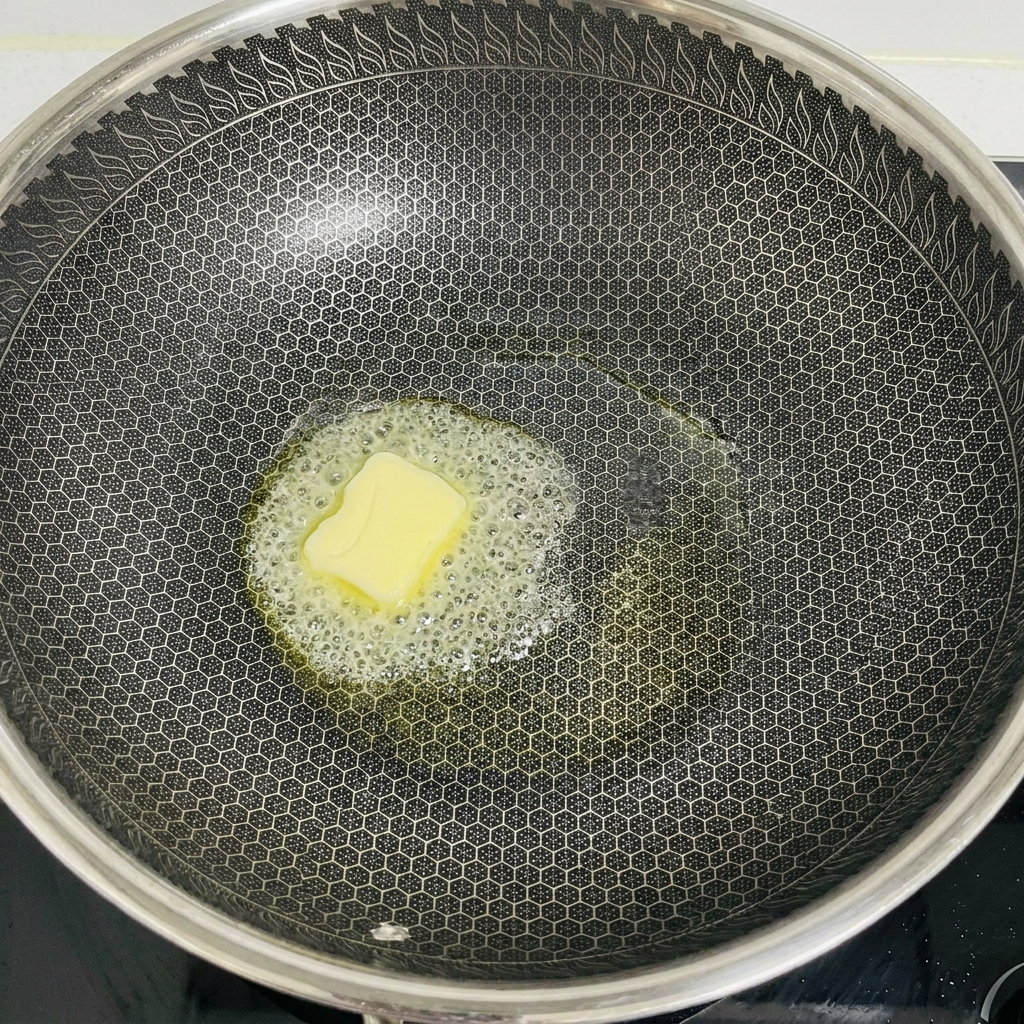
Heat a large wok over the stove and add a tablespoon of butter to the center. Let the butter melt down completely until it begins to bubble vigorously, creating a rich and flavorful base for our Aglio Olio.
Tip: Keep the heat at medium to prevent the butter from browning too quickly or burning before you add the aromatics. - 6Sauté the minced garlic
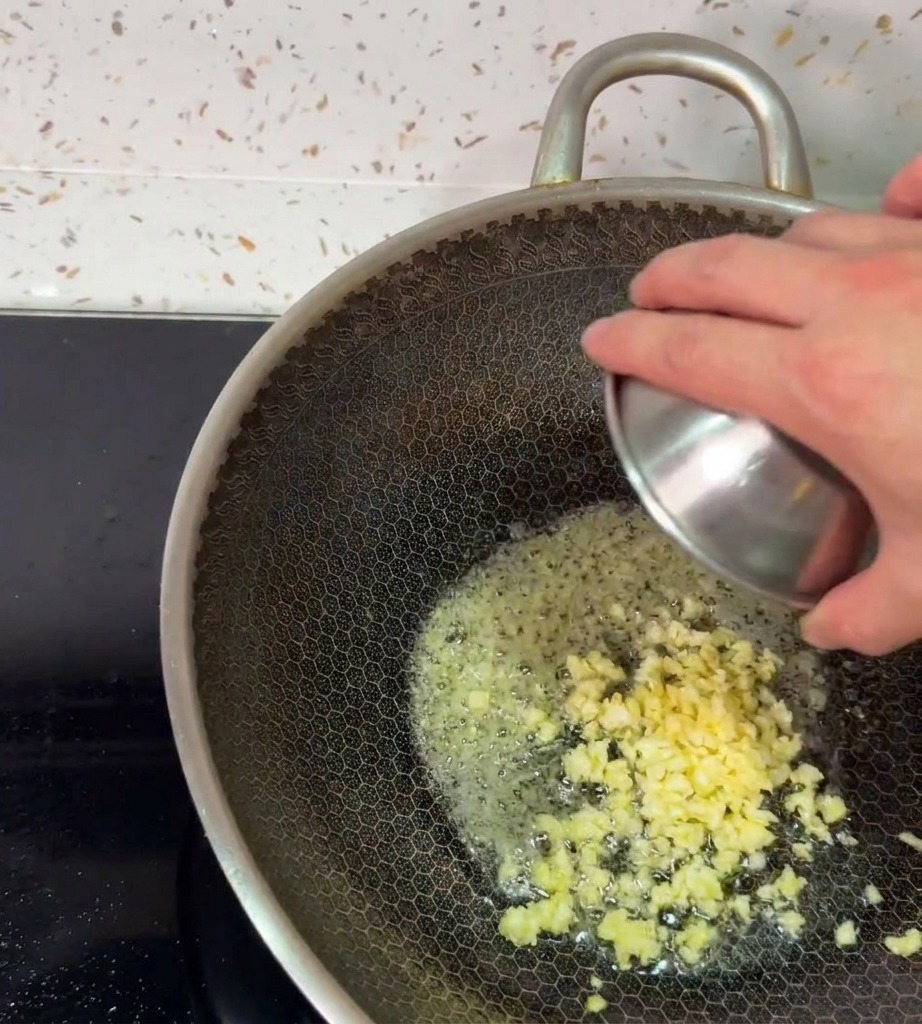
Pour the freshly minced garlic directly into the bubbling melted butter. Sauté the garlic gently in the wok, stirring constantly until it releases its strong, aromatic fragrance.
Tip: Watch the garlic closely as it cooks; it should turn a pale golden color but not dark brown, which would impart a bitter taste to the dish. - 7Add chili flakes
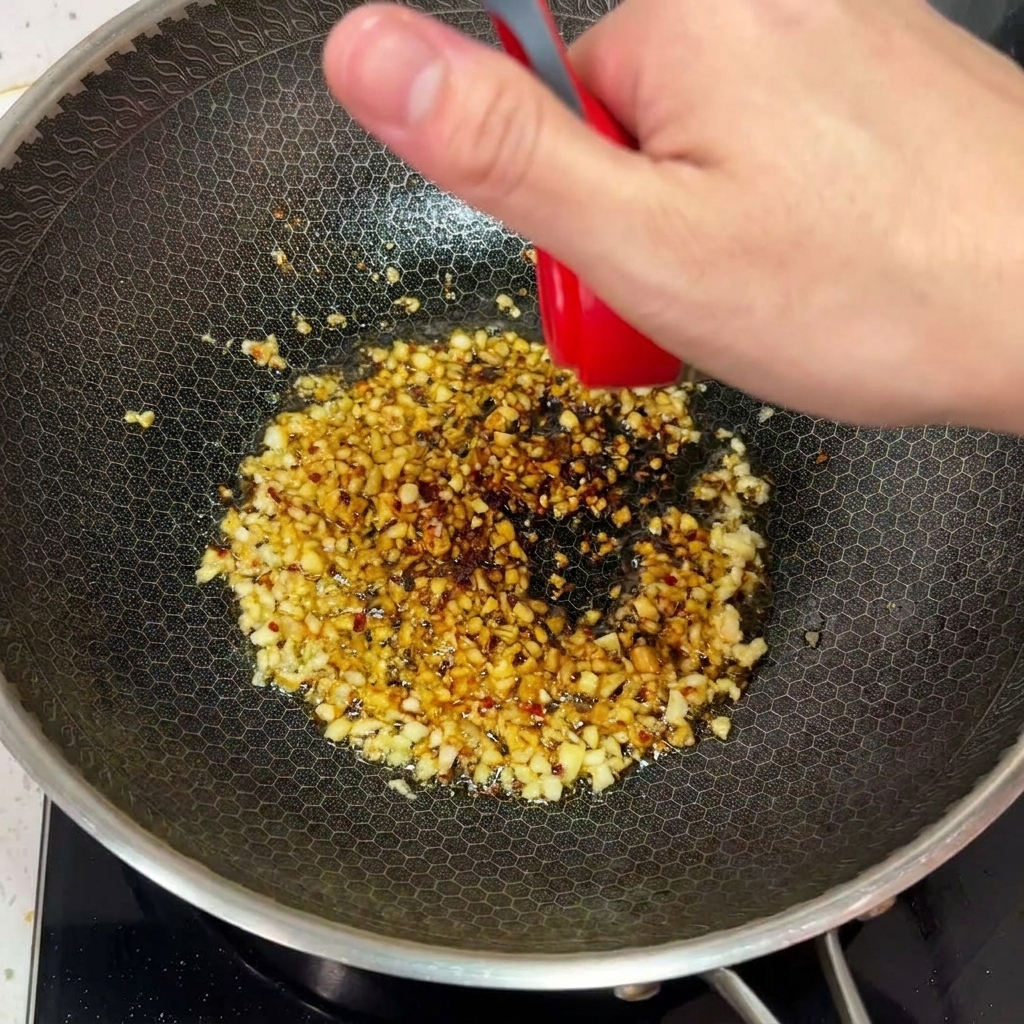
Sprinkle red chili flakes into the wok over the sautéing minced garlic. Stir the mixture well to release the aromatics and infuse the melted butter with a spicy kick.
Tip: Adjust the amount of chili flakes according to your heat preference. Toasting them briefly in the butter brings out their best flavor. - 8Cook the shrimp
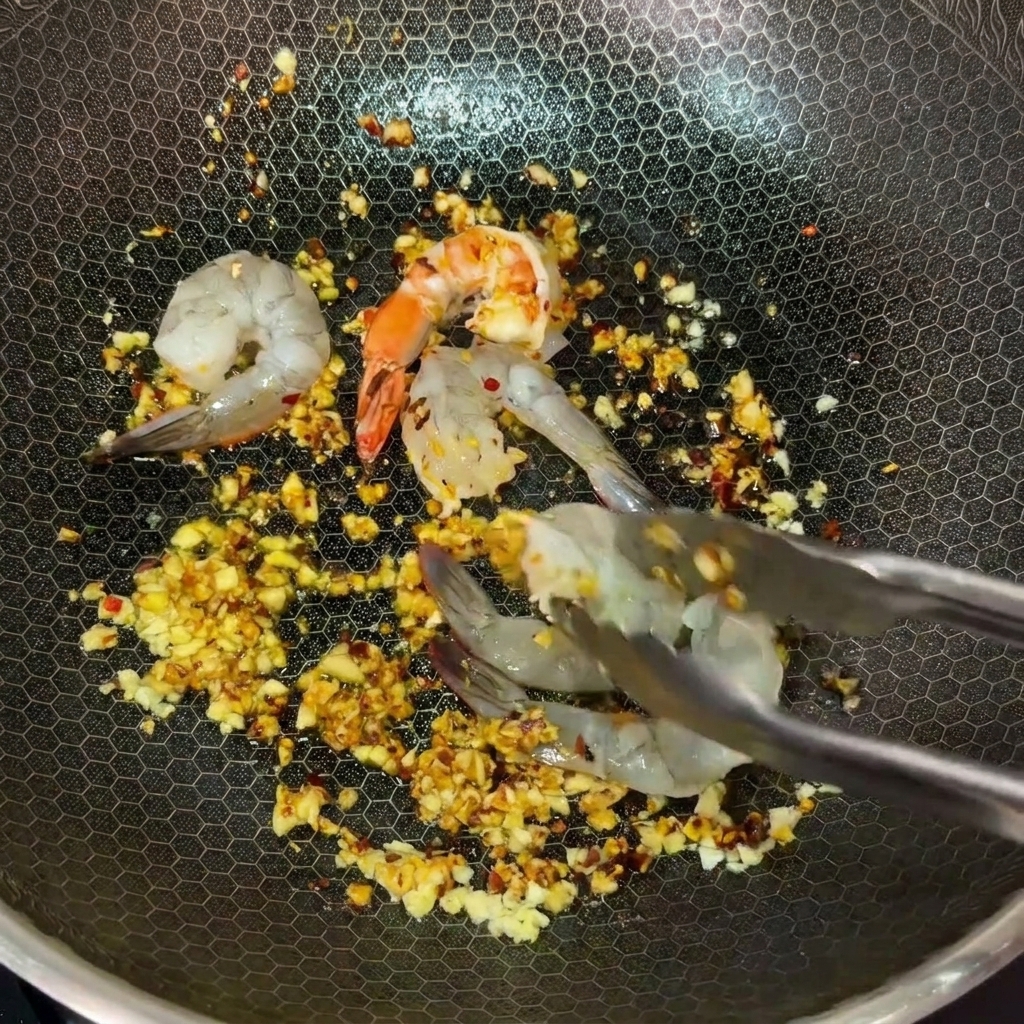
Place the raw, cleaned shrimp into the seasoned butter using tongs. Spread them out evenly in the wok and sauté until they start to turn a light pink color.
Tip: Keep an eye on the shrimp so they dont overcook. They will continue to cook slightly when you add the hot pasta. - 9Toss in the spaghetti
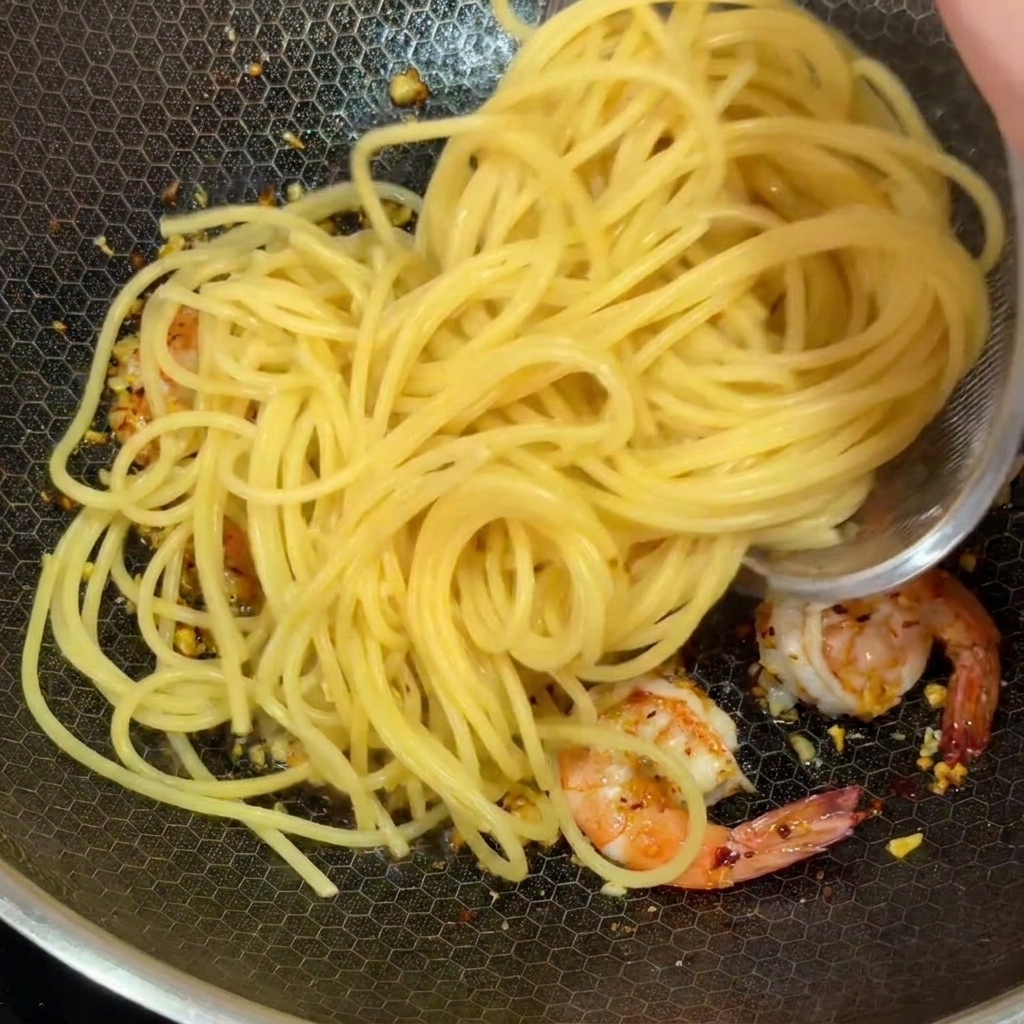
Transfer the parboiled spaghetti directly into the wok with the cooked shrimp. Toss the noodles gently so they begin to absorb the flavorful garlic and chili butter sauce.
Tip: Adding the pasta right after the shrimp are cooked ensures the noodles get coated evenly before the pan cools down. - 10Add pasta water
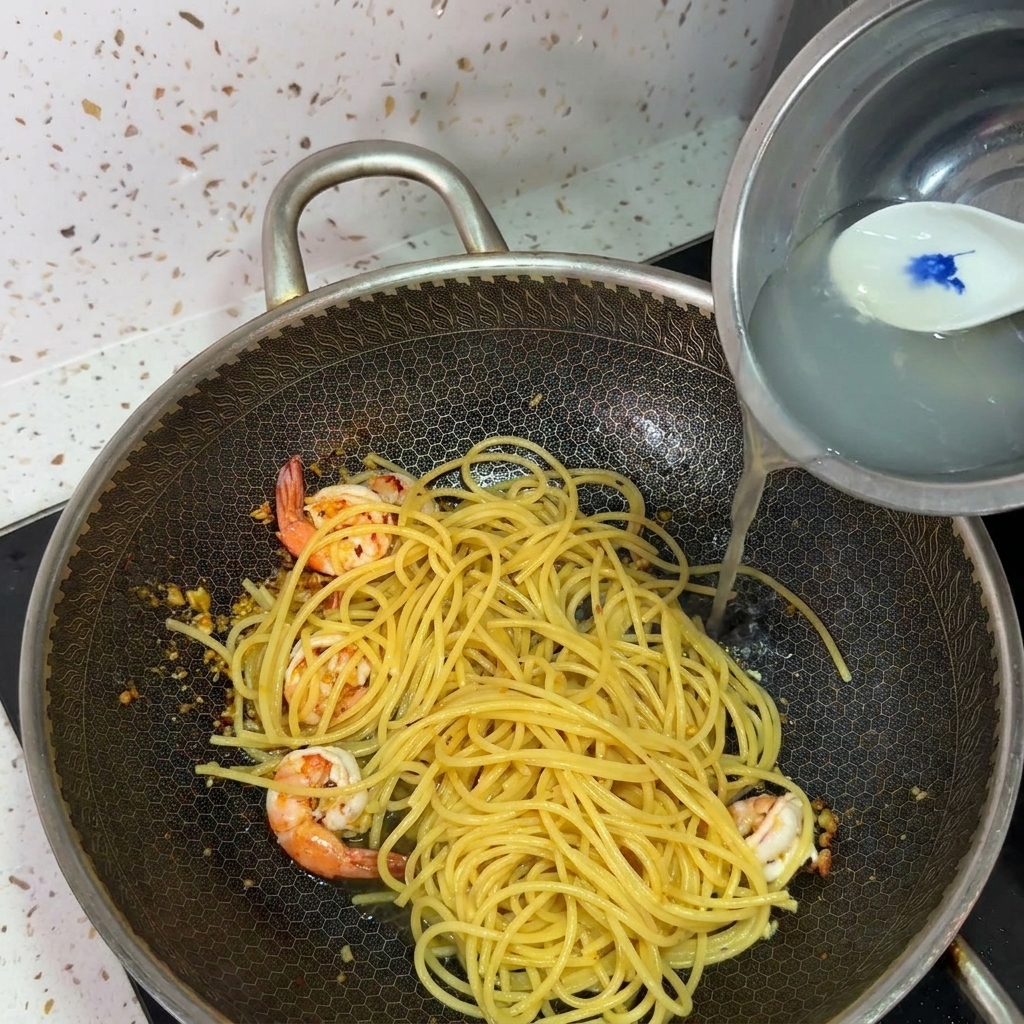
Pour the reserved pasta water into the wok. The starchy water will emulsify with the butter and oil, creating a rich, glossy sauce that clings perfectly to the spaghetti.
Tip: Add the water gradually. You can always add more to reach your desired sauce consistency, but you cannot take it out once poured in. - 11Season the pasta
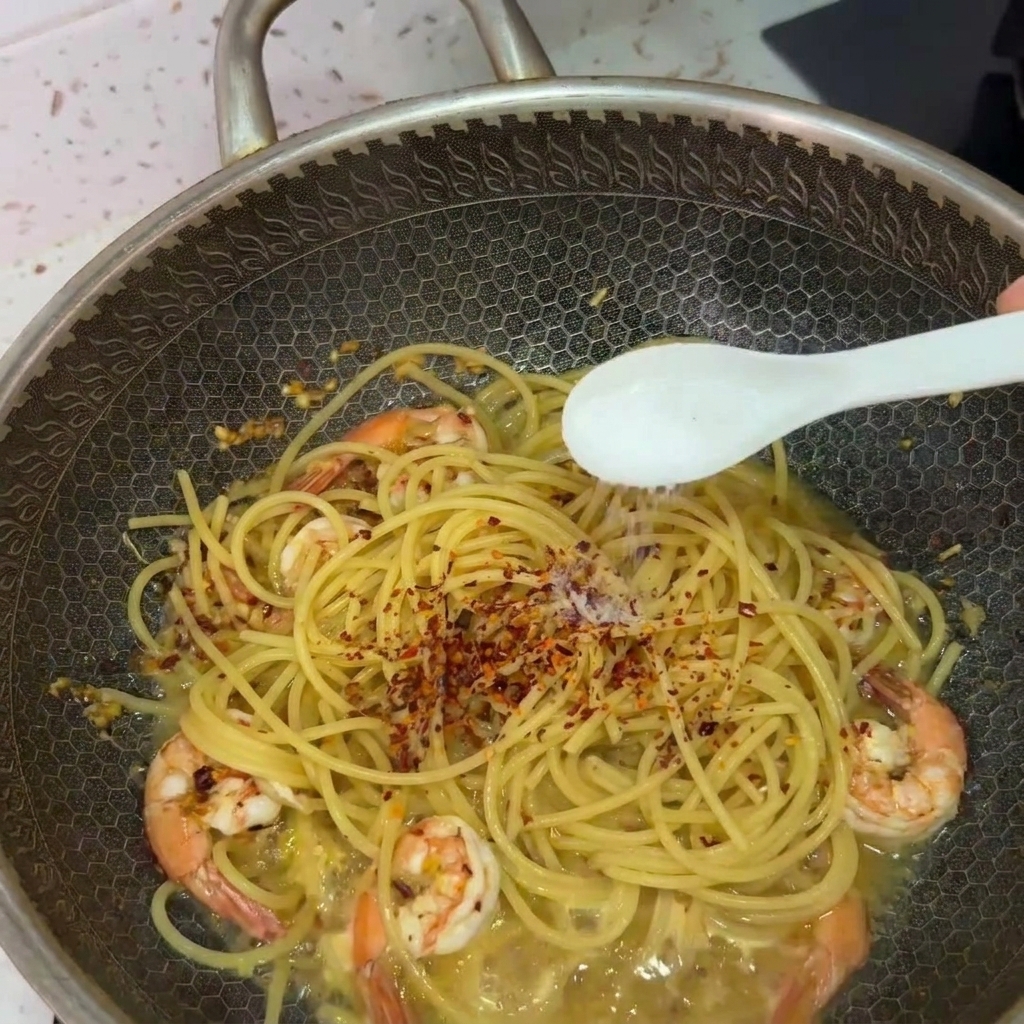
Season the dish with a spoonful of salt and an extra sprinkle of chili flakes for additional heat. Toss everything together continuously until the sauce coats the noodles evenly.
Tip: Taste the pasta before adding the full amount of salt, keeping in mind that the pasta water used earlier is already salted. - 12Garnish with parsley
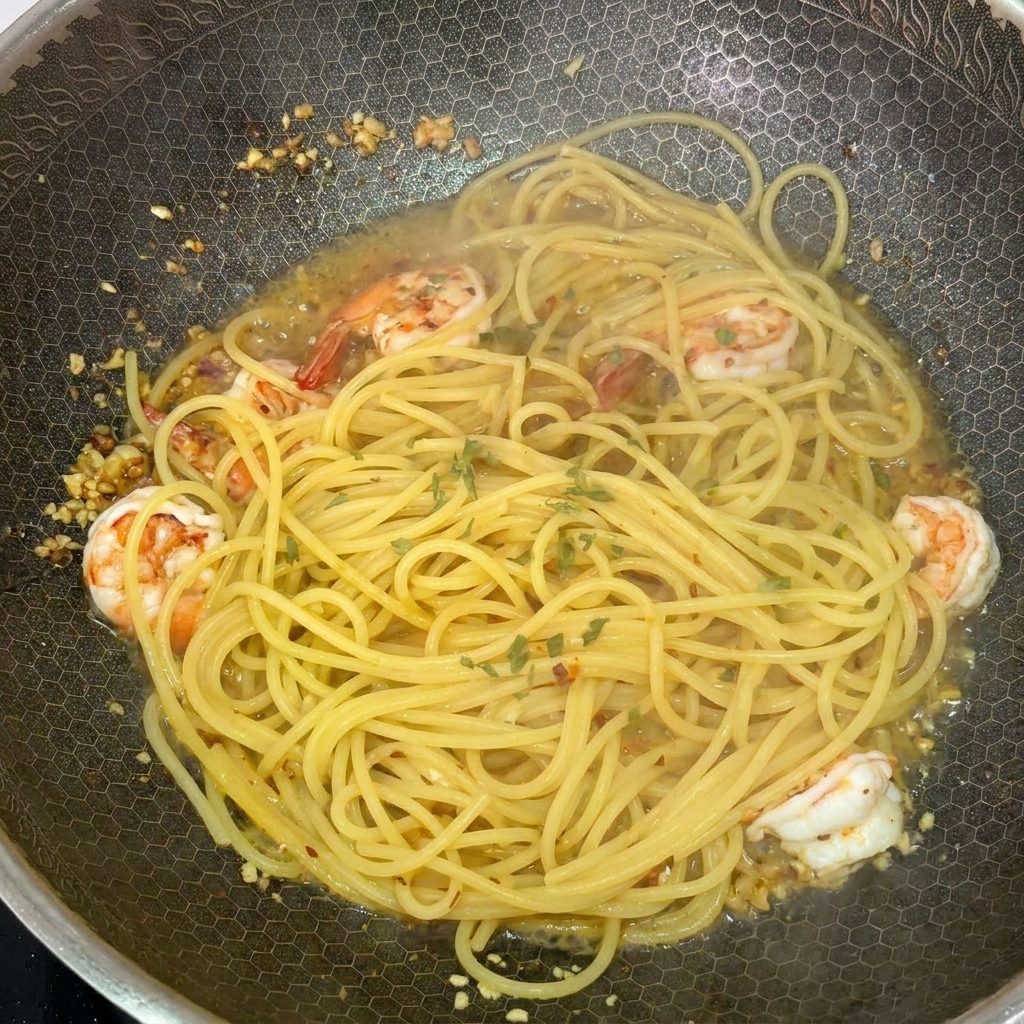
Finish the dish by sprinkling freshly chopped parsley leaves over the pasta. Give the spaghetti and shrimp one final toss to distribute the herbs evenly throughout the pan.
Tip: Adding fresh herbs at the very end of the cooking process preserves their vibrant green color and delicate flavor. - 13Plate the pasta
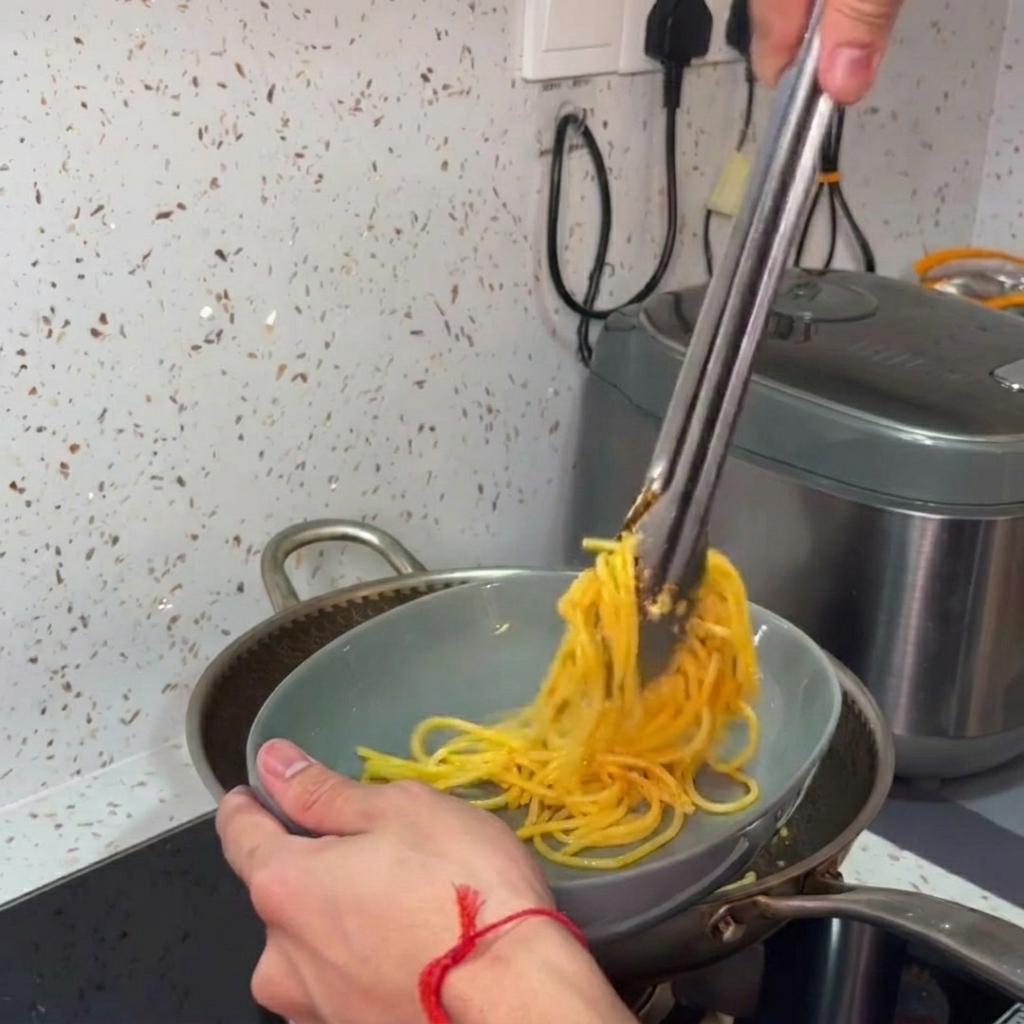
Using a pair of tongs, carefully lift the finished Seafood Aglio Olio from the wok and gently twist it into a neat nest on a serving plate. Be sure to scoop up the remaining garlic, chili, and seasoned oil from the pan to drizzle over the top.
Tip: Twisting the spaghetti with tongs as you lower it onto the plate creates an elegant, restaurant-style presentation and helps the dish retain its heat.