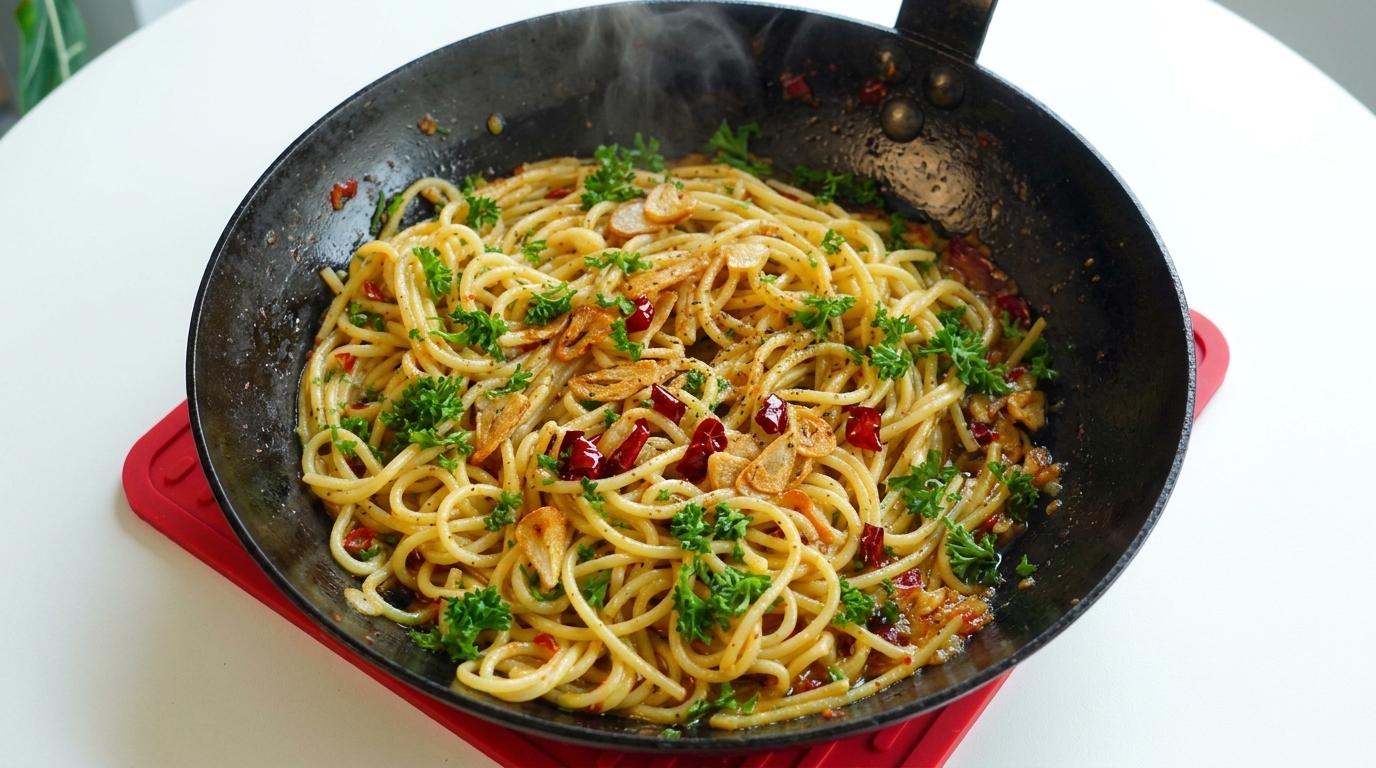
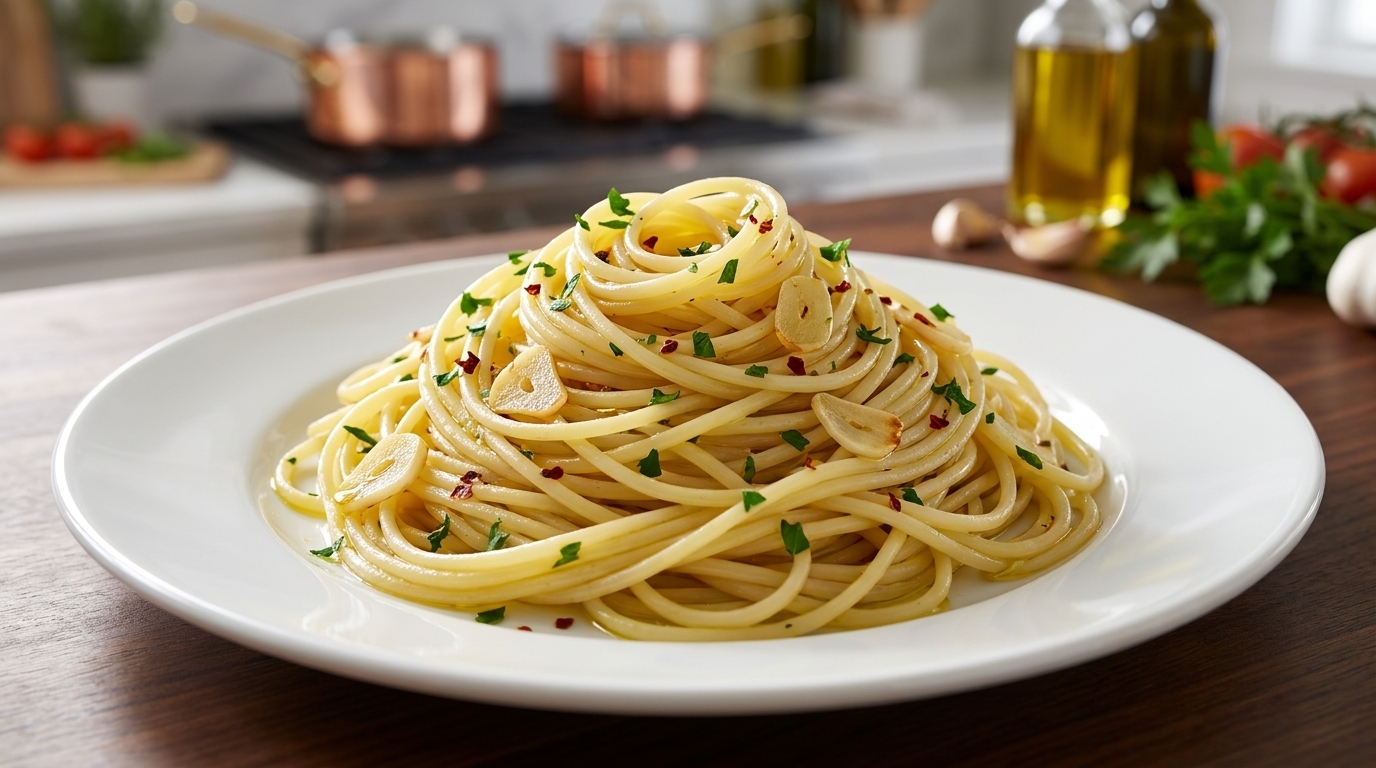
Garlic Olive Oil Spaghetti (Aglio e Olio)
Master the art of Spaghetti Aglio e Olio. This elevated version uses a slow-infused garlic paste and crispy garlic slices to create an intensely flavorful, emulsified sauce.
Spaghetti Aglio e Olio is a masterclass in Italian minimalism, relying entirely on the quality of a few ingredients and the technique of emulsifying starchy pasta water with oil. This particular recipe takes a twofold approach to its star ingredient: blending confit-style garlic into a rich paste, while also gently frying fresh slices for a crispy textural garnish. The result is a perfectly balanced, deeply aromatic dish that feels both rustic and refined.
Ingredients
- 250 g dried spaghetti
- 6–8 cloves whole garlic (for paste)
- 3 cloves garlic, thinly sliced
- 1 dried red chili pepper
- 80 ml high-quality extra virgin olive oil
- 1 bunch fresh parsley (stems and leaves separated)
- 1 tbsp kosher salt (for boiling water)
- optional grated Parmesan cheese
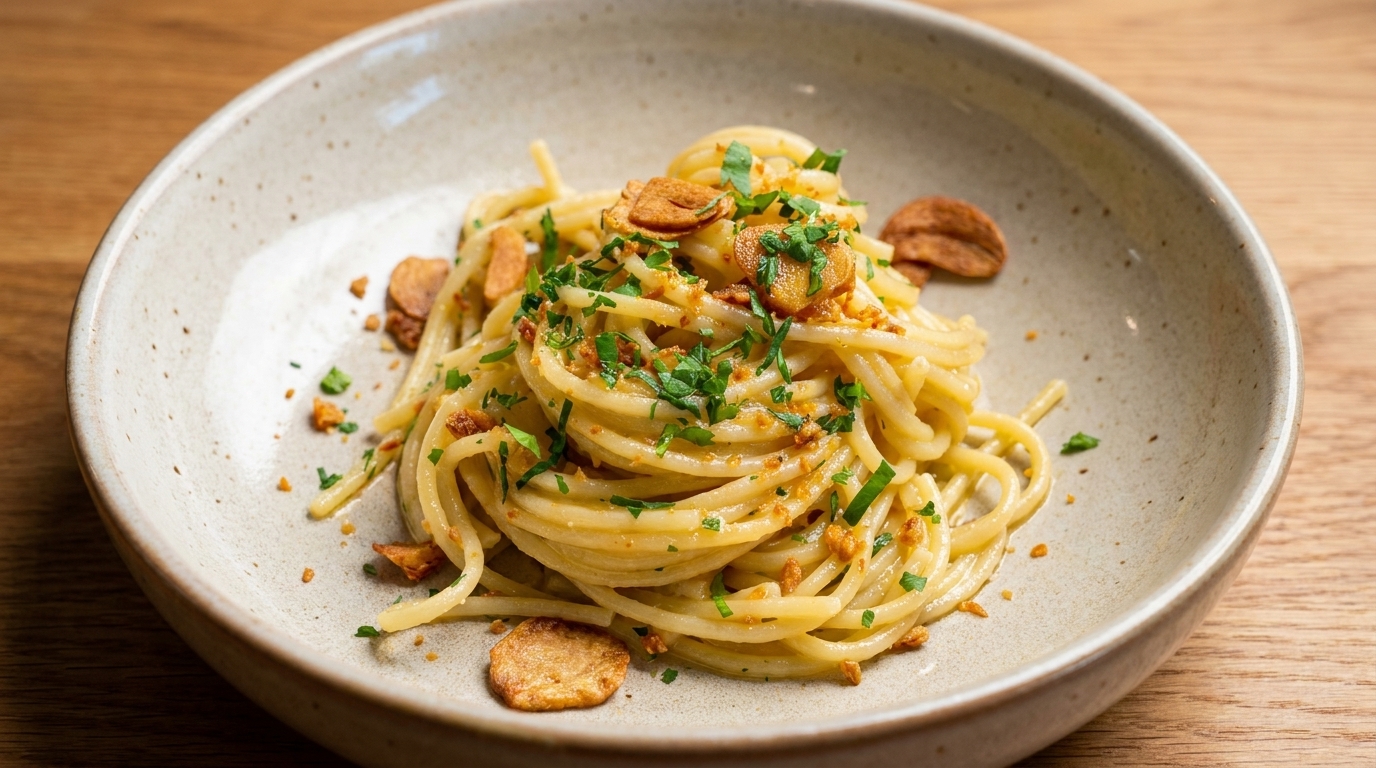
- optional fried garlic crumbs
Instructions
- 1Peel the Garlic
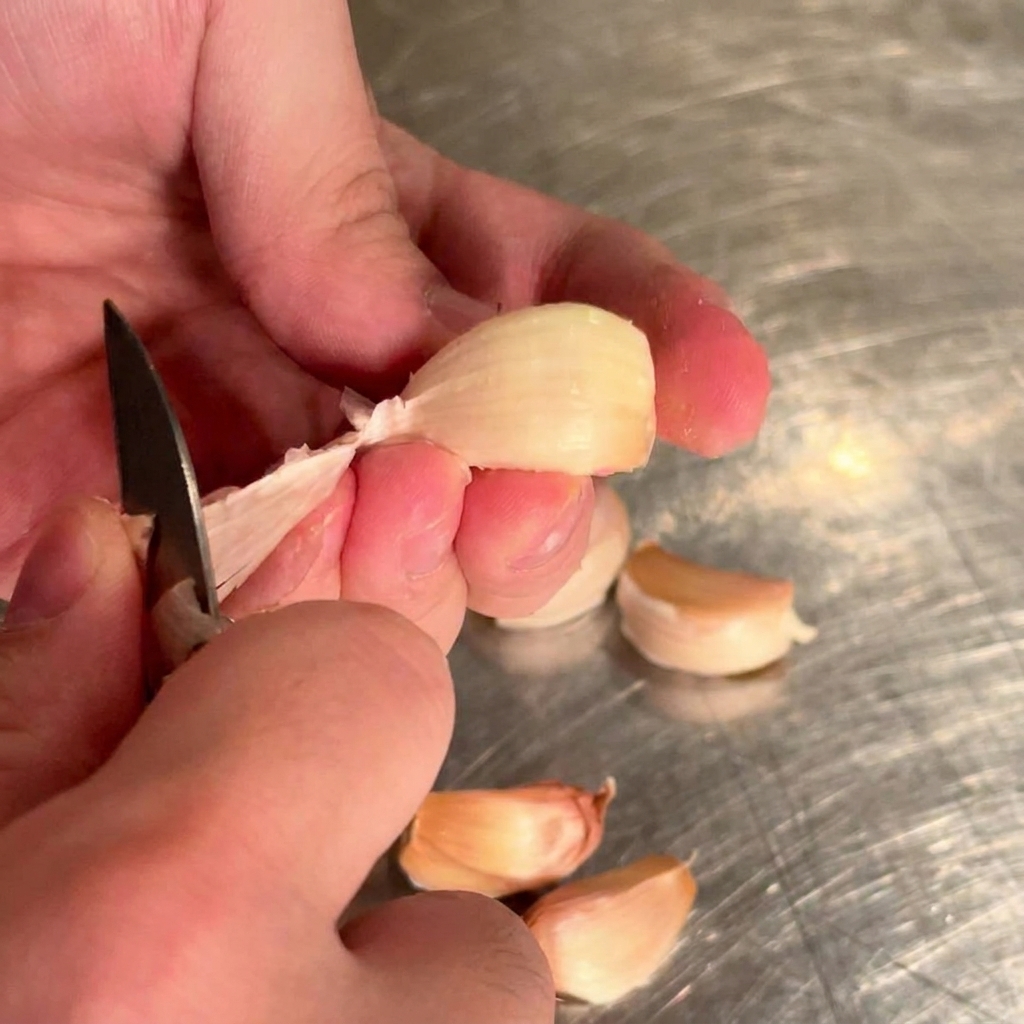
Begin by peeling 6 to 8 cloves of fresh garlic. Use a small paring knife to carefully remove the skins, ensuring the cloves remain intact for an even cook later on.
Tip: Crushing the cloves very gently with the flat side of your knife beforehand can loosen the skins and make peeling much easier. - 2Prepare the Pot
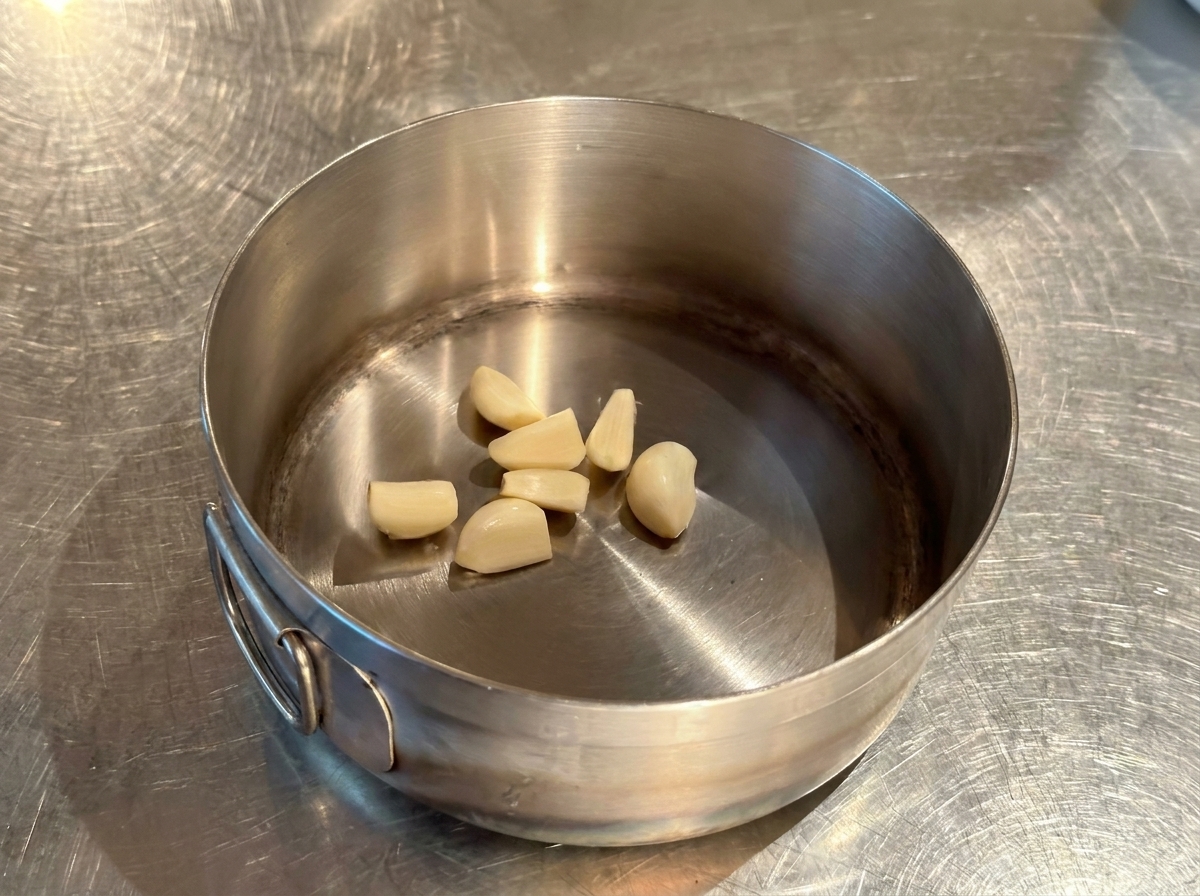
Place the peeled, whole garlic cloves into a small, completely dry metal pot. Using a smaller vessel ensures the garlic will be fully submerged once you add the olive oil.
Tip: Always ensure your pot is completely dry before adding oil to prevent dangerous splattering once the heat is turned on. - 3Add Dried Chili
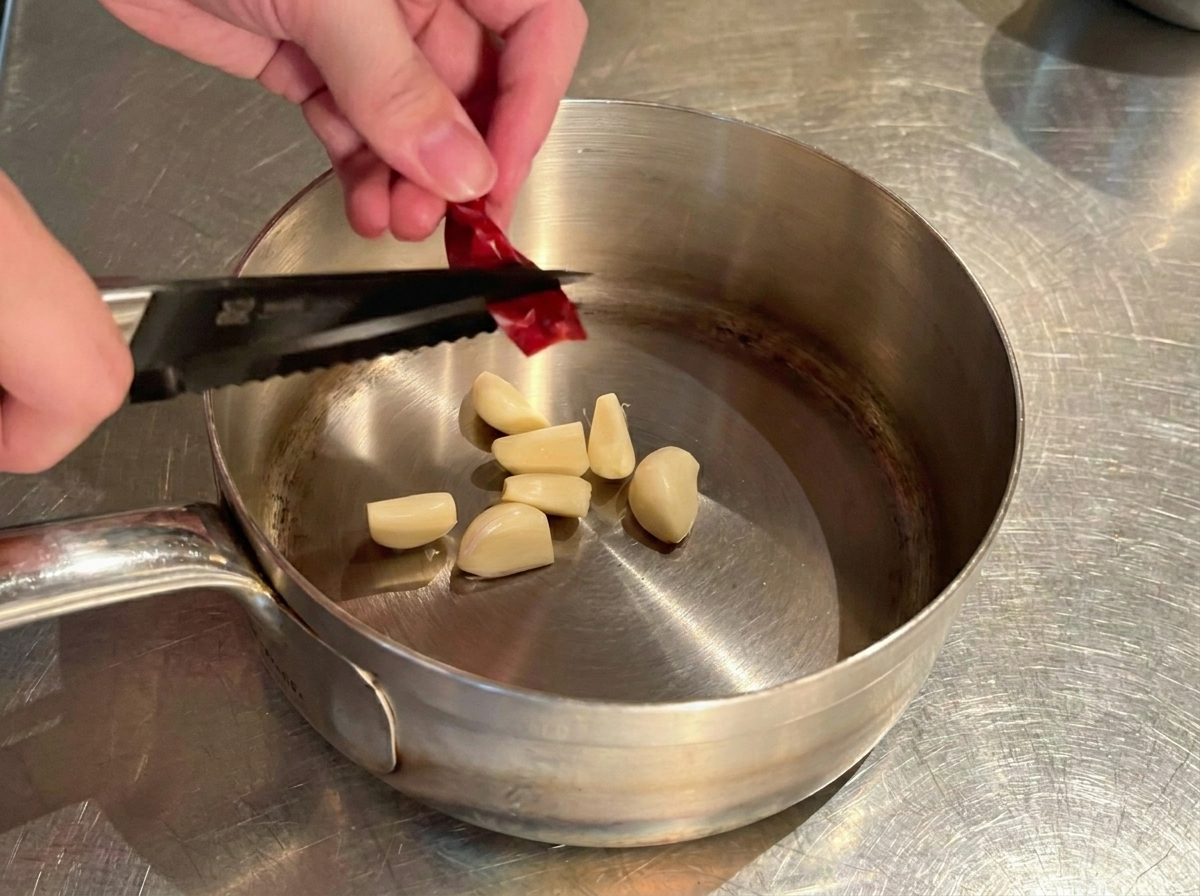
Take a dried red chili pepper and use kitchen scissors to snip it into small segments directly into the pot with the garlic cloves. This will infuse the oil with a subtle, warming heat.
Tip: If you prefer a milder flavor, shake out and discard the loose seeds from the chili segments before adding them to the pot. - 4Pour in the Olive Oil
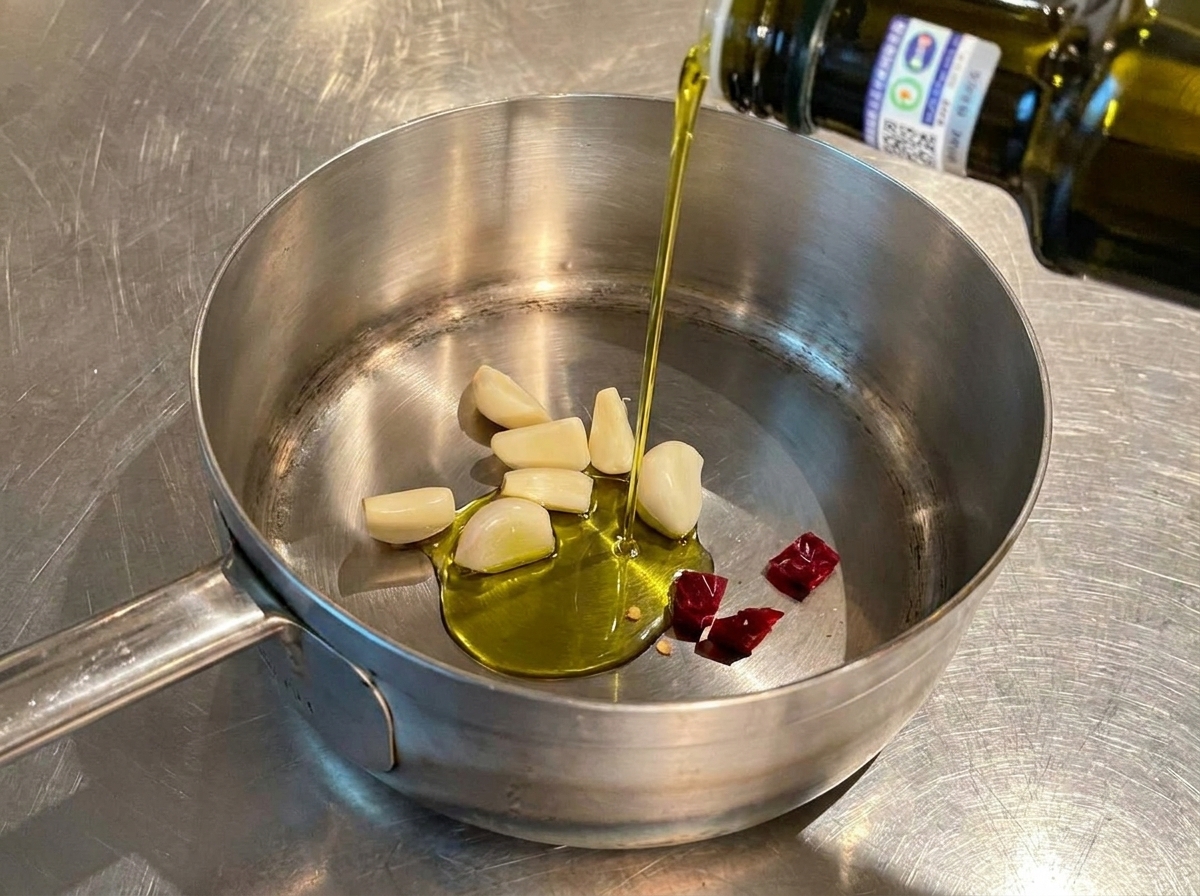
Pour extra virgin olive oil over the garlic and chili segments. Add enough oil to comfortably submerge all the aromatics, creating a rich flavor base for the pasta.
Tip: Use a high-quality extra virgin olive oil. Since its the star ingredient of the sauce, its flavor profile will heavily dictate the success of the dish. - 5Slowly Fry the Aromatics
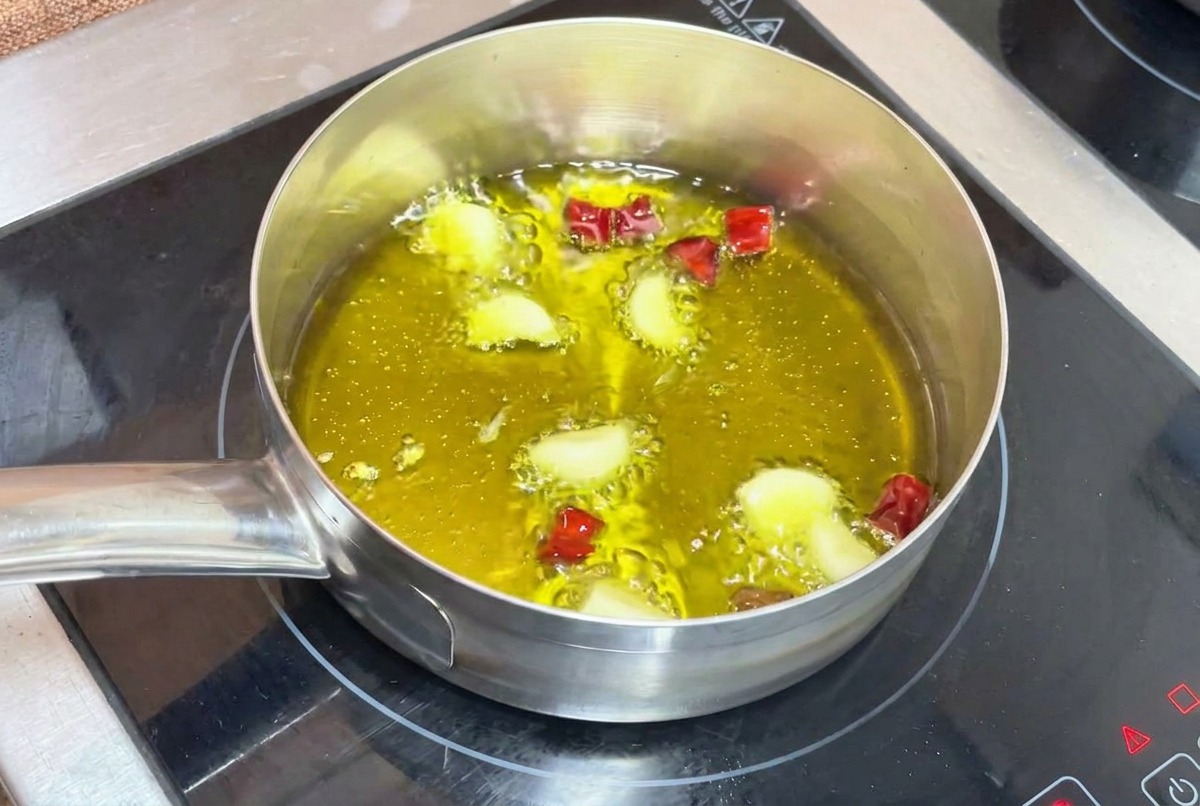
Place the pot on the stove over the lowest possible heat. Slowly fry the garlic and chilies in the bubbling olive oil until the garlic cloves are cooked through and appear slightly browned.
Tip: Patience is key here. Cooking the garlic slowly over minimum heat ensures it sweetens and softens without burning and turning bitter. - 6Blend into a Paste
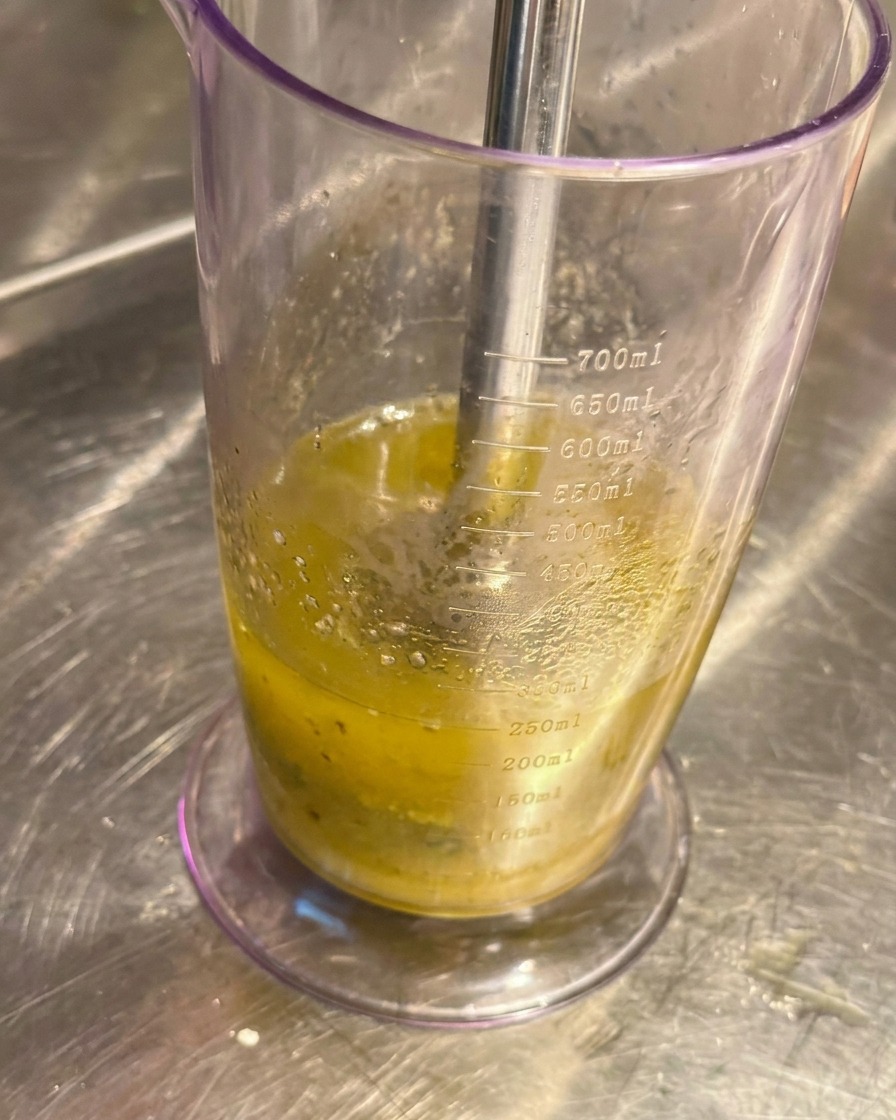
Carefully remove the dried chili segments from the pot. Transfer the infused olive oil and the softened garlic cloves into a tall measuring beaker, then use an immersion blender to process them into a smooth, emulsified paste.
Tip: Using a tall, narrow beaker or jar is highly recommended when using an immersion blender to prevent the hot oil from splashing out. - 7Boil and Season the Water
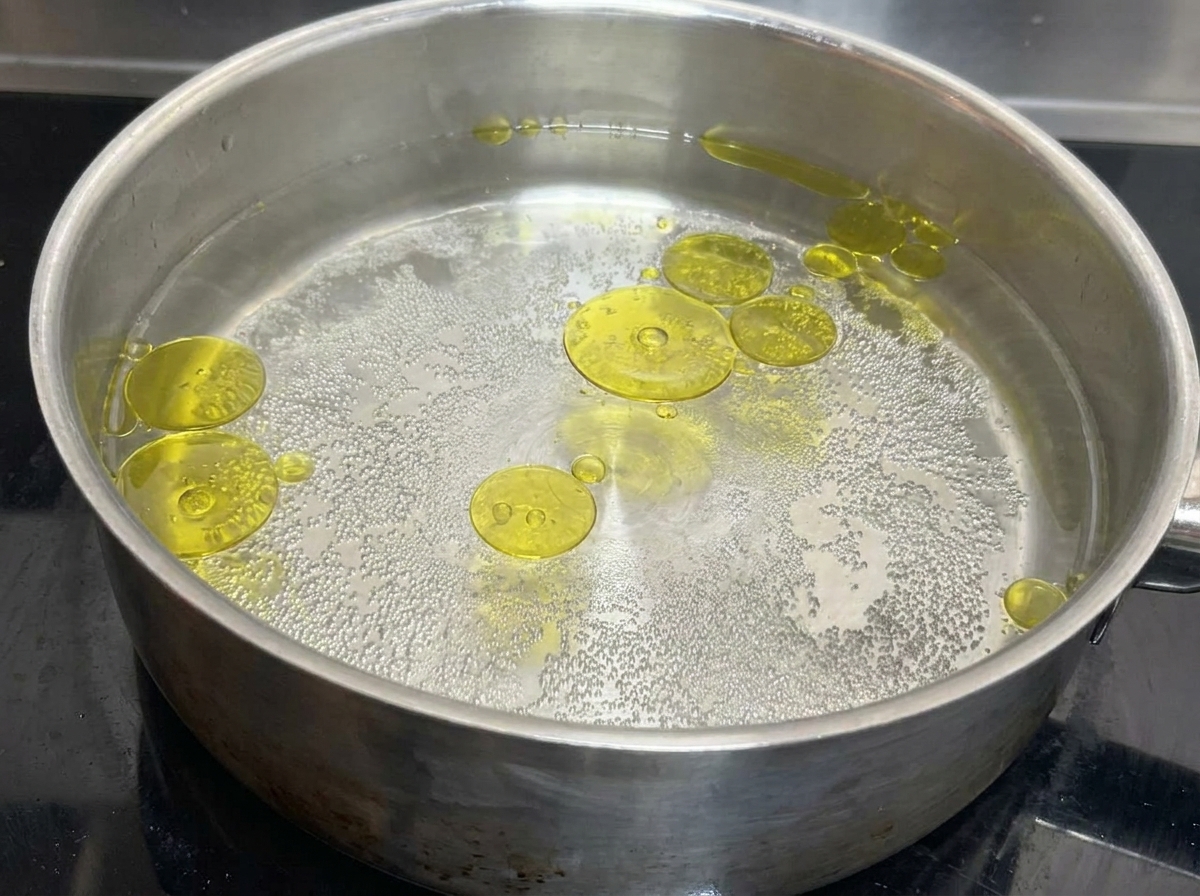
Bring a large pot of water to a vigorous boil. Add a drizzle of olive oil to the water, followed by a generous spoonful of salt. The salted water will season the pasta as it cooks, while the oil helps prevent the noodles from sticking together.
Tip: Season the water generously. It should taste pleasantly salty like a well-seasoned broth, which ensures the pasta itself is flavorful from the inside out. - 8Cook the Spaghetti
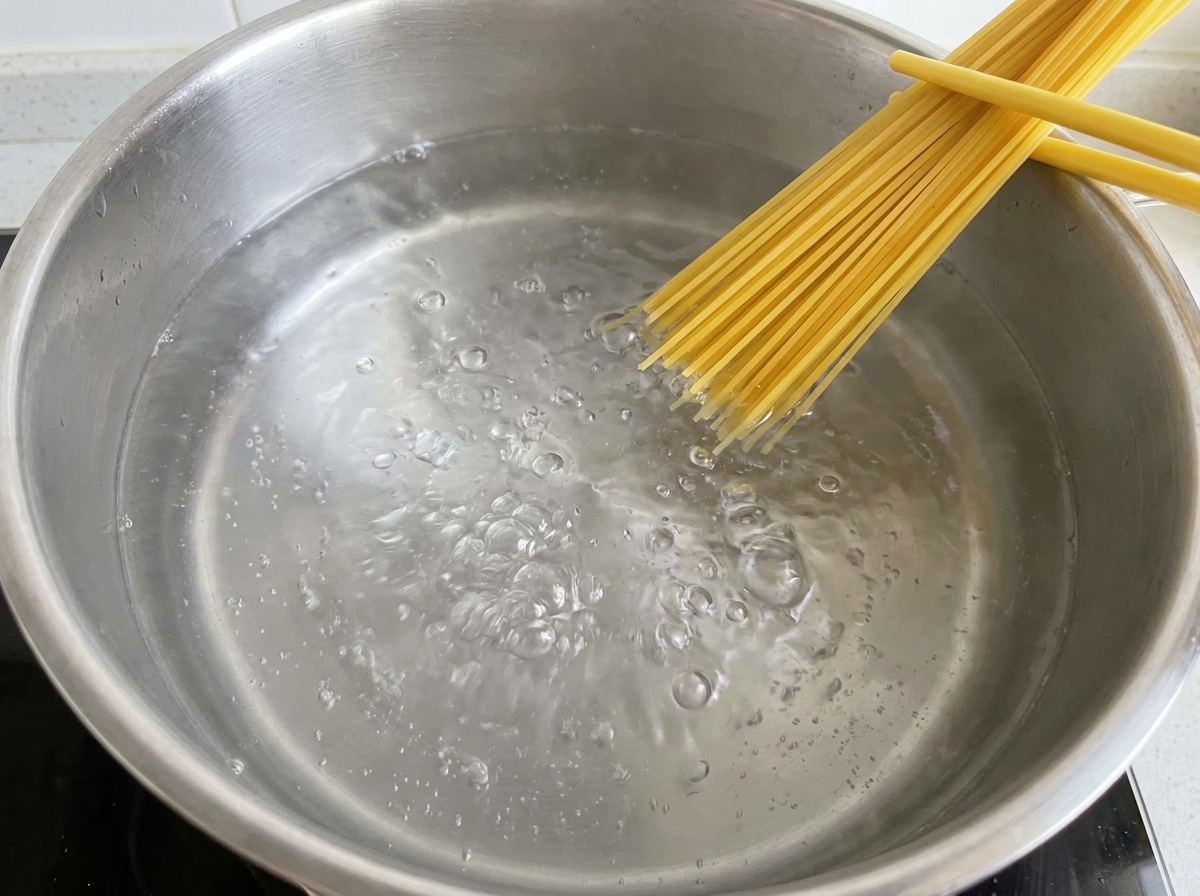
Submerge the dry, uncooked spaghetti noodles directly into the boiling salted water. Gently push them down as they begin to soften to ensure they are fully submerged. Boil the pasta for about 9 minutes, or until it reaches an al dente texture.
Tip: Do not break the spaghetti in half; let it soften naturally in the boiling water so you can twirl long strands later. - 9Heat Oil in a Pan
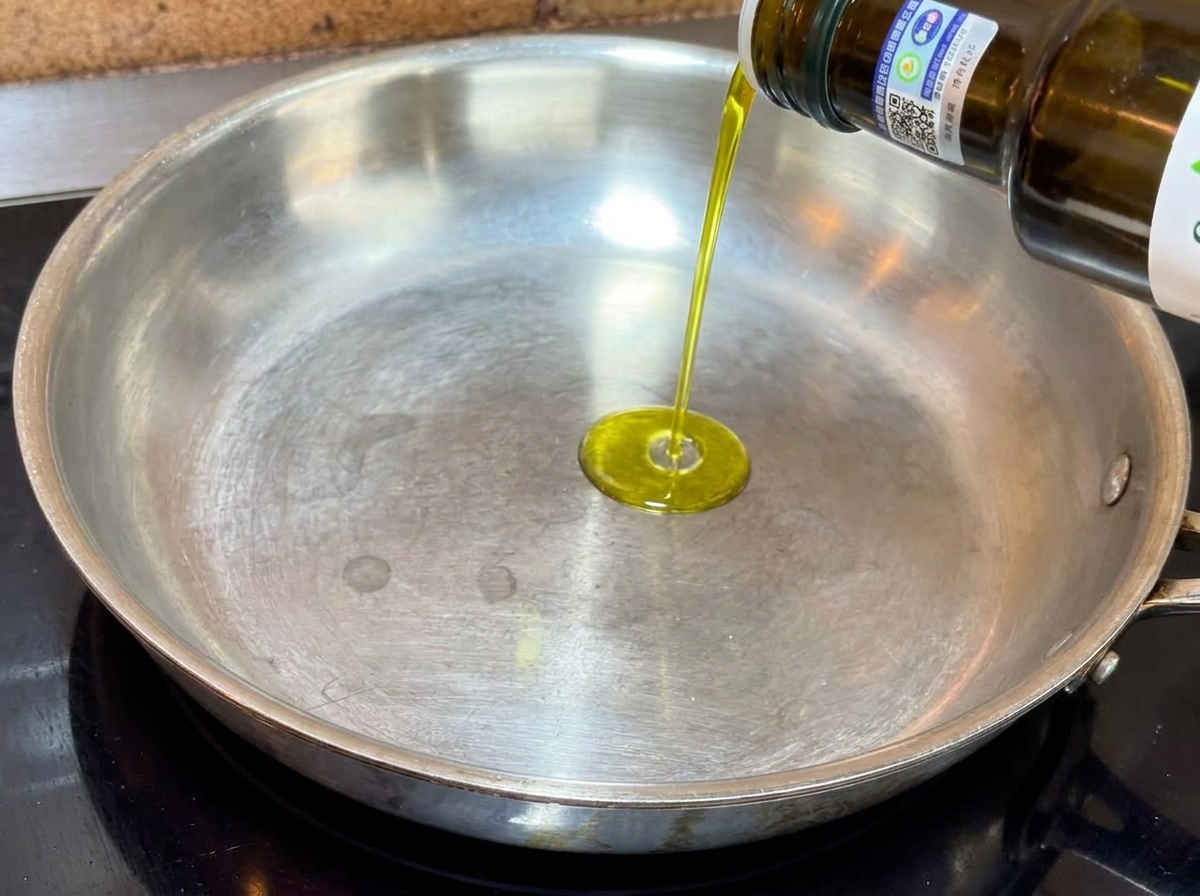
While the pasta is cooking, place a flat-bottomed metal frying pan over medium heat. Pour in a generous amount of extra virgin olive oil, allowing it to coat the bottom of the pan evenly.
Tip: Choose a high-quality extra virgin olive oil, as it is the primary flavor component of this dish. - 10Fry Garlic and Parsley Stems
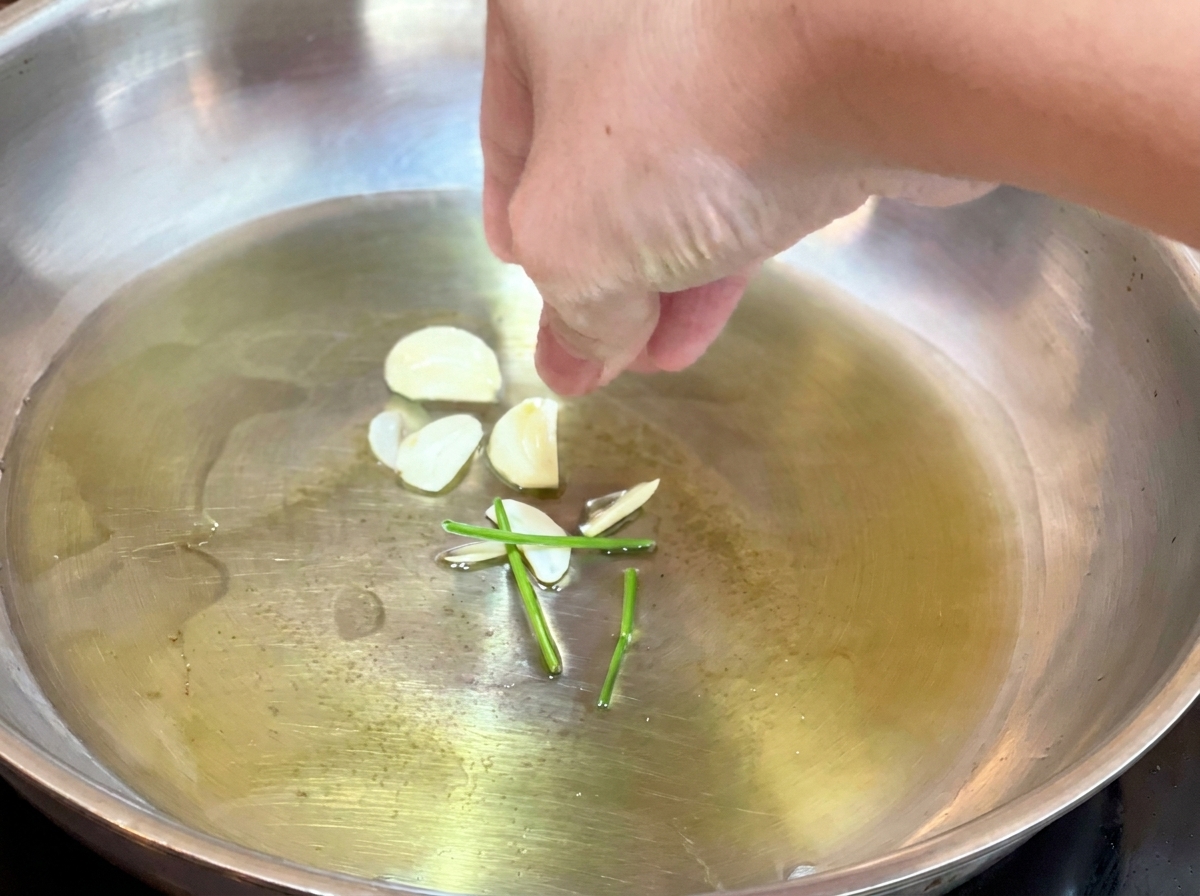
Carefully add the thinly sliced raw garlic and fresh green parsley stems into the hot olive oil. Fry them gently over low to medium heat to slowly infuse the oil with their aromatic flavors without burning the garlic.
Tip: Keep the heat low to avoid turning the garlic brown and bitter. - 11Remove the Parsley Stems
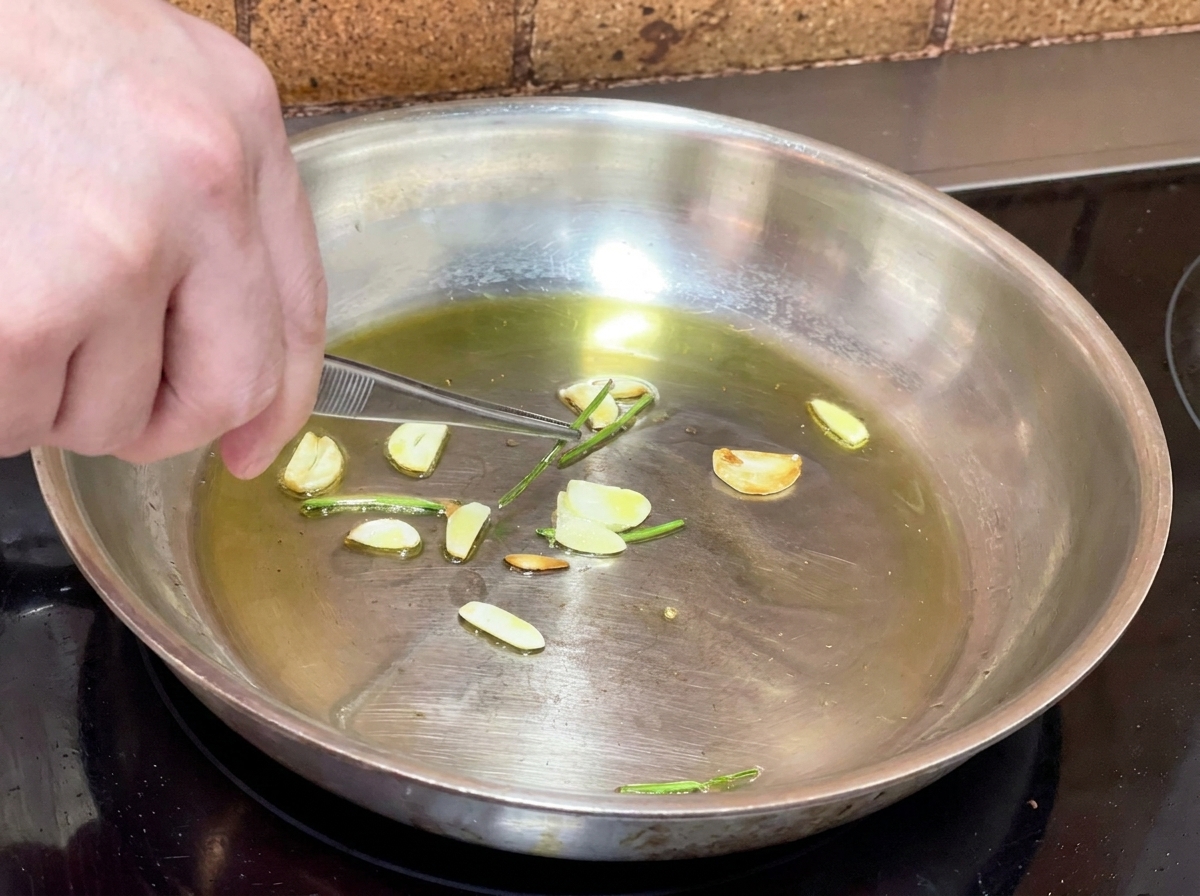
Once the garlic and parsley stems have released their fragrance and infused the oil, use a pair of metal tweezers to carefully pick out and discard the parsley stems. They have done their job of flavoring the oil and are no longer needed.
Tip: Removing the stems ensures a clean texture in the final pasta sauce. - 12Add the Garlic Paste
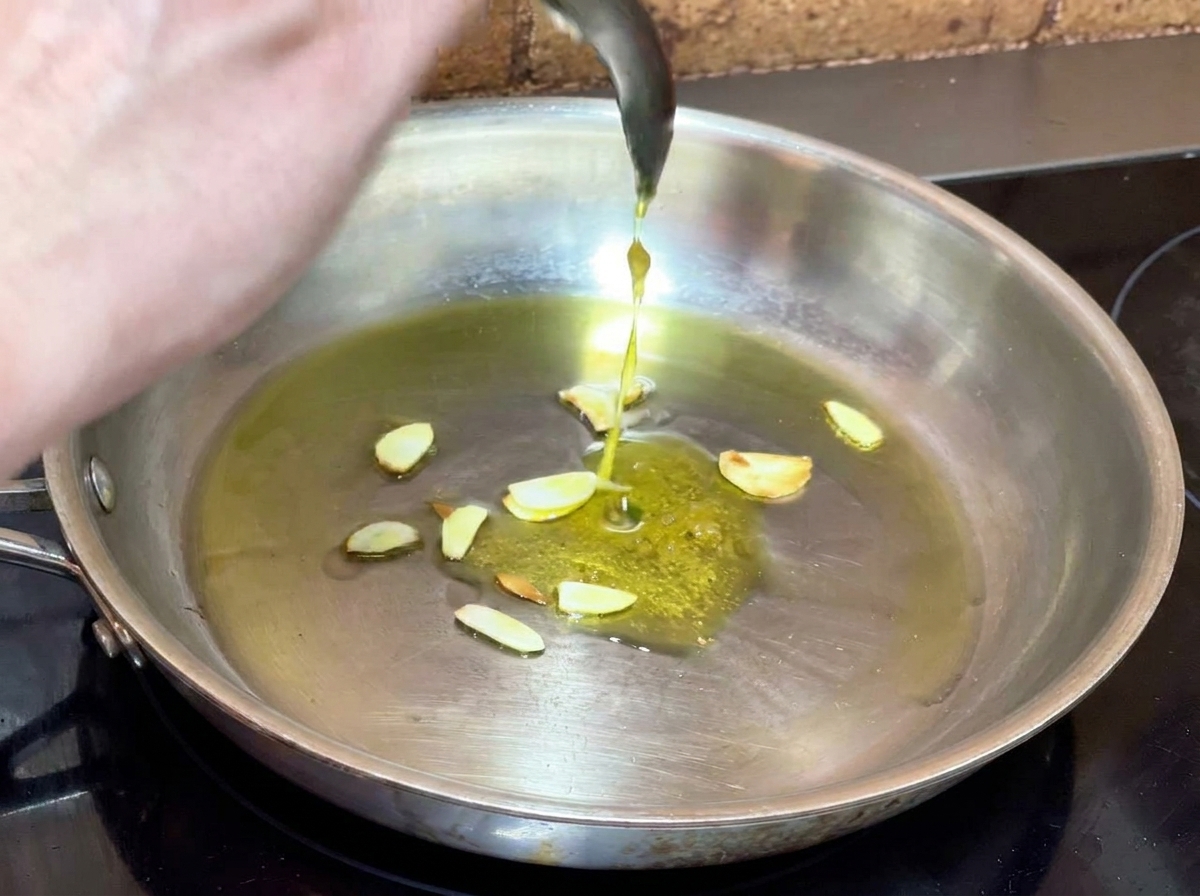
With the infused oil ready and the sliced garlic still in the pan, spoon in three spoonfuls of the freshly prepared garlic paste. Stir the paste into the oil to combine, creating a rich and deeply flavorful garlic base for the spaghetti.
Tip: The blended garlic paste adds a creamier texture and a stronger garlic punch than just sliced garlic alone. - 13Add Pasta Water
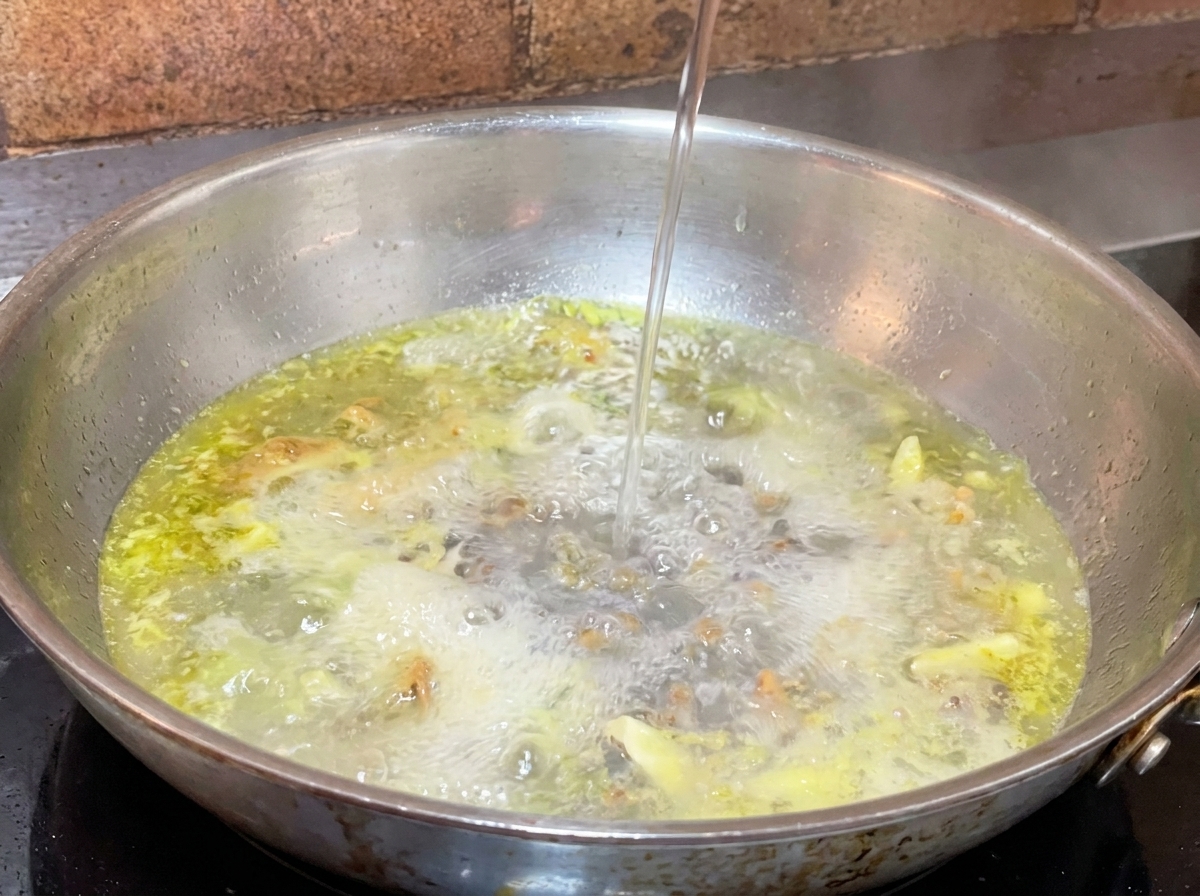
Pour a ladle of starchy pasta water into the pan with the aromatic garlic and oil. The liquid will immediately begin to boil vigorously as it hits the hot surface, which is the essential first step in creating a cohesive sauce.
Tip: The starchy pasta water is the secret ingredient; it acts as a binder to prevent the finished dish from becoming greasy. - 14Emulsify the Sauce
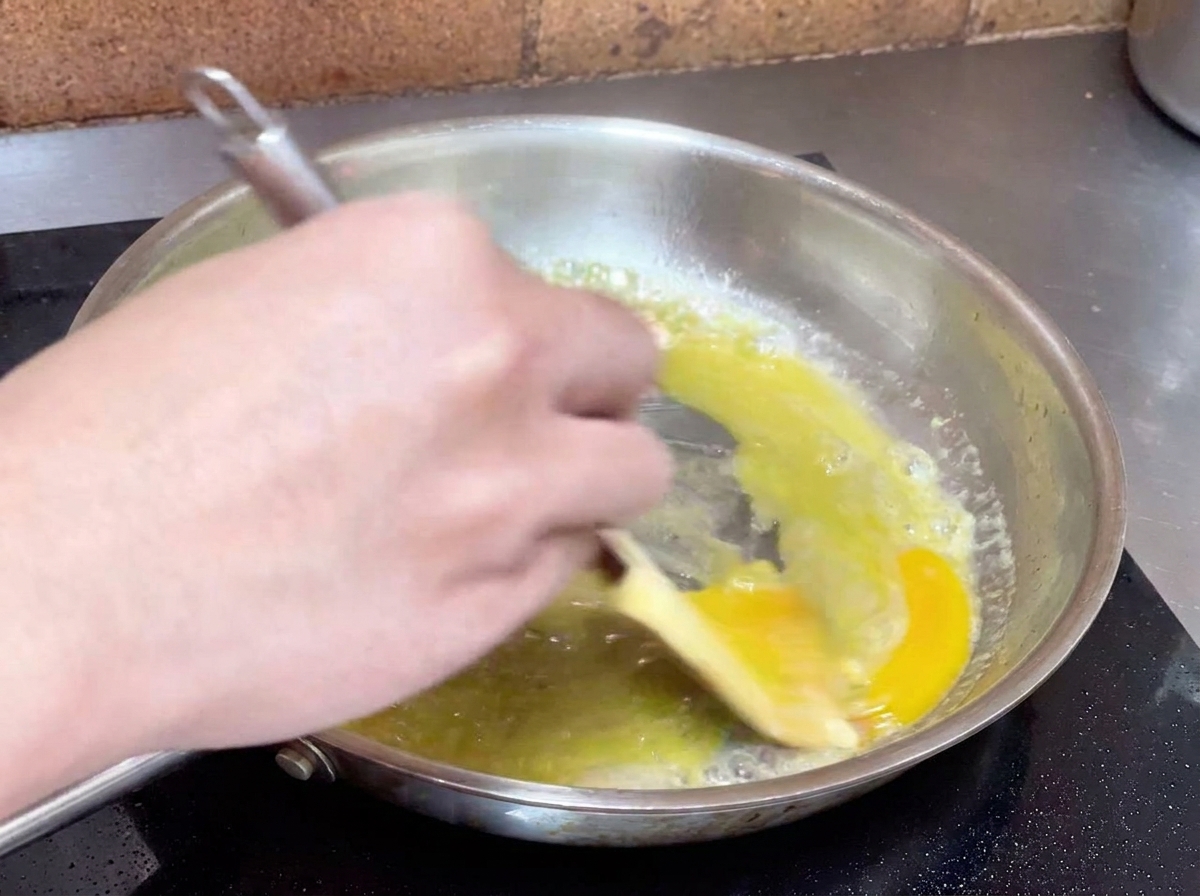
Vigorously stir the oil and water mixture in the pan. The starch from the pasta water will combine with the rich olive oil to create an opaque, glossy, and beautifully emulsified sauce.
Tip: Keep the heat moderate and maintain constant movement with your spatula to encourage the emulsion to form smoothly without breaking. - 15Add the Spaghetti
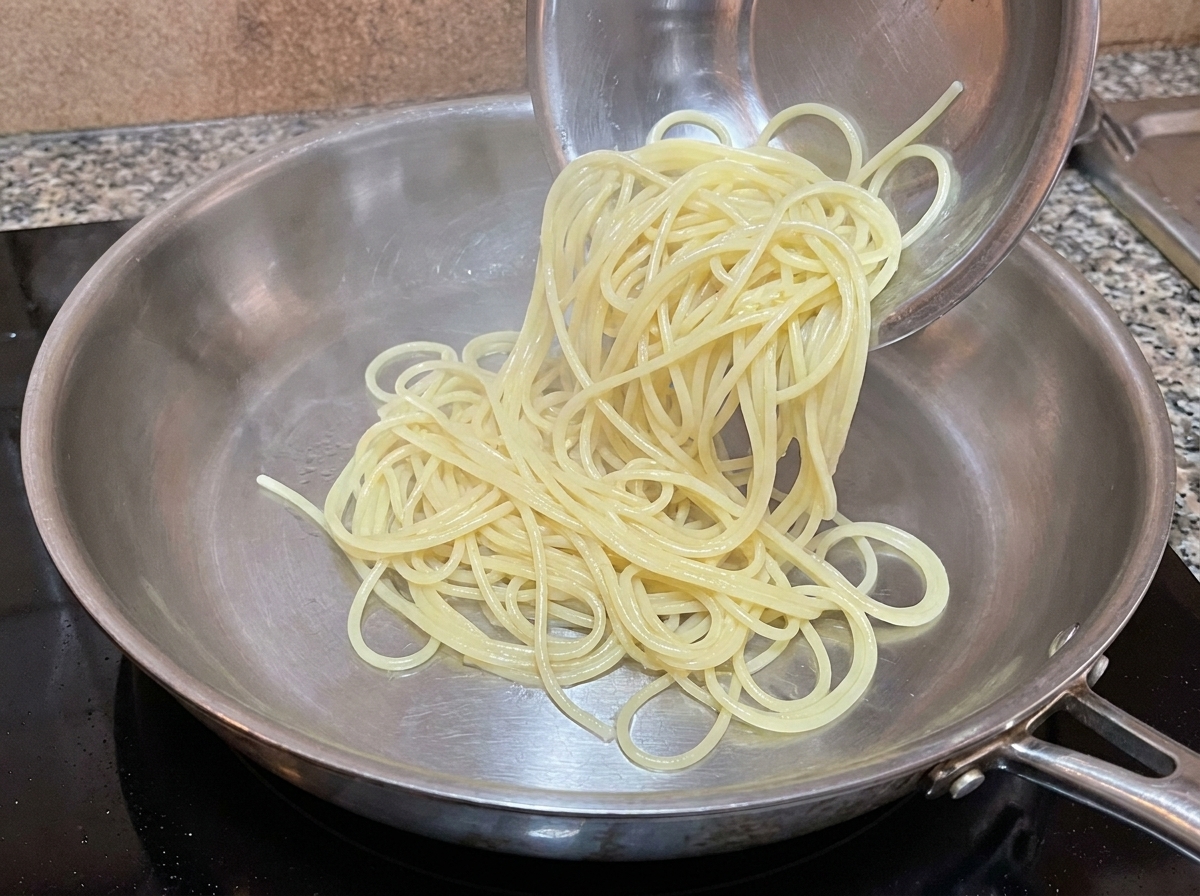
Transfer the cooked spaghetti directly into the pan containing your newly emulsified sauce. It is perfectly fine if the noodles are still a little wet, as the residual moisture will further contribute to the final sauce texture.
Tip: Use tongs to transfer the pasta directly from the pot to the pan. This carries over the perfect amount of starchy water to maintain the sauces emulsion. - 16Toss and Coat
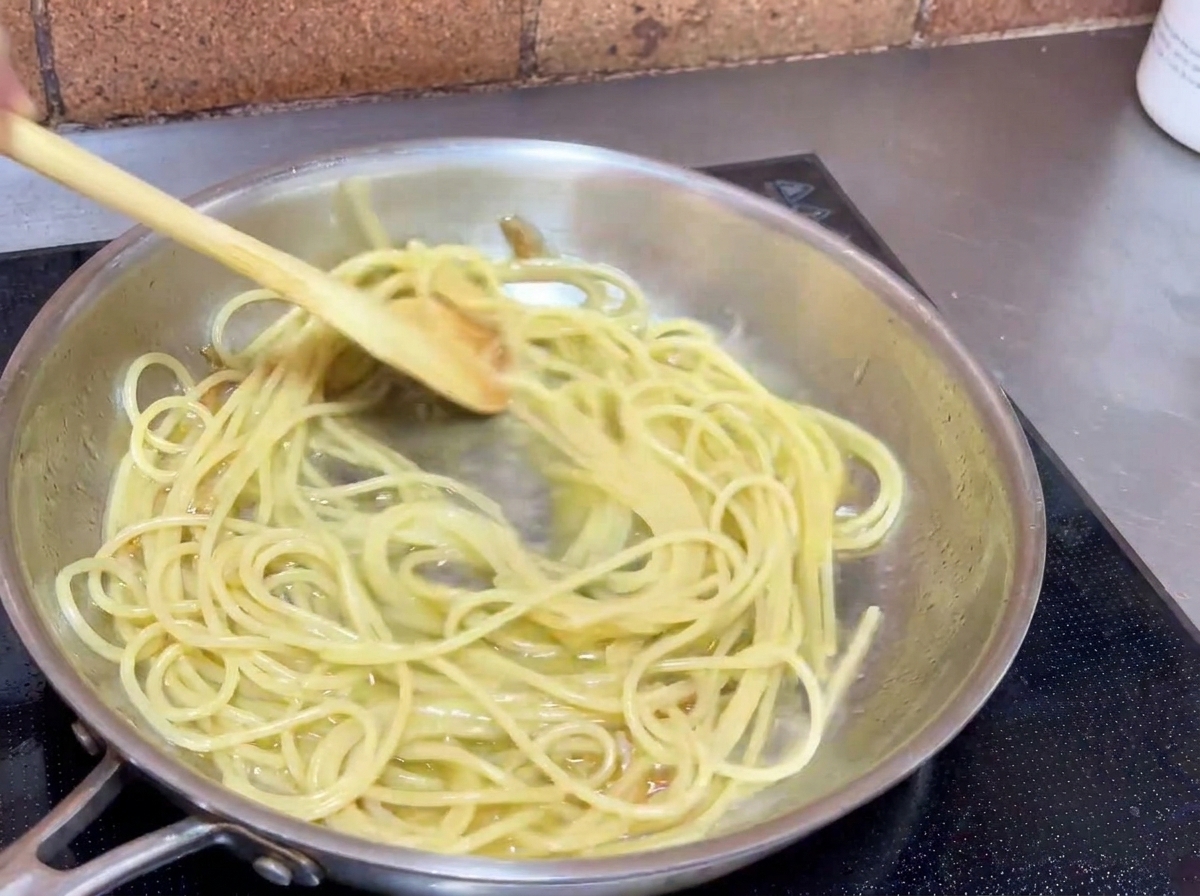
Toss and stir the spaghetti continuously to ensure every single strand is evenly coated in the rich, glossy sauce. Let everything simmer together briefly so the sauce reduces slightly and clings tightly to the pasta.
Tip: If the pasta appears too dry or sticky while you are tossing it, simply add another small splash of reserved pasta water.