Classic Spaghetti Aglio e Olio
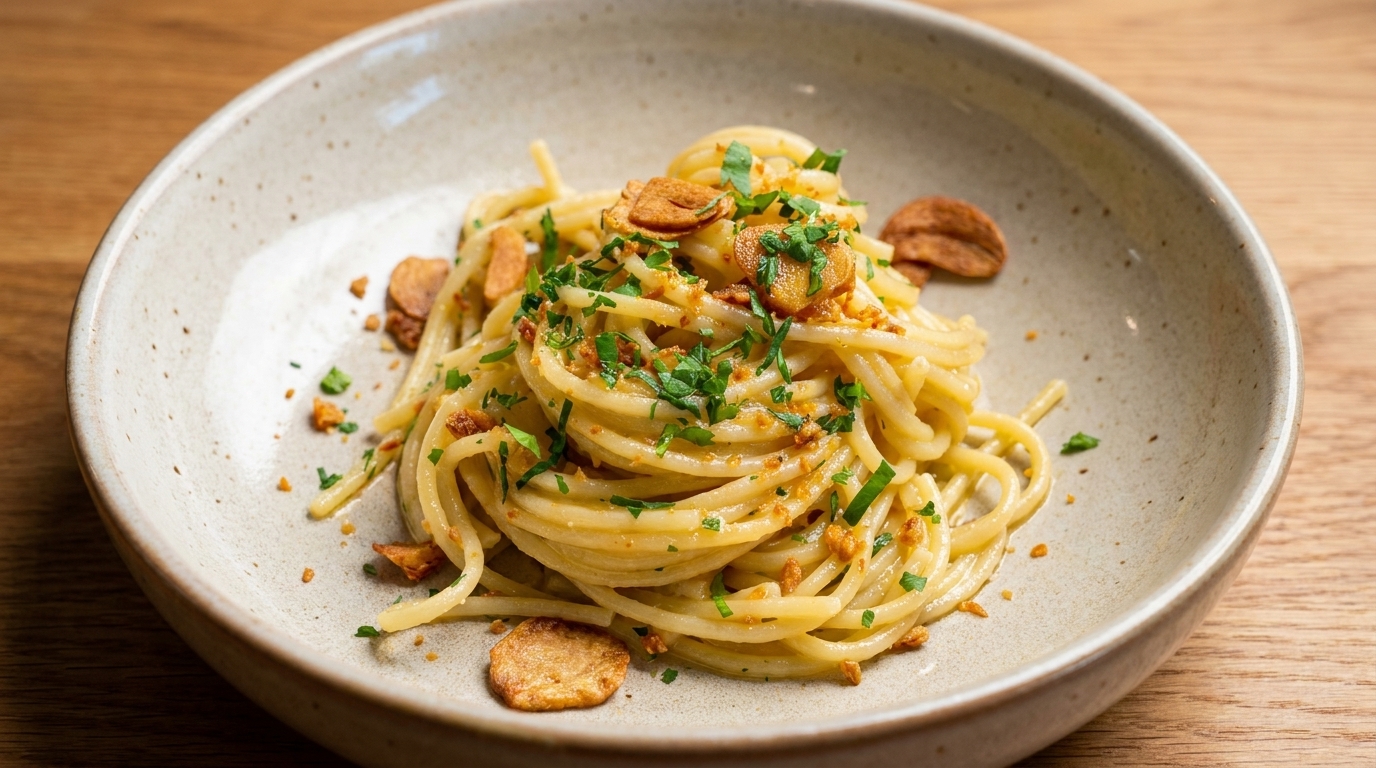
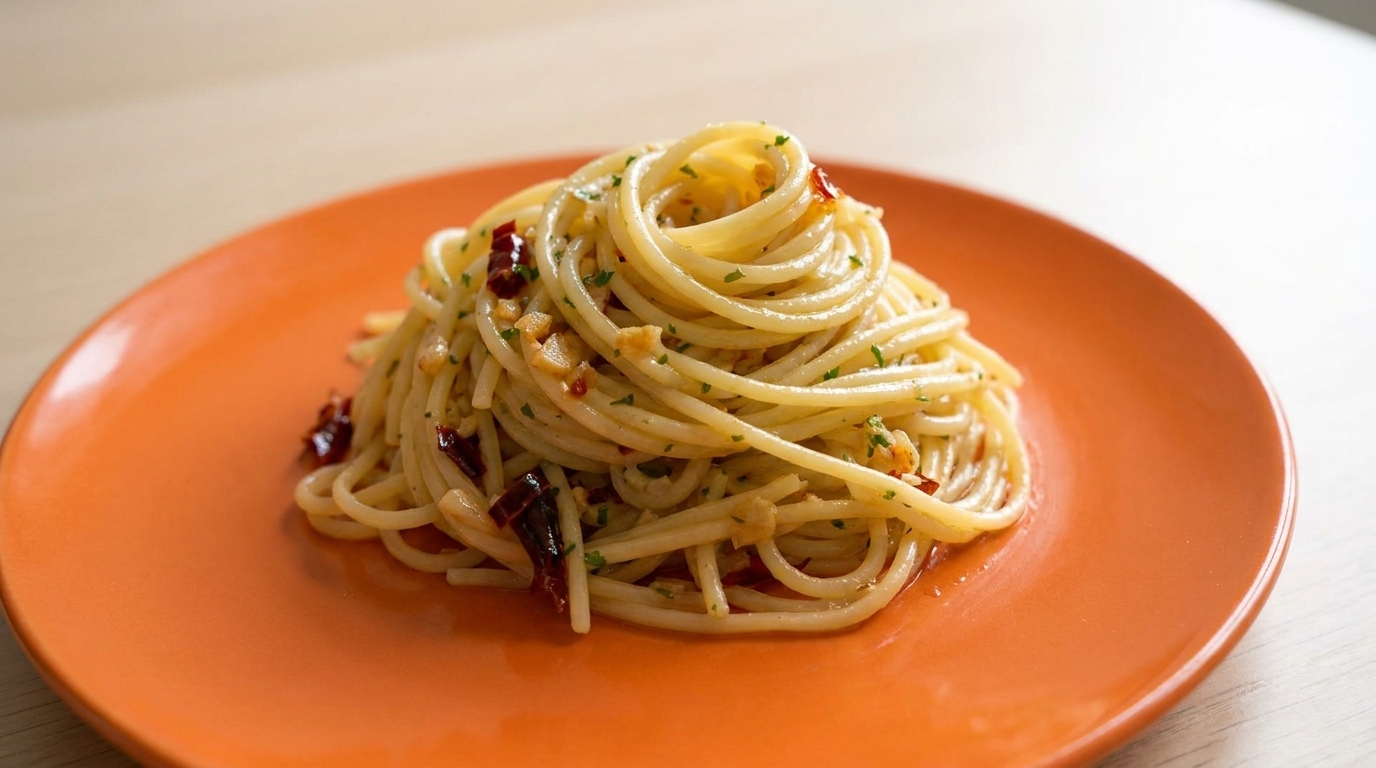
A classic Italian pasta made with just a handful of ingredients. Thinly sliced garlic, olive oil, and starchy pasta water create a rich, emulsified sauce.
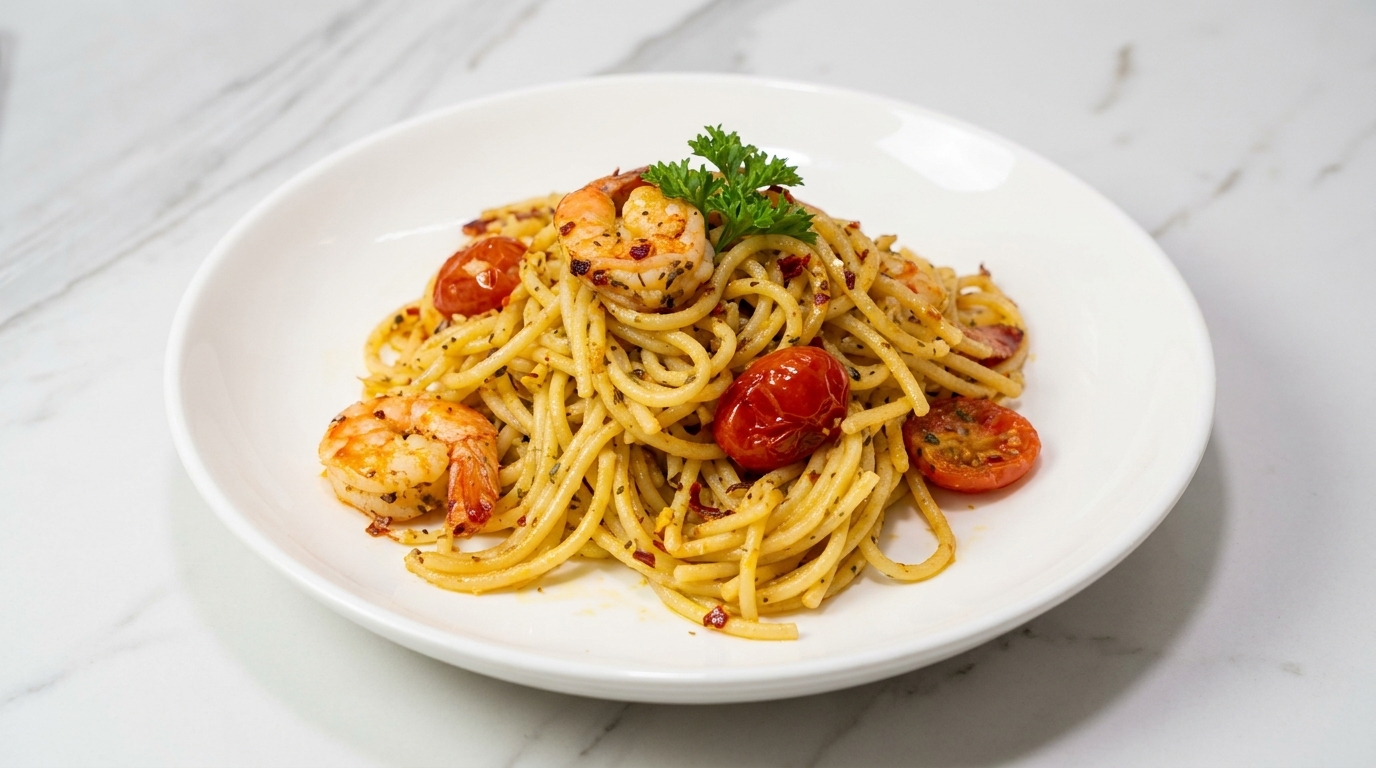
Spaghetti aglio e olio, meaning garlic and oil, is the ultimate late-night Italian comfort food, affectionately known as spaghetti di mezzanotte. It relies on a foundational culinary technique: using starchy pasta water to emulsify olive oil into a creamy, luxurious sauce. Mastering this humble, fiery dish unlocks the secret to countless other classic pastas, from linguine with clams to shrimp scampi.
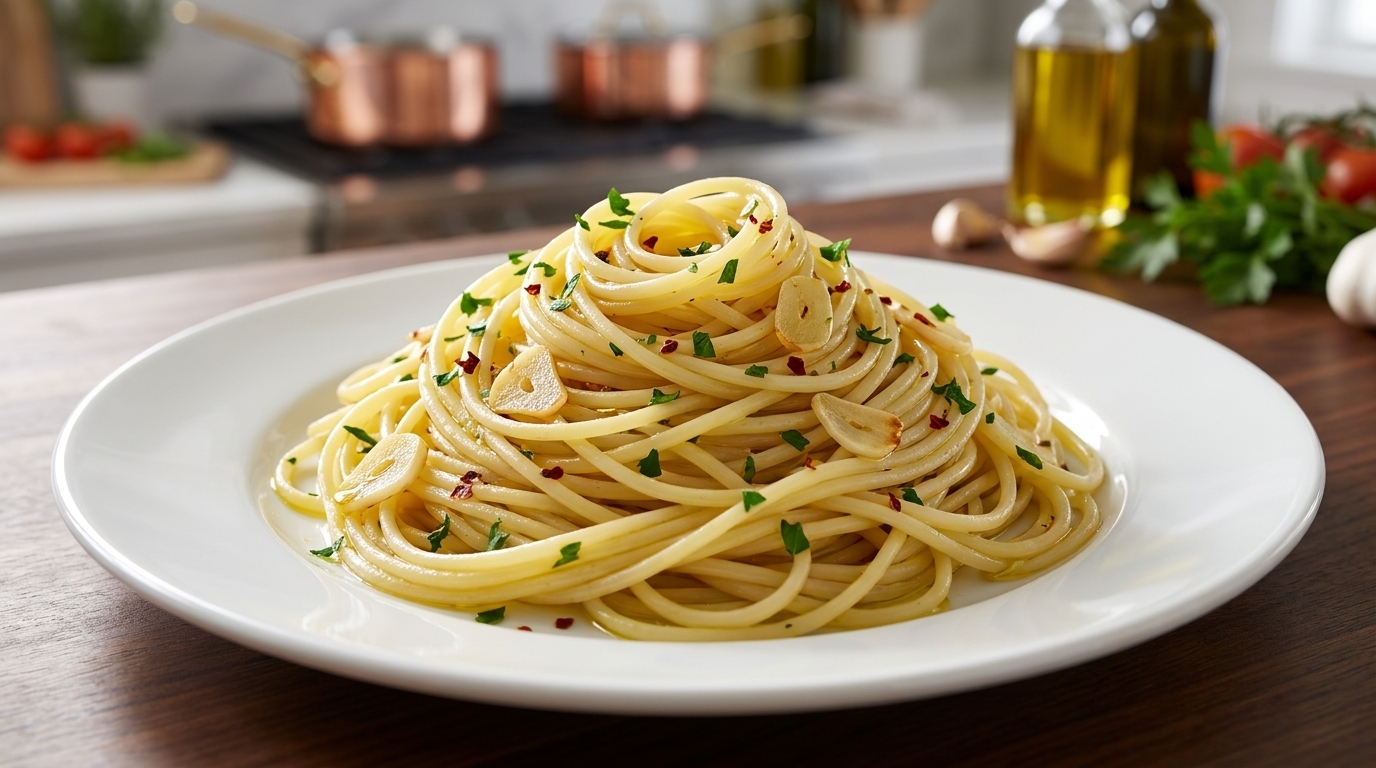
Ingredients
- 1 lb dry spaghetti
- 6–8 cloves garlic
- 12 cup extra virgin olive oil
- 1 tsp crushed red pepper flakes
- 12 cup fresh parsley
- to taste kosher salt
Instructions
- 1Boil the pasta
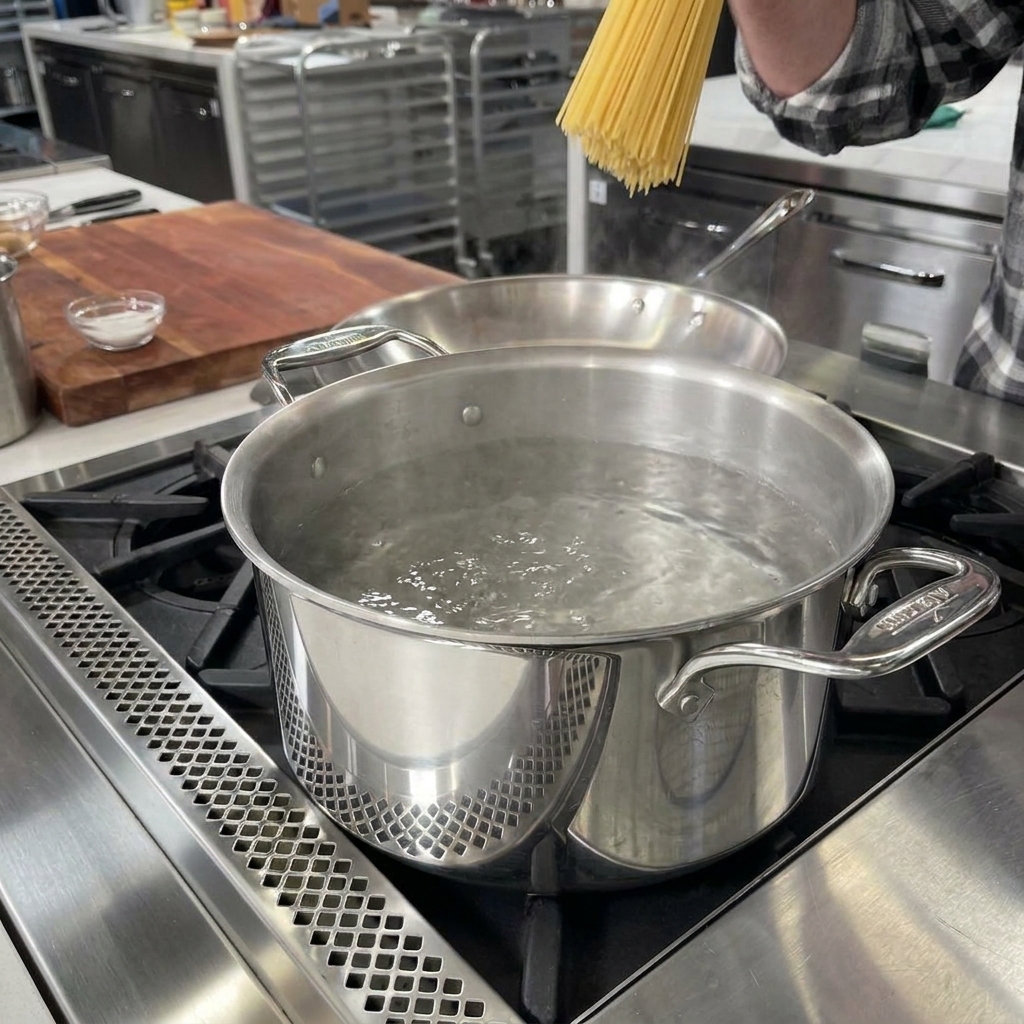
Bring a large pot of salted water to a rolling boil and add a pound of dry spaghetti. Cook the pasta for about eight minutes, or until just shy of al dente. The pasta will finish cooking later in the pan with the sauce.
Tip: Make sure your pasta water is well-salted like the sea; this is your only chance to season the pasta itself. - 2Slice the garlic
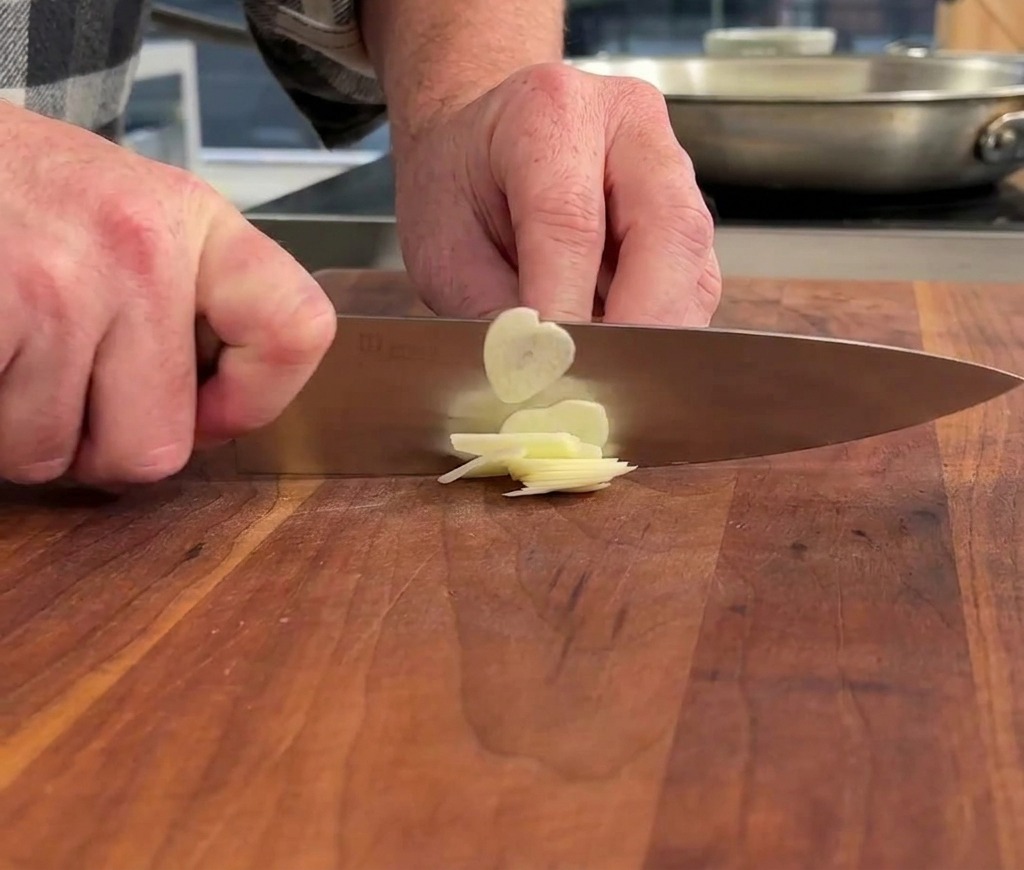
Using a sharp chefs knife, slice the raw garlic cloves as thinly as possible on a wooden cutting board. Slicing the garlic thinly allows it to melt into the olive oil, infusing it with flavor without burning too quickly.
Tip: Take your time and slice it Goodfellas style—the thinner the garlic, the more flavor it releases into the oil. - 3Add garlic to the oil
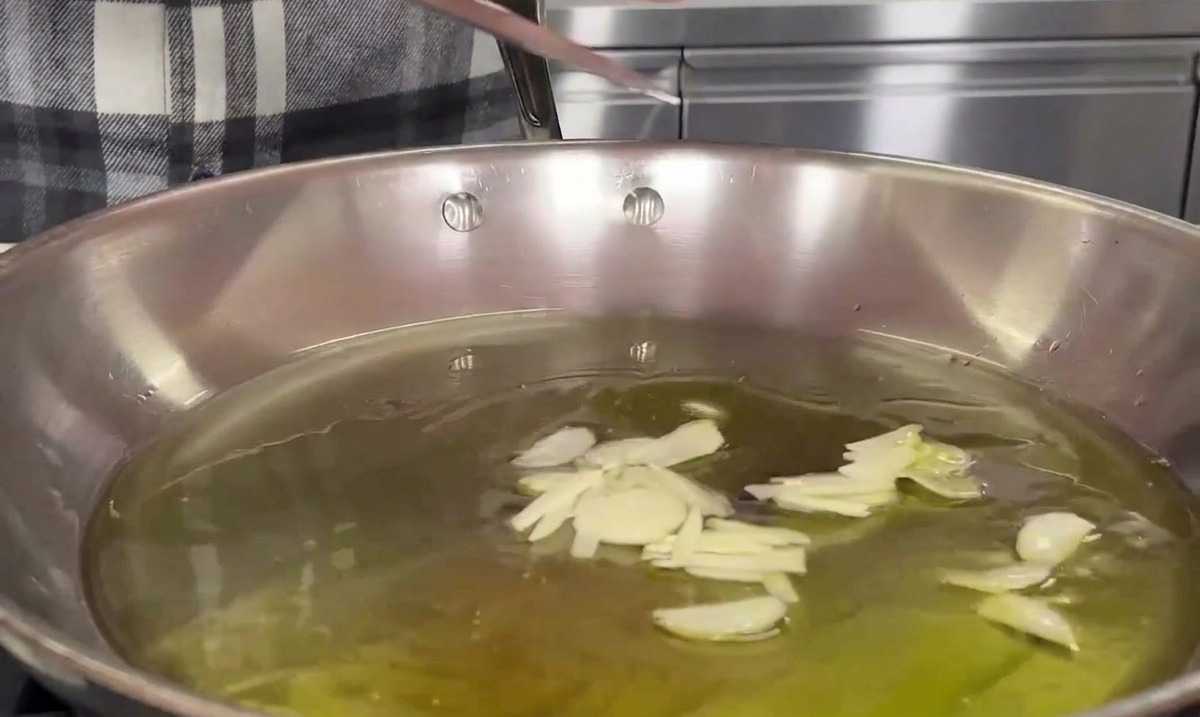
Place a wide pan over gentle heat and pour in plenty of extra virgin olive oil. Carefully drop the thinly sliced garlic into the warm oil. Heating them together slowly ensures the garlic infuses the oil evenly without crisping up or burning right away.
Tip: Always start garlic in a cold or warm pan, never screaming hot. This builds a deep, nutty flavor instead of a bitter one. - 4Season with red pepper flakes
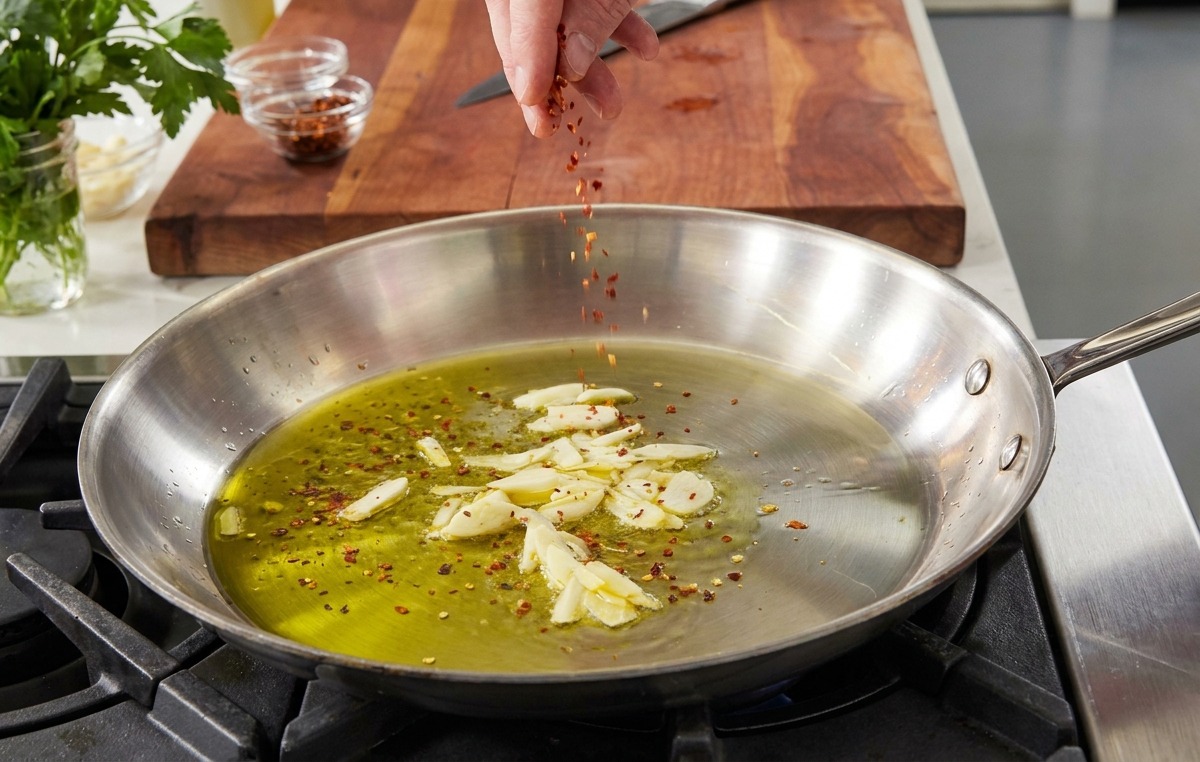
While the garlic is slowly warming in the olive oil, sprinkle in a generous amount of crushed red pepper flakes. The heat of the oil will bloom the spices, releasing their fiery flavor and integrating it smoothly into the base of the sauce.
Tip: Adjust the amount of crushed red pepper to your preference. If you like it spicy, add a little extra while the oil is still warming. - 5Start the emulsion
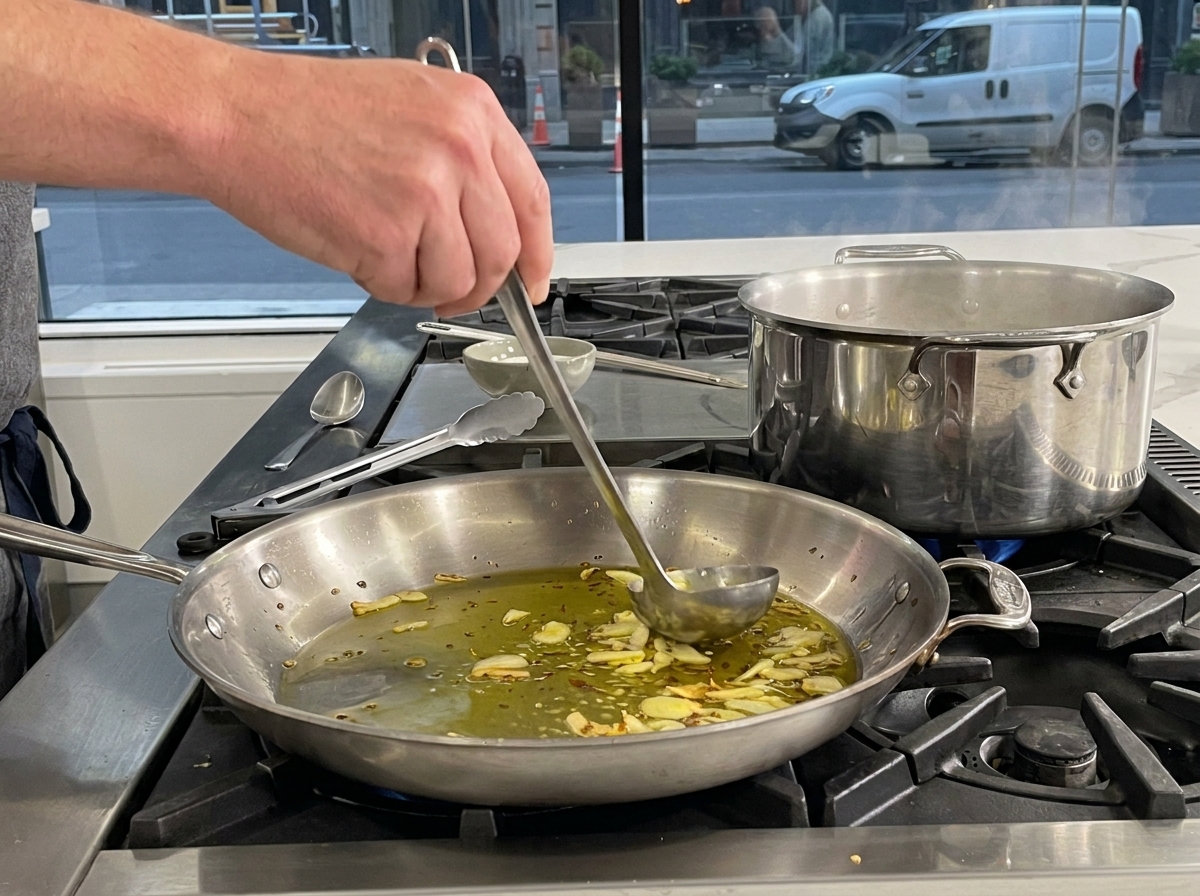
Once the sliced garlic begins to turn a light, nutty brown, carefully ladle some of the starchy pasta cooking water directly into the pan with the extra virgin olive oil. This stops the garlic from overcooking and creates the base for the sauce.
Tip: Dont let the garlic get too dark or it will turn bitter. Adding the water immediately halts the cooking process. - 6Remove the pasta
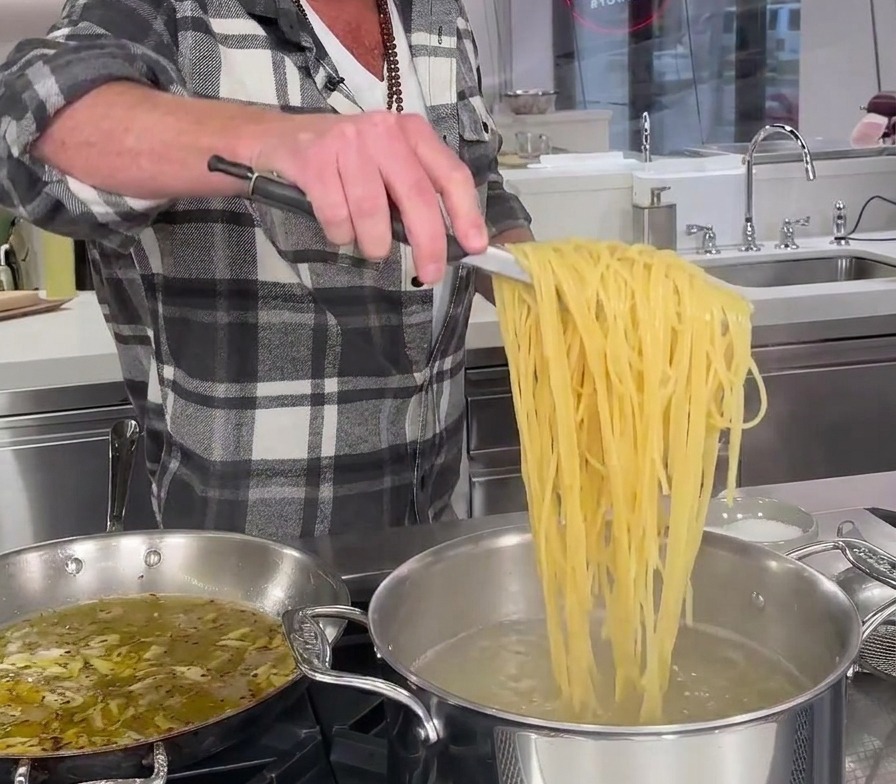
When the pasta is about six minutes in and still quite firm, use metal tongs to lift the spaghetti straight out of the boiling water. Pulling it directly from the pot ensures extra starchy water clings to the noodles, which helps build a cohesive sauce.
Tip: Avoid draining the pasta in a colander so you can reserve the precious pasta water for adjusting the sauce later. - 7Transfer to the pan
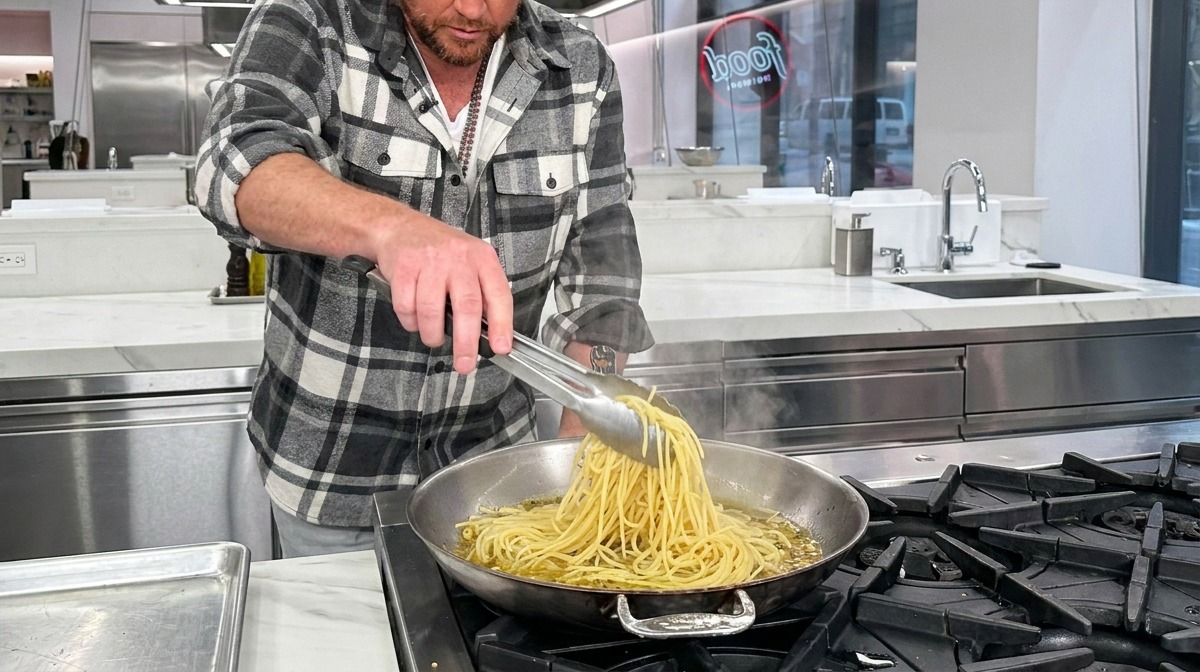
Drop the partially cooked spaghetti directly into the hot pan with the garlic, olive oil, and pasta water. Keep the heat on high so the pasta can finish its last two minutes of cooking by rapidly absorbing the flavorful liquid.
Tip: Cooking the pasta in the pan with high heat helps forcefully emulsify the oil and water together into a creamy consistency. - 8Stir the pasta in the sauce
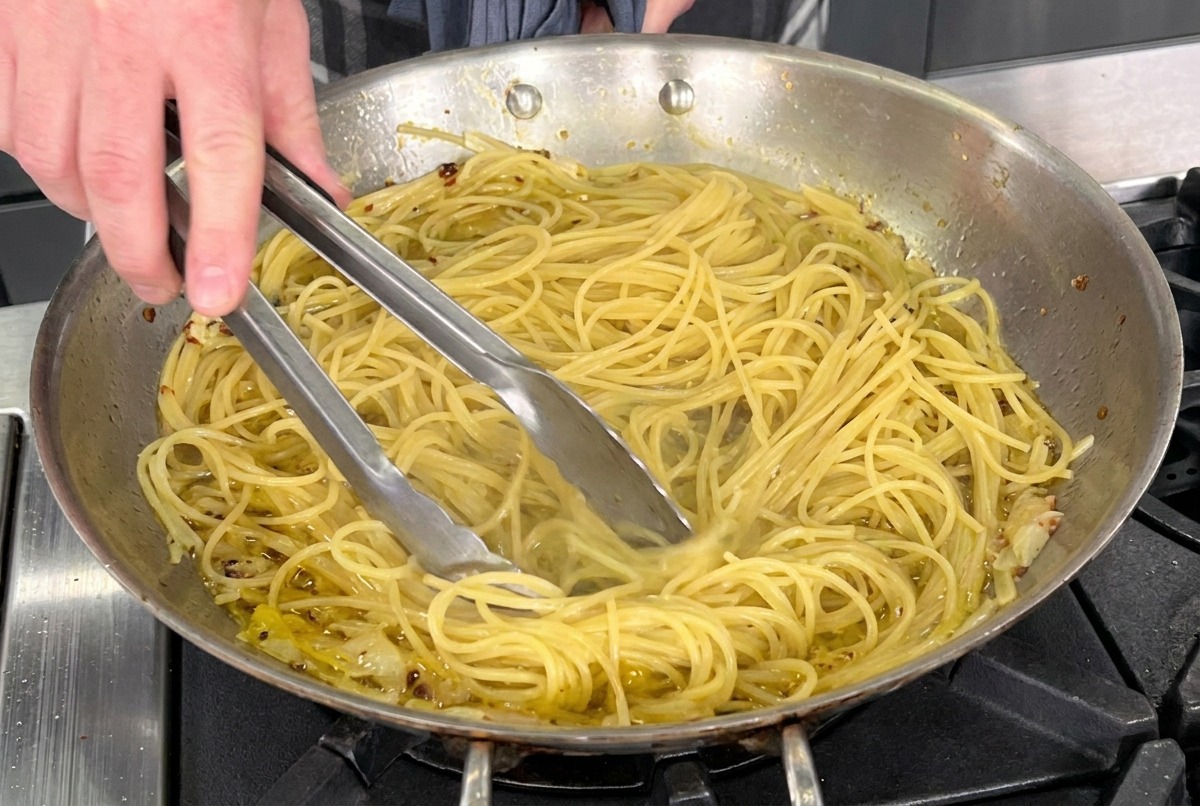
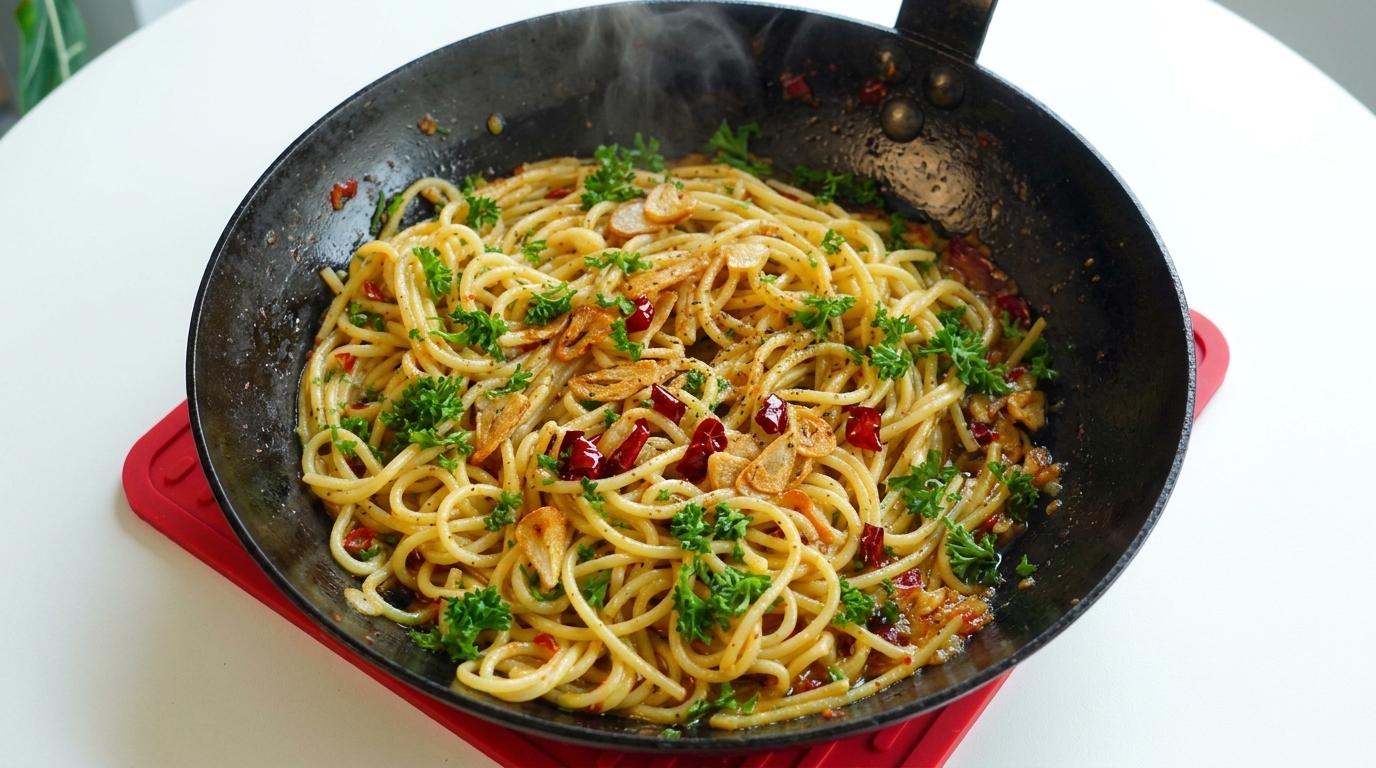
Toss the spaghetti in the pan continuously using tongs. As you mix, allow the pasta to absorb the garlic and chili-infused olive oil to build the foundation of the sauce.
Tip: Keep the pasta moving. The vigorous stirring releases starches from the spaghetti, helping the oil and pasta water emulsify into a creamy, cohesive coating. - 9Adjust the sauce consistency
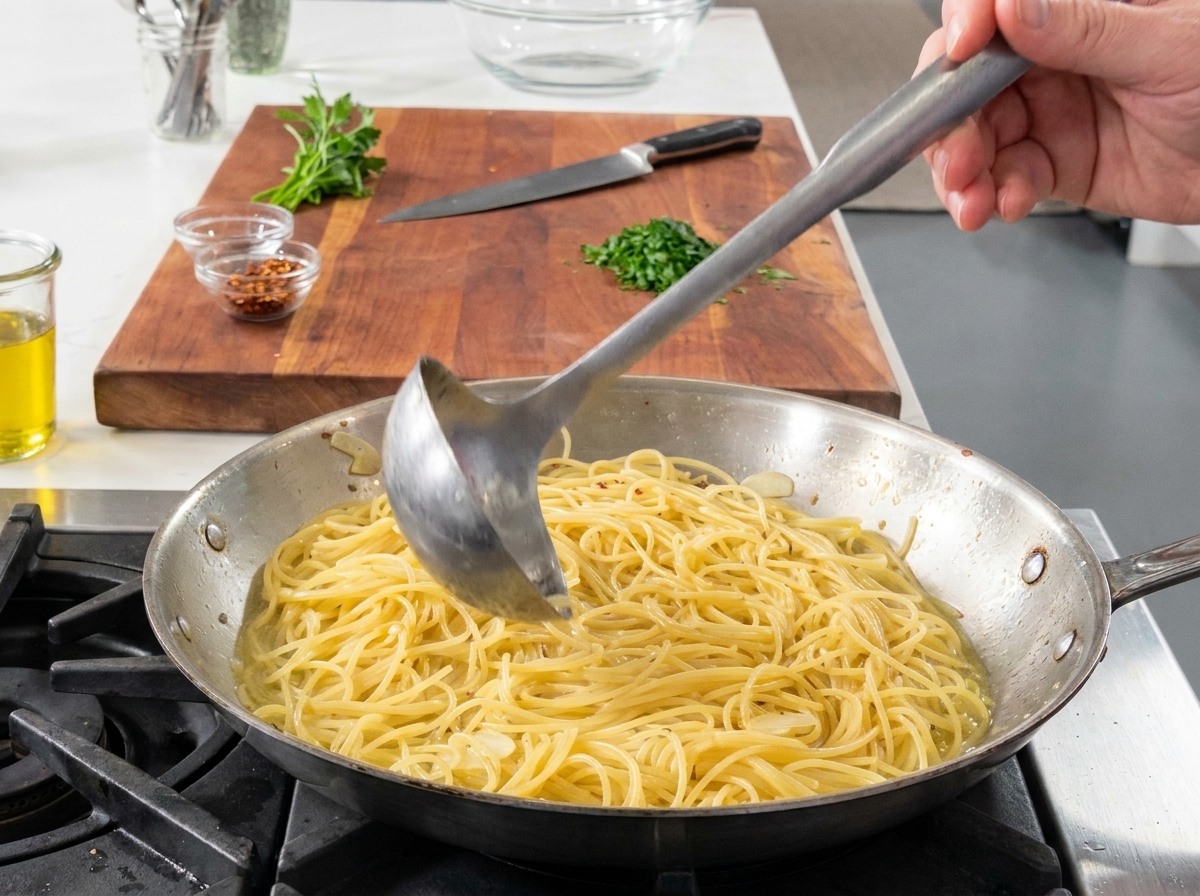
As the pasta vigorously cooks in the pan, it will release more starch and thicken the sauce. If the pan starts to look too dry, add another splash of the reserved pasta water to ensure there is enough liquid to keep the sauce loose and glossy.
Tip: Keep tossing and moving the pasta vigorously to encourage the starch to release and bind the oil and water together. - 10Garnish with parsley
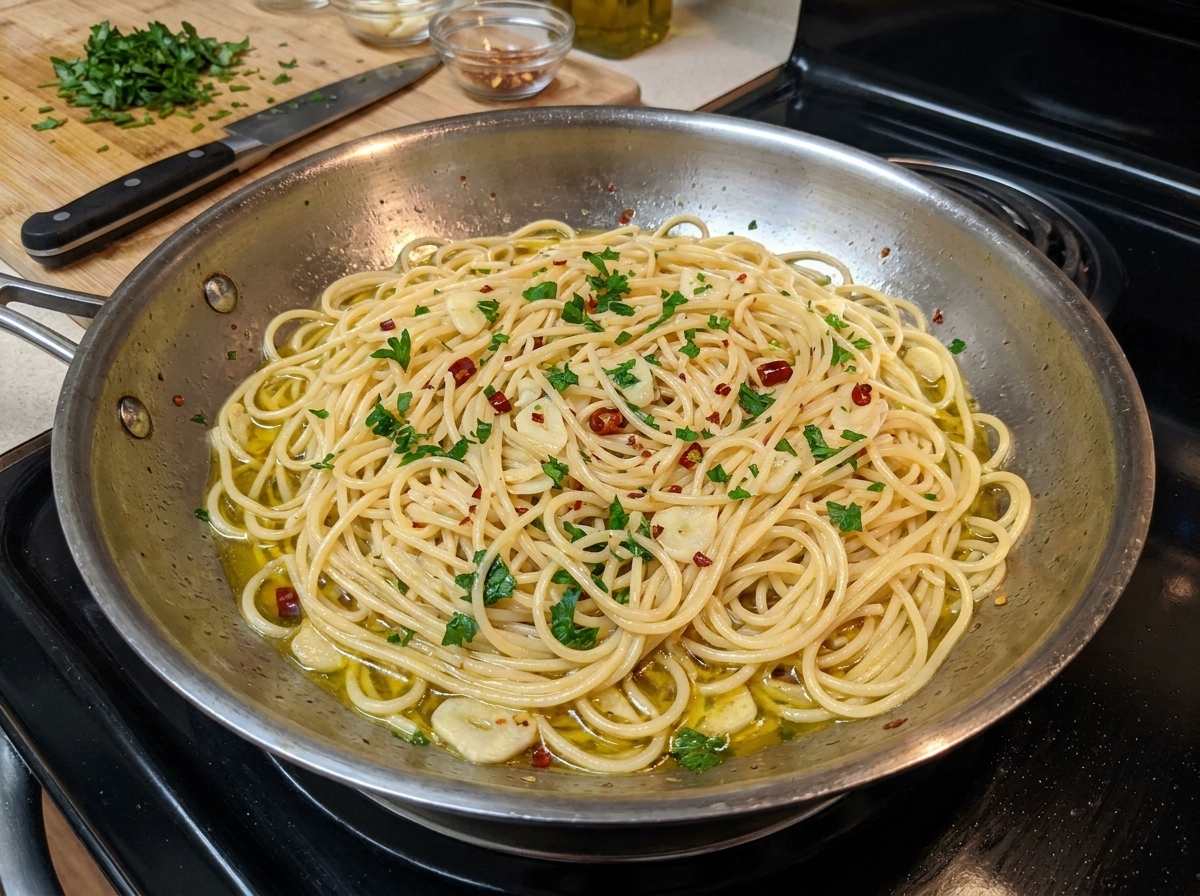
Sprinkle an even layer of freshly chopped green parsley over the cooked spaghetti. This adds a pop of bright color and a fresh, herbaceous note to balance the rich olive oil.
Tip: Chop the parsley just before adding it to the pan to ensure it retains its brightest color and maximum aromatic flavor. - 11Incorporate the parsley
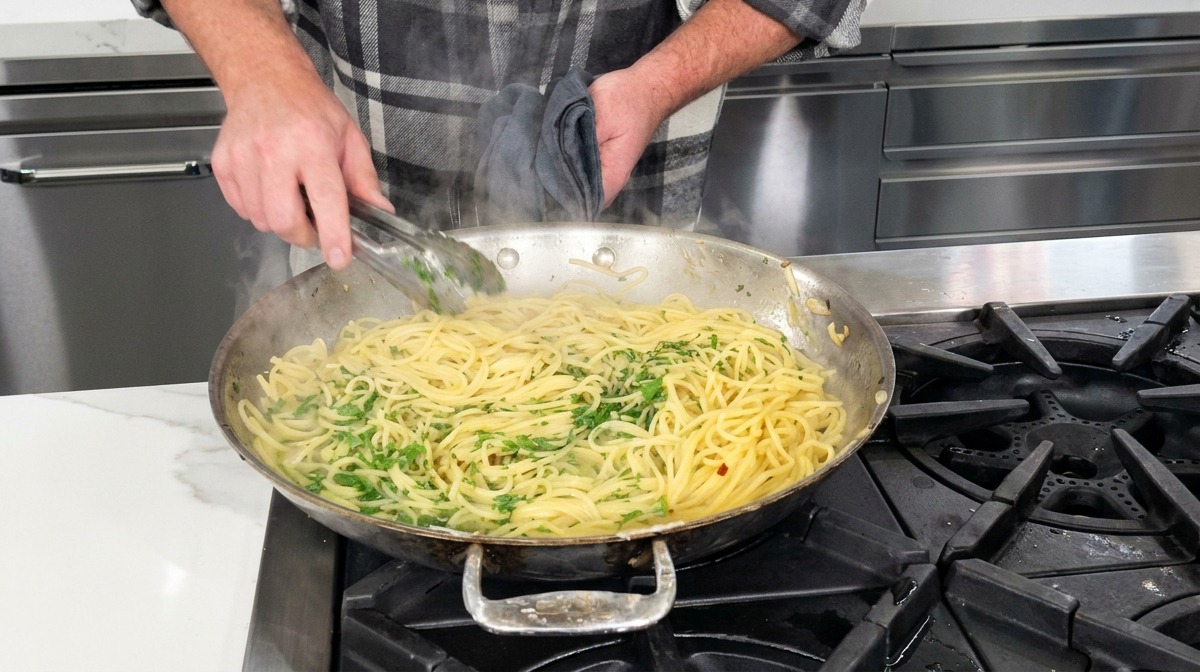
Vigorously toss the spaghetti one final time to thoroughly fold the fresh parsley into the dish. Ensure the herbs are evenly distributed throughout the pasta before plating.
Tip: Adding the parsley at the very end ensures the residual heat gently wilts the herb without turning it bitter or losing its vibrant green color.