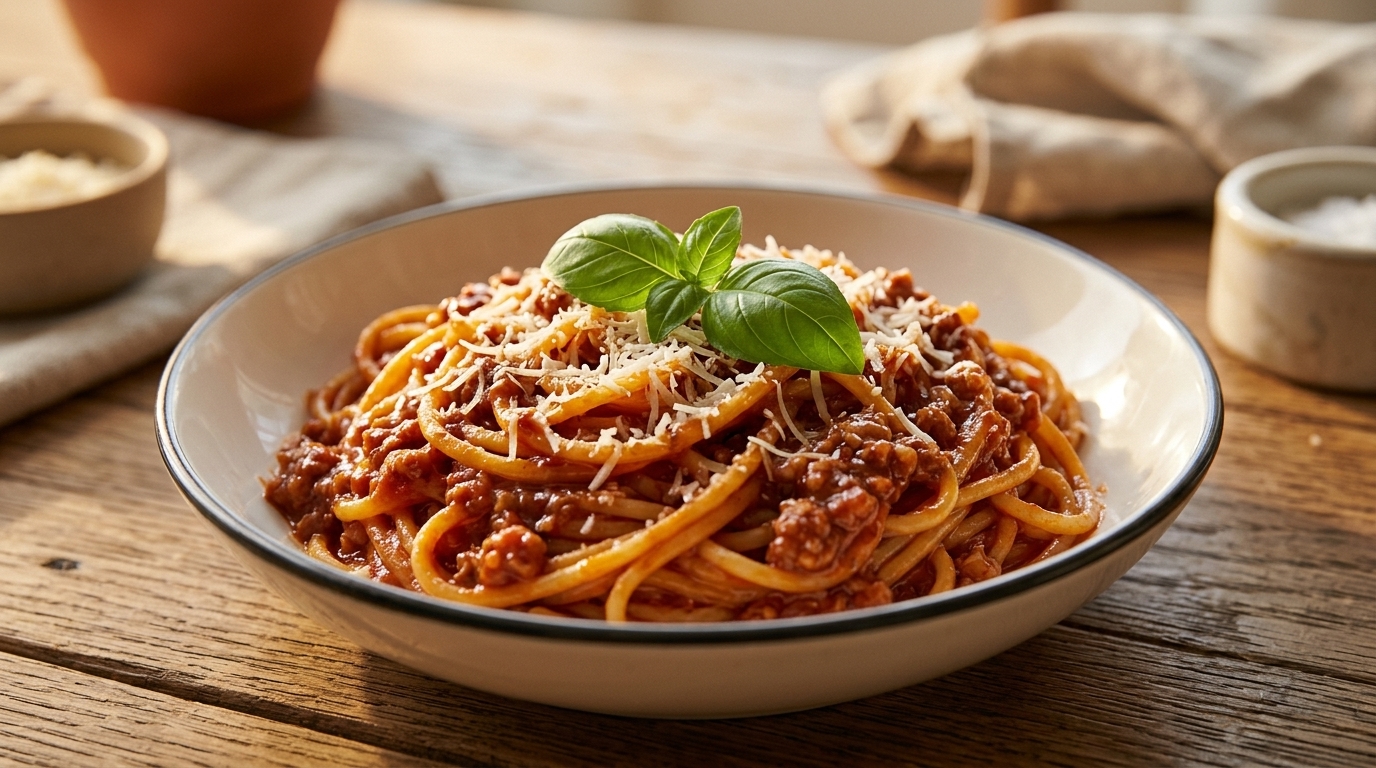
Authentic Italian Ragu Bolognese
Master the art of authentic Italian Ragu Bolognese with this deeply savory, slow-simmered meat sauce. Featuring a rich blend of beef, pork, and red wine, it's the ultimate comfort food.
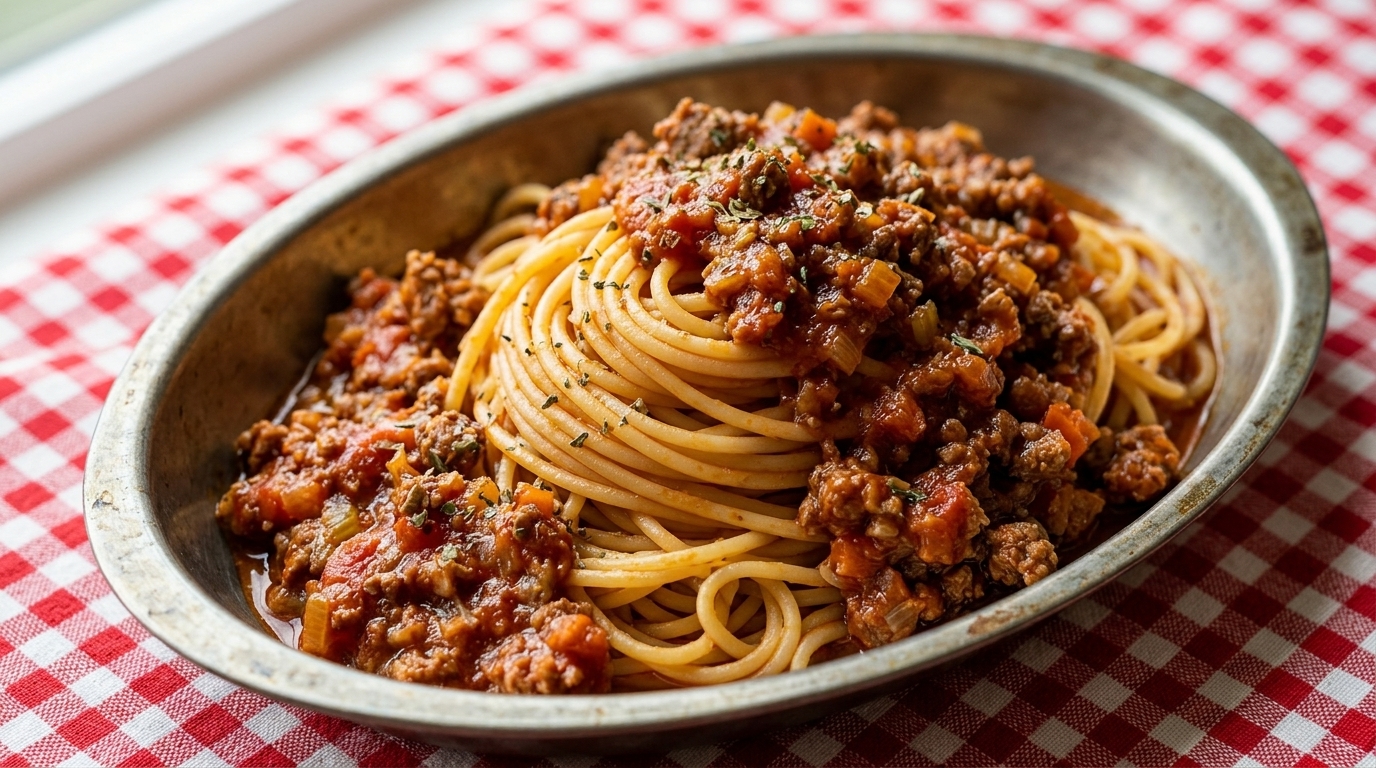
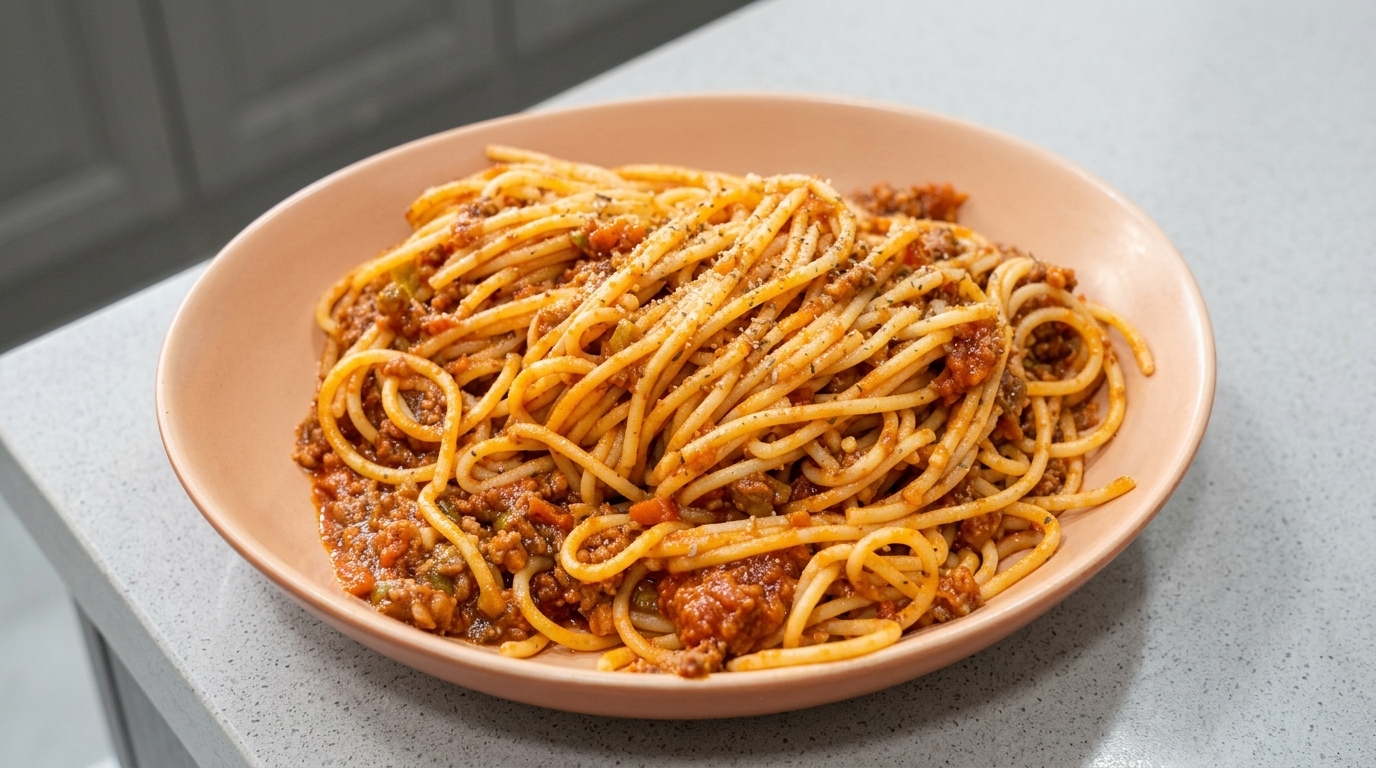
Originating in Bologna, Italy, bolognese is arguably the most globally beloved pasta sauce and a cornerstone of Mediterranean cuisine. This traditional recipe honors the authentic method, building profound depth through a classic soffritto, a blend of beef and pork, and a patient, slow simmer.
Ingredients
- 3-4 cloves garlic
- 1 medium white onion
- 1 medium carrot
- 1 stalk celery
- 250 g ground beef
- 250 g ground pork
- 1 tbsp cooking oil
- 1 tbsp butter
- 20 g tomato paste
- 400 g canned diced tomatoes
- 150 ml dry red wine
- 2 whole bay leaves
- to taste salt
- to taste black pepper
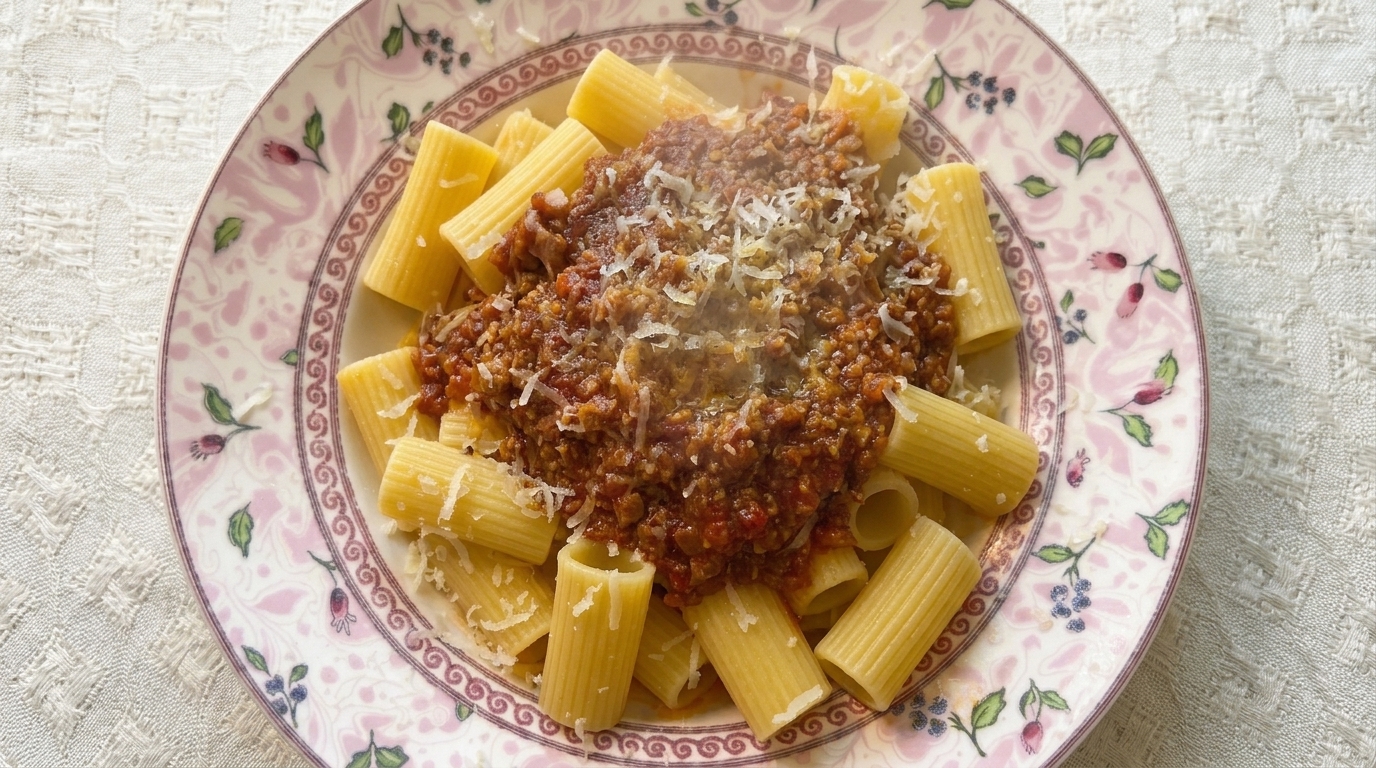
- to serve rigatoni or preferred pasta
- to taste Parmesan cheese
Instructions
- 1Mince the garlic
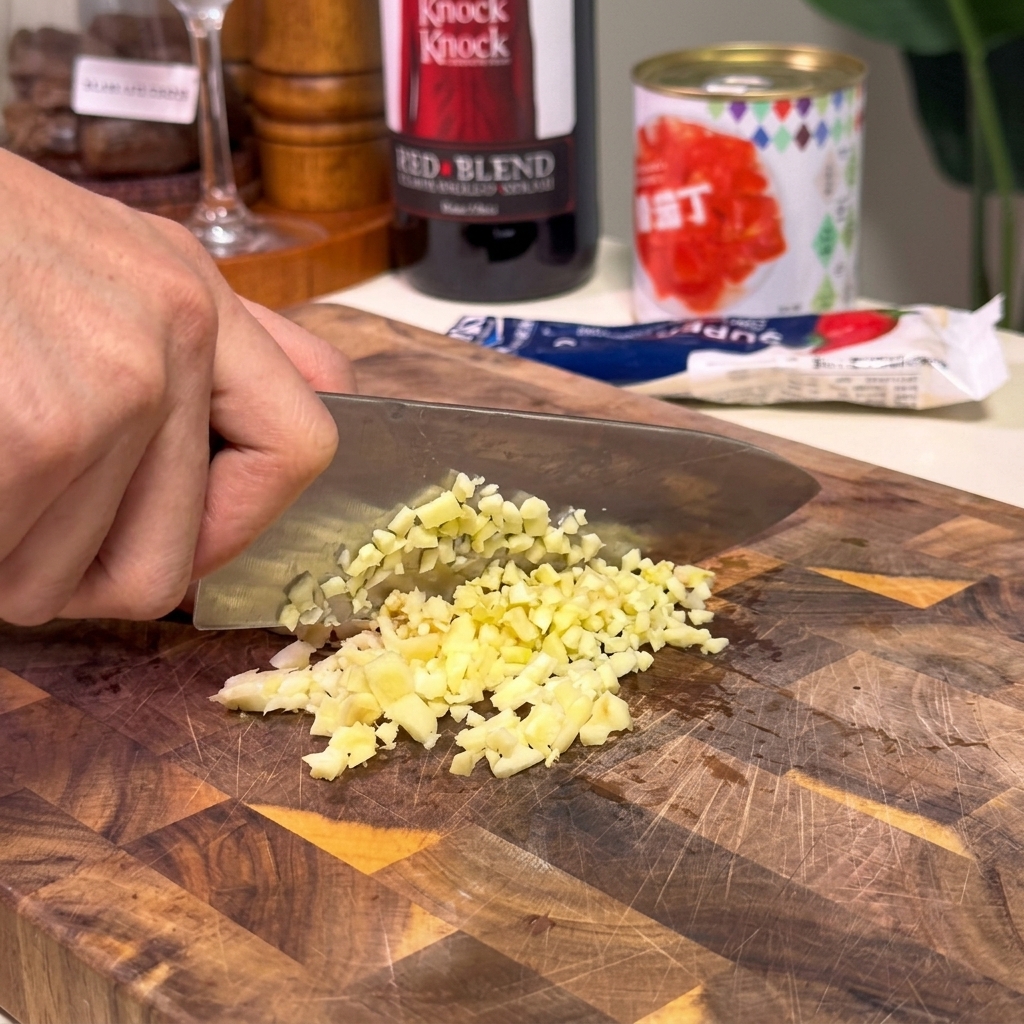
Start by preparing your aromatics. Peel the fresh garlic cloves and finely mince them using a sharp chefs knife on a sturdy wooden cutting board. A fine mince ensures the garlic distributes evenly throughout the sauce, releasing its essential oils without leaving large, harsh bites.
Tip: Smashing the garlic cloves with the flat side of your knife before chopping makes peeling the skins off much easier. - 2Dice the onion
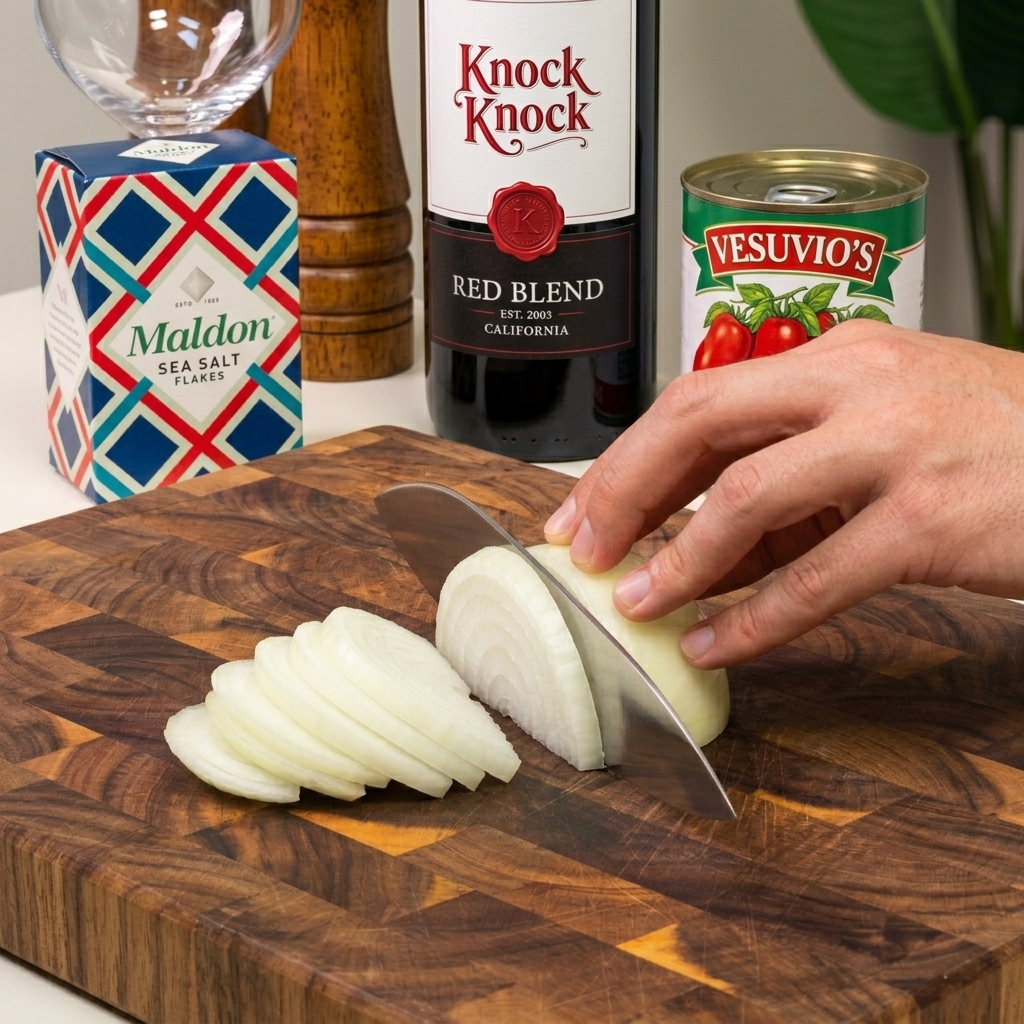
Peel and finely dice the white onion on a cutting board. Ensure the pieces are roughly uniform in size so they cook evenly and eventually melt into the rich sauce.
Tip: Keep the root end of the onion intact while slicing to hold the layers together and make dicing much easier. - 3Dice the carrots
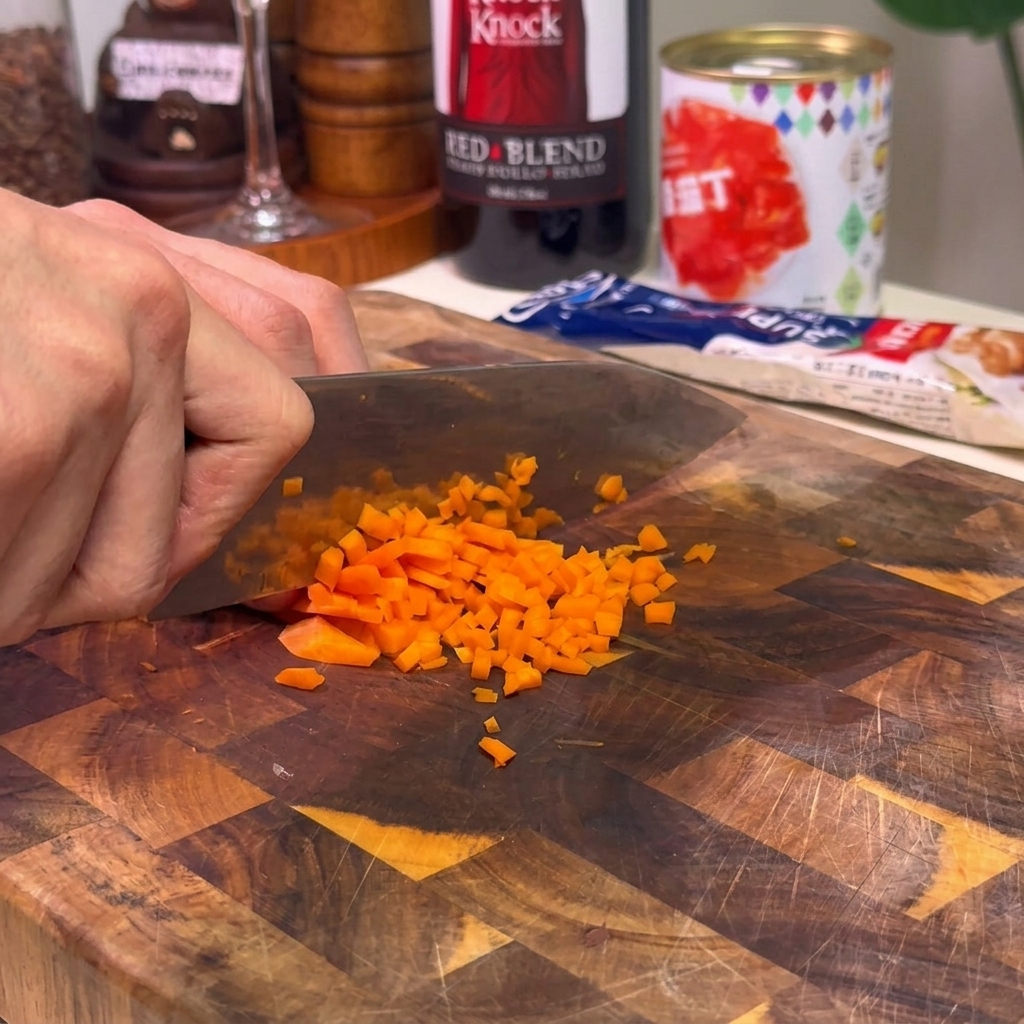
Peel the carrots and finely dice them into small pieces. Carrots add a natural sweetness to the base of the bolognese, which perfectly balances the acidity of the tomatoes added later.
Tip: Aim for a fine dice similar in size to the onions to maintain a consistent texture in your soffritto. - 4Chop the celery
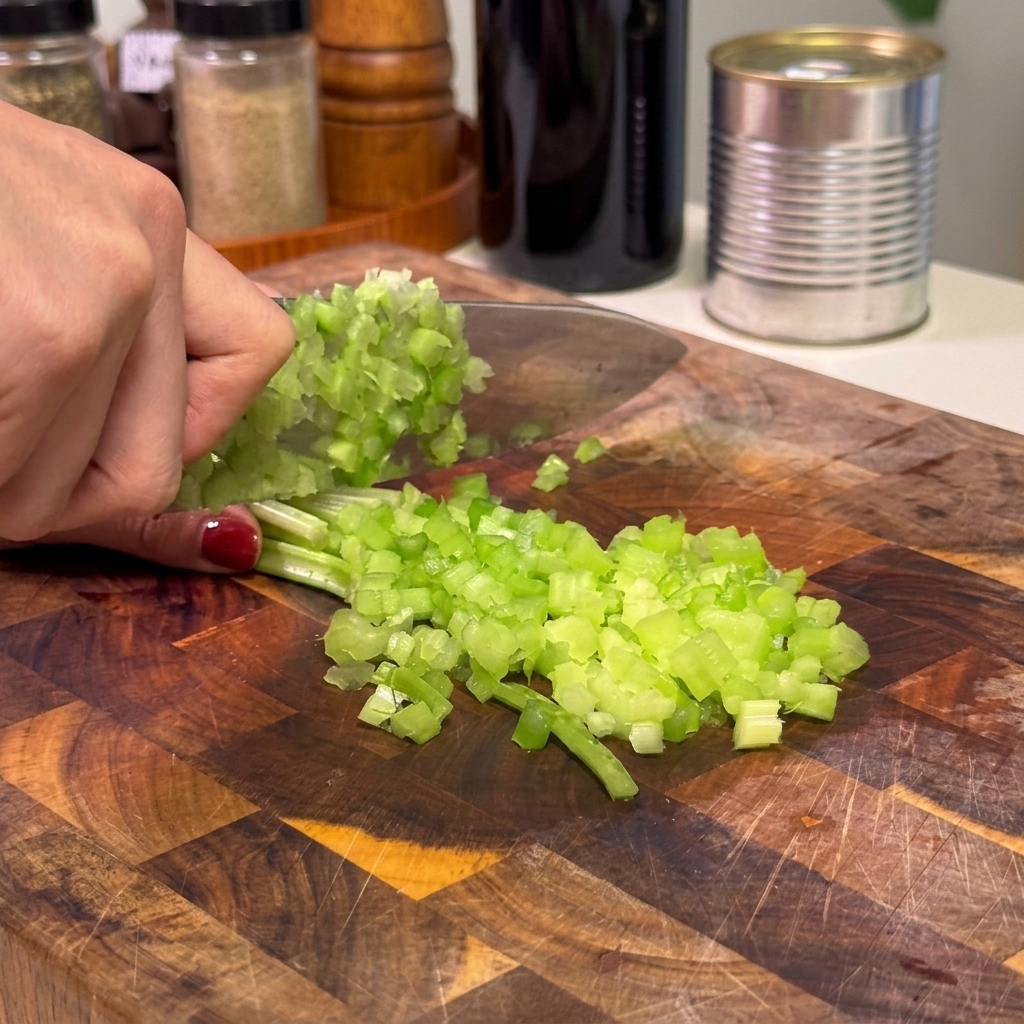
Trim the ends off the celery stalks and finely chop them. Combined with the carrots and onions, this completes the traditional Italian soffritto, providing the essential flavor foundation for the meat sauce.
Tip: If your celery stalks have leafy tops, save them to add into the pot later for an extra boost of fresh flavor. - 5Add the ground meat
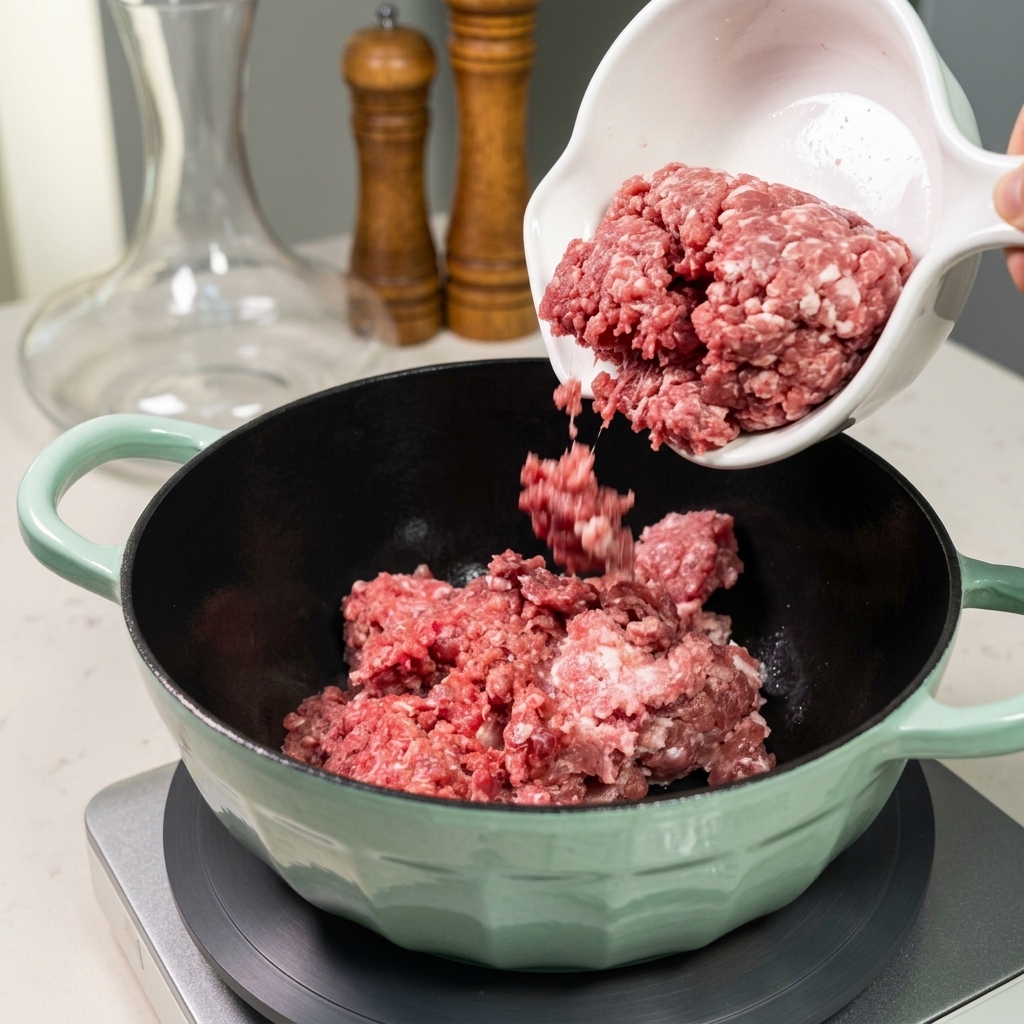
Place a pot over the heat and add the raw minced pork and beef directly into it. Using a combination of beef and pork is key to achieving the most authentic flavor, offering a perfect balance of richness and fat.
Tip: You do not need to add cooking oil at this stage; the ground meat will release its own natural fats as it begins to cook. - 6Brown and remove the meat
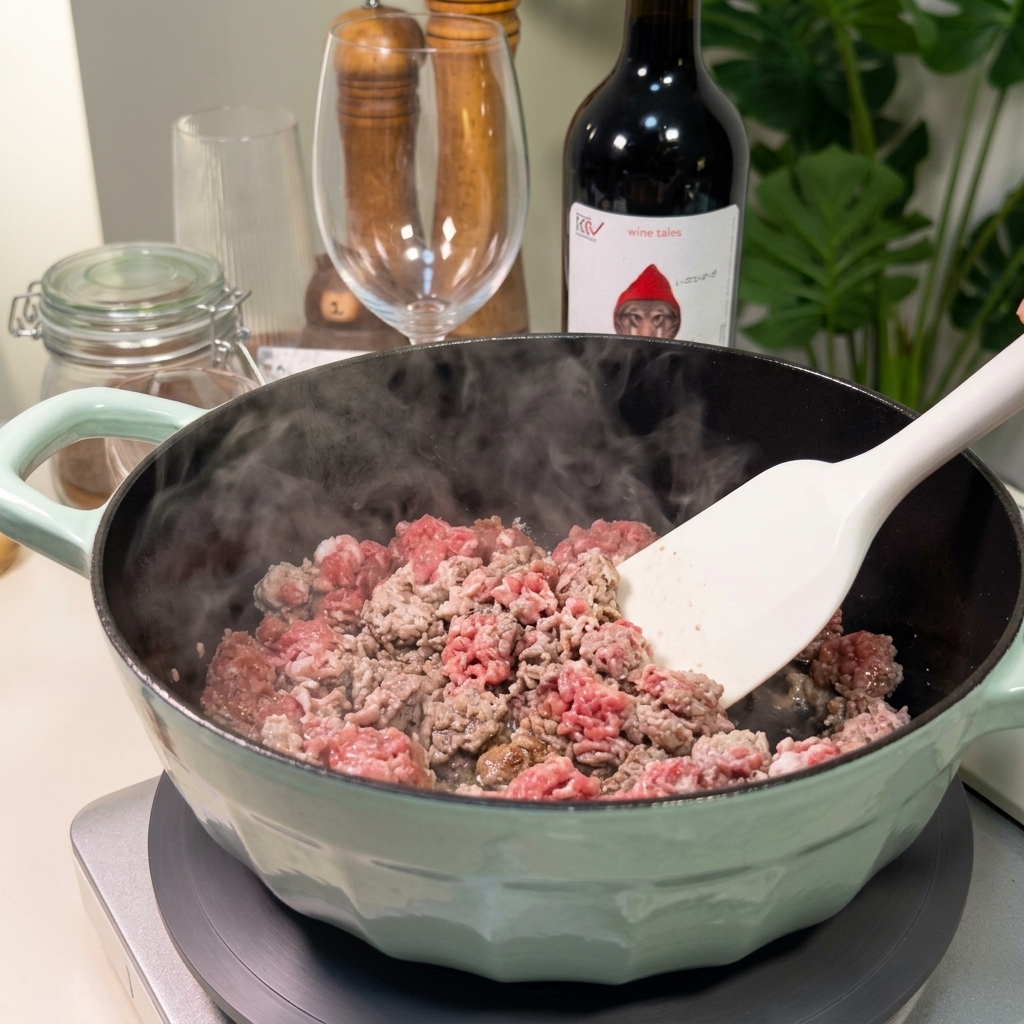
Stir-fry the ground meat over medium-high heat, using a spatula to break up any large clumps. Continue cooking until the meat changes color entirely and all the excess moisture has completely evaporated from the bottom of the pot. Once fully browned, remove the meat from the pot and set it aside on a plate.
Tip: Patience is crucial here. Letting the water fully evaporate allows the meat to properly brown and concentrates its savory flavor. - 7Add oil to the pan
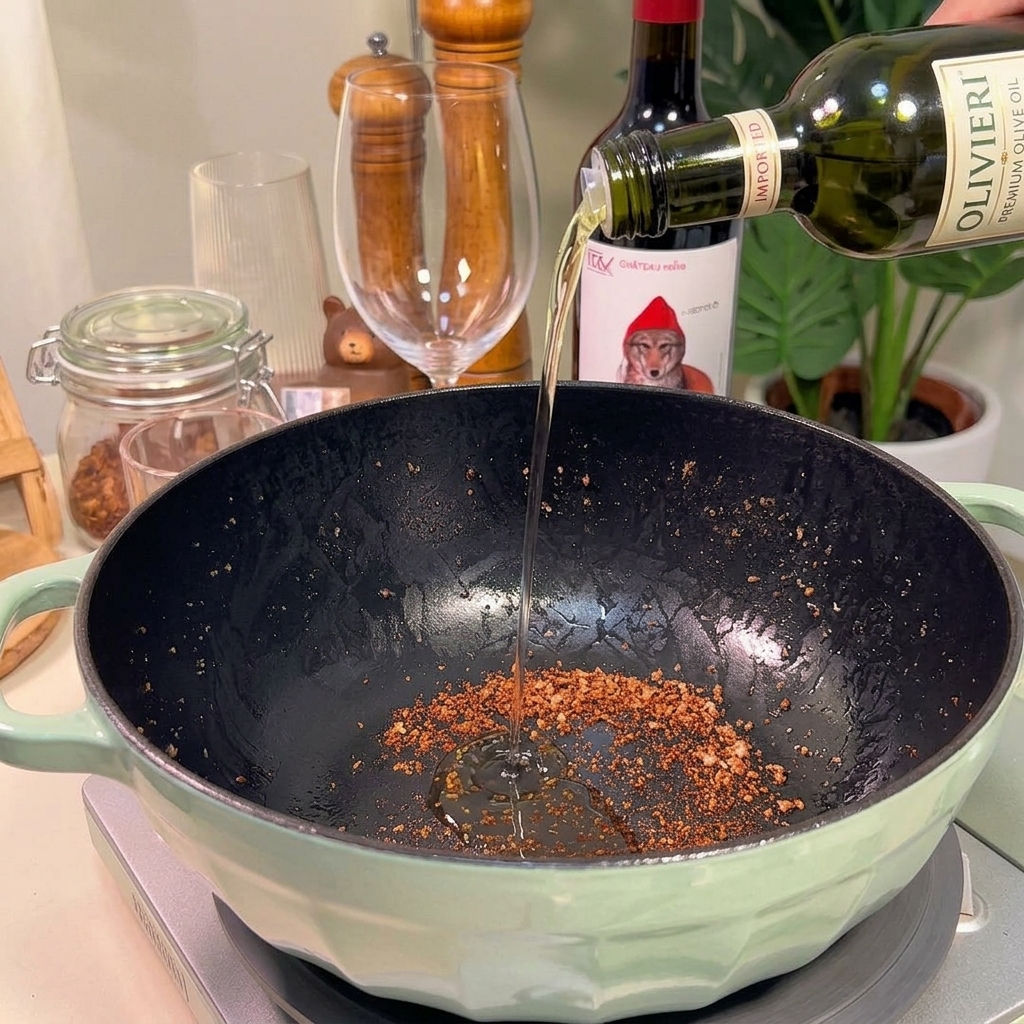
Do not wash the pan after removing the meat. Simply pour a splash of cooking oil into the same pan over medium heat. The remaining browned bits at the bottom will add incredible depth of flavor to the aromatics.
Tip: Using the same unwashed pan builds layers of flavor, known as the fond, which is essential for a rich, authentic bolognese sauce. - 8Sauté the garlic and onion
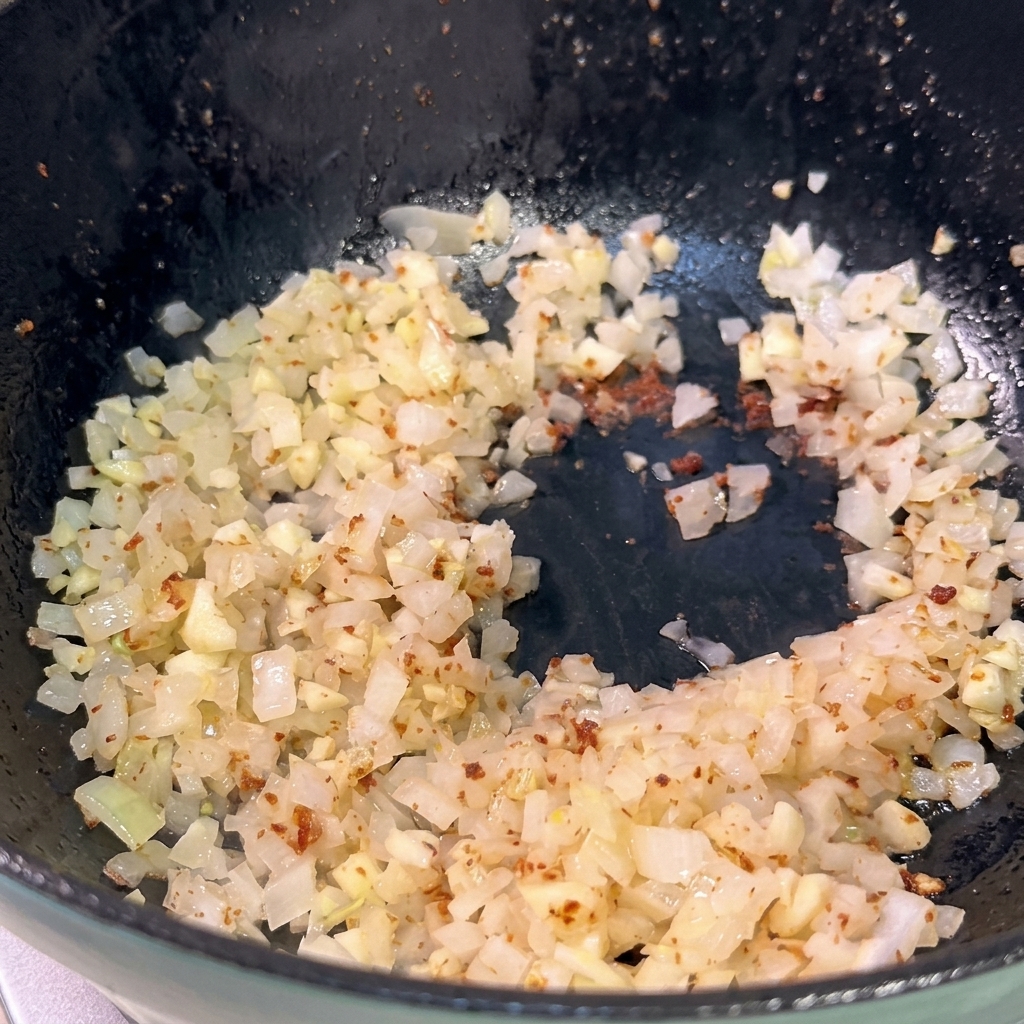
Add the minced garlic and chopped onion to the oiled pan. Sauté gently over medium heat until the onions become translucent and soft, and the garlic is fragrant.
Tip: Be careful not to burn the garlic; keep the heat moderate and stir frequently to release their sweet aromatics without making them bitter. - 9Return meat to the pan
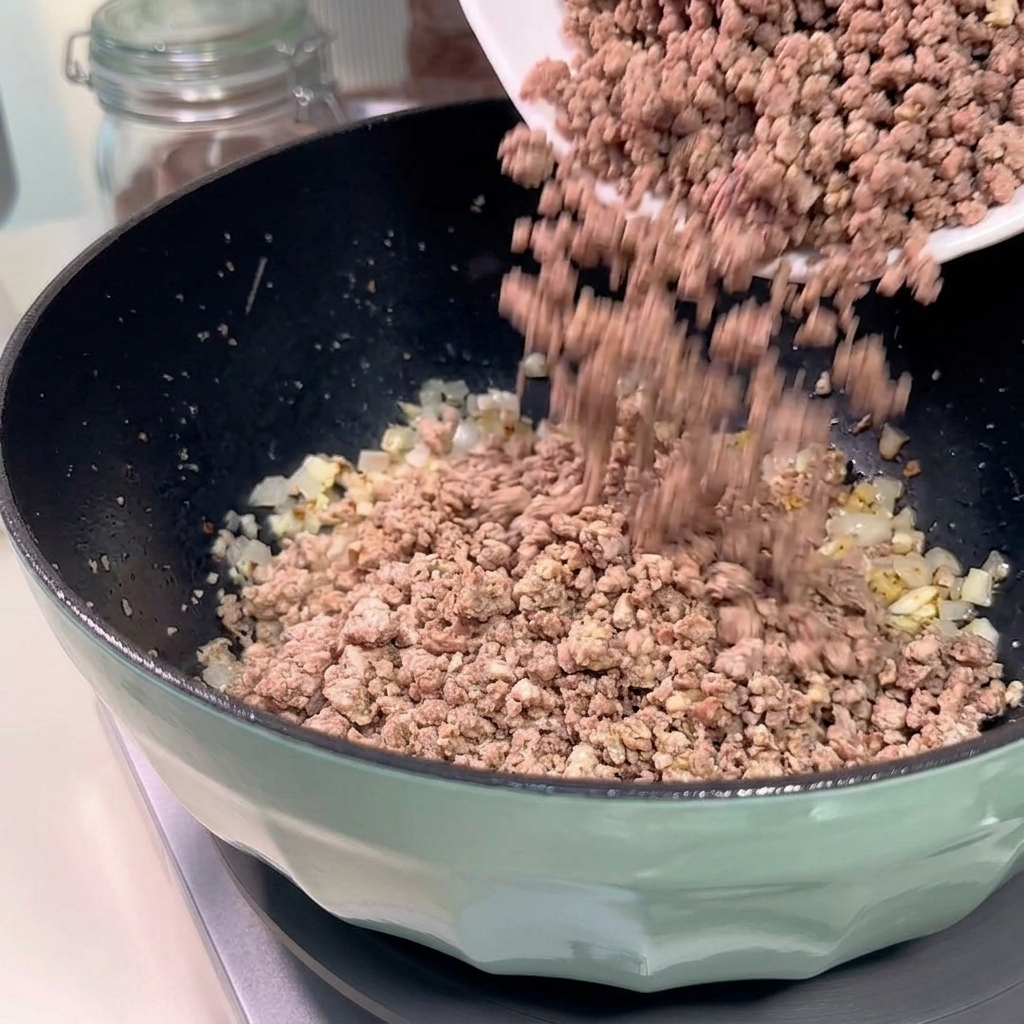
Once the onions and garlic are soft, pour the browned minced pork and beef back into the pan. Stir everything together so the meat mixes well with the aromatic base.
Tip: Make sure any savory juices that accumulated on the plate with the resting meat are also poured back into the pan for maximum flavor retention. - 10Add the remaining vegetables
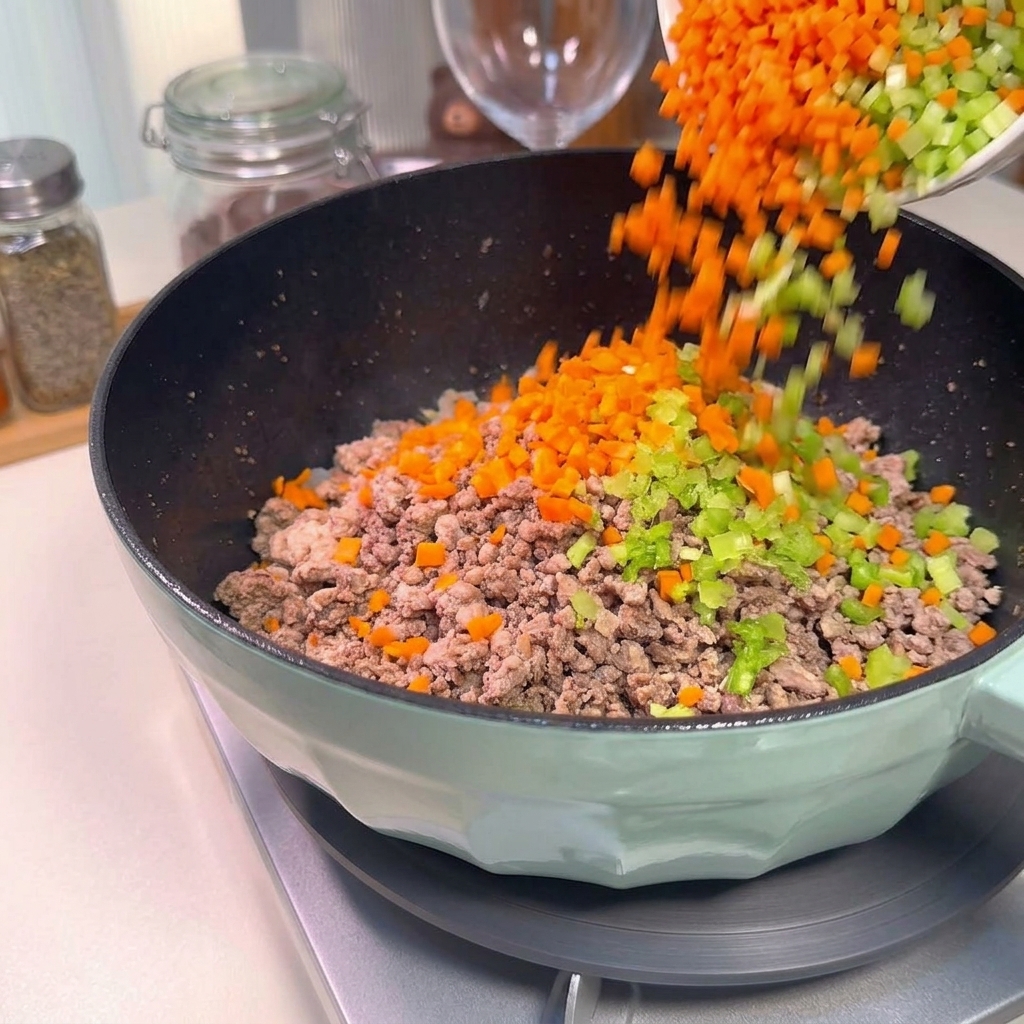
Add the finely chopped carrots and celery into the meat mixture. Continue stir-frying to allow the vegetables to soften slightly and integrate their flavors with the meat.
Tip: Cutting the carrots, celery, and onions to a similar fine dice (known as a soffritto) ensures they cook evenly and melt perfectly into the final sauce. - 11Melt in the butter
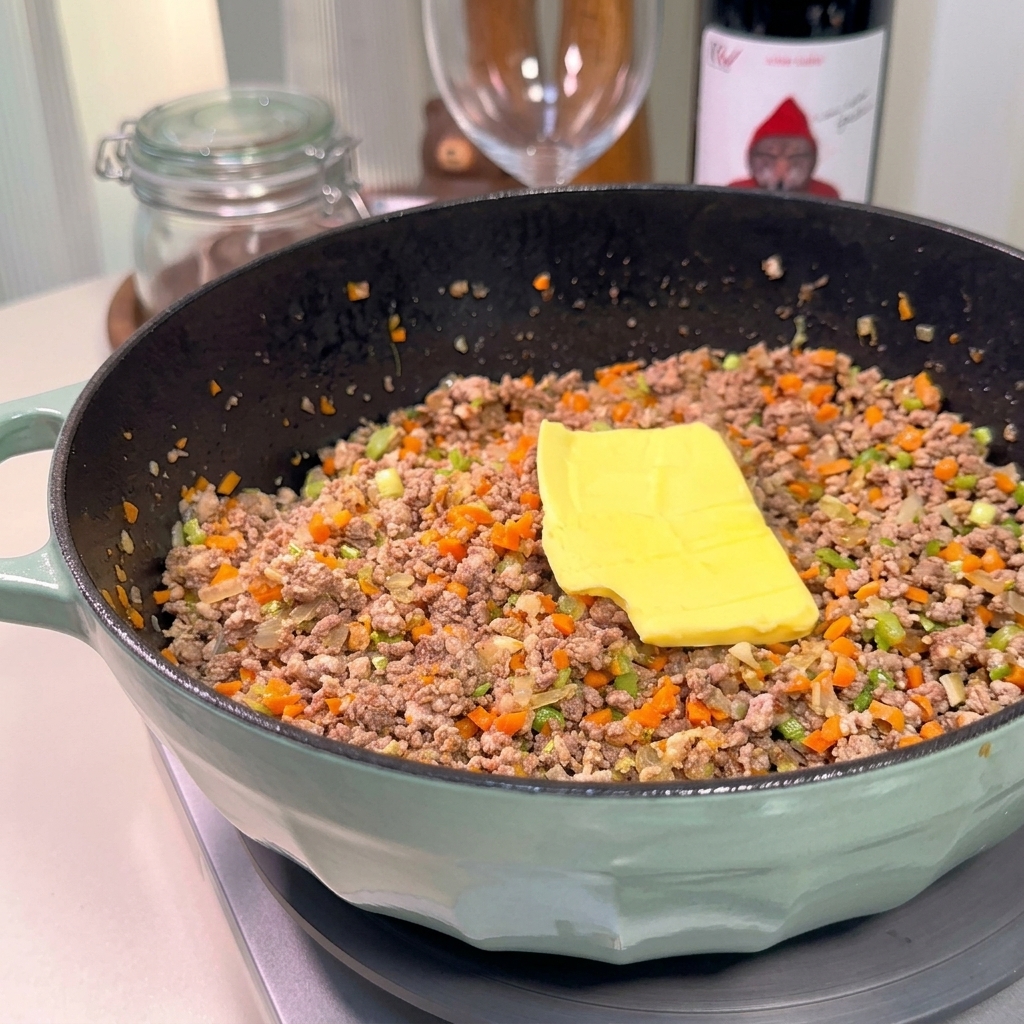
Drop a slice of butter directly into the center of the pan. Stir the mixture continuously as the butter melts, coating the meat and vegetables to add a rich, velvety texture to the base.
Tip: Butter adds a glossy finish and rounds out the savory flavors of the meat, creating a richer mouthfeel for the bolognese. - 12Add the tomato paste
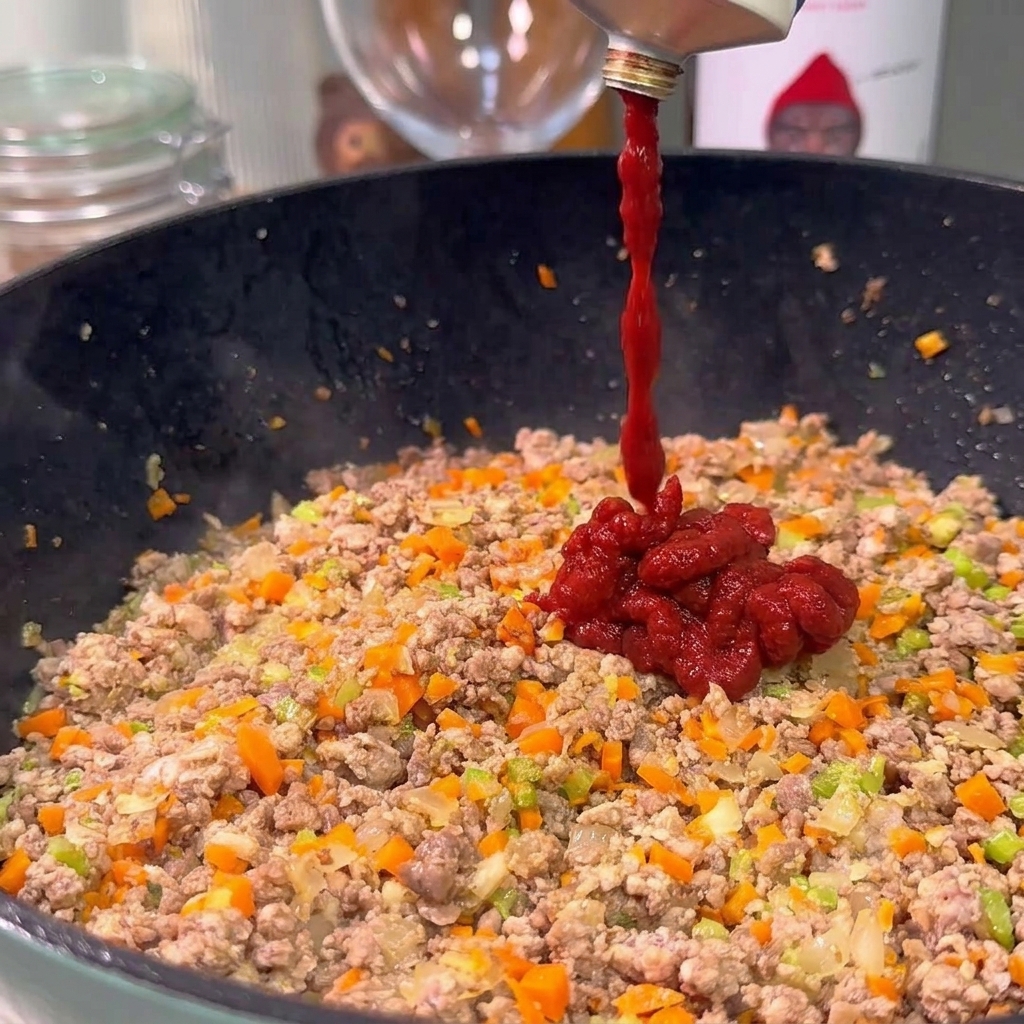
Squeeze the concentrated tomato paste directly into the browned meat and softened vegetable mixture. Stir well to incorporate the paste, letting it cook down for just a minute or two. This brief cooking process caramelizes the paste, deepening its color and intensifying the savory umami notes.
Tip: Cooking the tomato paste before adding any liquids helps to neutralize its raw, slightly metallic canned taste. - 13Pour in the diced tomatoes
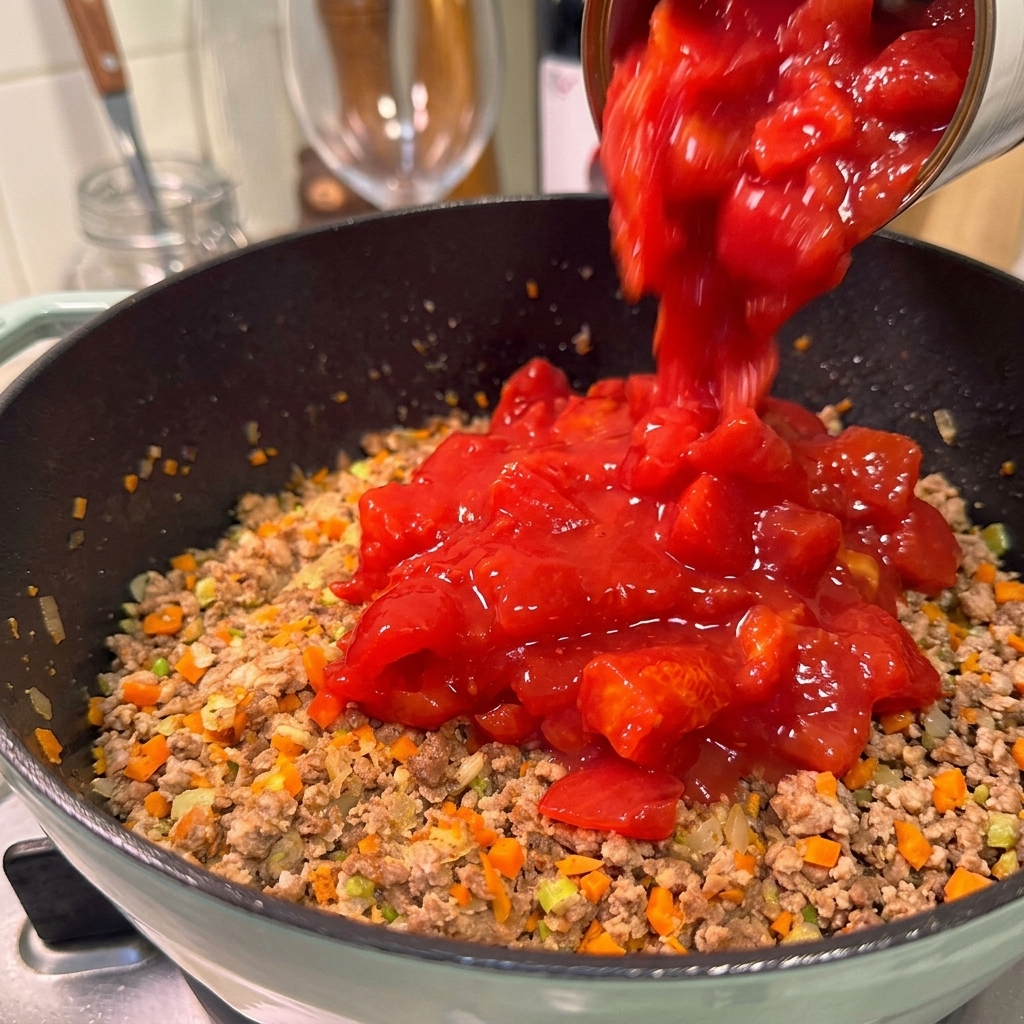
Empty the entire can of diced tomatoes into the pan along with the meat and vegetables. The juices from the canned tomatoes will immediately help to deglaze the bottom of the pan, lifting up any delicious browned bits. Stir everything together to form the thick, hearty base of the bolognese.
Tip: For a smoother sauce texture, you can substitute the diced tomatoes with crushed tomatoes or pureed passata. - 14Incorporate the red wine
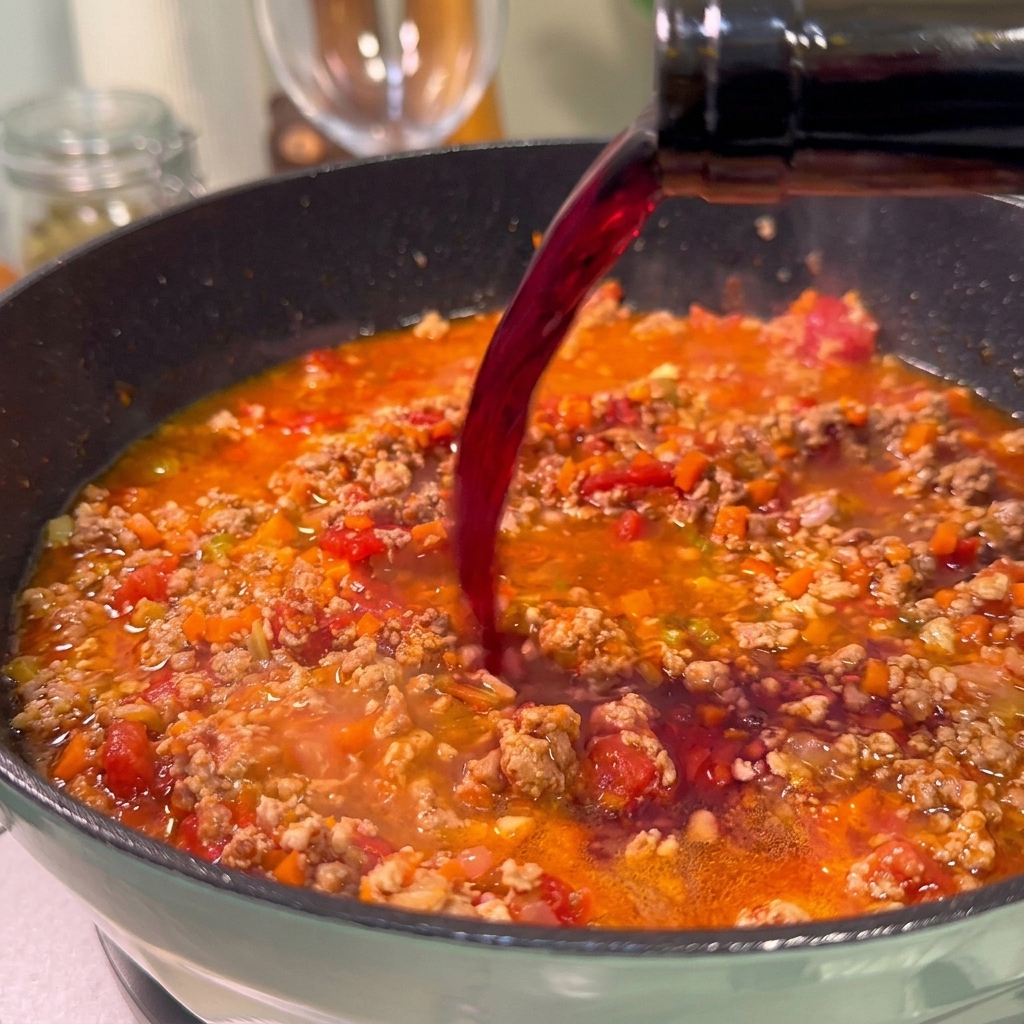
Pour the red wine directly into the bubbling meat and tomato sauce. Give the sauce a gentle stir to mix the wine throughout. The acidity, fruitiness, and subtle tannins of the wine are essential for cutting through the richness of the meat and elevating the sauce to an authentic Italian flavor profile.
Tip: Always cook with a dry red wine that you would actually enjoy drinking in a glass, such as a Cabernet Sauvignon or Chianti. - 15Season the sauce
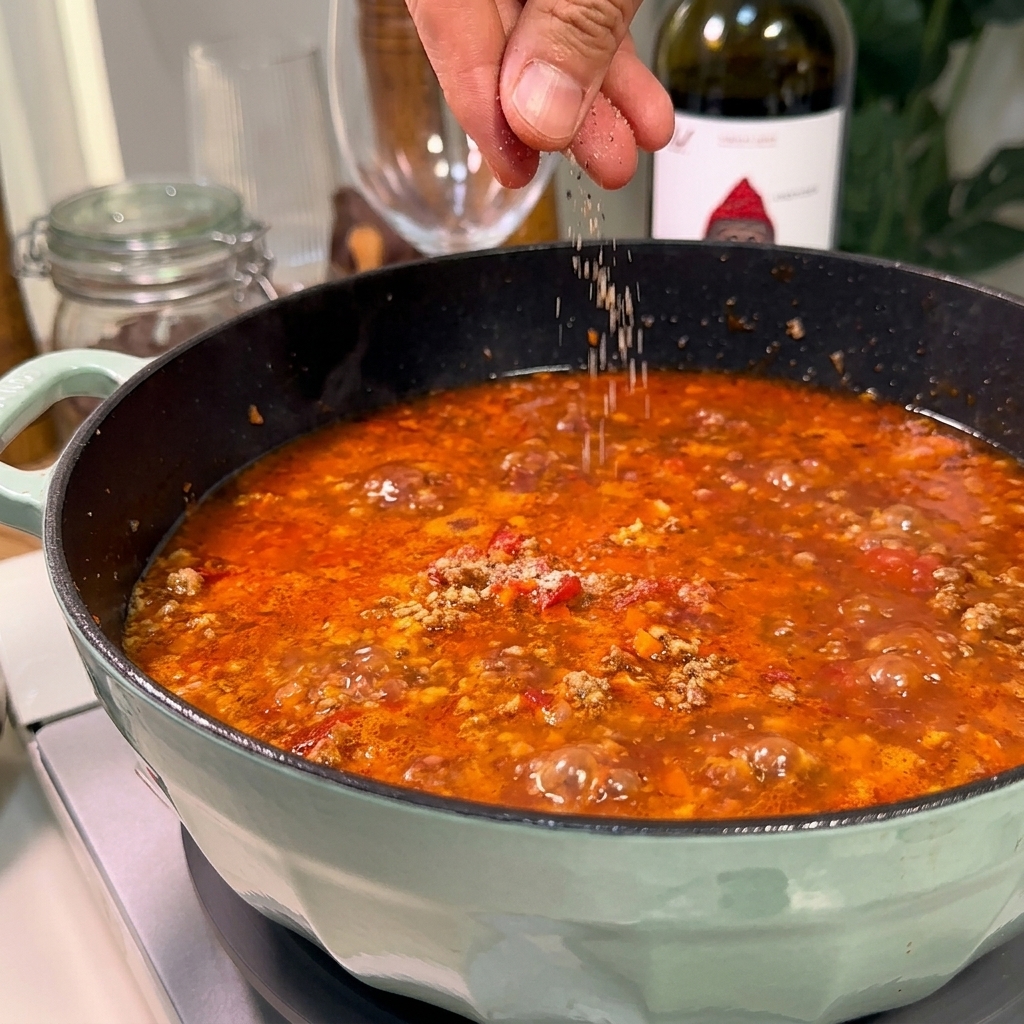
Season the simmering sauce with a pinch of salt and a generous amount of freshly cracked black pepper. Stir well to distribute the seasonings. Be mindful not to over-salt at this stage, as the flavors will naturally concentrate and intensify as the sauce reduces over a long simmer.
Tip: You can always adjust the seasoning at the very end of cooking. It is much easier to add more salt later than to fix an overly salty sauce. - 16Add bay leaves and simmer
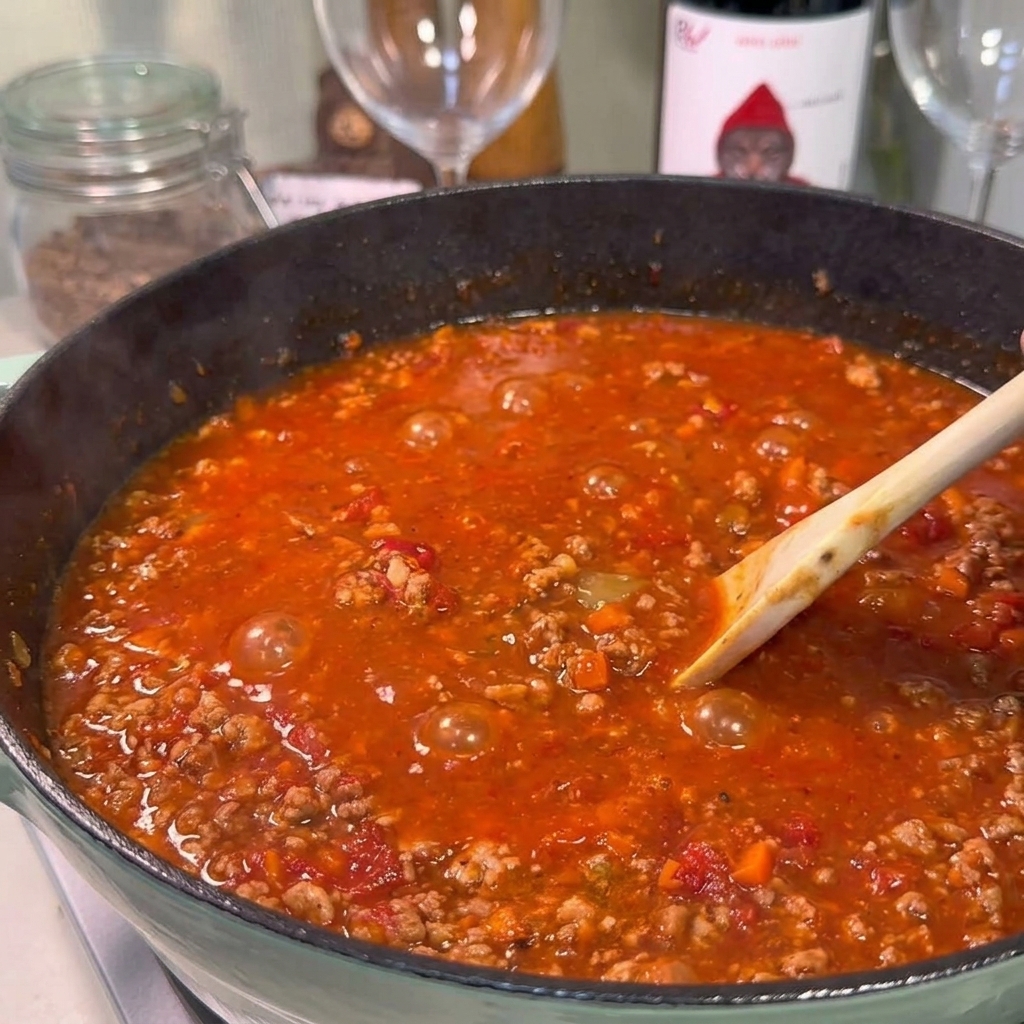
Drop the dried bay leaves into the bubbling red sauce and use a wooden spoon to stir everything together one last time. Reduce the heat to low, cover the pot with a lid, and let it gently simmer. The long, slow cooking process is the secret to tenderizing the meat and allowing the rich flavors to beautifully meld.
Tip: For the absolute best results, transfer the covered, oven-safe pot to the oven and let it slow-cook at 160°C (320°F) for an hour and a half.