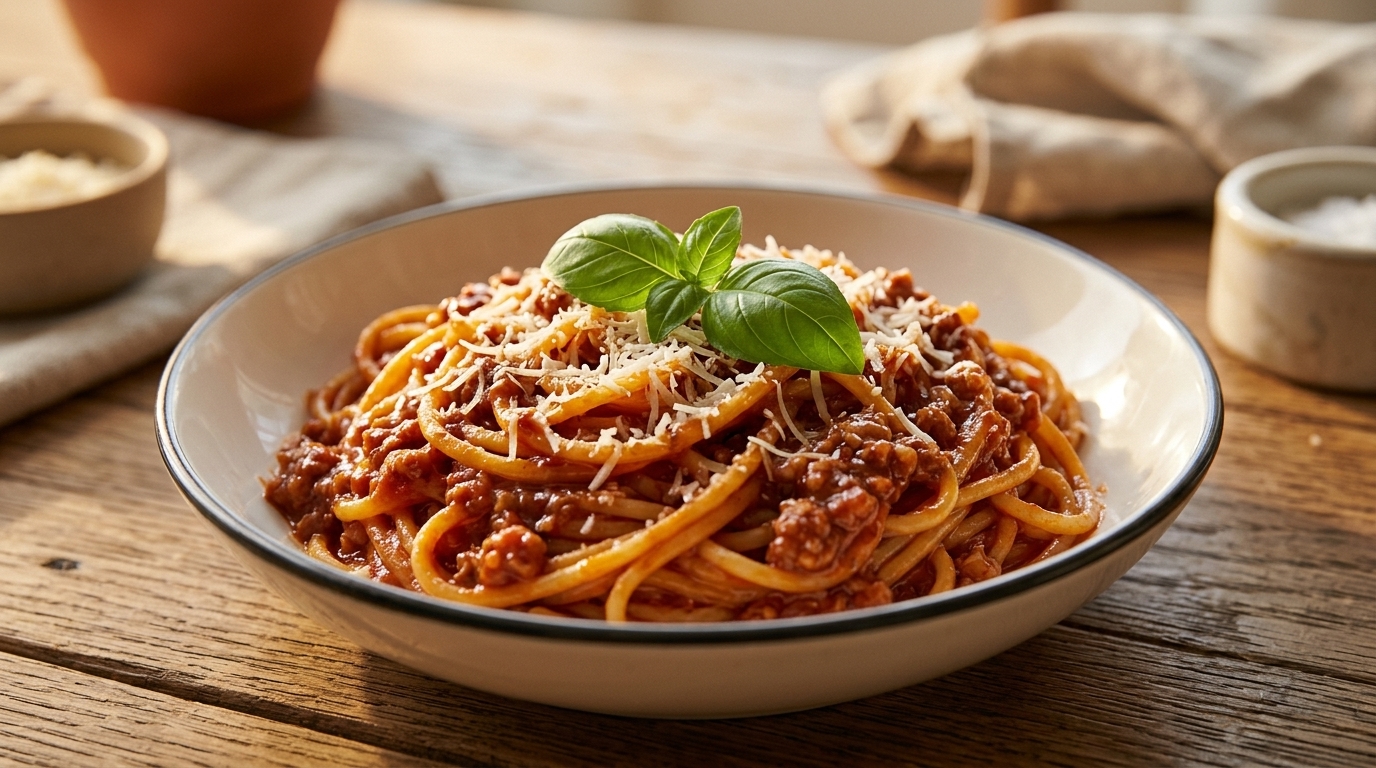
Rich Asian-Style Spaghetti Bolognese
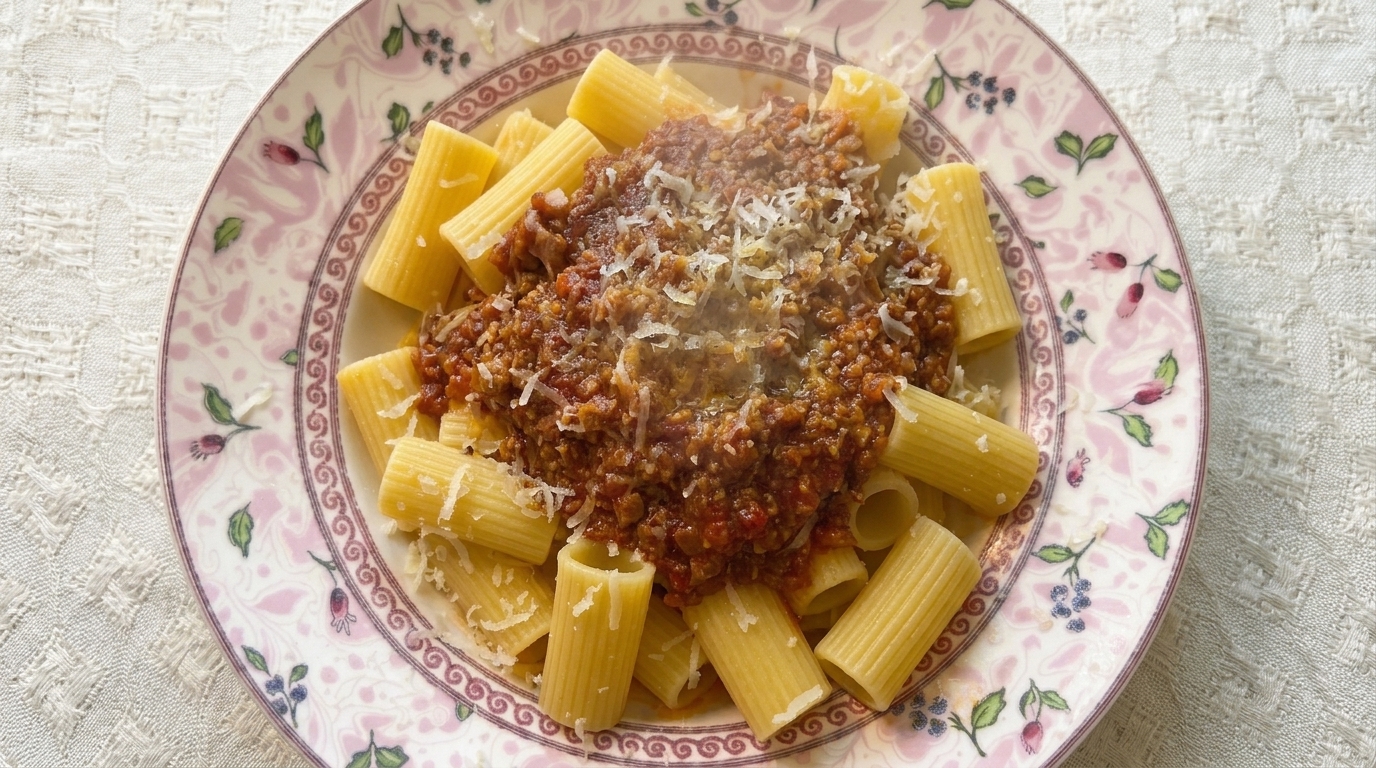
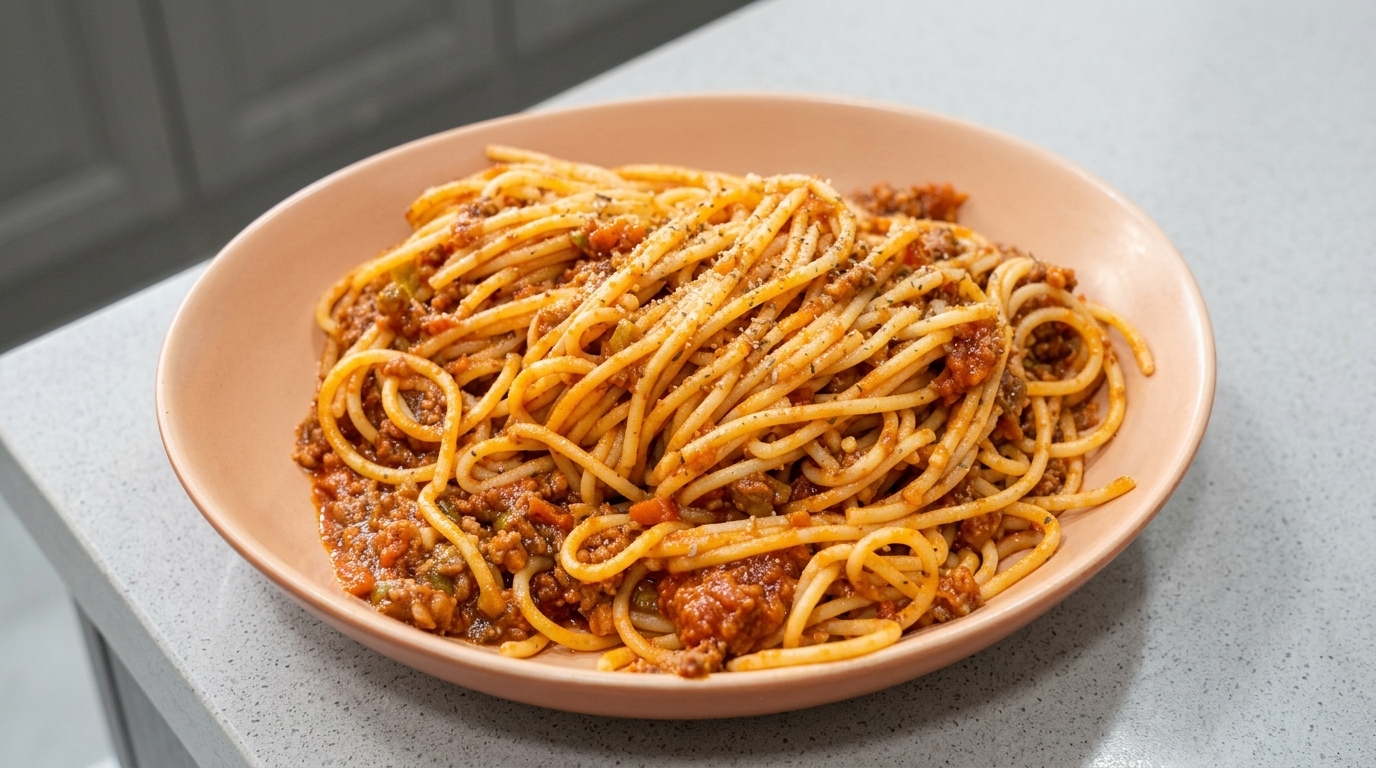
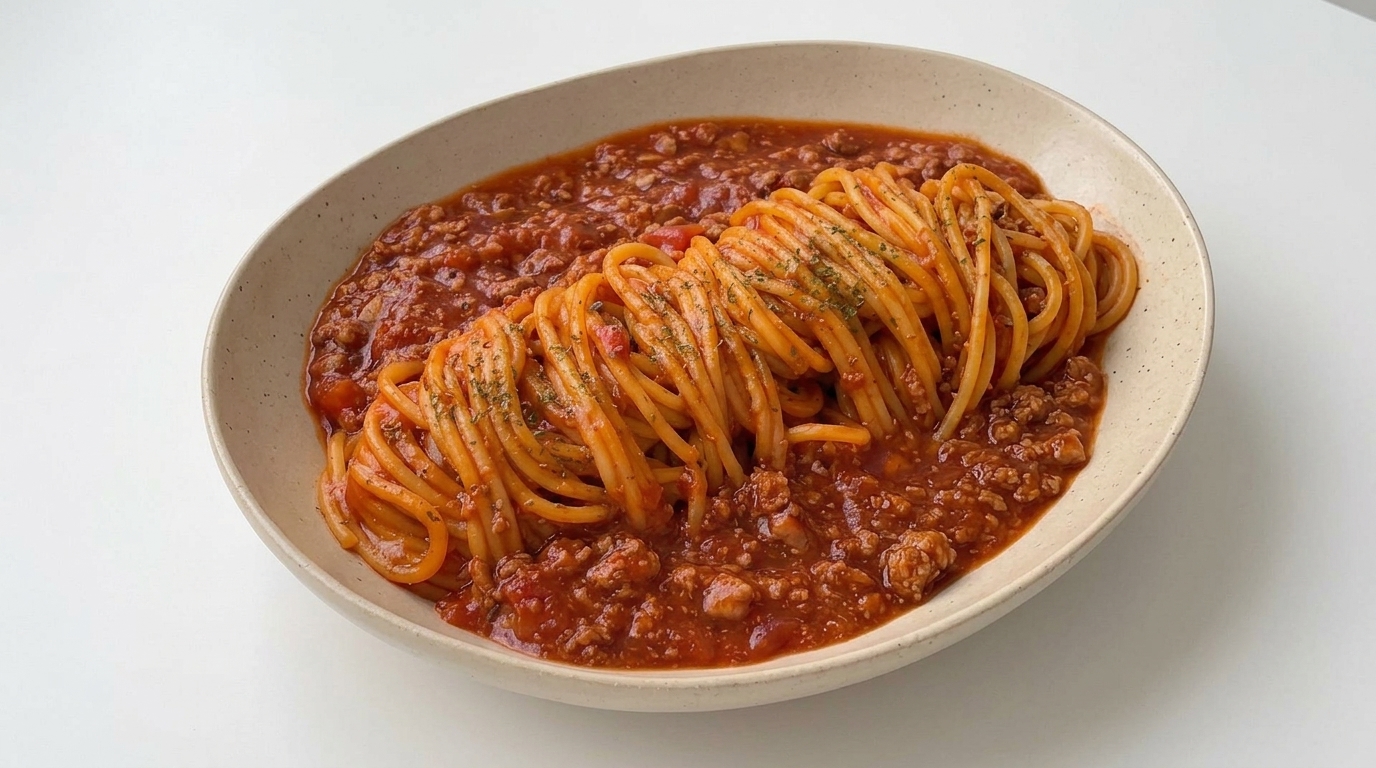
This Asian-inspired spaghetti bolognese features a deeply savory, chunky meat sauce enriched with soy sauce, oyster sauce, and fresh tomatoes. A clever pasta-soaking trick cuts down boiling time, making this hearty dinner surprisingly quick to pull together.
While a traditional Italian bolognese simmers for hours, this quick Asian-style tomato meat sauce takes a brilliant flavor shortcut. By incorporating umami-rich ingredients like dark soy sauce and oyster sauce, it builds incredible depth in a fraction of the time. The use of a rich tomato soup base and a light starch slurry ensures every strand of pasta is perfectly coated in a thick, glossy, meat-packed sauce.
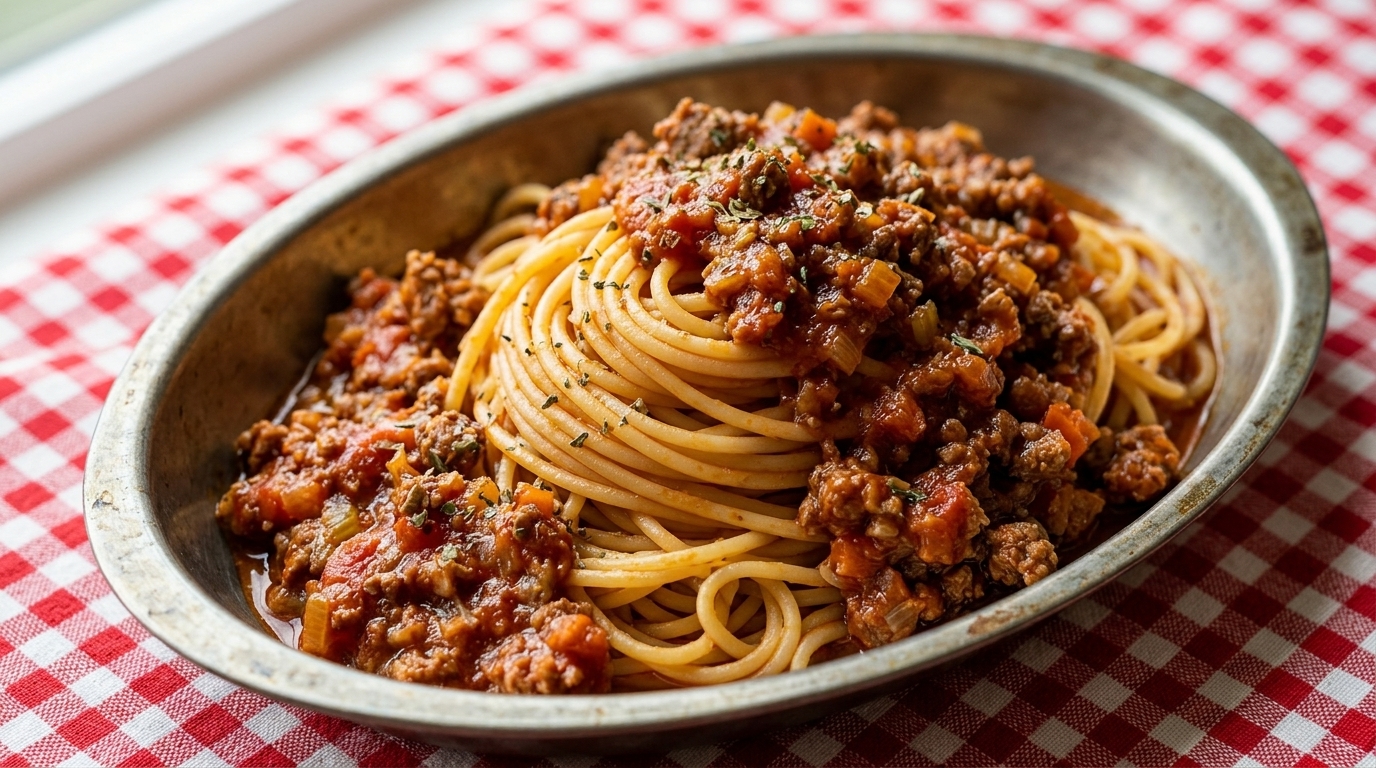
Ingredients
- 400 g dry spaghetti
- 200 g fatty pork
- 200 g beef
- 12 red onion
- 1 fresh tomato
- 2 packets tomato soup base (or 3 tbsp tomato paste)
- 3 tbsp light soy sauce
- 1 tbsp dark soy sauce
- 1 tbsp oyster sauce
- 1 tsp white sugar
- 1 tbsp cooking oil
- 1 tbsp olive oil
- 2 tbsp starch water (slurry)
- to taste black pepper sea salt
Instructions
- 1Soak the pasta
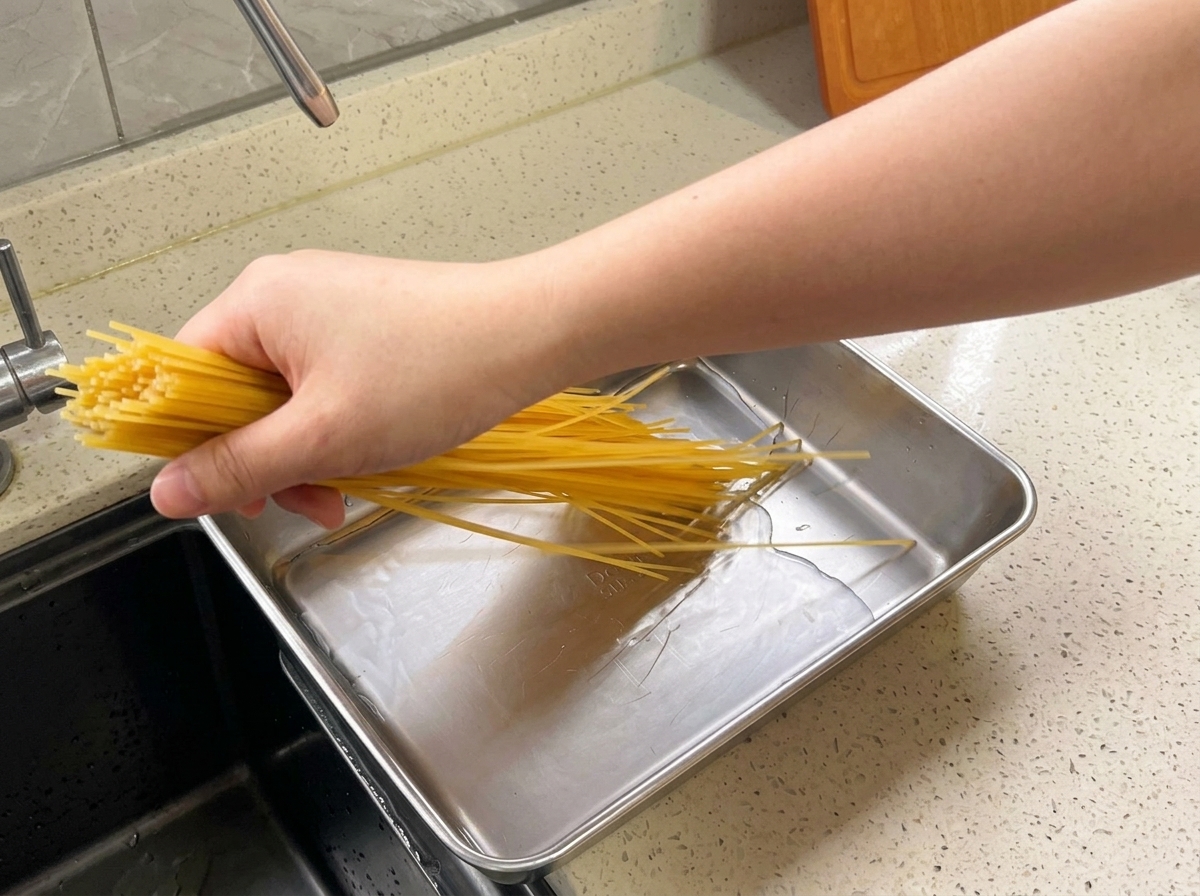
Place dry spaghetti into a rectangular metal tray filled with cold water. Soaking the pasta for a few hours before cooking allows the noodles to hydrate, which will significantly reduce the boiling time and ensure a perfect texture later.
Tip: Make sure the tray is long enough for the spaghetti to lie flat and be completely submerged in the water. - 2Mince the meat
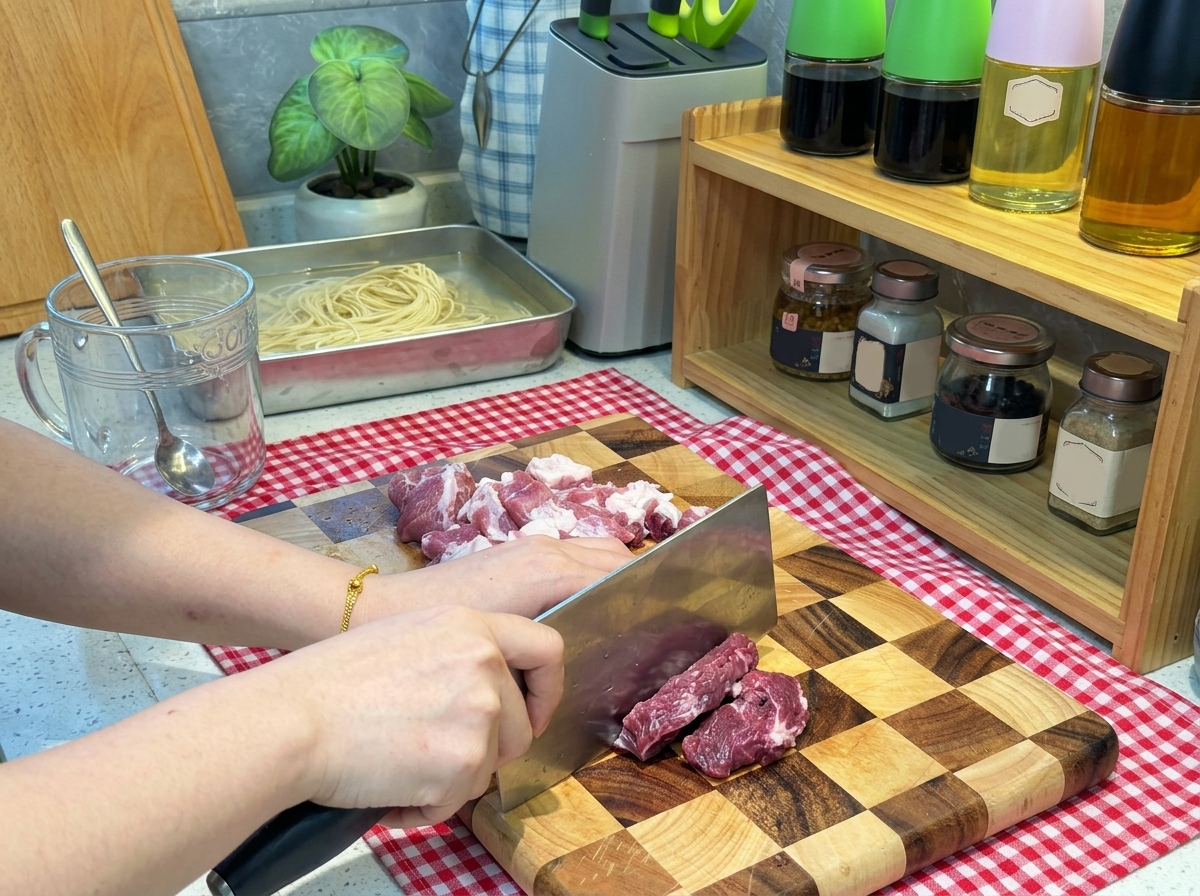
Prepare equal parts of pork and beef—about 200 grams of each—and chop them together using a cleaver. Aim for a coarse mince rather than a fine paste, as this will give the finished sauce a satisfying, hearty texture. Selecting pork with a good amount of fat will naturally enrich the flavor.
Tip: Chopping by hand instead of using a meat grinder helps retain a chunkier, more rustic texture for the meat sauce. - 3Chop the aromatics
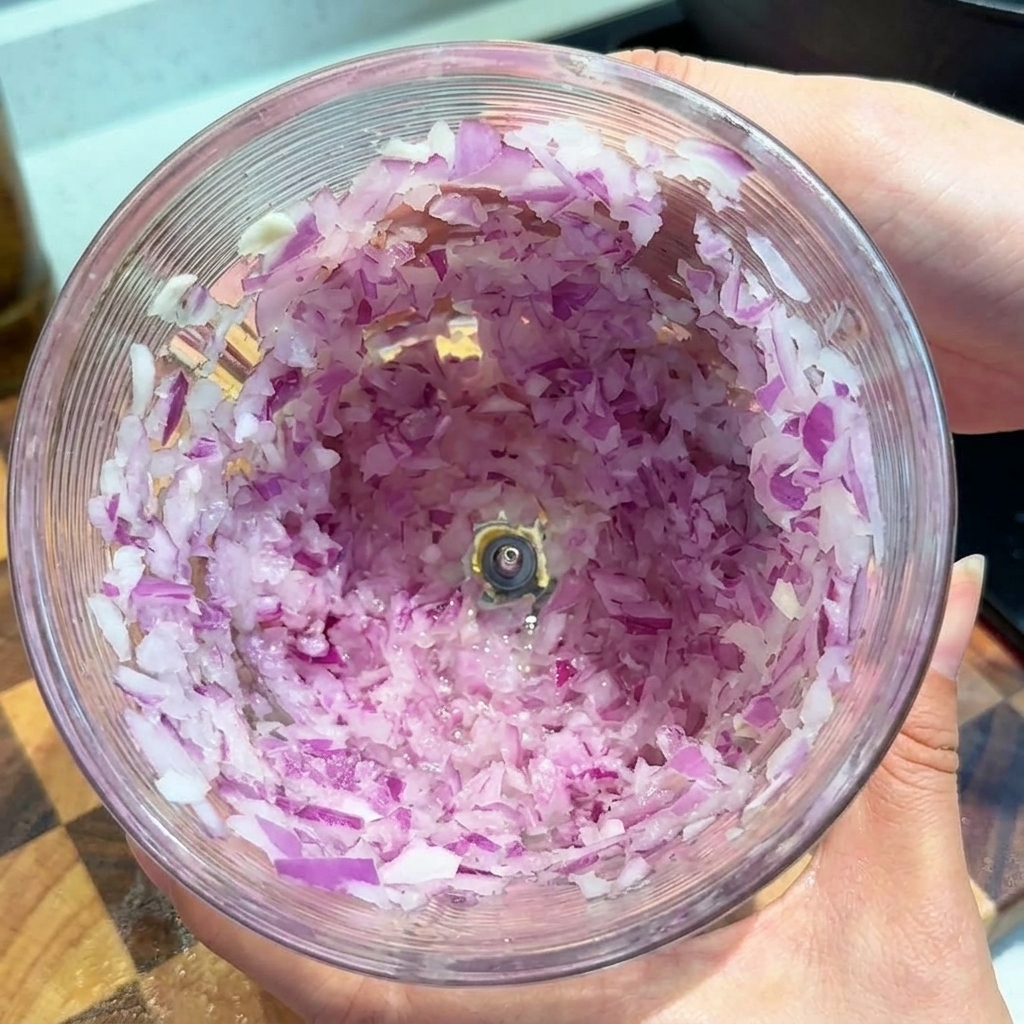
Take half of a red onion and mince it. You can pulse it in a small food processor for convenience until finely chopped, but avoid turning it into an absolute puree. This minced onion will melt into the sauce and provide a foundational savory sweetness.
Tip: If you dont have a food processor, finely dicing the onion with a knife works perfectly well. - 4Dice the tomatoes
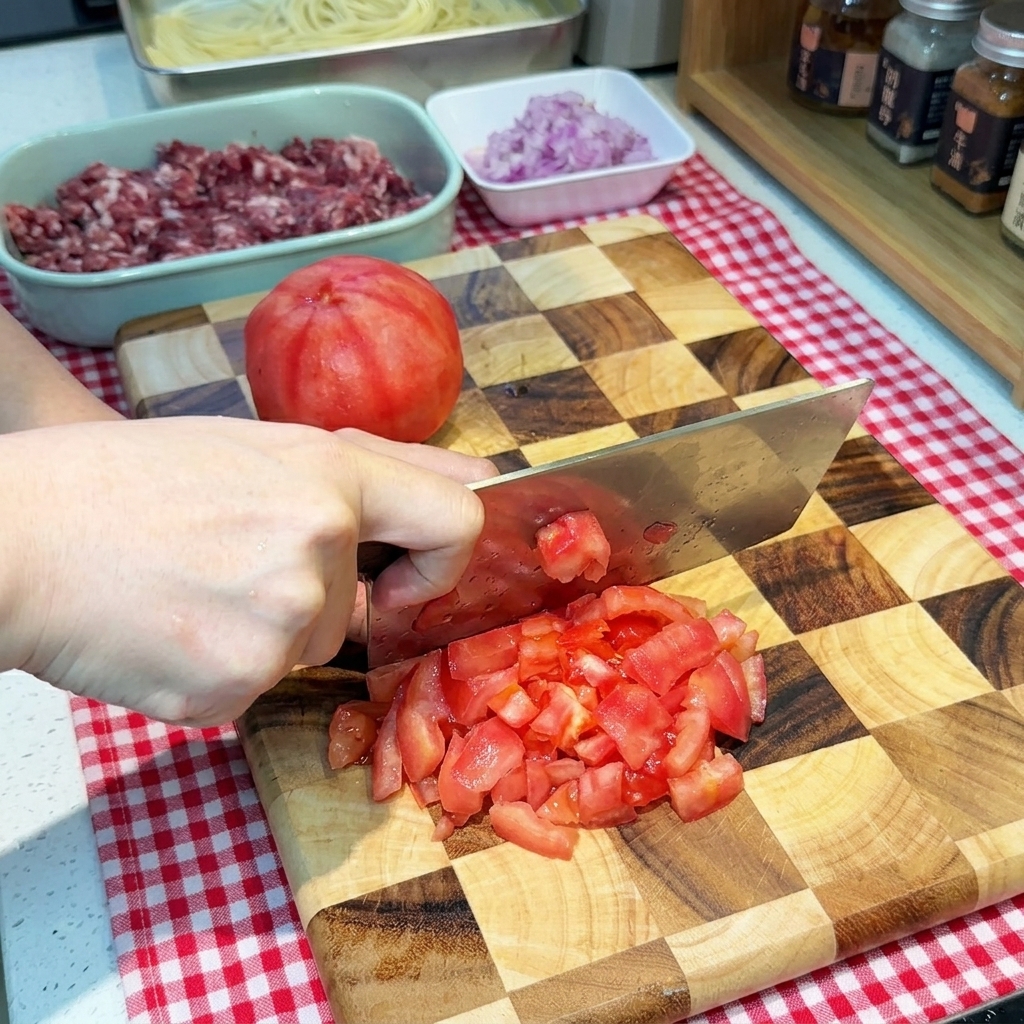
Peel a fresh tomato and dice it cleanly. An efficient way to do this is to make parallel slices without cutting completely through the base, then slice perpendicularly across. This quick technique yields a neat pile of uniform diced tomatoes.
Tip: If you dont want to roast the tomatoes to peel them, you can simply use a sharp knife to remove the skin directly. - 5Brown the minced meat
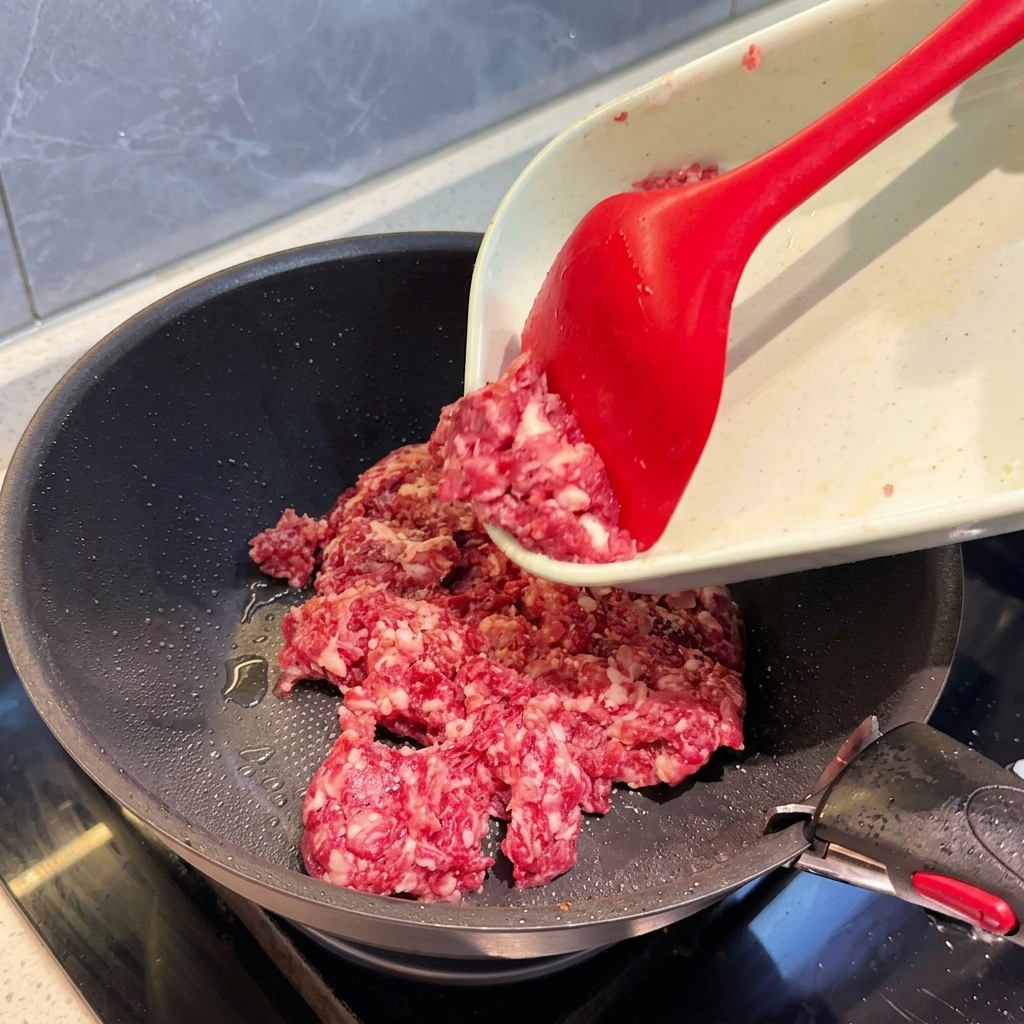
Lightly spray a frying pan with oil and add your coarsely minced pork and beef mixture. Because the pork has enough natural fat, you will not need much extra cooking oil. Stir-fry the meat continuously until it changes color completely and begins to release its savory aroma.
Tip: Let the meat brown well so the pork fat renders out into the pan; this fat carries a lot of the sauces flavor. - 6Combine the ingredients
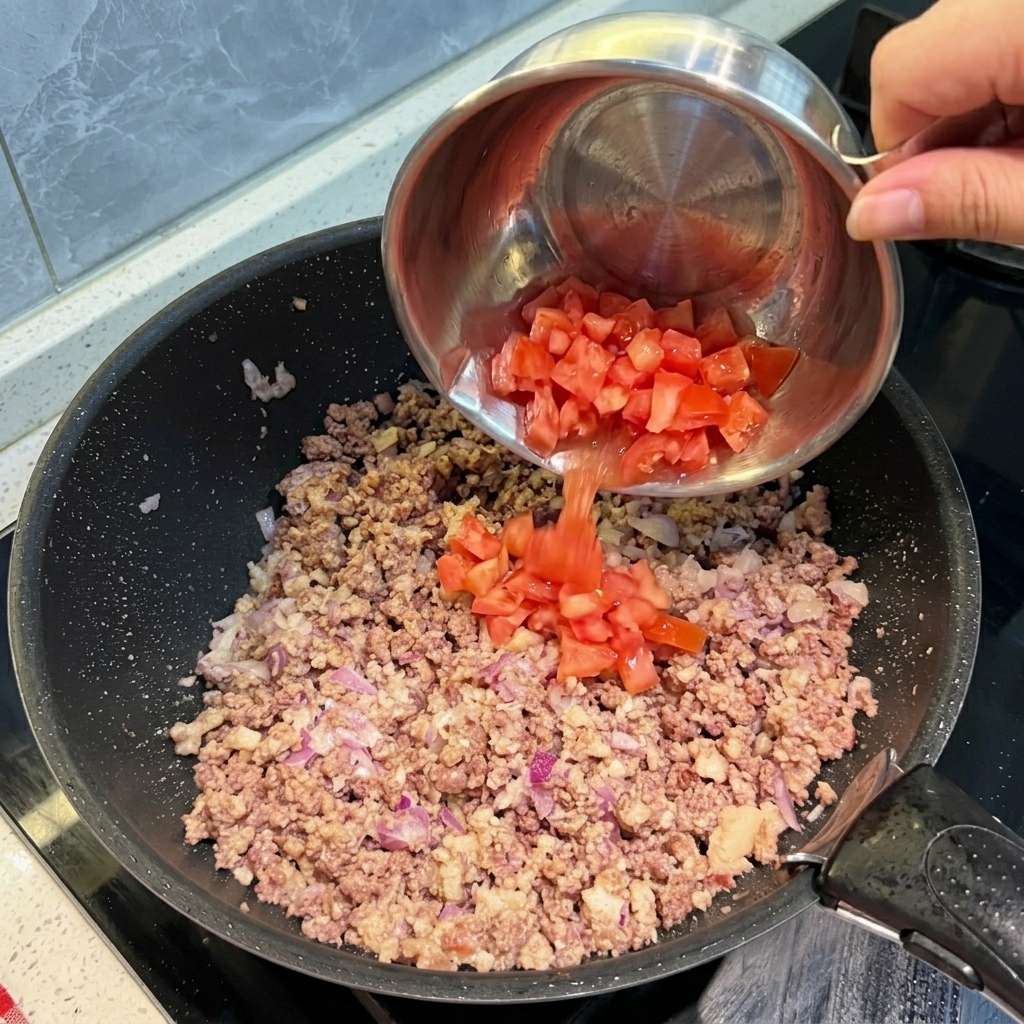
Once the minced meat is fully browned and the fat has rendered, pour the minced red onions and the diced fresh tomatoes directly into the pan. Turn the heat up to high and stir-fry everything together so the vegetables soften and begin releasing their natural juices into the meat.
Tip: Stir-frying the tomatoes over high heat breaks them down faster and concentrates their natural sweetness. - 7Season the meat mixture
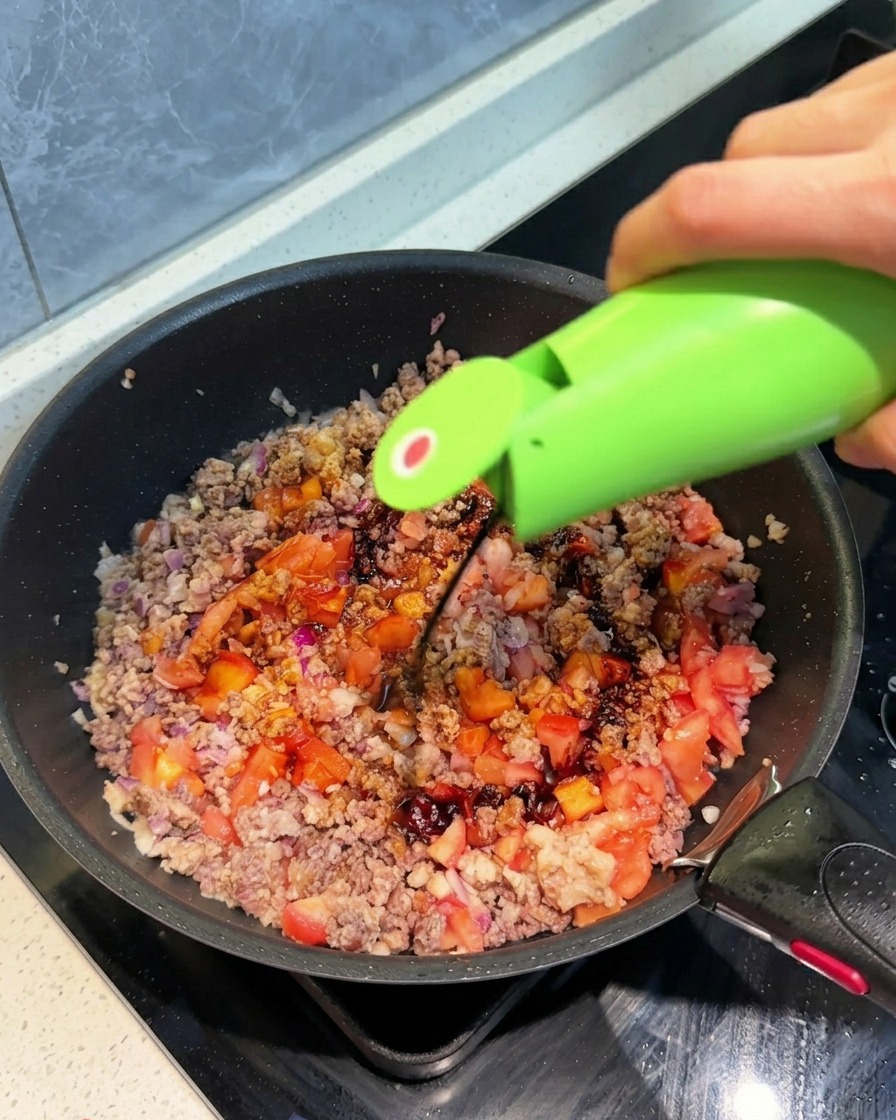
Season the pan with three tablespoons of light soy sauce, one tablespoon of dark soy sauce, one tablespoon of oyster sauce, a teaspoon of sugar, and a pinch of black pepper sea salt. Stir-fry the mixture over high heat to meld the savory flavors.
Tip: If you find the sauce lacks a deep red hue or richness at this stage, adding tomato paste or a specialized tomato soup base will enhance it. - 8Add tomato soup base
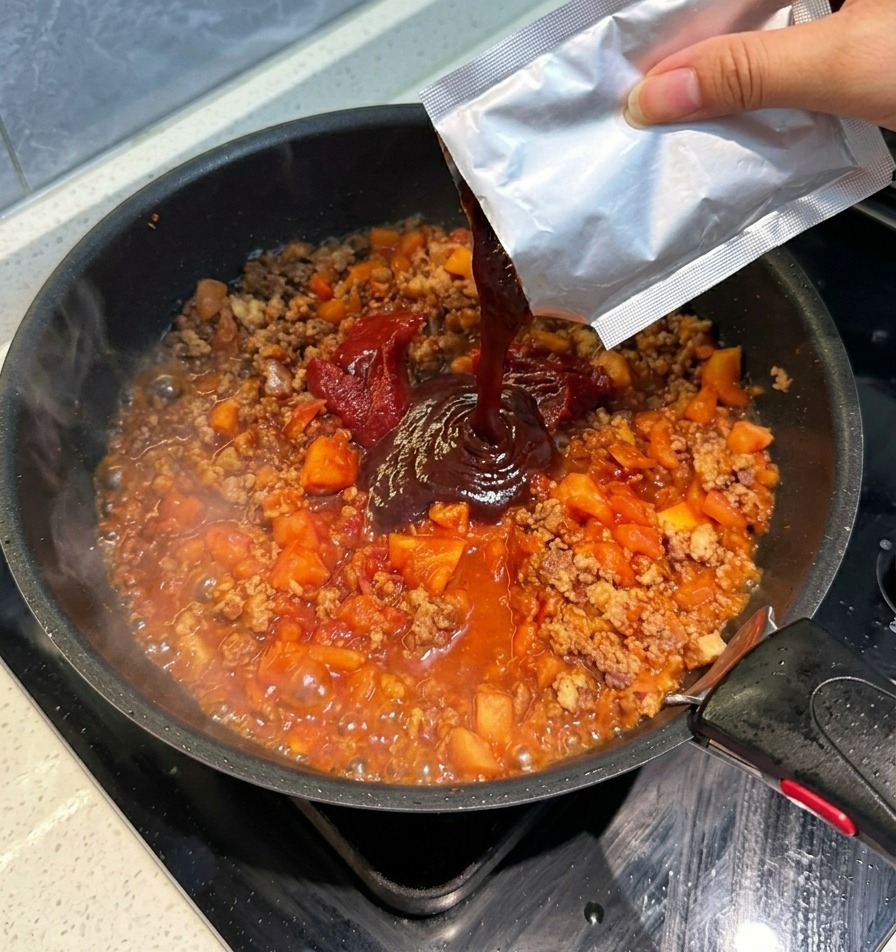
Squeeze the packets of rich tomato soup base into the skillet with the meat and vegetable mixture. This intensifies the tomato flavor and enriches the color of your meat sauce.
Tip: If you dont have a specialized tomato soup base, regular tomato paste mixed with a little water works wonderfully to deepen the flavor. - 9Pour in boiling water
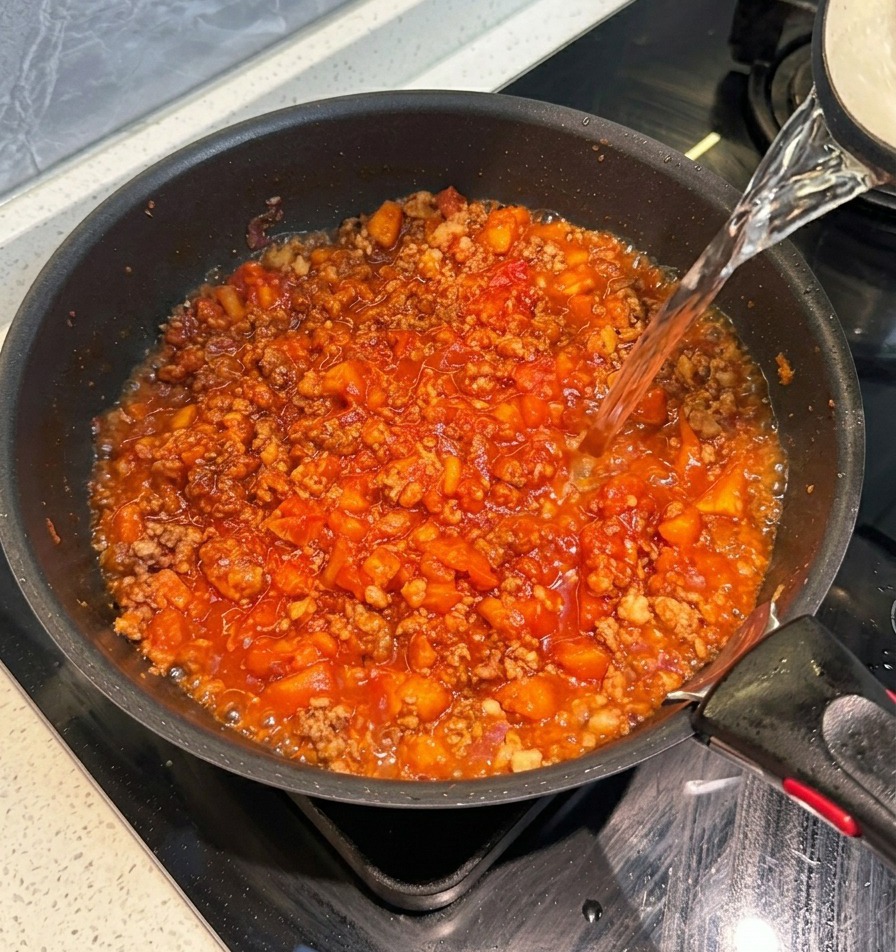
Pour a bowl of boiling water from a kettle directly into the skillet. Stir everything together to combine the ingredients into a cohesive sauce, then cover and let it simmer to develop the flavors.
Tip: Always use hot or boiling water when adding liquid to a hot pan to maintain the cooking temperature and ensure the meat stays tender. - 10Cook the pasta
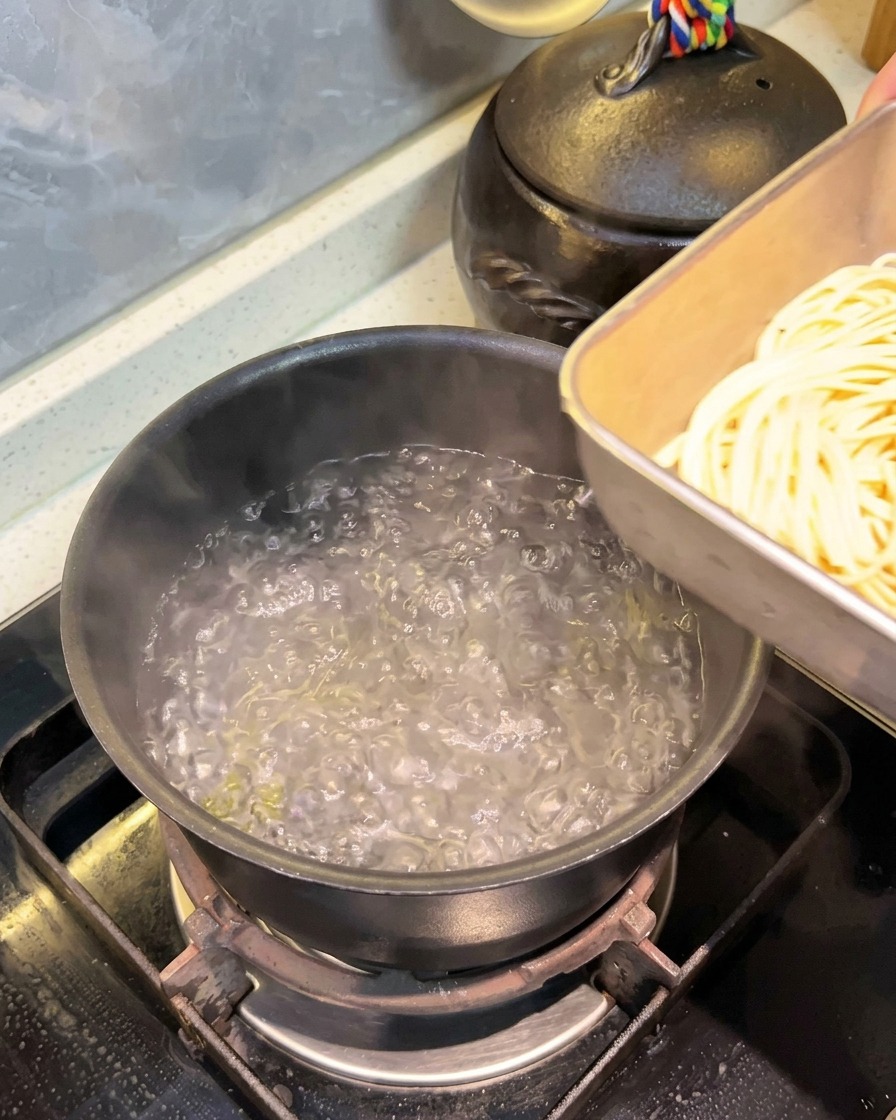
Bring a separate small pot of water to a boil and add a dash of olive oil. Drop in the soaked spaghetti. Because the pasta has been hydrated in cold water, it will cook much faster than dry noodles—boil until it reaches your preferred al dente texture.
Tip: Adding olive oil to the boiling water prevents the spaghetti strands from clumping together as they cook. - 11Simmer the meat sauce
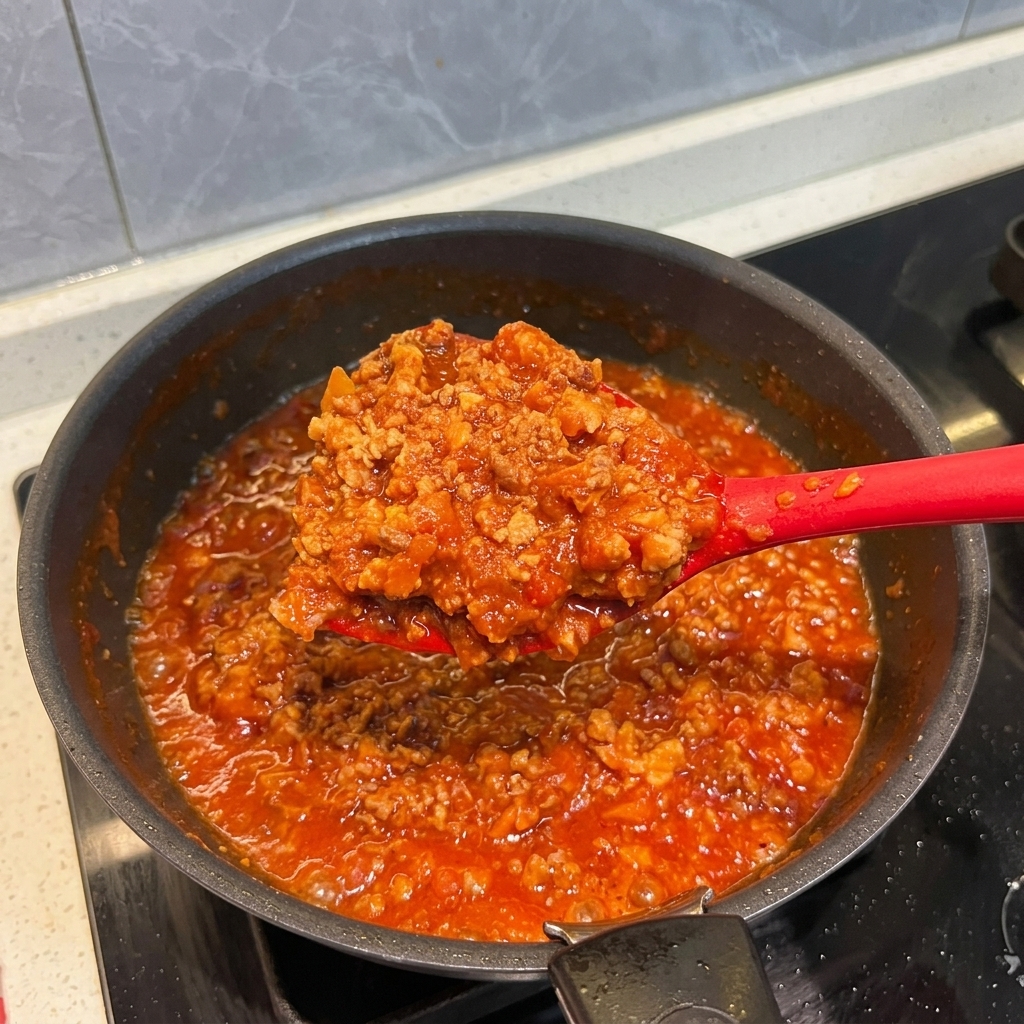
With the boiling water and seasonings added, cover the pan and let the mixture simmer. Cook gently until the liquid reduces and the ingredients meld into a rich, deeply flavored, and cohesive meat sauce.
Tip: Simmering allows the coarse meat and tomatoes to break down slightly, creating a more cohesive and luscious sauce. - 12Thicken the meat sauce
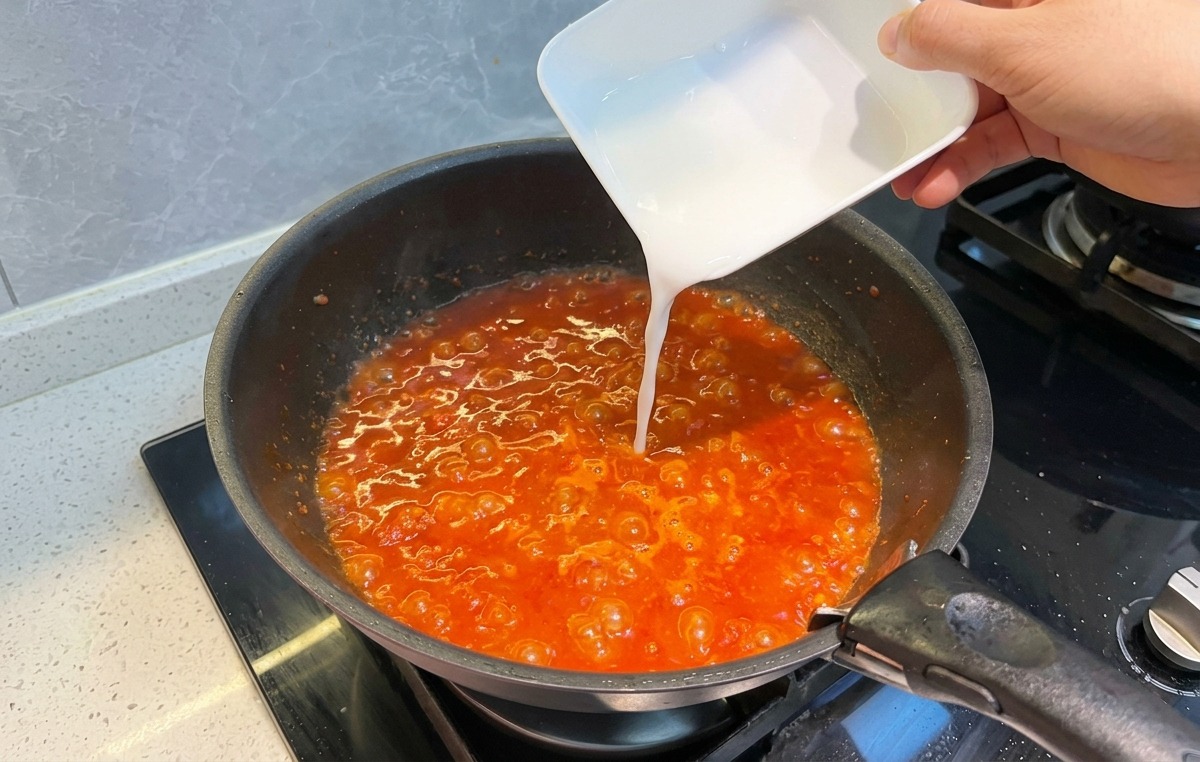
Slowly pour the prepared starch water slurry into the simmering tomato meat sauce. Stir the mixture continuously as you pour to allow the sauce to thicken into a rich, glossy consistency that will perfectly coat the pasta.
Tip: Mix the starch and water thoroughly right before pouring to ensure the starch hasnt settled at the bottom of the dish. - 13Combine pasta and sauce
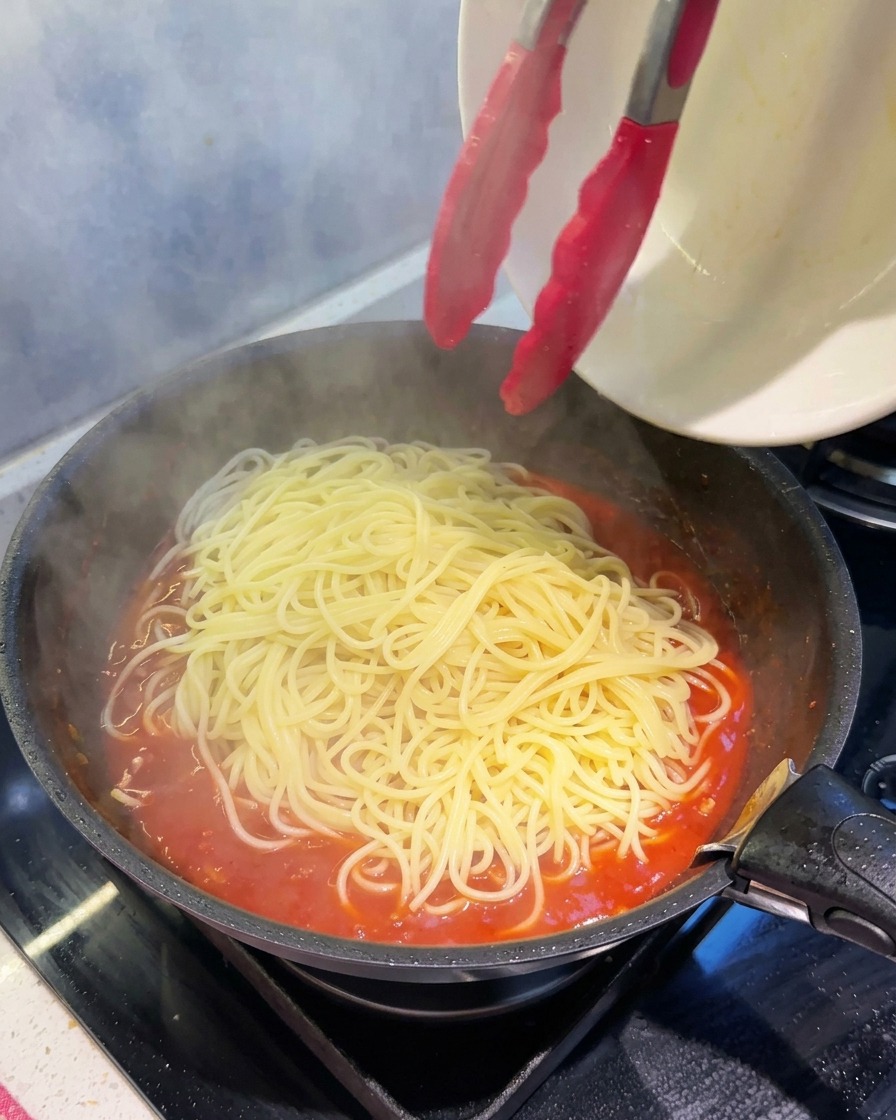
Once the soaked pasta has boiled for a few short minutes and is perfectly al dente, use a pair of tongs to scoop the hot spaghetti directly from the water and transfer it into the simmering tomato meat sauce.
Tip: Transferring the pasta directly from the pot without rinsing allows the starchy pasta water clinging to the noodles to help thicken the sauce. - 14Toss to coat
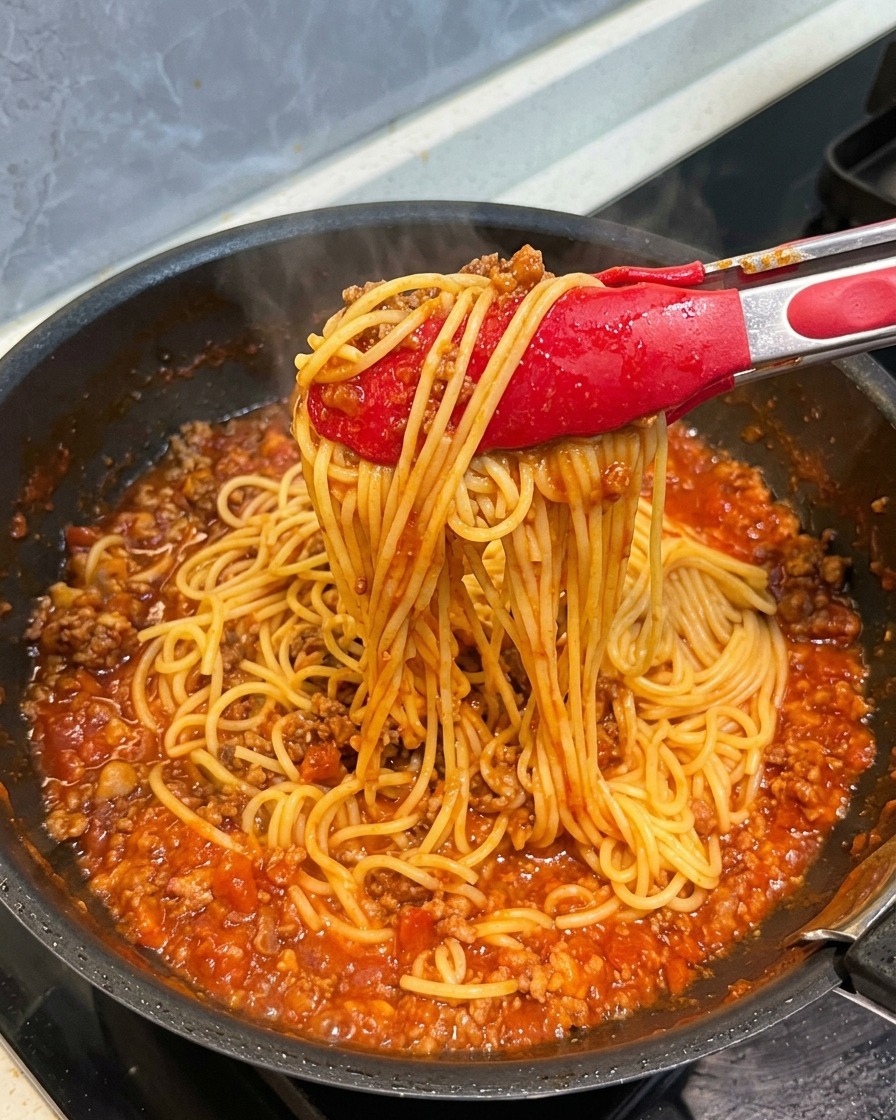
Mix the spaghetti evenly into the tomato meat sauce. Toss continuously until every single strand of pasta is perfectly coated with the savory meat sauce.
Tip: If the sauce feels too thin, you can add a small splash of starch water before mixing the noodles in to help the sauce cling better.