Quick Pork Bolognese Pappardelle
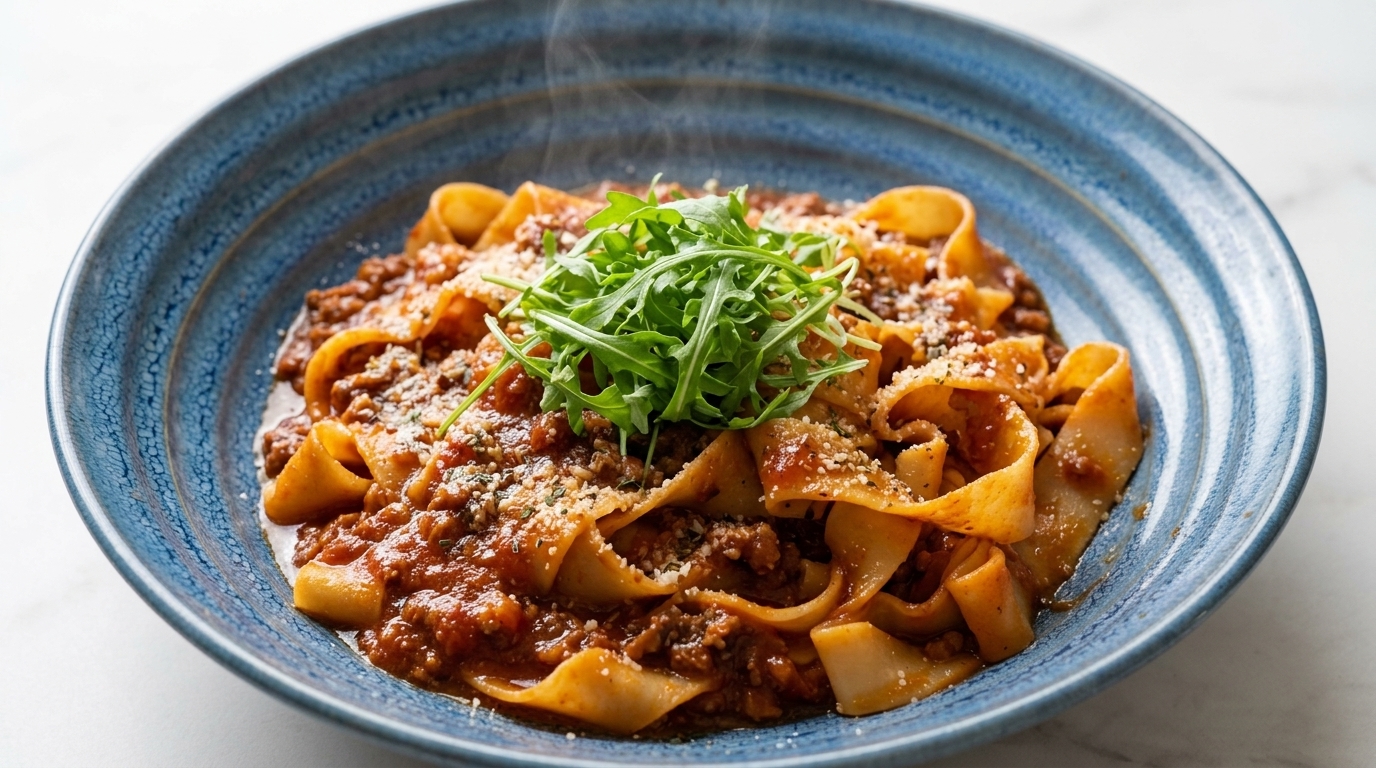
Enjoy a rich, slow-simmered flavor in a fraction of the time. This quick pork Bolognese uses a seasoned tomato base and wide pappardelle for a comforting weeknight dinner.
Traditional Bolognese requires hours of simmering and careful preparation of a mirepoix. This clever weeknight version uses a pre-seasoned tomato sauce base to bypass the chopping without sacrificing depth. Paired with wide, ribbon-like pappardelle and peppery fresh arugula, it delivers an authentic Italian dining experience in under 30 minutes.
Ingredients
- 90 g dry pappardelle pasta
- 150 g minced pork
- 1 splash red wine
- 1 cup pre-seasoned vegetable tomato sauce
- 1 dried bay leaf
- 1 pinch salt
- 1 pinch black pepper
- 1 pinch sugar
- 1 splash water
- to taste parmesan cheese
- to taste dried basil
- 1 handful fresh arugula
Instructions
- 1Boil the pasta
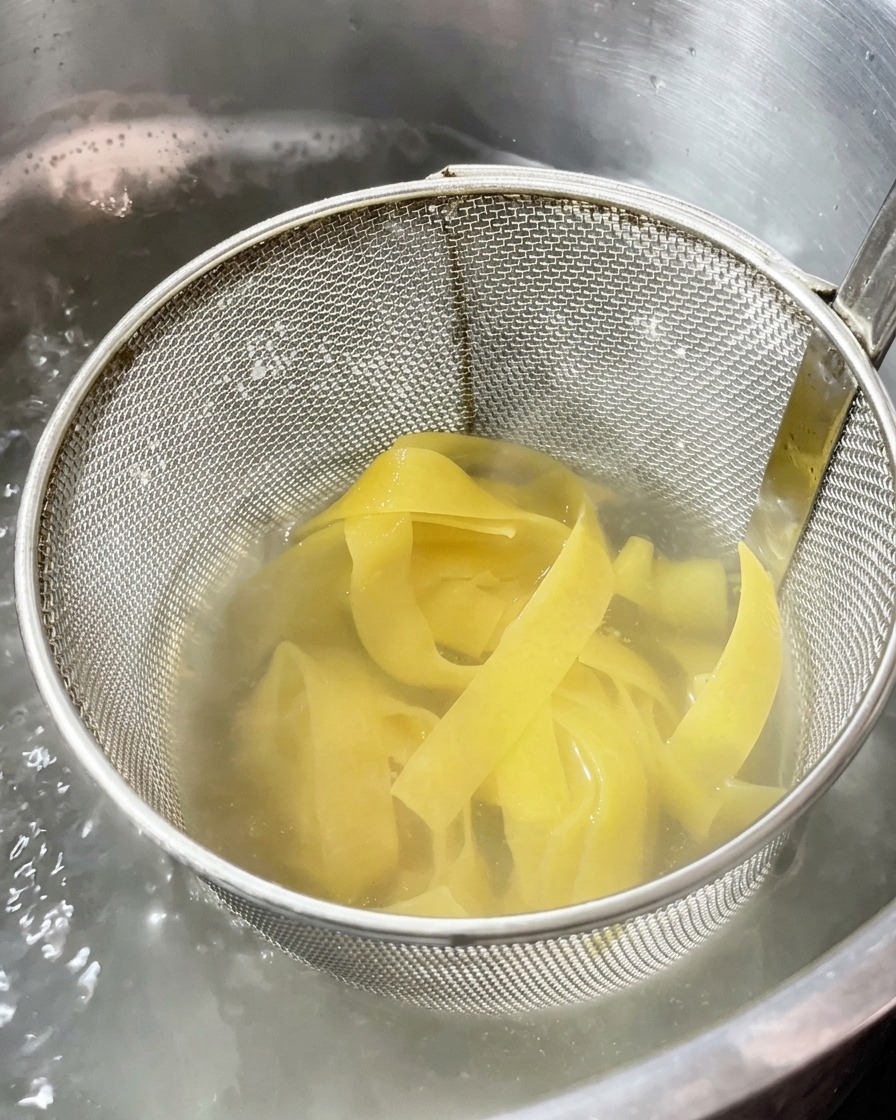
Place the wide ribbon pasta into a metal strainer and submerge it in a pot of boiling water. Let it cook according to the package instructions, usually about 12 minutes for this type of pasta, until it reaches your desired doneness.
Tip: Using a strainer basket makes it easy to remove the pasta without dumping the hot water, which you can use to adjust the sauce later if needed. - 2Add the minced pork
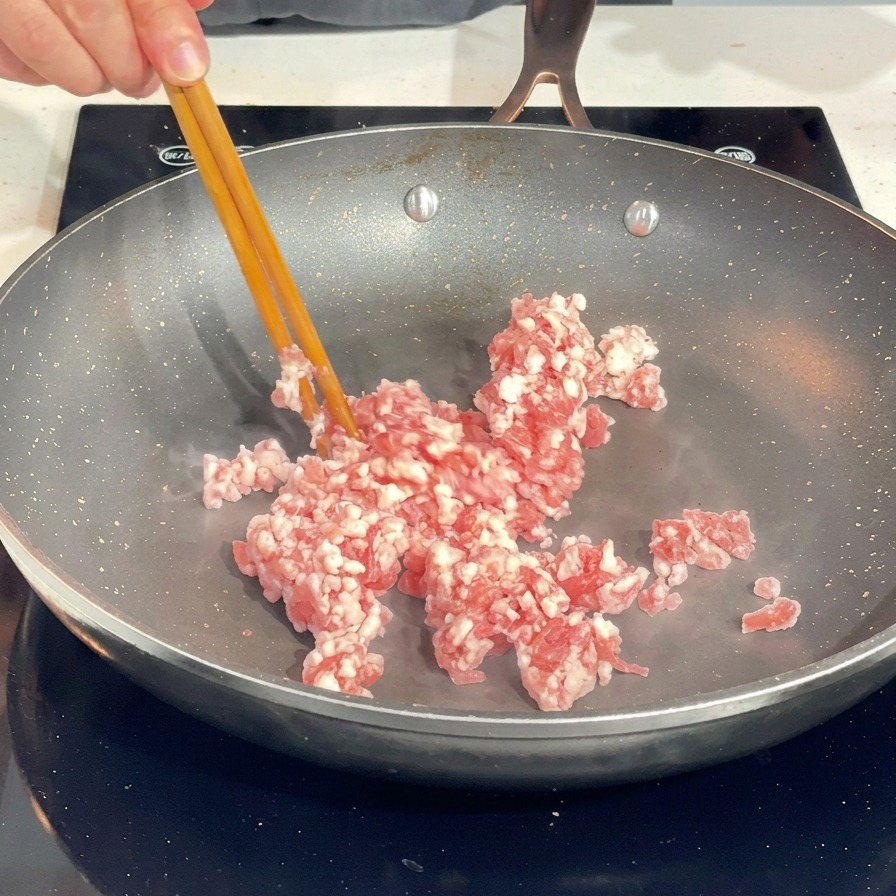
Heat a frying pan and add the raw minced pork. Use chopsticks to break up the meat and spread it evenly across the surface of the pan to begin cooking.
Tip: Breaking the pork apart early ensures an even texture and prevents large clumps from forming in your final sauce. - 3Brown the minced pork
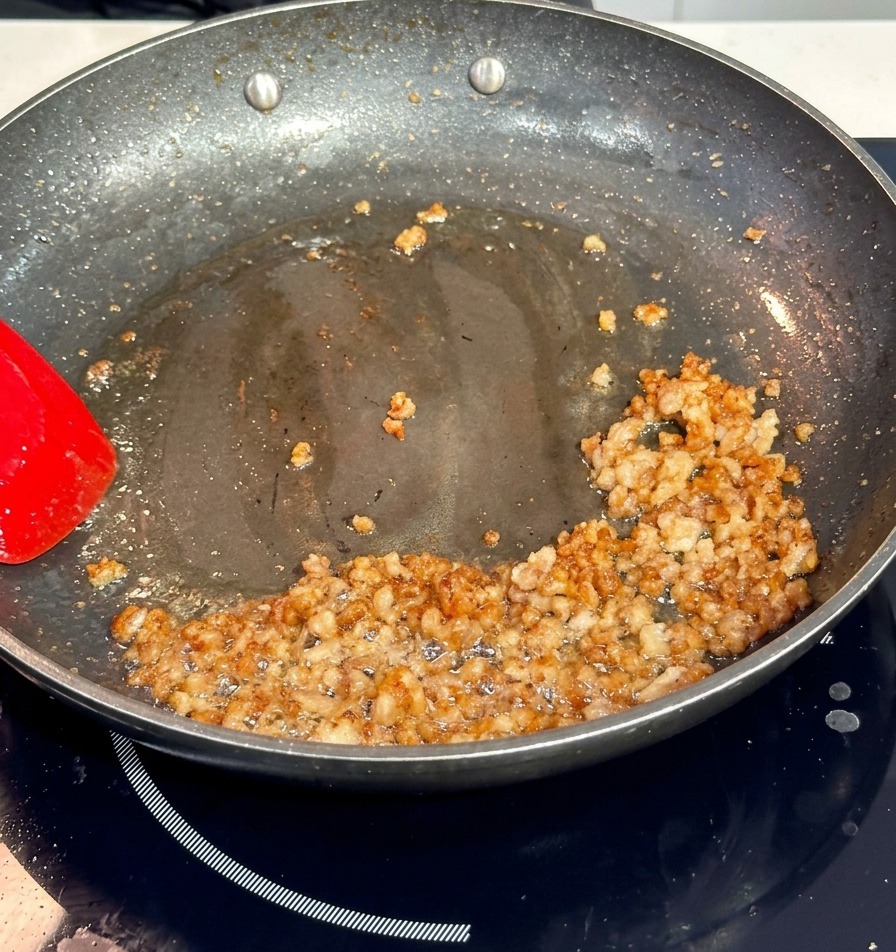
Add the minced pork to a heated pan and stir-fry using a spatula. Break the meat apart as it cooks and continue cooking until it turns completely opaque and develops a lightly browned exterior.
Tip: Allow the pork to sit undisturbed for a moment before stirring to develop a better sear and richer flavor. - 4Deglaze with red wine
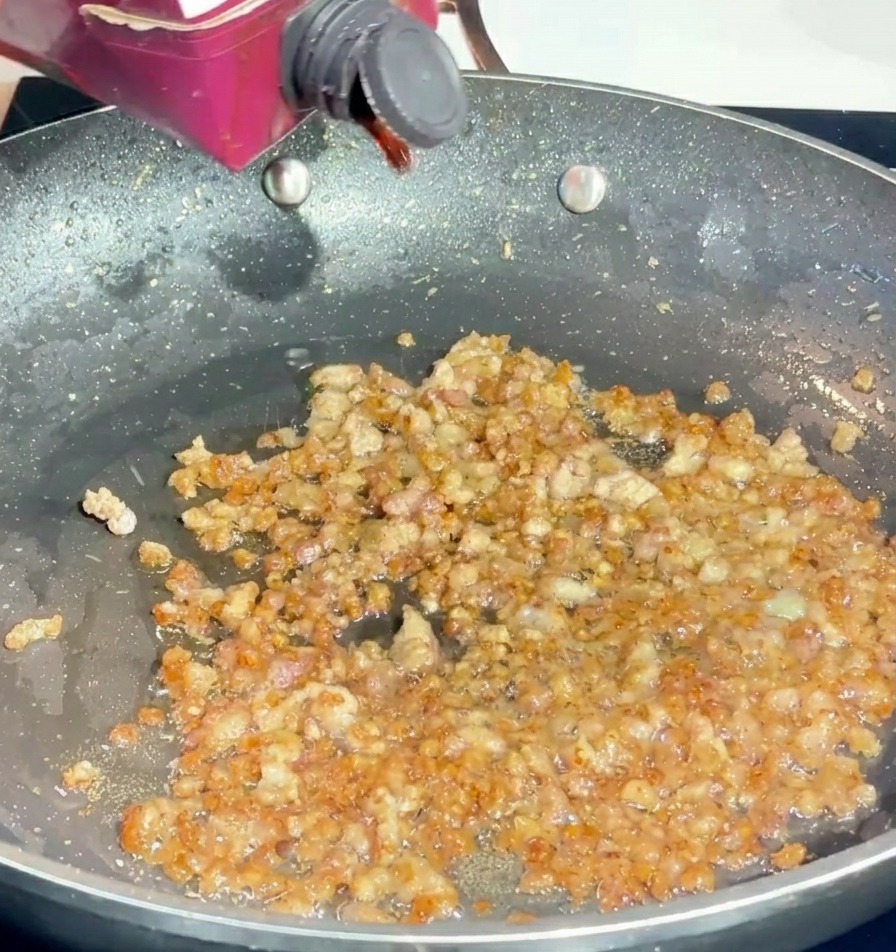
Pour a splash of red wine directly into the pan with the browned pork. Let it bubble and boil slightly for 10 to 15 seconds to cook off the harsh alcohol, leaving behind a rich aroma and depth of flavor.
Tip: Keep the heat medium-high when adding the wine so it immediately simmers and reduces, concentrating the flavor. - 5Add the tomato sauce
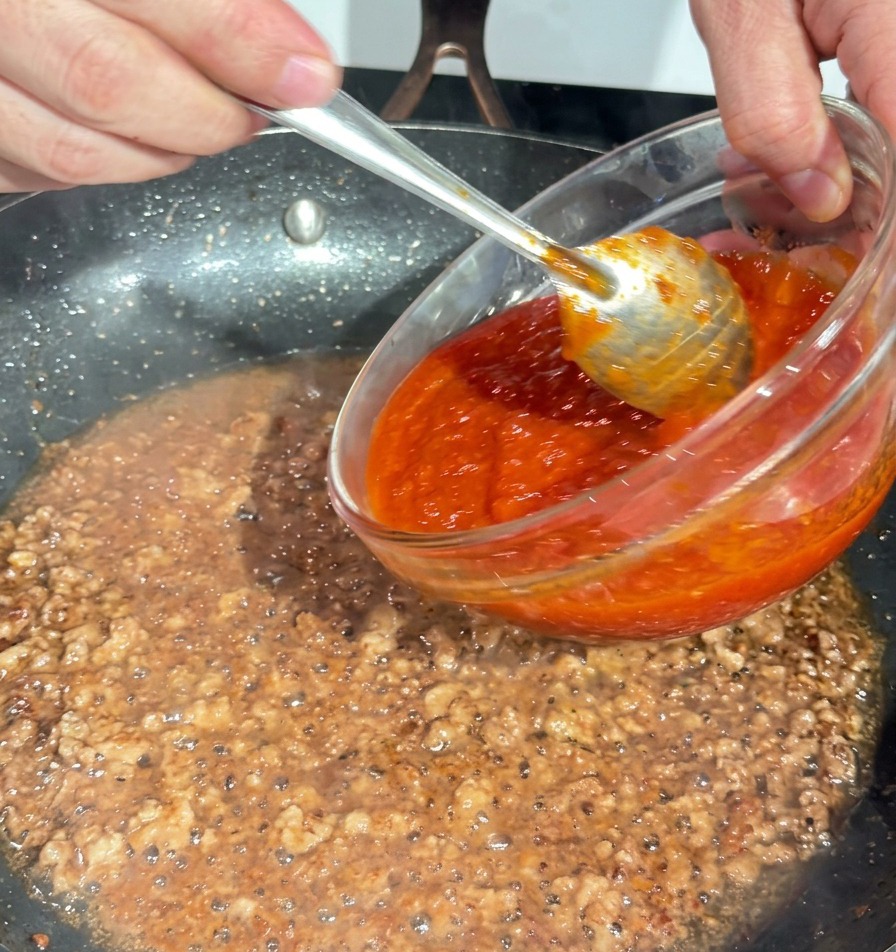
Introduce the multi-purpose tomato sauce into the pan with the browned pork. Since this sauce already contains vegetables like celery, carrots, and onions, it saves prep time while delivering a rich flavor.
Tip: Using a pre-seasoned vegetable tomato base is a great shortcut for achieving a complex, slow-cooked flavor profile in minutes. - 6Add aromatics and seasonings
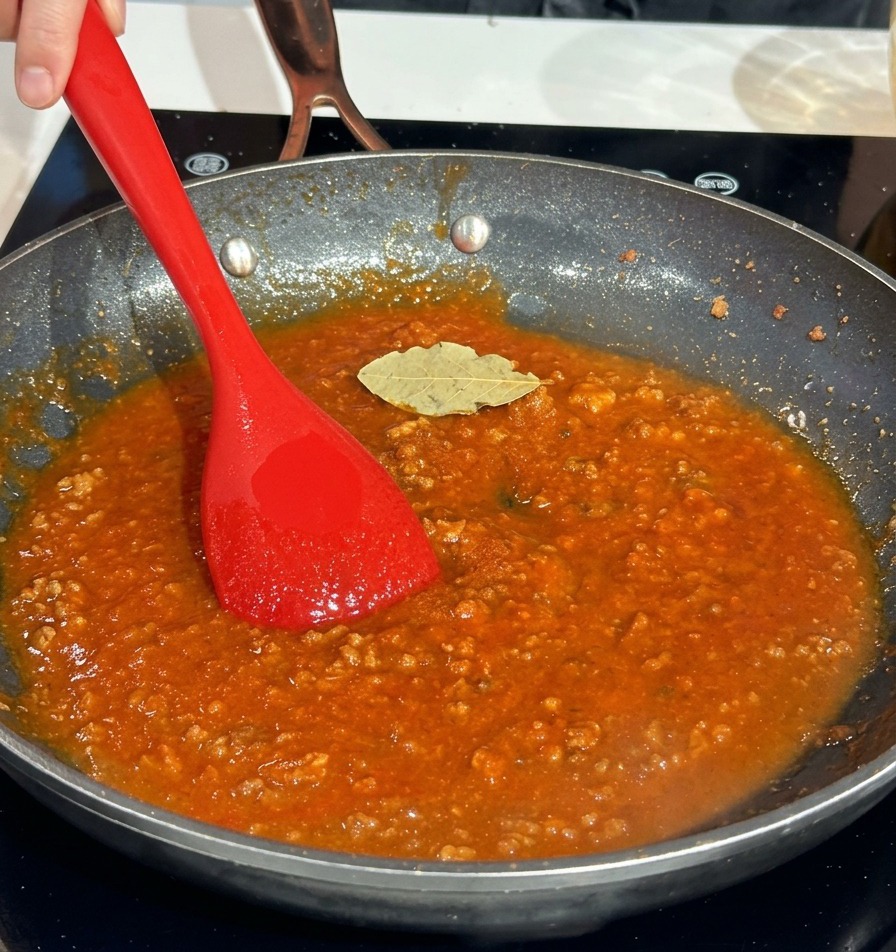
Drop a single dried bay leaf into the simmering tomato and meat sauce. Follow this up with a splash of water, a pinch of salt, black pepper, and a little sugar to balance the flavors.
Tip: Adding a little bit of sugar helps cut through the natural tartness and acidity of the tomatoes. - 7Add water to the sauce
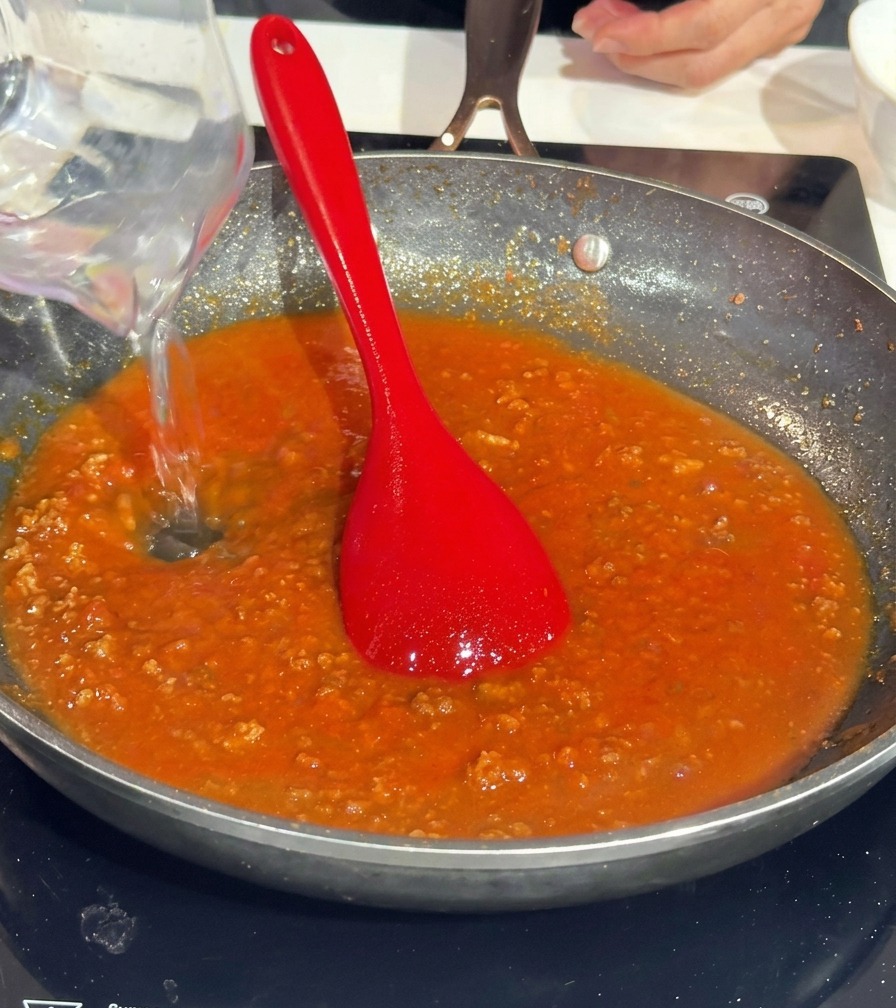
Pour a small amount of water into the simmering tomato and pork sauce. Stir everything together with a spatula to thin out the sauce slightly, allowing it to simmer and reduce to the perfect consistency.
Tip: You can use the starchy pasta cooking water instead of plain water to help the sauce emulsify and cling better to the noodles. - 8Season with salt
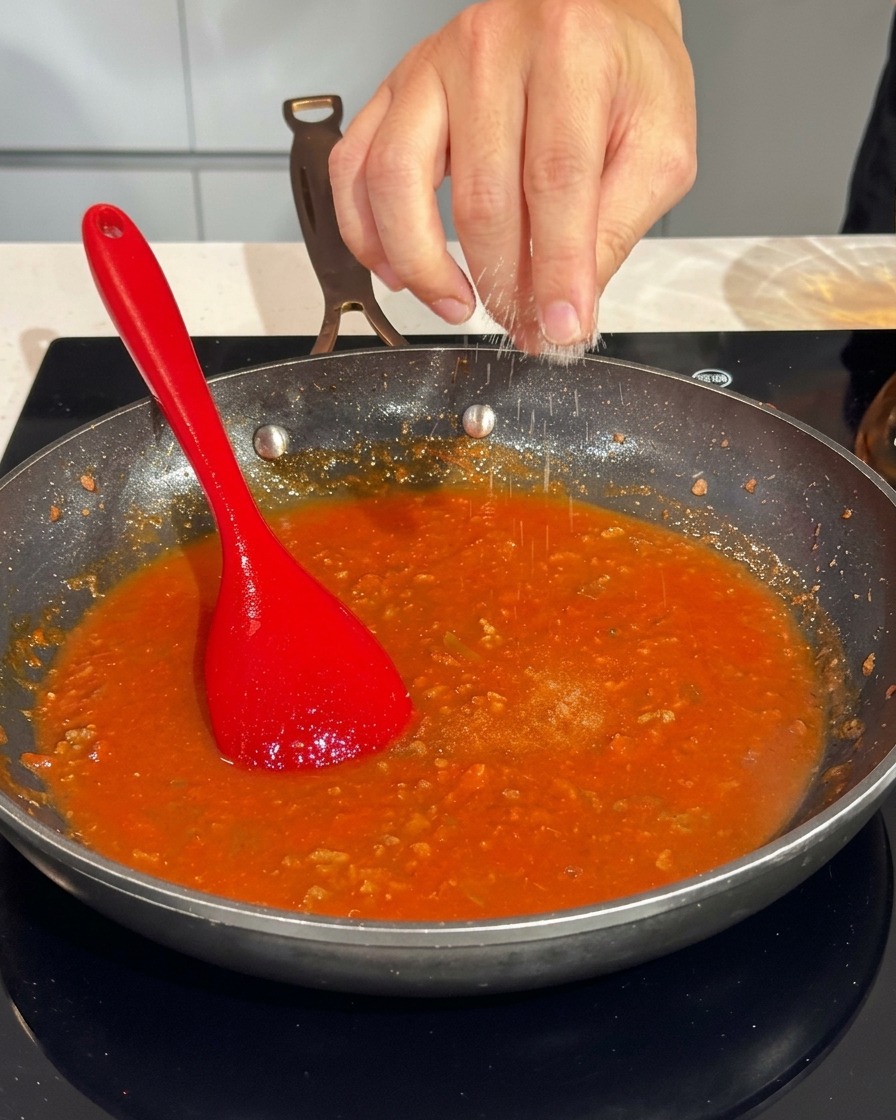
Sprinkle a generous pinch of salt evenly over the simmering red sauce. Stir well to incorporate the seasoning and taste carefully to adjust according to your preferences.
Tip: Remember that the tomato sauce and cheese added later will also contain sodium, so season carefully at this stage. - 9Add black pepper
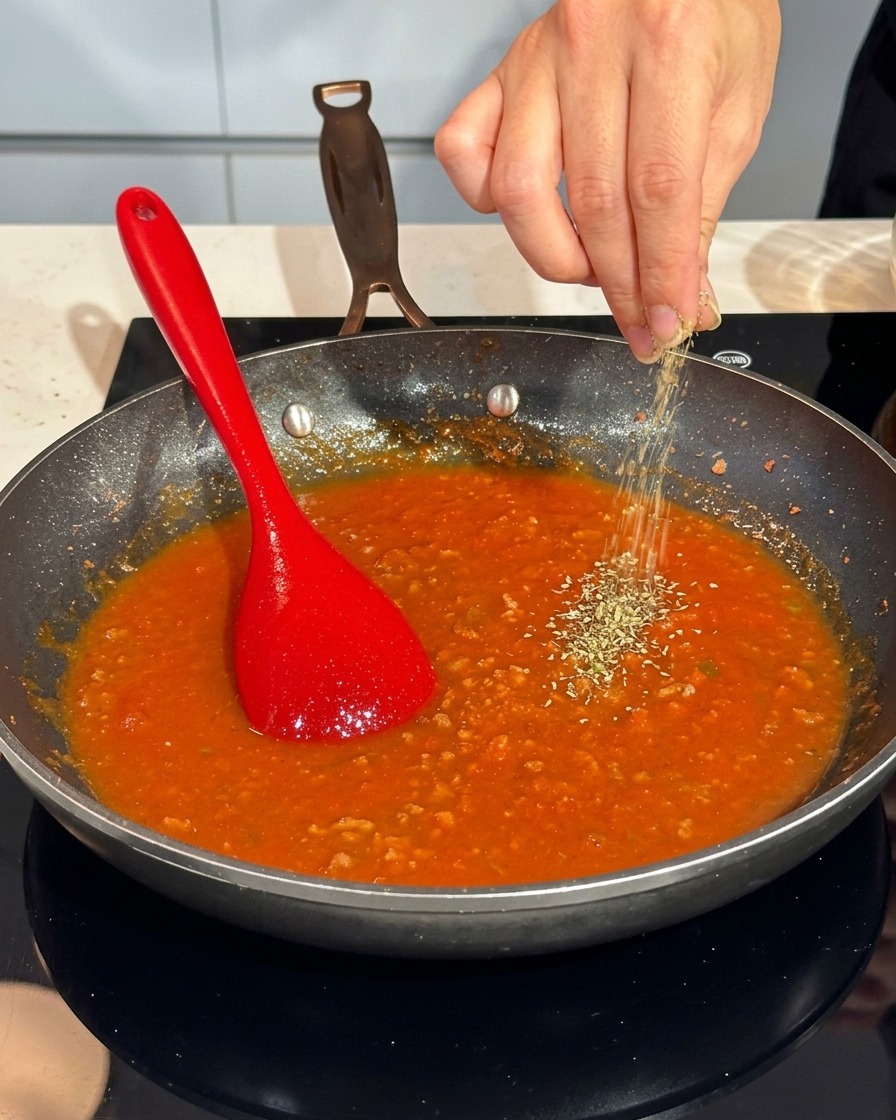
Sprinkle ground black pepper over the sauce to introduce a mild, earthy heat. Stir the sauce thoroughly to ensure the spices are evenly distributed throughout the meat mixture.
Tip: Freshly cracked black pepper will provide a much more vibrant and aromatic flavor compared to pre-ground pepper. - 10Add sugar and mix
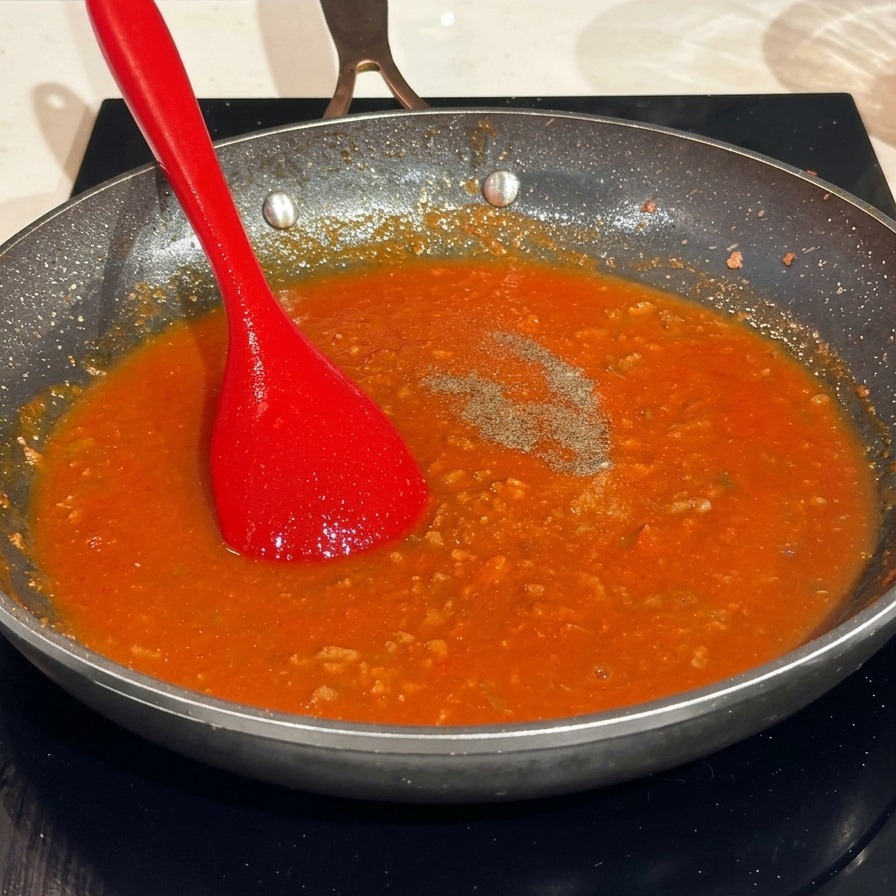
Add a pinch of sugar to the pan to balance the acidity of the tomatoes. Stir the mixture evenly with a spatula to ensure all the seasonings are well incorporated into the meat sauce.
Tip: A small amount of sugar acts to neutralize the tart acidity of the tomatoes, creating a smoother and more balanced flavor profile. - 11Cover and simmer
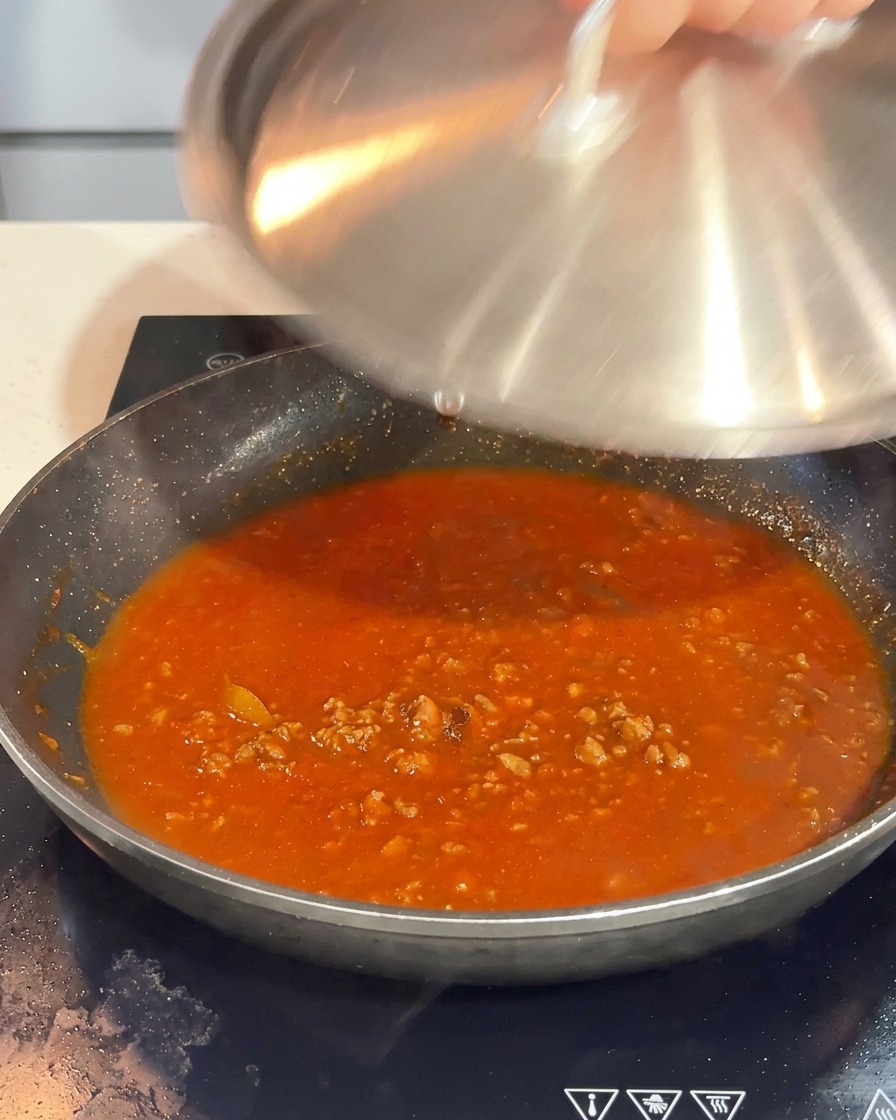
Bring the sauce up to a gentle boil, then place a lid securely onto the frying pan. Allow the sauce to simmer for about 15 minutes so the ingredients can break down and the flavors can deeply meld.
Tip: Simmering slowly on low heat prevents the sauce from splattering and allows the meat to become perfectly tender. - 12Drain the cooked pasta
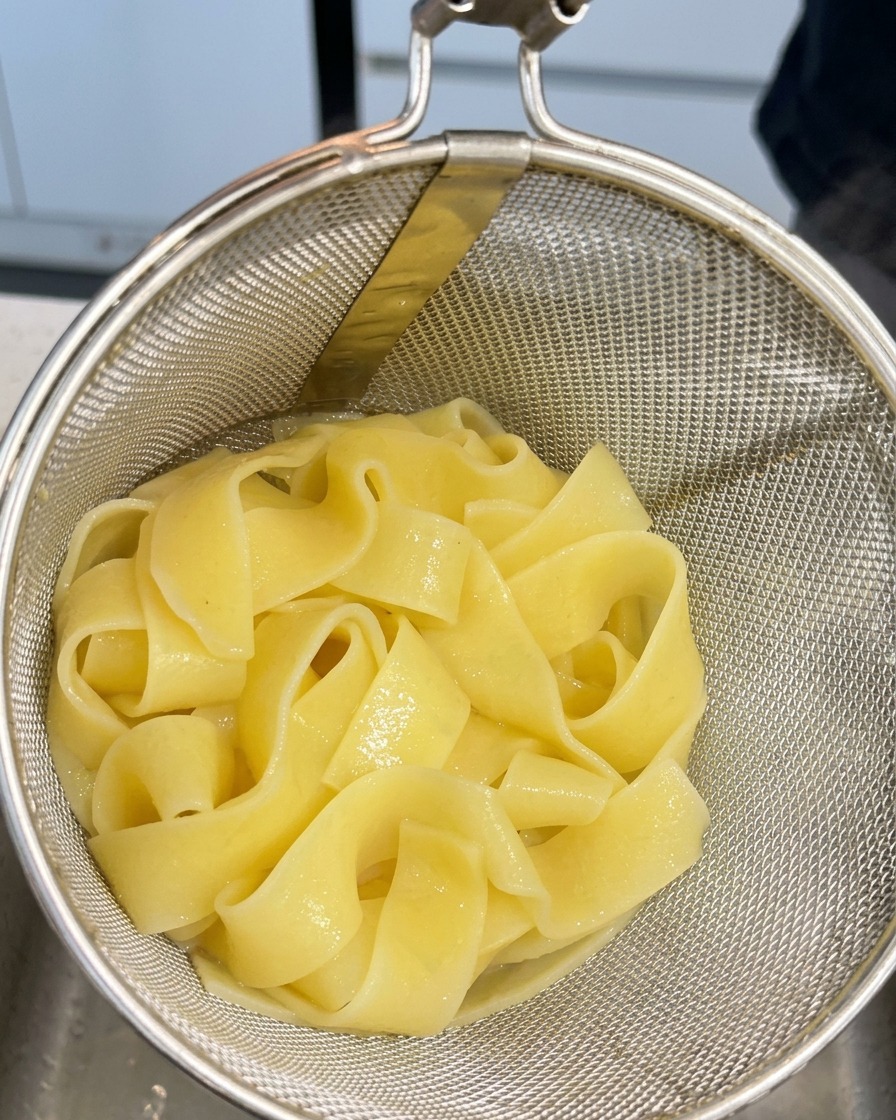
Once the wide pasta reaches your desired tenderness, lift it out of the boiling water using a metal strainer or spider skimmer. Let the excess water drain off completely before moving to the next step.
Tip: Avoid rinsing the pasta after boiling. The natural starches left on the surface of the noodles are essential for helping the meat sauce cling to them later. - 13Add pasta to the sauce
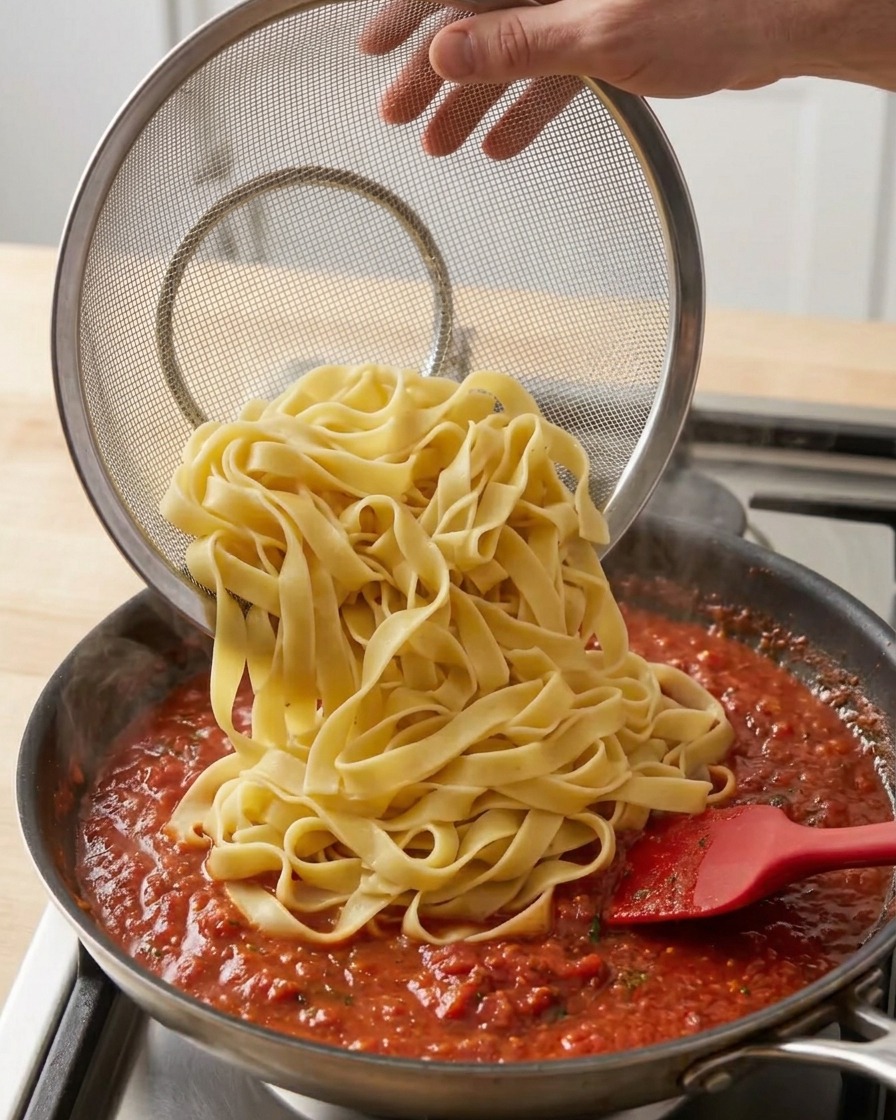
Immediately transfer the freshly drained, hot wide pasta ribbons directly into the pan of simmering meat sauce.
Tip: Mixing the pasta directly into the sauce pan rather than pouring sauce over plain pasta in a bowl ensures maximum flavor absorption and a perfectly coated dish. - 14Toss and coat the pasta
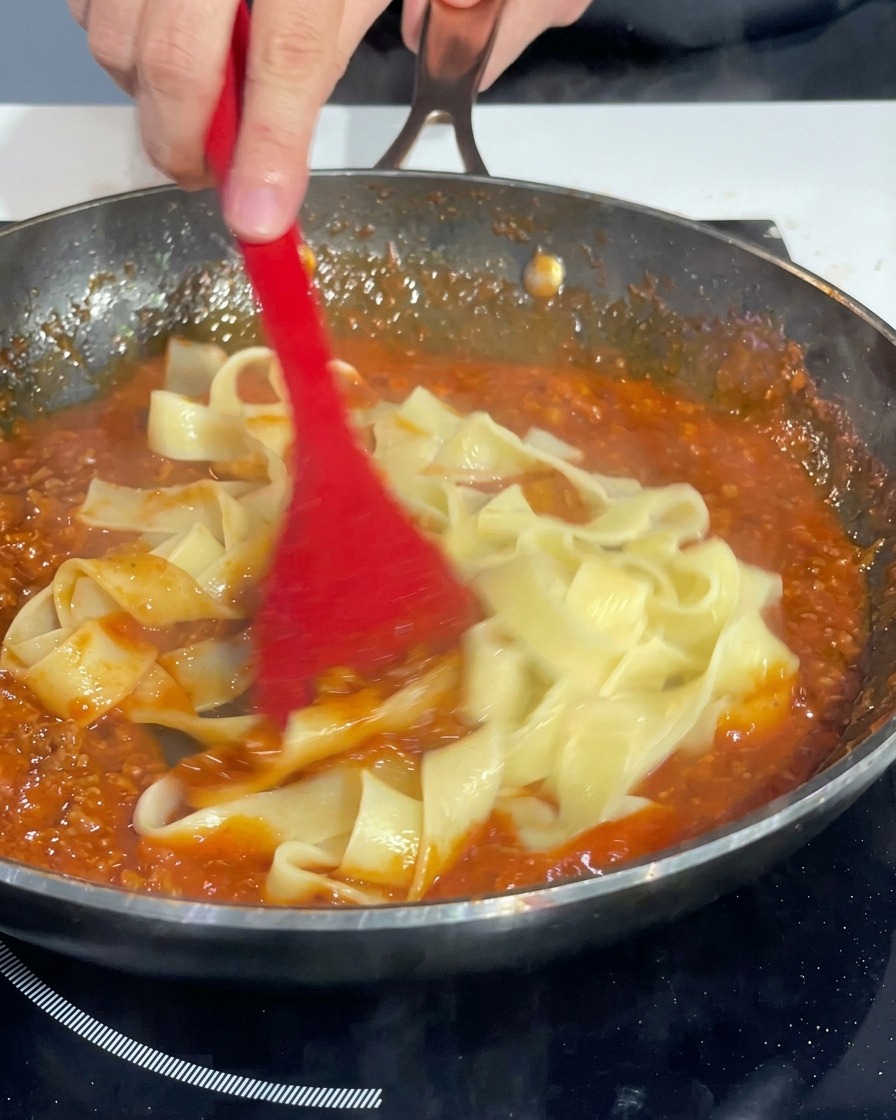
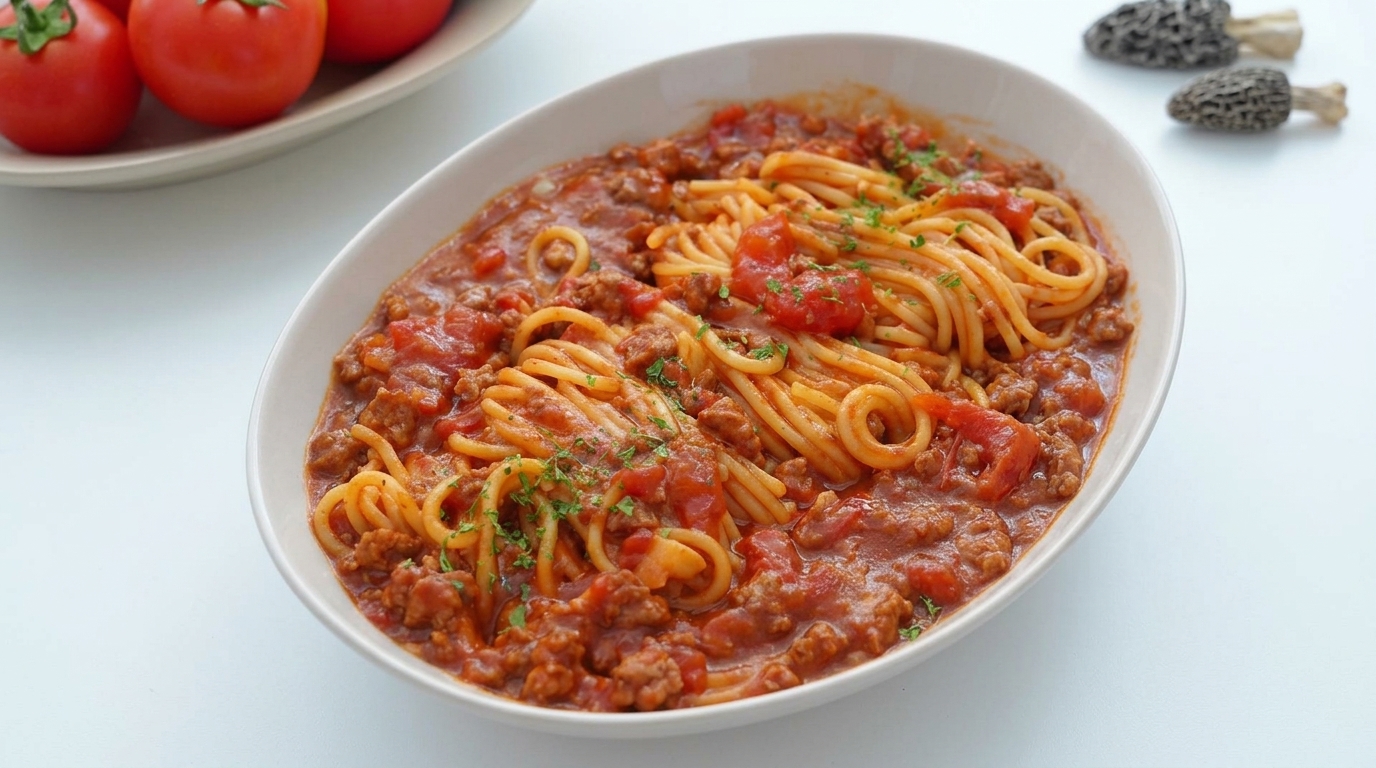
Using a spatula or tongs, gently toss the wide pasta ribbons in the pan over low heat. Make sure every noodle is thoroughly coated with the rich tomato and meat sauce, letting them cook together briefly so the flavors meld.
Tip: If the sauce seems a little too thick while tossing, add a small splash of the starchy pasta boiling water to loosen it up and create a silky, emulsified coating. - 15Plate and garnish
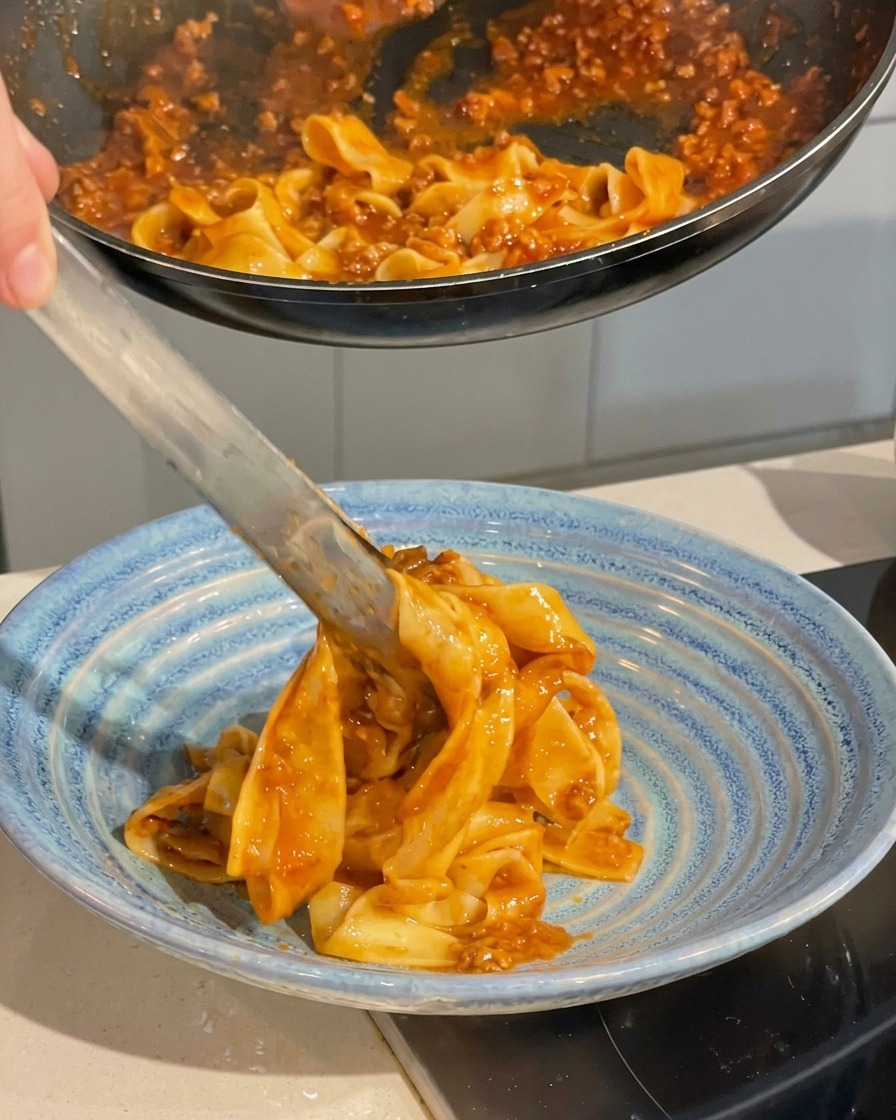
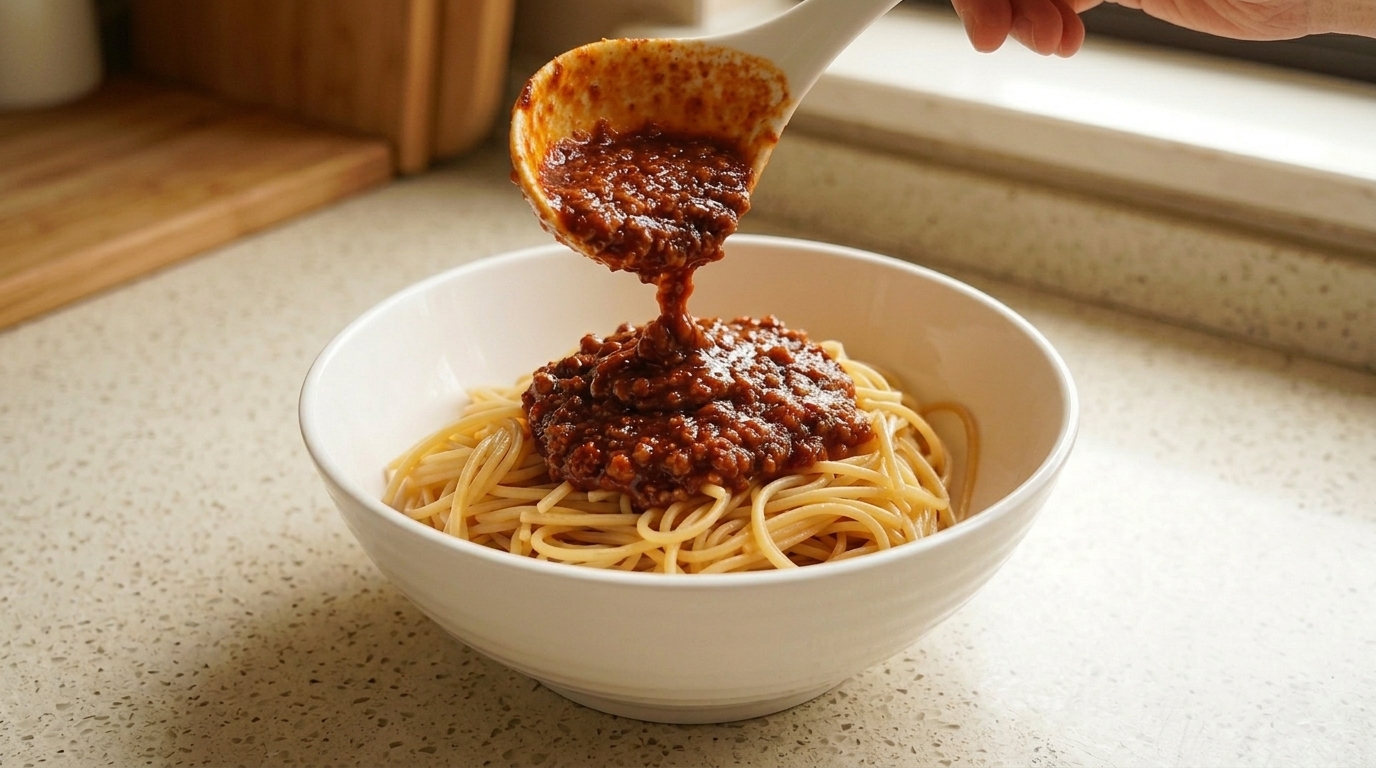
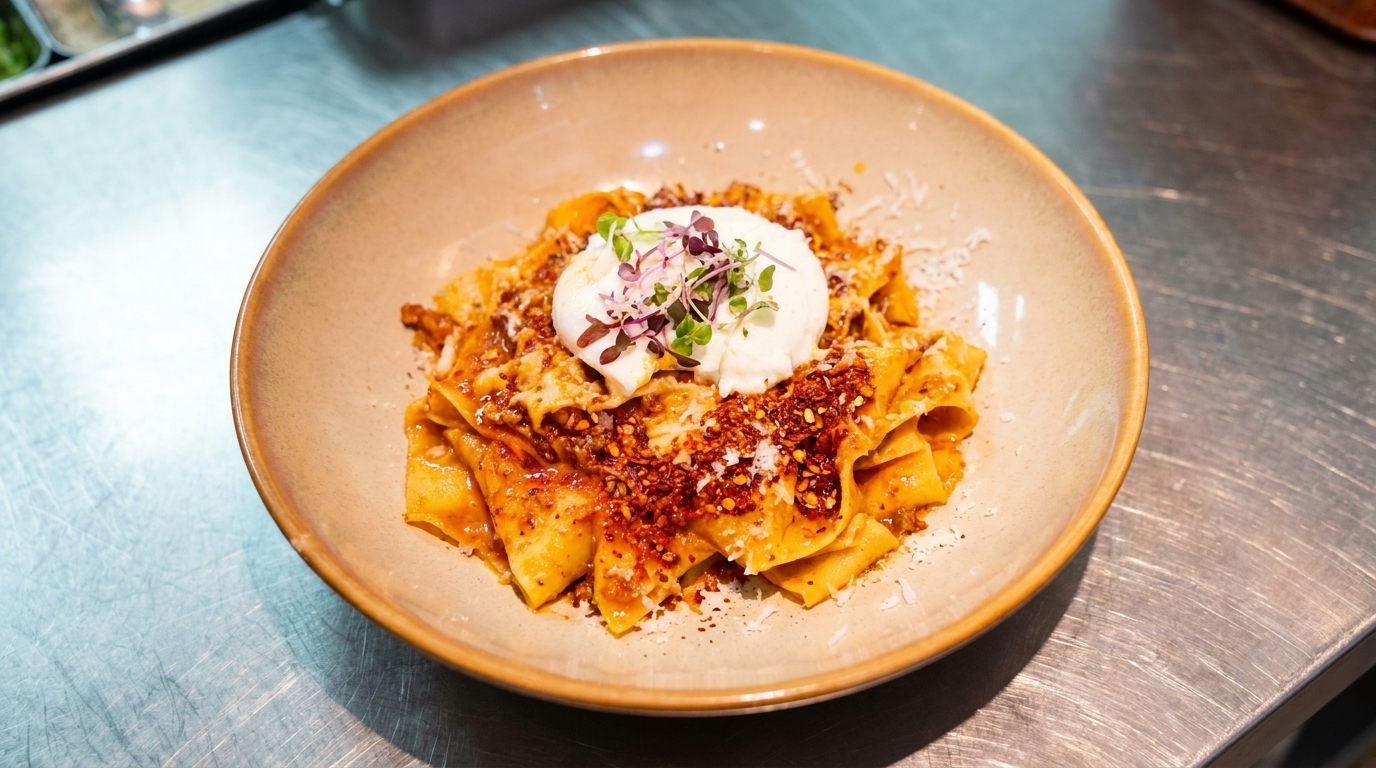
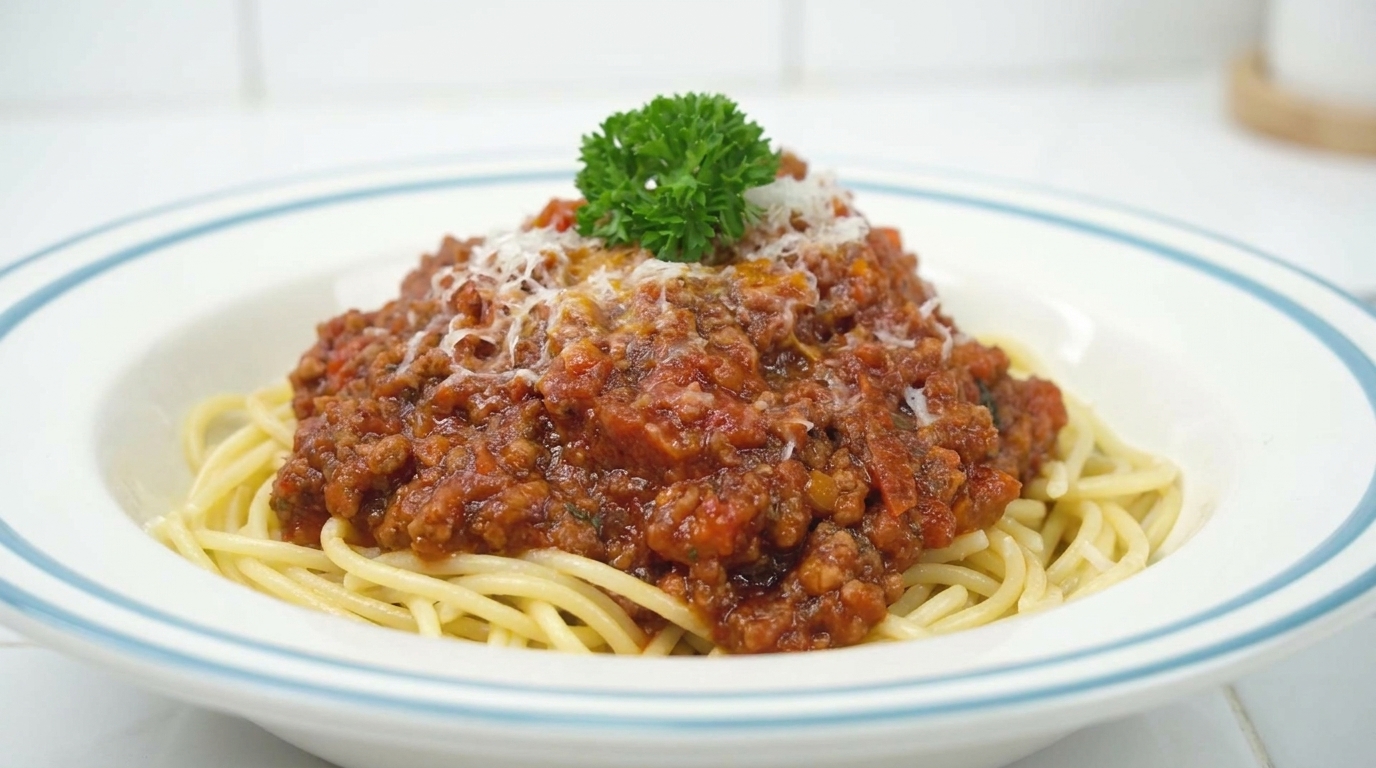
Using a pair of kitchen tongs, carefully lift the well-coated pasta from the pan and transfer it into a serving bowl. Scoop up any remaining meat sauce and pour it over the top. Garnish with a dusting of parmesan cheese, dried basil, and a handful of fresh arugula leaves.
Tip: Twirl the pasta gently with the tongs as you lower it into the bowl to create an attractive, restaurant-style mound.