Umami-Rich Tomato Beef Spaghetti
This Asian-inspired take on a classic meat sauce uses soy sauce, mushroom seasoning, and a fresh blended vegetable base to deliver incredible depth and umami in a fraction of the time.
While a traditional Italian meat sauce relies on wine and hours of gentle simmering, this fusion interpretation borrows from Asian flavor philosophies. By pureeing a fresh vegetable base and enriching it with soy sauce, oyster sauce, and mushroom seasoning, you create a deeply savory, complex sauce almost instantly. Its a comforting, cross-cultural twist that results in a hearty, restaurant-quality meal right at home.
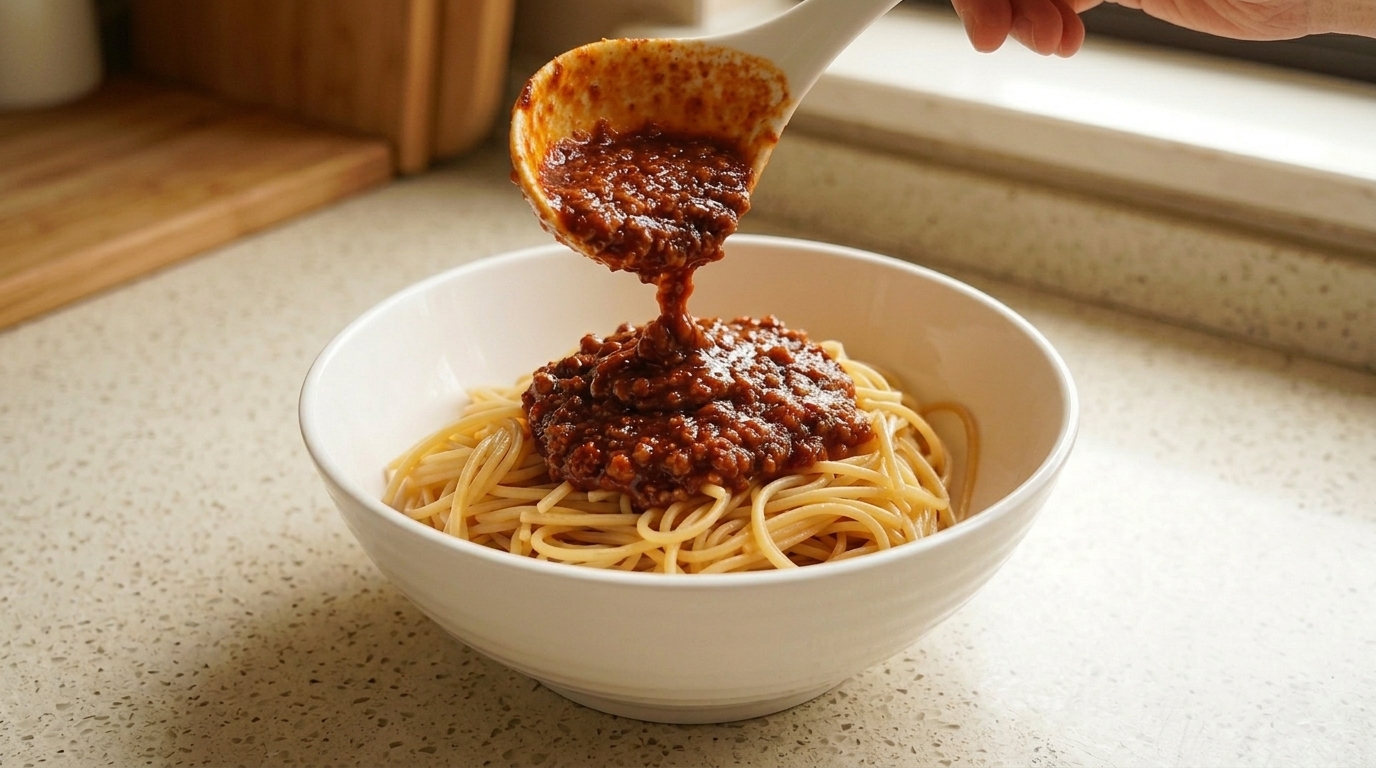
Ingredients
- 1 whole tomato (peeled)
- 12 onion (diced)
- 12 carrot (diced)
- 1 stalk celery (diced)
- 1 tbsp minced garlic
- 1 tbsp black pepper
- 1 tbsp mushroom seasoning
- 1 tbsp white sugar
- 12 tbsp salt
- 12 tbsp light soy sauce
- 1 tsp dark soy sauce
- 1 tbsp oyster sauce
- 2 tbsp ketchup
- 1 tbsp cooking oil
- 250 g minced beef
- 1 tbsp butter
- 200 g spaghetti (cooked)
Instructions
- 1Prepare the vegetable base
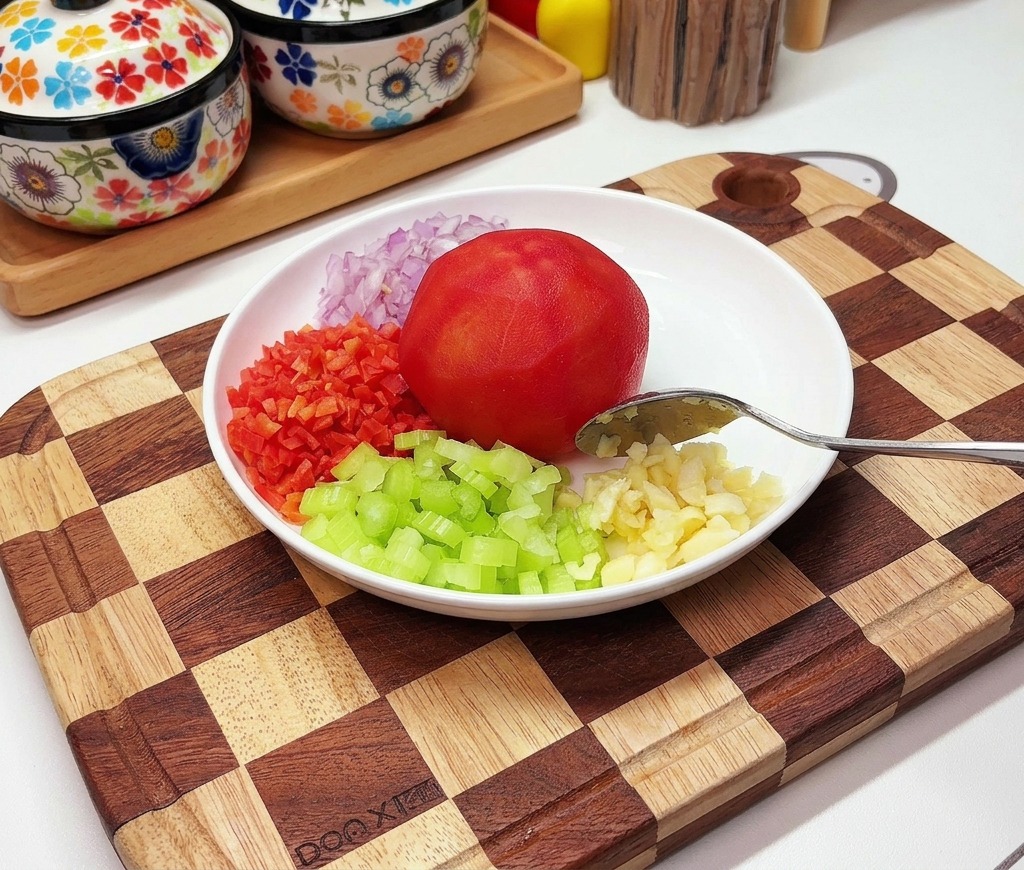
Begin by placing a peeled whole tomato in the center of a plate. Surround it with half a diced onion, half a diced carrot, chopped celery, and a spoonful of minced garlic. These fresh aromatics will form the flavorful foundation of your rich meat sauce.
Tip: Dicing the vegetables into small, uniform pieces ensures they blend smoothly and release their flavors evenly into the sauce. - 2Transfer to the food processor
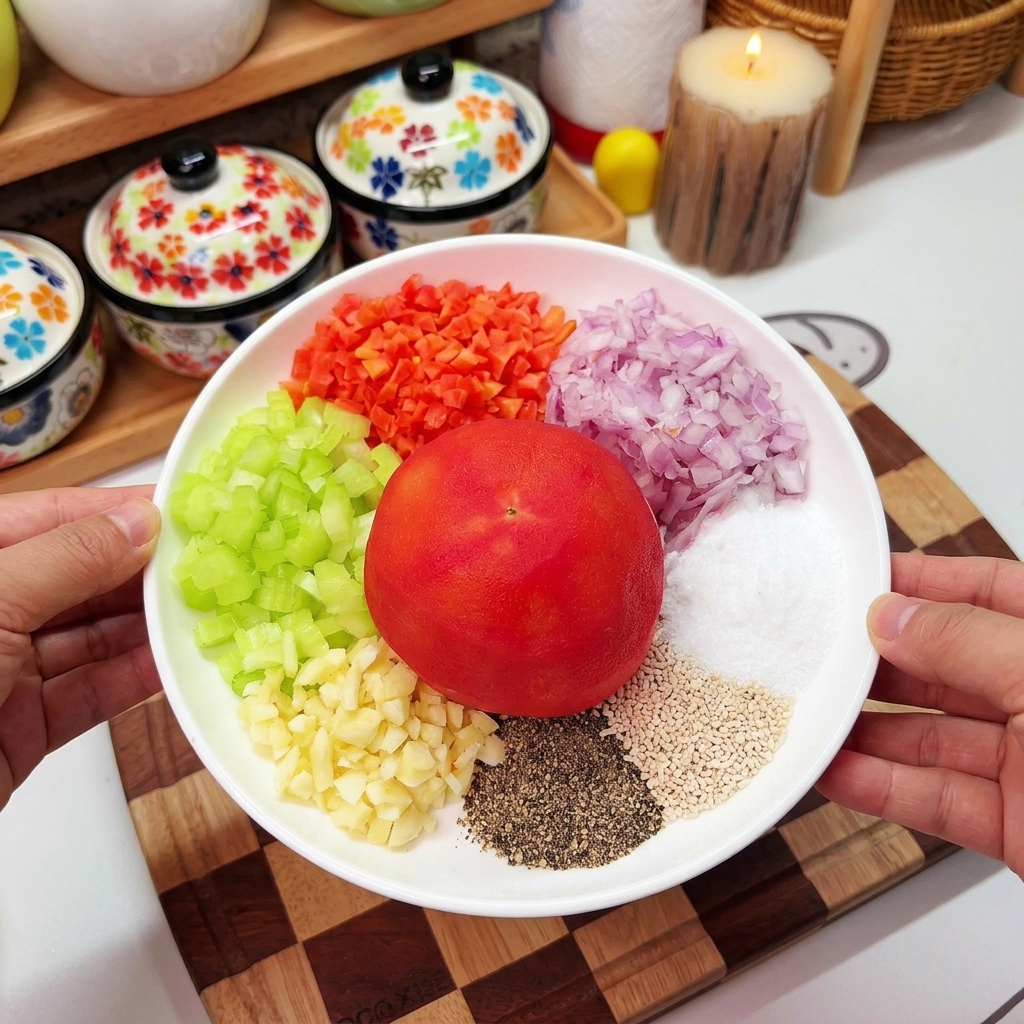
Carefully slide the peeled tomato, diced vegetables, and all of your measured dry seasonings from the plate directly into a glass food processor bowl.
Tip: If your food processor is on the smaller side, roughly chop the tomato first to give the blades an easier time blending the ingredients. - 3Add the liquid seasonings
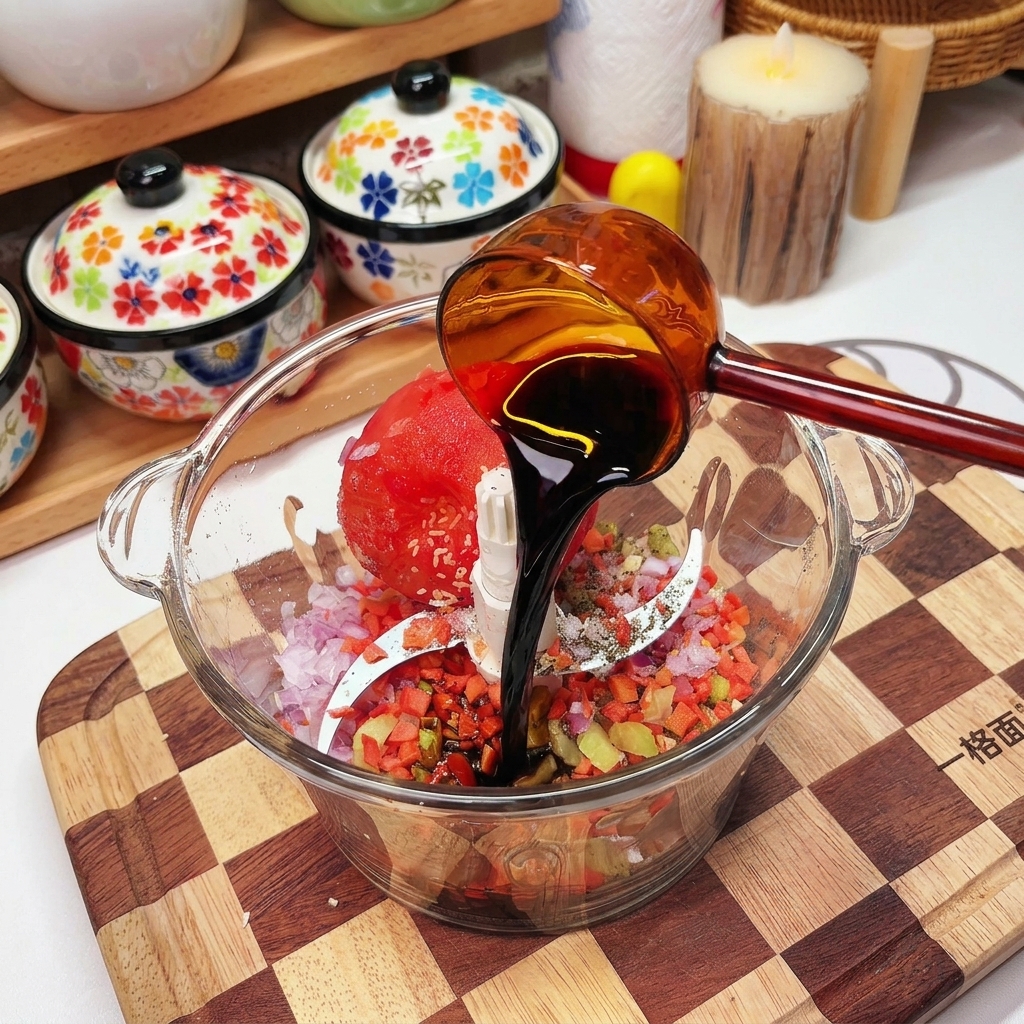
With the vegetables and dry seasonings in the food processor, pour in the light soy sauce, dark soy sauce, and oyster sauce. These savory liquids provide a deep color and a rich umami base for the meat sauce.
Tip: Using a combination of light and dark soy sauce adds both flavor depth and an appetizing dark color to the final sauce. - 4Squeeze in the ketchup
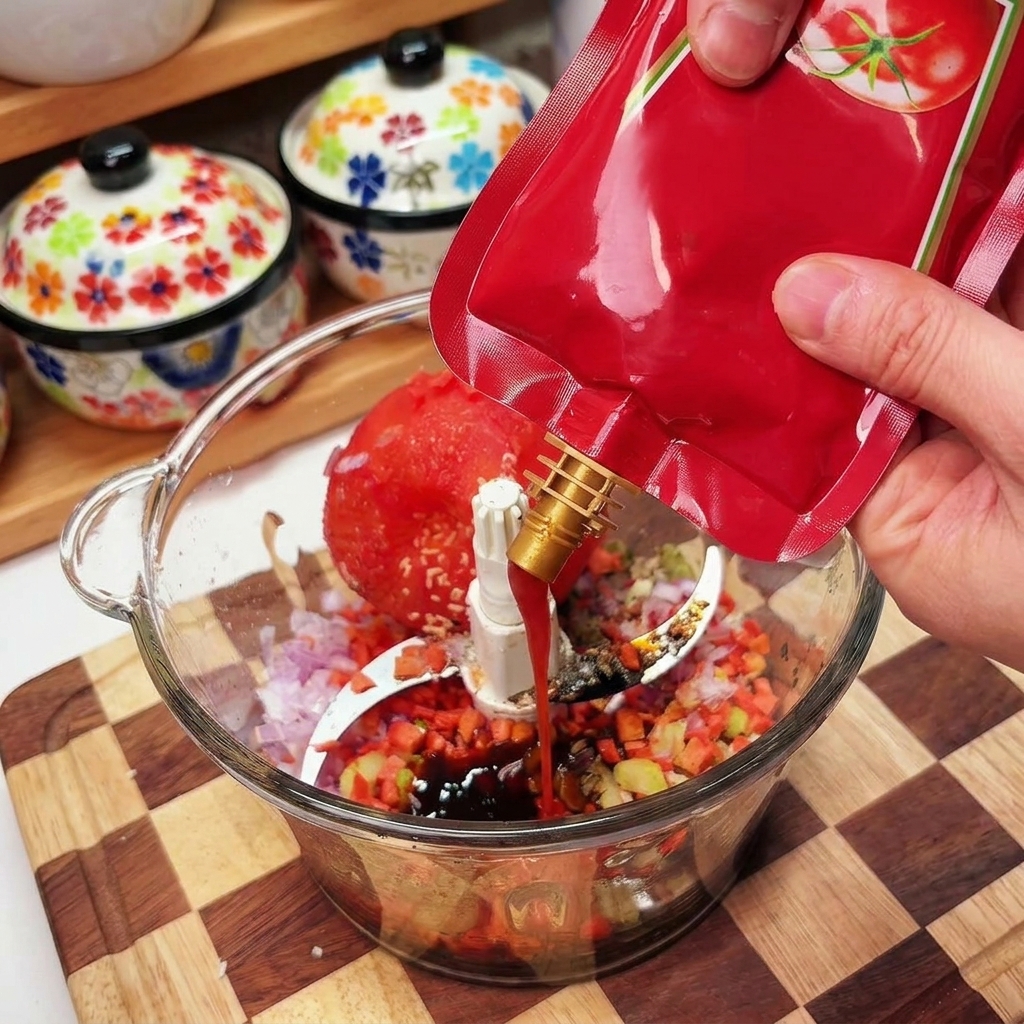
Squeeze a generous amount of ketchup directly into the food processor bowl. The ketchup enhances the natural tomato flavor and adds a touch of sweetness and acidity to perfectly balance the savory soy sauces.
Tip: Adjust the amount of ketchup depending on how sweet or tart your fresh tomato is. - 5Blend into a smooth sauce
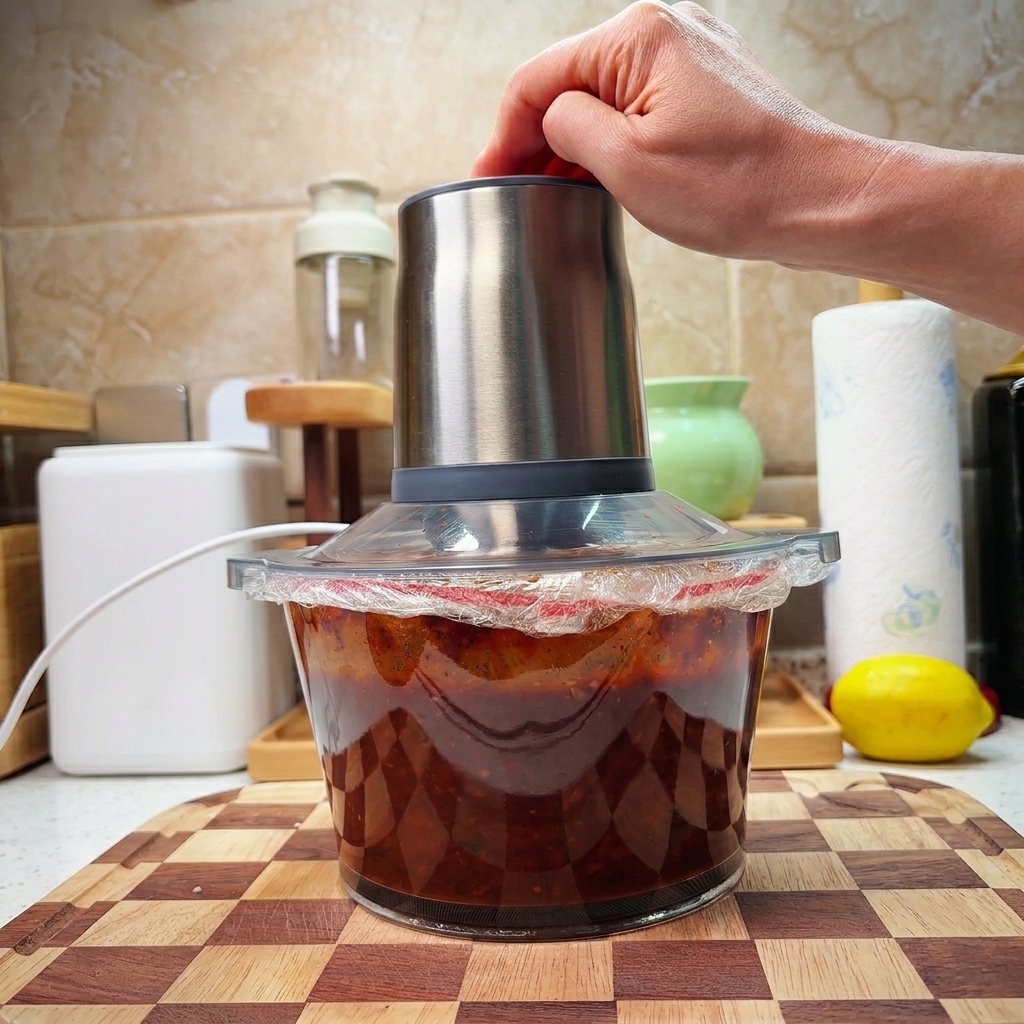
Cover the food processor bowl with a layer of plastic wrap before placing the lid on top to prevent any splashes or leaks. Blend all the ingredients together until they form a smooth, dark red sauce.
Tip: The plastic wrap trick saves you from having to clean the complicated lid of the food processor—just toss it when youre done! - 6Check the sauce consistency
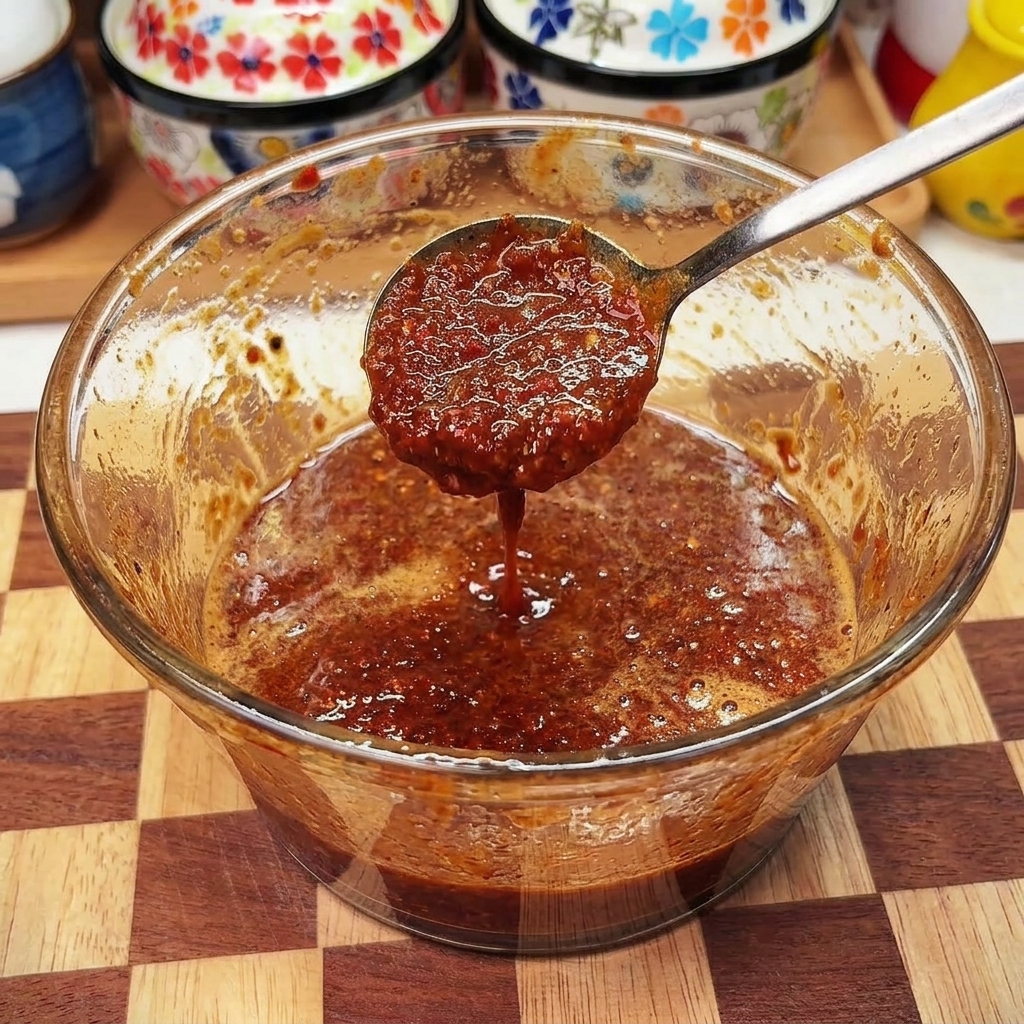
Once blended, check the consistency of the mixture. It should be a textured, dark red liquid sauce where all the vegetables are finely pureed but still retain a bit of body. This will serve as the flavorful base to add to your cooked beef.
Tip: Dont over-blend into a completely watery liquid; keeping a little bit of texture makes for a heartier meat sauce. - 7Sear the minced beef
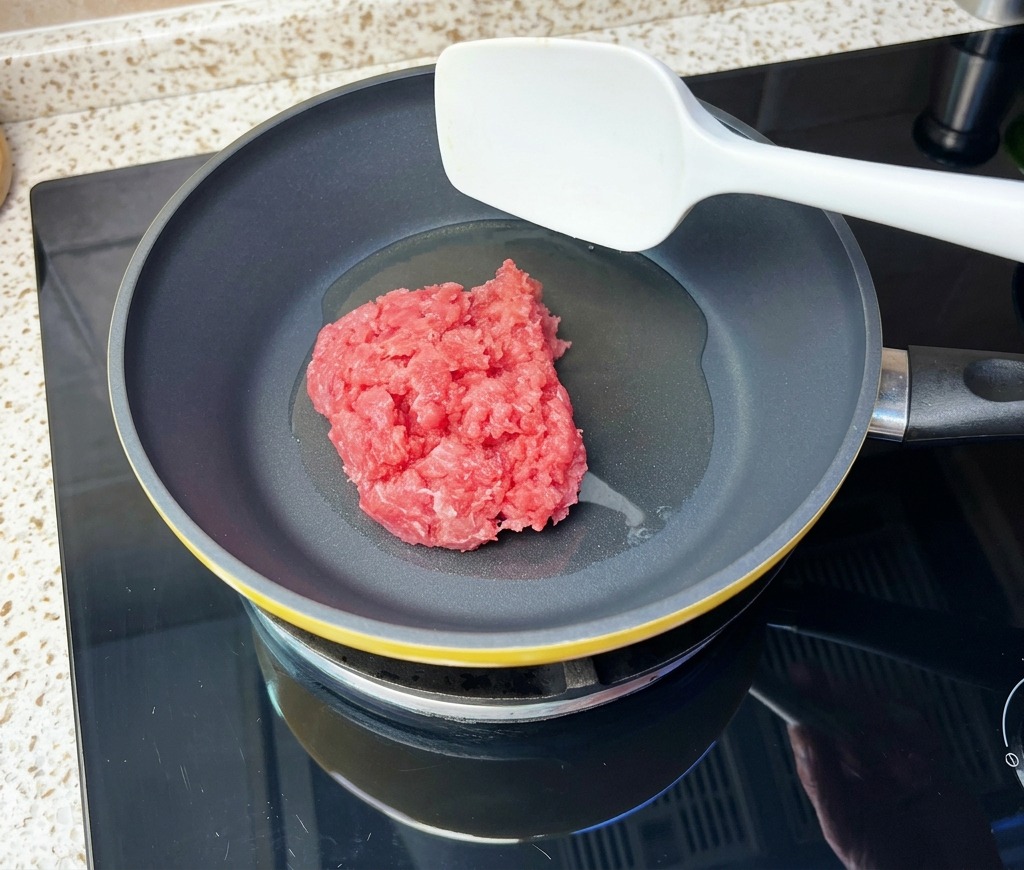
Heat a drizzle of cooking oil in a dark skillet over medium-high heat. Once the oil is hot, add the raw minced beef to the pan. Searing the meat properly at this stage is crucial for developing a deep, savory flavor for the final dish.
Tip: Allow the beef to sit undisturbed for a moment before stirring so it develops a nice brown crust on the bottom. - 8Brown and crumble the meat
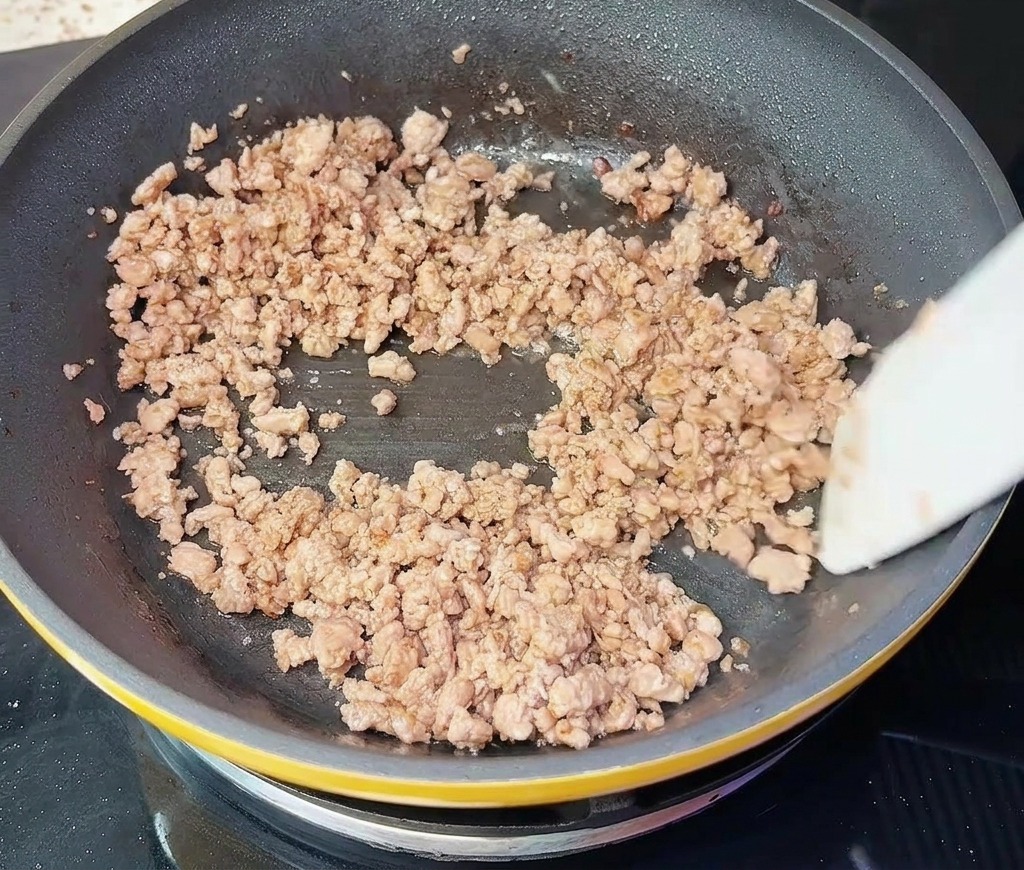
Using a spatula, break apart the minced beef and stir-fry continuously until it is completely browned and crumbled. Make sure no pink spots remain and the meat becomes beautifully fragrant, releasing its natural juices into the pan.
Tip: Drain any excessive fat from the pan if necessary, but keep a little to carry the rich flavors into the tomato sauce. - 9Incorporate the tomato sauce
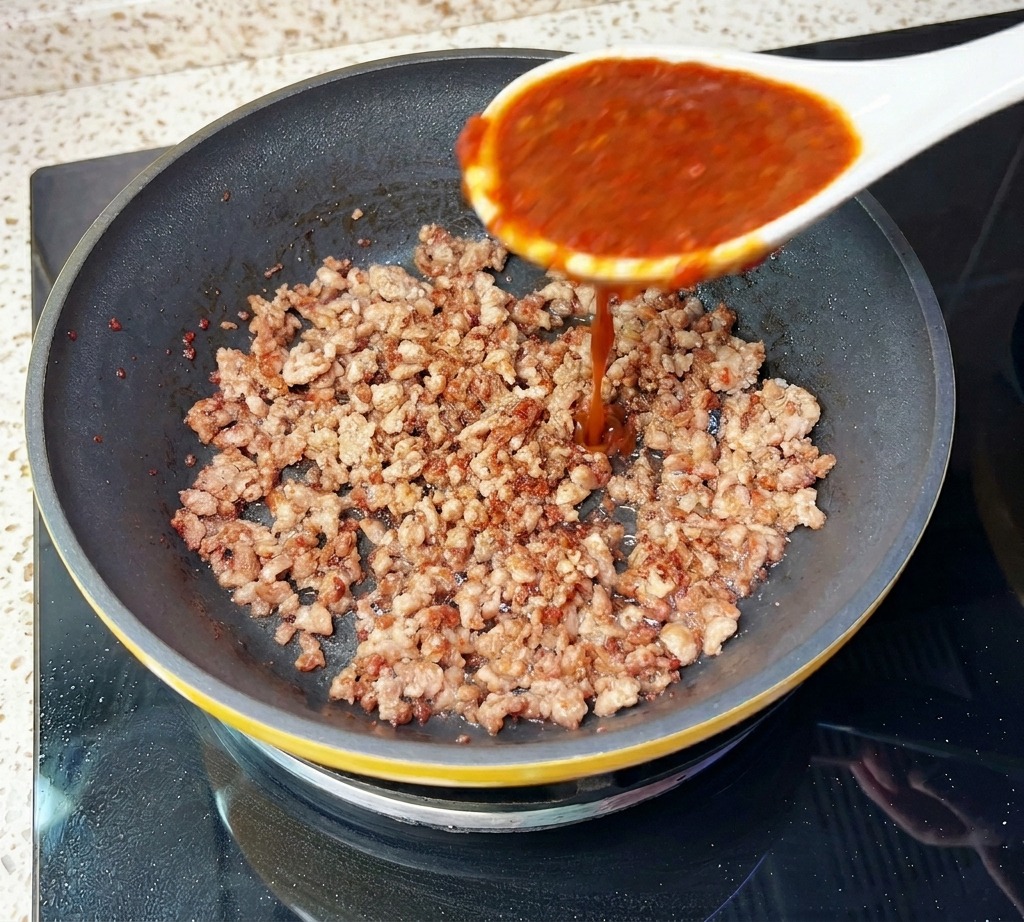
Pour your freshly blended tomato and vegetable sauce into the skillet with the browned beef. Stir well to combine, making sure the hearty meat mixes evenly with the vibrant, seasoned red sauce.
Tip: Scrape the bottom of the pan while stirring to release any flavorful browned bits of beef directly into the sauce. - 10Add butter for richness
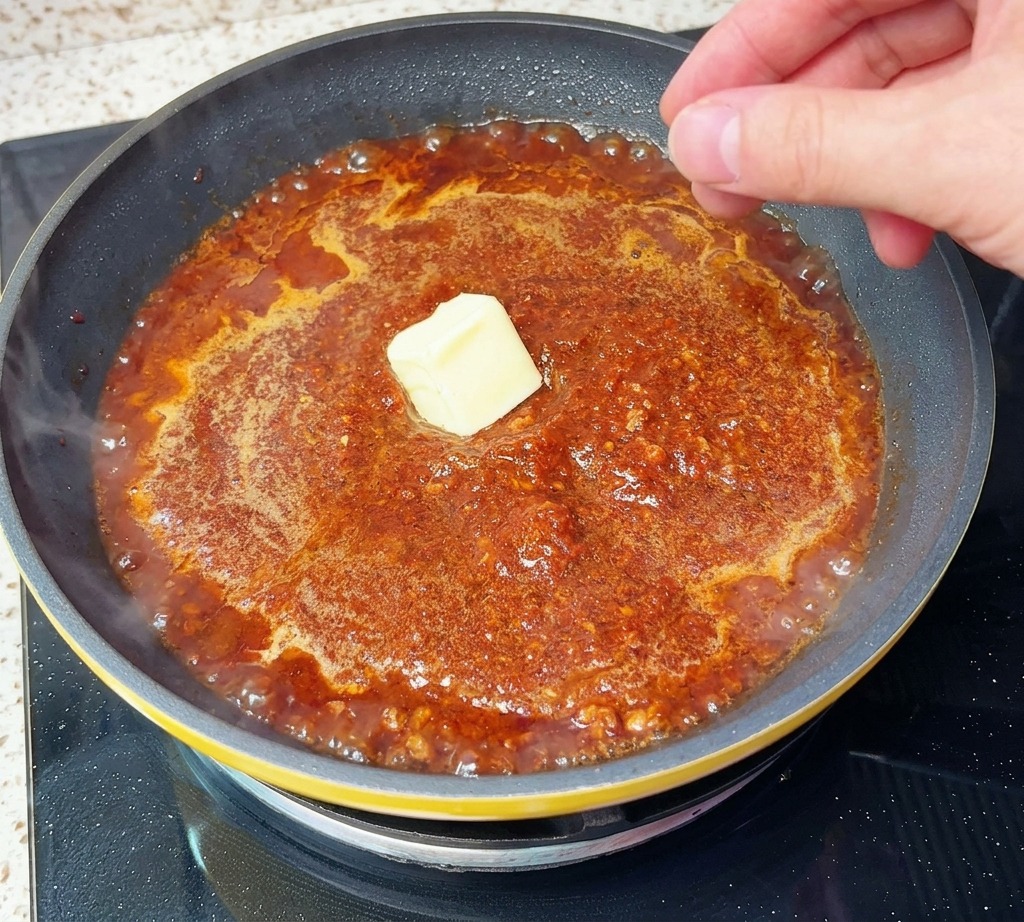
Drop a small pat of butter directly into the center of the simmering meat sauce. As the butter melts and emulsifies into the hot liquid, it adds a luxurious, glossy finish and a rich, velvety mouthfeel to the entire dish.
Tip: Adding cold butter at the end of cooking helps to thicken the sauce slightly and gives it a restaurant-quality shine. - 11Simmer to perfection
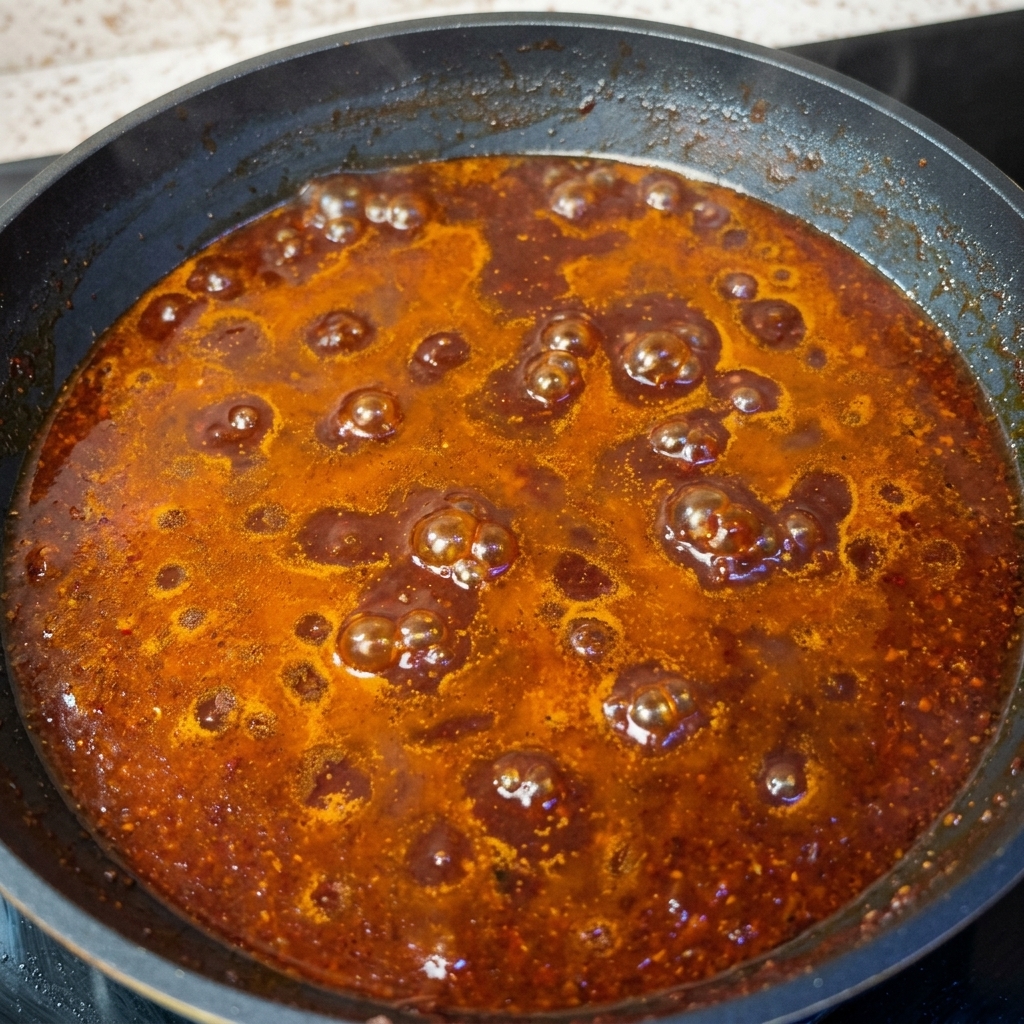
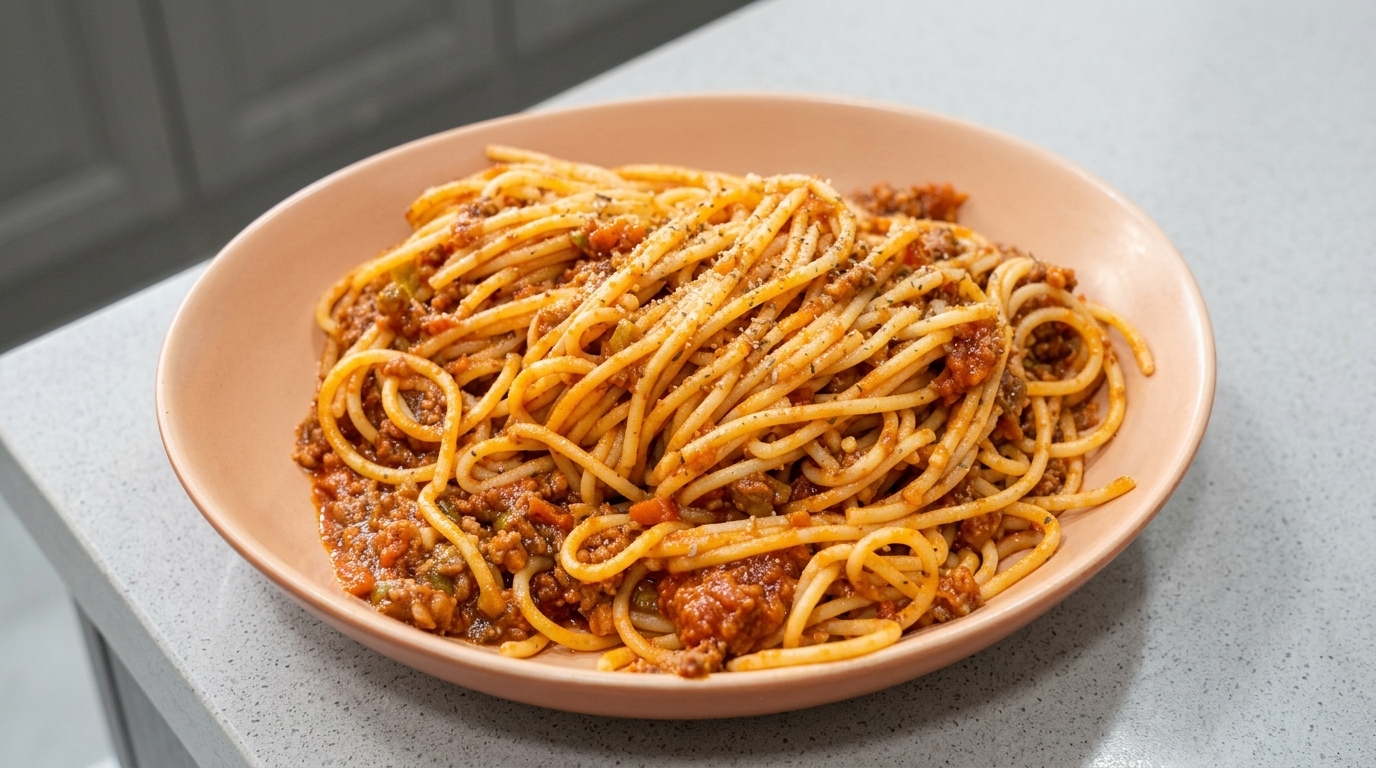
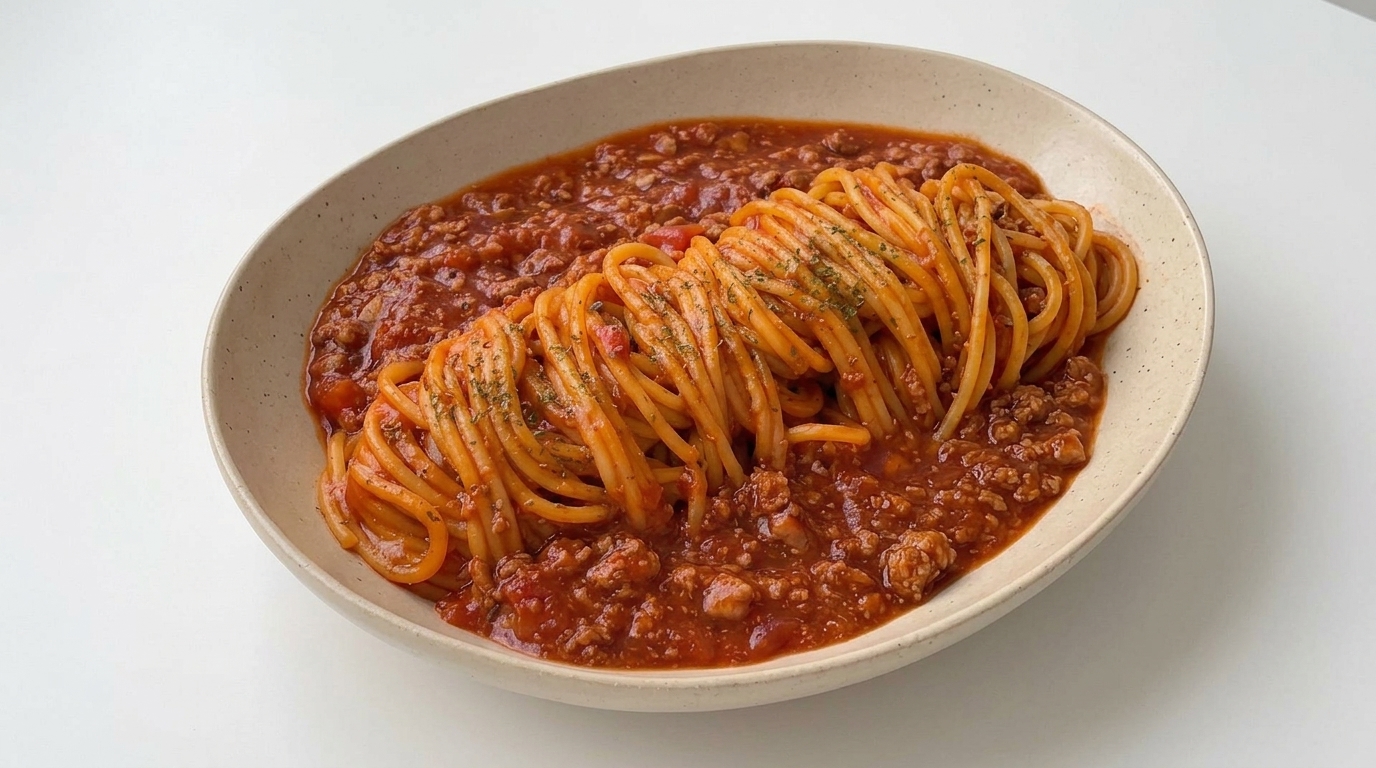
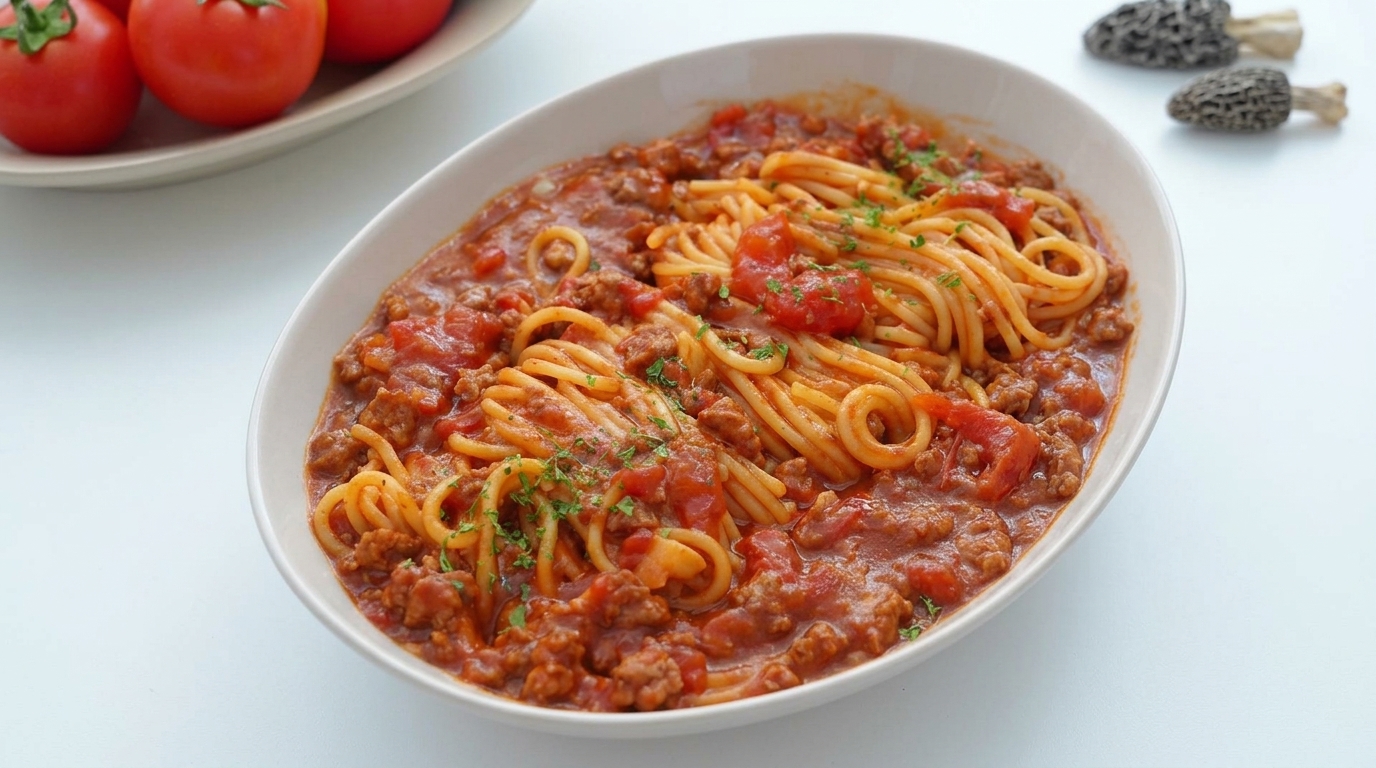
Allow the meat sauce to simmer gently over low heat, bubbling away until it reduces and thickens. The final sauce should be glossy and deeply flavorful, ready to be ladled over a steaming bowl of cooked spaghetti noodles.
Tip: Stir occasionally while simmering to prevent the bottom from burning, adjusting the heat if it bubbles too vigorously.