Steamed Korean Kimchi Dumplings (Kimchi Mandu)
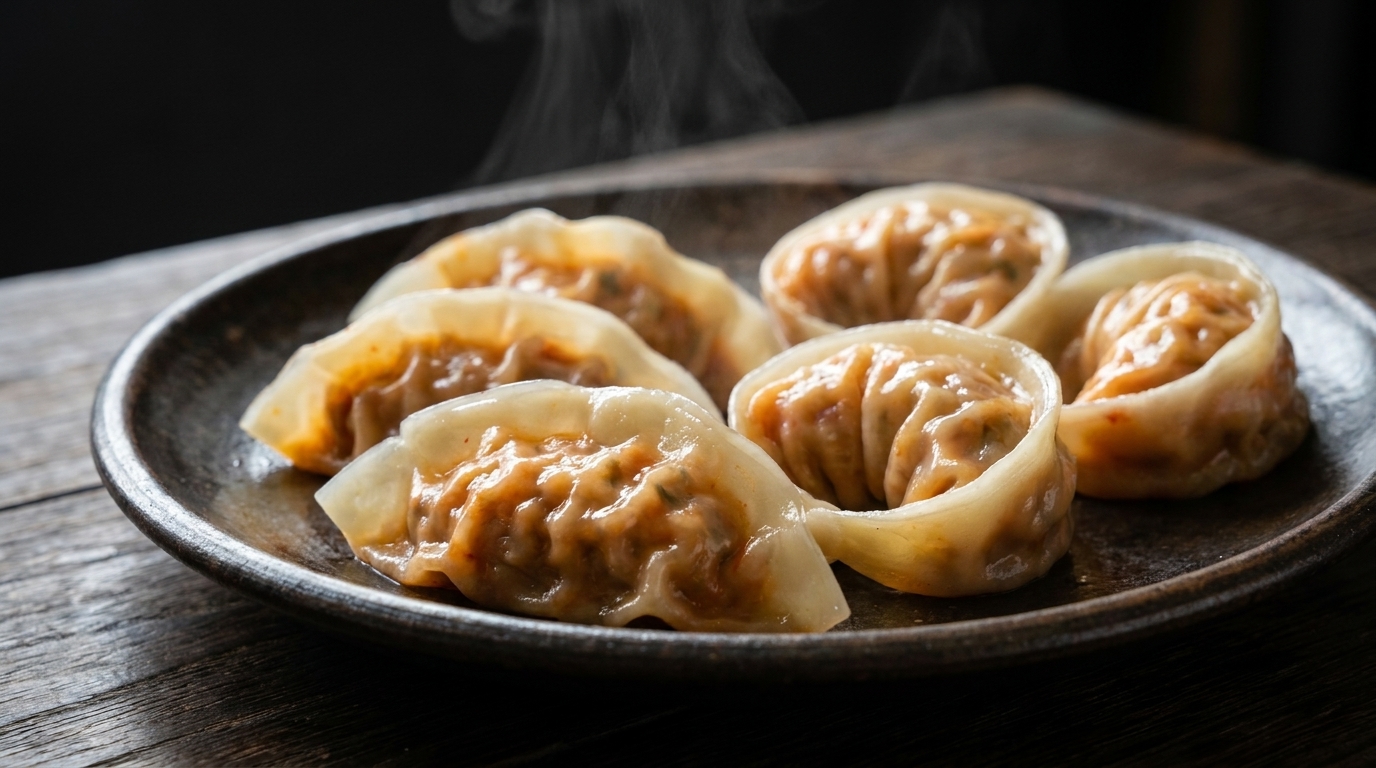
Vibrant and savory Korean kimchi dumplings made from scratch. Plump, slightly translucent wrappers are filled with pork, tofu, and tangy fermented kimchi.
During the Lunar New Year and other festive occasions, dumplings take center stage across many Asian cultures. These traditional Korean-style kimchi dumplings, known as Kimchi Mandu, offer a deeply savory and vibrant flavor profile. Using well-fermented, sour kimchi is the absolute secret to achieving their signature tangy kick, balancing beautifully with the richness of minced pork and the softness of squeezed tofu.
Ingredients
- 900 g minced pork
- 1 tbsp cooking oil or melted lard
- 1 handful dry glass noodles
- 1 handful mung bean sprouts
- 90 g fresh chives
- 1 block firm tofu
- 1 stalk green onion
- 1 cup sour fermented kimchi
- 1.5 tbsp oyster sauce
- 60 g soy sauce
- 1.5 tbsp sugar
- 1 tbsp chicken bouillon
- 3 tbsp minced garlic
- 1.5 tbsp sesame oil
- 3 tbsp fine chili powder
- 1 pack round dumpling wrappers
- to taste MSG
- to taste pepper powder
Instructions
- 1Soak the glass noodles
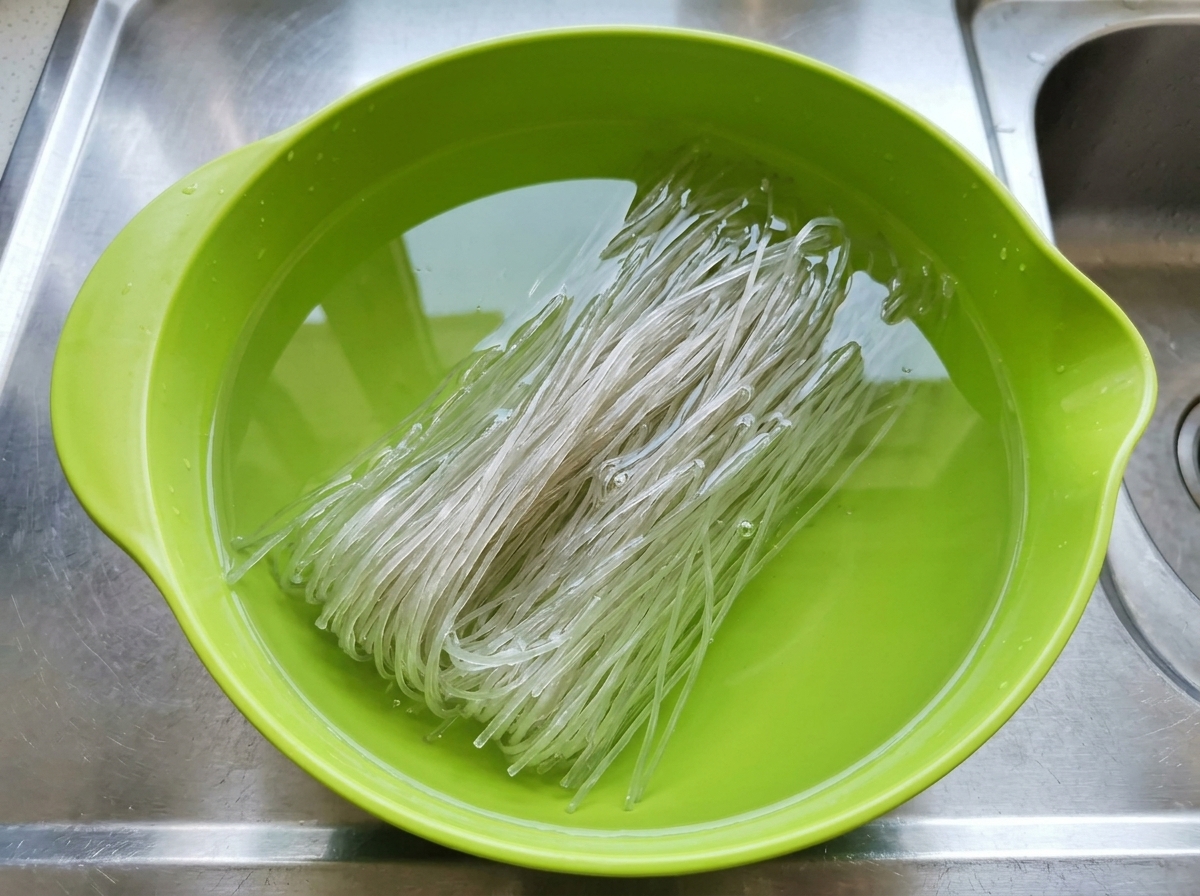
Place the dry glass noodles into a large bowl filled with cold water. Allow them to soak until they soften and become pliable, making them easier to chop and incorporate into the dumpling mixture later.
Tip: Soaking the noodles gently instead of boiling them helps maintain their chewy texture inside the dumpling. - 2Blanch the bean sprouts
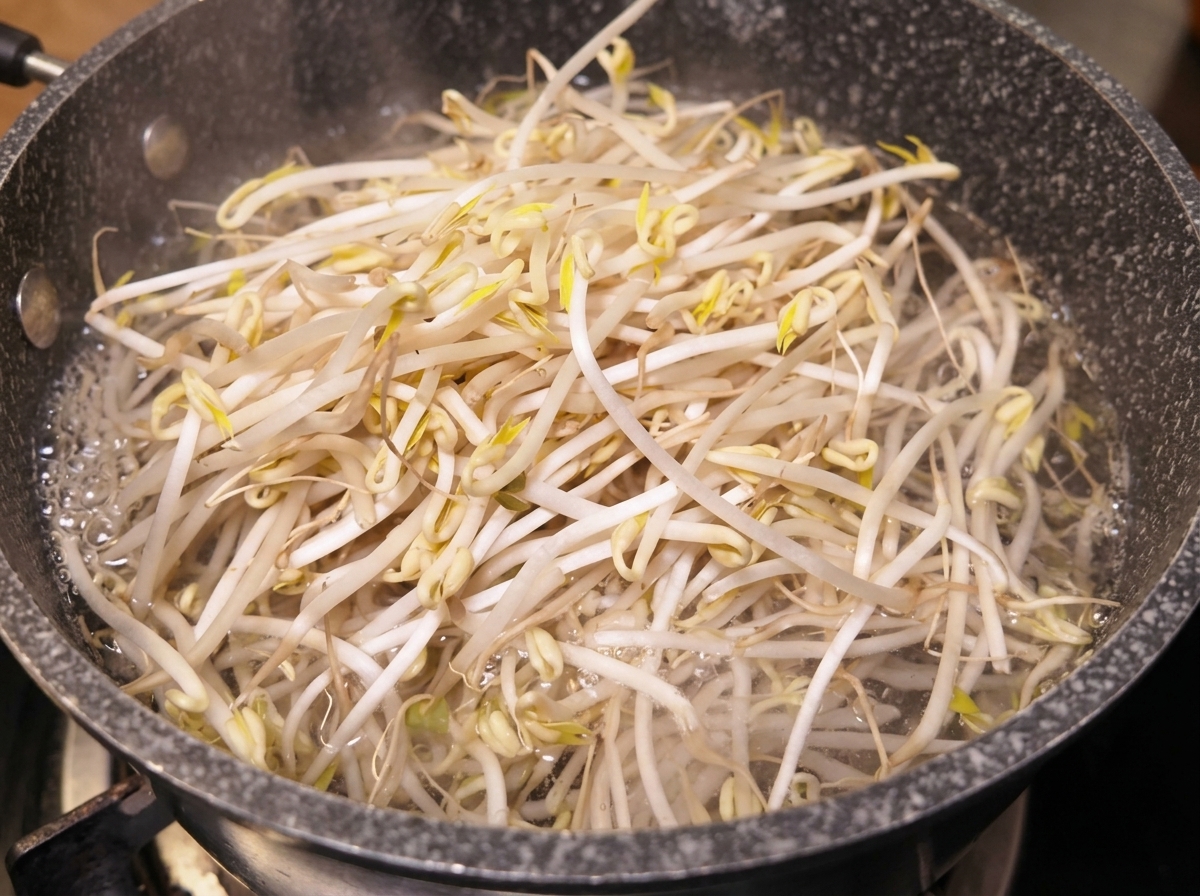
Bring a pot of water to a rolling boil and drop in the fresh mung bean sprouts. Blanch them briefly for about one minute until they soften slightly, then immediately remove and rinse them under cold water to halt the cooking process.
Tip: A quick blanch removes the raw, earthy taste while keeping the sprouts crisp. - 3Prepare the minced pork
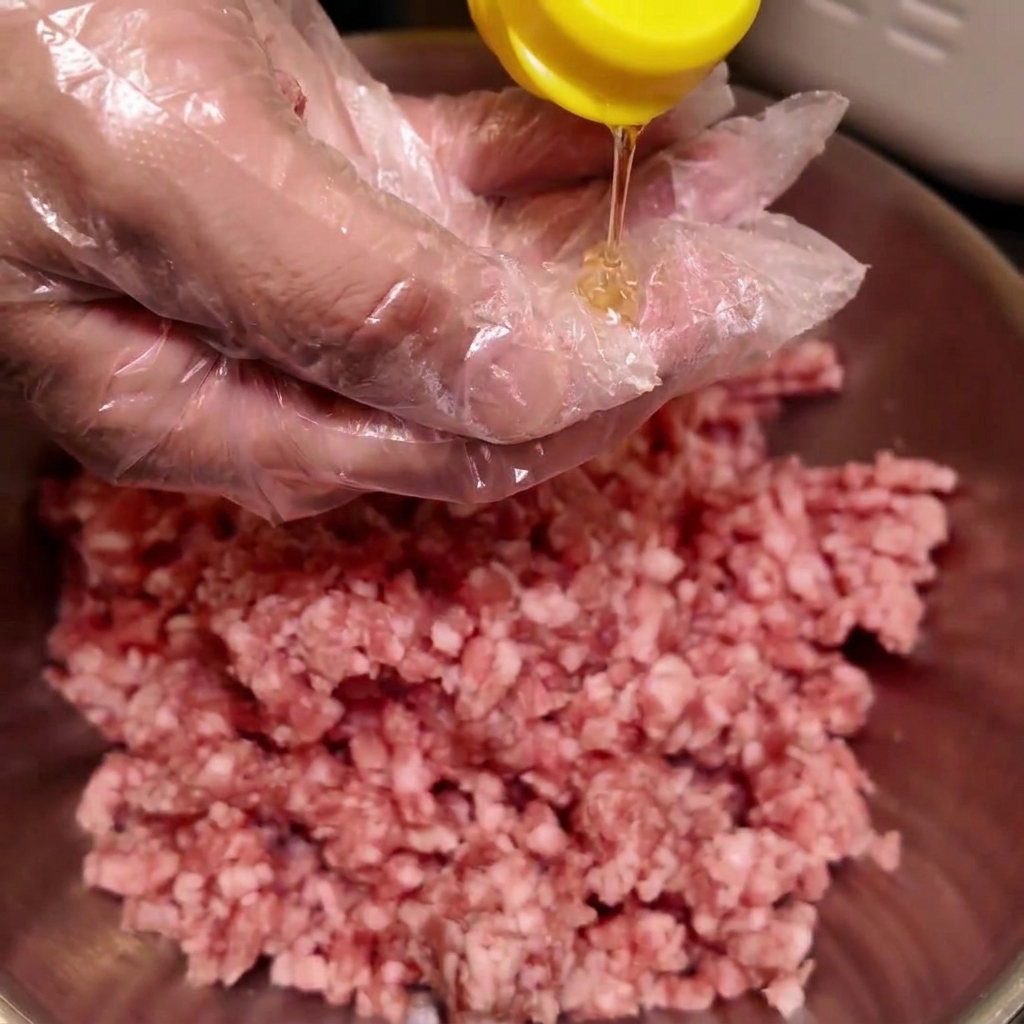
Place 900 grams of raw minced pork into a mixing bowl. Drizzle one spoonful of regular cooking oil over the meat. While adding lard makes the filling more fragrant, regular oil works perfectly to keep the meat moist and flavorful during steaming.
Tip: Adding a bit of fat to the minced meat ensures the dumpling filling stays juicy and tender. - 4Drain the bean sprouts
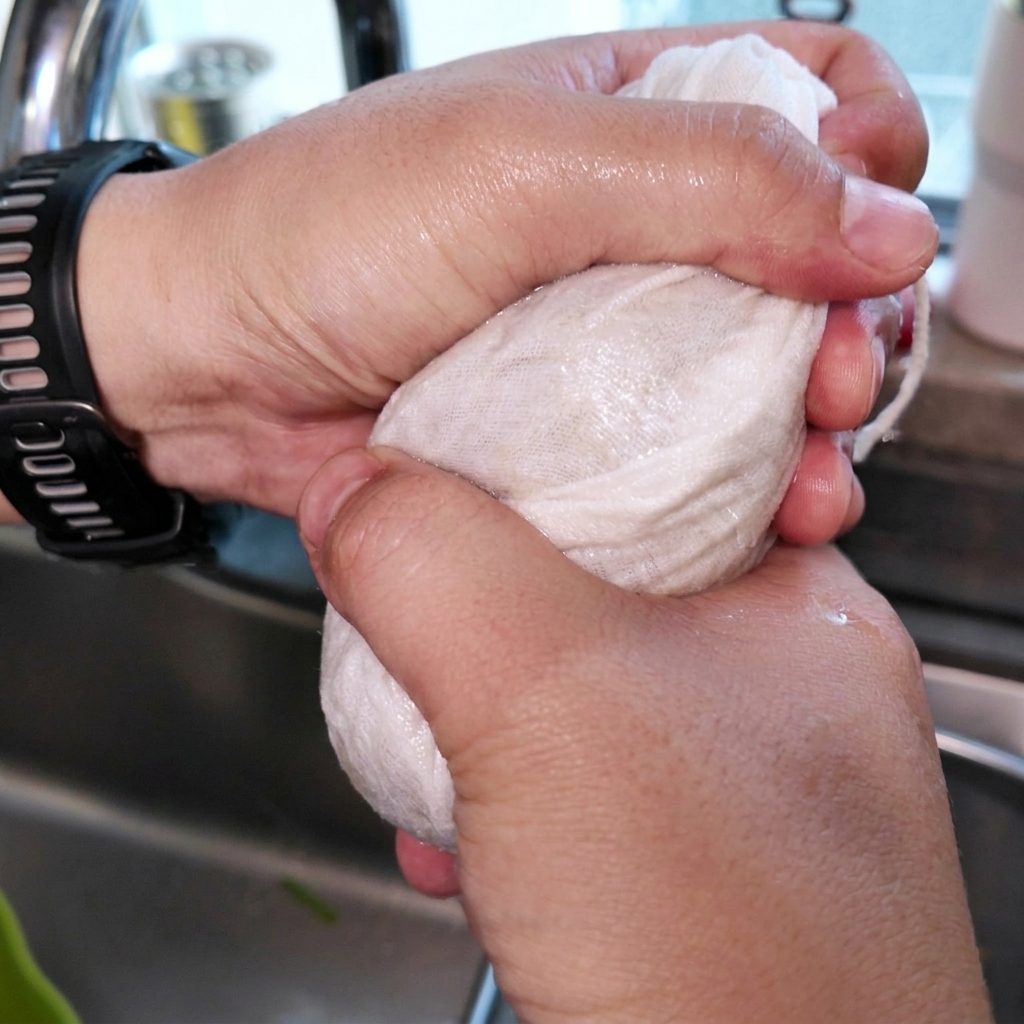
Transfer the cooled bean sprouts into a clean piece of cotton or muslin cloth. Twist the cloth tightly and squeeze with both hands to extract as much excess water as possible. This prevents the filling from becoming soggy.
Tip: You will use this same cloth-squeezing method for the tofu and fermented kimchi later on. - 5Chop the bean sprouts
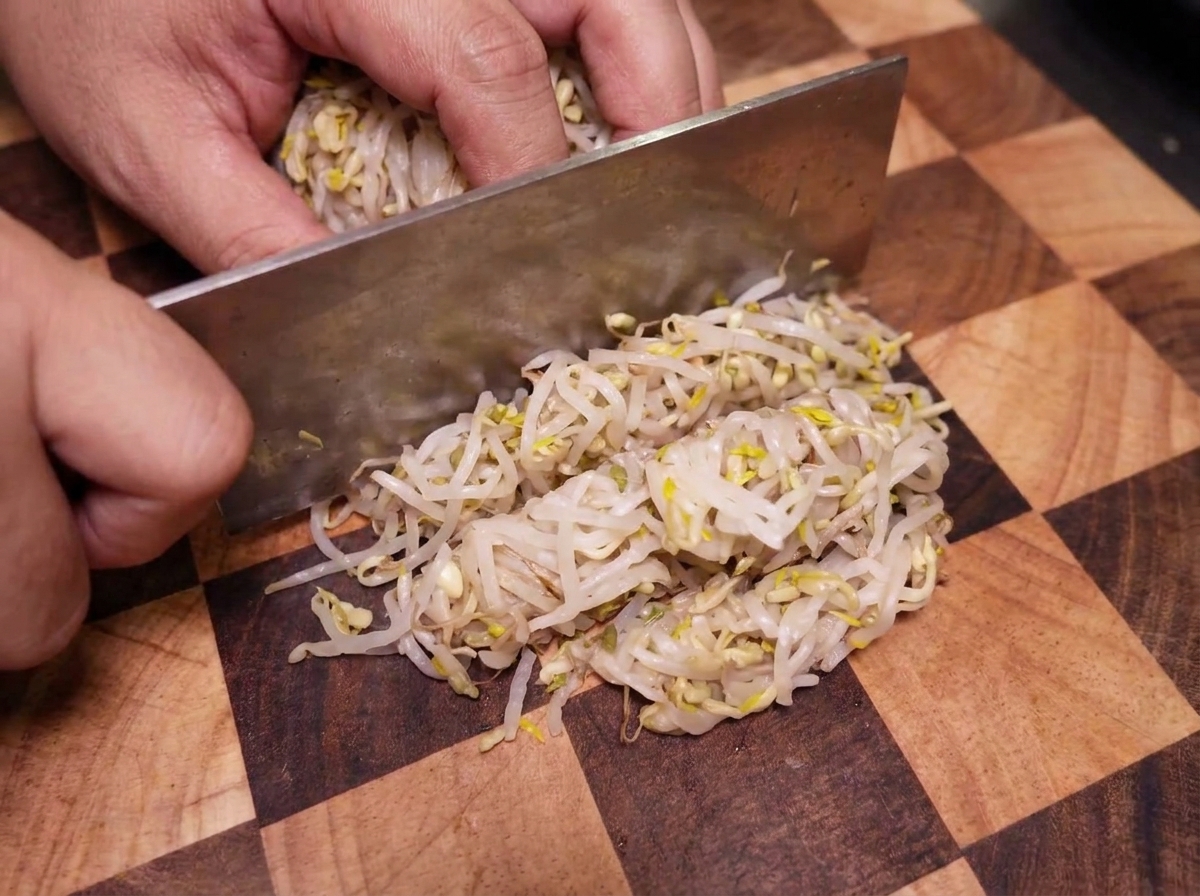
Remove the dry bean sprouts from the cloth and place them on a wooden cutting board. Use a sharp cleaver or knife to finely chop the sprouts into small, uniform pieces so they easily mix with the pork.
Tip: Chop the vegetables as finely as possible so they dont poke through the delicate dumpling wrappers. - 6Chop the chives
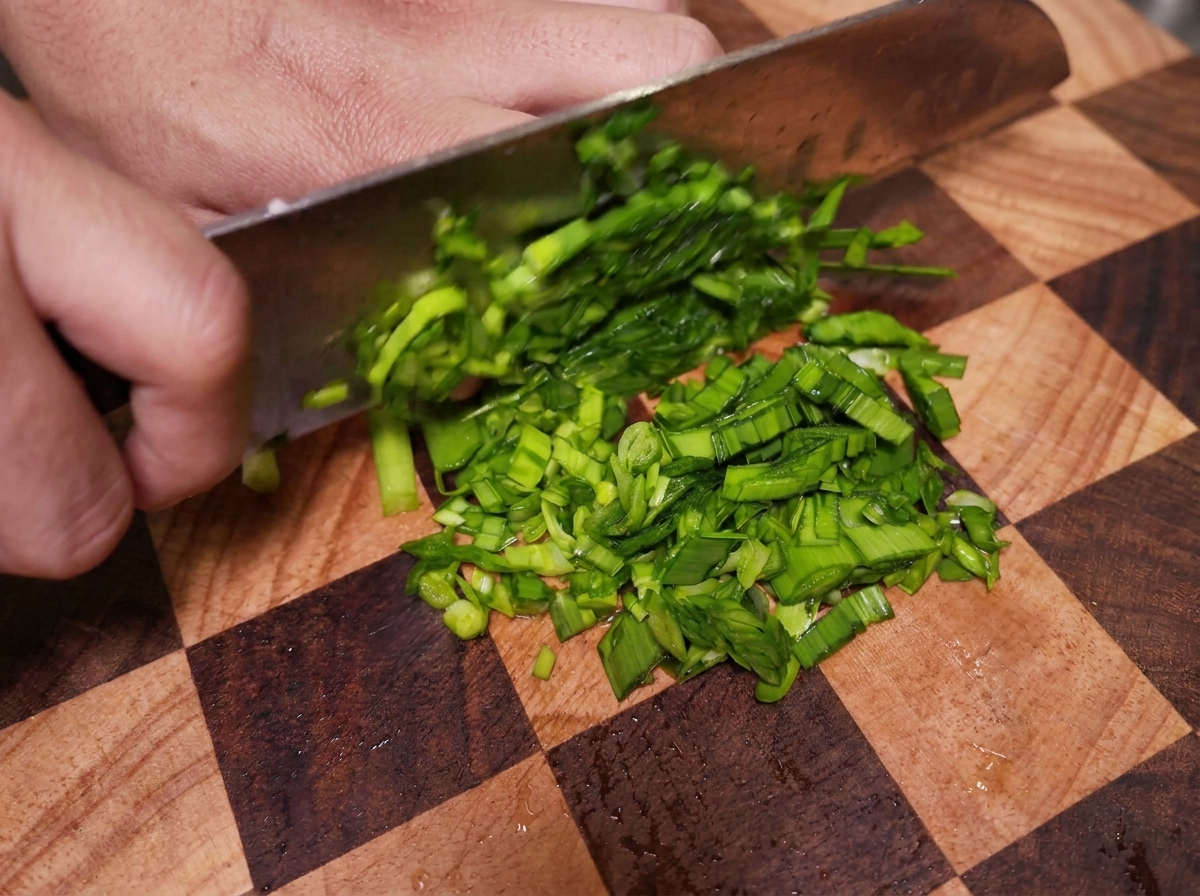
Gather about 90 grams of fresh green chives and chop them finely on the cutting board. These vibrant greens will be mixed straight into the meat to add a fresh, mild onion flavor to the dumplings.
Tip: Ensure your knife is very sharp to cleanly slice the chives without bruising them. - 7Squeeze water from the tofu
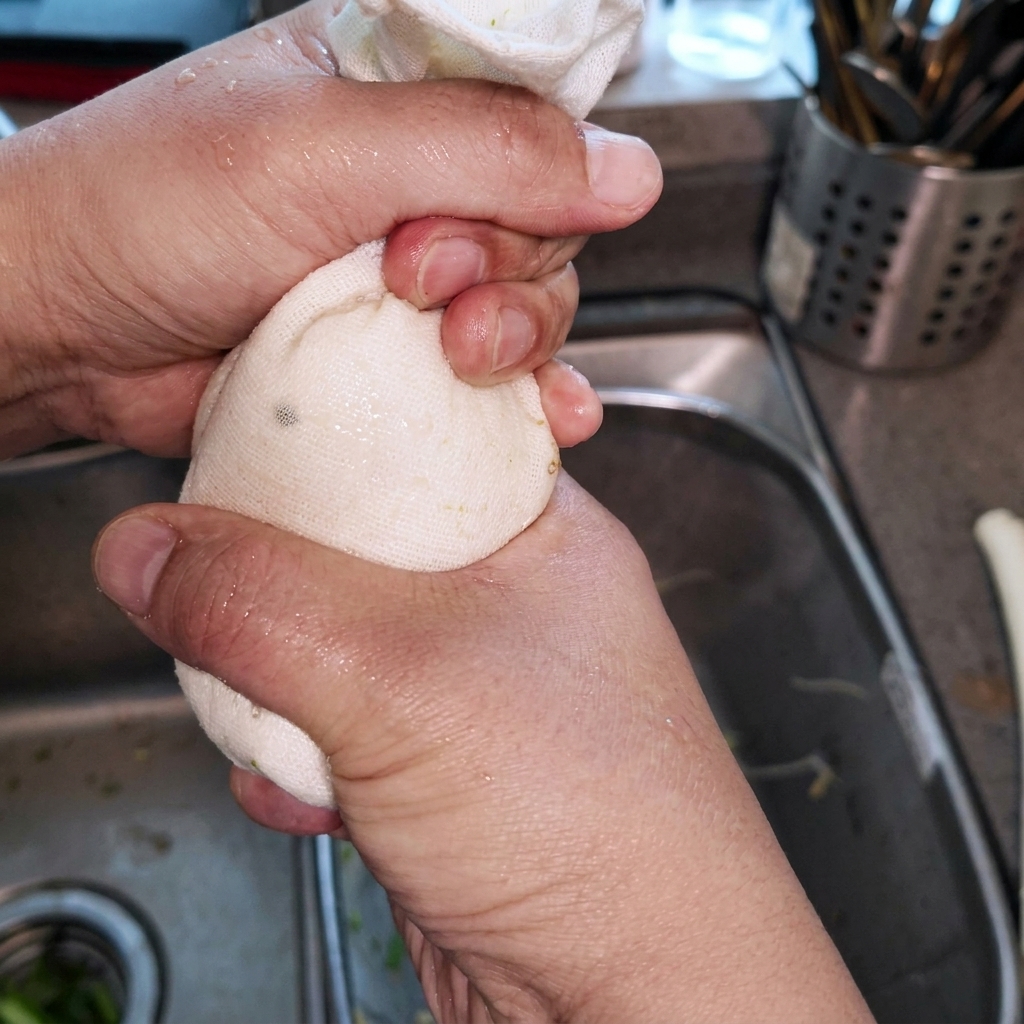
Tofu contains a significant amount of water that can affect the texture of the dumpling filling. Wrap the tofu in a clean cotton cloth and squeeze firmly to extract all excess liquid before adding it to the mixture.
Tip: Removing moisture is essential for ensuring the dumpling filling holds its shape and doesnt make the wrappers soggy. - 8Prepare the green onion
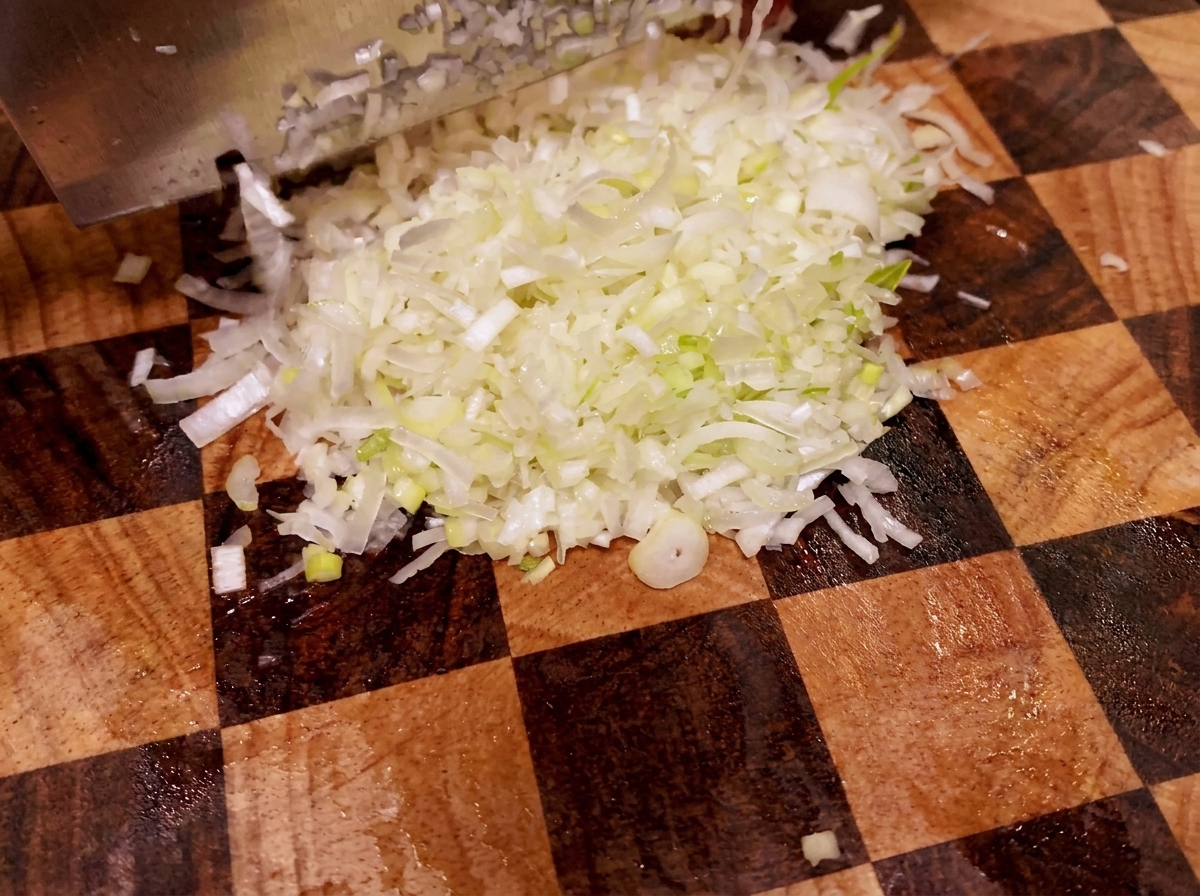
Take a fresh stalk of green onion and finely chop it into small pieces. Add the prepared green onion into the large bowl with the other dumpling filling ingredients.
Tip: Ensure the green onion is chopped finely so it distributes evenly throughout the meat and vegetable mixture. - 9Cut the glass noodles
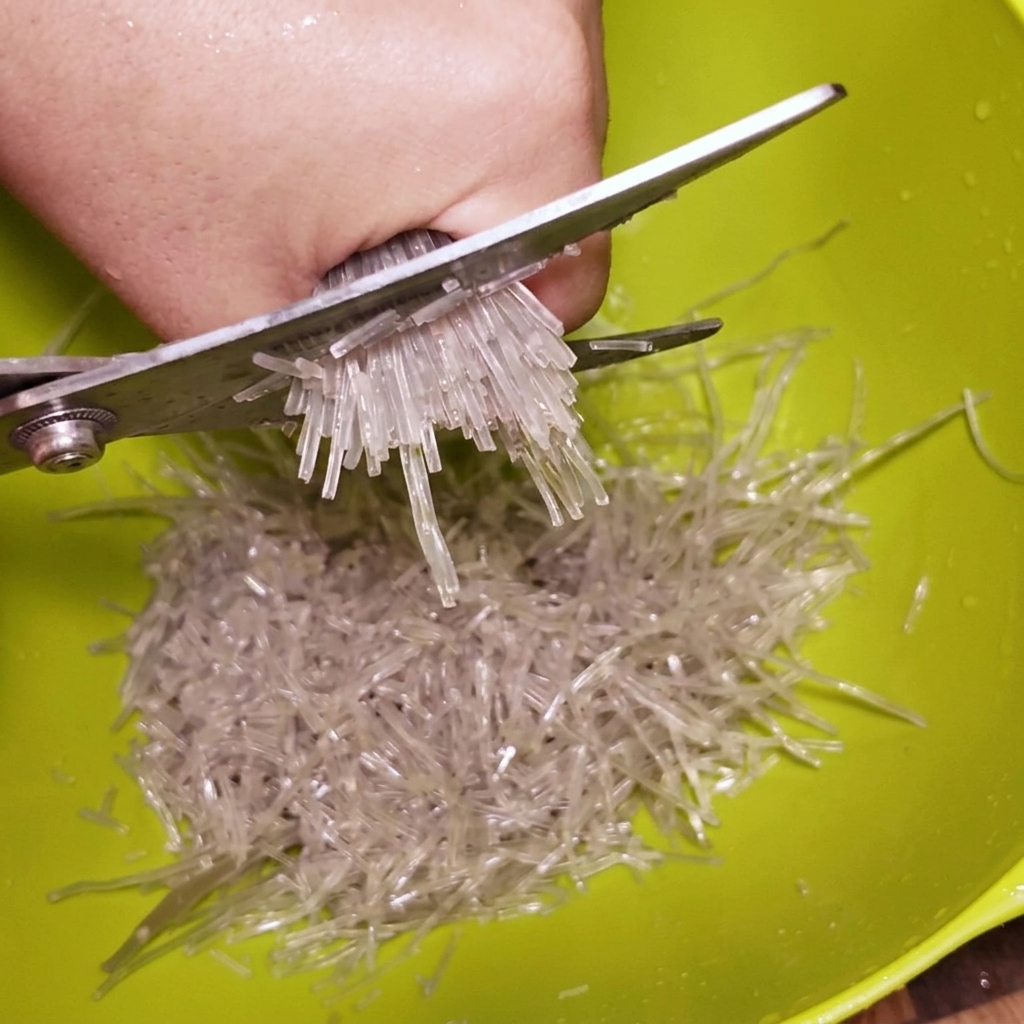
After soaking the glass noodles in water until soft, use a pair of kitchen scissors to cut them into shorter, manageable lengths. Add the cut noodles to the filling bowl.
Tip: Cutting the noodles prevents them from being too long or stringy when eating the finished dumplings. - 10Season the filling
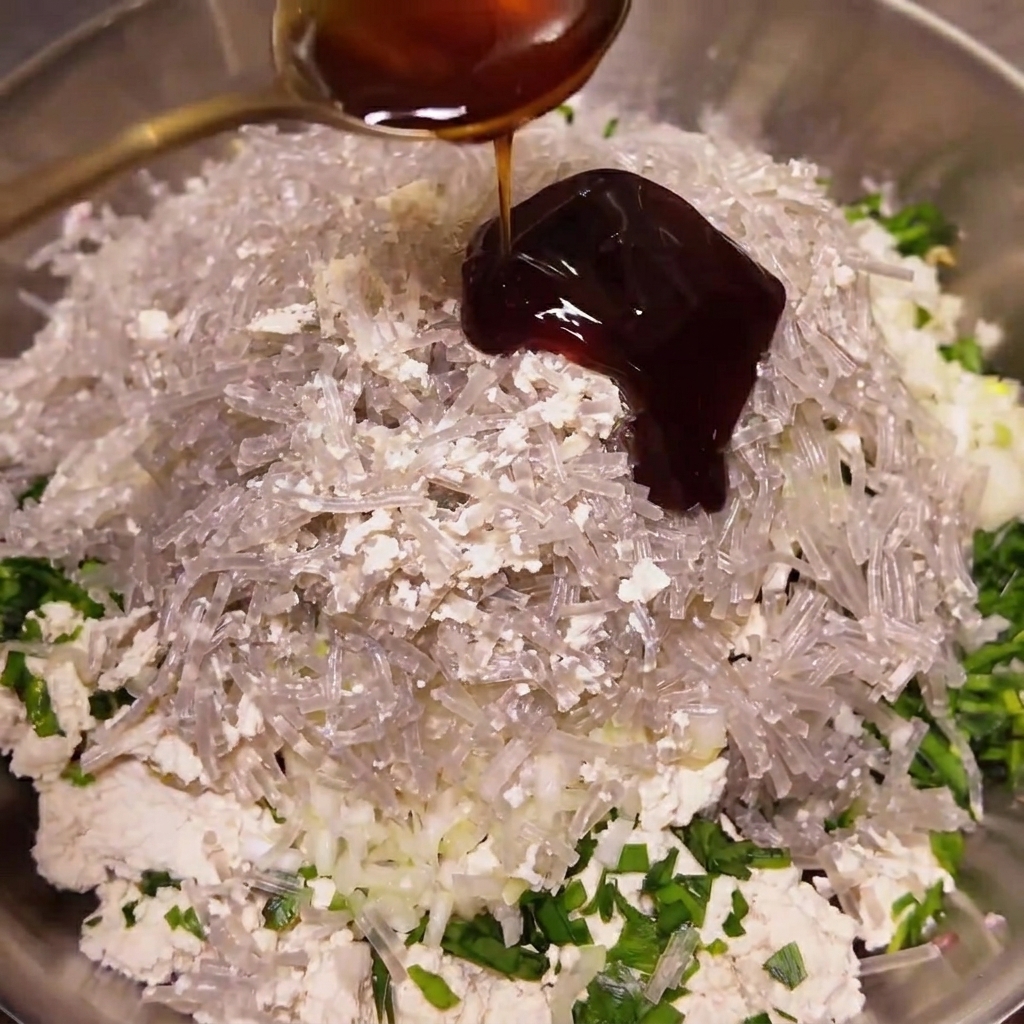
Pour 60 grams of soy sauce into the large bowl containing the meat, chopped vegetables, and glass noodles. Follow this with oyster sauce, sugar, chicken bouillon, a pinch of MSG, minced garlic, pepper powder, and sesame oil to complete the savory base seasoning.
Tip: Adjust the soy sauce according to your preference for saltiness, but 60 grams serves as a solid base for this recipe. - 11Mix the ingredients
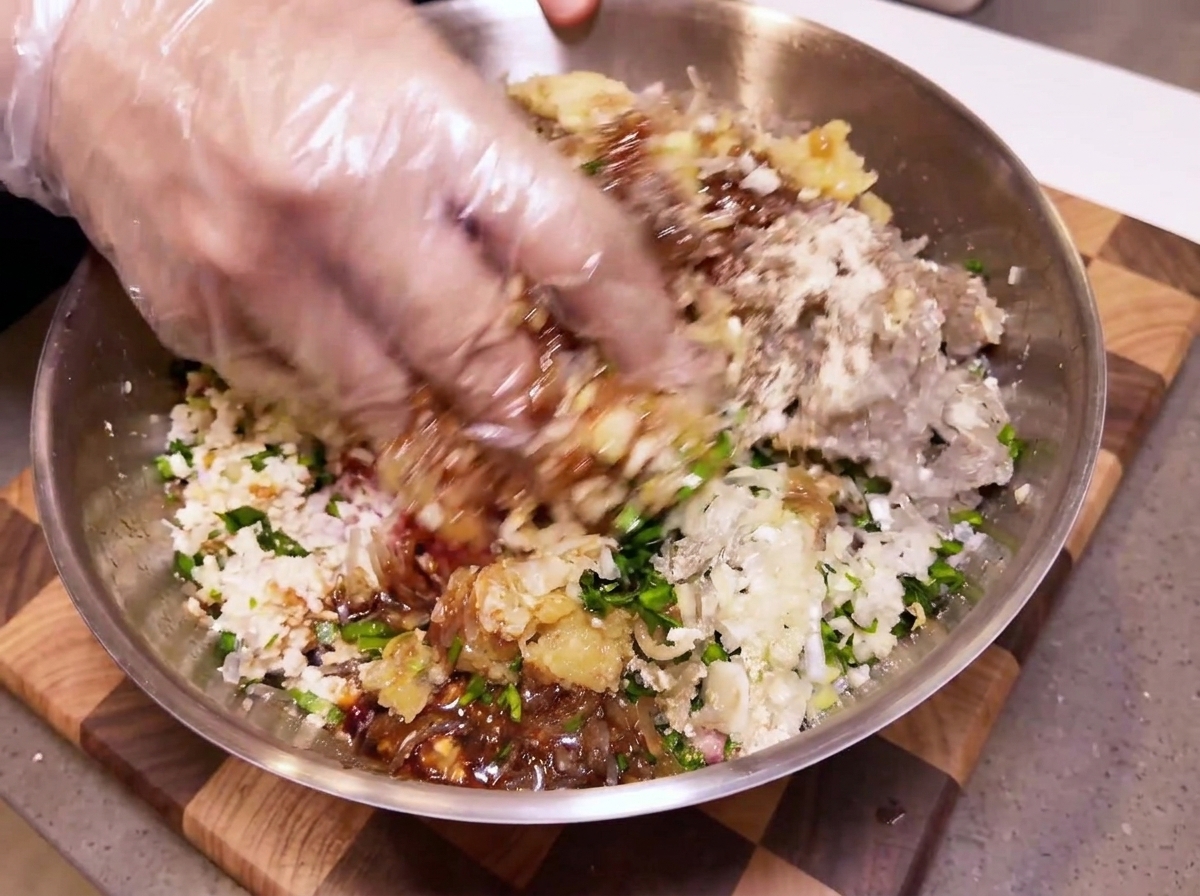
Using your hand, thoroughly combine the minced pork, squeezed vegetables, tofu, noodles, and all seasonings. Mix well until the ingredients are evenly distributed and the filling reaches a consistent texture.
Tip: Wearing a clean food-safe glove makes the mixing process easier and more hygienic. - 12Prepare the kimchi
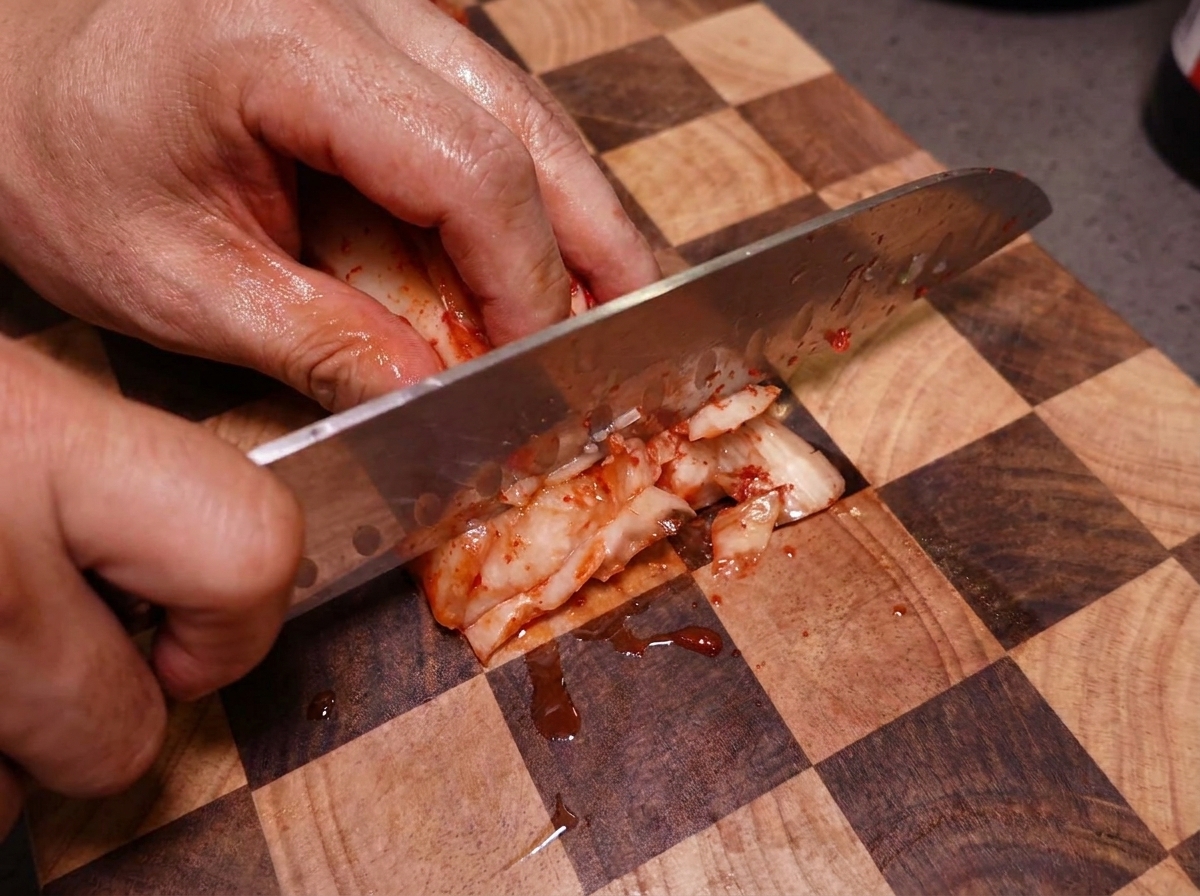
For the kimchi dumplings, take sour, fermented kimchi and chop it into small, uniform pieces. After chopping, place the kimchi in a cloth and squeeze out the excess liquid before incorporating it into the filling.
Tip: It is crucial to use well-fermented, sour kimchi for the best flavor; fresh kimchi will not provide the right profile. - 13Squeeze the kimchi
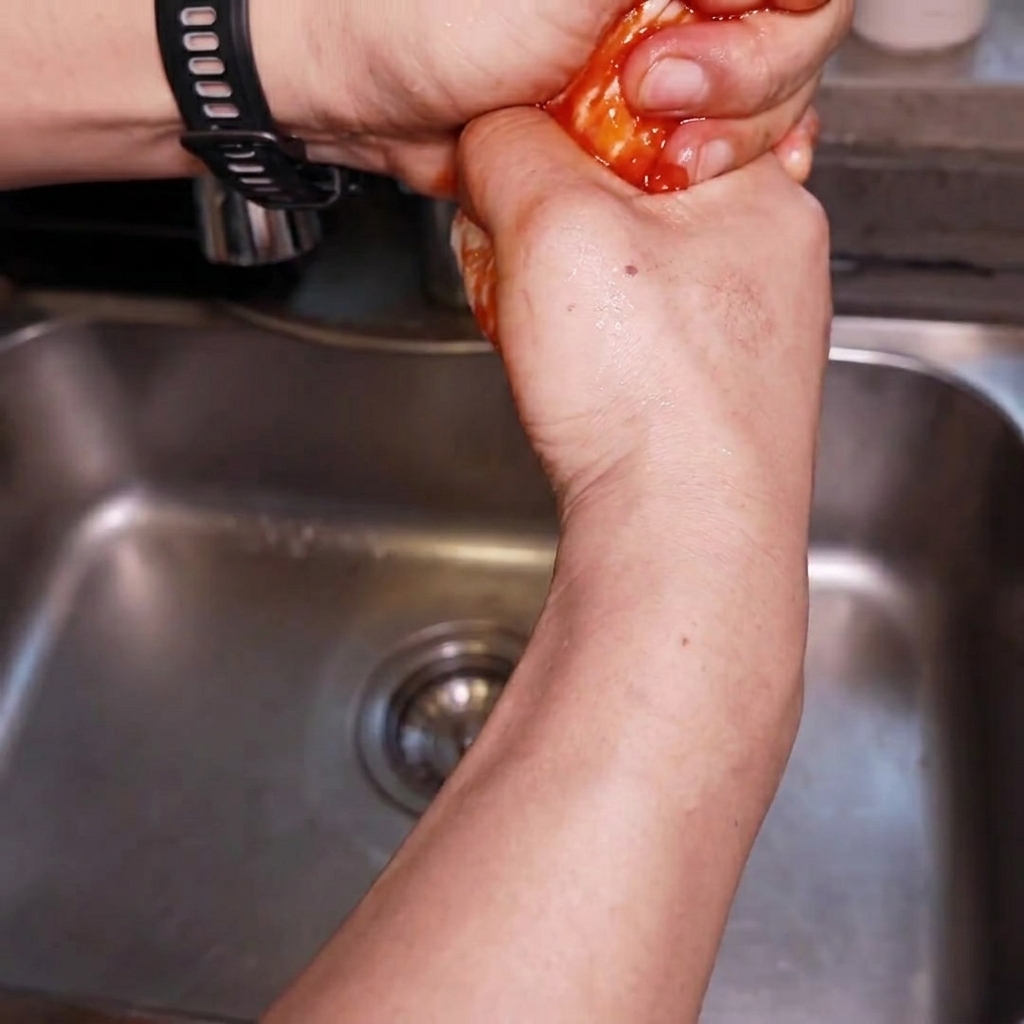
Place the chopped, sour fermented kimchi into a cotton cloth and tightly squeeze out all the excess water and red juice. Removing the moisture prevents the dumpling filling from becoming too wet and tearing the wrappers during assembly.
Tip: Only use fully fermented, sour kimchi for this recipe; fresh kimchi lacks the deep, tangy flavor needed for a delicious filling. - 14Add fine chili powder
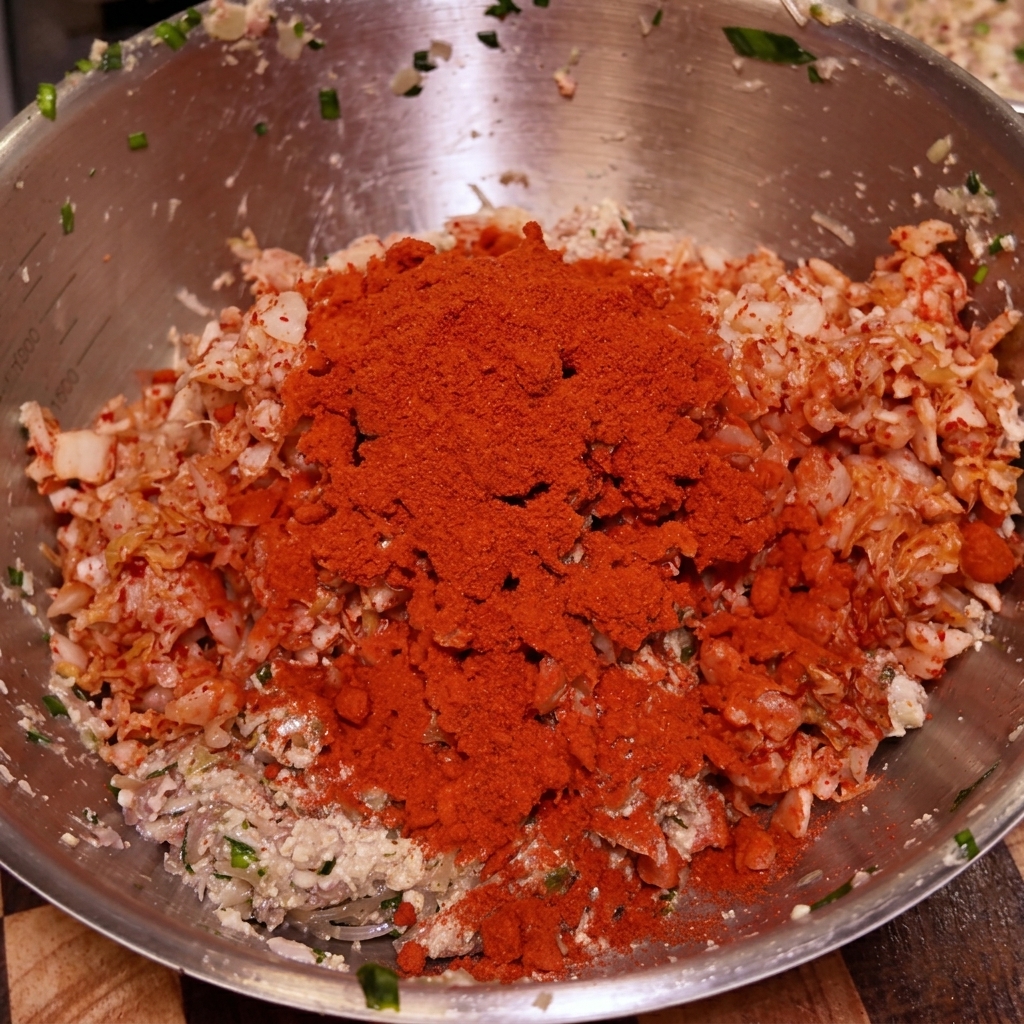
Add the squeezed kimchi to half of the seasoned meat and vegetable mixture. To enhance the vibrant red color and add a mild kick, sprinkle three spoonfuls of fine red chili powder directly over the ingredients.
Tip: Adjust the amount of chili powder depending on your preferred spice level and how intensely red you want the filling to look. - 15Mix the filling thoroughly
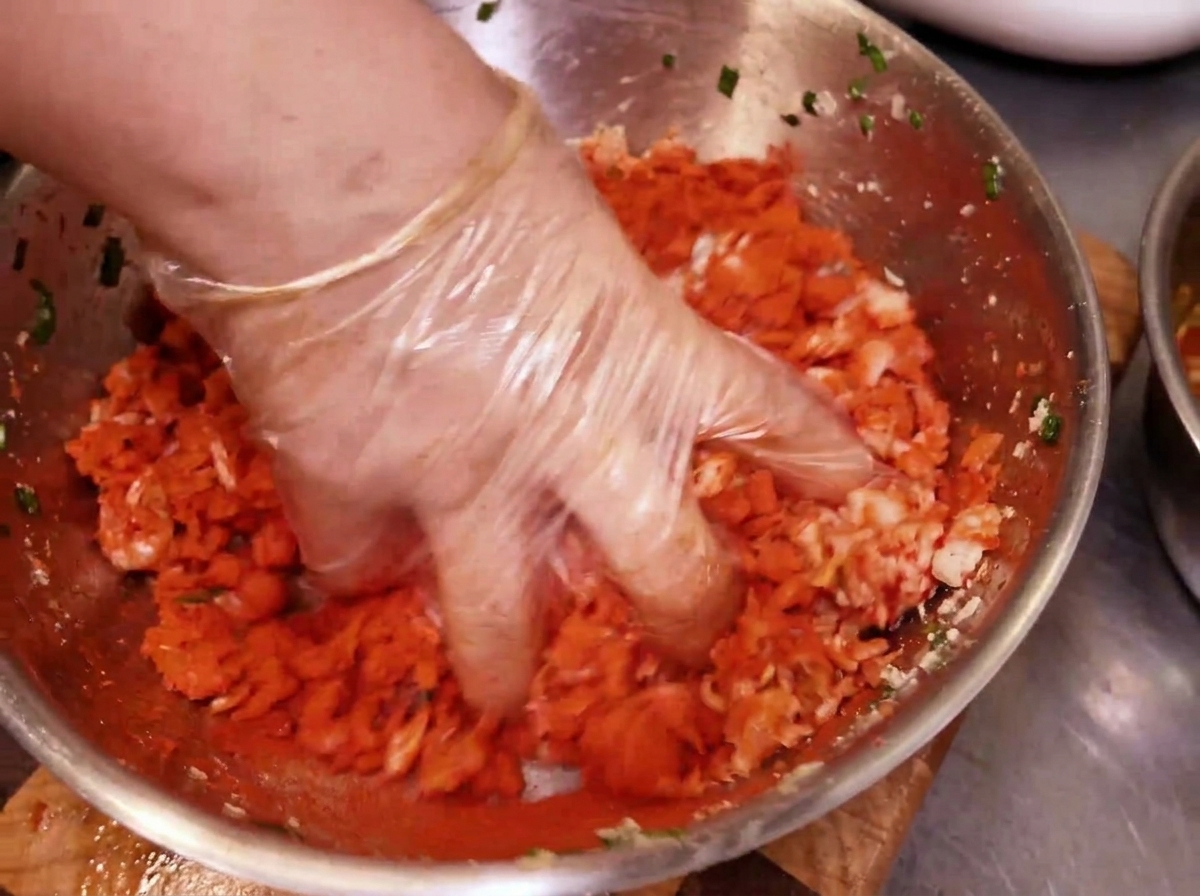
Using a gloved hand, mix the chopped kimchi, fine chili powder, and the seasoned meat base together thoroughly. Knead the mixture until the ingredients are evenly distributed and the filling takes on a uniform, vibrant red color.
Tip: Mixing by hand ensures the flavors meld perfectly and helps the filling reach a cohesive, slightly sticky texture that is easy to wrap. - 16Wrap the kimchi dumplings
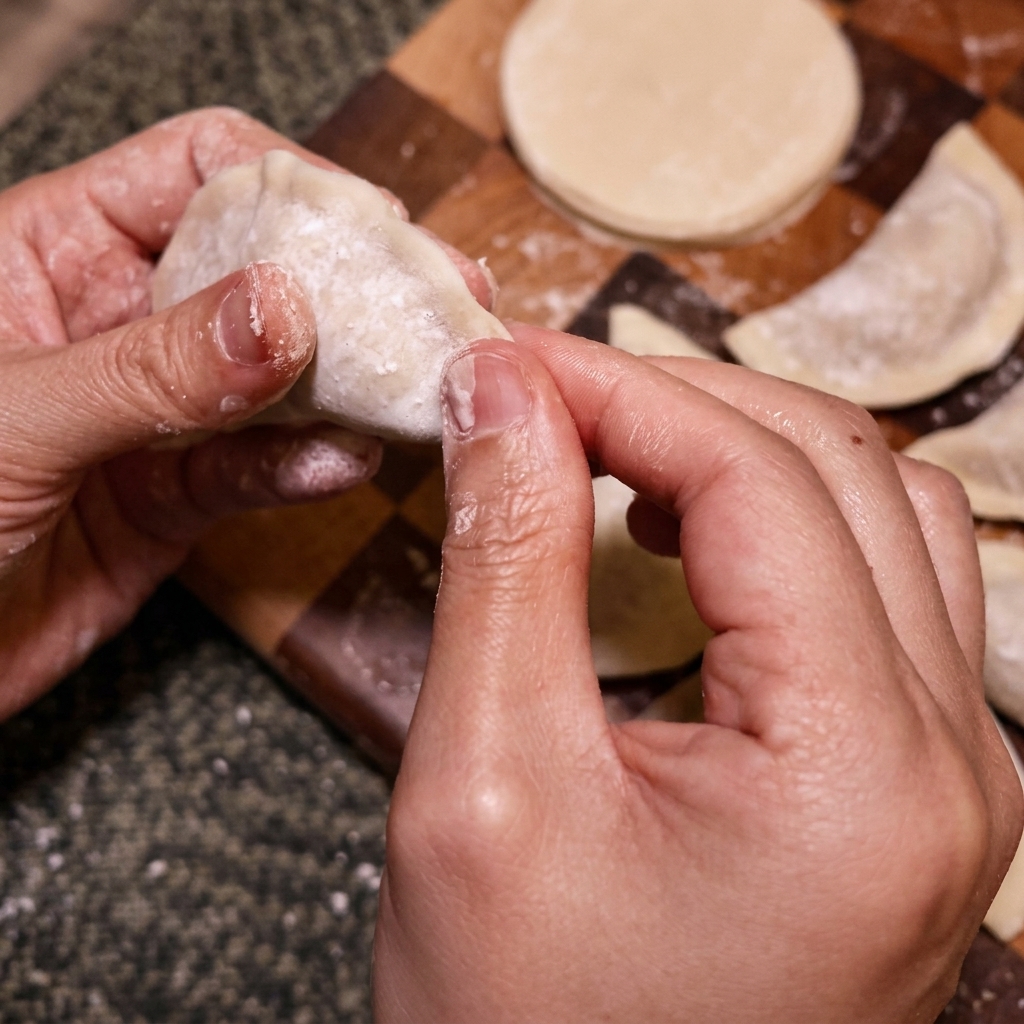
Place a round dumpling wrapper in the palm of your hand and add a spoonful of the prepared red kimchi filling into the center. Carefully fold the wrapper in half and pinch the edges firmly to seal the dumpling completely.
Tip: Make sure the edges are tightly sealed without any air pockets so the filling doesnt leak out during the steaming process. - 17Arrange in the steamer
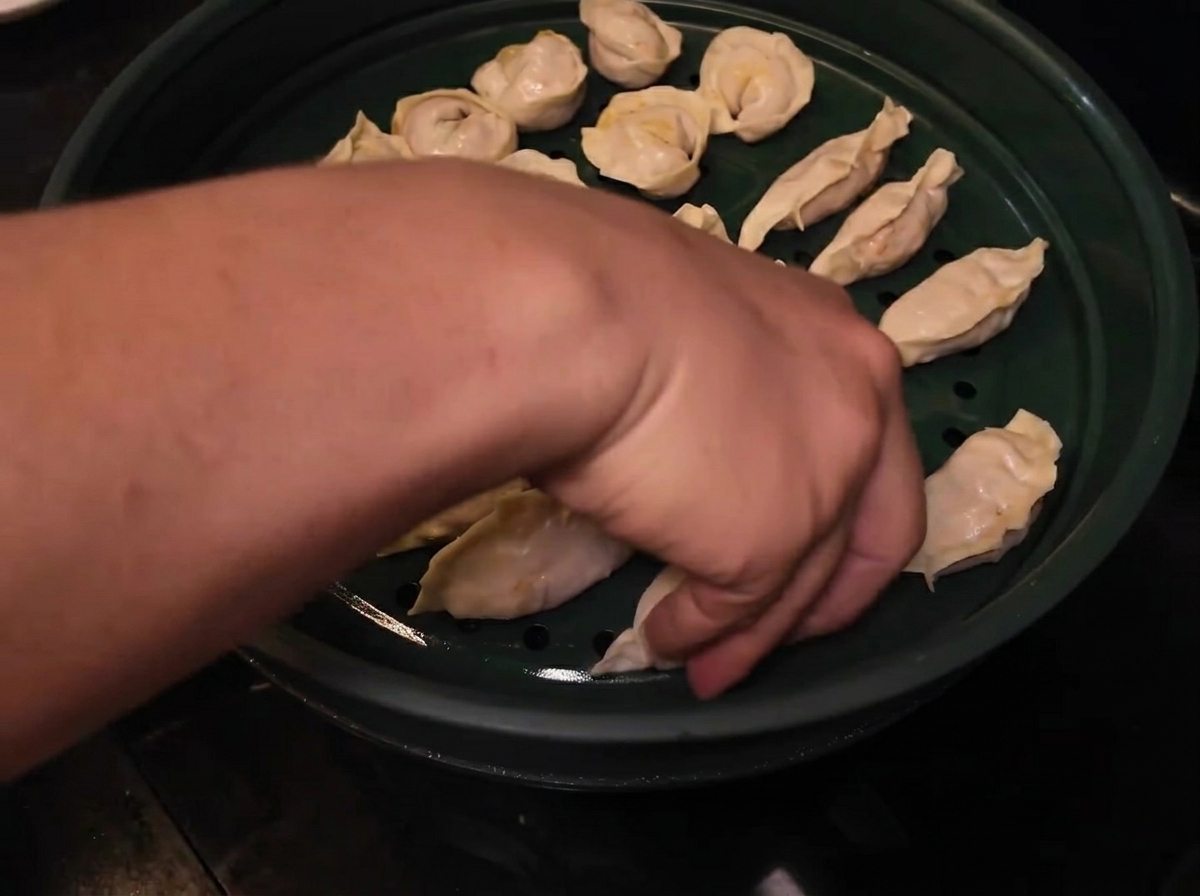
Place the beautifully wrapped raw dumplings into a steamer pot, leaving a little space between each one so they dont stick together. Steam them until the wrappers become translucent and the savory filling is fully cooked.
Tip: Lining the steamer basket with parchment paper or cabbage leaves will prevent the bottoms of the dumplings from sticking and tearing.