Korean Army Stew (Budae Jjigae)
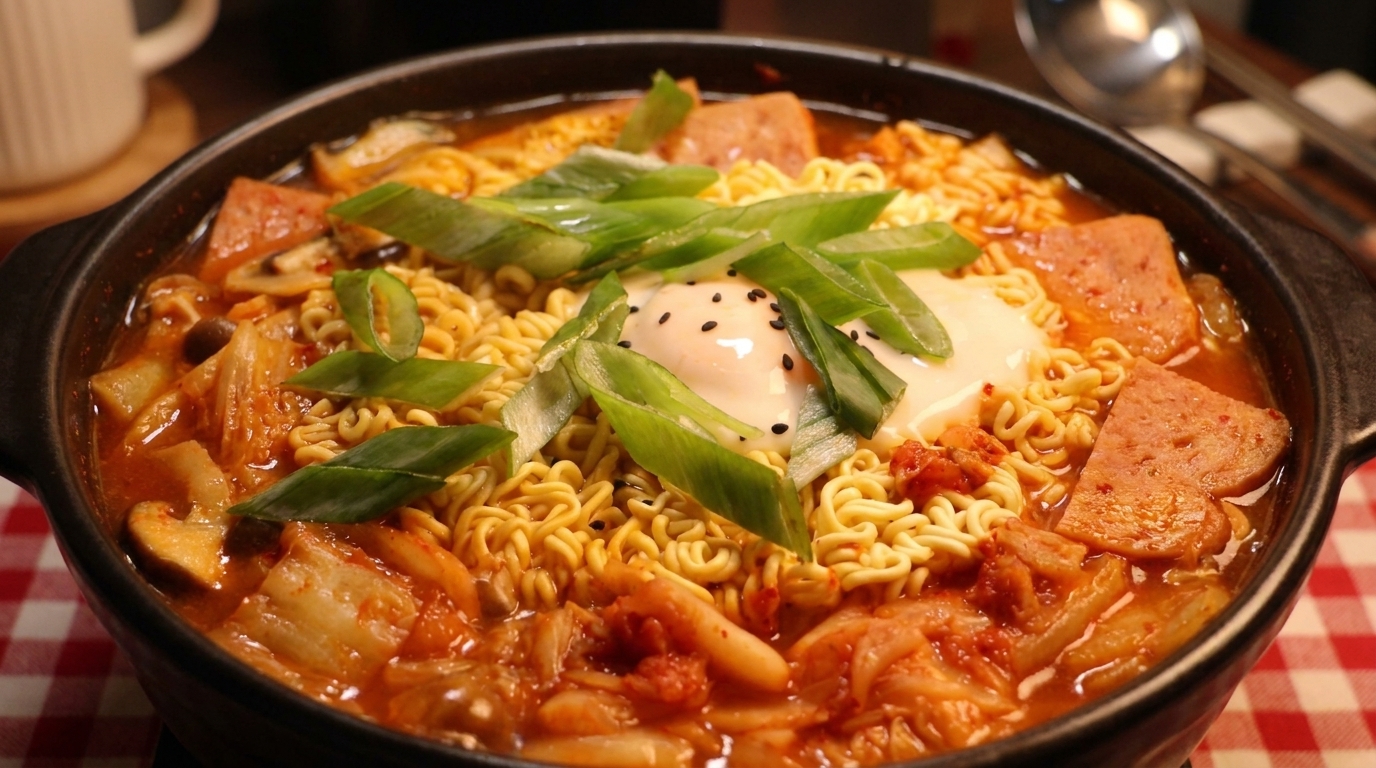
Warm up on a rainy day with this spicy, comforting Korean Army Stew. A rich, bubbling hot pot layered with ramen, luncheon meat, tofu, and a perfectly poached egg in a bold chili broth.
Budae Jjigae, or Army Stew, is a brilliant culinary fusion born out of necessity following the Korean War. Today, it has evolved into a beloved comfort food, celebrated for its highly satisfying, unapologetic combination of processed meats, instant ramen, fresh vegetables, and a deeply flavorful gochujang-laced broth. It is the ultimate communal meal to share on a cold or rainy day.
Ingredients
- 1 block soft or firm tofu
- 0.5 red onion
- 2 stalks green onions
- 2 tbsp Korean hot sauce (gochujang)
- 2 tbsp soy sauce
- 2 tbsp oyster sauce
- 2 tbsp chili oil
- 1 tbsp white sugar
- 3 tbsp water (for sauce)
- 4 leaves napa cabbage
- 1 handful leafy greens
- 1 can luncheon meat (Spam)
- 1 handful enoki mushrooms
- 3-4 shiitake mushrooms
- 150 g thinly sliced beef
- 3-4 cups hot water or mild stock
- 1 block instant ramen noodles
- 1 egg
- 1 tsp black sesame seeds
Instructions
- 1Slice the tofu
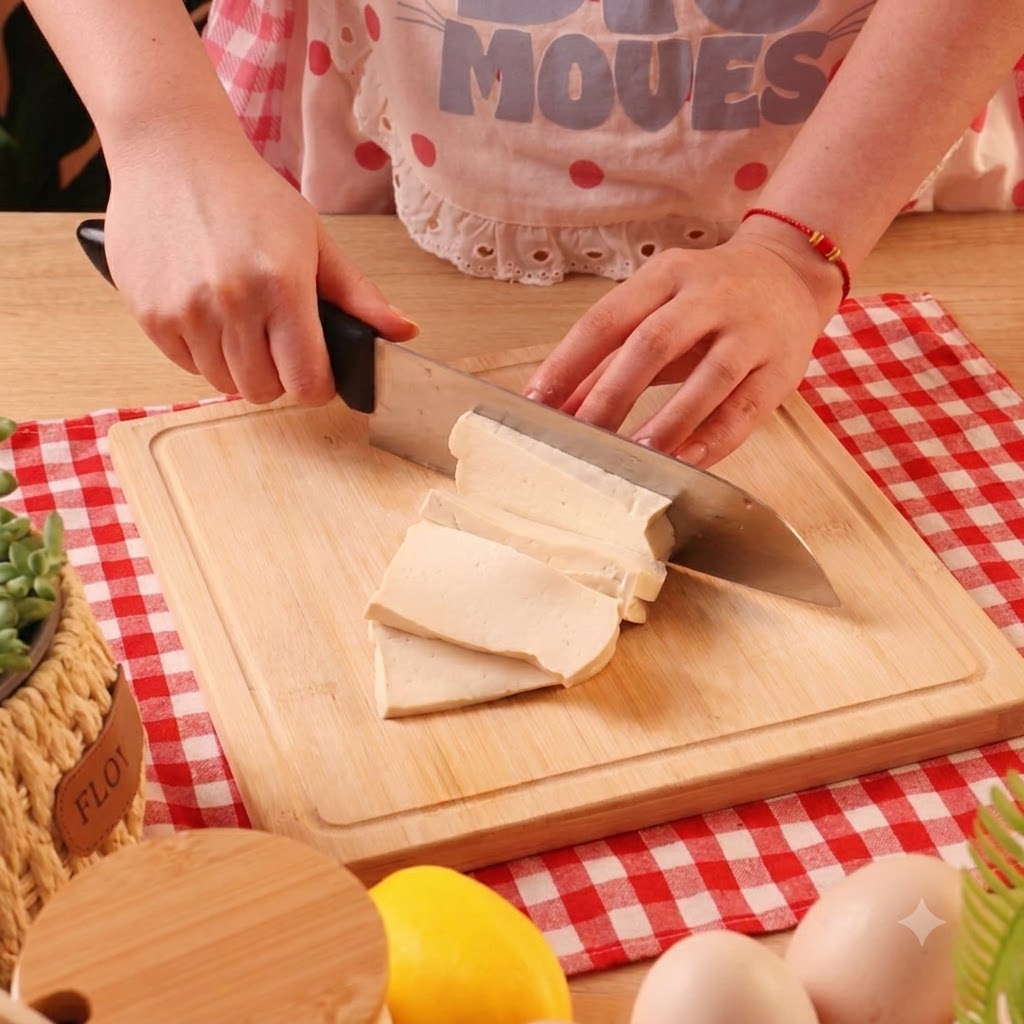
Place a block of soft or firm tofu onto a wooden cutting board and use a sharp knife to cut it into neat, even slices.
Tip: Cut the slices thick enough so they dont break apart easily when simmering in the hot pot broth. - 2Cut the red onion
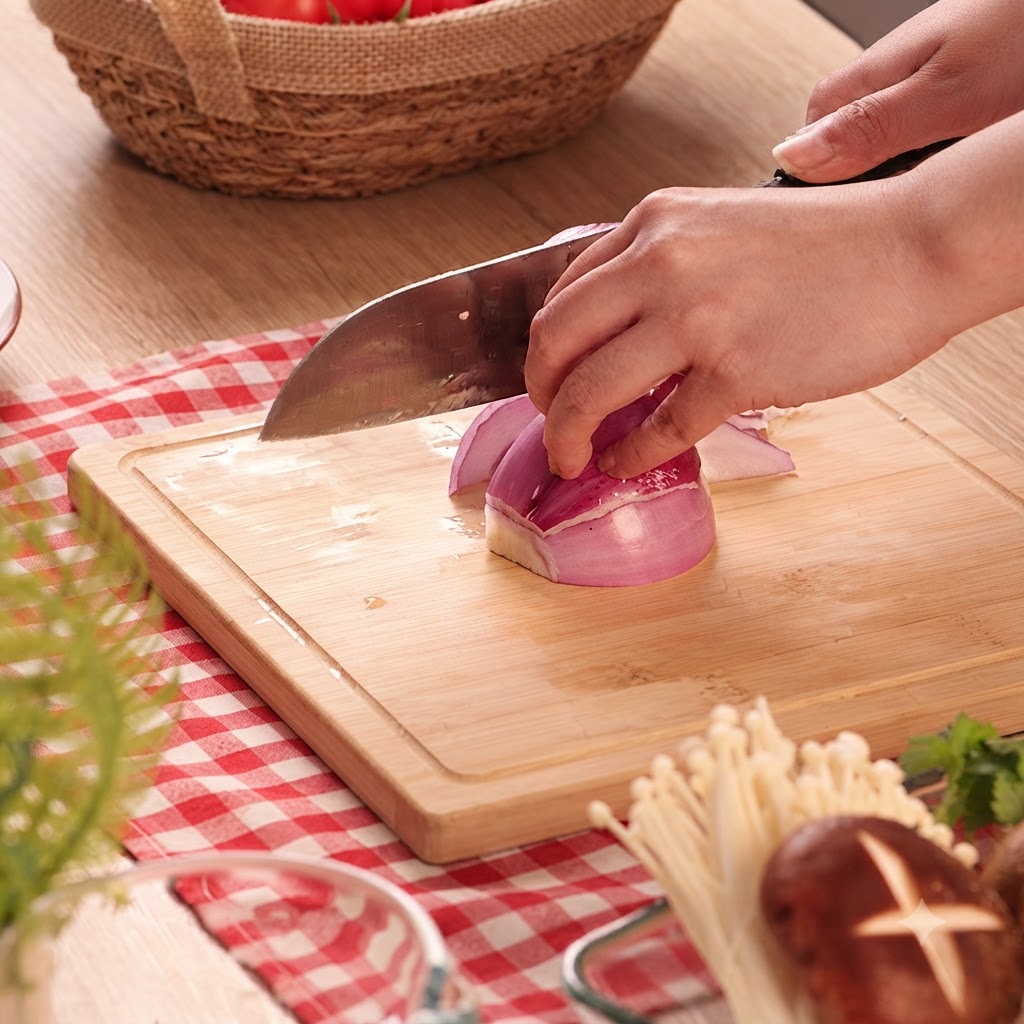
Place the red onion on a wooden cutting board and use a sharp knife to cut it cleanly in half.
Tip: Keep your fingers curled inward to protect them while slicing. - 3Chop green onions
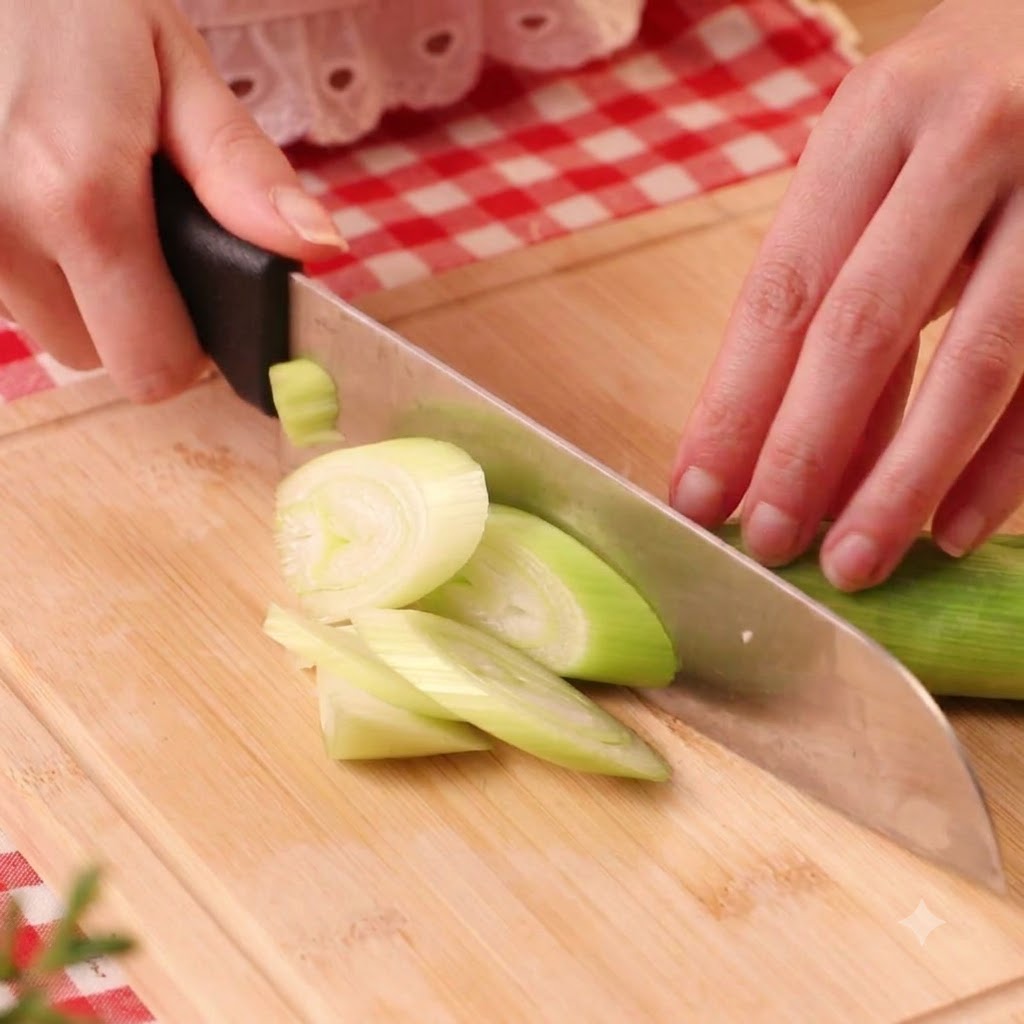
Slice the green onions evenly into small pieces on a wooden cutting board using a kitchen knife.
Tip: Cut at a slight angle for a nicer presentation. - 4Add chili paste and liquids
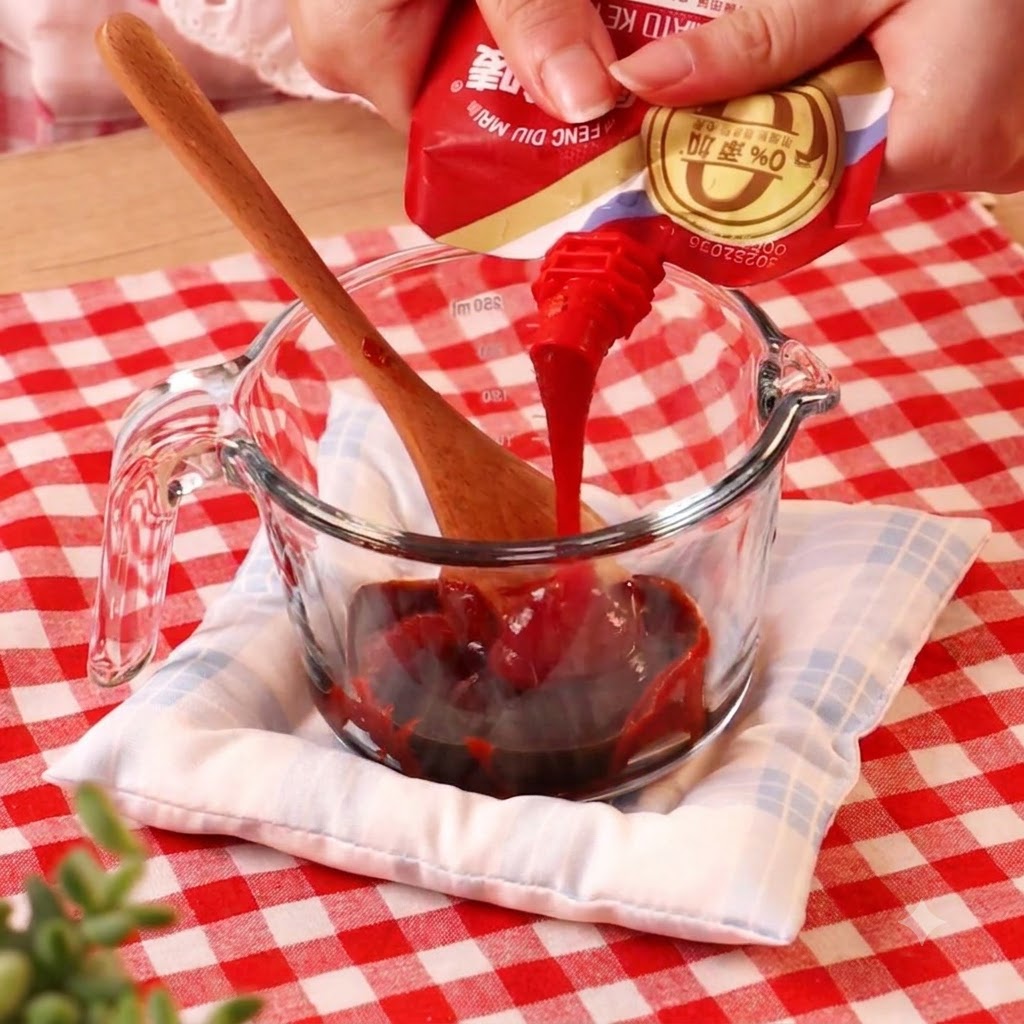
Pour chili paste and other liquid ingredients into a glass measuring cup with the help of a wooden spoon.
Tip: Make sure to measure accurately for the best balance of flavors. - 5Add water and mix sauce
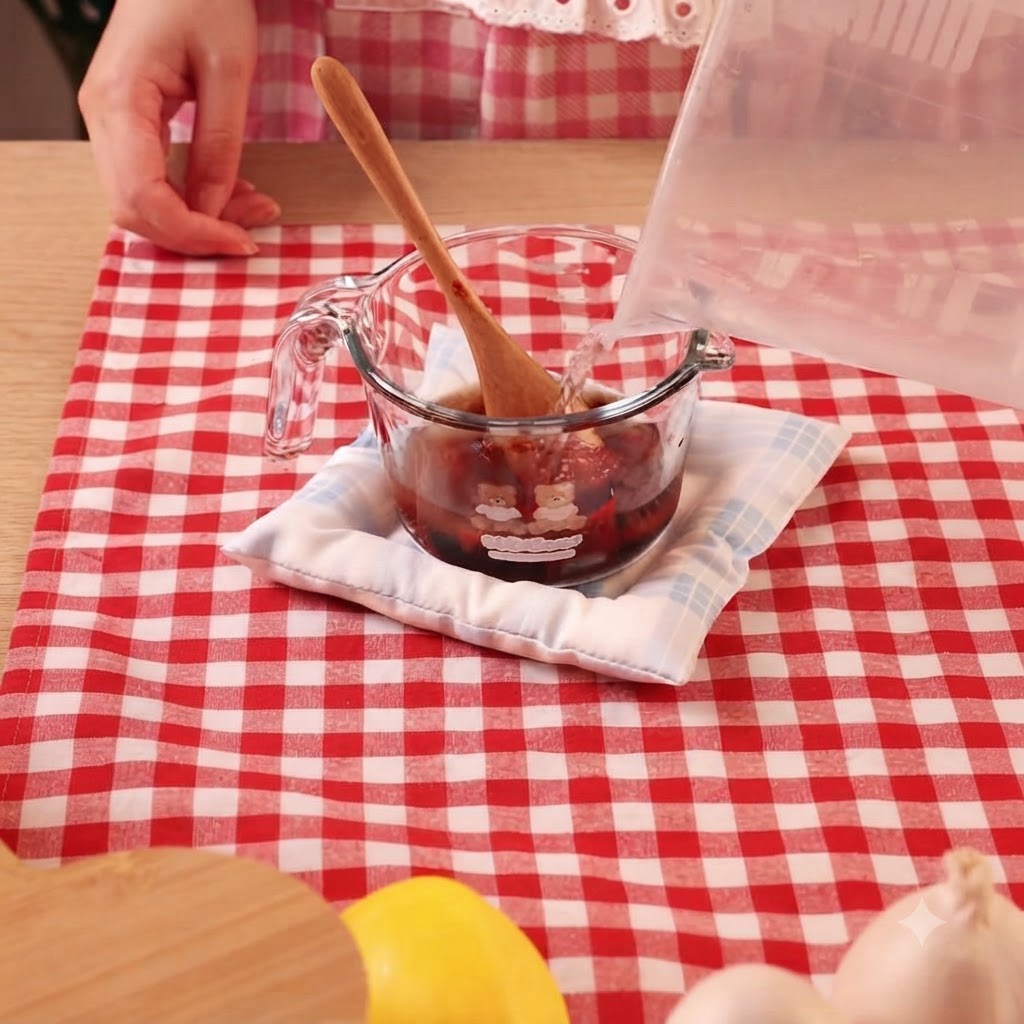
Pour water into the measuring cup containing the sauce ingredients and stir thoroughly with a wooden spoon.
Tip: Mix well until the paste is completely dissolved in the liquid. - 6Add sliced red onions to the pot
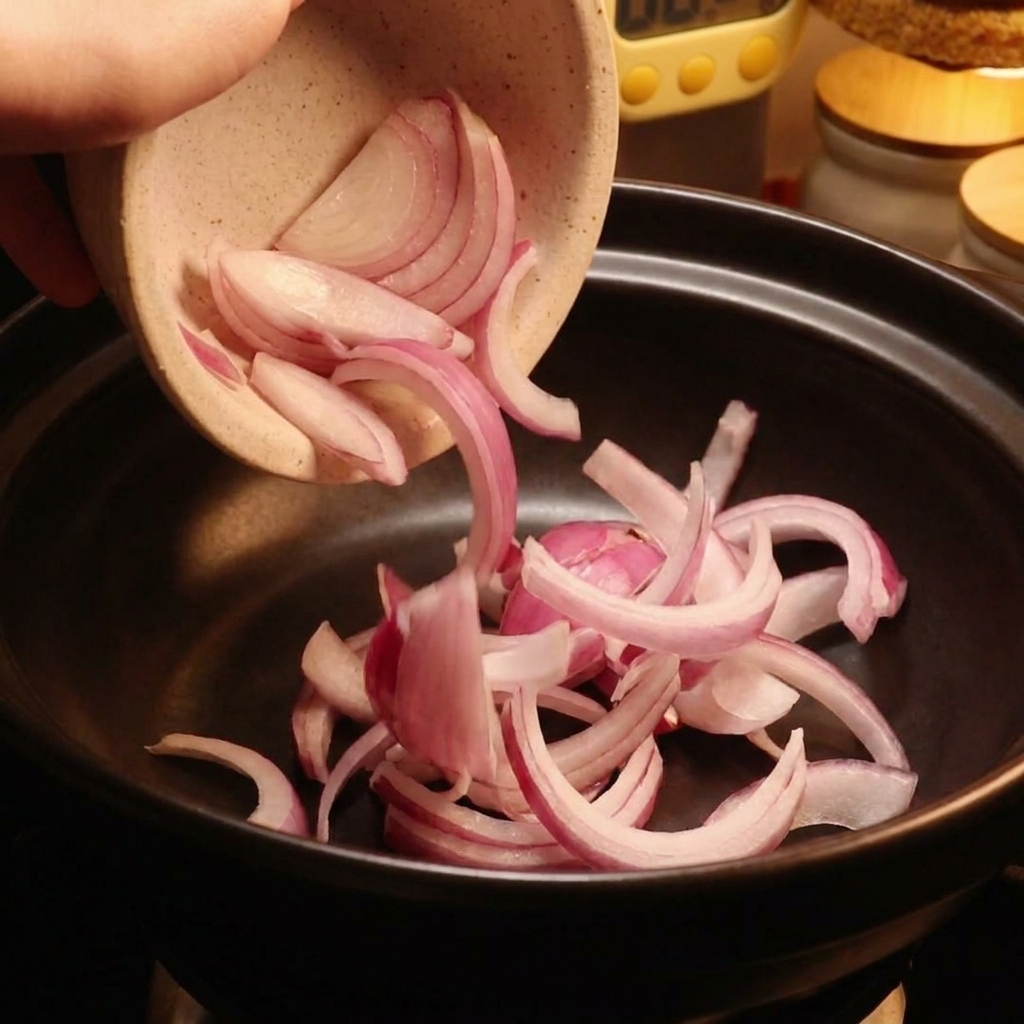
Take a bowl filled with sliced red onions and carefully pour them directly into the bottom of a black cooking pot to serve as the aromatic base for the army stew.
Tip: Spreading the onions evenly across the bottom helps distribute flavor and prevents ingredients from sticking. - 7Add napa cabbage over onions
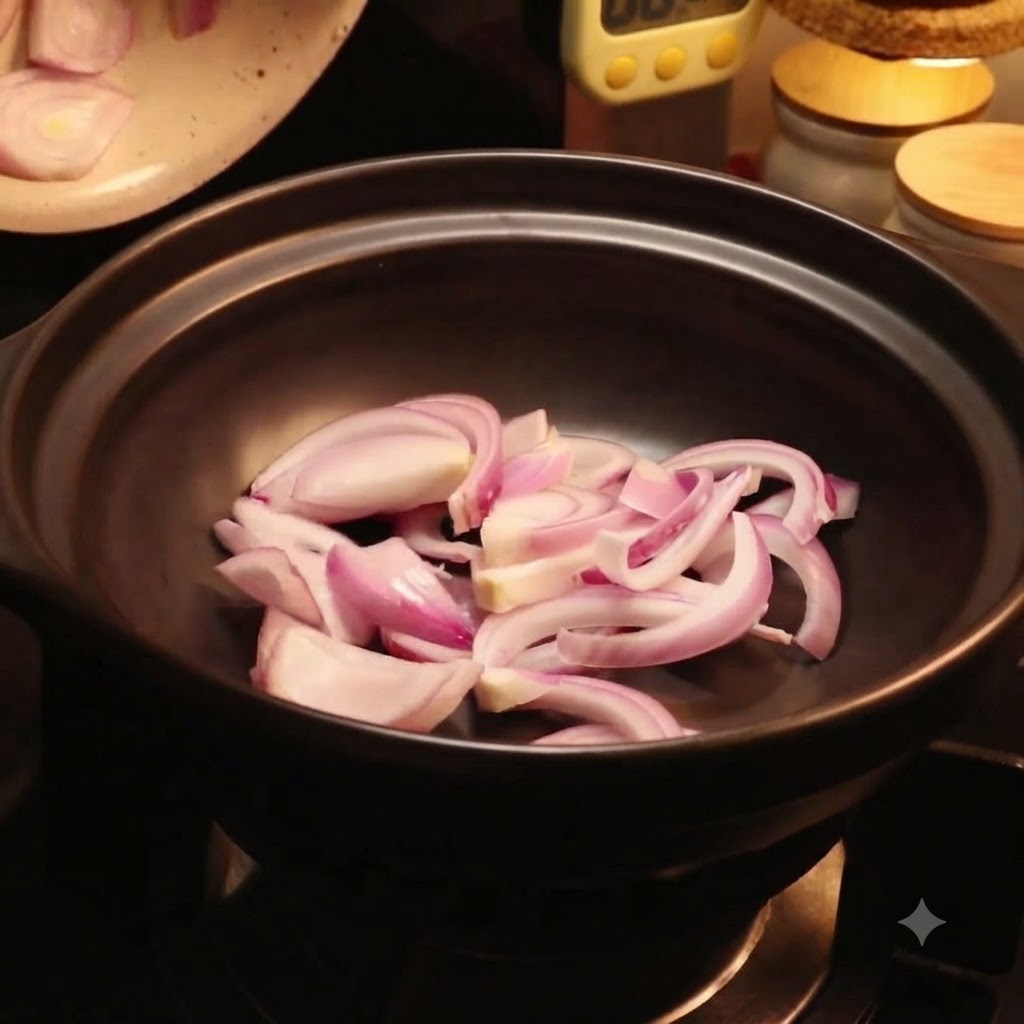
Place pieces of fresh napa cabbage directly into the black pot on top of the previously added layer of sliced red onions.
Tip: Layering leafy vegetables on top of onions protects them from burning and helps release moisture into the broth. - 8Add leafy greens
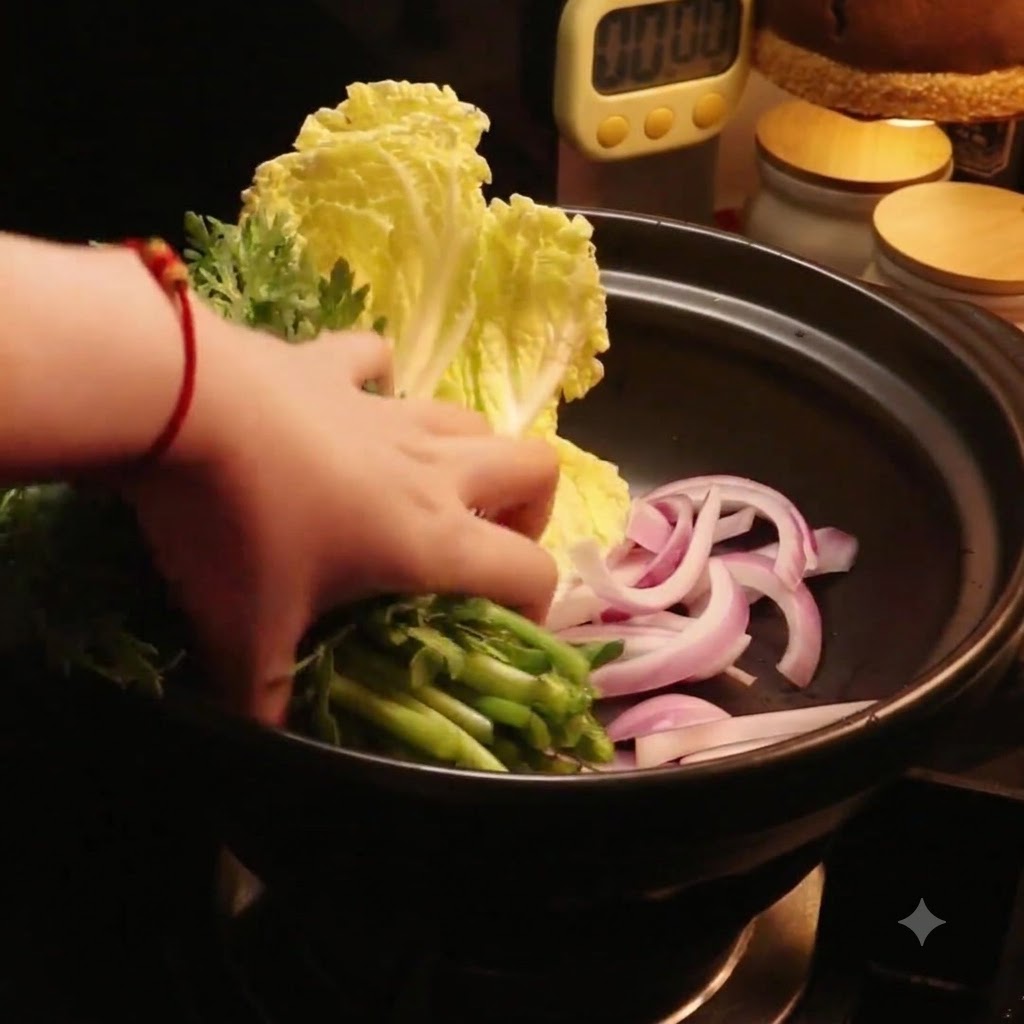
Place a handful of fresh leafy greens into the pot right next to the napa cabbage to build a diverse vegetable foundation.
Tip: Make sure to wash and drain your greens thoroughly before adding them to avoid excess water diluting the broth. - 9Arrange luncheon meat
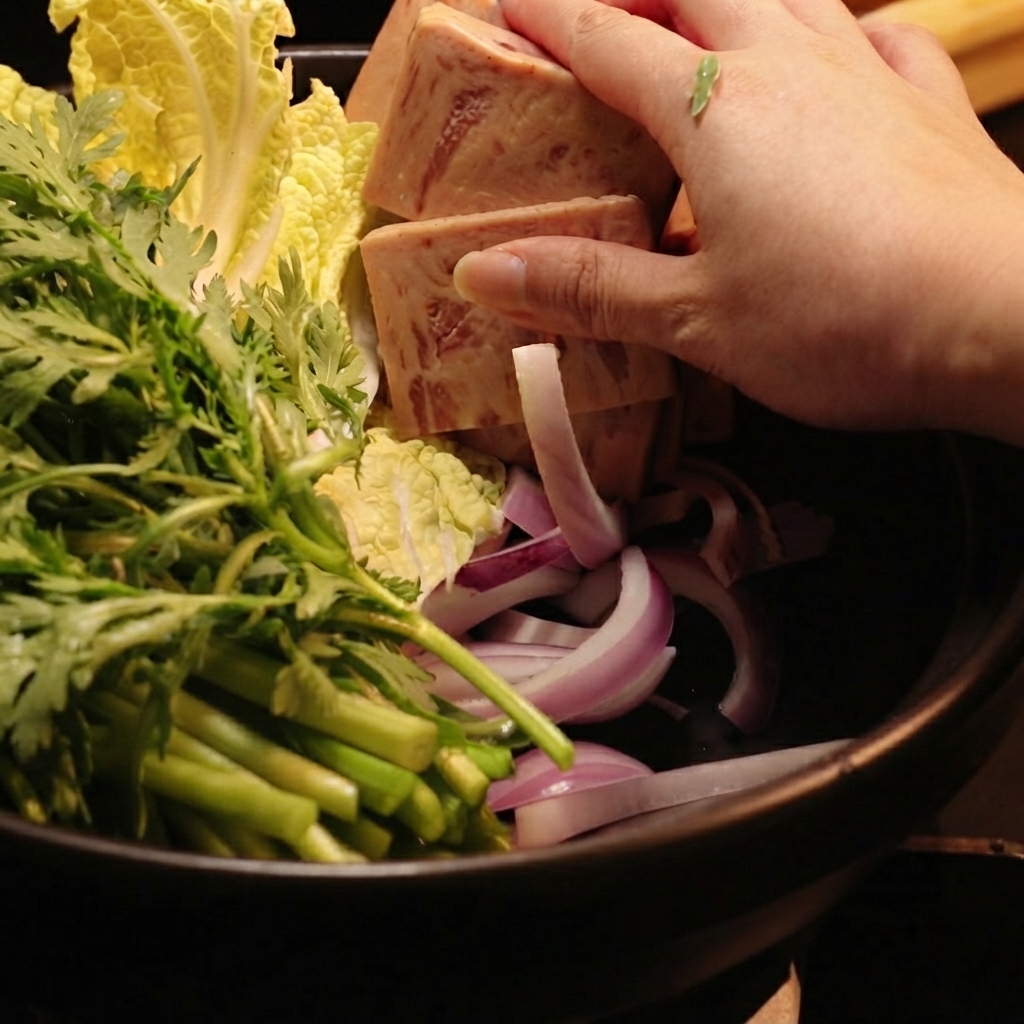
Take slices of luncheon meat and neatly arrange them into the pot alongside the vegetables.
Tip: Cutting the luncheon meat into uniform thickness ensures even cooking and a nice presentation. - 10Add various mushrooms
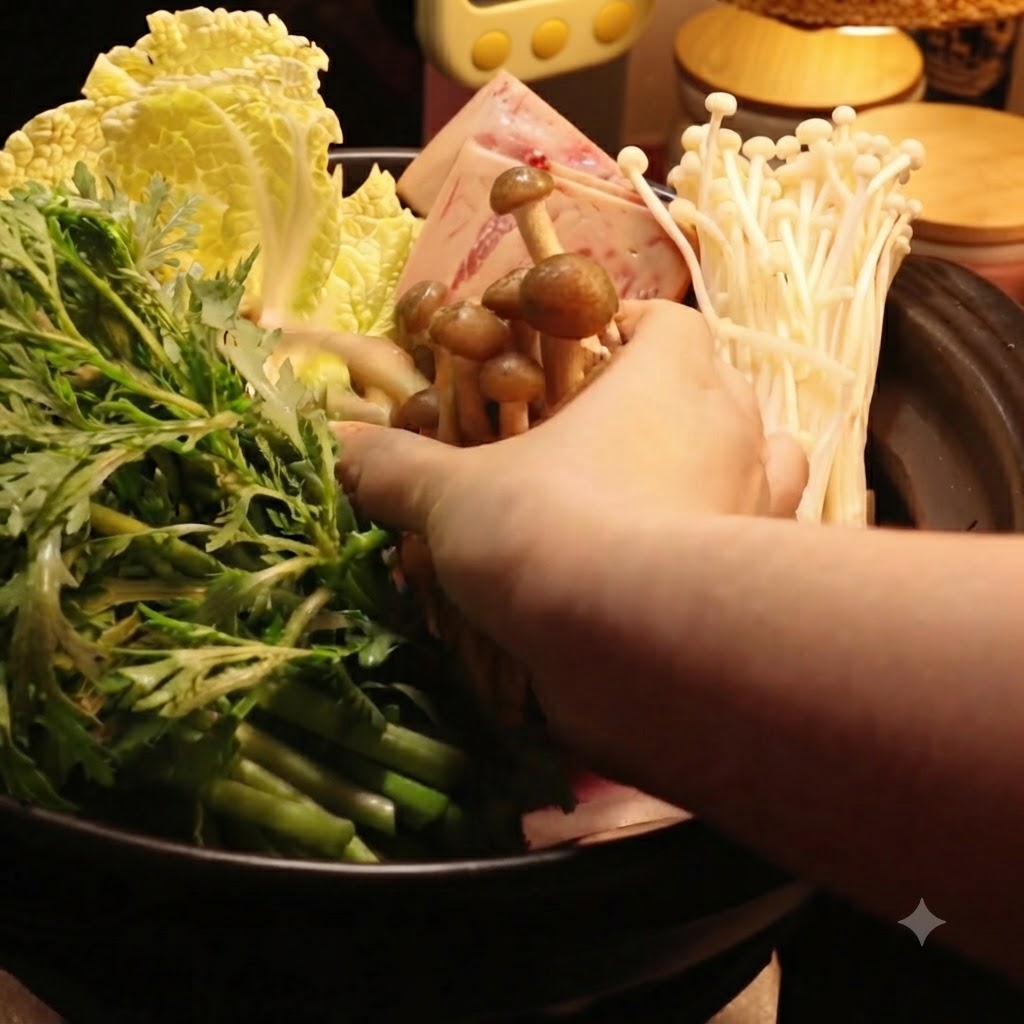
Add a selection of mushrooms, including enoki and shiitake mushrooms, into the pot to enrich the flavor profile of the stew.
Tip: Trim the roots off the enoki mushrooms and gently wipe the shiitake mushrooms clean with a damp cloth. - 11Add tofu to the pot
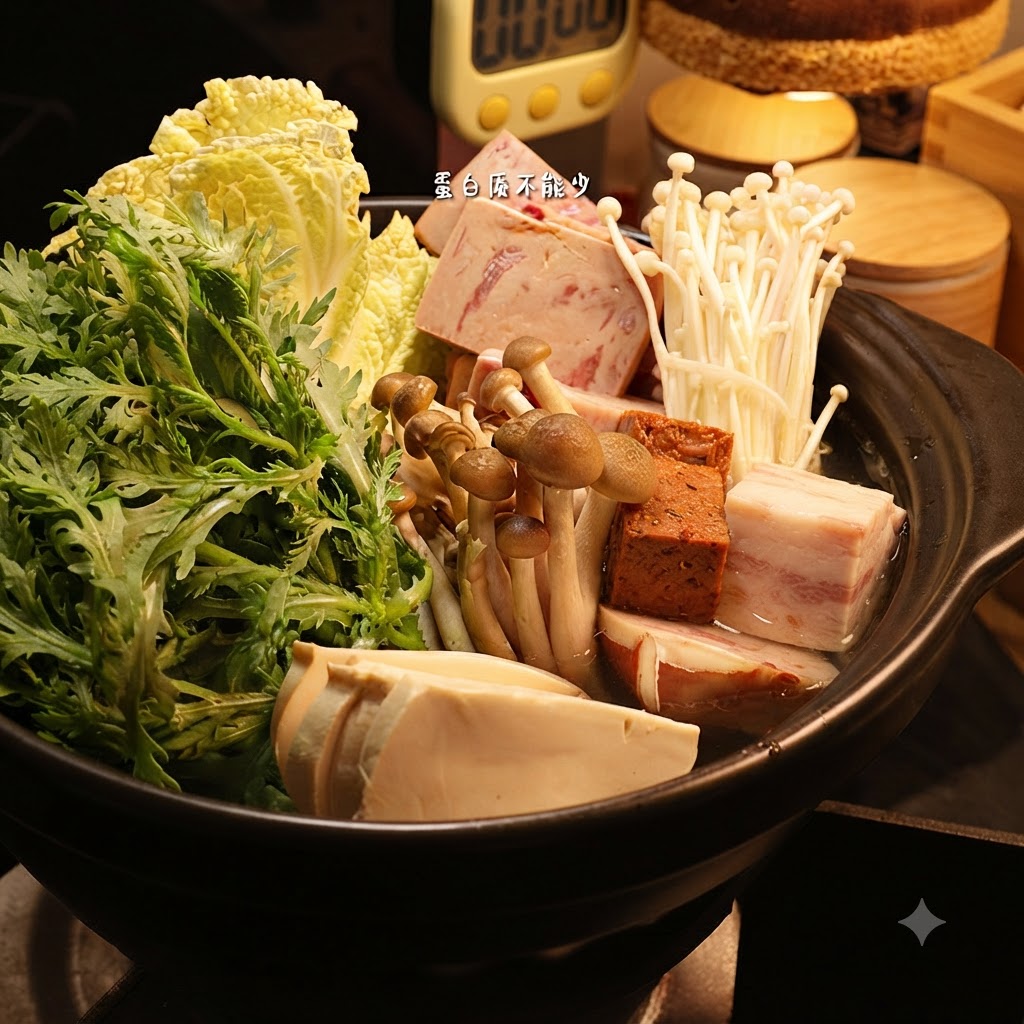
Arrange the freshly sliced tofu pieces neatly into the hot pot alongside the other prepped ingredients like napa cabbage, greens, and mushrooms.
Tip: Place delicate ingredients like tofu carefully so they maintain their shape during the cooking process. - 12Add sliced beef
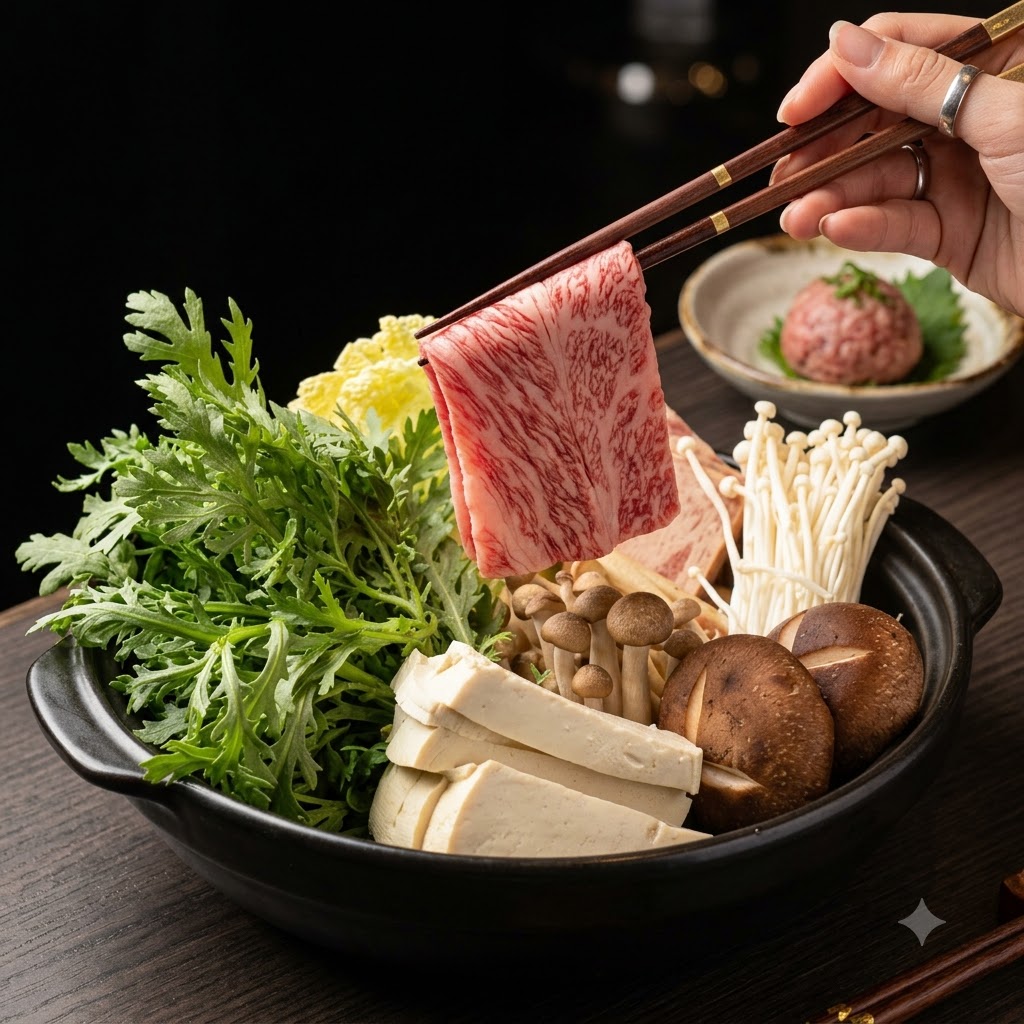
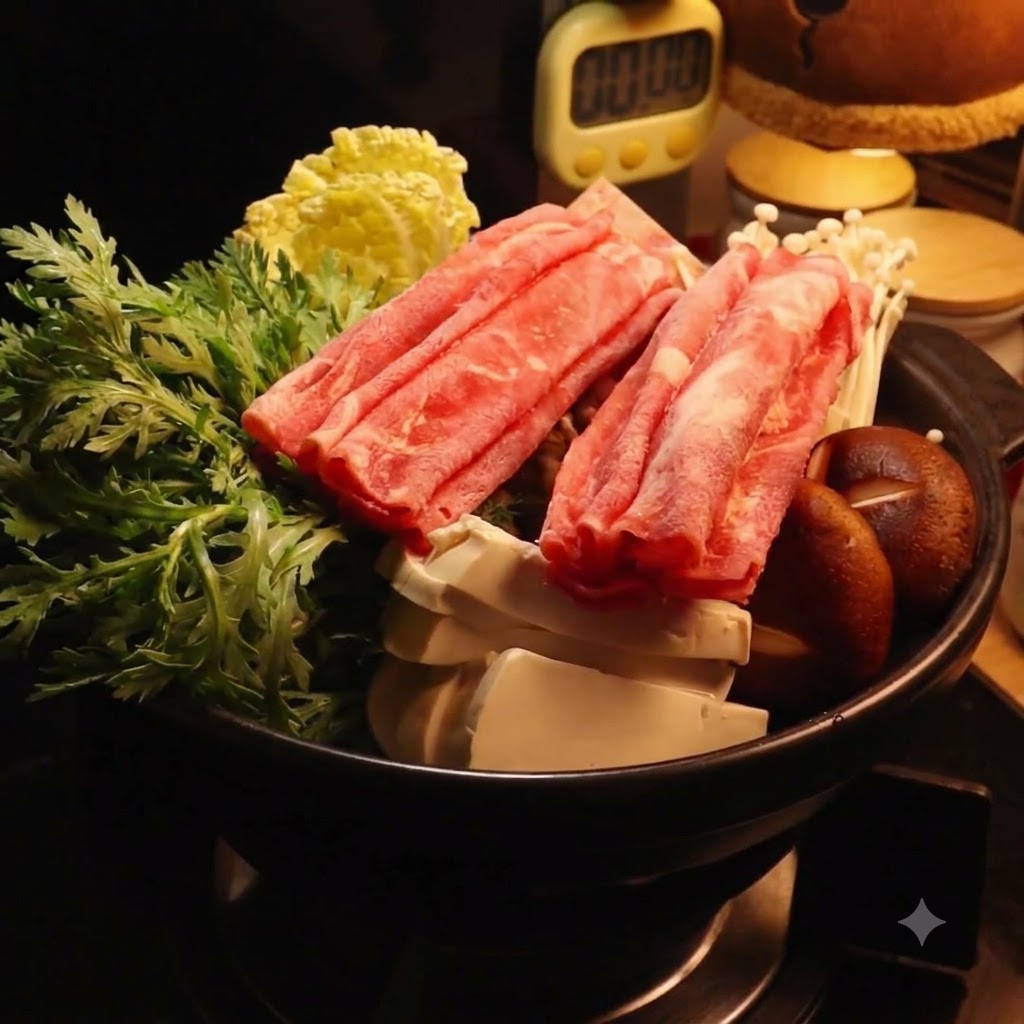
Take thin slices of beef using chopsticks and carefully place them into the pot with the rest of the ingredients.
Tip: Layer the beef evenly so it cooks quickly and evenly once the broth starts boiling. - 13Garnish with green onions
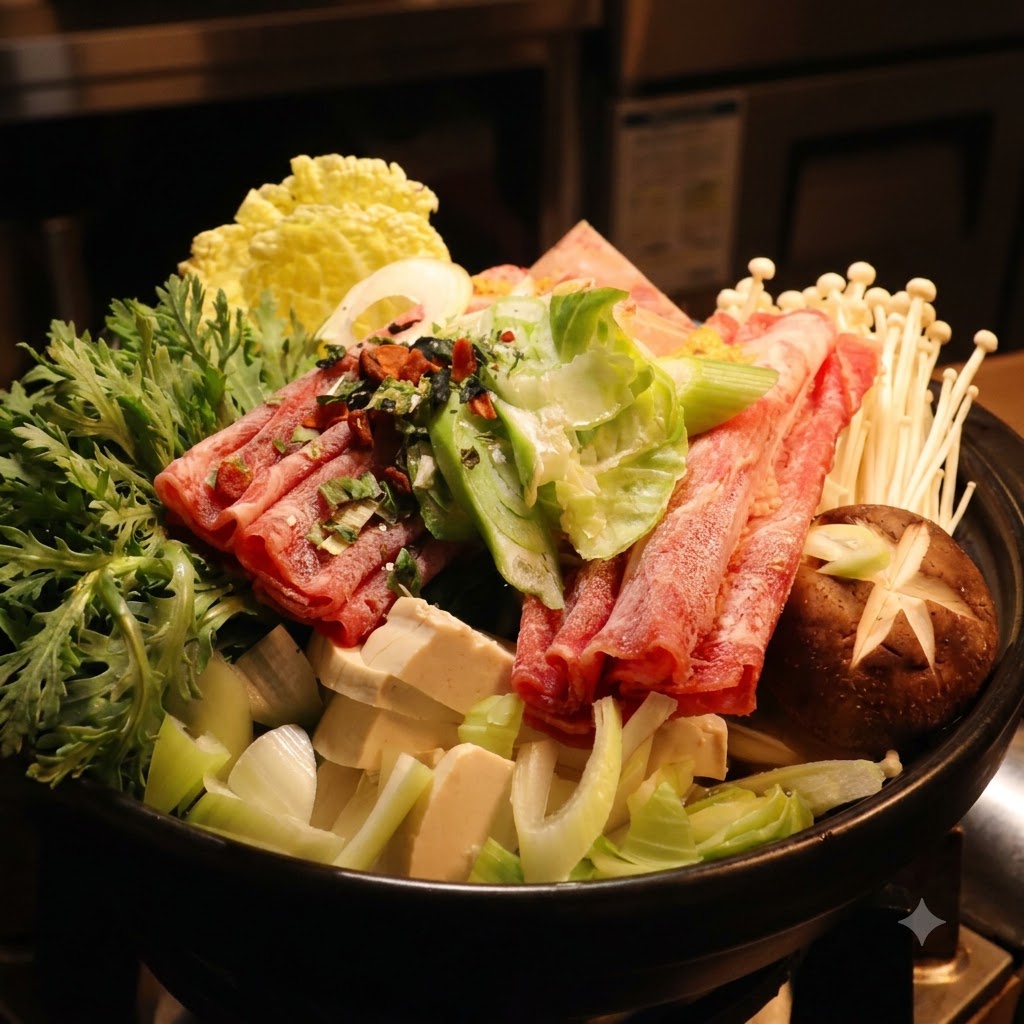
Scatter freshly sliced green onions over the top of the arranged hot pot ingredients to add a fresh aroma and pop of color.
Tip: Add green onions just before pouring the liquid so they retain their vibrant color and fresh flavor. - 14Pour the sauce mixture
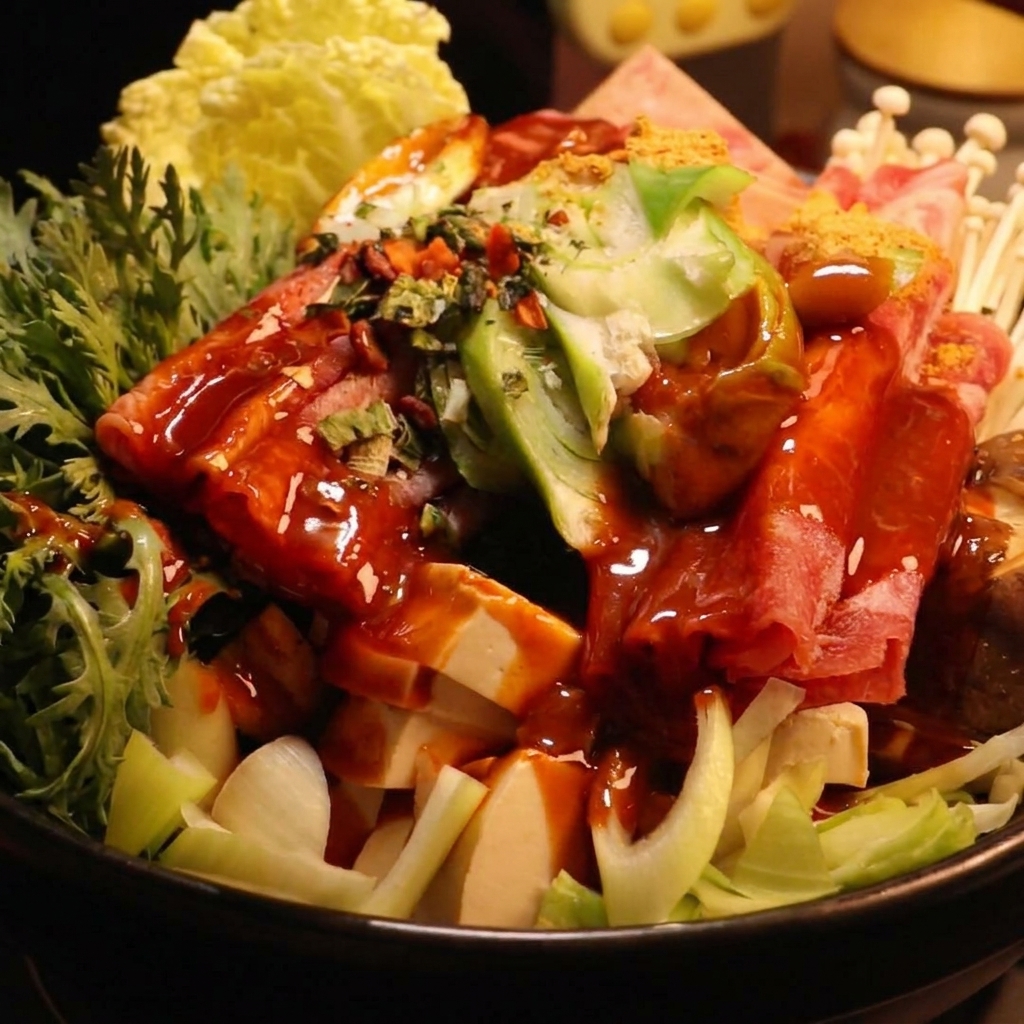
Take your prepared spicy red sauce mixture and pour it evenly over the layered ingredients inside the pot.
Tip: Pour the sauce slowly over the top so it seeps down evenly through all the ingredients as it heats. - 15Add hot water
Pour hot water into the pot over the layered ingredients and sauce to bring the stew together and start the cooking process.
Tip: Using hot water instead of cold water helps the stew reach a boil much faster. - 16Add instant ramen noodles
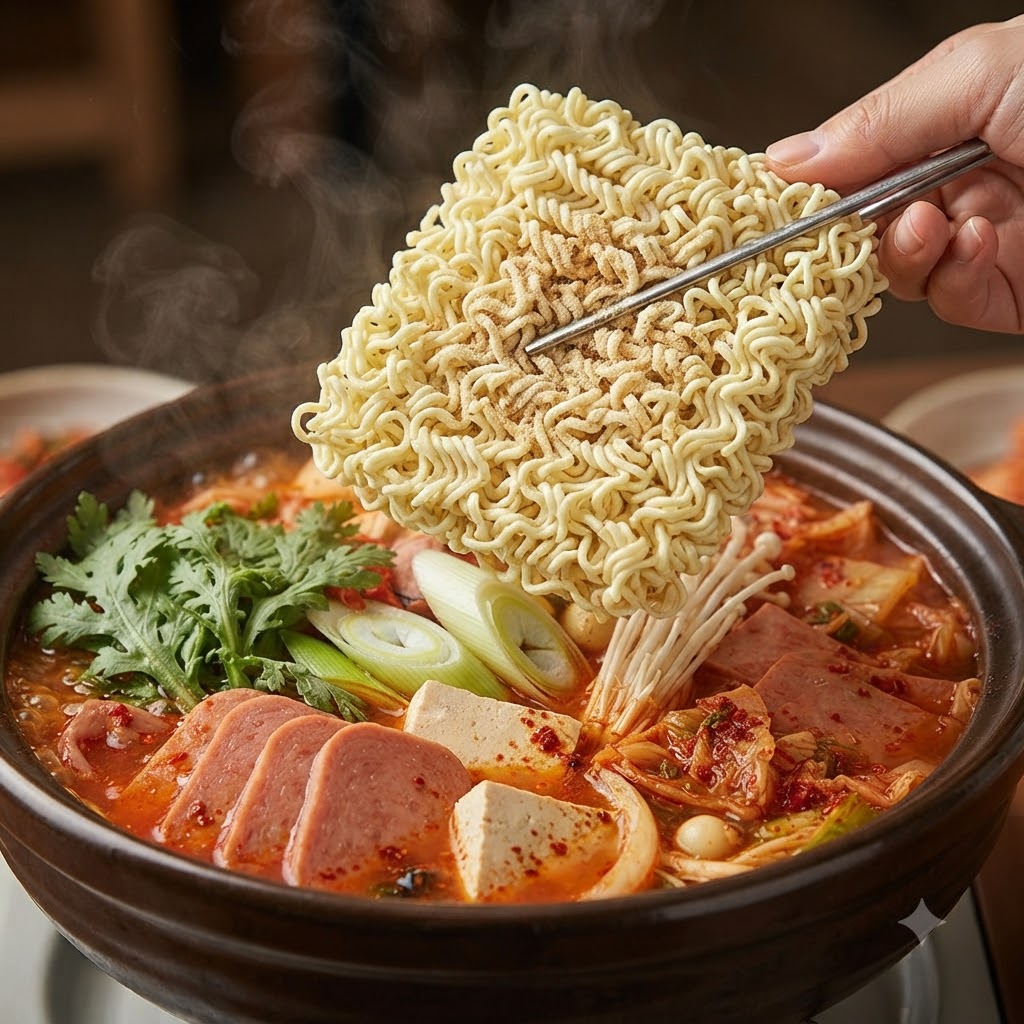
Place a block of instant ramen noodles directly on top of the layered stew ingredients in the pot, ready to absorb the rich broth.
Tip: Place the ramen on top so it cooks evenly as the broth bubbles. - 17Crack an egg on top
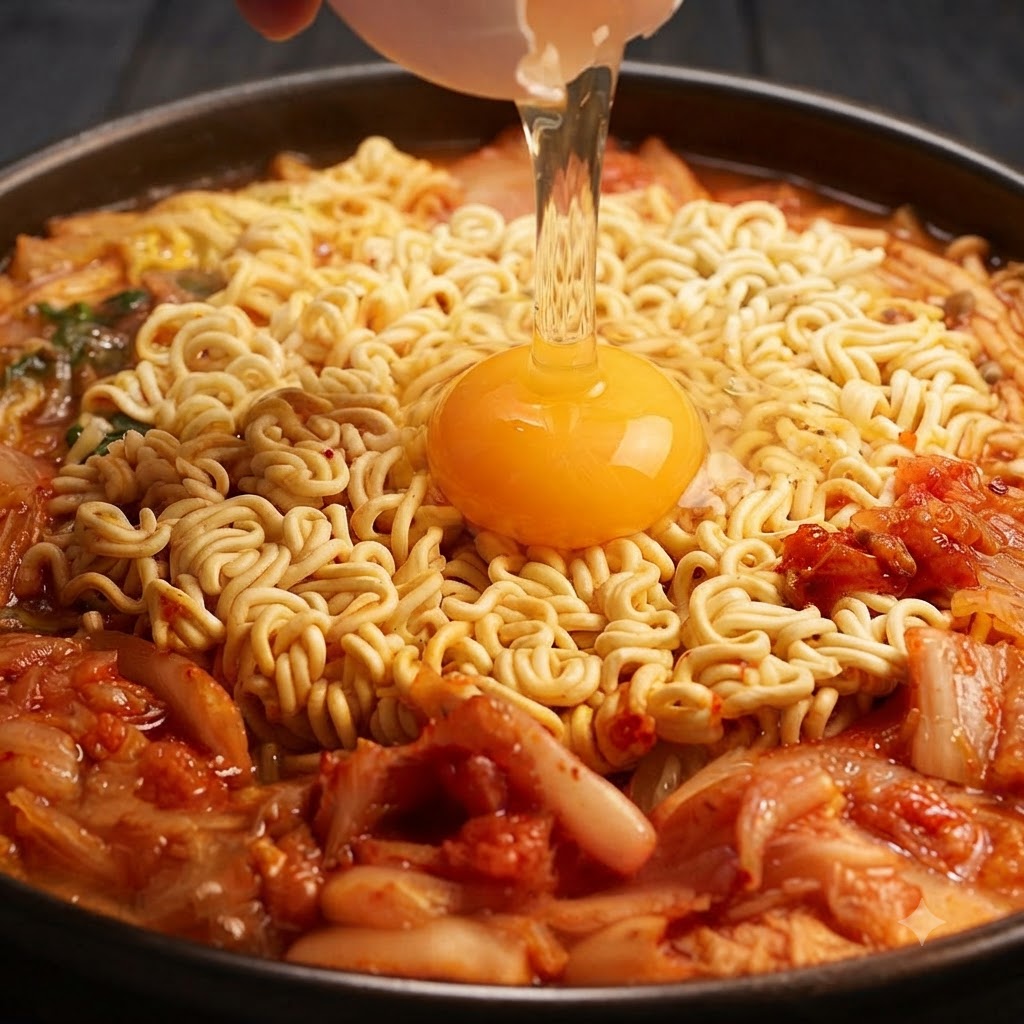
Crack a fresh raw egg directly onto the center of the instant ramen noodles in the bubbling pot to add richness to the stew.
Tip: Drop the egg right into the center indentation of the noodles so it stays contained. - 18Cover and simmer
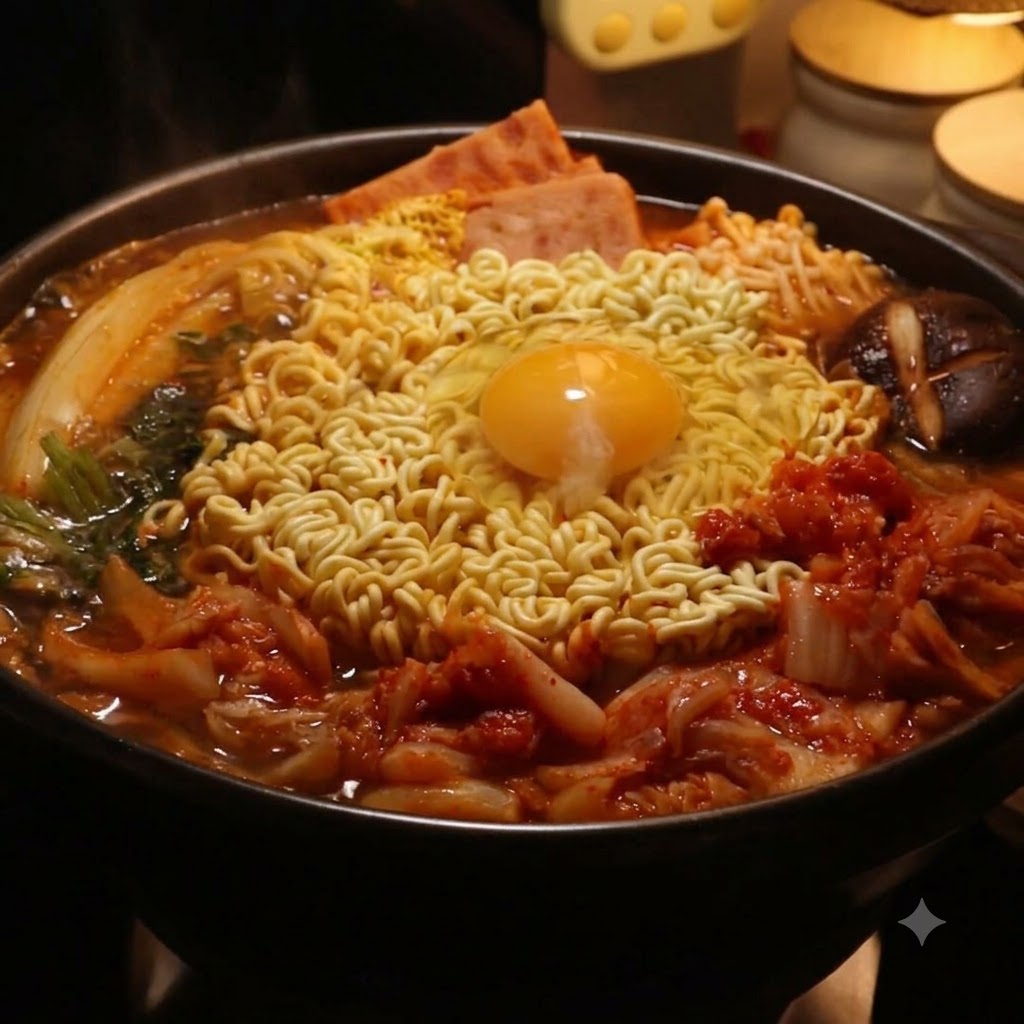
Cover the pot securely with a lid to trap the heat and let the stew simmer, allowing the noodles to soften and the egg to cook.
Tip: Simmer on medium heat to let all the flavors meld together properly. - 19Sprinkle sesame seeds
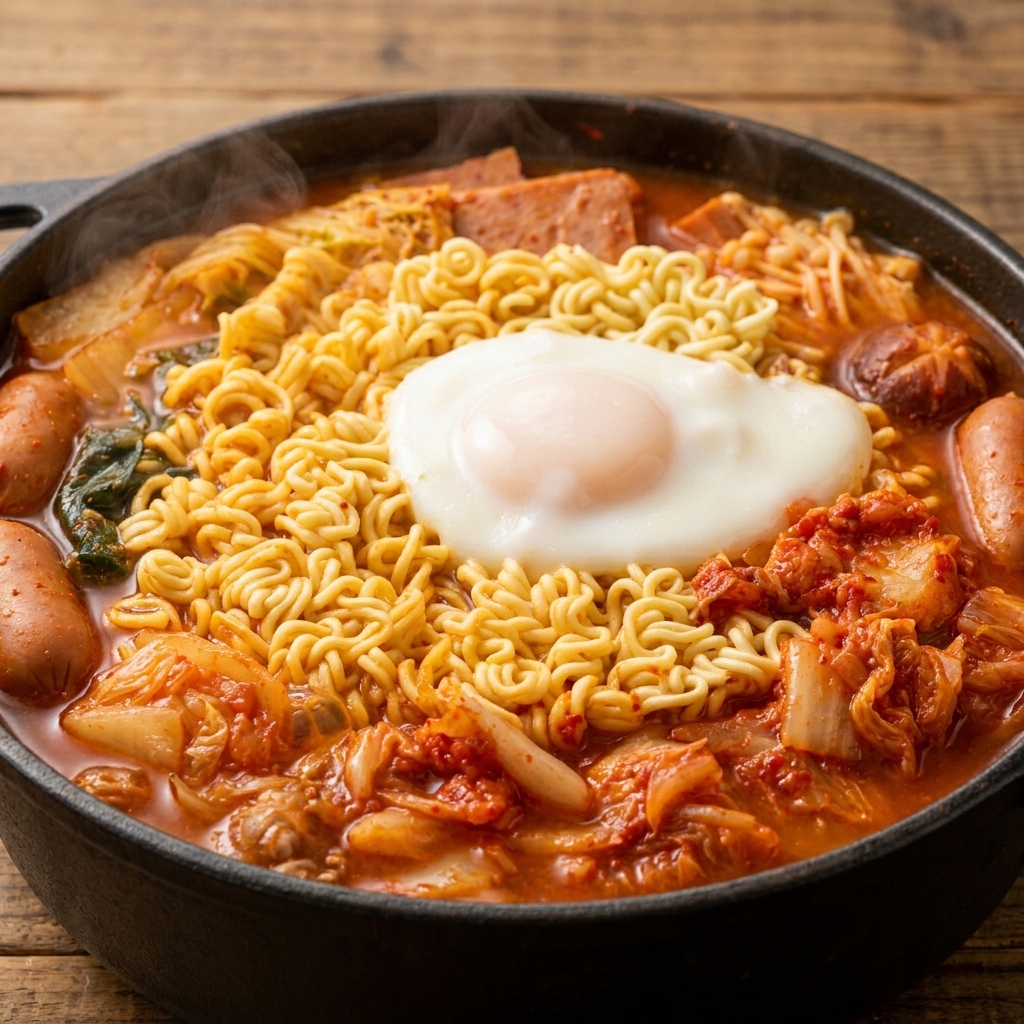
Gently sprinkle black sesame seeds evenly over the cooked egg and ramen noodles to add a nutty flavor and visual contrast.
Tip: Toast the sesame seeds slightly beforehand if you want an enhanced nutty aroma.