Korean Spicy Beef Belly
Soybean Sprouts (Kongbul)
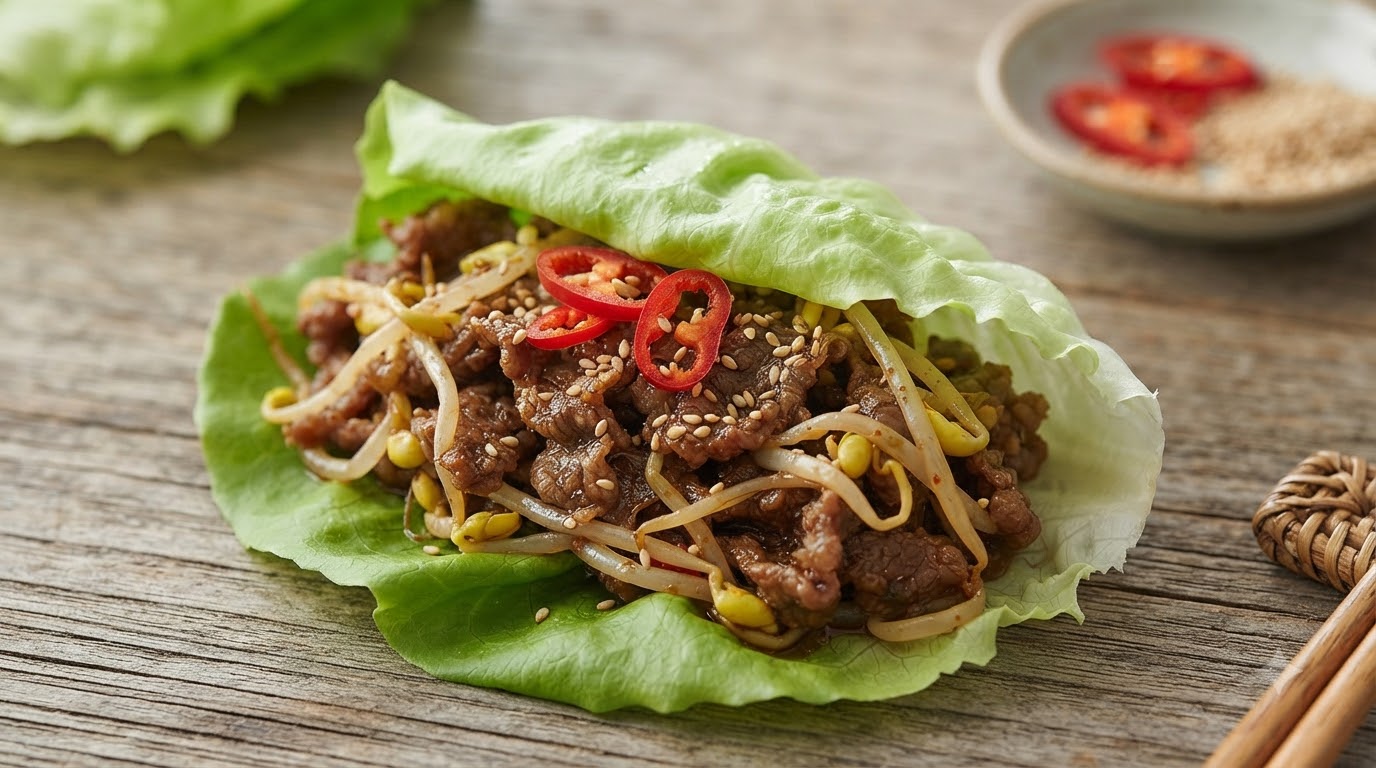
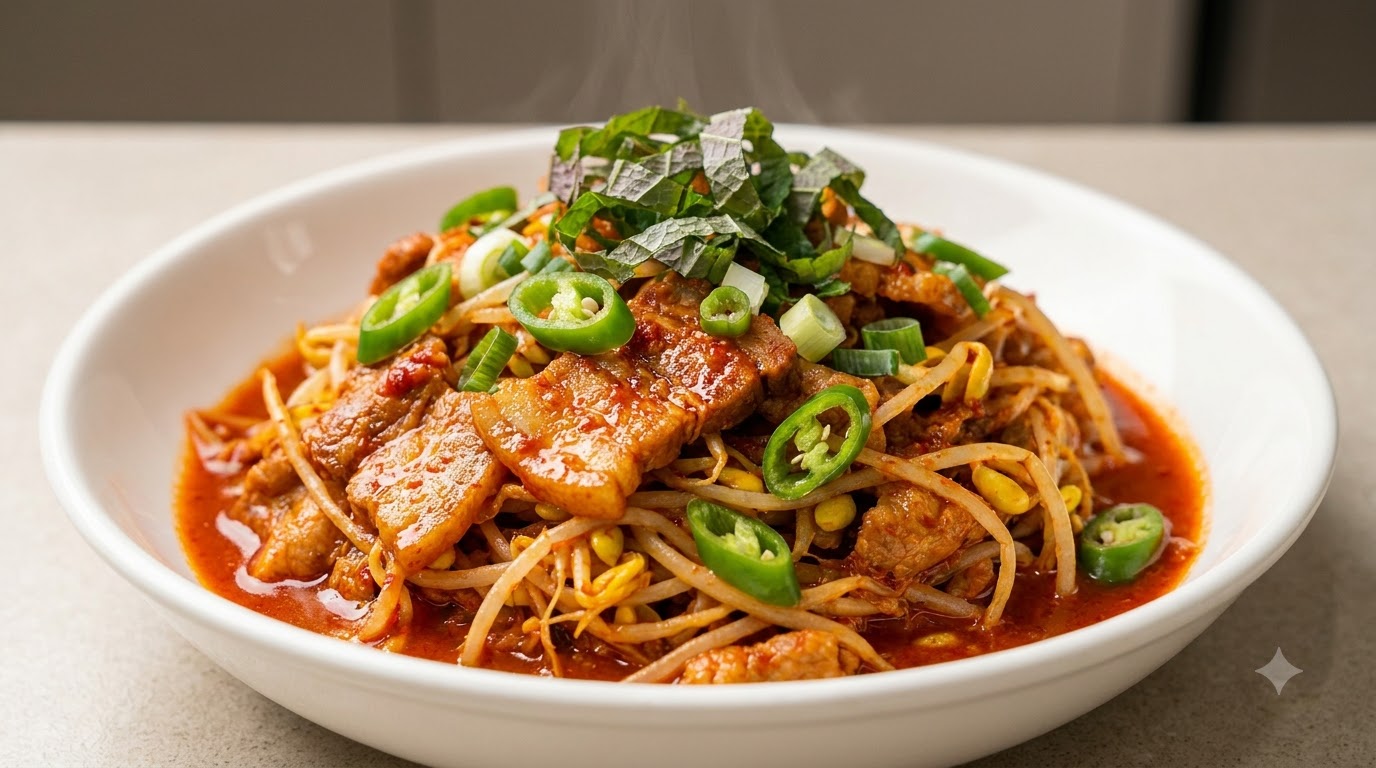
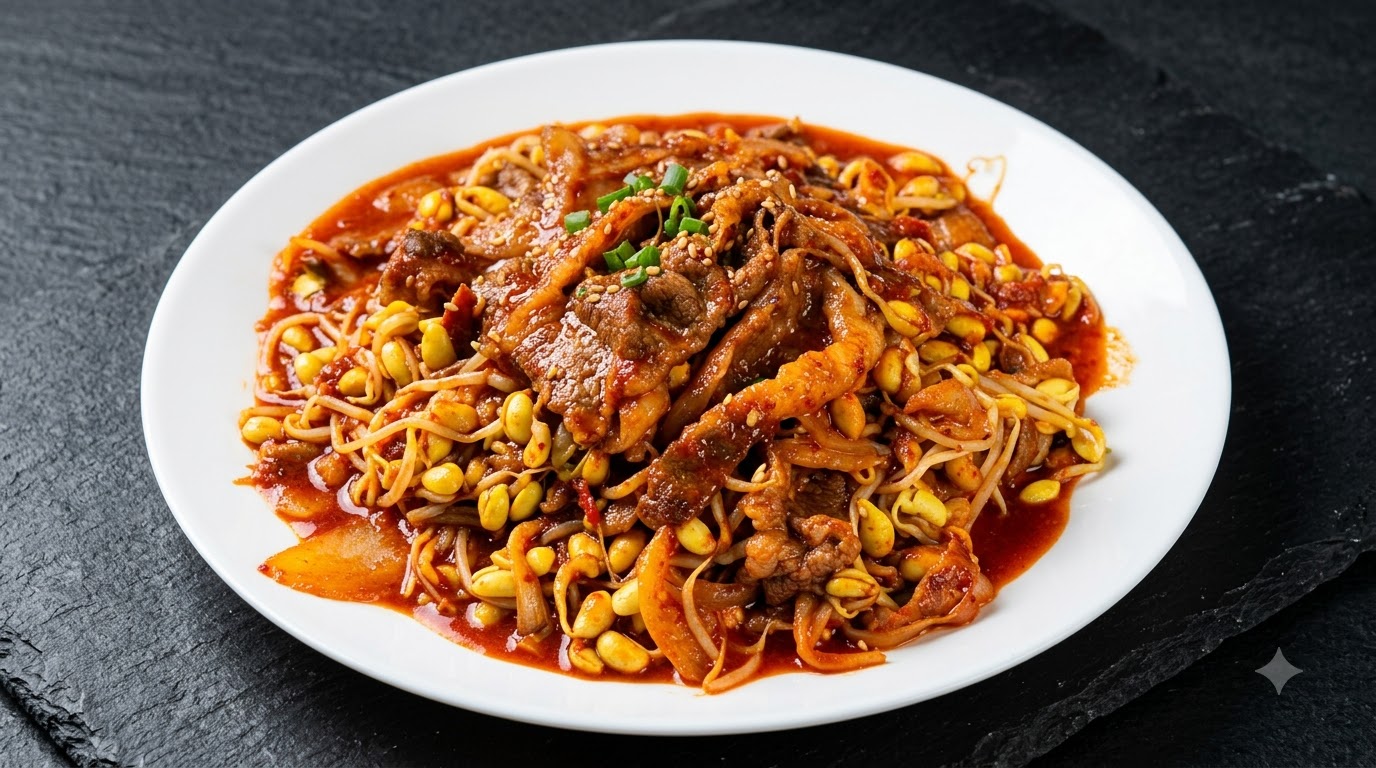
Experience the vibrant flavors of Kongbul, a comforting Korean stir-fry featuring tender beef belly and crisp soybean sprouts tossed in a rich, spicy gochujang sauce.
Kongbul (콩불) is a beloved Korean modern classic that beautifully marries the rich, savory fat of beef belly with the fresh, crisp texture of soybean sprouts. Born in affordable diners, this dish is a testament to how simple ingredients can transform into a hearty, deeply flavorful meal when united by an irresistible gochujang-based sauce.
Ingredients
- 150 g beef belly slices
- 400 g yellow soybean sprouts
- 0.5 yellow onion
- to taste green onions
- 2 tbsp coarse chili powder
- 2 tbsp sugar
- 1 tbsp beef bouillon powder
- 2 tbsp minced garlic
- 2 tbsp Korean cooking wine
- 2 tbsp soy sauce
- 1 tbsp Korean chili paste (gochujang)
- 1 tbsp cooking oil
- to taste sesame oil
Instructions
- 1Add Coarse Chili Powder
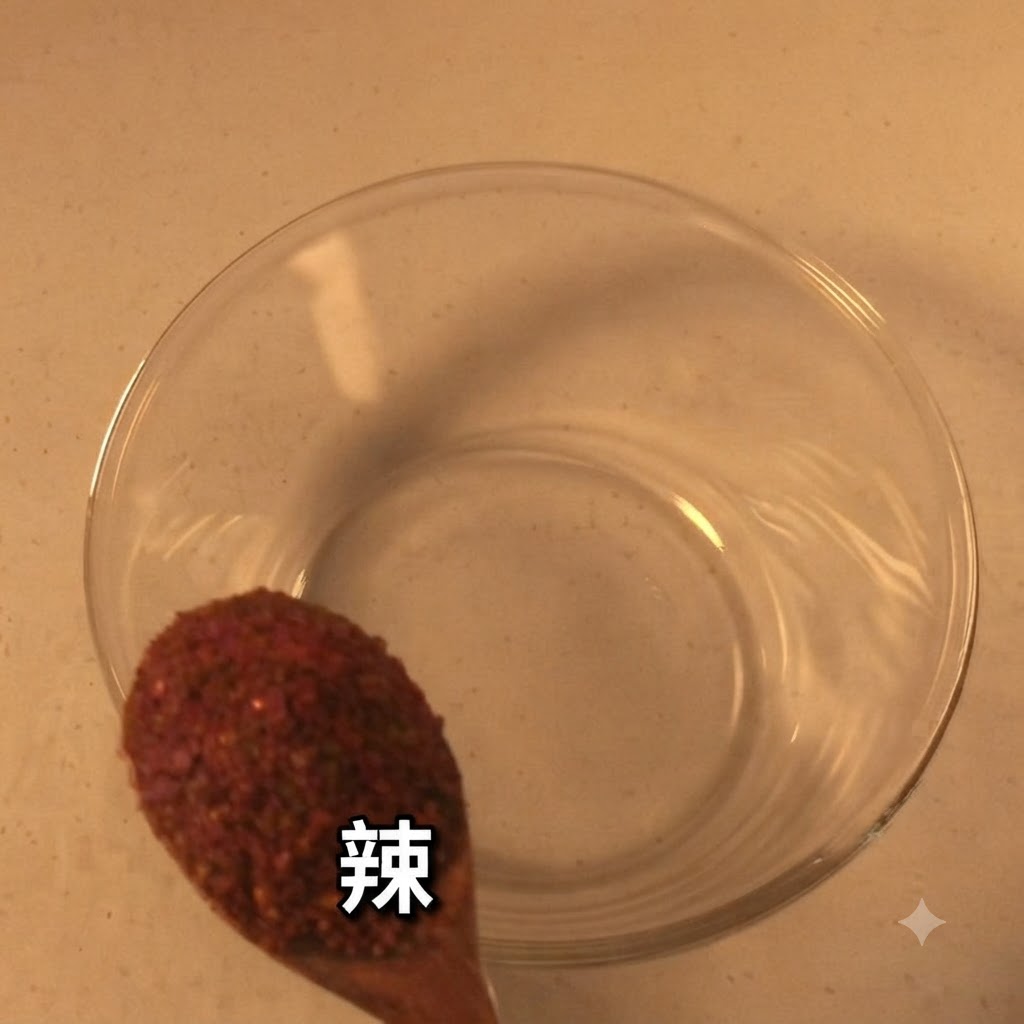
In a clean, dry glass bowl, add two spoons of coarse chili powder to serve as the base for the spicy sauce.
Tip: Ensure the bowl is completely dry before adding any dry spices. - 2Add Aromatics and Seasonings
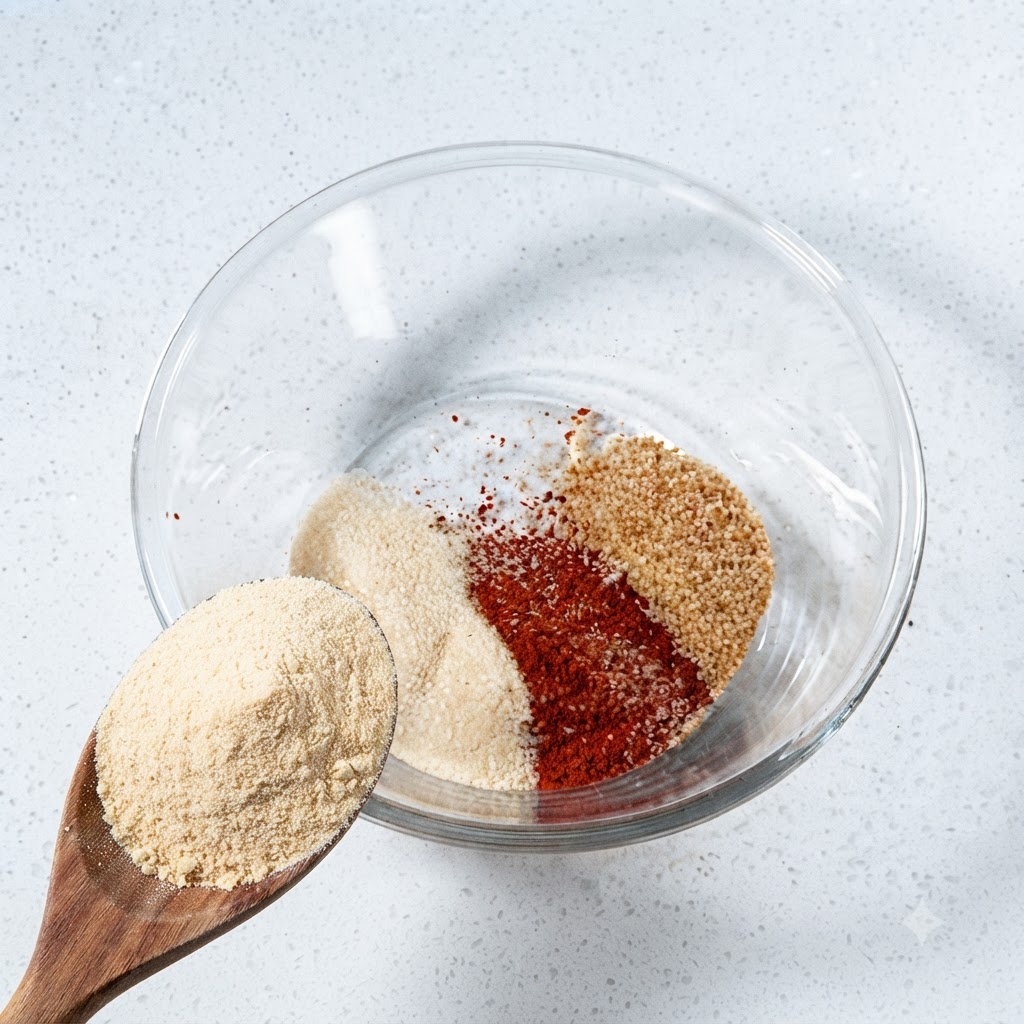
Add two spoons of minced garlic, two spoons of sugar, and one spoon of beef bouillon powder directly into the glass bowl alongside the chili powder.
Tip: Measure the ingredients accurately to balance the sweet and savory profiles of the sauce. - 3Pour Liquid Seasonings
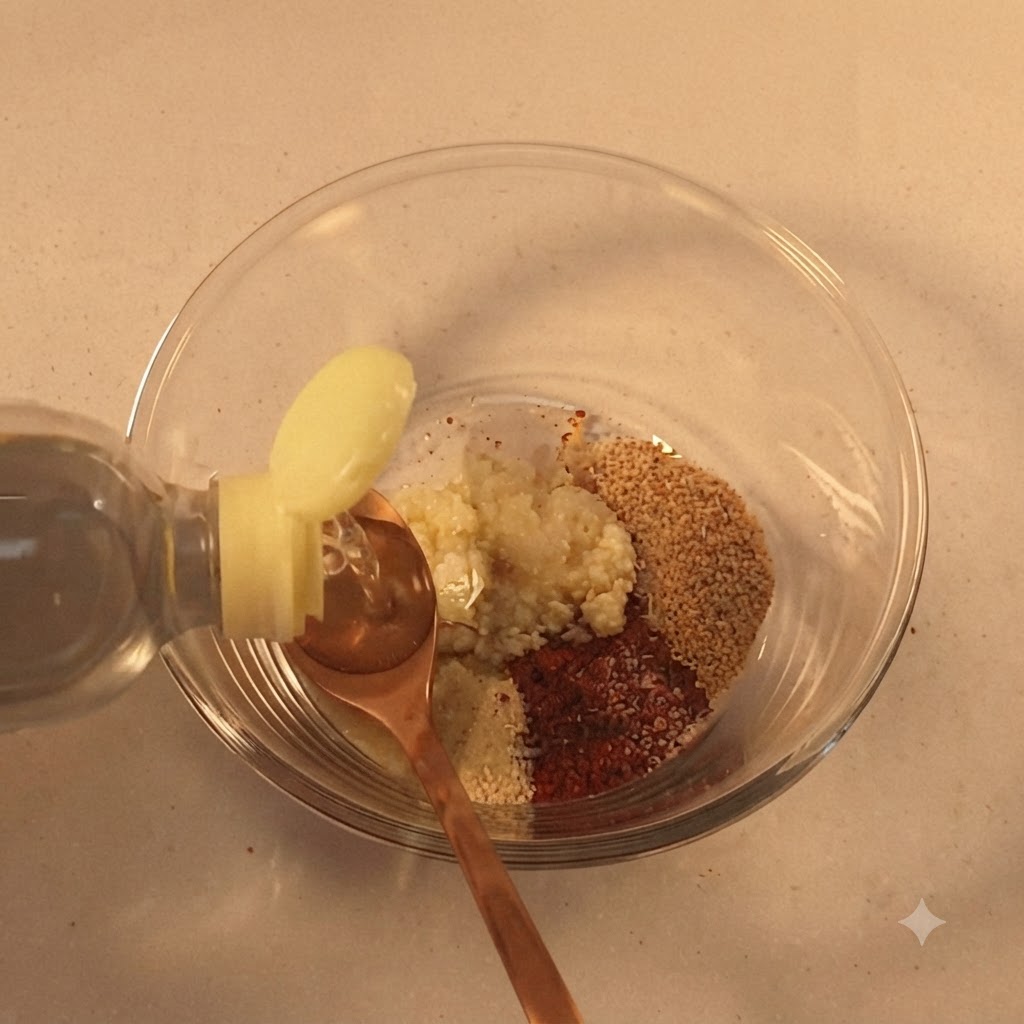
Pour two spoons of Korean cooking wine and two spoons of soy sauce over the dry ingredients in the glass bowl.
Tip: Pour the liquids slowly over the measuring spoon to maintain precise proportions. - 4Add Korean Chili Paste
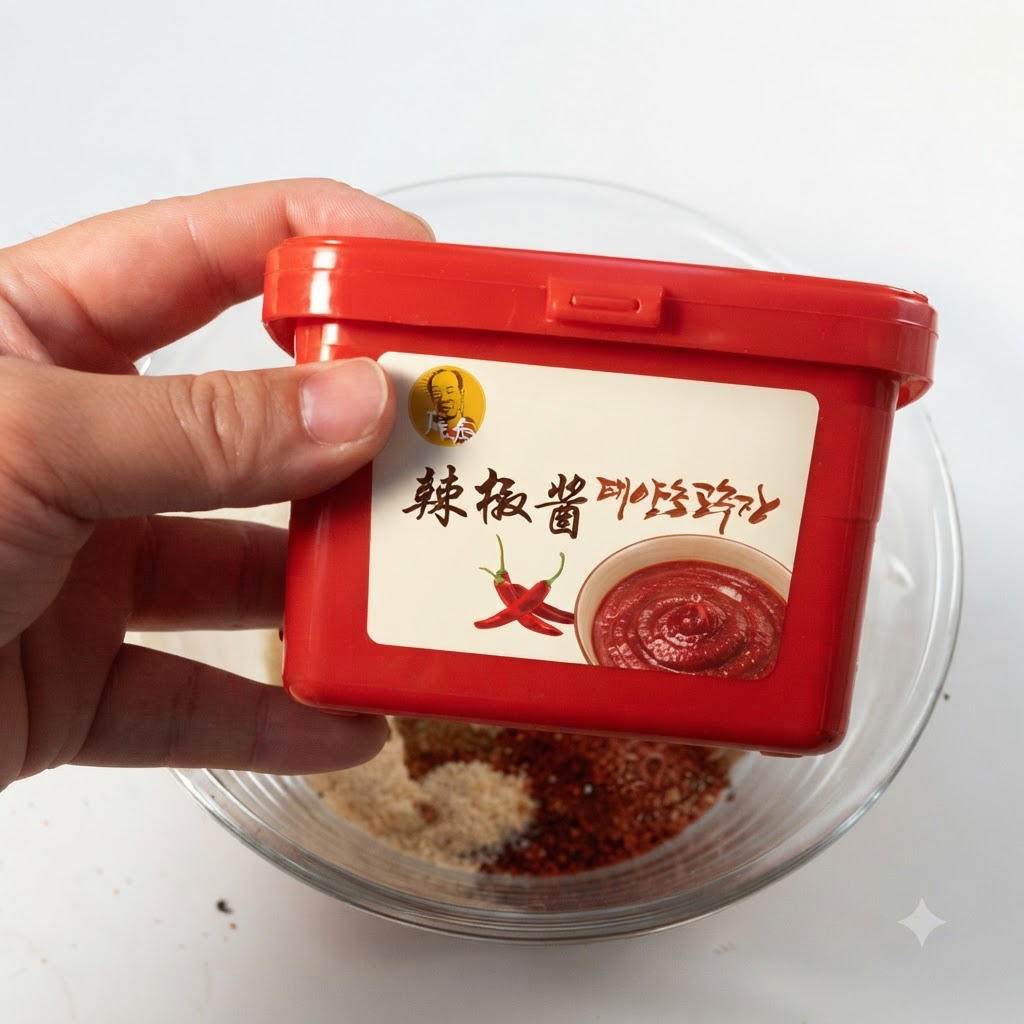
Scoop one large spoon of dark red Korean chili paste (gochujang) and add it into the mixing bowl with the other ingredients.
Tip: Use a dedicated spoon to avoid contaminating the main container of chili paste. - 5Mix the Sauce
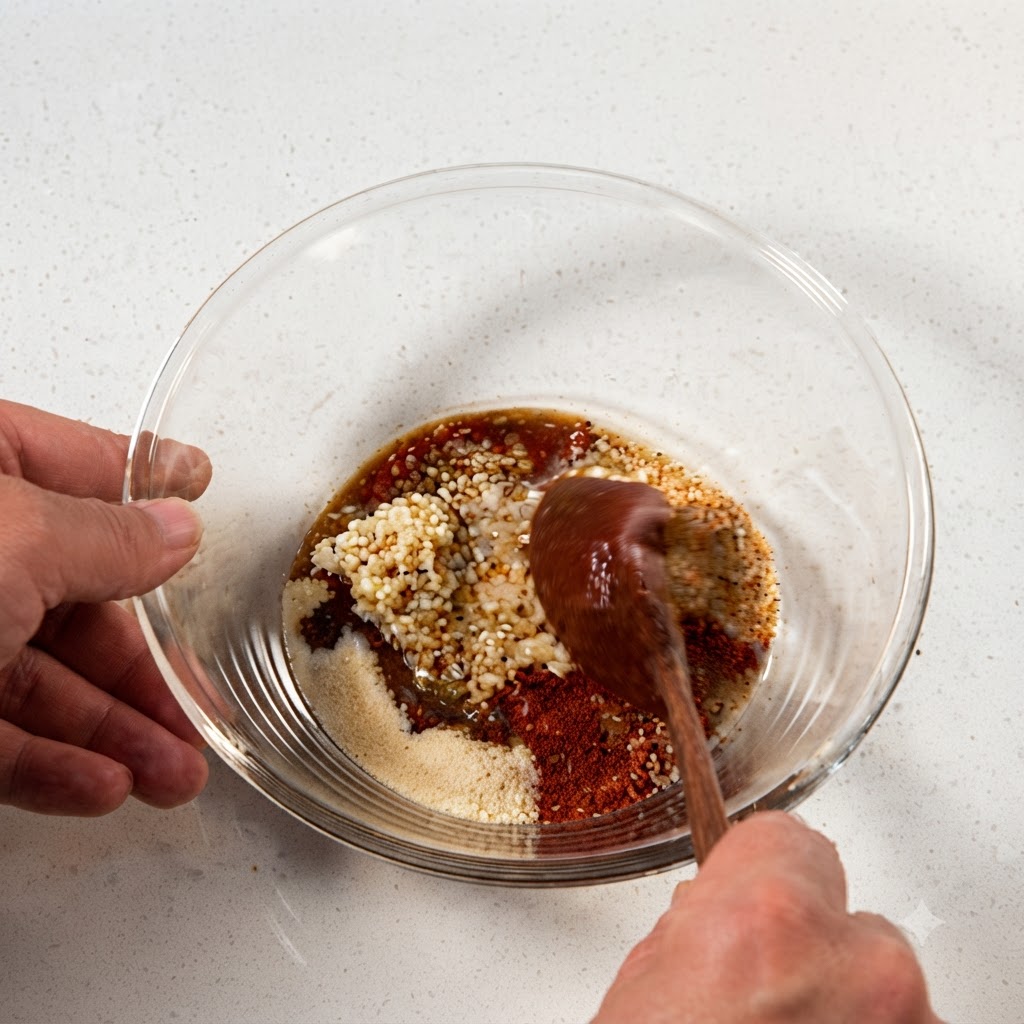
Use a wooden spoon to thoroughly stir all the combined ingredients together until they blend completely into a thick, vibrant red sauce.
Tip: Mix continuously until the sugar and bouillon powder dissolve into the paste and liquids. - 6Sauté the Aromatics
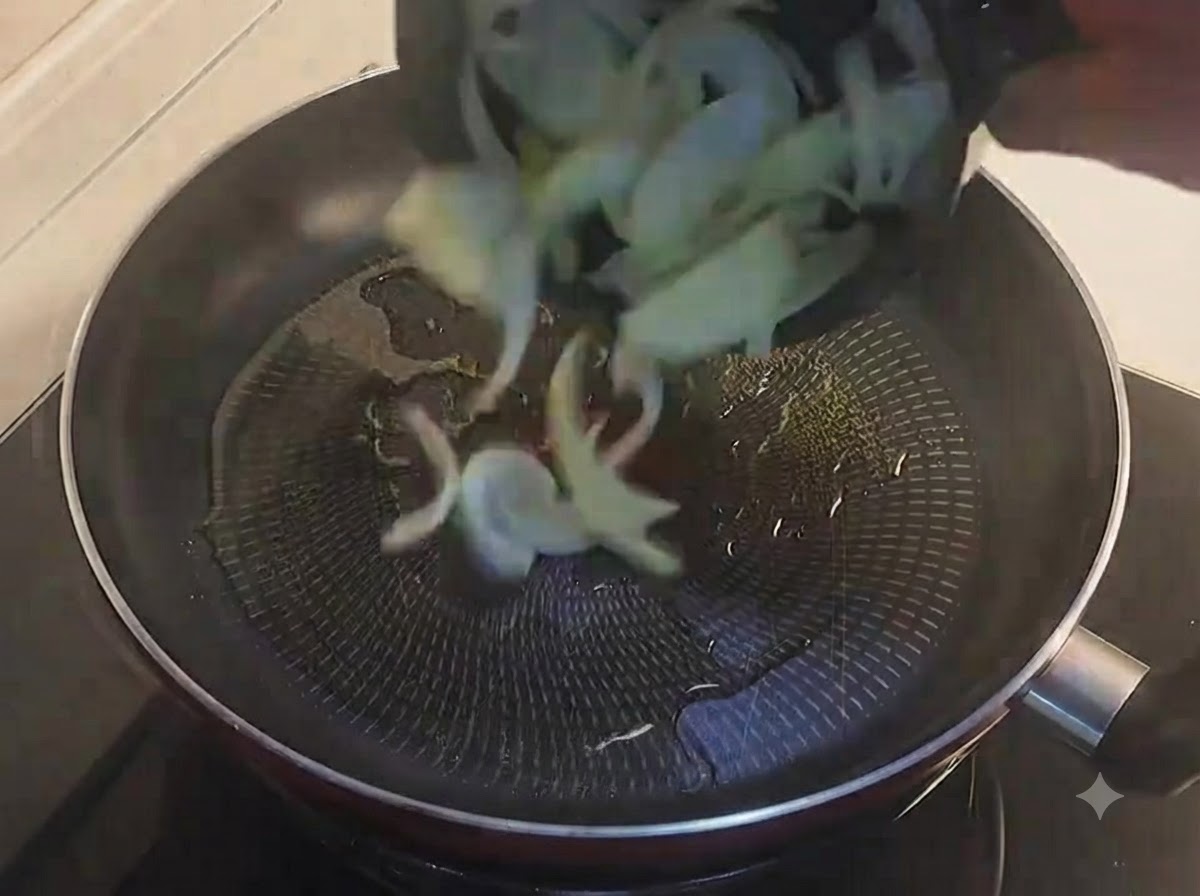
Heat oil in a frying pan, then add half a sliced yellow onion and some green onions, stir-frying them until they become fragrant.
Tip: Keep the heat at medium to prevent the onions from burning before they soften. - 7Add the Beef Belly
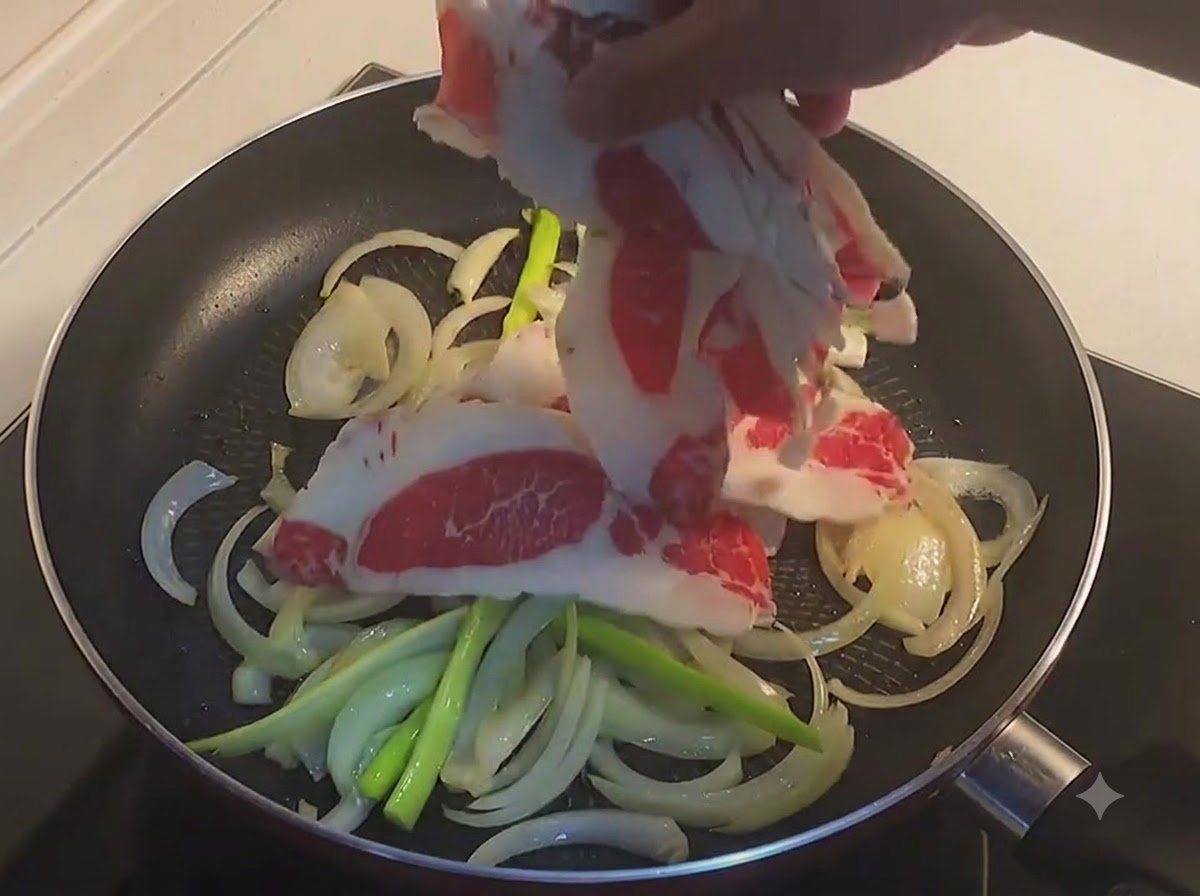
Once the onions and green onions are fragrant, add the slices of raw beef belly into the pan.
Tip: Beef belly cooks very quickly and renders a lot of flavorful fat, which will help cook the rest of the ingredients. - 8Partially Cook the Beef
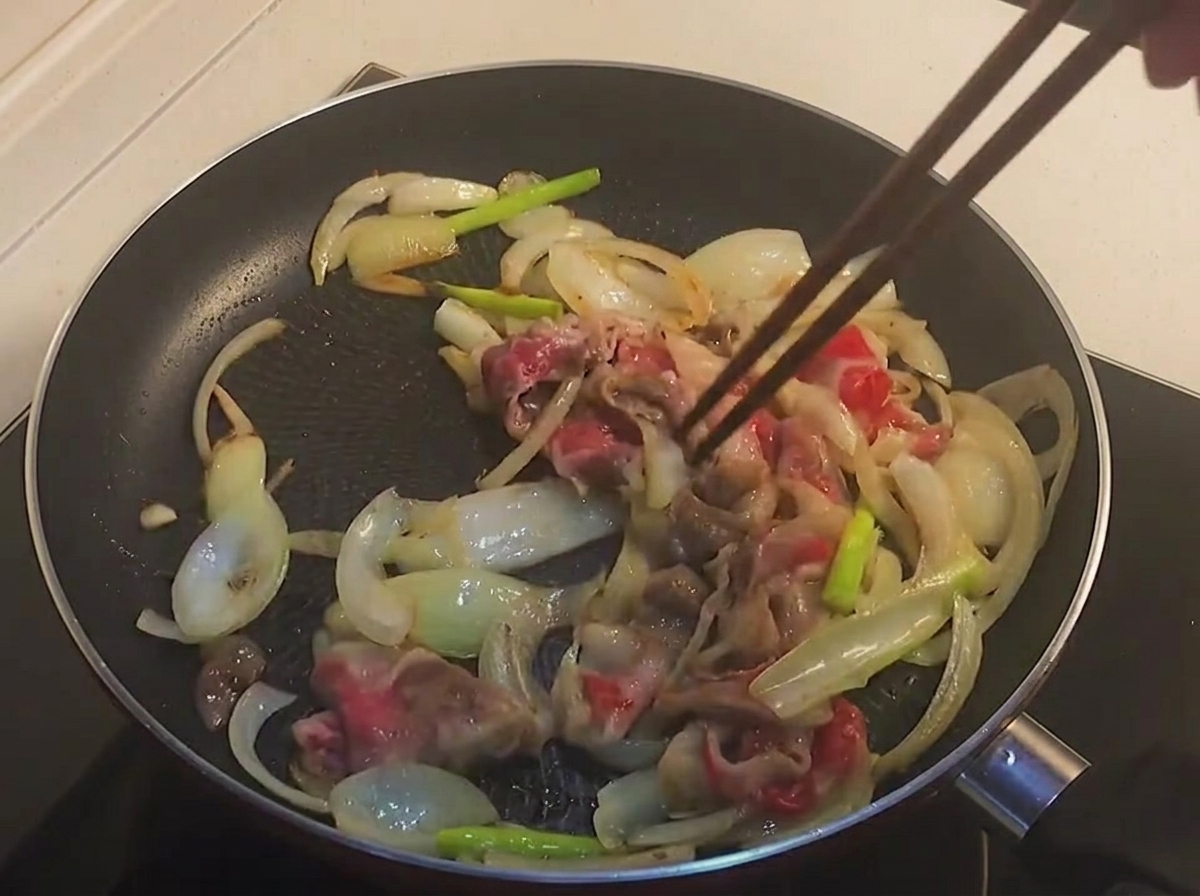
Use chopsticks or a spatula to stir-fry the beef belly slices with the aromatics. Cook them just until the outside is lightly browned and they release their aroma; there is no need to cook them fully at this stage.
Tip: Leaving the meat slightly undercooked now prevents it from becoming tough and rubbery by the time the whole dish is finished. - 9Add the Soybean Sprouts
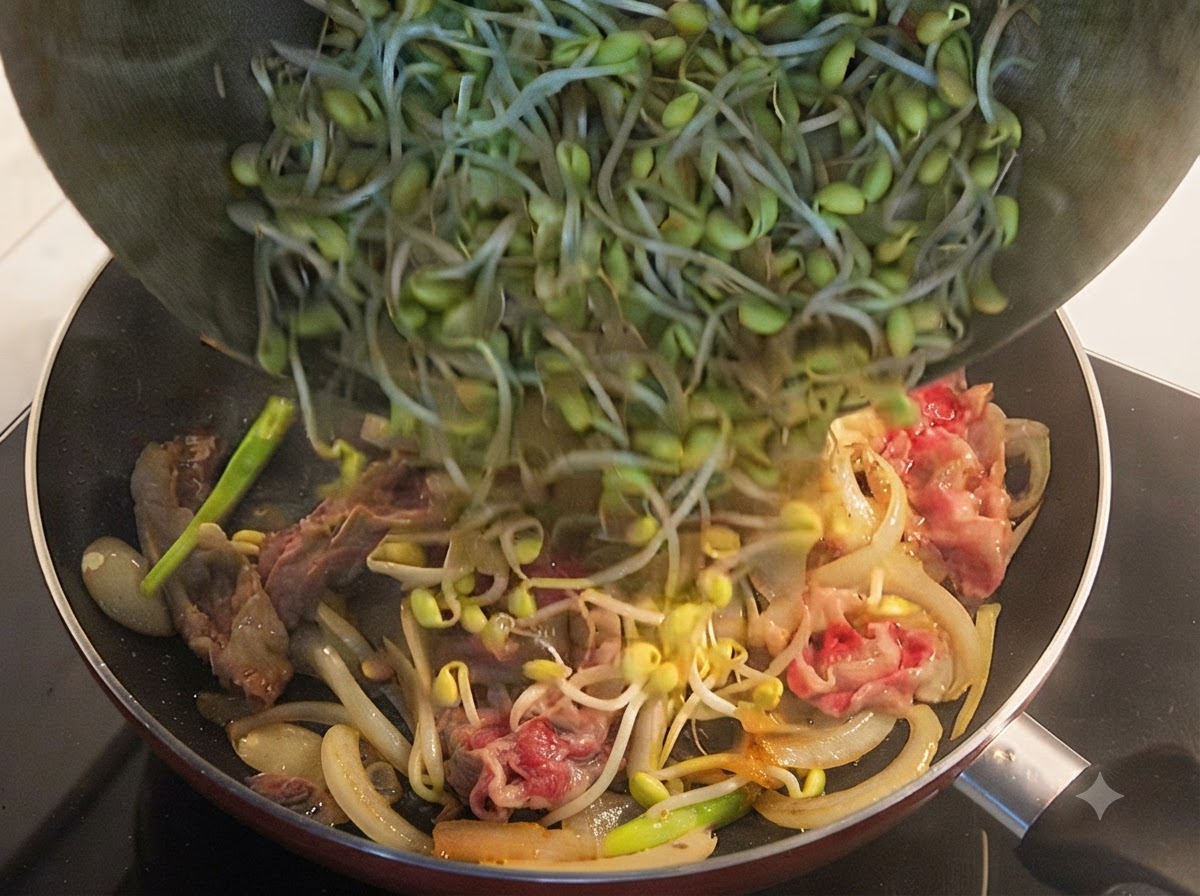
Pour the large pile of fresh yellow soybean sprouts directly into the pan over the partially cooked beef and onions. Continue to stir-fry everything together.
Tip: Make sure the soybean sprouts are well-drained before adding them to the pan so you fry them rather than steam them. - 10Add the Spicy Red Sauce
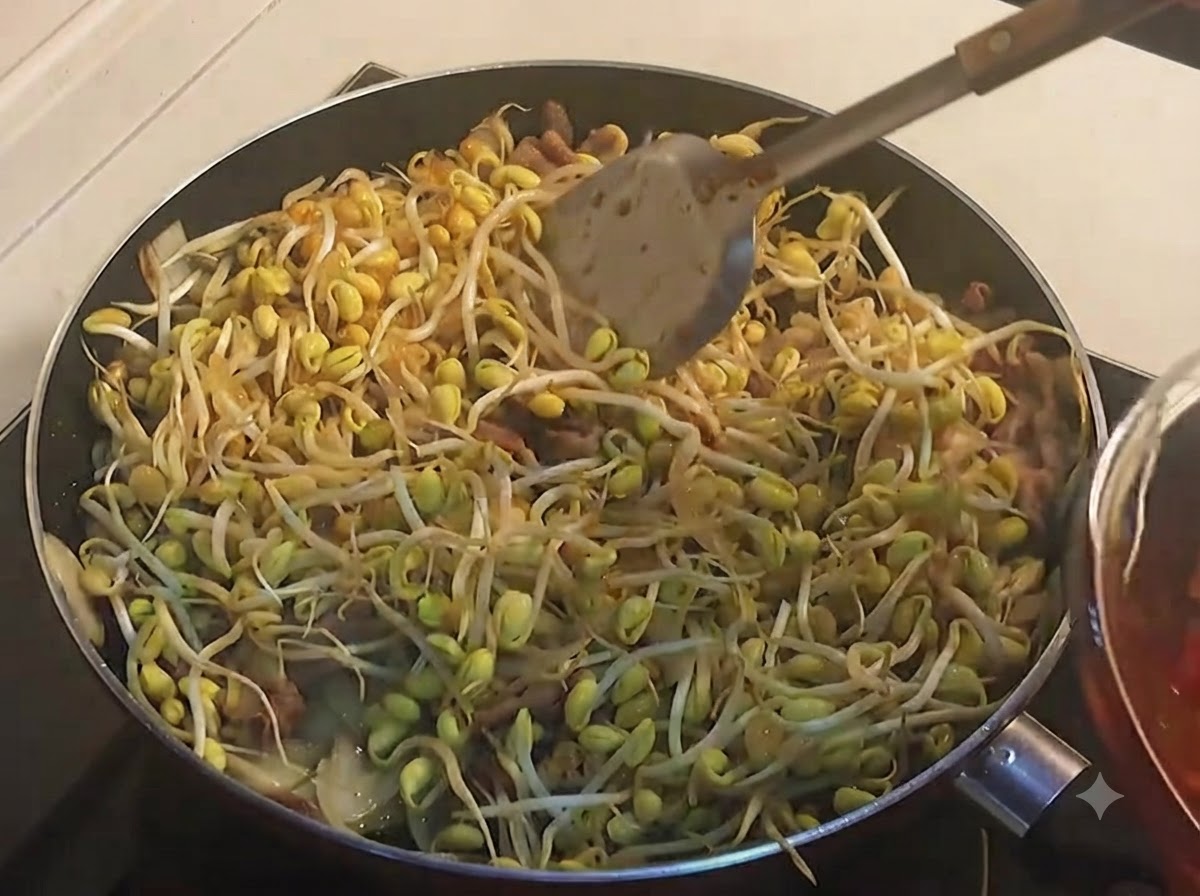
Pour or spoon the previously prepared spicy red sauce directly over the layer of yellow soybean sprouts and beef in the pan.
Tip: Distribute the sauce evenly across the vegetables so that every bite receives full flavor when mixed. - 11Mix in the Chili Sauce
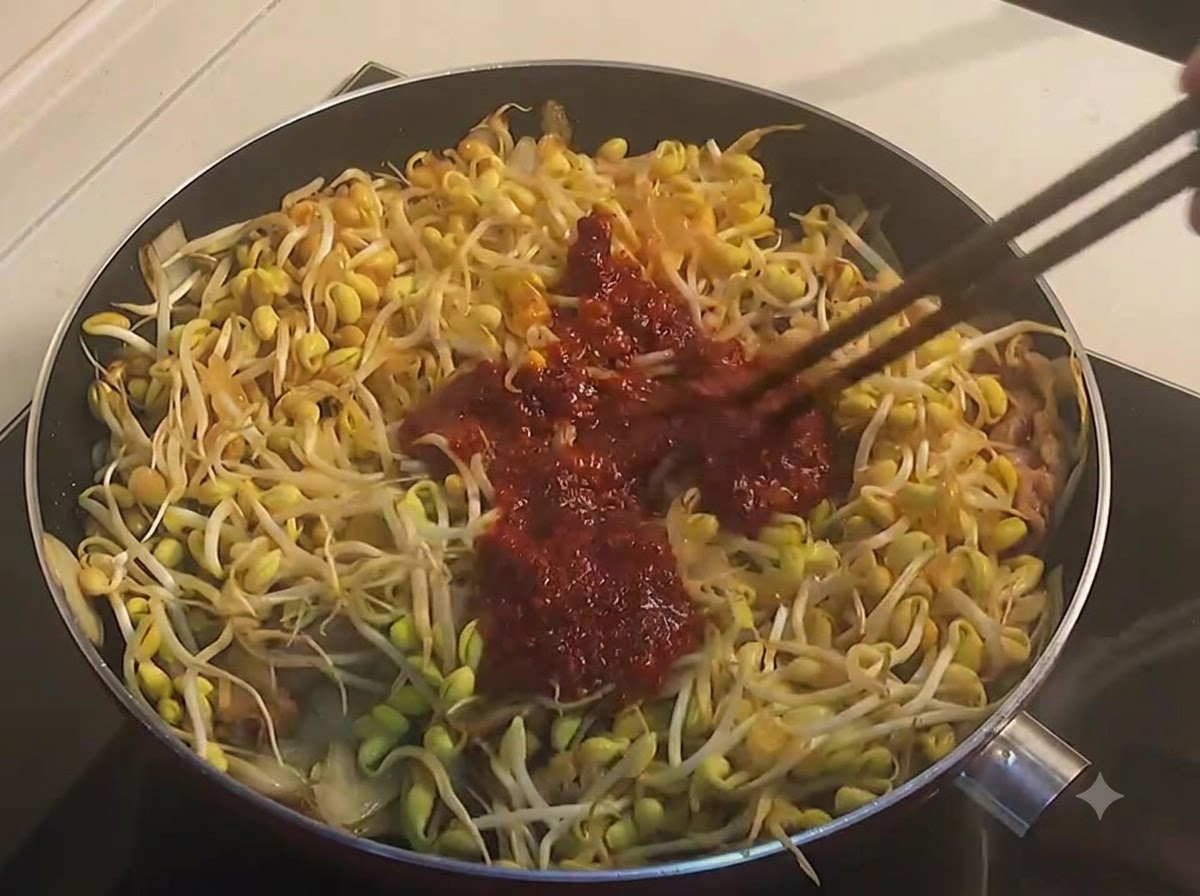
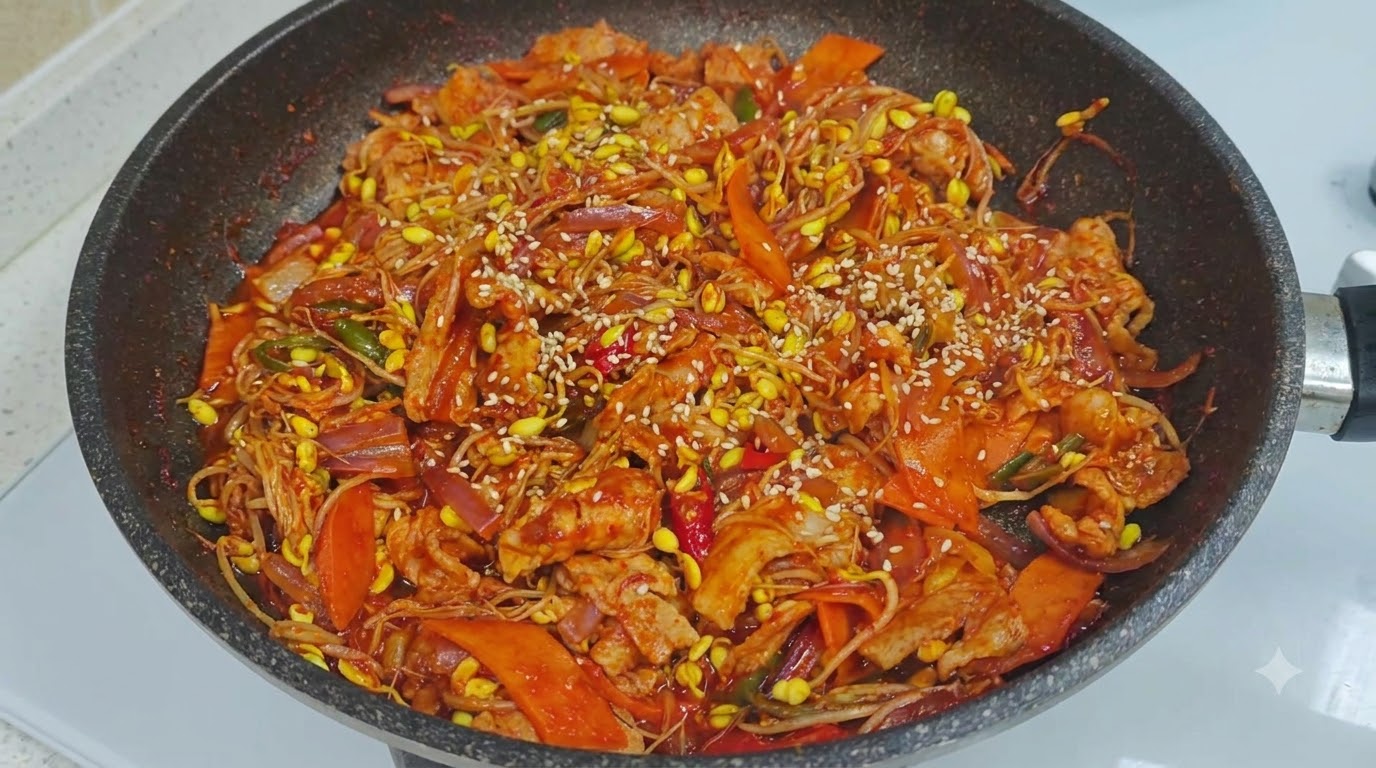
Toss and stir the sprouts, beef, and spicy sauce together so all the ingredients are evenly coated. Cook until the soybean sprouts become tender and absorb the flavors.
Tip: Using chopsticks to toss the ingredients helps evenly distribute the thick sauce without breaking the delicate sprouts. - 12Finish with Sesame Oil
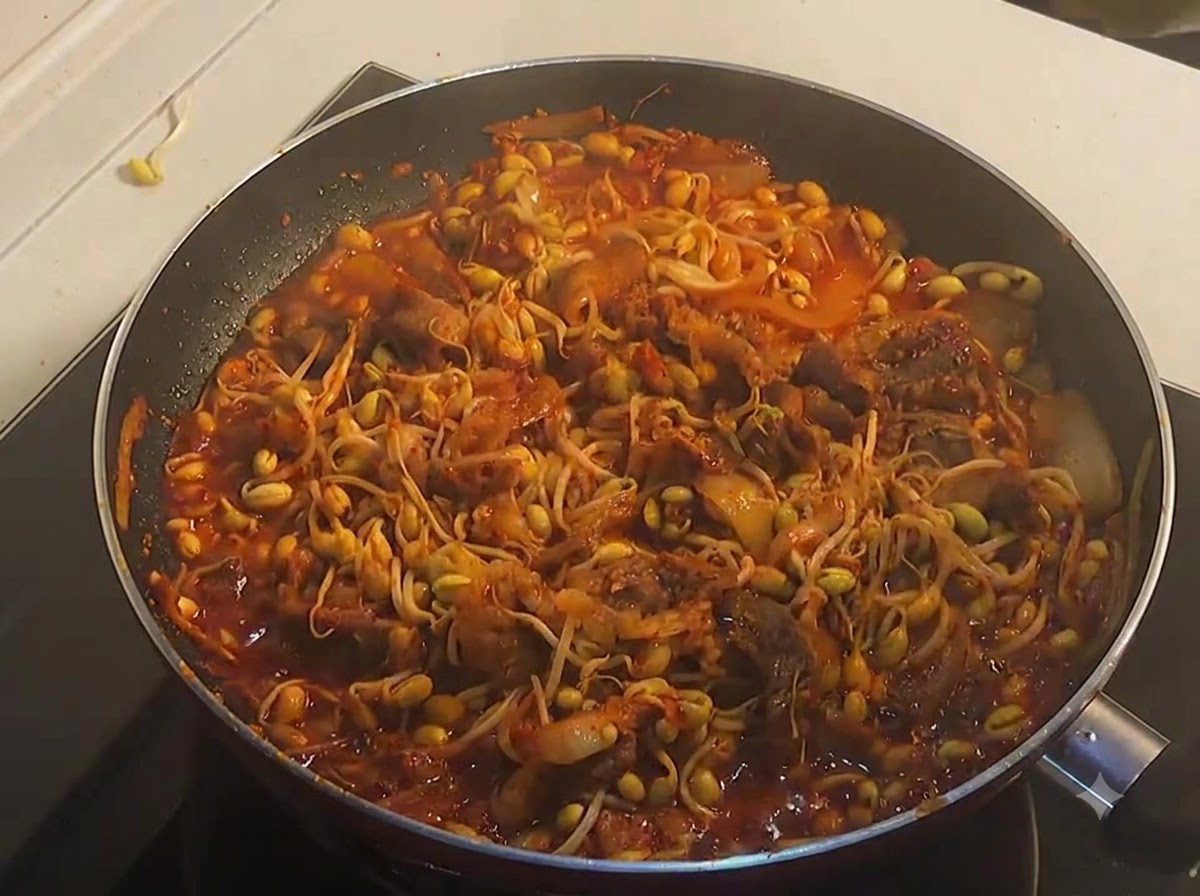
Once the mixture is fully cooked and bubbling in the pan, drizzle in a little sesame oil. Give it a final toss to incorporate the nutty flavor and aroma before turning off the heat to serve.
Tip: Always add sesame oil at the very end off the heat or right before turning it off, as prolonged cooking diminishes its delicate flavor.