Classic Roman Cacio e Pepe
Master Rome's most deceptively simple pasta. This minimalist Cacio e Pepe requires only three ingredients—Pecorino Romano, black pepper, and pasta—using starchy water to create a glossy, emulsified sauce.
Cacio e Pepe is one of Romes legendary Big Four pastas, alongside Carbonara, Amatriciana, and Gricia. Despite its humble three-ingredient profile, it is notoriously challenging to perfect. The magic lies entirely in technique: balancing temperature and starch to transform sharp cheese and spicy toasted pepper into a luxurious, creamy emulsion without breaking.

Ingredients
- 200 g spaghetti, tonnarelli, or bucatini
- 100 g Pecorino Romano cheese
- 1 tbsp whole black peppercorns
- to taste salt (for boiling pasta)
Instructions
- 1Grate the cheese
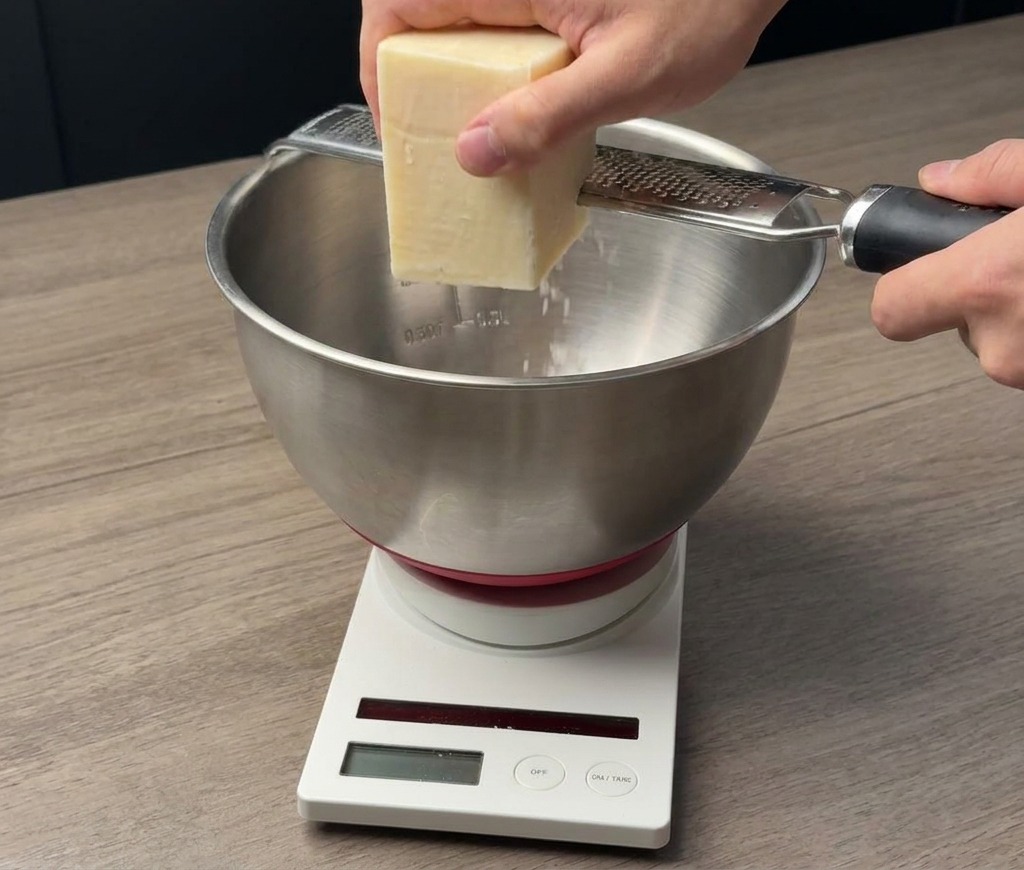
Begin by finely grating the cheese into a metal mixing bowl placed on a digital kitchen scale. Measuring accurately is essential for achieving the perfect balance in this minimalist pasta dish.
Tip: Grate your own cheese from a block rather than buying pre-grated, as pre-grated cheese contains anti-caking agents that prevent it from melting smoothly into a sauce. - 2Crush the black pepper
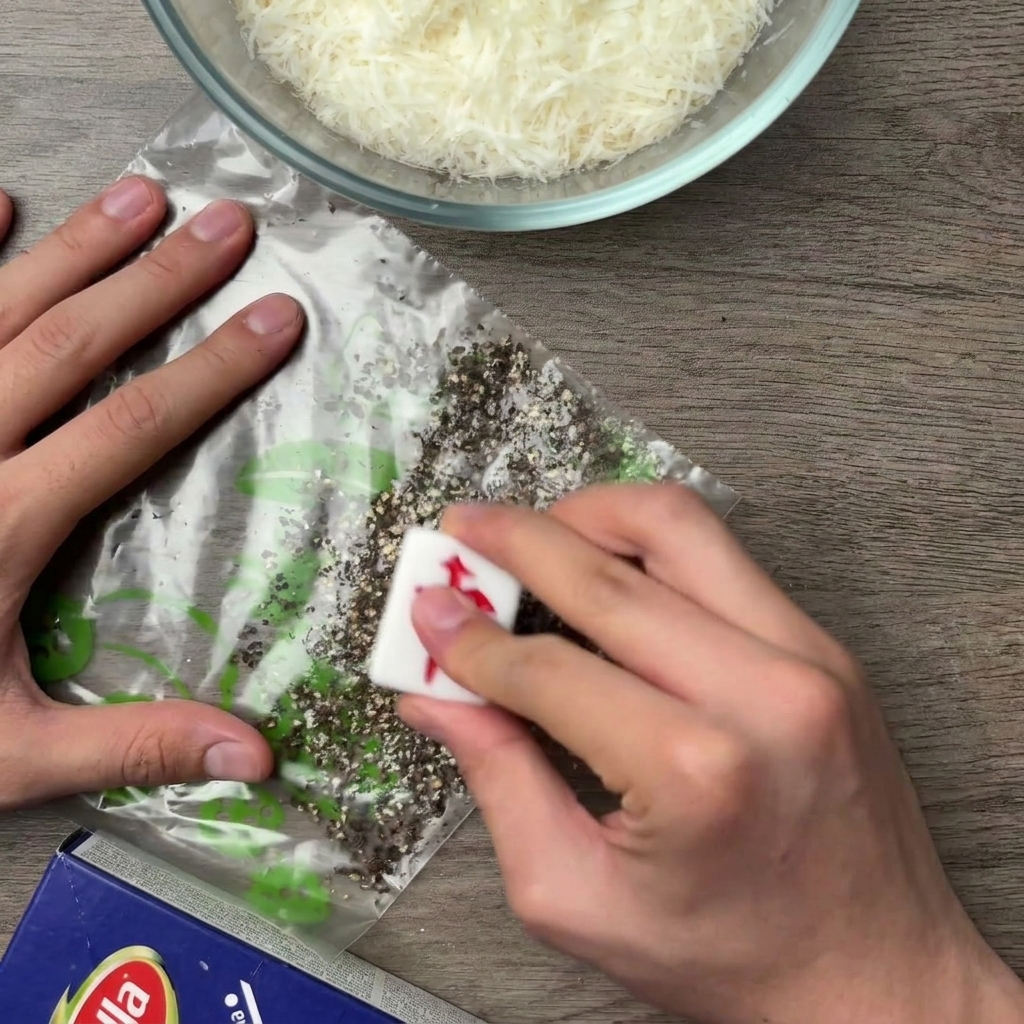
Start by preparing the black peppercorns which provide the essential heat for the dish. Place the whole peppercorns into a thick ziplock bag and use a heavy kitchen tool like a meat mallet or rolling pin to smash them into coarse rustic chunks.
Tip: Using freshly smashed whole peppercorns delivers a significantly bolder flavor and a satisfying crunch that you simply cannot achieve with standard pre ground black pepper. - 3Toast the black pepper
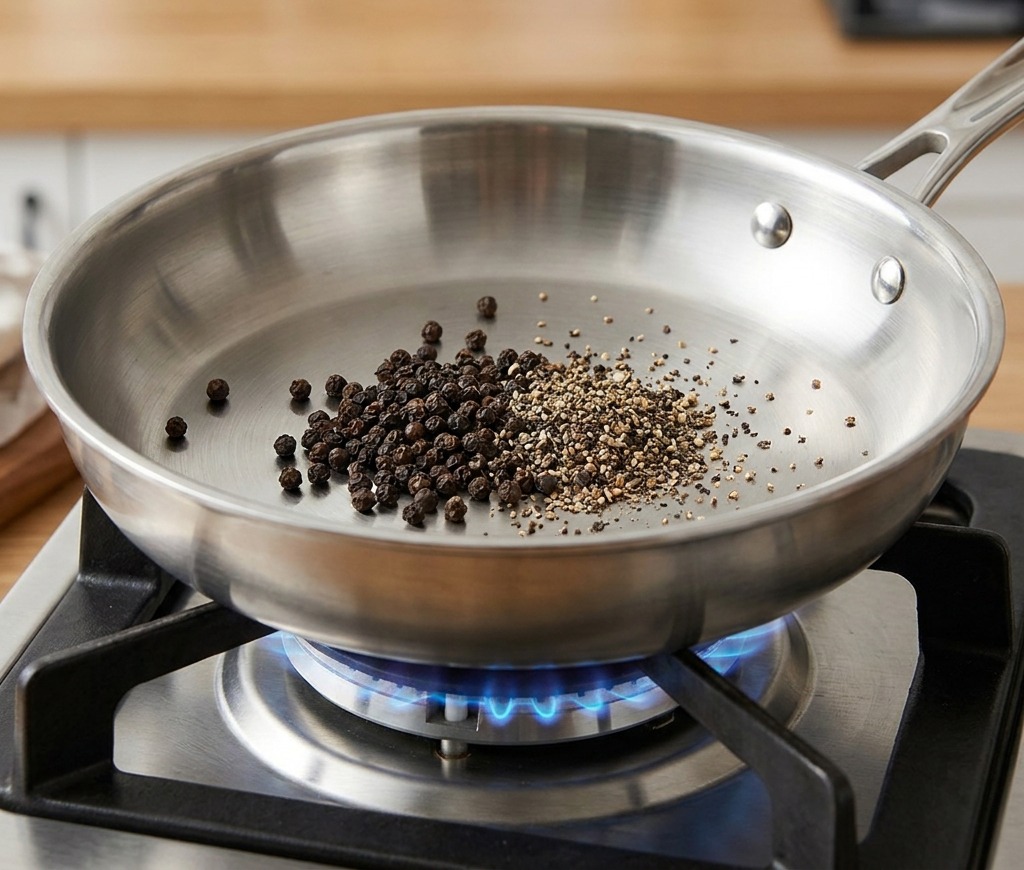
Place the crushed black pepper into a dry, flat-bottom stainless steel skillet over medium heat. Toasting the pepper slowly draws out its natural oils and intensifies its earthy, spicy aroma.
Tip: Keep a close eye on the pan and shake it occasionally to prevent the pepper from burning, which can introduce a bitter taste. - 4Add pasta water to the pepper
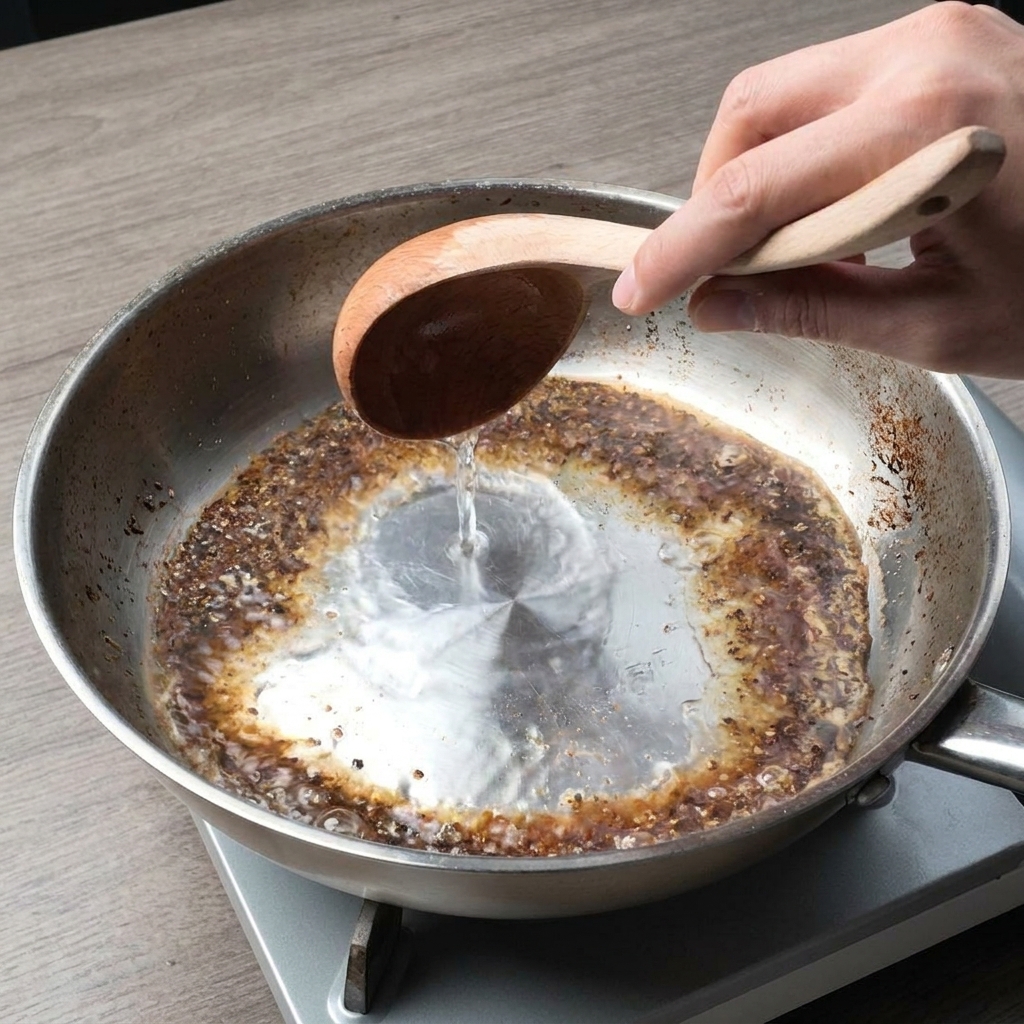
Once the pepper is fragrant, use a ladle to carefully pour a spoonful of hot, starchy water directly from your boiling pasta pot into the skillet. Let it simmer slowly to infuse the water with the toasted pepper flavor and begin building the base for your sauce.
Tip: The starch in the pasta water is crucial—it acts as an emulsifier that will eventually help the cheese and water bind into a creamy sauce. - 5Transfer the pasta
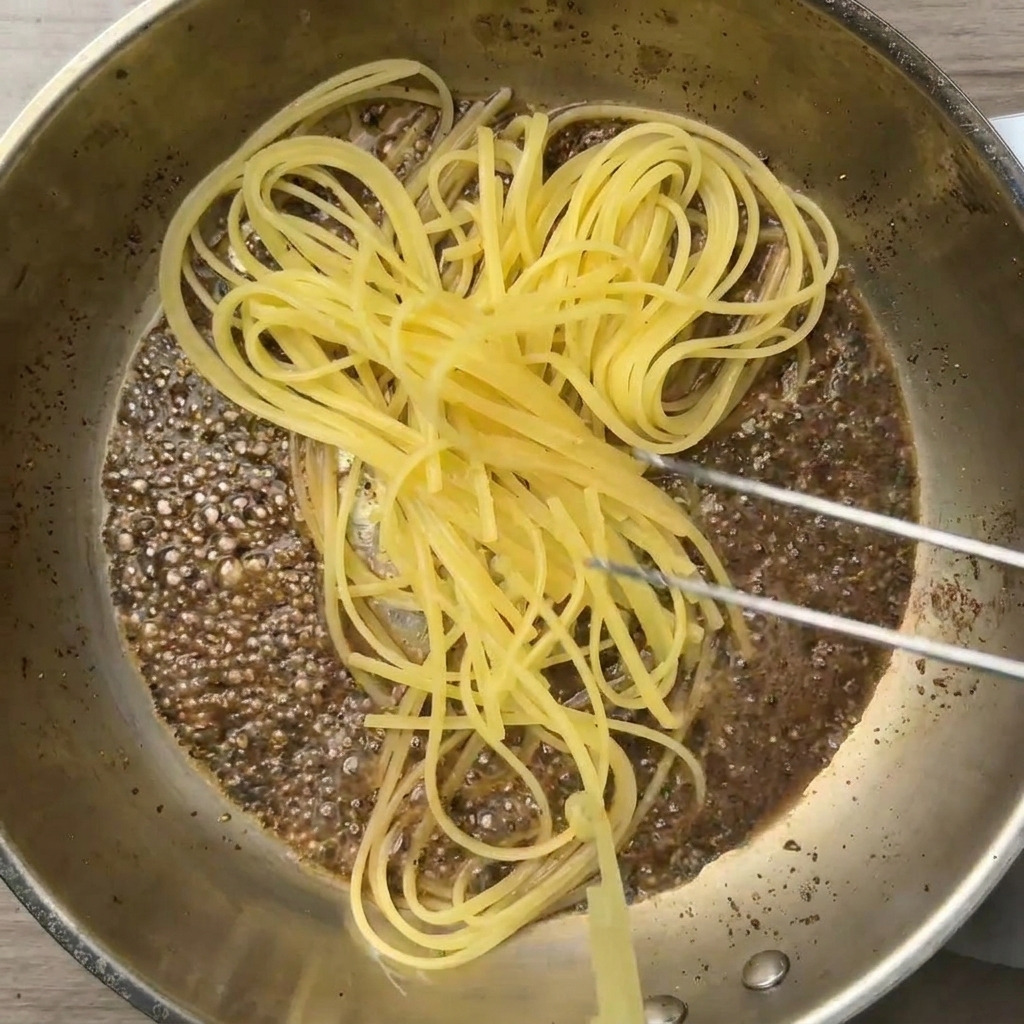
When the spaghetti is almost fully cooked (just before al dente), use tongs to transfer it directly from the boiling pot into the skillet with the simmering pepper water. Do not drain the pasta completely, as the clinging water helps the sauce.
Tip: Transferring the pasta directly, rather than using a colander, brings extra starch into the pan, which is key to achieving the signature creamy texture of Cacio e Pepe. - 6Finish cooking the pasta
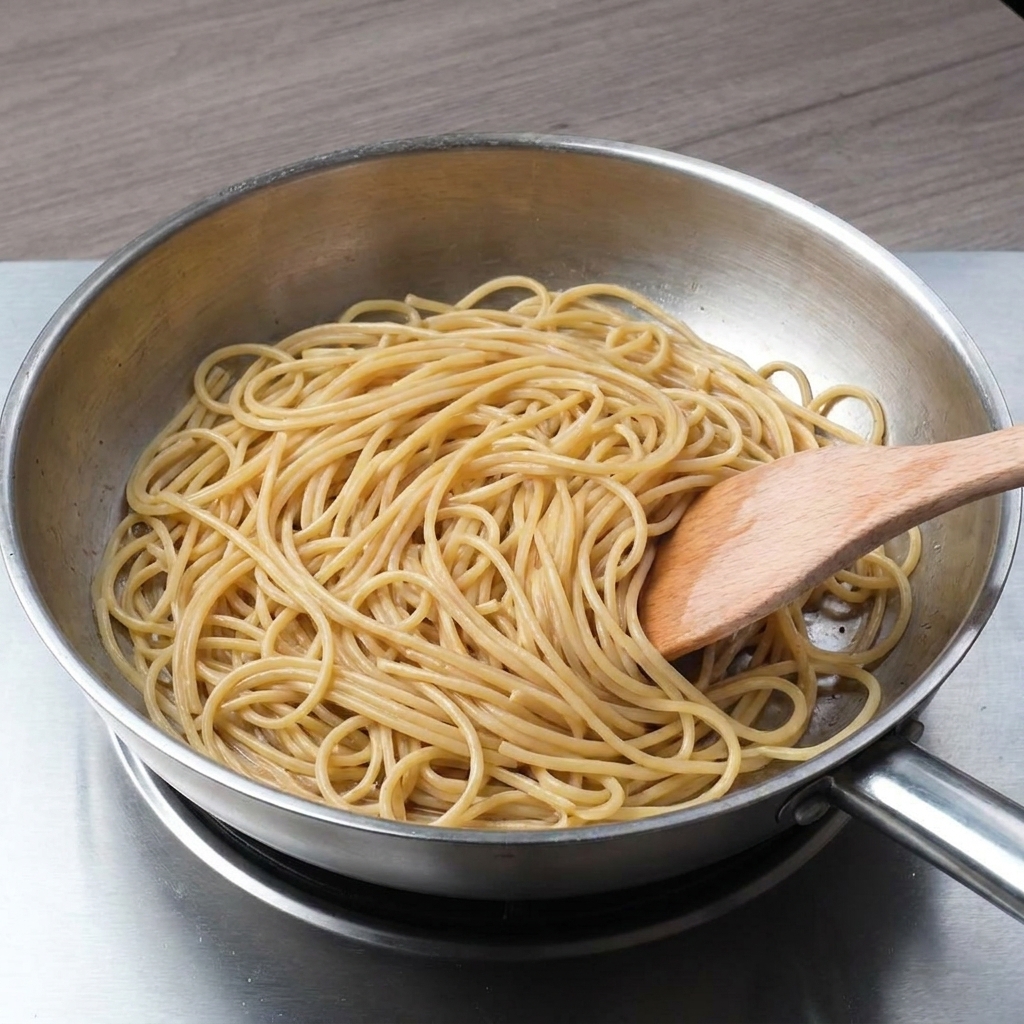
Continue cooking the pasta directly in the skillet, tossing and stirring it constantly with a wooden spatula. This allows the spaghetti to absorb the peppery sauce while releasing more starch, creating a glossy coating.
Tip: If the pan gets too dry before the pasta is perfectly cooked, add another small splash of reserved pasta water. - 7Add the cheese
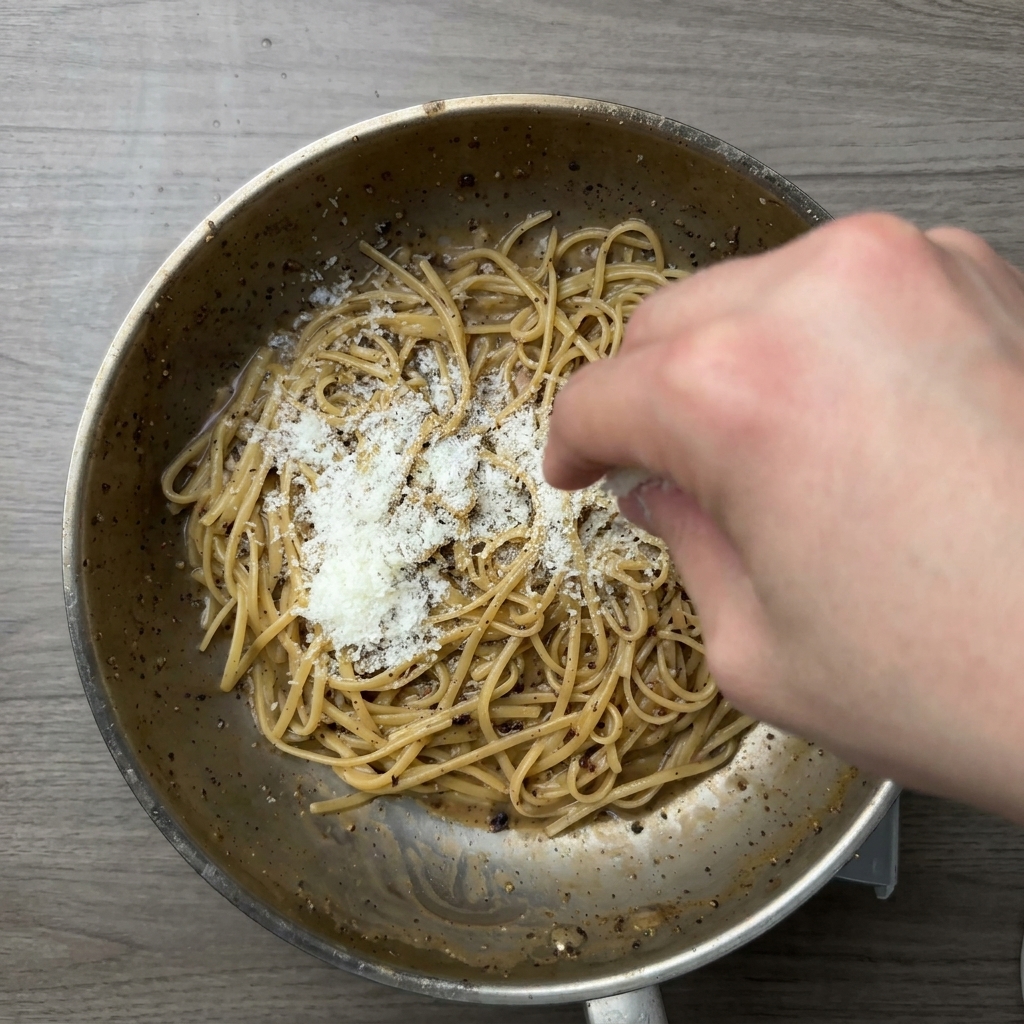
Once the pasta is fully cooked and has properly absorbed the black pepper infused water, turn off the heat. Allow the skillet to rest undisturbed for two to three minutes. This slight drop in temperature is critical before you sprinkle the finely grated cheese generously over the resting pasta.
Tip: Never add the cheese while the pan is over active heat. If the pan is too hot, the cheese will clump and turn stringy instead of emulsifying into a smooth sauce. - 8Emulsify the sauce
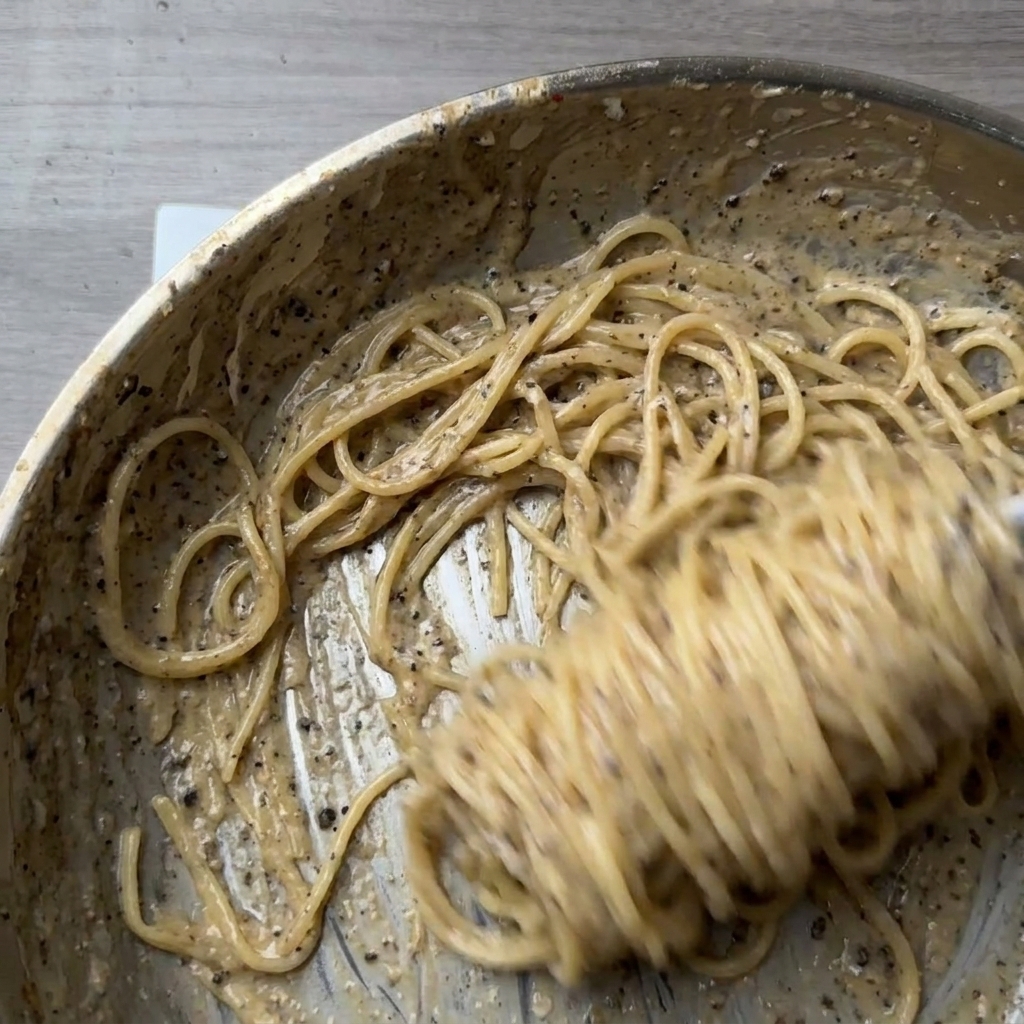
With the cheese now generously added to the resting pasta, vigorously stir and toss everything together in the skillet. The starchy pasta water and melting cheese will emulsify as you agitate them, coating the noodles in a rich, creamy, and perfectly smooth sauce.
Tip: Resting the pasta off the heat for two to three minutes before adding the cheese is the crucial secret to preventing the cheese from clumping or separating.

