Parmesan Crumbled Pasta (Glass Carbonara)
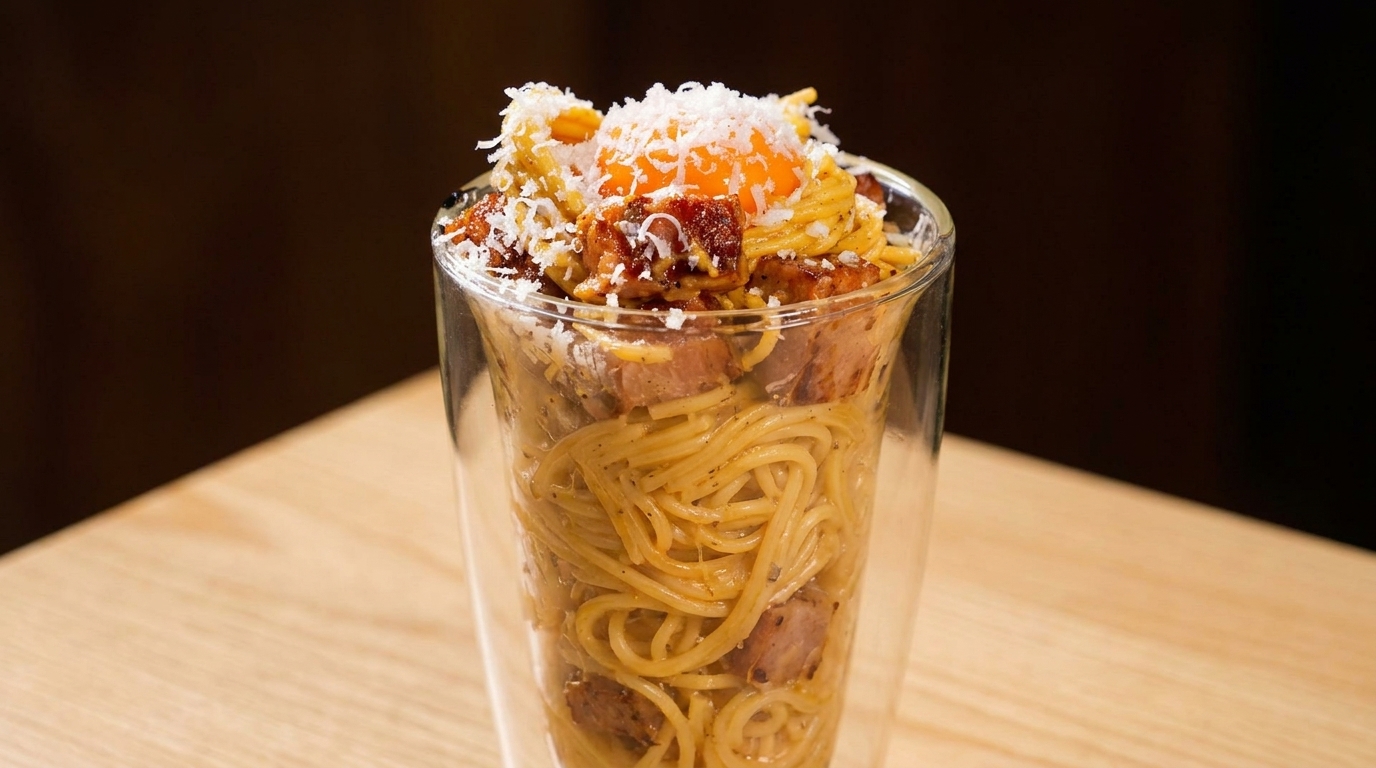
Experience a stunning twist on traditional carbonara. Served in a tall double-walled glass, this rich, creamy pasta features thick-cut bacon, freshly grated Parmesan, and a crowning raw egg yolk.
While classic Roman carbonara is revered for its simplicity, this presentation elevates the iconic dish into a visual centerpiece. By layering the emulsified spaghetti and crispy bacon in a clear glass and topping it with a flawless, intact egg yolk, the diner gets to break the yolk and mix the final rich sauce right at the table. It is a playful yet decadent approach to a beloved Italian staple.
Ingredients
- 200 g dry spaghetti
- 150 g thick-cut bacon or guanciale
- 3 large eggs
- 50 g Parmesan cheese
- 1 tsp whole black peppercorns
- 1 tbsp olive oil
Instructions
- 1Add the pasta to boiling water
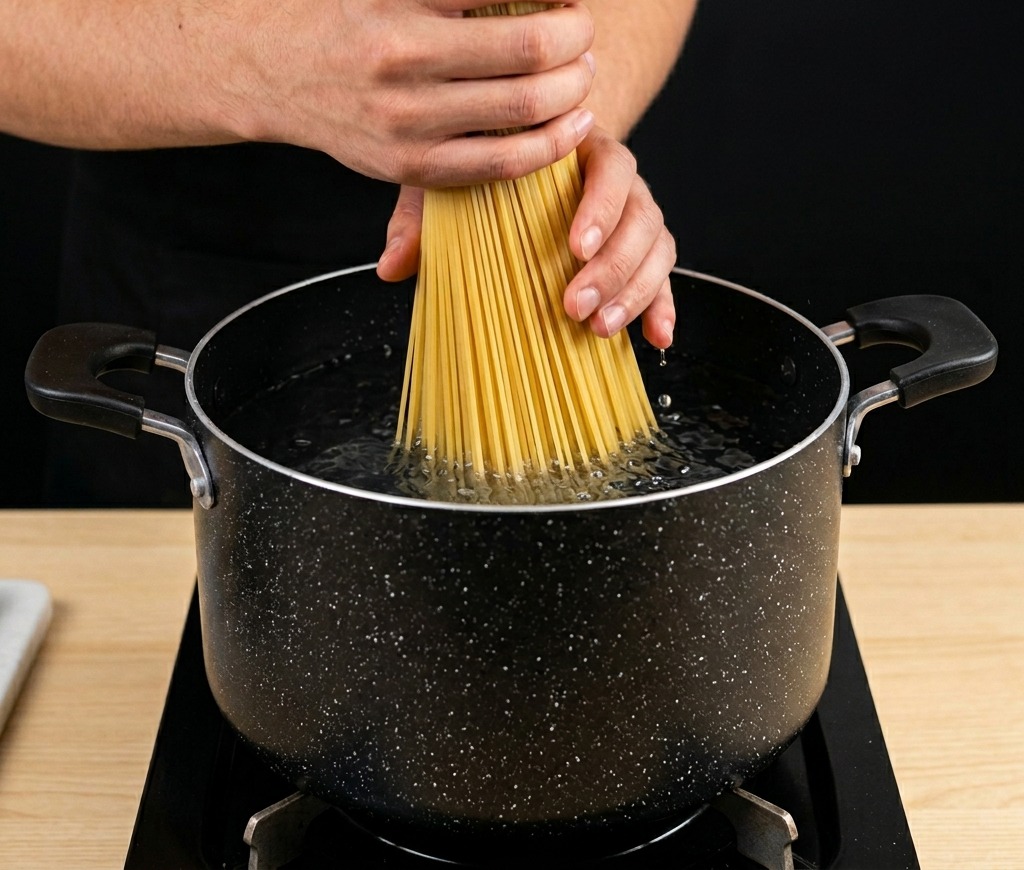
Bring a large pot of salted water to a rolling boil. Take a bundle of dry spaghetti and hold it vertically in the center of the pot. Gently push down as the submerged ends begin to soften, allowing the entire length of the pasta to submerge without breaking.
Tip: Avoid breaking the spaghetti in half; pushing it down gently ensures long, unbroken strands. - 2Slice the bacon
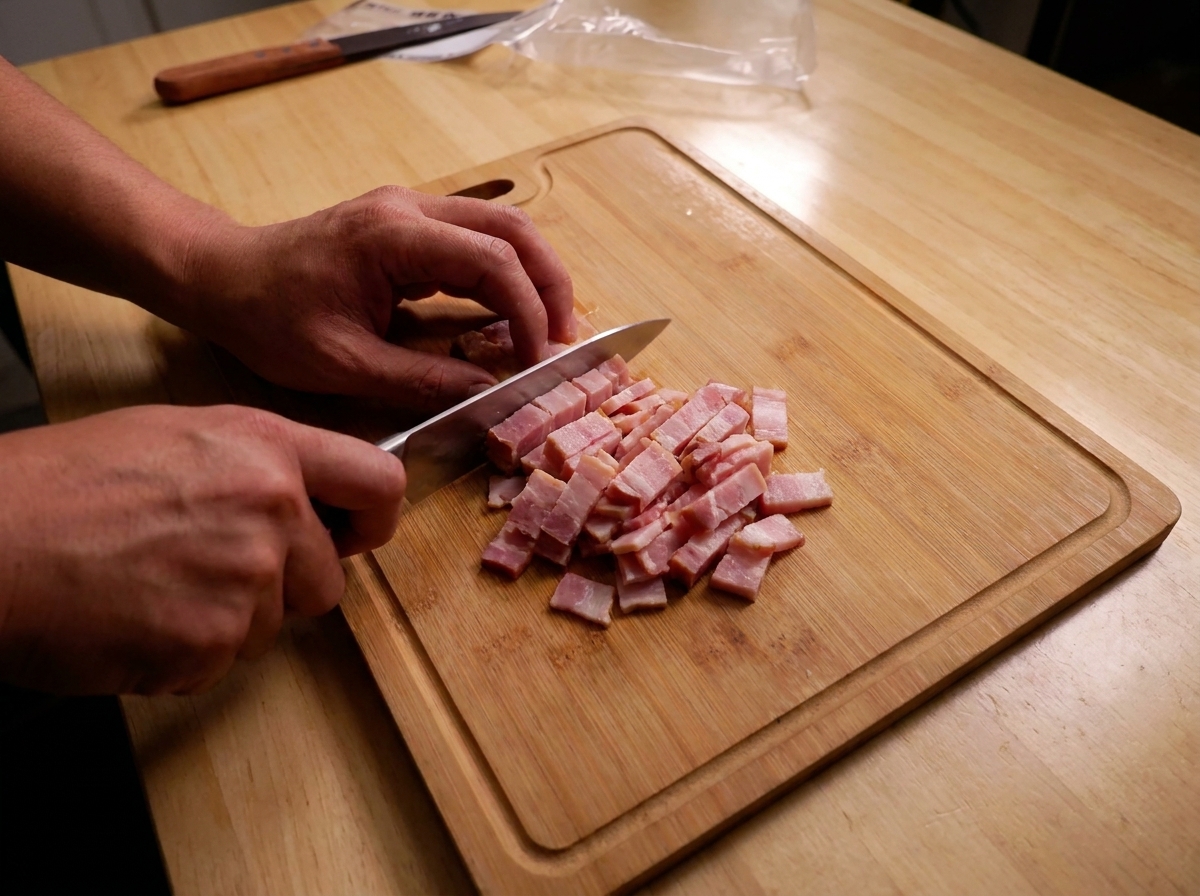
Place the thick piece of raw bacon or guanciale on a sturdy wooden cutting board. Using a sharp knife, slice the meat into uniform, bite-sized chunks or strips. Cutting the pieces to a consistent size ensures they render fat evenly and crisp up at the same rate.
Tip: If the bacon is too soft and slippery to cut neatly, pop it in the freezer for about 10-15 minutes to firm it up. - 3Crush the black pepper
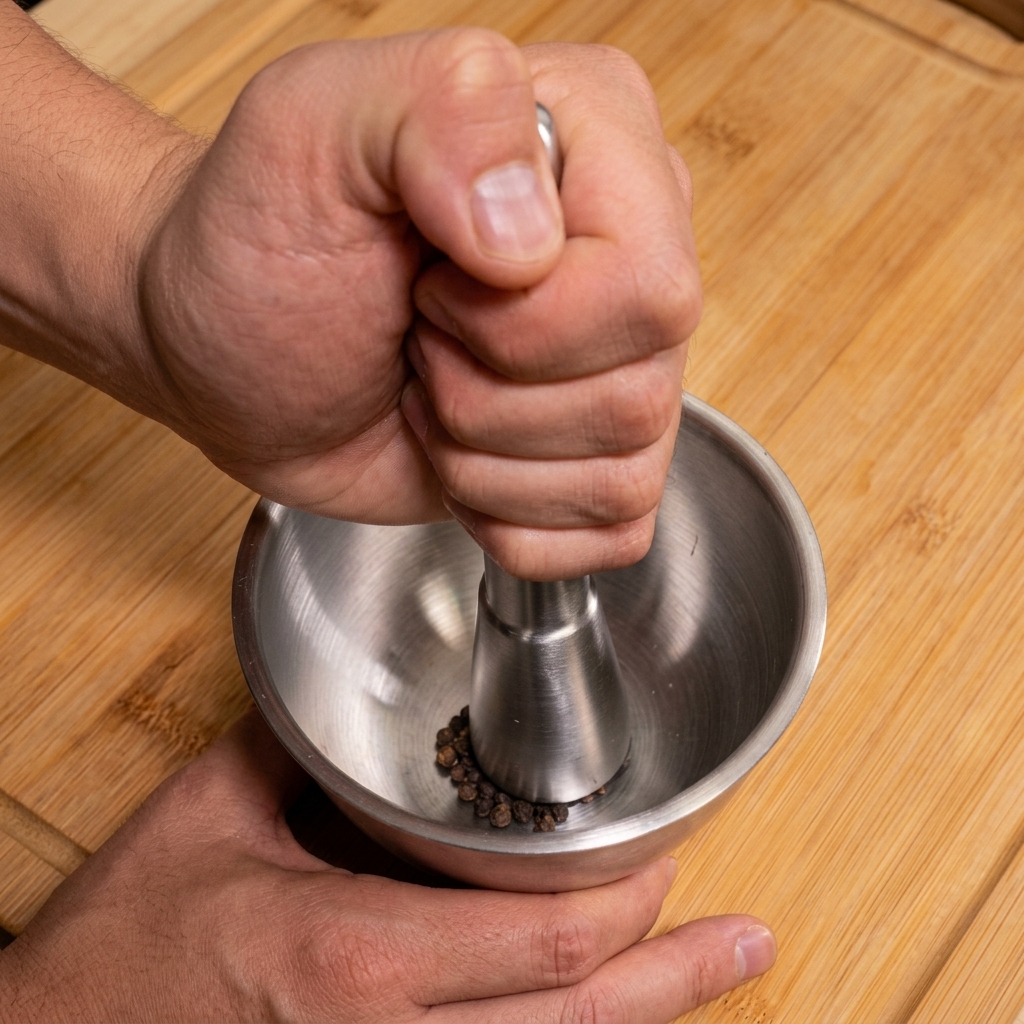
Place whole black peppercorns into a metal or stone mortar. Firmly grasp the pestle and manually crush the peppercorns until they are coarsely ground. Freshly cracked pepper provides a robust, pungent flavor and aroma that pre-ground pepper cannot replicate.
Tip: For an even deeper flavor profile, lightly toast the whole peppercorns in a dry skillet before crushing them. - 4Prepare the eggs
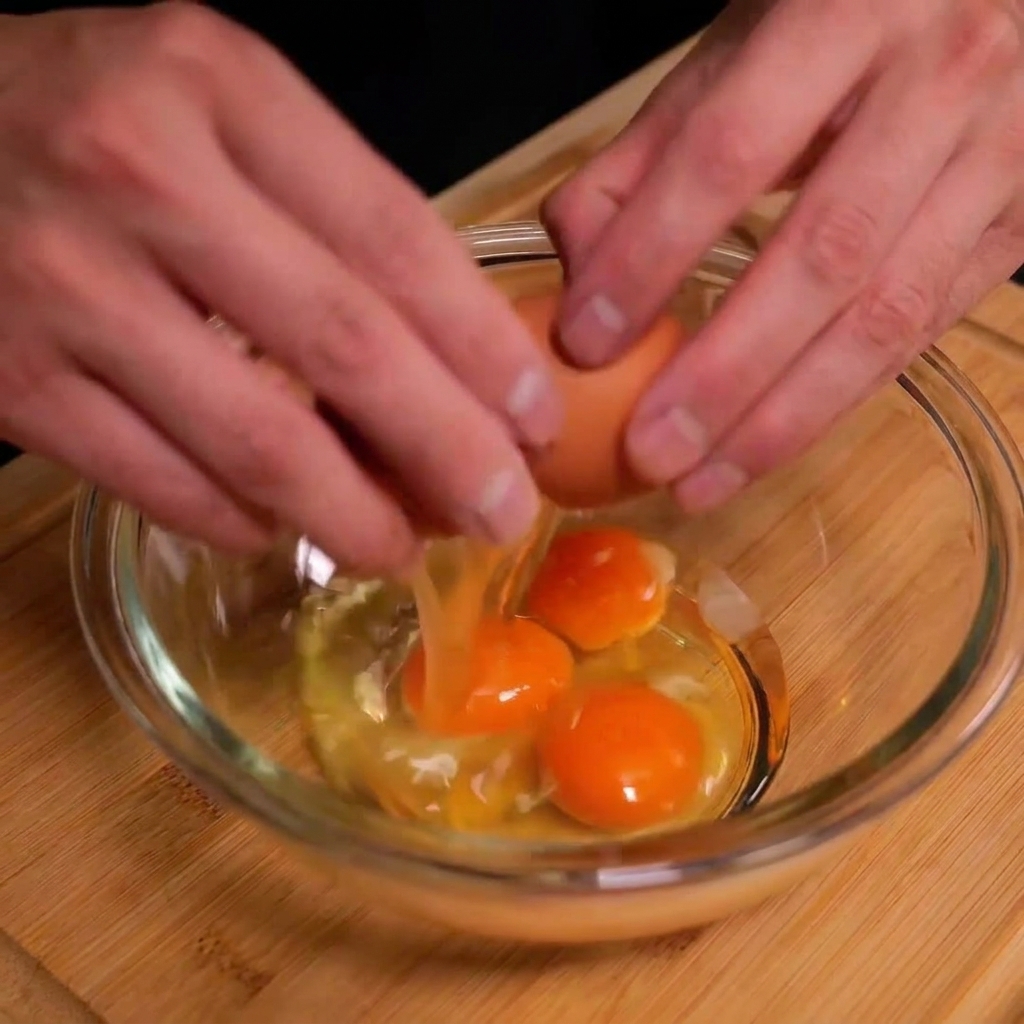
Crack fresh eggs into a small glass bowl to begin preparing the base for your sauce. Depending on how rich you want the final dish, you can use a mix of whole eggs and extra separated egg yolks. Ensure the eggs are at room temperature so they temper properly later.
Tip: Using more yolks than egg whites yields a richer, thicker sauce without the risk of a watery consistency. - 5Render and crisp the bacon
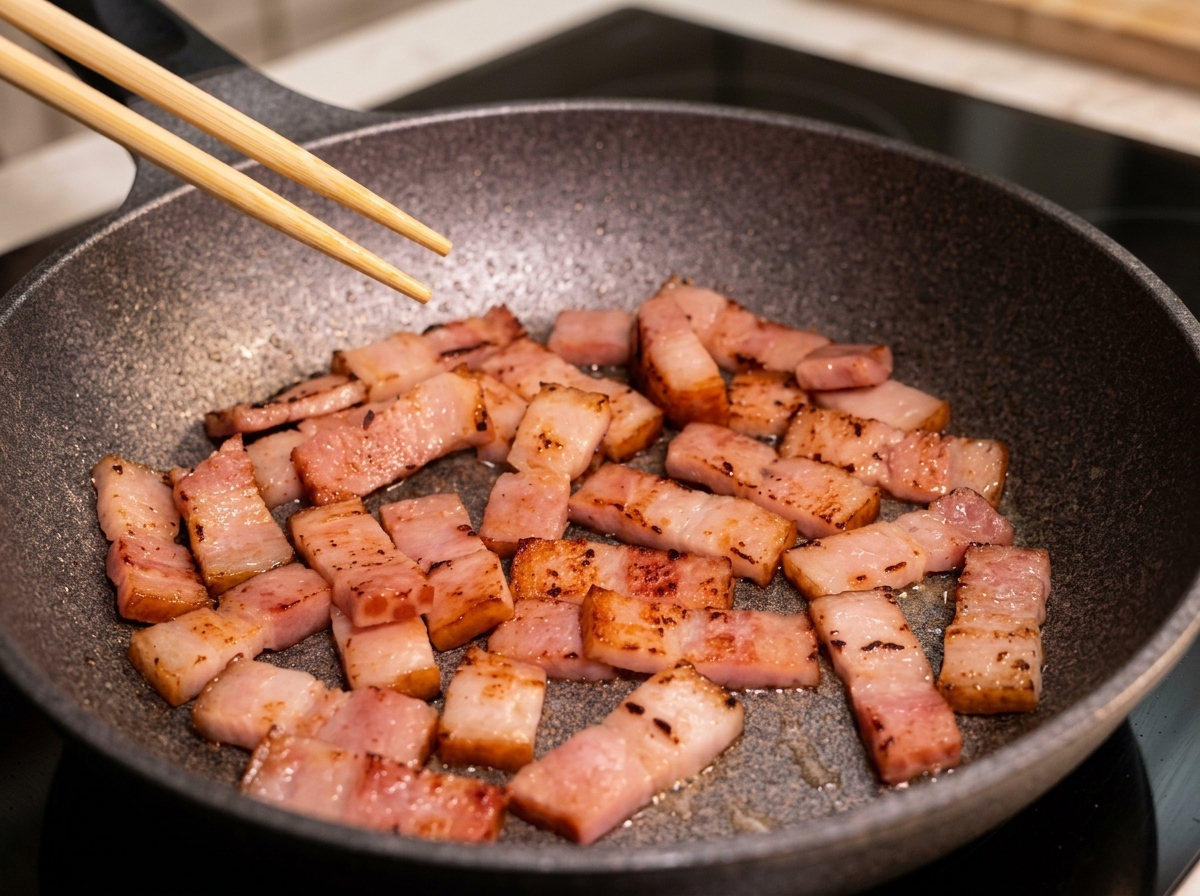
Place the bacon chunks into a pan over medium heat. Allow the meat to cook slowly, rendering out its natural fat. Toss the pieces occasionally using chopsticks or a spatula until the edges turn golden brown and crispy.
Tip: Starting the bacon in a cold pan helps render out more fat slowly before the exterior burns. - 6Transfer the cooked pasta
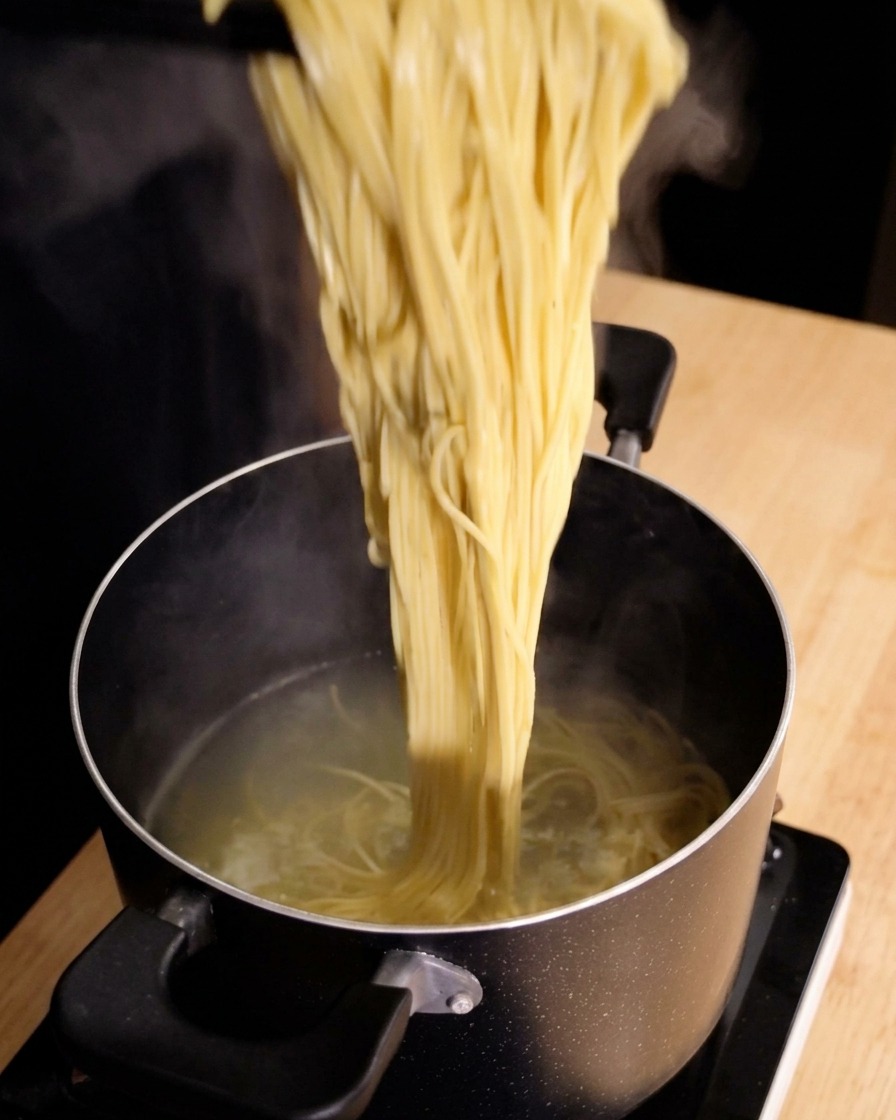
Once the spaghetti reaches an al dente texture, use kitchen tongs to lift the noodles directly out of the boiling water. Transfer the hot pasta straight into the pan with the crispy bacon. The residual starchy water clinging to the noodles will help emulsify the sauce.
Tip: Do not rinse the pasta after cooking; the surface starches are crucial for thickening and binding the sauce. - 7Toss the pasta and bacon
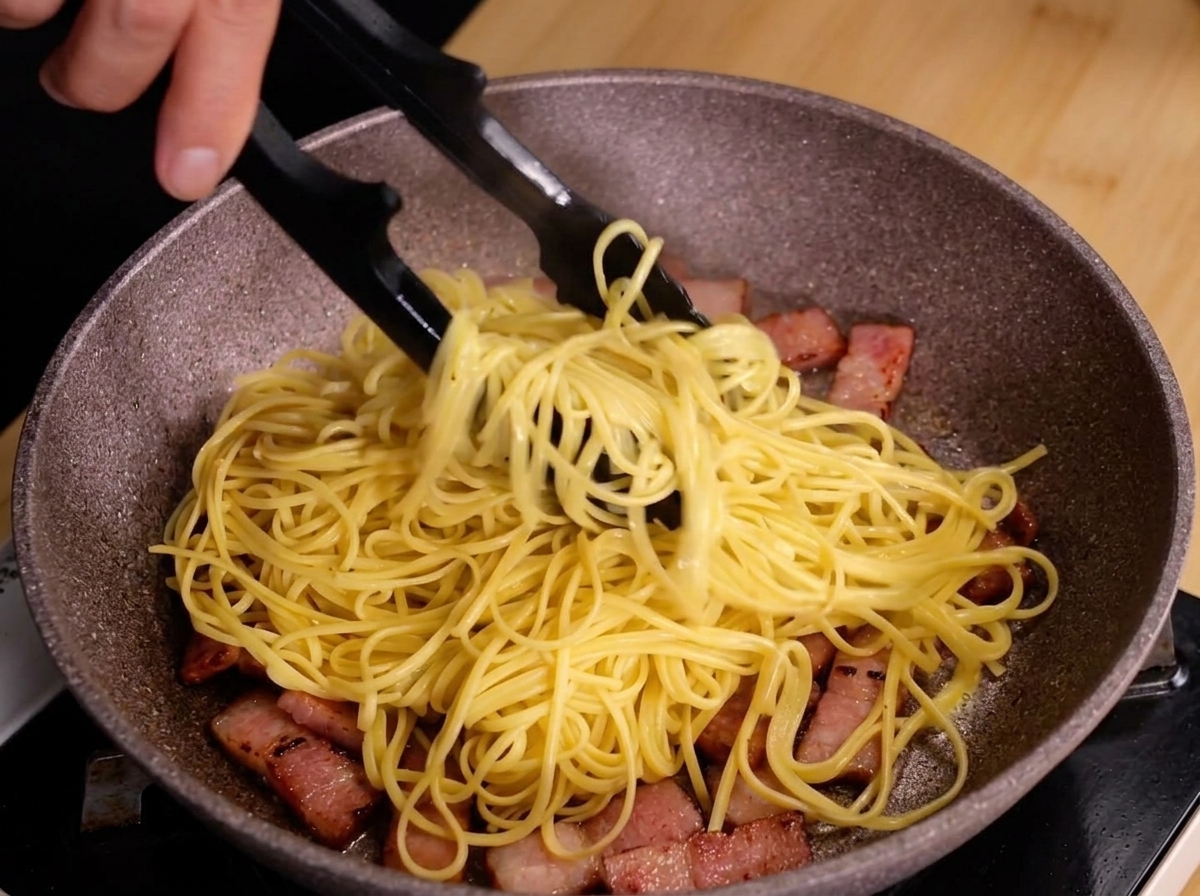
Gently stir the newly added noodles into the rendered meat and savory fat until they are thoroughly coated. This process allows the pasta to absorb the rich flavors from the pan before you introduce the delicate emulsion ingredients.
Tip: Keeping the pan on a gentle heat while mixing ensures the noodles remain hot enough to melt the cheese later. - 8Incorporate the yolks and water
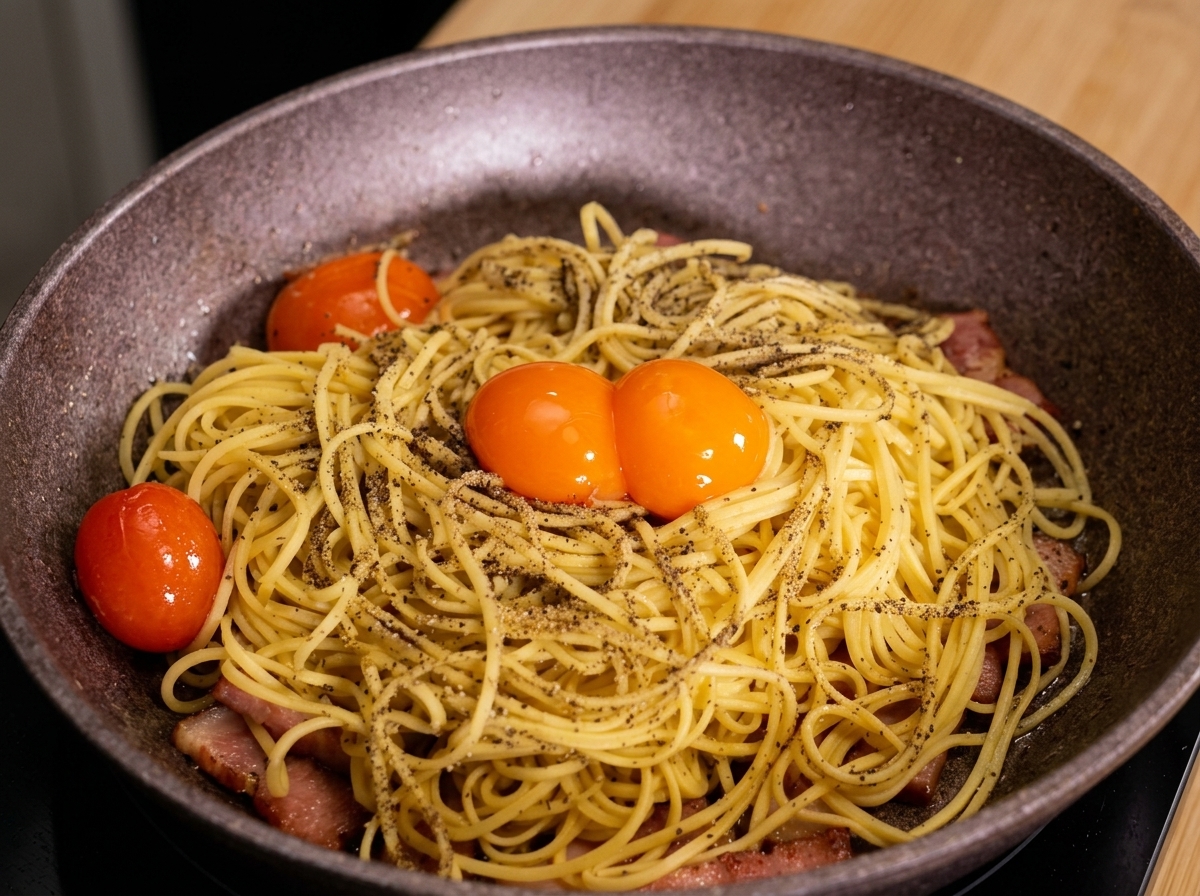
Take the pan off the heat entirely and carefully slide the separated yolks onto the warm seasoned noodles. Add a splash of the clear starchy cooking liquid to help control the temperature and create a smooth base for the sauce.
Tip: Reserving extra cooking liquid gives you better control over the final consistency of your dish. - 9Grate the cheese
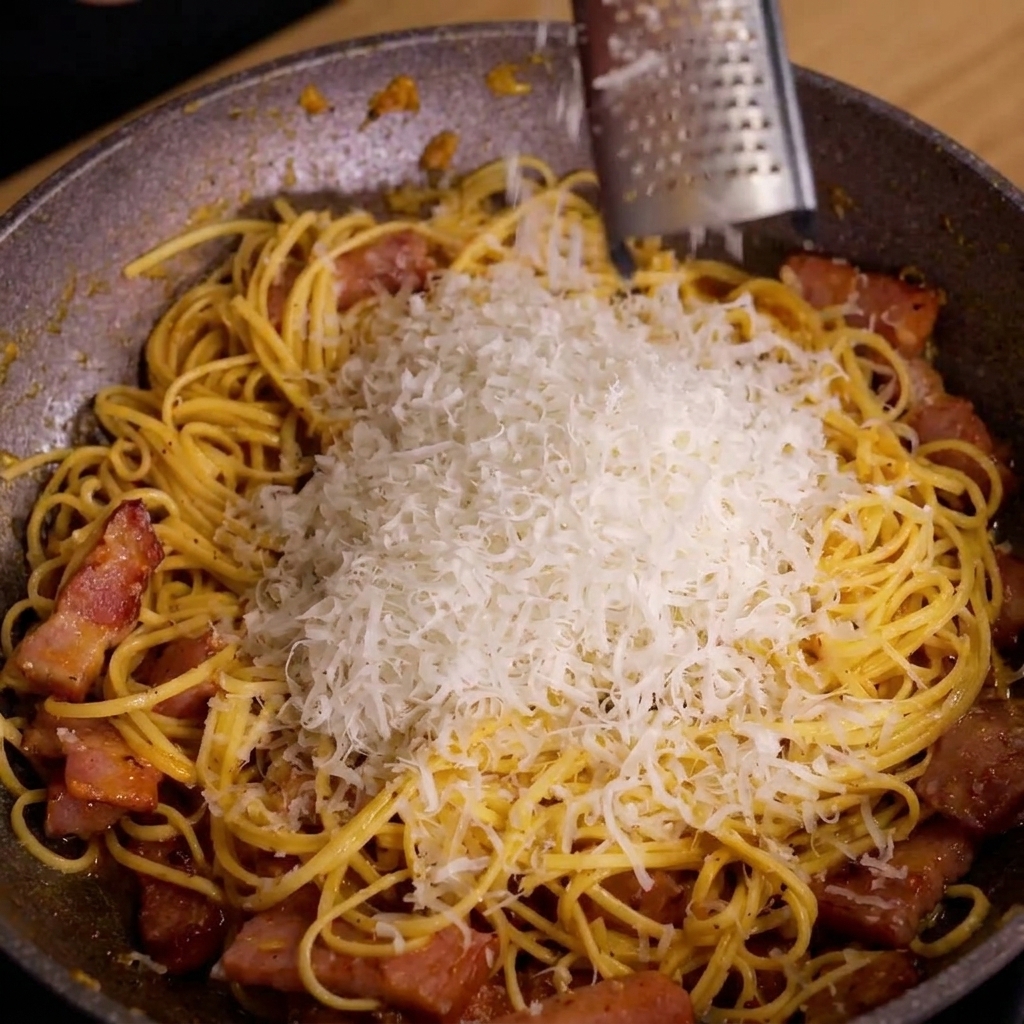
Using a fine hand grater, shred a generous mound of Parmesan cheese directly over the warm pasta, bacon, and egg yolks. The finely grated cheese will easily melt into the residual heat of the dish.
Tip: Freshly grating your own cheese from a block is crucial here; pre-shredded cheese contains anti-caking agents that prevent it from melting into a smooth sauce. - 10Toss to emulsify
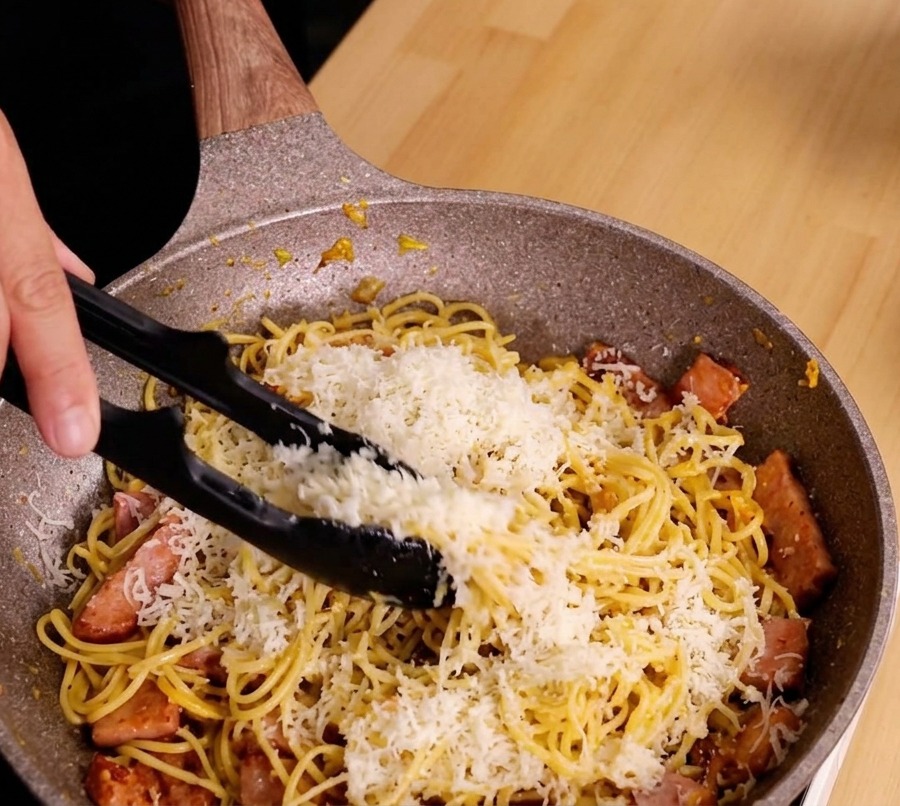
Use a pair of tongs to vigorously toss the spaghetti, bacon, egg yolks, and freshly grated cheese together in the pan. Keep mixing constantly; the combination of the hot pasta, melted cheese, egg yolks, and starchy water will slowly emulsify into a rich, glossy, and creamy sauce that coats every noodle.
Tip: If the sauce looks too thick or clumpy while tossing, splash in a small amount of reserved hot pasta water to help smooth it out into a silky cream. - 11Plate the pasta
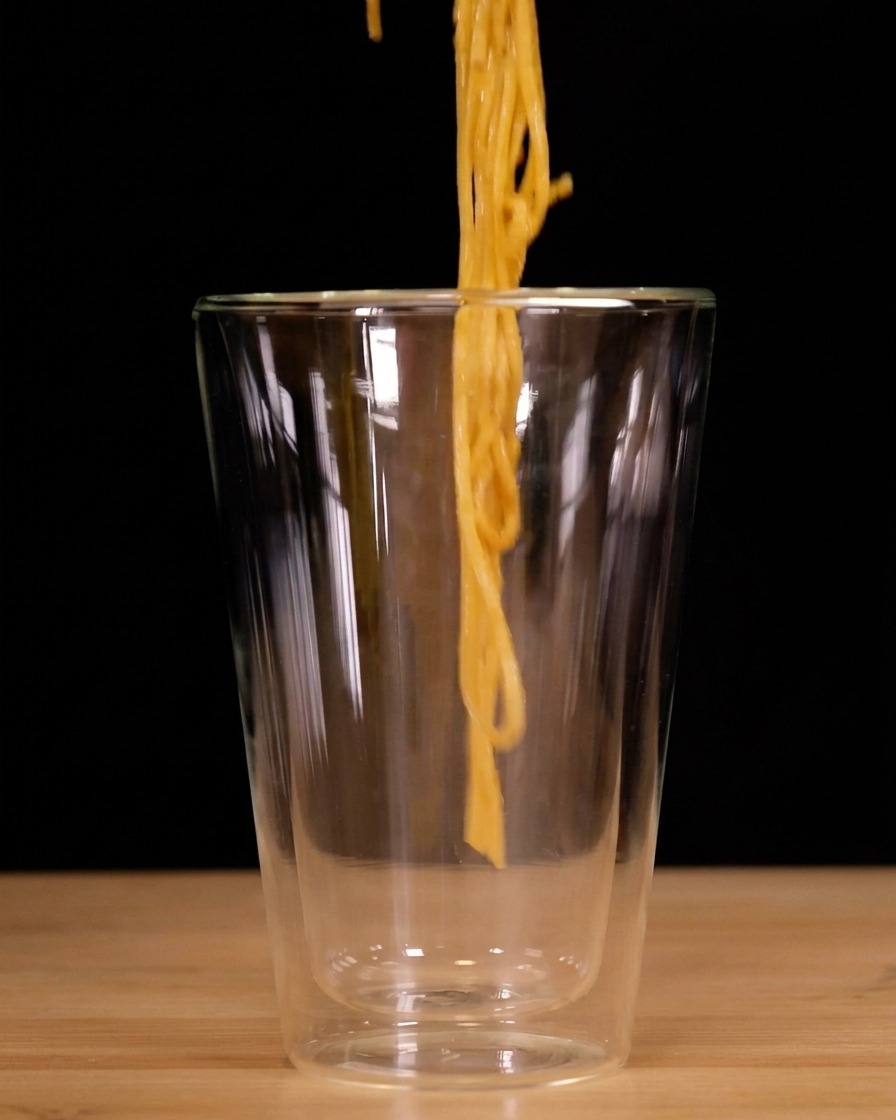
Grab a portion of the fully coated spaghetti with tongs and twirl it tightly to form a neat, vertical nest. Carefully lower the twirled pasta into a tall, clear double-walled serving glass for a unique, visually striking presentation.
Tip: Twirling the pasta inside the bowl of a large ladle before transferring it to the serving vessel can help keep the nest shape perfectly intact. - 12Top with a raw egg yolk
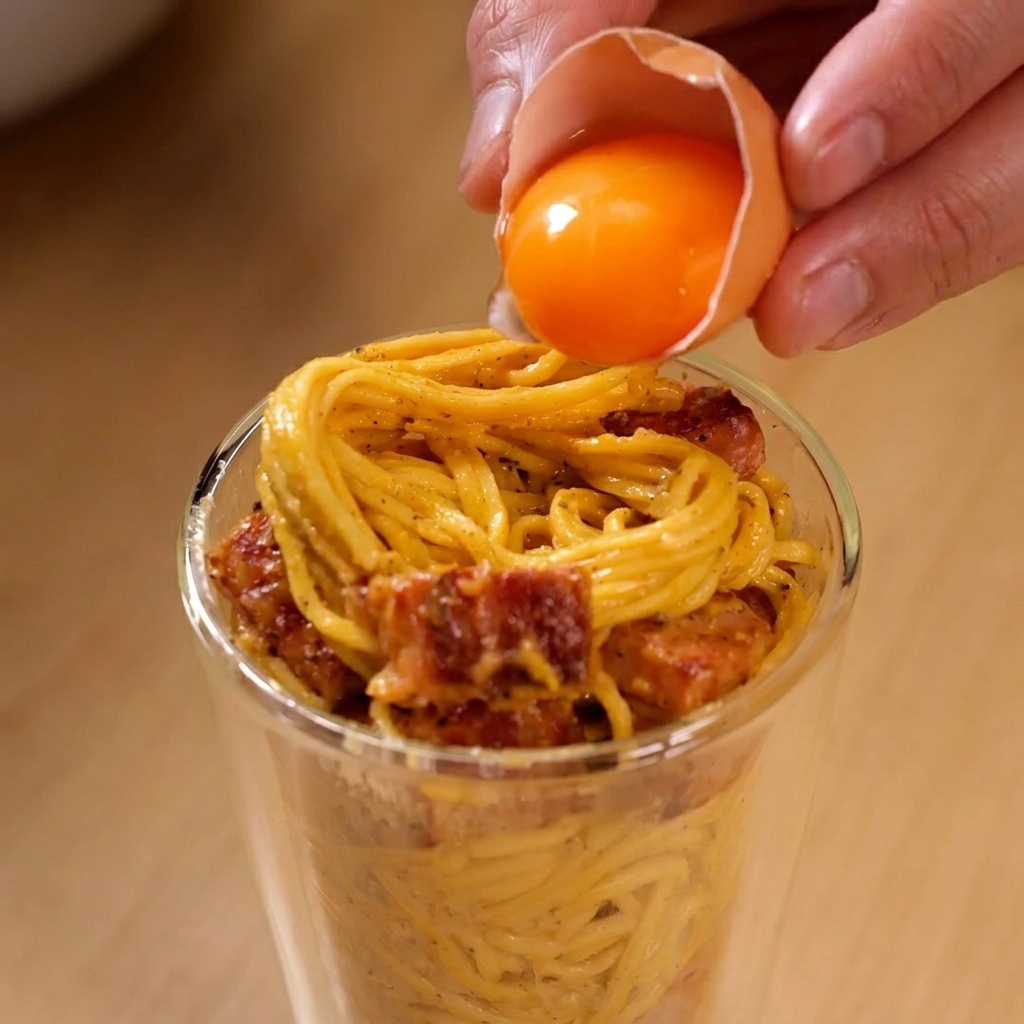
Carefully crack a fresh egg and separate the yolk, keeping it perfectly intact. Gently drop the raw yolk onto the top center of the pasta nest inside the serving glass for a rich, visually stunning finish.
Tip: Ensure the pasta is still warm so that when the yolk is broken, it mixes perfectly with the dish to create a luscious, creamy sauce.