Nutritious Okra Miso Soup
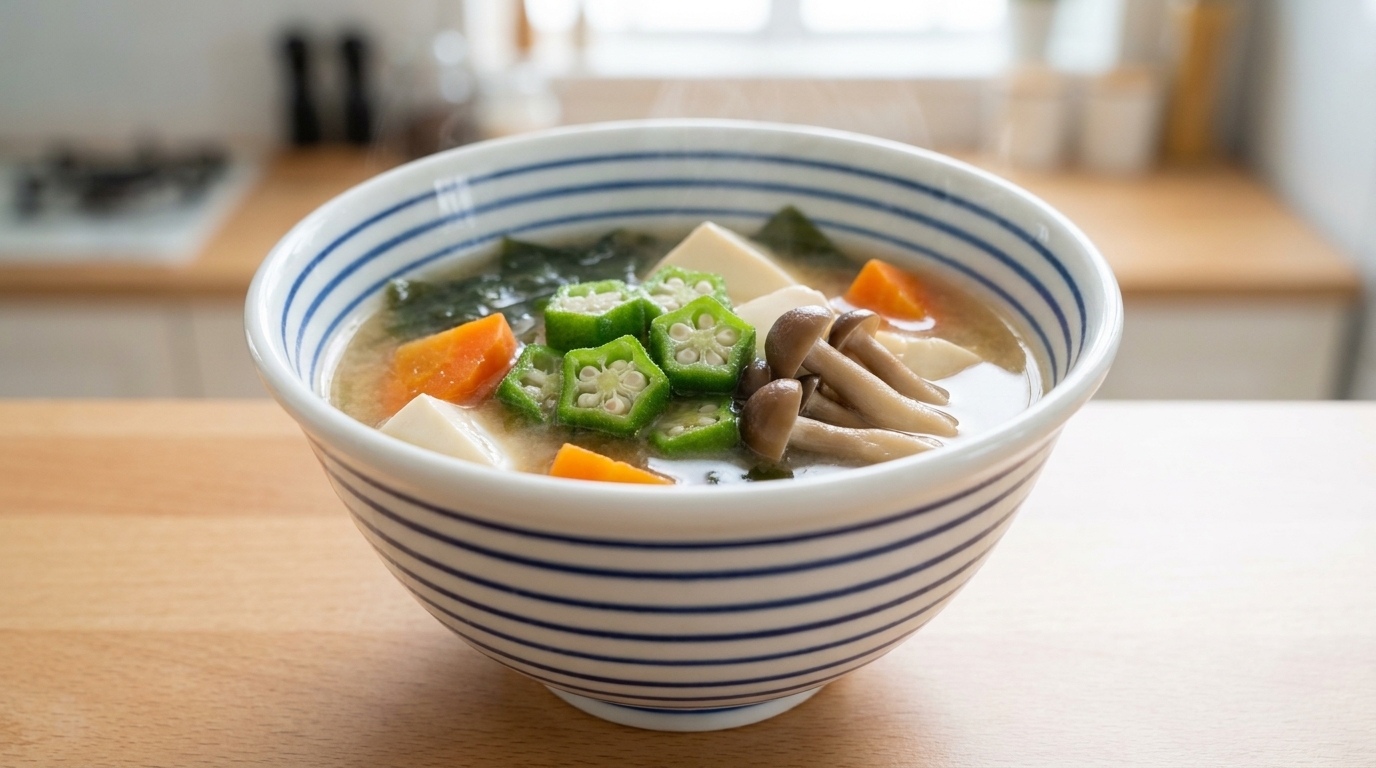
A wholesome, vibrant Japanese-style soup featuring tender okra, silken tofu, and earthy shimeji mushrooms in a savory, naturally thickened miso broth.
Miso soup is a cornerstone of Japanese home cooking, prized for its simplicity and health benefits. This vegetarian version elevates the classic broth by incorporating okra, which releases a natural mucilage that adds a comforting, silky thickness, perfectly complementing the savory, fermented depth of organic miso paste.
Ingredients
- 5-6 stalks fresh okra
- 1 small carrot
- 1 small bunch shimeji mushrooms
- 1 block silken tofu
- 600 ml water
- 1 tbsp dried wakame seaweed
- 1-2 tbsp organic miso paste
Instructions
- 1Prepare the okra

Wash the fresh okra thoroughly, trim off the stem ends, and slice them into small, star-shaped rounds. This prepares the okra to release its natural mucilage, which will later help thicken and enrich the miso soup broth.
Tip: Keep the slices uniform in thickness so they cook evenly in the soup. - 2Slice the carrots

Wash the carrot well under running water, then use a knife to cut it into small, irregular chunks. Using irregular cuts creates more surface area, which helps the carrot flavor infuse into the soup more effectively.
Tip: Try to keep the chunks bite-sized to ensure they cook through quickly. - 3Prepare the mushrooms

Take the bunch of shimeji mushrooms and carefully trim off the woody root ends. Gently break the clusters apart into smaller, individual pieces to ensure they cook evenly and integrate well with the other soup ingredients.
Tip: Avoid washing the mushrooms excessively, as they absorb water easily; a quick wipe or gentle trim is sufficient. - 4Cube the tofu

Take a block of silken tofu and carefully slice it into small, uniform cubes. Silken tofu is delicate, so use a gentle touch with your knife to maintain the shape of the cubes while preparing them for the pot.
Tip: If the tofu is very soft, use a flat-bladed knife to gently transfer the cubes into the pot to prevent breaking. - 5Combine ingredients

Gather all your prepped ingredients—the sliced okra, carrot chunks, separated mushrooms, and tofu cubes—and carefully transfer them into your cooking pot. Arrange them evenly to ensure consistent cooking once the liquid is added.
Tip: Adding the ingredients together at this stage ensures a balanced distribution of flavors and textures in the soup. - 6Add water and boil
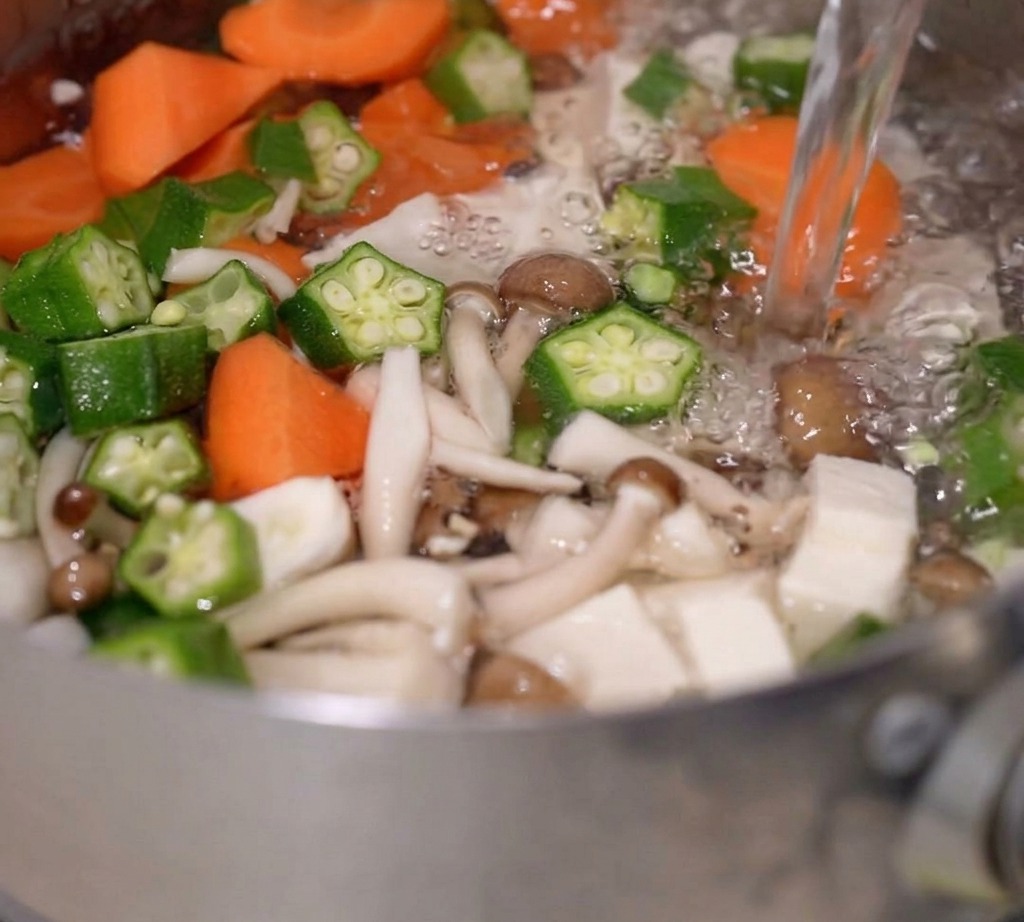
Pour approximately 600ml of boiling water over the prepared ingredients in the pot. Place the pot on the stove over high heat and bring it back to a boil. Allow the mixture to cook for about two minutes to soften the vegetables and tofu.
Tip: Starting with boiling water speeds up the cooking process and helps preserve the vibrant color of the vegetables. - 7Add wakame seaweed

Add a spoonful of dried wakame seaweed into the simmering soup pot with the other vegetables. The seaweed will rehydrate and add extra nutritional value and flavor to the broth.
Tip: Wakame expands significantly, so a small amount is sufficient for the soup. - 8Season with miso paste
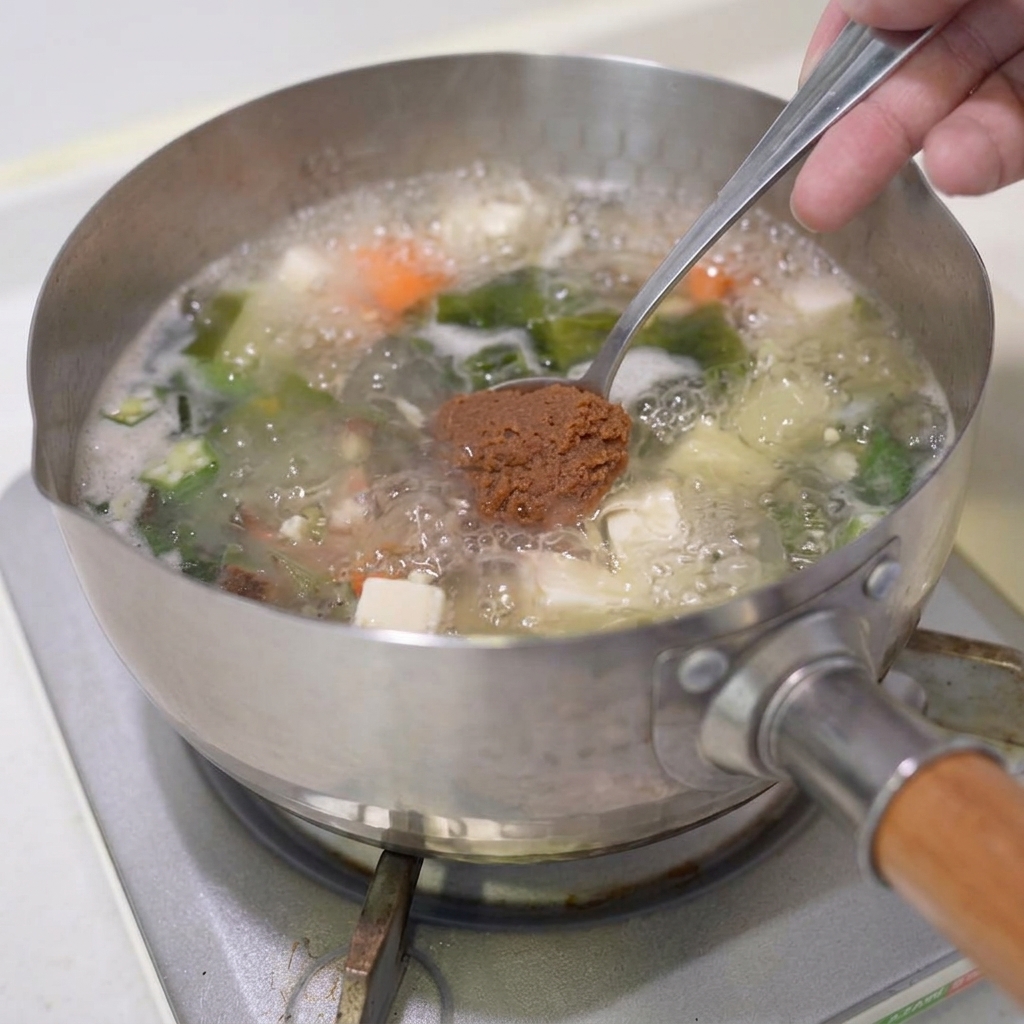
Add a generous spoonful of organic miso paste into the boiling soup. Ensure the paste is fully incorporated into the broth for a rich and savory flavor.
Tip: If you have a fine-mesh strainer, you can place it in the soup and dissolve the miso through it to ensure there are no lumps. - 9Dissolve the miso

Using a metal ladle, gently stir the soup to allow the miso paste to dissolve completely into the broth. The okra will release its mucilage, which naturally thickens the soup, creating a rich and comforting texture.
Tip: Do not boil the soup for too long after adding the miso to preserve its delicate flavor and nutrients.