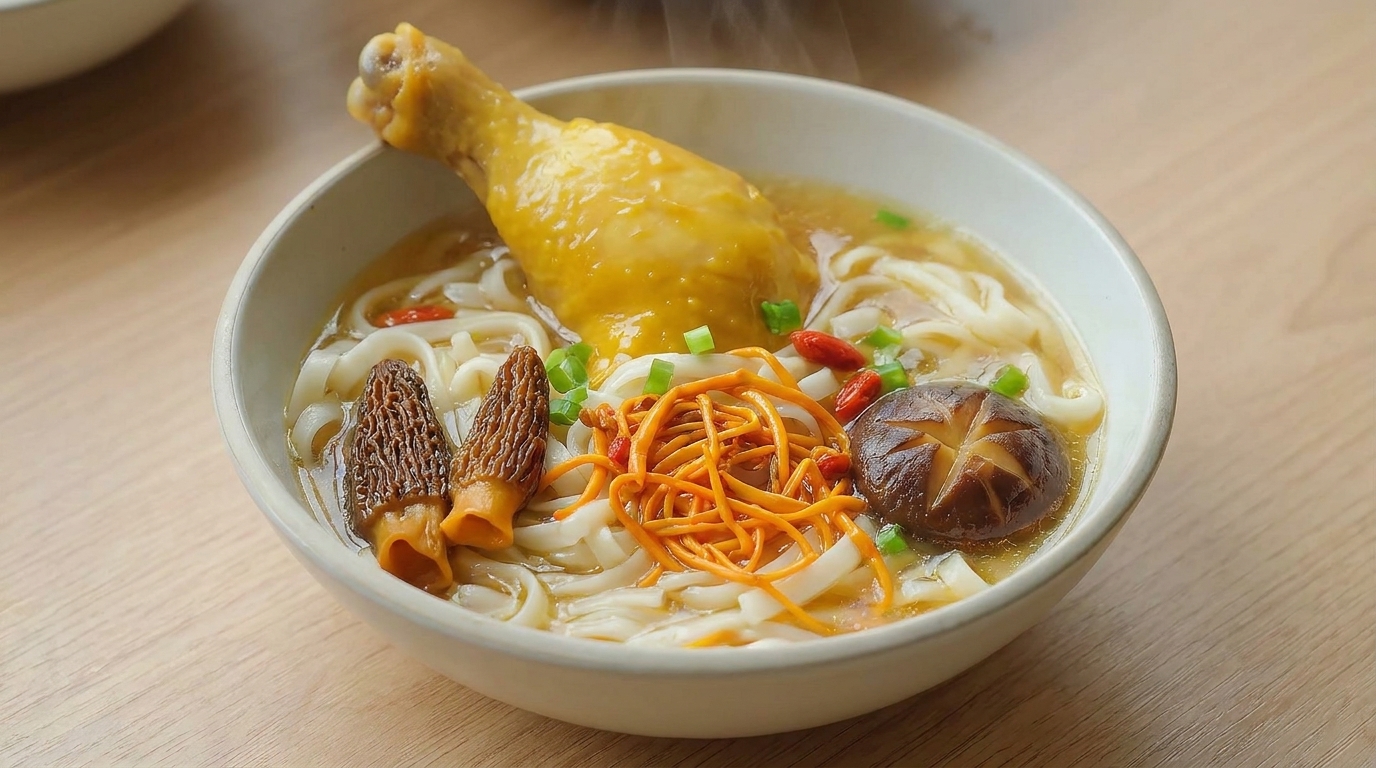
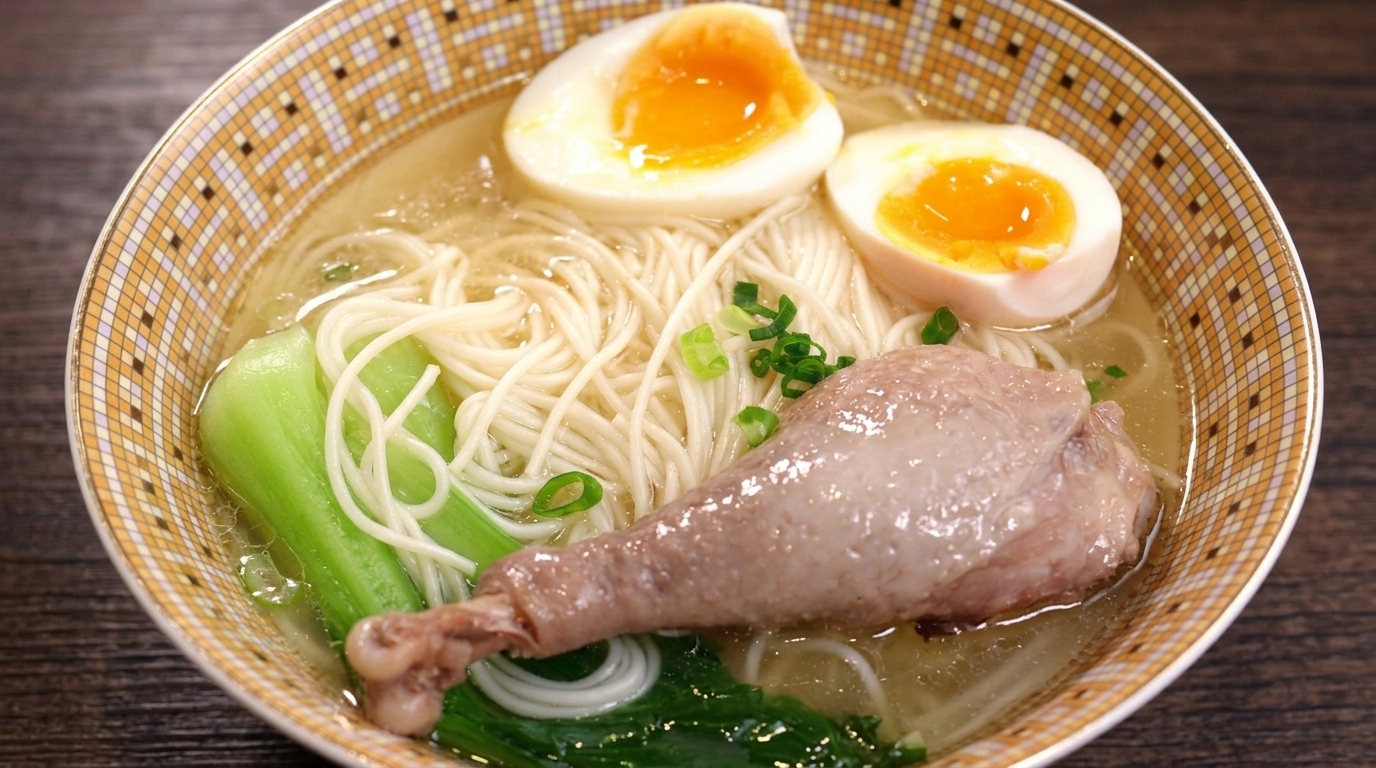
Clear Chicken Broth Shoyu Ramen
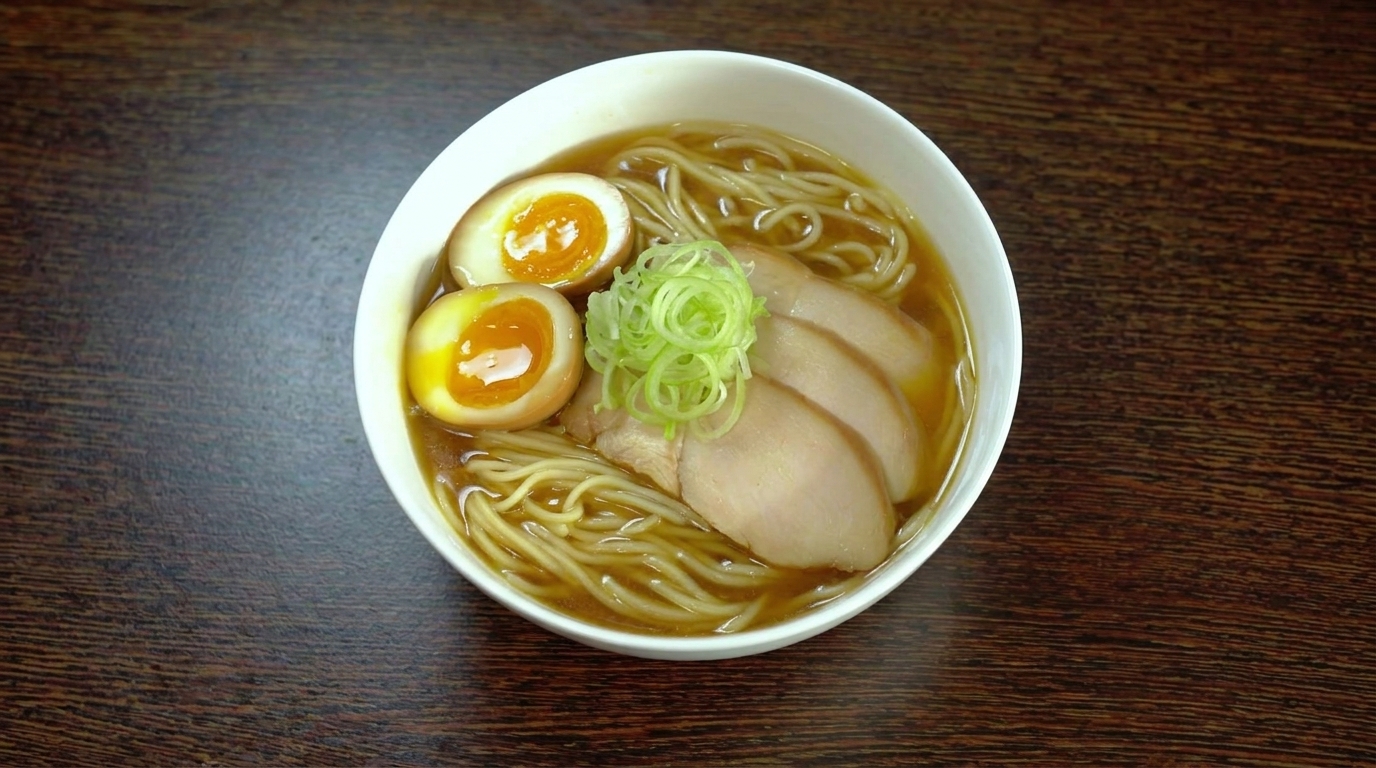
A light, deeply flavorful homemade Shoyu Ramen. Enjoy a clear chicken broth, kombu-infused soy sauce, and aromatic scallion oil in this comforting bowl.
Shoyu (soy sauce) ramen is a cornerstone of Japanese noodle soups, celebrated for its clear, light, and umami-rich broth. Unlike heavy pork-based tonkotsu, this version relies on a gently simmered chicken carcass paired with kombu and fresh vegetables. The result is an elegant, deeply comforting bowl that wont leave you feeling overly heavy. By rendering your own aromatic scallion chicken oil and marinating soft-boiled eggs, you can bring a restaurant-quality experience right into your home kitchen.
Ingredients
- 1 whole blanched chicken carcass
- 4 portions fresh ramen noodles
- 1 piece dried kombu
- 12 cup dark soy sauce
- 4 whole eggs
- 12 white onion
- 1 stalk leek
- 3 pieces dried shiitake mushrooms
- 1 head garlic
- 1 piece ginger
- 1 whole carrot
- 50 g raw chicken fat
- 1 piece cooked chicken breast
- 3 stalks fresh scallions
- 1 tbsp sugar
- to taste white pepper
- optional sesame oil
Instructions
- 1Gather the ingredients
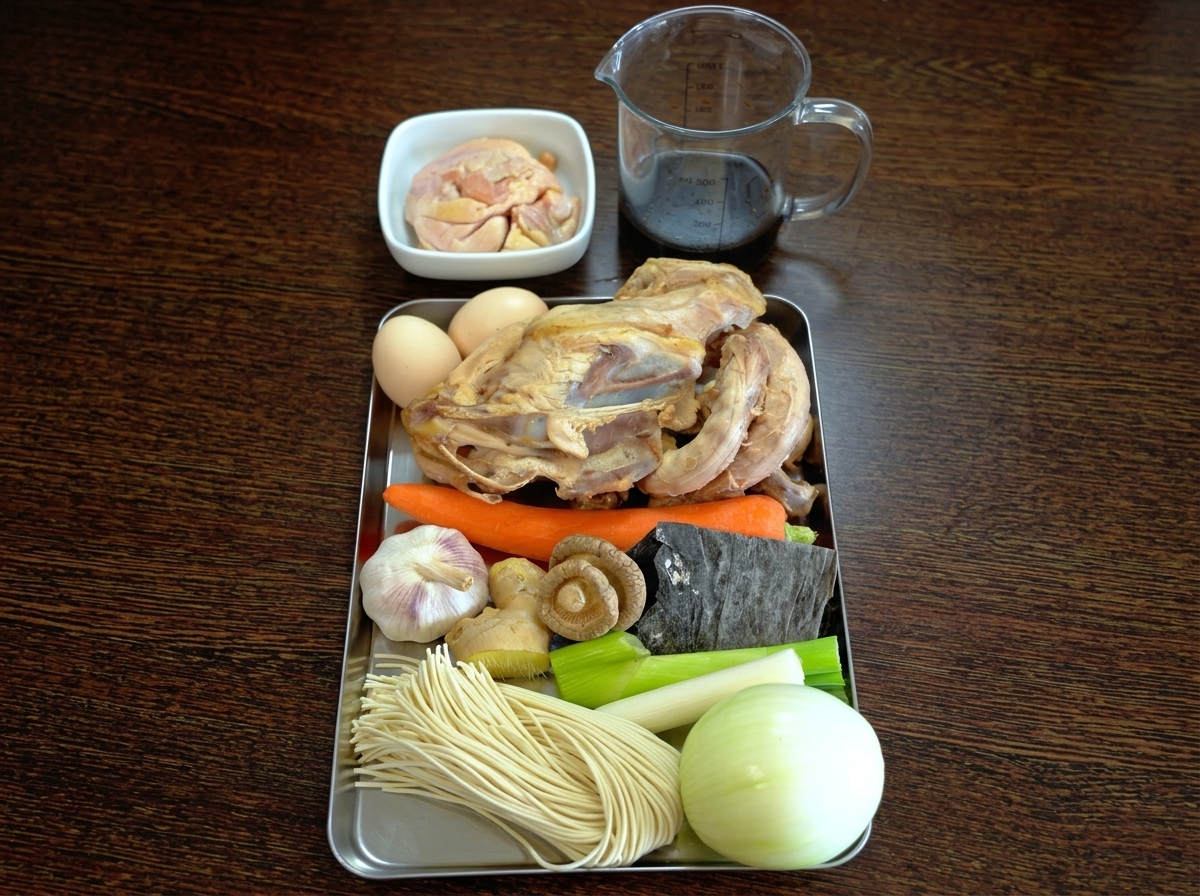
Prepare all the necessary components for your homemade soy sauce ramen. Lay out your fresh vegetables, aromatics, raw noodles, and a blanched chicken carcass. Having everything measured and ready will make the cooking process smooth and efficient.
Tip: Soaking the dried kombu in soy sauce overnight helps extract its natural umami flavors perfectly. - 2Infuse soy sauce with kombu
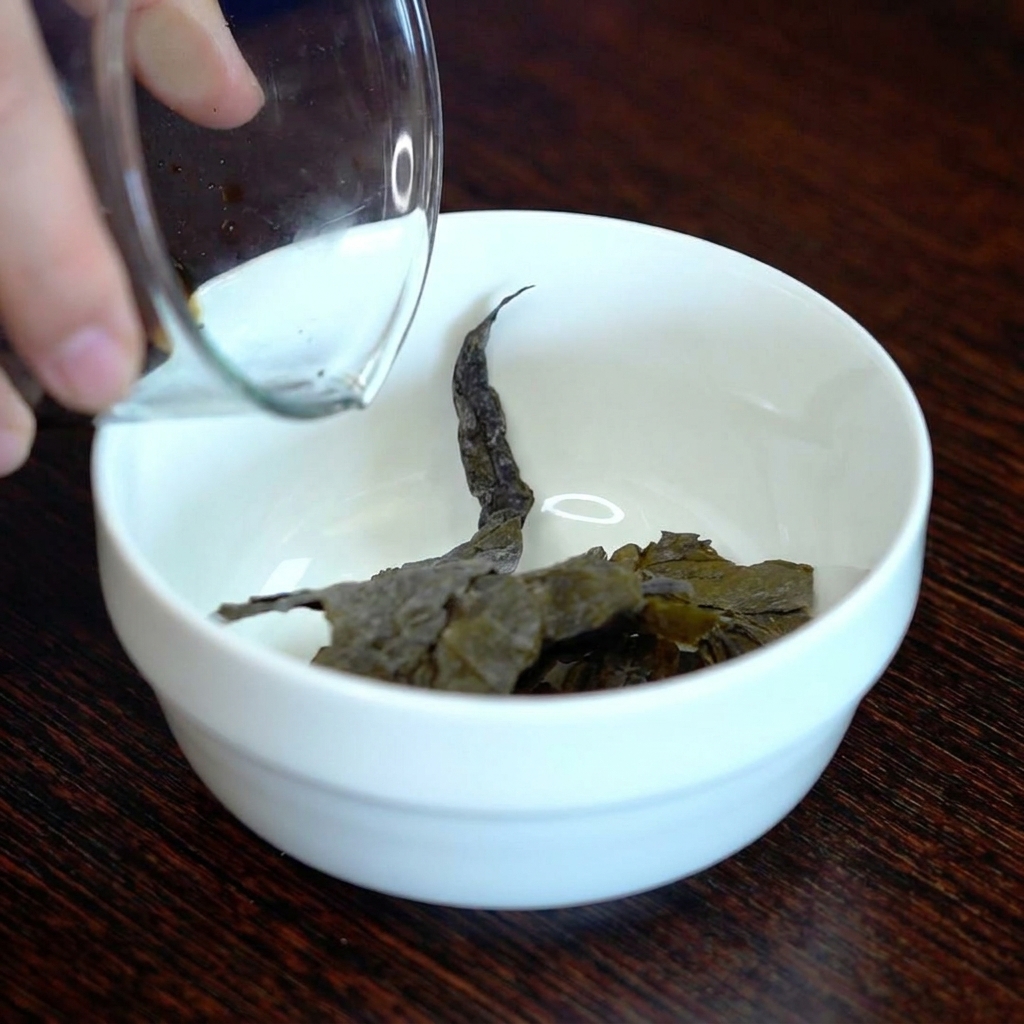
Place a piece of dried kombu into a small bowl and pour dark soy sauce over it. Allow the kombu to steep in the soy sauce so that it absorbs the rich, oceanic umami flavor. This infused soy sauce will act as the key seasoning base for both the soft-boiled eggs and the final ramen broth.
Tip: For the deepest flavor, cover the bowl and let the kombu soak in the soy sauce overnight in the refrigerator. - 3Boil the eggs
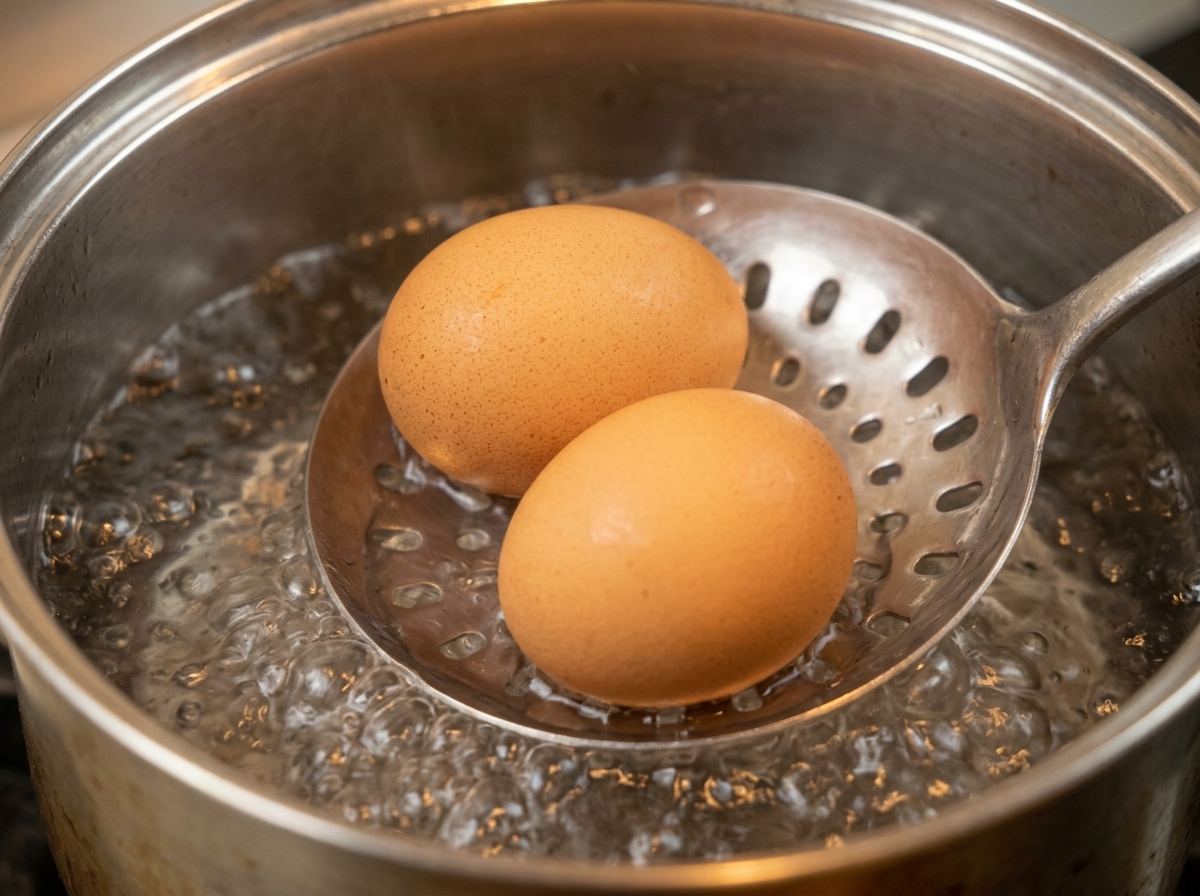
Carefully lower the whole eggs into a pot of actively boiling water and cook them for exactly 6 minutes to achieve a perfect soft-boiled center. Once the time is up, immediately transfer the eggs into an ice water bath to stop the cooking process and make them easier to peel.
Tip: Adding a splash of vinegar to the boiling water can help the egg whites coagulate quickly if the shell cracks, and makes peeling easier. - 4Prepare the egg marinade
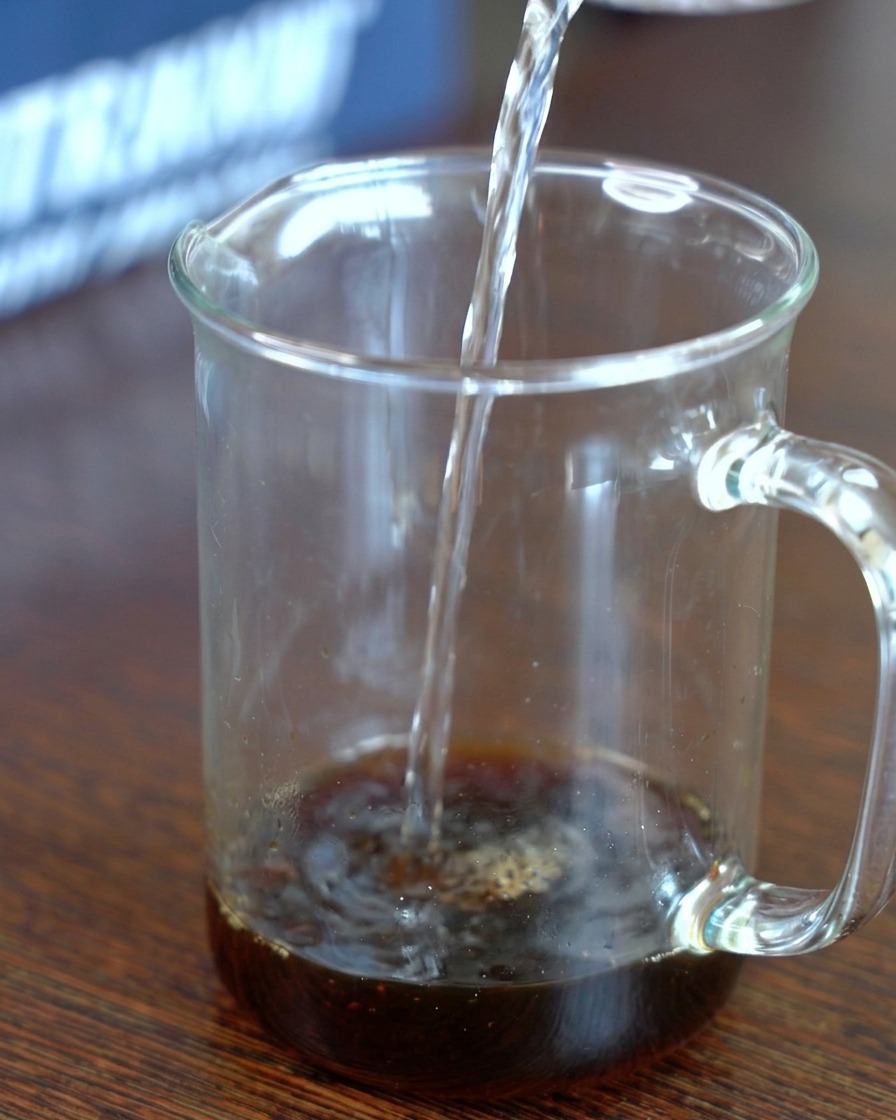
Create the marinade for the soft-boiled eggs by combining some of your overnight kombu-infused soy sauce with a little sugar. Pour in some clear, purified water to dilute the mixture slightly, ensuring the marinade wont be too overpowering for the delicate eggs.
Tip: Ensure the sugar is fully dissolved in the liquid so the eggs marinate evenly. - 5Marinate the soft-boiled eggs
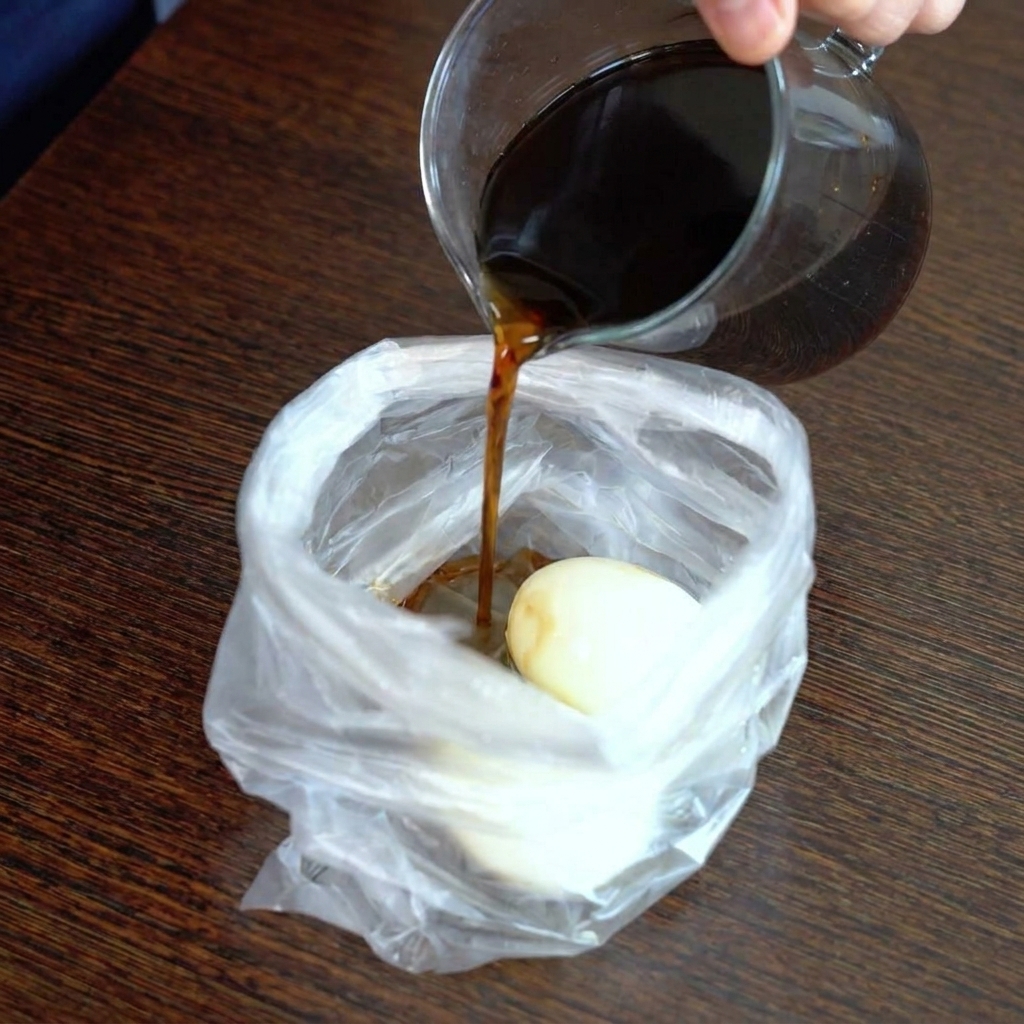
Place the peeled soft-boiled eggs into a clean plastic bag. Pour the prepared kombu and soy sauce marinade over the eggs, ensuring they are well coated. Seal the bag tightly to remove excess air and let it rest in the refrigerator for at least half a day so the flavors deeply penetrate the egg whites.
Tip: Using a plastic bag is a highly effective way to ensure the eggs are evenly coated on all sides while using a smaller volume of marinade. - 6Start the ramen broth
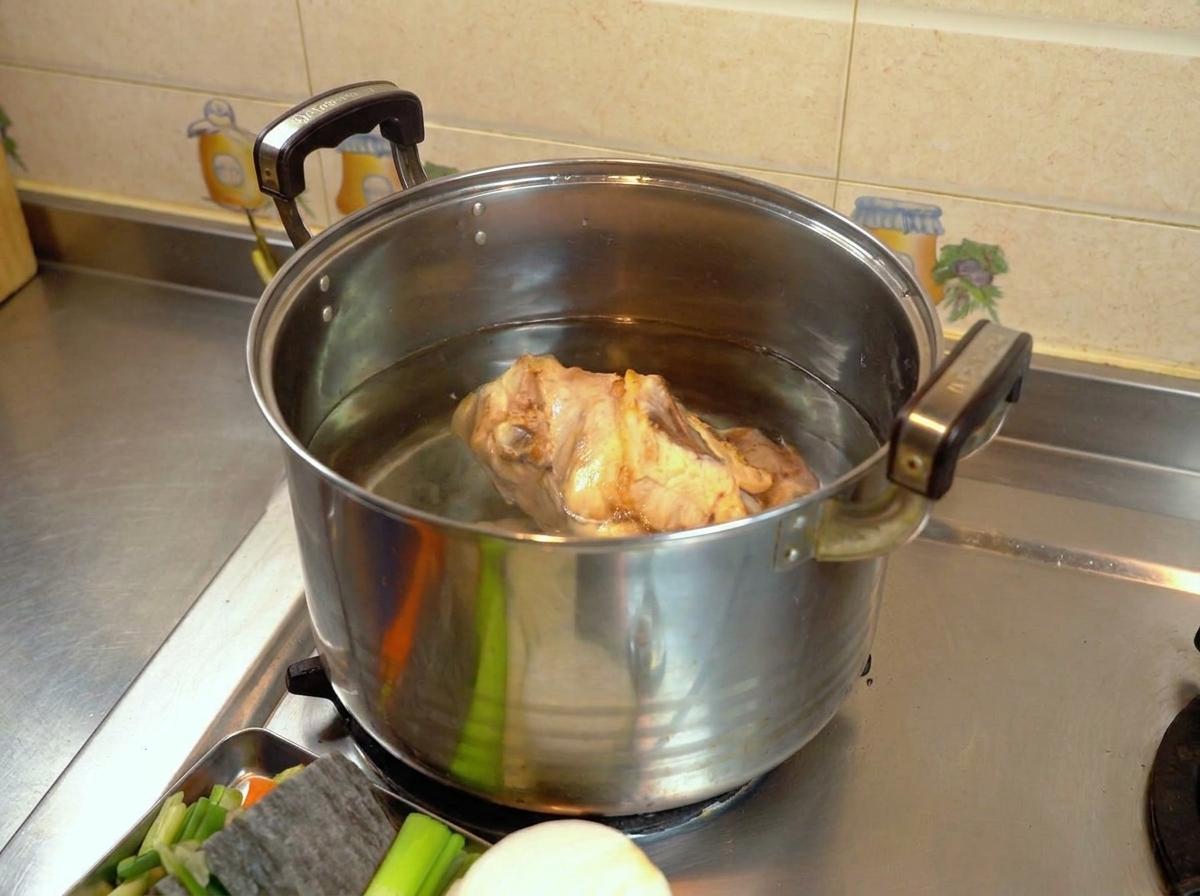
Transfer the blanched chicken carcass into a large, clean stockpot. Fill the pot with enough clear water to fully submerge the bones. This forms the base of your light, clear chicken broth, which will soon be enriched with various aromatics and vegetables.
Tip: Starting with a previously blanched chicken carcass prevents cloudy broth and off-flavors from impurities. - 7Add aromatics to the broth
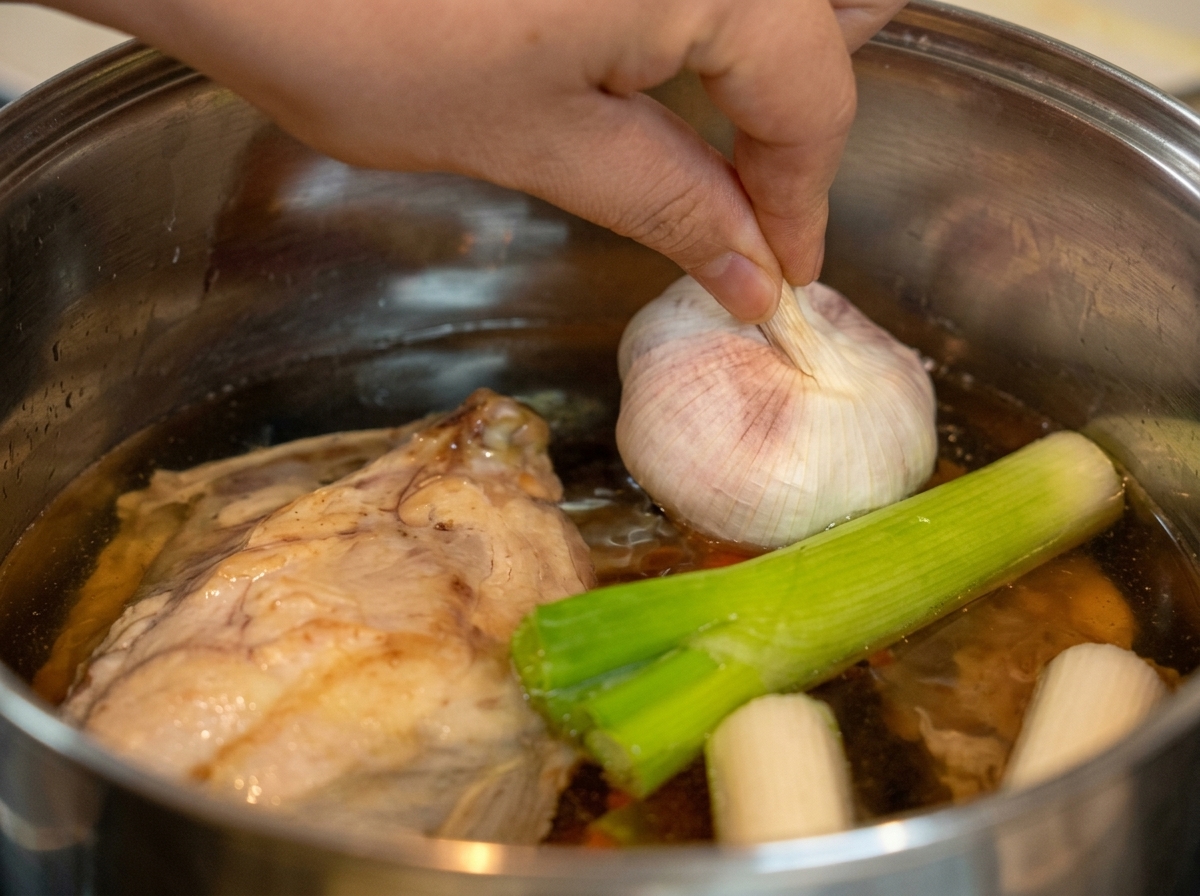
To build the foundation of the ramen broth, place the blanched chicken carcass into a pot of fresh water. Introduce the aromatics by adding a whole head of garlic, sliced ginger, chopped leek stalks, carrots, and the soaked kombu. These ingredients will give the broth its fundamental flavor profile.
Tip: Leaving the skin on the head of garlic adds extra depth of flavor and a slight golden color to the finished broth. - 8Simmer the chicken broth
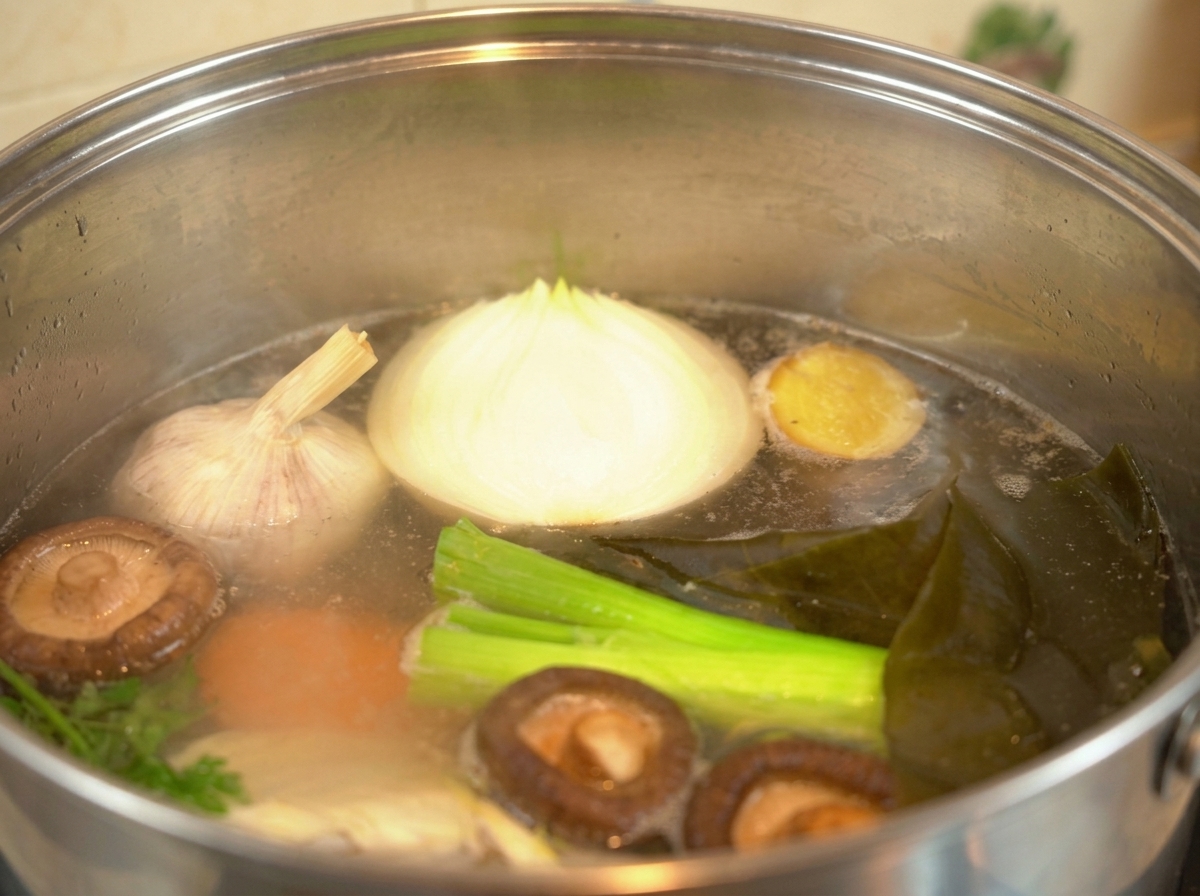
Bring the pot to a gentle boil, then immediately reduce the heat to its lowest setting. Allow the broth to simmer slowly, extracting the essence of the chicken and vegetables. Cooking it gently rather than at a rolling boil prevents the broth from becoming cloudy, keeping the flavor clean and light.
Tip: Continue to simmer on low heat until the liquid has reduced by half, concentrating the umami flavors. - 9Render the chicken fat
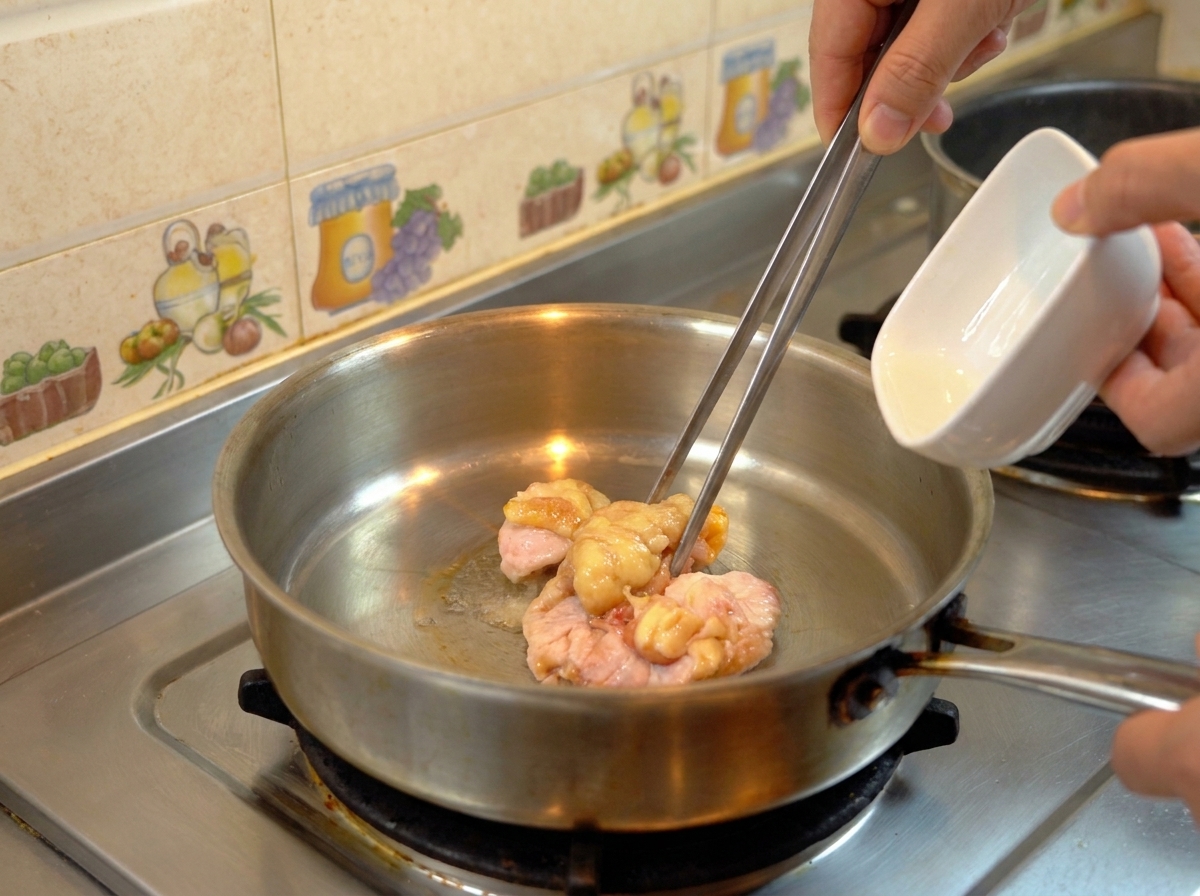
Place pieces of raw chicken fat into a hot metal skillet. Cook them slowly to render out the rich, flavorful oil. This chicken fat will become a key component in flavoring the final bowl of ramen, adding a luxurious mouthfeel and savory aroma.
Tip: Render the fat slowly over medium-low heat to ensure it releases maximum oil without burning or developing a bitter taste. - 10Make scallion chicken oil
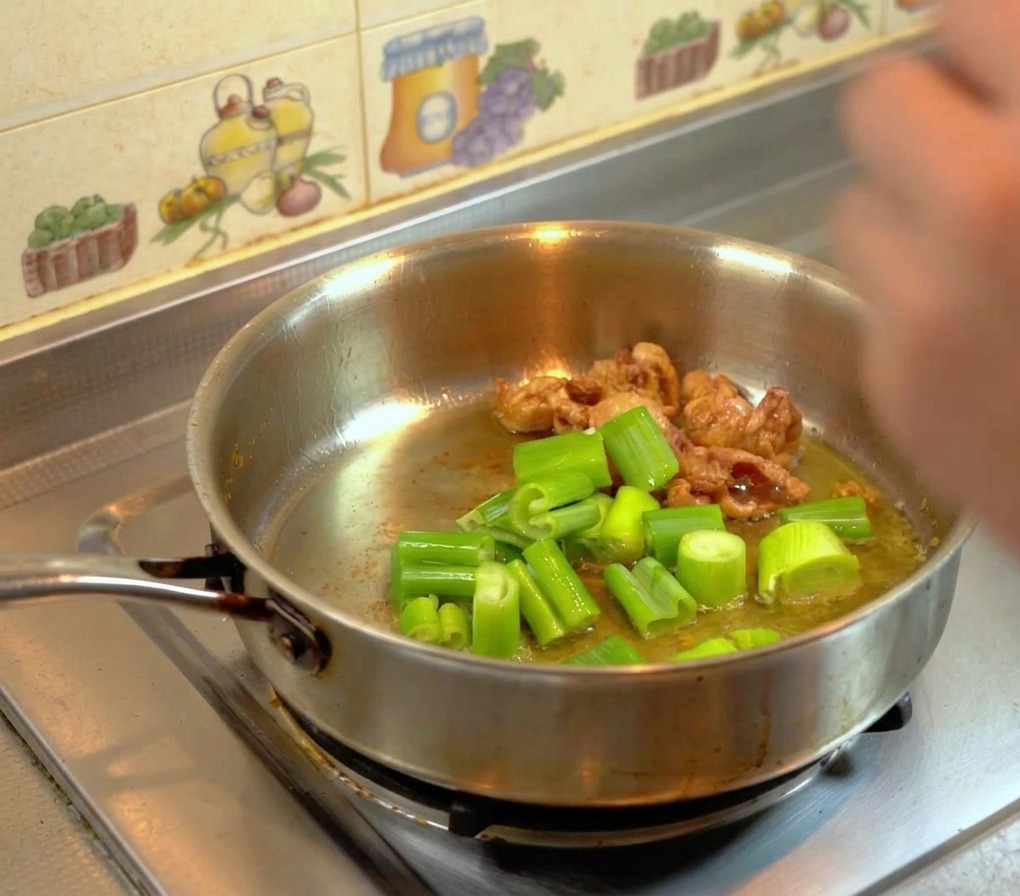
Once the chicken fat is fully rendered, add the roughly chopped green leek leaves to the hot oil. Fry them gently until they begin to wilt and release their aroma. This fragrant, infused chicken oil will serve as an essential aromatic topping for our soy sauce ramen.
Tip: You can also add sliced ginger and crushed garlic to the oil at this stage to create an even more complex flavor profile. - 11Finish the chicken broth
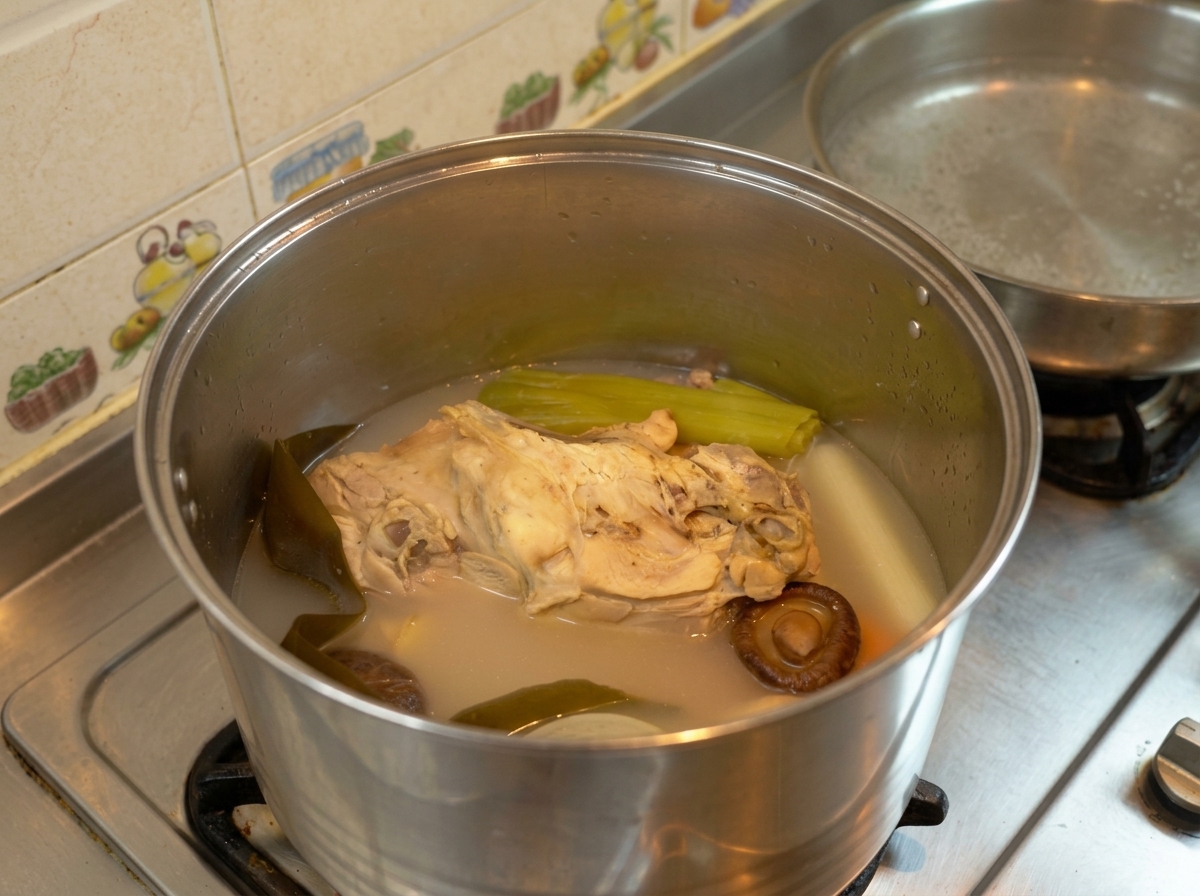
Once the broth has reduced by about half, turn off the heat. The slow simmering will have extracted the savory flavors from the chicken carcass, kombu, carrots, and aromatics, leaving a concentrated, clear, and fragrant liquid base.
Tip: Simmering gently on a low setting is the secret to a light, clear broth that isnt greasy or cloudy. - 12Slice the Marinated Egg
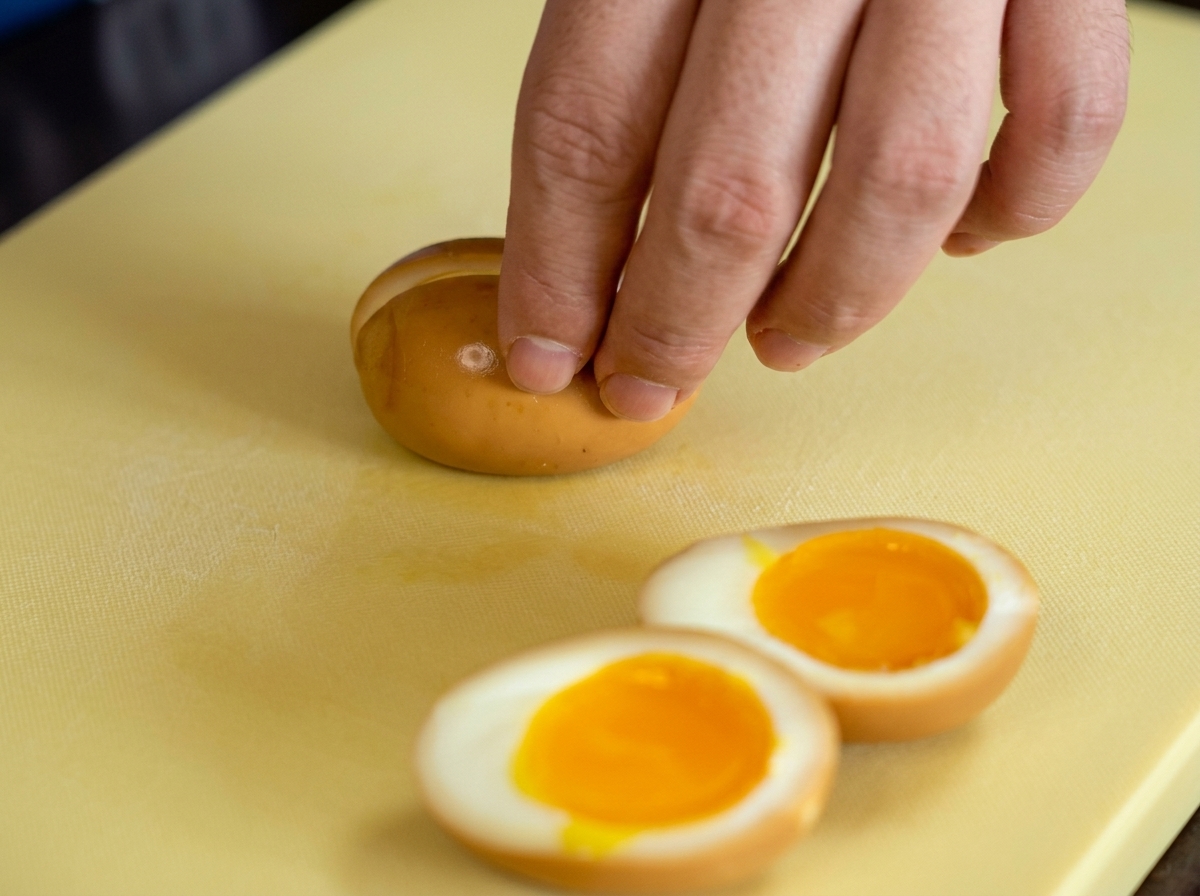
Take the soft-boiled eggs out of the kombu soy marinade after they have chilled for half a day. Carefully slice them in half to reveal the rich, bright orange, gooey yolk inside, ready to be used as a topping.
Tip: Use a sharp knife or a piece of taut fishing line to get a clean slice through the soft yolk without smearing it. - 13Slice the Chicken Breast
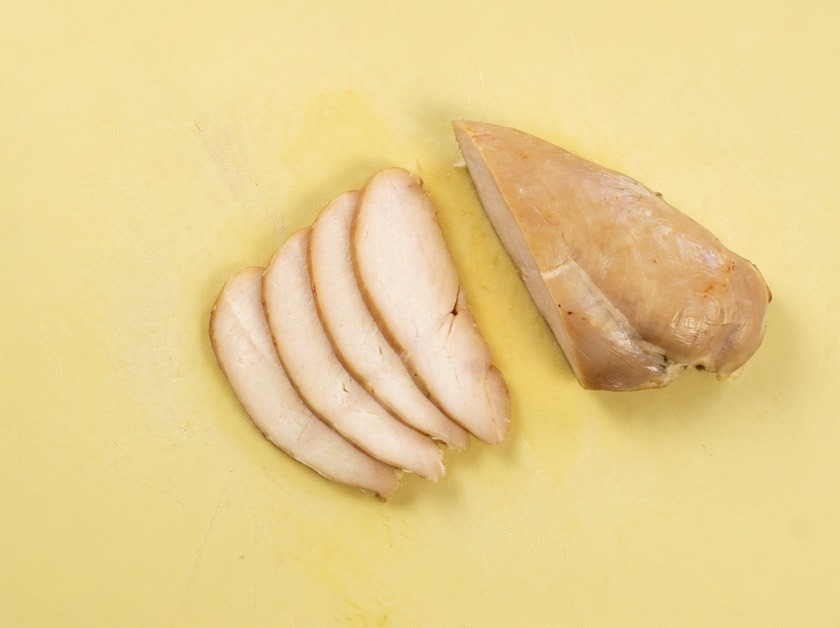
Take the cooked, lightly browned chicken breast and slice it evenly into thin, manageable pieces. These tender slices will act as a delicious, protein-packed topping for your ramen bowl.
Tip: Slicing the chicken while its slightly chilled from the fridge can help you achieve cleaner, more even cuts. - 14Chop the Scallions
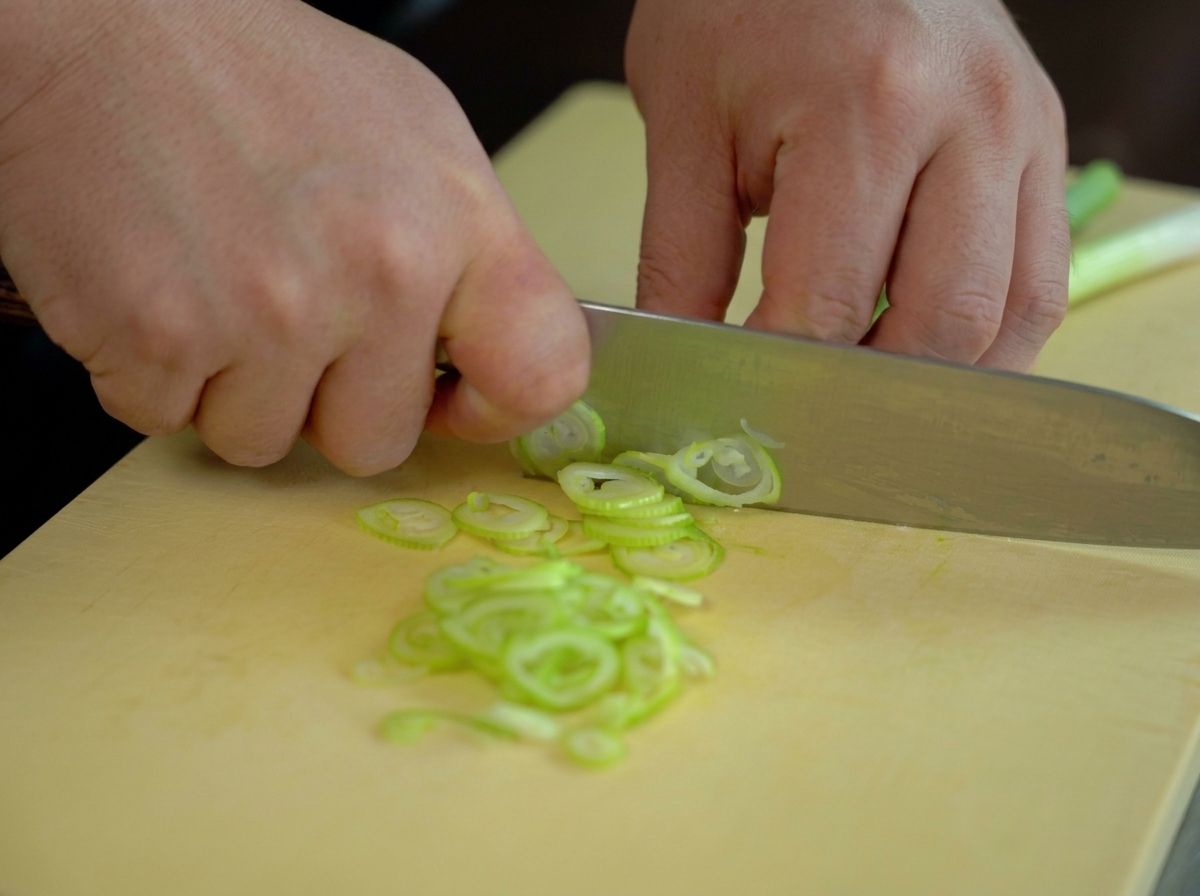
Finely chop some fresh green scallions on a cutting board. These will be added at the very end as a fresh, aromatic garnish to cut through the richness of the chicken broth.
Tip: Soak the chopped scallions in ice water briefly to make them extra crisp and to mellow out their sharp, raw bite. - 15Boil the Ramen Noodles
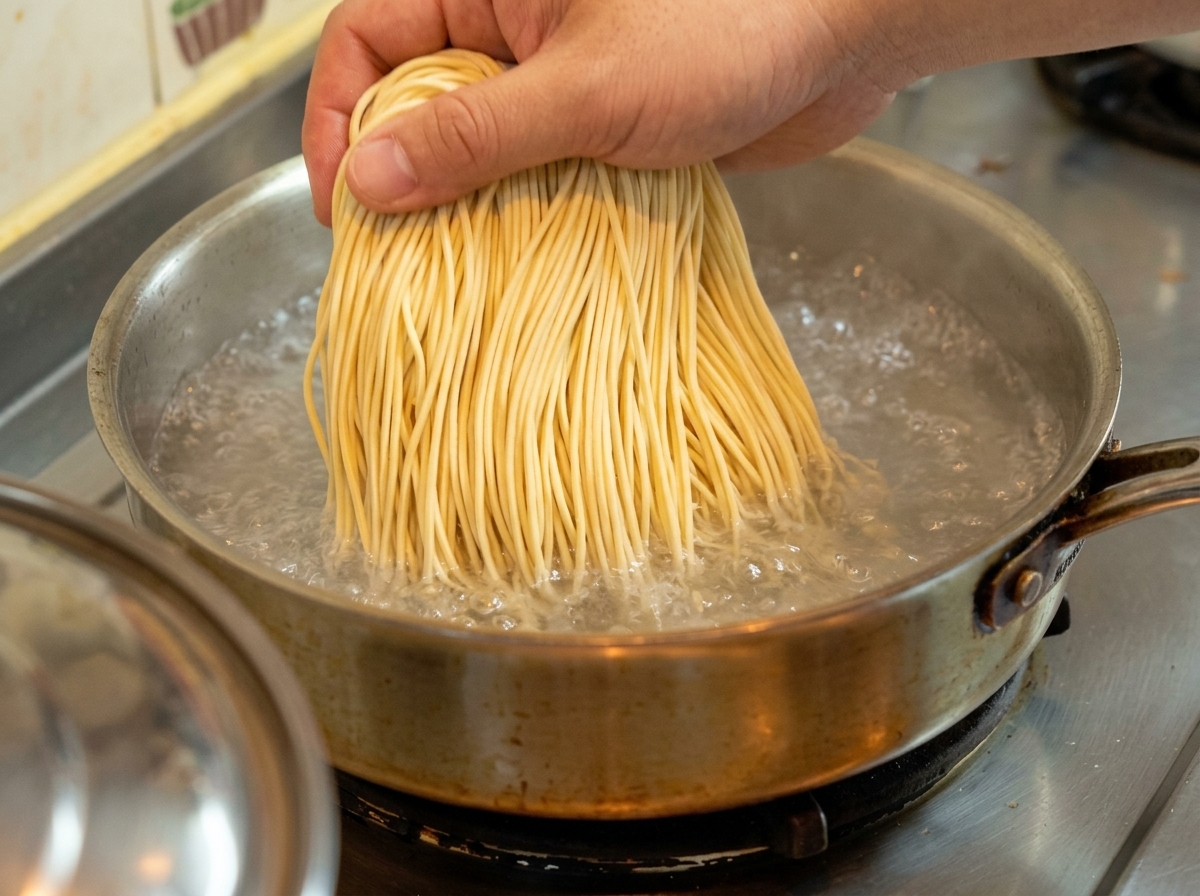
Bring a large pot of water to a vigorous boil and drop in your preferred bundle of raw ramen noodles. Gently stir them immediately so they cook evenly and do not clump together.
Tip: Avoid overcooking the noodles. Leave a slightly firm core in the center so they maintain a good, bouncy chew when swimming in the hot broth. - 16Drain the Noodles
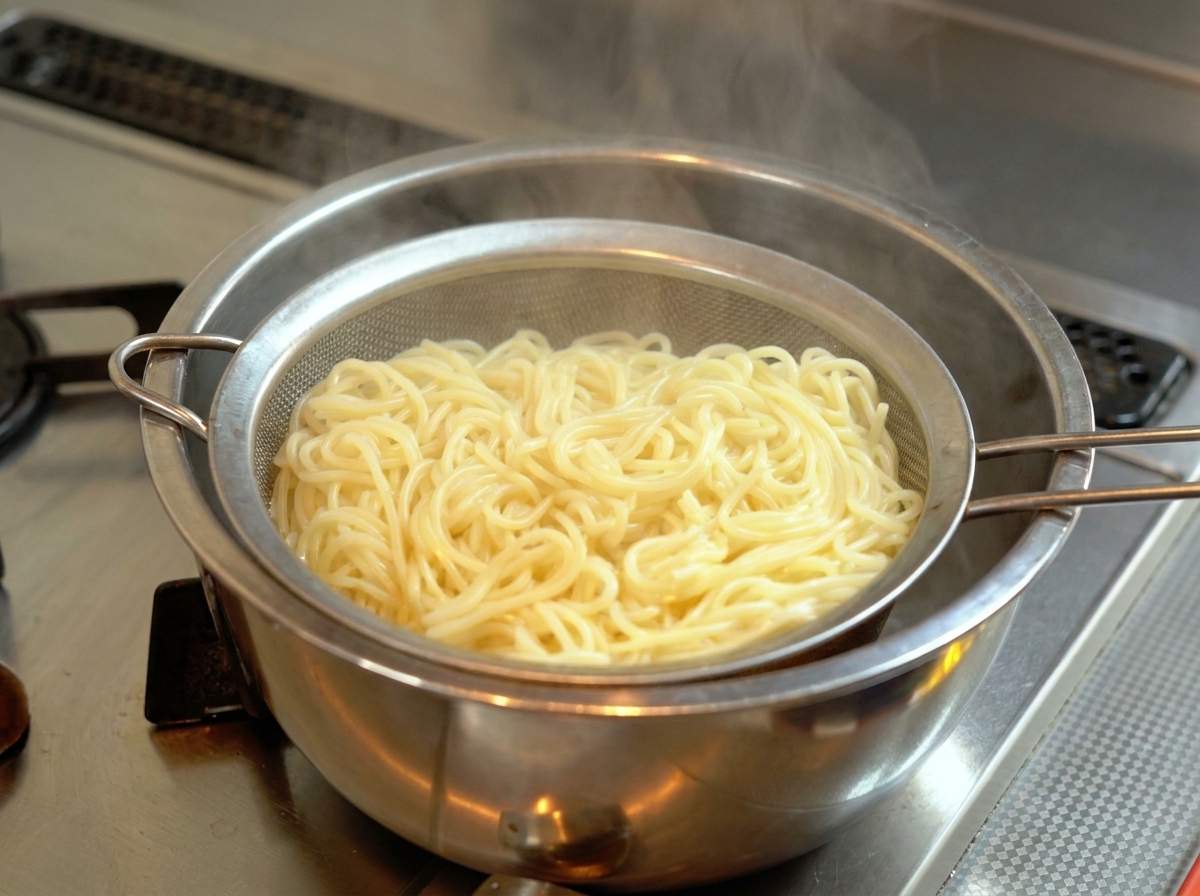
Once the noodles are cooked to your liking, lift them out of the boiling water. Use a wire mesh strainer to vigorously shake off all the excess water before plating.
Tip: Thoroughly draining the noodles is crucial so the residual water doesnt dilute the flavorful broth in your bowl.