Korean Spicy Chicken Noodles
Melted Mozzarella
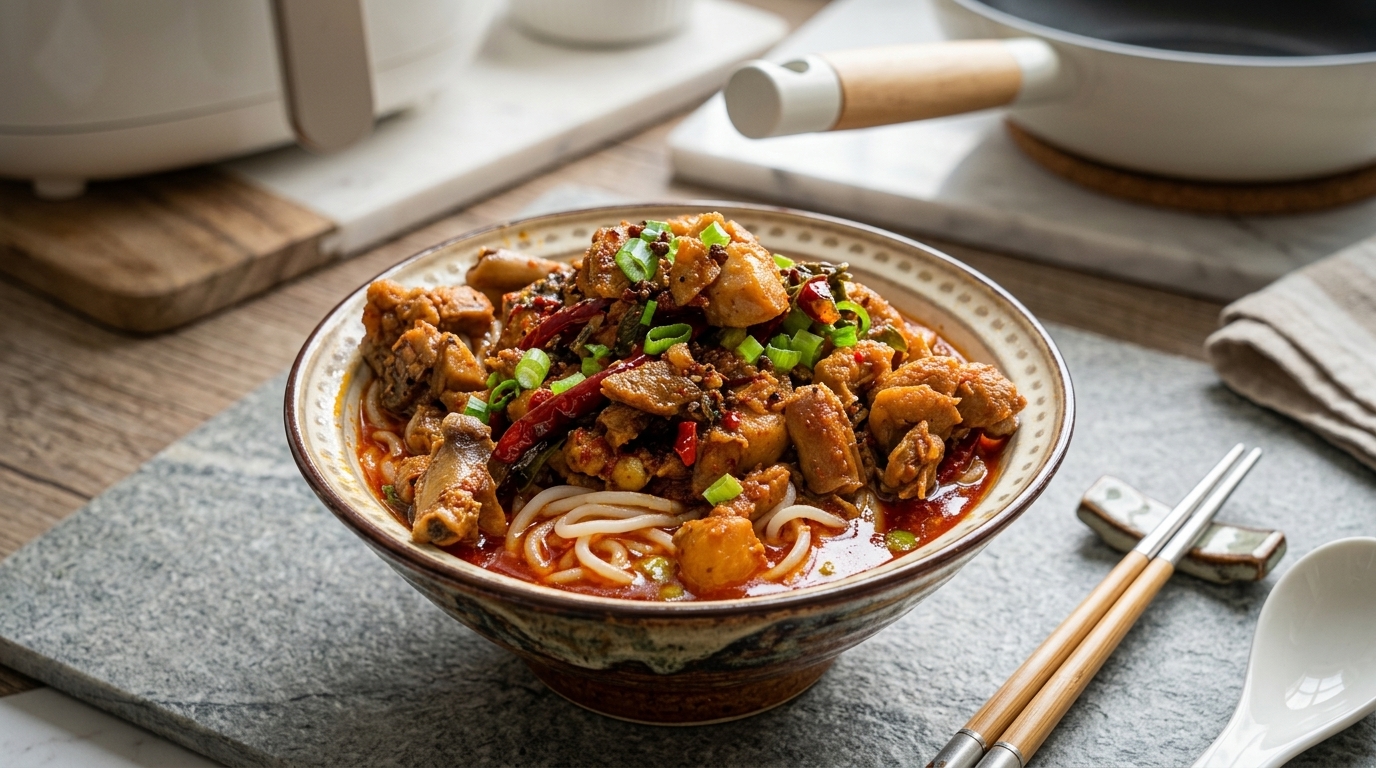
Savor tender chicken thighs and chewy ramen noodles tossed in a glossy Gochujang glaze, finished with a pool of melted mozzarella and savory seaweed flakes.
Known for its addictive balance of heat and sweetness, this dish is a comforting staple of modern Korean street food culture. The addition of melted mozzarella cheese provides a creamy counterpoint to the spicy fermented chili paste, creating a buldak style experience that is both indulgent and deeply satisfying.
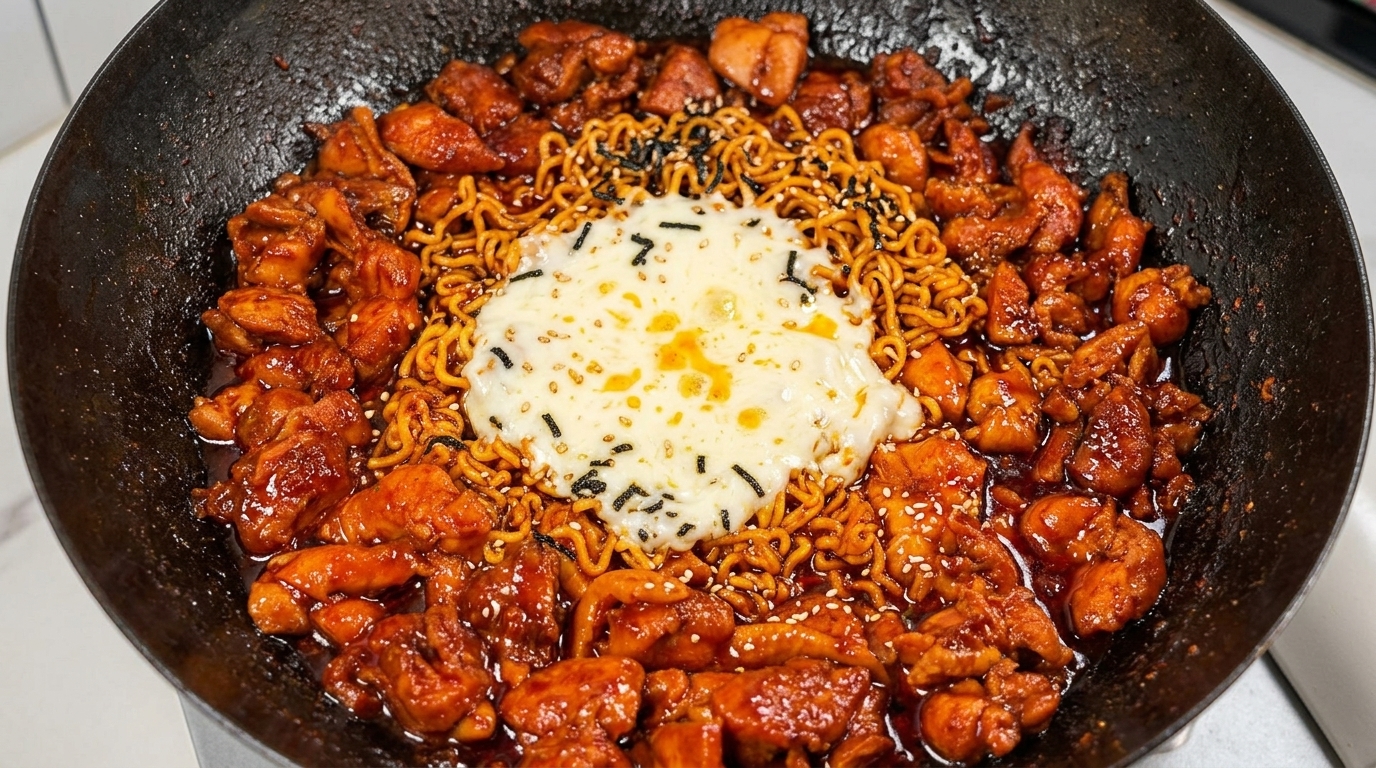
Ingredients
- 300 g deboned chicken thighs
- 1 red onion
- 3 cloves garlic
- 2 tbsp Gochujang (Korean chili paste)
- 1 tbsp honey
- 1 tbsp sugar
- 1 tbsp fine chili powder
- 3 tbsp light soy sauce
- 2 tbsp oyster sauce
- to taste white pepper powder
- 1 tsp dark soy sauce
- 1 block instant ramen noodles
- 100 g shredded mozzarella cheese
- optional seaweed flakes
- to taste toasted sesame seeds
Instructions
- 1Add aromatics to the chicken
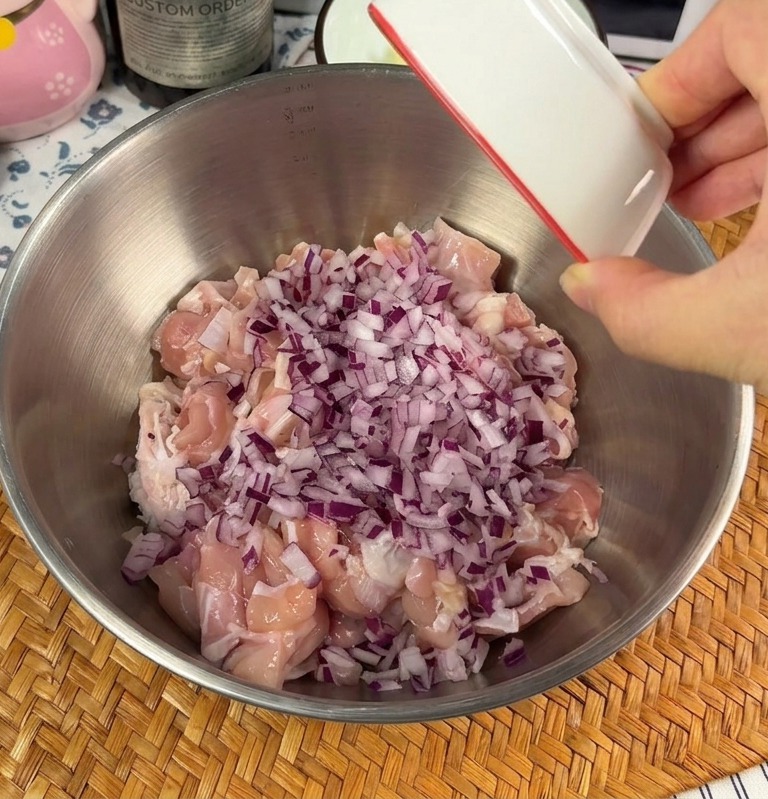
Begin by placing your deboned and bite-sized chicken thigh pieces into a large stainless steel mixing bowl. Pour in the finely chopped red onions and minced garlic. These fresh aromatics are essential for building a fragrant base and adding a subtle crunch to the finished dish.
Tip: Red onions provide a milder sweetness than yellow onions, which balances the heat of the Korean chili paste perfectly without overpowering the chicken. - 2Incorporate Korean chili paste
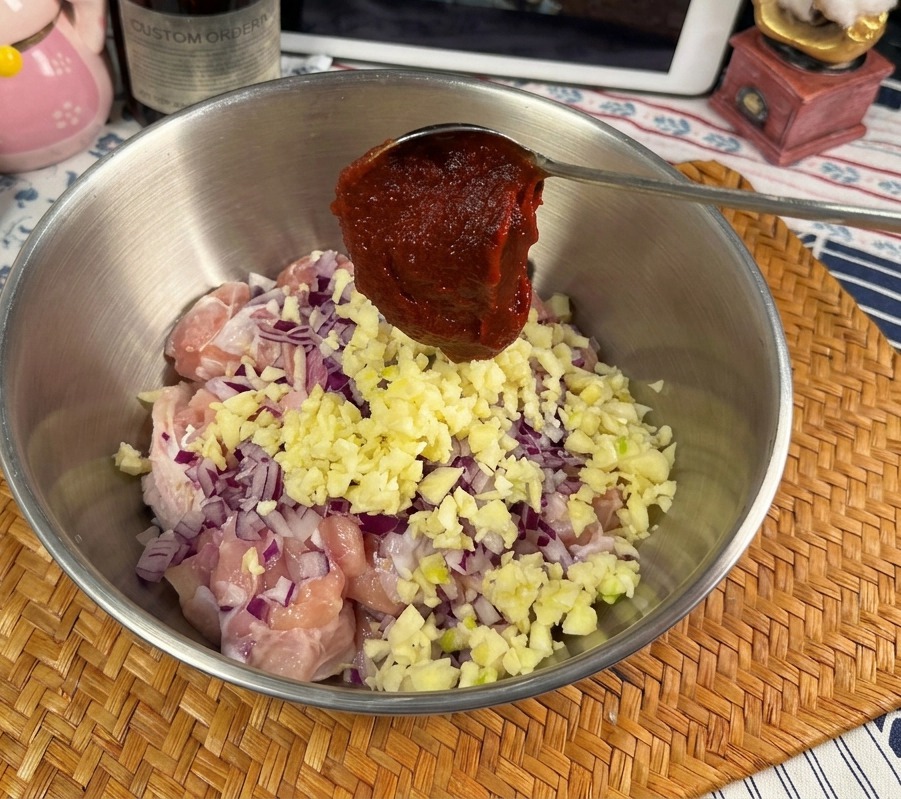
Add two generous spoonfuls of thick Korean chili paste (Gochujang) directly into the bowl with the chicken and aromatics. This fermented paste provides the deep, savory-sweet heat that defines the flavor profile of this spicy noodle dish.
Tip: If you prefer a milder dish, start with one tablespoon of Gochujang and taste the sauce before adding more, as the heat level can vary by brand. - 3Season with white pepper
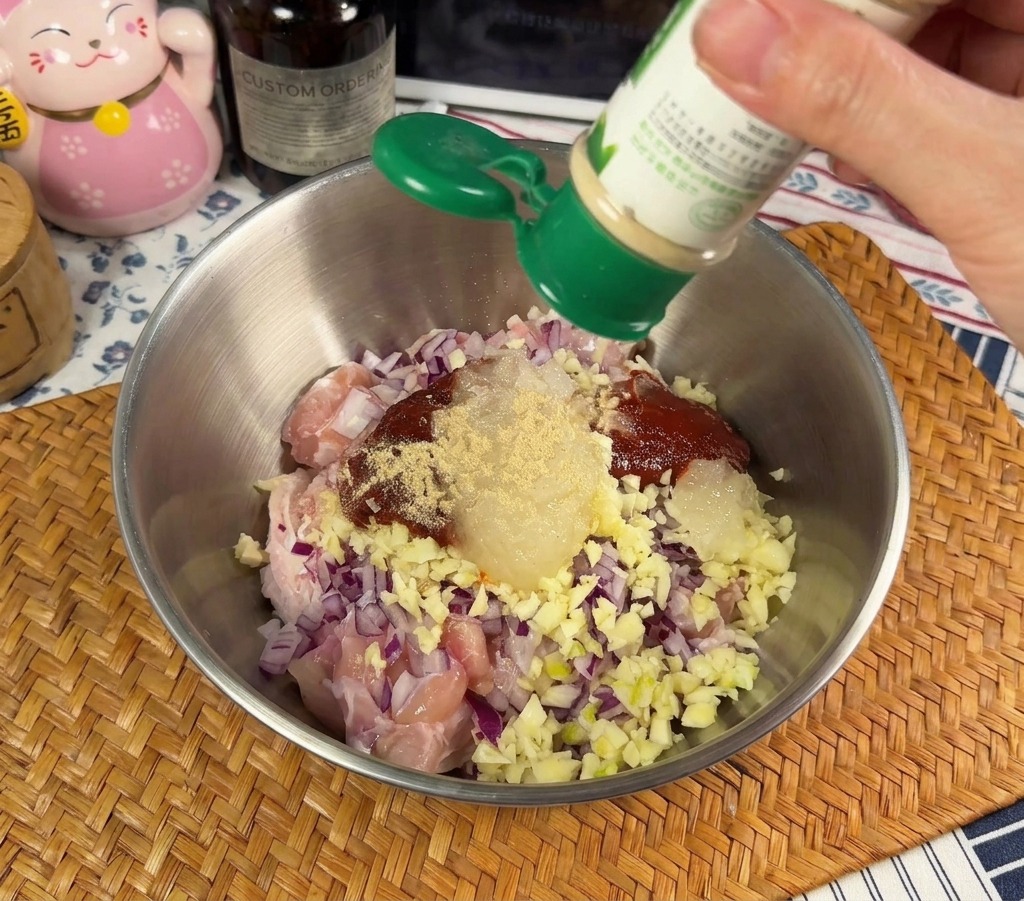
Sprinkle a generous amount of white pepper powder over the chicken and aromatics. White pepper provides a subtle, earthy heat that perfectly complements the spicy and sweet profiles of the Korean marinade.
Tip: White pepper is more pungent than black pepper; a little goes a long way in adding a sharp kick without changing the sauces color. - 4Season with light soy sauce
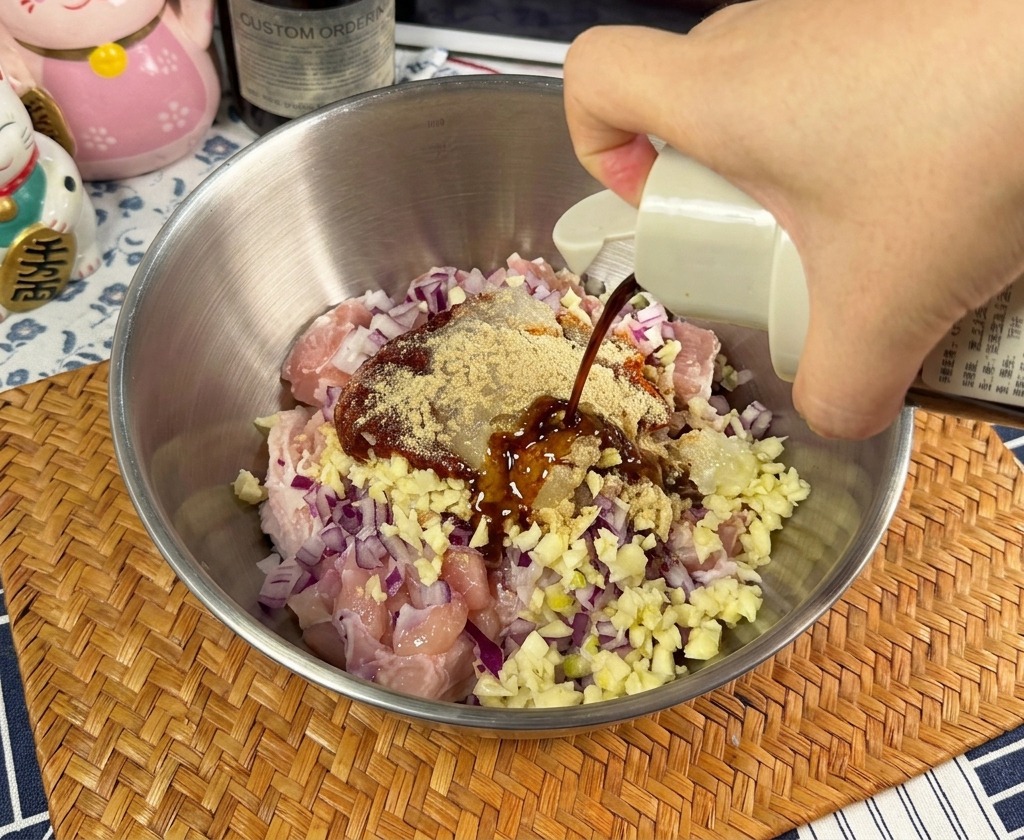
Pour three circles of light soy sauce into the mixing bowl with the chicken and other seasonings. This adds a fundamental savory saltiness and umami depth that balances the sweetness of the honey and the heat from the Korean chili paste, ensuring a well-rounded flavor profile for the marinade.
Tip: Light soy sauce is used here for seasoning; avoid substituting with dark soy sauce at this stage, as dark soy is much more intense and primarily used for adding a deep color later in the cooking process. - 5Add oyster sauce for umami
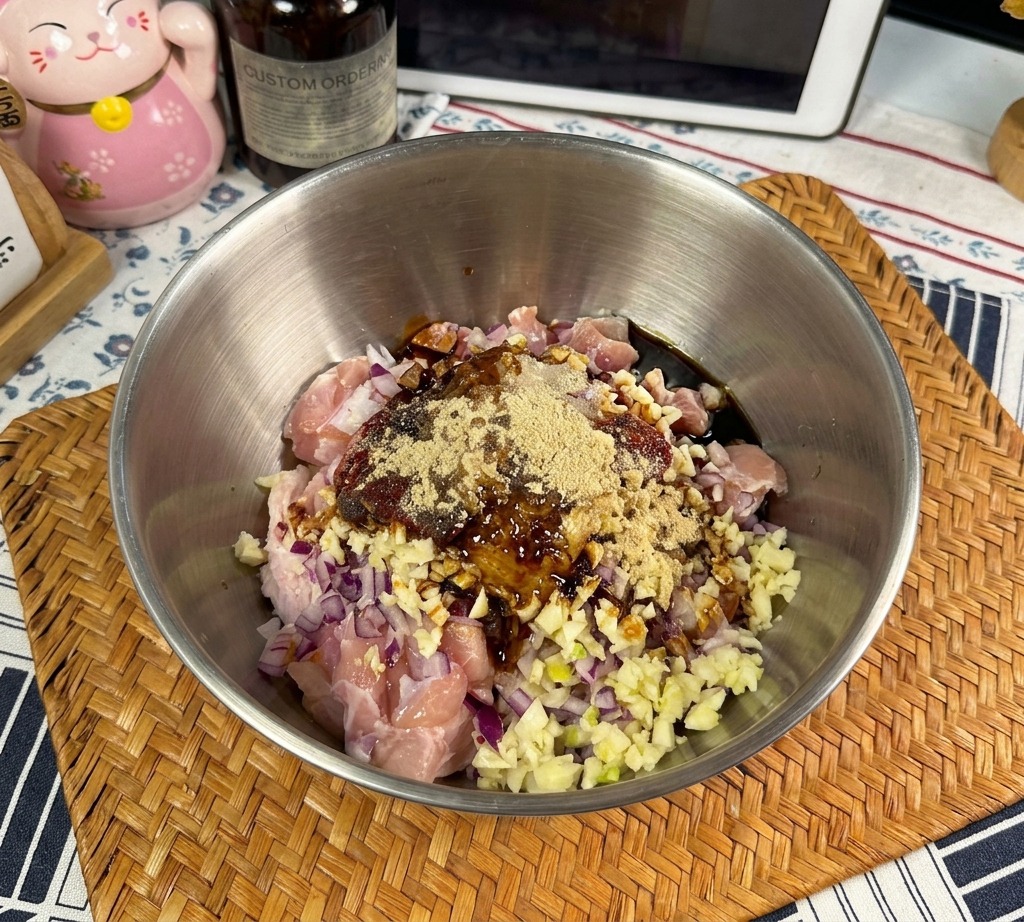
Pour two circles of oyster sauce into the bowl. This thick, savory sauce acts as the umami foundation for the chicken, ensuring the finished noodles have a rich and glossy texture.
Tip: If you dont have oyster sauce, a mushroom-based vegetarian stir-fry sauce is an excellent direct substitute. - 6Sweeten the marinade
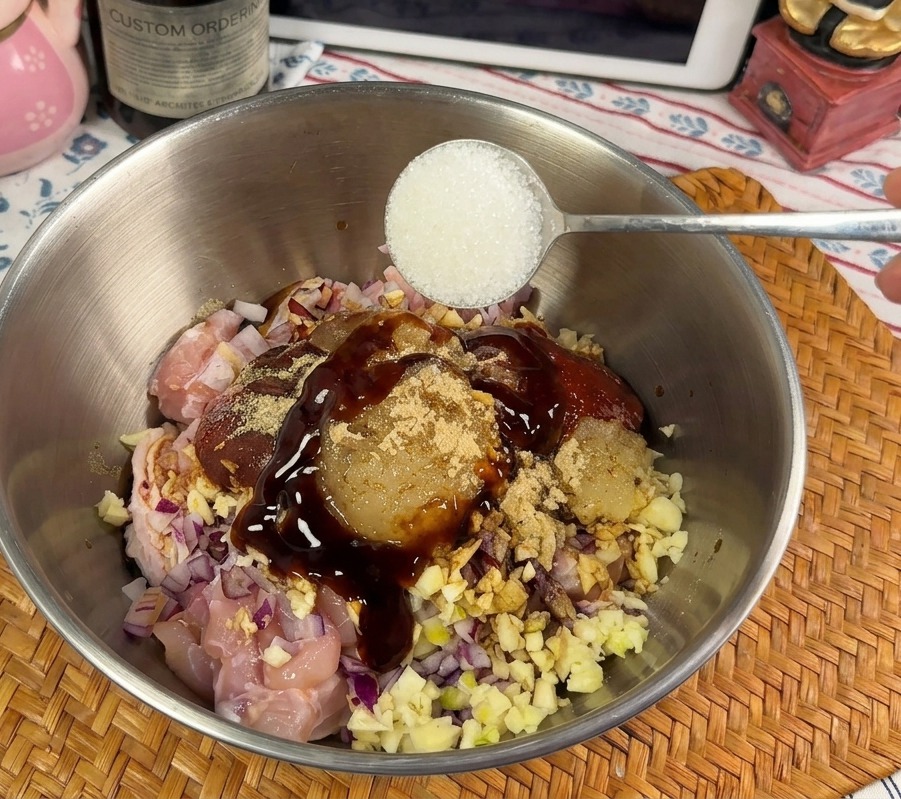
Add one level spoonful of white sugar to the mixture. The sugar is crucial for balancing the saltiness of the soy sauce and the intense spice of the chili powder, resulting in a well-rounded and addictive glaze.
Tip: You can substitute white sugar with honey or corn syrup if you want a glossier finish on your chicken once its cooked. - 7Stir in red chili powder
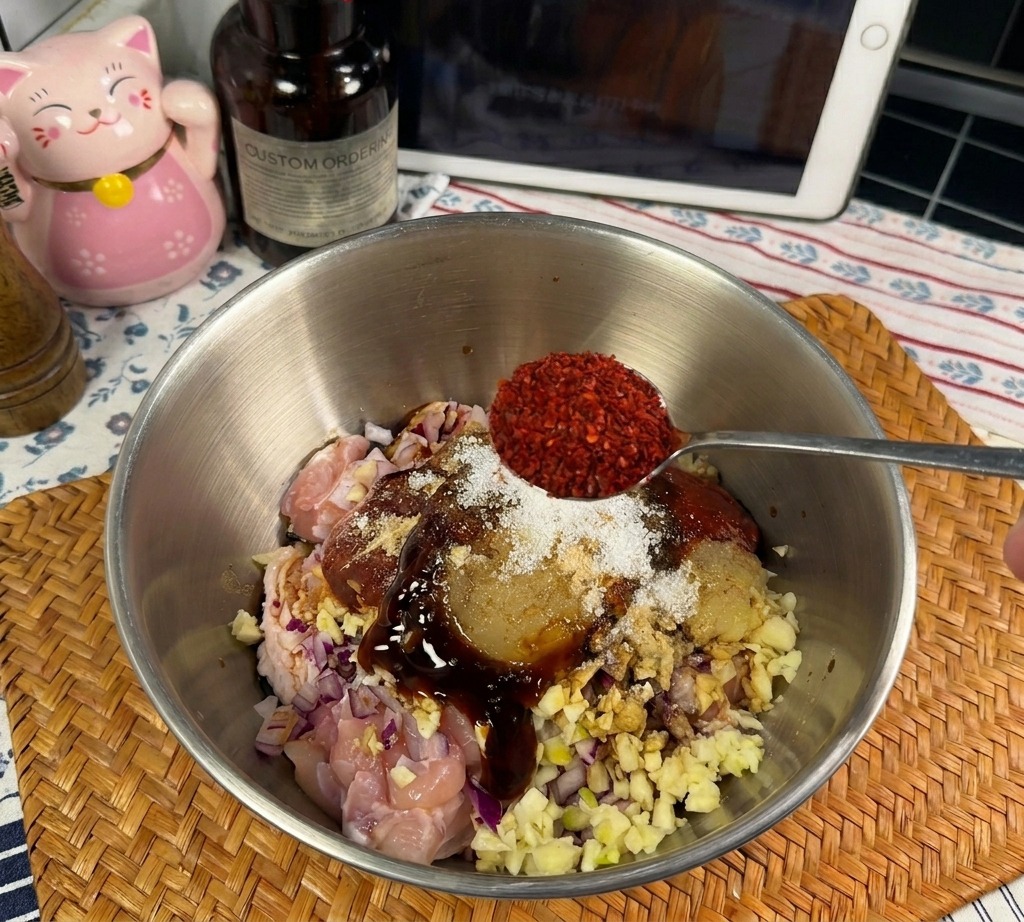
Add one large spoon of fine red chili powder to the marinade. This ingredient is essential for achieving the signature vibrant red color and the addictive heat typical of Korean spicy noodles.
Tip: Ensure you use fine chili powder as it dissolves better into the sauce than coarse flakes, creating a smoother coating on the chicken. - 8Marinate the chicken
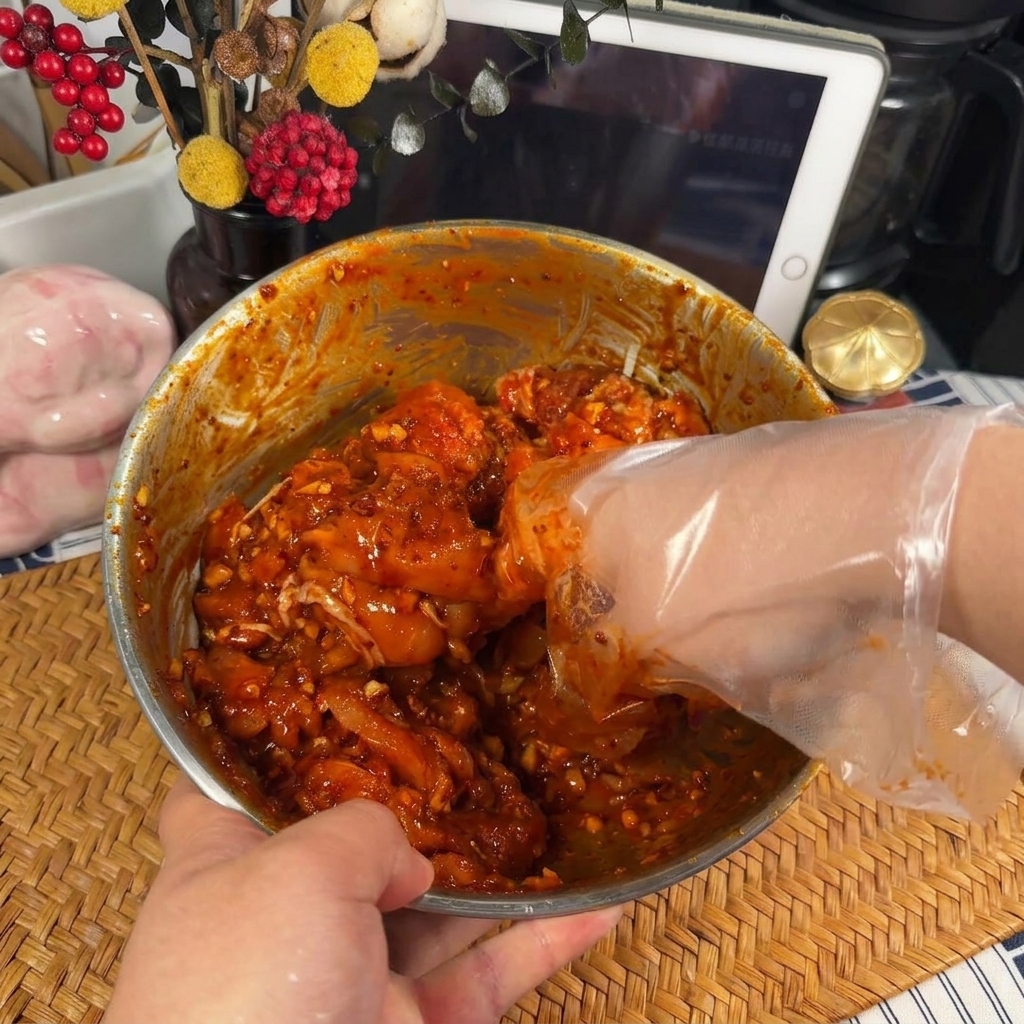
Combine the deboned chicken thigh pieces with red onions, minced garlic, two spoons of Korean chili paste, white pepper powder, light soy sauce, oyster sauce, sugar, and chili powder. Use a gloved hand to mix everything thoroughly so the chicken is evenly coated with the sweet and spicy seasonings. Let it marinate for at least 15 minutes to allow the flavors to penetrate the meat.
Tip: Massaging the marinade into the meat by hand helps break down the fibers and ensures a more intense flavor compared to just stirring with a spoon. - 9Sear the marinated chicken
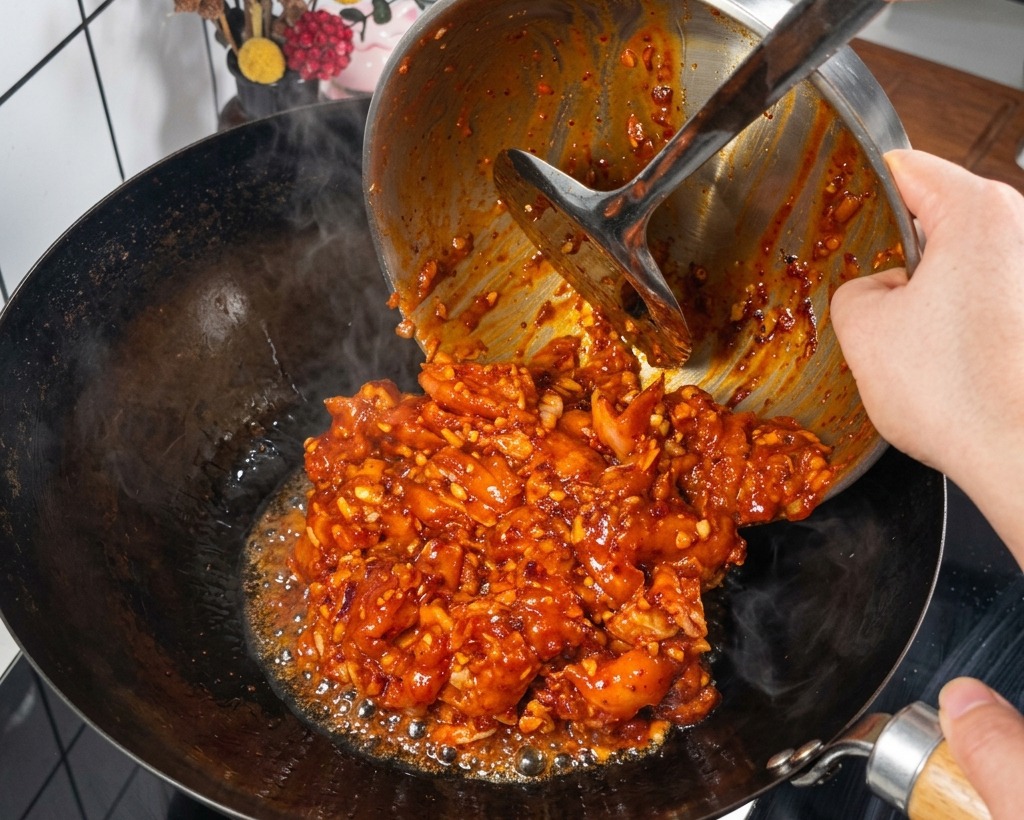
Heat a thin layer of oil in a nonstick wok or a heavy bottomed pan over medium high heat. Once the oil is shimmering, carefully pour in the marinated chicken pieces. Spread them out in a single layer to ensure even contact with the heat.
Tip: Do not wash the marinade bowl yet! You will add a little water to it later to catch every bit of sauce and pour it back into the pan during the simmering stage. - 10Stir-fry until firm
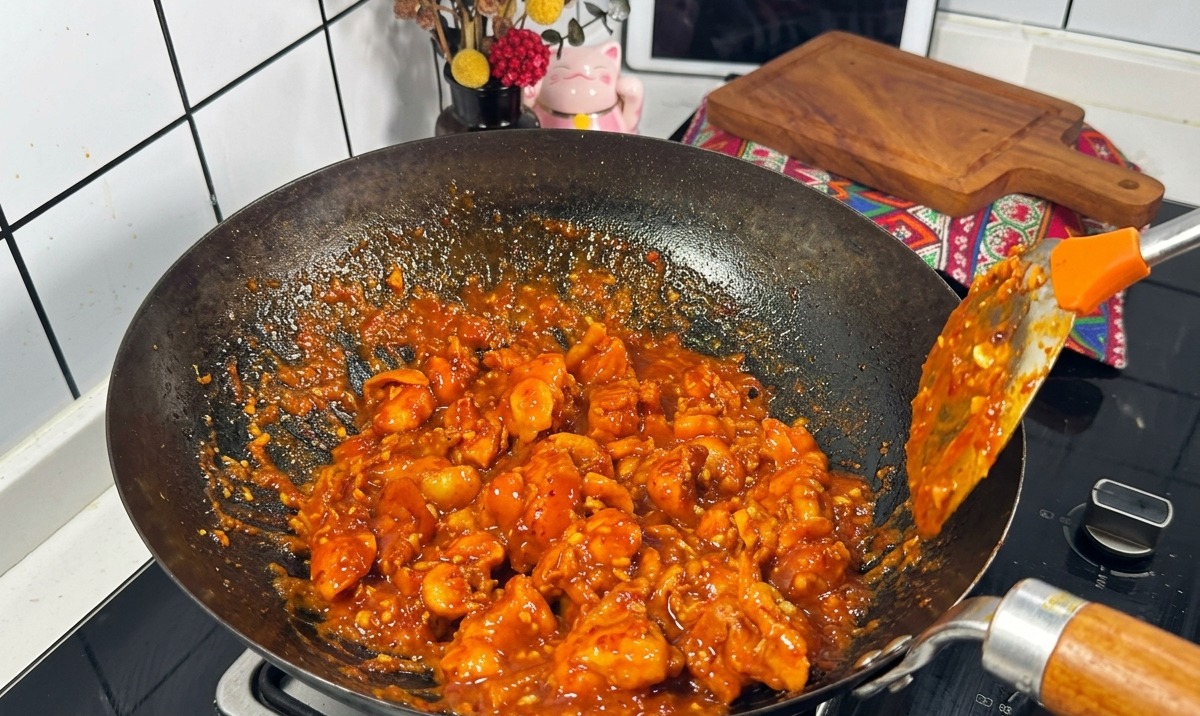
Stir-fry the chicken pieces continuously using a spatula. Cook until the exterior of the meat turns opaque and begins to firm up. The high heat will help the sugars in the marinade caramelize slightly on the surface of the chicken.
Tip: At this point, if the color looks too pale, you can add a small splash of dark soy sauce to achieve a deeper, more appetizing mahogany hue. - 11Deglaze with marinade water
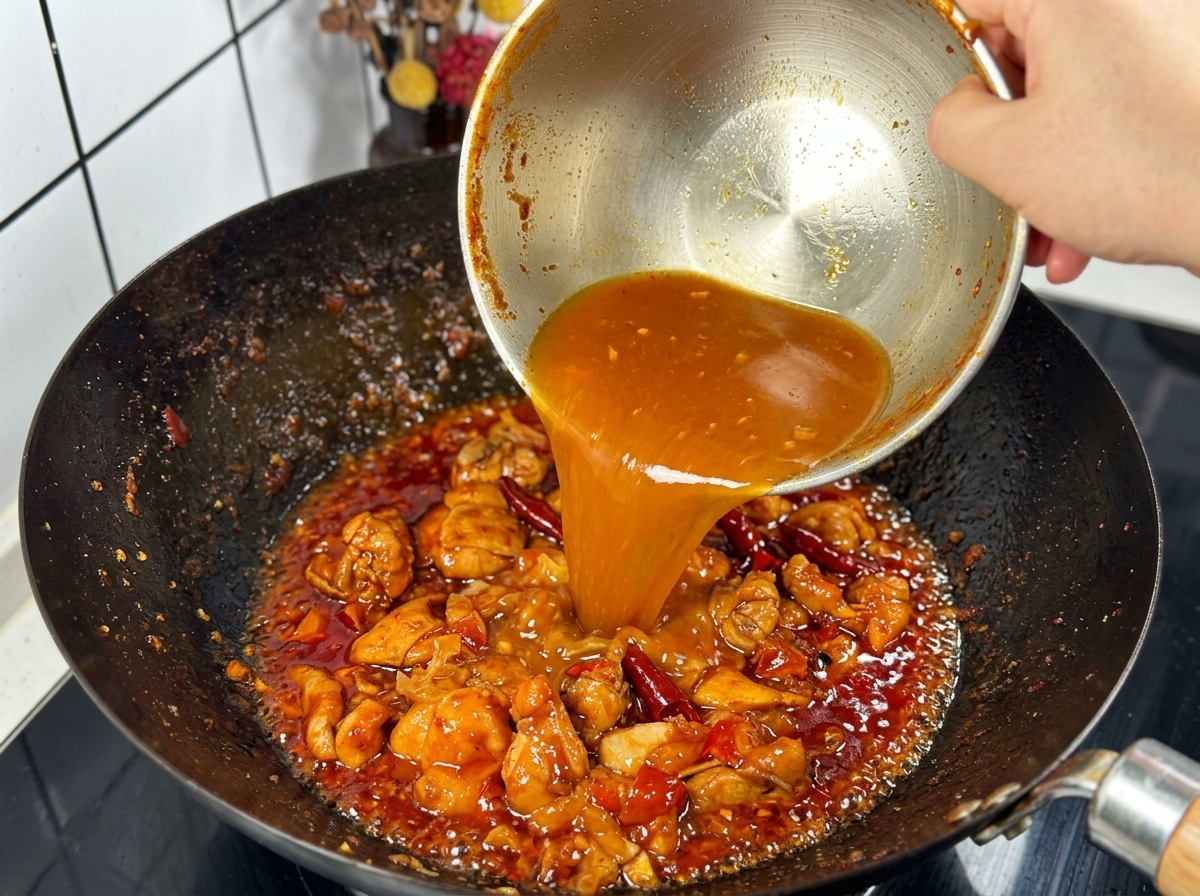
Once the chicken has been stir-fried until it changes color and firms up, do not throw away the leftover marinade from the bowl. Add a small amount of water to the bowl to pick up the remaining sauce, then pour this mixture into the wok with the chicken and dried red chilies. This creates the flavorful liquid base for simmering.
Tip: Using the residual marinade ensures no seasonings are wasted and helps maintain the consistency of the spicy sauce. - 12Deepen the sauce color
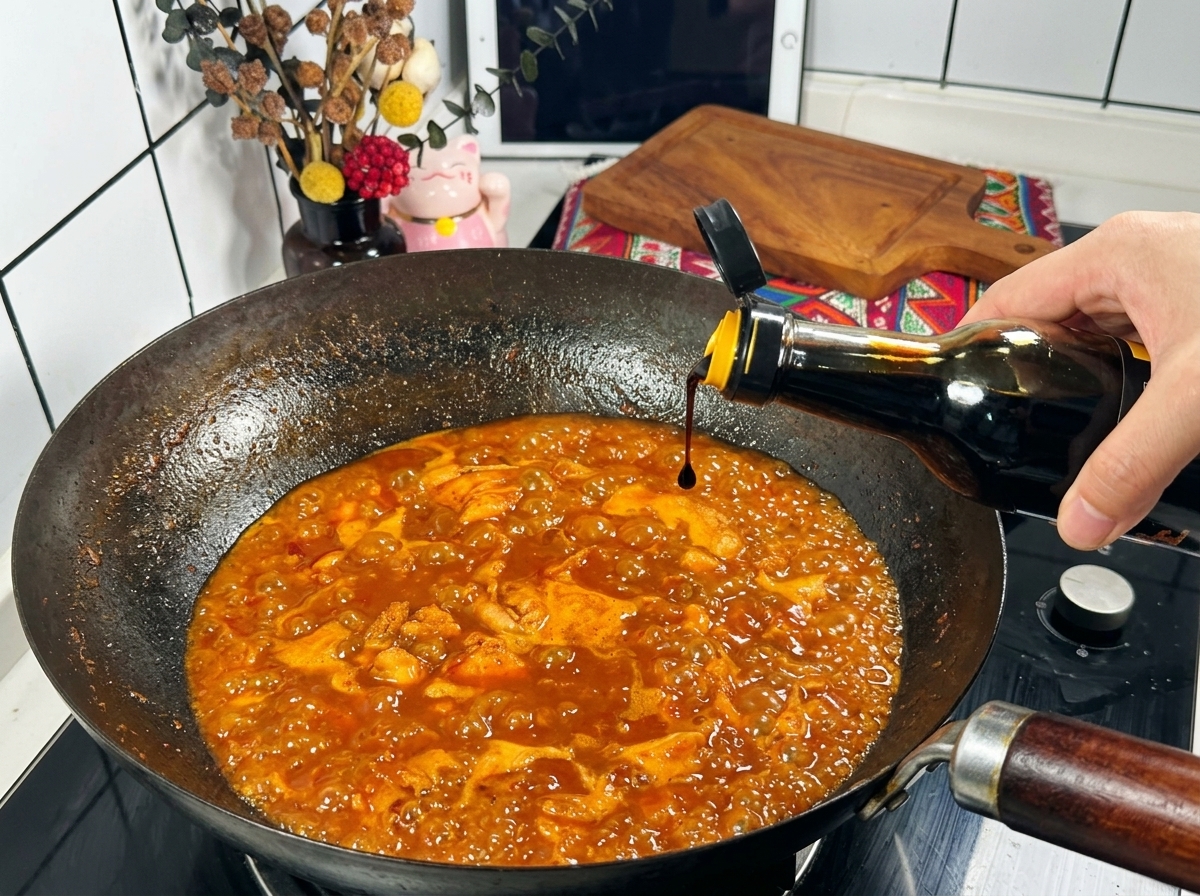
While the chicken and sauce are simmering on medium heat, check the color of the dish. If the sauce looks a bit light, add a few drops of dark soy sauce. This will provide a richer, more appetizing mahogany hue to the spicy chicken mixture without making it too salty.
Tip: Dark soy sauce is very concentrated; add it just a few drops at a time until the sauce reaches your desired visual depth. - 13Add the instant noodles
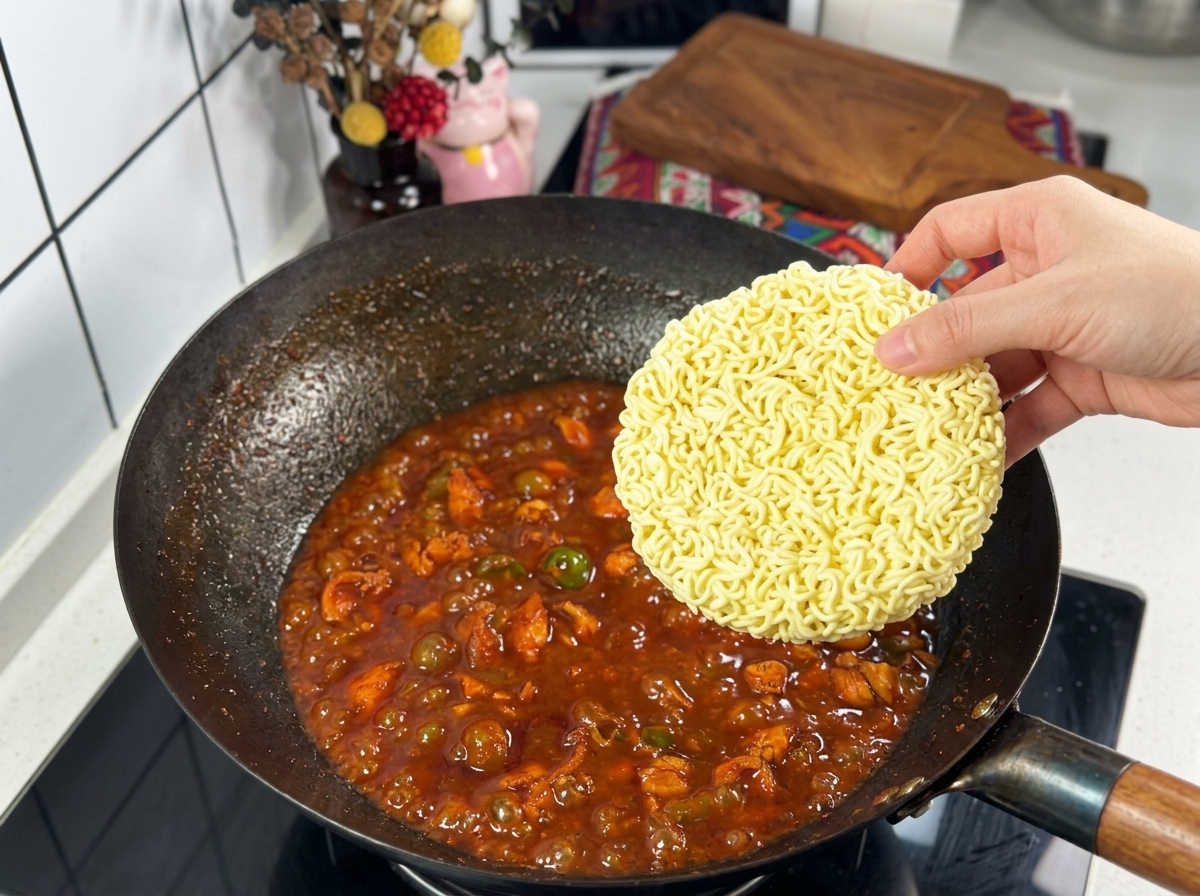
After simmering the chicken for about five minutes, place a dry block of instant ramen noodles directly into the center of the bubbling spicy sauce. The noodles will soak up the thick, savory juices as they begin to soften.
Tip: Ensure there is enough liquid in the pan for the noodles to partially submerge so they cook evenly. - 14Separate and cook the noodles
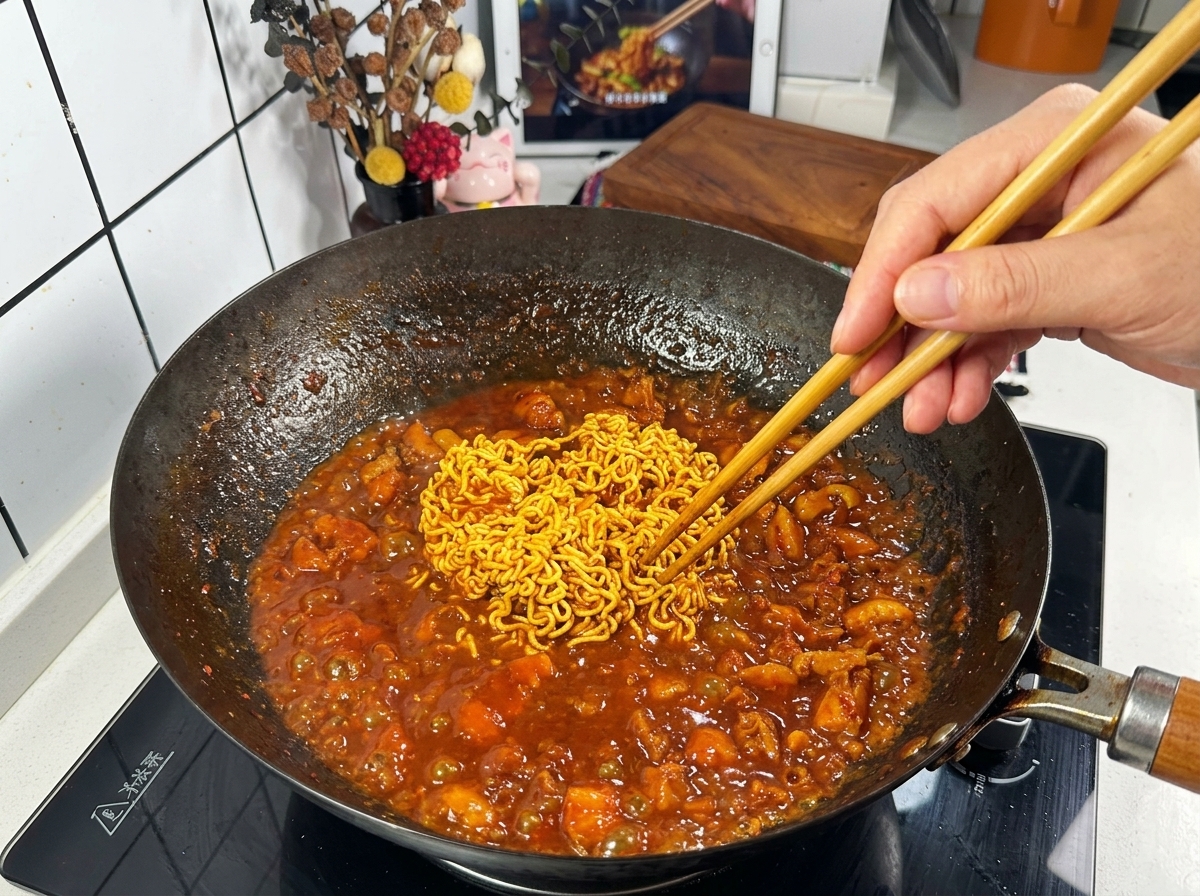
As the ramen noodles absorb the sauce and soften, use a pair of chopsticks to gently pull the strands apart. Continue cooking until the noodles are fully separated but still firm. Avoid overcooking them at this stage, as they will continue to soften during the final simmering step.
Tip: Keeping the noodles slightly firm (al dente) ensures they maintain a pleasant chewy texture once the cheese is melted on top.