Daikon Radish
Beef Brisket Soup
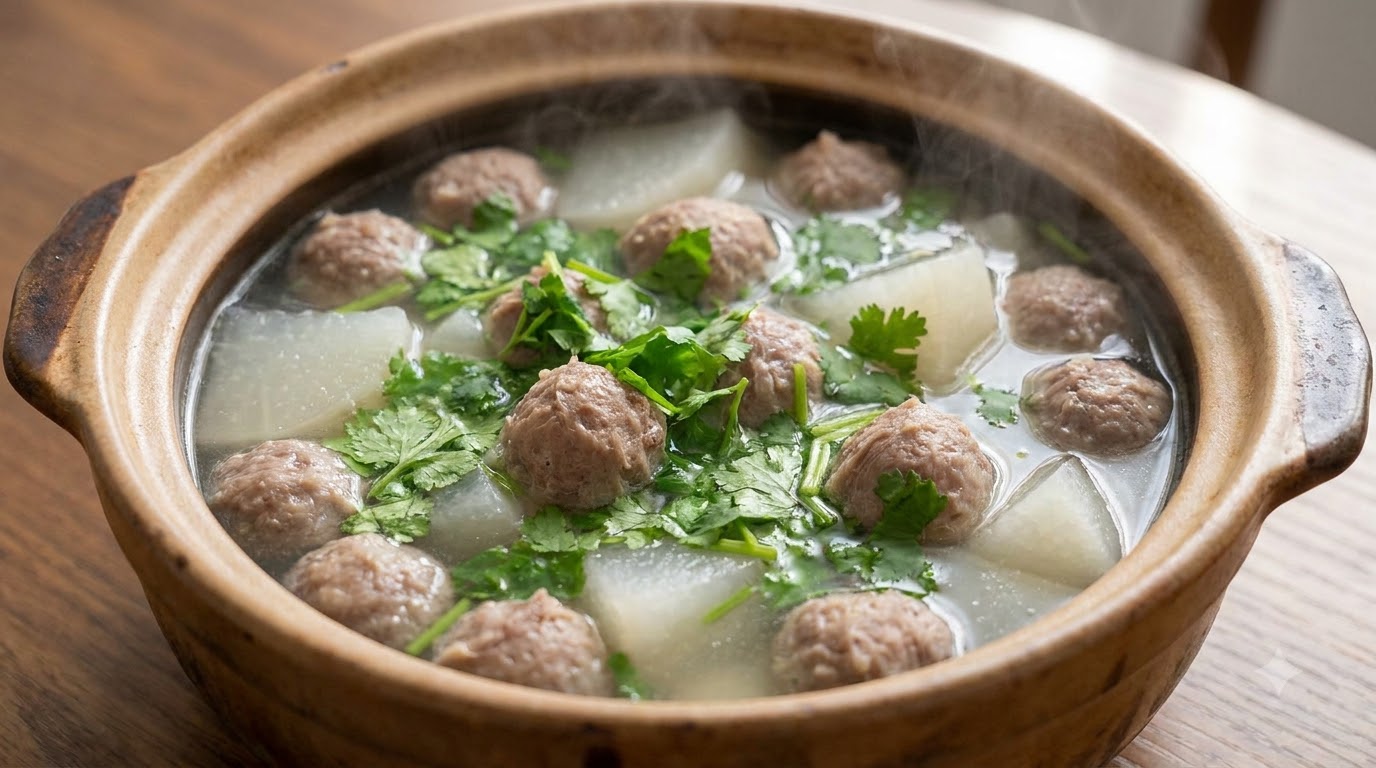
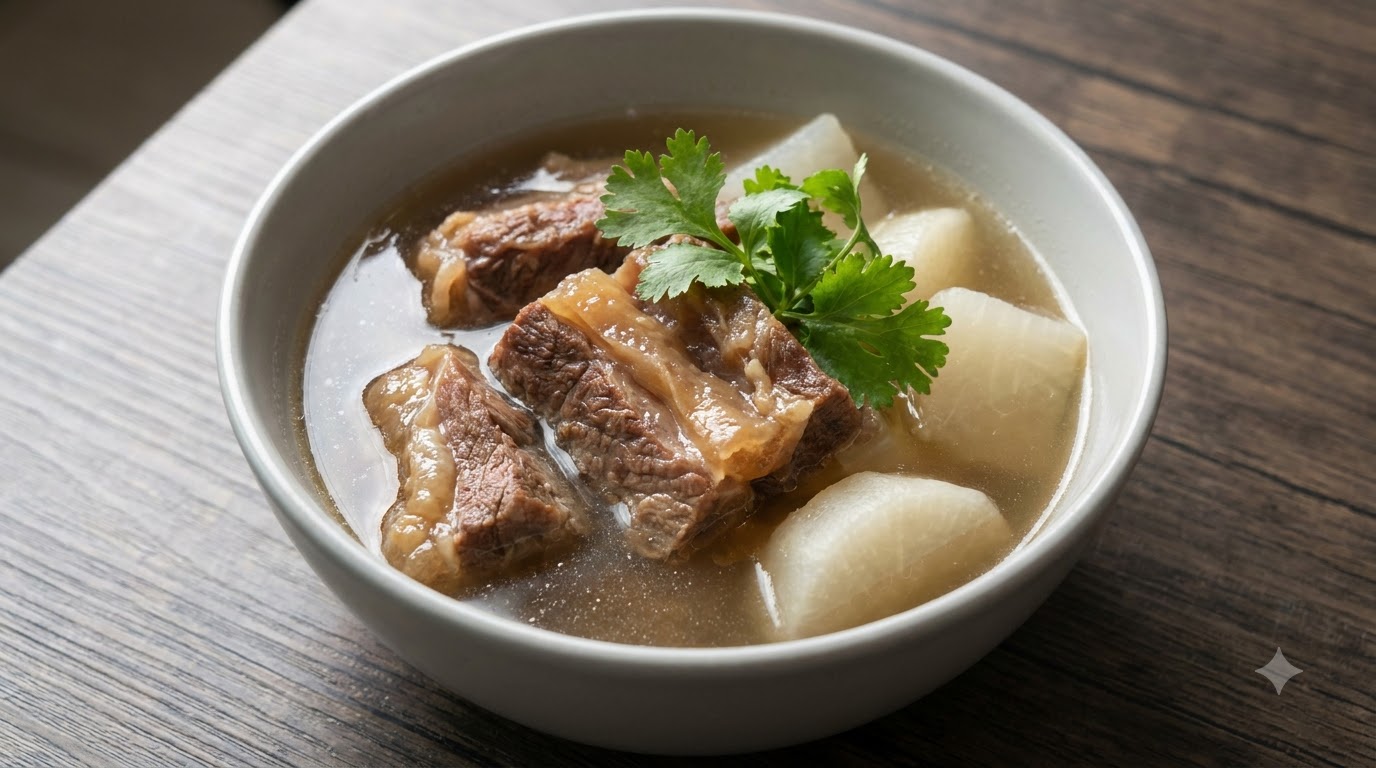
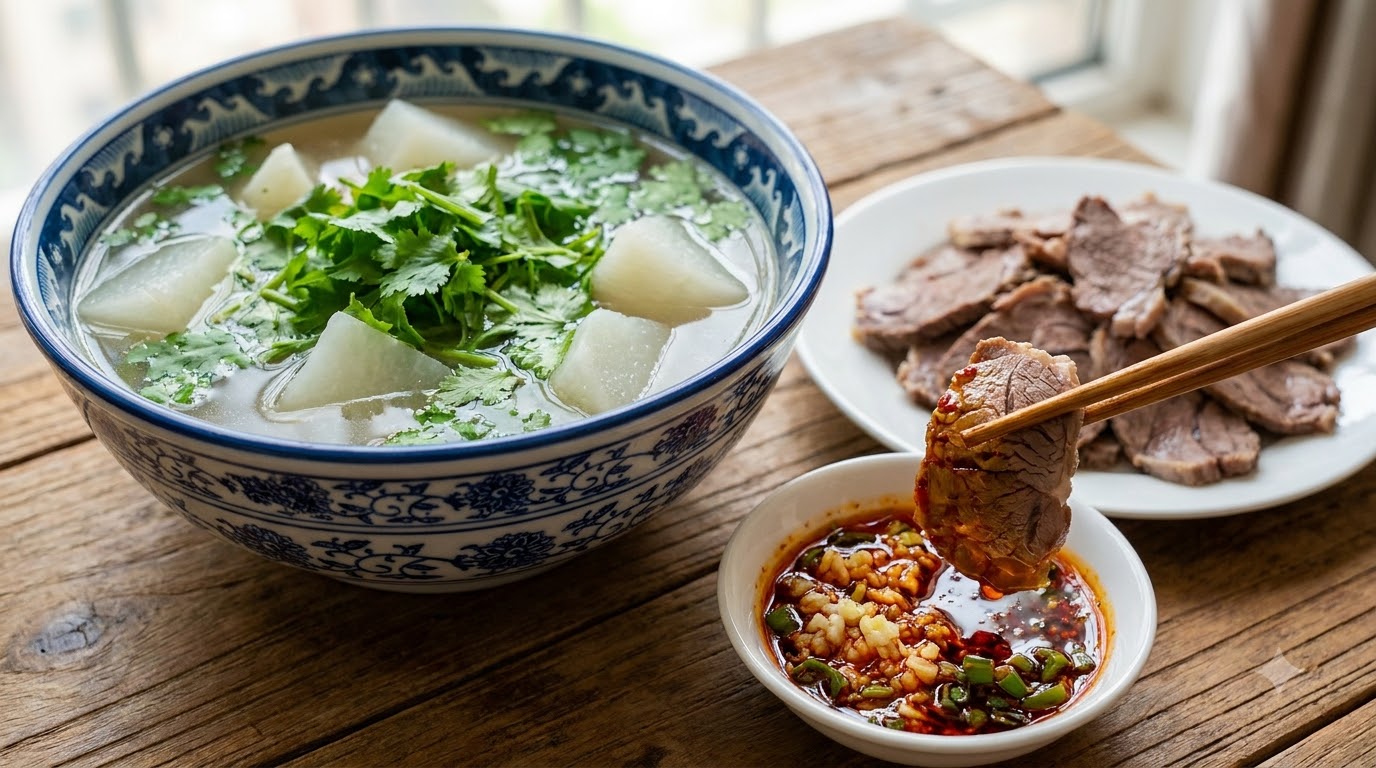
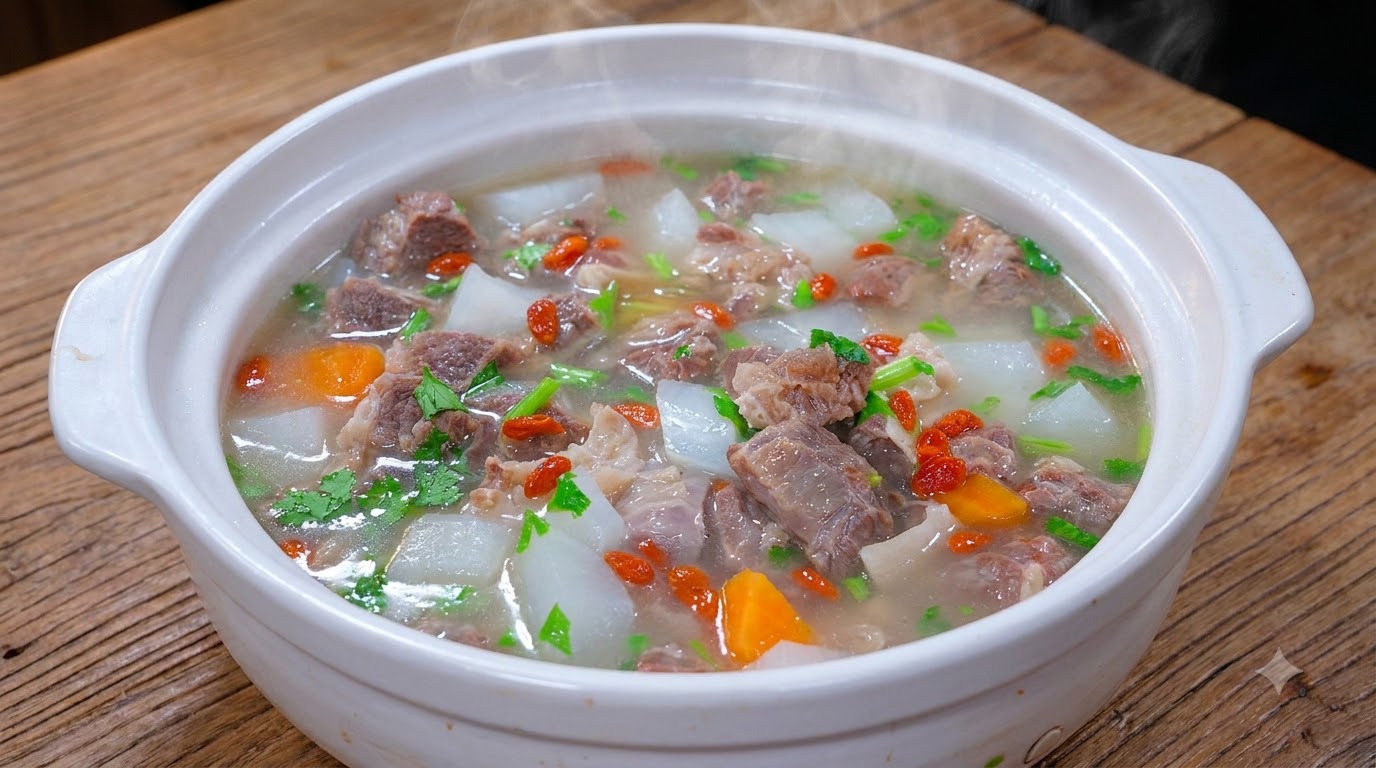
A nourishing and fragrant daikon radish and beef brisket soup featuring tender beef chunks, sweet winter radish, carrots, and a custom blend of warming spices.
Stewing beef requires proper technique to ensure the meat turns out tender rather than tough, while keeping the broth clean and aromatic. By combining a preliminary vinegar and salt soak with precise simmering alongside white radish and carrots, this traditional soup achieves a perfect balance of savory depth and natural sweetness.
Ingredients
- 1 kg beef brisket
- 1 daikon radish
- 1 carrot
- 1 handful salt
- 2 tbsp white vinegar
- 2 tbsp high-proof white wine
- 3 stalks scallions
- 3 slices ginger
- 1 small packet stewing spice blend
- to taste salt and pepper
- optional chopped celery
- optional goji berries
Instructions
- 1Cut the beef
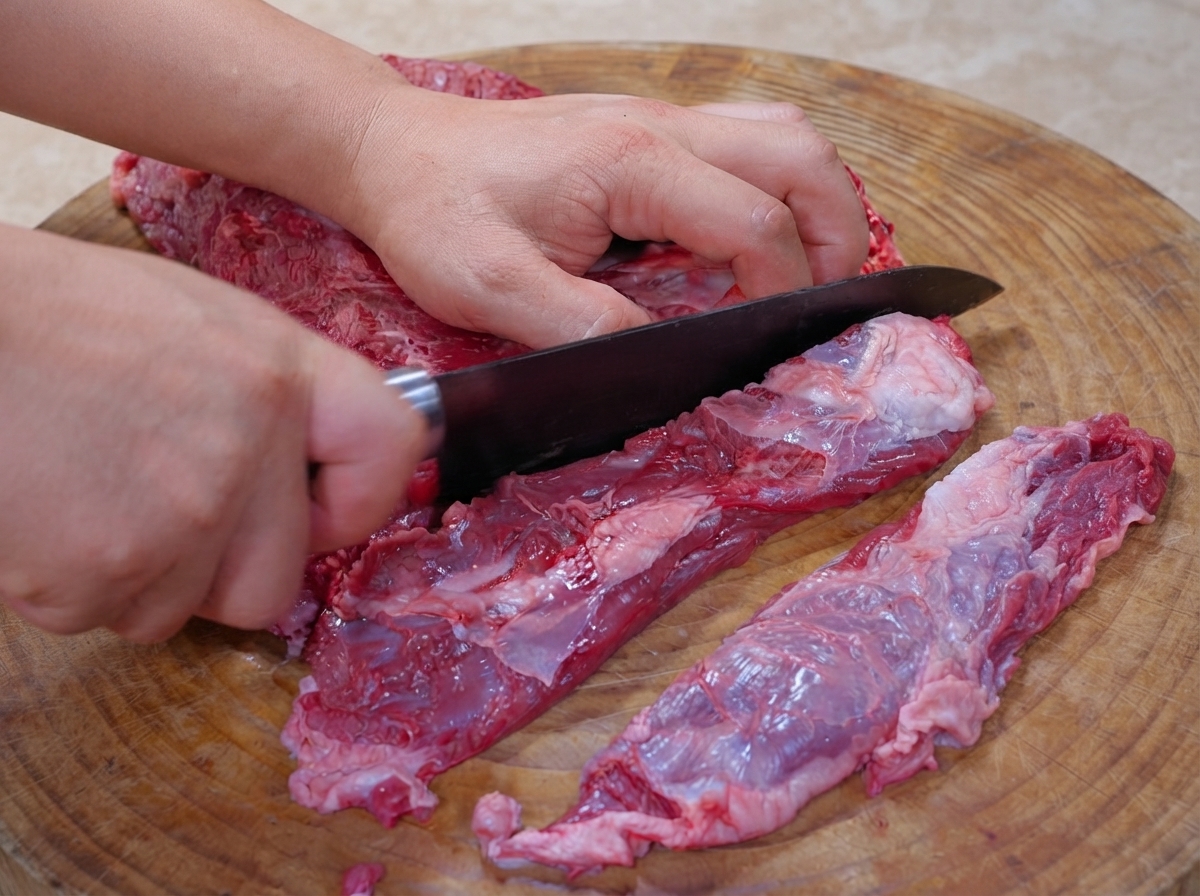
Begin by cutting the beef into long strips and then into uniform small chunks. Placing them on a wooden cutting board, ensure the pieces are relatively the same size so they cook evenly.
Tip: Uniform chunks are important so that the beef cooks at the same rate, yielding a consistently tender texture. - 2Salt and vinegar preparation
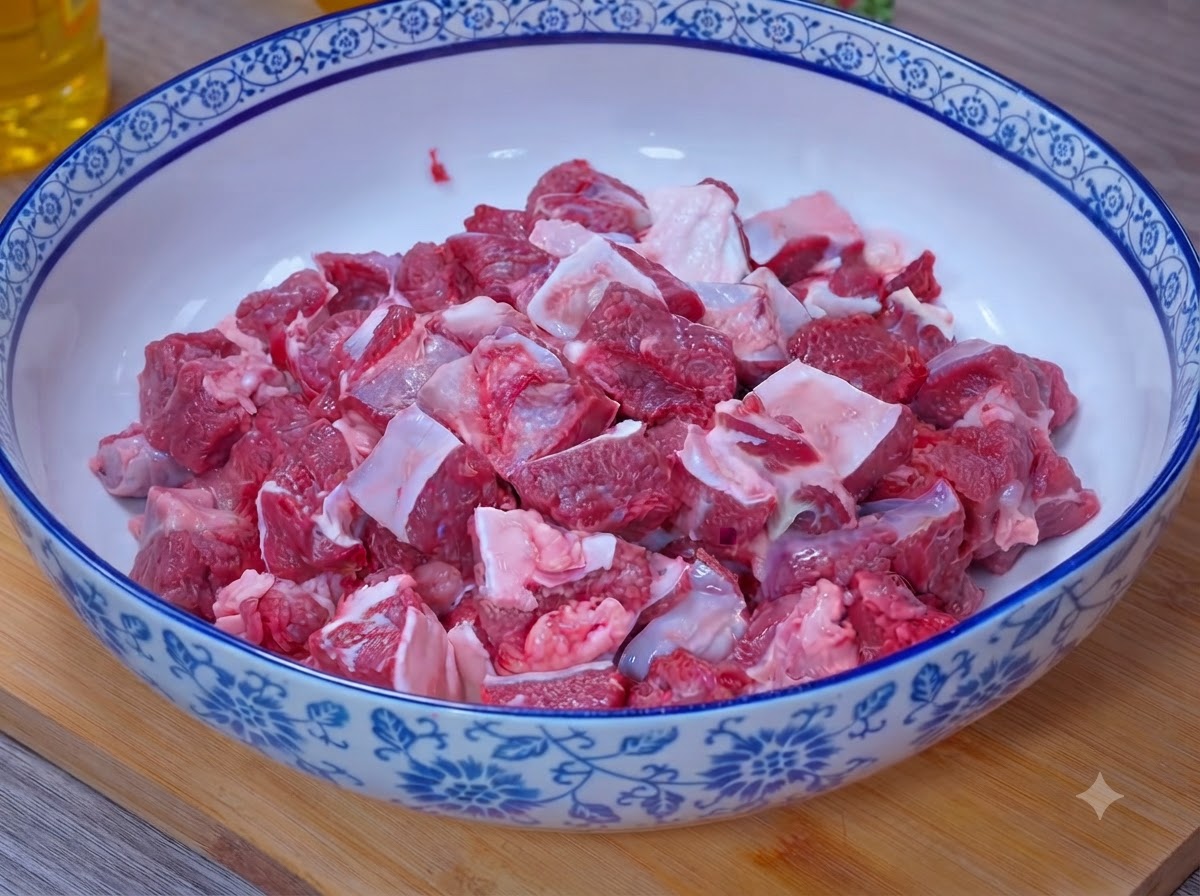
Cut the beef into strips and uniform chunks, then place them into a large ceramic bowl. Sprinkle a handful of salt over the beef to begin the tenderizing process.
Tip: Ensuring uniform chunk size helps the beef cook evenly during the stewing process. - 3Soaking with vinegar
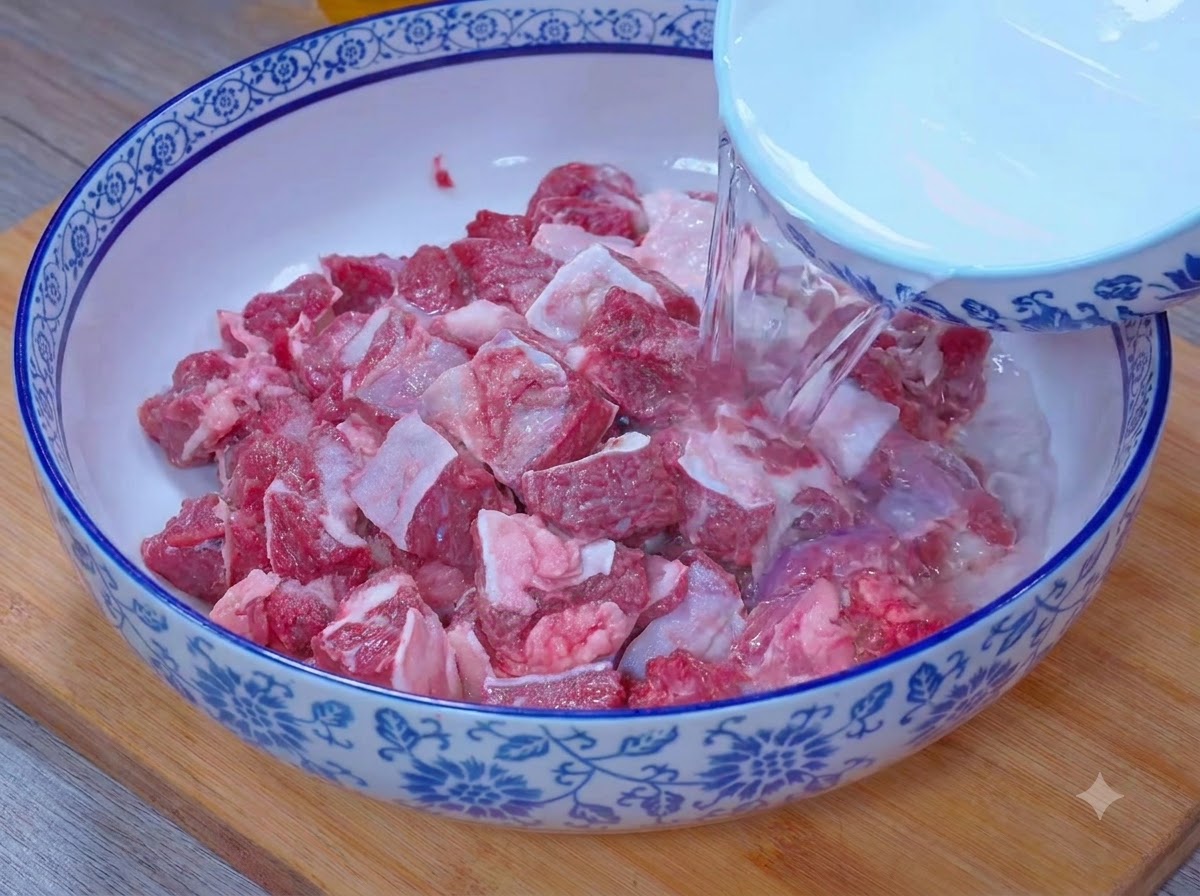
Add a little white vinegar and pour in plenty of water to completely submerge the beef chunks. The light salt water and white vinegar quickly penetrate the meat to draw out blood and soften its texture.
Tip: Do not skip the vinegar, as it helps efficiently draw out residual blood and tenderize the meat fibers. - 4Blanch the beef
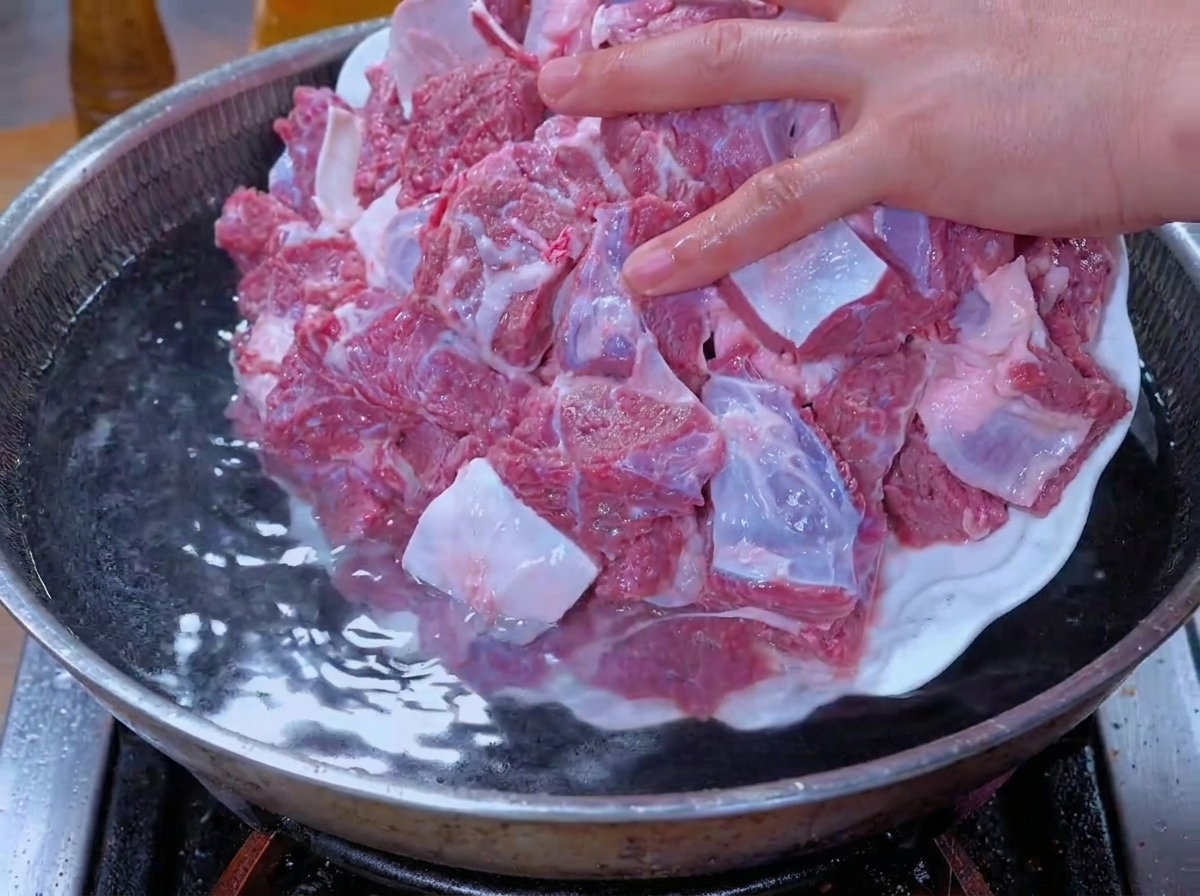
Transfer the soaked beef chunks into a pot of water to begin the blanching process. Add a little high-proof white wine to deodorize and enhance the aroma.
Tip: High-proof white wine works best for eliminating gamey odors during blanching. - 5Skim impurities
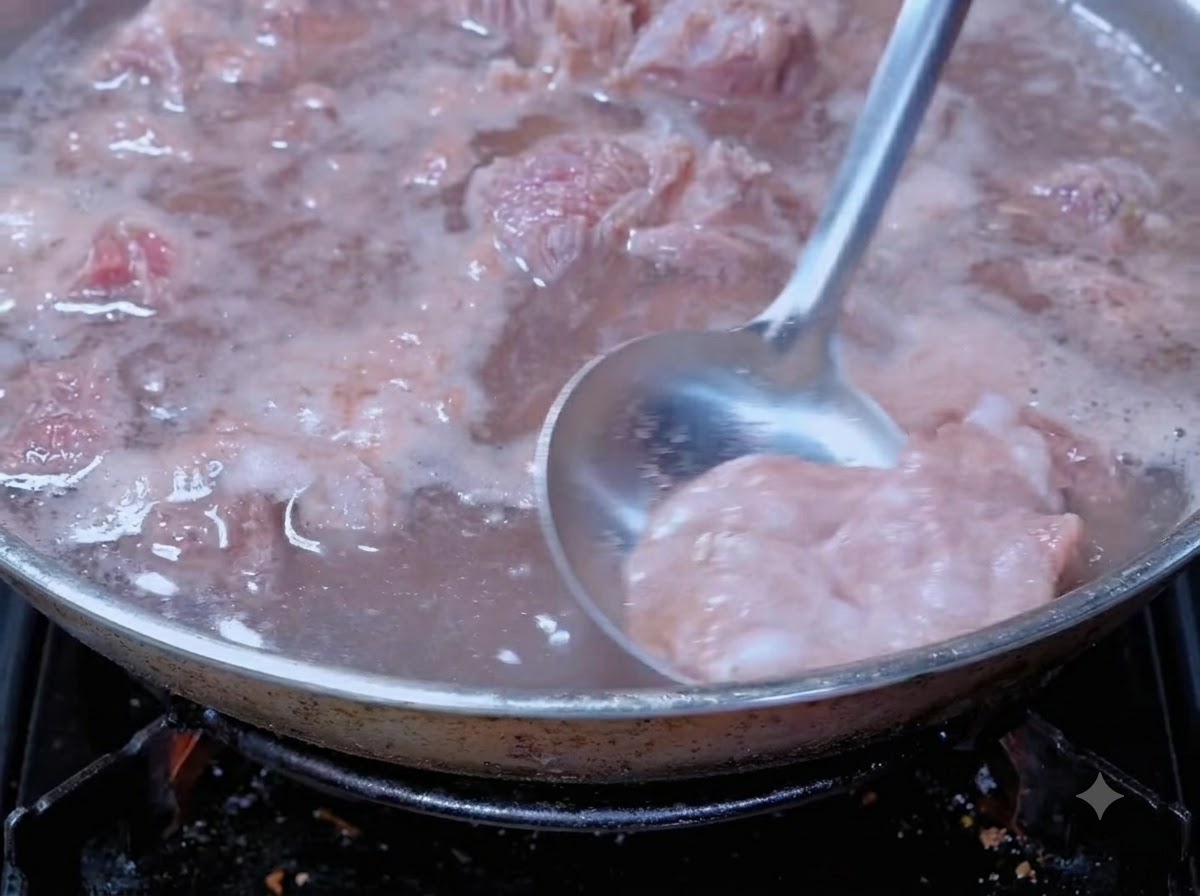
As the water boils, use a ladle to carefully skim off all the blood foam rising to the surface. Once cleaned, fish out the beef pieces.
Tip: Skimming thoroughly ensures a clear, clean soup broth without unwanted impurities. - 6Wash with warm water
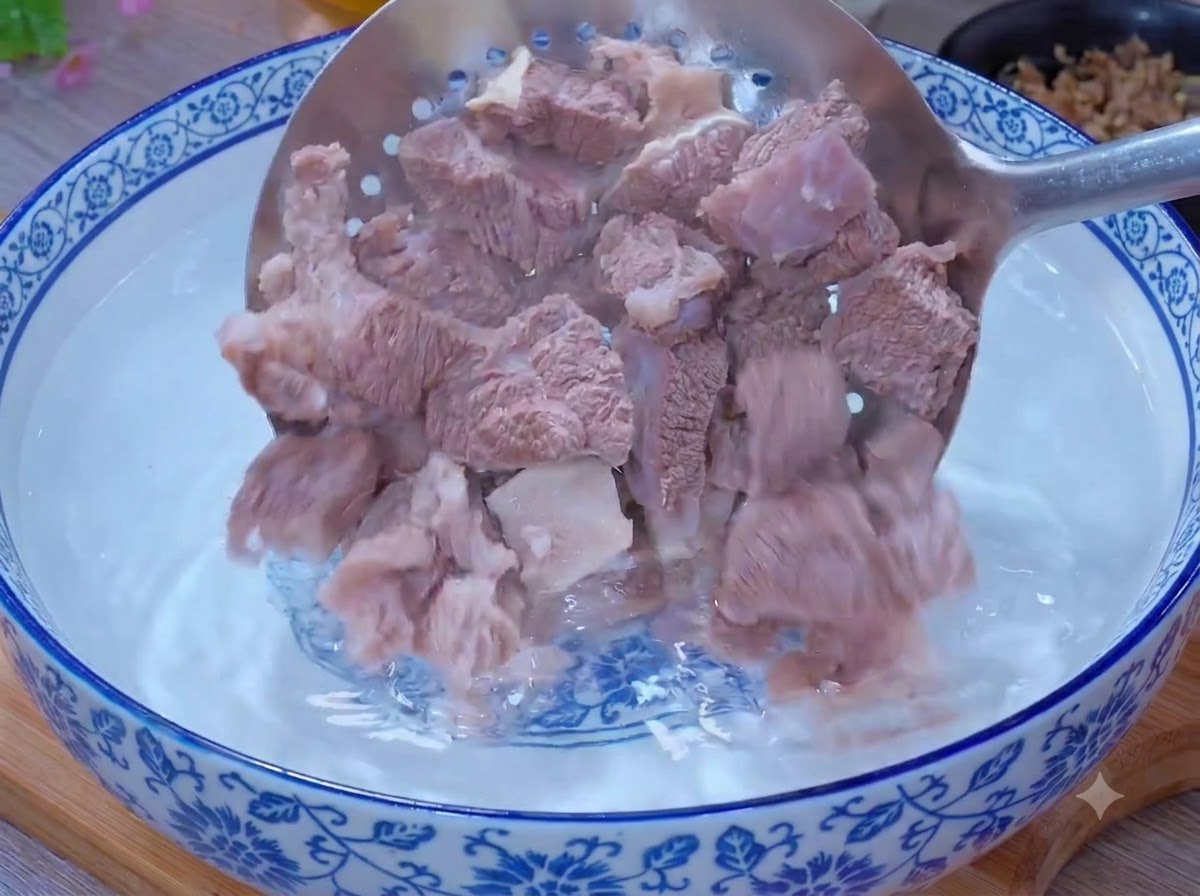
Wash the blanched beef pieces in a bowl of warm water to clean off any remaining residue. Always use warm water rather than cold water to prevent the meat from becoming dry and hard.
Tip: Thermal shock from cold water will toughen the beef texture, so warm water is essential. - 7Assemble in clay pot
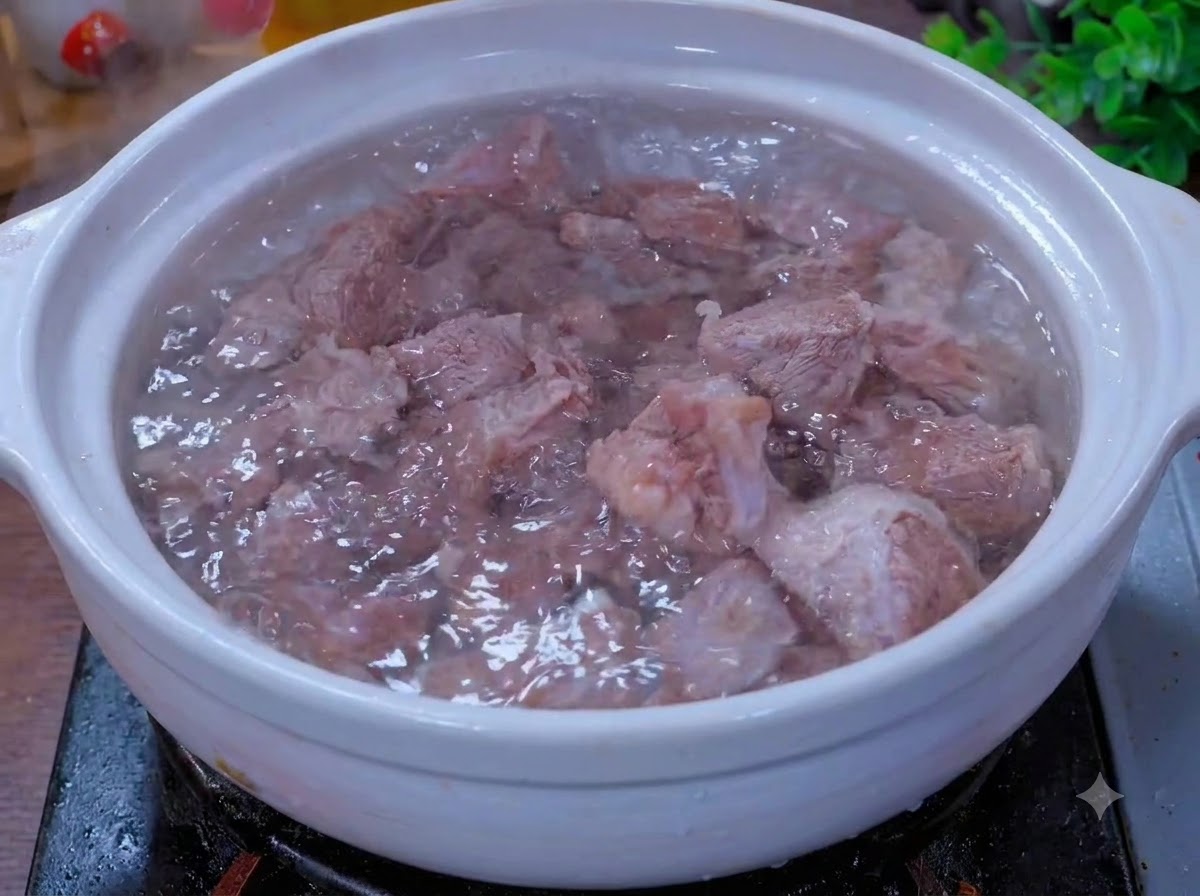
Transfer the washed beef pieces into a white clay pot along with scallions and ginger. Avoid adding cooking wine or garlic at this stage.
Tip: Cooking wine can ferment and cause sourness, while garlic imparts an unwanted raw flavor.