Premium Tekkadon (Tuna Rice Bowl)
Egg Yolk
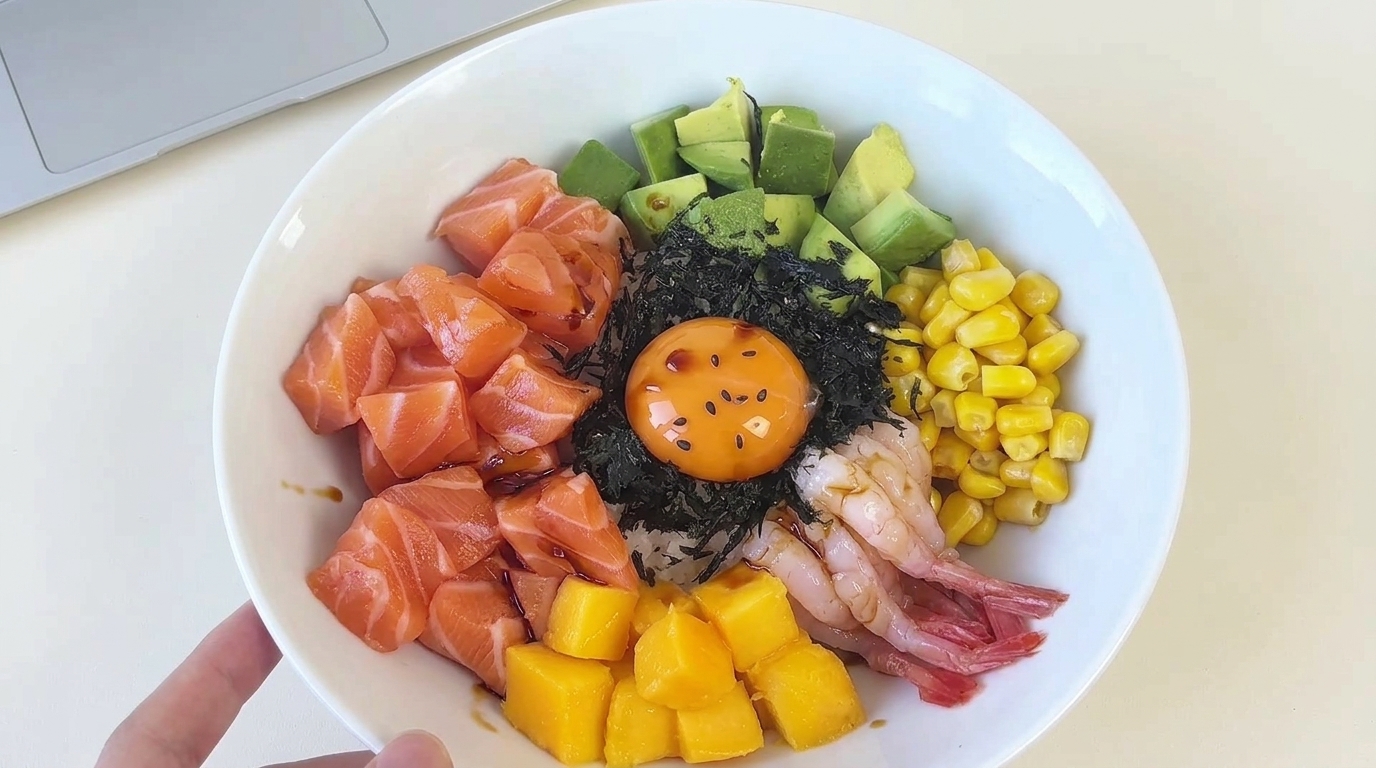
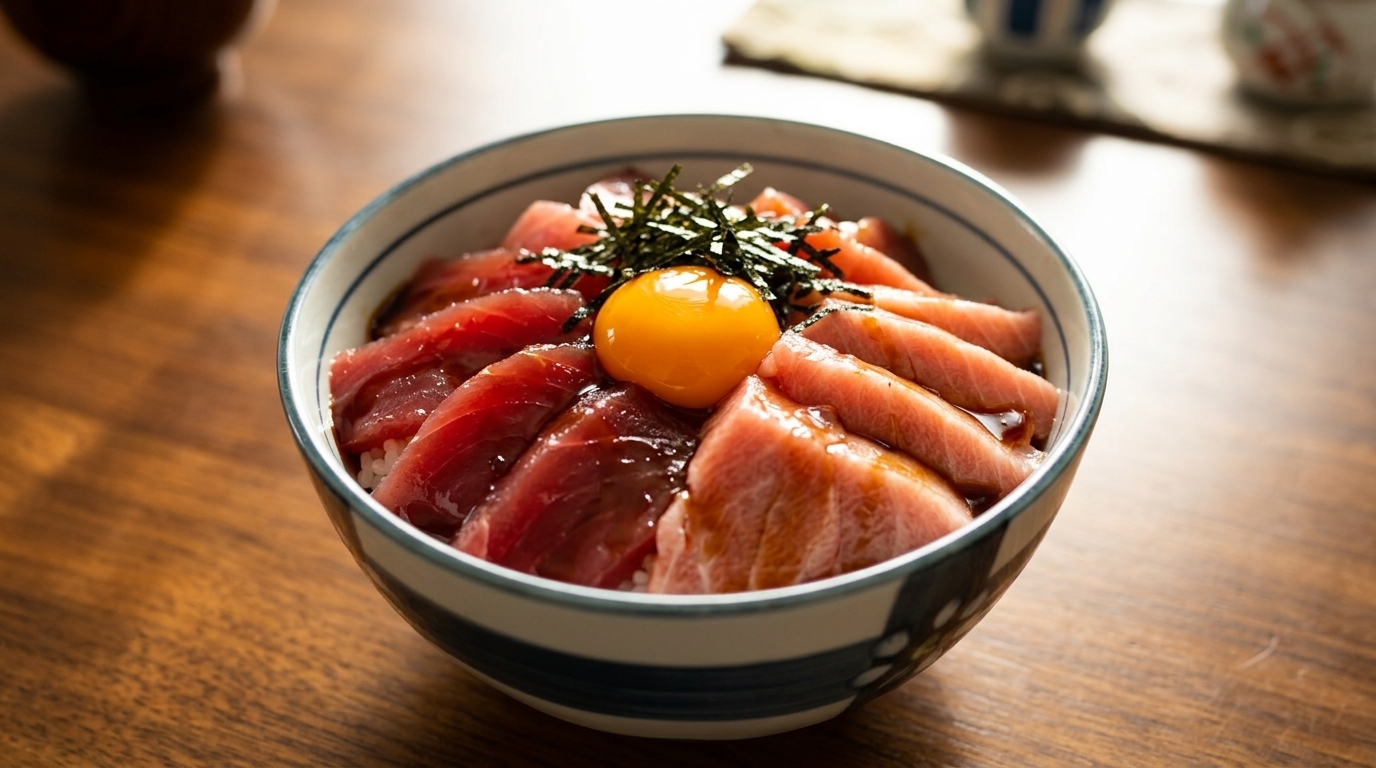
A luxurious Japanese rice bowl featuring a decadent mix of lean akami and marbled fatty tuna, finished with a creamy raw egg yolk and savory soy glaze.
Tekkadon, or iron house bowl, is a classic Japanese comfort dish traditionally featuring lean tuna. This premium version elevates the experience by incorporating fatty chutoro and otoro cuts, paired with a rich egg yolk for a melt-in-your-mouth texture.
Ingredients
- 300 g sashimi-grade tuna (akami, chutoro, or otoro)
- 2 cups steamed Japanese white rice
- 1 whole large egg yolk (pasteurized)
- 2 tbsp soy sauce
- 1 tsp mirin
- optional shredded nori seaweed
- to taste wasabi
Instructions
- 1Identify and trim the tuna
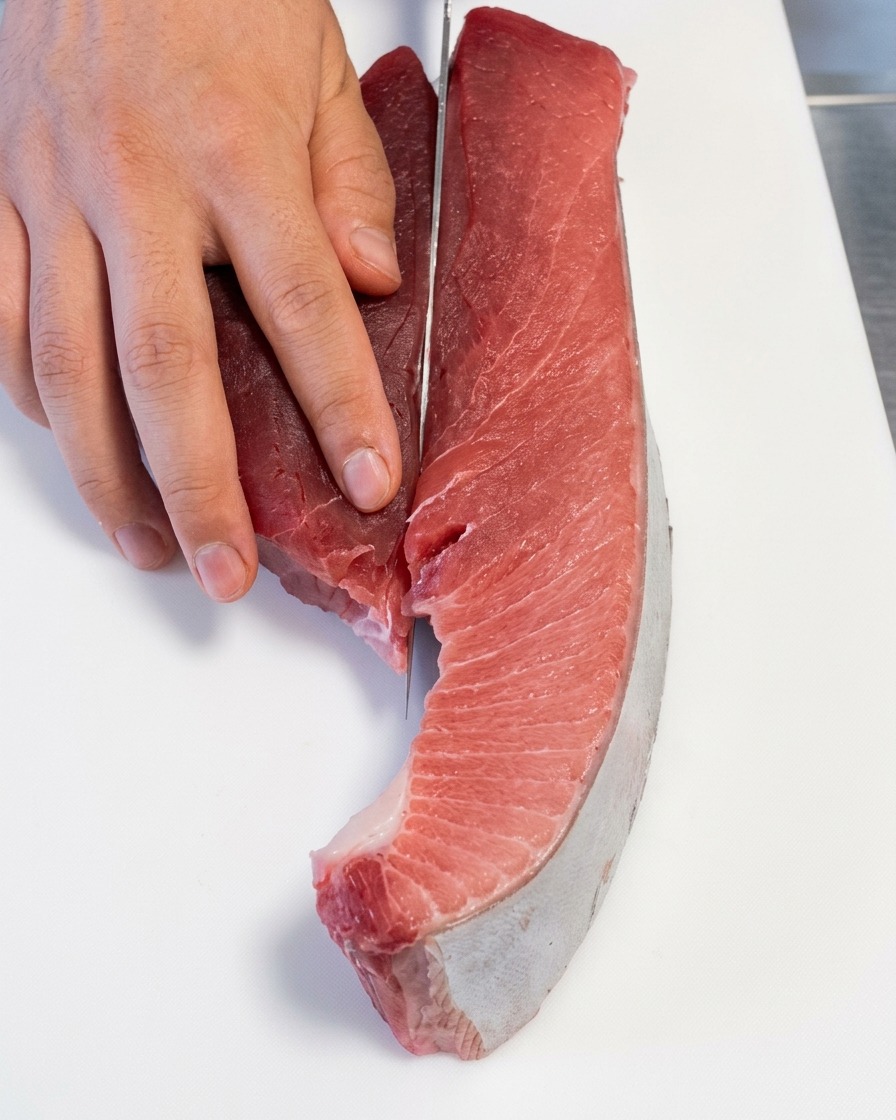
Begin by identifying the different sections of the tuna block based on fat content. Locate the dark bloodline section, which has a strong odor, and use a sharp knife to carefully cut it away from the leaner akami and fatty chutoro or otoro sections.
Tip: The bloodline is the darkest part of the fish; removing it ensures the final dish has a clean, delicate flavor without any fishy aftertaste. - 2Slice the tuna for serving
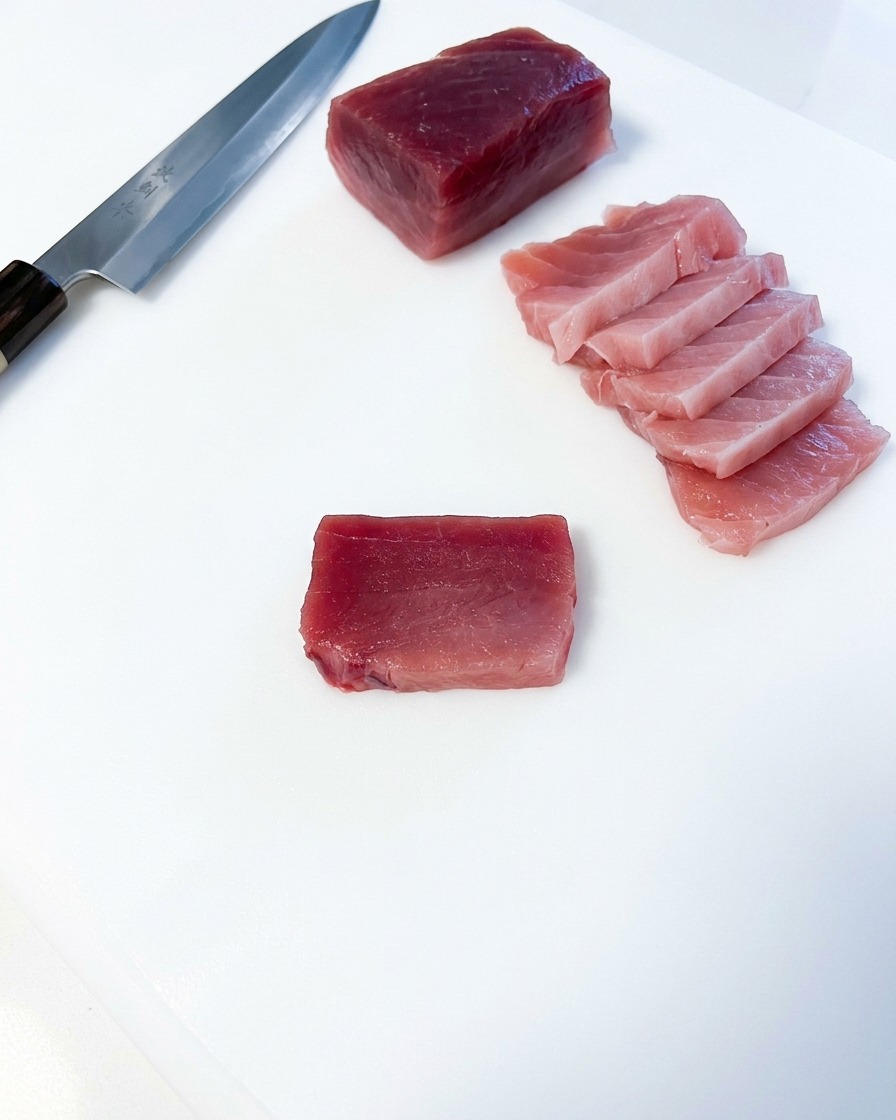
Take the trimmed sections of tuna and slice them into uniform, rectangular pieces. Aim for bite-sized thickness, ensuring you cut against the grain to maintain a tender texture that melts in the mouth.
Tip: Chilling the fish thoroughly before slicing makes it firmer and easier to cut into clean, professional-looking pieces. - 3Assemble the tuna bowl
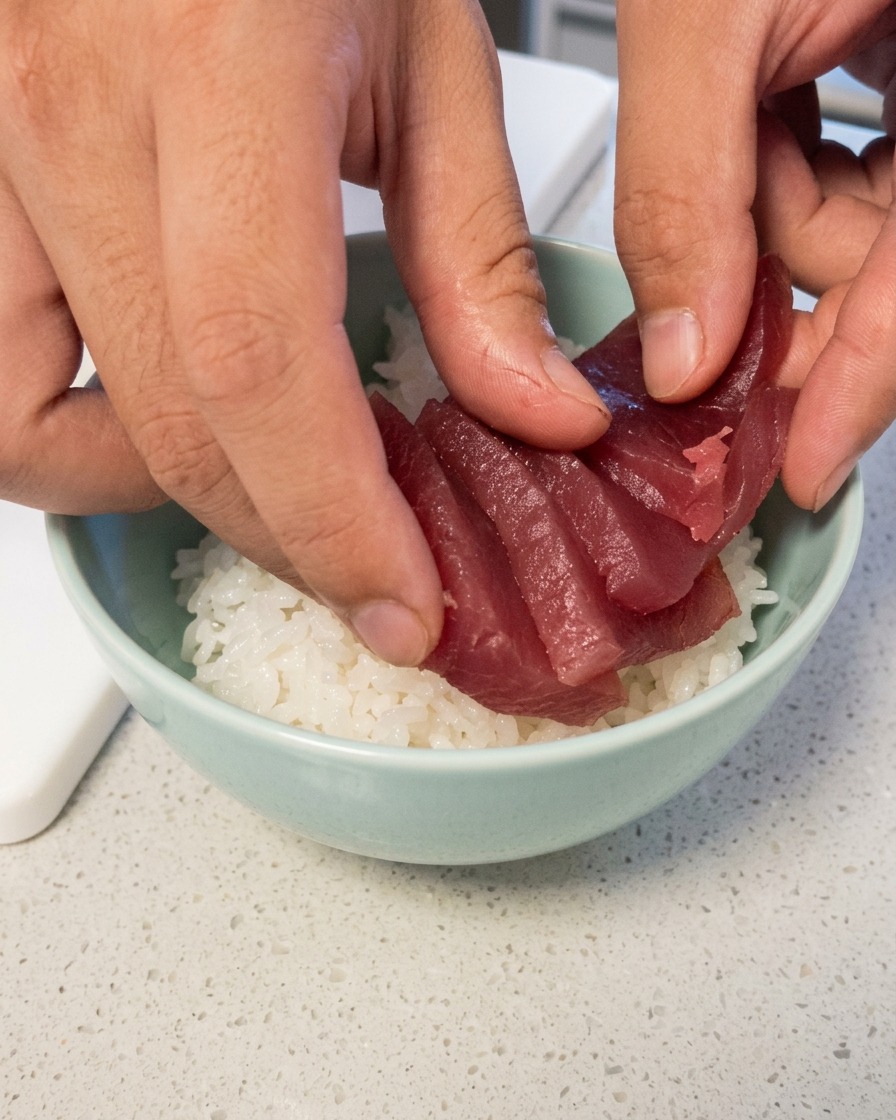
Fill a ceramic bowl with a bed of fluffy white rice. Carefully place the slices of akami and fatty tuna on top of the rice, overlapping them in a circular pattern to create an attractive and organized presentation.
Tip: Leave a small indentation or space in the center of the tuna arrangement to hold the egg yolk in the next step. - 4Add a raw egg yolk
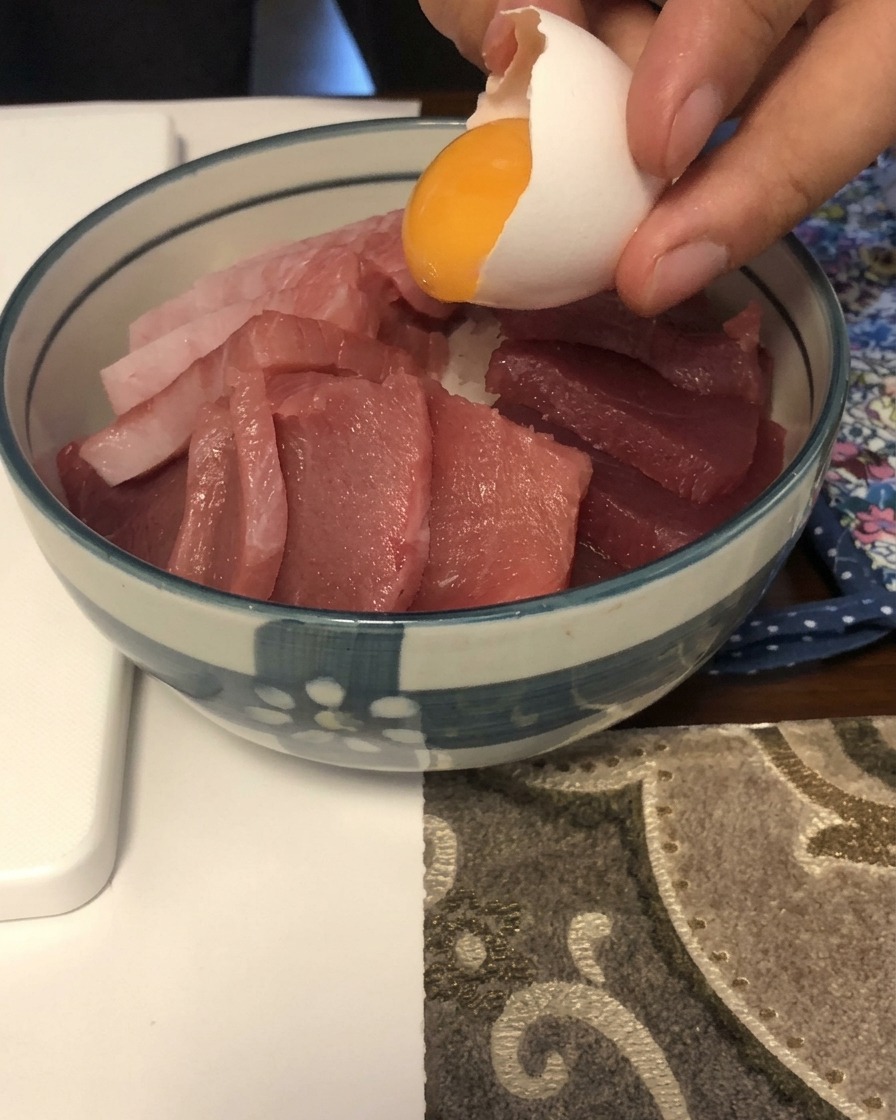
Separate a fresh egg and gently drop the raw yolk from the shell into the center of the tuna slices. This adds a rich, creamy element that complements the fatty texture of the fish.
Tip: Ensure the egg is pasteurized and very fresh since it is being consumed raw for the best flavor and safety. - 5Garnish and season
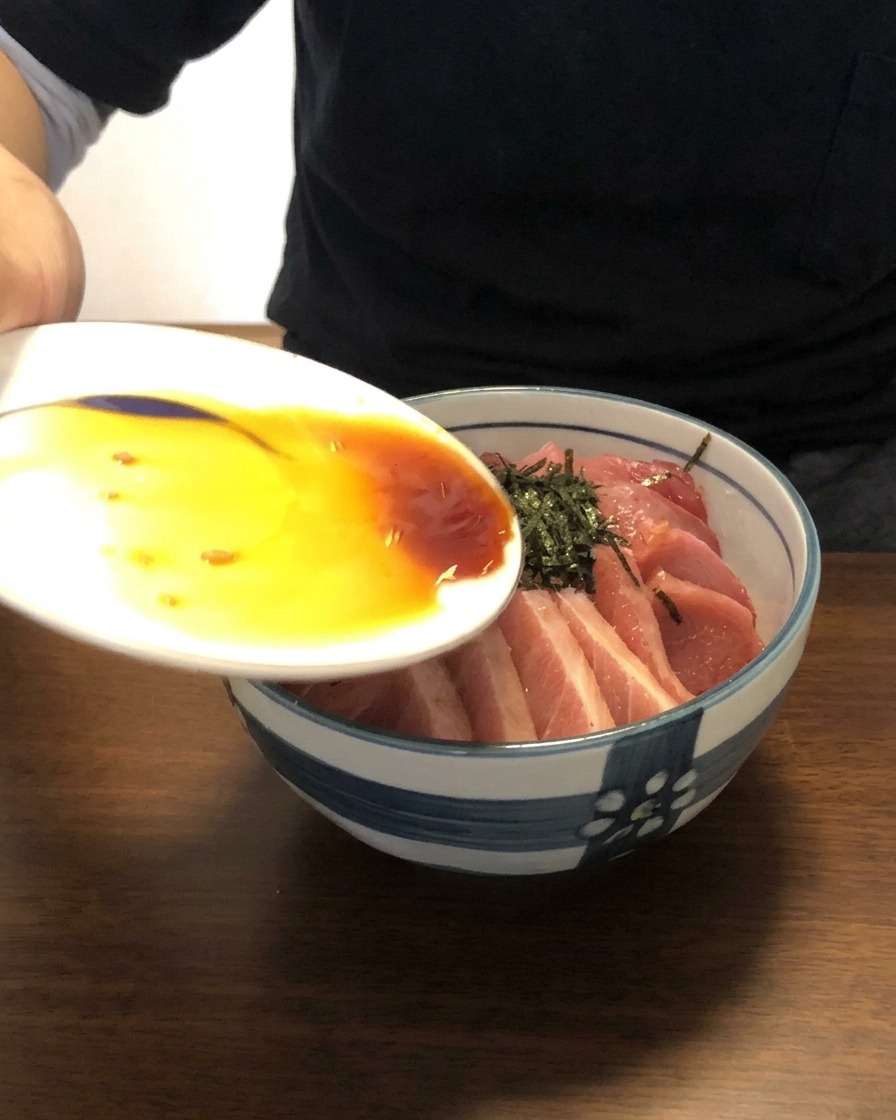
Sprinkle a handful of finely shredded dried seaweed (nori) over the top of the bowl. To finish, pour a mixture of soy-based sauce directly over the fish and egg yolk to season the entire dish evenly.
Tip: Mix a little bit of wasabi into your soy sauce before pouring if you prefer an extra kick of heat with your tuna.