Homemade Teriyaki Salmon Rice Bowl (Salmon Donburi)
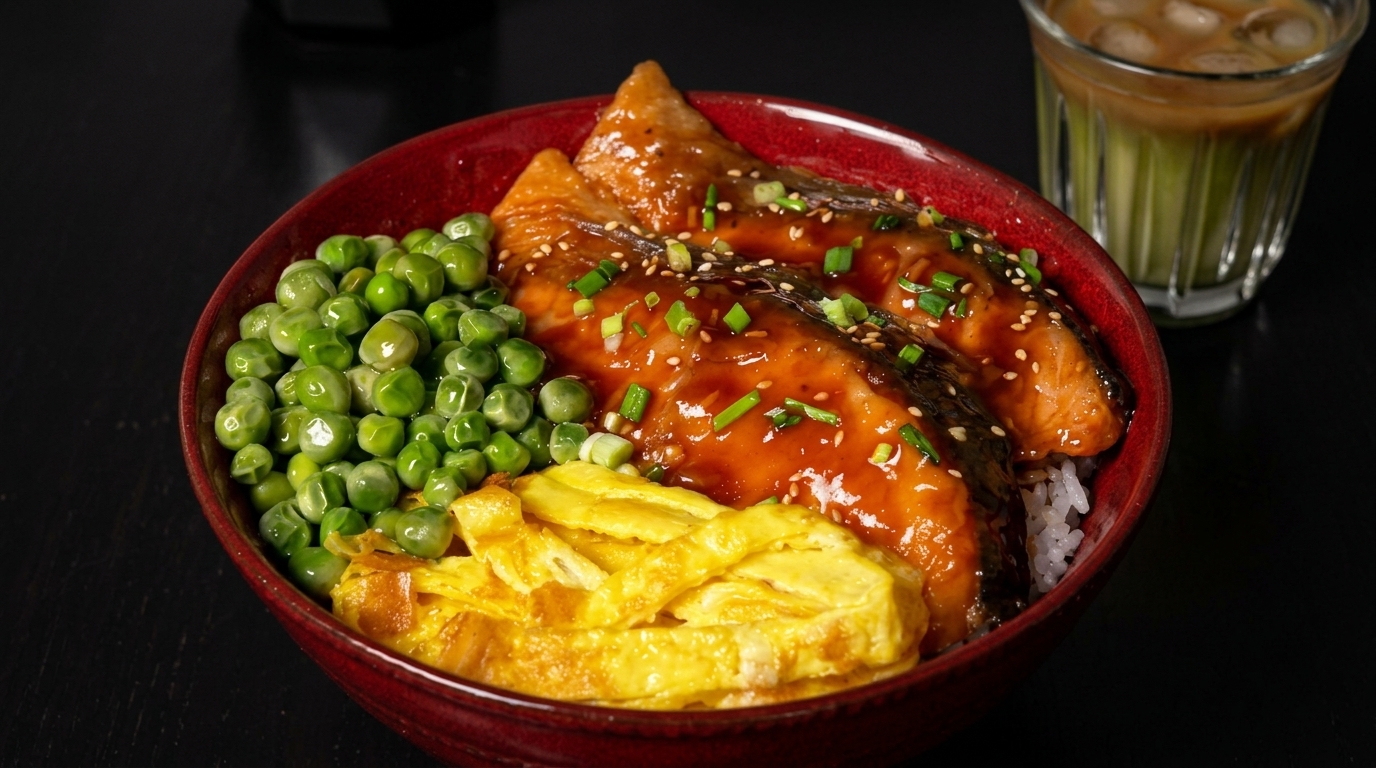
A comforting Japanese rice bowl featuring pan-seared salmon fillets in a glossy, ginger-infused teriyaki glaze, served with golden egg ribbons and vibrant peas.
Teriyaki salmon is a beloved cornerstone of Japanese home cooking, prized for its signature balance of sweet and savory notes. By dusting the fish in starch before searing, you create a delicate crust that perfectly captures the homemade glaze. This dish is as visually striking as it is nourishing, making it a perfect healing meal for a quiet evening at home.
Ingredients
- 2 salmon fillets
- to taste salt
- to taste black pepper
- 2 tbsp starch
- 1 tsp minced ginger
- 2 tbsp light soy sauce
- 1 tbsp mirin
- 1 tbsp sake
- 1 tbsp honey
- 2 tbsp water
- 2 eggs
- 2 cups cooked white rice
- 0.5 cup steamed green peas
- optional starch water
- to taste chopped green scallions
- to taste white sesame seeds
Instructions
- 1Season the salmon fillets
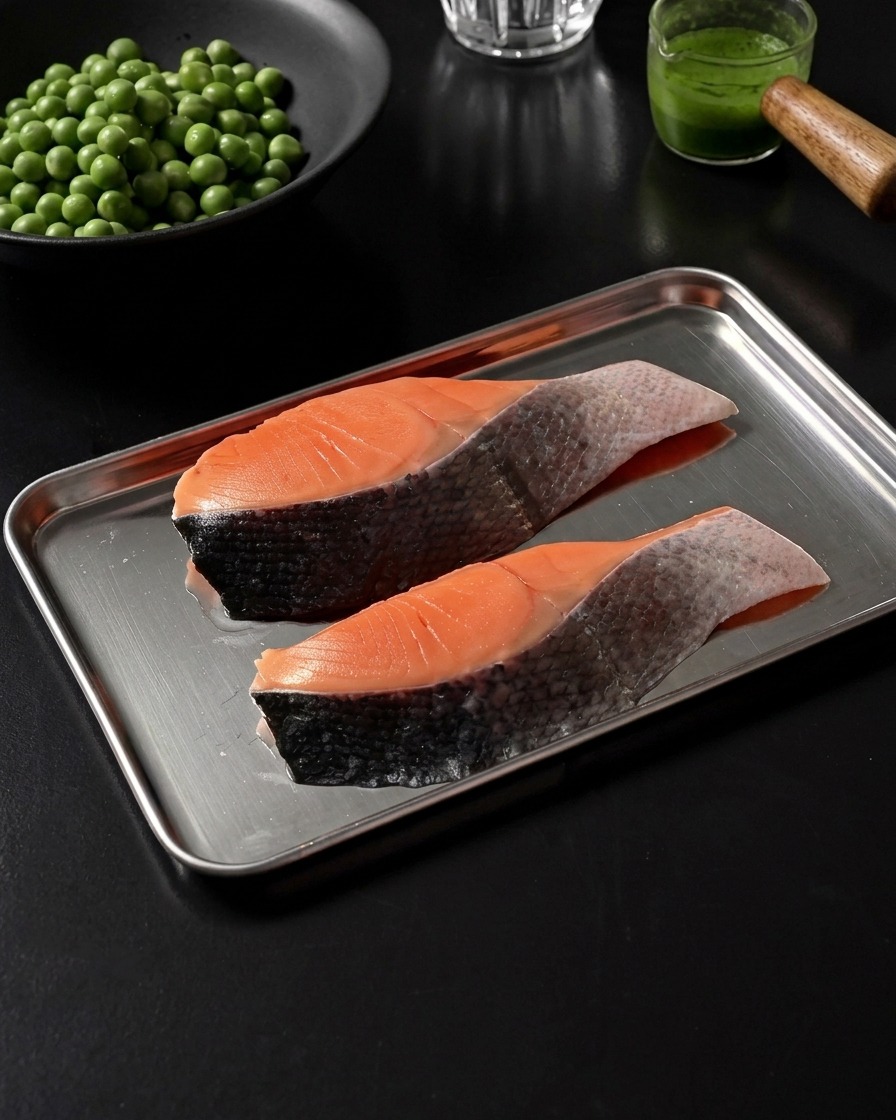
Begin by seasoning the raw salmon fillets with a generous sprinkle of salt and black pepper on both sides. This initial seasoning provides a foundation of flavor that penetrates the fish before the more complex sauce is added in the later steps.
Tip: Always pat the salmon fillets dry with a paper towel before seasoning to ensure the salt and pepper adhere properly to the surface. - 2Coat the salmon in starch
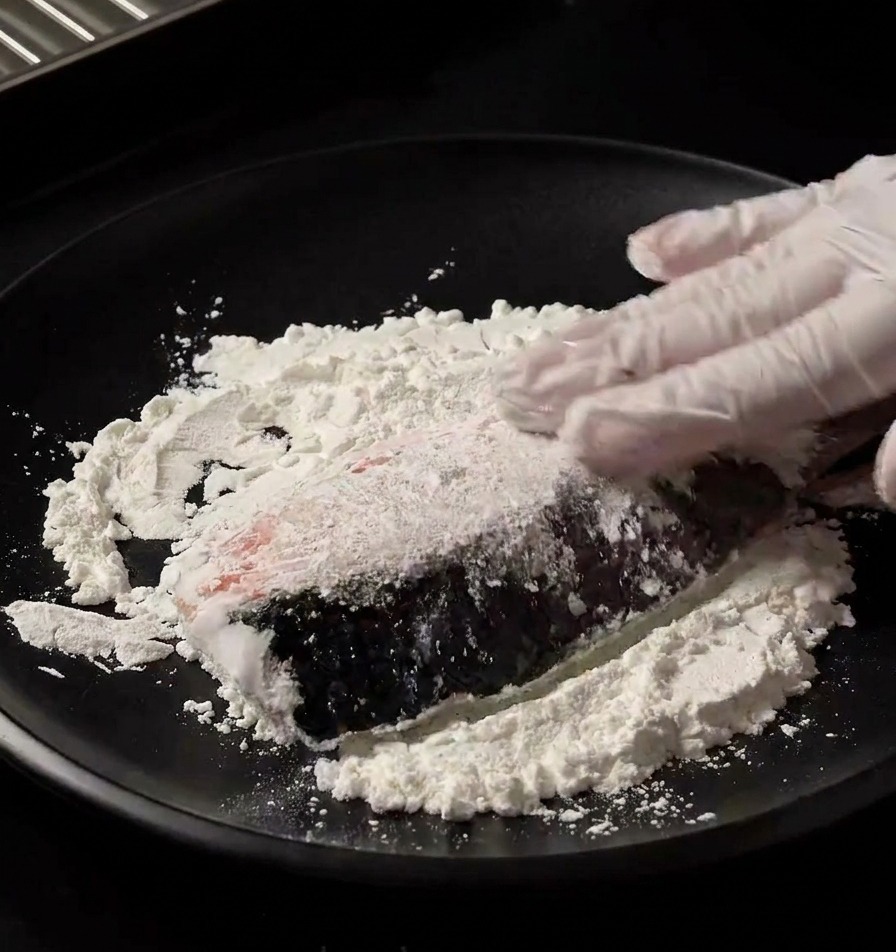
After seasoning your salmon fillets with salt and black pepper, press them firmly into a plate of starch. Ensure both sides are covered in a thin, even layer. This coating will create a light, crispy crust when fried, allowing the teriyaki sauce to cling perfectly to the fish.
Tip: Shake off any excess starch before cooking to prevent the oil from becoming cloudy and to ensure the crust remains light and delicate. - 3Prepare the teriyaki sauce
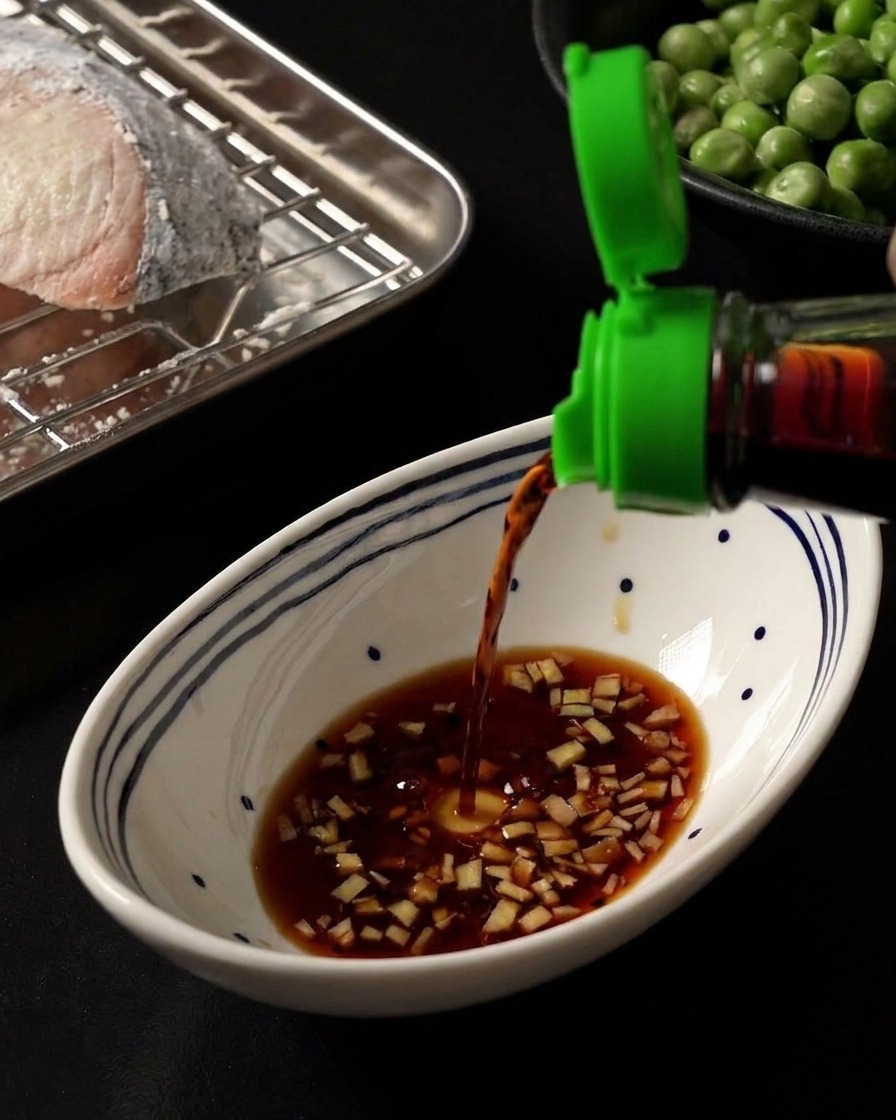
Combine the light soy sauce with finely minced ginger in a small bowl. Add the mirin, sake, honey, and a splash of water, then stir everything together until the honey is fully dissolved. This mixture will serve as the savory-sweet glaze for the salmon.
Tip: Freshly grated ginger provides a much sharper and more vibrant flavor than ginger paste or powder. - 4Pan-fry the salmon
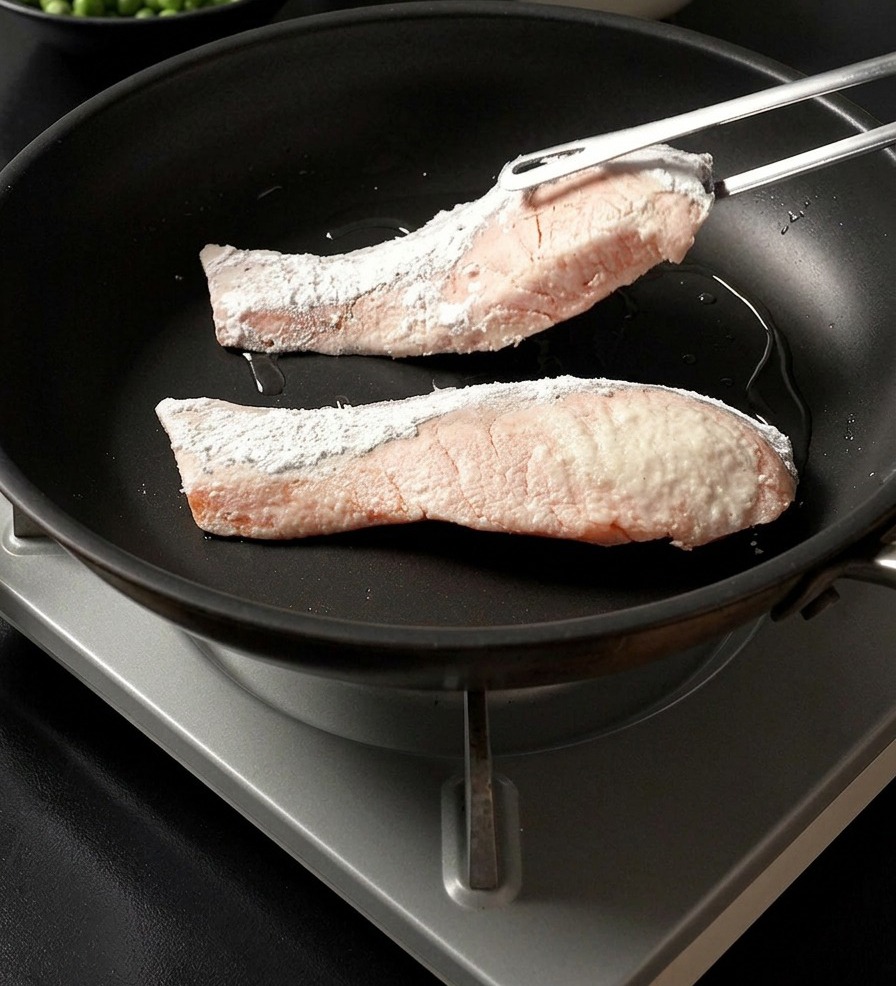
Heat a non-stick skillet with a drizzle of oil over medium heat. Carefully lay the starch-coated salmon fillets into the pan. Let them sear undisturbed until the bottom side is golden brown and crispy before flipping.
Tip: Avoid overcrowding the pan; if the fillets are too close together, they will steam rather than sear. - 5Sear until golden brown
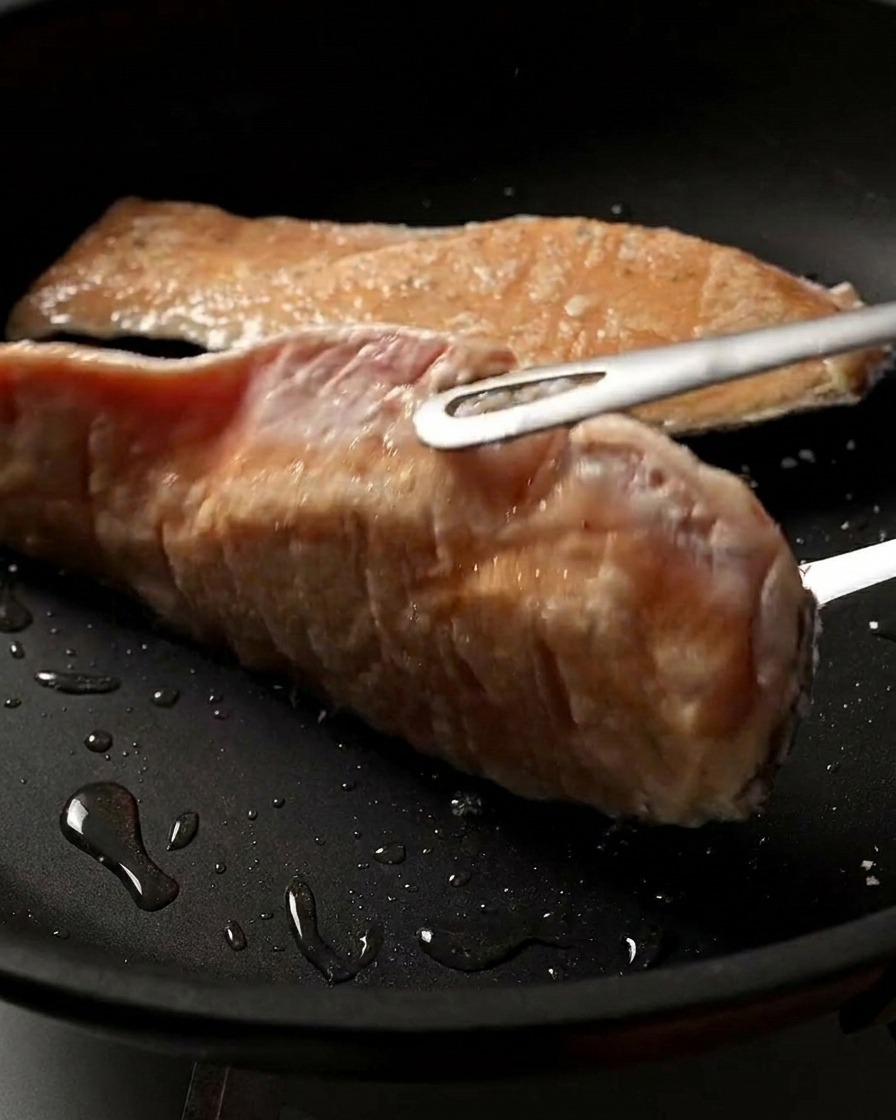
Once the bottom side is crisp and well-seared, use tongs to flip the salmon fillets over. Continue cooking until the second side develops a beautiful golden-brown color and a crispy texture while remaining tender on the inside.
Tip: Avoid flipping the fish too many times; one flip is usually enough to achieve the best sear and maintain the integrity of the crust. - 6Add the teriyaki sauce
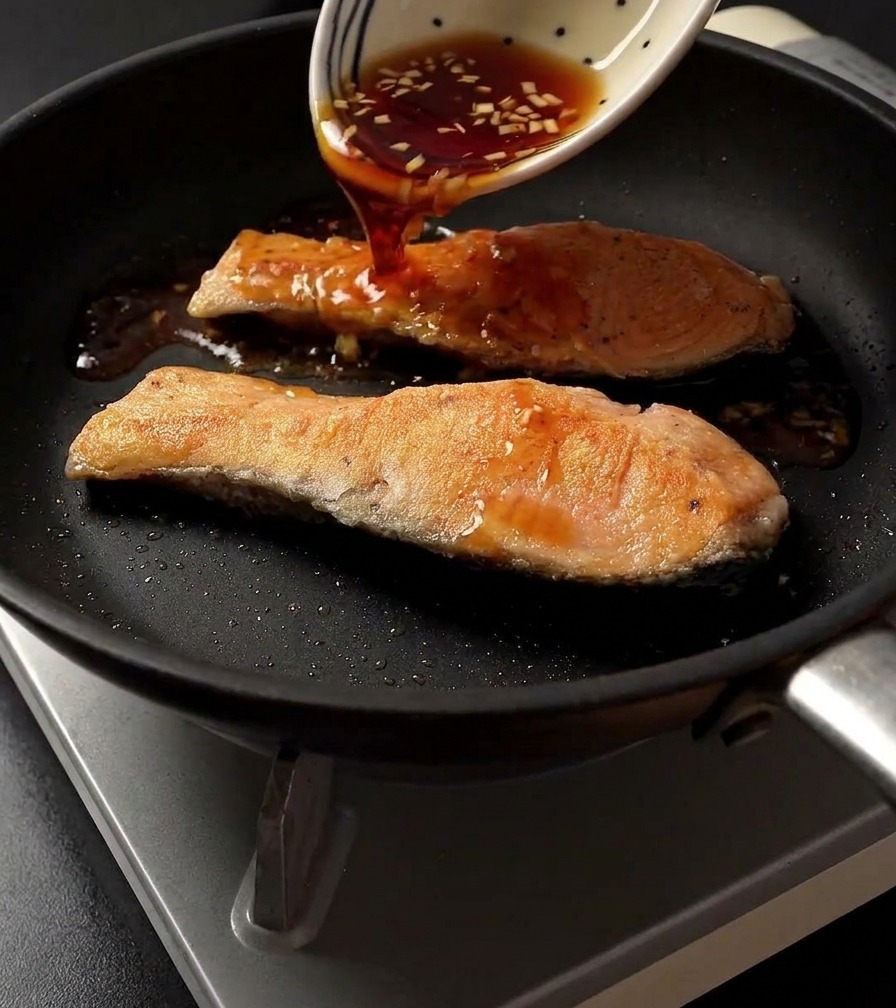
Once the salmon is beautifully browned on both sides, pour in the prepared teriyaki sauce—a mixture of light soy sauce, mirin, sake, honey, and minced ginger. The sauce will immediately begin to sizzle and release its aroma as it hits the pan.
Tip: Lower the heat slightly before adding the sauce to prevent it from splashing or burning too quickly. - 7Glaze and baste the fillets
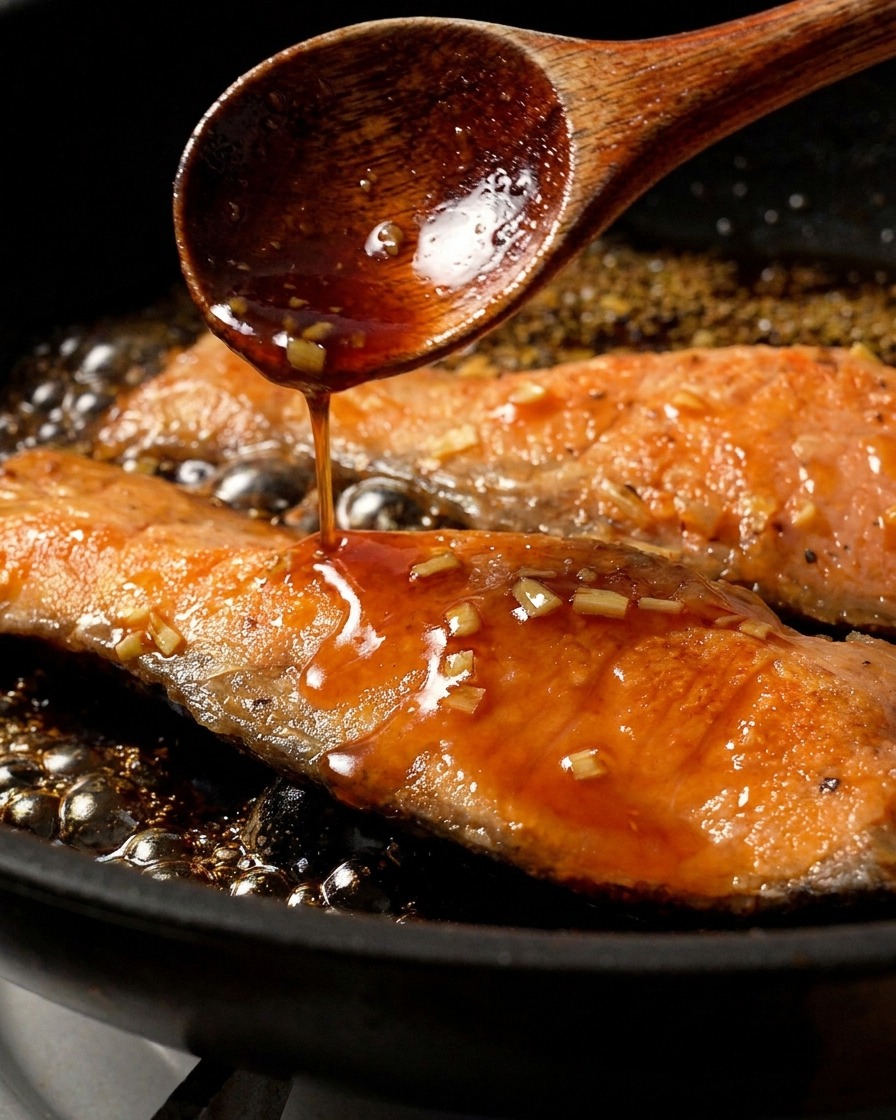
As the sauce simmers and thickens into a rich, dark glaze, use a spoon to continuously baste the salmon fillets. This ensures the fish is thoroughly coated in flavor. If you prefer a thicker consistency, you can stir in a small amount of starch water at this stage.
Tip: If the sauce thickens too much, you can add a tiny splash of water or more mirin to loosen it back to the desired consistency. - 8Prepare the egg strips
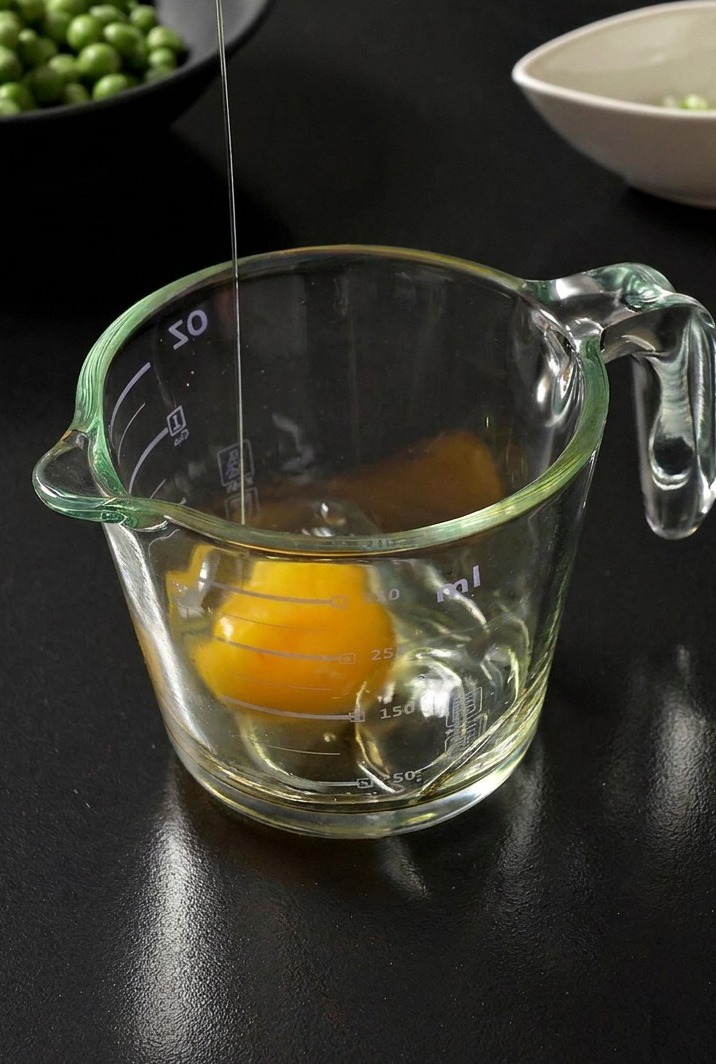
Prepare the side garnish by cracking two fresh eggs into a bowl and whisking them thoroughly until no streaks of white remain. This mixture will be fried into thin egg ribbons known as Kinshi Tamago to add a delicate texture and bright color to the dish.
Tip: For a more refined texture, strain the beaten eggs through a fine mesh sieve to remove any air bubbles or bits of chalazae before cooking. - 9Fry the egg omelet
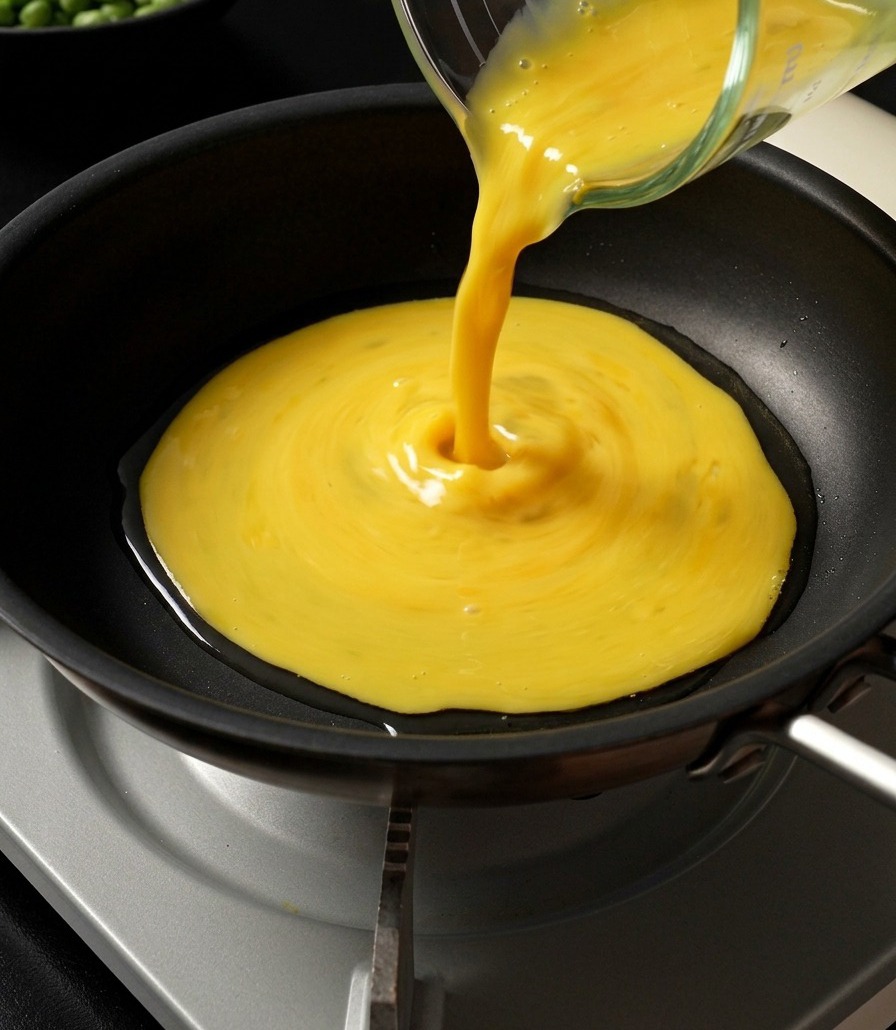
Beat two eggs until smooth and pour the mixture into a clean, lightly oiled pan over low heat. Swirl the pan to spread the egg into a thin, even sheet. Once set, you will slice this omelet into delicate strips for the final assembly.
Tip: Cook the egg over low heat to maintain a bright yellow color without any brown spots for a cleaner presentation. - 10Assemble the rice bowl
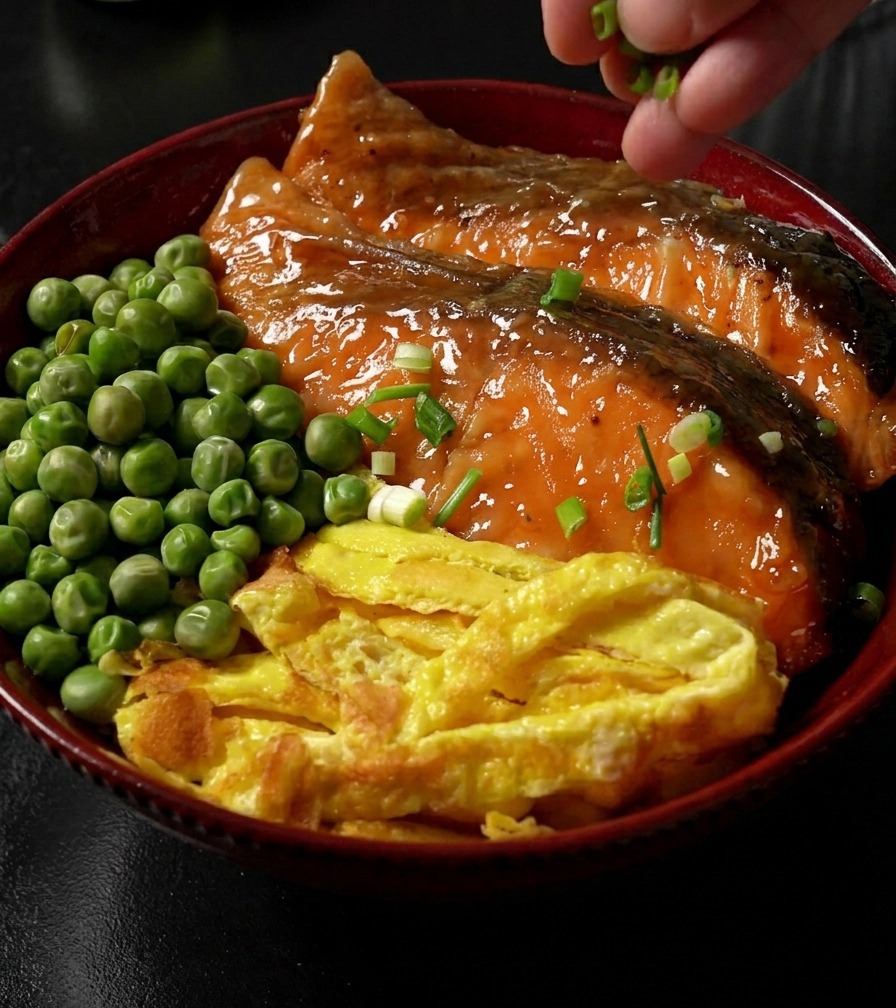
Divide the warm rice between two bowls. Carefully place a glazed salmon fillet onto each, then add the sliced egg strips and steamed green peas on the side. Finish by sprinkling freshly chopped scallions and sesame seeds over the top for a professional presentation.
Tip: Serve the bowl immediately while the salmon is hot and the glaze is glossy to enjoy the best combination of flavors and textures.