Spicy Salmon and Avocado Rice Bowl
Onsen Egg
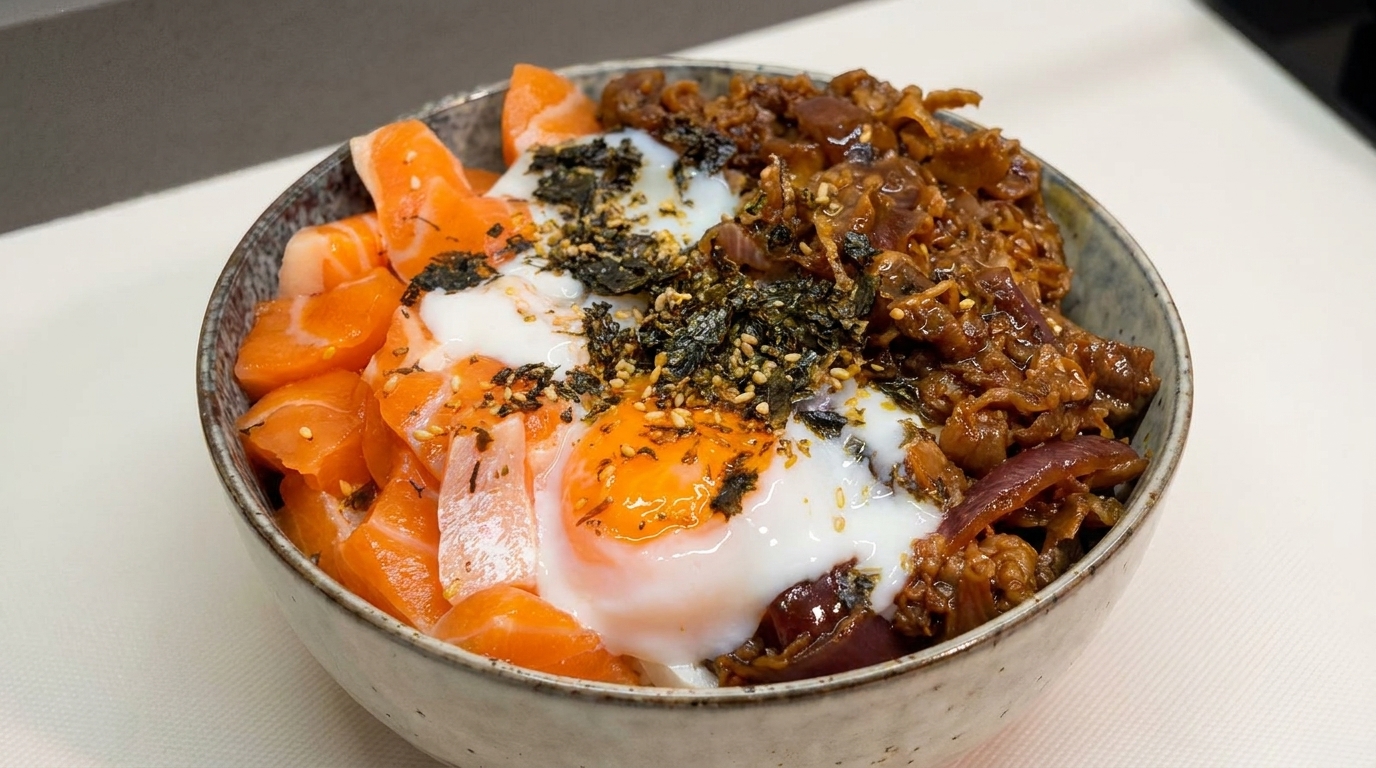
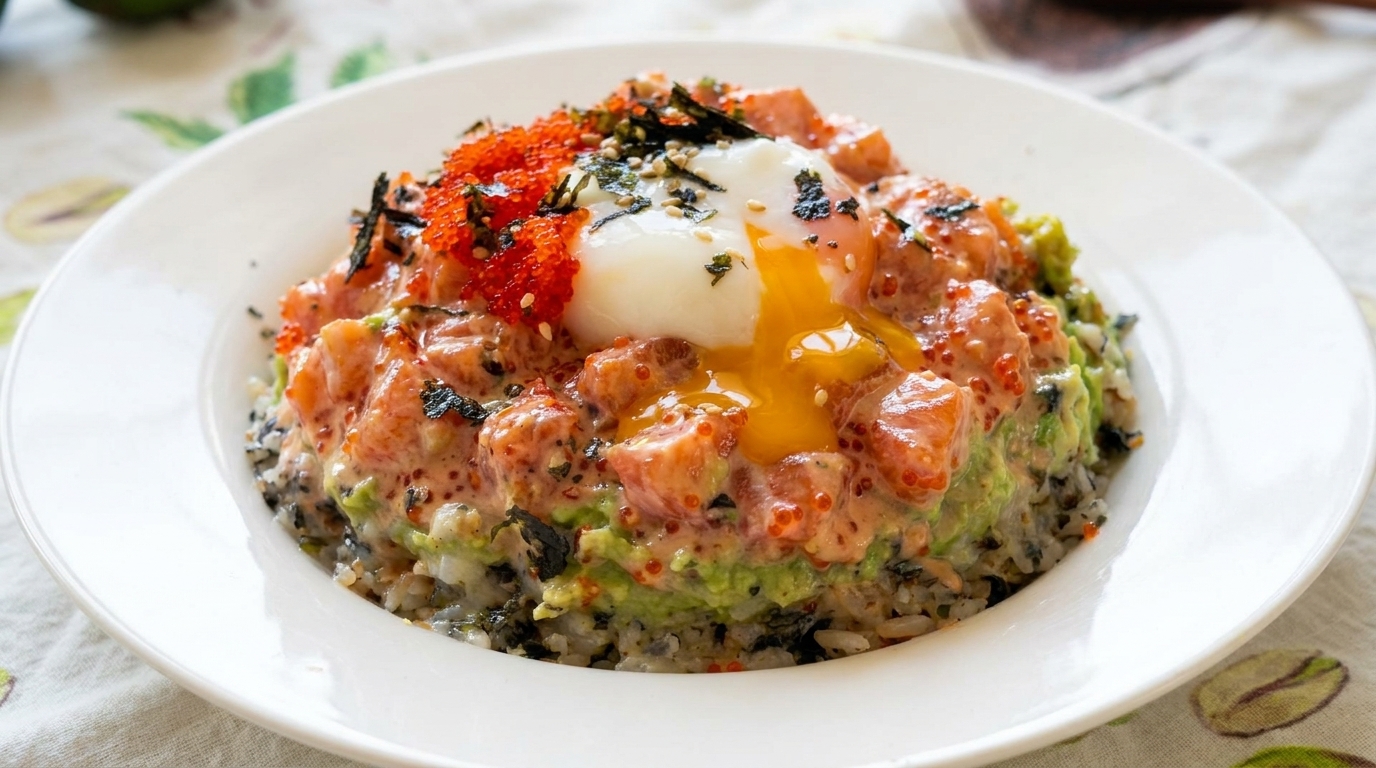
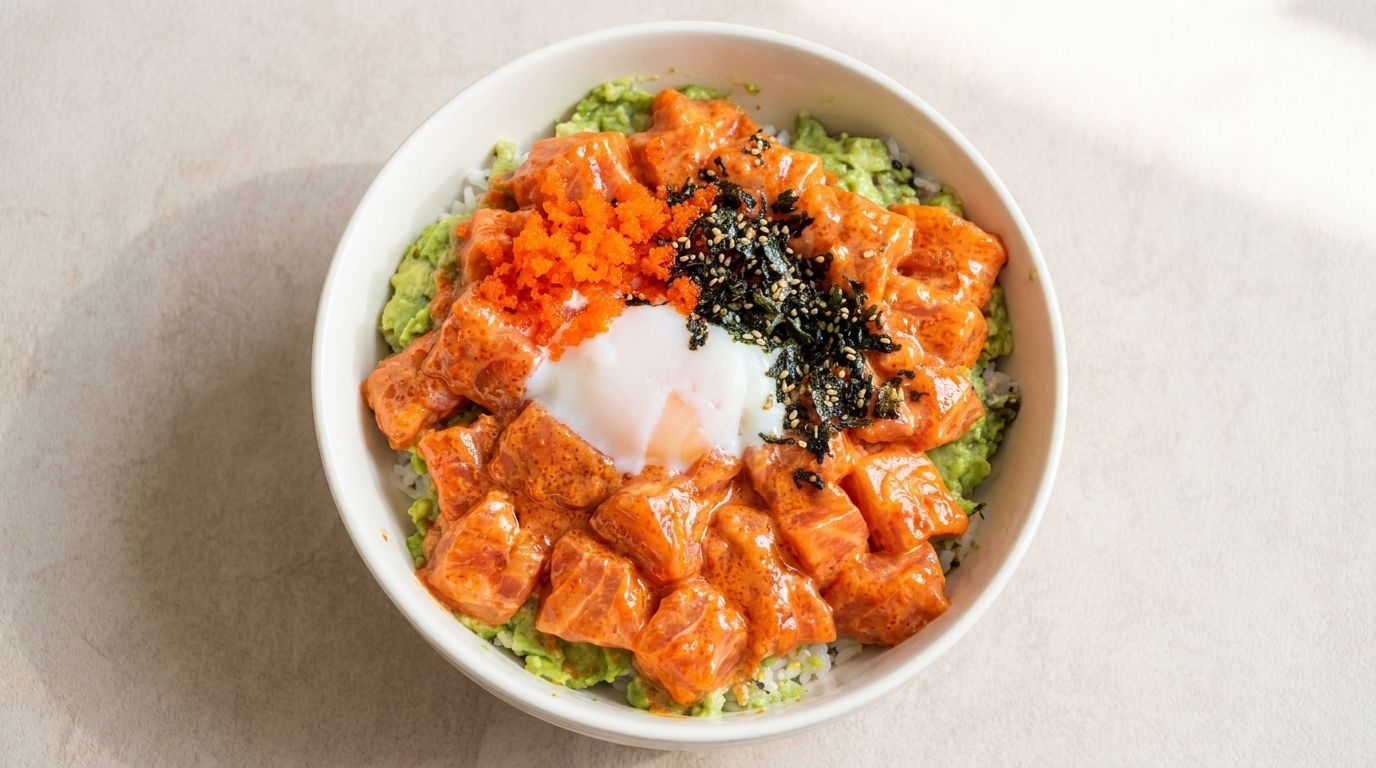
A vibrant fusion bowl featuring spicy marinated salmon, creamy mashed avocado, and a silky onsen egg over warm seaweed-seasoned rice.
This bowl is a home-cooks take on the classic Japanese Donburi, elevated with a creamy avocado base and a spicy Thai-inspired dressing. The onsen egg, traditionally cooked in hot spring water, adds a luxurious velvet finish that binds the heat of the salmon with the richness of the fruit.
Ingredients
- 250 g fresh sushi-grade salmon
- 12 ripe avocado
- 1 tbsp lemon juice
- to taste black pepper and sea salt
- 2 tbsp mayonnaise
- 1 tbsp Thai red chili sauce
- 1 tsp hot mustard
- 1 tsp soy sauce
- 1 tbsp tobiko (flying fish roe)
- 2 bowls cooked white rice
- 1 tbsp dried seaweed flakes (nori)
- 2 large eggs
- optional sesame furikake
Instructions
- 1Prep the sushi grade salmon
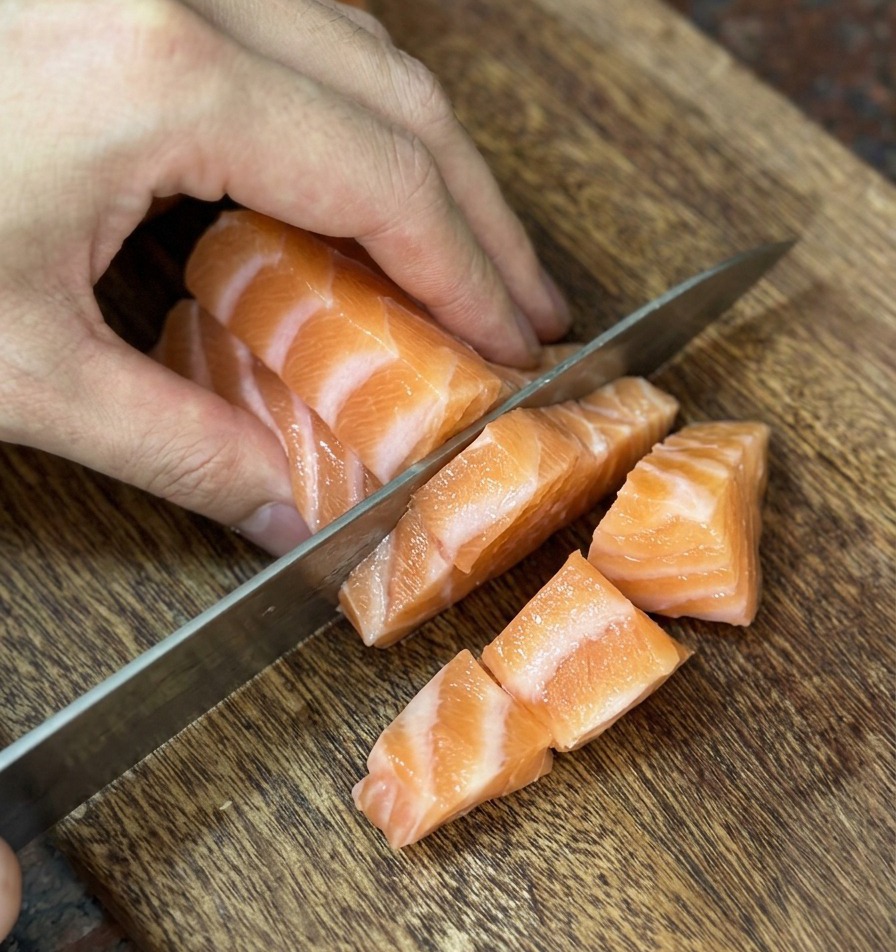
Take about 250 grams of fresh sushi grade salmon and slice it into thick bite sized cubes on a wooden cutting board. Using a sharp knife will help you get clean cuts without tearing the delicate flesh ensuring the cubes look professional in your final bowl.
Tip: If the salmon is too soft to cut easily pop it in the freezer for about 10 minutes to firm it up before slicing. - 2Season the avocado
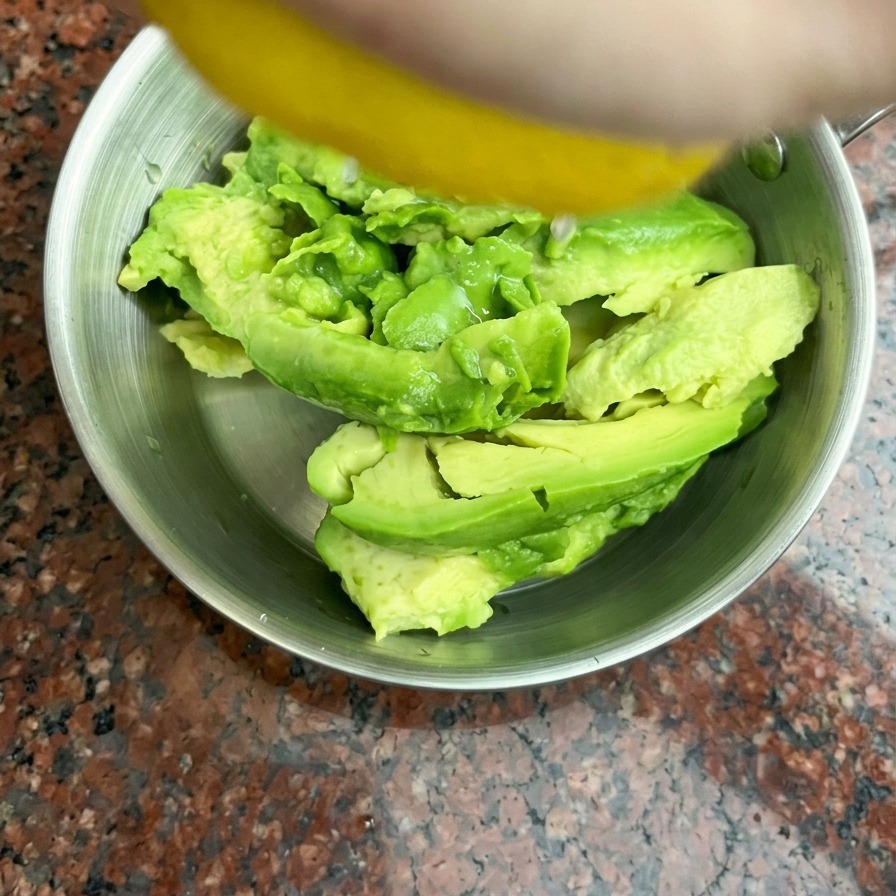
After halving the avocado and removing the pit, squeeze fresh lemon juice directly over the flesh in a small bowl. The acidity of the lemon adds a bright, citrusy balance to the rich fat of the avocado and, more importantly, prevents the green fruit from oxidizing and turning brown.
Tip: If you dont have a lemon, lime juice works just as well and adds a slightly different tropical zest to the dish. - 3Mash into a paste
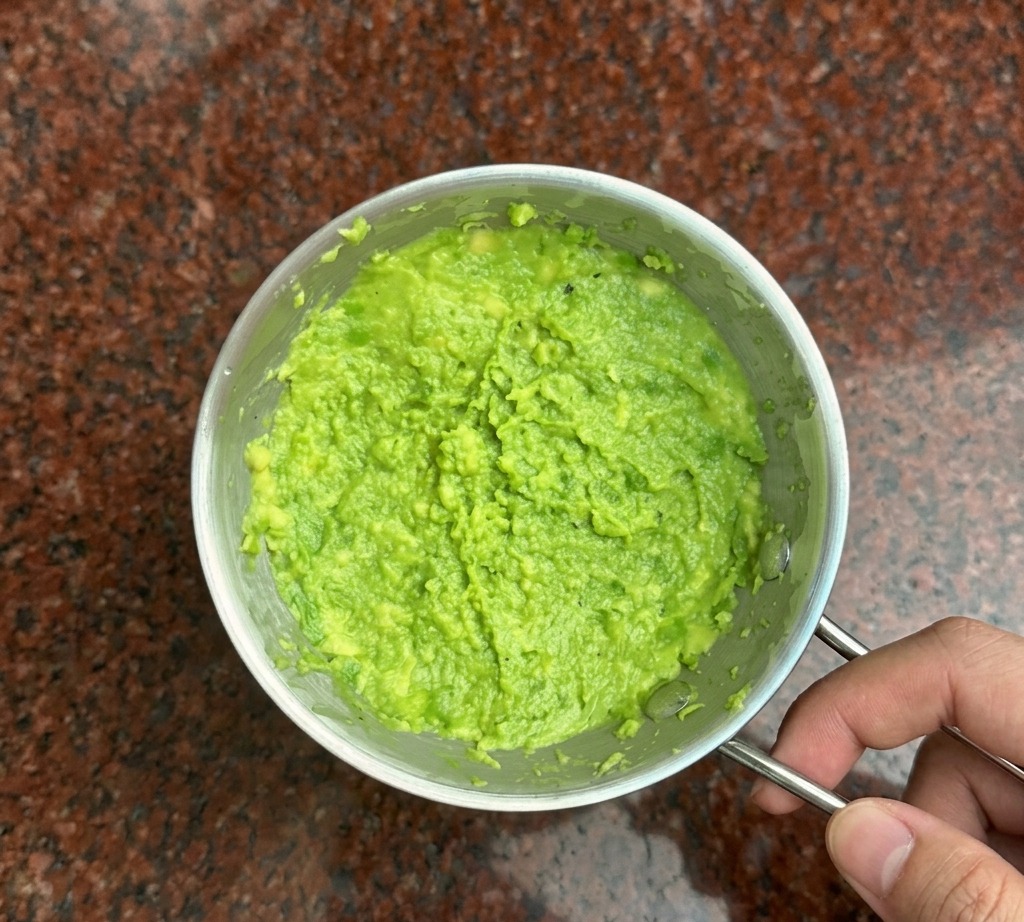
Season the avocado chunks with a little black pepper and sea salt to create a base flavor. Use a muddler or a fork to mash the pieces into a thick textured paste until the seasoning is fully incorporated and the consistency is creamy yet slightly chunky.
Tip: Avoid over mashing if you prefer your avocado to have some visible bits for a more rustic texture. - 4Whisk the spicy sauce base
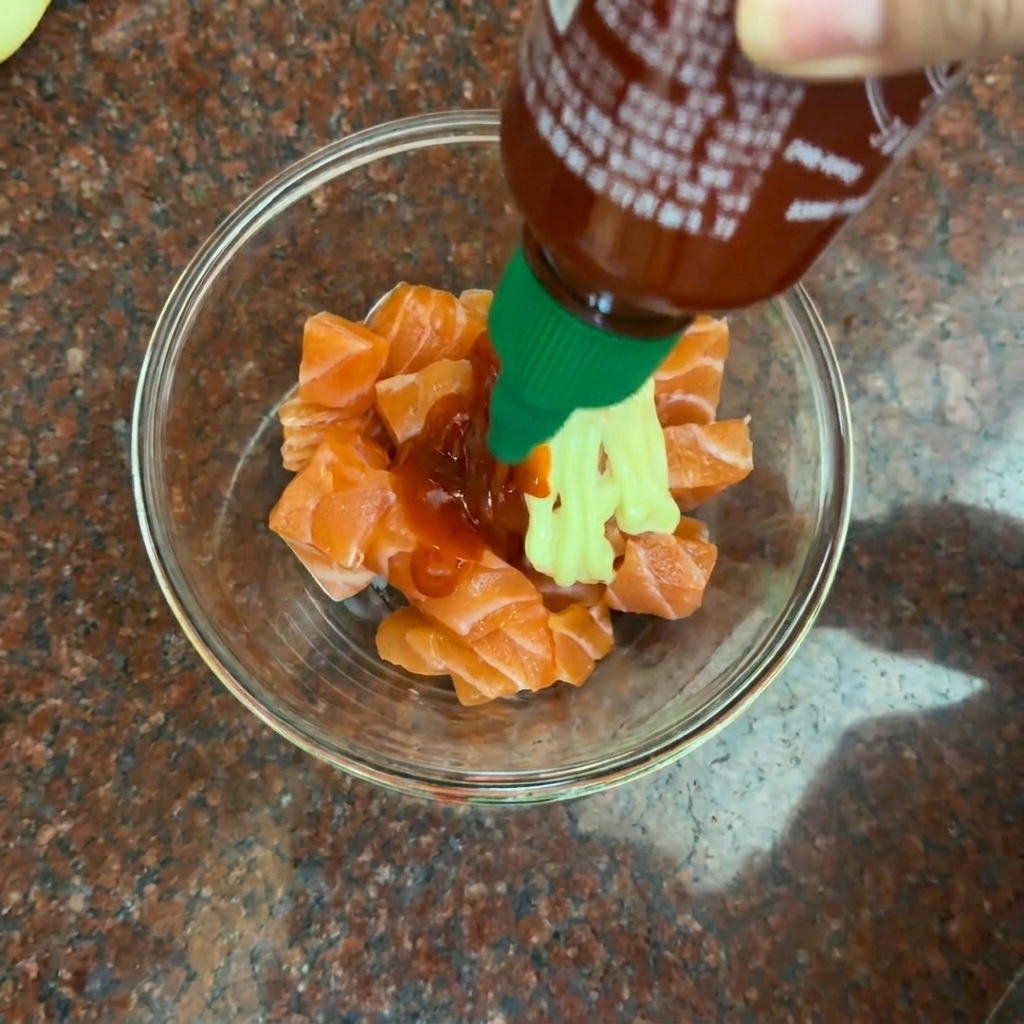
Transfer the salmon cubes to a glass mixing bowl. Add a generous amount of creamy mayonnaise, Thai red chili sauce for heat, a touch of mustard, and a splash of soy sauce. This combination creates a rich, umami-packed dressing that coats the fish perfectly.
Tip: If you want it extra spicy, increase the amount of chili sauce or add a small dash of hot mustard as mentioned in the narration. - 5Incorporate the fish roe
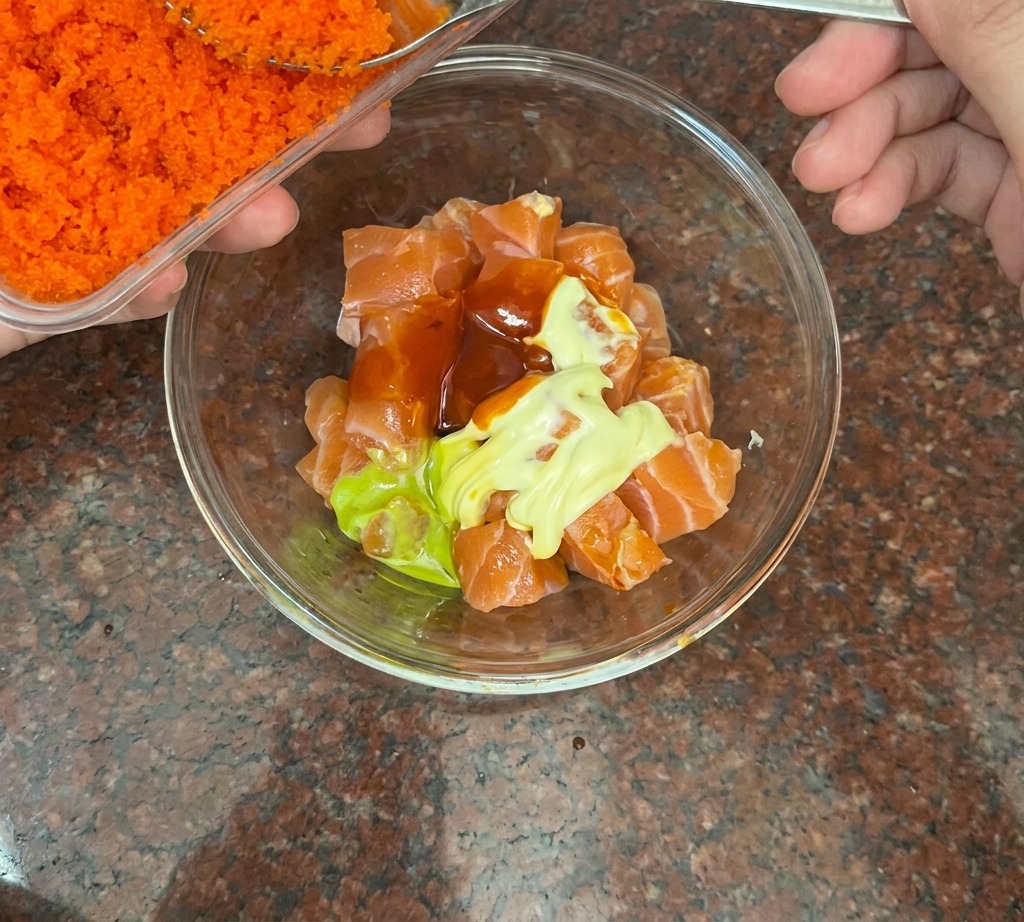
Add a large generous spoonful of bright orange fish roe or tobiko to the bowl. The roe adds a wonderful salty pop and a touch of luxury to the salmon salad creating a complex texture that complements the creamy sauce.
Tip: Keep the fish roe chilled until the very moment you add it to maintain its fresh firm texture. - 6Mix the salmon salad
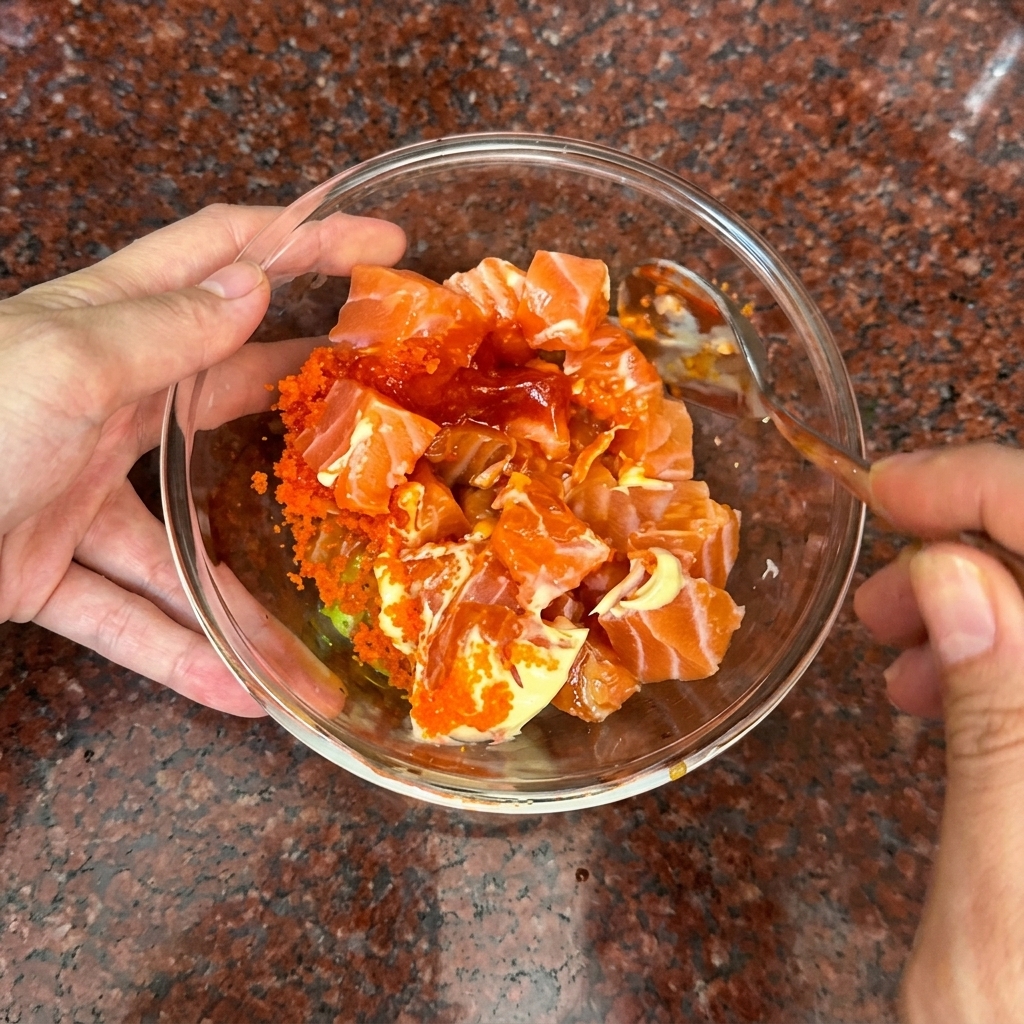
Gently stir the salmon cubes, sauces, and fish roe together with a spoon. Ensure every piece of salmon is thoroughly and evenly coated in the creamy reddish mixture taking care not to break the salmon cubes apart as you mix.
Tip: Use a light folding motion rather than a heavy stirring motion to keep the cubes intact and the roe evenly distributed. - 7Temper the cooking water
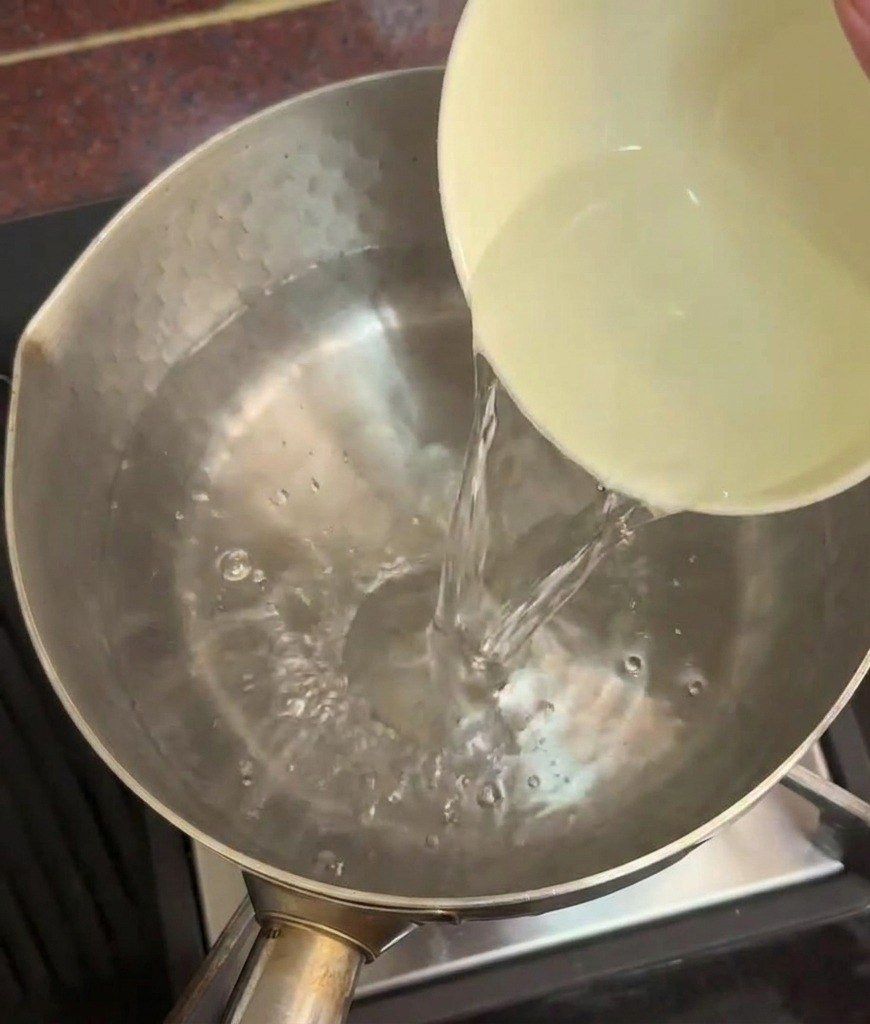
Bring three bowls of water to a boil, then turn off the heat and remove the pot from the burner. Immediately pour in one bowl of room-temperature or cold water. This specific ratio lowers the water temperature to the ideal range for onsen style eggs, ensuring they cook gently without becoming rubbery.
Tip: Do not skip the cold water addition; boiling water is too hot and will result in a standard hard-boiled egg rather than a silky onsen egg. - 8Submerge the eggs
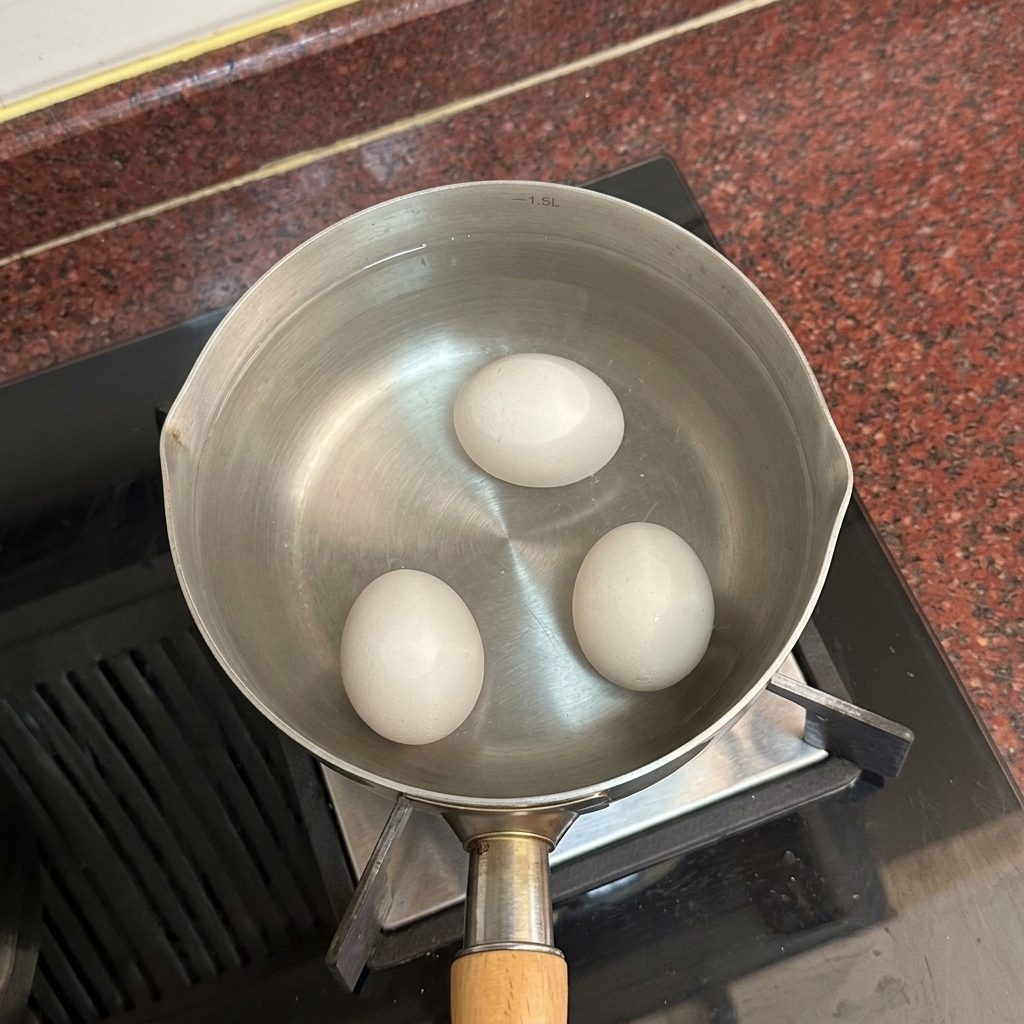
Carefully lower the whole eggs into the tempered hot water. Ensure the water completely covers the eggs so they cook evenly throughout. The residual heat in the water will slowly set the egg whites into a delicate, custardy texture while keeping the yolks perfectly liquid.
Tip: Using eggs straight from the refrigerator is best for this method as it helps control the internal temperature during the 10-minute soak. - 9Retrieve and chill the eggs
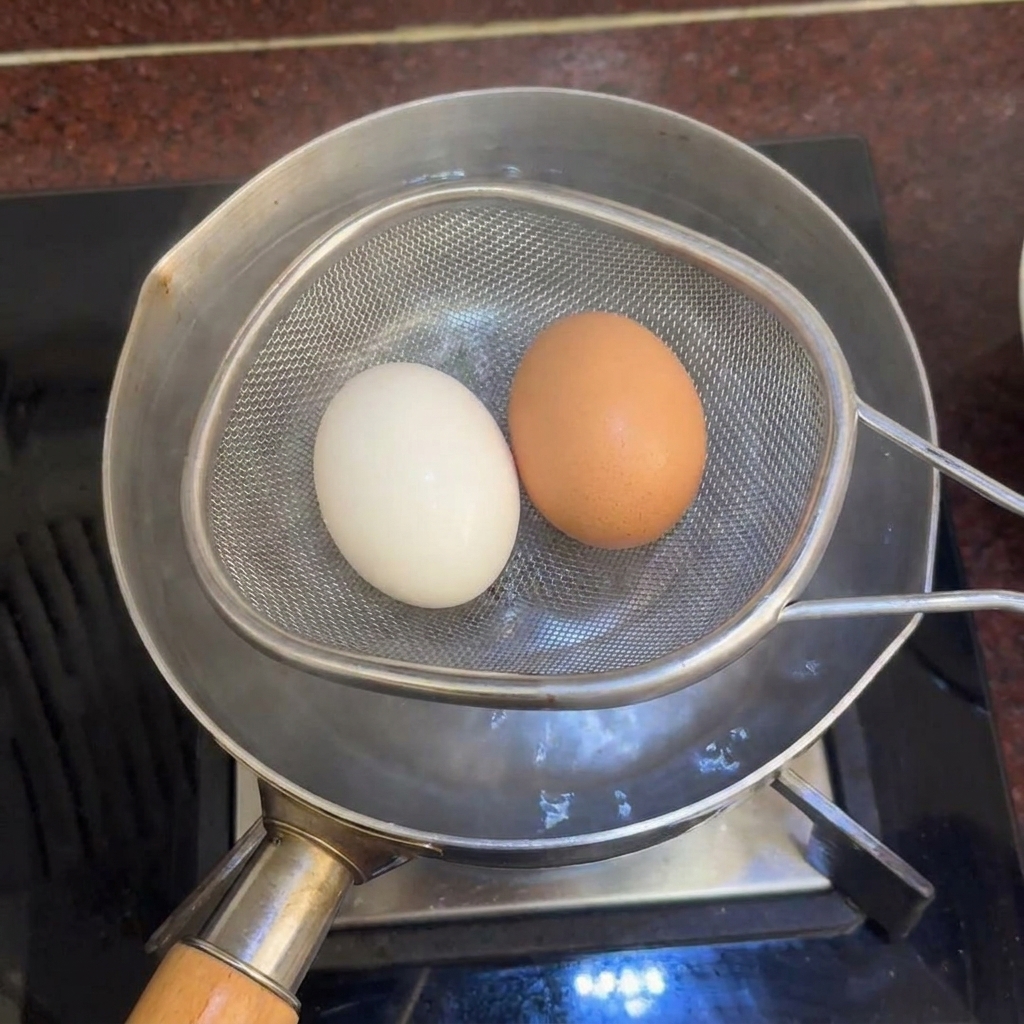
Once the 10-minute timer is up, use a mesh strainer or slotted spoon to gently lift the eggs out of the pot. Immediately transfer them to a bowl of ice water to stop the cooking process instantly, which preserves the desired runny consistency of the yolk.
Tip: Leave the eggs in the ice bath for at least two minutes; this makes them much easier to crack and peel without damaging the soft whites. - 10Base the bowl with rice and avocado
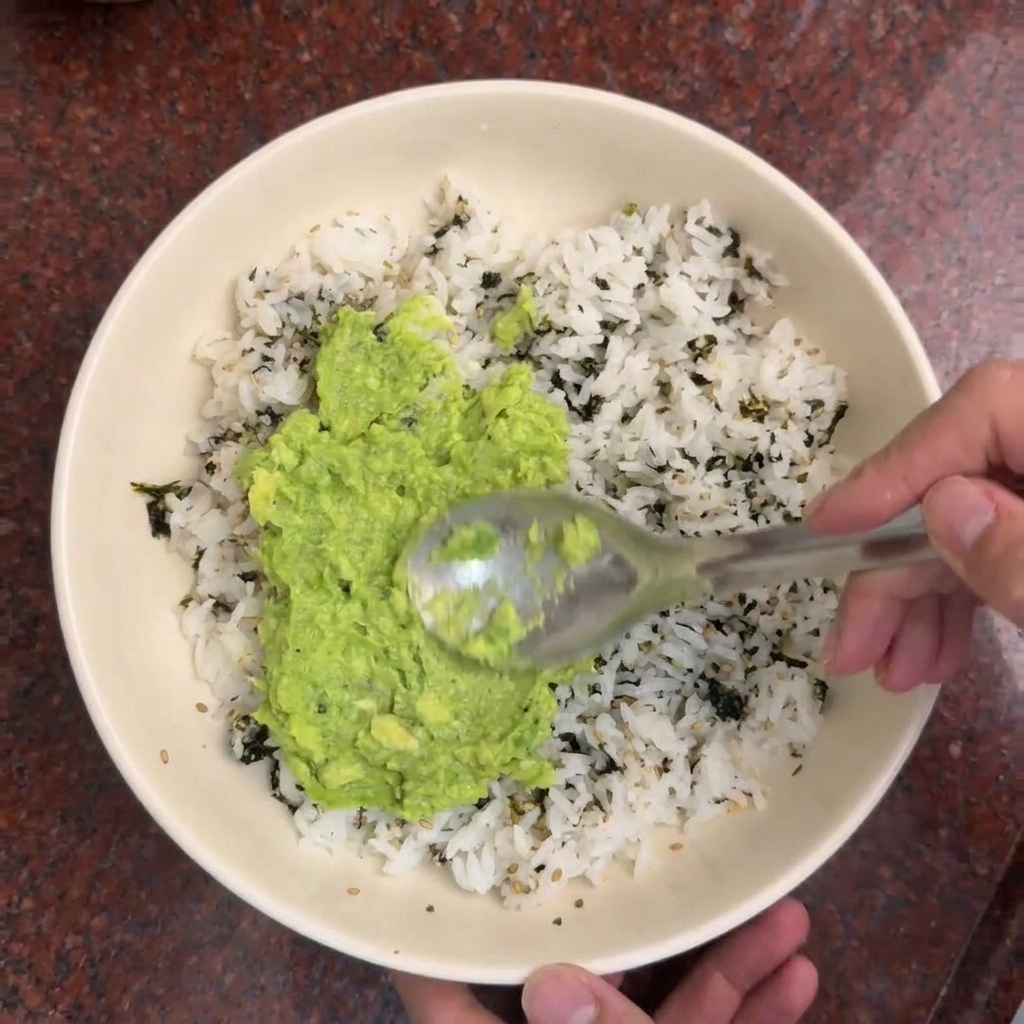
Spoon warm white rice into your serving bowl and mix in dried seaweed flakes for an earthy depth. Layer the seasoned mashed avocado paste over the rice, spreading it evenly with the back of a spoon to create a smooth, buttery foundation.
Tip: If the avocado is very thick, add a tiny splash of water or olive oil while mashing to make it easier to spread. - 11Add the marinated salmon
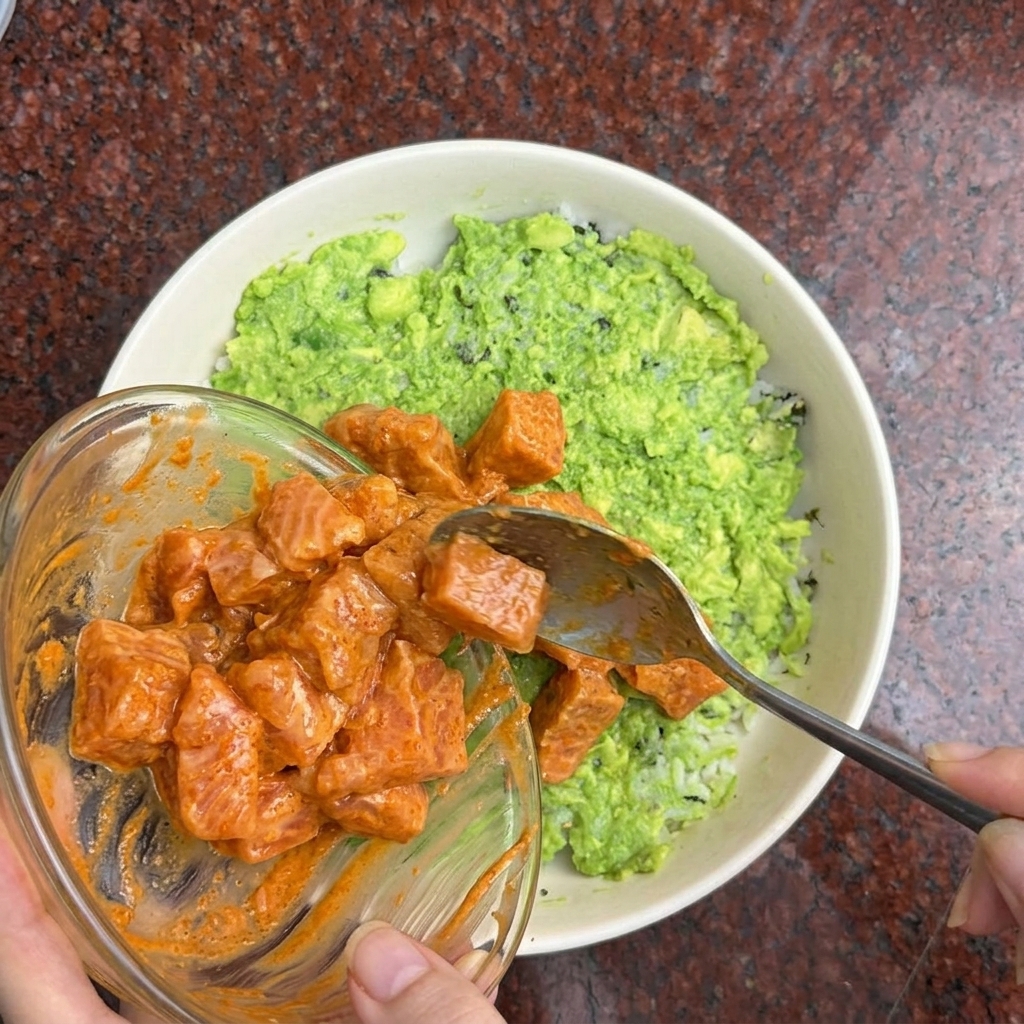
Take your salmon cubes, which have been tossed in the spicy mayo and mustard sauce, and spoon them onto the bowl. Arrange the pieces in a ring around the outer edge of the avocado layer, leaving a small well in the center for the final egg garnish.
Tip: For the best flavor, let the salmon marinate in the sauce for at least 5-10 minutes while the eggs are simmering. - 12Add the onsen egg
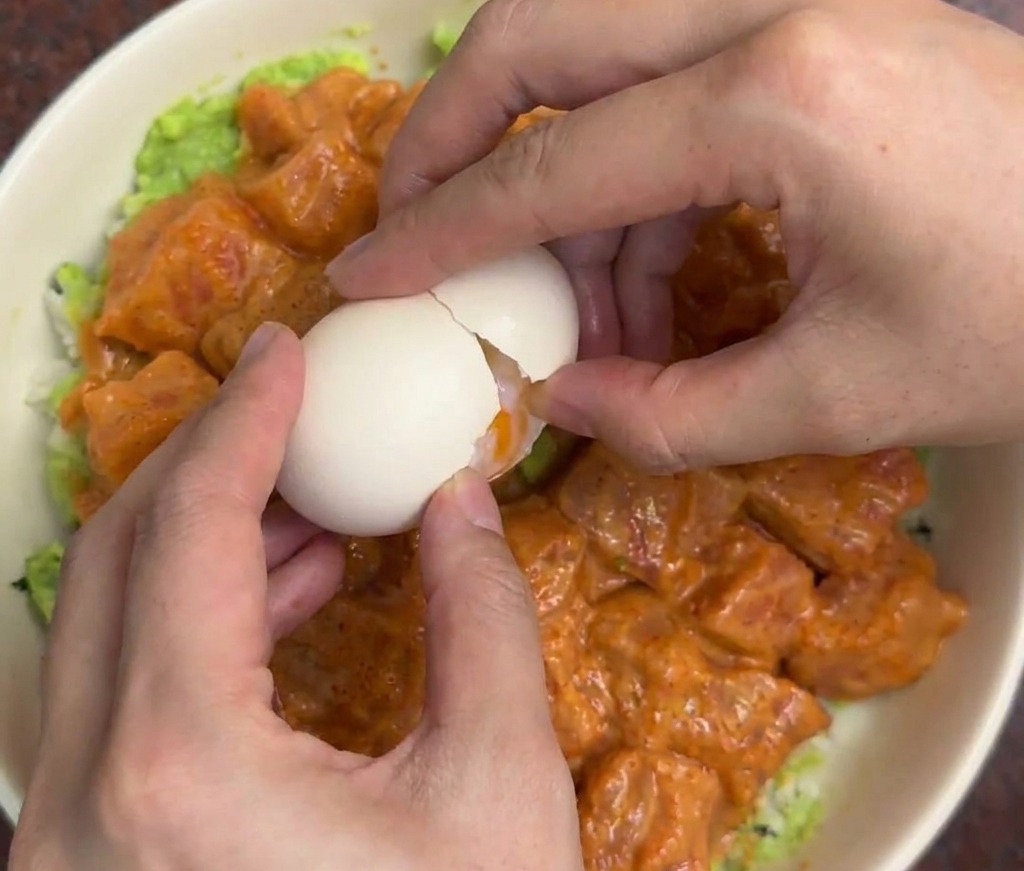
Carefully crack your prepared onsen egg into the well at the center of the salmon. The egg should be delicate and soft, ready to provide a rich, creamy sauce for the rice and fish once mixed.
Tip: If youre nervous about shell fragments, crack the egg into a small ramekin first before sliding it onto the salmon. - 13Season with furikake
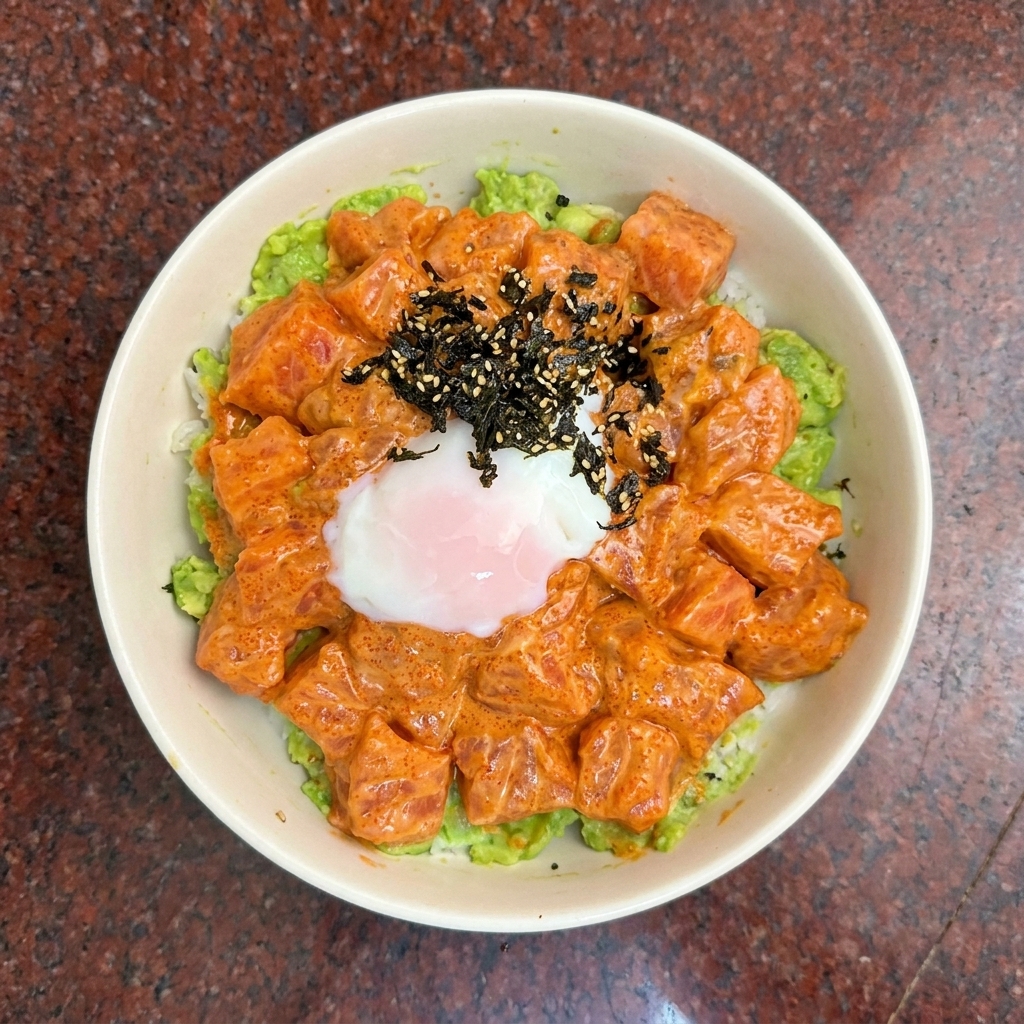
Add a sprinkle of dark, sesame-based furikake or shredded roasted seaweed over the top. This seasoning adds a savory umami depth and a pleasant crunch that contrasts with the soft salmon.
Tip: You can adjust the amount of furikake based on how salty you want the final bowl to be.