Norwegian Mackerel
Tofu Miso Soup
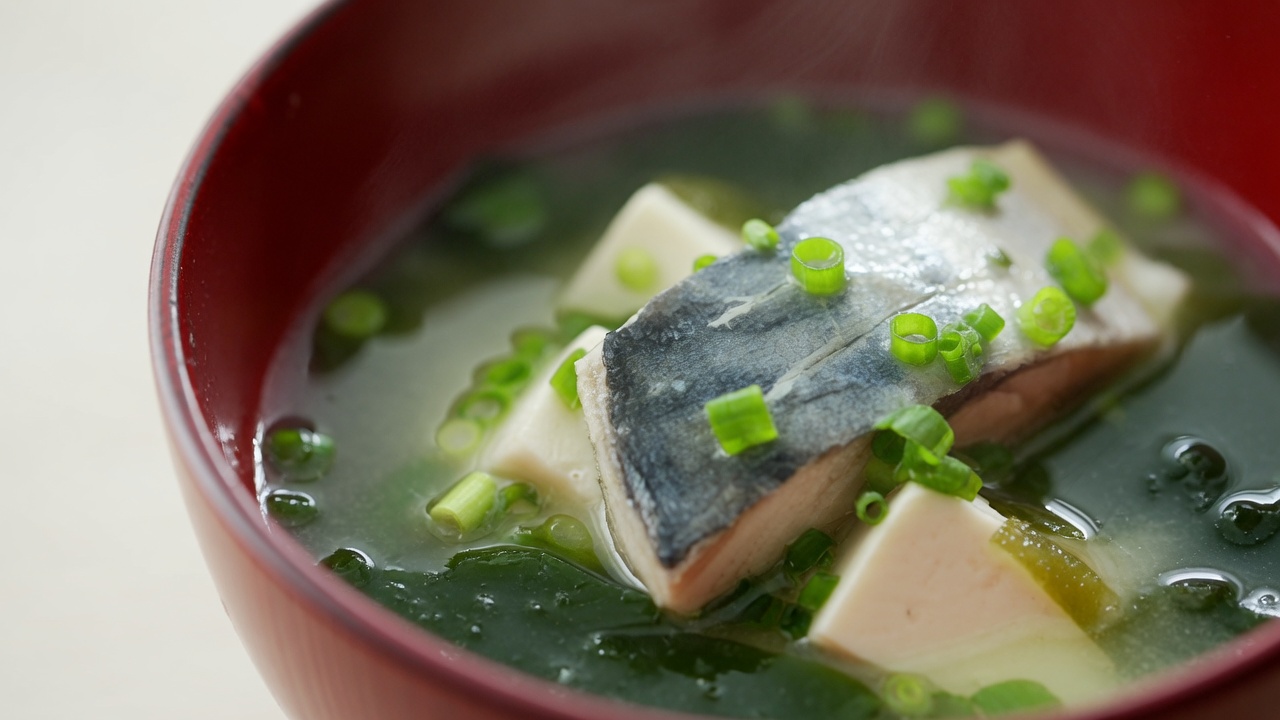
Warm up with this comforting Norwegian mackerel and tofu miso soup. Rich in healthy Omega-3s, this simple winter dish combines silky tofu, tender mackerel, and savory dashi broth.
Miso soup is a cornerstone of Japanese home cooking, often adapting to the seasons and available ingredients. Incorporating rich, oily fish like Norwegian mackerel adds a hearty depth and a boost of healthy fats, making it a perfect winter warmer. The technique of blanching the fish before adding it to the delicate miso broth ensures a clean, refined flavor without any overpowering fishiness.
Ingredients
- 1 fillet Norwegian mackerel
- 1 small piece fresh ginger, shredded
- 2 tbsp cooking sake
- 1 tbsp dried wakame seaweed
- 1/2 block firm white tofu
- 2 cups dashi broth
- 2 cups water
- 3–4 tbsp white miso paste
- to taste scallions, chopped
Instructions
- 1Wash the mackerel

Place the thawed Norwegian mackerel under running water and wash it thoroughly. Gently pat the fish dry with a paper towel to prepare it for the next steps.
Tip: Ensure the mackerel is completely dry after washing to help remove any remaining fishy odor. - 2Season with ginger and sake
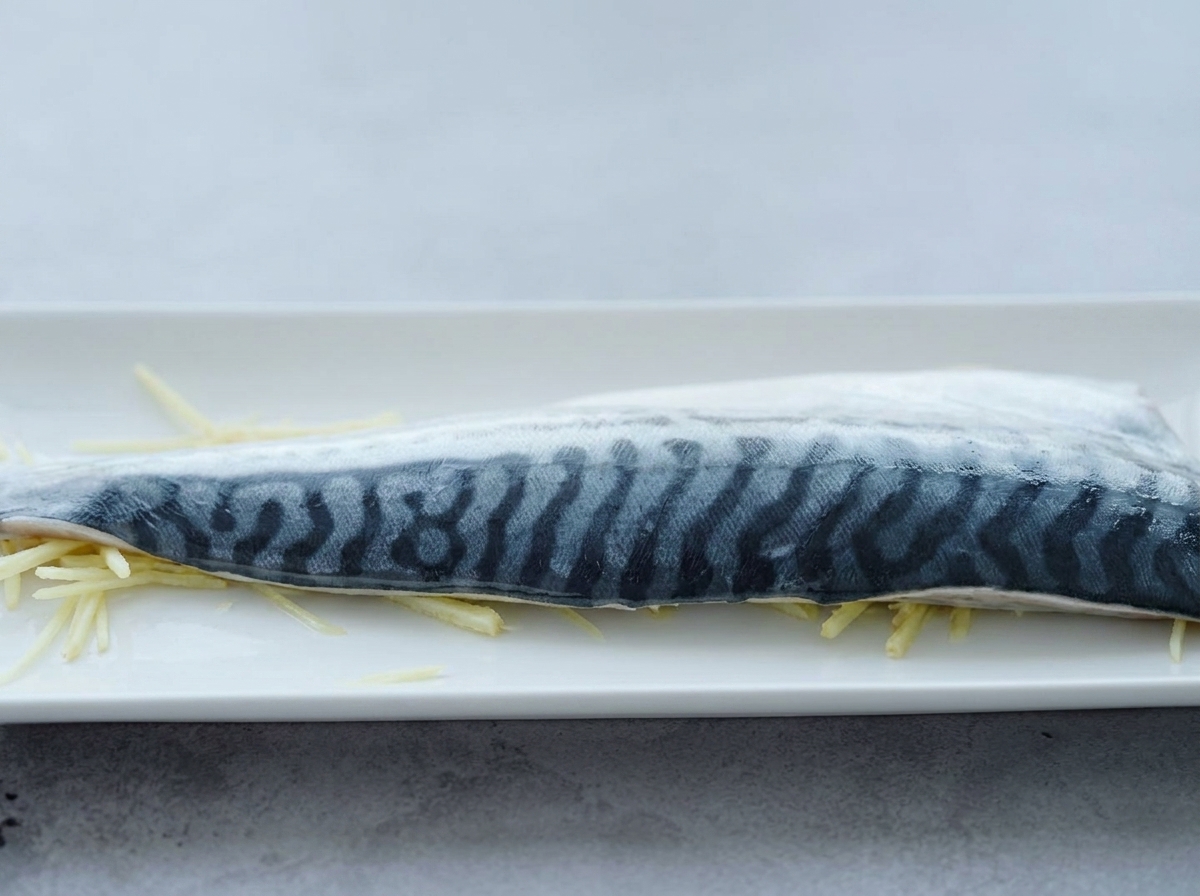
Arrange the mackerel on a bed of fresh, shredded ginger. Drizzle cooking sake generously over the fish to help neutralize any fishy smell and enhance the flavor.
Tip: Using ginger and sake together is a classic technique to clean and aromaticize seafood. - 3Slice the mackerel
After patting the fish dry again, use a sharp chefs knife to slice the mackerel fillet into even pieces, approximately two fingers wide.
Tip: Use a sharp knife to ensure clean cuts without tearing the delicate fish flesh. - 4Blanch the mackerel
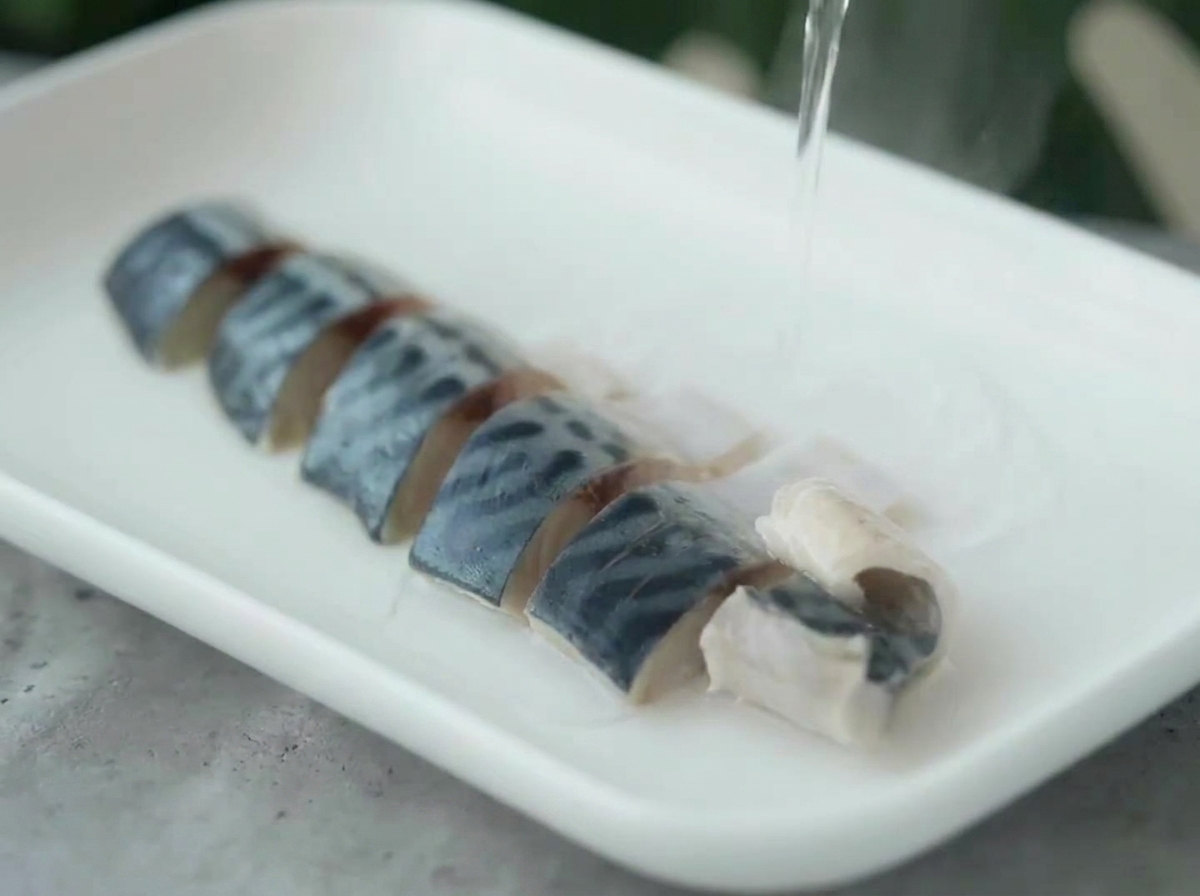
Place the mackerel pieces on a plate and carefully pour hot water (around 80 degrees Celsius) over them. This process tightens the fish skin and firms up the meat.
Tip: Blanching in hot water not only improves the texture but also removes residual impurities. - 5Rehydrate the wakame
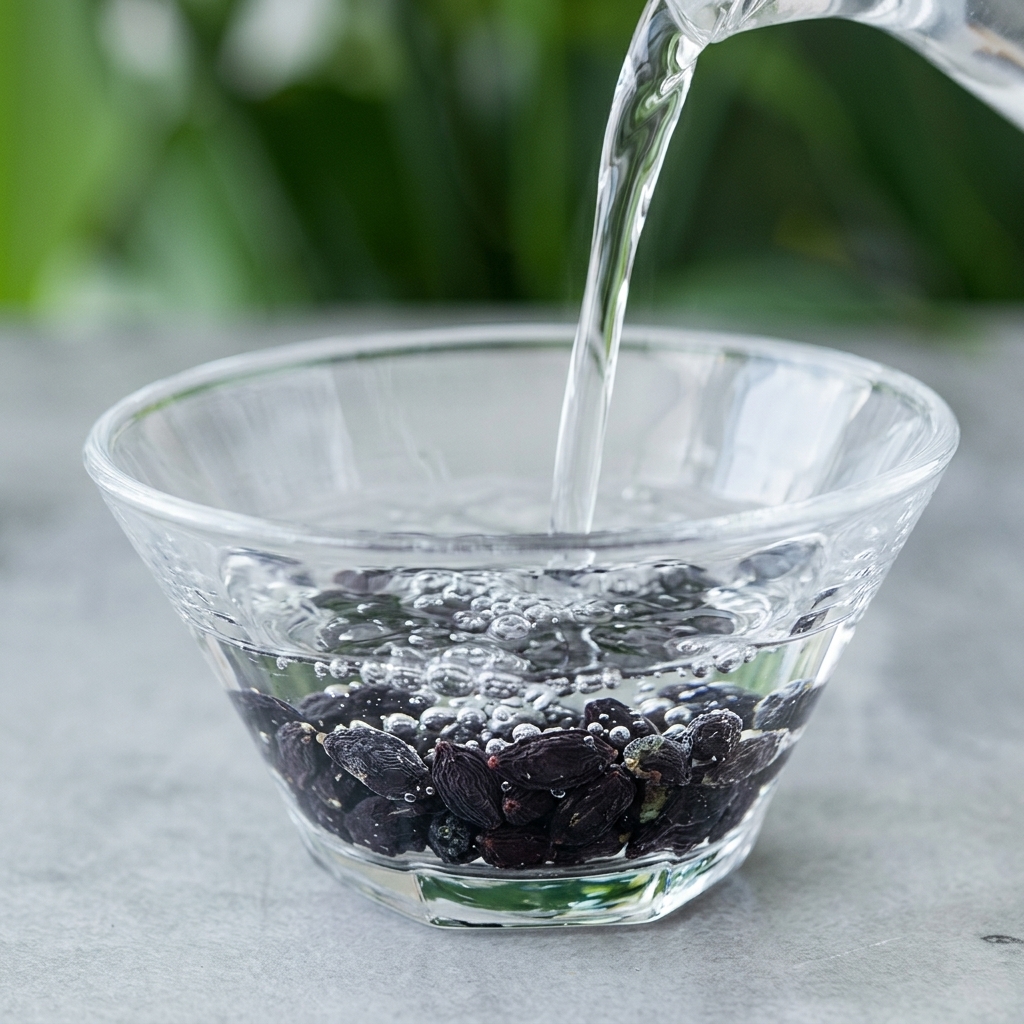
Place the dried wakame seaweed into a clear glass bowl. Pour warm water over it and let it soak until the seaweed has fully rehydrated and expanded.
Tip: Warm water helps the wakame rehydrate quickly without losing its texture. - 6Prepare the tofu
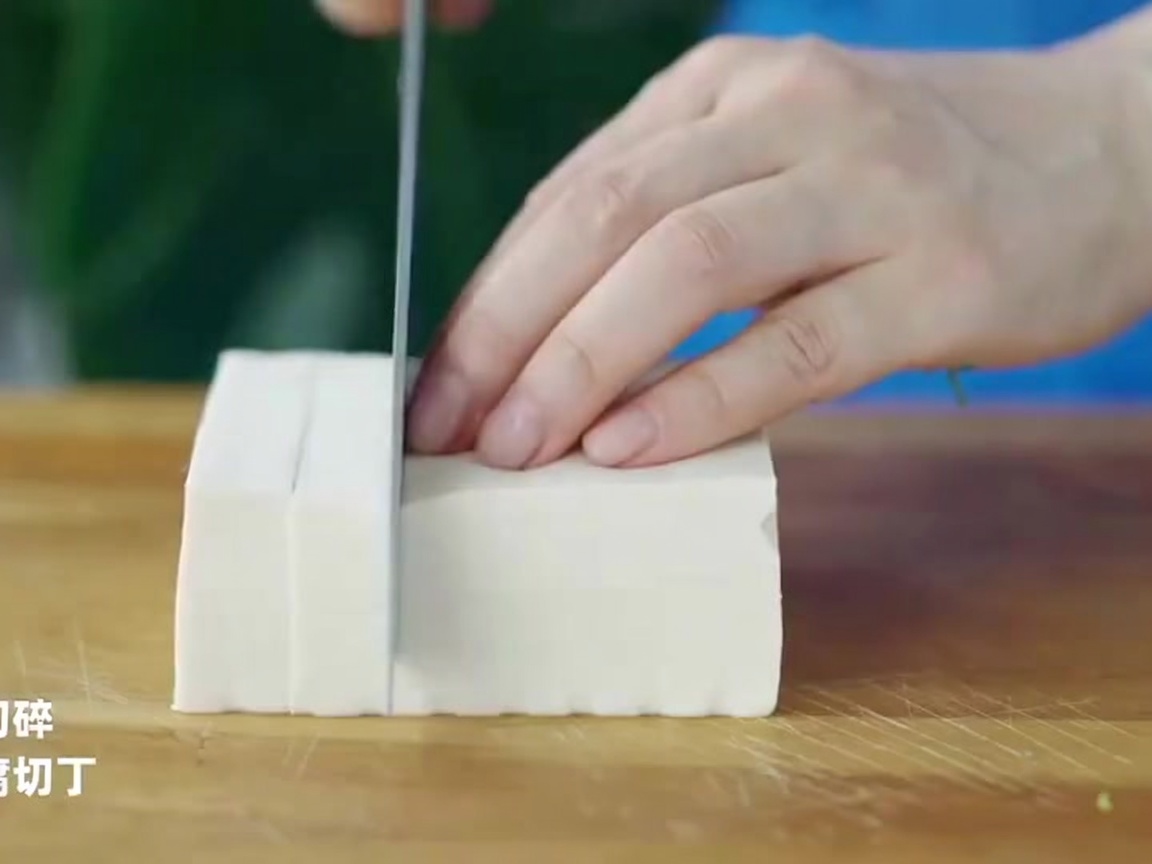
Take a block of firm white tofu and carefully cut it into small, uniform cubes on a wooden cutting board to ensure they cook evenly in the soup.
Tip: Uniformly sized cubes will absorb the flavors of the miso broth better. - 7Prepare the soup base
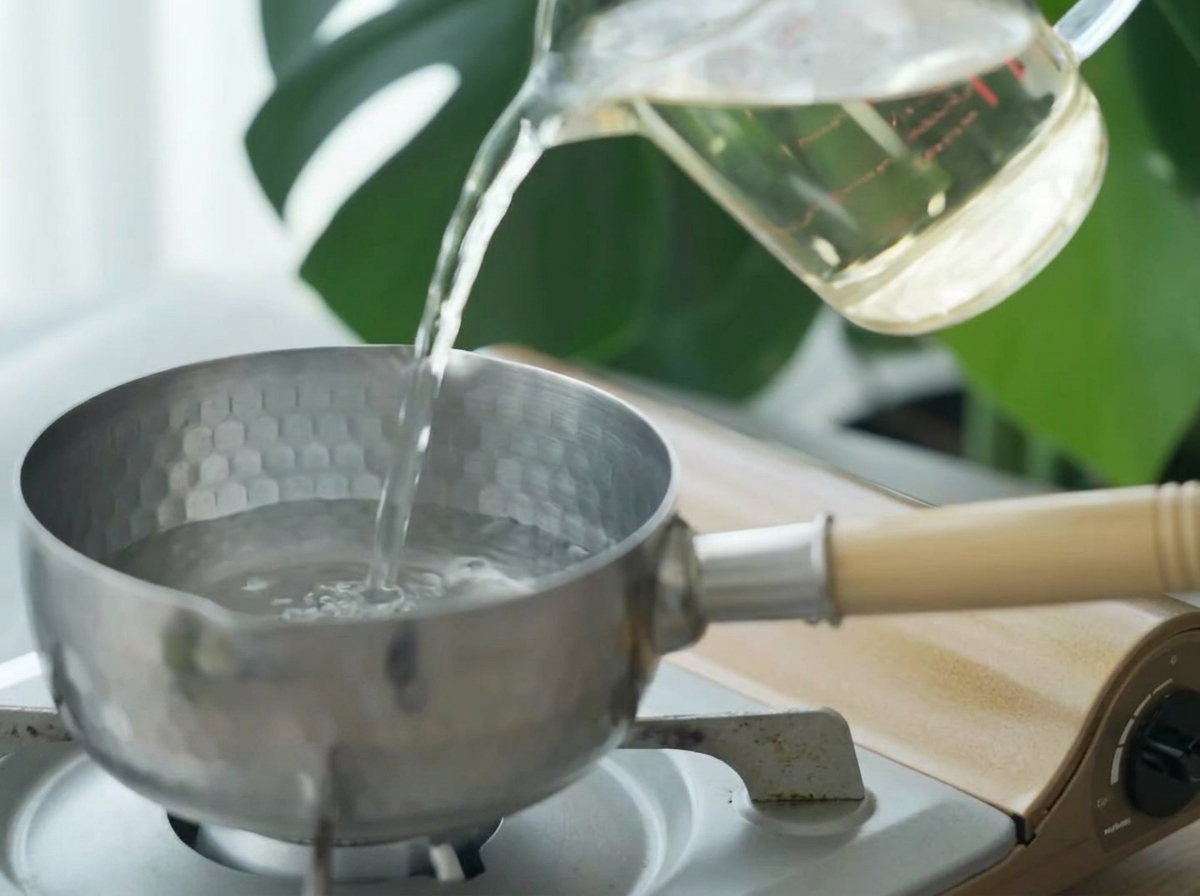
In a pot, combine the dashi broth and water. Place the pot on the stove and bring the mixture to a boil to create the foundation for the miso soup.
Tip: Using dashi provides an essential umami depth that plain water lacks for a traditional miso soup base. - 8Dissolve the miso
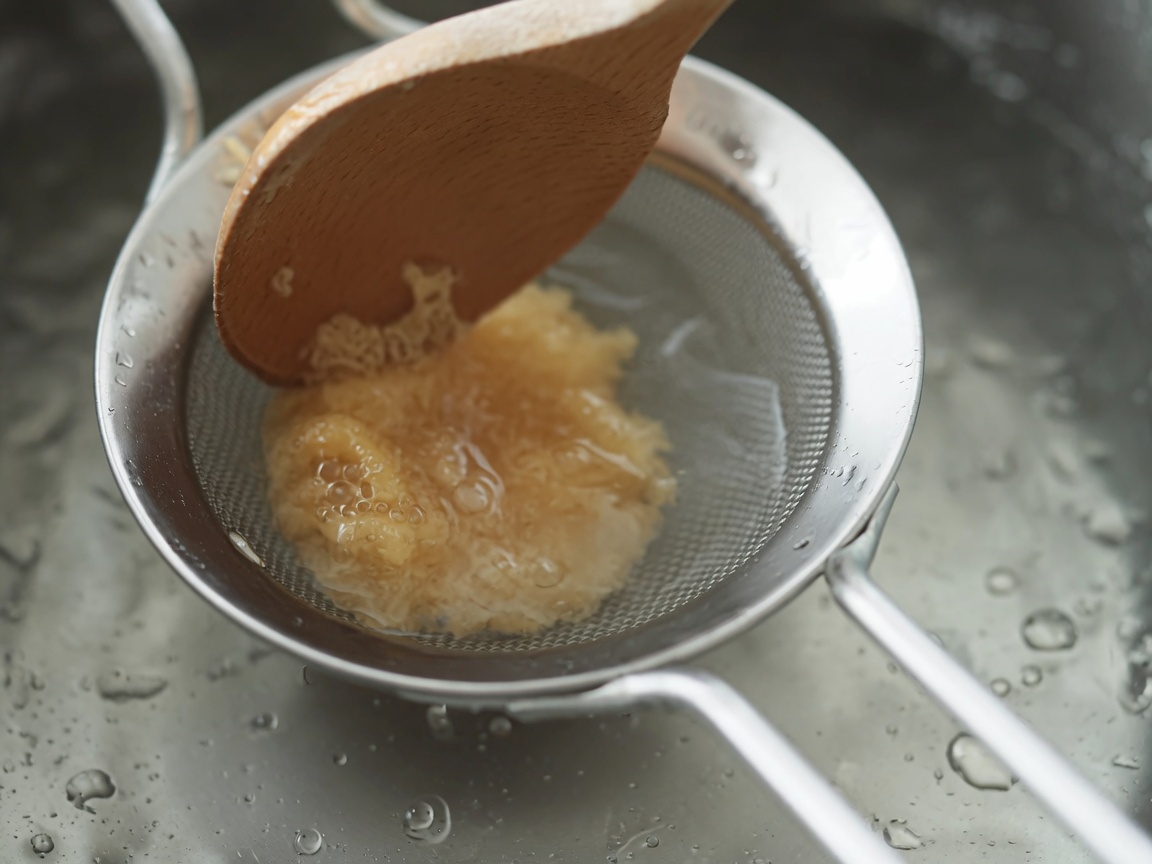
Once the broth is boiling, place a wire mesh strainer over the pot and add the white miso paste. Use a wooden spoon to press and dissolve the miso through the strainer into the soup until smooth.
Tip: Using a strainer prevents miso clumps, ensuring a silky texture throughout the soup. - 9Add the tofu
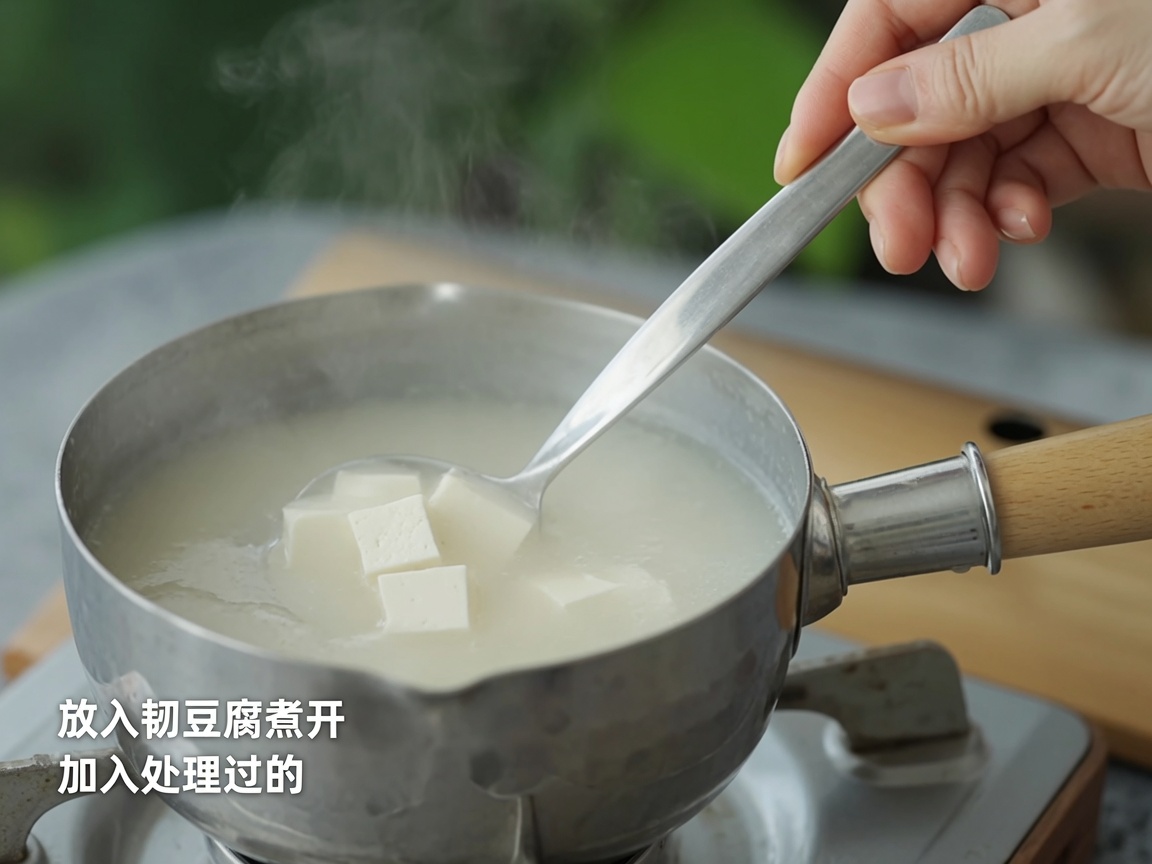
Gently add the pre-cut cubes of white tofu into the simmering miso broth. Bring the mixture back to a gentle boil.
Tip: Add the tofu carefully to ensure the cubes remain intact and do not break apart in the pot. - 10Add the mackerel
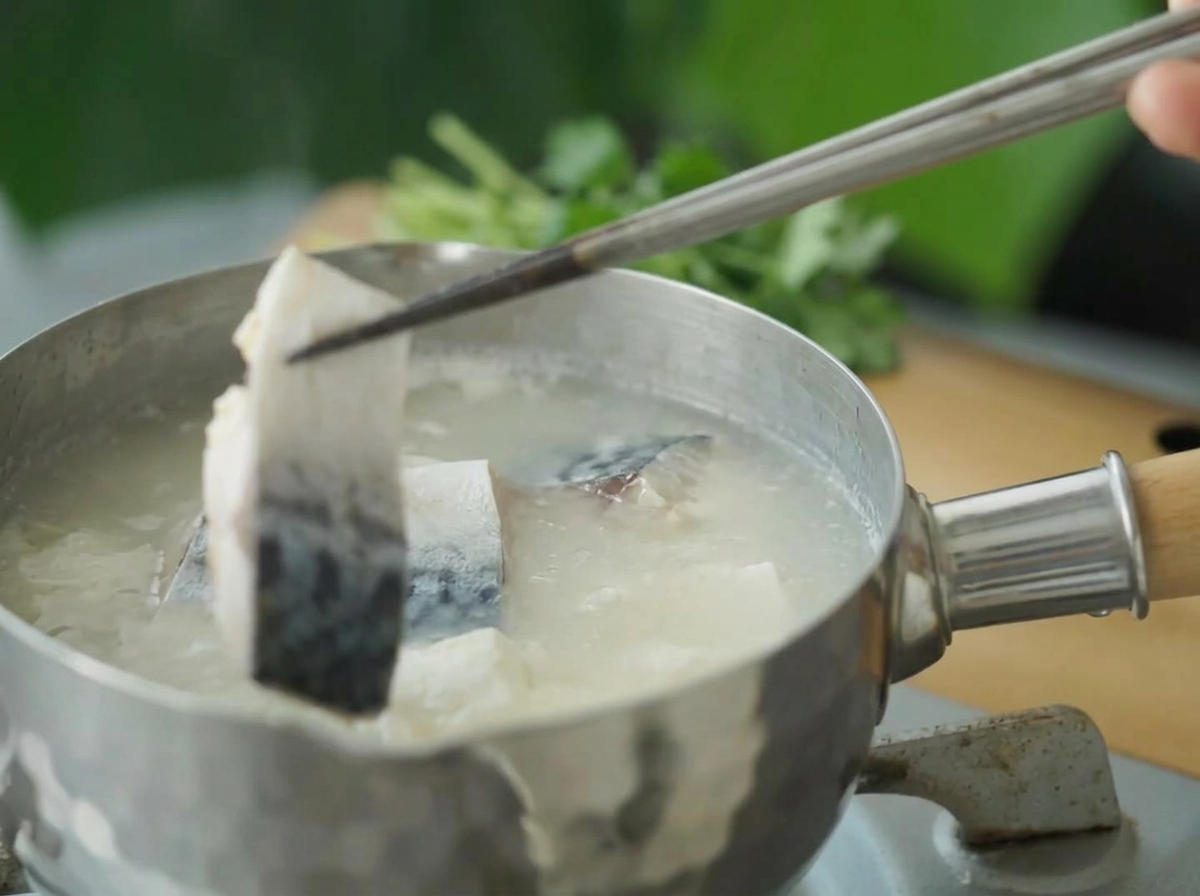
Carefully place the prepared, blanched mackerel pieces into the boiling soup using chopsticks to avoid splashing.
Tip: Ensure the mackerel is added gently to maintain the structure of the firm, blanched fish pieces. - 11Add the wakame
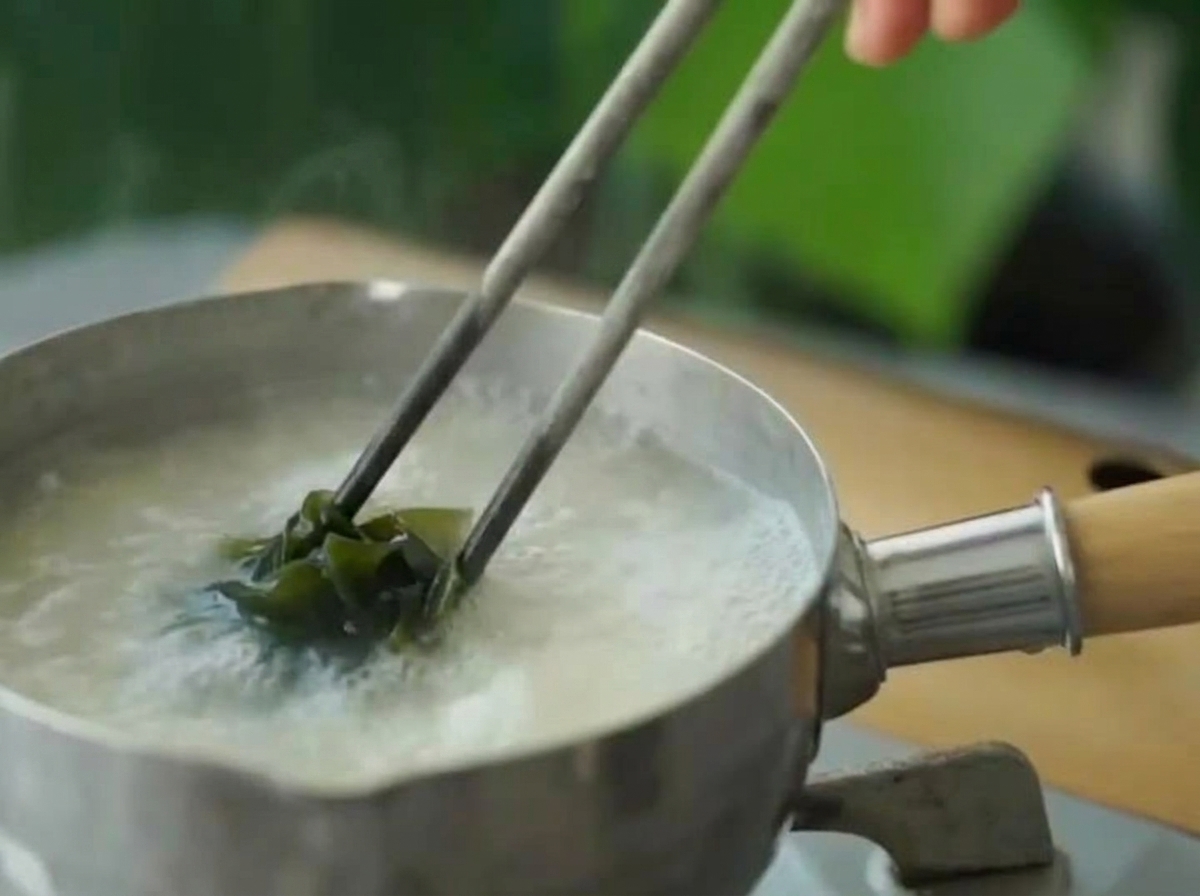
Add the previously soaked and rehydrated green wakame seaweed into the soup. Allow it to cook briefly with the other ingredients.
Tip: Wakame rehydrates quickly; add it near the end to maintain its vibrant green color and texture. - 12Serve the soup
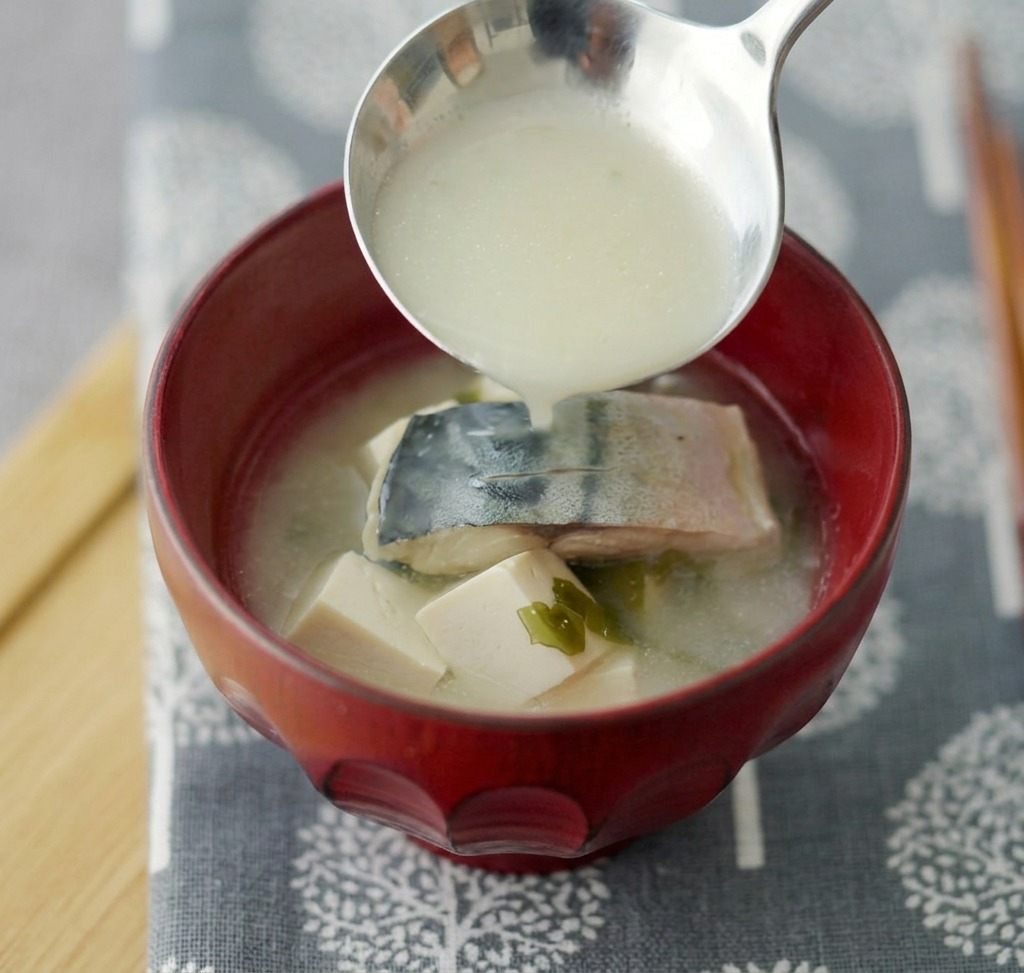
Ladle the hot soup, containing the mackerel, tofu, and wakame, into a serving bowl. Garnish with chopped scallions before serving.
Tip: Serve immediately while piping hot for the best flavor and texture.