Warming Kimchi Seafood Pot (Korean Kimchi Jjigae)
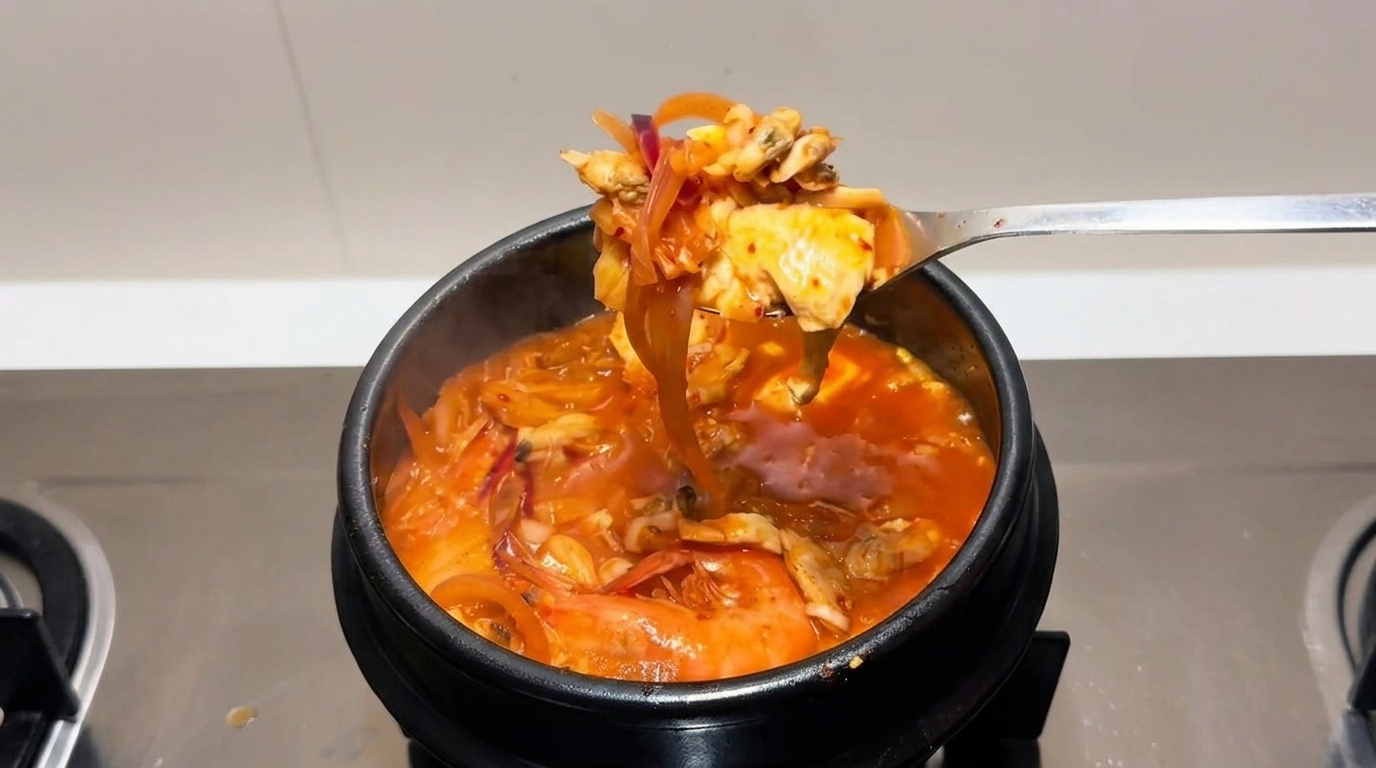
A comforting Korean kimchi seafood stew packed with plump shrimp, clams, and octopus. Simmered in a rich, fiery broth with sour kimchi and silky tofu.
Kimchi Jjigae, or kimchi stew, is one of the most beloved comfort foods in Korean cuisine. While traditional versions often feature pork, adding a variety of fresh seafood like shrimp, clams, and octopus elevates the dish into a luxurious, briny feast known as Haemul Kimchi Jjigae. The natural sweetness of the seafood beautifully balances the robust, fiery tang of well-fermented kimchi, creating a complex broth that warms from the inside out.
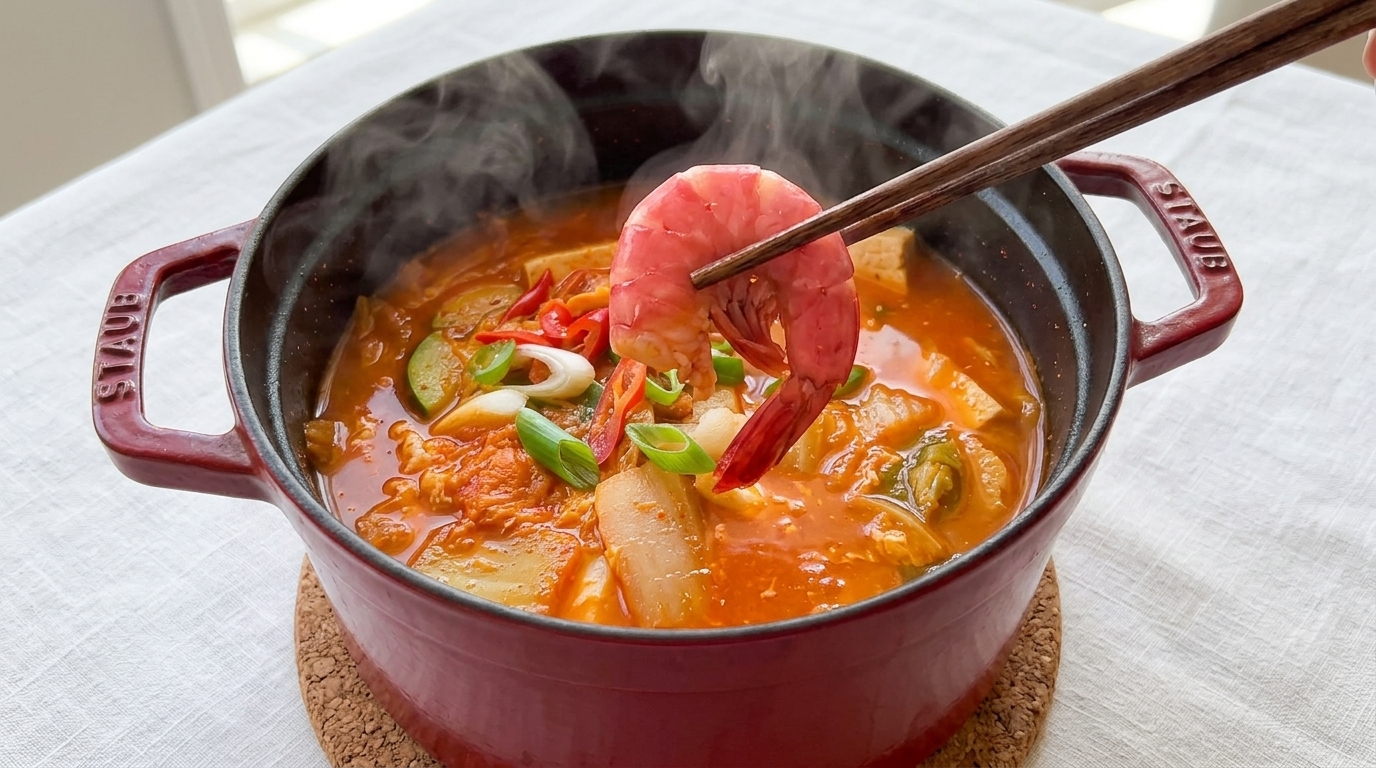
Ingredients
- 1 tbsp cooking oil
- 1 tbsp minced garlic
- 2 stems scallions, sliced
- 1 red chili, sliced
- 1 green chili, sliced
- 200 g well-fermented kimchi, chopped
- 500 ml boiling water
- 200 g firm white tofu, sliced
- 1/2 zucchini, sliced
- 150 g fresh clams, cleaned
- 4 whole raw shrimp
- 100 g octopus tentacles, cut into pieces
- 2 tbsp Korean chili paste (Gochujang)
- 1 tbsp soy sauce
- 1/2 tbsp white sugar
- 1/2 tbsp beef broth powder
- 1 raw egg
Instructions
- 1Heat the pot and add oil
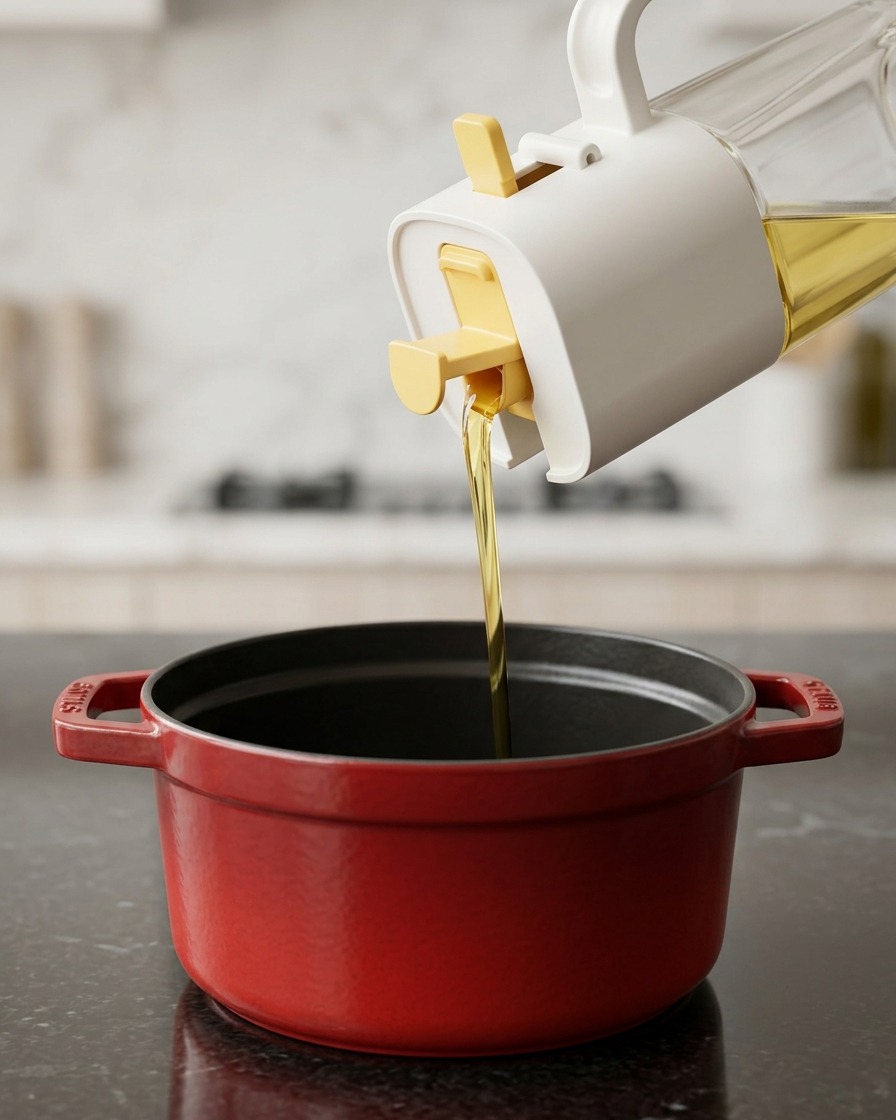
Place your pot over medium heat and pour in the cooking oil. Allow the oil to warm up before adding the aromatics, ensuring they sizzle gently upon contact.
Tip: A heavy-bottomed pot or cast iron works best for retaining even heat while making stews. - 2Sauté the aromatics
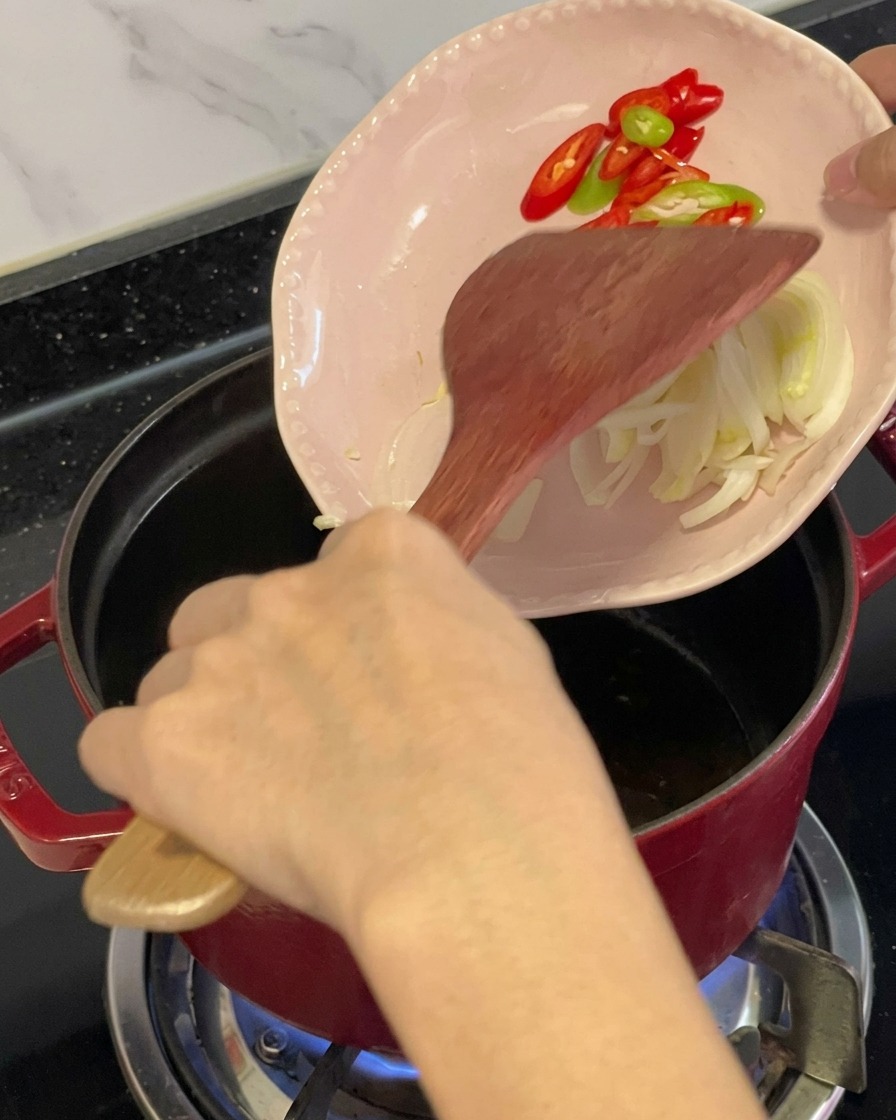
Add the minced garlic, sliced scallions, and chilies into the heated oil. Sauté them gently for about a minute until fragrant, building a robust aromatic base layer for the seafood stew.
Tip: Be careful not to burn the aromatics, especially the garlic, as it can introduce a bitter taste to the broth. - 3Stir-fry the kimchi
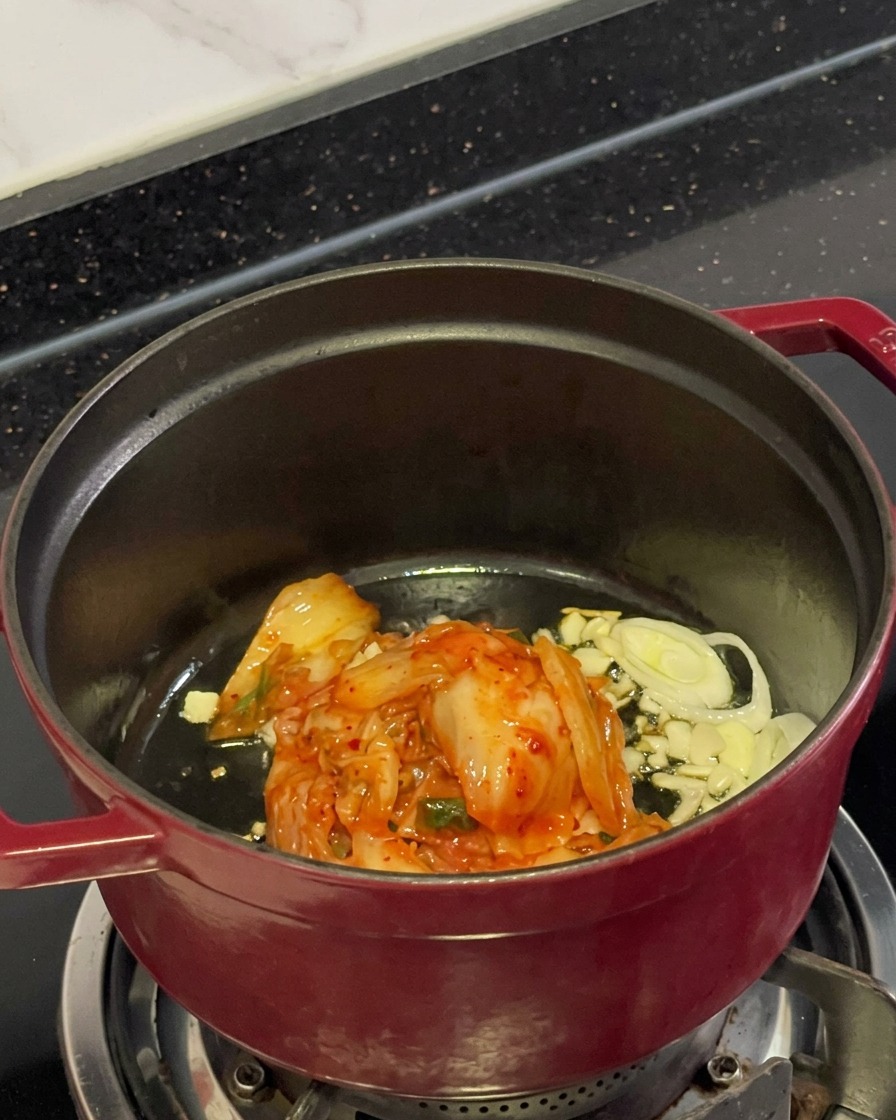
Introduce the chopped kimchi into the pot with the aromatic base. Stir-fry the kimchi for a few minutes; this brief cooking process deepens its tangy profile and infuses the oil with its vibrant red color.
Tip: Using well-fermented, sour kimchi will yield the most flavorful and authentic tasting stew broth. - 4Add boiling water
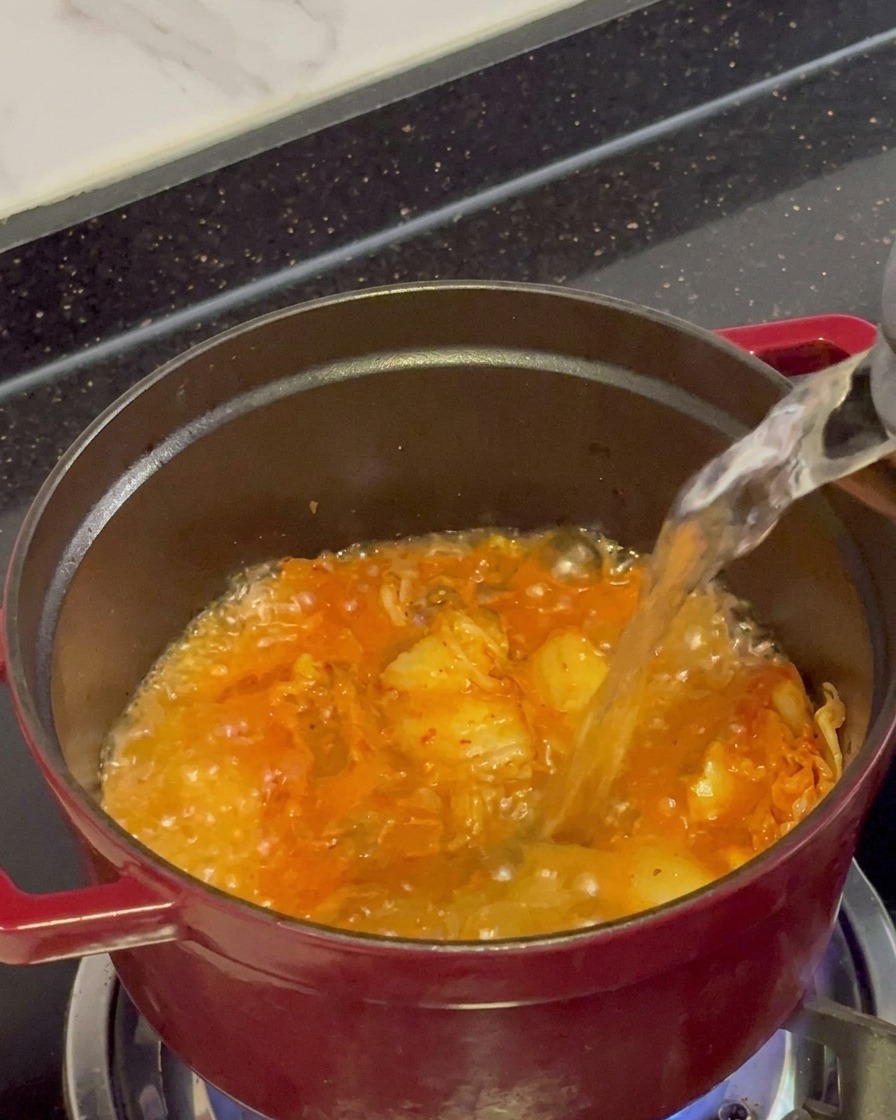
After lightly stir-frying the kimchi, pour hot boiling water directly into the pot to form the soup base. Using hot water instead of cold accelerates the cooking process and helps immediately extract the deep, spicy flavors from the sautéed kimchi.
Tip: For an even richer and more authentic flavor, you can substitute the boiling water with a light anchovy or kelp stock. - 5Add tofu and zucchini
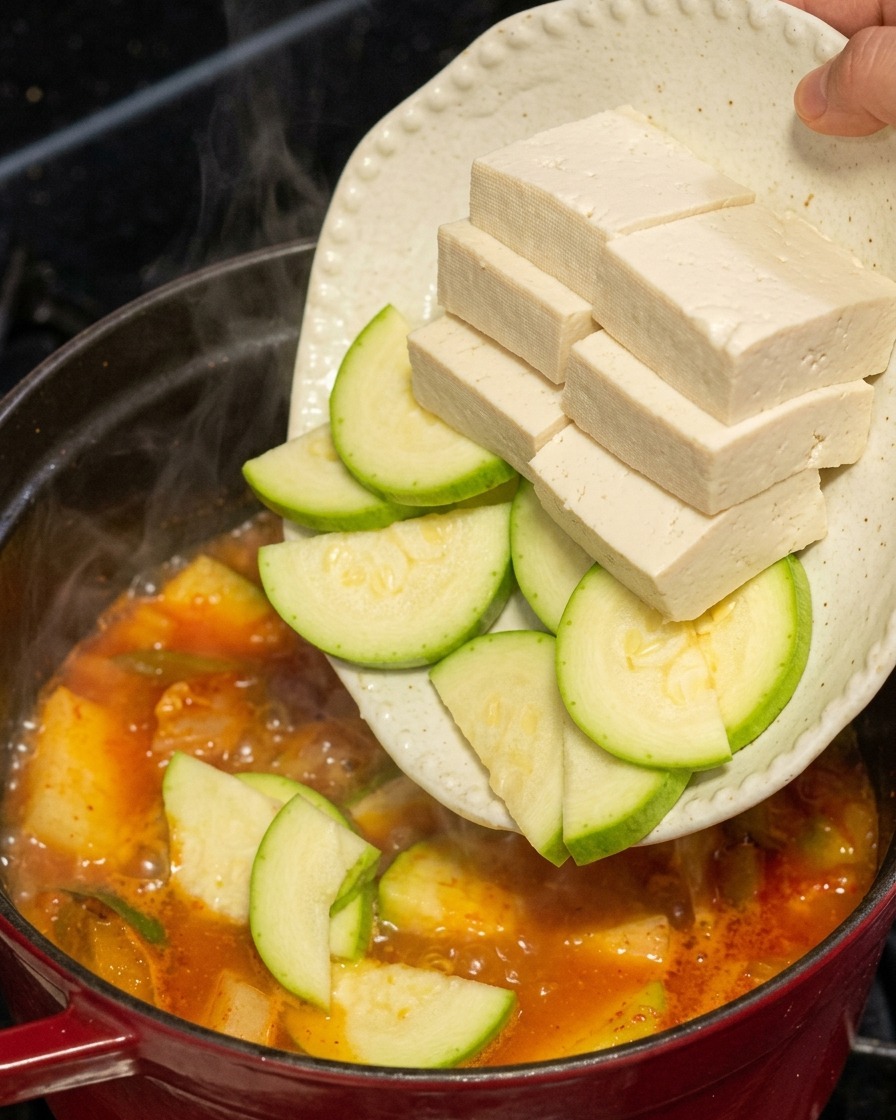
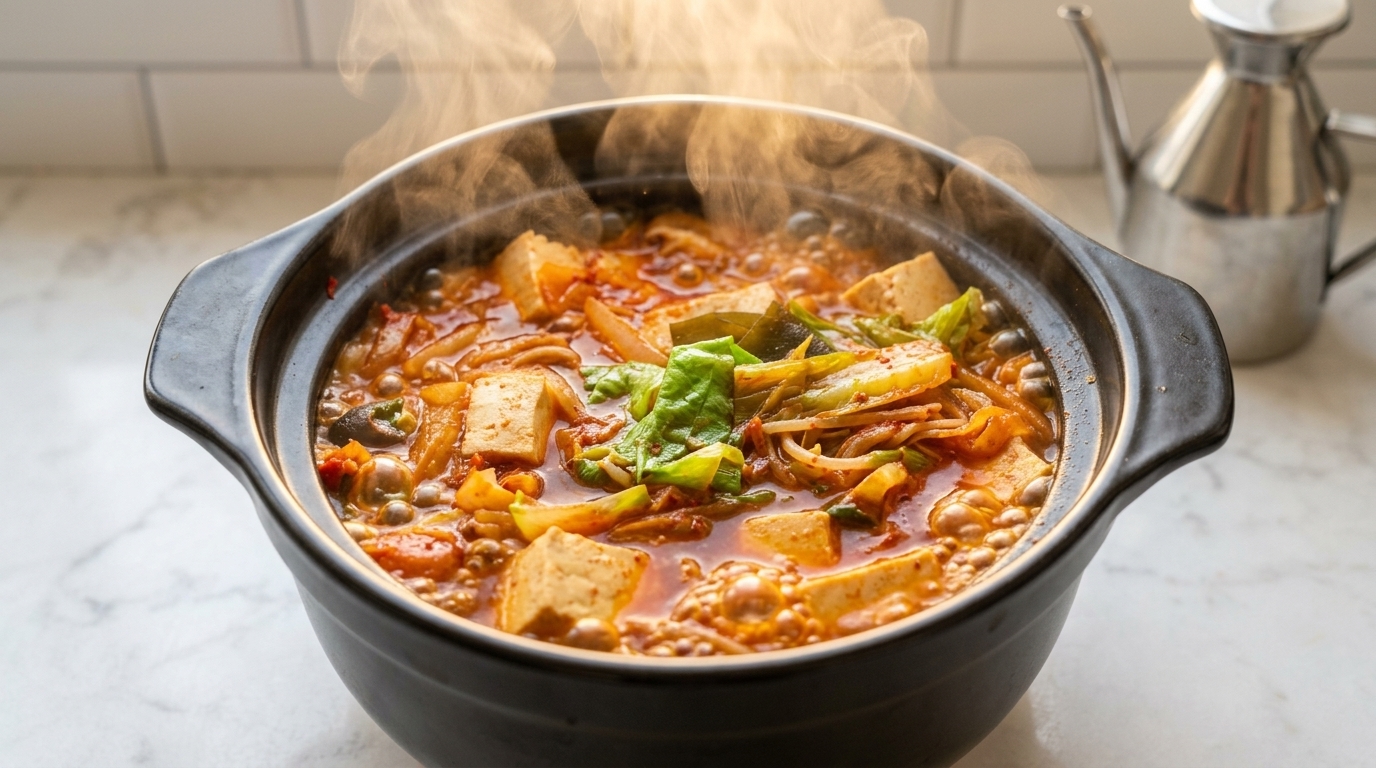
Once the broth is boiling, carefully slide in the thick slices of white tofu and green zucchini. Allow them to simmer in the flavorful liquid so they can absorb the spicy and tangy notes of the kimchi base.
Tip: Slice the tofu relatively thick so it doesnt break apart easily while simmering in the bubbling broth. - 6Add the mixed seafood
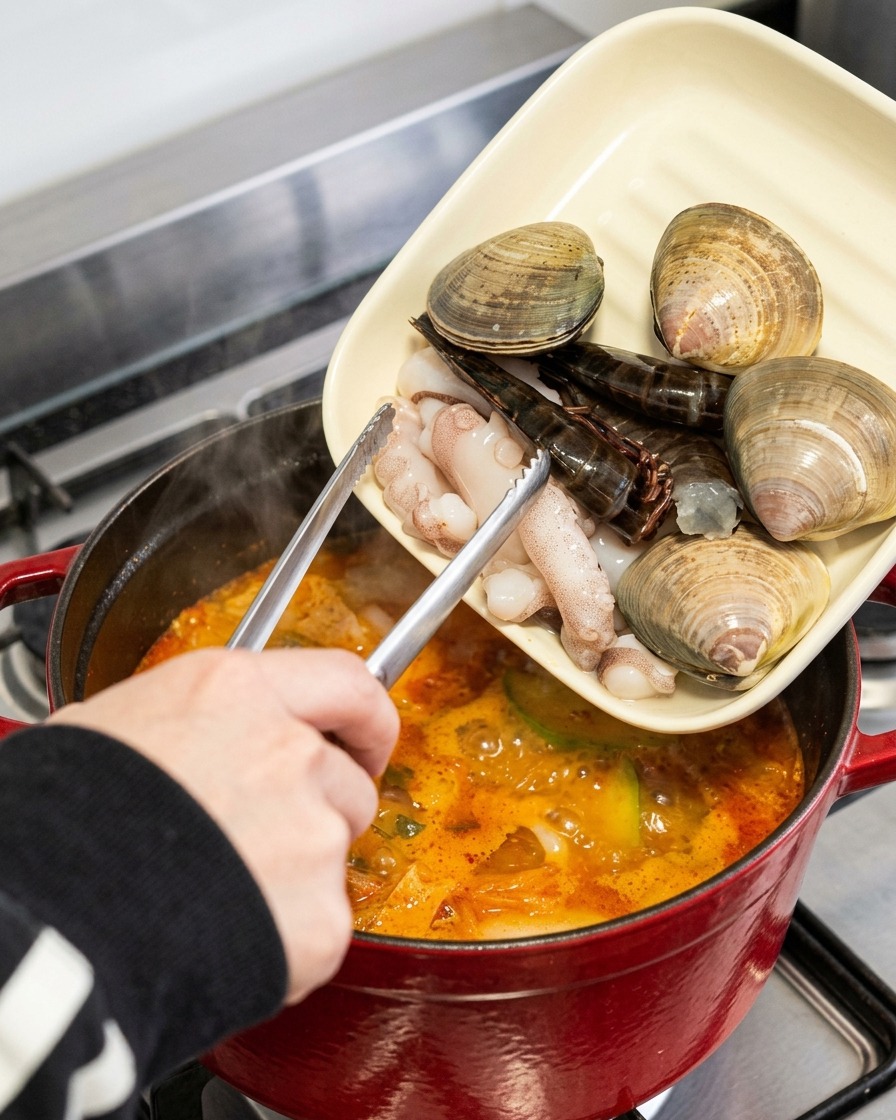
Gently place the raw clams, whole shrimp, and octopus tentacles into the stew. Stir lightly to submerge them in the bubbling broth and let everything cook together until the seafood is just tender.
Tip: Avoid overcooking the seafood, as shrimp and octopus can become tough and rubbery if left boiling for too long. - 7Stir in the seasoning
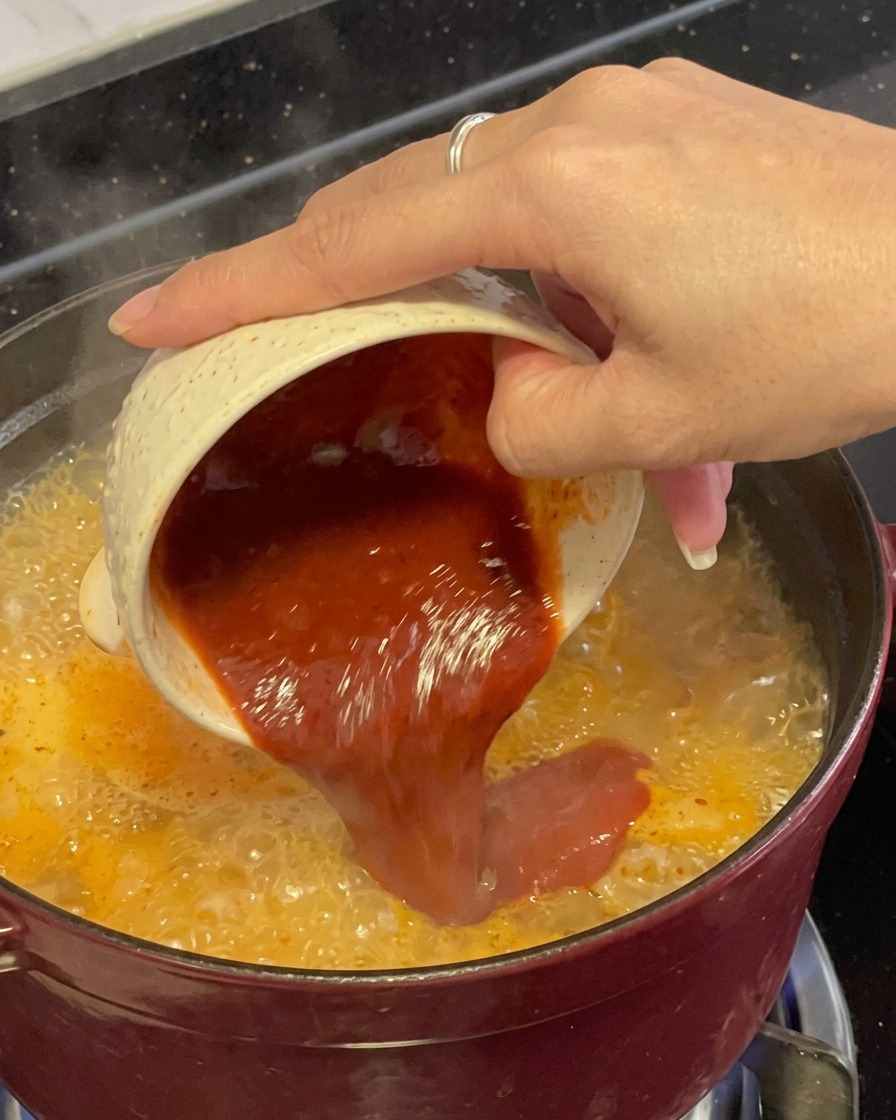
Once the seafood has been added and the pot returns to a rolling boil, introduce your seasoning blend. Pour the mixture of Korean chili paste, soy sauce, white sugar, and beef broth powder into the broth, stirring gently so the paste completely dissolves.
Tip: Mixing the thick chili paste with the liquid seasonings in a small bowl beforehand ensures a smooth, clump-free broth. - 8Add an egg
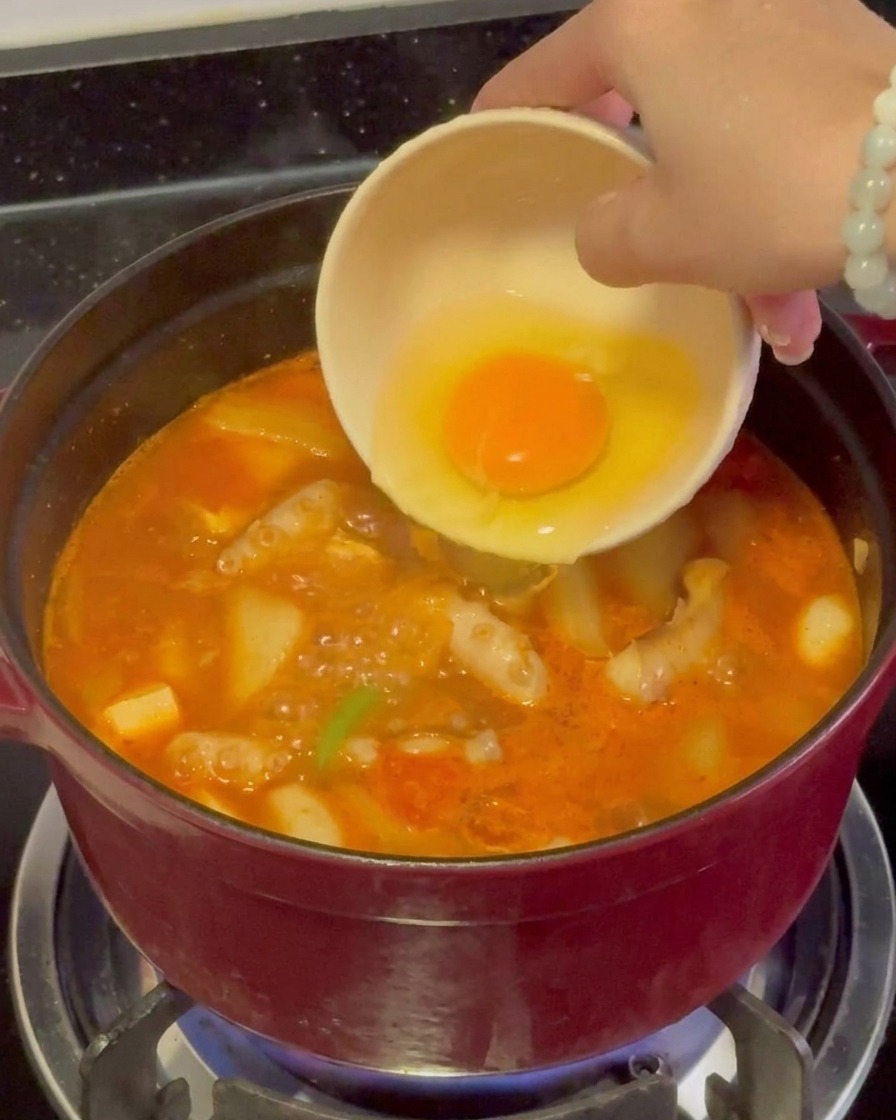
While the stew is boiling vigorously, carefully slip a raw egg directly into the center of the pot. You can leave the egg undisturbed to gently poach in the hot broth, or break the yolk to add a creamy richness to the soup.
Tip: Cracking the egg into a small bowl first makes it easier to slide it gently into the hot stew without splashing. - 9Garnish and serve
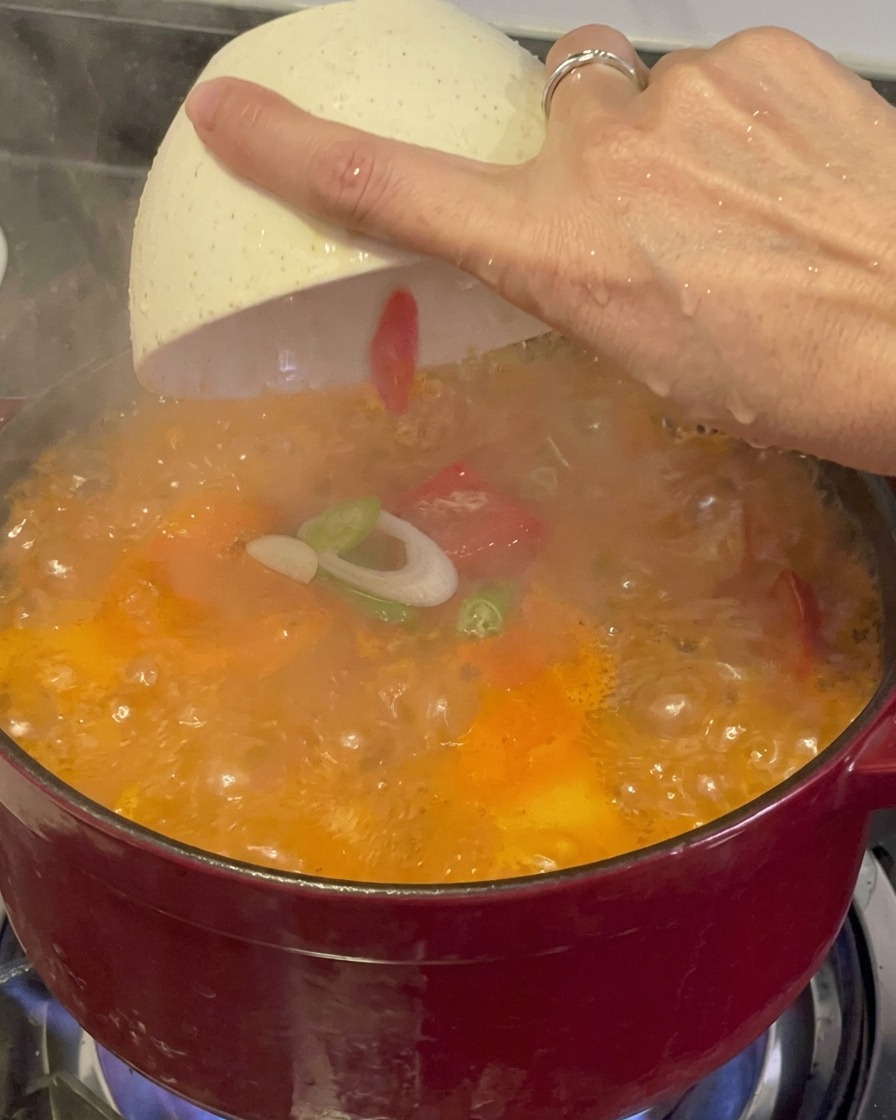
For the final touch, sprinkle sliced scallions and extra red chili pieces over the top of the boiling stew. Let it boil for just a few more seconds to release the fresh aroma of the garnishes, then turn off the heat. Your warming Kimchi Seafood Pot is ready to enjoy!
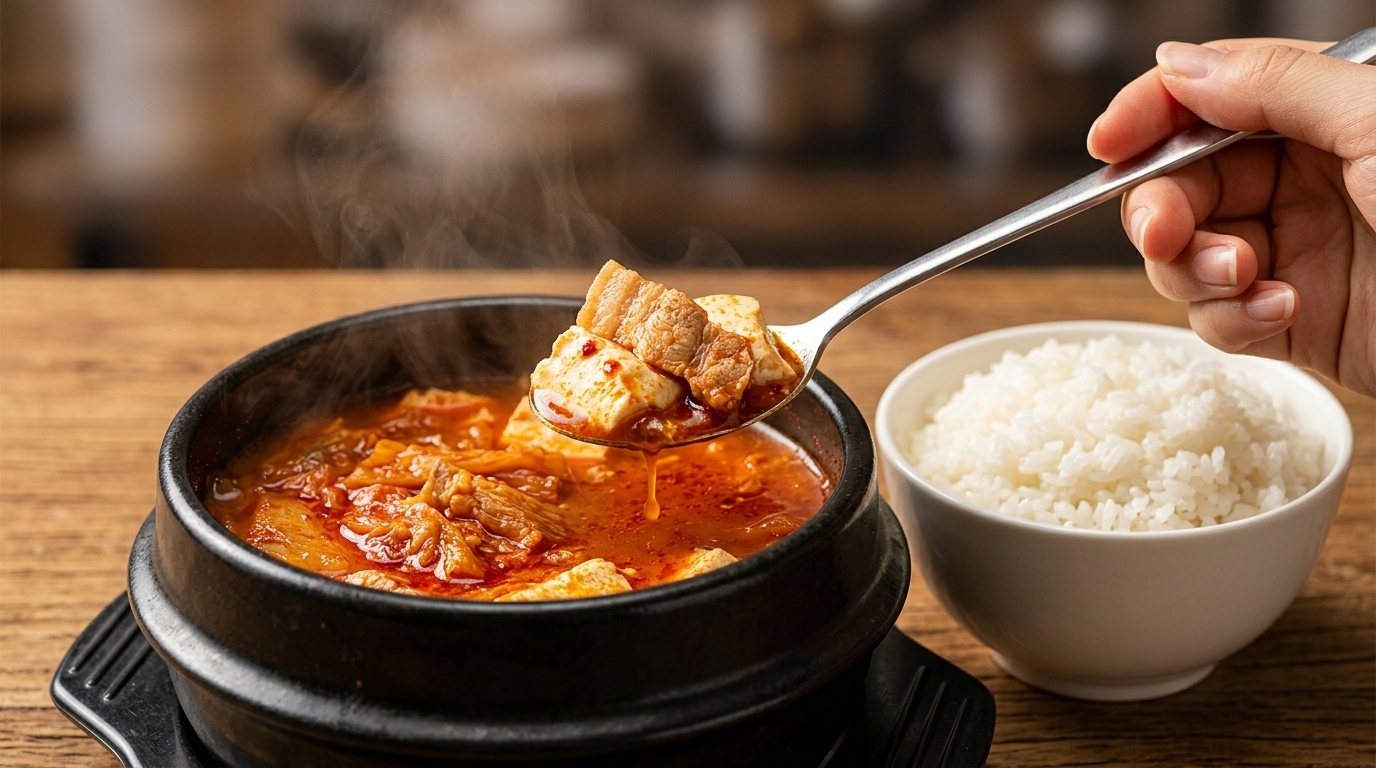
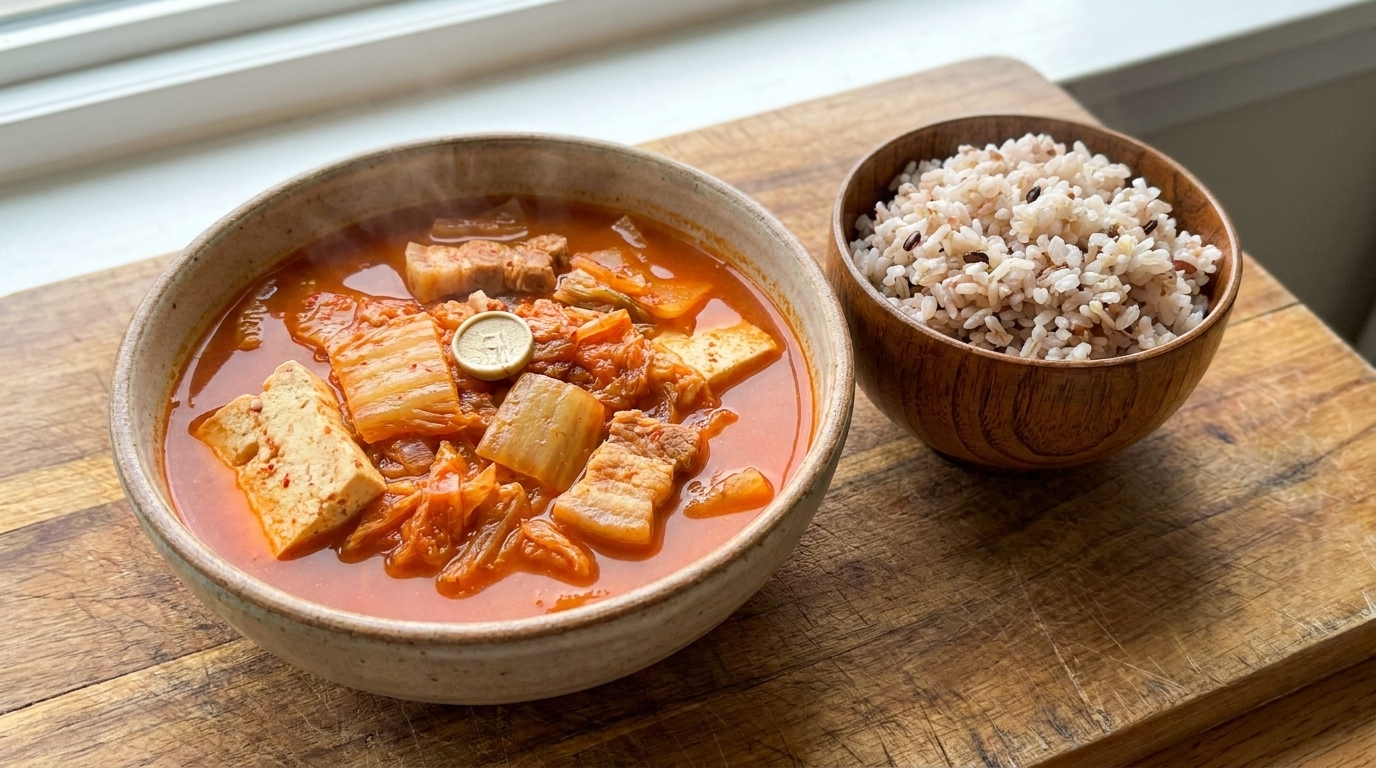
Tip: Serve the stew immediately while it is still bubbling hot, ideally with a side of freshly steamed white rice.