Authentic Kimchi Jjigae (Pork
Kimchi Stew)
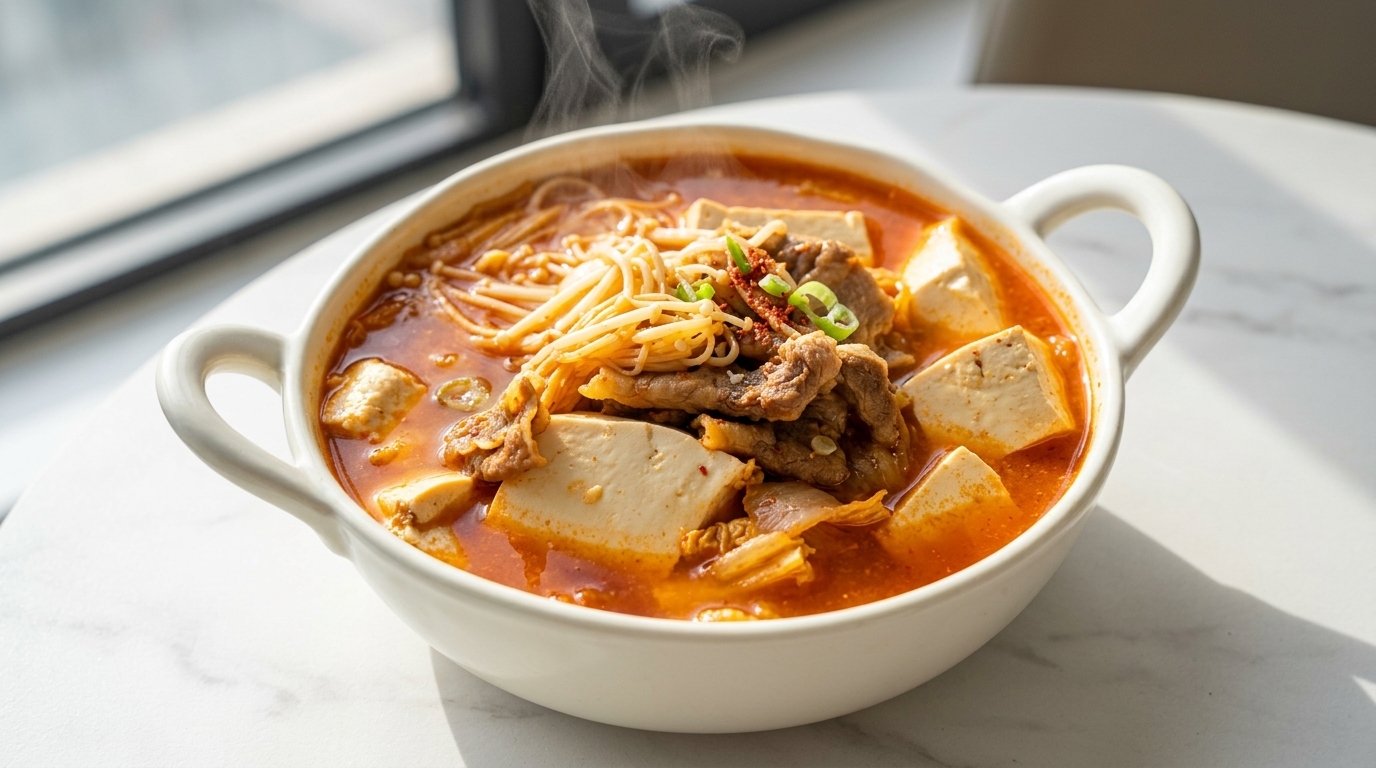
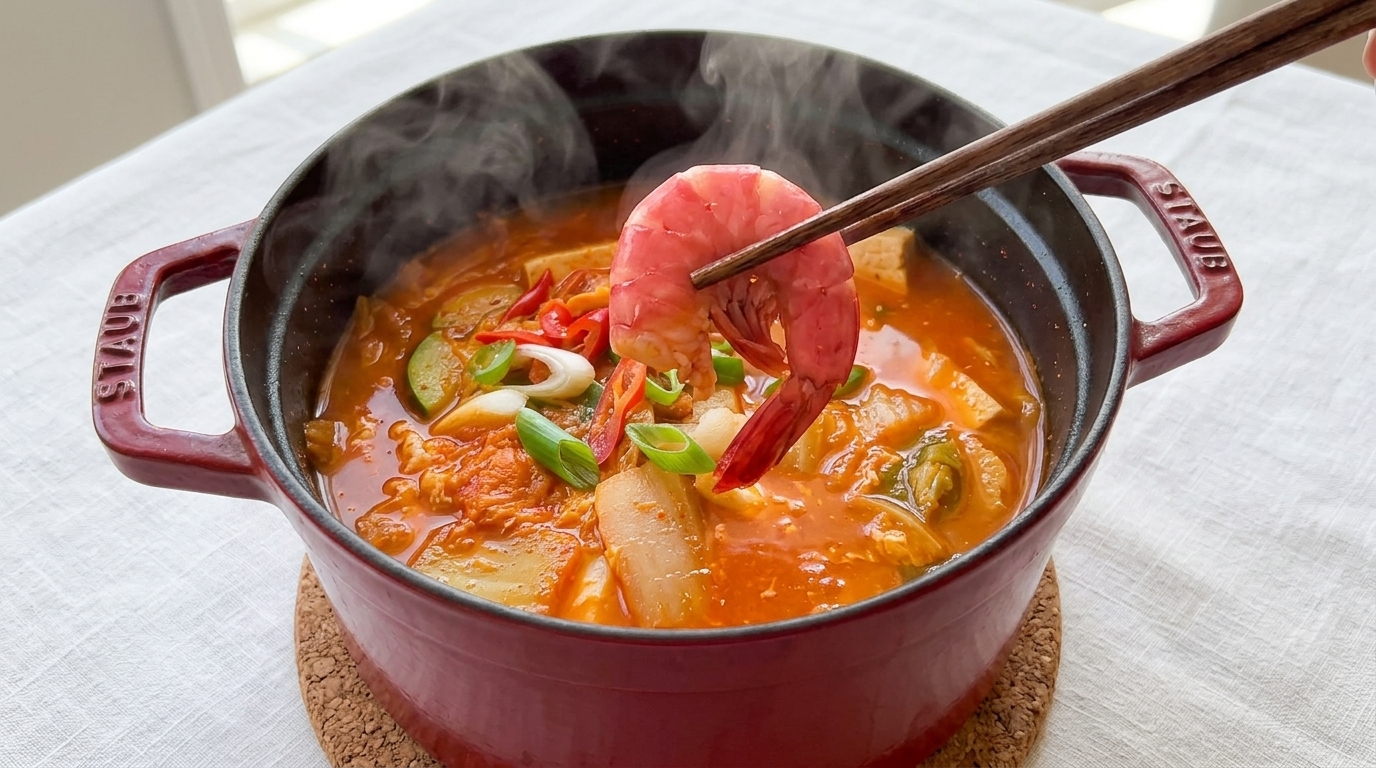
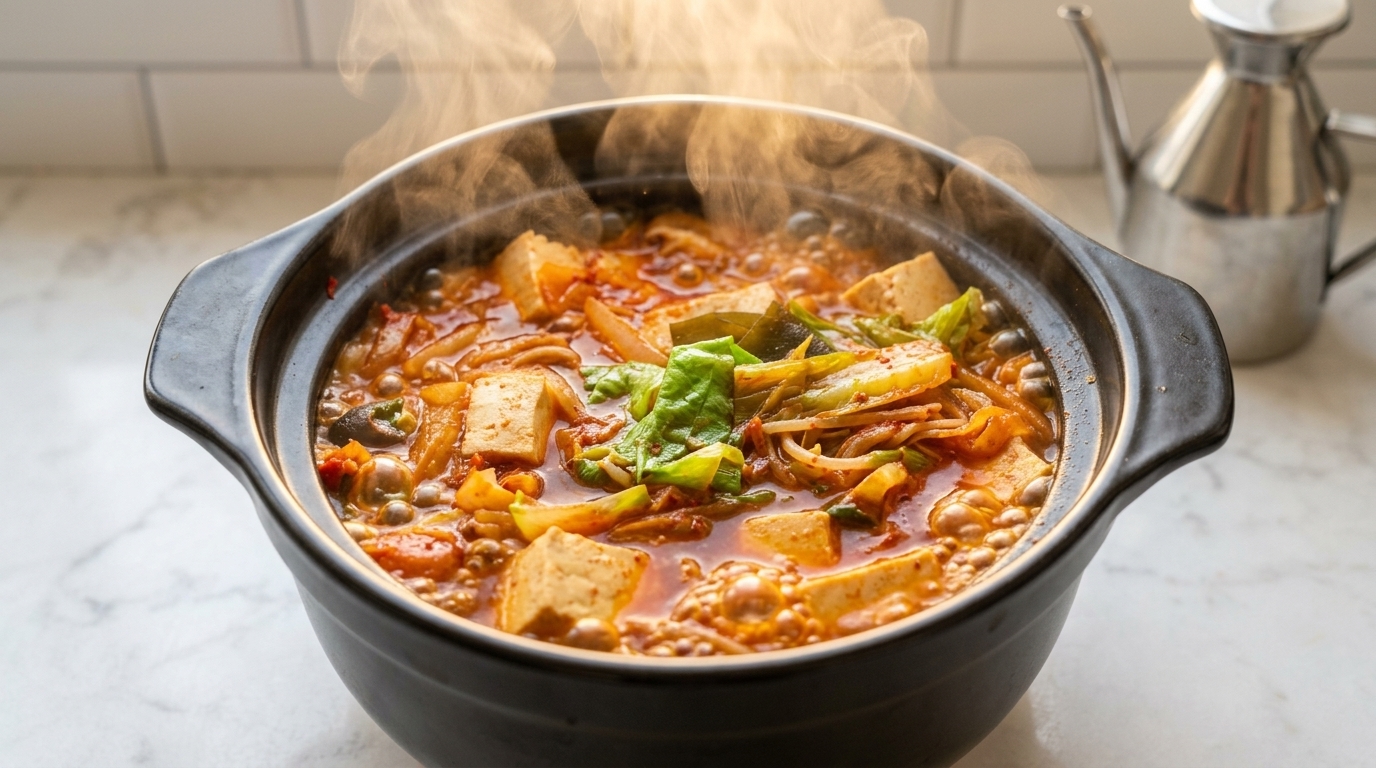
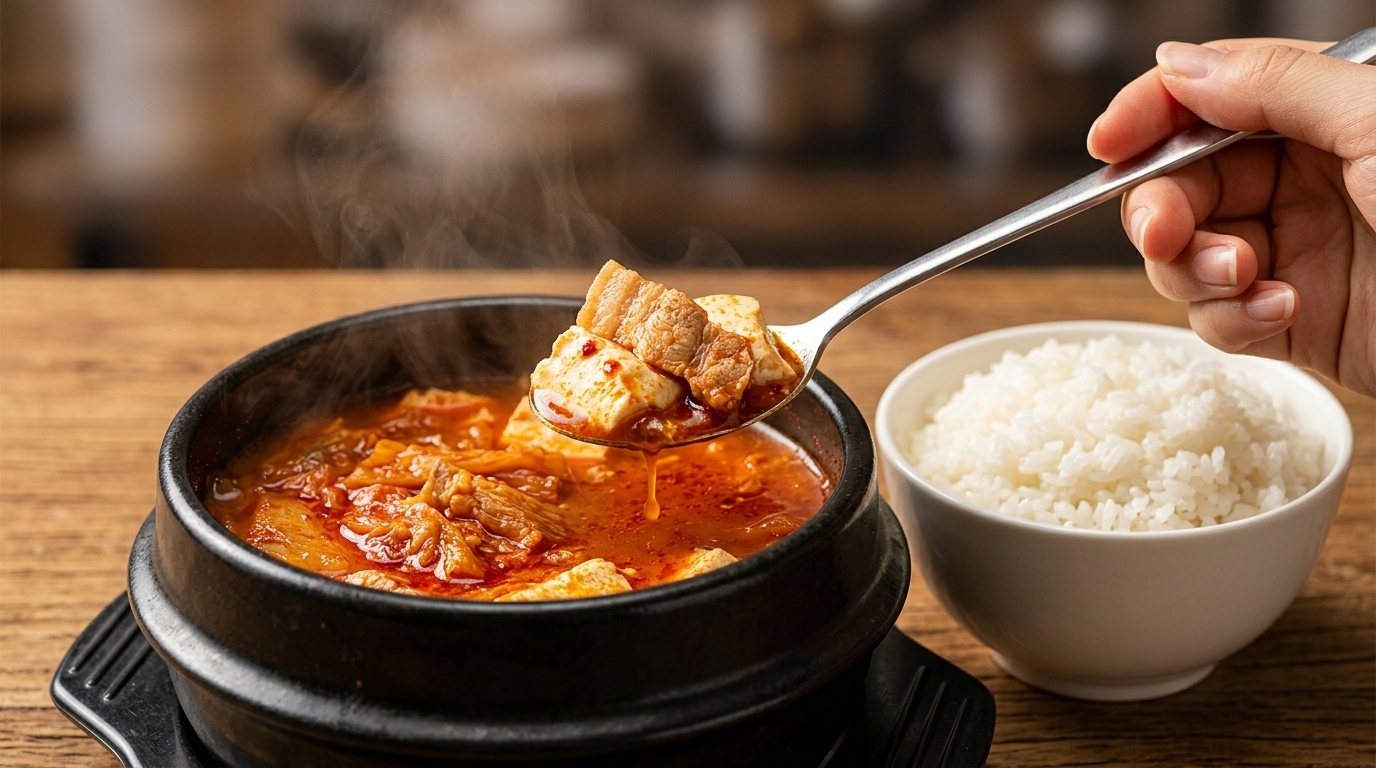
Unlock the ultimate taxi-driver cafeteria secret to a deeply savory, restaurant-style Korean kimchi stew featuring tender pork belly, silky tofu, and a 24-year golden ratio seasoning mix.
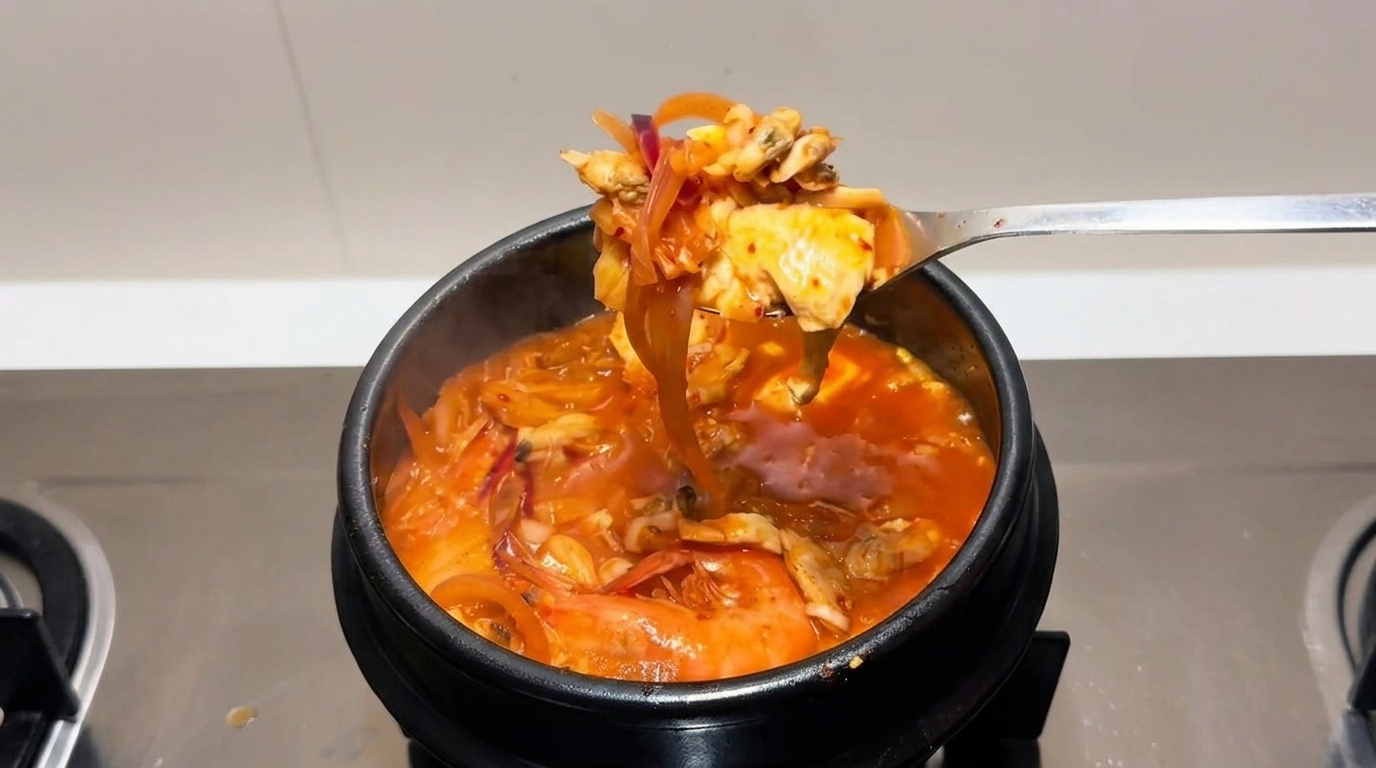
Kimchi Jjigae is the quintessential comfort food of Korea, celebrated for its robust, spicy, and deeply soothing qualities. This specific rendition utilizes a highly guarded cafeteria-style secret formula blending anchovy sauce, soup soy sauce, and tuna extract. By stir-frying well-aged kimchi with rich oils and pork before simmering, the stew achieves a legendary, complex depth that perfectly balances the natural tanginess of fermented kimchi.
Ingredients
- 600 g well-fermented kimchi
- 200 g firm tofu
- 0.5 whole white onion
- 1 whole green onion
- 2 whole Cheongyang green chili peppers
- 1 whole red chili pepper
- to taste perilla oil
- to taste avocado oil
- 2 tbsp cooking wine
- 0.33 tsp ginger powder
- 2 tbsp Korean red pepper powder (gochugaru)
- 1 tbsp salted shrimp
- 0.5 tbsp raw sugar
- 1 tbsp minced garlic
- 900 ml water
- to taste anchovy sauce
- to taste soup soy sauce
- to taste tuna extract
- 0.5 tbsp beef dashida seasoning
Instructions
- 1Slice the onion
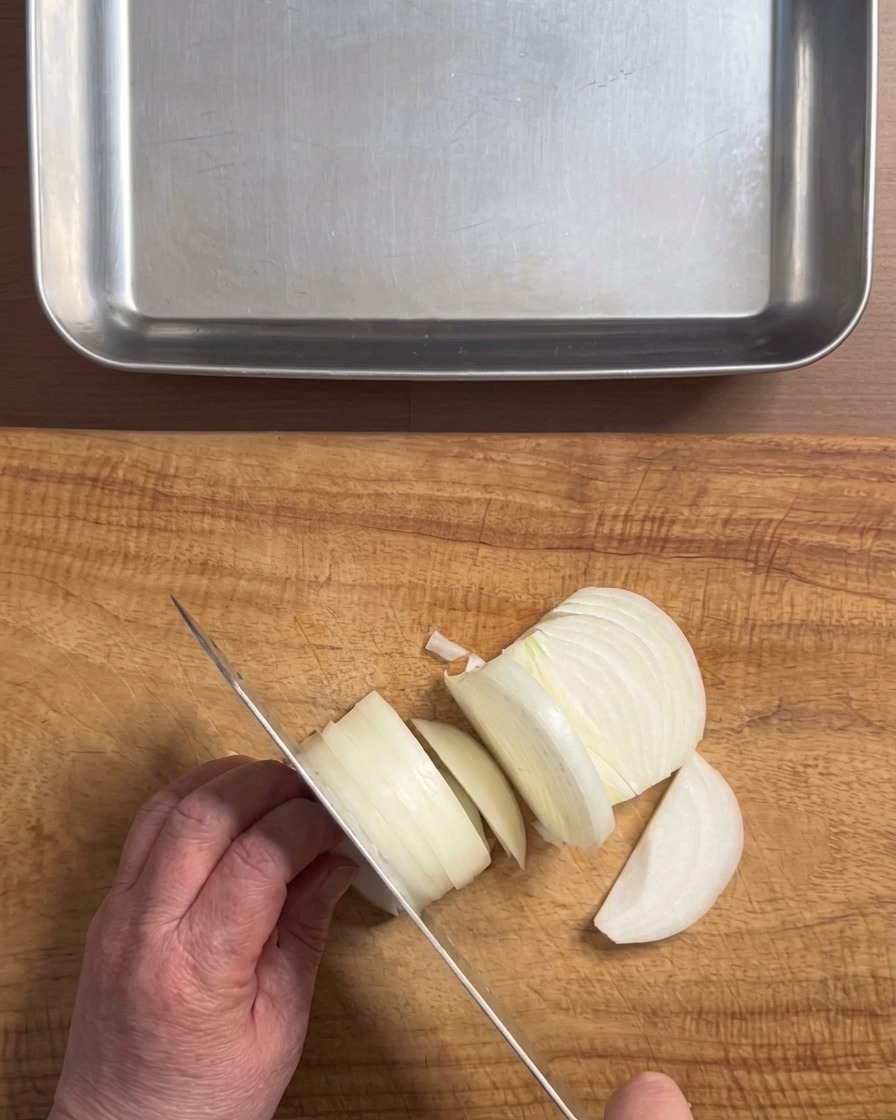
Begin by slicing half a white onion into slightly thick strips. This will add a natural sweetness and texture to the base of the Kimchi Jjigae.
Tip: Slicing the onion slightly thick prevents it from turning to mush during the boiling process. - 2Slice the green onion
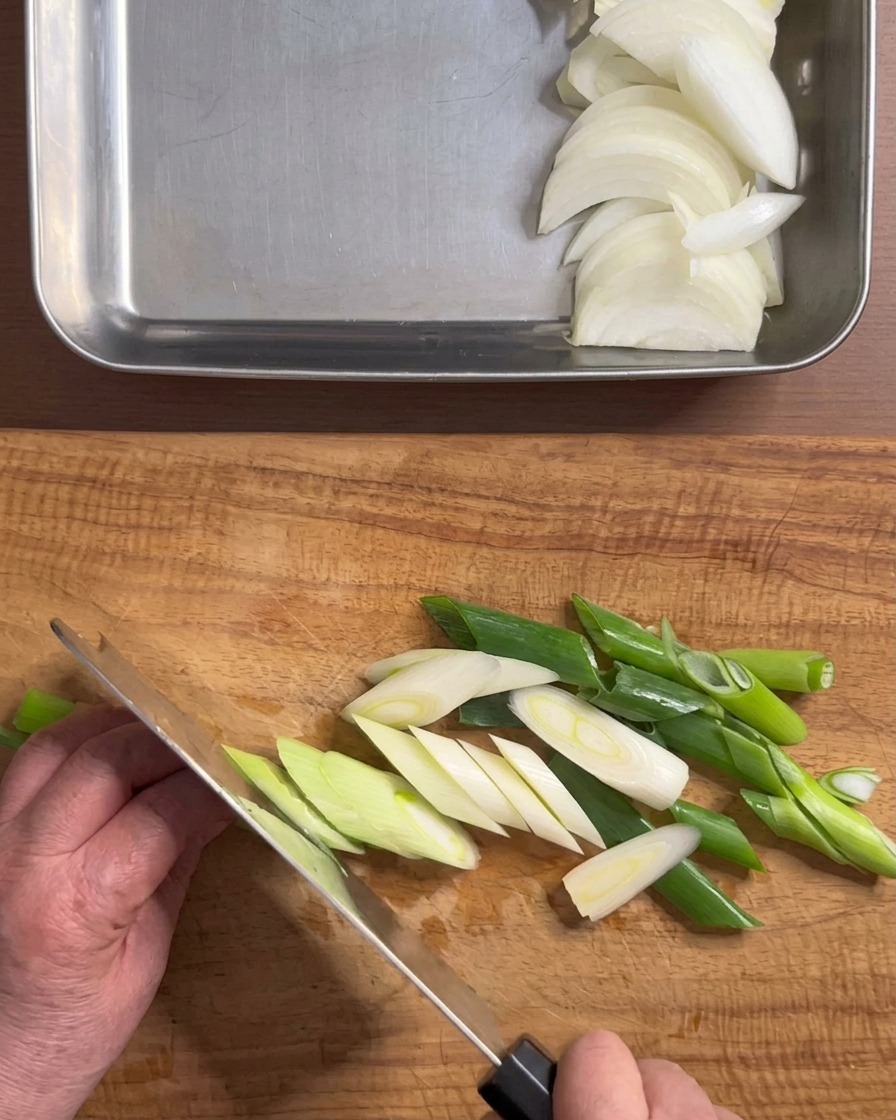
Take one green onion and slice it diagonally into pieces. This will be used to enhance the broths flavor and add a fresh aromatic element.
Tip: Cutting green onions diagonally exposes more surface area, allowing their flavor to release more easily into the stew. - 3Chop the peppers
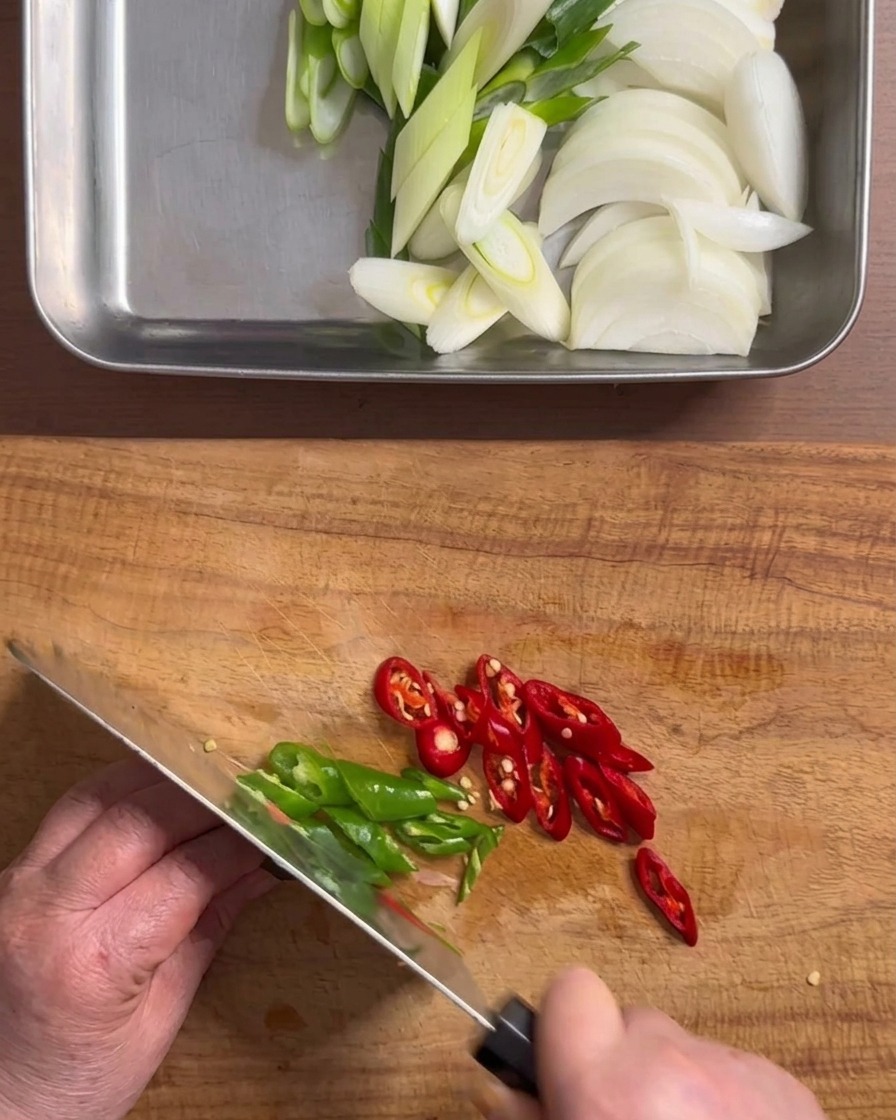
Slice the green and red chili peppers diagonally into small rings. These will be added later to give the stew a refreshing and spicy kick.
Tip: Adjust the amount of chili peppers depending on your preferred spice level. - 4Slice the tofu
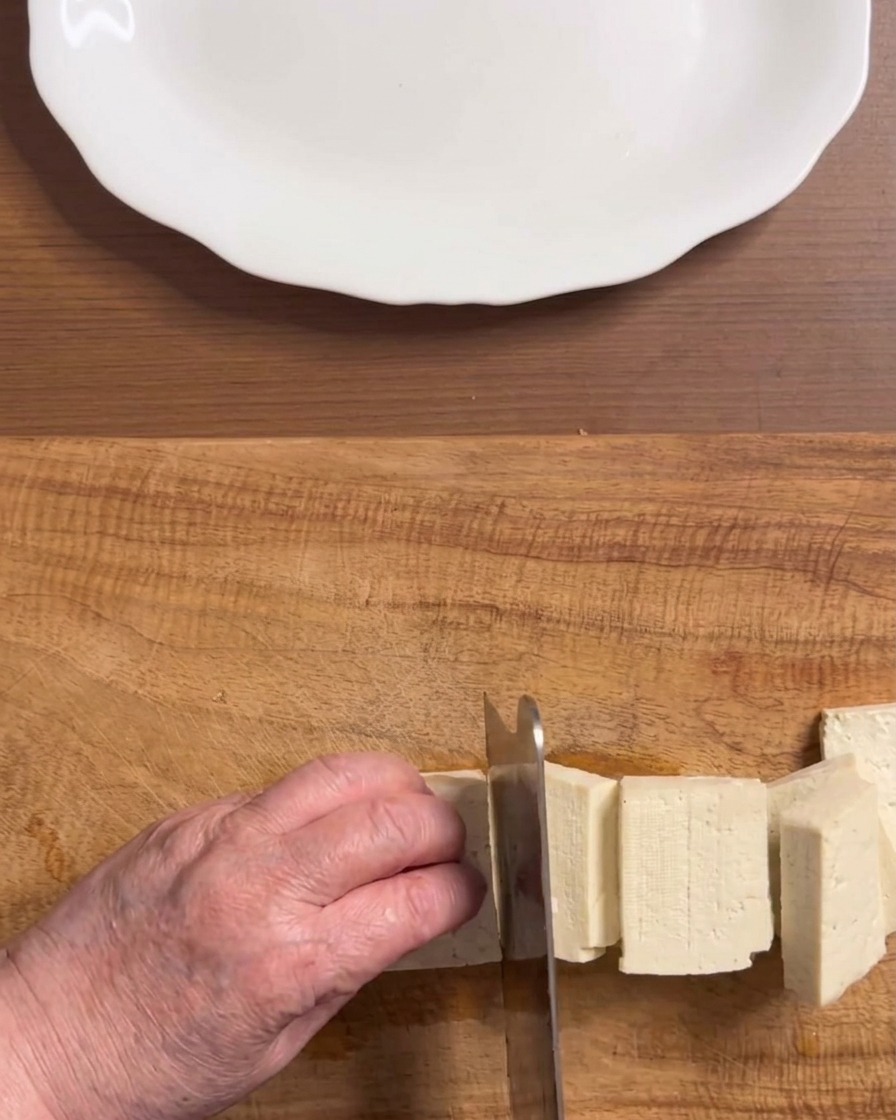
Slice about 200 grams of firm white tofu into bite-sized rectangular pieces. The tofu will be added at the very end to soak up the rich, spicy broth.
Tip: Use medium-firm or firm tofu so it holds its shape perfectly while boiling in the robust stew. - 5Cut the fermented kimchi
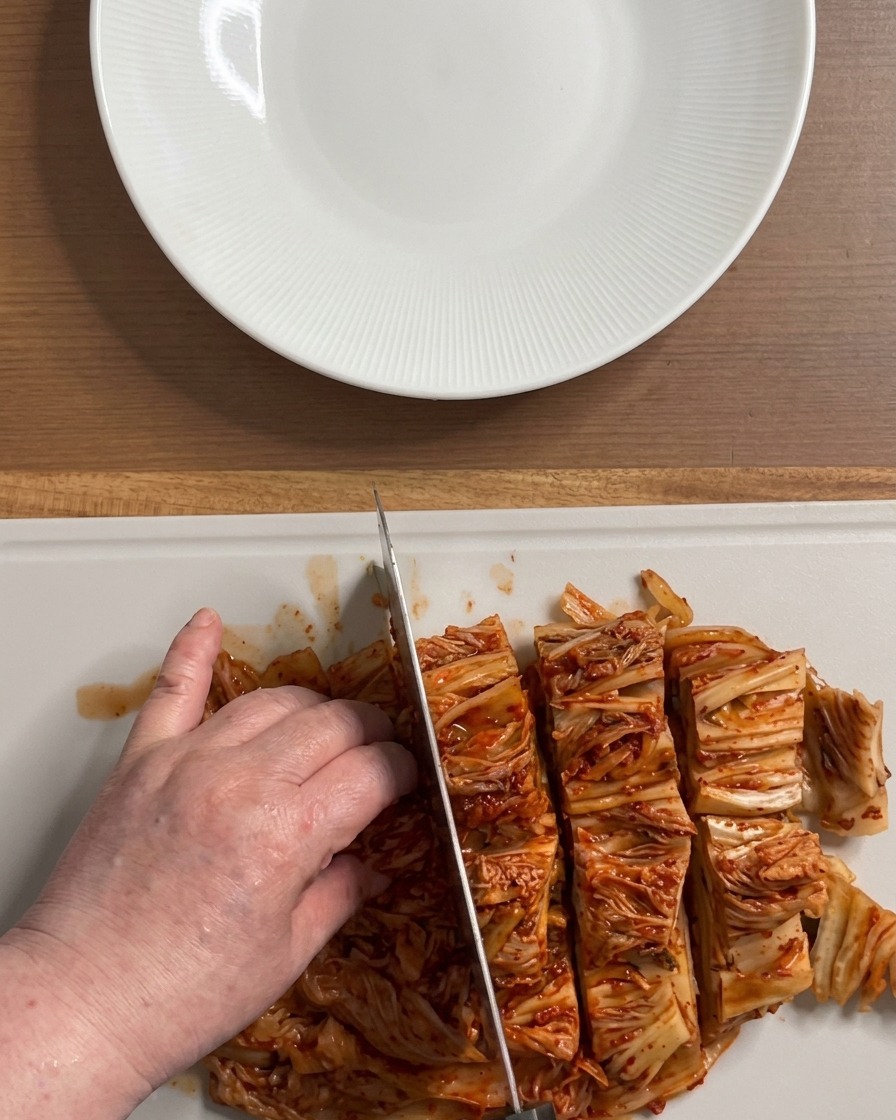
Take 600 grams of well-fermented kimchi and cut it into bite-sized sections. Properly aged kimchi is the most critical ingredient for a deep, authentic flavor.
Tip: Use fully fermented, sour kimchi for the best results; fresh kimchi will not develop the necessary depth for the stew. - 6Heat the oil in the pan
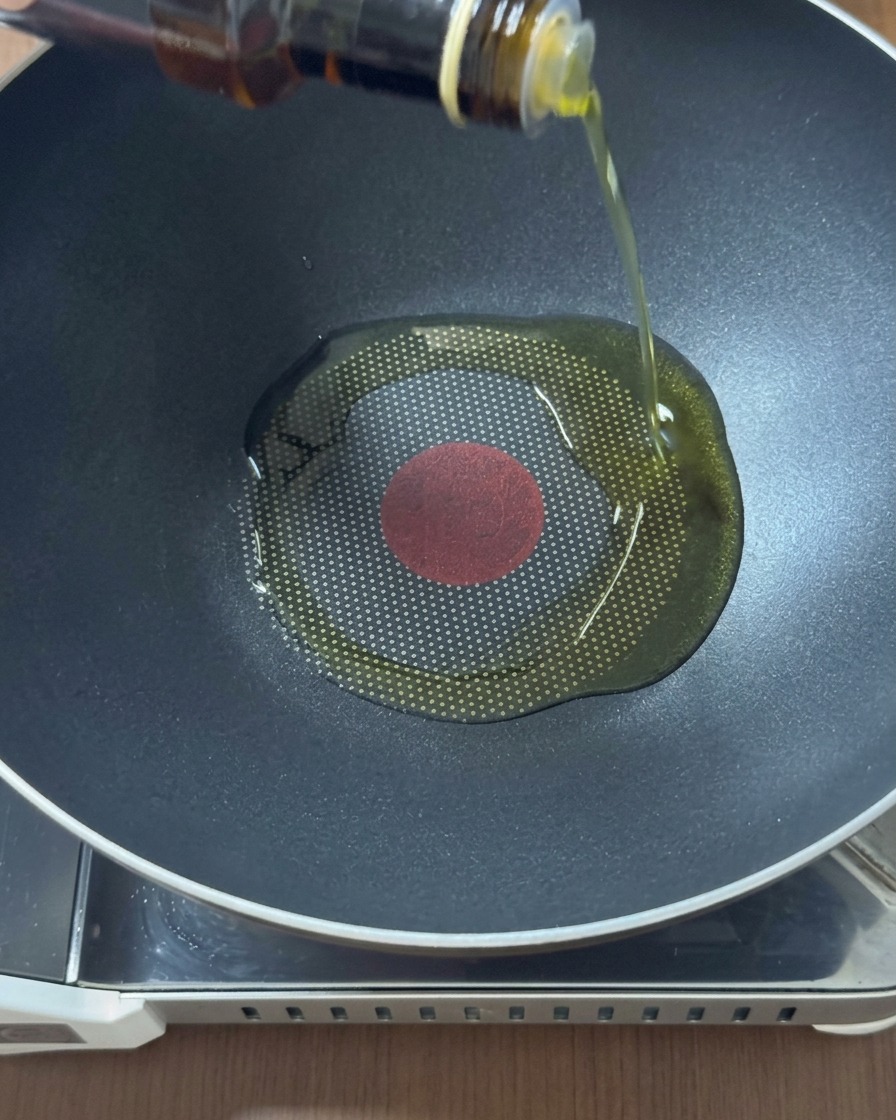
Place a pan over the stove and pour in a mixture of perilla oil and avocado oil. This combination adds a rich, nutty background flavor right from the start before stir-frying the meat and kimchi.
Tip: Perilla oil has a low smoke point, so combining it with avocado oil helps prevent it from burning while stir-frying. - 7Stir-fry pork and onions
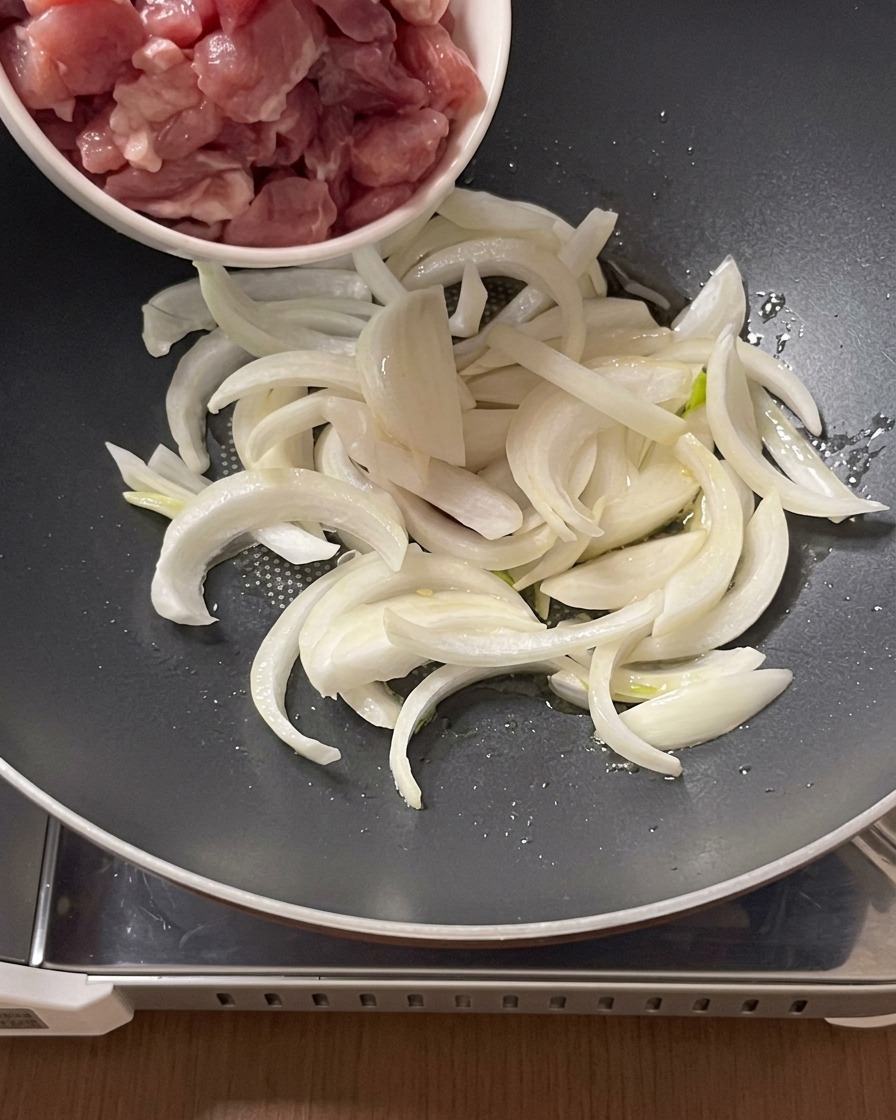
Pour perilla oil and avocado oil into the pan. Add the sliced onions and bite-sized pieces of raw pork, and stir-fry them together for about a minute.
Tip: Using perilla oil alongside avocado oil adds a rich, savory depth to the pork and kimchi. - 8Season the pork
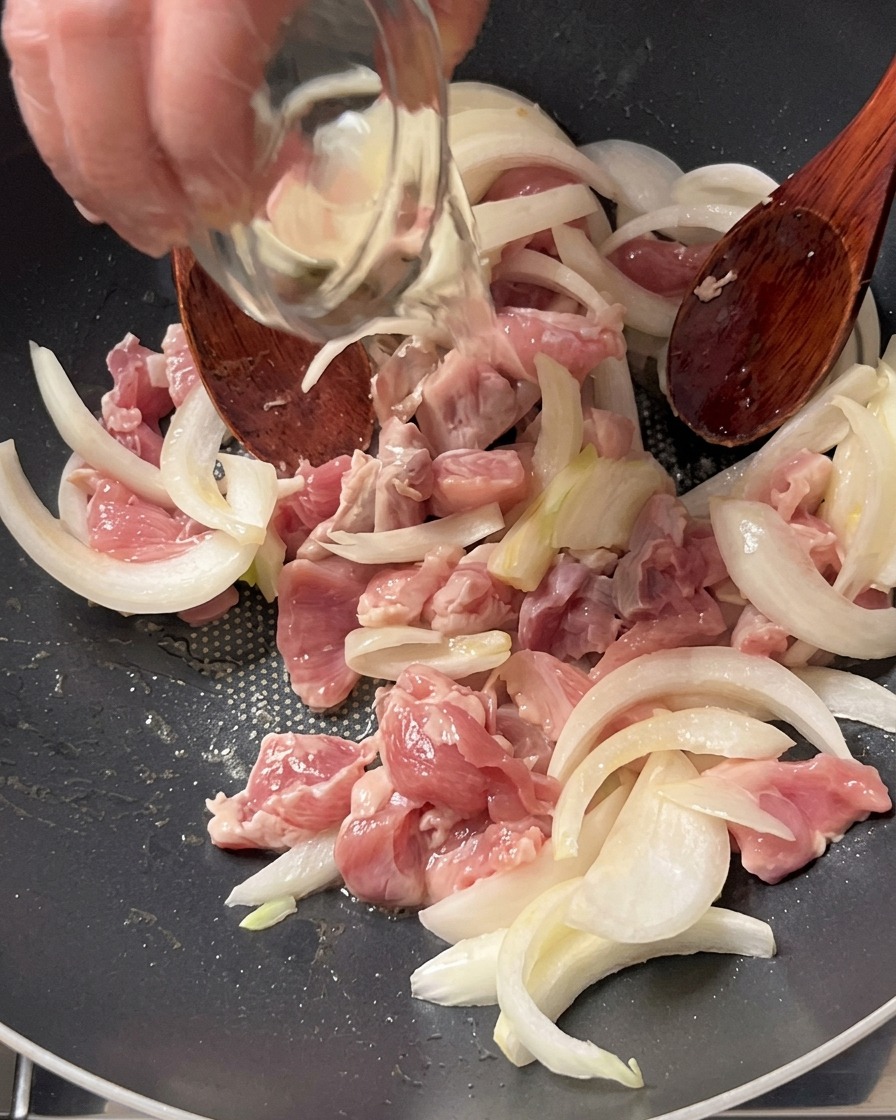
To the pan with the pork and onions, add cooking wine, ginger powder, red pepper powder, and salted shrimp. Continue to stir-fry the mixture to build the base flavor profile.
Tip: If you dont have salted shrimp, you can substitute it with soup soy sauce for umami. - 9Add the kimchi
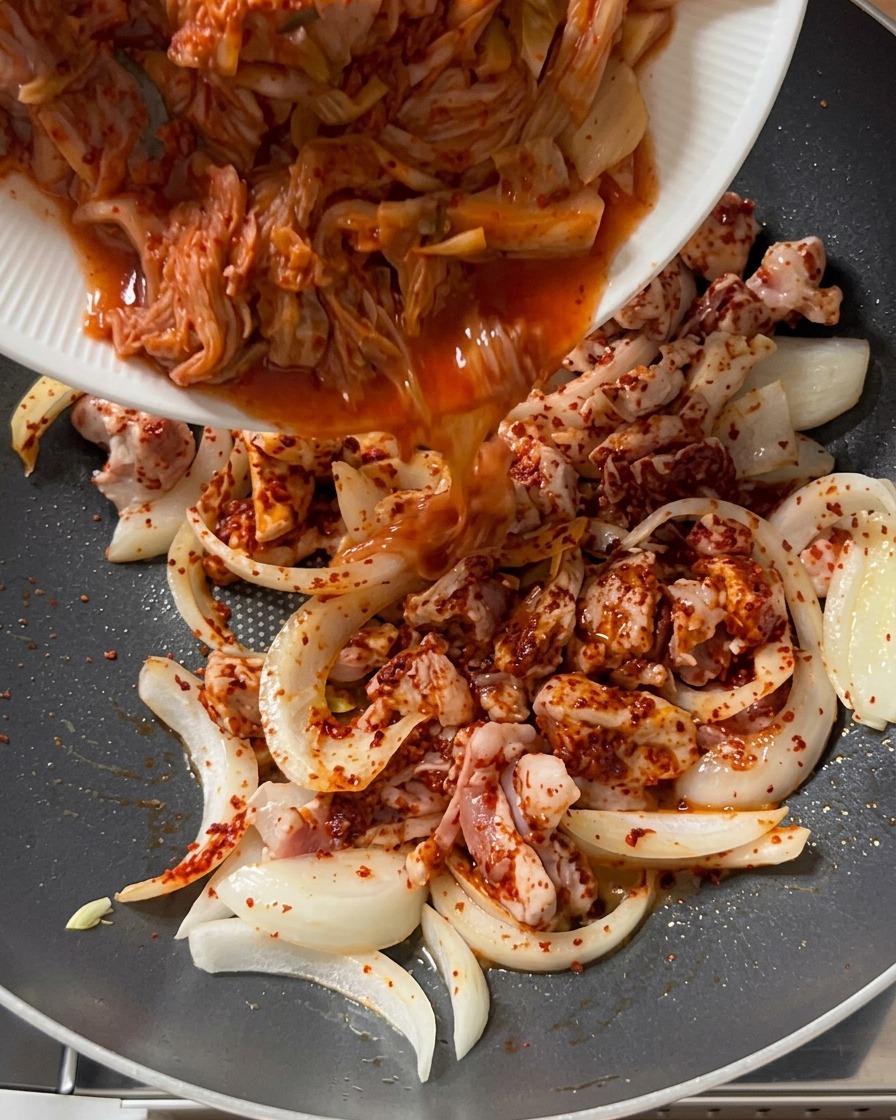
Once the meat is seasoned and partially cooked, pour the bite-sized chopped kimchi into the pan with the pork and onions.
Tip: Well-fermented, sour kimchi is essential for achieving the authentic restaurant flavor. - 10Neutralize the sourness
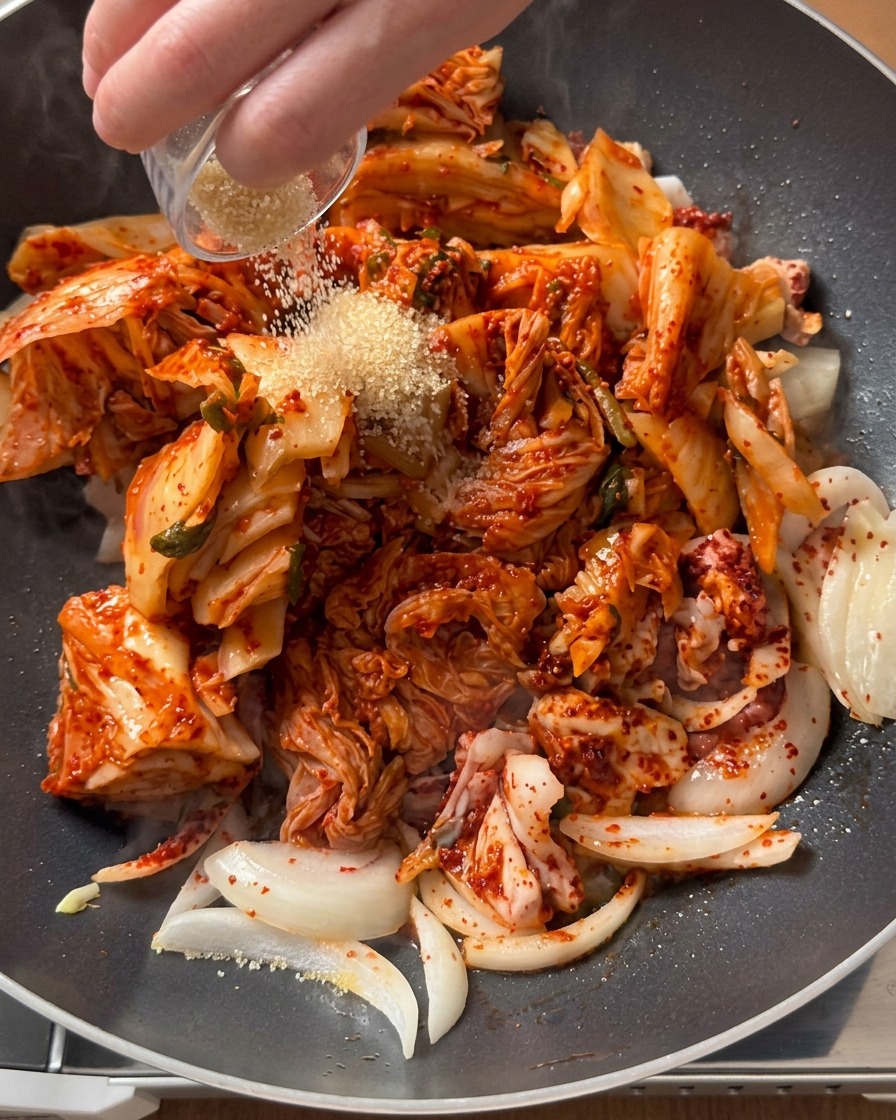
Sprinkle raw sugar over the cooking kimchi and pork mixture. This helps to balance and neutralize the sharp sourness of the fermented kimchi without making it overly sweet.
Tip: Do not skip the sugar if your kimchi is very sour, as it rounds out the stews flavor. - 11Add minced garlic
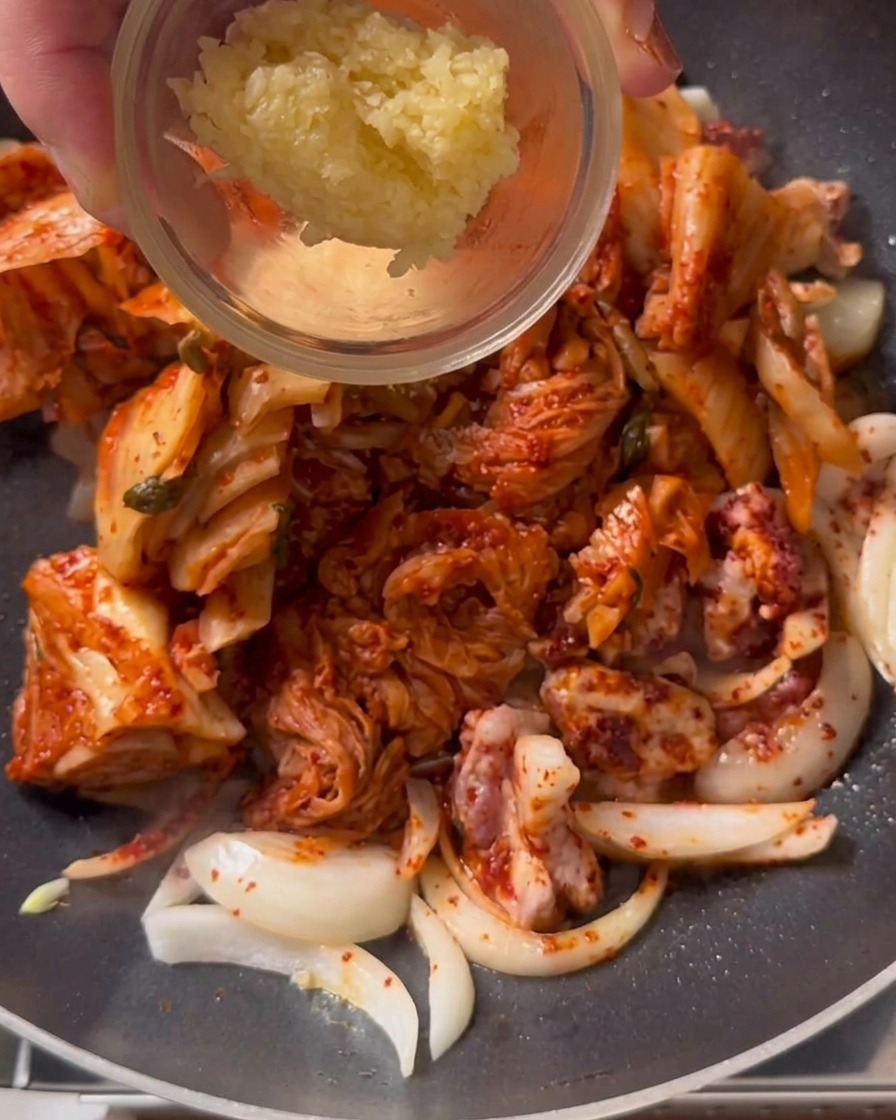
Add a spoonful of minced garlic to the pan. Stir everything together well and continue to stir-fry the mixture for about 3 minutes to let all the flavors combine and deepen.
Tip: Stir-frying the kimchi with the aromatics and meat before adding water creates a much richer broth. - 12Stir-fry the kimchi with meat
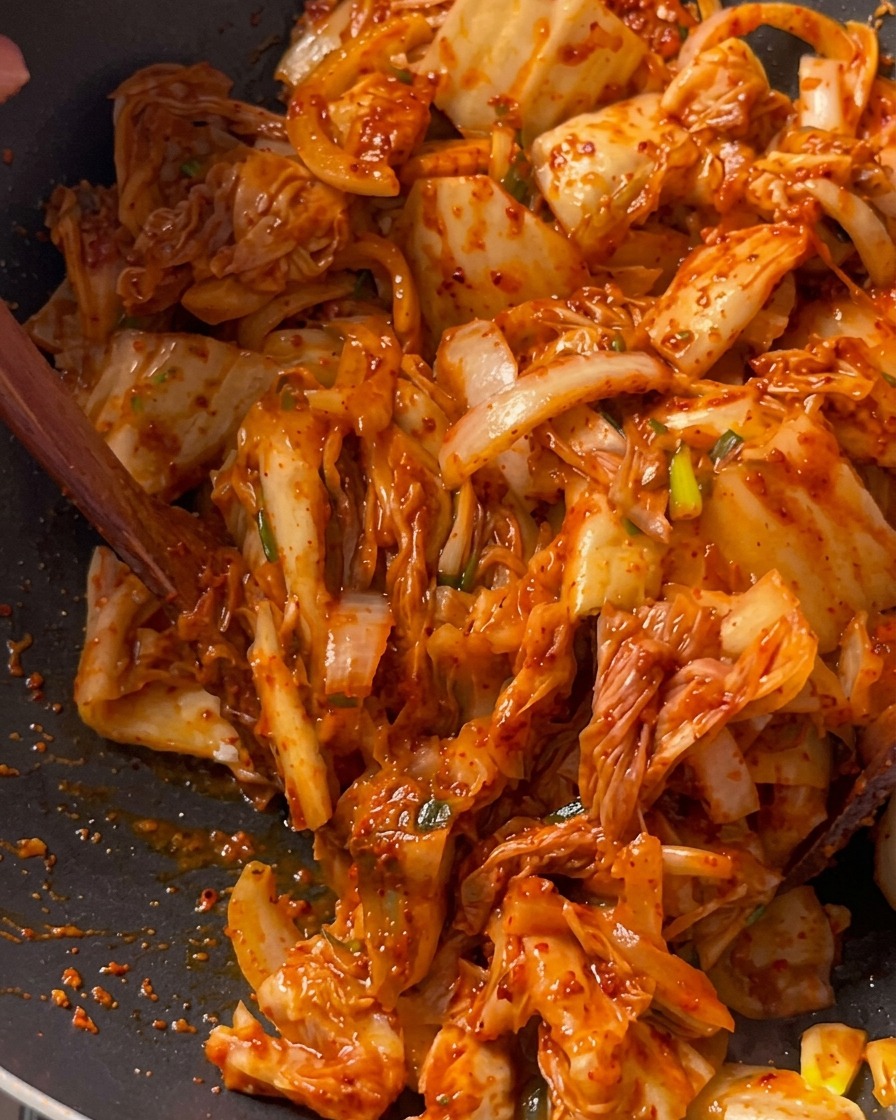
Add the bite-sized kimchi into the pan along with the stir-fried pork and onions. Sprinkle in half a spoon of raw sugar to help balance out and neutralize the sharp sourness of the fermented kimchi. Add a spoon of minced garlic, and stir-fry everything together thoroughly for about 3 minutes until the flavors combine.
Tip: Sugar is crucial when using well-fermented sour kimchi because it mellows the harsh acidity and deepens the savory base flavor. - 13Pour in the water
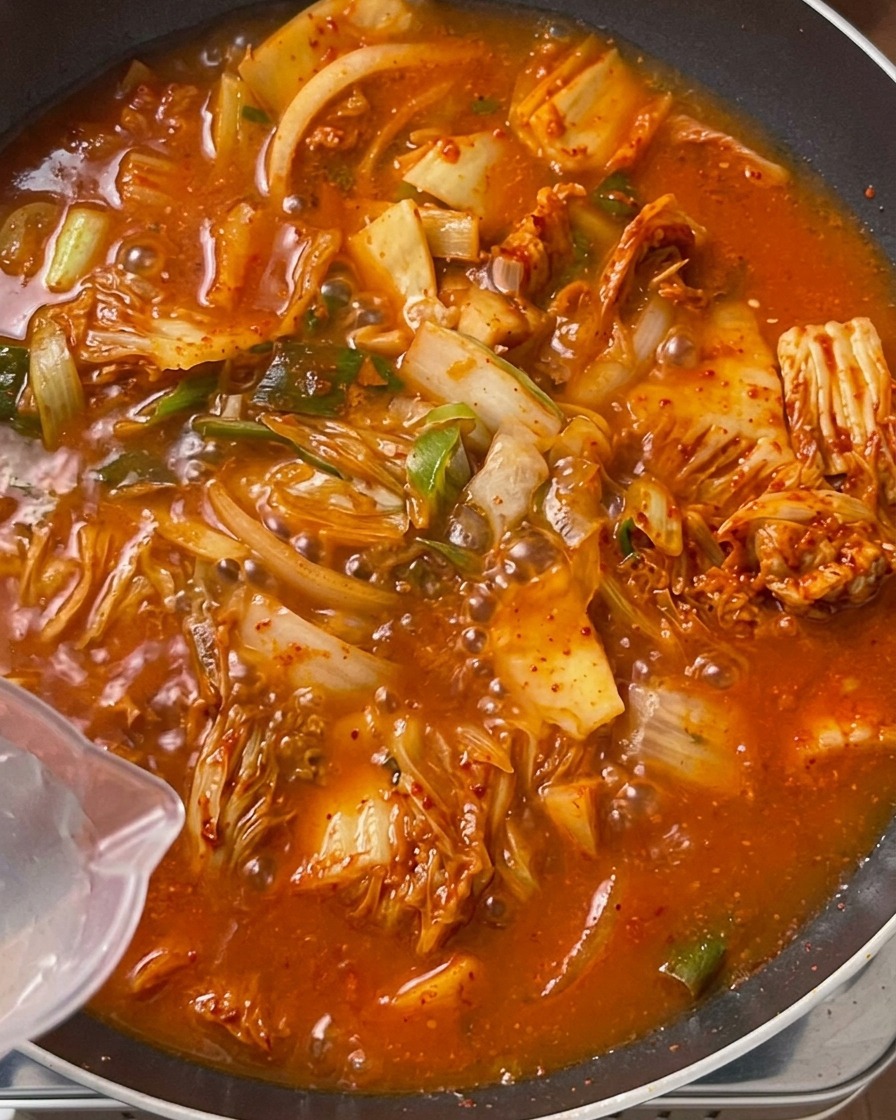
Pour 900ml of clear water into the pan over the stir-fried kimchi, pork, and onion mixture. Make sure all the ingredients are well submerged so they can simmer evenly and develop a rich, flavorful broth base.
Tip: Using lukewarm or room temperature water helps maintain a steady cooking temperature in the pan without shocking the hot ingredients. - 14Add fresh aromatics
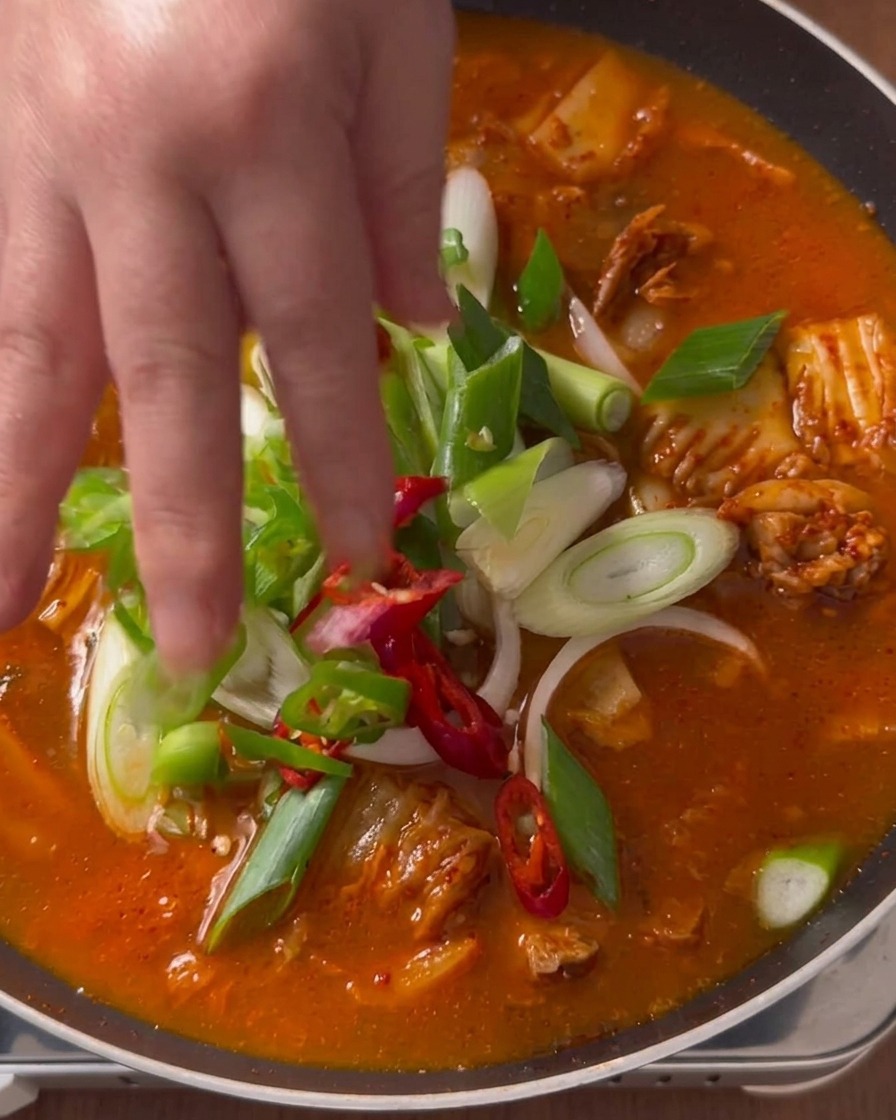
Carefully place the diagonally sliced green onions, chopped green Cheongyang peppers, and red pepper directly into the bubbling reddish stew base to infuse their fresh, sharp, and vibrant spicy heat into the broth.
Tip: Adjust the amount of Cheongyang peppers depending on your heat tolerance, but do not skip them entirely if you want that authentic, restaurant-style kick. - 15Season with the golden ratio sauce
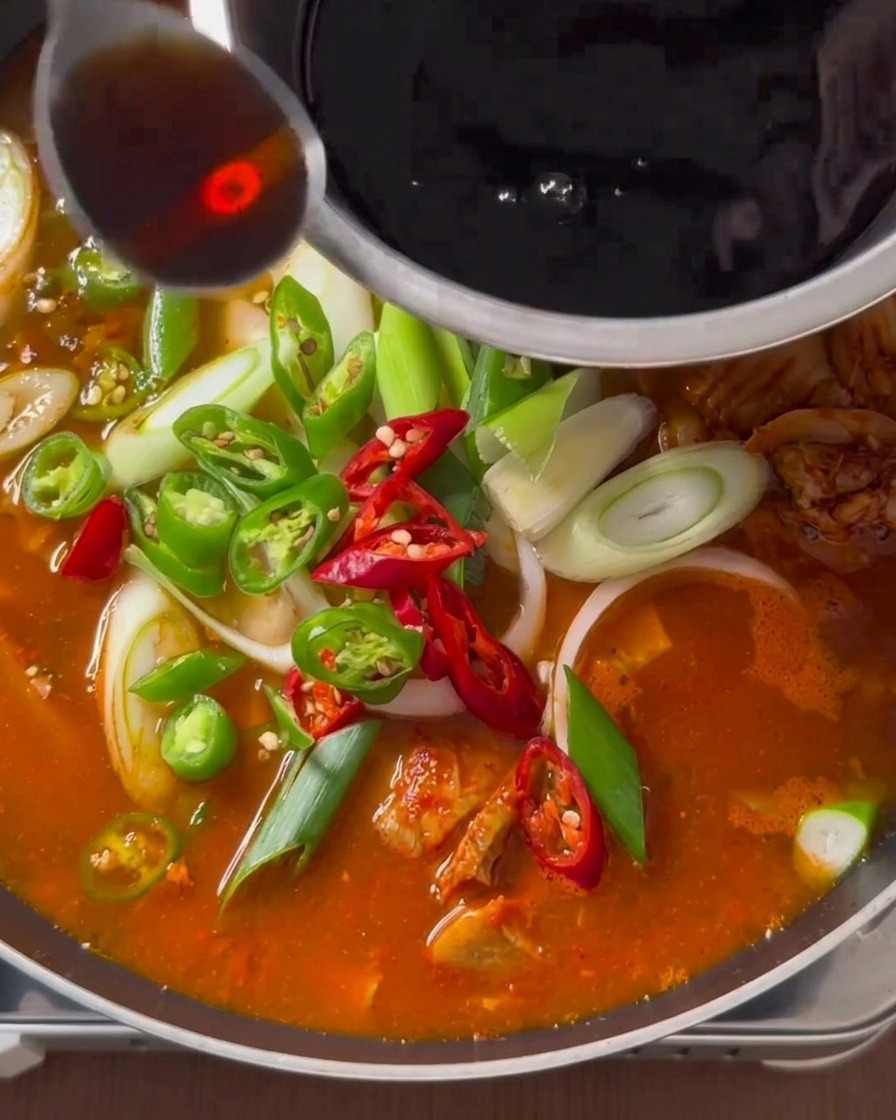
Pour two tablespoons of the special 1:1:1 mixture made from anchovy sauce, soup soy sauce, and tuna extract into the simmering stew. This combination delivers a rich, deeply savory umami flavor profile to the broth.
Tip: Combining different savory liquids like fish sauce, soup soy sauce, and tuna extract creates a layered complexity that mimics restaurant-quality stews. - 16Add beef dashida seasoning
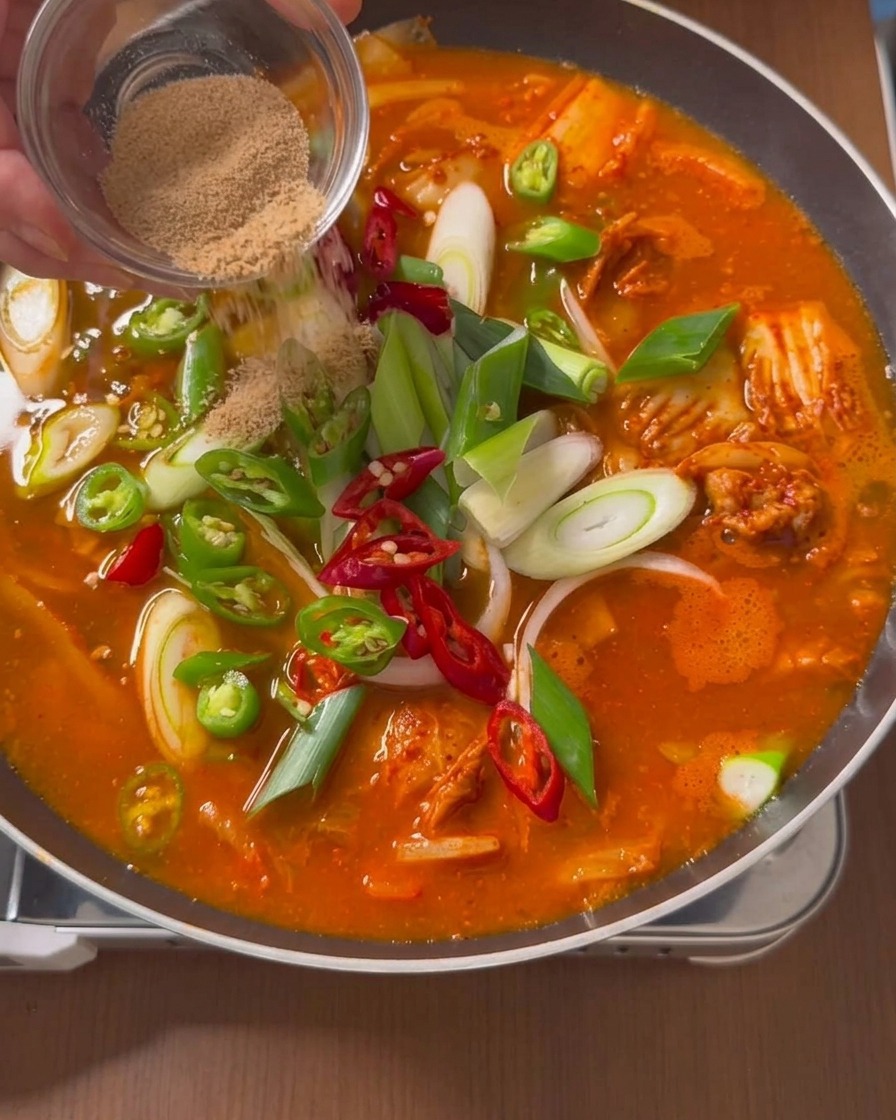
Sprinkle half a spoon of dry beef dashida seasoning powder directly over the aromatic greens in the bubbling broth. Cover the pan with a lid and let it boil steadily for 15 minutes to allow all the intense flavors to meld together perfectly.
Tip: A small touch of beef dashida provides that nostalgic, addictive depth of flavor found in classic taxi cafeteria recipes.