Authentic Tonkotsu Miso Ramen
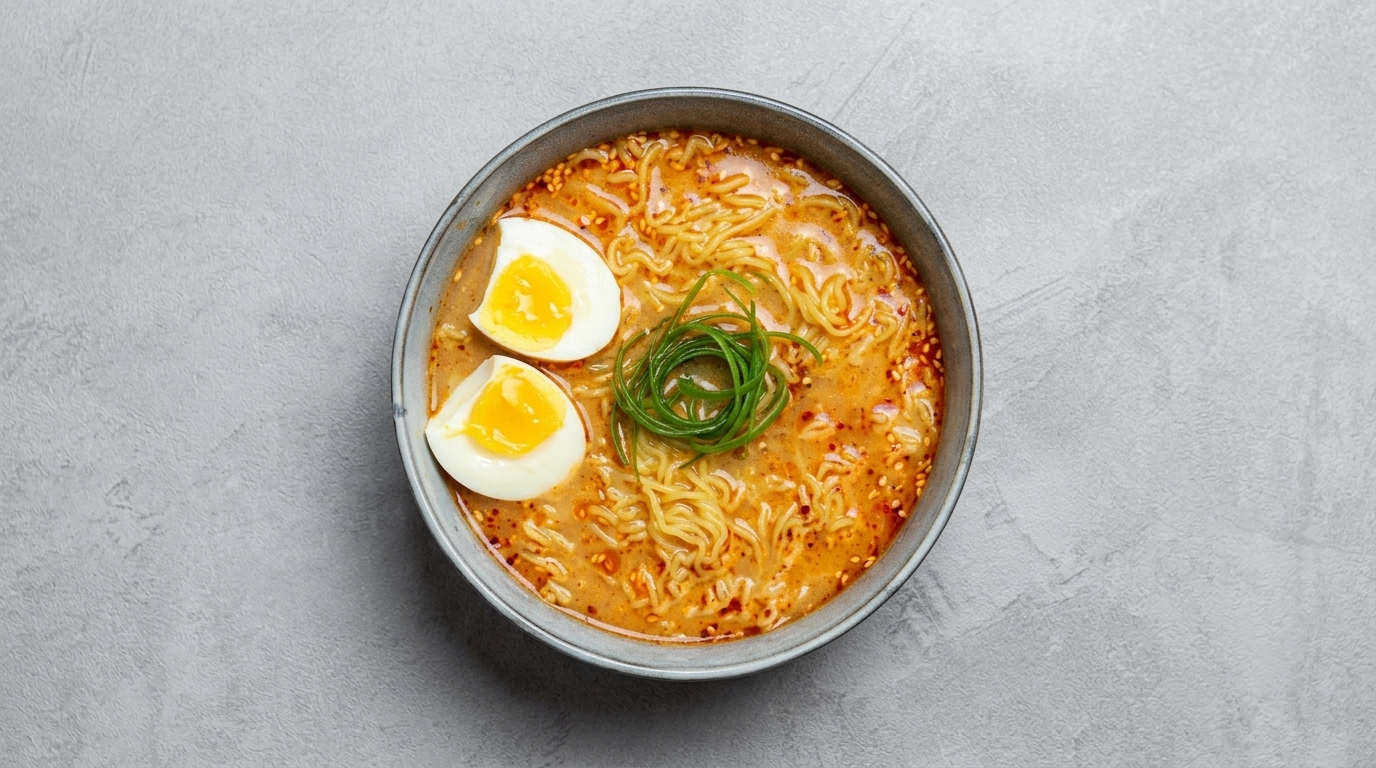
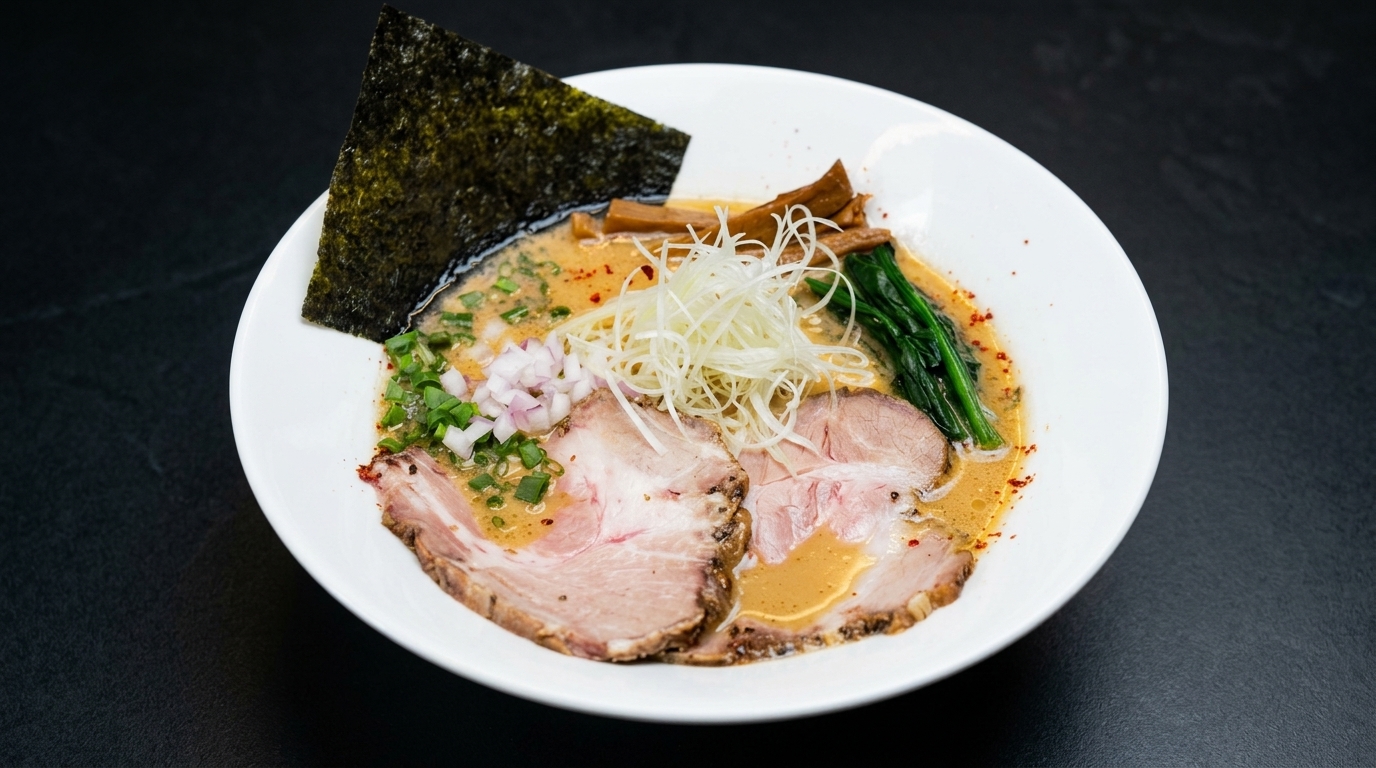
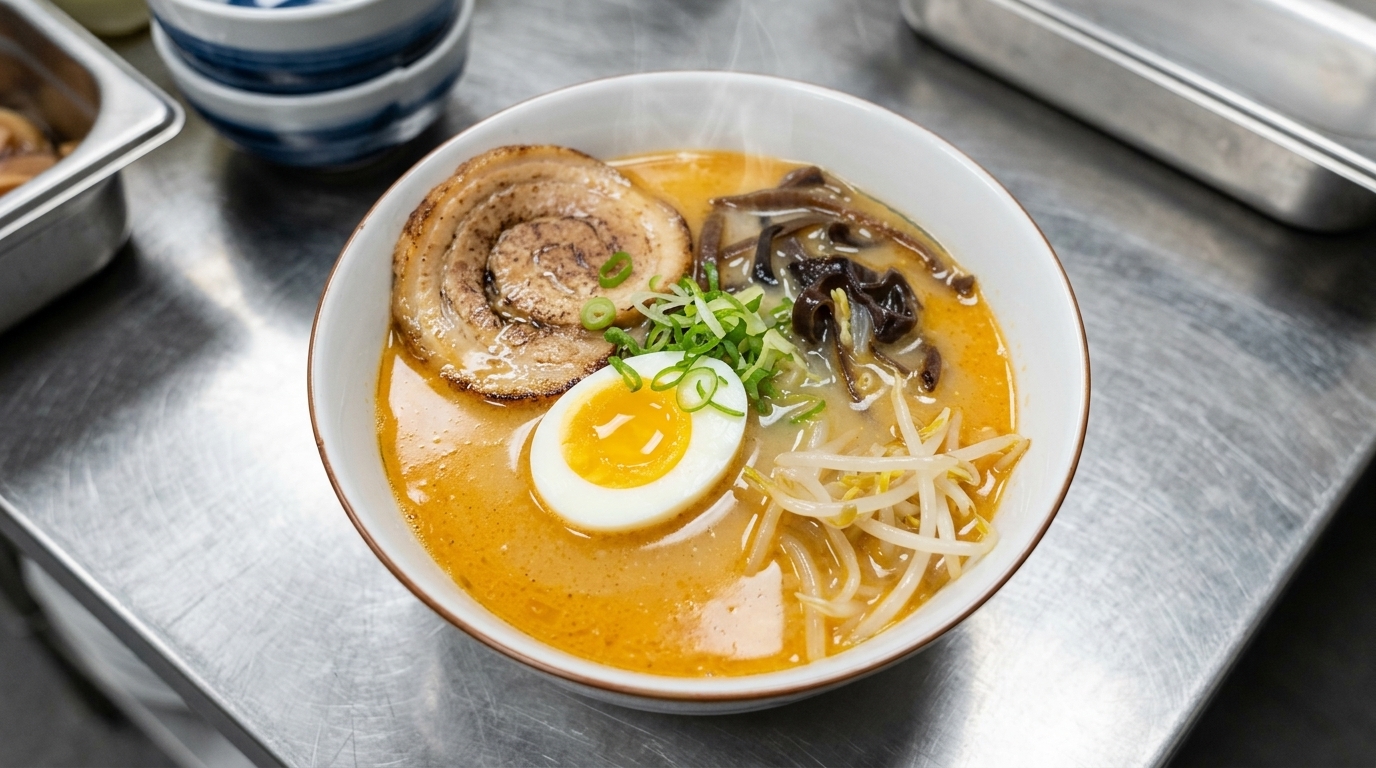
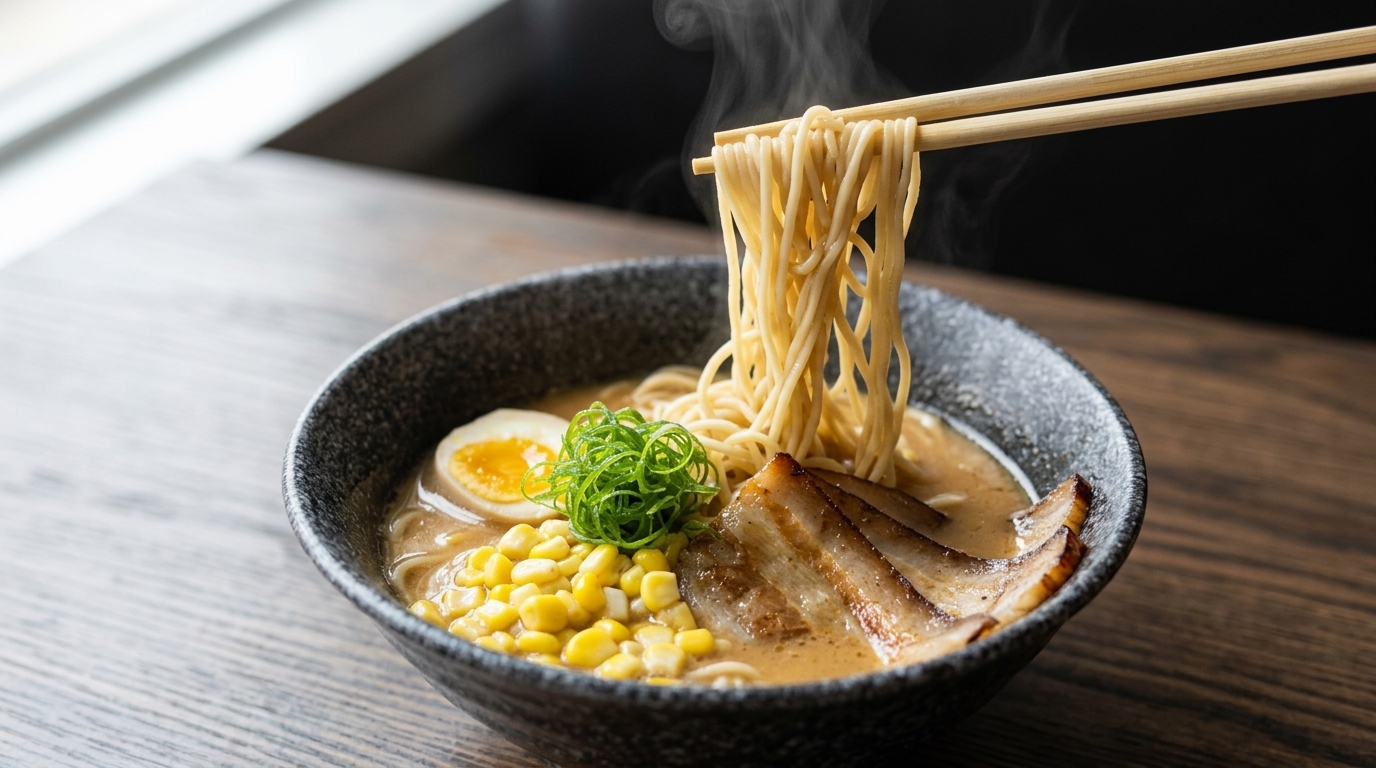
Master the art of ramen shop-style Tonkotsu Miso Ramen at home. This comforting bowl features a rich pork bone broth, tender chashu, and a perfectly balanced spicy chili kick.
Miso ramen is a beloved staple of Japanese comfort food, celebrated for its complex, savory depth. By combining a hearty tonkotsu (pork bone) base with a vibrant drizzle of chili oil, this recipe recreates the soul-warming experience of a traditional ramen shop. The meticulous layering of toppings—from crisp wood ear mushrooms to melt-in-your-mouth seared chashu—ensures every bite is a perfect harmony of texture and flavor.
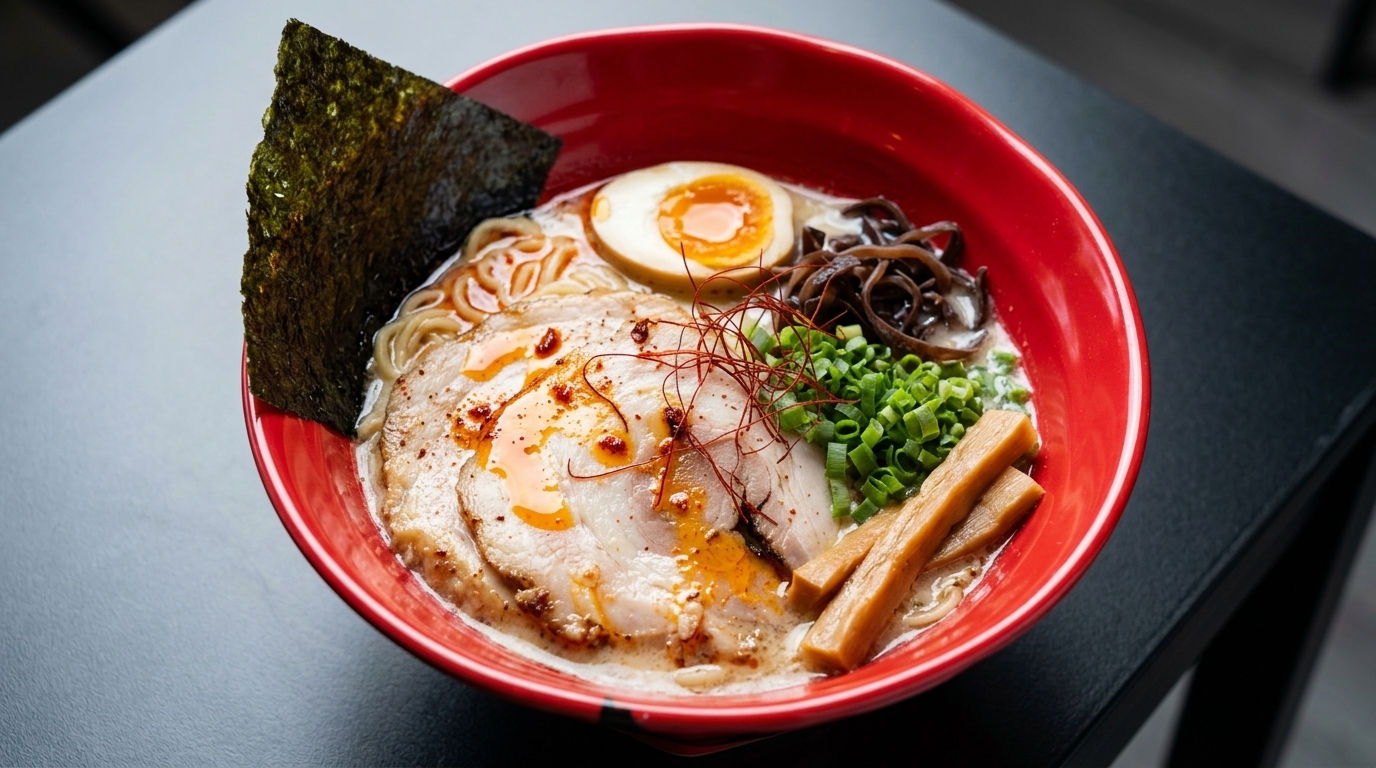
Ingredients
- 600 ml tonkotsu (pork bone) broth, seasoned with miso
- 2 portions fresh ramen noodles
- 4 slices chashu pork
- 1 Japanese soft-boiled egg (ajitsuke tamago), halved
- 30 g wood ear mushrooms (kikurage), finely shredded
- 40 g dried bamboo shoots (menma)
- 2 scallions, finely chopped
- 1 tbsp chili oil (rayu)
- to taste red chili powder (ichimi togarashi)
- a pinch shredded red chili threads (ito togarashi)
- 2 sheets nori seaweed
Instructions
- 1Pour the broth
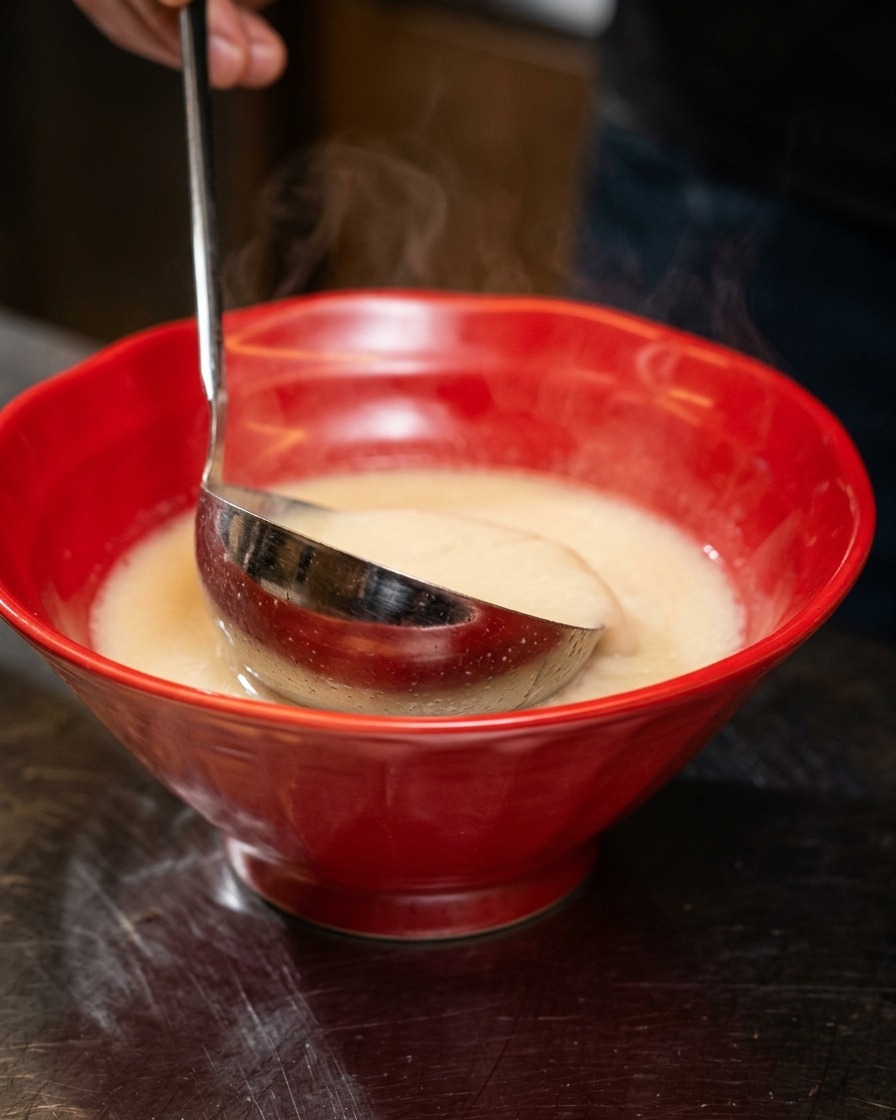
Begin by ladling about 300 grams of hot, rich pork bone broth into your serving bowl. The creamy broth forms the foundation of this classic ramen shop style dish.
Tip: Pre-warm your ramen bowl with hot water before adding the broth. This ensures the soup stays piping hot from the first bite to the last. - 2Sear the chashu pork
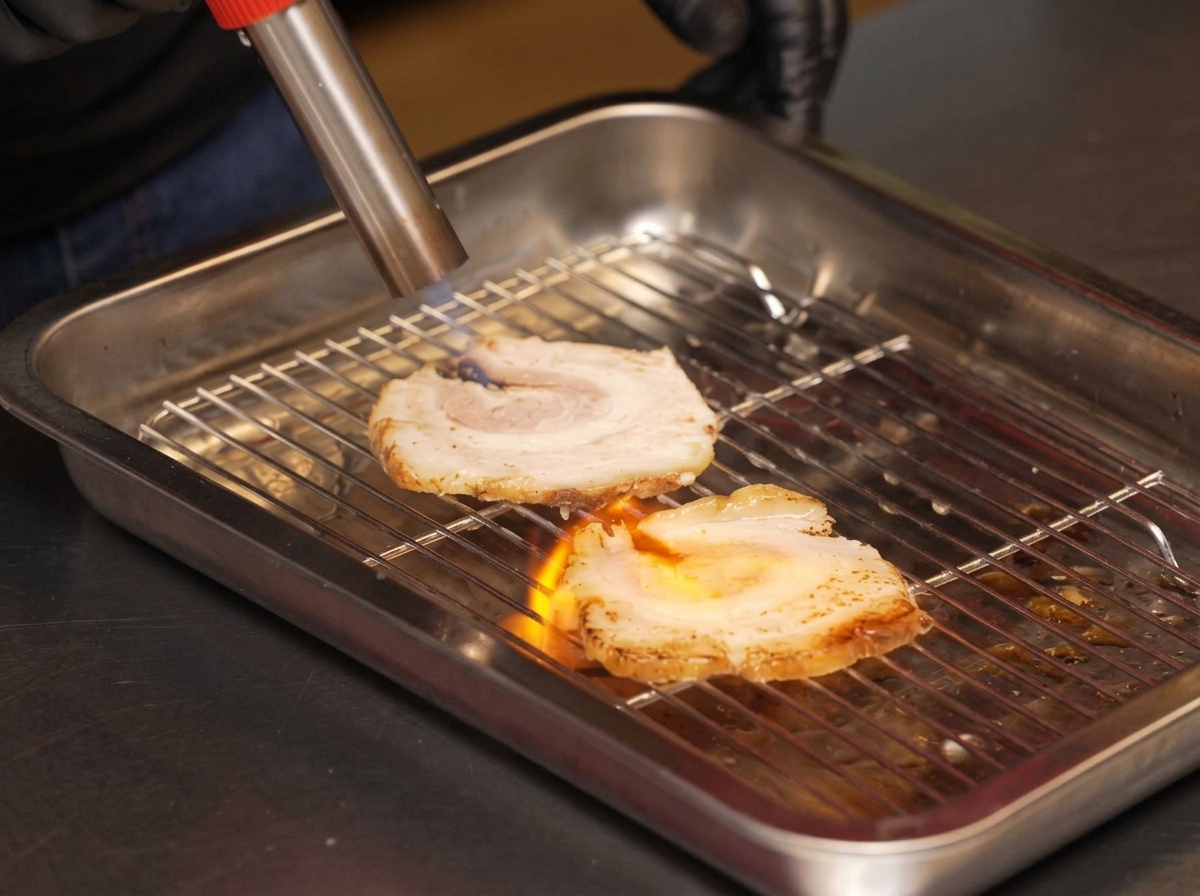
Place the sliced chashu pork on a metal wire rack over a tray. Use a blowtorch to carefully sear the meat until the fat begins to render and the edges develop a rich, caramelized crust. This technique enhances the smoky flavor and adds a beautiful charred texture to the pork.
Tip: Keep the blowtorch moving continuously to ensure an even sear and prevent the meat from burning. - 3Drain and add the noodles
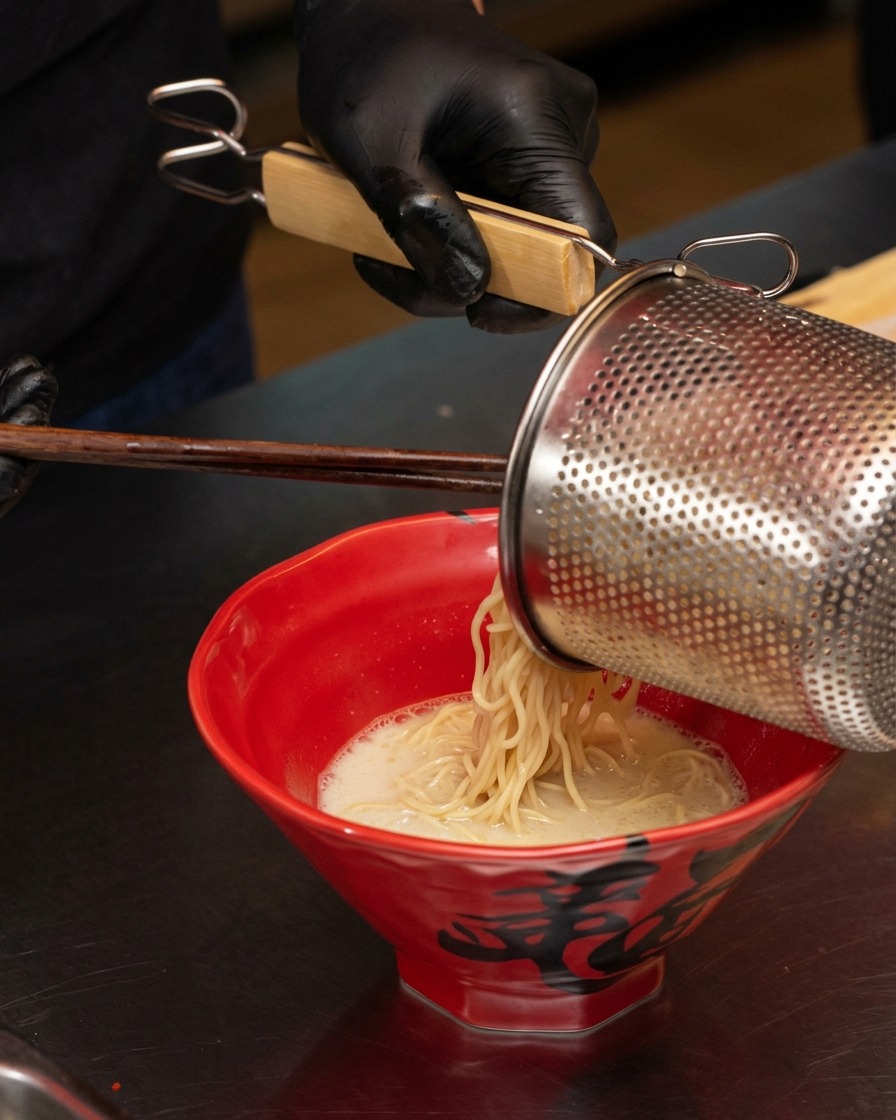
Once the ramen noodles are cooked to your desired firmness, drain them thoroughly using a cylindrical noodle strainer. Transfer the drained noodles directly into the hot broth.
Tip: Shake the strainer vigorously to remove as much excess water as possible; leftover cooking water will dilute the rich flavor of your broth. - 4Arrange the noodles
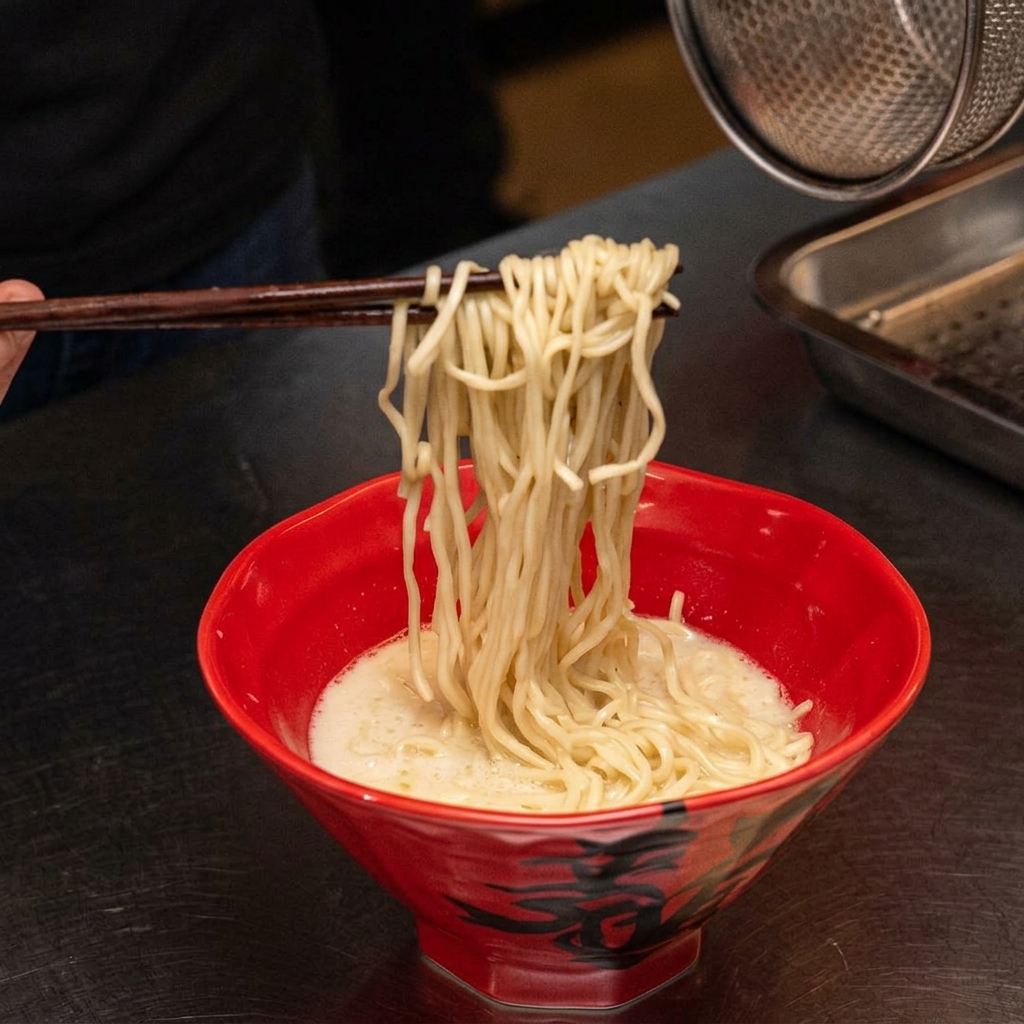
Use a pair of chopsticks to lift the noodles out of the broth and fold them back over themselves. Arranging the noodles neatly not only makes for a beautiful presentation but creates a stable base for the toppings.
Tip: Lift the noodles high and lay them down in a continuous, flowing motion to align the strands perfectly in the center of the bowl. - 5Add mushrooms and egg
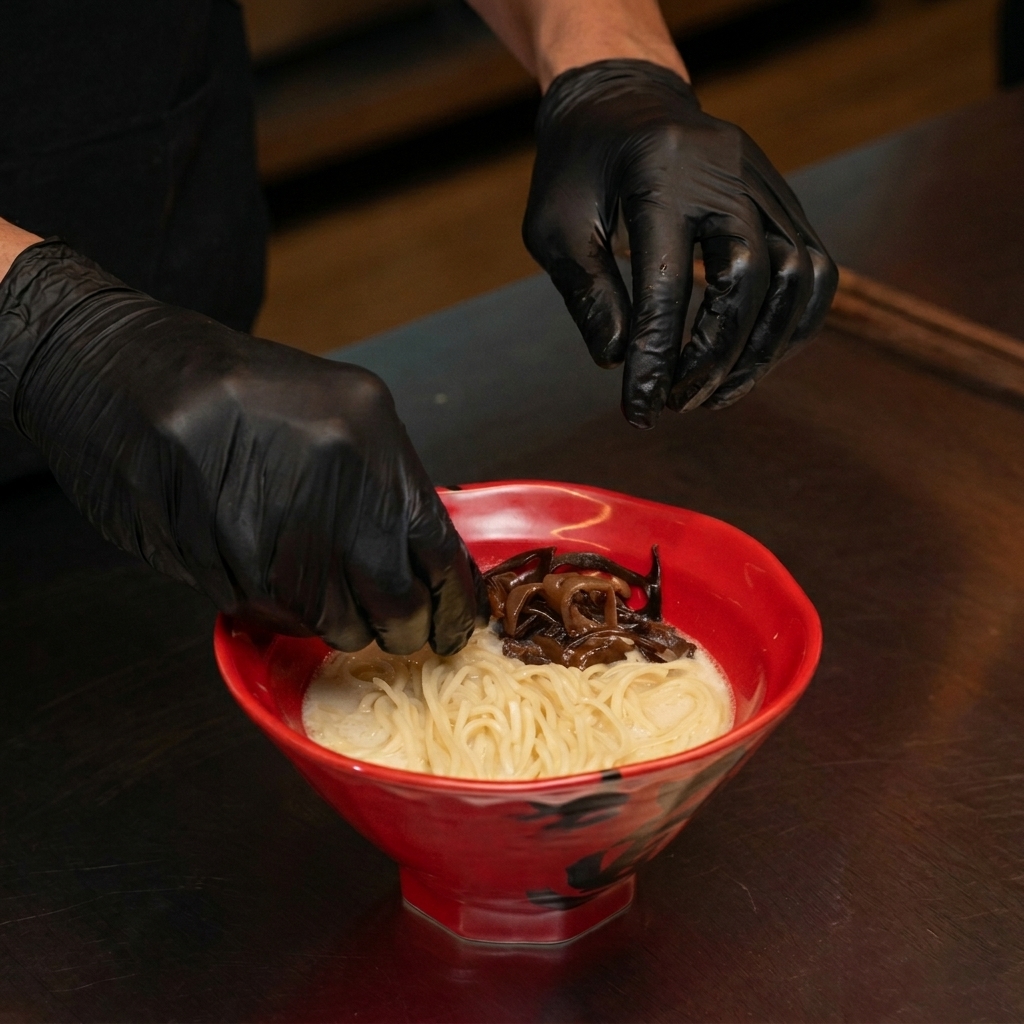
Begin garnishing by placing a pinch of dark, shredded wood ear mushrooms onto the bed of folded noodles. Follow this by adding half of a classic Japanese soft-boiled egg alongside the mushrooms.
Tip: For the best texture, ensure your wood ear mushrooms are finely shredded so they incorporate easily with the noodles in every bite. - 6Add bamboo shoots
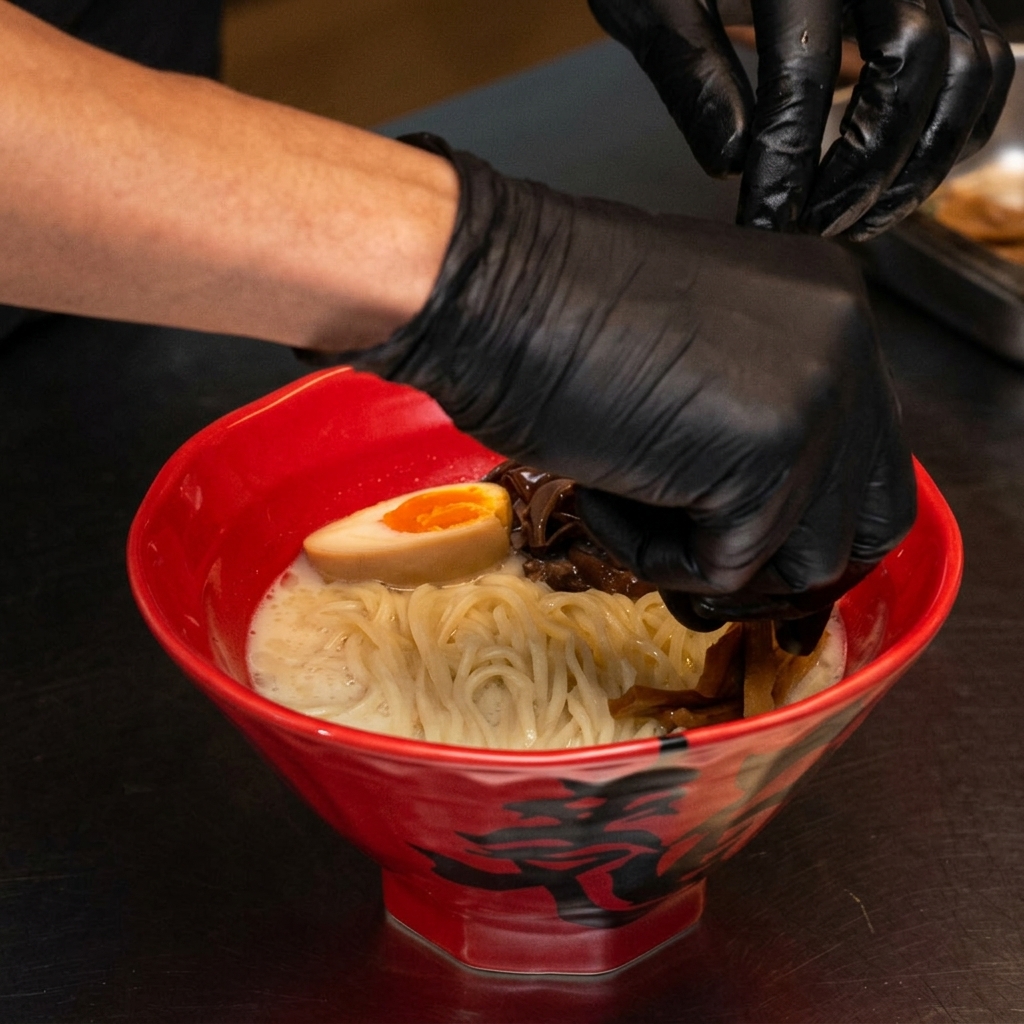
Continue building the bowl by placing several pieces of dried bamboo shoots (menma) next to the mushrooms and egg. The bamboo shoots add a satisfying crunch and a slightly sweet, savory flavor.
Tip: If your store-bought menma is too salty, you can briefly rinse or soak it in hot water before adding it to the bowl. - 7Add the seared chashu
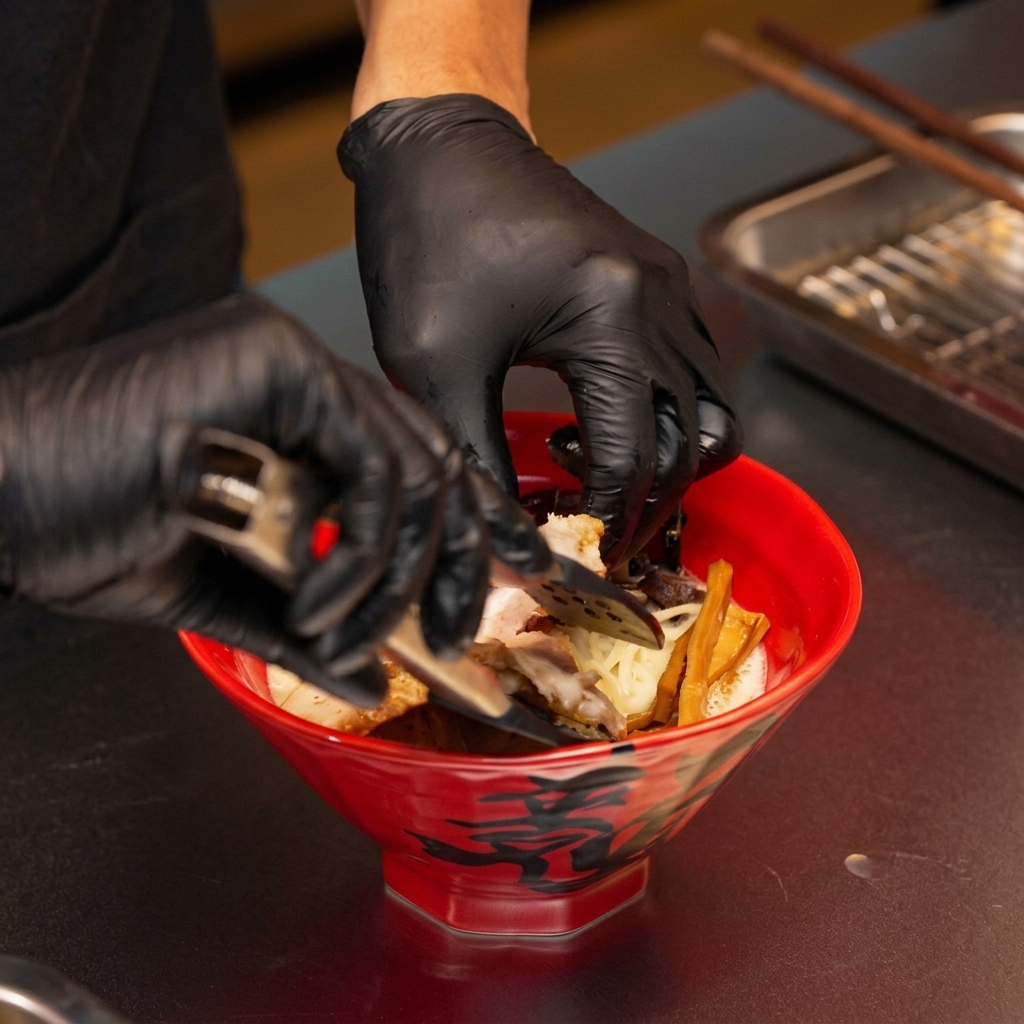
Carefully lay the freshly seared chashu pork slices into the ramen bowl alongside the other prepared toppings like wood ear mushrooms and bamboo shoots. Arrange them neatly over the noodles so that every component remains visible and appetizing.
Tip: Place the pork gently on the surface rather than submerging it completely to keep the seared crust intact. - 8Garnish with scallions
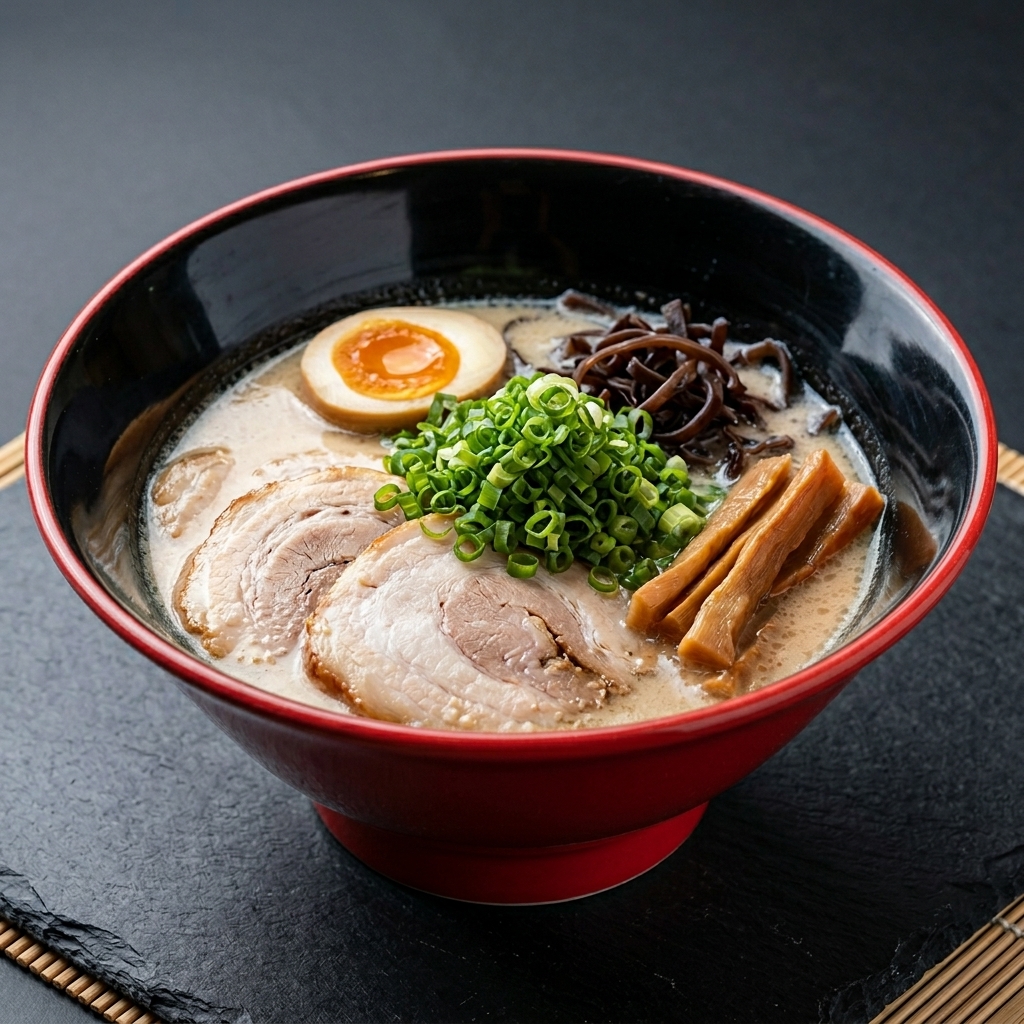
Add a generous scoop of finely chopped green scallions directly to the center of the ramen bowl. The fresh, sharp flavor of the scallions will cut through the rich, heavy pork bone and miso broth, bringing a perfect balance to the dish.
Tip: Slice the scallions as thinly as possible so their aroma releases instantly when mixed into the hot broth. - 9Drizzle with chili oil
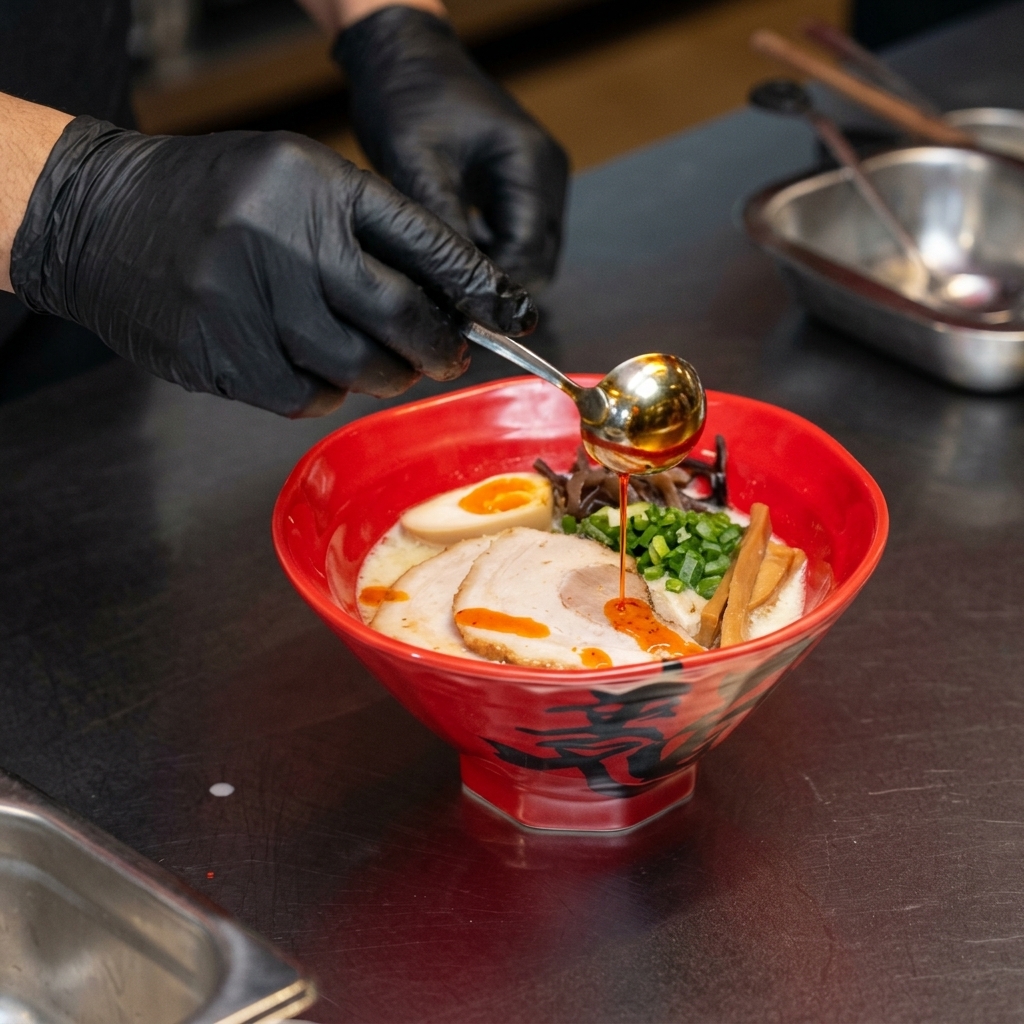
Use a small ladle or spoon to drizzle bright red chili oil over the chashu pork and the rich miso broth. The spicy oil not only adds a vibrant pop of color but also introduces a warming, aromatic heat that elevates the entire flavor profile.
Tip: Adjust the amount of chili oil according to your spice preference, or serve extra on the side. - 10Sprinkle chili powder
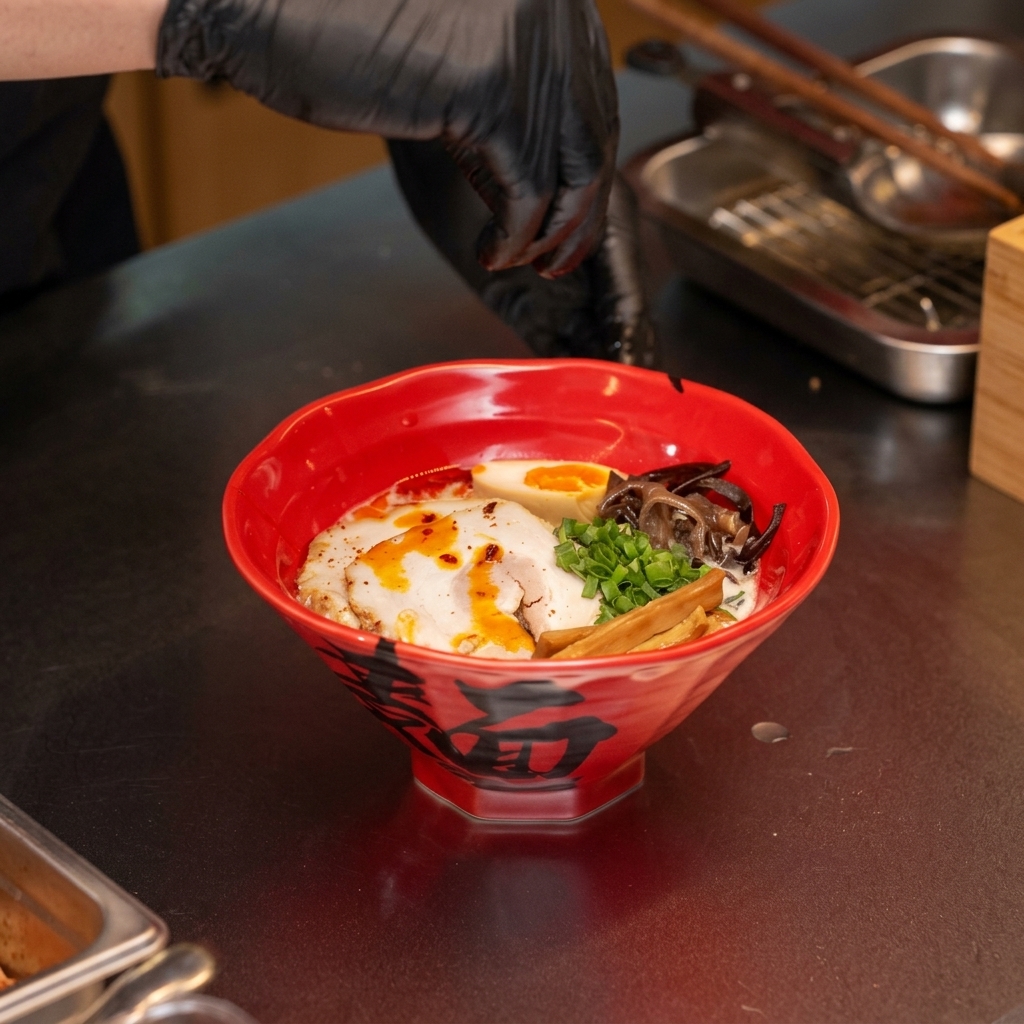
Gently sprinkle dry red chili powder over the surface of the ramen, concentrating on the pork and the center garnishes. This provides a secondary layer of concentrated, dry heat that complements the oily spice of the chili oil perfectly.
Tip: Hold your hand high while sprinkling to ensure an even distribution of the powder without creating clumps. - 11Top with shredded chili
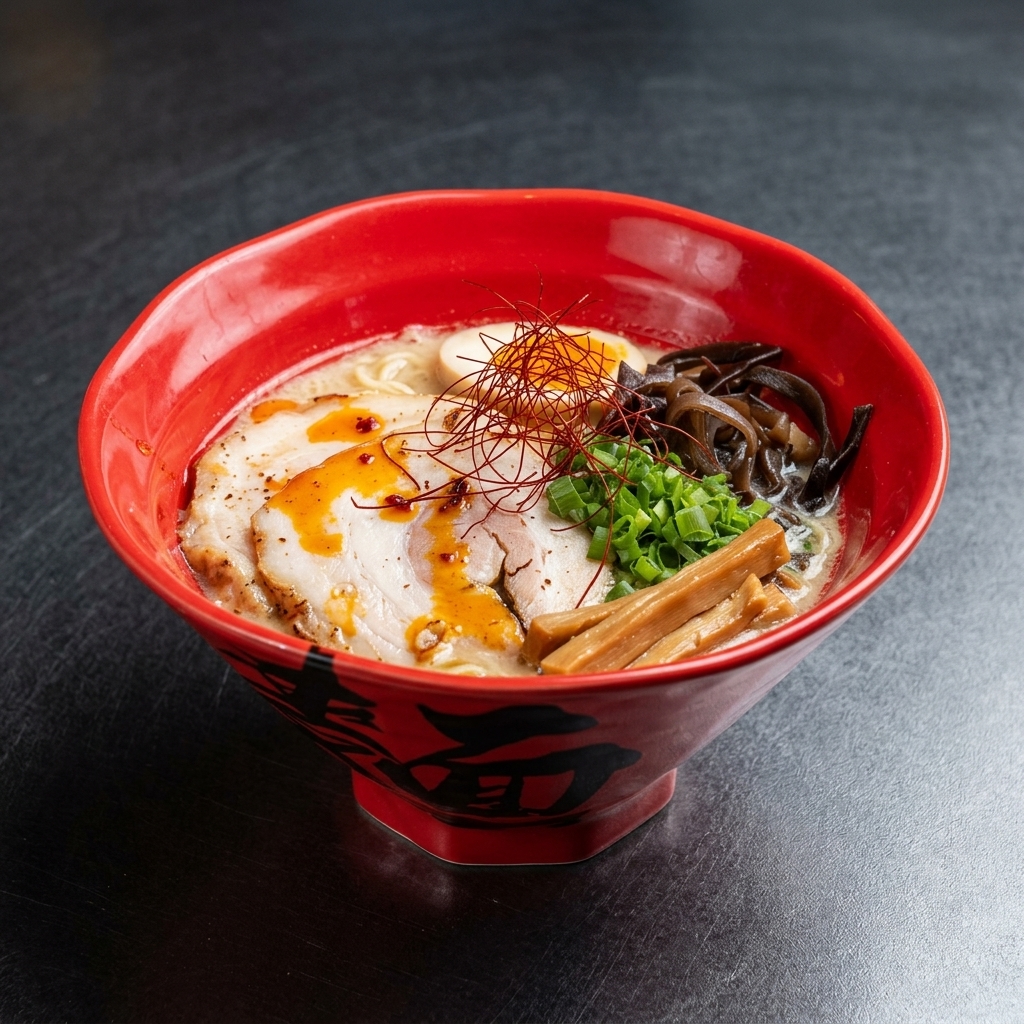
Finish the garnish by carefully placing fine, curling threads of red shredded chili right on top of the scallion mound. These delicate threads provide a striking, elegant visual contrast and a very mild, sweet chili flavor to complete the bowl.
Tip: Use cooking tweezers to precisely place the delicate chili threads without disturbing the other carefully arranged toppings. - 12Garnish with seaweed
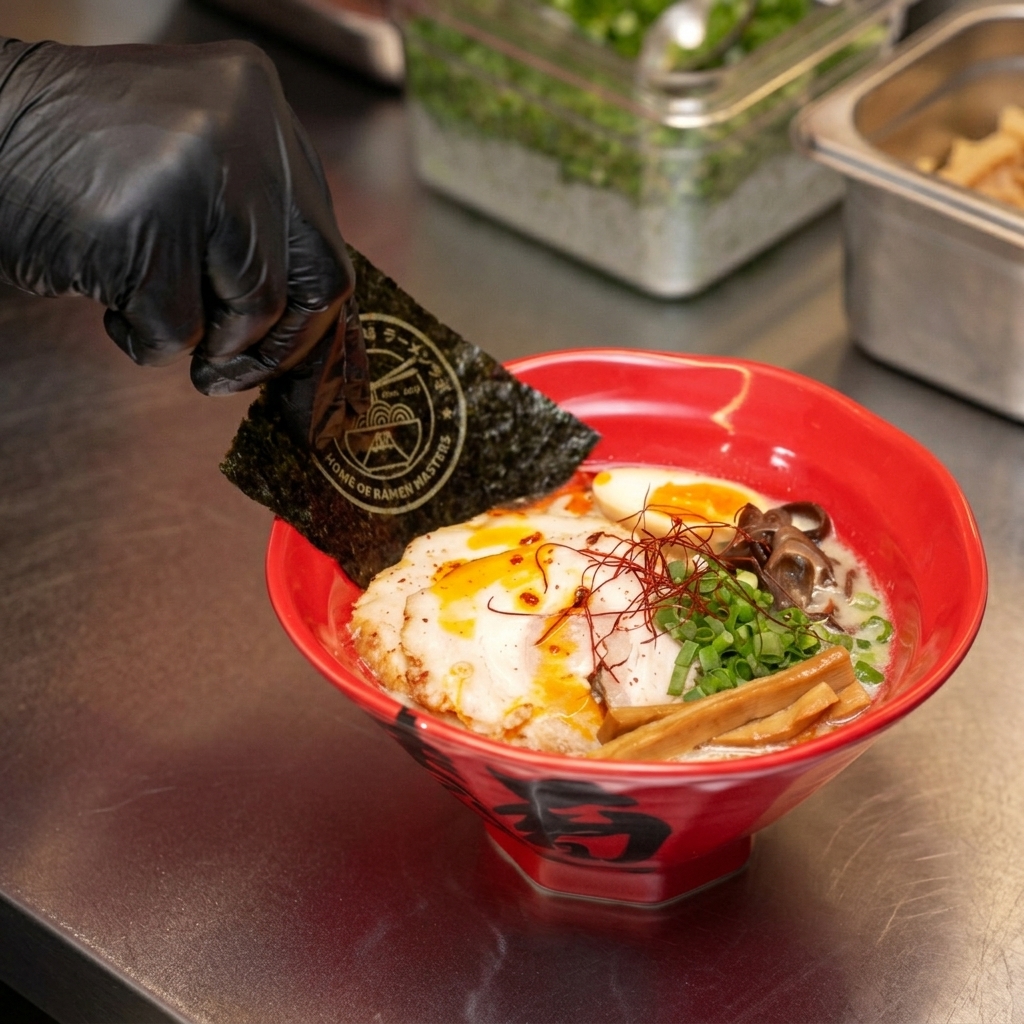
Finish assembling your classic miso ramen by placing a sheet of dried seaweed (nori) on the side of the bowl. Tuck it gently near the edge so it stands slightly upright next to the other toppings.
Tip: Serve the ramen immediately after adding the seaweed to enjoy its crisp texture before it softens in the hot broth.