Japanese-Style Tonkotsu Miso Ramen
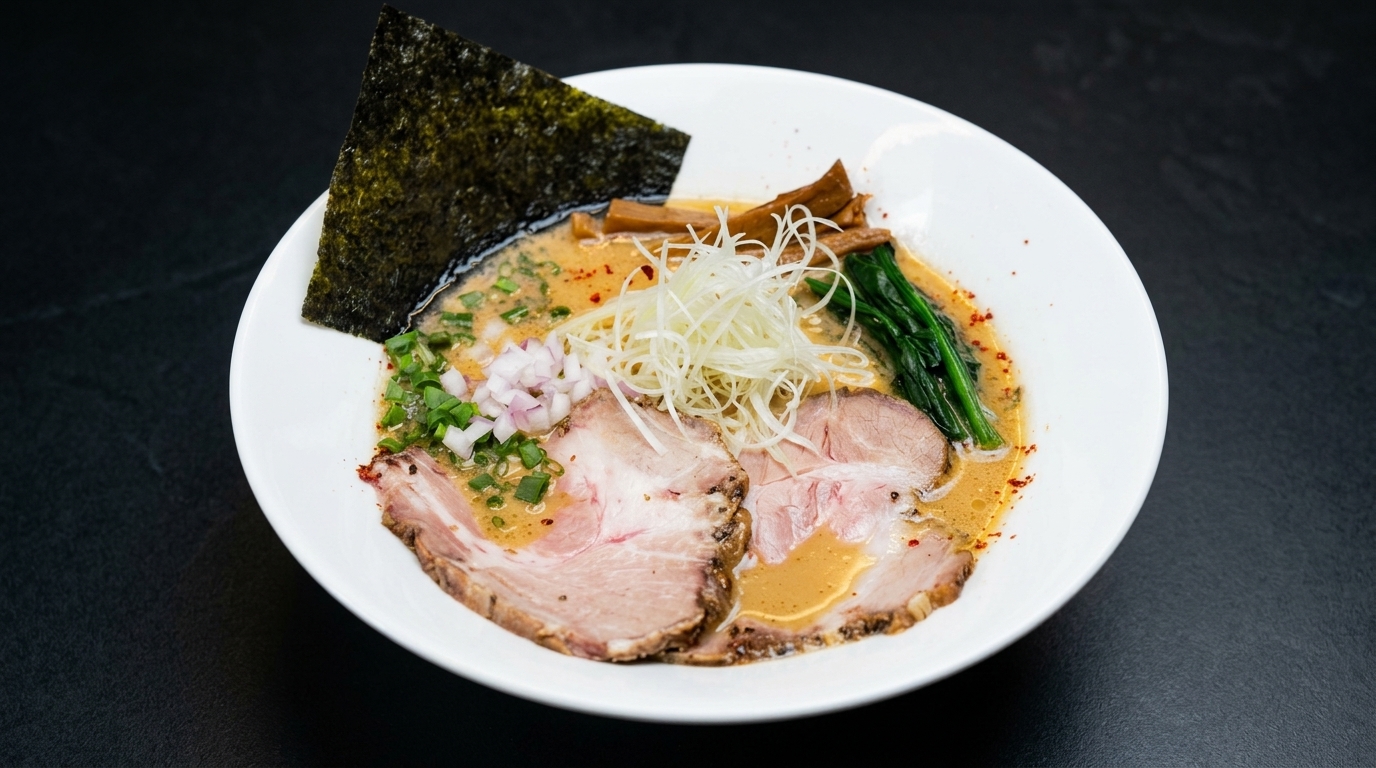
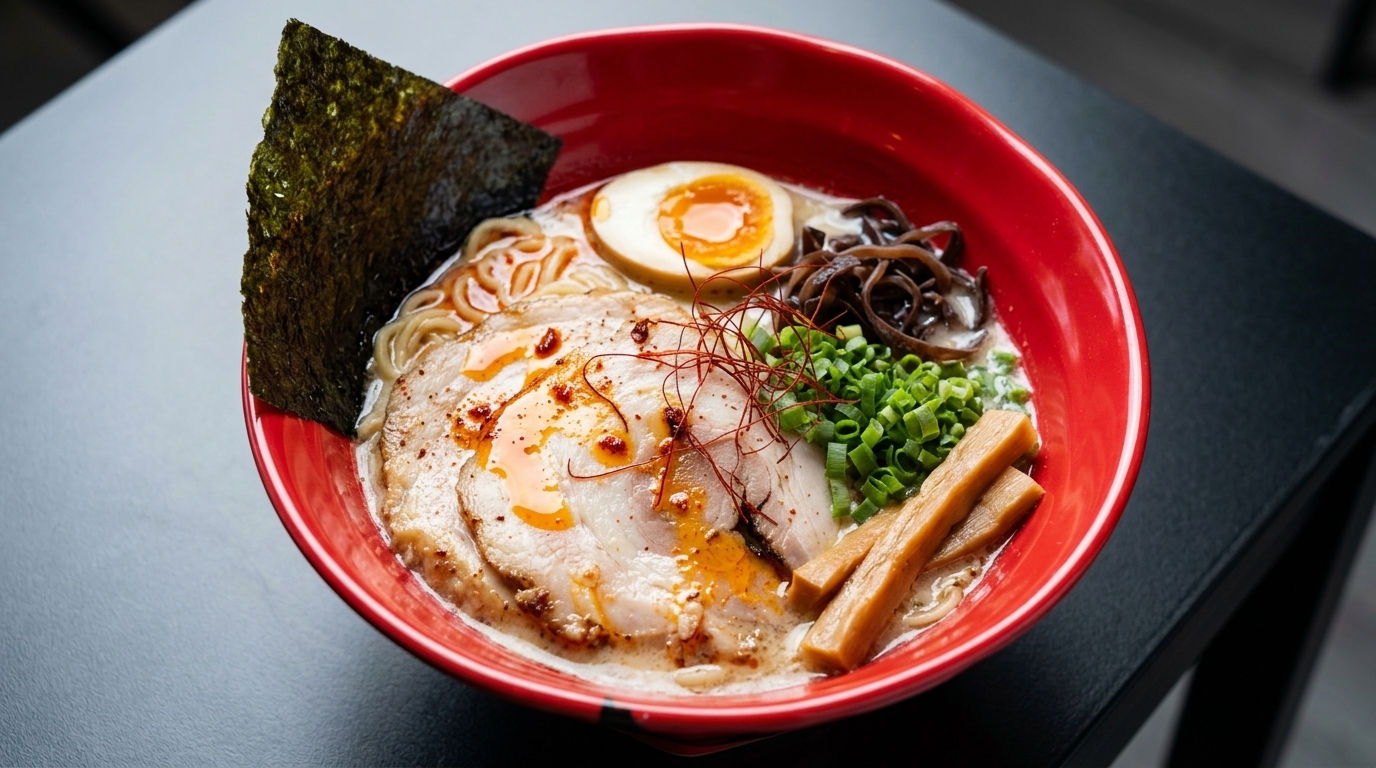
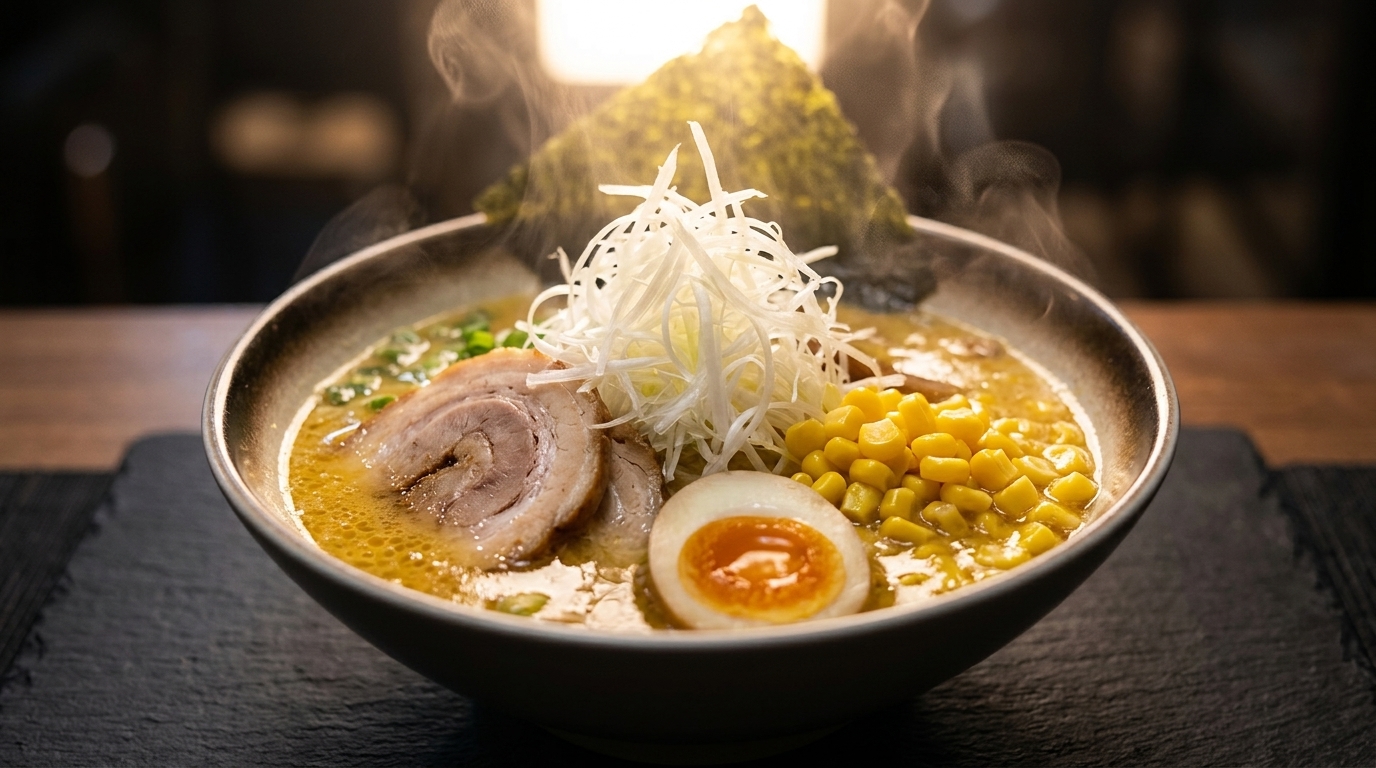
Master this Japanese-style Tonkotsu Miso Ramen at home. A rich, emulsified pork bone broth blends beautifully with savory miso paste and perfectly chewy noodles.
The soul of a great ramen lies in its soup base. This recipe combines the deeply complex, milky richness of a slowly simmered Tonkotsu (pork bone) broth with the earthy umami of miso paste. Preparing the tare (seasoning base) directly in the serving bowl ensures the miso retains its delicate aromas, resulting in a restaurant-quality bowl of warmth and comfort.
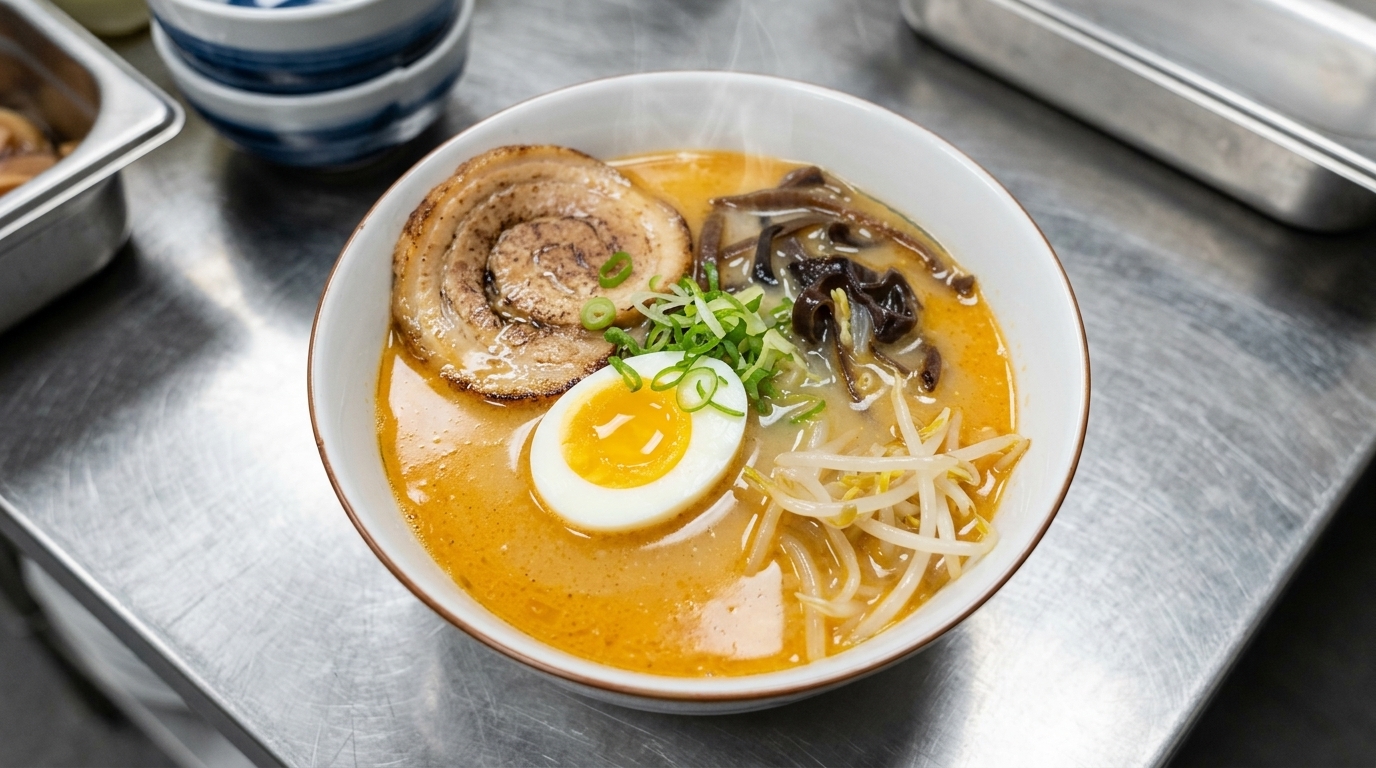
Ingredients
- 2 portions fresh ramen noodles
- 800 ml tonkotsu (pork bone) broth
- 4 tbsp miso paste
- 4 slices chashu pork
- 1 handful silver sprouts (bean sprouts)
- 1 handful shredded kelp or wood ear mushrooms
- 2 soft-boiled eggs
- to taste chopped green onions
Instructions
- 1Prepare the ramen toppings
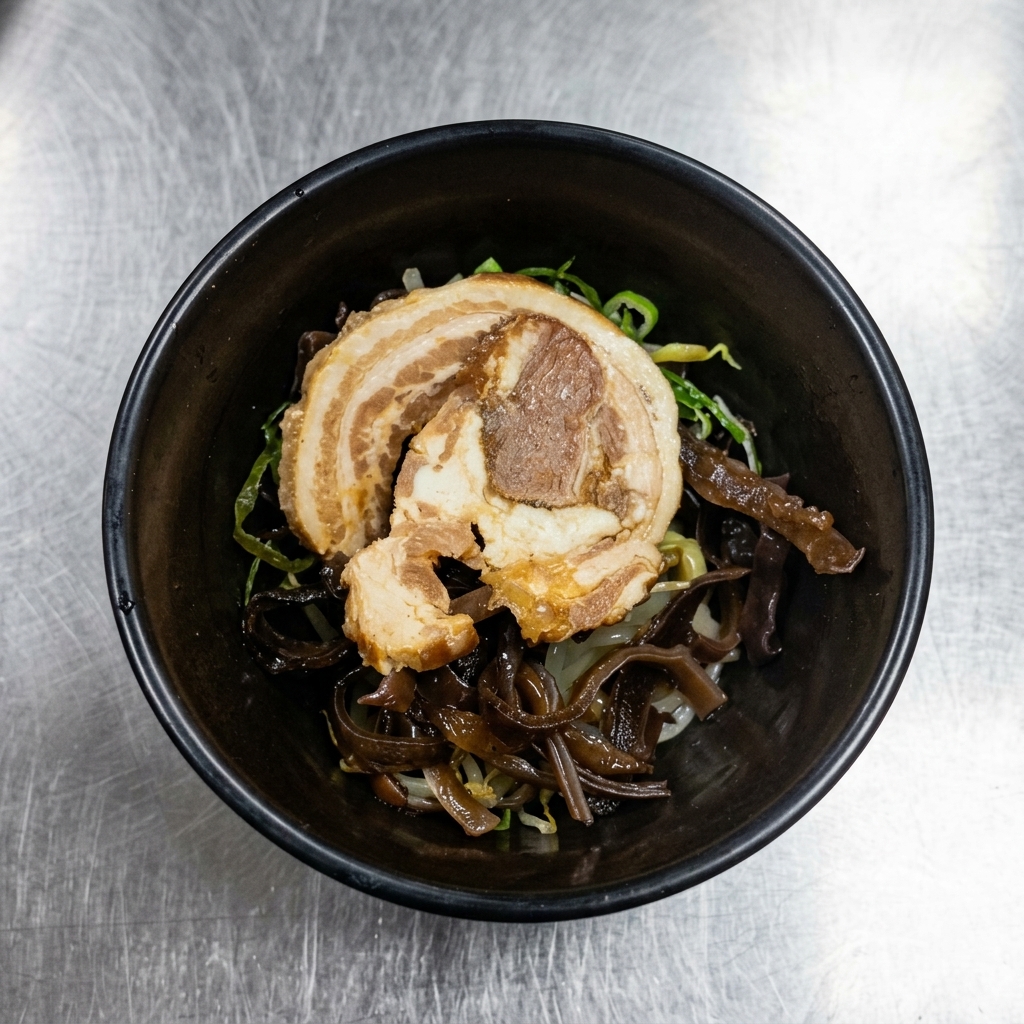
Gather and prepare your essential ramen toppings. Have ready a slice of rolled chashu pork, shredded kelp or wood ear mushrooms, and fresh silver sprouts. Having these ingredients prepped ensures you can assemble the ramen quickly once the noodles and broth are hot.
Tip: Warm your chashu slightly before assembling the bowl to enhance its melt-in-your-mouth texture. - 2Prepare the miso base
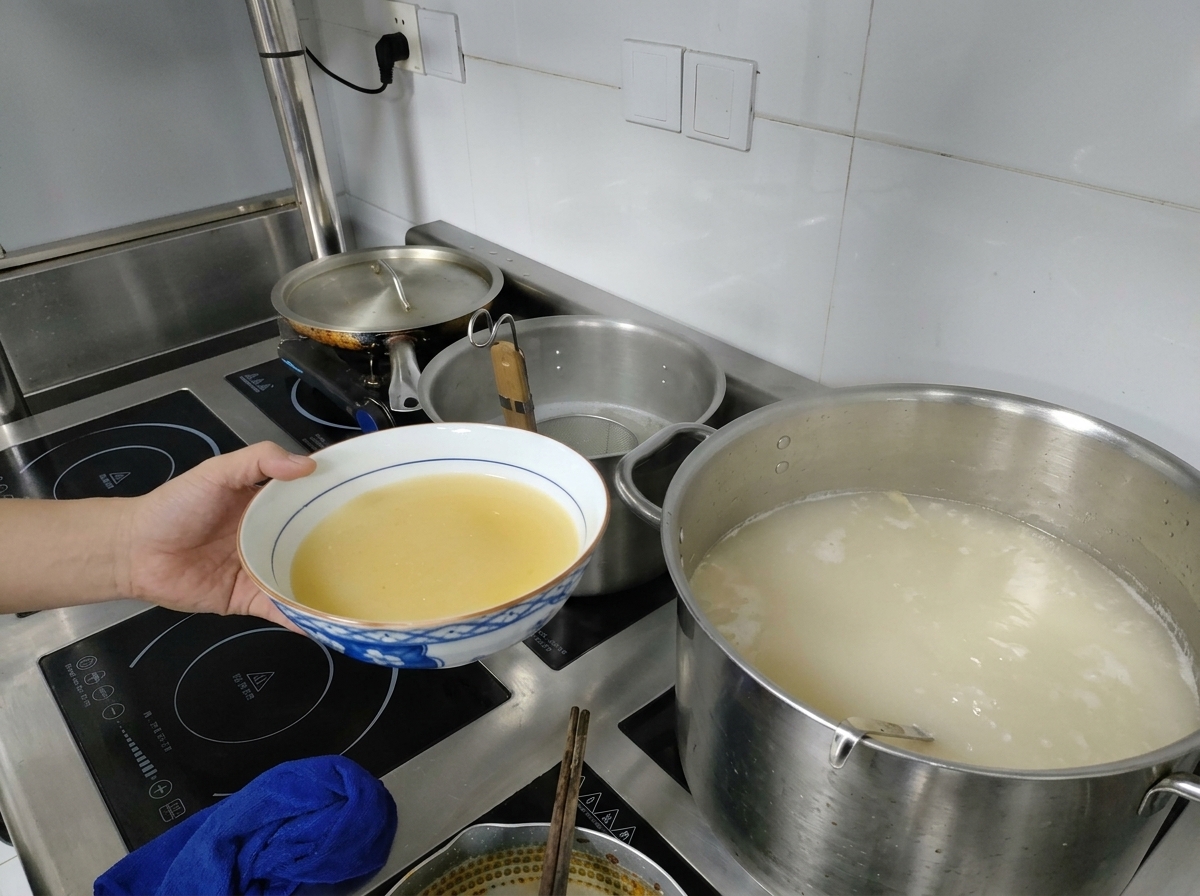
Have your miso paste and seasonings ready in a separate bowl. In a large stockpot, bring your milky white Tonkotsu broth to a rolling boil. The quality of both the miso paste and the rich pork bone broth is crucial for achieving that authentic Japanese ramen flavor.
Tip: A rich, properly boiled Tonkotsu broth should have a milky, opaque appearance resulting from the emulsified fats and collagen. - 3Blend the soup base
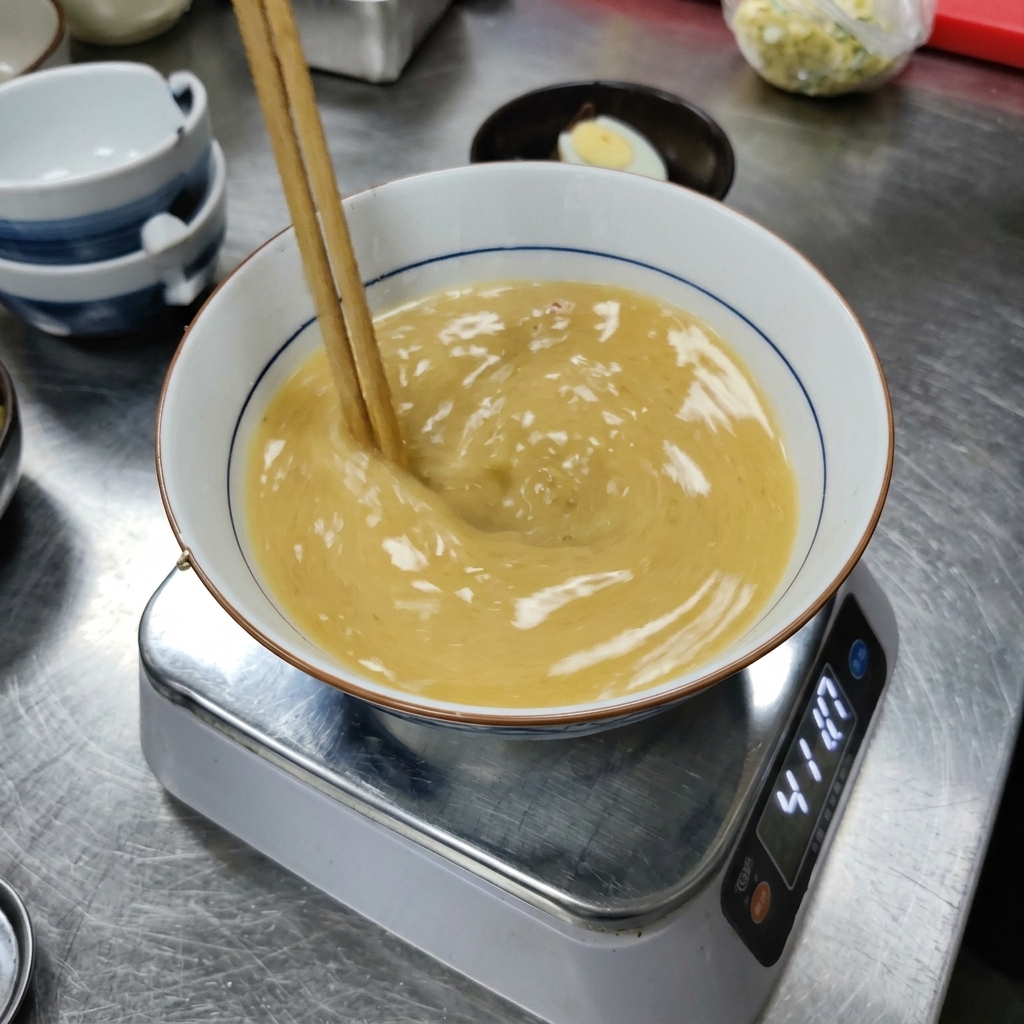
Place the miso paste mixture into your serving bowl. Pour a portion of the hot Tonkotsu broth over the paste and use chopsticks to vigorously stir them together. Ensure the miso is completely dissolved into the hot liquid to create a smooth, deeply flavorful base soup.
Tip: Mixing the miso base directly in the serving bowl preserves its aromatic qualities and prevents the miso from losing its delicate flavor from over-boiling. - 4Boil the ramen noodles
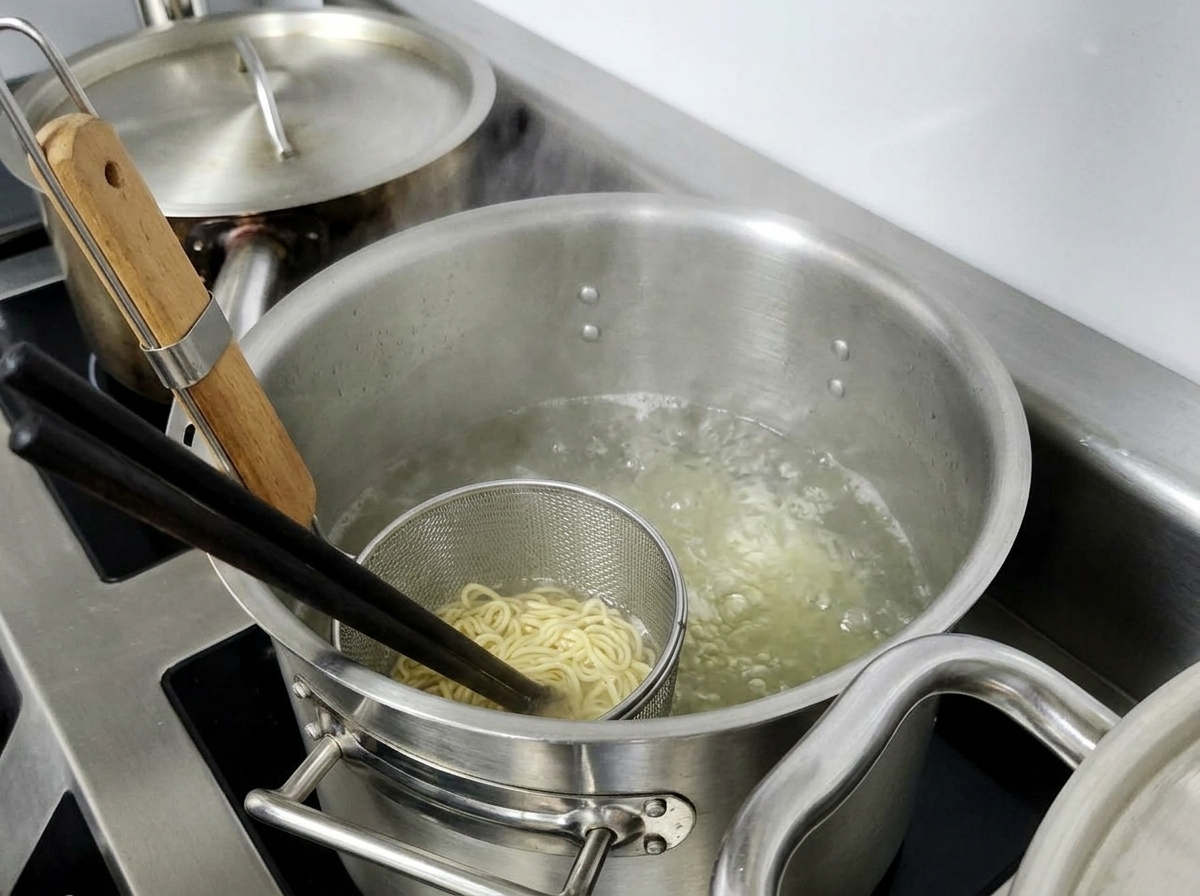
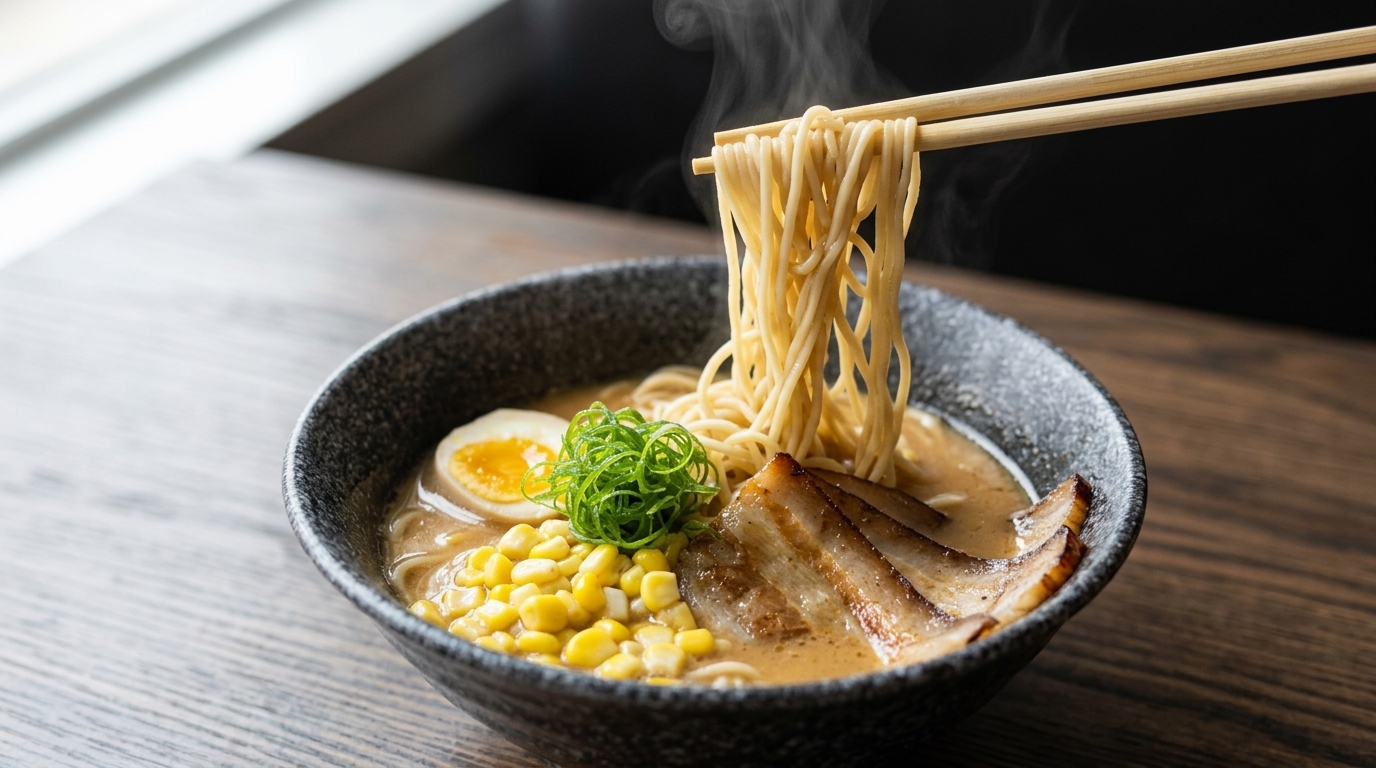
Bring a separate pot of water to a vigorous boil. Place your fresh ramen noodles into a cylindrical metal noodle strainer and submerge them into the boiling water. Let the noodles cook undisturbed for exactly 1 minute and 30 seconds to achieve a perfect chewy texture.
Tip: Always cook ramen noodles in a separate pot of plain boiling water, never directly in the soup broth, to prevent the starch from thickening your final soup. - 5Drain the noodles and assemble
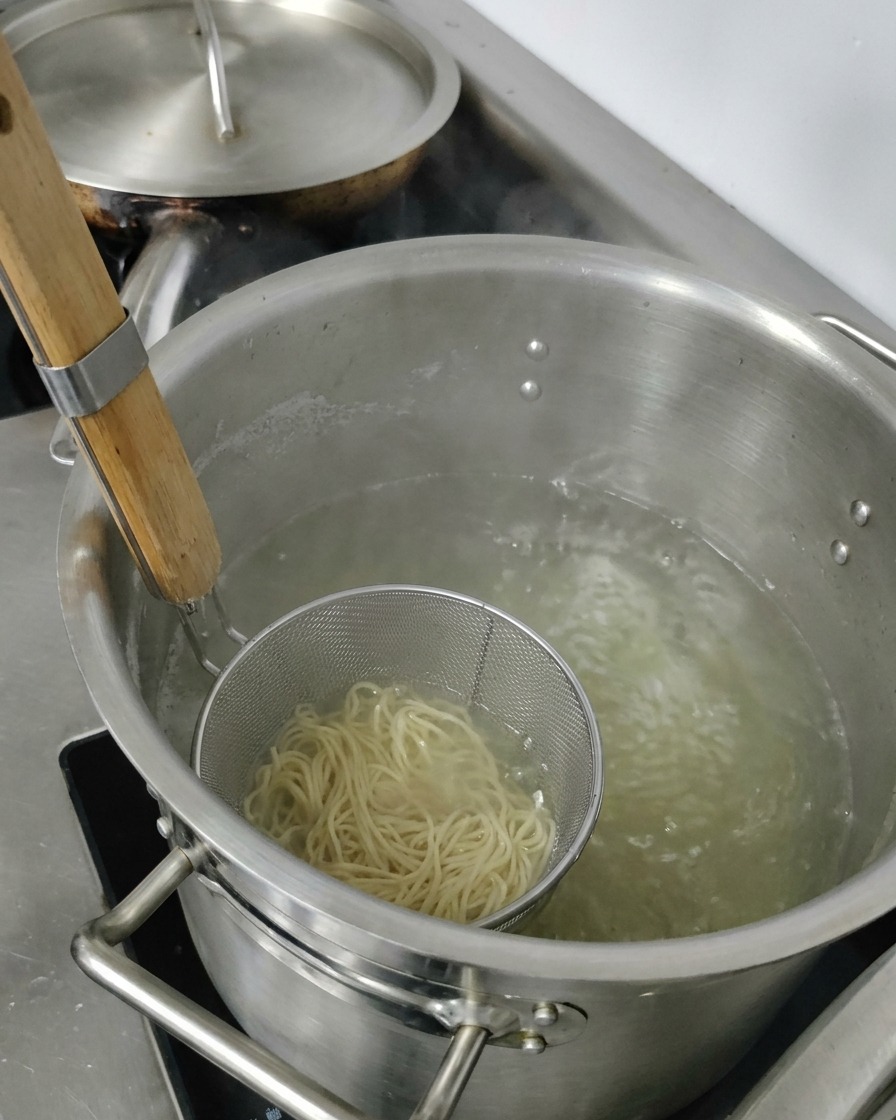
Once the boiling time is up, immediately lift the noodle strainer basket out of the hot water. Shake the strainer firmly to drain off as much excess water as possible, which prevents the remaining cooking water from diluting your rich Tonkotsu broth. Carefully slide the hot noodles into your prepared soup and arrange the chashu, kelp, egg, and sprouts on top.
Tip: Give the strainer a few vigorous downward shakes to ensure the noodles are completely drained before adding them to the soup.