Spicy Miso Salmon Ramen
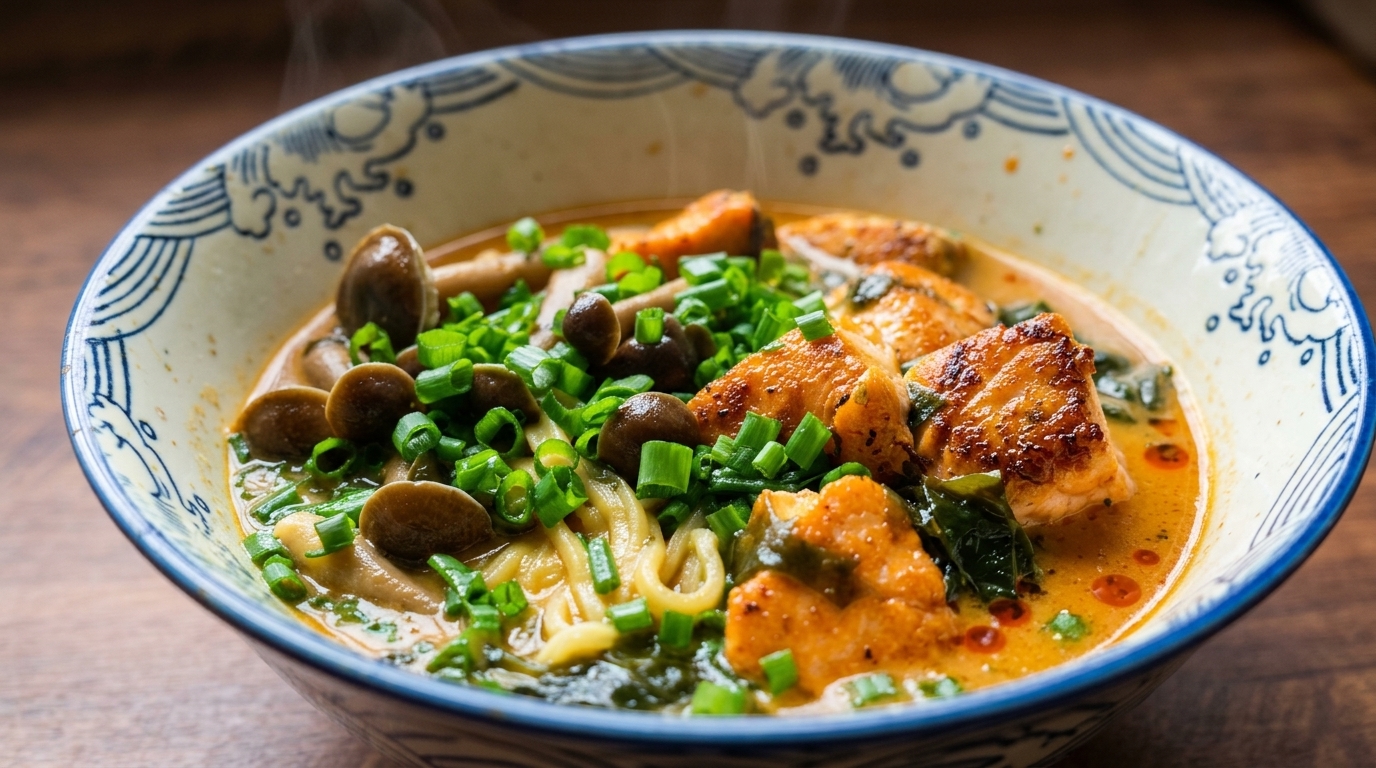
A rich and fiery ramen featuring golden-seared salmon, earthy beech mushrooms, and tender noodles bathed in a savory miso and Korean chili broth.
While miso ramen famously traces its roots to Japans northern island of Hokkaido, this warming bowl introduces a delightful fusion twist. By incorporating gochujang (Korean chili paste) into the broth and topping it with rich, pan-seared salmon, it creates an incredibly hearty, spicy, and deeply savory seafood soup that is perfect for chilly evenings.
Ingredients
- 300 g fresh salmon fillet
- 2 portions fresh ramen noodles
- 100 g brown beech mushrooms
- 1 tbsp dried wakame seaweed
- 1 tbsp miso paste
- 1 tbsp Korean chili paste (gochujang)
- 1 tbsp mirin
- 1 tbsp light soy sauce
- 1 tbsp olive oil
- to taste sea salt
- to taste black pepper
- 500 ml water
- for garnish green onions
Instructions
- 1Cut the salmon
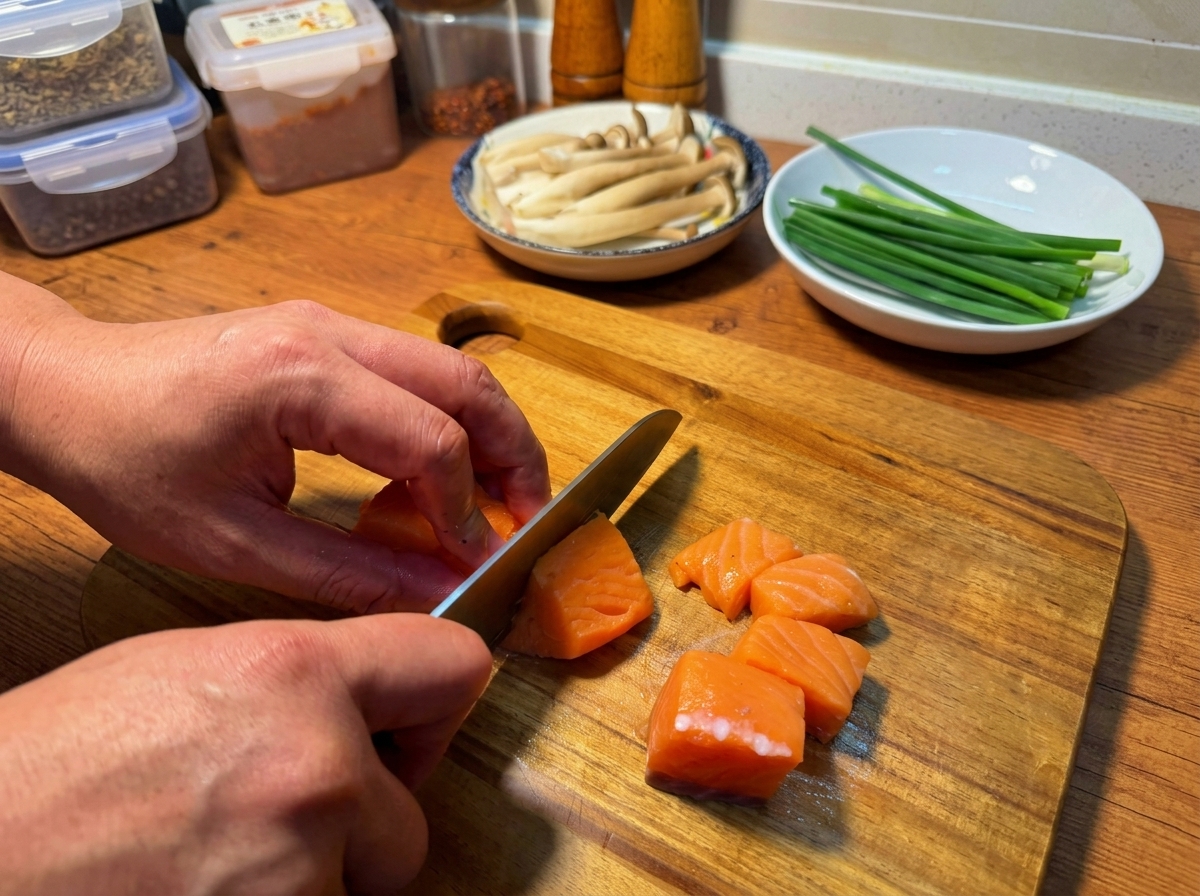
Place the fresh salmon fillet on a clean cutting board and carefully slice it into bite-sized, even chunks. Keeping the pieces uniform ensures they cook evenly and quickly later on.
Tip: Pat the salmon dry with a paper towel before cutting; this makes it less slippery and easier to handle. - 2Season the salmon
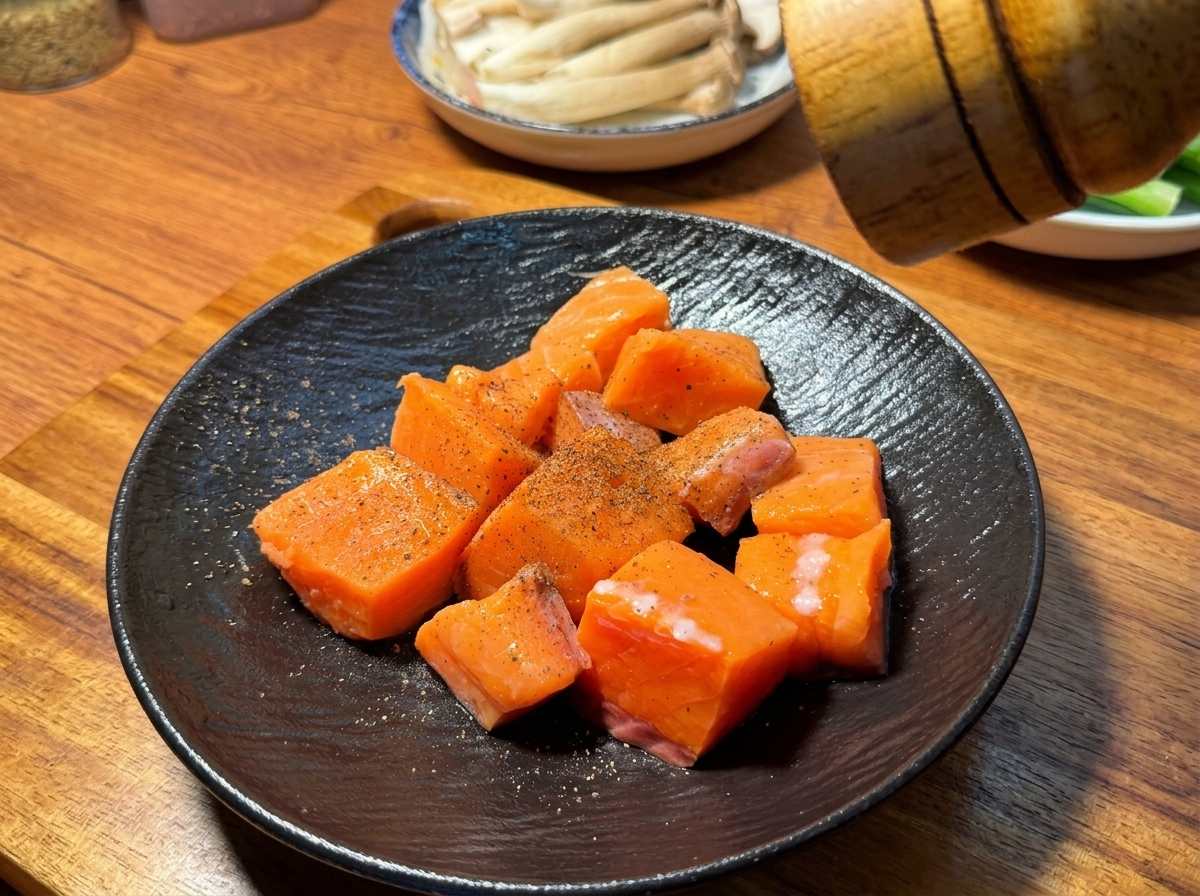
Transfer the salmon chunks to a plate or bowl. Season generously with freshly ground black pepper and a pinch of sea salt to enhance the natural flavor of the fish.
Tip: Freshly cracked black pepper provides a much brighter and more intense flavor compared to pre-ground pepper. - 3Drizzle with olive oil
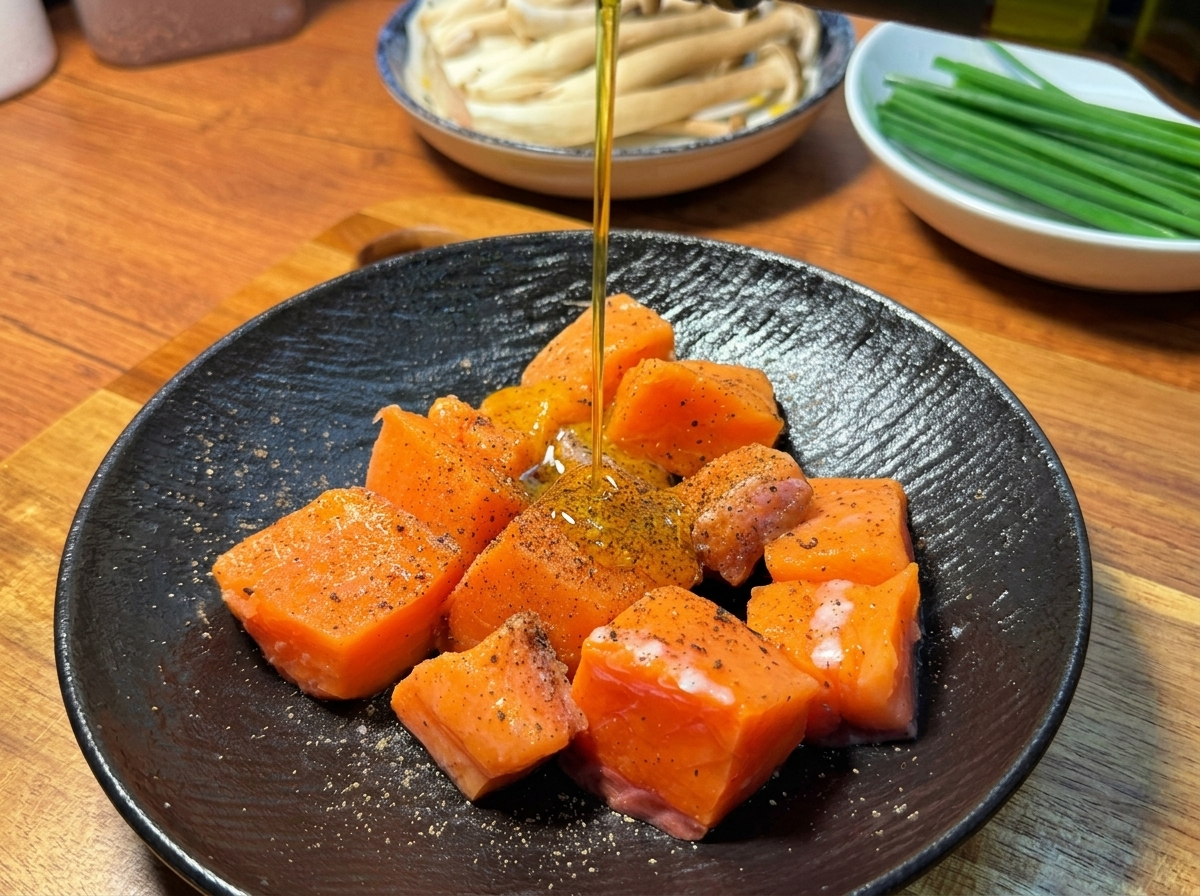
Drizzle a small amount of olive oil over the seasoned salmon pieces. The oil acts as a binder for the salt and pepper and helps achieve a beautiful golden-brown crust when pan-frying.
Tip: You dont need a lot of oil since salmon is already a naturally rich and fatty fish. - 4Mix and coat evenly
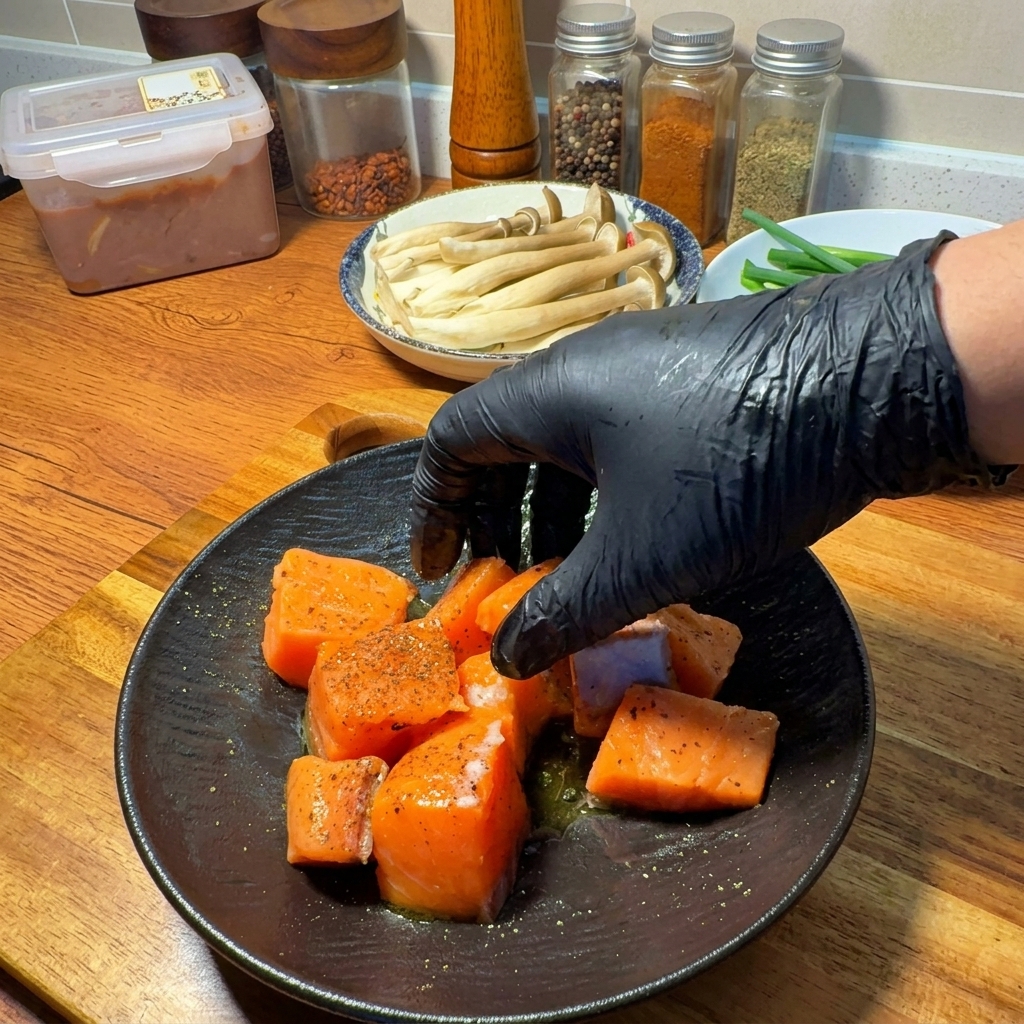
Gently toss the salmon chunks by hand to ensure every piece is evenly coated with the olive oil, salt, and pepper. Let the fish marinate briefly while you prepare the rest of the ingredients.
Tip: Be gentle when mixing so you dont mash or break apart the delicate salmon pieces. - 5Hydrate the wakame seaweed
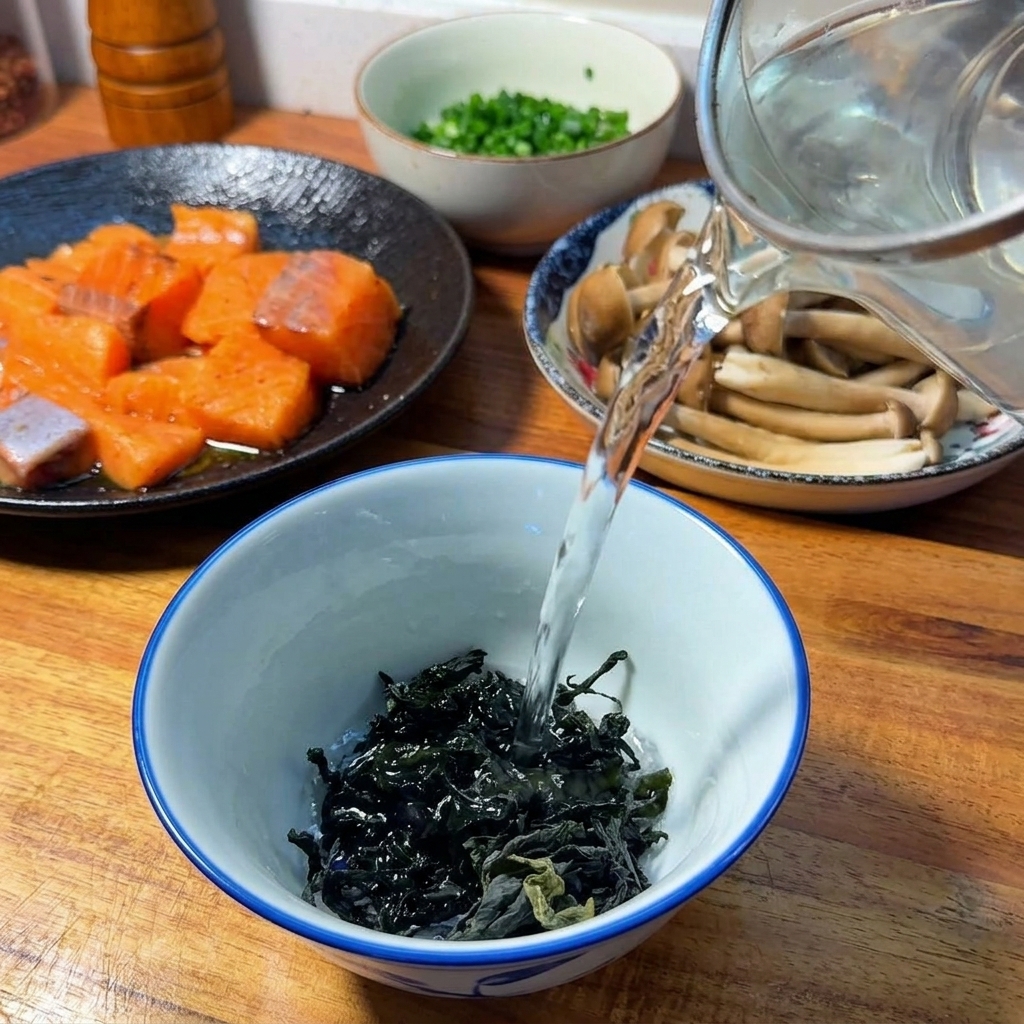
Place the dried wakame seaweed into a small bowl and pour warm or hot water over it. Let it sit for a few minutes until it fully rehydrates, expands, and becomes tender.
Tip: Wakame expands significantly when soaked, so a small handful of dried seaweed will yield a large portion. - 6Prep the mushrooms
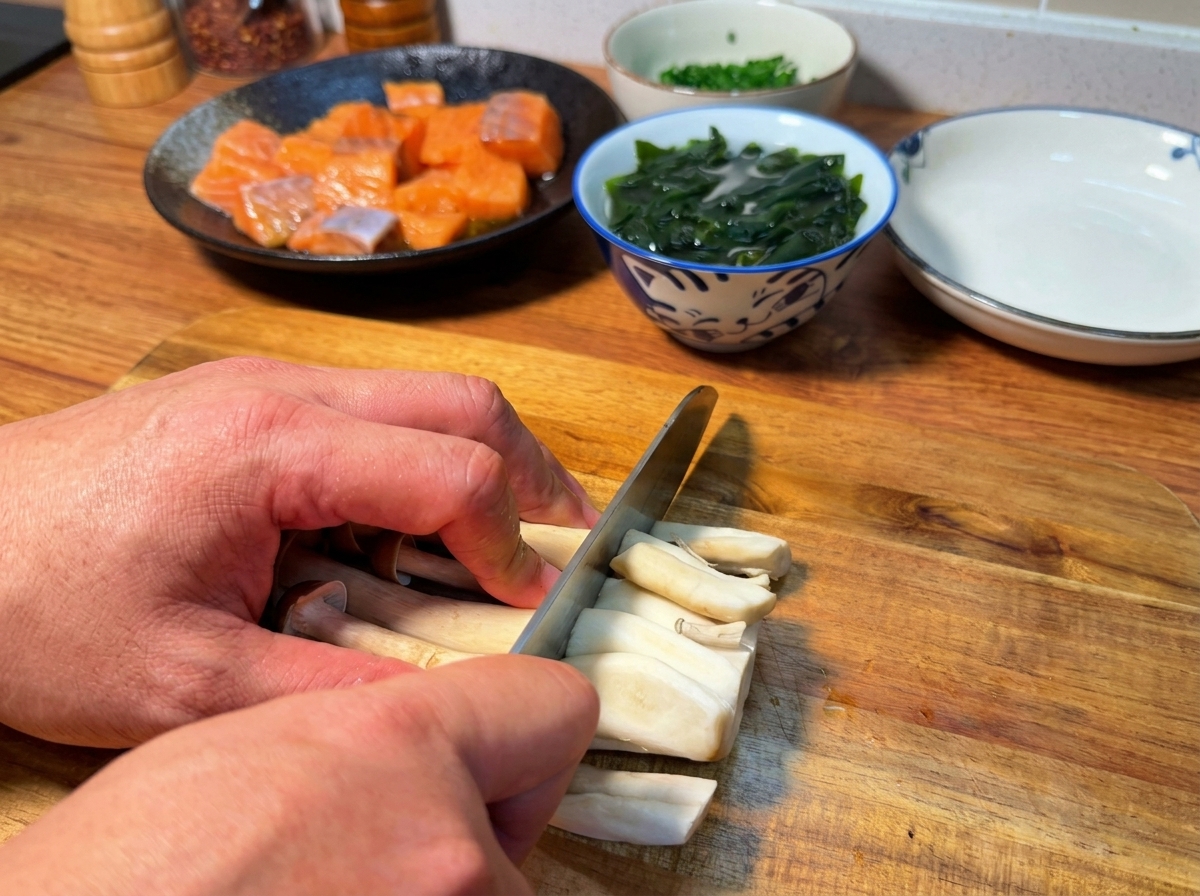
Place the brown beech mushrooms on a wooden cutting board and use a sharp knife to slice off the root ends. Discard the roots and gently separate the mushrooms so they are ready to be added to the broth later.
Tip: You can gently wipe the mushrooms with a damp paper towel to remove any dirt instead of washing them, which helps prevent them from becoming waterlogged. - 7Mix the soup base
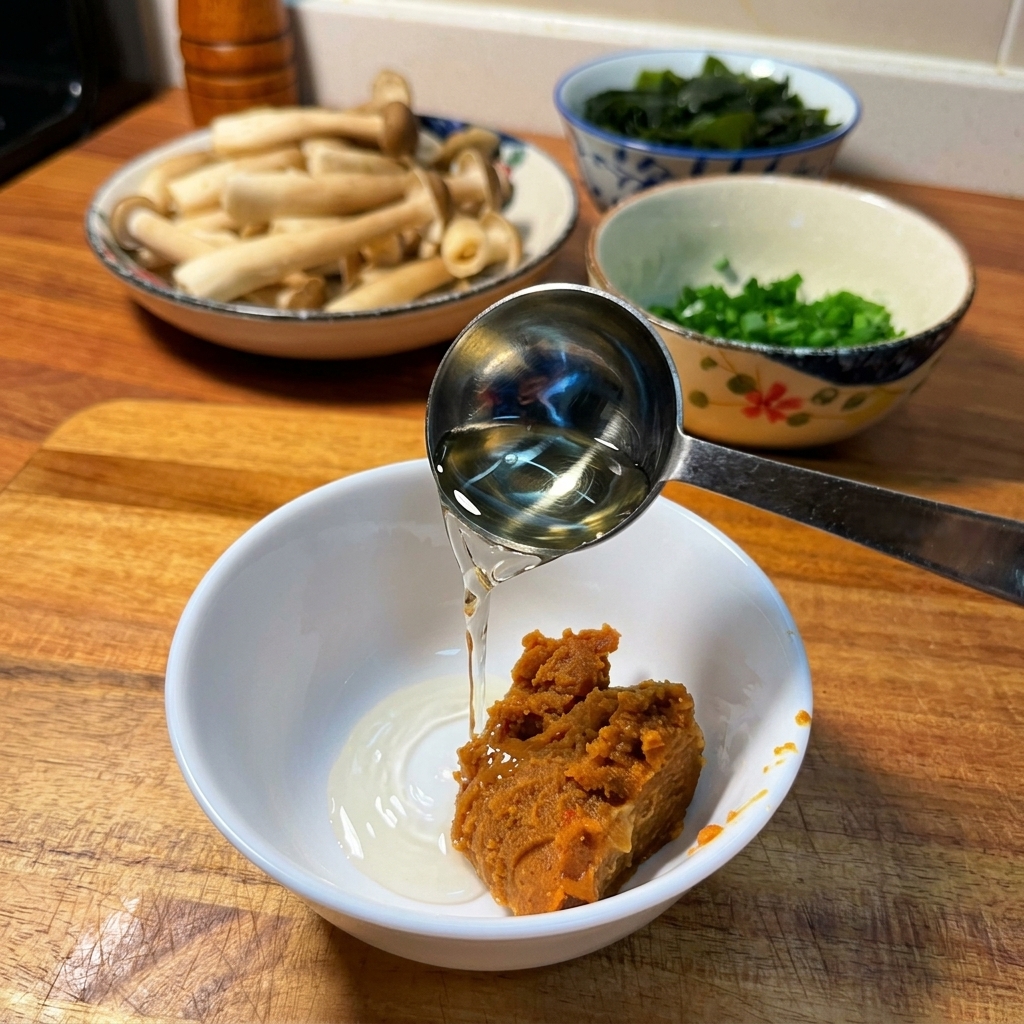
In a small bowl, combine the miso paste and Korean chili paste. Pour in the liquid seasonings, such as mirin and light soy sauce, to begin building the flavor profile for the spicy ramen broth.
Tip: Use a spoon to gently break up the dense miso and chili pastes so they dissolve more easily when stirred. - 8Stir the sauce
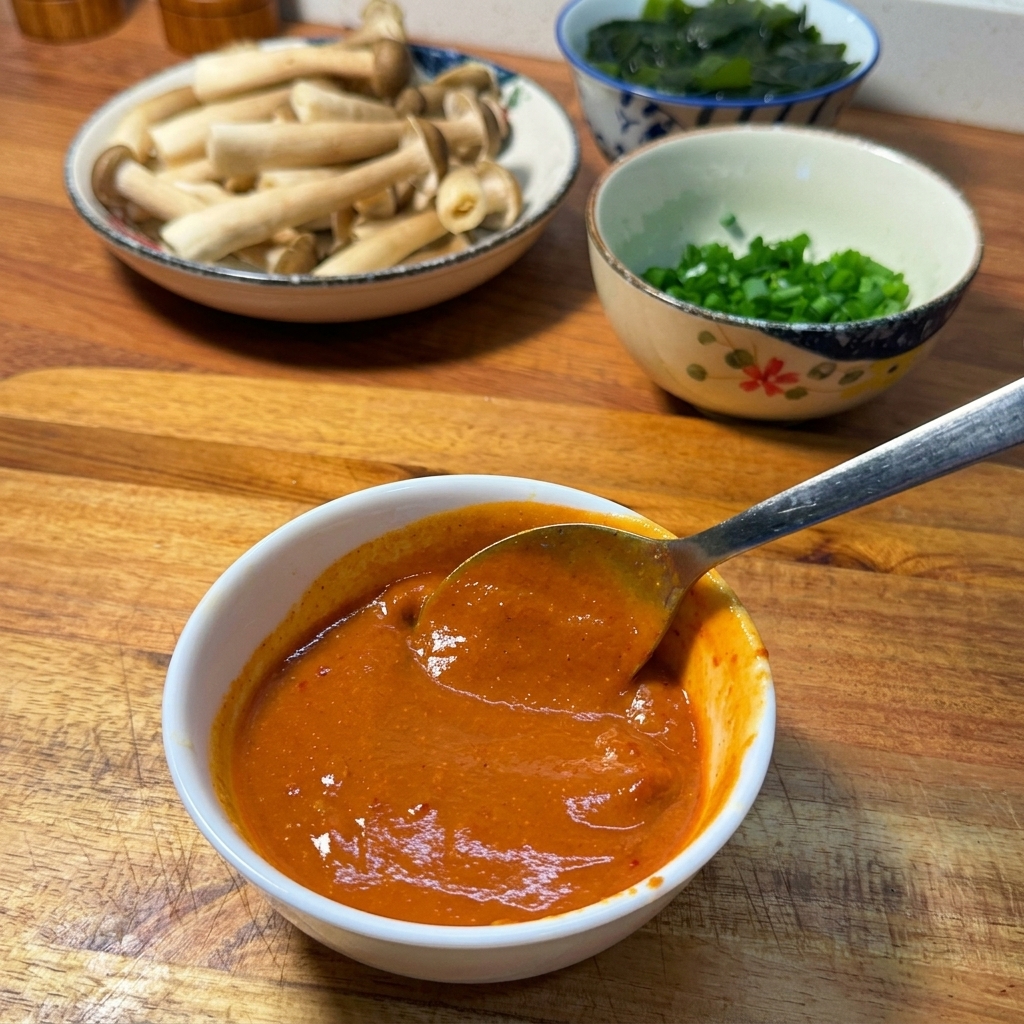
Add a little water to the bowl and stir the mixture continuously until the miso and chili pastes are completely dissolved. The resulting sauce should be smooth and rich in color, with no lumps remaining.
Tip: Mixing the paste separately before adding it to the main pot ensures a perfectly smooth broth without clumps of unmixed miso. - 9Pan-fry the salmon
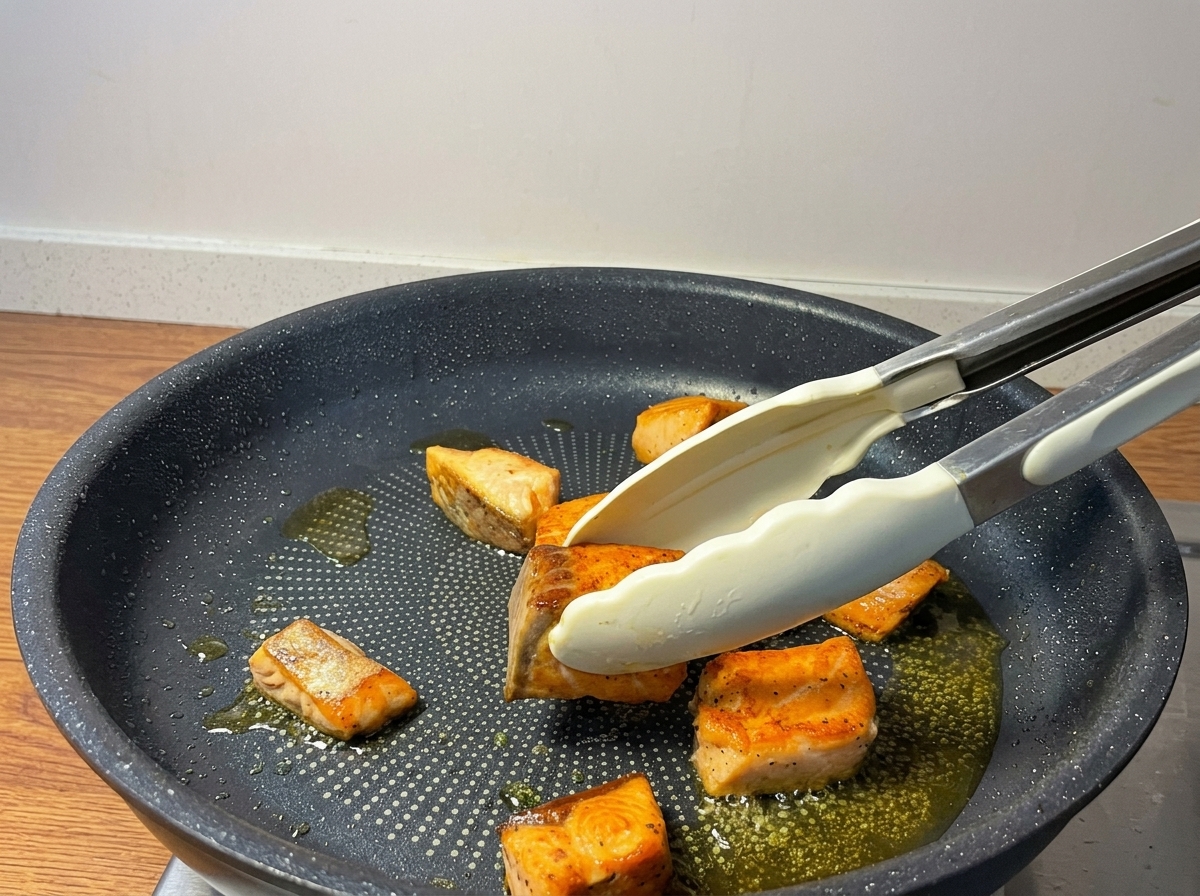
Heat a non-stick skillet with a little olive oil over medium heat. Add the seasoned salmon pieces and pan-fry them until the surface is beautifully golden brown and slightly crispy. Once cooked, set the salmon aside for garnishing the final bowl.
Tip: Avoid overcrowding the pan and let the salmon sear undisturbed for a minute or two on each side to develop a good crust without falling apart. - 10Create the broth
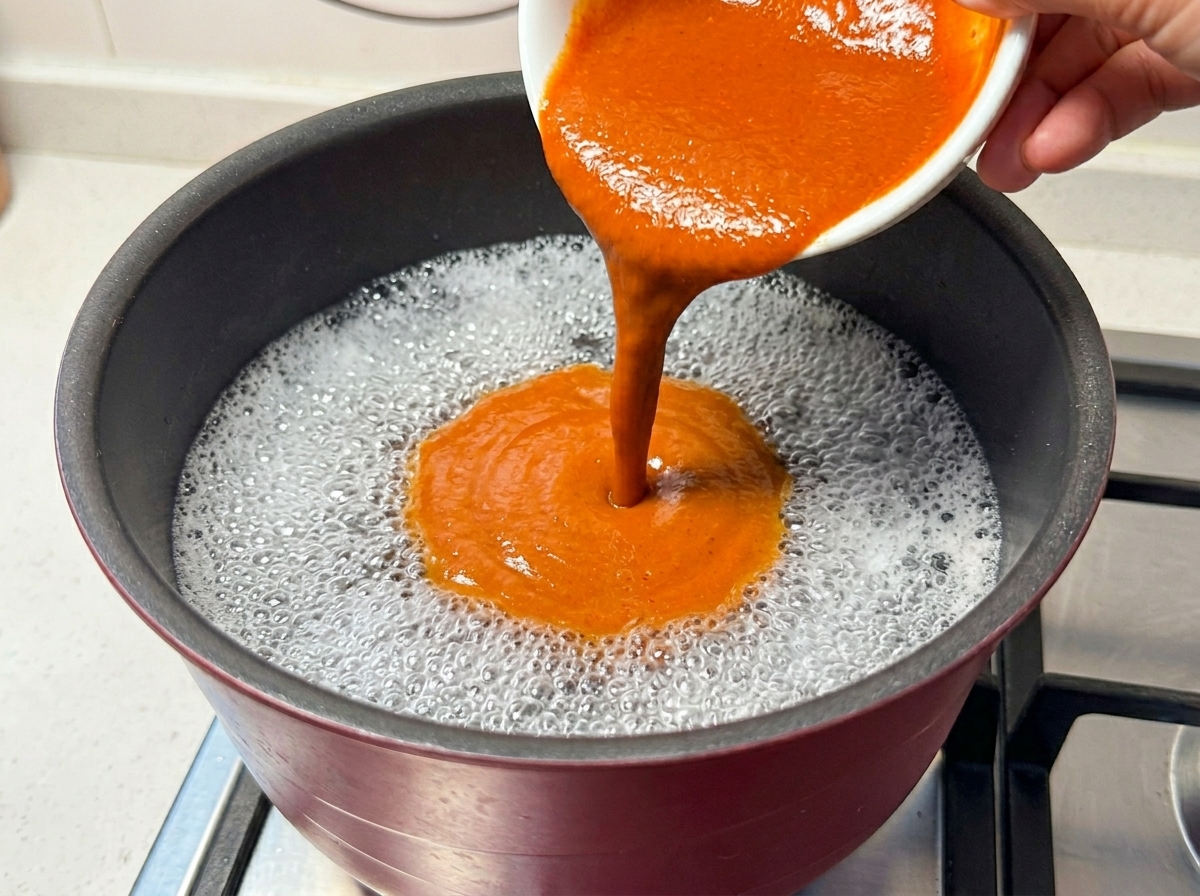
Bring a pot of water to a rolling boil. Carefully pour the smooth, mixed spicy miso and chili sauce into the boiling water, stirring gently to incorporate it fully into a rich, orange broth.
Tip: Once the sauce is fully mixed in, reduce the heat to a gentle simmer. Boiling miso too vigorously can diminish its delicate flavor. - 11Cook the mushrooms
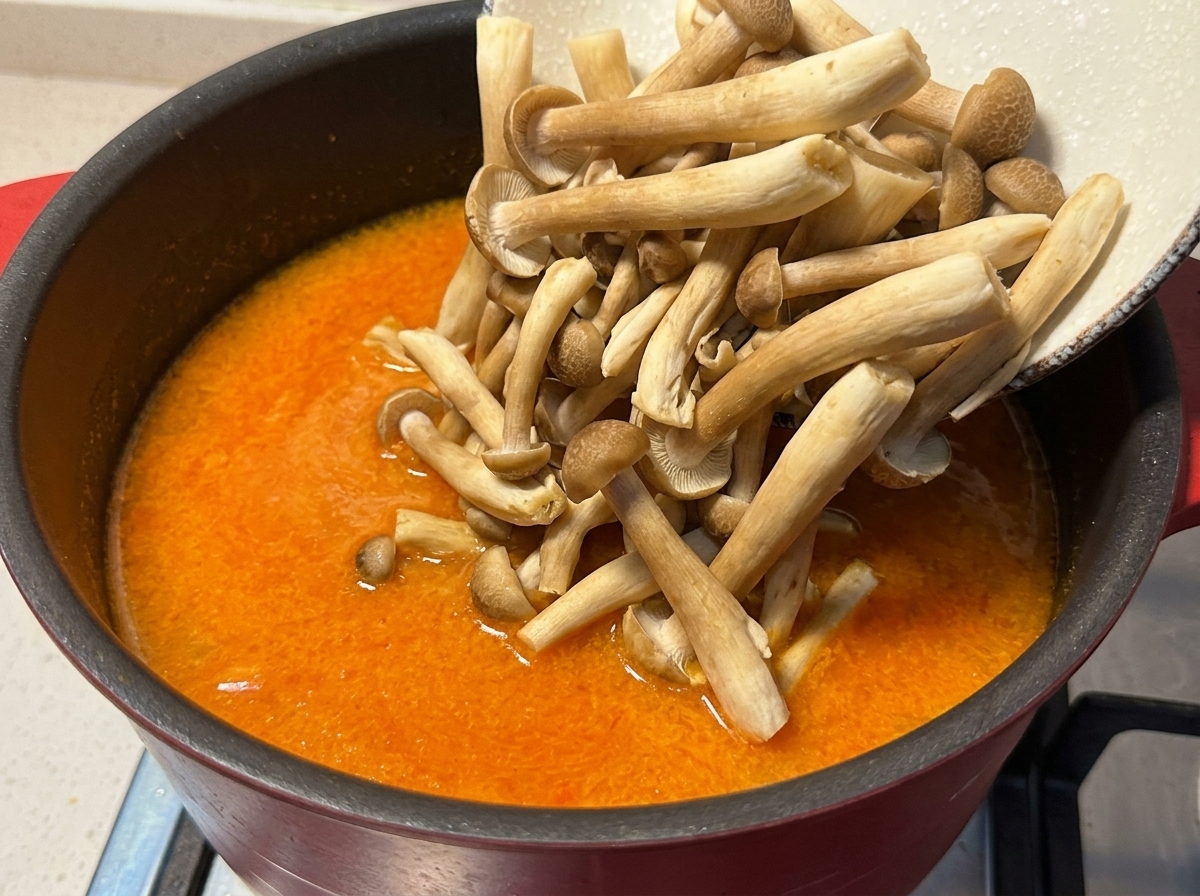
Add the prepared brown beech mushrooms directly into the simmering orange broth. Let them cook for a minute to soften slightly and absorb the savory, spicy flavors of the soup.
Tip: Beech mushrooms cook very quickly and lose volume, so add them towards the end of the broth preparation to maintain a slight bite. - 12Add the wakame
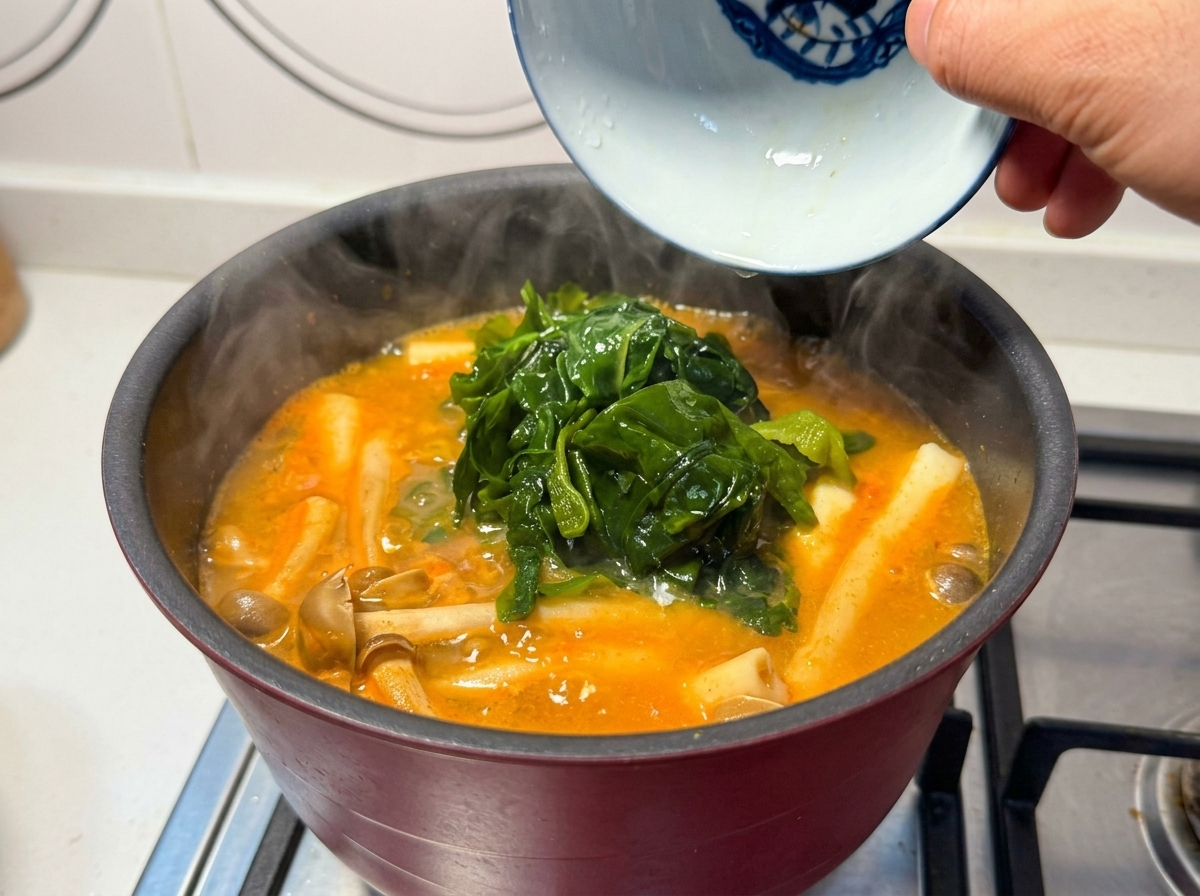
Carefully add the rehydrated wakame seaweed into the simmering spicy miso soup. Allow it to cook briefly, ensuring it releases its subtle oceanic flavor into the broth.
Tip: Soak the dried wakame in cold water for a few minutes before adding it to the pot so it fully expands without becoming mushy. - 13Return salmon to the pot
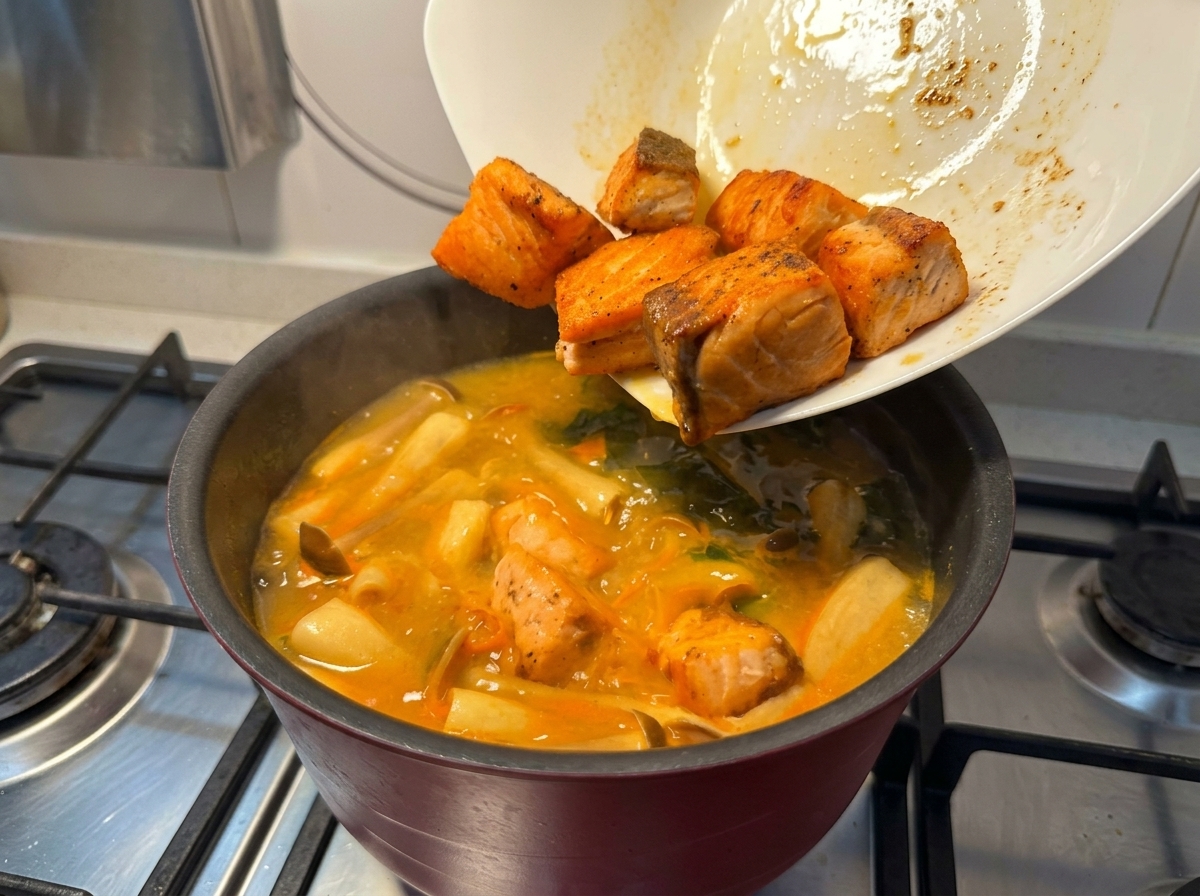
Gently slide the pan-fried salmon pieces from the plate back into the boiling soup. Let the salmon simmer with the mushrooms and seaweed to soak up the rich, spicy flavors of the broth.
Tip: Adding the cooked salmon towards the end prevents the fish from overcooking and breaking apart in the vigorously boiling soup. - 14Boil the ramen noodles
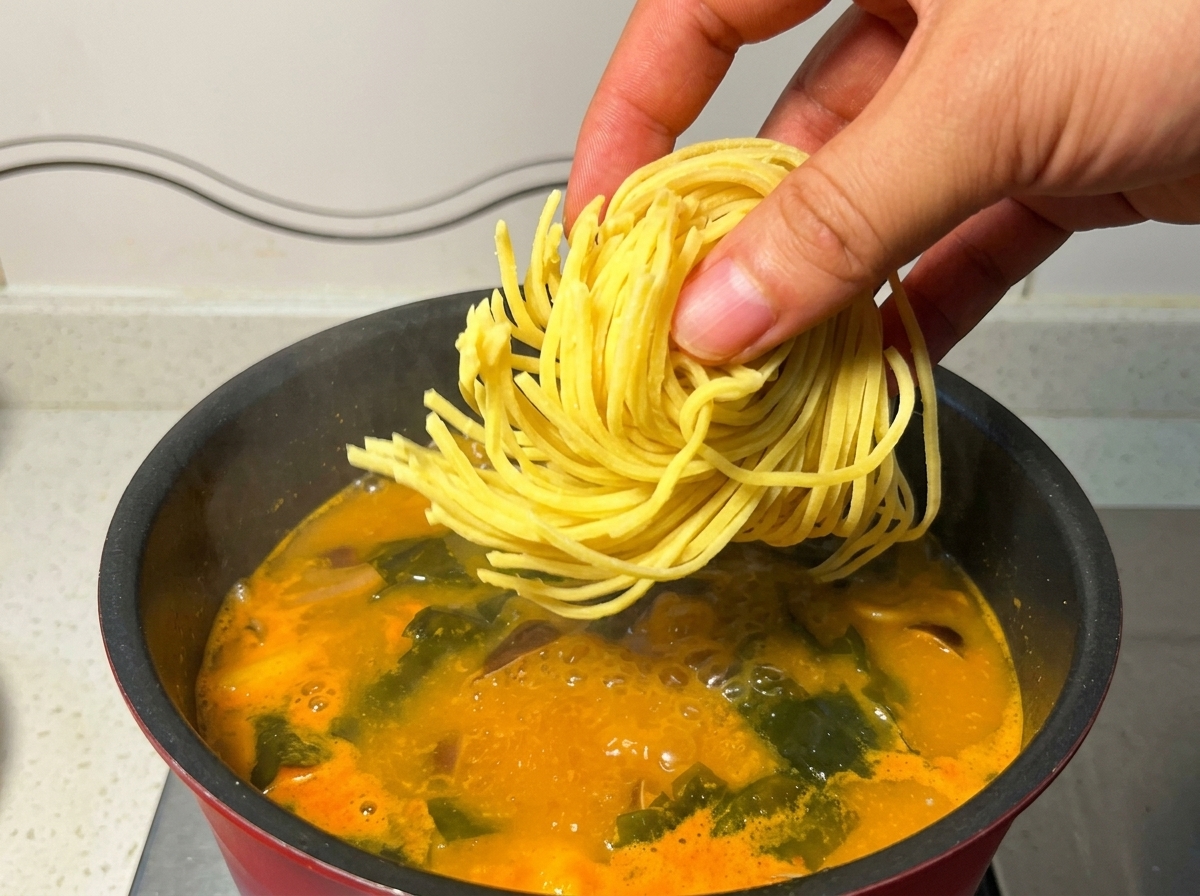
Place a bundle of raw yellow ramen noodles directly into the boiling broth. Submerge them completely so they cook evenly and absorb the savory and spicy miso base.
Tip: If you prefer a cleaner, less starchy broth, you can boil the noodles in a separate pot of hot water before adding them to your soup. - 15Remove cooked noodles
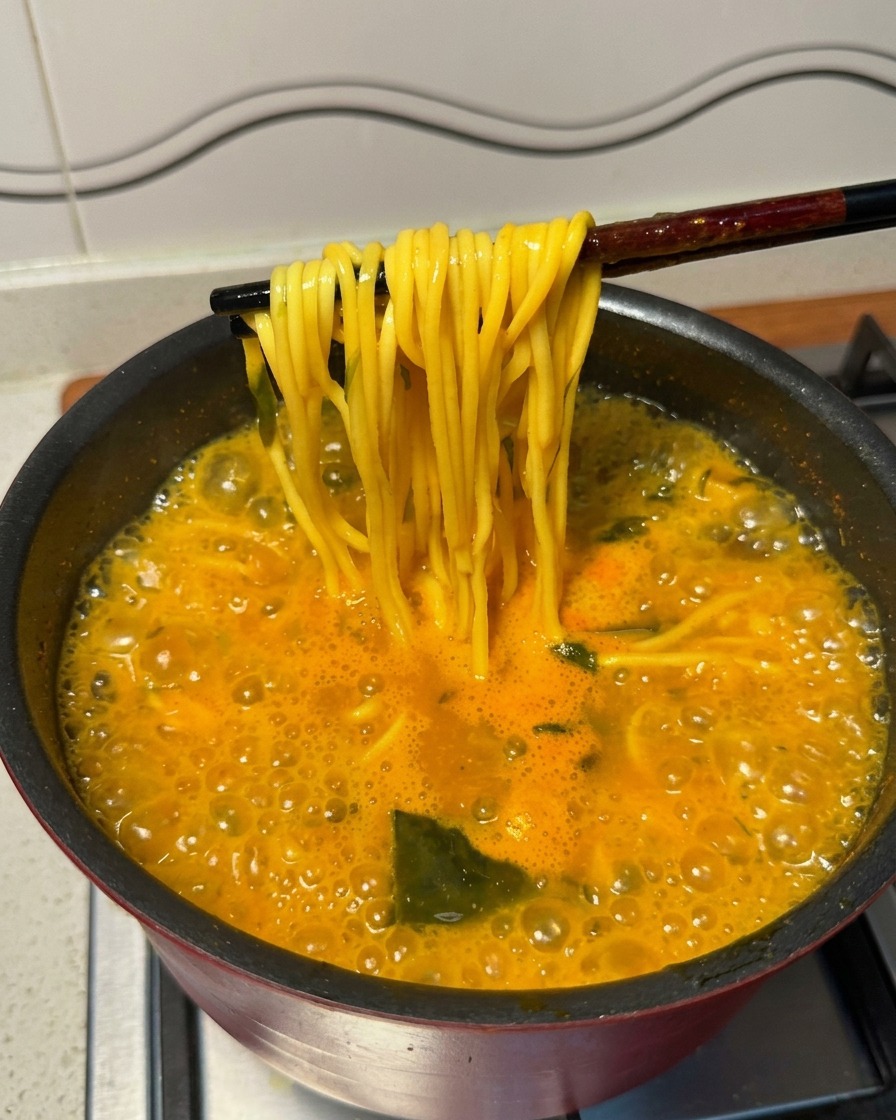
Once the ramen noodles have reached your desired tenderness, use a pair of chopsticks to carefully lift them out of the bubbling hot broth.
Tip: Lifting the noodles out of the broth slightly while they cook helps aerate them, giving the noodles a springier, chewier texture. - 16Assemble and garnish
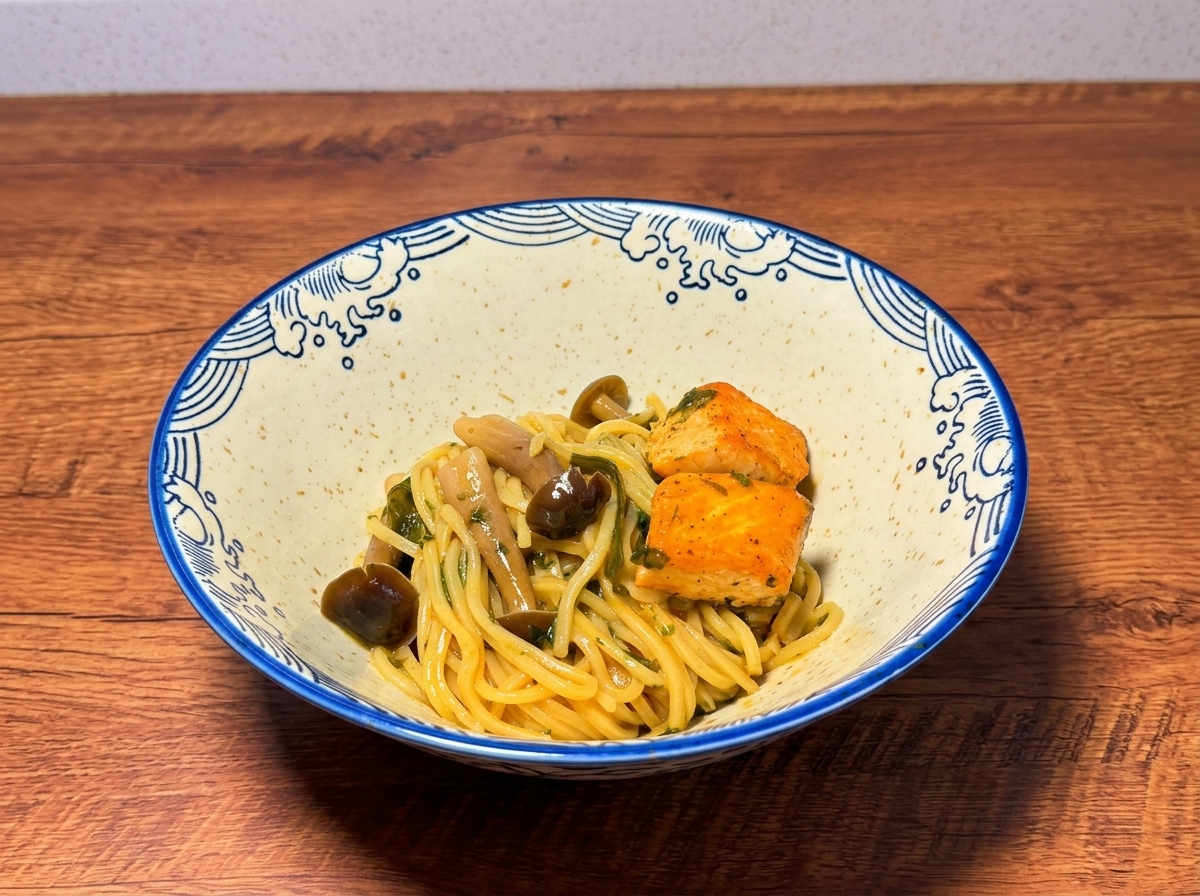
Neatly arrange the pan-fried salmon pieces, beech mushrooms, and seaweed on top of the plated noodles. Ladle the hot, rich spicy miso broth over the assembled ingredients and finish with a generous sprinkle of freshly chopped green onions.
Tip: Arranging the solid ingredients in the bowl before pouring the hot soup over them helps maintain a beautiful and organized presentation.