Miniature Unagi Don Bento (Japanese Grilled Eel Rice Box)
An intricate miniature culinary masterpiece featuring sculpted clay white rice, slow-roasted glazed unagi eel, and handmade rustic bento details crafted to lifelike perfection.
Unagi don is a beloved Japanese classic featuring sweet, savory grilled eel served over steaming rice. In this miniature recreation, every element from the delicate texture of the fish flesh to the lacquered sweet sauce glaze is meticulously hand-sculpted and assembled using polymer clay and specialized crafting techniques.

Ingredients
- 1 portion white polymer clay
- 1 portion grey polymer clay
- 1 portion light-colored polymer clay
- to taste transparent UV crystal adhesive
- to taste fruit sauce
- 1 portion green onions
Instructions
- 1Shape the white clay
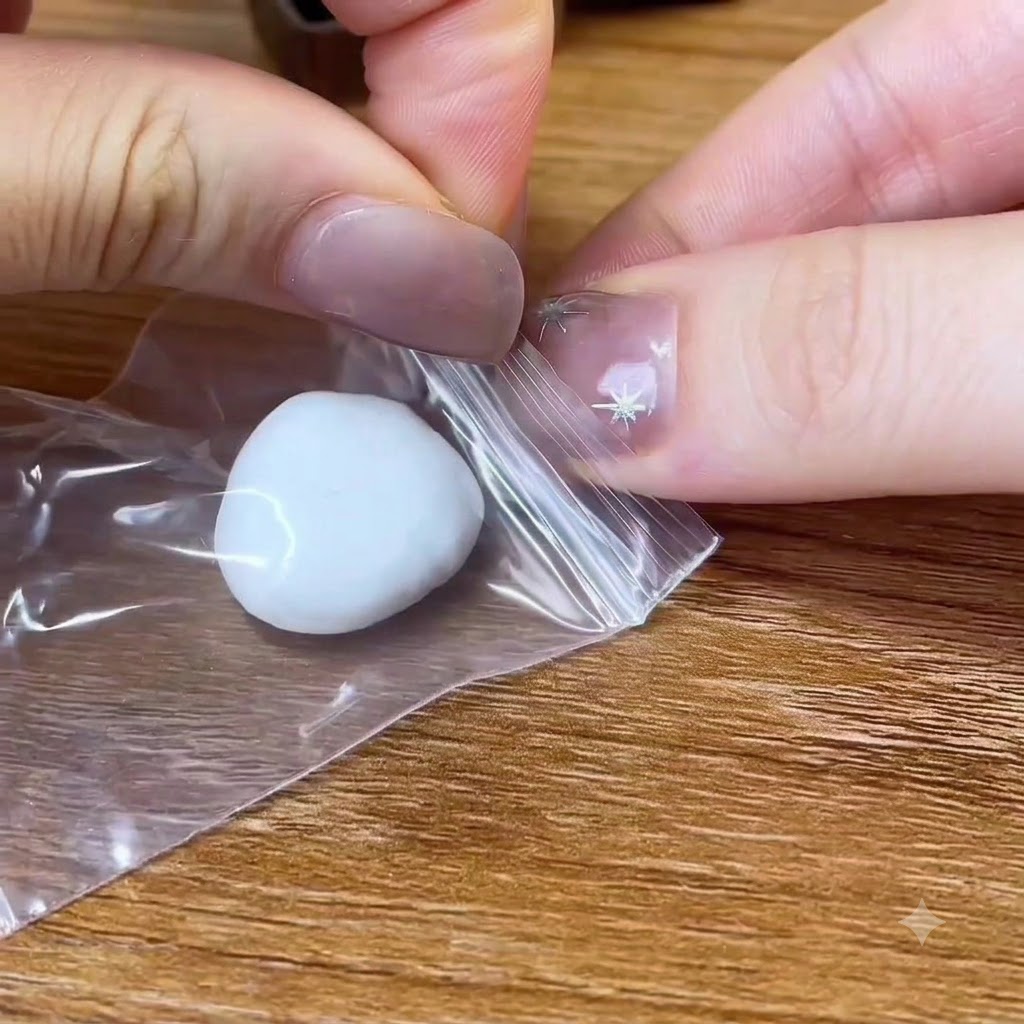
Take a portion of white clay and begin kneading and shaping it on a plastic sheet to condition it for crafting miniature food elements.
Tip: Keep the work surface clean to prevent dust from sticking to the white clay. - 2Cut miniature rice grains
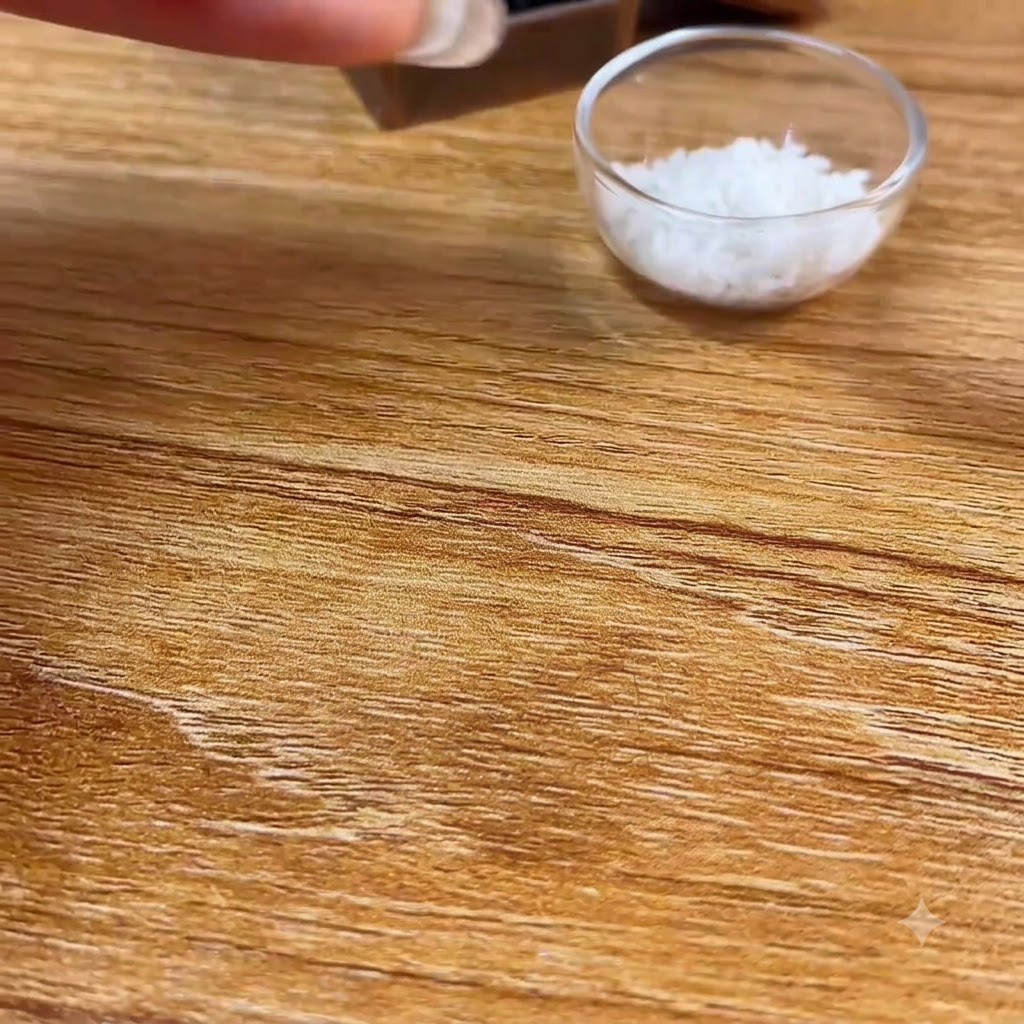
Small pieces of white clay are cut meticulously using a hobby knife inside a glass bowl to form the shape and size of miniature rice grains.
Tip: Work with small amounts of clay at a time to prevent them from sticking together before cutting. - 3Assemble rice in the bento box
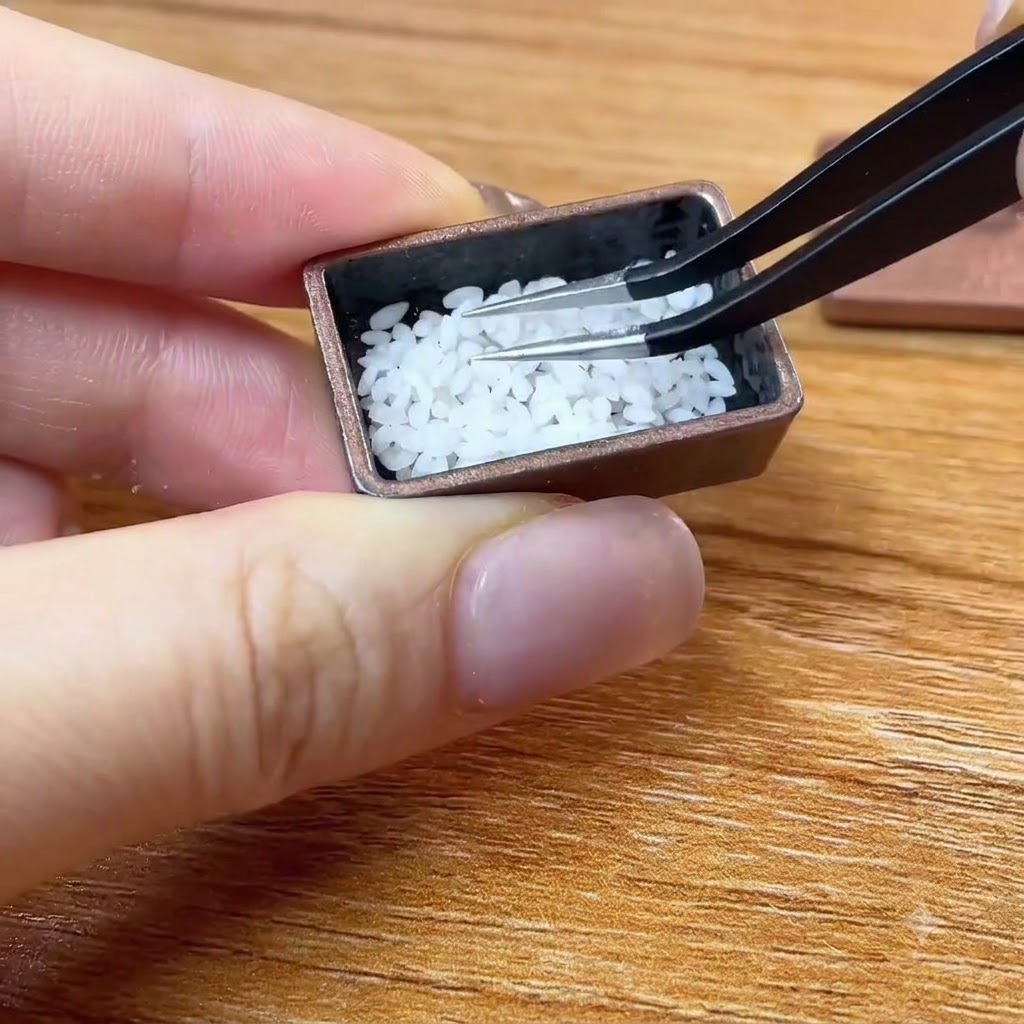
Using a pair of fine tweezers, the miniature white rice grains are carefully picked up and placed one by one into the miniature brown bento box to fill the base.
Tip: Arrange the grains tightly to create a realistic packed bento box layer. - 4Shape the eel skin and flesh
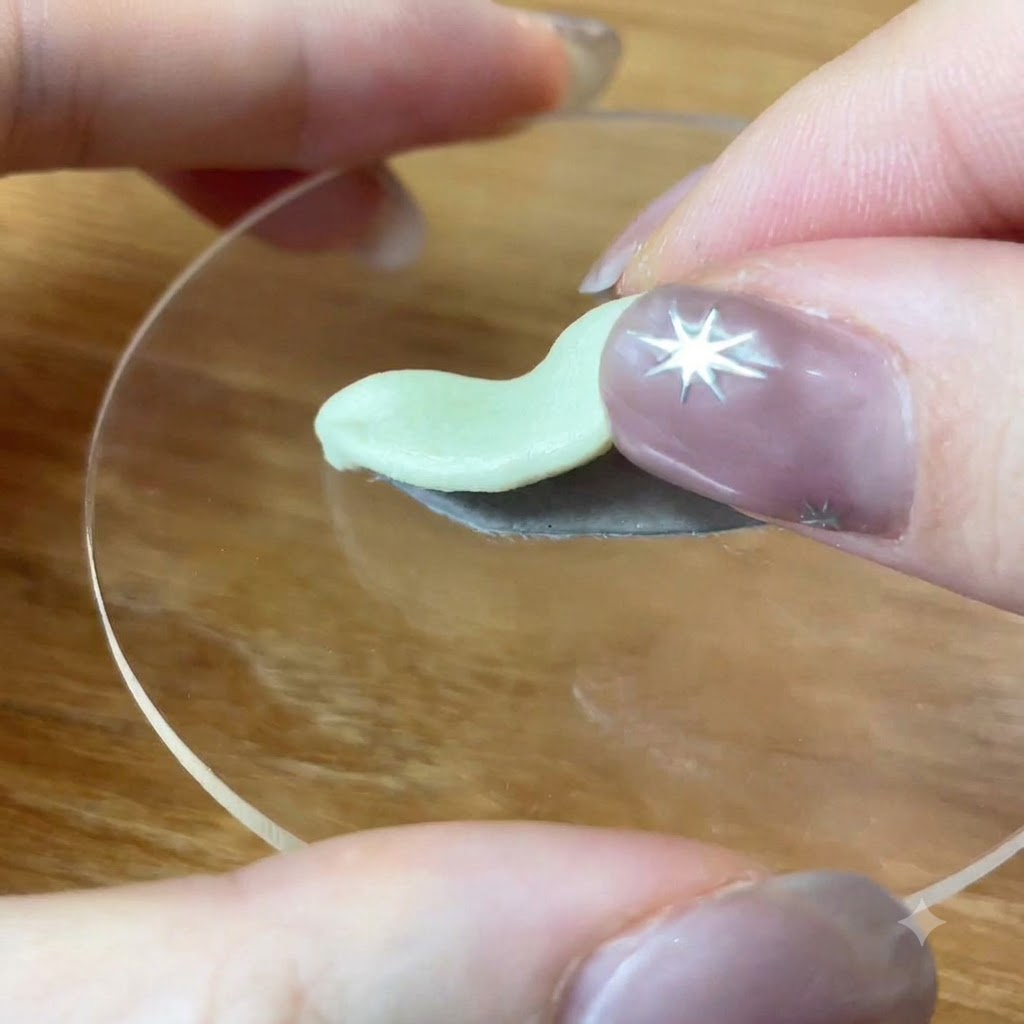
Grey clay and light-colored clay are combined, shaped, and layered together to mimic the natural coloration and structure of eel skin and fish flesh.
Tip: Layer the two clay colors evenly to ensure a realistic cross-section when carved. - 5Carve the fish flesh texture
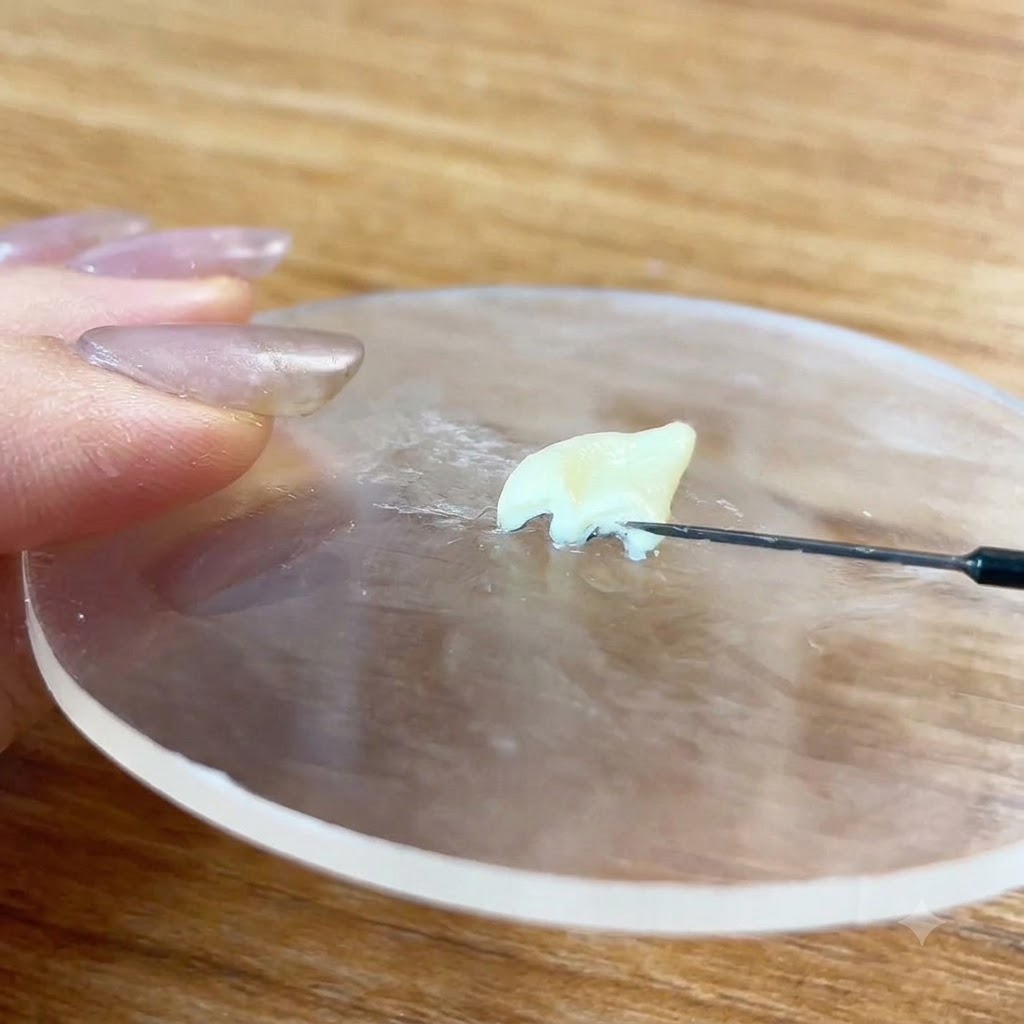
A fine needle tool is used to gently scrape and carve detailed texture lines into the light-colored clay layer, representing the flaky texture of fish flesh.
Tip: Make light, consistent strokes to simulate natural muscle fibers without distorting the overall shape. - 6Grill the miniature eel piece
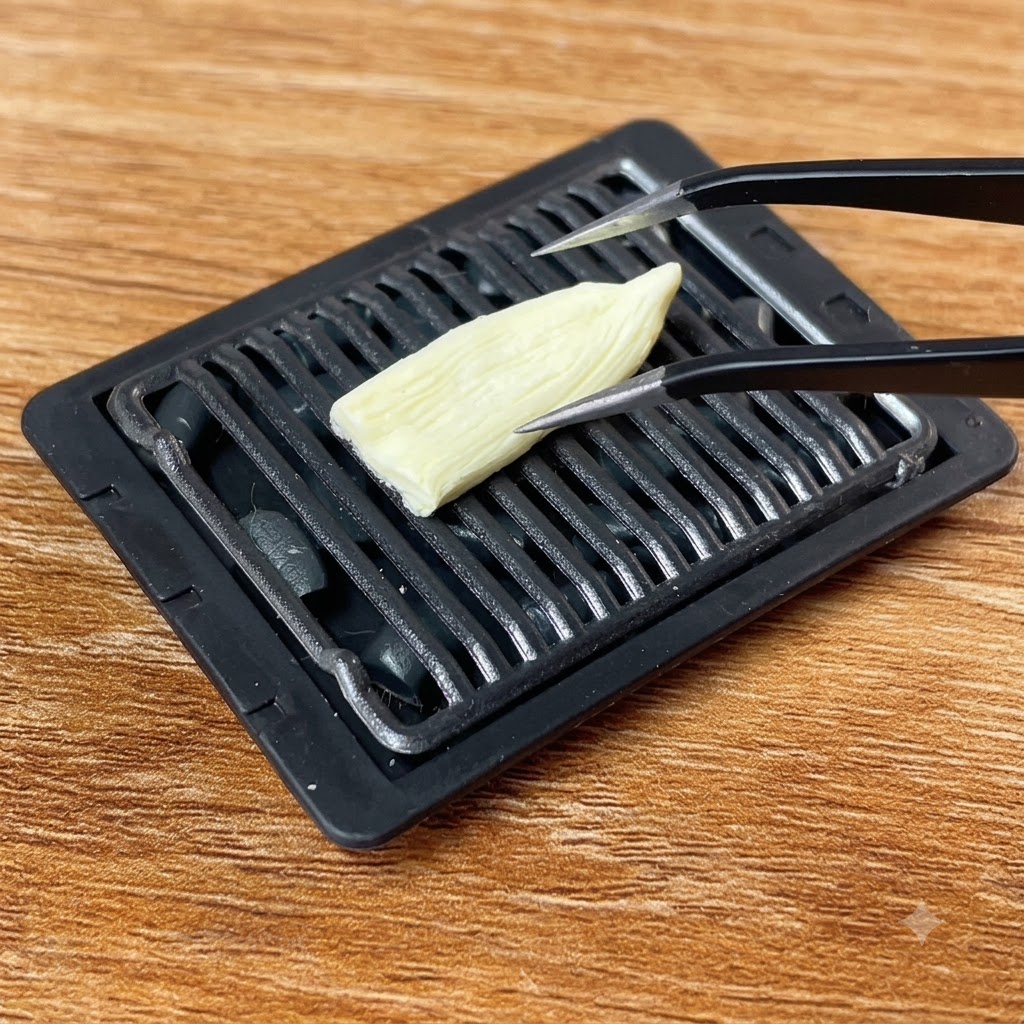
The crafted eel piece is held with tweezers and placed onto a miniature black grill to simulate the traditional slow-roasting process.
Tip: Position the piece carefully to ensure even exposure on the grill grates. - 7Mix the glaze sauce
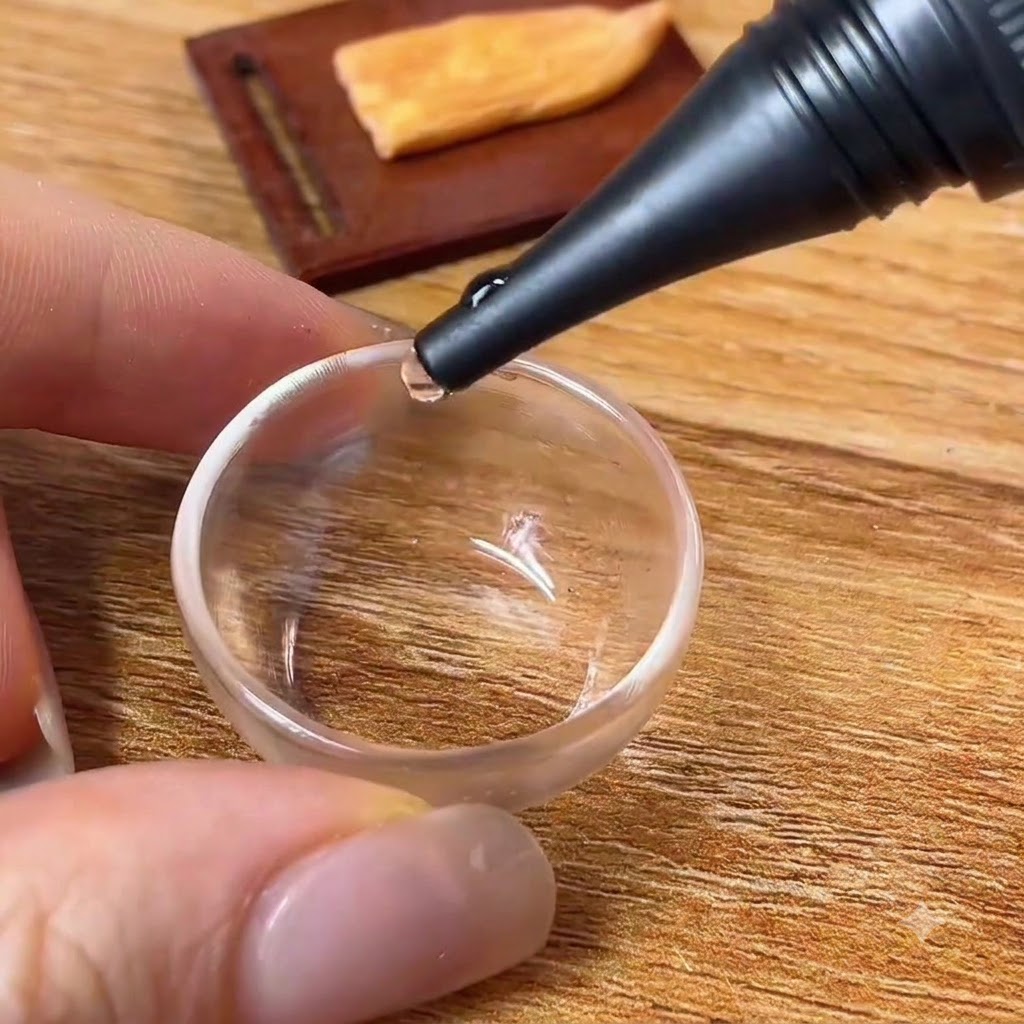
Dispense transparent UV crystal adhesive and fruit sauce into a small glass bowl, then thoroughly combine them using a toothpick to create a glossy, translucent sauce.
Tip: Mix gently to avoid creating excess air bubbles in the UV adhesive. - 8Brush sauce on the eel
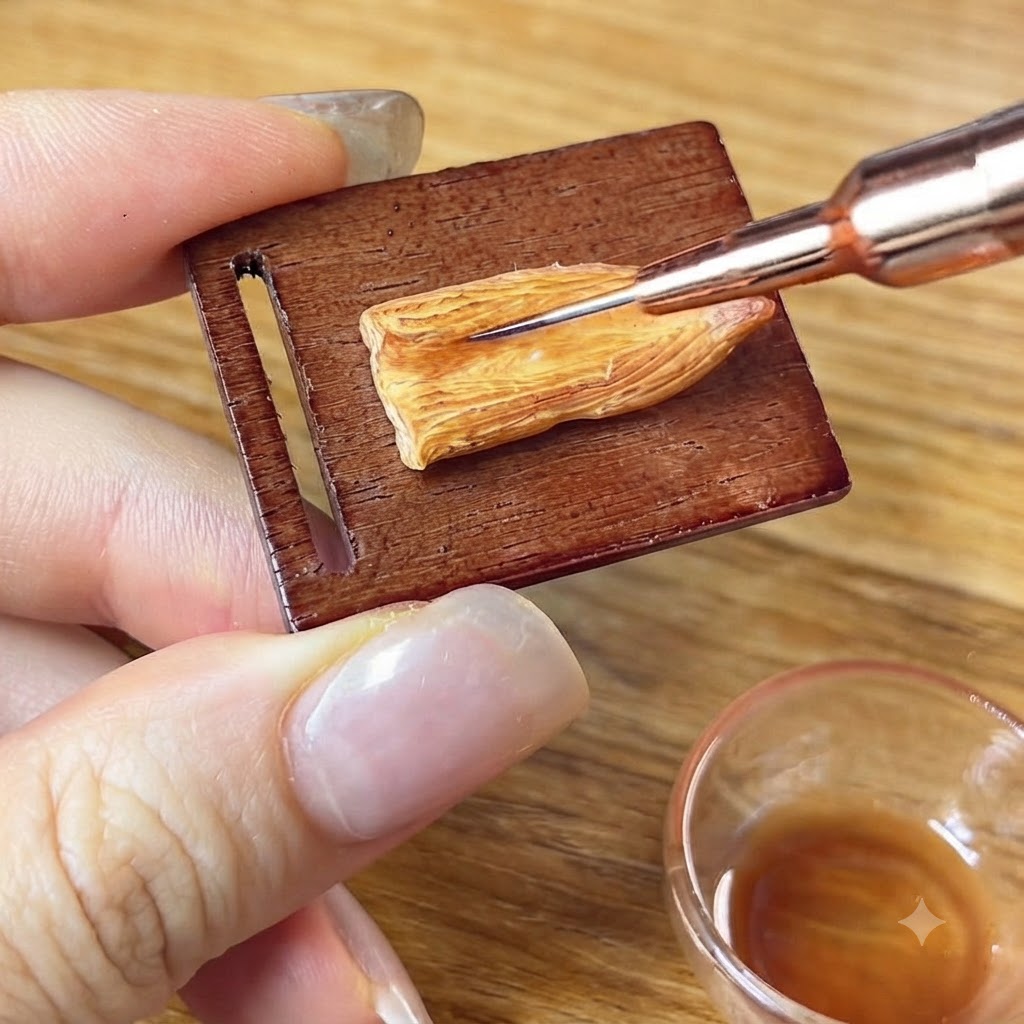
Dip a fine brush into the prepared glaze sauce and carefully apply an even coat over the surface of the grilled eel piece resting on a miniature wooden board.
Tip: Apply light, even strokes to give the eel a shiny, professional lacquered finish. - 9Slice the grilled eel
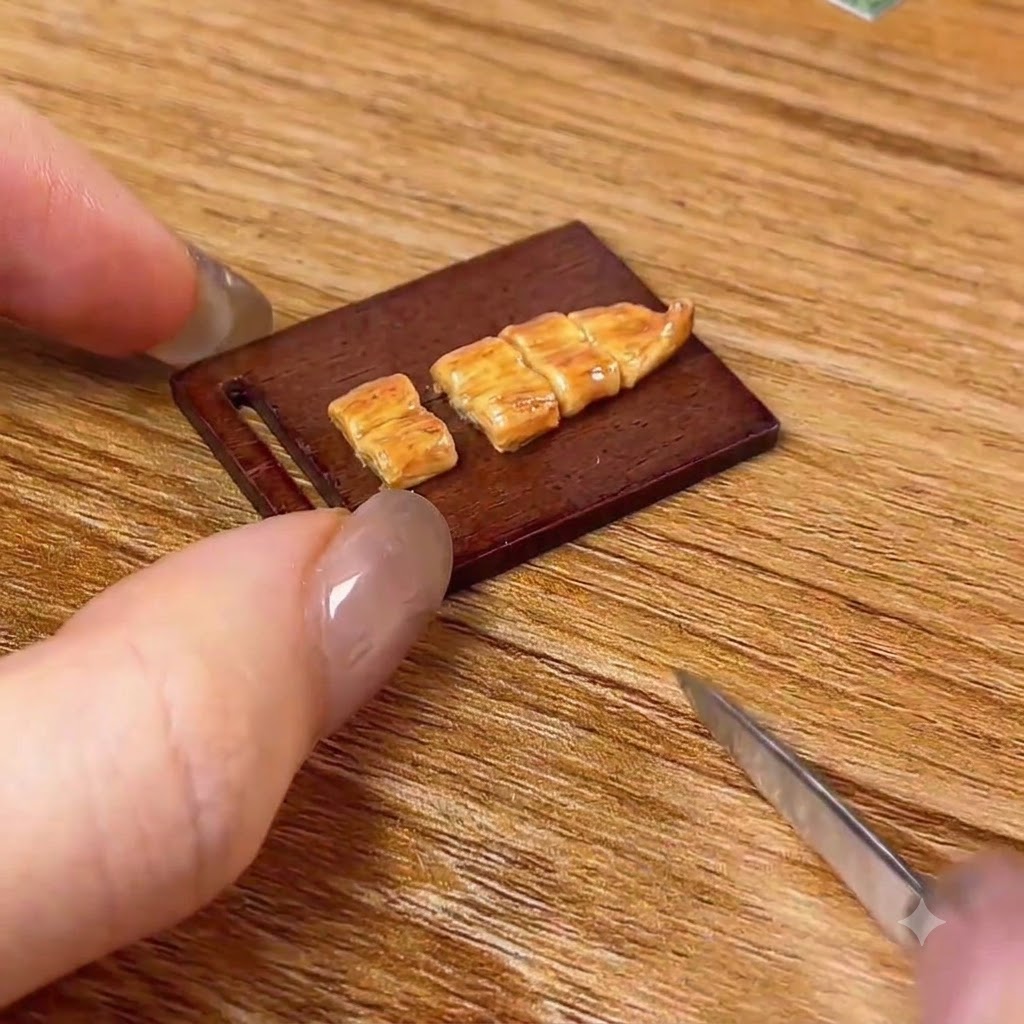
Use a miniature knife to cut the glazed grilled eel piece into small, bite-sized portions while it rests on the wooden board.
Tip: Make clean, straight cuts to ensure uniform pieces for the bento assembly. - 10Season the rice base
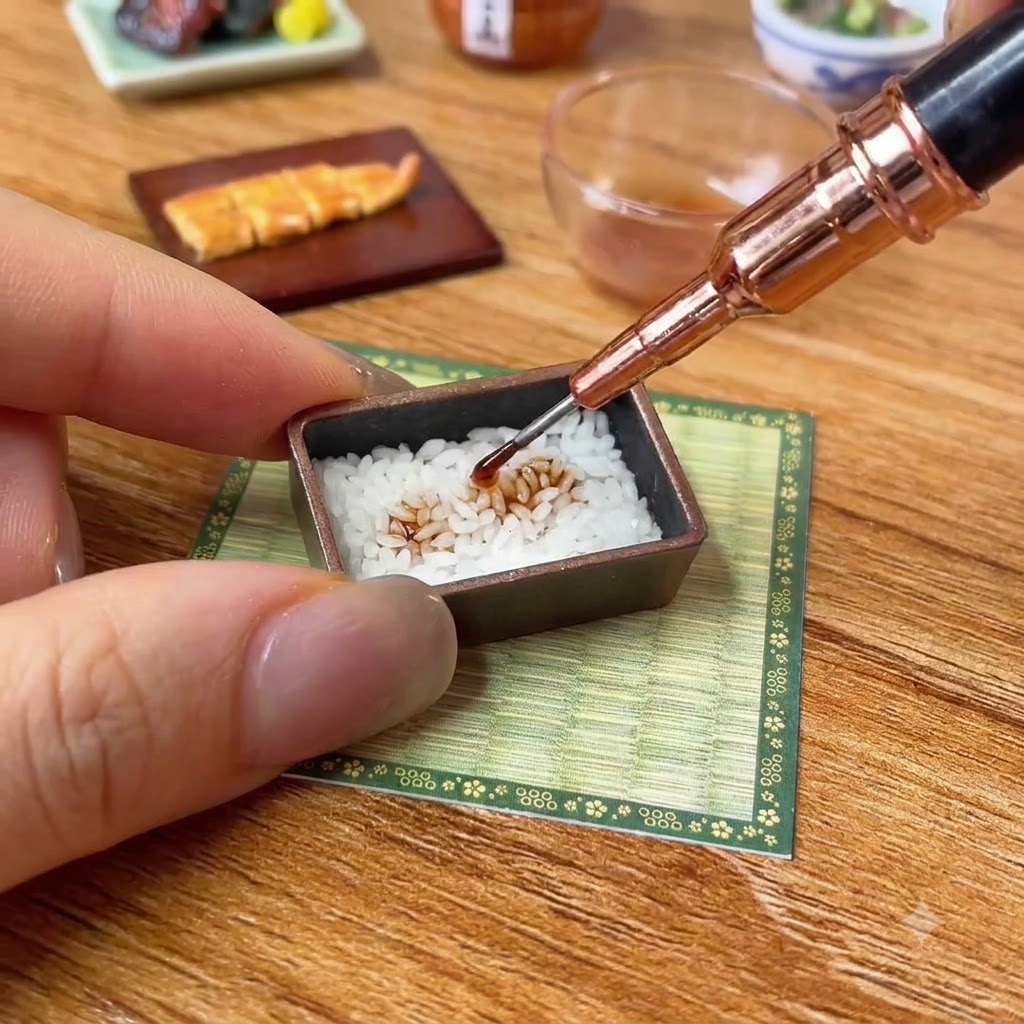
Use a fine brush to drizzle and dab sauce directly onto the bed of white rice arranged inside the miniature bento box.
Tip: Apply the sauce in the center so it absorbs nicely without spilling over the edges of the box. - 11Assemble the unagi bento
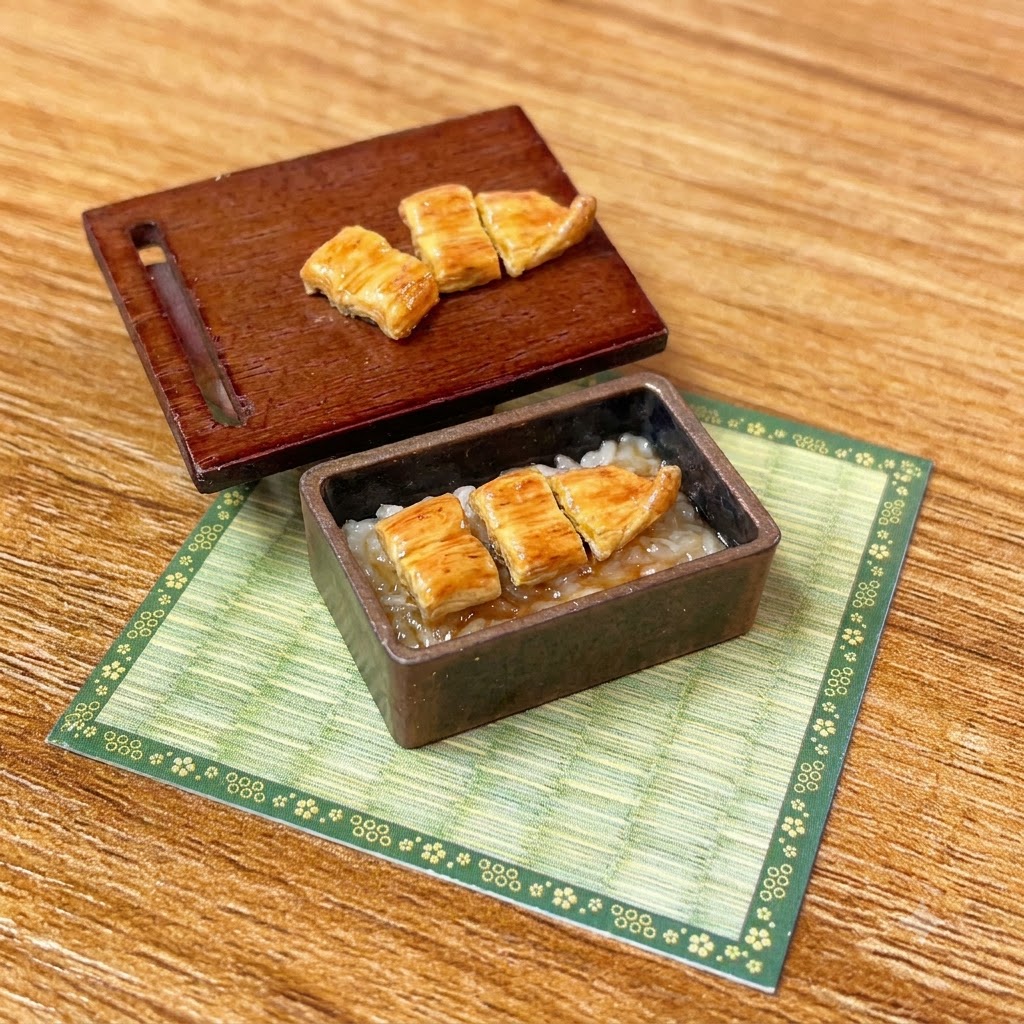
Carefully pick up the sliced grilled eel portions using tweezers and arrange them neatly over the sauced rice inside the miniature bento box.
Tip: Overlap the slices slightly for an authentic presentation. - 12Garnish with green onions
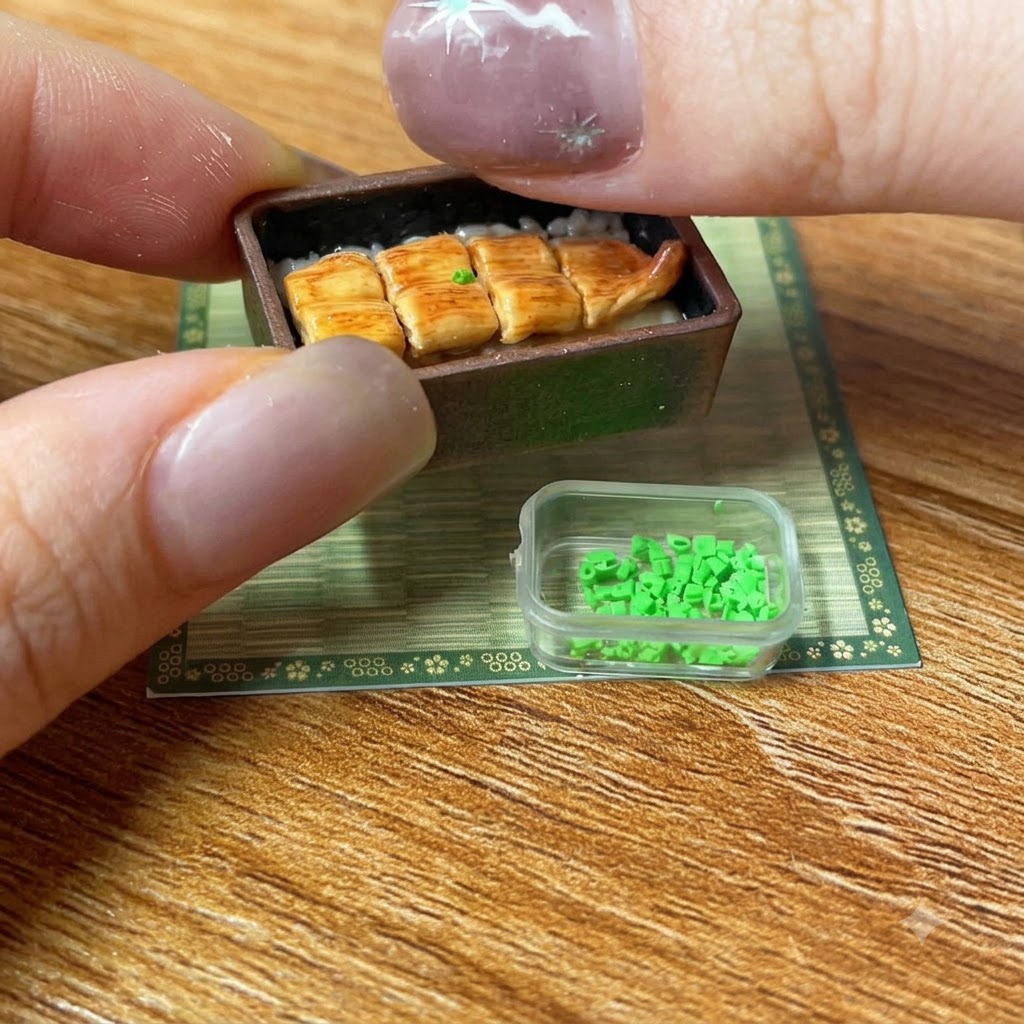
Sprinkle the freshly chopped green onions evenly over the top of the glazed eel pieces resting on the warm rice inside the miniature bento box.
Tip: Add the green onions just before serving to maintain their vibrant color and fresh aroma.


