Classic Japanese Oyakodon (Chicken
Egg Bowl)
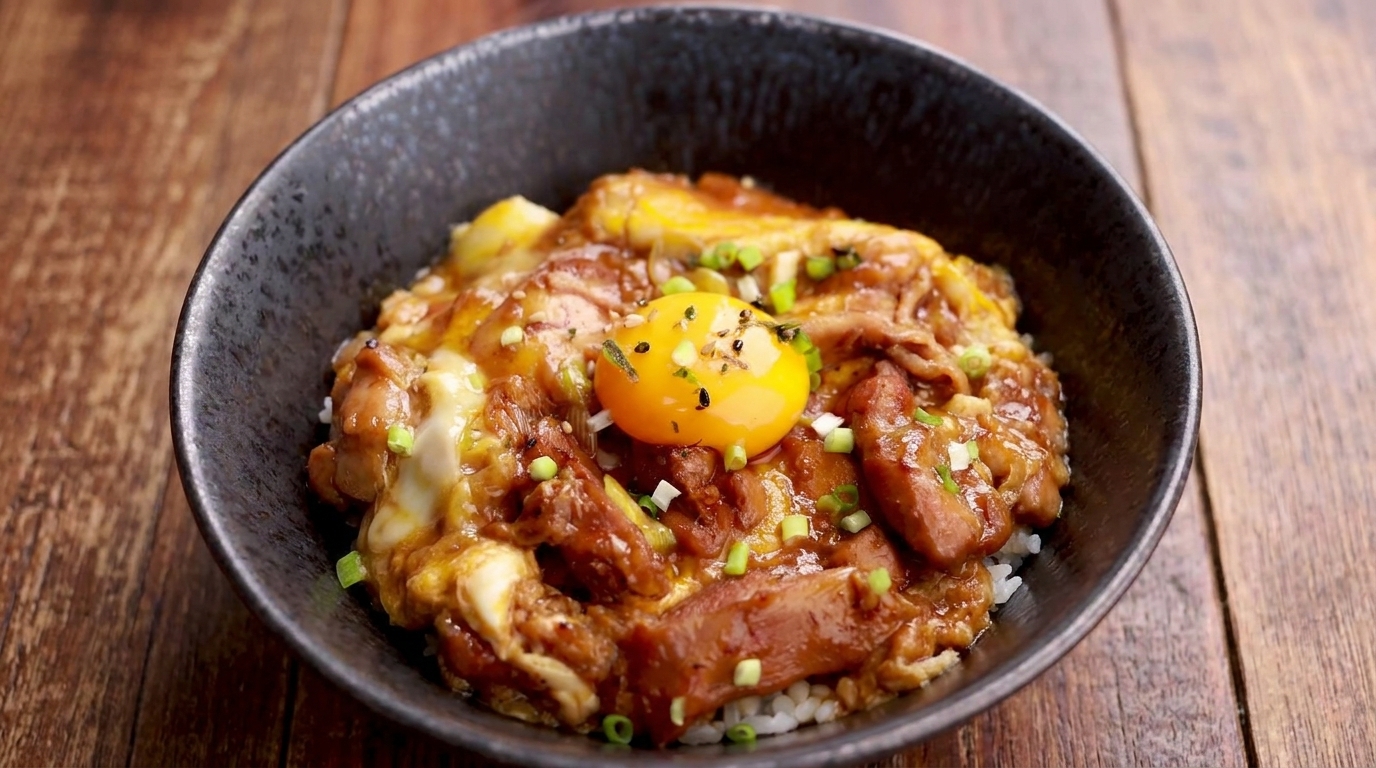
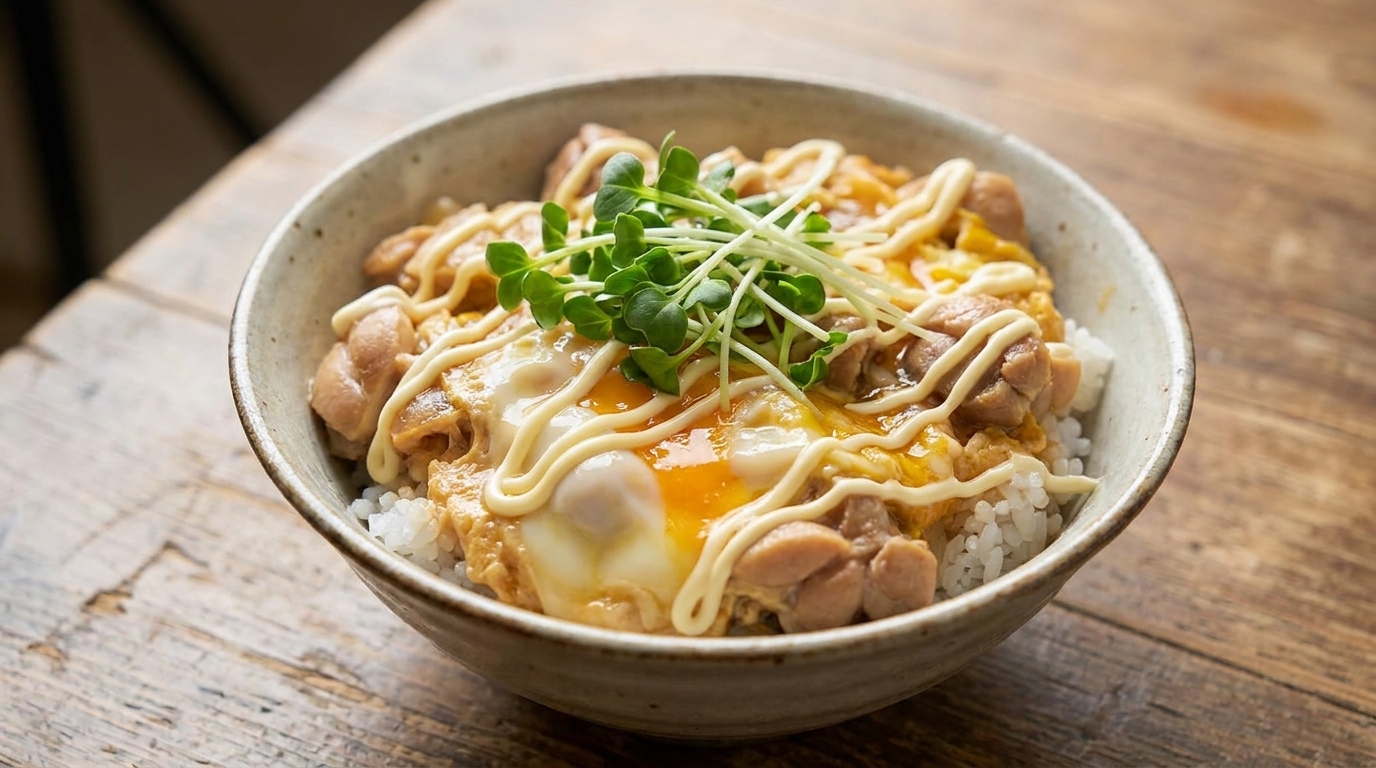
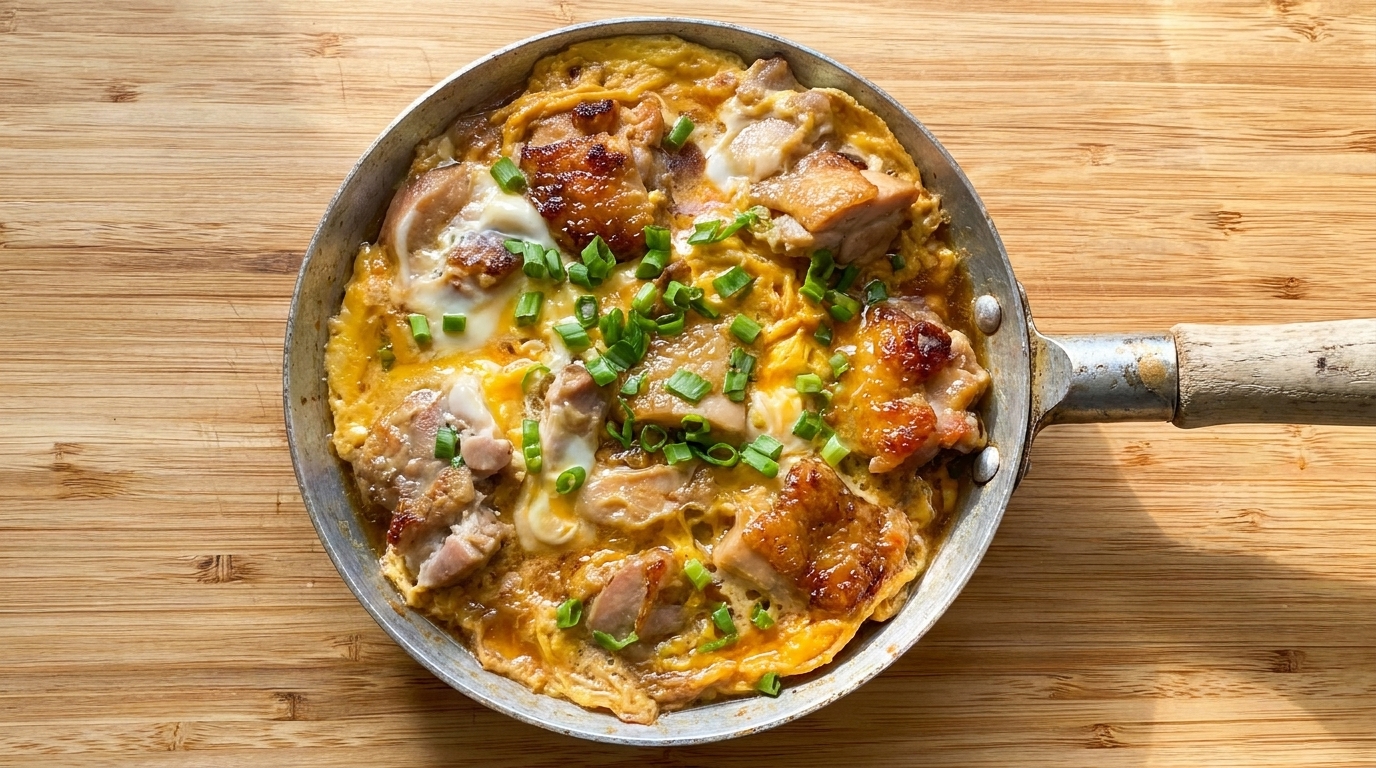
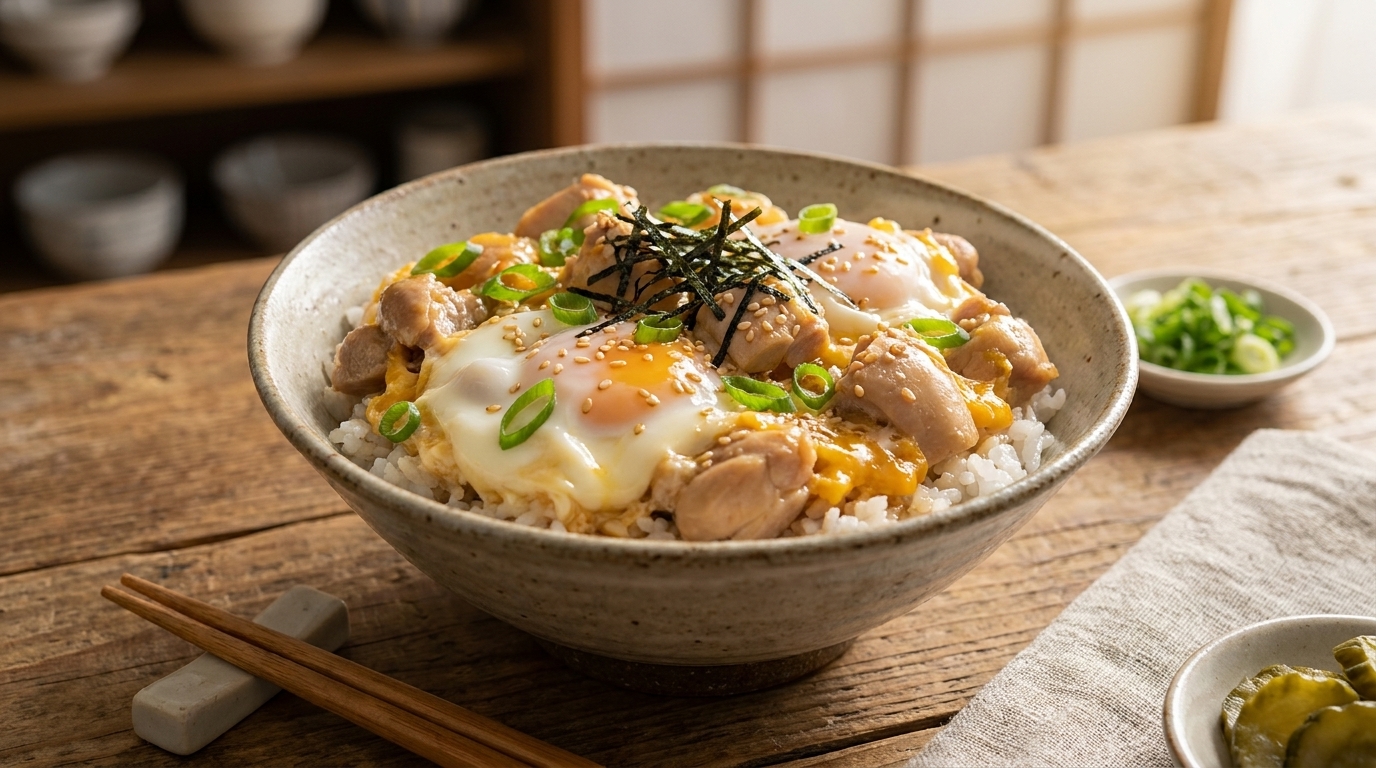
Experience the comfort of Oyakodon, a quintessential Japanese one-pot meal featuring tender chicken and soft, silky eggs simmered in a savory-sweet dashi broth.
Oyakodon, literally translating to parent-and-child bowl, is a beloved Japanese staple that highlights the perfect harmony of chicken and egg. This humble dish relies on a simple dashi-based sauce to bring out the natural flavors of the ingredients. It is a masterclass in Japanese home cooking, demonstrating how minimal seasoning and precise timing can create a restaurant-quality meal that is both comforting and deeply satisfying.
Ingredients
- 200 g boneless chicken thigh
- 1 onion
- 1 stalk Japanese long onion (negi)
- 2 eggs
- 3 tbsp bonito soy sauce
- 1 tbsp regular soy sauce
- 2 tbsp sake
- 2 tbsp mirin
- 1/2 cup water
- 1 sheet nori
- to taste white sesame seeds
- to taste green onion slices
Instructions
- 1Prepare the Nori
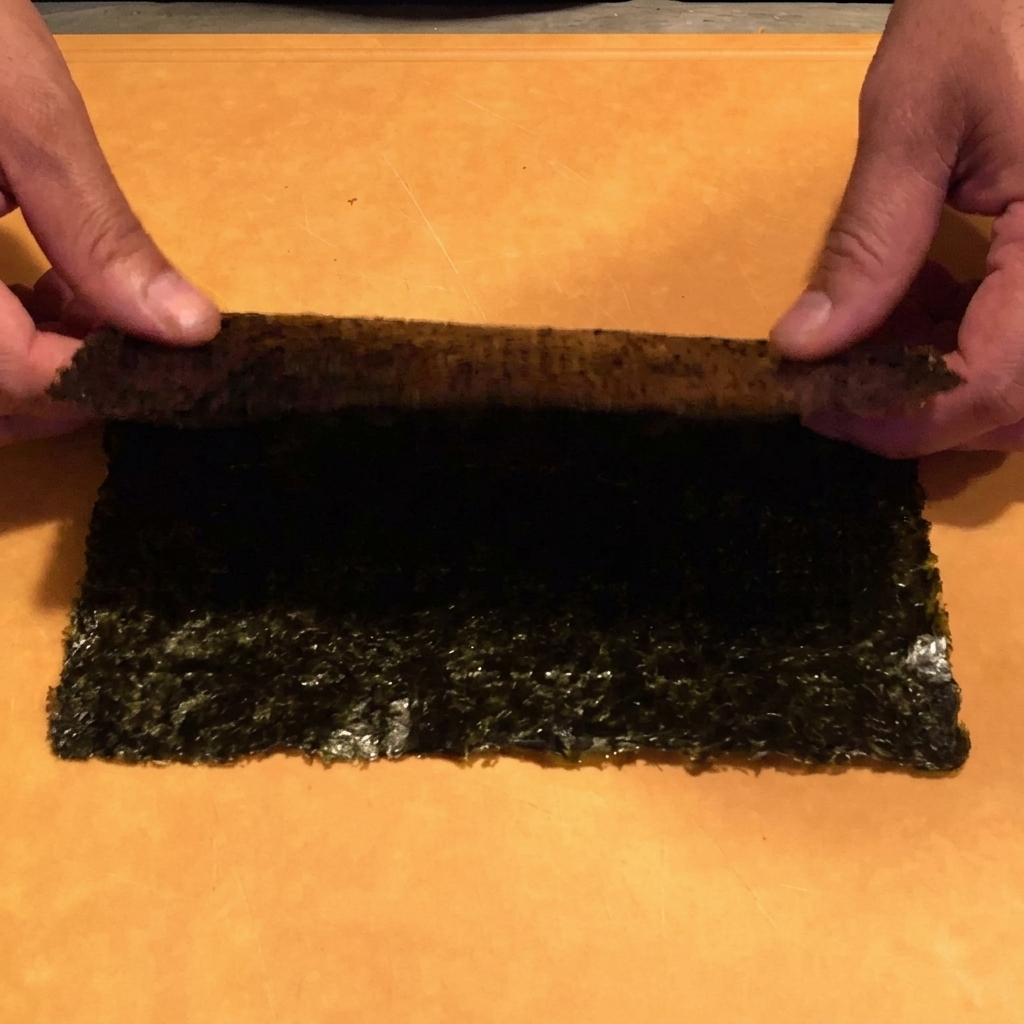
Using a pair of clean kitchen scissors, cut a dry sheet of nori into thin strips. These strips will be used as a garnish later to add a delicate, savory crunch to the finished Oyakodon.
Tip: Cut the strips directly over a small bowl to catch any stray pieces. - 2Slice the Onion
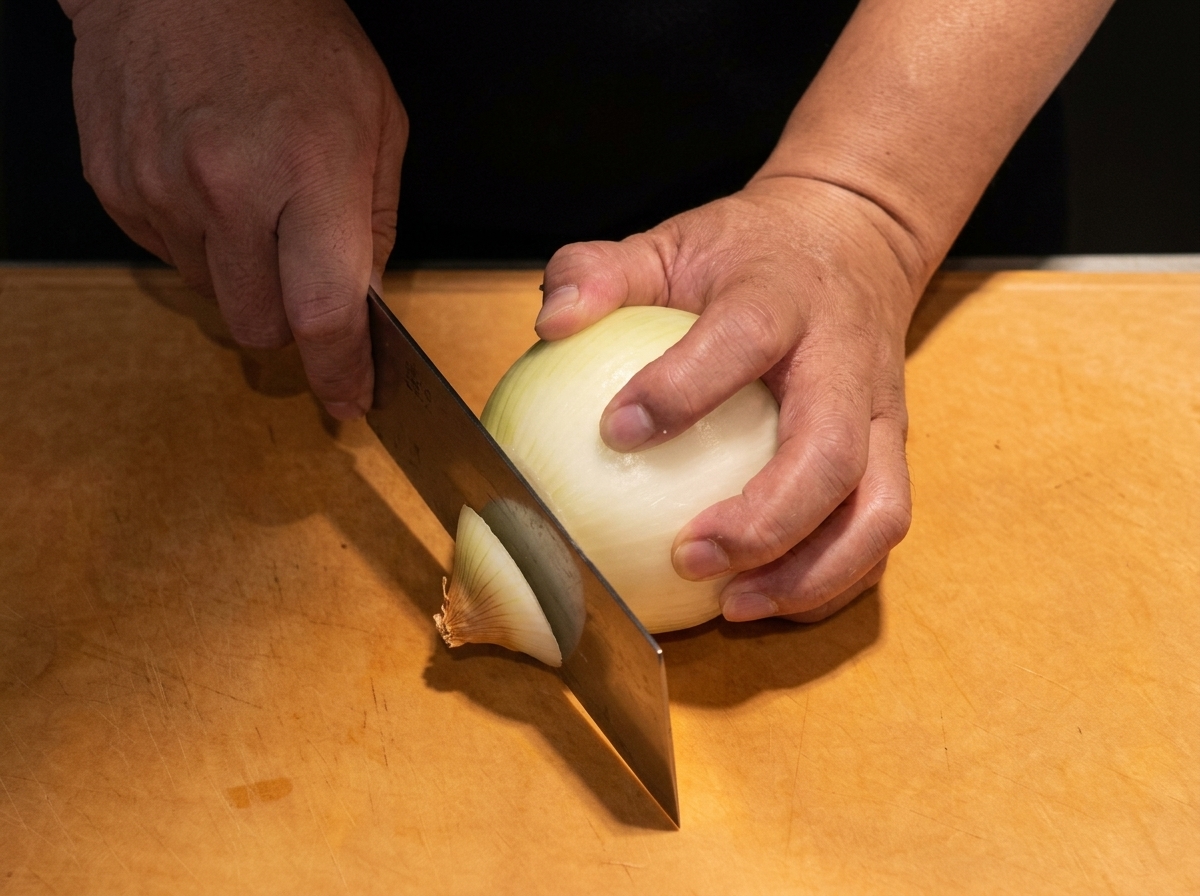
On a wooden cutting board, slice the onion from pole to pole. This cutting technique helps the onion slices maintain their texture and sweetness during the short simmering process required for Oyakodon.
Tip: Keep your fingers tucked while slicing to ensure safety and precision. - 3Slice the Japanese Long Onion
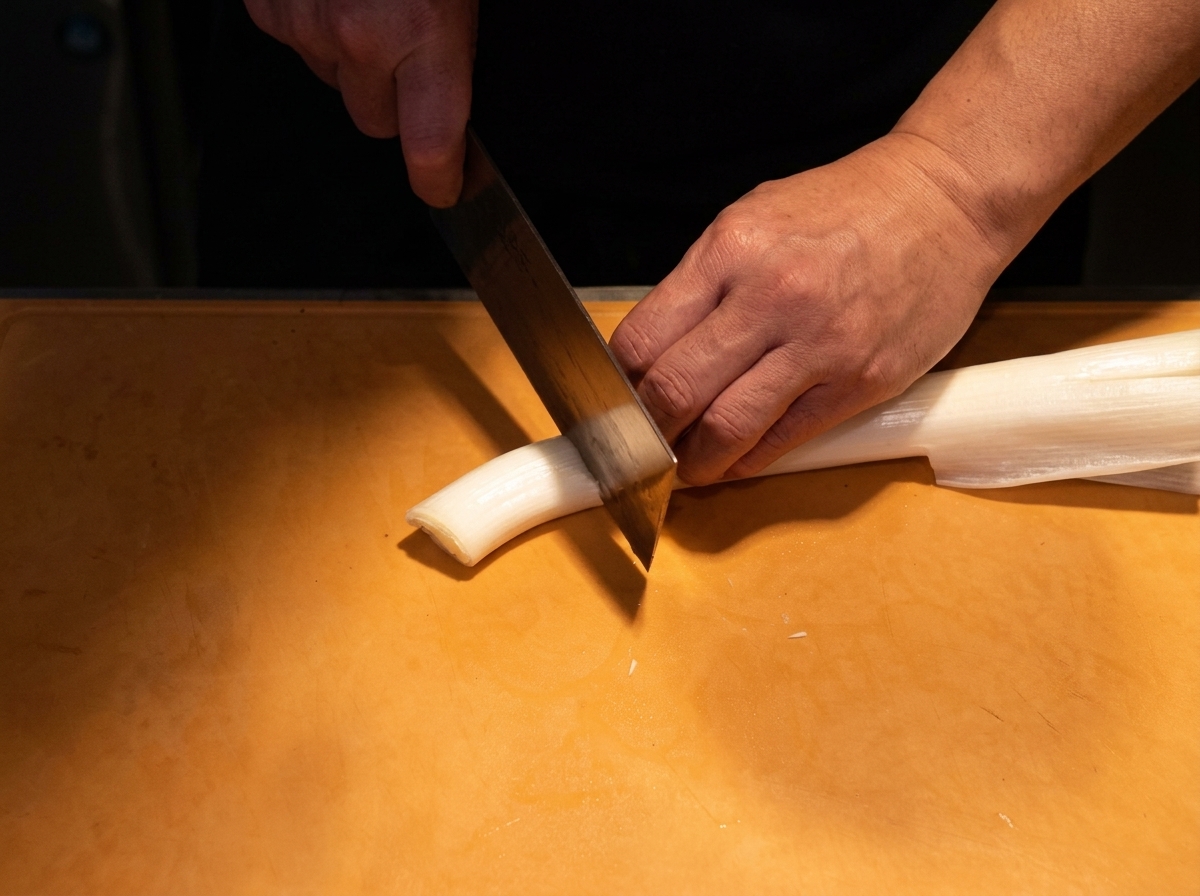
Take the white portion of the Japanese long onion (negi) and cut it into thin, diagonal slices. This adds a subtle, aromatic pungency that complements the chicken and eggs.
Tip: Angle your knife slightly for uniform, elegant slices. - 4Prepare the Chicken
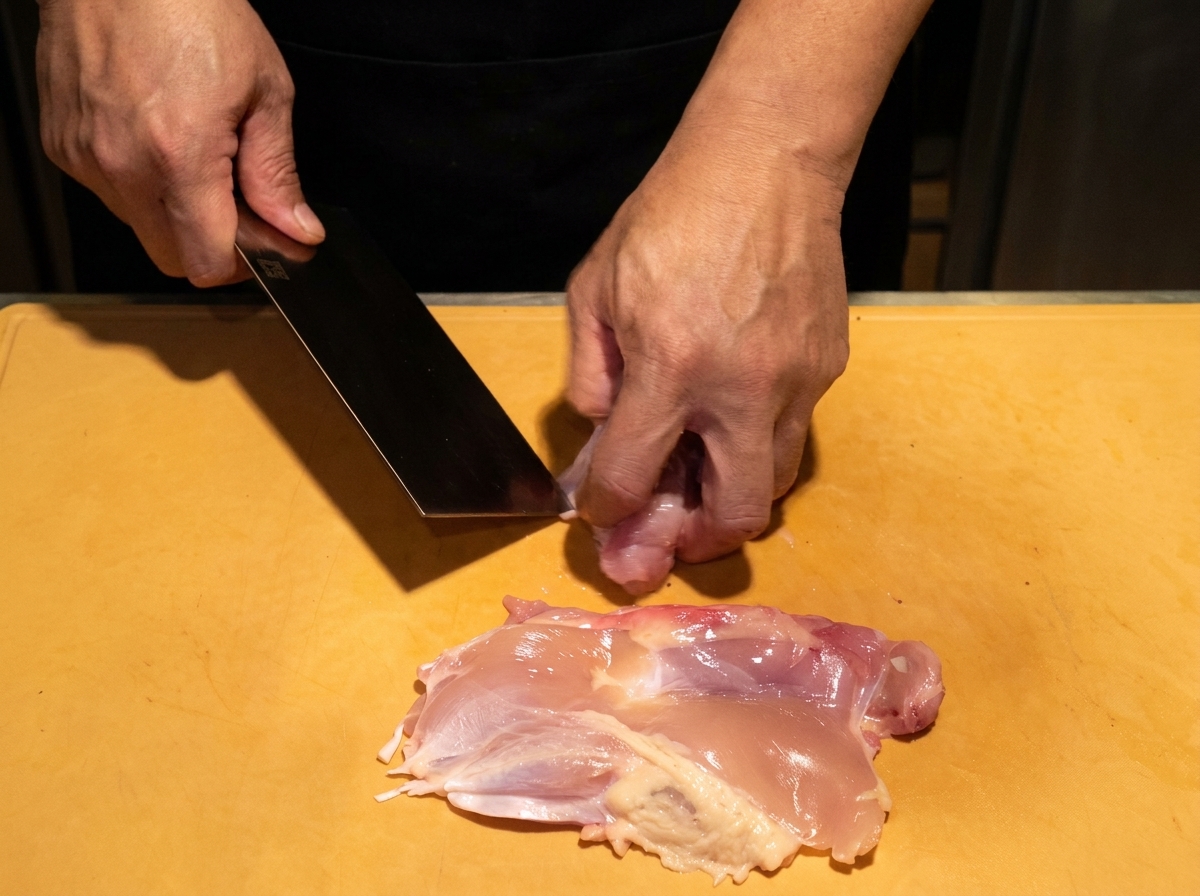
Using a sharp chefs knife, cut the boneless chicken thigh into bite-sized pieces. Ensure the pieces are uniform in size to allow for even cooking in the pot.
Tip: Remove any excess cartilage or thick fat pads for a better mouthfeel. - 5Season the Ingredients
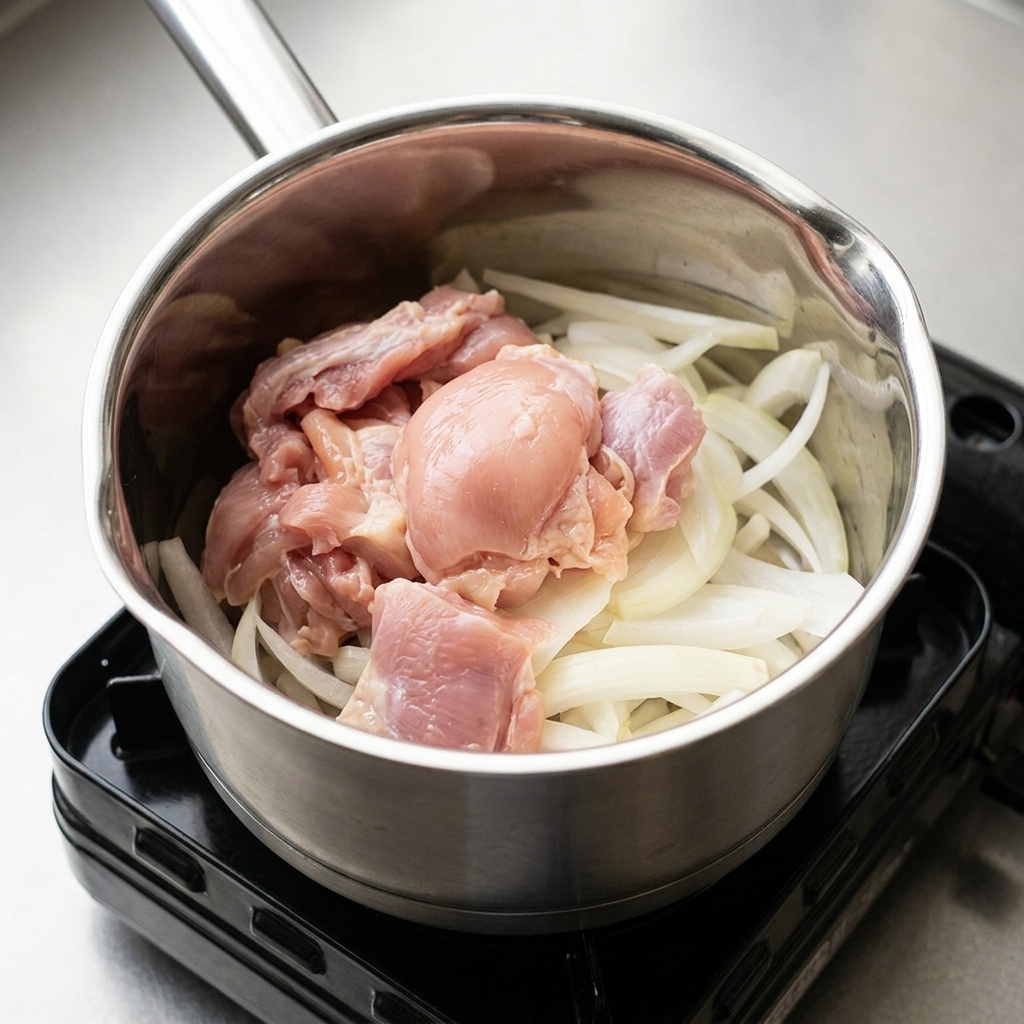
In a cooking pot, combine the sliced onions, chicken pieces, bonito soy sauce, regular soy sauce, sake, and mirin. These seasonings provide the classic sweet and savory profile of the dish.
Tip: Add the seasonings before the water to ensure the flavors coat the ingredients directly. - 6Add Water and Simmer
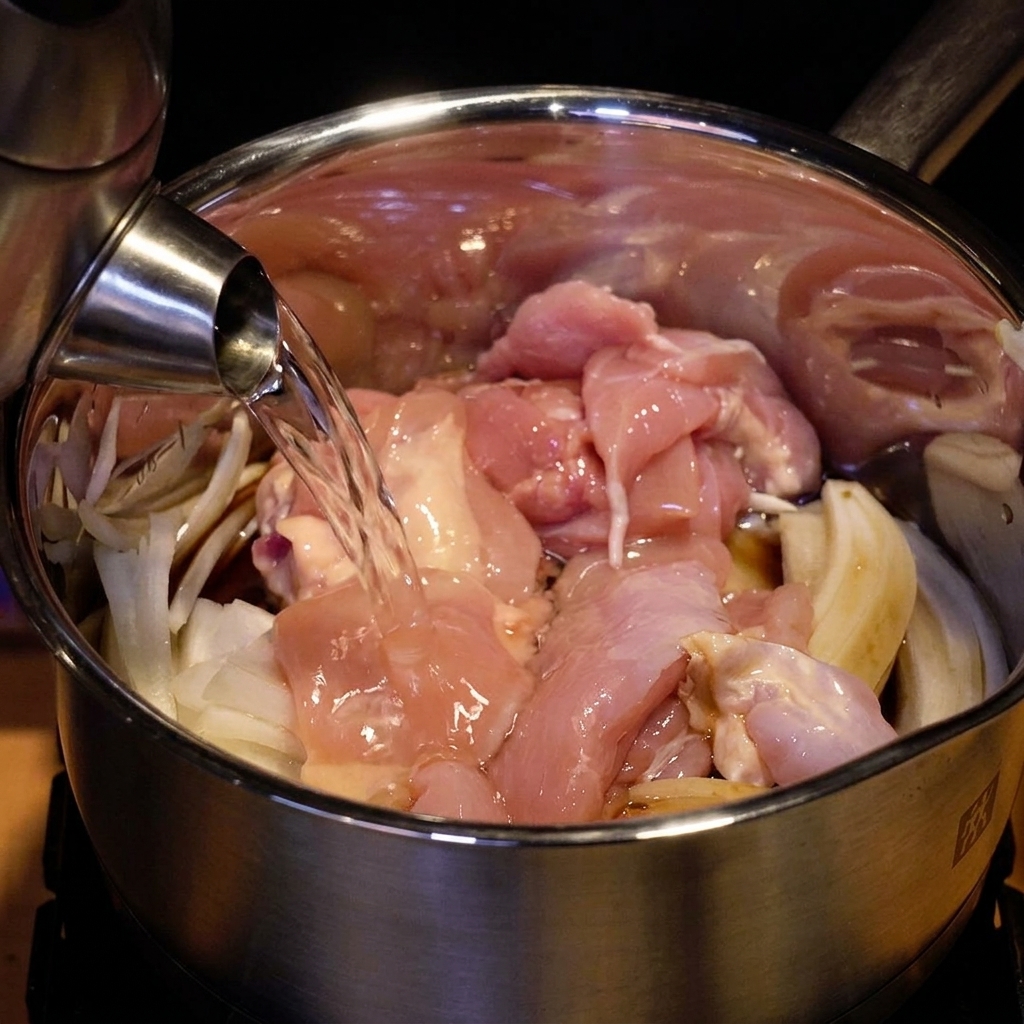
Pour water into the pot until it reaches the level of the chicken and onions. Bring the mixture to a boil to begin cooking the chicken until tender and the onions are soft.
Tip: Dont add too much water; the liquid should just cover the ingredients to maintain a concentrated flavor.