Classic Neapolitan Margherita Pizza
Master the classic Neapolitan Margherita pizza at home. Features a 24-hour fermented crust, vibrant San Marzano tomato sauce, fresh mozzarella, and basil.
The Neapolitan Margherita pizza is a masterpiece of culinary simplicity, relying on the perfect balance of a few high-quality ingredients. Originating in Naples, its iconic colors of red tomato, white mozzarella, and green basil were created to honor the Italian flag. Achieving its signature blistered, airy crust requires patience with a 24-hour dough fermentation and a blazing hot oven.
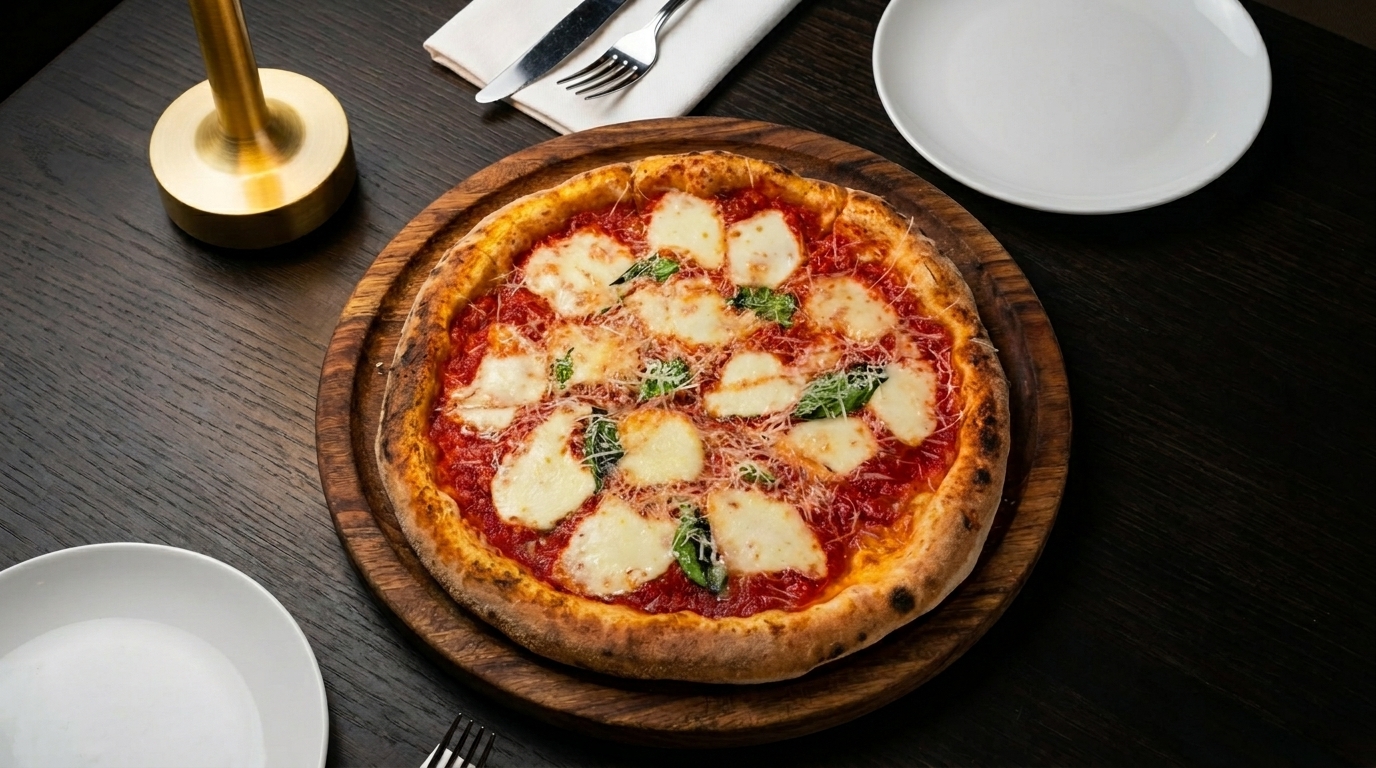
Ingredients
- 1 portion 24-hour fermented pizza dough (for a 10-inch pizza)
- 12 cup peeled tomato sauce
- 100 g fresh mozzarella cheese
- 1 handful fresh basil leaves
- 1 tbsp extra virgin olive oil
- to taste hard parmesan cheese
Instructions
- 1Shape the dough
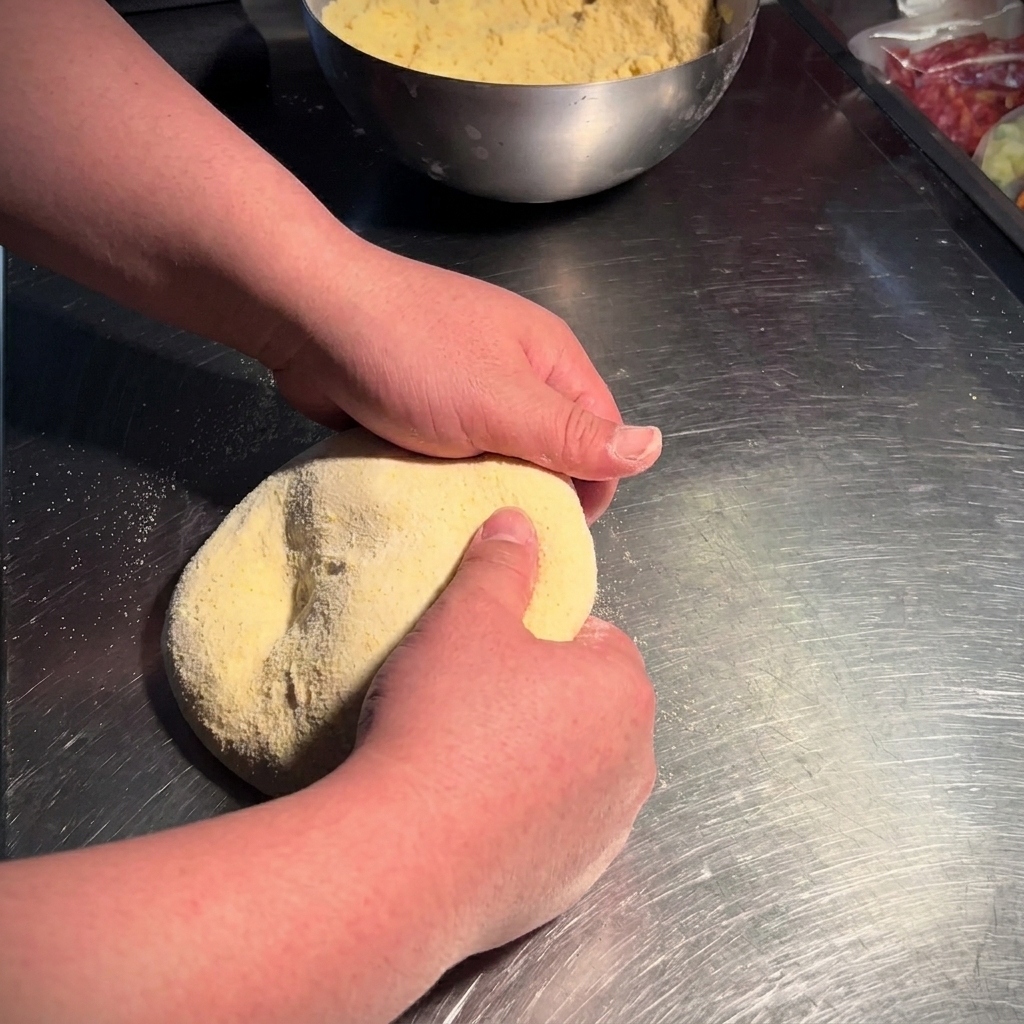
Begin by shaping the 24-hour fermented dough. Gently fold the raw dough ball on a clean, floured stainless steel surface to create a smooth, round base for the pizza.
Tip: Be gentle with the dough to preserve the air pockets developed during fermentation. - 2Flatten the pizza base
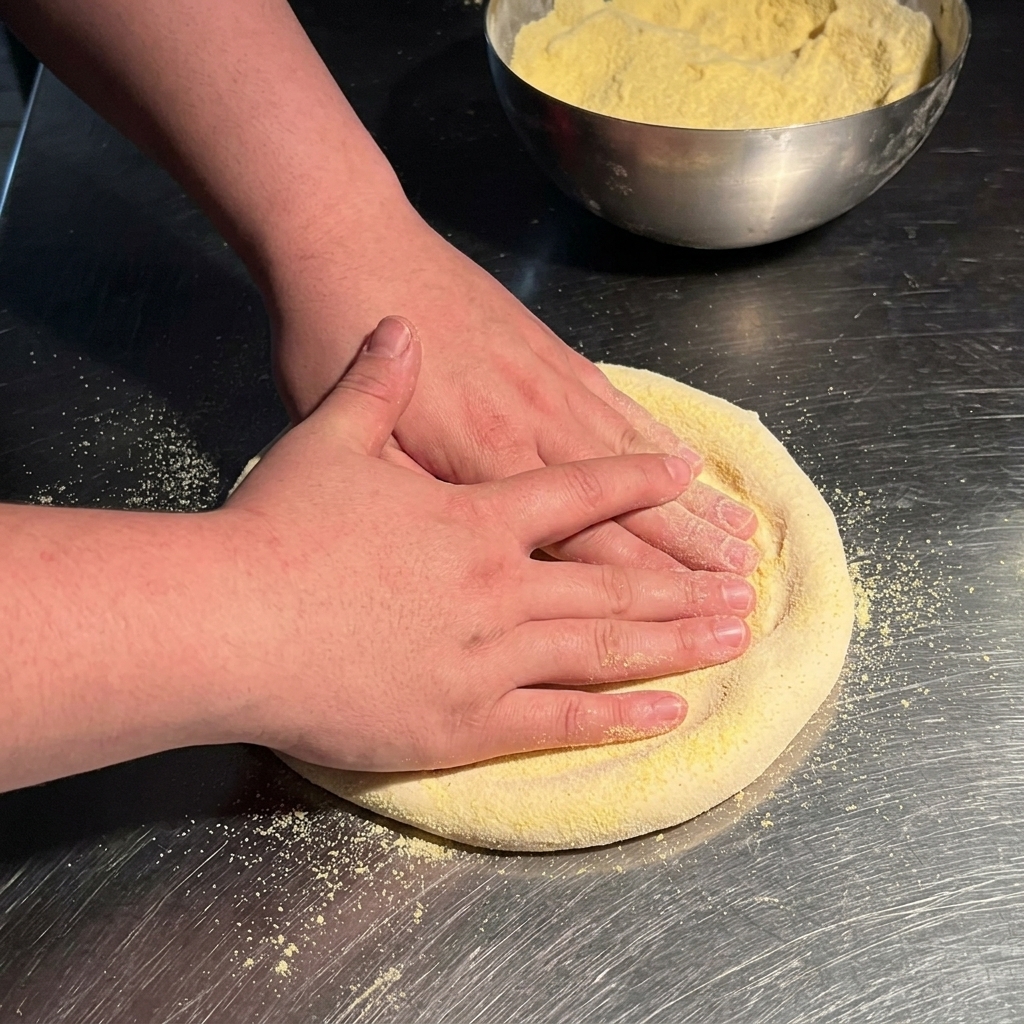
Press the dough ball flat using the palms of both hands. Start from the center and work your way outwards to push the air towards the crust, ensuring an even base.
Tip: Ensure your hands and the work surface are adequately floured to prevent the dough from sticking. - 3Add the tomato sauce
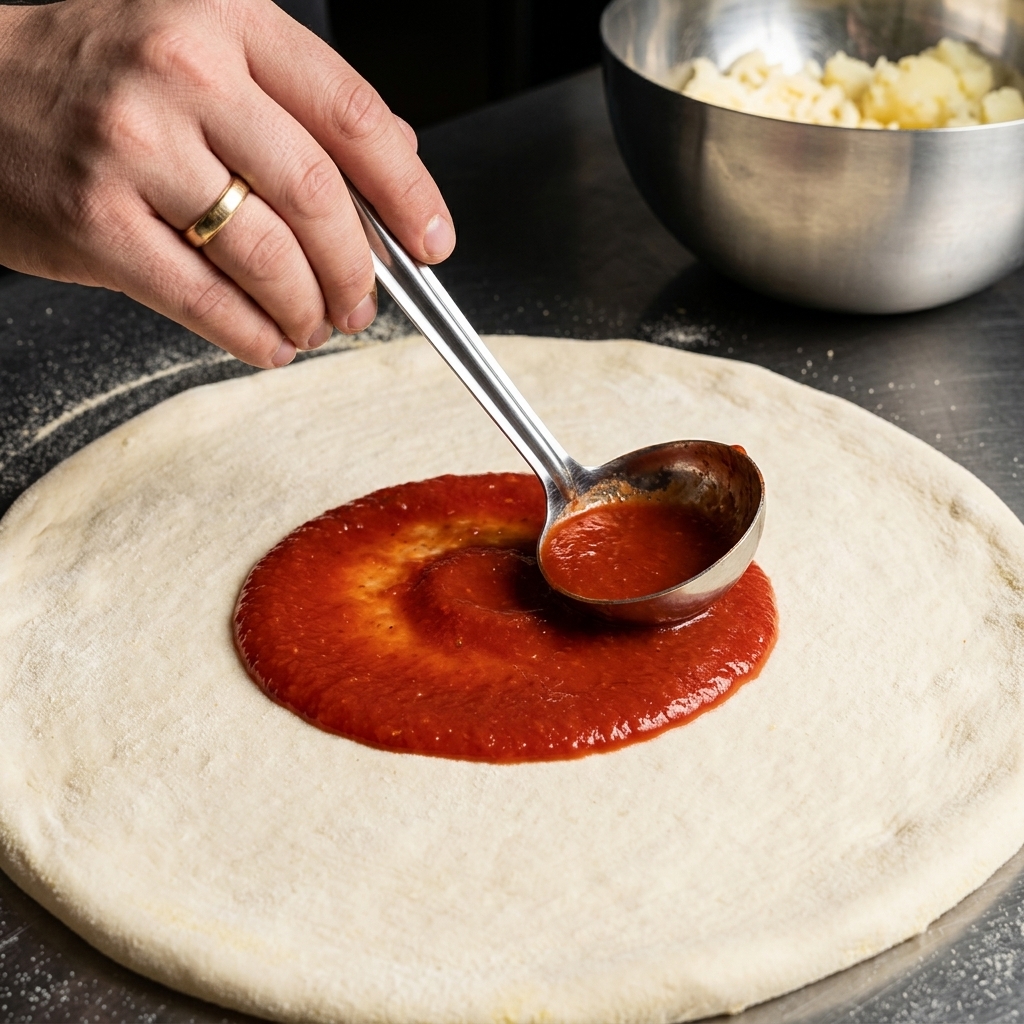
Use a metal ladle to pour a generous amount of peeled red tomato sauce directly onto the center of the raw, flattened dough base.
Tip: Use high-quality peeled tomatoes for a classic, vibrant Neapolitan flavor. - 4Spread the sauce evenly
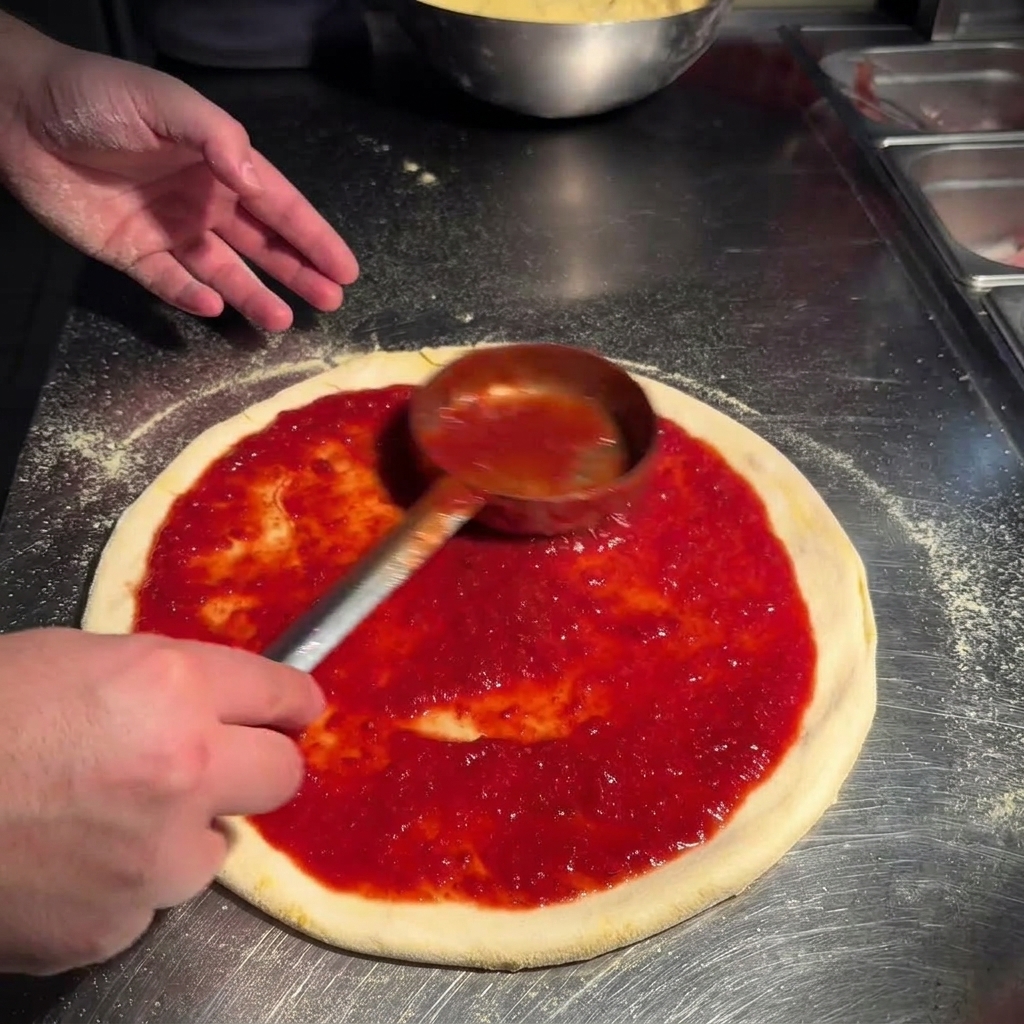
Using the bottom of the ladle, spread the tomato sauce in a circular motion, moving from the center towards the edges. Leave a small border around the edge untouched for the crust.
Tip: Apply gentle pressure so you dont tear the delicate dough base while spreading the sauce. - 5Add fresh mozzarella
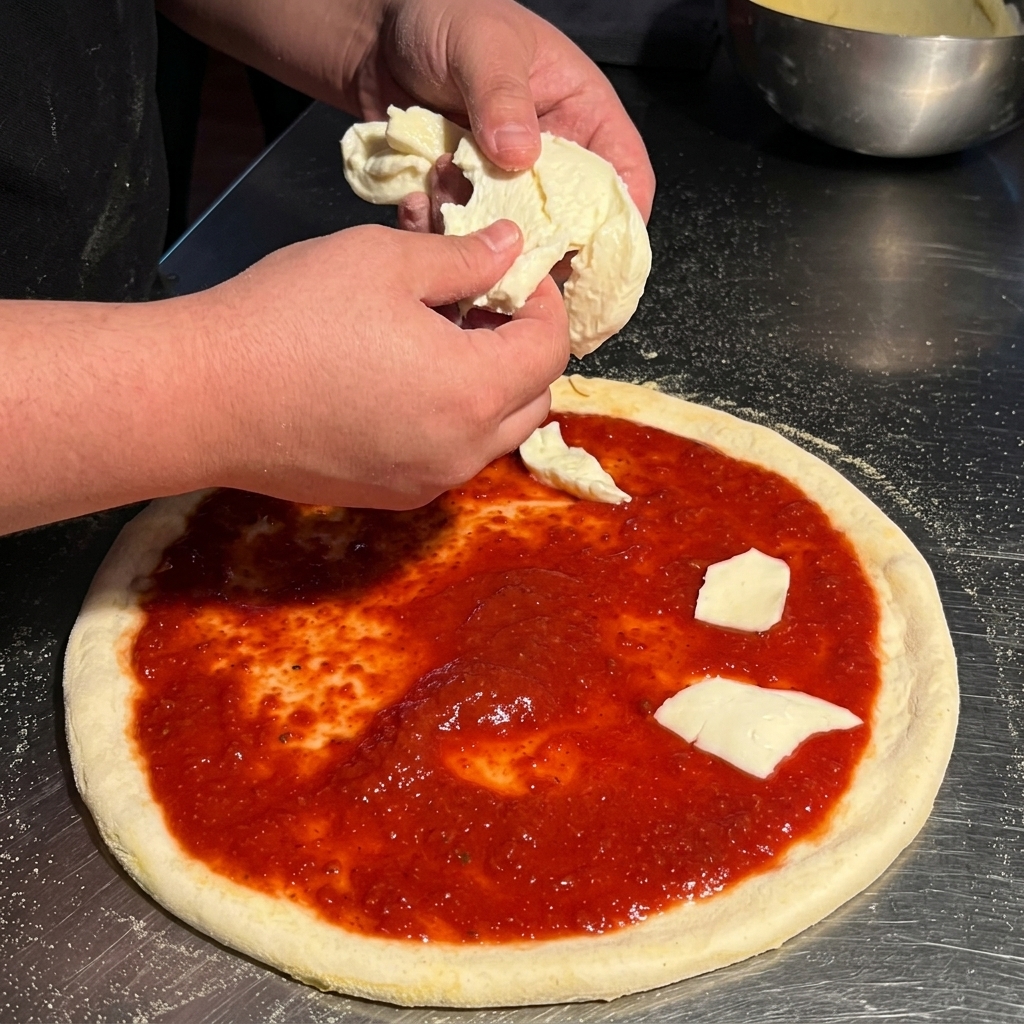
Tear pieces of fresh white mozzarella cheese by hand and distribute them evenly over the tomato sauce layer. Tearing by hand gives a rustic and authentic texture.
Tip: Avoid adding too much cheese in the center, as it can make the middle of the pizza soggy. - 6Garnish with fresh basil
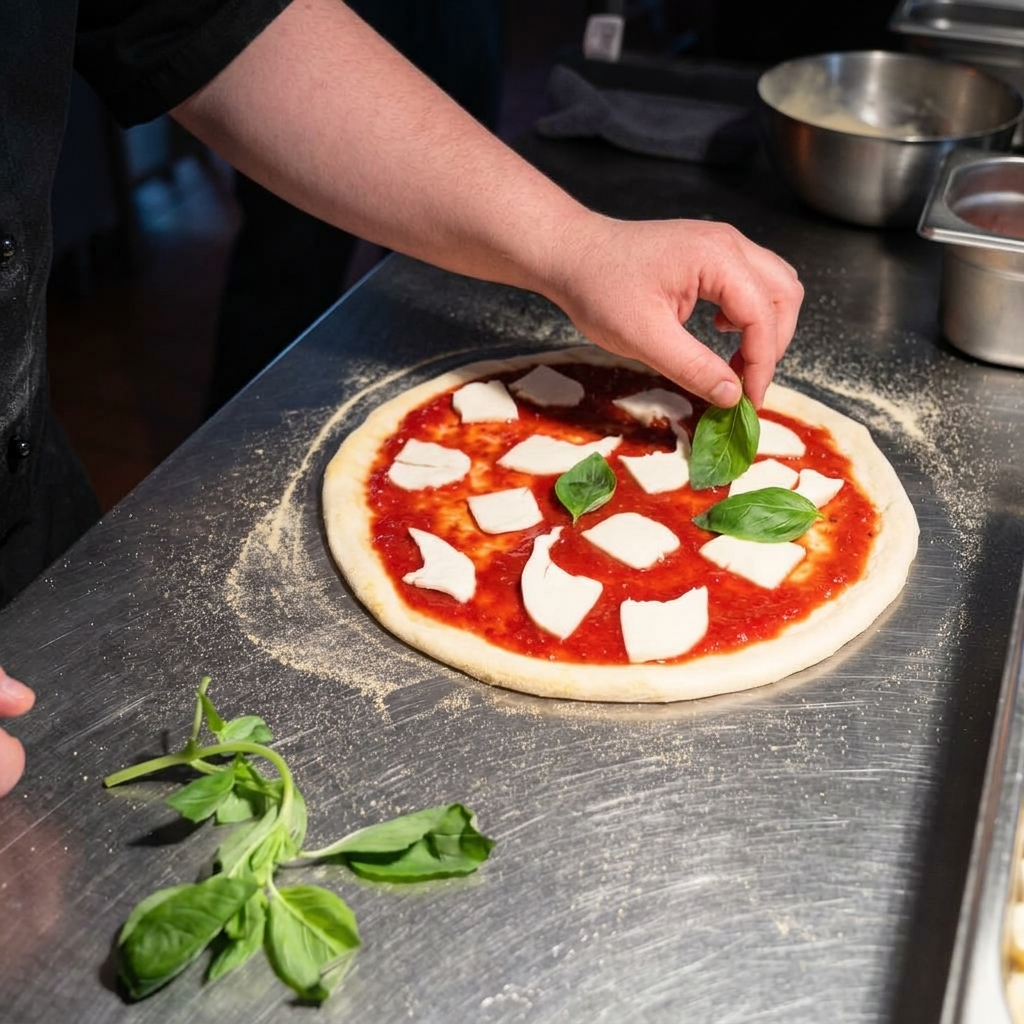
Carefully place whole fresh green basil leaves onto the pizza, scattering them amongst the pieces of mozzarella cheese. This adds a sweet, aromatic freshness to the classic Margherita.
Tip: Some chefs prefer adding basil after baking, but baking it with the pizza releases its fragrant oils into the cheese and sauce. - 7Stretch pizza on the peel
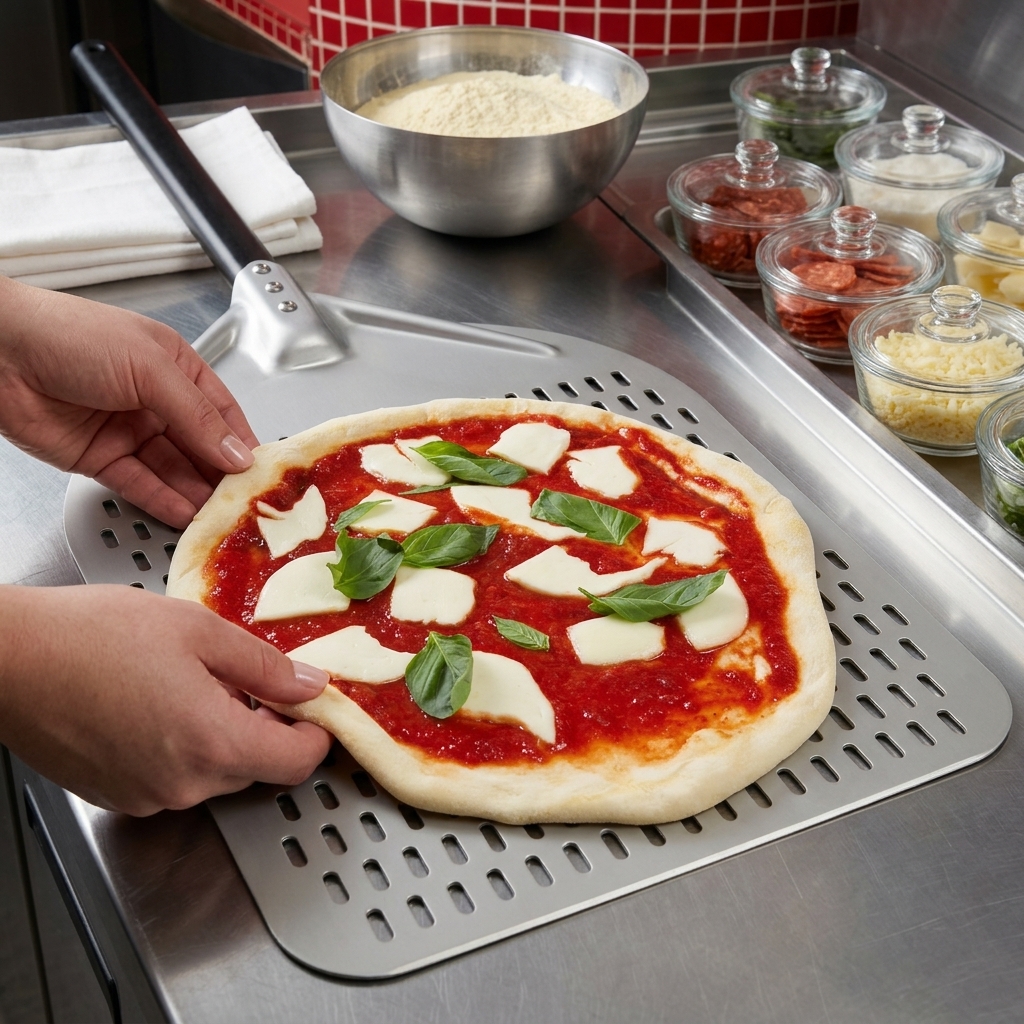
Carefully transfer your assembled pizza onto a metal perforated peel. Gently stretch the edges of the dough to reach a diameter of about 10 inches, ensuring an even base before baking.
Tip: A perforated metal peel is ideal because it allows excess flour to fall away from the bottom of the dough, preventing a bitter burnt taste in the oven. - 8Load into the oven
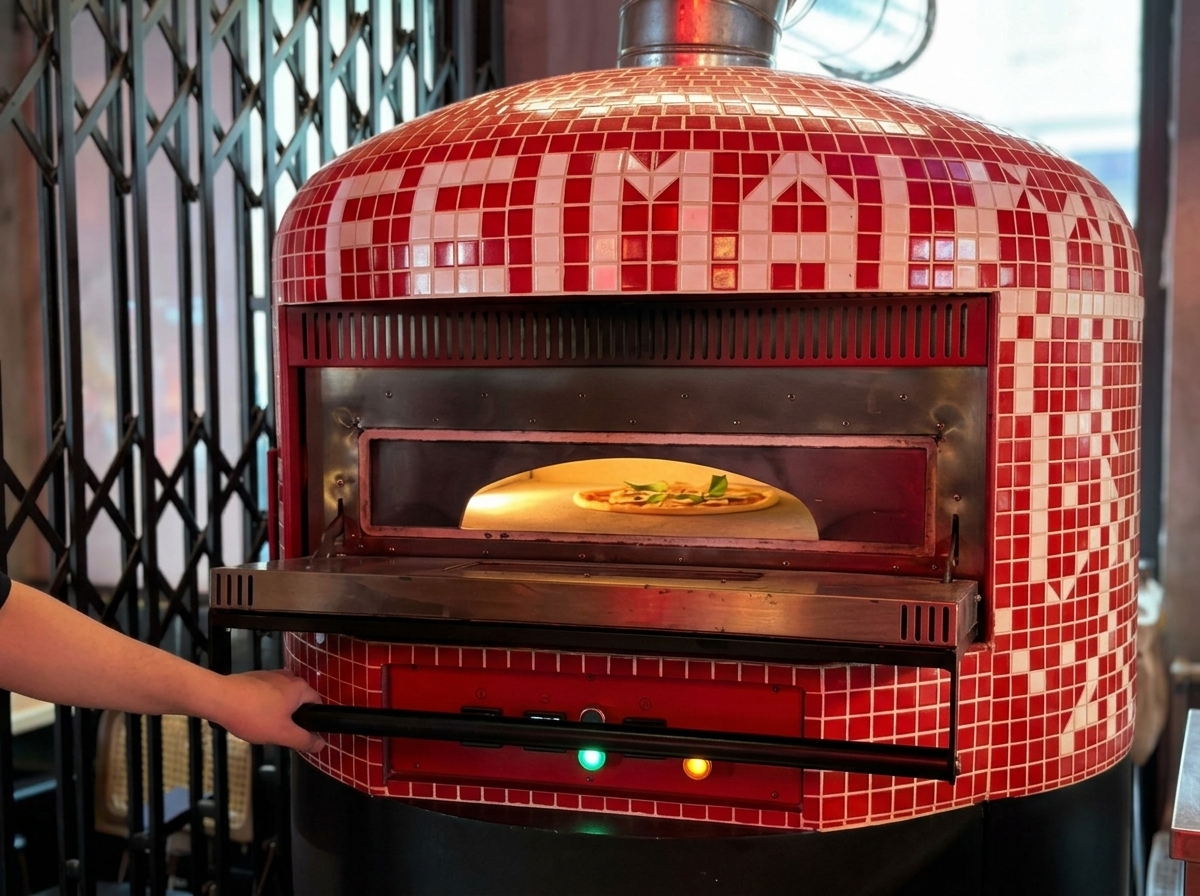
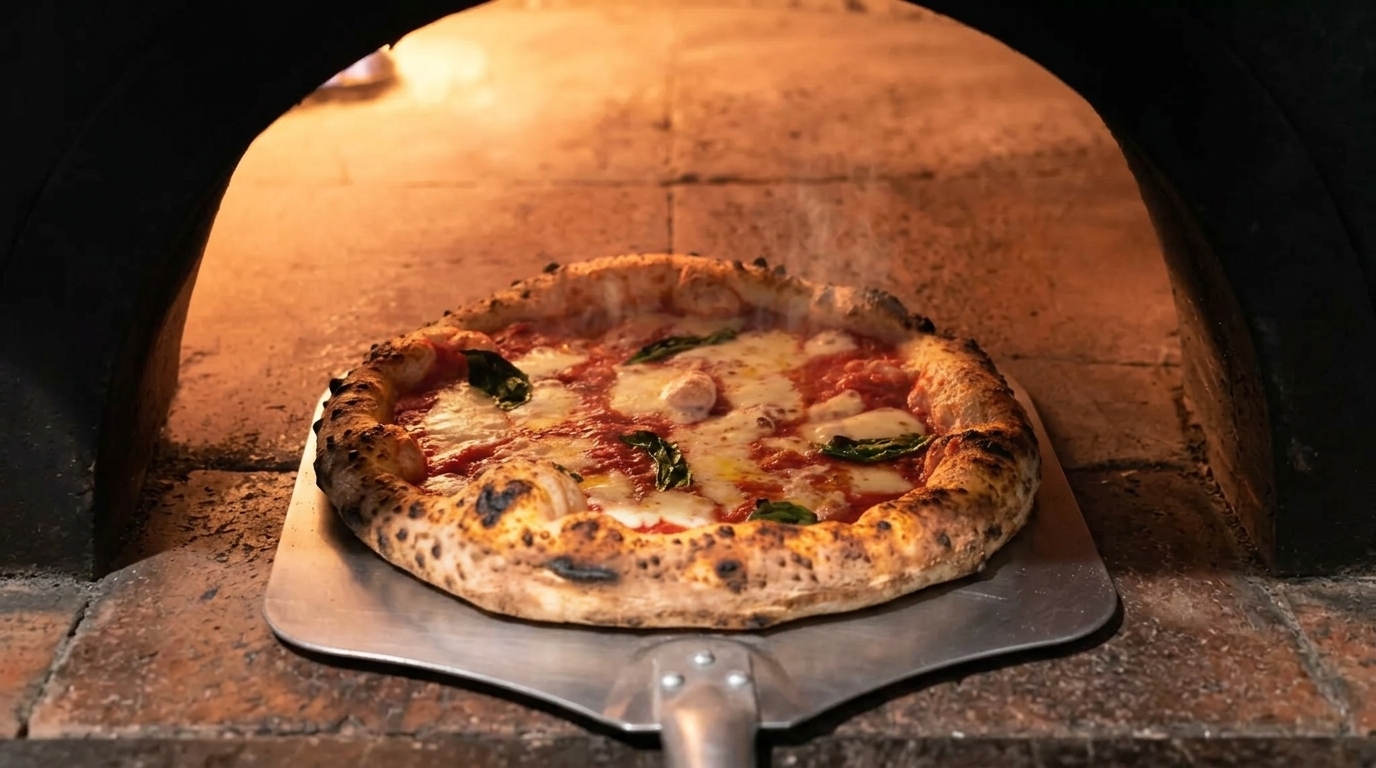
Slide the prepared raw pizza from the peel into a preheated brick oven. For a true Neapolitan style, the oven needs to be intensely hot—aiming for 450°C (840°F) on the top and 300°C (570°F) on the floor.
Tip: If making this at home, preheat a pizza stone or baking steel in your oven at its highest setting for at least an hour to mimic a brick ovens heat. - 9Bake the pizza
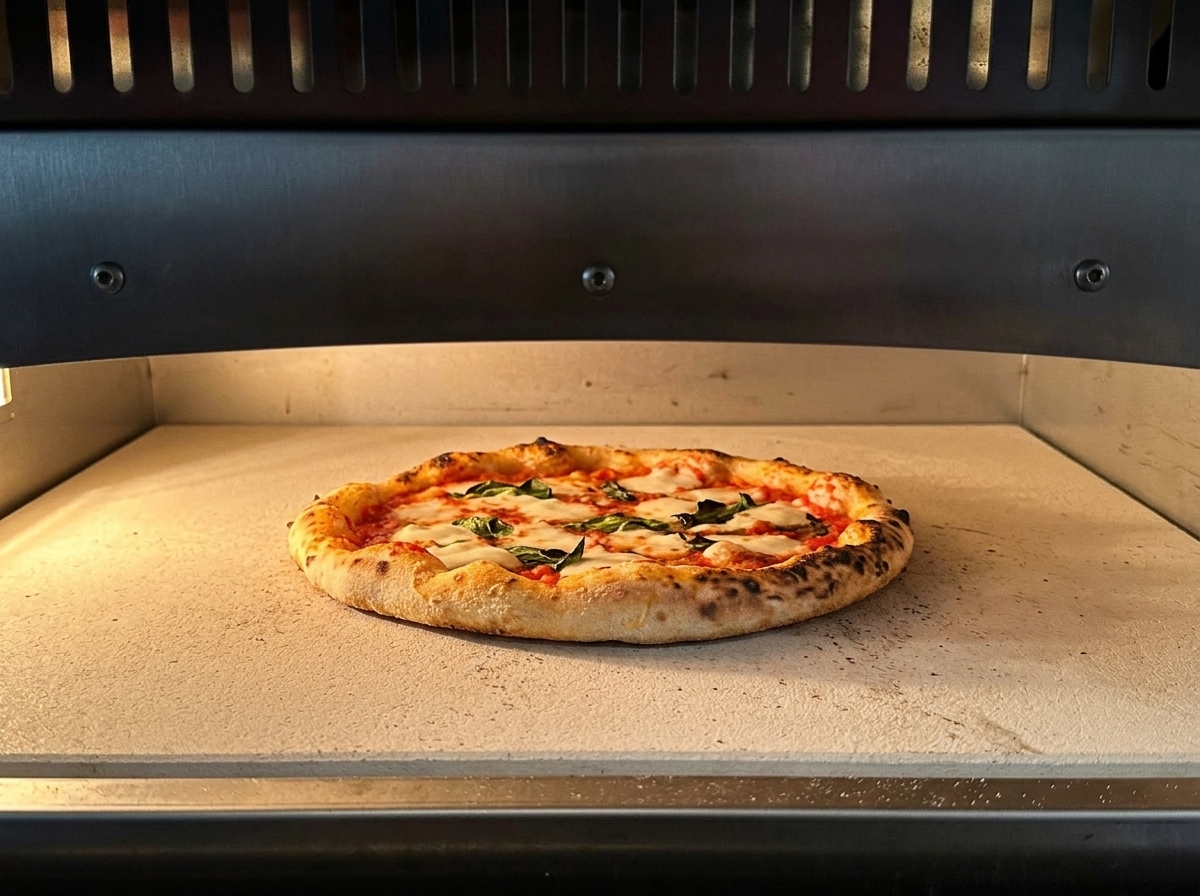
Watch closely as the pizza bakes inside the hot oven. The intense heat will quickly cause the crust to rise and begin to brown. In a professional brick oven, this baking process takes only about a minute and a half.
Tip: If your oven has hot spots, rotate the pizza periodically to ensure an even, beautifully charred crust all the way around. - 10Remove from the oven
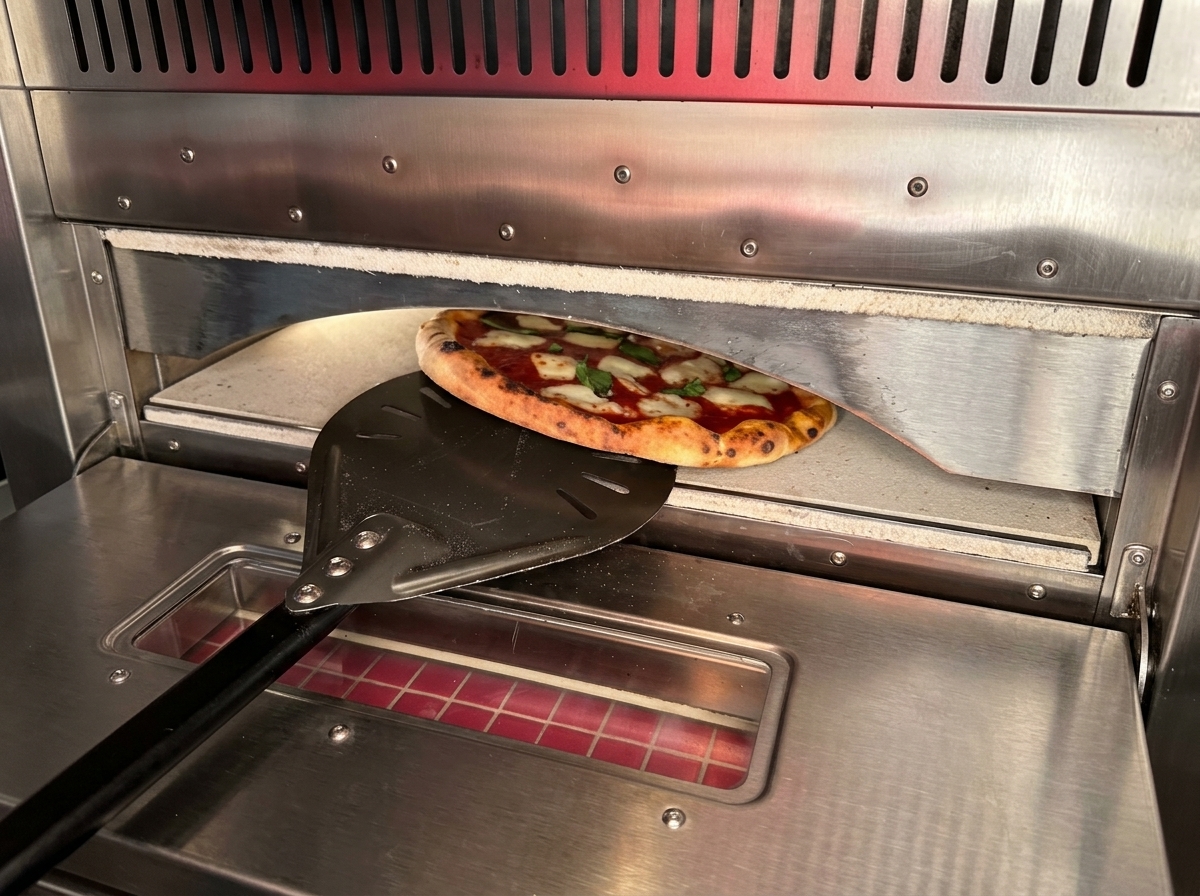
Once the pizza is fully baked and the crust has developed its distinctive dark, charred spots, carefully pull it out of the oven using a large metal peel. These dark spots are a hallmark characteristic of authentic Neapolitan pizza.
Tip: Dont mistake the dark char for a burnt pizza! Those signature blisters add a wonderful complex, smoky flavor to the crust. - 11Slice the baked pizza
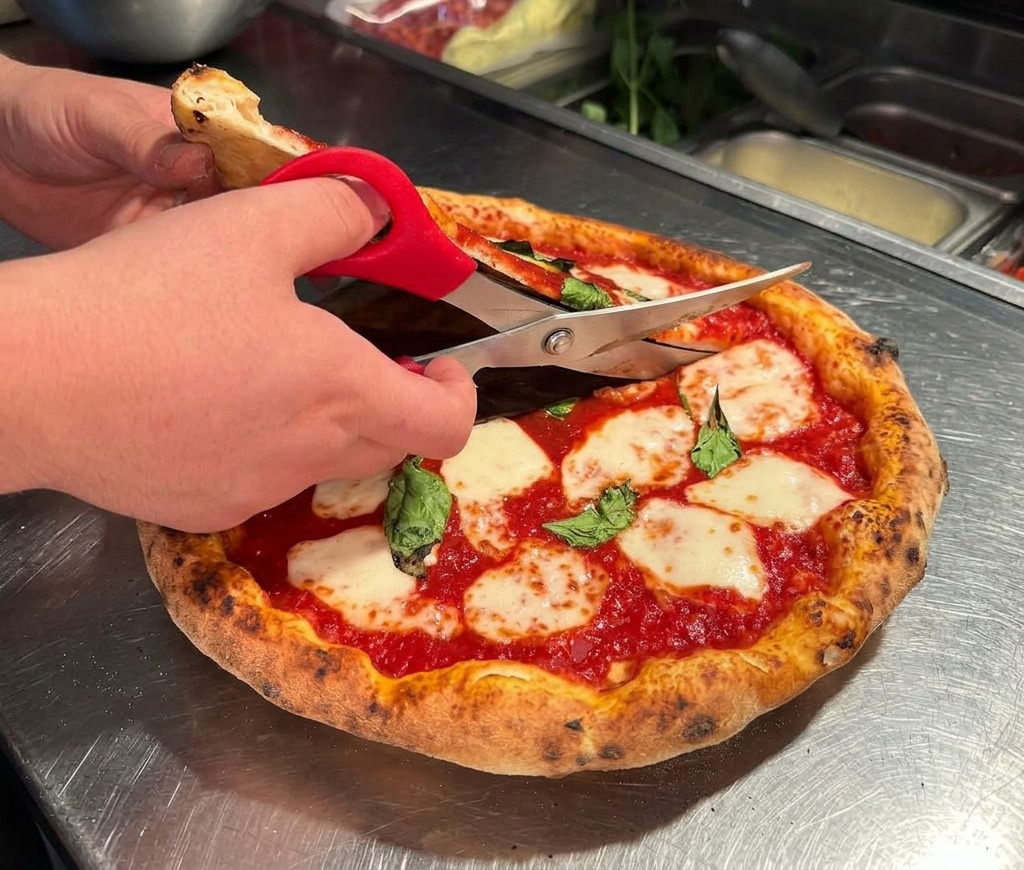
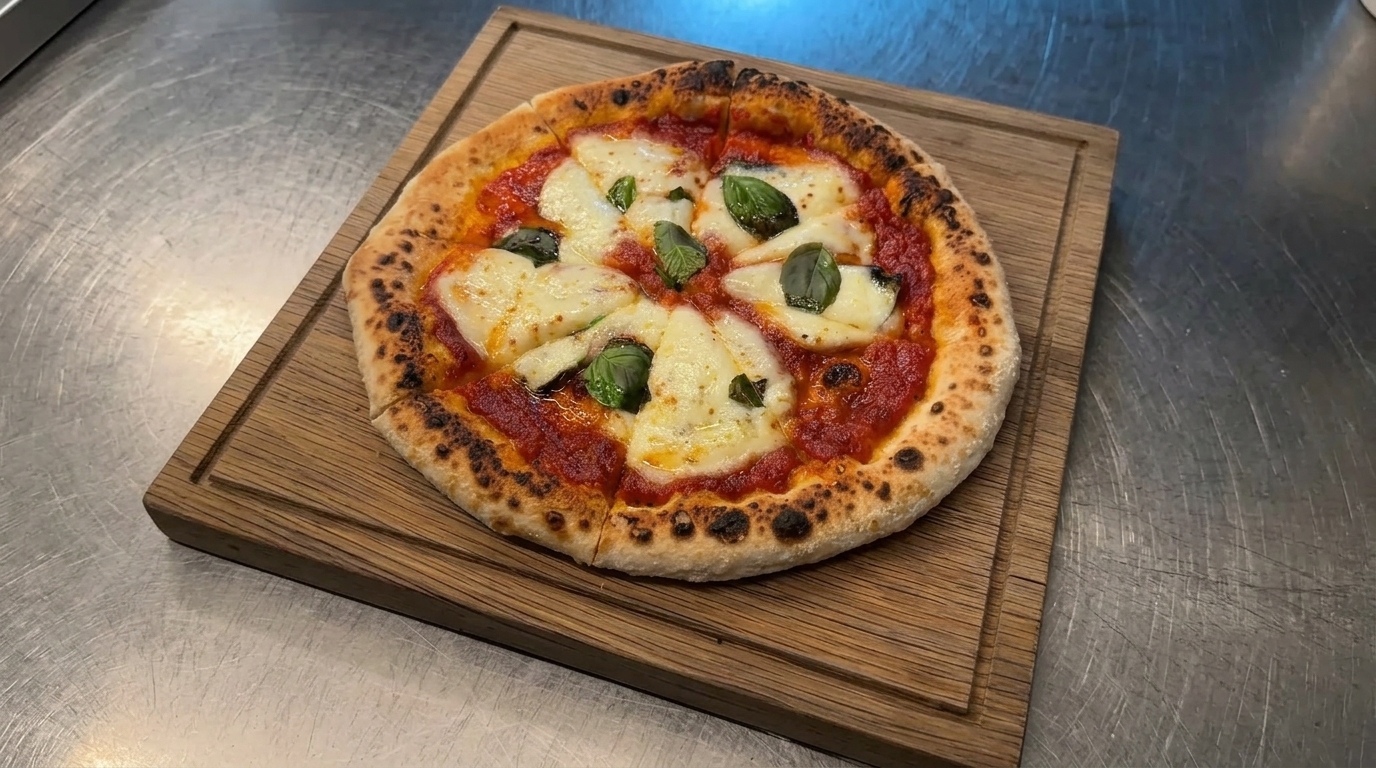
Take the freshly baked Margherita pizza out of the oven and let it rest for a moment on the preparation surface. Use a pair of kitchen scissors to cleanly cut the pie into even slices. Slicing the pizza prior to adding the final toppings ensures you dont drag or displace the delicate ingredients.
Tip: Kitchen scissors are an excellent tool for cutting Neapolitan-style pizza because they snip through the puffy, airy crust without crushing its structure. - 12Drizzle with olive oil
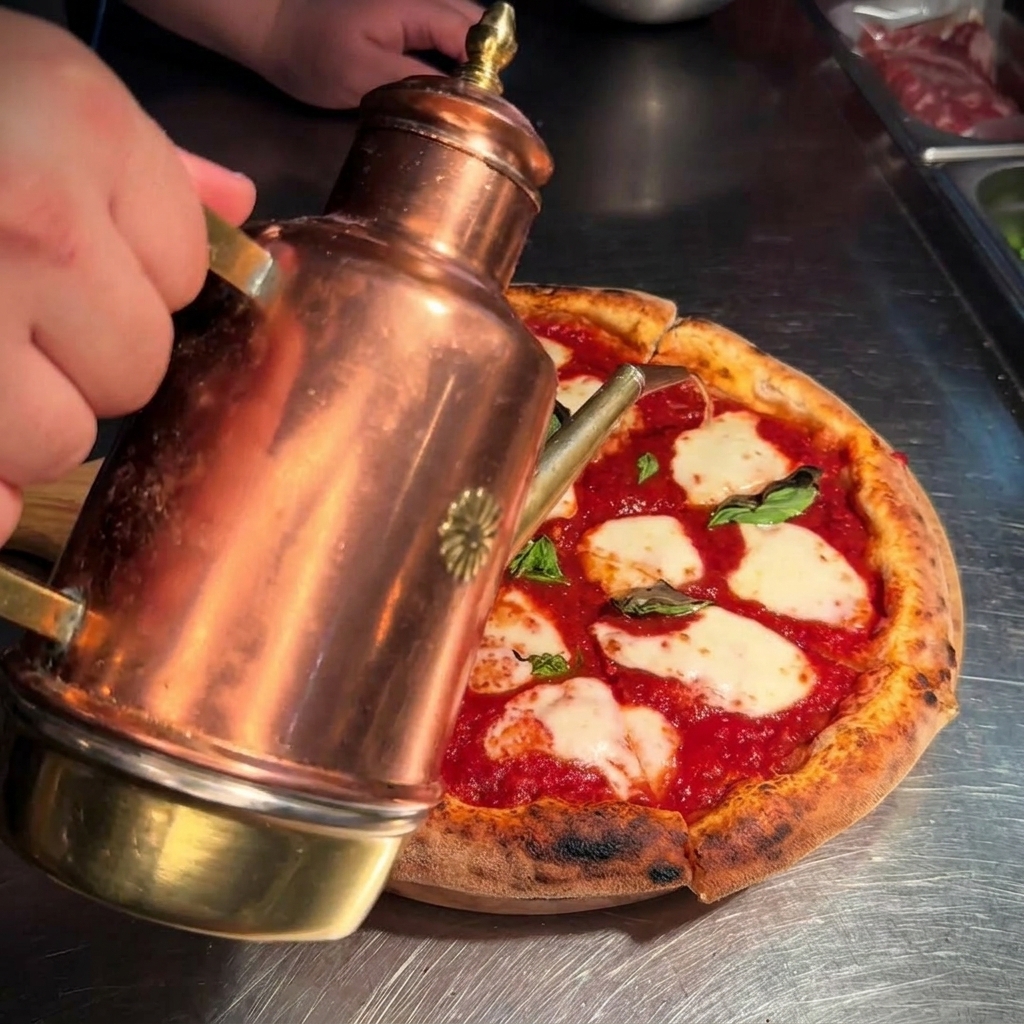
While the sliced pizza is still piping hot, finish it with a generous drizzle of golden olive oil. Using a thin-spouted can helps distribute the oil evenly over the melted mozzarella, tomato sauce, and charred crust.
Tip: Adding the olive oil after the pizza is baked preserves the oils raw, delicate flavor notes and adds a beautiful glossy finish. - 13Garnish with fresh parmesan
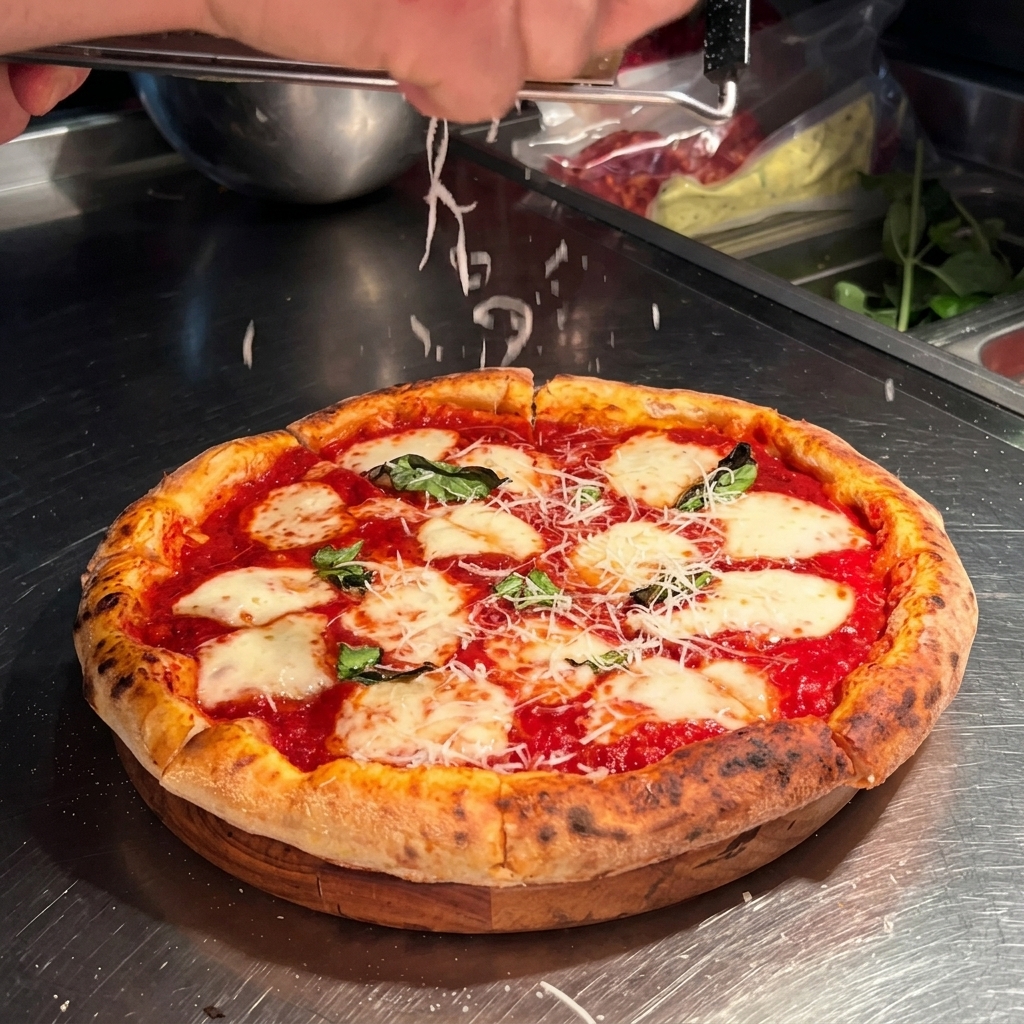
Finish the pizza by grating a layer of hard parmesan cheese directly over the warm slices. The residual heat from the crust and sauce will gently warm the cheese, releasing its savory oils and adding a salty depth of flavor to complement the sweet tomato sauce and fresh basil.
Tip: Always grate the cheese right before serving so its aroma is at its absolute peak when the pizza hits the table.