Authentic Chinese Fried Meat Sauce (Zha Jiang)
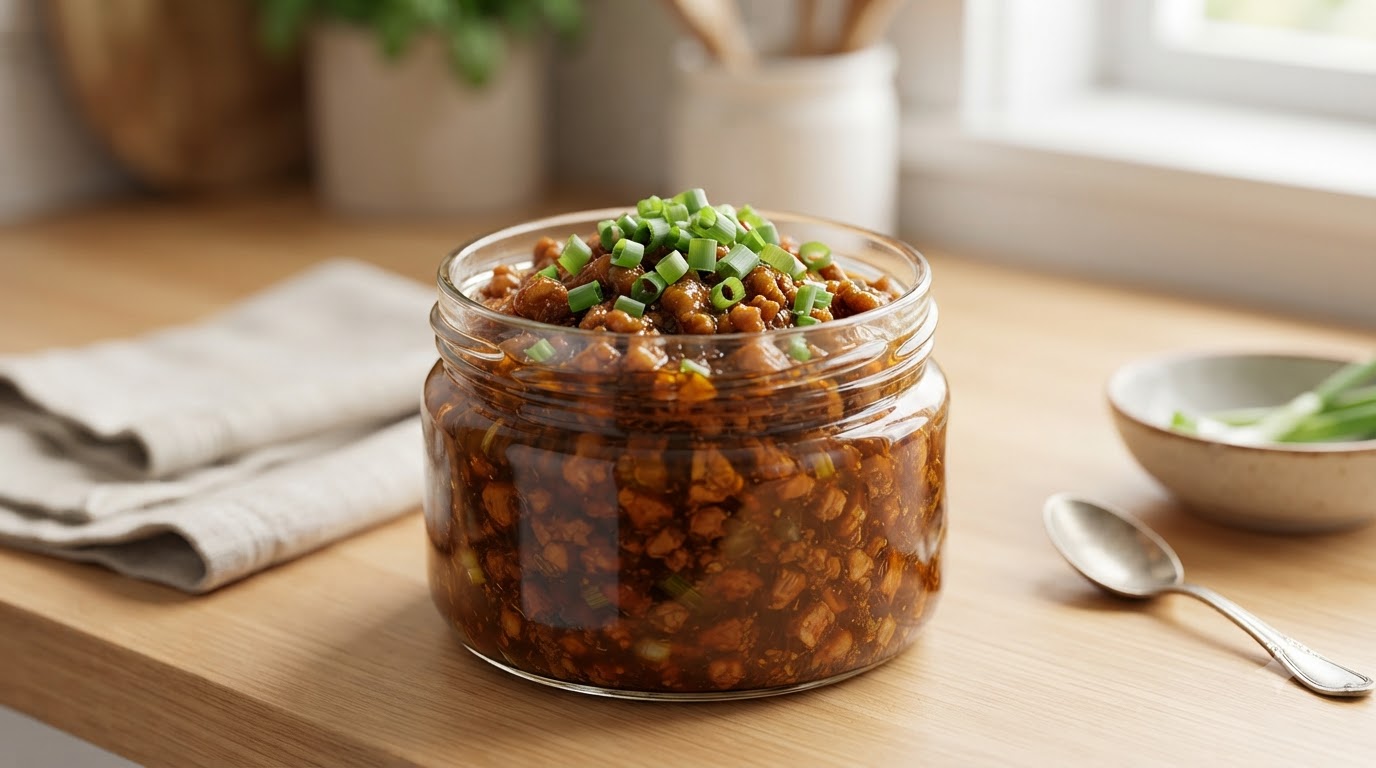
Master the intensely flavorful fried meat sauce (Zha Jiang) found in classic Chinese noodle shops. A rich, savory blend of rendered pork and caramelized bean pastes.
Zha Jiang, or fried sauce, is the umami-packed backbone of countless traditional Chinese noodle dishes. The secret lies in rendering the pork fat perfectly before slowly caramelizing yellow soybean and sweet bean pastes, creating a deep, savory foundation that clings beautifully to fresh noodles.
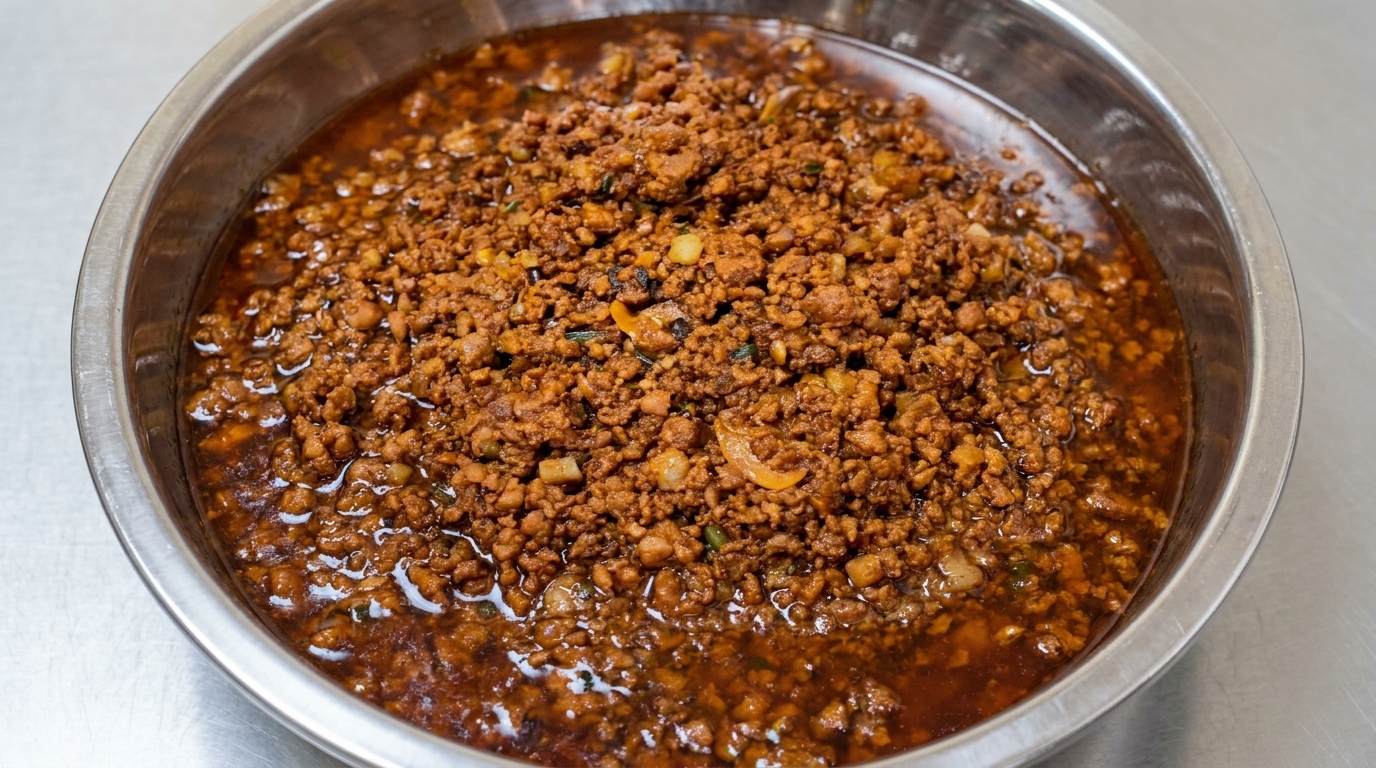
Ingredients
- 500 g minced pork
- 3 scallions
- 1 thumb ginger
- 4 cloves garlic
- 2 tbsp cooking oil
- 1 tsp Sichuan peppercorns
- 2 whole star anise
- 3 tbsp yellow soybean paste
- 1 tbsp oyster sauce
- 2 tbsp sweet bean sauce
- 1 tsp salt
- 1/2 tsp MSG
- 1/2 tsp white pepper powder
- 1 tbsp light soy sauce
- 1 tsp dark soy sauce
- 1/2 tsp thirteen-spice powder
- 1 cup clear water
Instructions
- 1Prepare the aromatics
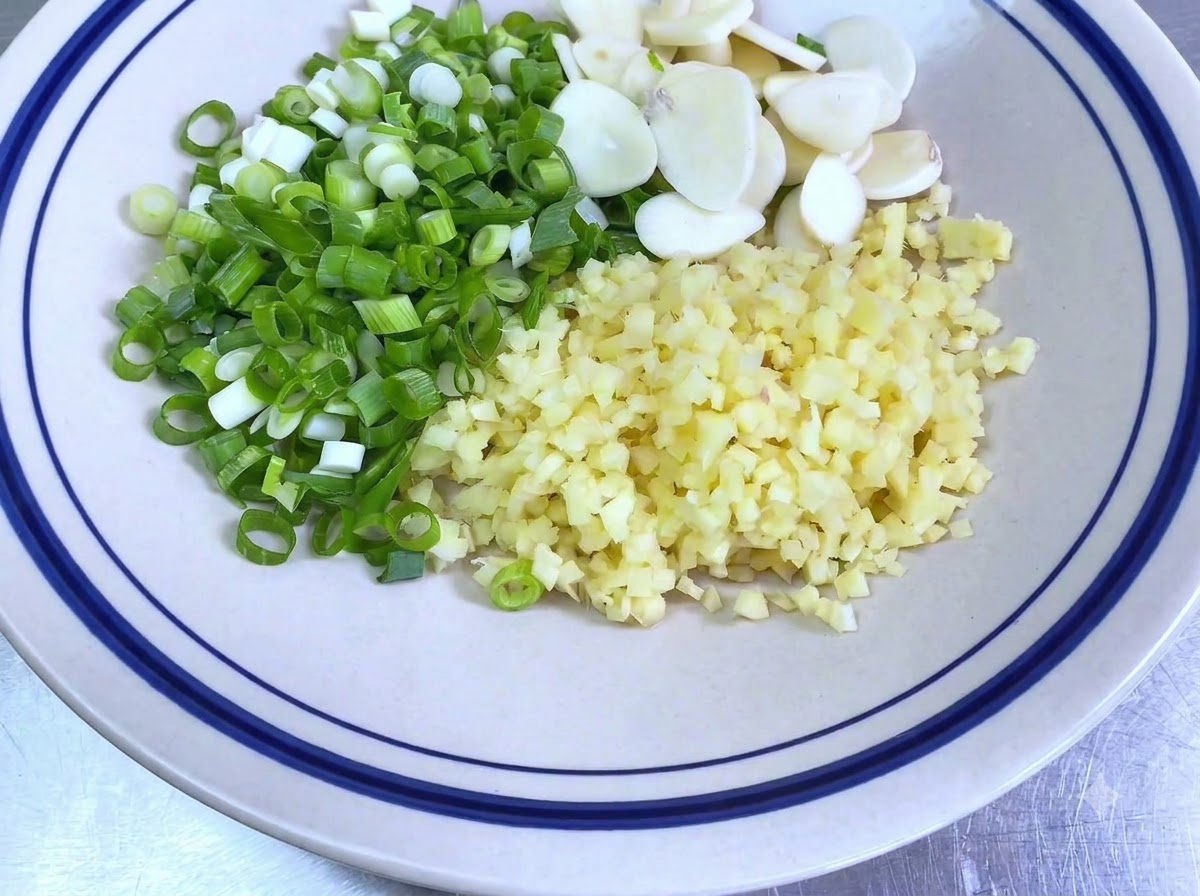
Prepare fresh scallions, garlic, and ginger by chopping and slicing them into uniform pieces. These aromatic vegetables serve as the essential base for flavoring the minced meat sauce.
Tip: Chop the ginger finely to ensure it blends seamlessly into the meat mixture without large chunks. - 2Strain out whole spices
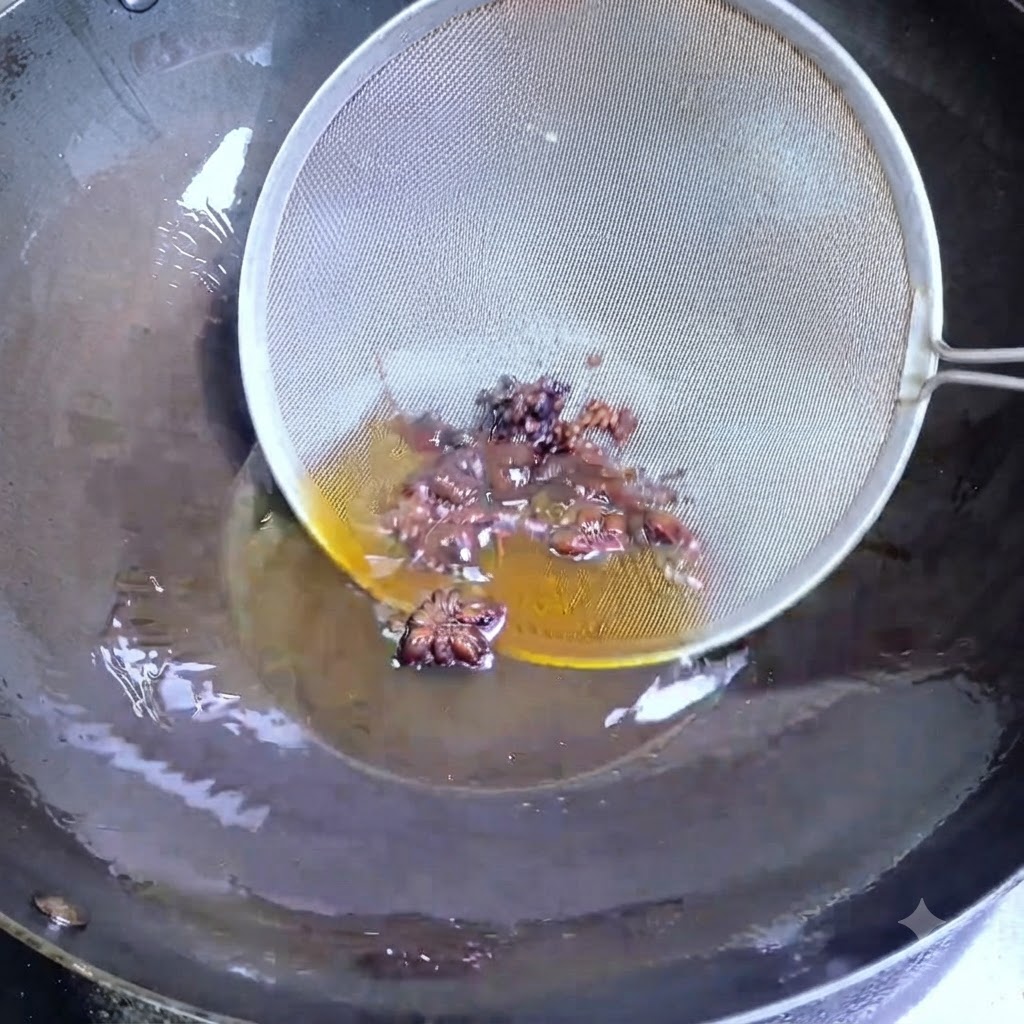
Use a wire mesh strainer to carefully scoop out the fried star anise and Sichuan peppercorns from the hot oil. Removing them prevents any overly bitter taste while leaving behind the fragrant infused oil.
Tip: Make sure to fish out all small peppercorns so they dont get stuck in the minced meat later. - 3Add minced pork to the wok
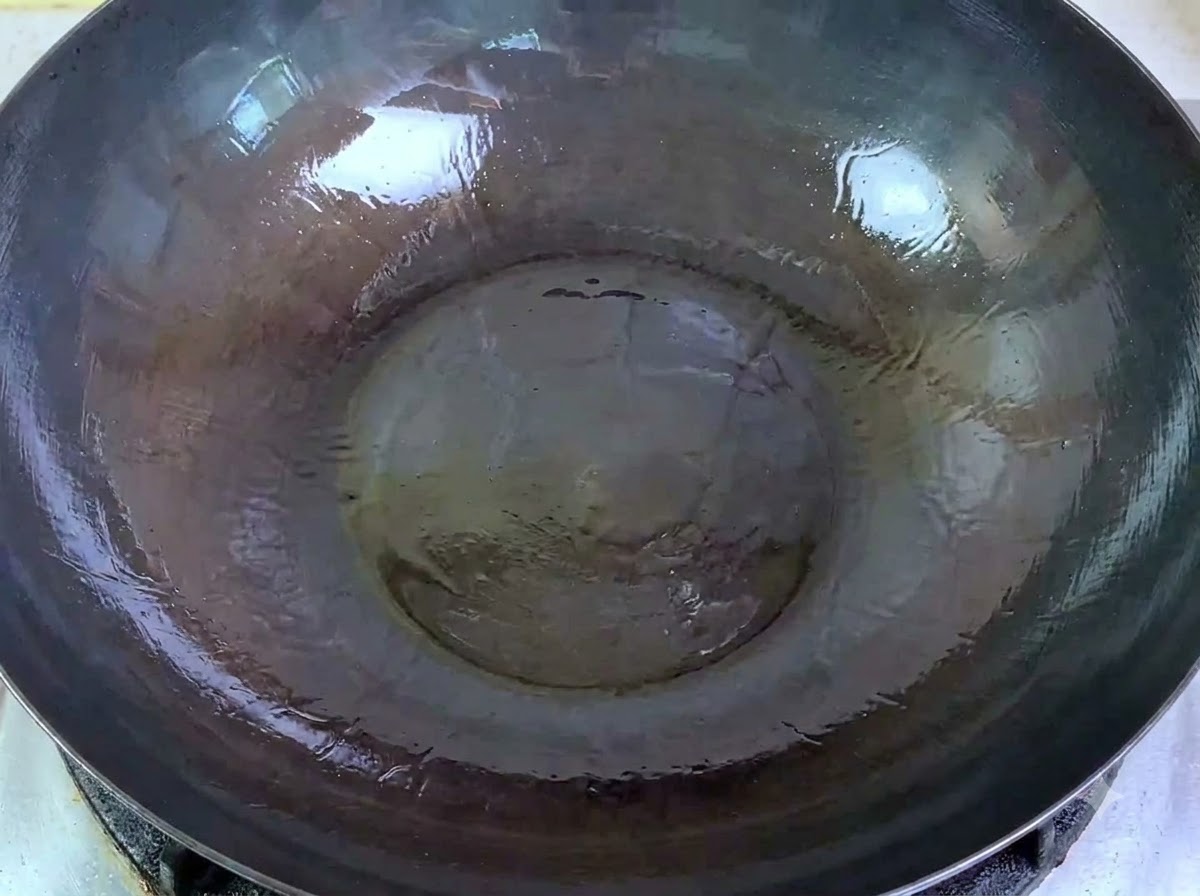
Pour the prepared raw minced pork directly into the wok containing the hot, aromatic infused oil.
Tip: Make sure the oil is sufficiently hot before adding the meat to sear it properly. - 4Stir-fry the minced pork
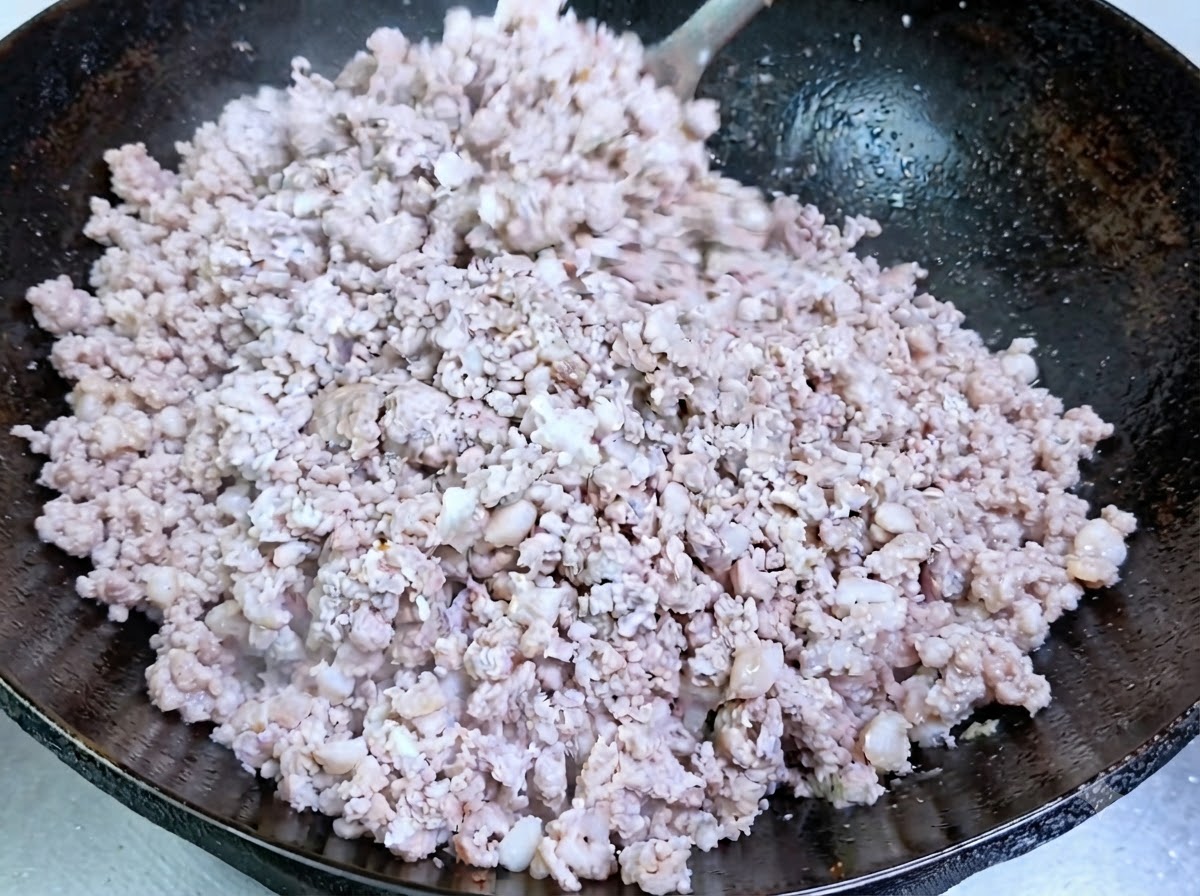
Stir-fry the pork continuously over high heat until the meat changes color, turning completely white and opaque as its natural fat begins to render.
Tip: Break up any large clumps of meat with your spatula so they brown evenly. - 5Render the meat fat
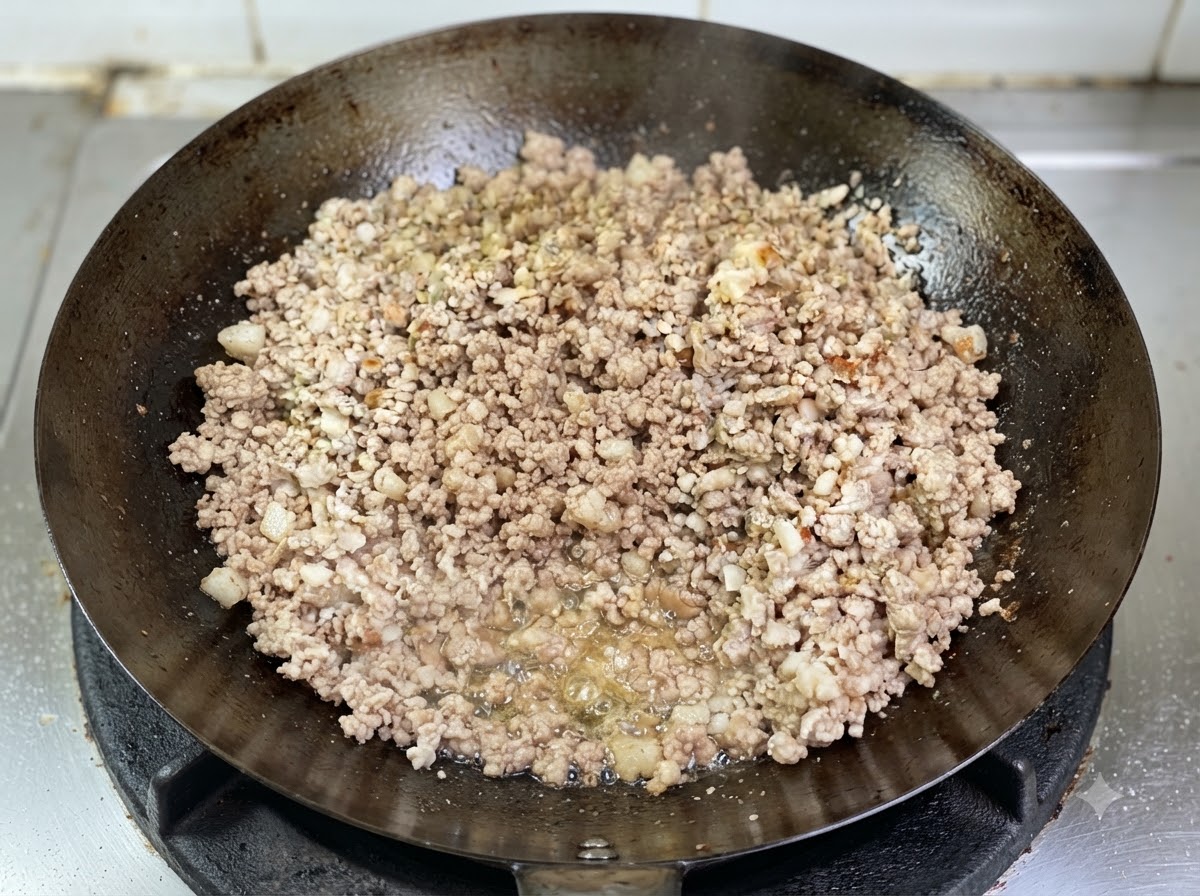
Continue frying the minced pork until the moisture evaporates and the fat renders out clearly at the bottom of the wok. This browning process deepens the savory base flavor.
Tip: Render the fat thoroughly to avoid a greasy texture in the final sauce. - 6Add the aromatics to the meat
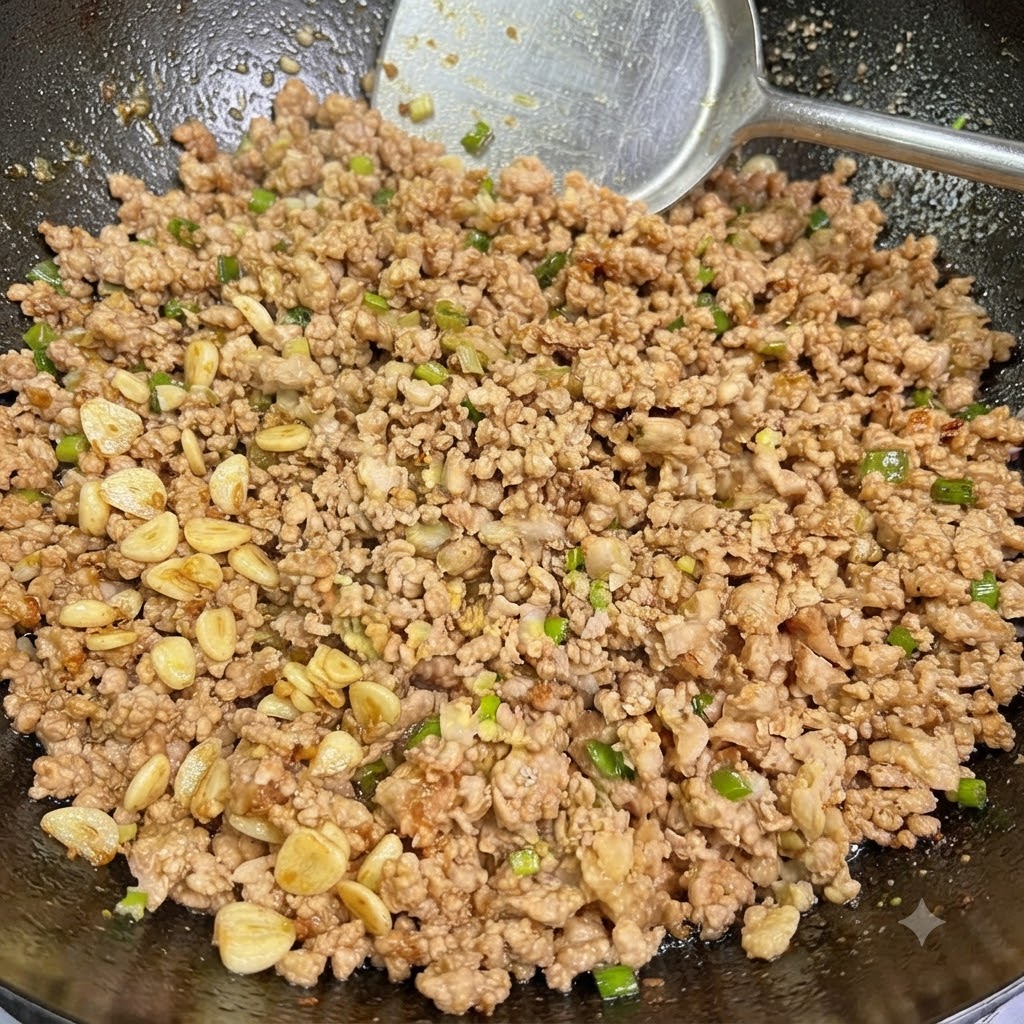
Pour the prepared chopped scallions, sliced garlic, and minced ginger directly into the browned minced pork. Stir-fry everything together until the aromatic vegetables release their rich fragrances into the meat.
Tip: Add the aromatics after the meat has rendered its fat so they fragrance the oil without burning prematurely. - 7Add Bean Pastes
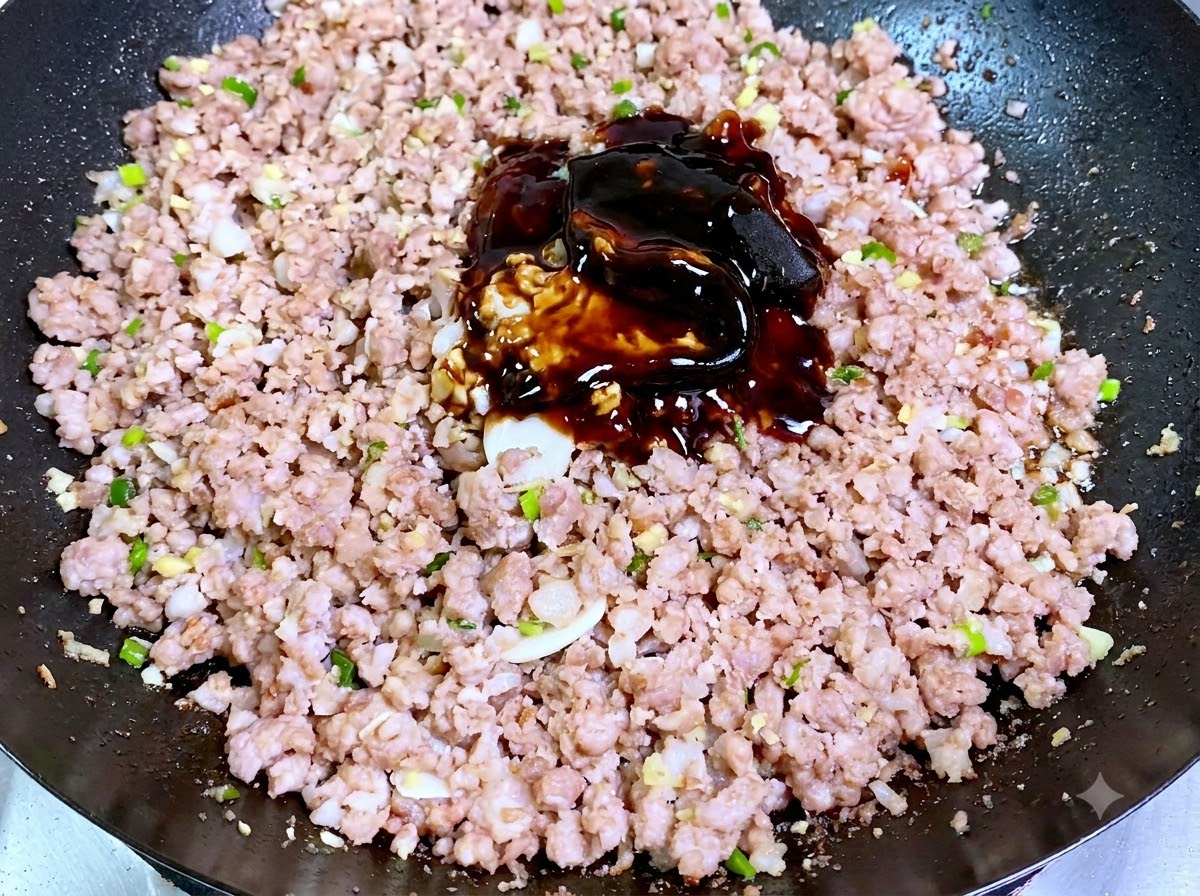
Spoon the yellow soybean paste, oyster sauce, and sweet bean sauce directly over the stir-fried minced pork in the wok to build a deep, savory foundation for the sauce flavor.
Tip: Add the bean pastes right onto the meat so they can caramelize slightly in the residual oil. - 8Pour in Liquid Seasonings
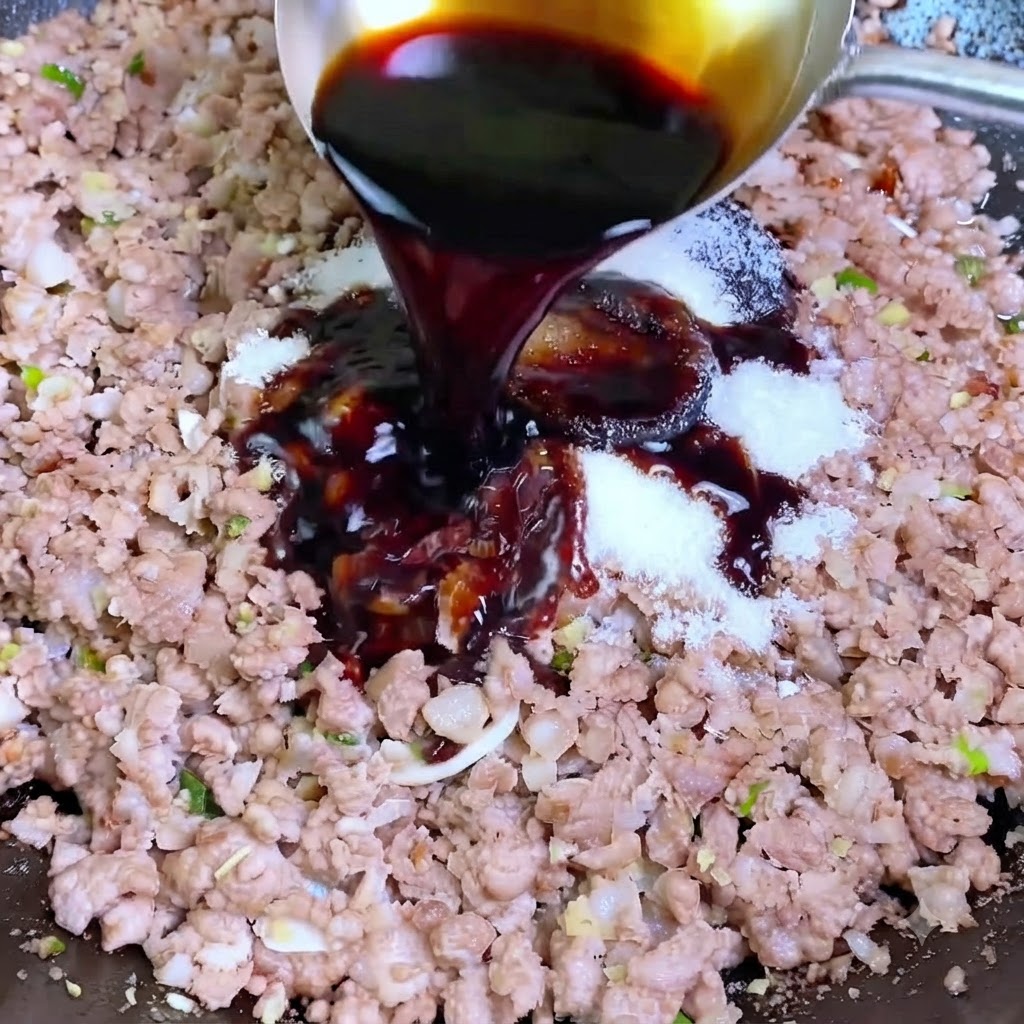
Pour light soy sauce and dark soy sauce from a ladle directly into the wok over the meat and seasoning pastes to enhance color and savory depth.
Tip: Dark soy sauce provides the rich color while light soy sauce adds saltiness and umami. - 9Season with Spices
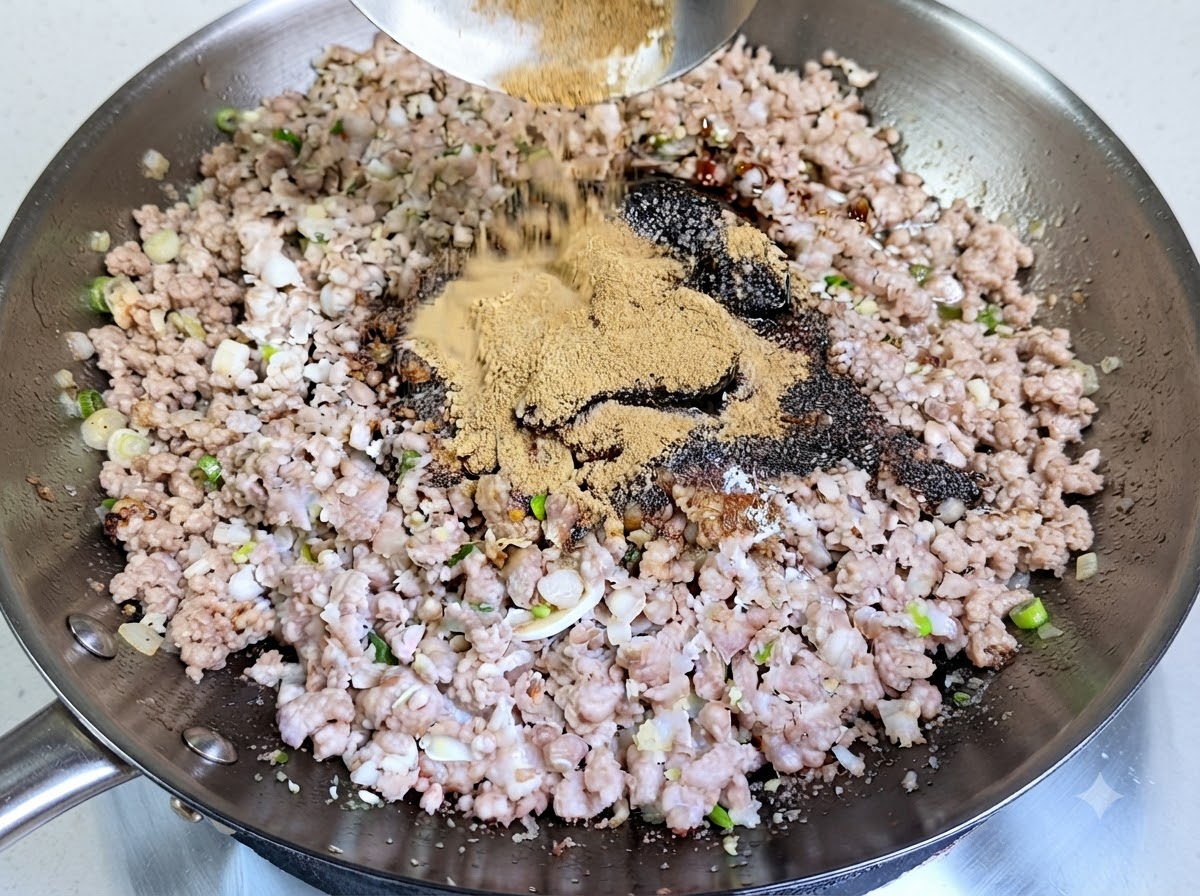
Sprinkle salt, MSG, white pepper powder, and thirteen-spice powder over the meat and sauce mixture to add complex aromatic notes and proper seasoning.
Tip: Thirteen-spice powder gives the meat sauce its distinct, fragrant noodle-shop aroma. - 10Add Water
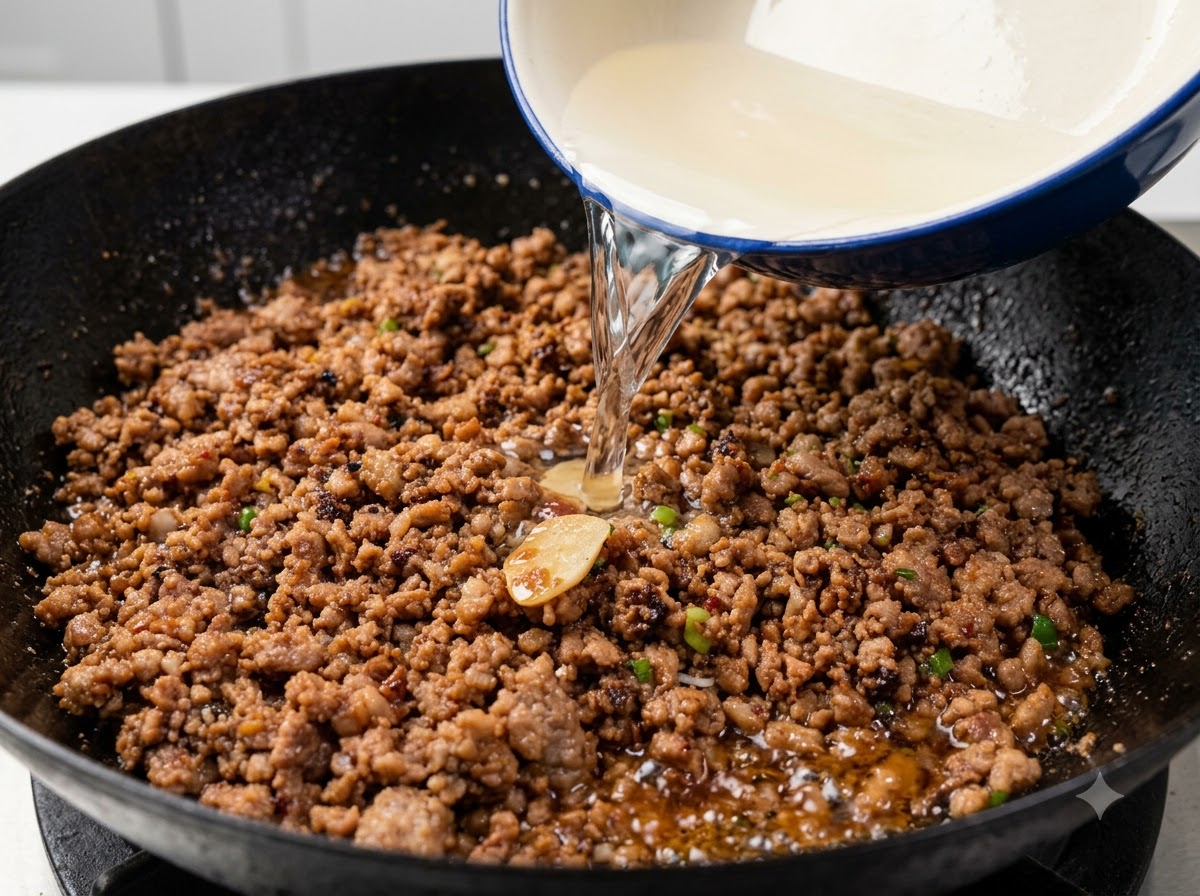
Pour clear water from a bowl into the wok, adding just enough to cover the seasoned minced meat.
Tip: Do not add too much water; it only needs to cover the meat so it can reduce into a rich sauce. - 11Simmer the meat sauce
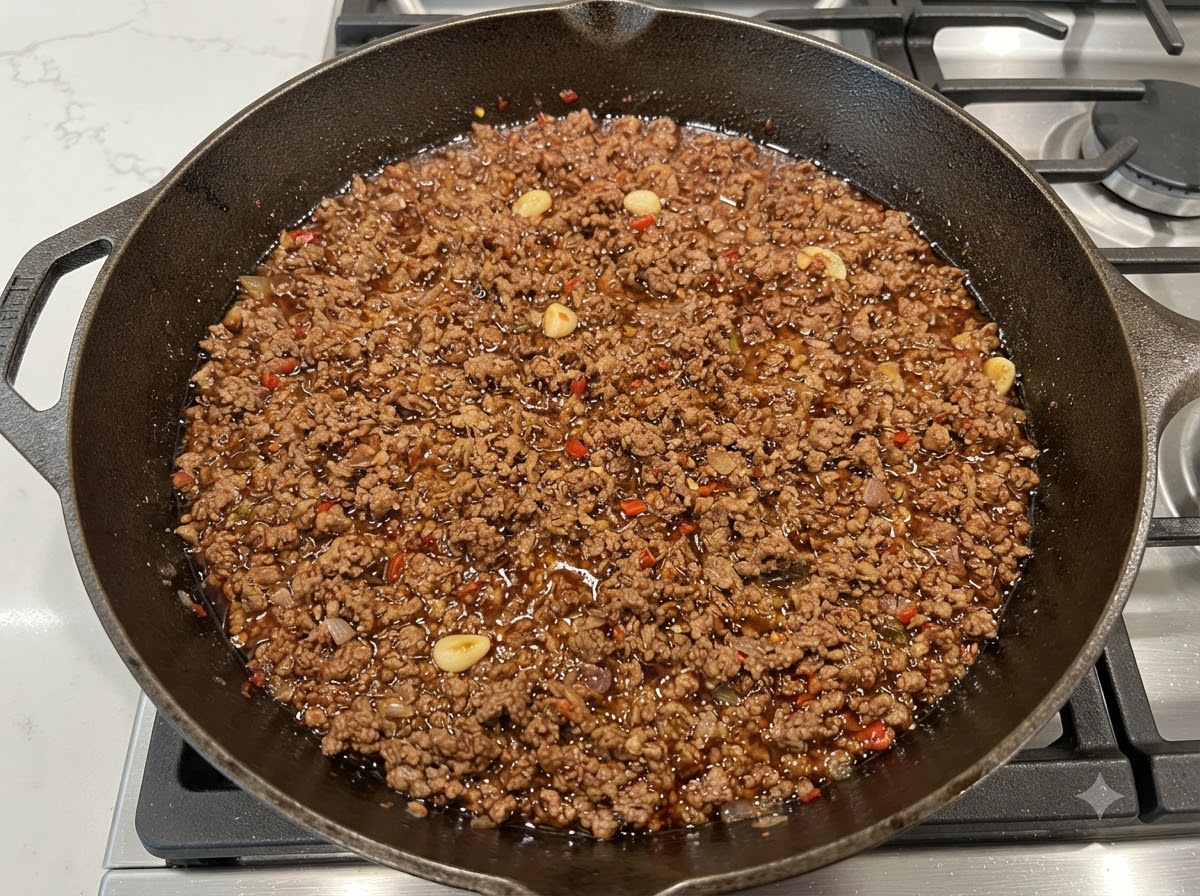
Cover and simmer on low heat for half an hour. Let the mixture gently bubble until the moisture is significantly reduced and the sauce reaches a rich, thick consistency.
Tip: Simmering on low heat allows the flavors to fully penetrate the meat and develop a rich consistency.