Waterless Boiled Pork Belly
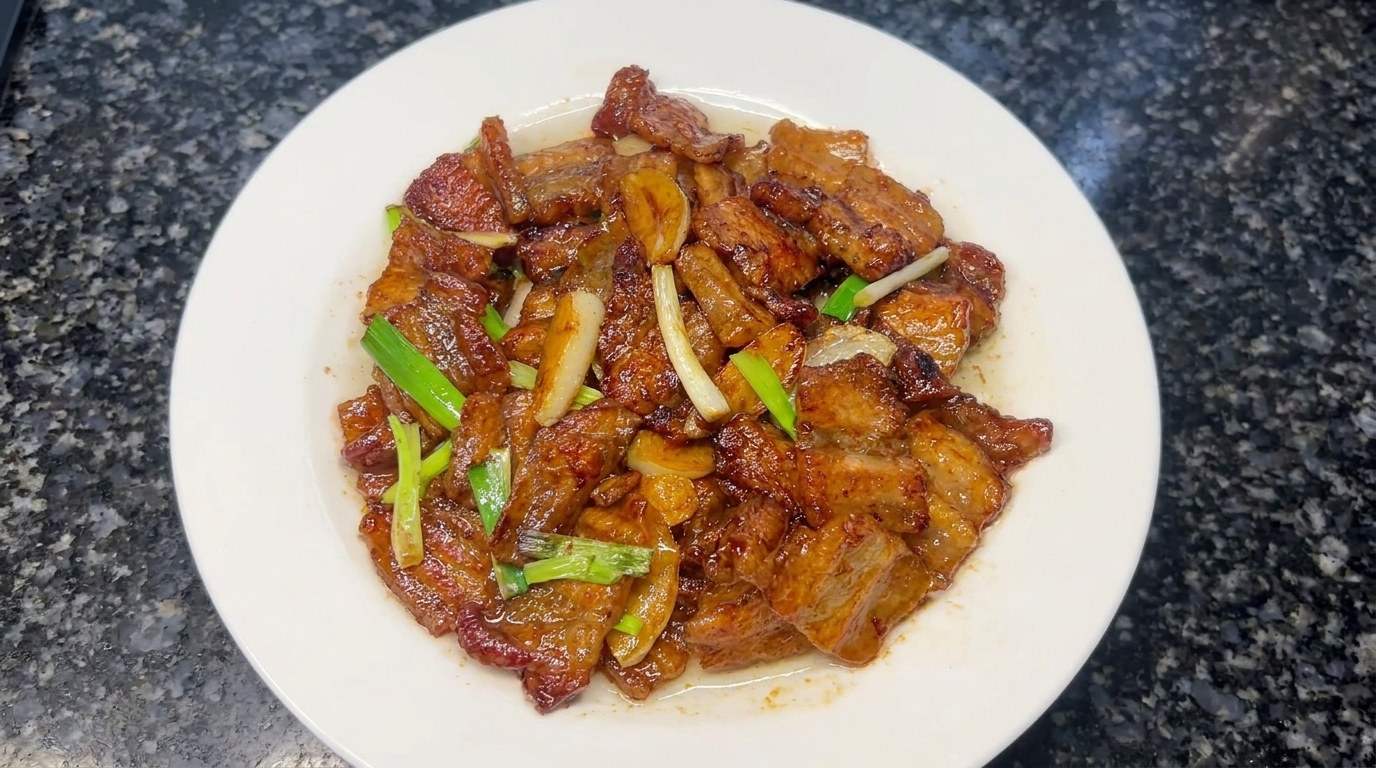
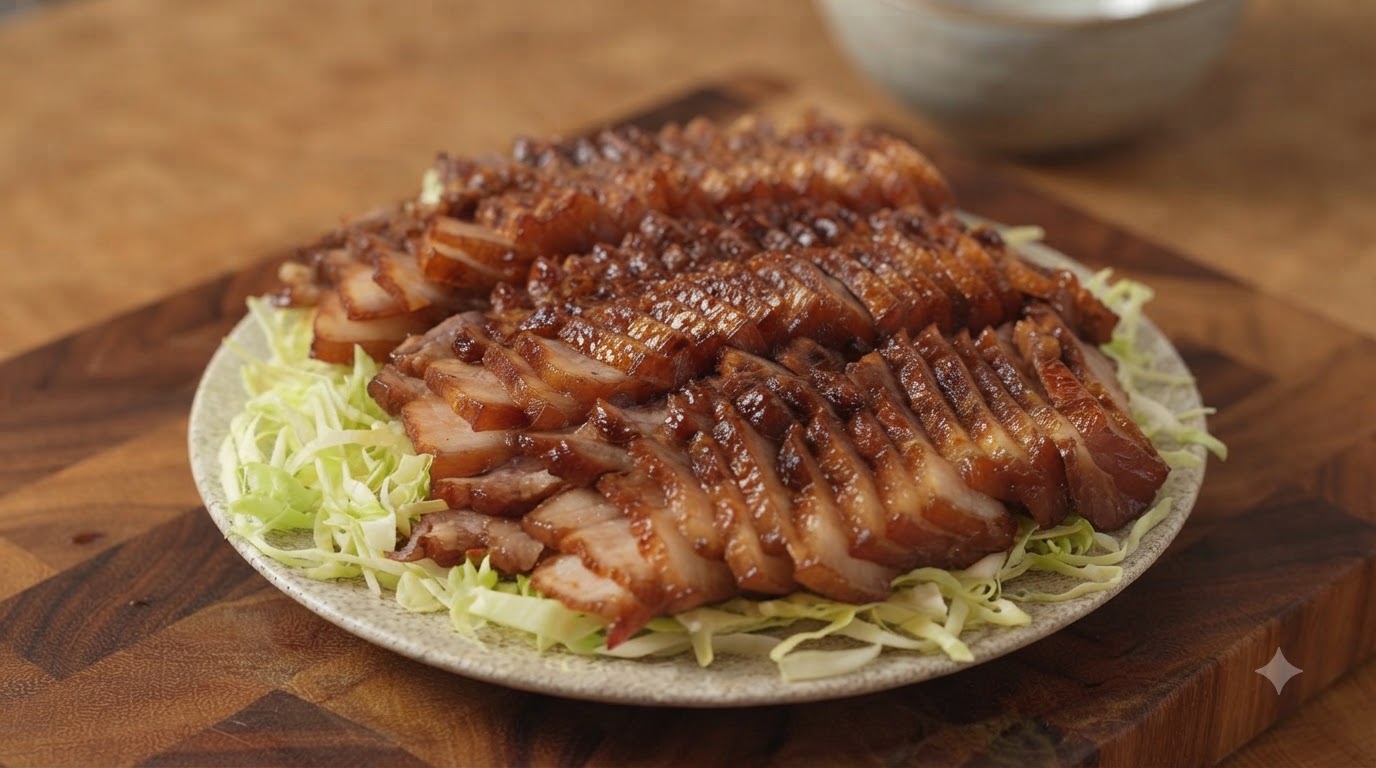
A tender, juicy waterless braised pork belly cooked over an aromatic vegetable bed of onions and apples, finished with a rich soy glaze and soft, waxy texture.
Waterless boiled pork belly is a unique culinary technique that allows the natural moisture and sweetness of fresh vegetables and fruits to braise the meat. By layering green onions, white onions, and crisp apples at the base of an airtight pot, the pork belly steams in pure vegetable juices without losing its concentrated flavor. Coated in a savory reduction, the lean meat stays moist while the excess fat melts away, yielding a delicate balance of savory and sweet aromas.
Ingredients
- 500 g pork belly strips
- 2 to 3 green onions
- 1 white onion
- 1 apple
- 1 piece ginger root
- 4 cloves garlic
- 2 rounds rice wine
- to taste black pepper
- to taste dark sauce
- as needed kimchi
- as needed lettuce
Instructions
- 1Poke the Pork Belly
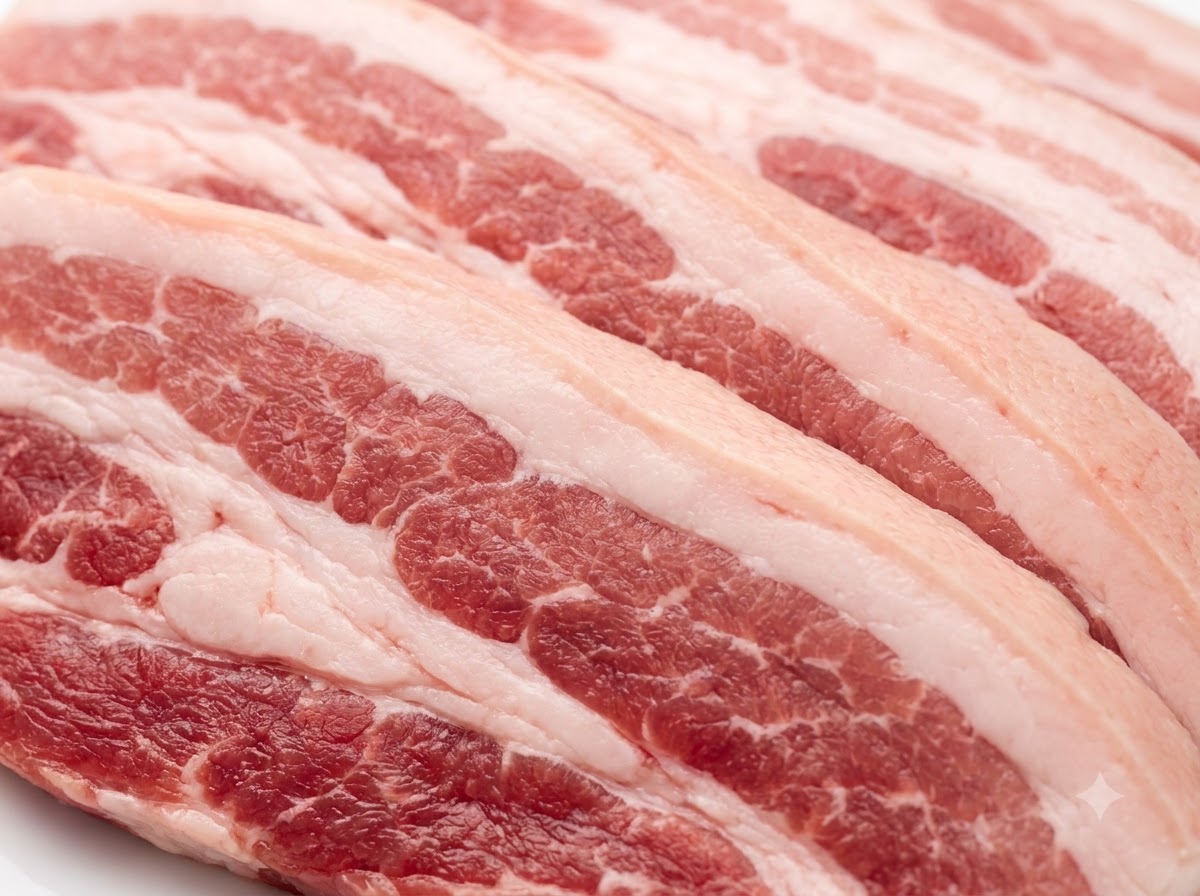
Take fresh pork belly strips and use a fork to poke numerous holes across the meat. This preparation allows the seasoning and flavors to penetrate deeply into the meat during marination and cooking.
Tip: Do not blanch the fresh pork belly, as blanching will wash away a significant amount of its natural flavor. - 2Season with Black Pepper
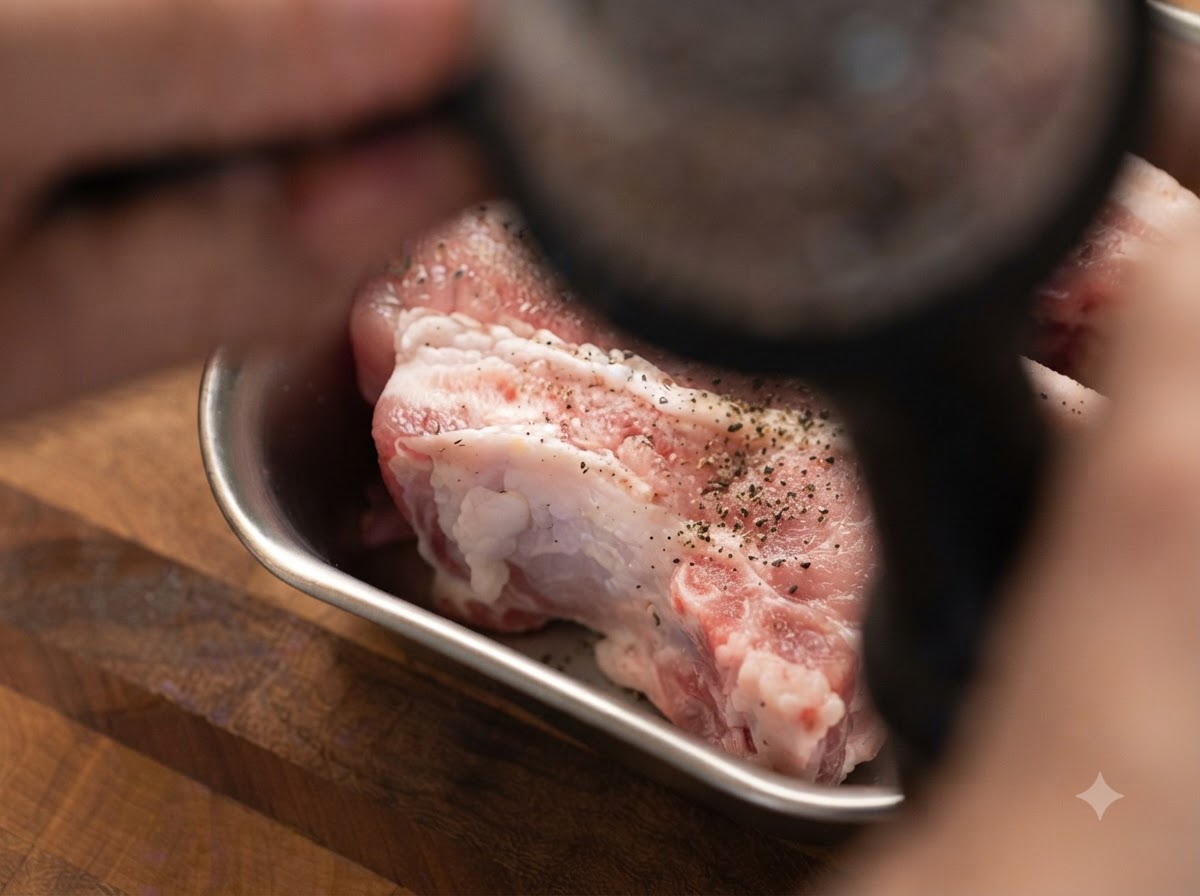
Sprinkle black pepper evenly across the surface of the poked pork belly strips. Allow the meat to marinate with the pepper for approximately 20 minutes to absorb the spice before cooking.
Tip: Use this 20-minute marination window to prepare your vegetables and aromatics for the pot. - 3Cut Green Onions
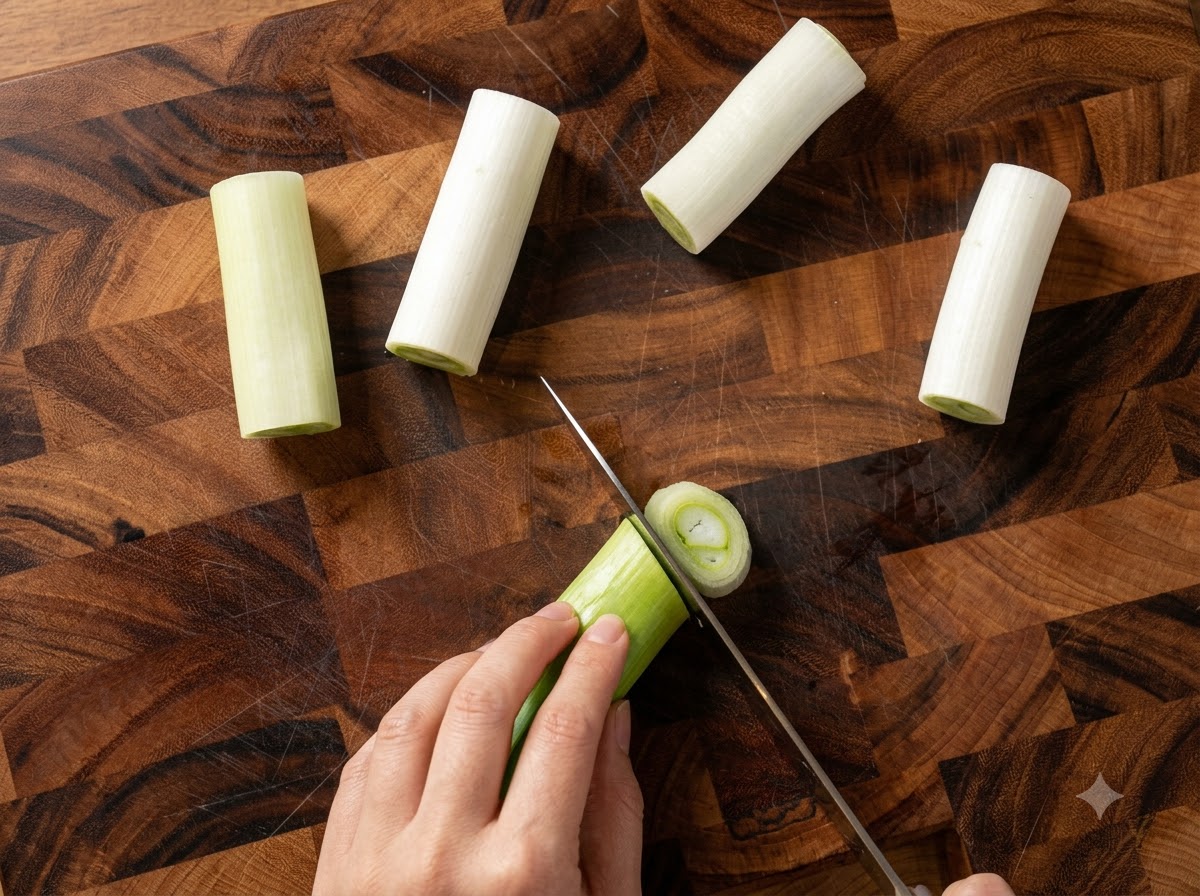
Take two to three green onions and slice them into thick, uniform sections on a wooden cutting board. These sections will form part of the aromatic vegetable bed in the cooking pot.
Tip: Cutting them into chunky sections prevents them from burning and helps them release moisture steadily. - 4Slice White Onion
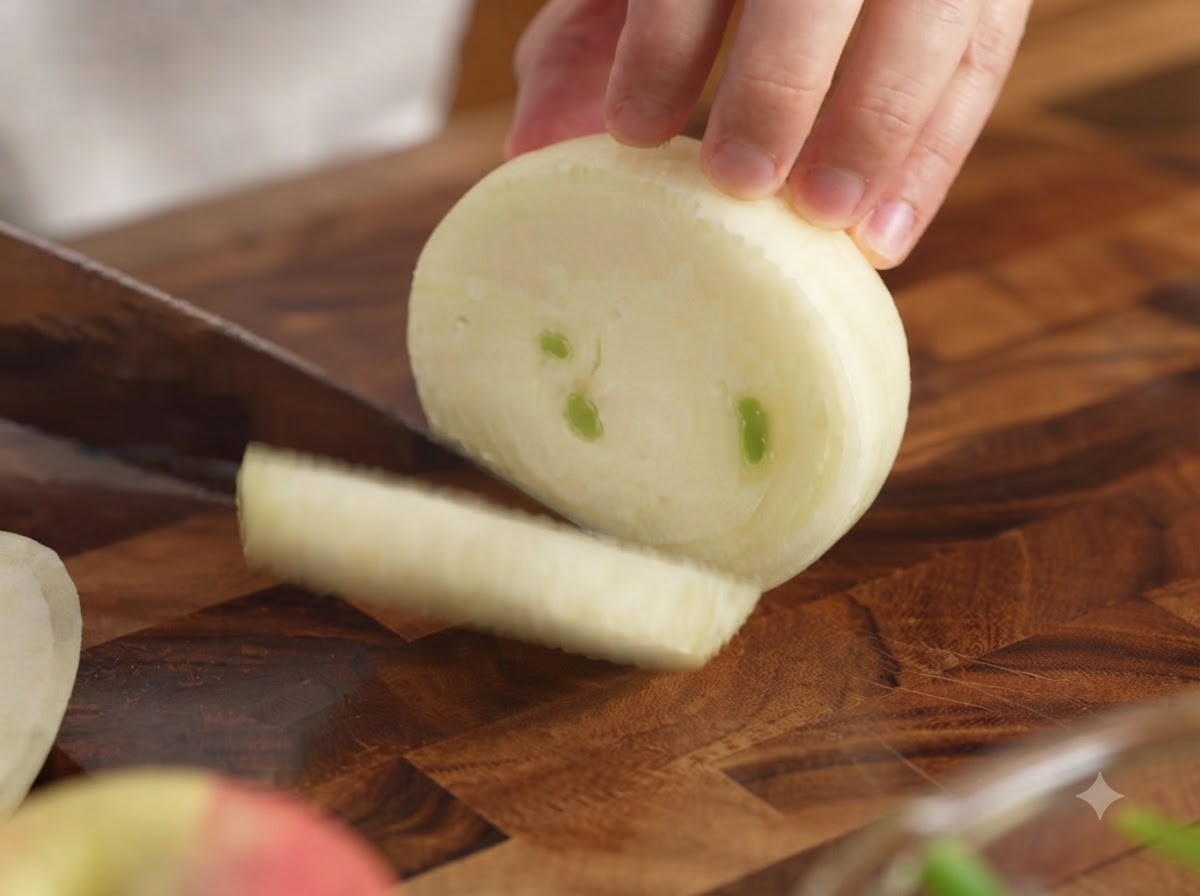
Slice a white onion into thick, sturdy rounds on the cutting board. White onions are preferred because they taste milder, lack a sharp spicy flavor, and contain a high water content that helps create moistureless steam cooking.
Tip: Keep the slices thick so they act as a reliable barrier between the meat and the bottom of the pot. - 5Slice Apples
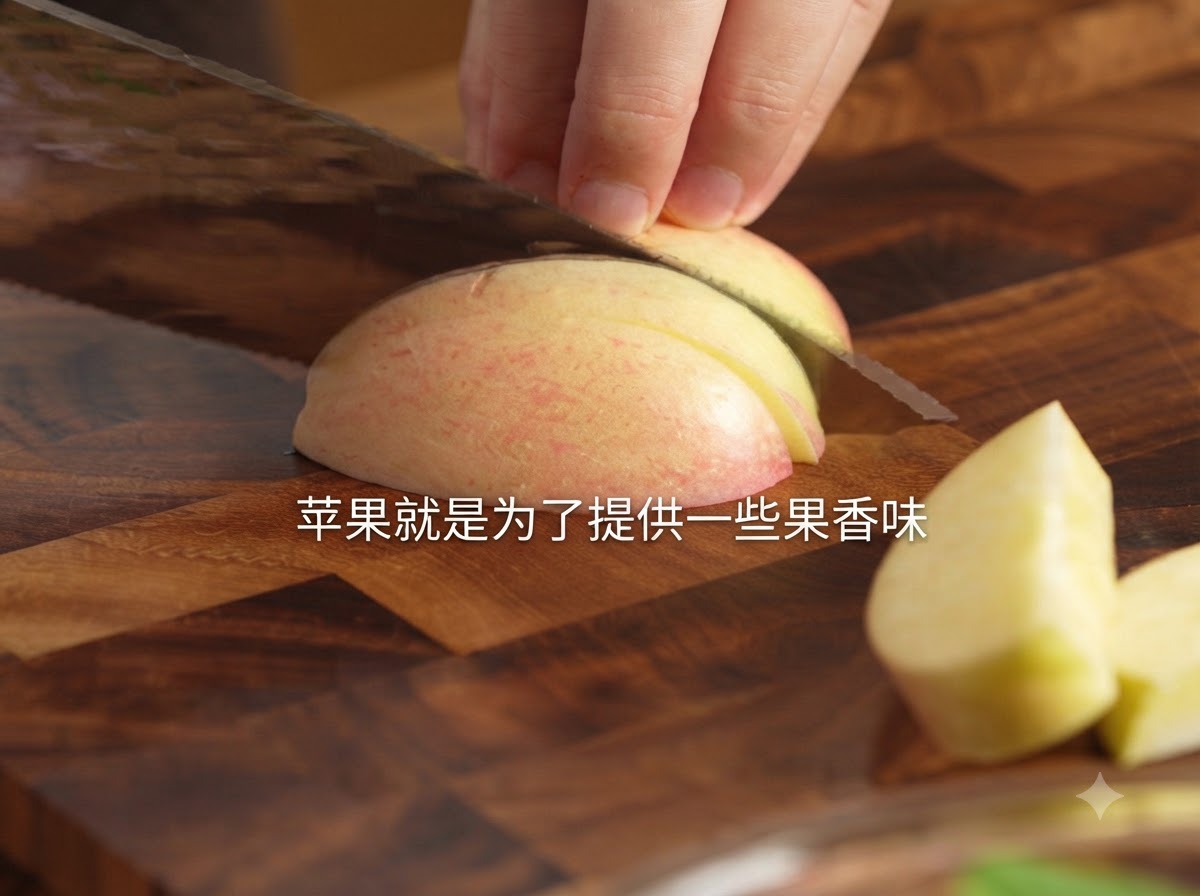
Cut a fresh apple into chunky slices on the cutting board. The apple pieces are layered at the base of the pot to impart a subtle, sweet fruity fragrance to the pork belly as it stews.
Tip: Adding fruit provides a unique natural sweetness and depth to the savory profile of the dish. - 6Slice Ginger
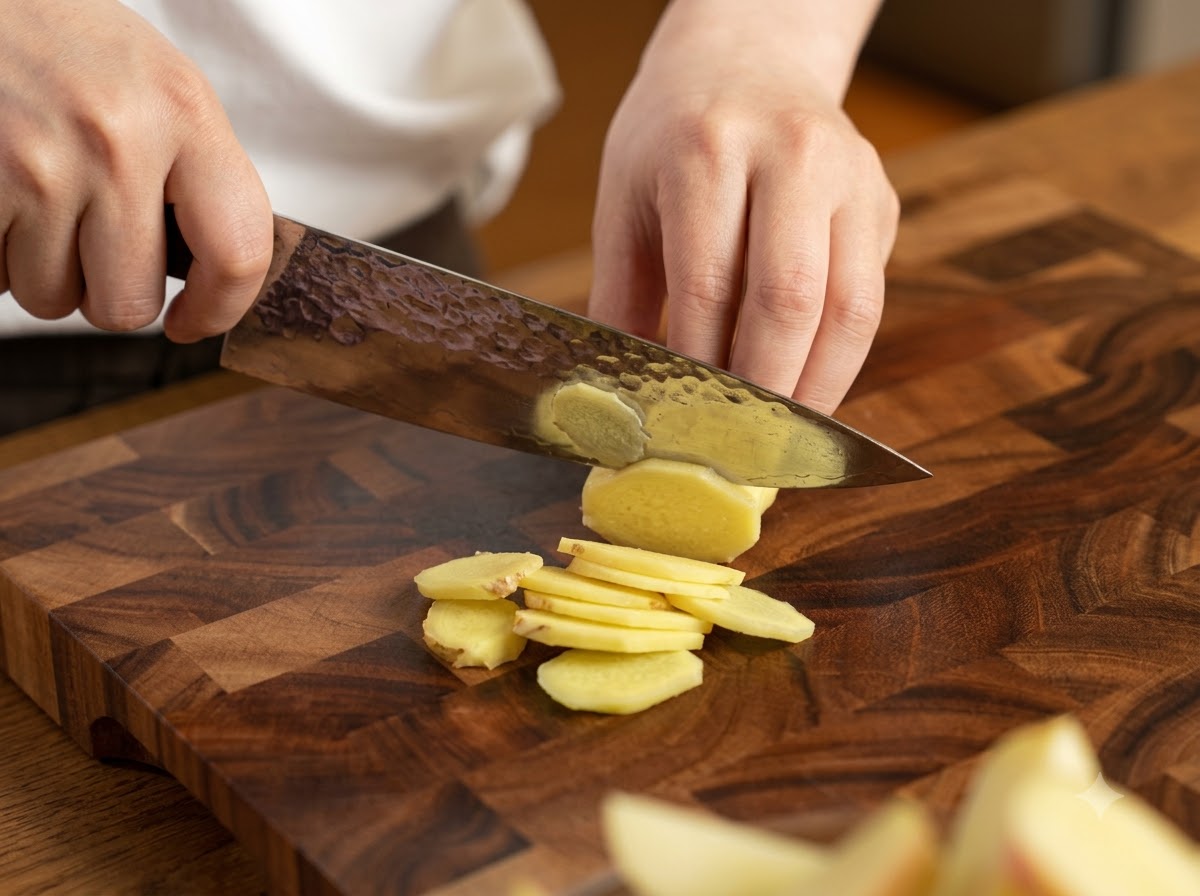
Slice fresh ginger root into thin rounds on the cutting board. These ginger slices will be layered with the other aromatics to effectively eliminate any gamey or fishy smell from the pork.
Tip: Slice the ginger generously as it plays a key role in neutralizing odors and boosting aroma. - 7Create a bed of vegetables
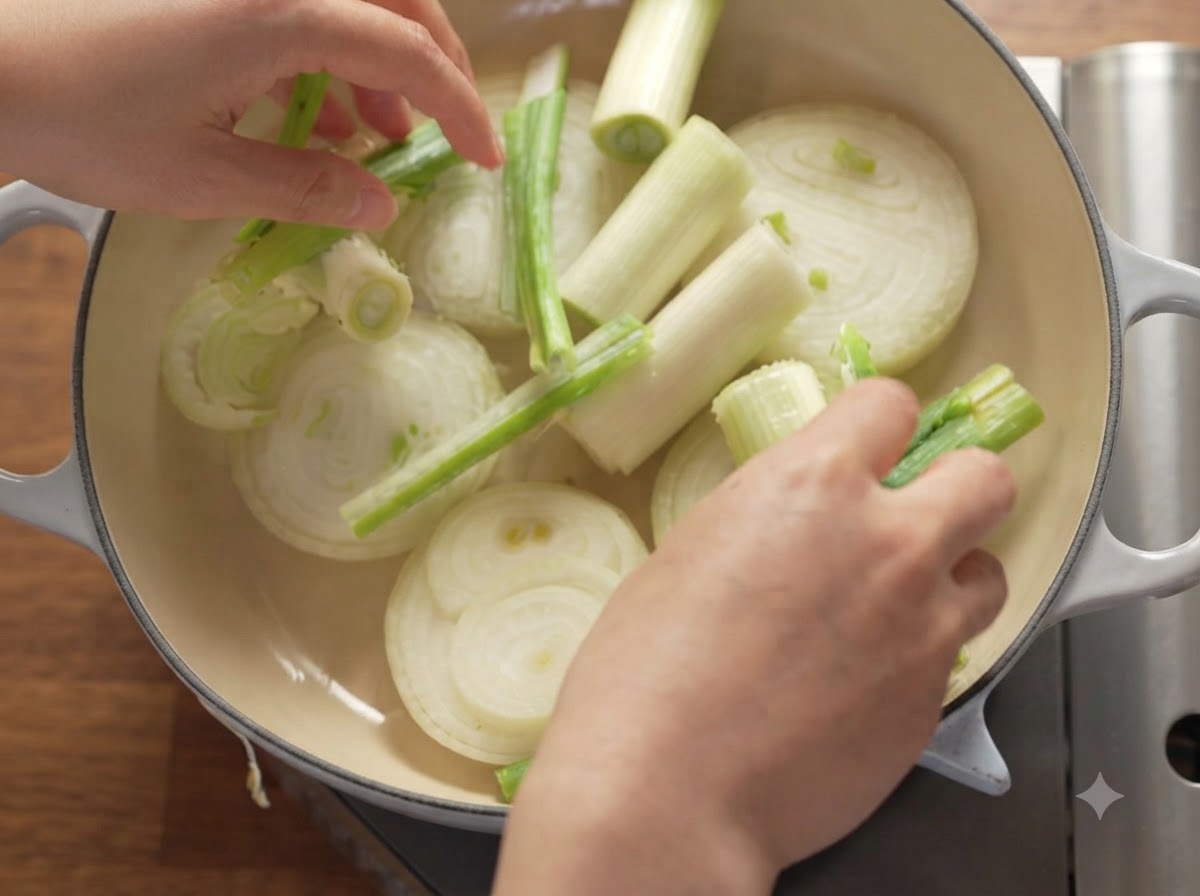
Place a layer of sliced onions, green onion sections, and apple pieces at the bottom of a heavy, airtight pot. This forms a aromatic foundation for the pork belly to rest on without directly touching the hot bottom.
Tip: Using a pot with good airtightness is essential for waterless cooking so the moisture from the vegetables circulates effectively. - 8Add the Seasoned Pork Belly
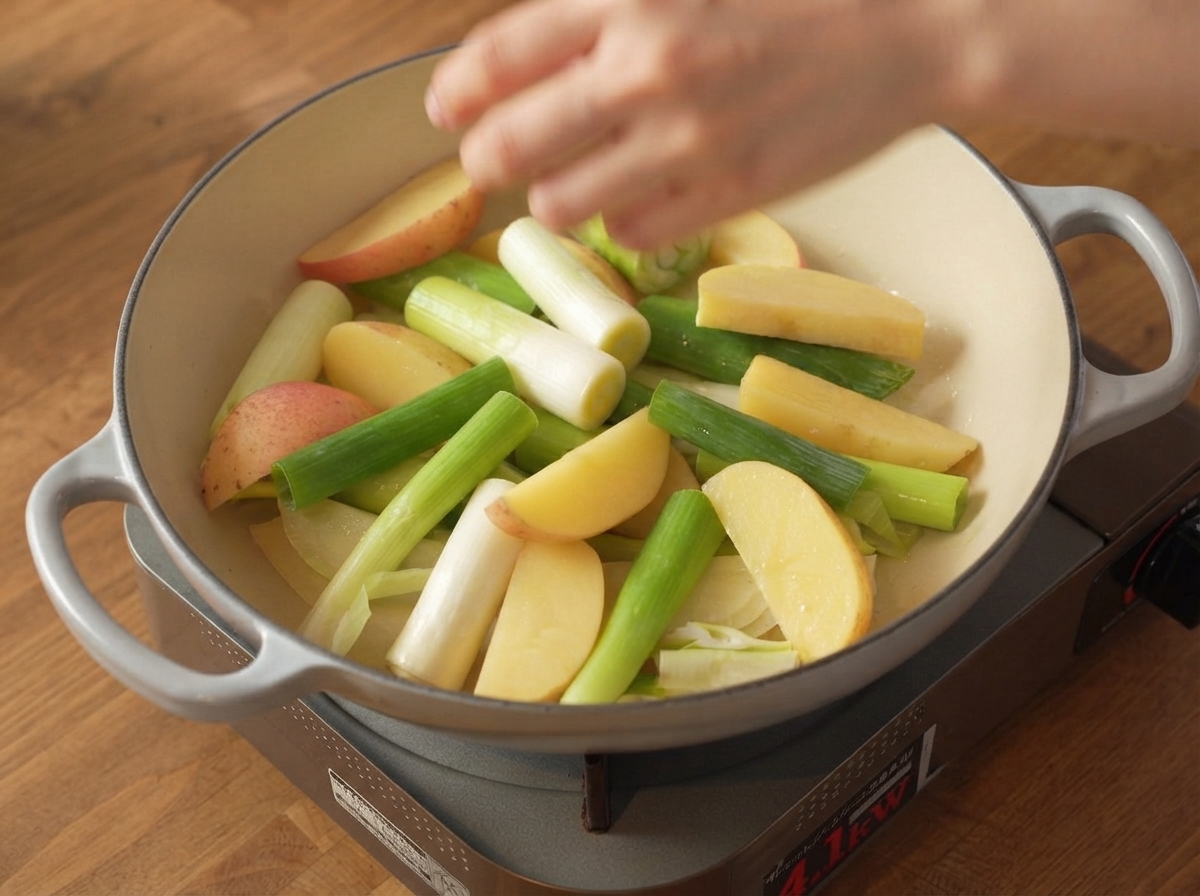
Place the seasoned raw pork belly strips directly on top of the bed of vegetables. Keeping the meat elevated ensures it steams and braises in the vegetable moisture rather than frying on the bottom.
Tip: Poke the pork belly with a fork and marinate with black pepper beforehand to help it absorb flavors. - 9Top with Aromatics
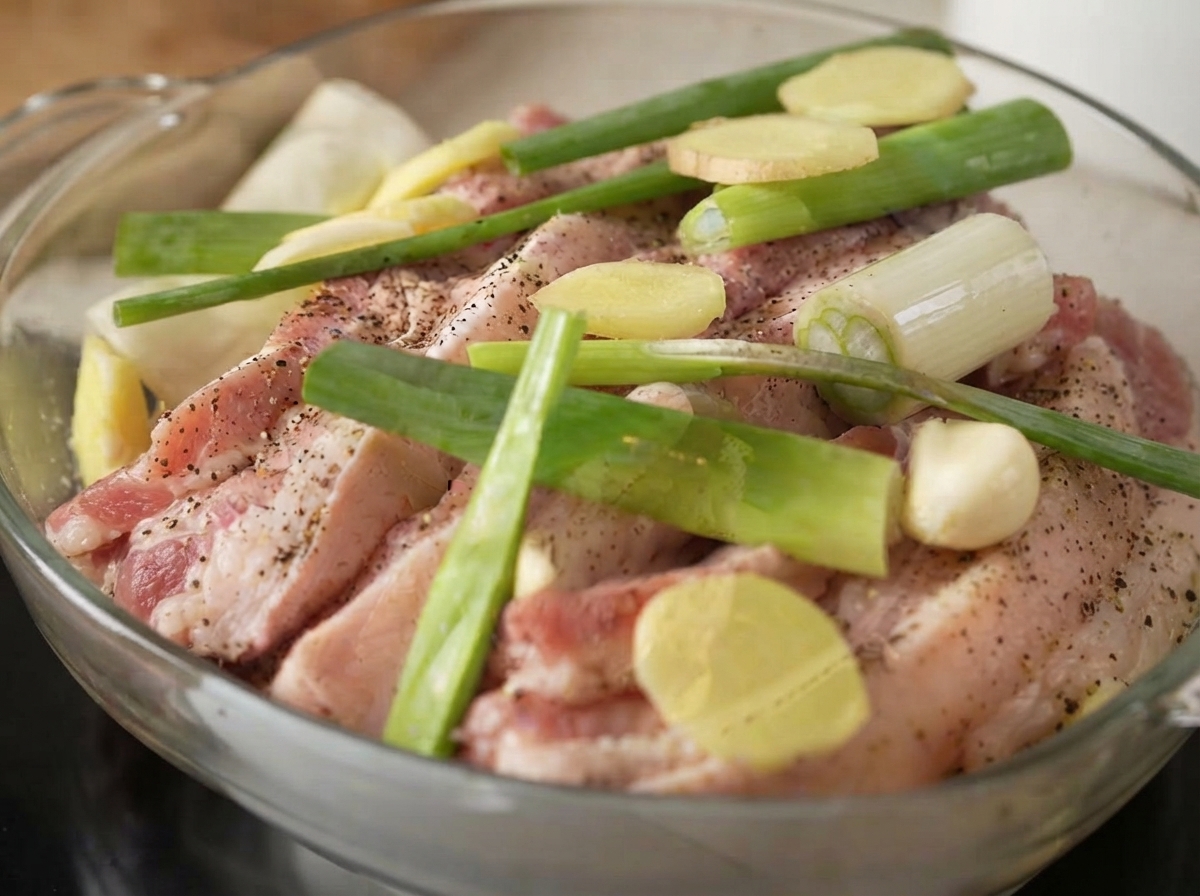
Scatter additional scallion sections, ginger slices, and whole garlic cloves directly over the top of the pork belly. These extra aromatics infuse the meat with deep, savory fragrance as it cooks.
Tip: Cut extra ginger slices to effectively remove any gamey smell from the pork. - 10Drizzle Rice Wine
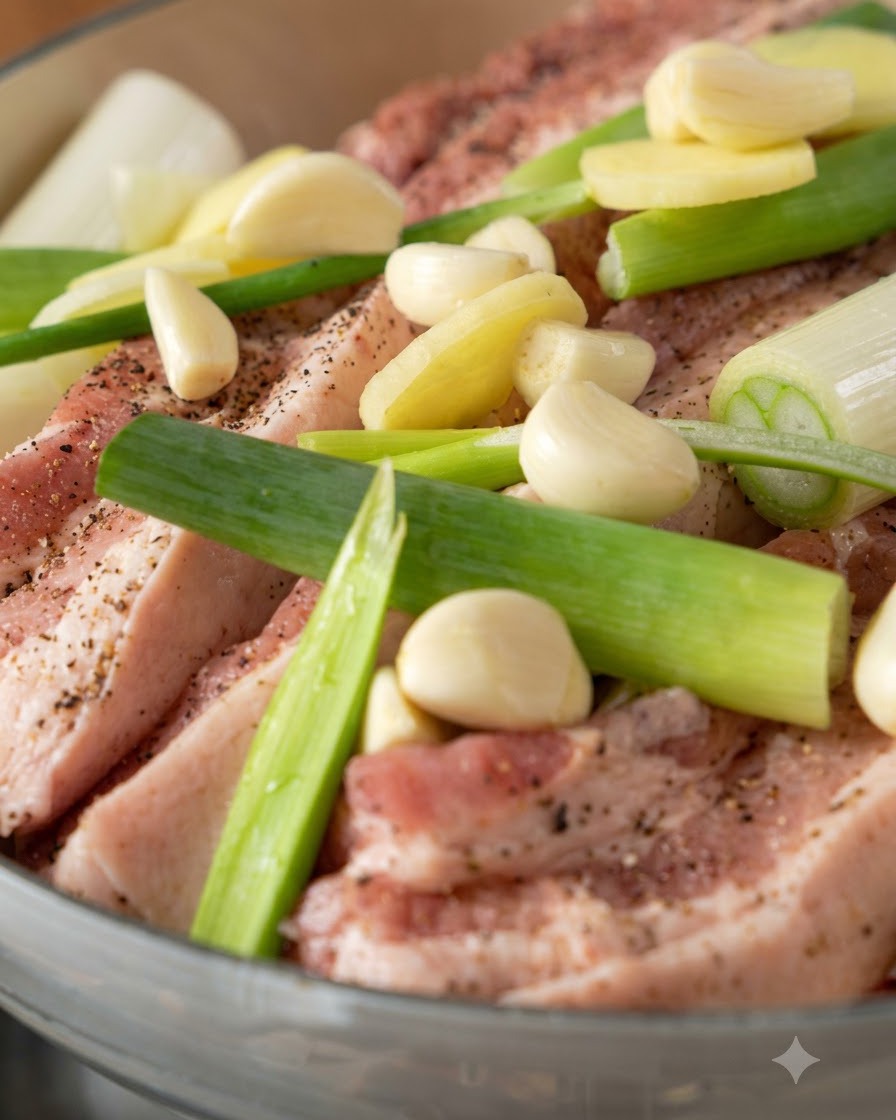
Drizzle two rounds of rice wine evenly over the ingredients in the pot. The wine adds depth and helps tenderize the meat during the simmering process.
Tip: Ensure the liquid is distributed evenly across the top layer of aromatics and meat. - 11Flip and Simmer
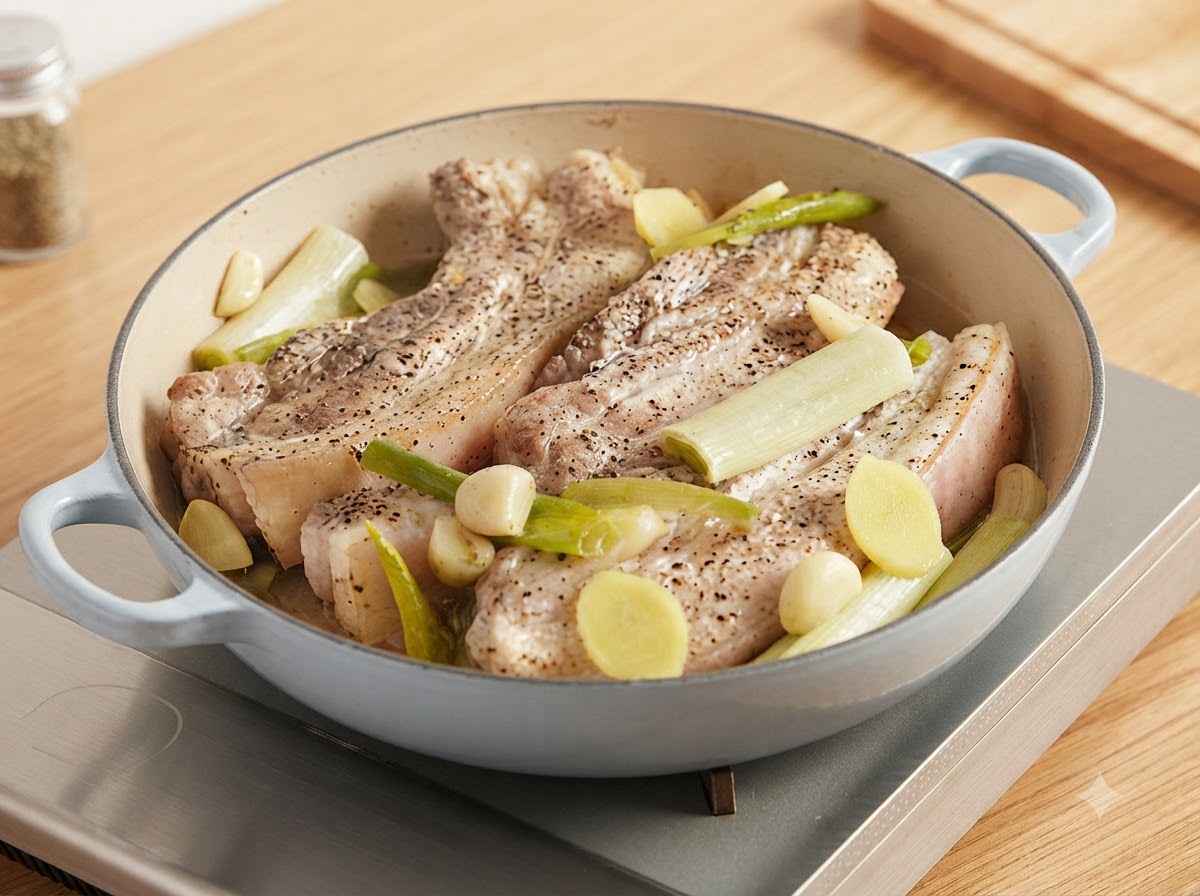
After simmering over medium-low heat, use tongs to flip the pork belly strips. Notice how the vegetables at the bottom have released natural moisture without any added water.
Tip: Cover the pot tightly and maintain a medium-low heat to allow proper moisture extraction. - 12Remove Spent Vegetables
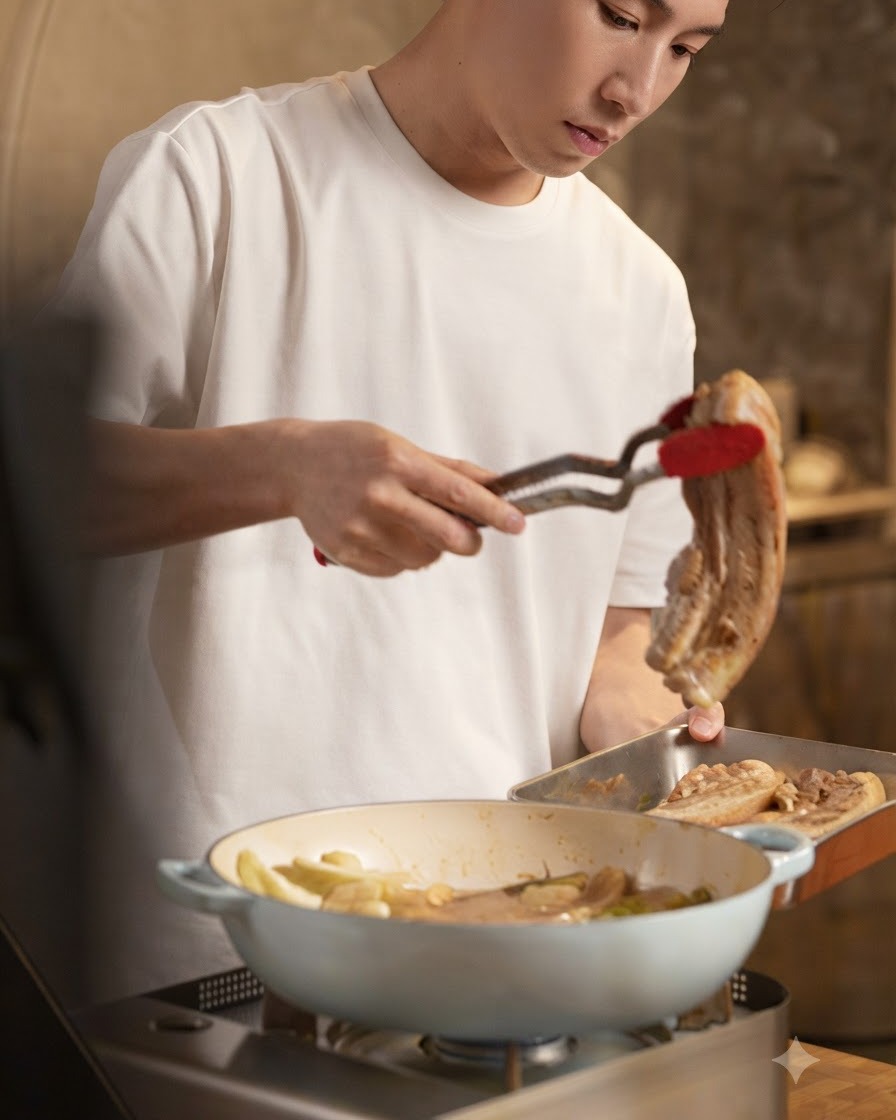
Use tongs to take out and discard the softened vegetables that have completed their mission at the bottom of the pot, while keeping the flavorful soup base intact.
Tip: Do not throw away the remaining soup liquid, as it carries essential flavor for the next step. - 13Prepare and marinate the pork
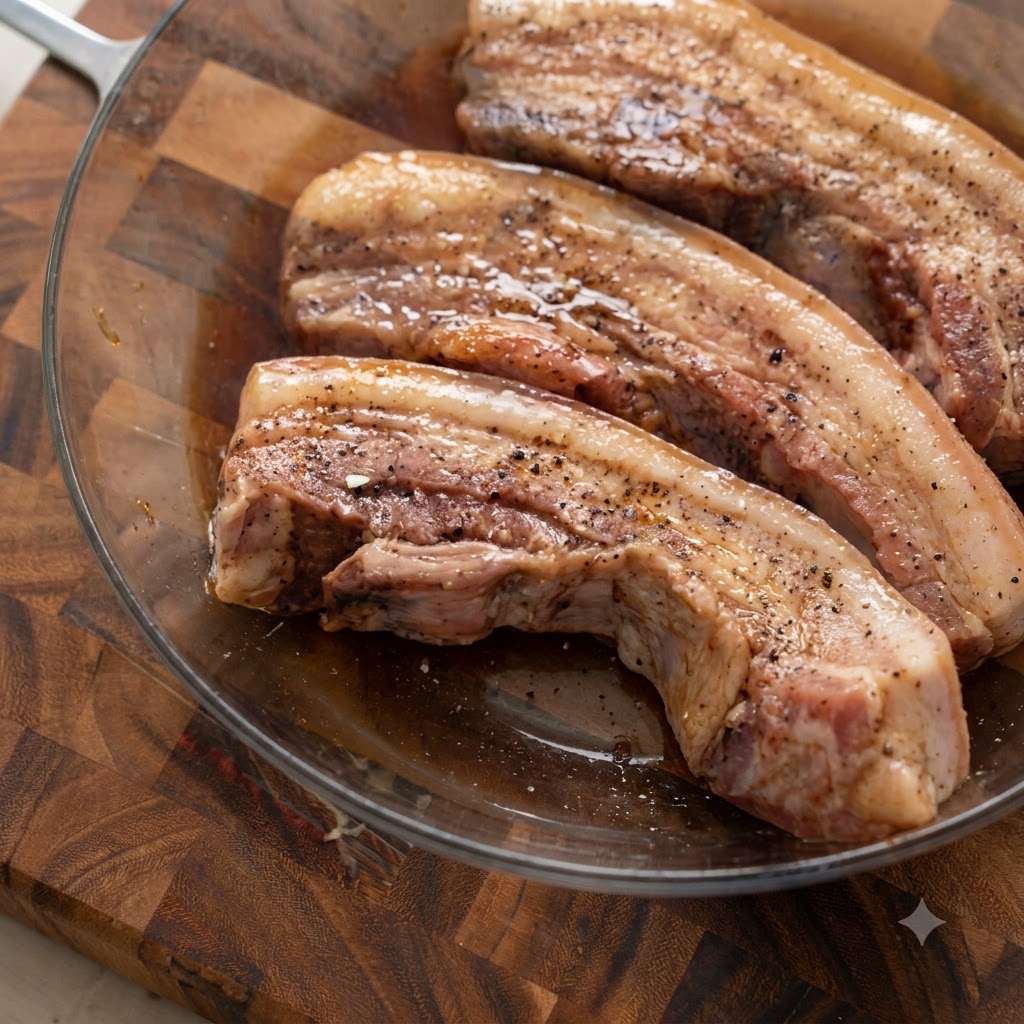
Prick the fresh pork belly with a fork to help it absorb flavors, then sprinkle evenly with black pepper and marinate for 20 minutes while preparing the other ingredients.
Tip: Fresh pork belly does not need to be blanched, as blanching can take away a lot of the natural flavor. - 14Pour the sauce over the meat
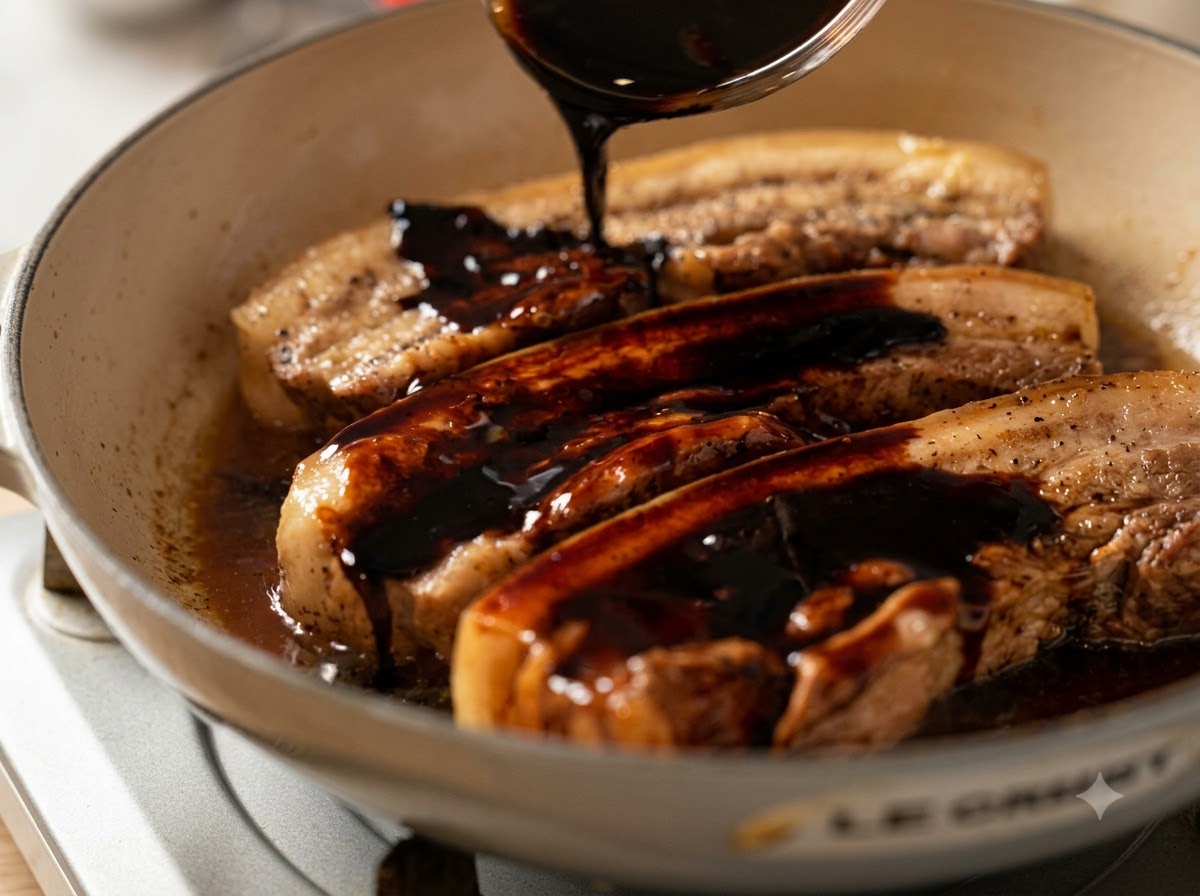
Drizzle the prepared dark sauce evenly over the simmering pork belly strips in the pot to infuse them with rich flavor.
Tip: Ensure the sauce covers the surface of the meat evenly for optimal caramelization during simmering. - 15Simmer and glaze the pork belly
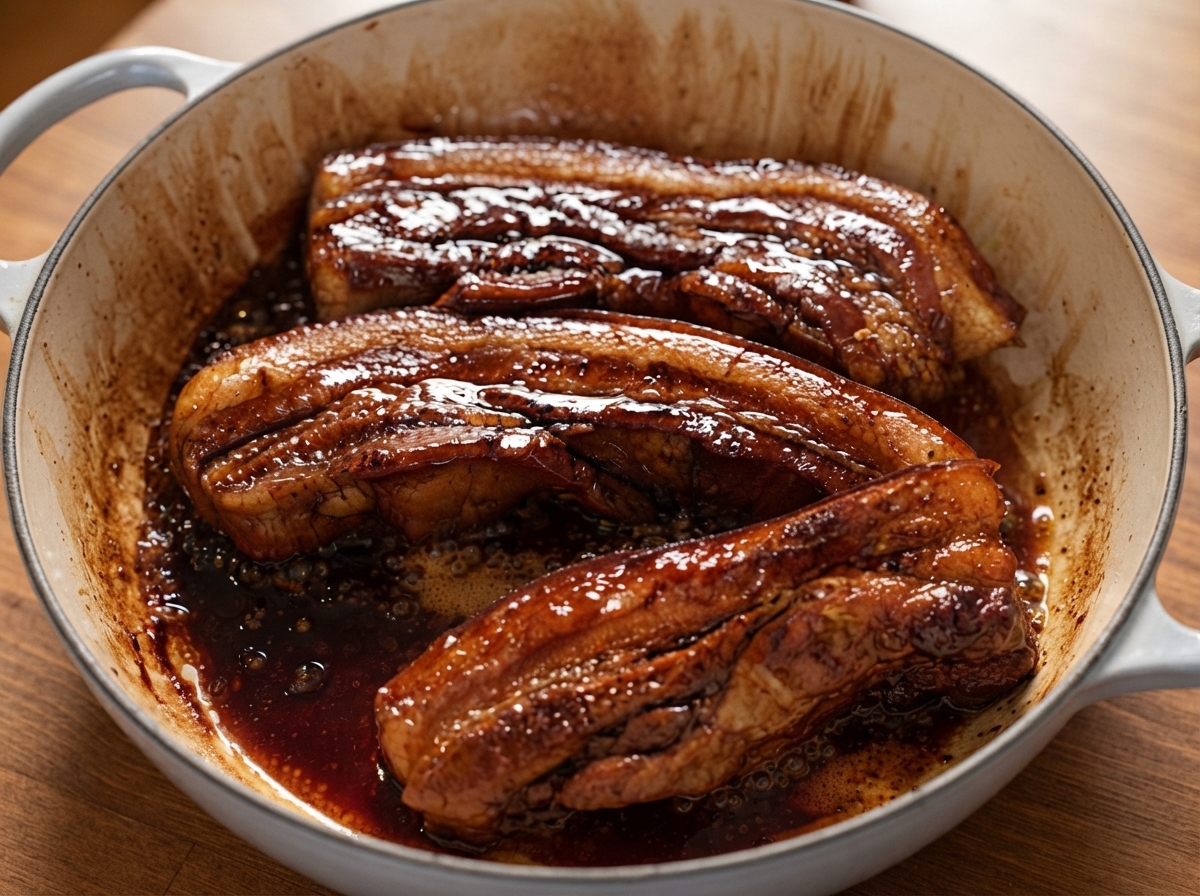
Flip the pork belly strips periodically with tongs as the dark sauce reduces and glazes the surface of the meat over medium-low heat.
Tip: Turn up the heat slightly at the end to thicken the sauce until it becomes shiny and coats the meat completely. - 16Slice the cooked pork belly
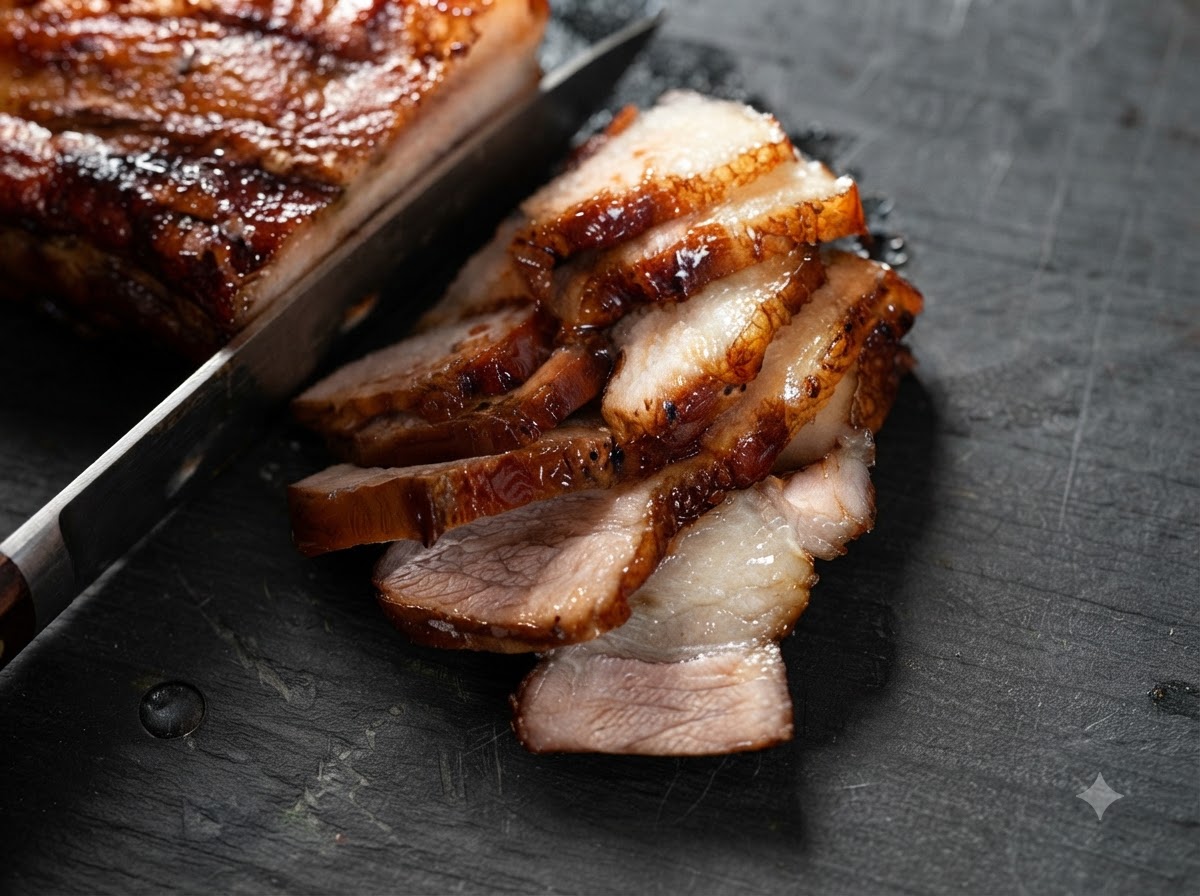
Transfer the tender, richly glazed pork belly to a dark cutting board and slice it into thin, even portions.
Tip: Letting the meat rest briefly before slicing helps keep the pieces intact and neat.