Crispy Pan-Fried Pork Belly
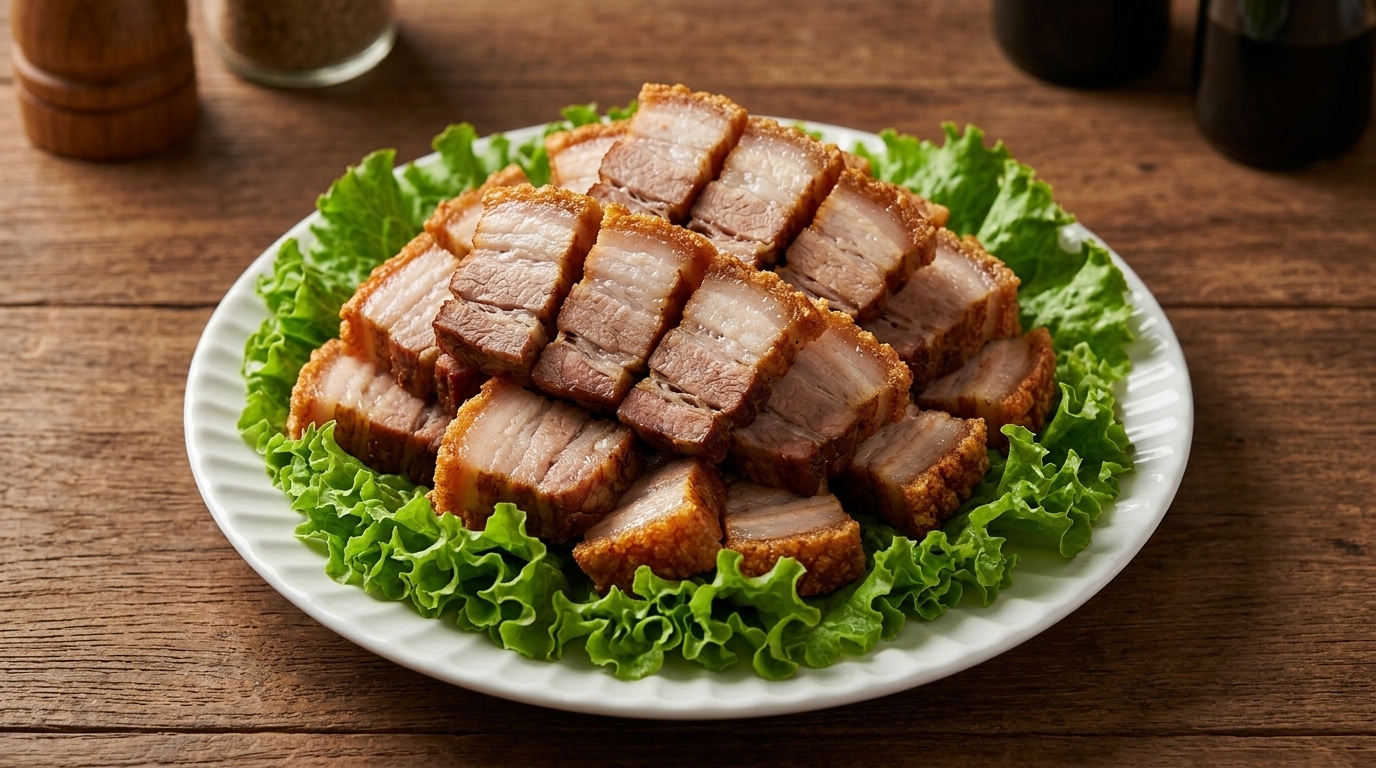
Achieve perfectly blistered, golden-brown crispy pork belly right in your frying pan. This foolproof method uses a simple vinegar trick for the ultimate crunch, without needing an oven.
Crispy pork belly is a beloved dish cherished for its contrasting textures—tender, juicy meat crowned by a shattering, blistered crackling. While traditionally roasted in specialized ovens, this approachable home method achieves remarkable results using a simple dry-pan frying technique. The key lies in thoroughly drying the skin and treating it with a touch of white vinegar to ensure maximum crunch.
Ingredients
- 500 g layered pork belly (skin-on)
- 1 tbsp white flour
- 1 tbsp high-proof white spirit
- 1 tbsp salt (for boiling)
- as needed water
- 1 tsp salt (for rubbing)
- 1 tbsp white vinegar
- to taste white sugar or BBQ seasoning
Instructions
- 1Select layered pork belly
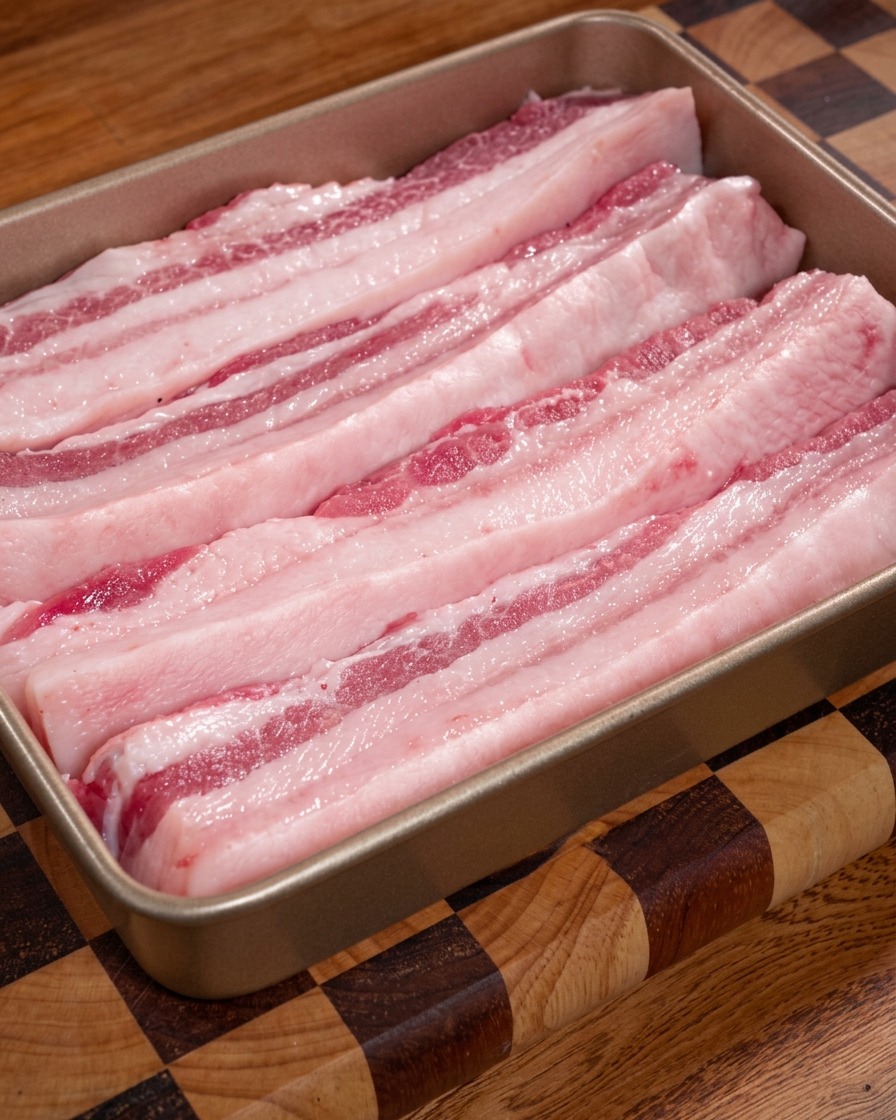
Choose high-quality pork belly strips that feature well-defined, alternating layers of fat and lean meat. This ensures the perfect balance of juiciness and texture without being overly greasy. Place them in a clean tray to prepare for the washing process.
Tip: Look for pork belly with bright pink lean meat and firm white fat layers, as this indicates freshness and optimal texture for crispy pork belly. - 2Add flour to the pork belly
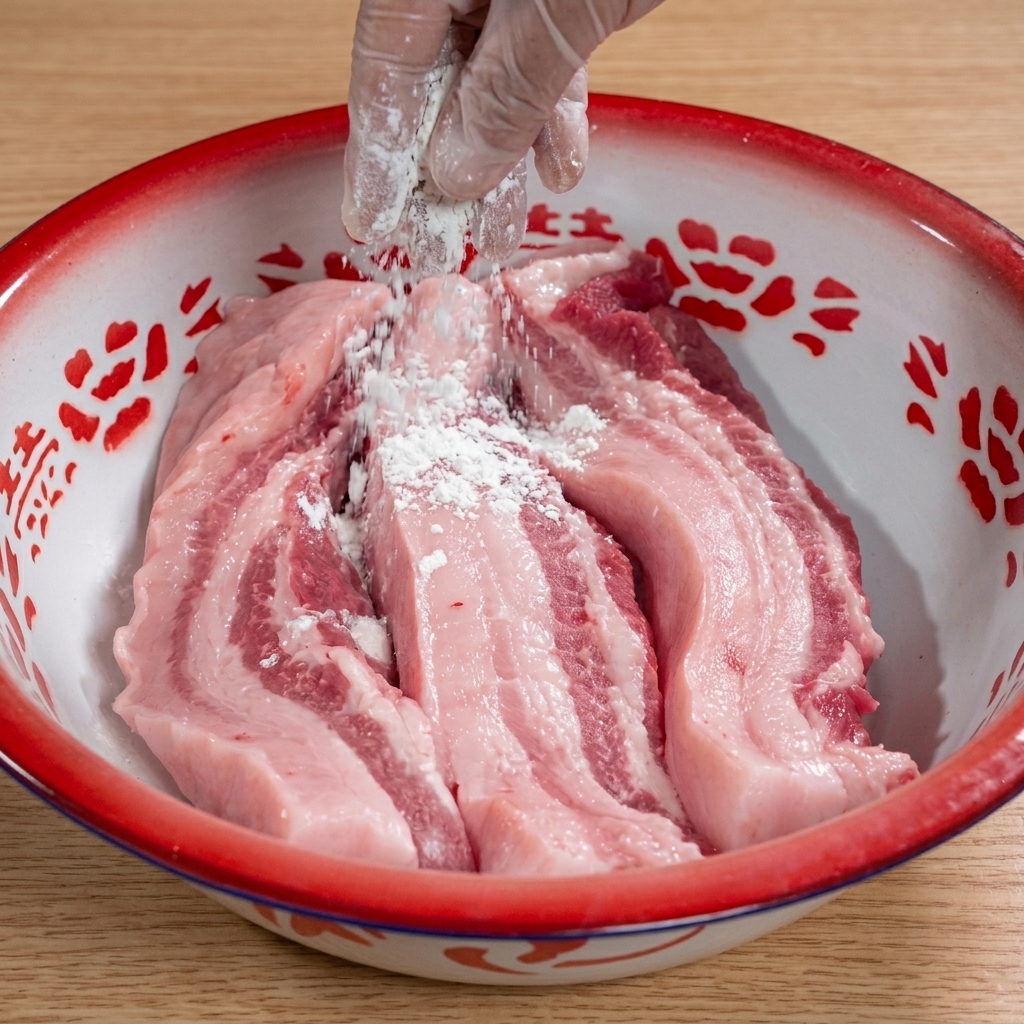
Place the raw pork belly strips into a large enamel basin. Sprinkle a generous spoonful of white flour over the meat. The flour will help absorb surface dirt, impurities, and excess grease during the cleaning process.
Tip: Make sure the basin is large enough to comfortably toss and scrub the pork belly without spilling. - 3Scrub and clean the pork belly
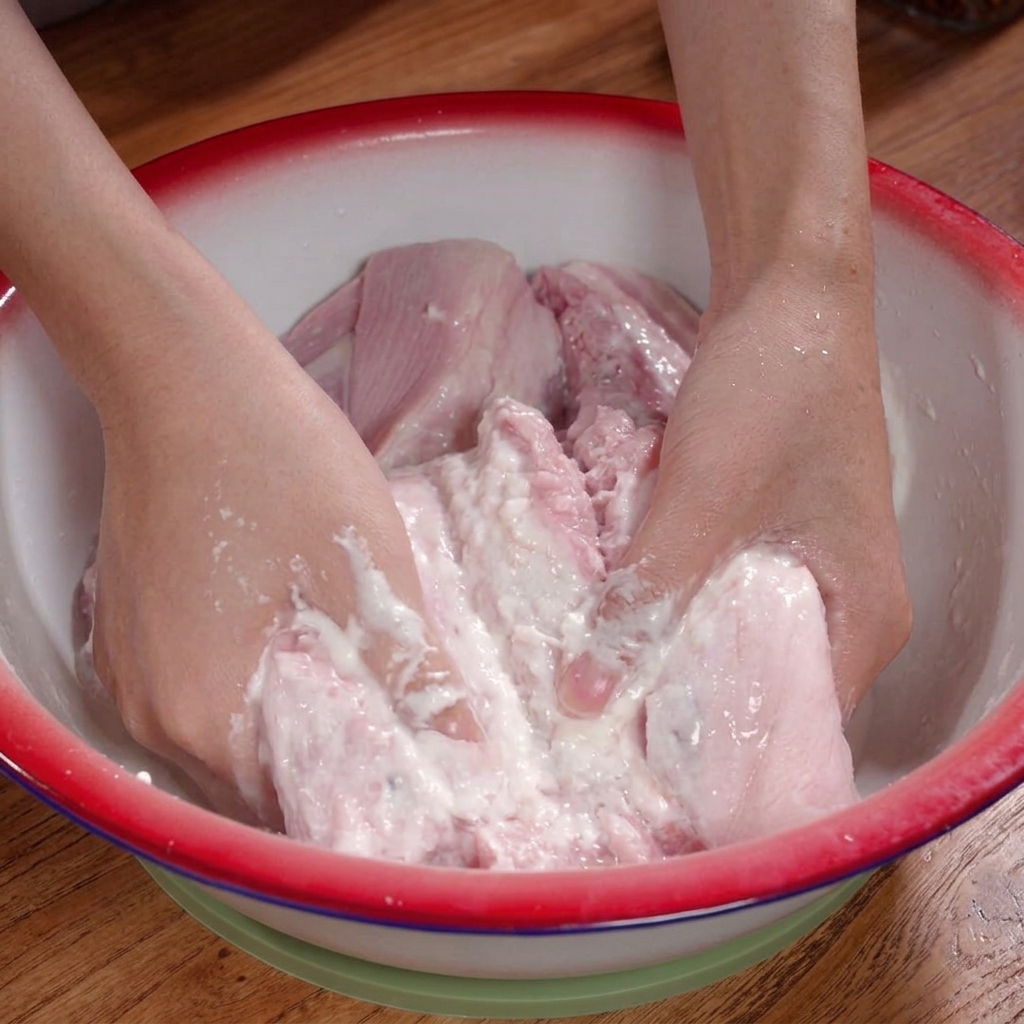
Pour a bit of high-proof white spirit into the basin with the flour-coated pork belly. Use both hands to thoroughly massage and scrub the meat. The combination of flour and alcohol helps sterilize the meat and eliminate any gamey odors. Once fully scrubbed, rinse the pork belly thoroughly under clean water.
Tip: Pay special attention to scrubbing the skin side, as that is where most impurities reside. - 4Rinse the pork belly thoroughly
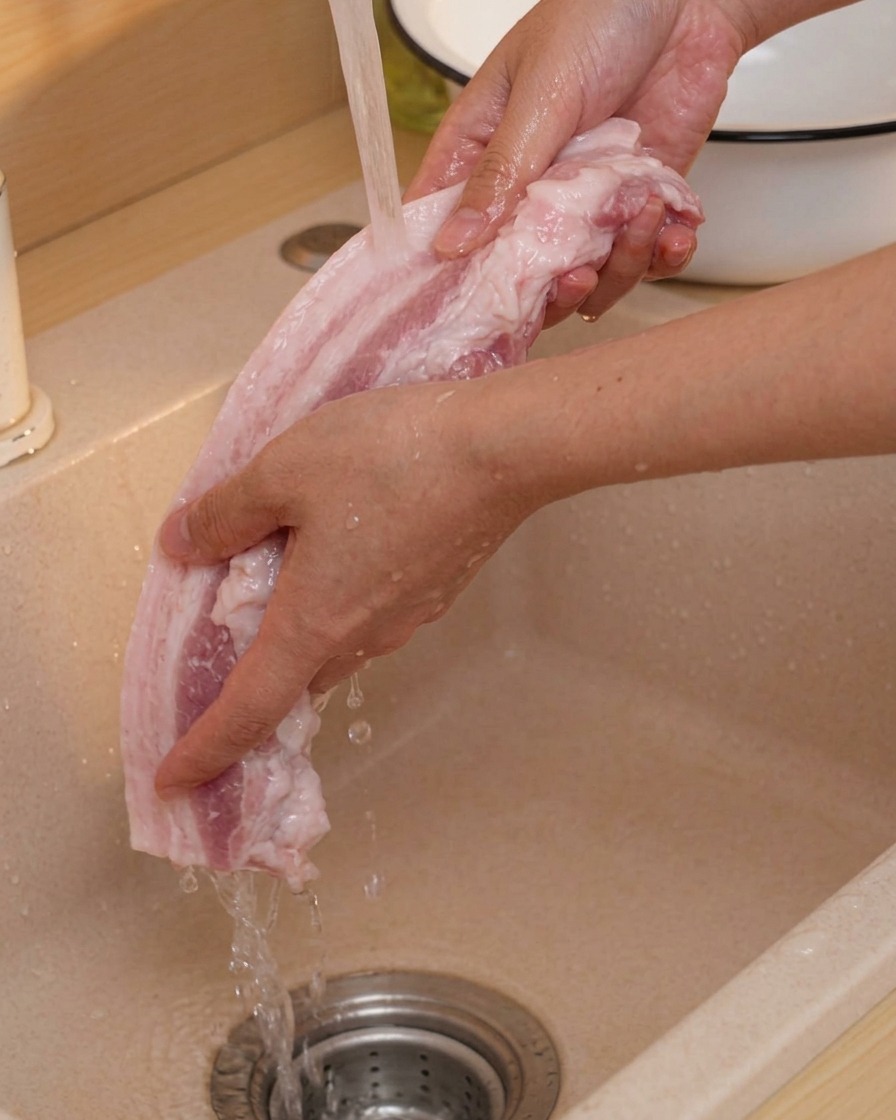
After scrubbing the pork belly with flour and white spirit to draw out impurities, place the strips under cold running water. Rinse each piece meticulously to wash away all traces of flour and residues, leaving the meat completely clean.
Tip: Rinsing well under running water ensures no leftover flour particles remain, which helps keep the boiling broth clear. - 5Season the boiling water
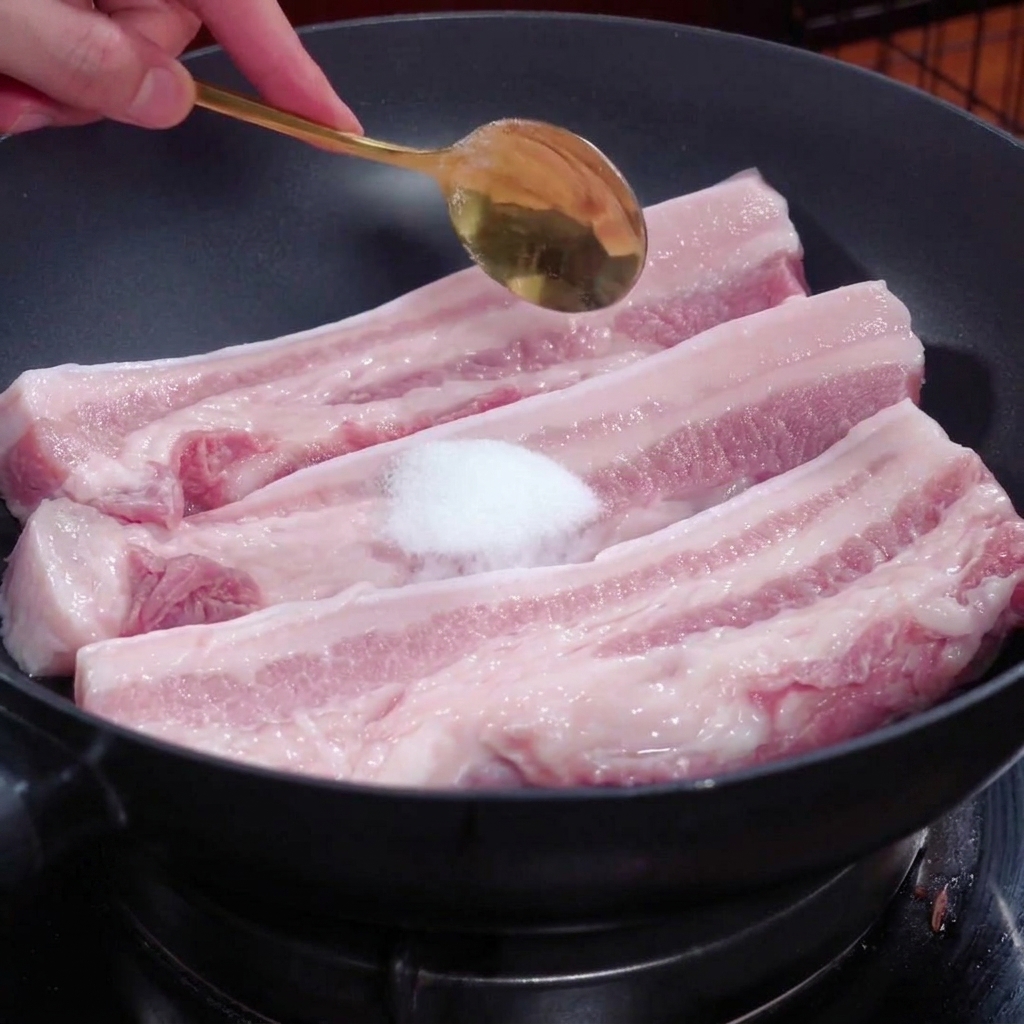
Place the pork belly strips into the pan and add a large spoonful of salt. Pour in an appropriate amount of clear water, ensuring the meat is fully submerged. This will season the pork belly from within while it boils and helps draw out any remaining impurities.
Tip: Adding a generous amount of salt at this stage is essential for infusing flavor deep into the thick layers of the pork belly. - 6Skim foam and simmer
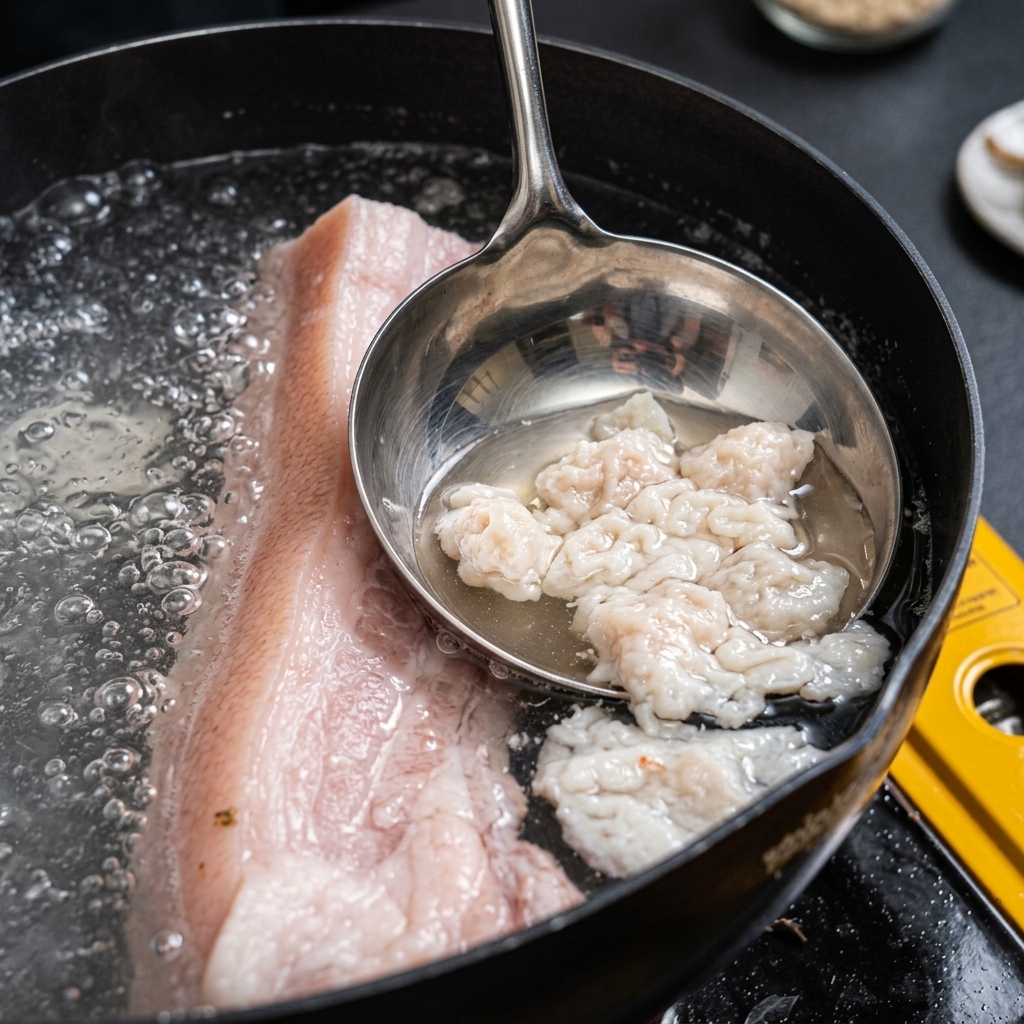
Bring the water to a boil over high heat with the pork belly strips. As it begins to boil, a thick layer of white foam and impurities will float to the top. Use a metal ladle to carefully and completely skim off all the scum from the surface. Once clear, cover the pot and simmer over medium-low heat for 30 minutes until a chopstick can easily pierce the meat.
Tip: Make sure to remove every bit of the foam, as this step is vital for eliminating any gamey odor and ensuring a pure flavor. - 7Blot the pork belly dry
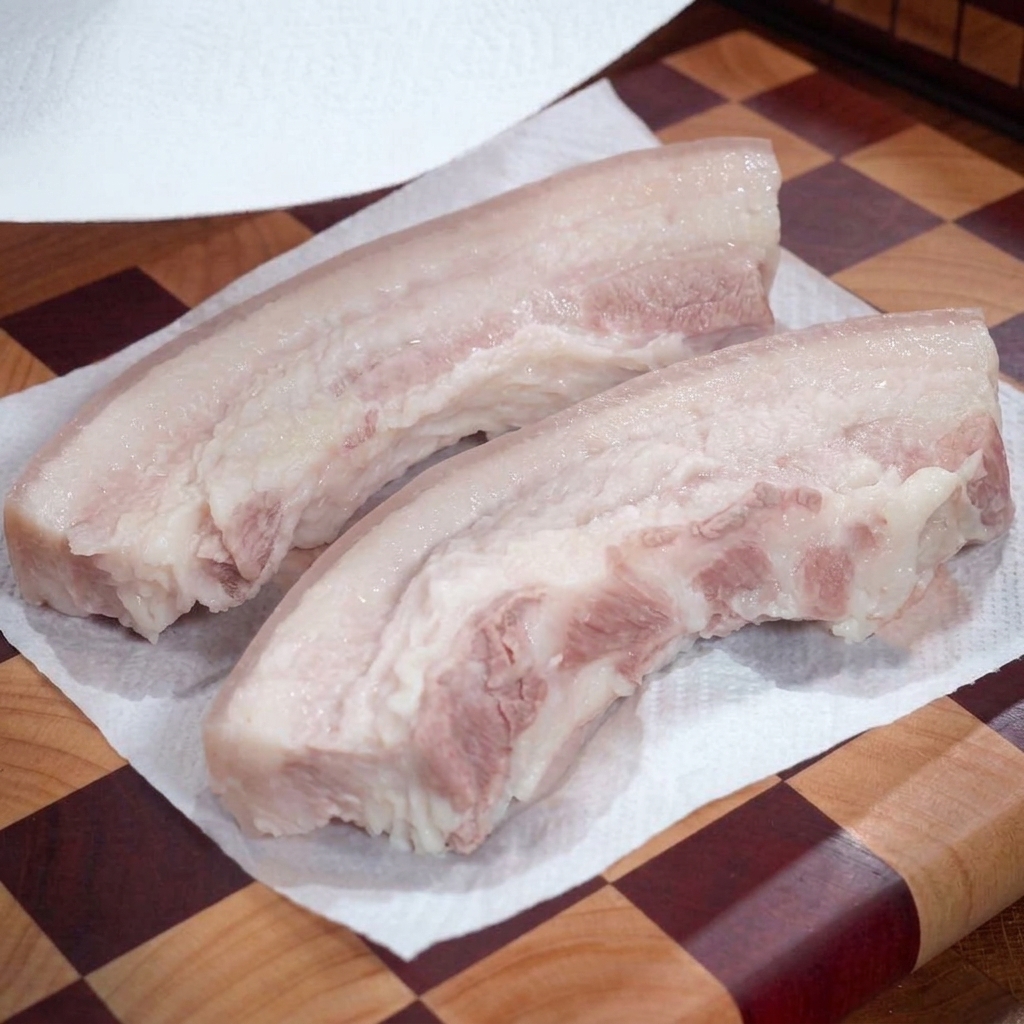
Remove the cooked pork belly from the pot and place it onto a clean surface or wire rack. Use kitchen paper towels to thoroughly pat the meat dry, paying special attention to the skin. This crucial step removes surface moisture, which prevents hot oil from splattering violently when frying.
Tip: Ensure the pork belly is as dry as possible, especially the skin, to achieve maximum crispiness in the pan. - 8Season the pork belly skin
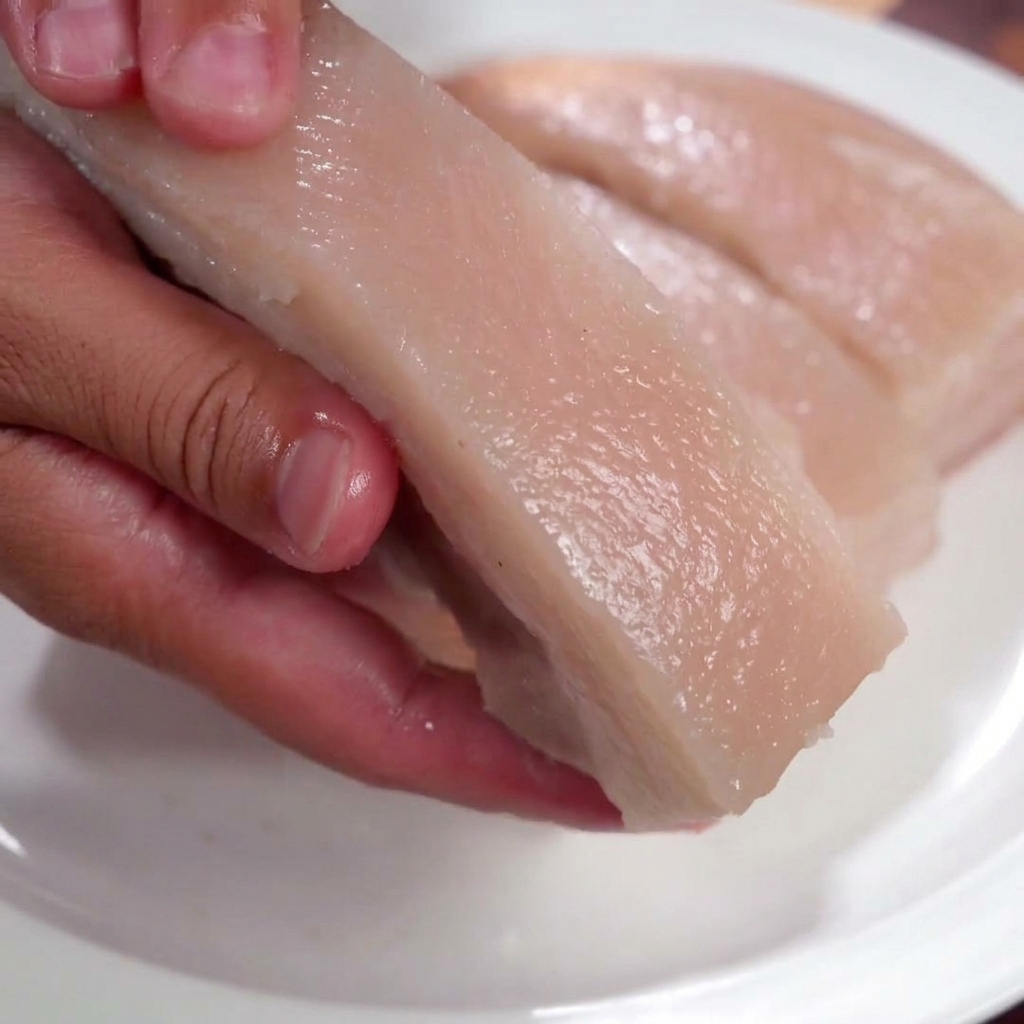
After blotting the boiled pork belly completely dry with paper towels, sprinkle a small amount of salt onto the surface and rub it in. Next, brush or smear a thin, even layer of white vinegar directly onto the pork skin. This step draws out moisture and ensures a remarkably crispy texture when fried.
Tip: Ensuring the skin is completely dry before applying vinegar is the secret to getting that perfect, uniform crunch. - 9Place pork belly in a dry pan
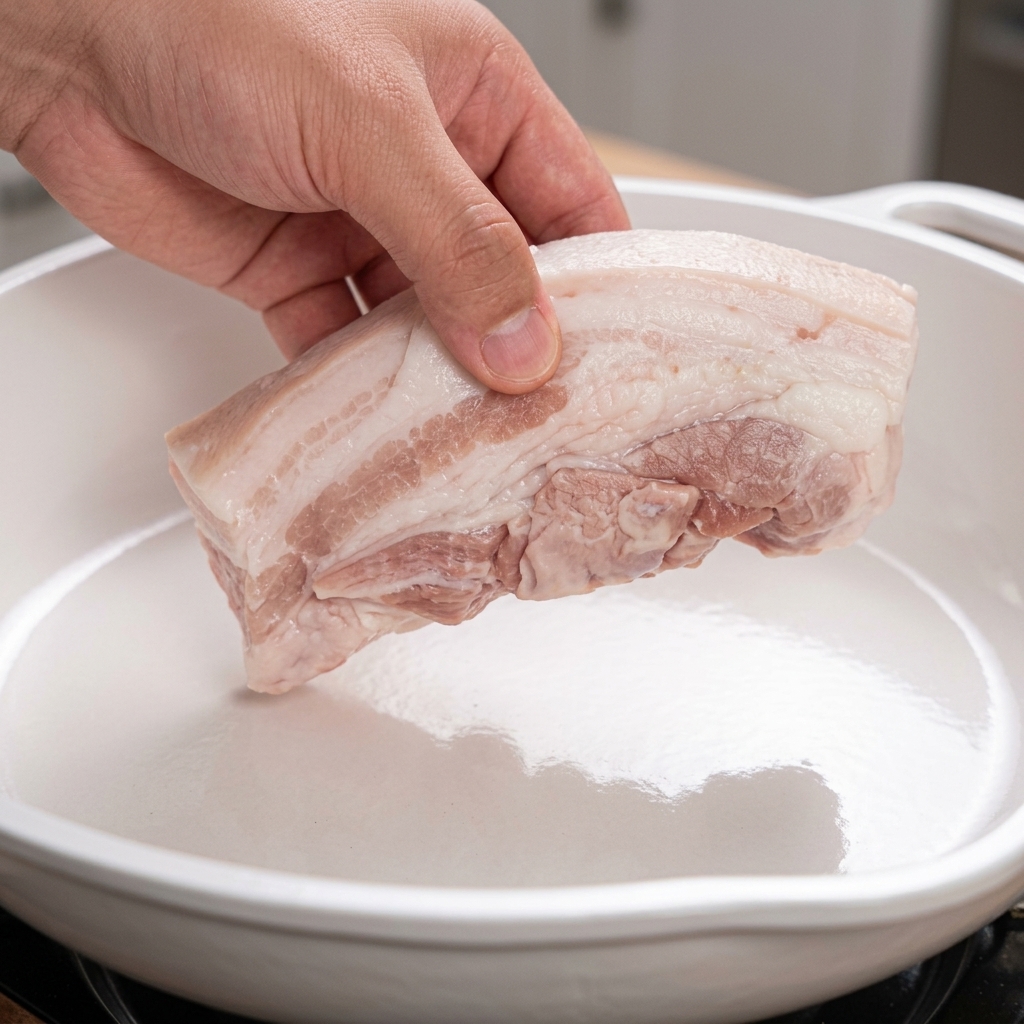
Carefully place the seasoned pork belly strips directly into a cold, dry frying pan. Do not add any cooking oil to the pan, as the pork belly will naturally release its own fat as it heats up and renders down.
Tip: Placing the pork belly skin-side down first helps jumpstart the rendering process for a crispier skin. - 10Sear until golden brown
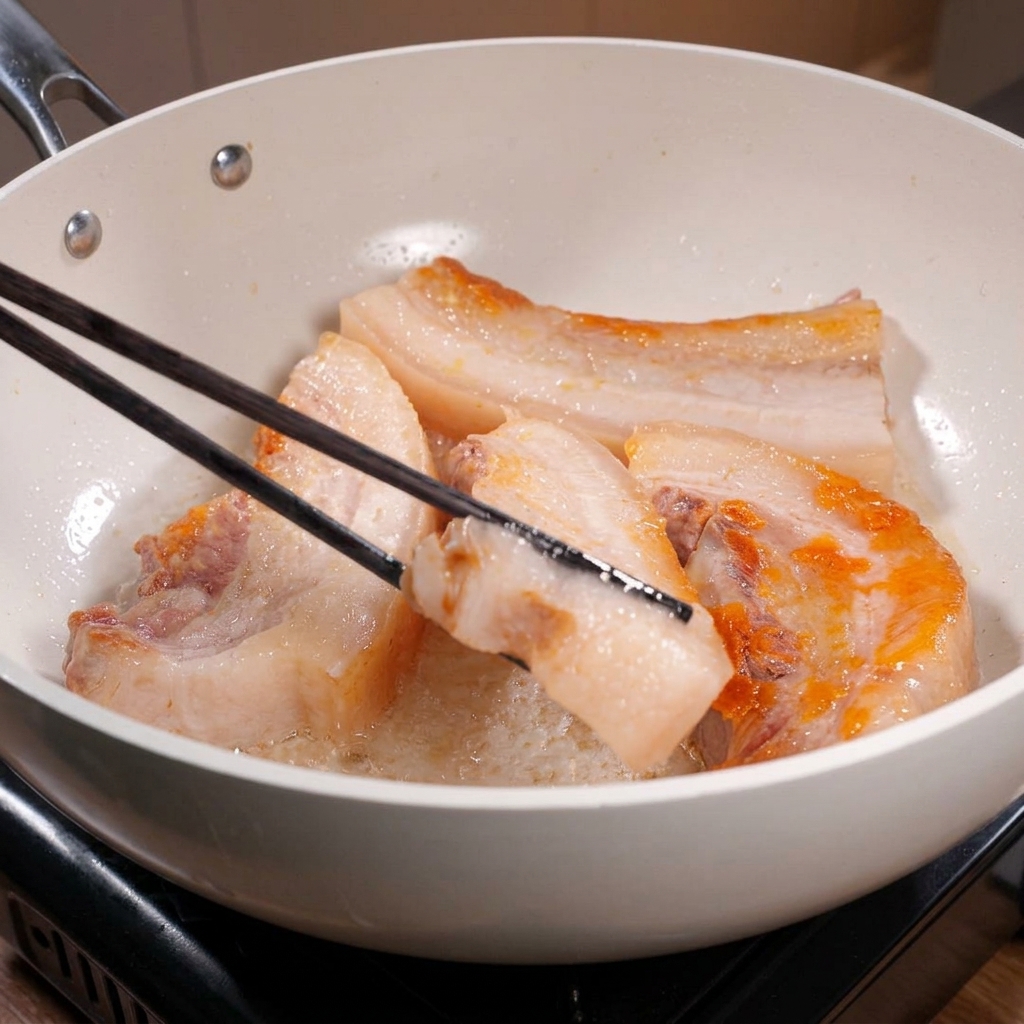
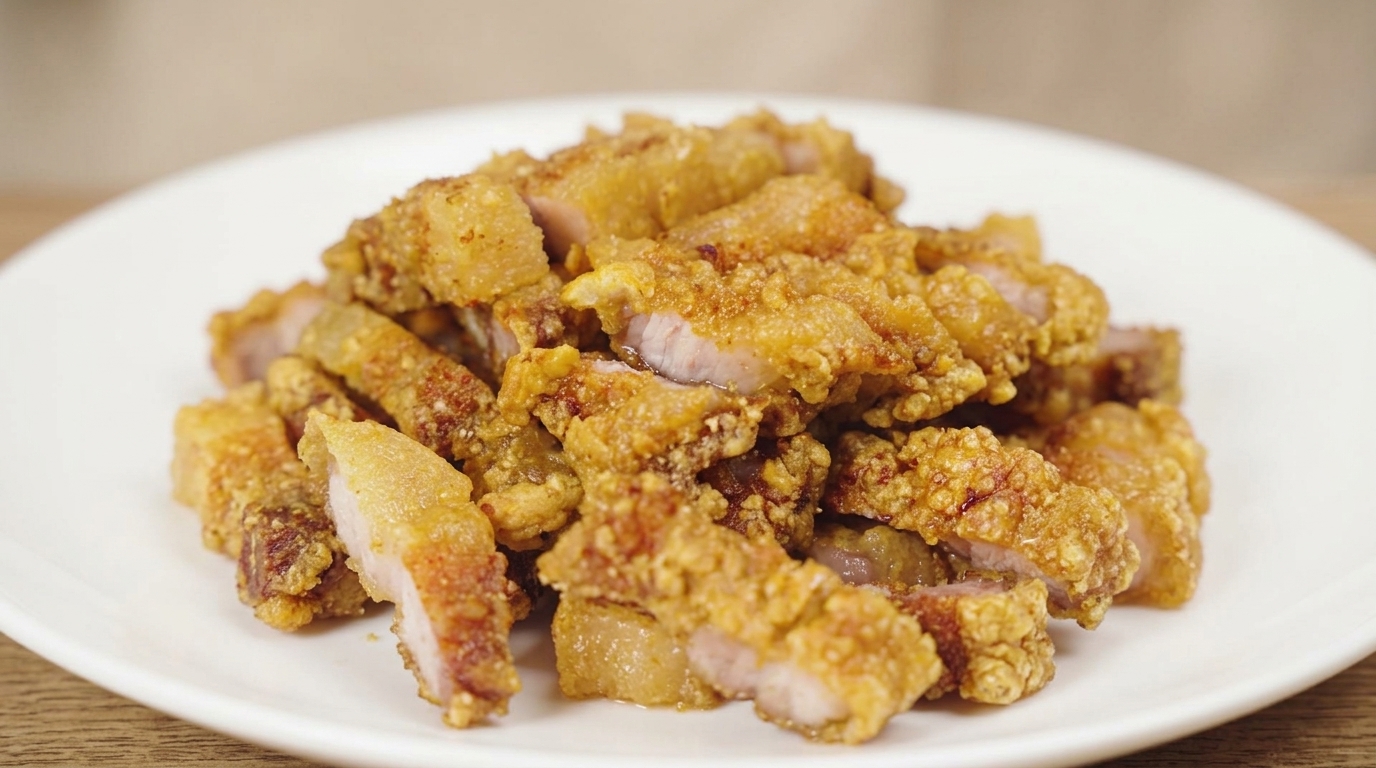
Cover the pan with a lid and fry the pork belly slowly over medium-low heat. Use tongs or long chopsticks to periodically turn the pieces, ensuring all four sides—including the skin—are rendered and seared to a beautiful golden brown and crispy texture.
Tip: Keep the lid on as much as possible while frying to trap the heat and prevent any potential oil splatters from escaping. - 11Chop and serve
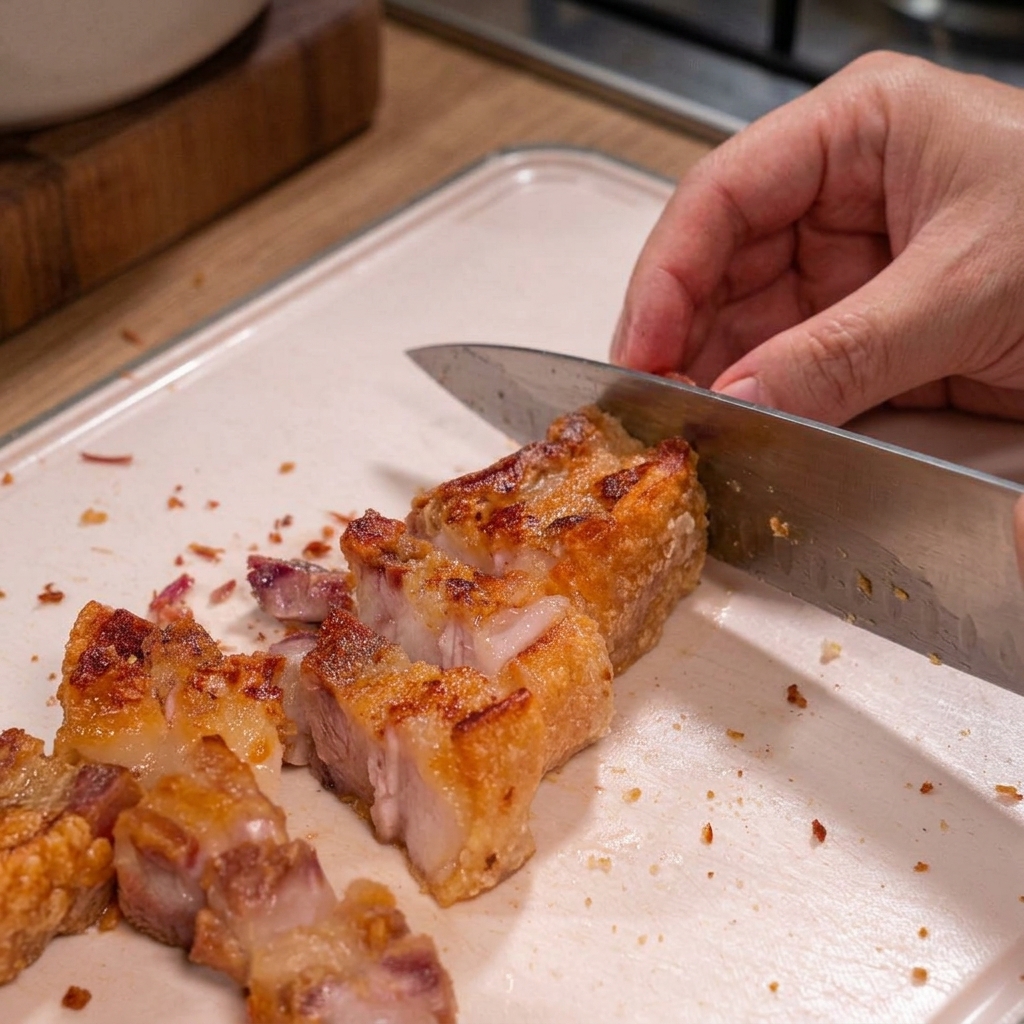
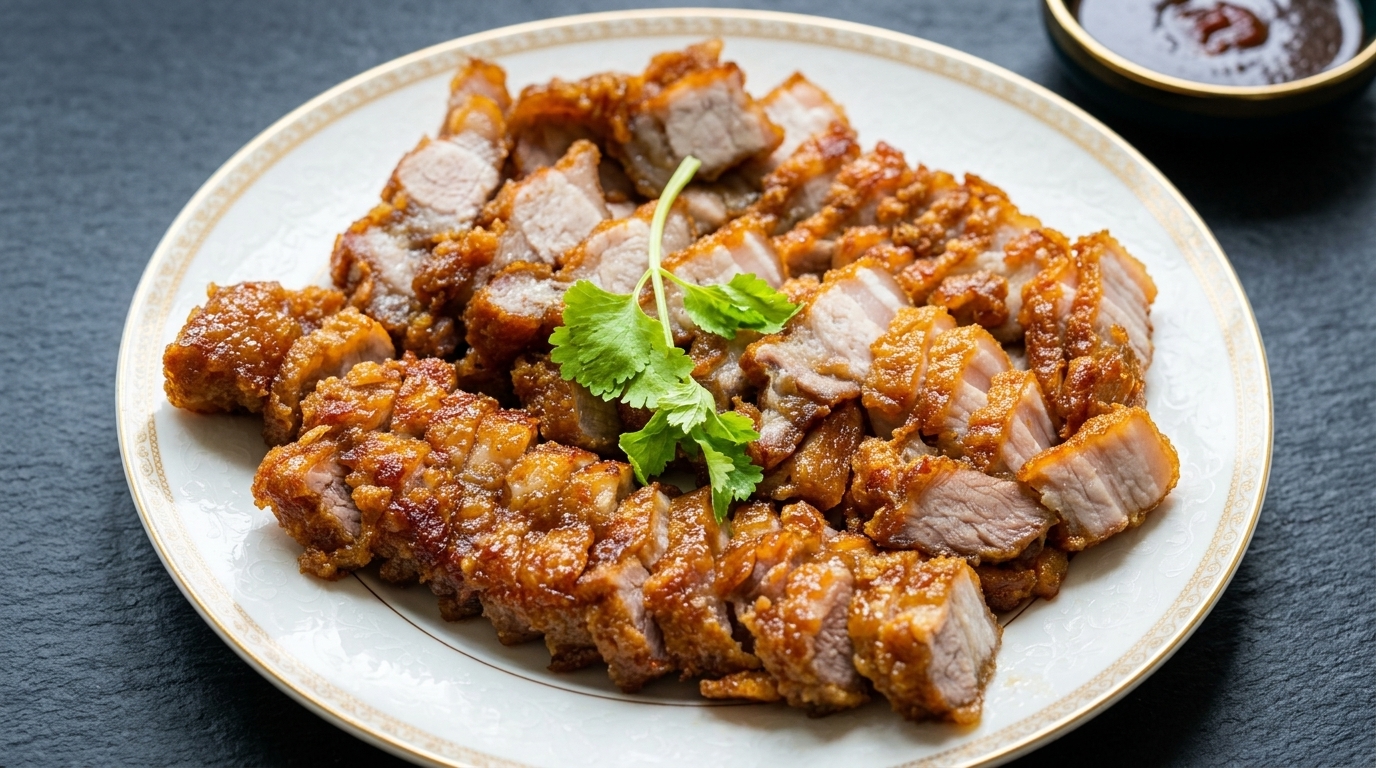
Once the pork belly is completely golden brown and crispy on all sides, remove it from the pan and transfer it to a cutting board. Let it rest briefly, then use a sharp knife or cleaver to chop it into thick, bite-sized slices. Serve immediately with a side of white sugar or your favorite barbecue seasoning.
Tip: Slice the pork belly skin-side down to easily cut through the crispy crackling without squishing the tender meat underneath.