Korean Soybean Paste Pork Belly (Dwaeji-gogi Doenjang-bokkeum)
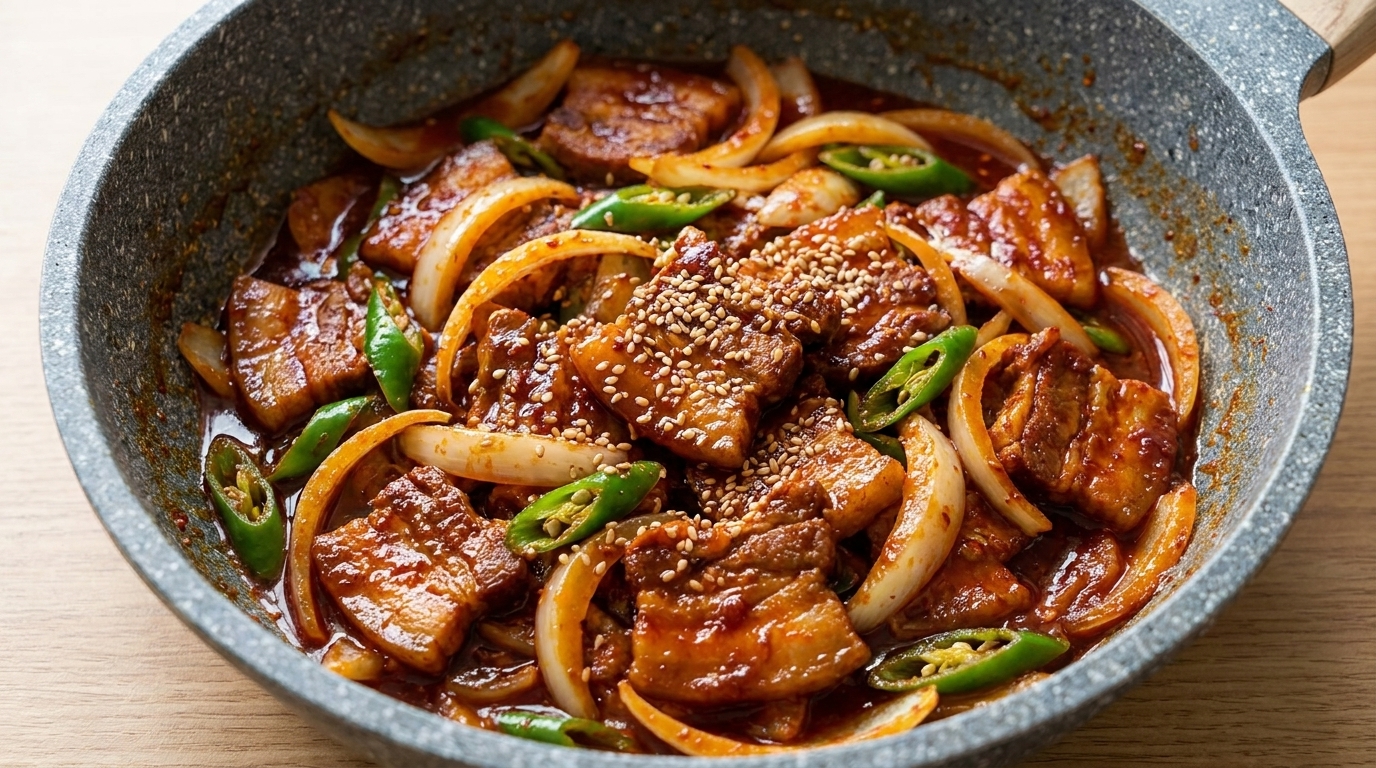
A savory and deeply aromatic Korean stir-fry, featuring thick, succulent pork belly glazed in a rich, caramelized soybean paste sauce with fresh chilies and onions.
This dish is a wonderful example of home-style Korean cooking, known for its deep, savory flavor profile rooted in the use of doenjang, or Korean soybean paste. The combination of caramelized fat, ginger, and garlic creates a delicious, sticky glaze that coats the meat perfectly. Often served with fresh lettuce wraps or pickled radishes, it is a hearty and satisfying meal that captures the warmth of traditional Korean family dinners.
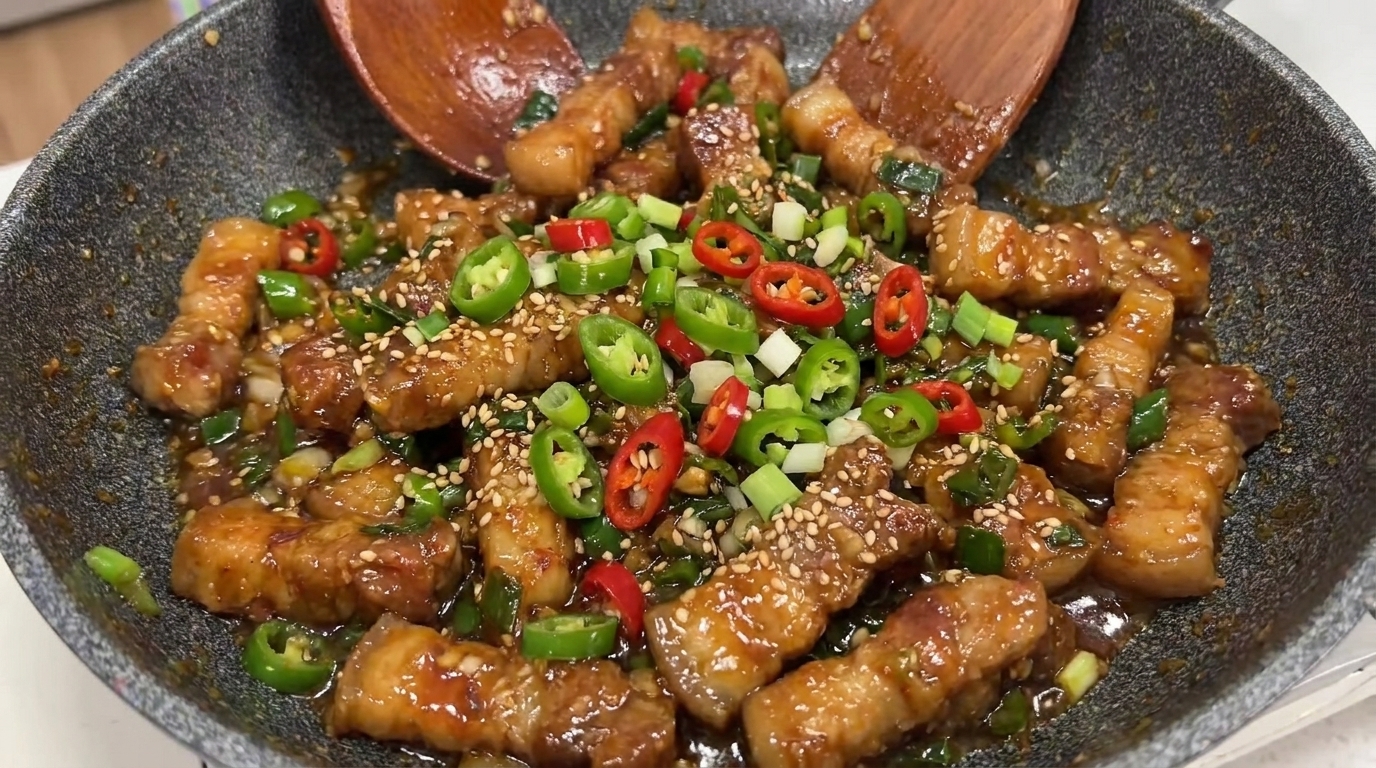
Ingredients
- 500 g pork belly
- 1 tbsp soybean paste
- 2 tbsp soy sauce
- 2 tbsp mirin
- 1 tbsp plum syrup
- 1 tbsp sugar
- 1 tbsp minced garlic
- 1 tbsp ginger juice
- 2 tbsp water
- 1/2 white onion, diced
- 2 green chili peppers, sliced
- 2 red chili peppers, sliced
- 2 stalks green onion, chopped
- 1 tsp toasted sesame seeds
Instructions
- 1Slice the pork belly
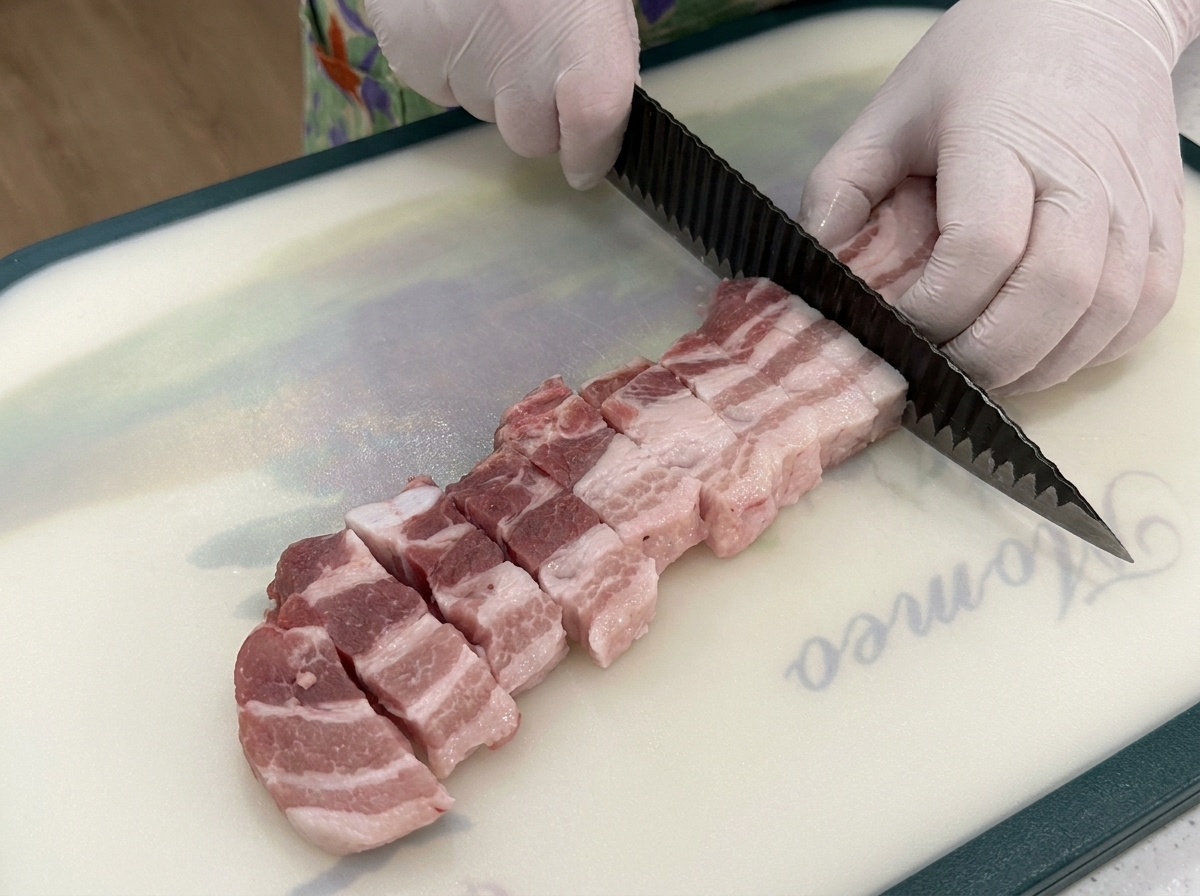
Place the pork belly on a cutting board and slice it into thick, finger-sized pieces. Cutting the meat into these substantial strips helps the pork retain its juices during the searing process.
Tip: Make sure your knife is sharp for clean cuts that keep the meat layers intact. - 2Prepare the sauce
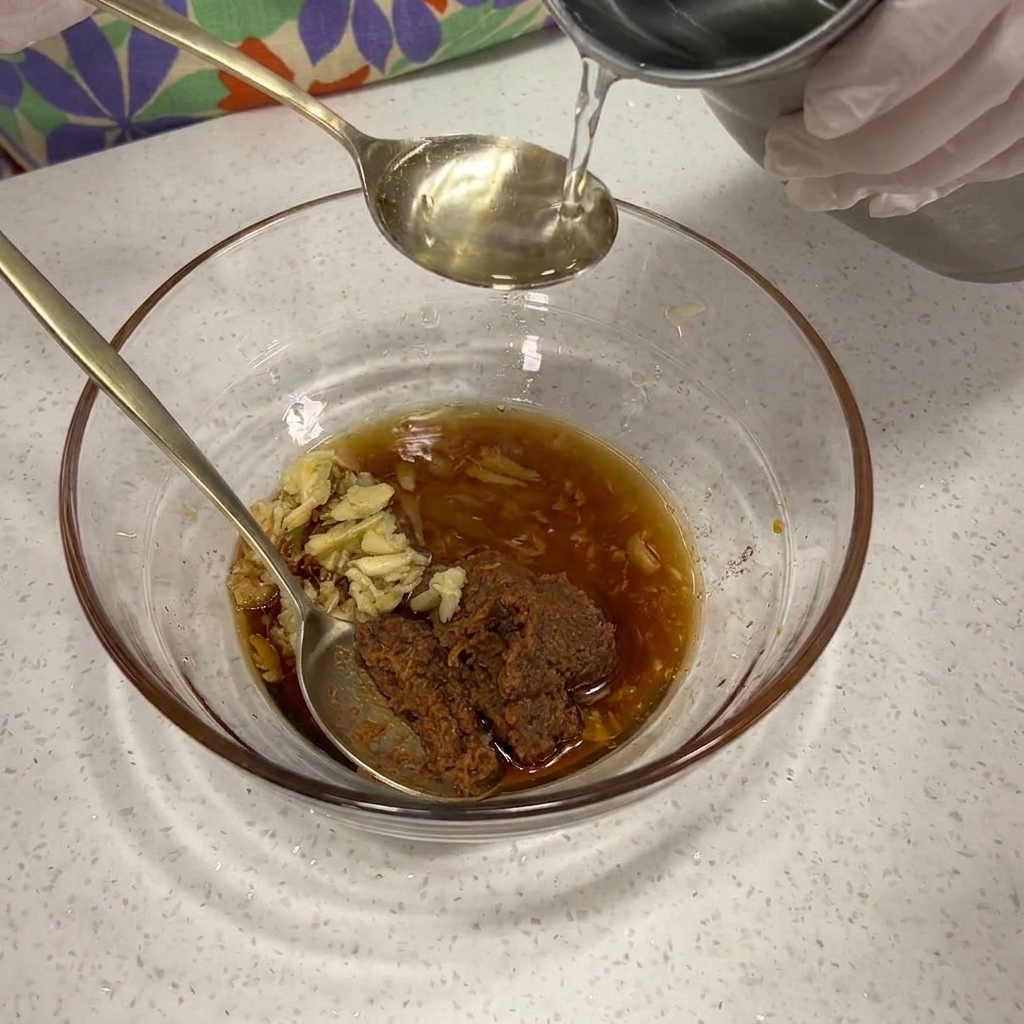
In a clear glass bowl, combine 1 tablespoon of soybean paste, 2 tablespoons of soy sauce, 2 tablespoons of mirin, 1 tablespoon of plum syrup, 1 tablespoon of sugar, 1 tablespoon of minced garlic, 1 tablespoon of ginger juice, and 2 tablespoons of water. Mix well until all ingredients are fully incorporated.
Tip: Ensure the soybean paste is thoroughly dissolved into the liquid to create a smooth sauce base. - 3Arrange the pork
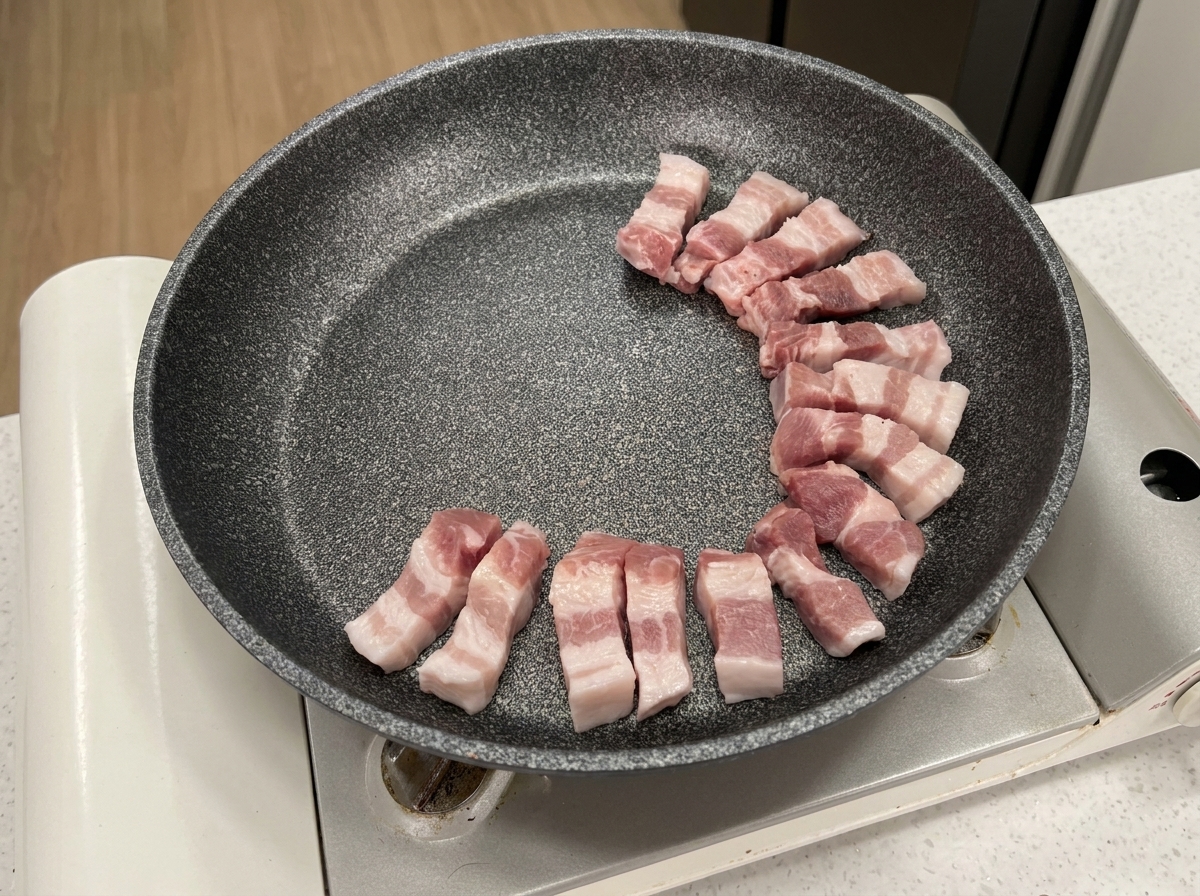
Place the thick pork belly slices into a cold frying pan, arranging them in a neat circular pattern. Starting with a cold pan helps render the fat slowly as the temperature increases.
Tip: Avoid overcrowding the pan; leave enough space between pieces for even browning. - 4Sear the pork belly
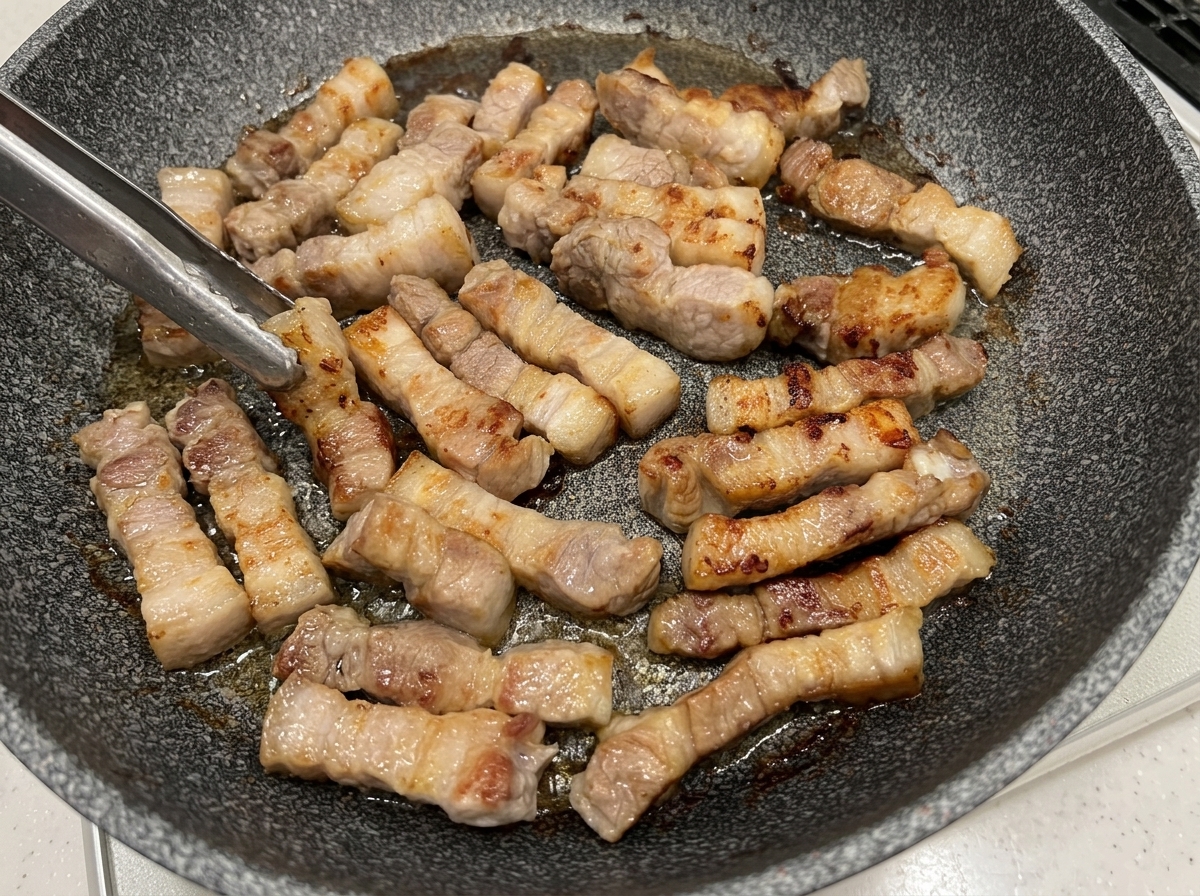
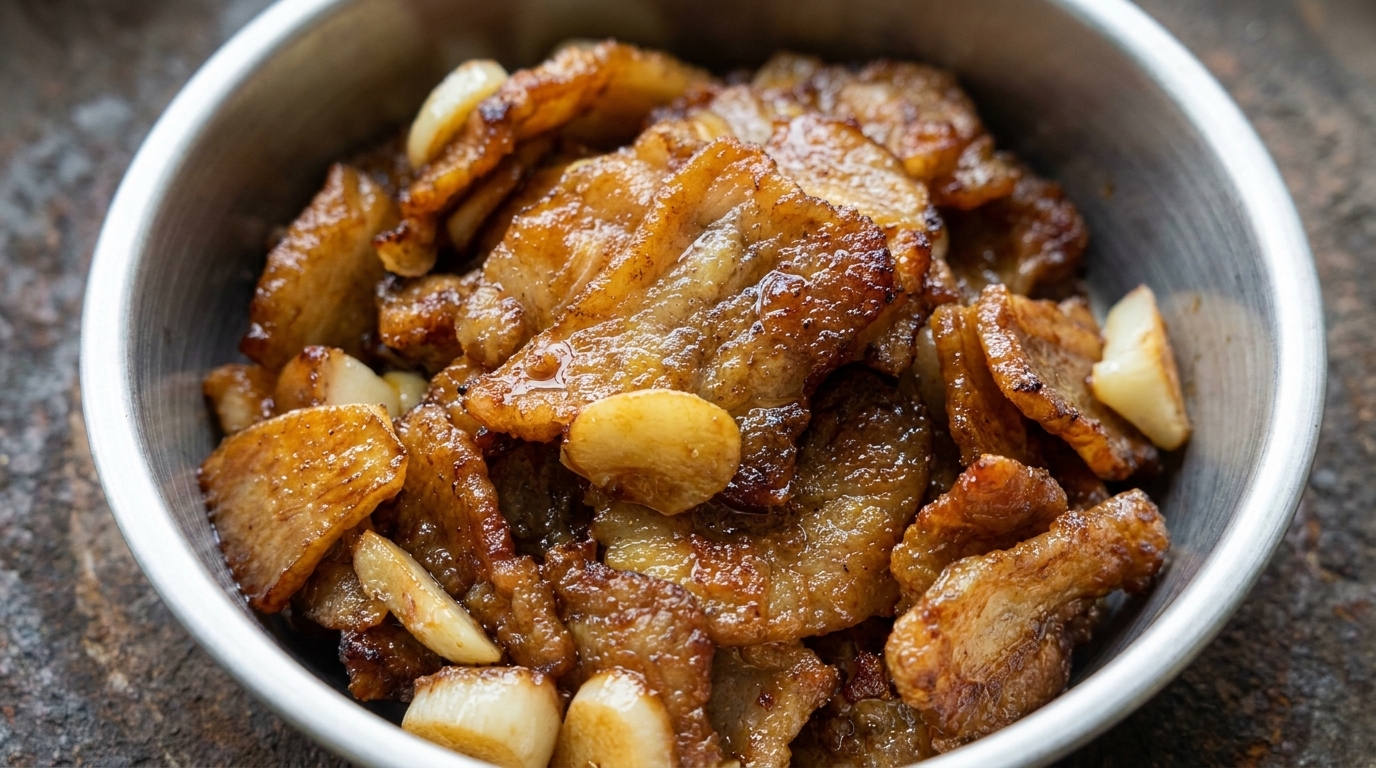
Turn on the heat and fry the pork belly pieces, flipping them as needed to brown all four sides. This searing process is essential to lock in the juices and develop a delicious crust.
Tip: Use tongs to ensure every side of the meat gets a golden-brown sear. - 5Add the sauce
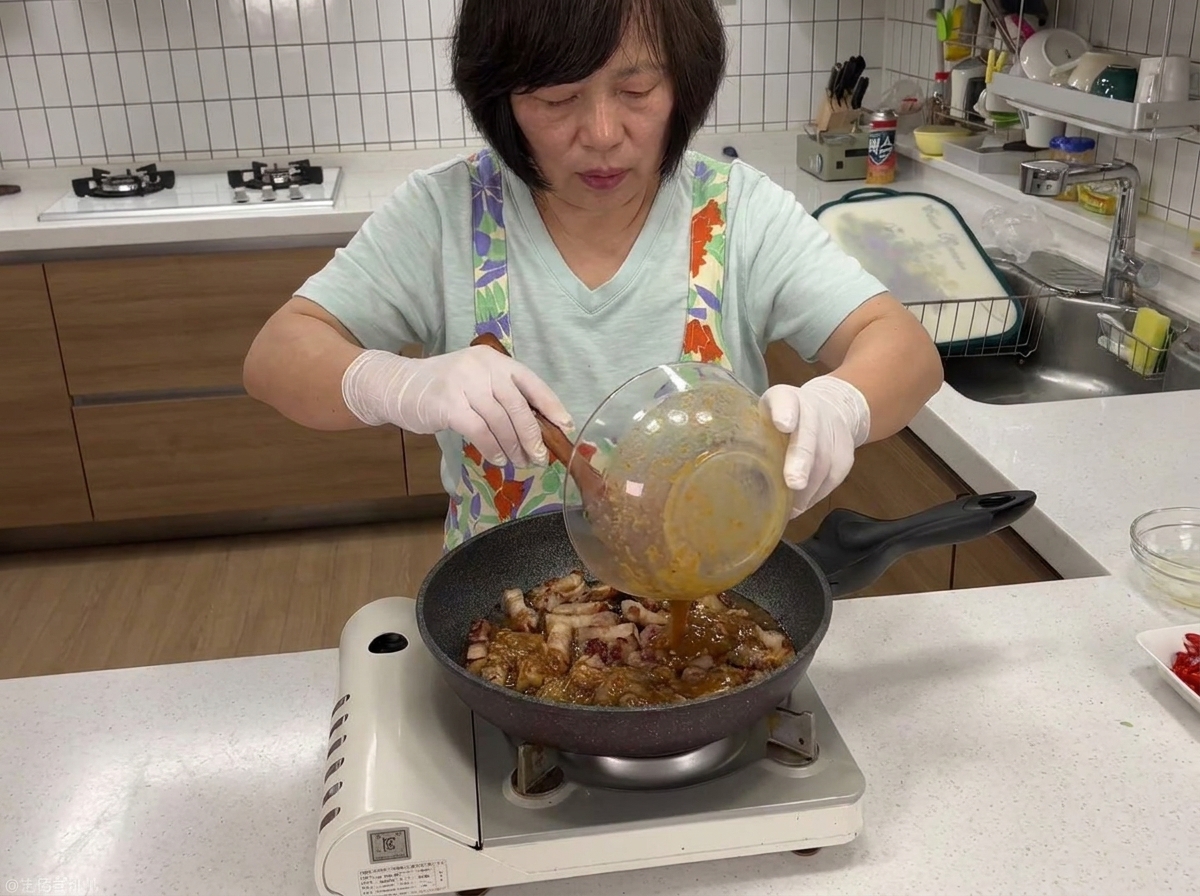
Once the pork belly is evenly browned, pour the prepared soybean paste sauce over the meat. Stir-fry briefly so the sauce coats the pork and begins to caramelize.
Tip: Be careful when pouring the sauce, as it may bubble or splatter when it hits the hot pan. - 6Add onions
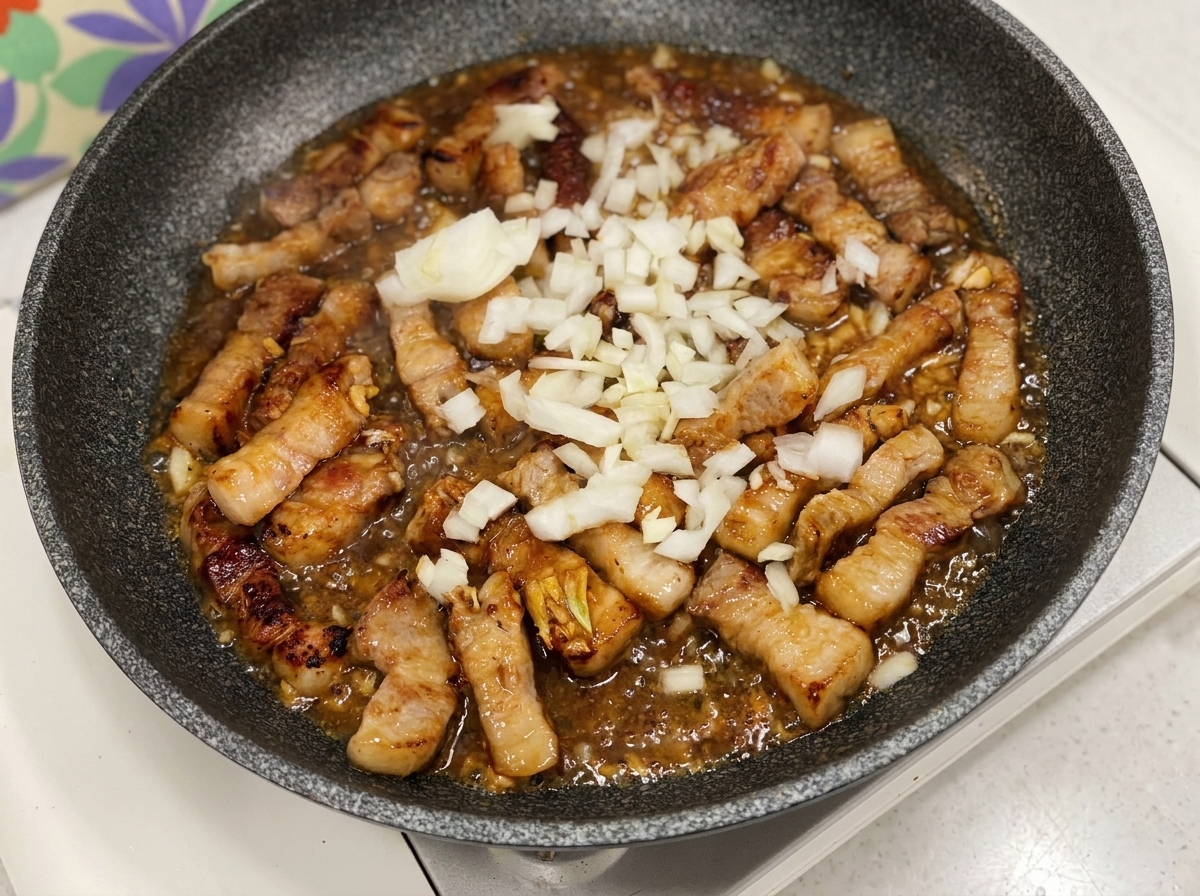
Add the chopped white onions to the pan with the pork and bubbling sauce. Continue to stir-fry until the onions soften and the sauce begins to reduce and thicken.
Tip: Cook the onions until they are translucent and have absorbed some of the flavorful sauce. - 7Add chilies and scallions
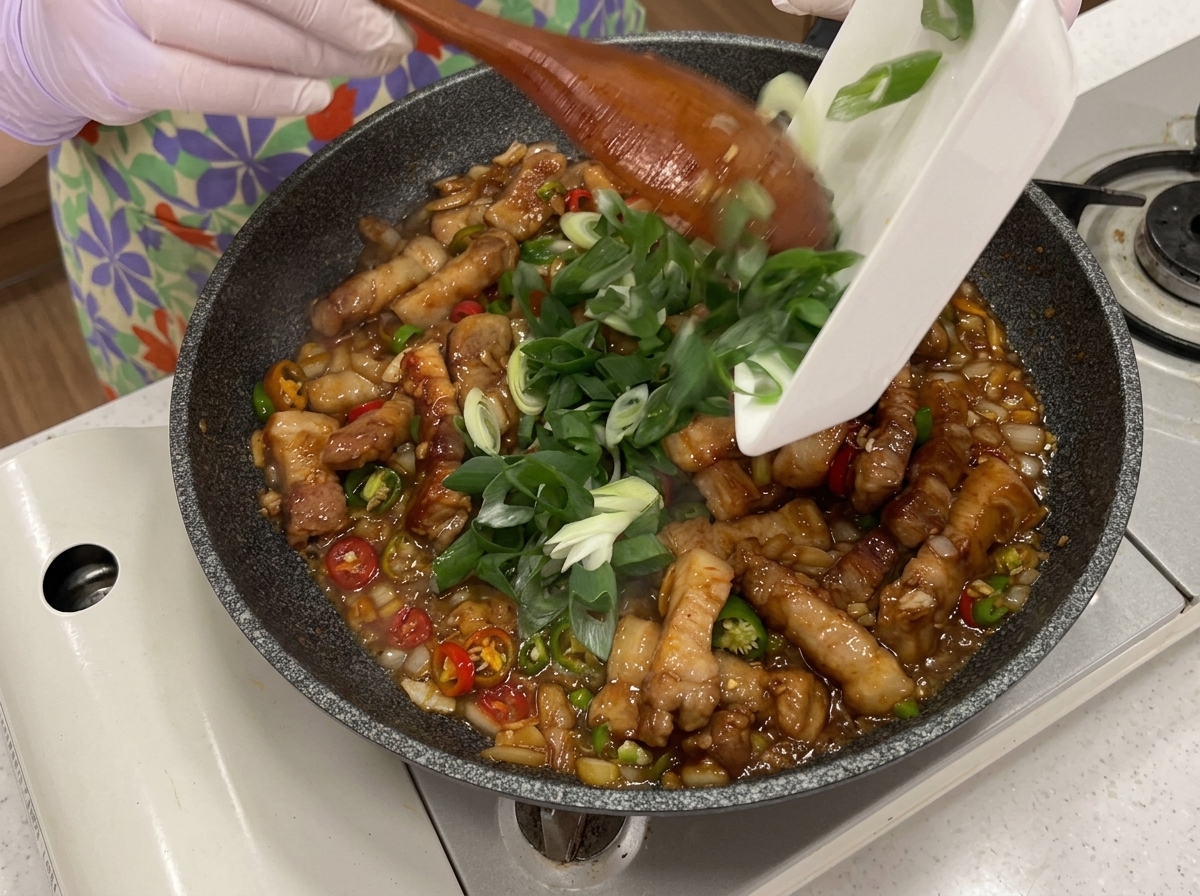
Add the sliced green and red chili peppers to the pan, followed by the large green onions. Stir-fry these ingredients together to incorporate them and infuse the sauce with their fresh flavor.
Tip: Adding these aromatics near the end keeps them vibrant and adds a nice crunch. - 8Garnish with sesame seeds
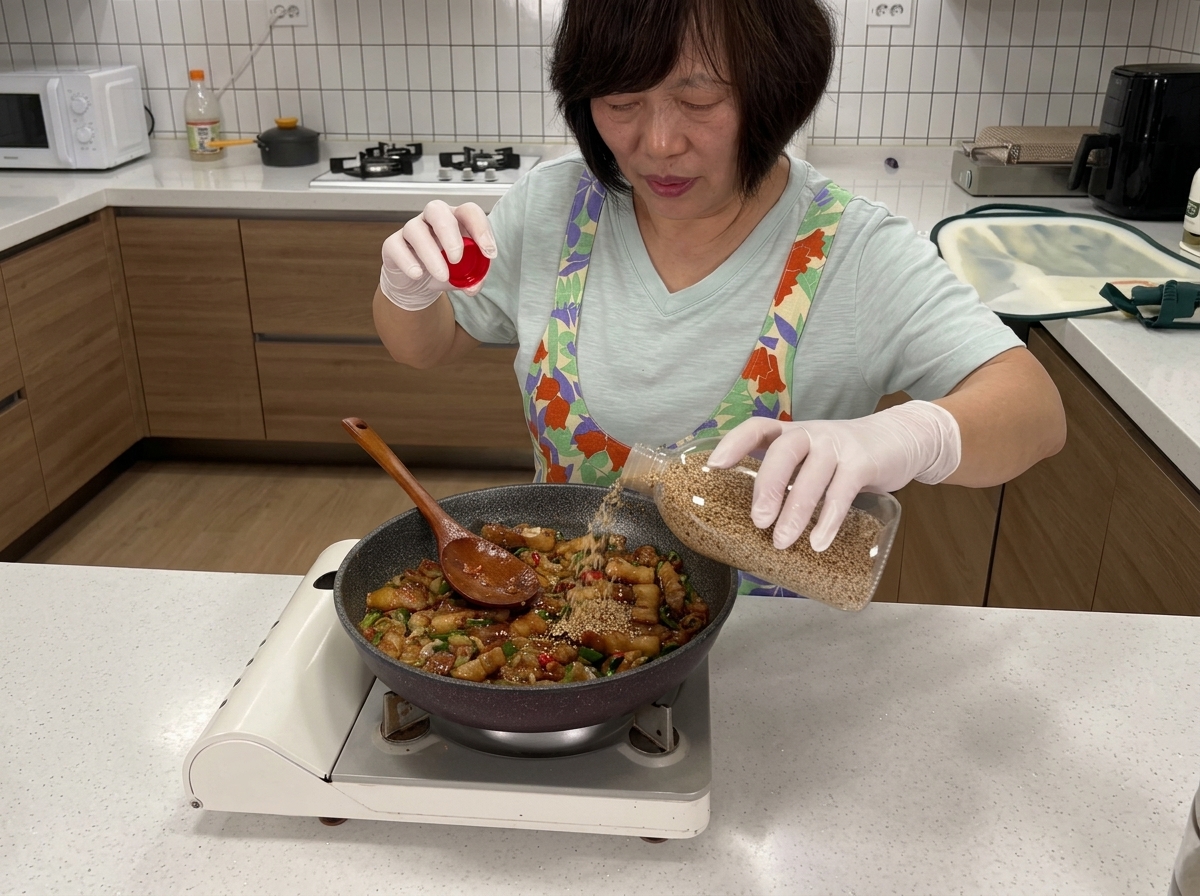
As a final touch, sprinkle toasted white sesame seeds over the stir-fried pork belly and vegetables. This adds a nutty aroma and a visually appealing finish to the dish.
Tip: Toasted sesame seeds enhance the savory profile of the soybean paste sauce. - 9Final stir and serve
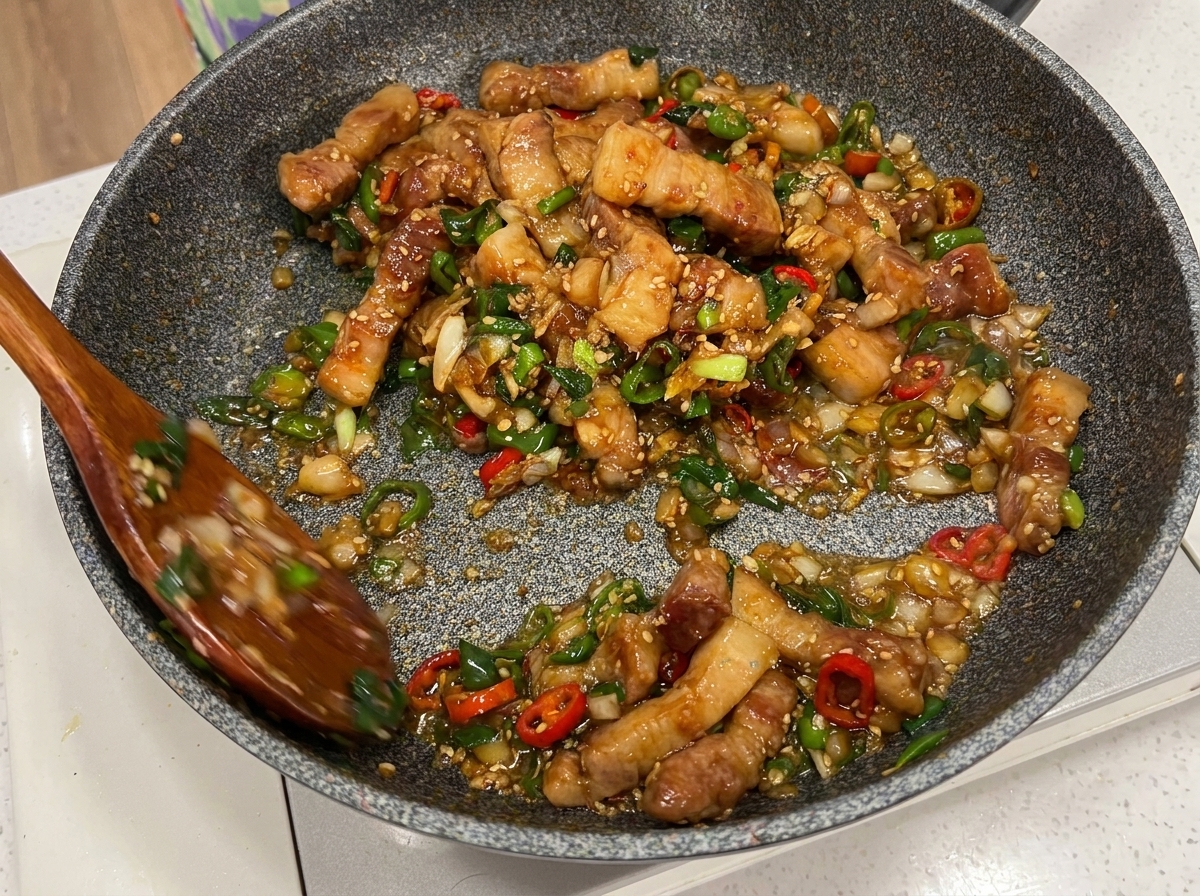
Give the pork belly and vegetables a quick, final stir to ensure everything is evenly coated with the savory soybean paste sauce. The dish is now cooked to perfection and ready to be served.
Tip: Ensure the sauce has reduced enough to coat the meat glossy and thick.